
Curator · Antiquities official · Museum director · Excavator
Vassos Karageorghis
1929–2021 · Cyprus
Director of Antiquities in Cyprus until 1989, who dug Salamis and Kition, welcomed foreign excavators, published the private collections of the "silent accord" and advised Leventis galleries abroad.
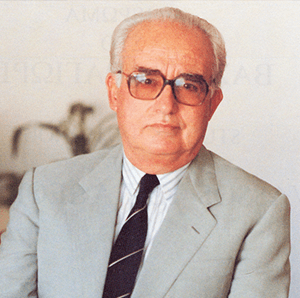
Biography
Between 1963 and 1973 important private collections of antiquities were formed in Cyprus "with the silent accord of the Department of Antiquities", and the man who wrote those words, Vassos Karageorghis, was the Department's Director for almost all of that decade6. He held the post until 1989, dug Salamis and Kition, pressed foreign missions to publish promptly, and published several of the collections the accord produced1.
He was born on 29 April 1929 at Trikomo, into a rural family of limited means1,32,33. In 1948 the Cyprus Government offered a scholarship to read Classics at a British university, with the post of Assistant Curator in the Cyprus Museum promised to whoever took the degree. He won it and read at University College London from 1948 to 1952, training in the field at Verulamium under Mortimer Wheeler1,2. His doctorate was supervised by Martin Robertson1. In 1958 he asked J. R. B. Stewart to publish his thesis on Mycenaean pottery found in Cyprus, a typescript of about 300 pages, after Peter Megaw had declined it; Stewart's team edited it8.
The Department and the foreign missions
He returned in 1952 as Assistant Curator, worked at Salamis, became Curator in 1960 and succeeded Porphyrios Dikaios as Director of Antiquities at the age of 341. Catling and Summerer date the appointment to 1963; Rystedt gives 1964, and counts 25 years in the post1,2,7. He excavated Salamis until 1974, Kition in main seasons from 1974 to 1981 (paid for from funds reserved for the occupied north) and Maa-Palaeokastro from 1979 to 19862,7.
As Director he welcomed foreign missions from Australia, Belgium, Canada, Denmark, France, Germany, Britain, Greece, Israel, Italy, Poland, Sweden and the United States, and required prompt publication; a permit could be terminated if it did not come1,2. In 1963 he revived the Department's annual journal, and from 1958 to 1988 the Bulletin de correspondance hellénique printed his yearly Chronique des fouilles et découvertes archéologiques à Chypre1,9. After the invasion of 1974 put Salamis, Enkomi and his native Trikomo in the occupied zone, he moved foreign missions to the south and west and proposed that the French School excavate Amathus, through Pierre Amandry1,9.
Powell reports that around 1958 or 1959 Stewart asked Karageorghis to buy for him, for up to about a hundred pounds, whatever the Cyprus Museum did not want from the looted tombs at Dhenia, and that a few years later Stewart gloated that Karageorghis had "rolled over" in the division of finds from Karmi, which sent more than seventy packing cases to Australia8. These are Stewart's words as Powell gives them.
Latife Summerer writes that he blacklisted foreign scholars who worked in the north, by letters from 1974 whose method he recorded in his memoirs, and that she was herself blacklisted after 2016. She calls his statement that there were no Turkish-Cypriot archaeologists to cooperate with "paradoxical, if not hypocritical". She also records his proposal in 1989 to Ekrem Akurgal of cooperation on monitoring monuments7.
The silent accord and the collections
In a letter to Antiquity Karageorghis said that the collections formed in 1963–73 had all been registered and photographed item by item, and that the work ended in December 19736. The preface to the Severis catalogue says that the Department, with the agreement of the Ministry of Communications and Works, let Cypriots with access to the Turkish enclaves buy the "spoils" so that they stayed in the country, that owners were asked to declare their collections in the last six months of 1973, and that the main collections were those of Christakis Hadjiprodromou, the Pierides family and the Severis family4.
He published the collections himself. Corpus Vasorum Antiquorum, Cyprus 2 (1965) described Mycenaean pottery in six private hands, among them George Giabra Pierides, Zeno D. Pierides of Larnaca, the dealer Petros Kolokasides, George M. Michaelides, N. P. Lanitis and Mrs M. Gaffiero. He wrote that the exact provenance was unknown but the vases had been found in Cyprus21. His Chronique sections headed "Collection Hadjiprodromou, Famagouste" appeared in 1968, 1970 and 197314,15,16. He published part of the Pierides collection in 1973 and signed the preface to its 1985 catalogue as Director and Vice-Chairman of the Pierides Foundation. The preface says that D. Z. Pierides bought in consultation with the Department, recorded provenance where he could, and also bought Chalcolithic and Early Bronze Age pieces on foreign markets after illicit export, and that he gave the collection to the Foundation in June 197422.
Samuel Andrew Hardy names Karageorghis as the director when the collections were formed and the common author of the four catalogues he analyses, and argues that their contents should be assumed illicit. He calls the policy a state-orchestrated violation of the state's own law, and cites Hadjisavvas for the statement that the antiquities "all came from illicit excavations". His figures rest on catalogue entries he coded himself, which are his own argument3. In his preface to the Phylactou catalogue of 2010 Karageorghis wrote that collectors of 1963–74 "have made a positive contribution by preserving within the Island objects which otherwise would have found their way to the illicit market of antiquities abroad", adding: "Not all collectors, however, were scrupulous, as we know"5.
Buying back
In 1990 Karageorghis wrote that the Hadjiprodromou collection of Famagusta, registered in 1973, began to be looted a year after the occupation of the town and that he believed every item had been stolen and exported. Some pieces appeared in a Christie's catalogue of 27 April 1976 and were claimed by the owner, and others were offered by middlemen; pieces restored to Hadjiprodromou were bought from him by the A. G. Leventis Foundation and given to the Cyprus Museum23. The Museum recorded accessions from the collection in 1977 and, including a block of Chalcolithic idols and free-field vases, in 198118,19. In 1992 he described some of these pieces as cases of "blackmail" in which the State bought from intermediaries24.
The Leventis money paid for other recoveries. A Late Bronze Age bronze wheeled stand, found by looters in 1972 in a Turkish village of the Famagusta District and exported after 1974, was refused by the British Museum and the Louvre, which told the Department, and was traced to a dealer near Frankfurt; a Government grant and a sum from Anastasios G. Leventis bought it for the Museum in 1978, the money arriving with the words "Give them what they need"23. In 1992 he wrote that London had been the centre of the Cypriot trade since 1974, supplied through the occupied north, and that the Foundation had recently paid more than 8,000 pounds there for a fish-frieze jug and a Red Polished terracotta spoon24. The Museum itself bought the second Vounous-type sanctuary model from tomb robbers in 197028. The authors of City of Gold write of a "blizzard of purchases and confiscations" of material from Polis by his Department after 196029. In 1984 Dr and Mrs Lyssarides of Nicosia gave the Museum a large part of their registered collection, listed in his Chronique for that year20.
After the Department
He retired as Director in 1989 and in 1992 became the first Professor of Archaeology at the University of Cyprus1. By the early 1990s he sat on the board of the A. G. Leventis Foundation at the invitation of Dino Leventis, overseeing its excavations and the grants that let foreign museums re-display their Cypriot holdings1. A Leventis Gallery of Cypriote Antiquities opened at the British Museum in 1987 and one at the Fitzwilliam Museum in December 199725. From 1997 he was consultant to the Metropolitan Museum for four galleries of the Cesnola collection, about 1,200 objects, opened in April 2000 with a loan from the Cyprus Museum25,26. Answering Ellen Herscher's criticism of Cypriot money for the installation, he wrote that Max Ohnefalsch-Richter had "excavated for profit" and bought from looters26. A Leventis Gallery opened in Copenhagen in May 2002, after a catalogue of its collection in 200127.
His honours included the Légion d'honneur in 1973, an Oxford honorary degree in 1990, the Onassis Prize in 1991 and election to the Academy of Athens in 19921. He had been elected a Fellow of the British Academy in 1973, and in 2016 he was one of the four founding members of the Cyprus Academy of Sciences, Letters and Arts32,33. His memoirs, A Lifetime in the Archaeology of Cyprus, appeared in Stockholm in 200710. He died on 21 December 2021, aged 9212,33.
Life and work
- 29 April 1929Born at Trikomo, Famagusta district, in a rural family of limited means.
- 1948Won a Cyprus Government scholarship to read Classics at a British university; success was to be rewarded with the post of Assistant Curator in the Cyprus Museum. Read Classics at UCL 1948-52 after a short unsatisfactory spell at Athens University.
LondonCatling 2009Rystedt 2010
- 1948–1952Trained in field archaeology at Verulamium (St Albans) under Mortimer Wheeler; Martin Robertson later supervised his doctoral dissertation.
St AlbansCatling 2009Rystedt 2010
- 1952Returned to Cyprus and became Assistant Curator of the Cyprus Museum; soon began excavating at Salamis.
NicosiaCatling 2009
- 1957London PhD (Mycenaean pottery found in Cyprus); in 1958 he asked J. R. B. Stewart to publish the c.300-page typescript, and Stewart's team edited it.
LondonPowell 2013
- 1958Proposed to Georges Daux that the Bulletin de correspondance hellénique carry an annual Chronique of Cypriot fieldwork in French; BCH printed it every year 1958-1988.
- 1960Became Curator of the Cyprus Museum at independence.
NicosiaCatling 2009
- 1960–1964Childs, Smith et al. (2012) write of a 'blizzard of purchases and confiscations' of artefacts from Polis by the Department of Antiquities under Karageorghis just after 1960, citing his Chronique for 1964; specific objects are in their catalogue (cat. nos. 11, 19, 20, 29, 95) as without context or 'said to' come from Polis.
Polis ChrysochousChilds et al. 2012
- 1963On the retirement of Porphyrios Dikaios became Director of the Department of Antiquities, aged 34; revived the Department's journal RDAC the same year.
NicosiaCatling 2009Summerer 2023
- 1963–1973Under his directorship the Department followed the 'silent accord': Greek-Cypriot collectors with access to Turkish-Cypriot enclaves were allowed to buy looted antiquities; the collections were registered item by item and the scheme ended in December 1973.
- 1965Published CVA Cyprus 2, describing Mycenaean pottery in six Cypriot private collections: George Giabra Pierides (Nicosia, formerly Larnaca), Zeno D. Pierides (Larnaca), Petros Kolokassides (licensed dealer and collector, Nicosia), George M. Michaelides (Nicosia architect, who inherited it from John Vergopoulos), N. P. Lanitis (Limassol; on permanent loan to the Limassol District Museum since 1954) and Mrs M. Gaffiero (Nicosia). He notes the exact provenance of the vases is unknown.
NicosiaKarageorghis 1965
- 1970Cyprus Museum purchased 'from tomb robbers' the second Early Bronze Age sanctuary model (Model B, a simplified version of the Vounous Model A found in 1931-32); Karageorghis published it in RDAC 1970 ('Two Religious Documents of the Early Cypriote Bronze Age').
NicosiaKarageorghis 1989
- 1973Chevalier de la Legion d'Honneur.
- 1973Part of the Pierides collection (Larnaca) published by Karageorghis (his preface, 1985); the same preface says private collections formed 1963-73 were registered at the end of 1973 as legally possessed.
LarnacaKarageorghis et al. 1985
- 1973The Hadjiprodromou collection of Famagusta, registered by the Department of Antiquities in 1973, comprised many Chalcolithic painted vases and stone figurines (Karageorghis 1990).
FamagustaKarageorghis 1990
- 1974Turkish invasion put Trikomo, Salamis and Enkomi in the occupied zone; foreign missions in the north were re-sited to the south and west; Kition work was funded from money reserved for the north.
CyprusCatling 2009Rystedt 2010
- 1974Wrote campaign letters to prevent foreign missions working in the north; Summerer says he blacklisted a French archaeologist willing to work under the new Turkish-Cypriot regime.
- 1974Proposed that the French School excavate Amathus (via Pierre Amandry); the Amathus mission followed.
AmathusKarageorghis 1996
- June 1974Dhimitrios Z. Pierides donated the family collection to the Pierides Foundation he established; Karageorghis later signed the 1985 catalogue preface as Vice-Chairman of the Foundation.
LarnacaKarageorghis et al. 1985
- 1976Chronique for 1976 states that objects from officially declared private collections left in the occupied zone, such as the Hadjiprodromou collection, had been traced on the European market. Karageorghis (1990) states that several were noted in auction catalogues (including Christie's, 27 April 1976) and claimed by the owner, others offered by 'middle-men'; those restored were bought from the collector by the Leventis Foundation and given to the Cyprus Museum.
- 1977Cyprus Museum acquisitions of the year chiefly from the Hadjiprodromou collection (stolen after the fall of Famagusta and exported), among them a Bichrome IV 'free-field' bird jug, inv. 1977/VIII-23/10, and a bronze Egyptianising bearded statuette, inv. 1977/VIII-23/13.
NicosiaKarageorghis 1978
- 1978Summerer: without his efforts the founding of CAARI in 1978 would not have been possible.
- 1978Late Bronze Age bronze wheeled stand (inv. 1978/XI-21/1), found by looters in 1972 in a Turkish village in the Famagusta District, exported after 1974, refused by the British Museum and the Louvre (who told the Department), traced to a dealer near Frankfurt and bought with a Cyprus Government grant and money from A. G. Leventis. Karageorghis recalls that Leventis's assistant Christos Cassimatis passed the request on, and the money came with the remark 'Give them what they need'.
NicosiaKarageorghis 1990
- 1981Cyprus Museum acquired a collection mainly of Chalcolithic steatite idols and 'free-field' vases from the Hadjiprodromou collection, stolen from the house in occupied Famagusta and exported to Europe, from where they were repatriated and returned to the owner and finally bought by the Leventis Foundation and given to the Museum; also individual pieces such as a double-flute player figurine inv. 1981/V-4/1 and a cruciform figurine inv. 1981/V-4/9.
- 1984Dr and Mrs Lyssarides of Nicosia gave the Cyprus Museum a large part of their registered private collection; the Chronique lists pieces including a Red Polished bowl with horned animal protomes (inv. 1984/XI-28/3), a Bichrome ring with birds (1984/XII-12), a terracotta female mould (1984/XII-12/43), a horse-and-rider (1984/XII-21/51), and a Black-on-Red V jug (1984/XII-12/37). The Chronique also lists a Cypro-Archaic fish-frieze jug bought on the Swiss market with Leventis Foundation funds (1984/I-18/1).
NicosiaKarageorghis 1985
- 1985Exhibition of the Pierides collection at the Academy of Athens, with catalogue 'Ancient Cypriote Art in the Pierides Foundation Museum', preface by Karageorghis.
AthensKarageorghis et al. 1985
- 1987British Museum Leventis Gallery of Cypriote Antiquities created (first of the foreign-museum galleries).
LondonKarageorghis 1998
- 1989Retired as Director of Antiquities; wrote to Ekrem Akurgal proposing cooperation on monitoring monuments in the north (Summerer).
- 1990Honorary degree, Oxford, at the Encaenia at which Archbishop Tutu was honoured.
OxfordCatling 2009
- 1990Compiled the text and supervised publication of The A. G. Leventis Foundation and the Cultural Heritage of Cyprus, which describes and illustrates pieces the Foundation bought, mainly on the London market, and gave to the Cyprus Museum (e.g. fish-frieze jugs, Early/Middle Bronze Age vases from looted Kotchati and Marki cemeteries, ex-Hadjiprodromou pieces).
- 1991Onassis Prize 'Olympia'.
AthensCatling 2009
- 1992First Professor of Archaeology, University of Cyprus; Director of its Archaeological Research Unit.
NicosiaCatling 2009
- 1992Elected full member of the Academy of Athens.
AthensCatling 2009
- 1992Opinion piece on the London trade: London a centre for Cypriot antiquities since 1974, supplied via the occupied north with Turkish Cypriot intermediaries; he says the British Museum had often warned of Cypriot pieces in London shops; the Leventis Foundation buys such pieces; some Hadjiprodromou pieces were 'blackmail' cases bought by the State from 'intermediaries'; recently the Foundation paid over 8,000 pounds for a 6th-c. BC fish jug and a large Red Polished terracotta spoon from a London shop.
LondonKarageorghis 1992
- 1995 – December 1997With Eleni Vassilika he conceived a Cypriot gallery at the Fitzwilliam Museum (1995); the Leventis Gallery was inaugurated in December 1997 by the Duke of Edinburgh; the Foundation also endowed it and was to publish a catalogue.
CambridgeKarageorghis 1998
- 1997 – April 2000Consultant (nominated 1997) to the Metropolitan Museum for four permanent Cesnola galleries (about 1,200 of the c. 6,000 objects remaining after the 1928 sale), co-ordinated with Joan Mertens; the Classical gallery endowed by the Leventis Foundation; the galleries were inaugurated in April 2000, with a loan from the Cyprus Museum for the Neolithic and Chalcolithic. In 1998 he visited the Ringling Museum, which holds about 2,300 Cesnola objects, mostly crated.
- 1997–1999Studied the Pitt Rivers Museum's Cypriot collection (formed mostly by General Pitt Rivers) in 1997-98 for publication, with Leventis Foundation help, and worked at the Kunsthistorisches Museum, Vienna on a catalogue to appear in 1999 (collection acquired mostly at the end of the 19th century).
- 2001Catalogue of the Cypriote collection of the National Museum of Denmark (Karageorghis et al. 2001), followed by the Leventis Gallery there inaugurated 31 May 2002; German and English catalogues of the Berlin Cypriote collection (Brehme et al. 2001/2002); plans for the Royal Ontario Museum gallery and catalogue (agreed 2000) and for a National Archaeological Museum Athens catalogue.
CopenhagenKarageorghis 2002
- 2003Karageorghis, Ancient Cypriote Art in the National Archaeological Museum of Athens (A. G. Leventis Foundation).
AthensKarageorghis 2003
- 2007Memoirs 'A Lifetime in the Archaeology of Cyprus' (Medelhavsmuseet, Stockholm), with a foreword by Eva Rystedt.
StockholmCatling 2009Rystedt 2010
- 2014NamedHardy (2014) names him: 'the antiquities director at the time of their formation, and a common author of all four catalogues, was Vassos Karageorghis', and argues that the collections catalogued (two museum and two private) should be assumed illicit. No charge, proceeding or finding against him is reported in any source seen.
- 21 December 2021Died aged 92.
- 2023NamedSummerer (2023) states he ran 'blacklisting' of archaeologists who worked in the north, by writing campaign letters from 1974, and that she herself was blacklisted after 2016; she calls his statement that no Turkish-Cypriot archaeologists were available 'paradoxical, if not hypocritical'. This is her account and criticism of policy; no legal proceeding is involved.
Through their hands
13 recordsCame from
Went to
- 1948Acquisition
AcquisitionV. Karageorghis collected material from Ayia Paraskevi Tomb 7 after its discovery and reburial.
No. Tomb 7Nicosia-Ayia ParaskeviWebb & Frankel 1999, p. 10
- 1963–1974Purchase
PurchaseAhmet Aziz said that he personally sold many antiquities to Karageorghis during the enclave period.
Bought from Ahmet Kadir Dinçmany thingsTurkish quarterHofstadter 1994, p. 202
- 1963–1974Purchase
PurchaseAllegedMakarios Drousiotis’s articles alleged that Karageorghis bought antiquities for the Cypriot state from illicit Turkish Cypriot operators.
With illicit Turkish Cypriot operatorsHofstadter 1994, p. 182Hofstadter 1994, p. 183
- 1965Meeting
MeetingVassos Karageorghis met Anastasios G. Leventis in Paris to request funding for church repairs.
- n.d.Note
NoteVassos Karageorghis invited Dominique de Menil to Nicosia to review the matter of the Lysi murals.
Connected with Dominique de MenilCarr & Morrocco 1991, p. 12
- n.d.Partnership
PartnershipWalter Hopps drafted the arrangements concerning the murals in consultation with Vassos Karageorghis.
Worked with Walter HoppsLysi muralsCarr & Morrocco 1991, p. 12
- n.d.Purchase
PurchaseKarageorghis said he bought things from Ahmet Aziz for their collections.
Bought from Ahmet Kadir Dinçmainly ceramics and an early Bronze Age model of a sanctuaryHofstadter 1994, p. 184
- n.d.Note
NoteVassos Karageorghis obtained the transfer of the statue fragments to the Musée régional de Limassol.
Connected with Musée régional de Limassoltous les fragments de statues disséminés sur les pentes de la collinecolline de Kastro, PhasoulaKarageorghis 1959, p. 359
- n.d.Gift
GiftVassos Karageorghis gave samples from Kition to Ulrich Zwicker during the excavations.
Gave to Ulrich Zwickermetallurgical ceramic samplesKassianidou & Dikomitou-Eliadou 2014, p. 128
- n.d.Agency
AgencyJim asked Vassos to act as his agent and buy objects the Cyprus Museum did not want.
Agent for James Rivers Barrington Stewartanything the Cyprus Museum did not wantup to about £100Powell 2013, p. 184Powell 2013, p. 195
- n.d.Permit
PermitVassos Karageorghis granted Edith Porada a permit to export material from the excavations.
Granted a permit to Edith PoradaSmith et al. 2008, p. 3
- n.d.Record
RecordThe Princeton catalogue reported acquisitions ordered by Vassos Karageorghis at Polis.
Show 1 moreShow fewer
- n.d.Acquisition
AcquisitionVassos Karageorghis said that he and his colleagues recovered horse bits among objects looted from the tomb.
No. 49–51PalaepaphosKarageorghis 1967, p. 243
Excavations
29 projects- 1947–1948Sinda: the Swedish expedition under FurumarkDirected by Arne FurumarkTeam · Excavation
- 1948Ayia Paraskevi, Nicosia: Cyprus Museum excavation of Tomb 7 (1948)Director · Excavation
- 1952–1953Meniko-Litharkes: the Department's excavation of the sanctuaryDirector · Excavation
- 1952–1974Salamis: the Department of Antiquities excavations (Karageorghis, Dikigoropoulos)With Andreas I. Dikigoropoulos, Demos Christou and Arthur Hubert Stanley MegawDirector · Excavation
- 1953Pomos-Appiouri: Department excavation of a votive dumpDirector · Excavation
- 1954–1973Lapithos: Department of Antiquities rescue excavationsWith Angeliki Pieridou and A. ChristodoulouDirector · Rescue excavation
- 1956Pyla-Steno: rescue excavation of the Dhekelia rifle-range tombsWith Porphyrios DikaiosDirector · Rescue excavation
- 1958Phasoula: survey of the sanctuary of Zeus Labranios, 1958Director · Survey
Show all 29 projects
- 1959–1960Akhera: Karageorghis's Department rescue excavationsDirector · Rescue excavation
- 1959–1983Kition: the Department of Antiquities Excavations at Kathari and ChrysopolitissaDirector · Excavation
- 1960Pendayia-Mandres: Karageorghis's excavation of the LC I tombsDirector · Excavation
- 1961Akanthou-Moulos: Department survey of MoulosDirector · Survey
- 1961Cape Andreas: Department visits to the temple of Aphrodite AkraiaDirector · Survey
- 1962–1972Politiko-Tamassos: Department of Antiquities rescue excavations, 1962–1972With A. ChristodoulouDirector · Rescue excavation
- 1963–1967Idalion: Department of Antiquities tomb rescues, 1963–1967With Michael Loulloupis and A. ChristodoulouDirector · Rescue excavation
- 1963–1966Kourion: the Department's clearance of the stadiumDirected by J. S. LastTeam · Excavation
- 1964–1974Salamis: the French mission of LyonDirected by Jean Pouilloux, Marguerite Yon and Georges RouxTeam · Excavation
- 1968Hala Sultan Tekke: Department rescue of two tombs (1968)Director · Rescue excavation
- 1970–1972Patriki: Department rescue of the built tombs and votive depositDirector · Rescue excavation
- 1973–1974Gastria-Alaas: Karageorghis's rescue excavationDirector · Excavation
- 1975–todayAmathus: the French School at Athens missionDirected by Pierre Aupert, Antoine Hermary, Jean-Yves Empereur and othersTeam · Excavation
- 1976–1984Kalavasos-Tenta: the Vasilikos Valley Project excavationsDirected by Ian A. ToddTeam · Excavation
- 1977Arpera-Chiflik: Brock University field-school digWith David W. RuppDirector · Excavation
- 1978–1985Kourion: the American excavation of the Sanctuary of Apollo HylatesDirected by Diana Buitron-Oliver and David SorenTeam · Excavation
- 1979–1986Maa-Palaeokastro: the Department excavationsWith Martha Demas and Gordon ThomasDirector · Excavation
- 1979–1980Palaepaphos-Skales: the Department's emergency excavationDirector · Rescue excavation
- 1981–1982Pyla-Kokkinokremos: Karageorghis and Demas's excavationsWith Martha DemasDirector · Excavation
- 1984–1987Kourion: the University of Arizona excavation of the Earthquake HouseDirected by David Soren and Thomas W. DavisTeam · Excavation
- 2010–2012Pyla-Kokkinokremos: Karageorghis and Kanta's excavationsWith Athanasia KantaDirector · Excavation
In the field
151 recordsWhere they worked in the field
- Ground above 200, 500, 1,000 m
Sites
- 1Sinda
- 2Salamis
- 3Kition
- 4Akhera (approx.)
- 5Idalion
- 6Hala Sultan Tekke
- 7Kalavasos-Tenta
- 8Maa-Palaeokastro
- 9Palaepaphos (Kouklia)
- 10Pyla-Kokkinokremos
- 11Ayia Varvara-Almyras (approx.)
- 12Marion
- 13Amathus
- 14Alaas (approx.)
- 15Ayios Theodoros (approx.)
- 16Enkomi
- 17Kourion
- 18Palaepaphos-Skales (approx.)
- 19Pendayia (approx.)
- 20Peyia (approx.)
- 21Souskiou (approx.)
- 22Tamassos
Ayia Paraskevi cemetery
1948
Excavated · 1948Vassos Karageorghis undertook the excavation of Tomb 7 while a student assistant at the Cyprus Museum.
No. 1948/VII-28/2Ioannides 1992, p. 111
Sinda
1948
Excavated with · 1948Karageorghis's first excavation in Cyprus was with Furumark at Sinda.
Excavated with Arne FurumarkLeriou & Vavouranakis 2025, p. 380
near Méniko
1952
Excavated · 1952V. Karageorghis rounded off the excavation of a small sanctuary near Méniko, which he had started in 1952.
Pefkakia, terrain 417
1952–1979
Dug for · 1952–1979Vassos Karageorghis directed the Pefkakia excavations for the Service des Antiquités.
Dug for Department of AntiquitiesCimetière du Chypriote Récent II-III, deux caveaux et une fosseAchilleos 2019, p. 680Late Bronze Age news… 1974, p. 165Karageorghis 1960, p. 283Karageorghis 1960, p. 286
Salamis
1952–1974
Excavated with · 1952A. Dikigoropoulos collaborated with V. Karageorghis in excavations at the gymnasium at Salamis.
Excavated with Andreas I. Dikigoropoulossculptures from the gymnasium at SalamisHermary 2009, p. 167Megaw 1954, p. 175Megaw 1954, p. 31
Directed excavations · 1952–1974V. Karageorghis directed the excavations at the gymnasium at Salamis conducted by the Department of Antiquities.
sculptures from the gymnasium at SalamisInformations 1999Hermary 2009, p. 167Maier 2008, p. 54
Excavated · 1952–1974Vassos Karageorghis excavated at Salamis during the Department of Antiquities’ 1952–1974 excavations.
Excavated · 1952Karageorghis worked on the archaeological investigation of Constantia from 1952 onwards.
archaeological remains of ConstantiaMetcalf 2009, p. 276
Found · 1954V. Karageorghis found a marble pedestal during excavations at Salamis.
slate-blue marble pedestal, inscription no. 6No. no. 6Helenos, Governor of Cyprus 1959, p. 100
Excavated · 1959Vassos Karageorghis excavated the theatre at Salamis, which was discovered in 1959.
theatre of SalamisRogge et al. 2019, p. 611
Directed excavations · 1960Vassos Karageorghis resumed excavations at the theatre of Salamis at the beginning of 1960.
site du théâtre antique de SalamineKarageorghis 1961, p. 302
Excavated · 1961Dr Karageorghis was in the process of clearing Salamis.
Excavated with · 1962Vassos Karageorghis and the Department of Antiquities excavated the necropolis at Salamis.
Excavated with Département des Antiquités de ChyprenécropoleYon 2014, p. 33Yon 2019, p. 39
Directed excavations · 1962Vassos Karageorghis directed the Department of Antiquities’ excavations in which a second cup was found.
Une deuxième coupeIoannou 2019, p. 105
Excavated · 1962–1967Vassos Karageorghis began systematic exploration of the Salamis necropolis.
royal cemetery necropolisKarageorghis 1962, p. 77Nicolaou 1966, p. 32Rogge et al. 2019, p. 145Vitti 2019, p. 145
Excavated · 1962V. Karageorghis brought a second large tomb to light at Salamine.
une seconde grande tombeKarageorghis & Masson 1965, p. 147
Connected with · 1964Vassos Karageorghis went with Jean Pouilloux and Jean Jehasse to the site of Salamis.
Connected with Jean PouillouxKarageorghis 2015, p. 27
Connected with · 1964Vassos Karageorghis went with Jean Jehasse and Jean Pouilloux to the site of Salamis.
Connected with Jean JehasseKarageorghis 2015, p. 27
Directed excavations · 1964Vassos Karageorghis planned the systematic excavation of the necropolis of Salamis.
Excavated · 1964V. Karageorghis undertook a definitive excavation of the great tumulus and the tomb beneath it.
grand tumulus et tombeKarageorghis & Masson 1965, p. 147
Excavated · 1964Vassos Karageorghis excavated the tumulus near the Monastery of Apostolos Varnavas.
Found · 1964During the 1964 excavation, Vassos Karageorghis found seven large clay bowls turned upside-down above the stomion.
Excavated · 1966Vassos Karageorghis excavated Tomb 79 at Salamis.
Directed excavations · 1967Vassos Karageorghis directed the Department of Antiquities of Cyprus excavations at Salamis.
limestone temple-boy from tomb 84No. Sal. T. 84/IBeer 1994, p. 15
Directed excavations · 1968Vassos Karageorghis directed two seasons of excavations at the Salamis Gymnasium.
Excavated · 1974Karageorghis methodically excavated Salamis before the war in 1974.
Dug forV. Karageorghis conducted excavations in the Marble Forum for the Government of Cyprus.
Dug for Government of CyprusHelenos, Governor of Cyprus 1959, p. 101
ExcavatedVassos Karageorghis excavated the Salamine necropolis.
nécropole de SalamineCalvet & Yon 1977, p. 9
ExcavatedKarageorghis worked at Salamis, exposing a major architectural complex.
ExcavatedDr V. Karageorghis conducted excavations at Salamis and carried out more clearance at the Gymnasium.
excavations at Salamis and clearance at the GymnasiumDikaios 1962, p. 32
ExcavatedV. Karageorghis excavated the Sainte-Catherine tomb.
tombe de Sainte-CatherineFourrier 2015, p. 218
ExcavatedV. Karageorghis excavated Tomb 80.
Tomb 80, SalamisGuimier-Sorbets & Michaelides 2009, p. 217
ExcavatedVassos Karageorghis re-excavated Tumulus no. 3 at Salamis.
ExcavatedKarageorghis explored the royal necropolis of Salamine, Sainté Catherine, and the tomb of Nicocréon near Enkomi.
the royal necropolis of Salamine; Sainté Catherine; the tomb of NicocréonIoannides 1992, p. 127
ExcavatedVassos Karageorghis excavated tomb 79 in the royal necropolis.
FoundVassos Karageorghis discovered the royal tombs.
les tombes royalesJehasse 2014, p. 26
ExcavatedKarageorghis excavated the cemeteries adjacent to Salamis.
Adjacent cemeteriesJones 1986, p. 328
Directed excavationsVassos Karageorghis directed the seventh excavation campaign at the Salamis Gymnasium, revealing monumental baths.
thermes monumentauxKarageorghis 1959, p. 352
ExcavatedVassos Karageorghis and his team excavated in front of the large vaulted chamber.
the area in front of the large vaulted chamber; dromosKarageorghis 1966, p. 45
FoundVassos Karageorghis and his team found the skeletons of two horses on the dromos floor.
ExcavatedVassos Karageorghis and his team began excavating Tomb 79 at Salamis.
la tombe 79Karageorghis 2002, p. 19
ExcavatedVassos Karageorghis excavated the northern sector of Salamis, including the Gymnasium and theatre.
ExcavatedVassos Karageorghis excavated Salamis.
ExcavatedVassos Karageorghis excavated the Tombs of the Kings near Salamis.
ExcavatedV. Karageorghis excavated Tomb 80 at Salamis.
ExcavatedVassos Karageorghis excavated the necropolis of Salamis.
nécropole de SalamineRaptou 2019, p. 208
ExcavatedVassos Karageorghis excavated Tomb 79 in the royal necropolis at Salamis.
FoundVassos Karageorghis discovered the finds from Tomb 79 in the Salamis necropolis.
furniture and other finds from Tomb 79Rogge et al. 2019, p. 195
Directed excavationsVassos Karageorghis directed excavations in the Salamis necropolis from which the analysed objects came.
tombs and artefacts from the necropolis of SalamisRogge et al. 2019, p. 231
ExcavatedV. Karageorghis was identified as the last excavator of the Constantia fortification wall.
the fortification wallStewart 2013, p. 299
ExcavatedVassos Karageorghis was the main excavator of the baths at Constantia.
the Grand Baths at ConstantiaStewart 2014, p. 7
Menico, Nicosia District
1953
Found · 1953Vassos Karageorghis discovered a limestone stele during the excavation of a rural sanctuary at Menico.
Philia
1953
Found · 1953Vassos Karageorghis found a jug in an unpublished tomb at Philia.
Chrysopolitissa
1959
Excavated · 1959Karageorghis excavated a well at Chrysopolitissa in 1959.
Kition
1959–1986
Directed · 1959–1984V. Karageorghis directed the Antiquities Service excavations at Kition.
Directed Département des Antiquités de ChypreKition temple 1 excavationsAntoniadou 2019, p. 697Karageorghis 1977, p. 753Carstens 2006, p. 172Childs et al. 2012, p. 38
Excavated · 1959–1986Vassos Karageorghis excavated at Kition in campaigns from 1959 to 1986.
Directed excavations · 1959V. Karageorghis directed the Cypriot excavations at Kathari from 1959.
Excavated · 1959Karageorghis conducted excavations at Kition beginning in 1959.
Directed excavations · 1959Vassos Karageorghis directed the excavations at Kition.
Excavated · 1959–1983Vassos Karageorghis excavated the sacred area at Kition Kathari.
Directed excavations · 1963Vassos Karageorghis directed the excavation at Kition in 1963.
Marble figurineNo. Kition no. 151Beer 1994, p. 83
Excavated · 1963Vassos Karageorghis excavated Area II at Kition from 1963 onwards.
Directed excavations · 1966Vassos Karageorghis directed the excavations at Kition, including work on the old city wall.
mur de la vieille villeKarageorghis 1967, p. 315
Found · 1969V. Karageorghis found a Phoenician inscription at Kition.
Directed excavations · 1970Vassos Karageorghis invited Danish students to participate in his excavations at Kition.
Directed excavations · 1971Vassos Karageorghis directed excavations at Kition in which students participated.
ExcavatedVassos Karageorghis excavated at Kition-Kathari; the work showed that the Tyrians rebuilt and used the Bronze Age temple.
Directed excavationsV. Karageorghis directed the successive campaigns of the Department of Antiquities of Cyprus at Kition-Larnaca.
timbres amphoriquesCalvet & Masson 1988, p. 23
ExcavatedVassos Karageorghis completed the excavations at Kathari.
site de Kition-LarnacaHermary 1984, p. 49
FoundV. Karageorghis found an inscribed fragment of a bowl at Kition.
fragmentary LM III B ware bowl with an inscriptionNo. inv. no. 3438Kanta & Perna 1999, p. 100
SurveyedVassos Karageorghis and colleagues surveyed the neighbourhood and identified stones they suspected formed part of the city wall.
a row of four large projecting stonesKarageorghis 1976, p. 26
FoundVassos Karageorghis said that he and others discovered a faience rhyton at Kition.
Faience rhyton decorated with hunting scenesKarageorghis 2016, p. 192
FoundKarageorghis discovered a cylinder in the upper burial of a Kition tomb.
ExcavatedV. Karageorghis was identified as the excavator of the bronze object found at Kition.
A bronze objectMichaelides 2014, p. 5
ExcavatedV. Karageorghis excavated a copper-smelting workshop at Kition.
copper-smelting workshop and remainsMuhly 1973, p. 91
Directed excavationsDr. V. Karageorghis was in charge of the Department of Antiquities' resumed excavations at Kathari.
ExcavatedDr. V. Karageorghis was associated with excavations in the Temple area at Kition.
Temples 1 and 5 and associated buildingsNicolaou 1980, p. 65
Directed excavationsV. Karageorghis directed continuing excavations in the Late Bronze Age temple area at Kition.
Late Bronze Age temples, storerooms and workshopsNicolaou 1981, p. 53
ExcavatedV. Karageorghis excavated the oldest sanctuary of Kition, a Late Bronze II building.
ExcavatedVassos Karageorghis excavated the sacred quarter of Kathari at Kition.
quartier sacré de KathariYon 2003, p. 70
Akhera
1960
Excavated · 1960Vassos Karageorghis excavated three tombs at Akhera in spring 1960.
trois tombesKarageorghis 1961, p. 310
ExcavatedV. Karageorghis excavated three tombs at Akhera.
Chypre
1963
Founded · 1963Vassos Karageorghis took part in the decision to create a French excavation mission in Cyprus.
Founded Mission archéologique française de Salamine de ChypreRogge et al. 2019, p. 38Yon 2014, p. 32Yon 2019, p. 38
Idalion
1963
Excavated · 1963V. Karageorghis excavated a group of important CA tombs at Idalion.
Excavated · 1963Vassos Karageorghis excavated three tombs at Idalion.
ExcavatedV. Karageorghis excavated the necropolis of Dhali.
cette région
1964
Excavated · 1964V. Karageorghis began systematic exploration of the region; inscriptions published here were discovered during these works.
au nord de la ville de Kition
1967–1970
Found · 1967–1970Vassos Karageorghis discovered a large Phoenician temple north of Kition.
un grand temple phénicienHermary 2014, p. 251
Area A, west of the mosque of Hala Sultan Tekke
1968
Excavated · 1968Vassos Karageorghis excavated two partly preserved Late Bronze Age tombs exposed through erosion.
two partly preserved rich Late Bronze Age tombs (Tombs 1, 2)Fischer & Bürge 2017, p. 163
Hala Sultan Tekke
1968
Excavated · 1968V. Karageorghis investigated two tombs at Hala Sultan Tekke in 1968.
The Cultural Significance of… 2002, p. 184Feldbacher et al. 2024, p. 153Jones 1986, p. 618
ExcavatedV. Karageorghis had previously excavated two tombs near the mosque at Hala Sultan Tekké.
deux tombesKarageorghis 1973, p. 660
Lac Salé de Larnaca, à proximité du Lac Salé de Larnaca
1968
Directed excavations · 1968Vassos Karageorghis directed the excavation of two Late Bronze Age tombs near Larnaca Salt Lake.
deux tombes du Bronze RécentKarageorghis 1969, p. 527
Kalavasos-Tenta
1975
Helped · 1975V. Karageorghis drew Ian A. Todd’s attention to the site of Kalavasos-Tenta.
Helped Ian A. ToddTodd 1978, p. 162
a tomb in the Palaepaphos region
1979
Found · 1979V. Karageorghis found the inscribed bronze obelos in a tomb in the Palaepaphos region.
bronze obelos with an inscriptionOlivier 2013, p. 16
Maa-Palaeokastro
1979–1986
Excavated · 1979–1985Karageorghis re-investigated the settlement at Maa-Palaeokastro.
Fortified settlementPilides 1991, p. 138
Found · 1984Karageorghis found the HBW jar in Room 70 at Maa-Palaeokastro.
HBW jar no. 255No. cat. no. 28; Maa no. 255Pilides 1991, p. 138
Directed excavations · 1986V. Karageorghis was director of the 1986 excavation at Maa-Palaeokastro.
PotteryBolger 1991, p. 85
ExcavatedVassos Karageorghis excavated the fortified promontory of Maa-Palaeokastro.
le promontoire fortifié de Maa-PalaeokastroHermary 1984, p. 51
ExcavatedKarageorghis identified Handmade Burnished Ware during excavations at Maa-Palaeokastro.
ExcavatedKarageorghis reported uncovering evidence for an early Achaean settlement at Maa-Palaeokastro.
ExcavatedKarageorghis excavated at Maa Palaeokastro, where more Aegean-style pottery was found.
ExcavatedVassos Karageorghis continued excavations on the promontory of Palaeokastro.
the settlement at PalaeokastroSymons 1986-1987, p. 71
Palaepaphos (Kouklia)
1979
Found · 1979V. Karageorghis found an inscribed bronze obelos in a tomb in the Palaepaphos region.
inscription on a bronze obelosNo. HoChyMin ##170Steele 2013, p. 16
ExcavatedVassos Karageorghis conducted rescue work in tombs at Kouklia.
FoundVassos Karageorghis discovered Tomb 49 in the Skales cemetery at Palaepaphos.
ExcavatedVassos Karageorghis cleared the dromos of Tomb 7, removing earth and stones left by the looters.
Pyla-Kokkinokremos
1981–1982
Excavated · 1981–1982V. Karageorghis excavated the fortified settlement at Pyla-Kokkinokremos over two seasons.
remains of a short-lived fortified settlementBurdajewicz 1990, p. 8Swiny 1985, p. 46
Excavated withV. Karageorghis and M. Demas led an excavation campaign at Pyla-Kokkinokremos.
Excavated with Martha DemasBrown 2017, p. 275
Excavated withV. Karageorghis and A. Kanta conducted additional excavations that expanded Area II.
Excavated with Athanasia KantaBrown 2017, p. 275
ExcavatedVassos Karageorghis carried out two seasons of excavation on the plateau at Kokkinokremos.
Ayia Varvara-Almyras
1982
Recorded · 1982Vassos Karageorghis gave permission for a rescue excavation at Agia Varvara-Almyras.
Marion
1983
Connected with · 1983Vassos Karageorghis invited Princeton University’s archaeological expedition to Polis.
Connected with Princeton University’s archaeological expeditionChilds 2008, p. 75
Skales
1983
Excavated · 1983Karageorghis excavated 57 tombs at Skales in a rescue excavation.
Amathus
1984–1989
Connected with · 1984Dr Vassos Karageorghis requested that the French School at Athens undertake the excavations.
Connected with French School at Athensexcavations at the ancient port of AmathusEmpereur & Verlinden 1987, p. 8
Helped · 1989Vassos Karageorghis supported the mission's activities until his retirement in 1989.
Agia Katerina
ExcavatedVassos Karageorghis excavated the monument at Agia Katerina.
the Agia Katerina monumentIoannides 1992, p. 3
Alaas
ExcavatedVassos Karageorghis excavated a few tombs at Alaas.
ExcavatedVassos Karageorghis excavated nine tombs at Alaas.
Directed excavationsVassos Karageorghis directed a rescue excavation of six tombs at Alaas.
six tombesKarageorghis 1974, p. 875
ExcavatedVassos Karageorghis excavated nine tombs at Alaas.
Almyras
RecordedVassos Karageorghis granted permission to bring a bulldozer onto the site and cut a profile along the mineralogical anomaly.
Arpera, au lieu-dit Chiflik
Connected withDavid Rupp and Vassos Karageorghis jointly directed the excavation.
Connected with David W. Ruppune petite fouille à ArperaKarageorghis 1978, p. 897
Directed excavationsThe author directed a small excavation at Arpera with David Rupp.
un sol de bâtiment et des tessons de fabrique Red PolishedKarageorghis 1978, p. 897
Ayios Theodoros
ExcavatedVassos Karageorghis was identified as the excavator of Tomb C.S. 1564 at Agios Theodoros.
Chrysopolitissa (Larnaka)
FoundV. Karageorghis was identified as the discoverer of the Chrysopolitissa remains.
Sujets de ChrysopolitissaKarageorghis 1960, p. 584
Cyprus
HelpedVassos Karageorghis provided welcome and support to Edith Porada for her expedition in Cyprus.
Helped Edith PoradaGilbert 2008, p. 32Smith et al. 2008, p. 112
Enkomi
ExcavatedV. Karageorghis excavated the great tumulus near the modern village of Enkomi.
grand tumulus dit « tombe 77 »Fourrier 2015, p. 220
Kourion
HelpedVassos Karageorghis promoted the University of Arizona investigations through his initiative and foresight.
Connected withVassos Karageorghis invited David Soren to undertake excavations at Kourion.
Connected with David SorenSoren 1985
Granted a permit toVassos Karageorghis gave David Soren a permit to excavate at Kourion.
Granted a permit to David SorenSoren & James 1988, p. 27Soren & James 1988, p. 79
la nécropole de Salamine
ExcavatedVassos Karageorghis excavated the so-called royal Tomb 2 at the Salamis necropolis.
la tombe 2 dite « royale »Karageorghis 2002, p. 20
Liomylia, au Sud-Est du village de Kouklia
ExcavatedVassos Karageorghis excavated a tomb at Liomylia near Kouklia.
tombe du Chypriote Récent IIC-IIIAKarageorghis 1988, p. 804
Maa-Paleocastro
ExcavatedVassos Karageorghis excavated at Maa-Paleocastro and found evidence of the first Greek-speaking colonists.
Meniko
ExcavatedVassos Karageorghis excavated a rural sanctuary at Meniko.
northeast of Salamis
ExcavatedVassos Karageorghis and his team excavated five tombs northeast of Salamis.
ExcavatedVassos Karageorghis and colleagues excavated five tombs northeast of Salamis.
Palaeaphos-Skales
ExcavatedVassos Karageorghis completed excavations in the necropolis of Palaeaphos-Skales.
la nécropole de Palaeaphos-SkalesHermary 1984, p. 50
Palaepaphos-Skales
ExcavatedVassos Karageorghis excavated at Skales and uncovered Tomb 49 and an inscribed bronze obelos.
Tomb 49 and the inscribed bronze obelosIoannides 1992, p. 4
ExcavatedVassos Karageorghis excavated two tombs at Palaepaphos-Skales.
FoundVassos Karageorghis said that they found Chalcolithic tools and ancient earrings in an 11th-century tomb.
Chalcolithic tools and earrings of the 3rd millennium BCStampolidis & Karageorghis 2003, p. 194
Directed excavationsVassos Karageorghis led the excavation team at Tomb 49, where three inscribed obeloi were found.
Three inscribed obeloi in Tomb 49Steele 2018, p. 58
Directed excavationsVassos Karageorghis led the excavation team, which could not observe or record the exact placing of the objects in the tomb's assemblage.
three inscribed obeloiSteele 2019, p. 58
Pendayia
ExcavatedVassos Karageorghis excavated an intact tomb at Pendayia.
tombe intacteKarageorghis 1961, p. 308
ExcavatedKarageorghis investigated one intact and two looted tombs at Pendayia.
one intact and two looted MCIII/LCIA tombsKeswani & Knapp 2003, p. 215
Peyia
ExcavatedV. Karageorghis excavated the fortified settlement at Palaiokastro.
houses, defensive walls and settlement remainsNicolaou 1981, p. 57
Souskiou
FoundKarageorghis reported finding a cemetery with tombs separated from the settlement at Souskiou.
Stenó
Excavated withP. Dikaios and V. Karageorghis excavated four L.C. II tombs at Stenó.
Excavated with Porphyrios DikaiosMegaw 1956, p. 25
ExcavatedV. Karageorghis excavated four L.C. II tombs at Stenó.
Tamassos
ExcavatedVassos Karageorghis excavated a Late Cypriot tomb found during reconstruction work at the monastery of Saint-Herakleidios.
tombe du Chypriote RécentNo. 1965/111-26/1; Politiko Tombe 6Karageorghis 1966, p. 317
Fieldwork
1964
Founded · 1964Vassos Karageorghis initiated the creation of the French mission at Salamis.
Connected withVassos Karageorghis informed the Ministry of Foreign Affairs about the excavations at Salamis.
Connected with Ministry of Foreign AffairsInformations 1999
Connections
330 peopleSales, gifts & bequests
- Agent for James Rivers Barrington StewartJim asked Vassos to act as his agent and buy objects the Cyprus Museum did not want. Powell 2013, p. 184Powell 2013, p. 1951958–1962
- Represented by James Rivers Barrington Stewart1959–1961
- Bought from Ahmet Kadir DinçAhmet Aziz said that he personally sold many antiquities to Karageorghis during the enclave period. Hofstadter 1994, p. 2021963–1974
- Received from Christakis Hadjiprodromou1977–1981
- Received from Anastasios G. Leventis1978
- Received from Barbara Cornwall Lyssaridesprobably1984
- Received from Vassos Lyssaridesprobably1984
- Gave to Peter P. Kahane
- Gave to Ulrich ZwickerVassos Karageorghis gave samples from Kition to Ulrich Zwicker during the excavations. Kassianidou & Dikomitou-Eliadou 2014, p. 128
Family
- Married to Jacqueline KarageorghisJacqueline Girard became Vassos Karageorghis's wife in 1953. Balandier et al. 2015, p. 161953
Fieldwork & employment
- Employed by Arthur Hubert Stanley Megaw1945–1950
- Excavated with Arne FurumarkKarageorghis's first excavation in Cyprus was with Furumark at Sinda. Leriou & Vavouranakis 2025, p. 3801948
- Excavated with Andreas I. DikigoropoulosA. Dikigoropoulos collaborated with V. Karageorghis in excavations at the gymnasium at Salamis. Hermary 2009, p. 167Megaw 1954, p. 175Megaw 1954, p. 311952–1959
- Employed by Porphyrios Dikaiosprobably1952–1963
- Excavated with Porphyrios DikaiosP. Dikaios and V. Karageorghis excavated four L.C. II tombs at Stenó. Megaw 1956, p. 251956
- Granted a permit to James Rivers Barrington Stewart1960
- Guided Robert Stuart MerrilleesDr Karageorghis took R.S. Merrillees on a guided tour of Salamis. Ioannides 1992, p. 3691961
- Granted a permit to Jean Pouilloux1964–1974
- Excavated with Jean Pouilloux1965–1974
- Had digging done by Ellen Herscher1974
- Had digging done by Jennifer M. Webb1974
- Employed Maroulla Tsouri1976–1983
- Excavated with David W. Rupp1977
- Excavated with Martha DemasV. Karageorghis and M. Demas led an excavation campaign at Pyla-Kokkinokremos. Brown 2017, p. 2751979–1986
Show 12 moreShow fewer
- Excavated with Gordon Thomas1986
- Held a permit from Pamela Gaber1987
- Granted a permit to Pamela Gaber1987
- Employed Martin Schmid1994–1995
- Held a permit from Lazaros Kolonas2002
- Held a permit from Nikolaos Kaltsas2002
- Excavated with Eustathios Raptou2008–2011
- Excavated with Artemis Georgiou2010–2014
- Excavated with Athanasia KantaV. Karageorghis and A. Kanta conducted additional excavations that expanded Area II. Brown 2017, p. 2752010–2011
- Granted a permit to David SorenVassos Karageorghis gave David Soren a permit to excavate at Kourion. Soren & James 1988, p. 27Soren & James 1988, p. 79
- Granted a permit to Edith PoradaVassos Karageorghis granted Edith Porada a permit to export material from the excavations. Smith et al. 2008, p. 3
- Granted a permit to Jack L. Benson
Scholarship
- Student of Elias MarkouMarkou trained Karageorghis in drawing plans. Leriou & Vavouranakis 2025, p. 3801948
- Student of Martin RobertsonRobertson later supervised Karageorghis's doctoral dissertation. Catling 2009, p. 4501948–1957
- Student of Mortimer WheelerVassos Karageorghis learned practical archaeology under Sir Mortimer Wheeler. Karageorghis 1969Karageorghis 1976, p. 187Karageorghis 2002, p. 21Koumoulides 1999, p. 1171948–1952
- Student of Symeon KlonarisKlonaris trained Karageorghis in stratigraphic excavation. Leriou & Vavouranakis 2025, p. 3801948
- Student of T. B. L. Webster1948–1952
- Wrote with Jacqueline Karageorghis1956–1989
- Corresponded with Georges Daux1958
- Corresponded with Olivier Masson1958–1962
- Wrote with Hector Catling1959
- Corresponded with Robert-P. Charles1959–1964
- Collection catalogued by S. Kammitsis1959–1960
- Corresponded with Festugière1961–1962
- Corresponded with Dorothy Evelyn Stewart (née Dray)1962–1967
- Corresponded with John Davidson Beazley1963
Show 203 moreShow fewer
- Wrote with Cornelius C. Vermeule III1964–1966
- Catalogued the collection of George Giabra Pierides1965–1979
- Collection catalogued by George M. Michaelides1965–1968
- Catalogued the collection of George M. Michaelides1965
- Catalogued the collection of Maria Gaffieroprobably1965
- Catalogued the collection of N. P. Lanitis1965
- Catalogued the collection of Petros Kolokasides1965–1974
- Corresponded with Mr Avigad (Jérusalem)1966
- Material published by Edith Porada1967–1988
- Wrote with Lilly Kahilprobably1967
- Material published by Max Mallowan1967–1974
- Material published by R. D. Barnett1967–1974
- Catalogued the collection of Christakis Hadjiprodromou1968–1979
- Material published by André Dupont-Sommer1969–1970
- Corresponded with Jack L. Benson1969–1975
- Corresponded with Edith Porada1970–1986
Also: Carol Chazin, Darrell Arlynn Amyx, Hans-Günter Buchholz, Melvin Hunt, Frank Cross, Costakis Severis, Demetrios Zeno Pierides, M. G. Guzzo Amadasi, N. P. Stanley Price, Chr. Loizides of Morphou, Darice Birge, Ekrem Akurgal, Jean des Gagniers, Jeffrey H. Schwartz, Katherine Prongos, Teddy Kollek, Donald M. Bailey, Edgar J. Peltenburg, Élisabeth Martin du Puytison-Lagarce, Gisèle Clerc, Jean Leclant, Michael Katzev, Patroclos Stavrou, Carl-Gustaf Styrenius, Cornelius C. Vermeule III, Einar Nilson Gjerstad, J. P. Thalmann, Marguerite Yon, Marie-Louise Winbladh, Yves Calvet, Christos Cassimatis, A. Kameri, Agis Syrimis, Joseph Miller Collection, Lykourgos Drousiotis, Marllen Triantafyllides, N. Michaelides (Nicosia collection), Stuart Swiny, Veronica Tatton-Brown, Lucia Vagnetti, A. W. Johnston, J. Nicolas Coldstream, Laurence Jehasse, Martin Robertson, Maurice Sznycer, Patricia Maynor Bikai, Emily T. Vermeule, James D. Muhly, R. Maddin, A. Demetropoulos, Anthony King, Carola C. Schulte-Campbell, Carolyn Elliott, Edith Porada, Elizabeth Sarah Goring, Emilia Masson, Honor Frost, Jacques-Claude Courtois, Walter Hopps, Franz Georg Maier, Marie-Louise von Wartburg, Martha Demas, Aristeidis Koudounaris, Basch, Demetra Papanikola-Bakirtzi, Euphrosyne Rizopoulou-Egoumenidou, Christiane Tytgat, Olivier Picard, Barbara Kling, Maria Hadjicosti, R. E. Jones, S. J. Vaughan, Zwicker, Demetrios Michaelides, Pavlos Flourentzos, John Walsh, Annie Caubet, Antoine Hermary, Eleni Vassilika, A. Nicolaïdès, Alfred Bernhard-Walcher, Günther Dembski, Kurt Gschwantler, Leto Severis, Loria Markides, Nolwenn Lécuyer, Penelope Wilson, T. P. Iuzefovich, Wilfried Seipel, Alessandro (Alexander) Palma di Cesnola, Joan R. Mertens, Luigi Palma di Cesnola, Marice E. Rose, Angelos Tsirides, Bernhard Weisser, E. Aloupi, Evgeniia F. Redina, Gertrud Platz-Horster, Igor V. Bruiako, Ivan F. Kuras, Lone Wriedt Sørensen, Marcia Dallas, Melitta Brönner, Natalia M. Sekerskaia, Sergej B. Okhotnikov, Svetlana A. Bulatovich, Sylvia Brehme, Valeriy Yu. Suntsov, Vladimir P. Vanchugov, Xenophon Michael, K. Polikreti, K. Romiopoulou, Markus Egetmeyer, Nefeli Giabra Pierides, Nota Kourou, Y. Bassiakos, Y. Maniatis, Alison Harle Easson, Elizabeth A. Knox, Ioannis Taifacos, Karen Slej, Moses Kapon, Neda Leipen, Olivier Callot, Ove Kaneberg, Paul Denis, Rachel Kapon, Sofia Nordin Fischer, D. Decrouez, Gloria S. Merker, J.-L. Zimmermann, Jacques Chamay, L. Chrzanovski, Anastasia Bukina, Count Alexei Sergeevich Uvarov, Denis Zhuravlev, Dominique Collon, Hartmut Matthäus, Natalia Isaenko, Nina Kunina, Oleg Neverov, Olga Tugusheva, Sabine Rogge, Yuri Savelyev, Yury Diukov, Robert Stuart Merrillees, Chris Phylactou, L. Badre, Michael D. Glascock, O. Kouka, V. Kilikoglou, Demosthenis C. Severis, Mary B. Moore, Anthi Kaldeli, Christine Winkelmann, Elena Poyiadji-Richter, Emily Tsirides, Evangeline Markou, Jennifer M. Webb, Maria G. Parani, Maria Socratous, Vassiliki Kassianidou, Andreas Charalambous, Artemis Georgiou, Ioannis Violaris, George (Giorgos) Georgiou, Athanasia Kanta, Eustathios Raptou, Clio Karageorghis, Giorgos Constantinou, K. Jazwa, Reinhard Jung, C. Spyridakis, Claude Doumet-Serhal, D. Constantinides, de Lapérouse, Desmond Morris, Ellen Herscher, George Giabra Pierides, George M. Michaelides, Maria Gaffiero, Maria Iacovou, N. P. Lanitis, Petros Kolokasides, Porphyrios Dikaios, Thomas Kiely, Zeno D. Pierides.
Colleagues & contacts
- Connected with Arne Furumark1948
- Worked with Arne Furumark1948
- Worked with Einar Nilson Gjerstad1948
- Met Hector CatlingCatling and Karageorghis first met in 1952. Karageorghis 20121952
- Worked with Hector CatlingVassos Karageorghis collaborated with H. W. Catling on a catalogue of Minoan objects found in Cyprus. Karageorghis 1960, p. 2481952–1973
- Connected with Porphyrios Dikaios1952–1960
- Met Franz Georg Maier1953
- Worked with Georges DauxVassos Karageorghis and Georges Daux decided to publish an annual chronicle of Cypriot excavations and discoveries. Karageorghis 2015, p. 251958–1989
- Worked with Olivier MassonOlivier Masson worked with Vassos Karageorghis on varied subjects in Cypriot archaeology. Karageorghis 2015, p. 261958–1989
- Worked with Petros Kolokasides1958–1959
- Worked with Andreas Georghiou1959–1983
- Worked with Andreas Savva1959–1976
- Worked with Elias Markou1959–1983
- Worked with Jacqueline KarageorghisJacqueline Karageorghis translated and prepared Vassos Karageorghis’s annual archaeological chronicle for publication. Karageorghis 2015, p. 261959–1999
Show 181 moreShow fewer
- Worked with Kakoulis Georghiou1959–1976
- Worked with Zeno D. Pierides1959–1966
- Succeeded Porphyrios DikaiosVassos Karageorghis succeeded Porphyrios Dikaios as Director of Antiquities. Catling 2009, p. 450Ioannides 1992, p. 1Karageorghis 2015, p. 27Tatton-Brown 1979, p. 91960–1963
- Worked with A. M. Honeyman1961–1962
- Worked with Ino (Ioanna) Nicolaou1961
- Worked with Kyriakos Nicolaou1961–1973
- Met Kyriakos NicolaouVassos Karageorghis visited Moulos with K. Nicolaou. Karageorghis 1962, p. 3761961
- Worked with J. S. Last1963
- Met Jean BérardJean Bérard visited the Karageorghis home and was introduced to the archaeology of Cyprus. Karageorghis 2015, p. 271963
- Met Jean CharbonneauxVassos Karageorghis met Jean Charbonneaux at the congress and exchanged a few words with him about Cyprus. Karageorghis 2014, p. 201963
- Met Jean DeshayesJean Deshayes visited the Karageorghis home and was introduced to the archaeology of Cyprus. Karageorghis 2015, p. 271963
- Worked with Jean Pouilloux1963–1974
- Met Jean Pouilloux1963
- Worked with Mrs Theodora Z. Pierides1963–1973
- Met Pierre DevambezVassos Karageorghis met Pierre Devambez at the congress and exchanged a few words with him about Cyprus. Karageorghis 2014, p. 201963
- Worked with Pierre Devambez1963–1965
Also: Zeno D. Pierides, Aydın Dikmen, Cornelius C. Vermeule III, Jean Jehasse, Jean Pouilloux, Anastasios G. Leventis, G. Roux, Marguerite Yon, Maria Gaffiero, N. P. Lanitis, W. Grünhagen, Max Mallowan, Arthur Steinberg, Christakis Hadjiprodromou, Otto Werner, Jack L. Benson, Maurice Sznycer, Mortimer Wheeler, George Ernest Wright, Hans-Günter Buchholz, Noel Robertson, Arthur Hubert Stanley Megaw, Demetrios Zeno Pierides, Ellen Herscher, Franz Georg Maier, George Asimakopoulos, Gerald Cadogan, N. P. Stanley Price, Paul Åström, Stelios Nicolaides, T. B. L. Webster, Ekrem Akurgal, Jean des Gagniers, Pierre Amandry, Robert Gallagher, Ian A. Todd, Pierre Aupert, Andreas Papadopoulos, Chrysilios Polykarpou, Chrysostomos Paraskeva, David Ussishkin, Eitan Tchernov, Maroulla Tsouri, R. D. Barnett, T. Phylaktou, Yiannis Hadjisavvas, Einar Nilson Gjerstad, Z. Severis, Agis Syrimis, George Ioannou, Lykourgos Drousiotis, Marllen Triantafyllides, Philip Papageorghiou, Symeon Klonaris, Androula Savvopoulou, John Boardman, William A. P. Childs, E. Buchner, Maria Iacovou, C. Xenophontos, Carolyn Elliott, Dominique de Menil, I. Kashoulis, Maria Hadjinicolaou, Norma Kershaw, Stefanos Sinos, Stuart Swiny, Xenophon Michael, Jean-Yves Empereur, Marie-Louise von Wartburg, A. Malekos, Demetra Papanikola-Bakirtzi, Desmond Morris, Euphrosyne Rizopoulou-Egoumenidou, G. Meis, Veronica Tatton-Brown, John Walsh, Günter Grimm, Luis Monreal, Marion True, Peg Goldberg, Athanasios Papageorghiou, Constantine Leventis, N. Kontos, Antoinette J. Decaudin, Antoine Hermary, Eleni Vassilika, Boldizsár Csornay-Caprez, Joan R. Mertens, Leto Severis, Ahmet Coşkun Özgünel, Demosthenis C. Severis, Joanna S. Smith, Wilfried Seipel, Anna G. Marangou, Marice E. Rose, Mitchell Merling, Ivan F. Kuras, Marcia Dallas, Valeriy Yu. Suntsov, Anna Lekka, Elena Poyiadji-Richter, Eleni Kourinou, Eleni Zapiti, Elizabeth Stasinopoulou, Parvine H. Merrillees, Danielle A. Parks, Emilia Vassiliou, Andrey Kudryavitskiy, Denis Zhuravlev, Irina Antonova, Michail Piotrovsky, Voula Kokkinou, Lâtife Summerer, Chris Phylactou, Thomas Kiely, Chr. Iosifidis, David Frankel, Demetrios Michaelides, Diane Bolger, G. Moutevelis, Jennifer M. Webb, Loukia Loizou Hadjigavriel, Mary B. Moore, Pavlos Loizides, Angelos Tsirides, Emily Tsirides, Sanne Houby-Nielsen, Giorgos Bourogiannis, Andreas K. Spyridakis, Andreas Scholl, Christina Ioannou, Samuel Andrew Hardy, Anastasia Christophilopoulou, B. F. Cook, C. Podzuweit, Dan Hofstadter, David Hunt, David Soren, David W. Rupp, Demos Christou, Dorothy Evelyn Stewart (née Dray), E. Aloupi, Edith Porada, Eustathios Raptou, Evangelos Venizelos, George Giabra Pierides, Georges Daux, J. Nicolas Coldstream, James Rivers Barrington Stewart, Jeffrey H. Schwartz, Joan du Plat Taylor, John Curtis Franklin, Lucia Vagnetti, M. D. Cra'ster, Nota Kourou, Peter P. Kahane, Robert Wilkins, Sophocles Hadjisavvas, Thanos N. Zintilis, Thérèse Monloup, Valerie Cook, Walter Hopps, Yigael Yadin, Yves Calvet.
Recording and study
143 records- Catalogued8
V. Karageorghis established a catalogue of the Kazaphani material.
matériel de KazaphaniCassimatis 1993, p. 46
Vassos Karageorghis catalogued imported Greek pottery discovered at Kition.
imported Greek pottery from KitionGjerstad et al. 1977, p. 61
Vassos Karageorghis catalogued the objects found in situ in Tomb 7 separately from the other tomb material.
PalaepaphosKarageorghis 1967, p. 207
V. Karageorghis catalogued a fragment from a Mycenaean IIIA small closed vessel.
fragment from shoulder of a Myc. III A small closed vesselNo. 369/3Karageorghis et al. 1981, p. 2
Vassos Karageorghis prepared a catalogue of material from the Kunsthistorisches Museum collection.
Iron Age materialViennaKarageorghis 1998, p. 119
Vassos Karageorghis prepared a catalogue of ancient Cypriote objects in the two museums.
objects of ancient Cypriote artPushkin Museum and Hermitage State MuseumKarageorghis 1998, p. 119
Karageorghis wrote the catalogue entries for pottery, terracottas and stone sculpture in the State Historical Museum.
Karageorghis wrote the Hermitage catalogue entries for pottery and terracottas.
St. PetersburgKarageorghis & Bukina 2005, p. 94
- Published51
1963Karageorghis published the obeloi in detail, then identified as ‘sigynnae’.
obeloi from a tomb at PalaepaphosPalaepaphosKarageorghis 1970, p. 41
1965Vassos Karageorghis announced the discovery of the tomb in 1965.
PalaepaphosKarageorghis 1967, p. 243
1965Vassos Karageorghis published the Mandres tombs.
Tombs at MandresMandres, PendayiaNicolaou 1966, p. 29
1965Karageorghis published material from the Palaepaphos-(Kouklia-)Mantissa tombs.
1967–1974Vassos Karageorghis published the Salamine necropolis.
nécropole de SalamineCalvet & Yon 1977, p. 9
1967Vassos Karageorghis published volume I of Excavations in the Necropolis of Salamis.
NicosieKarageorghis 2002, p. 30
1967Vassos Karageorghis published the contents of a looted tomb from Xerolimni.
contenido de una tumba saqueadaKarageorghis 2004, p. 123
1970Vassos Karageorghis wrote a preliminary report on the temple of Astarte at Kition.
Show 43 moreShow fewer
1970Vassos Karageorghis published volume II of Excavations in the Necropolis of Salamis.
NicosieKarageorghis 2002, p. 31
1972Vassos Karageorghis first published the Enkomi tubular clay object as a ‘snake-house’.
Tubular clay object from an Enkomi tombKarageorghis 1992, p. 212
1973Vassos Karageorghis published volume III of Excavations in the Necropolis of Salamis.
NicosieKarageorghis 2002, p. 31
1974Vassos Karageorghis published material from newly excavated Early Bronze Age tombs of Kition.
material from the newly excavated Early Bronze Age tombs of KitionKarageorghis 1976, p. 175
1976V. Karageorghis published a chert point found on the surface of Tenta.
chert point found on the surface of Kalavasos-TentaKalavasos-TentaTodd 1978, p. 179
1979V. Karageorghis published material from the favissa at Potamia-Ellines, including Idalion-style terracotta figurines.
des sculptures en calcaire et des figurines en terre cuite de style idalienFourrier 2004, p. 198
1983Vassos Karageorghis published a limestone bathtub found in a tomb at Palaepaphos.
Limestone bathtub from an 11th-century B.C.E. tombKarageorghis 2000, p. 266
1983Vassos Karageorghis published the tomb groups retrieved at Palaepaphos-Skales.
tomb groups and potterySchreiber 2003, p. 255
1984V. Karageorghis published the definitive report on the excavations of tombs 42 to 93A.
fouilles des tombes numérotées de 42 à 93ASkalesMasson 1994, p. 33
1984V. Karageorghis published the final report on the Kouklia-Skales excavations.
contents of over 50 Early Iron Age tombs at Kouklia-SkalesSwiny 1985, p. 50
1985Karageorghis published Aegean-style pottery from Kition Area I, Floor IV.
1987Vassos Karageorghis published a fragmentary Cypriot specimen as a mouse-trap.
Fragmentary tubular clay object from CyprusNo. Cyprus Museum A68CyprusKarageorghis 1992, p. 212
1991Vassos Karageorghis published a catalogue of Cypriot coroplastic art from the Chalcolithic to Late Cypriote I.
Cypriot terracottas from the Chalcolithic to Late Cypriote INicosiaKarageorghis 1991
1993Vassos Karageorghis published items from the collection.
items of the collectionNo. Cat. No. F2Karageorghis 2001, p. 184
2001–2002Vassos KARAGEORGHIS, in collaboration with German colleagues, published a catalogue of Cypriote antiquities in Berlin in English and German versions.
2016Vassos Karageorghis authored the volume on the tombs and excavations at Palaepaphos-Skales.
Tombs of the Late Cypriote IIIB and Cypro-Geometric PeriodsNicosiaKarageorghis & Raptou 2016
2021Karageorghis published Tomb 288 with Raptou.
Tomb 288 and its funerary giftsNo. Tomb 288Palaepaphos TeratsoudhiaGraziadio 2025, p. 186
Vassos Karageorghis studied and published the terracottas from Amathus.
V. Karageorghis re-edited the funerary inscription with M.-G. Guzzo Amadasi.
inscription funéraire KB 1075No. KB 1075Chatonnet et al. 2017, p. 169
V. Karageorghis published the material from the Kazaphani deposit in detail.
matériel du dépôt de KazaphaniCassimatis 1993, p. 46
Vassos Karageorghis presented the Pierides Collection of Cypriote antiquities and introduced Cypriot archaeology.
Cypriote antiquities in the Pierides CollectionLarnaca, CyprusCyprus, p. 144
V. Karageorghis partially published the terracotta figurines discovered near Agios Tychonas in 1982.
figurines de terre cuiteFourrier & Petit-Aupert 2007, p. 254
Vassos Karageorghis published the Salamis necropolis.
vases entiers from the Salamis necropolisGjerstad et al. 1977, p. 9
V. Karageorghis originally published Tomb 80.
Tomb 80, SalamisSalamisGuimier-Sorbets & Michaelides 2009, p. 217
Vassos Karageorghis published an account of excavations at Pyla-Kokkinokremos with Martha Demas.
V. Karageorghis published a book on the history and archaeology of Paphos with F.G. Maier and collaborators.
Vassos Karageorghis published the excavations at Skales.
Vassos Karageorghis published results from excavations at Alaas.
excavation results from AlaasIoannides 1992, p. 5
Vassos Karageorghis published the jug for the first time in this article.
Bichrome IV jug found in NicosiaNo. 1951/XI-17/4Karageorghis 1966, p. 108
Vassos Karageorghis had published research on Cypriot centaurs and the goddess with raised arms.
Cypriot clay centaurs and the goddess with raised armsEnkomiKarageorghis 1970, p. 31
Vassos Karageorghis published an account of the bathtub from Tomb 49 at Palaepaphos-Skales.
stone bathtub from Palaepaphos-SkalesNo. T. 49: 198Karageorghis 1983Karageorghis 1983, p. 434
Vassos Karageorghis republished the centaur figurine in this article.
the Cypriote centaur figurineNo. Inv. n°1990/I-23/1Karageorghis 1991, p. 29
Vassos Karageorghis co-authored an article on inscribed vases from Salamine.
vases et inscriptions de SalamineKarageorghis & Masson 1965, p. 146
V. Karageorghis published the find from Tomb 104.
Befund aus Grab 104Kouklia/Palaipaphos, TeratsoudhiaMatthäus 2010, p. 213
V. Karageorghis originally published Tomb 80 at Salamis.
Vassos Karageorghis was the first scholar to publish material from scientific excavations at Kalavasos.
Karageorghis published an account of the Kition pipe and its possible use.
Vassos Karageorghis published a limestone bathtub from an 11th-century tomb at Palaepaphos.
A limestone bathtub from PalaepaphosOren 2000, p. 266
Karageorghis published sculpture from the Potamia sanctuary and discussed its portrait-like heads.
limestone sculptures and Hellenistic portrait-like headsPotamia, near IdalionPapantoniou 2012, p. 313
Karageorghis first published Canaanite jars from Pyla with Demas, then published further material with Kanta.
Vassos Karageorghis published his discoveries from Salamis in a short time.
discoveries from the Salamis necropolisRogge et al. 2019, p. 114Rogge et al. 2019, p. 195
V. Karageorghis reported a rescue excavation of Philia material at Vasilia-Loukkos Trakhonas.
Philia material, including a fragmentary BSC bowlWebb & Frankel 1999, p. 11
V. Karageorghis reported a fragmentary metal ax and knife from Vasilia-Alonia.
- Studied30
1965Vassos Karageorghis studied the jug in Berlin in May 1965.
Bichrome IV jugNo. 30356Karageorghis 1966, p. 110
1974Vassos Karageorghis studied the collection's corpus of Cypriote Iron Age pictorial-style vases.
corpus of Cypriote Iron Age vases of the pictorial styleNational Archaeological Museum of AthensKarageorghis 2003, p. 8
1980Karageorghis re-examined Pyla-Kokkinokremos in two short seasons in the early 1980s.
Pyla-Kokkinokremos siteVerduci 2018, p. 75
1983Vassos Karageorghis traveled to Charlottesville to examine the donated pottery.
20 pieces of ancient Cypriot potteryHerscher 1983, p. 362
1989Vassos Karageorghis studied a group of Cypriote terracotta figurines in the Museum.
National Archaeological Museum of AthensKarageorghis 2003, p. 8
1990Vassos Karageorghis and his colleagues examined the figurine at the Louvre in December 1990.
the figurine found in a tomb at KourionNo. CA 2139Karageorghis 1991, p. 26
1997–1998Vassos Karageorghis studied the collection at the Pitt Rivers Museum in 1997 and 1998.
Pitt Rivers collectionKarageorghis 1998, p. 119
2010Vassos Karageorghis encountered and studied the actual vase in the Pushkin State Museum of Fine Arts, Moscow.
No. 3279; AB1707 (87)Karageorghis 2011, p. 173
Show 22 moreShow fewer
V. Karageorghis later investigated the site of Maa again.
the archaeological site of MaaBuchholz 1999, p. 733
V. Karageorghis examined the distribution and historical implications of Barbarian Ware pottery.
Maa-PalaekastroCassimatis 1985, p. 65
V. Karageorghis studied the ceramics and most terracotta figurines for the catalogue.
Louvre Cypriot ceramics and most terracotta figurinesMusée du LouvreCaubet et al. 1992, p. 7
Vassos Karageorghis reconstructed disassembled ivory plaques as a bed.
ivory plaques reconstructed as a bedTomb 79, SalamisFeldman 2014, p. 157
Vassos Karageorghis recently studied the male terracotta figurine in detail.
male figurine with a bell-shaped bodyNo. AM 212Hermary 1994, p. 19
Karageorghis studied the krater personally at the museum.
ring-based krater, inv. no. E. 18 S.k. 46No. E. 18 S.k. 46MedelhavsmuseetIoannides 1992, p. 157
V. Karageorghis studied two vases belonging to the G. G. Pierides Collection.
two Mycenaean bull-cratersNo. Nos. 42 and 234Karageorghis 1956, p. 143
Vassos Karageorghis based his observations of the crater on photographs supplied by the Berlin museums.
No. inv. 8103Karageorghis 1962, p. 14
Vassos Karageorghis compared the Salamis sword and four other Cypriot swords with the Homeric description.
Salamis sword and four other swords of the same period and typeKarageorghis 1967, p. 167
Karageorghis studied the two craters at Rochester.
the two Mycenaean cratersKarageorghis 1969, p. 162
Vassos Karageorghis studied two nearly complete naiskoi from Kition.
Vassos Karageorghis studied the Berlin collection in museums on both sides of the Berlin Wall.
Cypriote collectionmuseums in BerlinKarageorghis 1998, p. 119
Vassos Karageorghis studied objects in the Pushkin Museum and the Hermitage State Museum.
objects of ancient Cypriote artPushkin Museum and Hermitage State MuseumKarageorghis 1998, p. 119
Vassos Karageorghis studied the Cypriote objects in the Ligabue Foundation’s private collection.
private collection of the Ligabue FoundationKarageorghis 1998, p. 120
Vassos Karageorghis recognized that a bracelet was silver, not bronze.
bracelet with terminals in the shape of a snake’s headRingling MuseumKarageorghis 2001, p. 185
Vassos Karageorghis studied a zoomorphic vase at the Institute of Archaeology in Bucharest and compared it with similar vases.
a zoomorphic vase and similar zoomorphic vasesKarageorghis 2009, p. 236
Vassos Karageorghis studied the Kition amphora in combination with material from Enkomi.
The Kition amphora and material from EnkomiNo. No. 3806 A + BKarageorghis 2016, p. 197
Karageorghis noted that only a very small number of the inscriptions were written in Latin.
inscriptions from the Gymnasium and theatre at SalamisSalamisMerrillees 1993, p. 6
Karageorghis identified the object as a smoking pipe based on its character and traces of burning.
the ivory pipeKitionA twelfth-century BC opium… 1976, p. 127
The author reported that Karageorghis detected damage to sculptures that could be attributed to the Jews.
Sculptures from Salamis showing damageSalamisRogge et al. 2019, p. 584
Vassos Karageorghis undertook the detailed analysis of the Cypriote pottery with Barbara Vitale.
Cypriote pottery from the Temple TreasureTell KazelStampolidis & Karageorghis 2003, p. 85
Vassos Karageorghis explored Kathari and traced the city's foundation to the thirteenth century BC.
le quartier de KathariYon 2011, p. 21
- Held a post1
1997Vassos Karageorghis was nominated as a consultant at the Metropolitan Museum of Art.
- Published material of19
1999Vassos Karageorghis was listed as an author of a publication on ancient Cypriote art in the Fitzwilliam Museum.
Published material of Fitzwilliam MuseumKarageorghis et al. 1999, p. viiiThe A. G. Leventis… 2009, p. 181
1999Vassos Karageorghis was listed as an author of a publication on Ayia Paraskevi figurines in the University of Pennsylvania Museum.
Published material of University of Pennsylvania MuseumThe A. G. Leventis… 2009, p. 181
2001Vassos Karageorghis coordinated and contributed to the catalogue of antiquities in the Museum.
Published material of Archaeological Museum of OdessaGreek and Cypriote antiquities in the MuseumKarageorghis & Vanchugov 2001, p. 4The A. G. Leventis… 2009, p. 181
2001Vassos KARAGEORGHIS and coauthors published a catalogue covering the National Museum of Denmark's Cypriote collection.
Published material of National Museum of DenmarkCypriote collections of the National Museum of Denmark and the Ny Carlsberg GlyptotekKarageorghis 2002, p. 403The A. G. Leventis… 2009, p. 181
2001Vassos Karageorghis was listed as an author of a publication on ancient Cypriote art in Berlin.
Published material of Staatliche Museen zu BerlinThe A. G. Leventis… 2009, p. 181
2003Vassos Karageorghis published a catalogue of Cypriot antiquities in the museum's collection.
Published material of National Archaeological Museum of Athens237 objects from the museum's collection of Cypriot materialAthensThe A. G. Leventis… 2009, p. 181Review of V. Karageorghis,… 2003, p. 331
2003Vassos Karageorghis published a catalogue of the Cyprus collections in the Medelhavsmuseet.
Published material of Medelhavsmuseet379 objects in the Medelhavsmuseet volumeStockholmThe A. G. Leventis… 2009, p. 181Review of V. Karageorghis,… 2004, p. 334Review of V. Karageorghis,… 2003, p. 331
2003Vassos Karageorghis published a catalogue of Cypriot antiquities in the Royal Ontario Museum.
Published material of Royal Ontario Museum200 pieces from the museum's Cypriot collectionNicosiaThe A. G. Leventis… 2009, p. 181Review of V. Karageorghis,… 2003, p. 331
Show 11 moreShow fewer
2004Karageorghis published the catalogue of Cypriot antiquities in the Geneva museum.
Published material of Musée d'Art et d'Histoireantiquités chypriotes du musée de GenèveGenèveHermary 2005, p. 245
2004Vassos Karageorghis was listed as a contributor to a publication on ancient Cypriote art in the Musée d'Art et d'Histoire.
Published material of Musée d'Art et d'HistoireThe A. G. Leventis… 2009, p. 182
2005V. Karageorghis and collaborators published a catalogue of Cypriot coins in the Hermitage.
Published material of Musée de l'Hermitagestatères, tétr boles, oboles et bronze chypriotesNo. H 57-H 69Saint-PétersbourgAmandry 2008, p. 239The A. G. Leventis… 2009, p. 182
2005Vassos Karageorghis was listed as a contributor to a publication on ancient Cypriote art in Russian museums, including the State Historical Museum.
Published material of State Historical MuseumThe A. G. Leventis… 2009, p. 182
2005Vassos Karageorghis was listed as a contributor to a publication on ancient Cypriote art in Russian museums, including the Pushkin State Museum of Fine Arts.
Published material of Pushkin State Museum of Fine ArtsThe A. G. Leventis… 2009, p. 182
2009Vassos Karageorghis was listed as a contributor to a publication on Cypriote art in the Pitt Rivers Museum.
Published material of Pitt Rivers MuseumThe A. G. Leventis… 2009, p. 182
Karageorghis et al. published a selection of sculptures from the Metropolitan Museum’s collection.
Published material of Metropolitan Museum of Artselection of sculptures from Golgoi-Ayios PhotiosCounts 2004, p. 176
V. Karageorghis included Louvre jugs and fragments in a repertoire of figured Cypriot pottery.
Published material of Musée du LouvreJugs decorated with birds and fragments with Hathoric decorationFourrier 2005, p. 55
Vassos Karageorghis published a catalogue of 237 objects from the National Museum.
Published material of Musée National d'Athènes237 objets du Musée NationalHermary 2012, p. 19
Karageorghis described and illustrated pieces bought by the Leventis Foundation in an illustrated book.
Published material of Leventis Foundationpieces bought by the Foundation and given to the Cyprus MuseumKarageorghis 1992, p. 332
Vassos Karageorghis published a selection of masterpieces from the museum's collection.
Published material of Kunsthistorisches MuseumKoiner 2012, p. 118
- Employed by10
1948–1963Vassos Karageorghis held the position of Curator of the Cyprus Museum in Nicosia from 1952 until his appointment as Director of Antiquities in 1963.
Employed by Musée de ChypreCassimatis 1988, p. 43Catling 2009, p. 450Dikaios 1962, p. 32Helenos, Governor of Cyprus 1959, p. 100
1952–1989Vassos Karageorghis attended the congress as interim director of the Department of Antiquities of Cyprus.
Employed by Département des Antiquités de ChypreParisBalandier et al. 2015, p. 16Barlow 2001, p. 95Karageorghis 1988, p. 63Carr & Morrocco 1991, p. 12
1989–1990Vassos Karageorghis held a Visiting Mellon Professorship while preparing the volume.
Employed by Institute for Advanced Study, PrincetonPrincetonKarageorghis 1991, p. xi
1992–1996Vassos Karageorghis was professor of archaeology at the university until 1996.
Employed by University of CyprusBarlow 2001, p. 95Catling 2009, p. 452Karageorghis 2004, p. 14Summerer 2023, p. 35
Karageorghis was appointed Director of the Archaeological Research Unit.
Employed by Archaeological Research UnitCatling 2009, p. 452
Karageorghis was formerly Director of Antiquities of the Republic of Cyprus.
Employed by Republic of CyprusKarageorghis 1992, p. 331
V. Karageorghis was identified as the current director, with 25 years of activity.
Employed by Département des antiquitésCassimatis 1985, p. 61
Vassos Karageorghis was Vice-Chairman of the Pierides Foundation.
Employed by Pierides FoundationKarageorghis et al. 1985, p. 15
Show 2 moreShow fewer
Vassos Karageorghis served as the Museum's consultant on the reinstallation of the Cypriot galleries.
Employed by The Metropolitan Museum of ArtKarageorghis et al. 2000, p. [vii]
Vassos Karageorghis later became the archaeological director of the Leventis Foundation.
Employed by Leventis FoundationSummerer 2023, p. 35
- Connected with7
1963When Vassos Karageorghis became director in 1963, he enthusiastically supported the work.
Connected with Dumbarton OaksDavis 1989, p. 166
1996–2000Karageorghis served as the Metropolitan's consultant for the reinstallation of the Cypriot collection.
Connected with The Metropolitan Museum of ArtPicón et al. 2007, p. 5
Karageorghis oversaw the Foundation's archaeological projects in Cyprus and further afield.
Connected with A.G. Leventis FoundationCyprus and much further afieldCatling 2009, p. 452
Vassos Karageorghis was among the moving spirits behind the planned Cyprus center.
Connected with CAARIHarris 1989, p. 159
The British Museum supported Karageorghis by warning him about important Cypriot antiquities in London shops.
Connected with British MuseumKarageorghis 1992, p. 331
Karageorghis spoke to Christie's about Cyprus's missing mosaics.
Connected with Christie'smissing Kanakaria mosaicsSullivan 1991, p. 237
Karageorghis spoke to Sotheby's about Cyprus's missing mosaics.
Connected with Sotheby'smissing Kanakaria mosaicsSullivan 1991, p. 237
- Catalogued the collection of3
Vassos Karageorghis catalogued representative pottery holdings of the Cyprus Museum in this fascicule.
Catalogued the collection of Cyprus Museumrepresentative Aegean potteryKarageorghis 1963, p. vi
Vassos Karageorghis catalogued representative pottery holdings of the Larnaca District Museum in this fascicule.
Catalogued the collection of Larnaca District Museumrepresentative Aegean potteryKarageorghis 1963, p. vi
Vassos Karageorghis described important Cypriote objects possessed by the Museum for the Catalogue.
Catalogued the collection of Archaeological Museum of OdessaCypriote objects of ancient artOdessaKarageorghis & Vanchugov 2001, p. 9
- Found2
1968Vassos Karageorghis found a fragmentary stone vessel at Skali.
vase de pierre en fragments, sans doute un objet votifNo. 1968/IV-18/2 = Ins. n° 513site « Skali », au nord de KythéraKarageorghis 1969, p. 466
Vassos Karageorghis and Jacqueline V. Karageorghis came upon the inscribed lower part and plinth of a limestone statue.
Lower part and plinth of a limestone statue with a syllabic inscriptionNo. Inv. No. 1961—C. 965Cyprus MuseumKarageorghis & Karageorghis 1962, p. 147
- Worked with2
Vassos Karageorghis began a collaboration with the Museum on reinstalling and presenting the Cesnola Collection.
Worked with The Metropolitan Museum of ArtKarageorghis et al. 2016, p. 6
Vassos Karageorghis and the A. G. Leventis Foundation pursued a programme to publish collections of ancient Cypriot artefacts.
Worked with A. G. Leventis FoundationReview of V. Karageorghis,… 2004, p. 331
- Directed1
Vassos Karageorghis was described as the Cyprus Museum’s director.
Directed Cyprus MuseumNicosiaCyprus (Blue Guides), p. 69
- Other work9
1983Vassos KARA-GEORGHIS gave seminars at the Ecole Pratique des Hautes Etudes from November 1983.
2000Vassos KARAGEORGHIS visited the Royal Ontario Museum and agreed with its Director and Curator to create a gallery and publish a catalogue.
With the Director of the Museum and the Curator of the Greek and Roman DepartmentTorontoKarageorghis 2002, p. 402
2013Vassos Karageorghis delivered a paper on Iron Age vases of the pictorial style in Berlin.
La publication détaillée de la découverte fut placée sous la direction de Vassos Karageorghis.
la découverte du sanctuaireLimassol-KomissariatoAlpe 2007, p. 267
V. Karageorghis authorized researchers to study the Chrysopolitissa remains.
Sujets de ChrysopolitissaChrysopolitissa (Larnaka)Karageorghis 1960, p. 584
Vassos KARAGEORGHIS visited the Athens collection and proposed publishing a catalogue of its objects.
objects in the Cypriote collectionNational Archaeological Museum in AthensKarageorghis 2002, p. 402
Vassos Karageorghis and others transported the throne parts to the Museo de Chipre.
ivory and gold parts of a throneKarageorghis 2004, p. 168
Karageorghis spoke to individuals at the British Museum about Cyprus's missing mosaics.
With individuals at the British Museummissing Kanakaria mosaicsSullivan 1991, p. 237
Show 1 moreShow fewer
V. Karageorghis moved the rectangular-curving stone from its position beside the structure.
SalamisUssishkin 1971, p. 99
Objects
Late Bronze Age bronze four-wheeled stand with fighting-animal panels
From Famagusta District (looted 1972)Cyprus Museum, Nicosia 1978/XI-21/11978Karageorghis 1990
Bichrome IV jug with large free-field bird
Cyprus Museum, Nicosia 1977/VIII-23/101977Karageorghis 1978
Bronze bearded male statuette with Egyptian wig and shendyt, lotus ornament
Cyprus Museum, Nicosia 1977/VIII-23/131977Karageorghis 1978
Cruciform picrolite figurine, Chalcolithic
Cyprus Museum, Nicosia 1981/V-4/91981Karageorghis 1990
Double-flute player terracotta figurine
Cyprus Museum, Nicosia 1981/V-4/11981Karageorghis 1982
Red Polished bowl with two horned animal protomes
Cyprus Museum, Nicosia 1984/XI-28/31984Karageorghis 1985
Terracotta horse-and-rider figurine
Cyprus Museum, Nicosia 1984/XII-21/511984Karageorghis 1985
Black-on-Red V jug with moulded Eros and Psyche(?) on shoulder
Cyprus Museum, Nicosia 1984/XII-12/371984Karageorghis 1985
Cypro-Archaic I-II jug with fish frieze
Cyprus Museum, Nicosia 1984/I-18/11984Karageorghis 1985
Early Bronze Age sanctuary model (Model B)
Cyprus Museum, Nicosia1970Karageorghis 1989
Discussed in documents
- Herscher (1979). Review of Des Gagniers & Karageorghis 1976 (Vases et figurines de l'âge du bronze à Chypre)Co-author of the reviewed volume
- Recent acquisitions of Greek, Roman and Cypriot antiquities at the Fitzwilliam Museum 2001-2006Discussed Cypriot horseman dedications
- Jones. Oxhide Ingots, Copper Production, and the Mediterranean Trade in Copper and Other Metals in the Bronze AgeCited on Cypriot sites and trade
- Boardman (1959). Greek potters at Al Mina?Reported skyphoi in the Cyprus Museum
- Benton (1961). Cattle egrets and bustards in Greek artInterpreted Cypriot vase scenes
- Millett and Catling (1966). Composition and provenance: a challengeCriticised the sampling and set the challenge
- Negbi (1972). Contacts between Byblos and Cyprus at the end of the third millennium B.C.Argued Vounous Site B tombs date to late EC
- Overbeck and Swiny (1972). Two Cypriot Bronze Age Sites at Kafkallia (Dhali)Cited on pottery and alabaster
- Birmingham (1973). The Cypriot Bronze Age: Some Recent Australian Contributions to the Prehistory of CyprusDirector of the Department of Antiquities
- Merrillees (1973). The Cypriot Bronze AgeDirected excavations on Cyprus
- Holmes (1975). The Foreign Trade of Cyprus during the Late Bronze AgeDiscusses Cyprus-Egypt contacts and gold
- Waldbaum (1978). From Bronze to Iron: The Transition from the Bronze Age to the Iron Age in the Eastern MediterraneanReported on Cyprus excavations and industry
- Boardman (1980). Notice of J. des Gagniers and V. Karageorghis, Vases et figurines de l'age du bronze a Chypre (Quebec, Laval University, 1976)Co-author of the reviewed volume
- Todd (1982). Vasilikos Valley Project: Fourth Preliminary Report, 1979-1980Department director; authorised removal of the painting
- Hunt (1984). Footprints in CyprusExcavated the Salamis royal cemetery
- Stylianou and Stylianou (1985). The Painted Churches of Cyprus: Treasures of Byzantine ArtDirector of Antiquities
- Palaima (1989). Cypro-Minoan Scripts: Problems of Historical ContextArchaeologist of Cyprus and its inscriptions
- Catling (1990). Review of V. Tatton-Brown (ed.), Cyprus and the East Mediterranean in the Iron AgeHonoured by the colloquium dedication
- Museum (1990). Cyprus before the Bronze Age: Art of the Chalcolithic PeriodWrote the introduction
- Kling (1991). A terminology for the matte-painted, wheelmade pottery of Late Cypriot IIC-IIIARaised an objection to the term's chronology
- Vagnetti (1991). Stone sculpture in Chalcolithic CyprusSuggested a study of picrolite figurines
- Frankel (1993). Inter- and intrasite variability and social interaction in prehistoric Bronze Age Cyprus: Types, ranges, and trendsAdvocates an island division by pottery styles
- Immerwahr (1993). The Mycenaean Pictorial Style 50 years laterStudied and attributed Pictorial Style vases
- Knapp et al. (1994). The prehistory of Cyprus: Problems and prospectsFormer Director of the Department of Antiquities
- Jr. (1994). An Index to the Late Bronze Age Aegean Pottery from Syria-PalestineStudied Cypro-Mycenaean and Rude Style pottery
- O'Bryhim (1997). The sphere-bearing anthropomorphic figurines of AmathusClassified Amathusian figurines
- Stylianou and Stylianou (1997). The Painted Churches of Cyprus: Treasures of Byzantine ArtDirector of Antiquities; helped coordinate the edition
- Herscher (1998). Archaeology in CyprusArchaeologist and foundation head
- Hendrix (1999). A Cypriot silver bowl reconsidered: II. The technique and physical history of the bowlAddressed the bowl's attribution
- Hermary (2000). Déesse plutôt que reine? A propos d'une coupe en argent de la collection CesnolaInterpreted the figures and dated the bowl
- Kling (2000). Mycenaean IIIC:1b and related pottery in Cyprus. Comments on the current state of researchProposed chronological and historical interpretations
- Marangou (2000). The Consul Luigi Palma di Cesnola 1832-1904: Life and DeedsWrote the foreword
- Callot (2002). Une « dame à la fenêtre » à Kition ?Proposed the offering-table interpretation
- Hauptmann et al. (2002). On the structure and composition of copper and tin ingots excavated from the shipwreck of UluburunProposed bone ash deoxidation
- Kontomichali (2002). Les plaquettes métalliques à décor figuré. Origines, iconographie et destinationDated plaques and supported the crown interpretation
- Petit (2002). Sanctuaires palatiaux d'Amathonte (dont un sanctuaire à bétyle)Interpreted sphinx-thymiateria and cult practice
- Smith (2002). Changes in the workplace: Women and textile production on Late Bronze Age CyprusCited for Kition excavation publications
- Alpe and Fourrier (2003). Une production originale d'AmathonteClassification and comparisons cited
- Counts and Toumazou (2003). Artemis at Athienou-MallouraDiscussed assignments of Artemis statues
- Hurschmann (2003). Archaisch-kyprische Kouroi mit HosenCalled the Troulli torso an athlete
- Killebrew (2005). Biblical Peoples and Ethnicity: An Archaeological Study of Egyptians, Canaanites, Philistines, and Early Israel, 1300-1100 B.C.E.Discusses Mycenaean arrivals on Cyprus
- Matthäus (2005). Zyprische Bronzeschalen der geometrischen und archaischen Periode. Ein NachtragPublished the Sinda bronze hoard
- Negbi (2005). Urbanism on Late Bronze Age Cyprus: LC II in retrospectDiscussed urbanism and the LC III transition
- Eriksson (2007). Significant Contexts in the Discovery of Proto White Slip and the Phases of Its DevelopmentPublished the Pendayia and Akhera tombs
- Matthäus (2007). The Royal Tombs of Tamassos: Burial Gifts, Funeral Architecture and IdeologyStudied Cypriot burial customs
- Merrillees (2007). The ethnic implications of Tell el-Yahudiyeh Ware for the history of the Middle to Late Bronze Age in CyprusReviewed evidence for Bichrome Ware
- Alberti (2008). There is 'something Cypriot in the air'. Some thoughts on the problem of the Base Ring pottery and other Cypriot items from local Middle Bronze Age contexts in SicilyProposed local manufacture of the juglets
- Fourrier (2008). Légendes de fondation et hellénisation de Chypre. Parcours historiographiquePublished interpretations of migration and Hellenisation
- Sørensen (2008). An "odd fellow"Describes the floral motif and the heads
- Voskos and Knapp (2008). Cyprus at the End of the Late Bronze Age: Crisis and Colonization or Continuity and Hybridization?Scholar whose interpretations are discussed
- Knapp (2009). Representations: Female figurines and social identity on protohistoric CyprusArgues for Cypriot origin and mass production
- Blackwell (2010). Mortuary Variability at Salamis (Cyprus): Relationships between and within the Royal Necropolis and the Cellarka CemeteryExcavation publications and cemetery interpretations
- Bombardieri (2010). Pietre da macina, macine per mulini. Definizione e sviluppo delle tecniche per la macinazione nell'area del Vicino Oriente e del Mediterraneo orientale anticoProposed a grinding reading of Cypriot models
- Hermary et al. (2010). In memoriam Maurice Sznycer (1921-2010)Director of the Department of Antiquities
- Yasur-Landau (2010). The Philistines and Aegean Migration at the End of the Late Bronze AgeDiscussed Cypriot migration evidence
- Budin (2011). Images of Woman and Child from the Bronze Age: Reconsidering Fertility, Maternity, and Gender in the Ancient WorldPublishes and interprets Cypriot figurines
- Georgiou (2011). The Settlement Histories of Cyprus at the Opening of the Twelfth Century BCExcavated Pyla and Maa
- Vonhoff (2011). The Phenomenon of Feasting in Early Iron Age Cyprus – Bronze and Iron Obeloi from Cypriot Tombs as Evidence for Elite Self-Conception, Social Networks and Trans-Mediterranean Cultural ExchangeCatalogued Cypriot obeloi
- Crewe and Hill (2012). Finding beer in the archaeological record: a case study from Kissonerga-Skalia on Bronze Age CyprusInterpreted scenic compositions
- Duhoux (2012). The most ancient Cypriot text written in Greek: The Opheltas' spitIdentified bronze implements as probable spits
- Karageorgi (2012). The Re-creation and Transformation of the Archaic Art of Cyprus (8th-5th c. BCE) to Contemporary ArtAdvised on Cypriot archaeology
- Knapp (2012). Matter of fact: Transcultural contacts in the Late Bronze Age eastern MediterraneanCited for excavations and object interpretations
- Webb (2013). Cyprus during the Early Bronze AgeIdentified models as open-air sanctuaries
- Cline (2014). 1177 B.C.: The Year Civilization CollapsedProposed Aegean incursions on Cyprus
- Gardeisen et al. (2014). L'oiseau et les enfants : à propos d'une pratique funéraire inédite de KitionReports animal remains from Cypriot tombs
- Hermary and Mertens (2014). The Cesnola Collection of Cypriot Art: Stone SculptureWrote the foreword
- Merrillees (2014). George Basil Palma, Chemist and Collector of Cypriote Antiquities in Famagusta, Cyprus, in the 20th Century A.D.Reported on Palma's reputation at Enkomi
- Caubet and Yon (2015). Les multiples visages de la Grande Déesse à Kition. 1000 ans d'images (XIVe-IVe s. avant J.-C.)Interpreted the uplifted-arms type
- Georgiou (2015). A pictorial flask from central Cyprus: Evidence for new internal networks at the Middle/Late Bronze Age transitionCited on ceramic classifications and connections
- Merrillees (2015). The Mythology Around a Myth: Aphrodite and Petra tou RomiouRecalled local Dighenis legends
- Middleton (2015). Telling Stories: The Mycenaean Origins of the PhilistinesProposes elite flight through Cyprus
- Georgiou (2016). The White Painted Wheelmade III ware from the Evreti WellsSuggested bowls imitated metal prototypes
- Heil (2016). A 'Maritime Aspect' in Late Bronze Age Cyprus?Interprets features of the Kition buildings
- Knapp and Manning (2016). Crisis in Context: The End of the Late Bronze Age in the Eastern MediterraneanDiscusses Jung's conclusions on Cyprus
- Charalambidou (2017). Ceramics, cultural interconnections and influences on NaxosOffers an interpretation of the Kamini gold plaques
- Knapp and Demesticha (2017). Mediterranean Connections: Maritime Transport Containers and Seaborne Trade in the Bronze and Early Iron AgesPublished Cypriot amphora and tomb evidence
- Knox (2017). Mediterranean — CyprusCatalogued Cypriot coroplastic material
- Merrillees (2017). Cypriote antiquities in Late Ottoman Istanbul and Smyrna - II: Cypriote antiquities in the Greek Evangelical School Museum and their Trading in Late Ottoman Smyrna (Modern Izmir)Discussed bird imagery on Cypriote pottery
- Tully (2018). The Cultic Life of Trees in the Prehistoric Aegean, Levant, Egypt and CyprusExcavated and interprets Kition
- Yildiz (2018). Vounous revisited: teaching history through a symposium and a ceramic workshopCited on Bronze Age evidence
- Vonhoff (2019). Iron Weapons from the Archaic Royal Tombs at SalamisExcavated and published the Salamis tombs
- López-Ruiz (2021). Phoenicians and the Making of the MediterraneanScholar of Phoenician activity and objects on Cyprus
- Jung (2023). Eine apenninische Schale in Kition. Anzeichen für einen süditalienisch-zyprischen Kontakt im 14. Jahrhundert v. u. Z.Excavator of tomb complex 4+5
- Pare (2025). Iron and the Iron Age: The Introduction of Iron in Europe and Western AsiaProposed imported Sardinian iron ore
Also named in
22 documents
- Spyridakis (1964). A Brief History of Cyprus
- Hennessy (1974). Cypriot artists of the Early and Middle Bronze Age
- Peltenburg (1977). Chalcolithic figurine from Lemba, Cyprus
- Foster (1979). Aegean Faience of the Bronze Age
- Carpenter (1981). Excavations at Phaneromeni: 1975-1978
- Peltenburg (1991). Kissonerga-Mosphilia: A Major Chalcolithic Site in Cyprus
- Ross (1994). The Vounous Jars Revisited
- Cayla (1996). À propos de Kouklia-Paphos, site de Xylinos
- Maier (1997). A hundred years after Hogarth: Digging at Aphrodite's Sanctuary at Palaipaphos
- Anastasiou (1999). Cyprus: The Island of Aphrodite
- Neumann (1999). A Cypriot Silver Bowl Reconsidered: III. The Inscription
- Stern (2000). Dor, ruler of the seas: Nineteen years of excavations at the Israelite-Phoenician harbor town on the Carmel Coast
- Mountjoy and Mommsen (2001). Mycenaean Pottery from Qantir-Piramesse, Egypt
- Goren et al. (2003). The Location of Alashiya: New Evidence from Petrographic Investigation of Alashiyan Tablets from El-Amarna and Ugarit
- Catling (2006). Arthur Hubert Stanley (Peter) Megaw, 1910-2006
- Merrillees and Caubet (2008). In memoriam Paul Åström 1929-2008
- Georgiadou (2011). À propos de la production céramique chypro-géométrique d'Amathonte
- Paule (2011). La parure protohistorique de Chypre: Recherche de traces sur le continent grec
- Ioannou (2015). D'Aphrodite à Astarté Paphia
- Naeh (2015). In search of identity: The contribution of recent finds to our understanding of Iron Age ivory objects in the material culture of the southern Levant
- Caubet and Thomas (2016). In memoriam, Edgar J. Peltenburg
- Kleiman et al. (2019). The Date and Origin of Black-on-Red Ware: The View from Megiddo
On Ancient Cyprus
103 pages- A Cypriot Iron Age Terracotta Figurine from AchnaArticle
- A Cypriot Jar in the Mycenaean StyleArticle
- A Goat and a Composite Figure: Reading a Cypriot Free-Field JugArticle
- A Kingdom for Fifty Talents: Copper and the City-Kingdoms of CyprusArticle
- Anthropomorphic Hydria: Artifact AnalysisArticle
- Ashlar and the First Towns: the Late Bronze AgeArticle
- Bichrome and the Free-Field StyleArticle
- Brought Back from Cyprus: A Guide to Family AntiquitiesArticle
- Cypriot Free-Field Art: One Bird on an Empty JugArticle
- Cypriot Plank Figures: Three Necks, or One Neck and Two Locks of HairArticle
- Cypriot Pottery Replicas and Fakes: Is My Piece Real?Article
- Cyprus Before the Bronze Age - Book ReviewArticle
- Cyprus Export Licences, Lead Seals and Labels: Reading the MarksArticle
- Decoration and MotifsArticle
- Excavating an Old Excavation: Thomas Kiely and the British Museum's CyprusArticle
- From Colonial Bargains to Contested Heritage: Tracing the Price and Provenance of Cypriot Antiquities (1883-Present)Article
- Handmade by Choice in the Late Bronze AgeArticle
- Houses for the DeadArticle
- Houses for the GodsArticle
- How Buildings FallArticle
- Licence No. 7070: How Cypriot Antiquities Left the Island LegallyArticle
- Mycenaean Pots and the End of the Bronze AgeArticle
- Painted Again in the Middle CypriotArticle
- Paul Åström: The Man Who Printed Cypriot ArchaeologyArticle
- Selling Cypriot Antiquities Legally: A Step-by-Step GuideArticle
- Shapes, a Field GuideArticle
- Smoking Strictly Prohibited: How the Cyprus Museum Sold Antiquities Across a CounterArticle
- The Cypro-Geometric RepertoireArticle
- The Island With No Dark Age: Maria Iacovou and the Kingdoms of CyprusArticle
- The Red Polished WorldArticle
- The Red Wares of the Iron AgeArticle
- The Savant of LarnacaArticle
- Theatres, Baths and the Public CityArticle
- Two Birds, Two Necks: A Vounous Jug, Its Louvre Cousin, and a Lost One from Tomb 46AArticle
- Two Figures and a TreeArticle
- Vassos Karageorghis (1929–2021): The Maker of Modern Cypriot ArchaeologyArticle
- Vounous: the Bronze Age society we know only from its deadArticle
- Walls and WarArticle
- KitionSite
- LapithosSite
- SalamisSite
- AmphoraCompendium
- Arms and Armour of Iron Age CyprusCompendium
- Baskets and Basket-Handled VesselsCompendium
- Bichrome Red WareCompendium
- Birds in Ancient CyprusCompendium
- BowlsCompendium
- Clothing and Dress in Ancient CyprusCompendium
- Collecting Cypriot Antiquities Today: Law, Provenance and Due DiligenceCompendium
- Cypro-Classical CyprusCompendium
- Dippers and LadlesCompendium
- Earthquakes in Ancient CyprusCompendium
- EgyptCompendium
- Faience in Ancient CyprusCompendium
- Fortifications in Ancient Cyprus: From Khirokitia to the Siege of PaphosCompendium
- Free-Field Style: Birds, Bulls and Lotus on Cypro-Archaic JugsCompendium
- From Bronze to Iron: Cypriot Pottery c. 1300–950 BCECompendium
- Furniture in Ancient CyprusCompendium
- Gold, Silver, Tin, Arsenic and Iron in Ancient CyprusCompendium
- Horse and Rider FigurinesCompendium
- How Cypriot Figurines Are ClassifiedCompendium
- Iron Age White Painted WareCompendium
- Jugs and JugletsCompendium
- Lattice, Chequers and Checkerboards on Cypriot PotteryCompendium
- Looting in Occupied Northern Cyprus after 1974Compendium
- Lotus Flowers and Lotus Friezes on Cypriot Iron Age PotteryCompendium
- Music and Musical Instruments in Ancient CyprusCompendium
- Mycenaean Imports and Local ImitationsCompendium
- Neolithic and Chalcolithic Burial in CyprusCompendium
- Painted Stone: Colour on Cypriot Limestone SculptureCompendium
- Plants, Trees and Palms on Cypriot PotteryCompendium
- Proto-White Painted WareCompendium
- Red Polished Zoomorphic Vessels and Animal FigurinesCompendium
- Roman CyprusCompendium
- Spindle Whorls and Textile Tools in Ancient CyprusCompendium
- Stone Plank FiguresCompendium
- SwastikasCompendium
- The Legal Export of Cypriot AntiquitiesCompendium
- The Maltese Cross on Cypriot PotteryCompendium
- Tulip Bowls and Cult VesselsCompendium
- Types of WareCompendium
- Weapons of Bronze Age CyprusCompendium
- White Painted Wheelmade WareCompendium
- Writing and Literacy in Ancient CyprusCompendium
- Bichrome IV Face-Neck Jar of the Kourion TypeObject
- Bichrome Tripod Bowl with Painted BandsObject
- Black-topped Red Polished Tulip Bowl with Incised Spiral-armed Cross, Circles and ArcadesObject
- Handmade Horse and Rider with a High Painted CrestObject
- Handmade Horse and Rider, the Rider in a Flaring CapObject
- Horse and Rider Figurine with a Painted Star on the NeckObject
- Large Bichrome Amphora with a Wavy Line on the NeckObject
- Large Bichrome Plate from Salamis with a Wave Band and Rosette MetopesObject
- Plain Red Polished Spindle WhorlObject
- Red Polished Double-Necked Jug with Two Modelled BirdsObject
- Red Polished Spindle Whorl with Incised Lattice and Dotted BandsObject
- Red Polished Spouted BowlObject
- Red Polished Three-Necked Plank FigureObject
- Red Polished Two-Headed Zoomorphic Askos with a Bull and a Long-Eared HeadObject
- Red Polished Two-Necked Plank FigureObject
- Terracotta Head of a Bearded Votary in a Pointed CapObject
- Two Veiled Figures from a Terracotta Ring-Dance Group, with the Stump of the Central TreeObject
- Upper Body of a Bearded Horseman with a Mould-Made Face, Kourion TypeObject
- Zoomorphic Askos with a Horned Head, probably Red PolishedObject
Sources
- 1.H. W. Catling (2009). “Review of V. Karageorghis, A Lifetime in the Archaeology of Cyprus (2007)”. Cahiers du Centre d'Études Chypriotes 39.
- 2.Eva Rystedt (2010). “Review of V. Karageorghis, A Lifetime in the Archaeology of Cyprus (2007)”.
- 3.Samuel Andrew Hardy (2014). “Using Open-Source Data to Identify Participation in the Illicit Antiquities Trade: A Case Study on the Cypriot Civil War”. European Journal on Criminal Policy and Research 20. Online
- 4.V. Karageorghis, D. C. Severis (2010). The Severis Collection of Cypriote Antiquities. Nicosia, A. G. Leventis Foundation.
- 5.V. Karageorghis (ed.) (2010). Cypriote Antiquities in the Phylactou Collection. Nicosia, A. G. Leventis Foundation.
- 6.V. Karageorghis (1976). “The illicit sale of Cypriot antiquities”. Antiquity 50, 233-234. Online
- 7.Lâtife Summerer (2023). “In Fear of Blacklisting. How the Division Shaped Archaeology in Cyprus”. New Approaches toward Recording, Preserving and Studying Cultural Heritage in Divided Cyprus. Kyrenia, ARUCAD Press.
- 8.Judy Powell (2013). Love's Obsession: The Lives and Archaeology of Jim and Eve Stewart. Kent Town, South Australia, Wakefield Press.
- 9.V. Karageorghis (1996). “L'École française d'Athènes à Chypre”. Bulletin de correspondance hellénique 120.
- 10.Vassos Karageorghis (2007). A Lifetime in the Archaeology of Cyprus: The Memoirs of Vassos Karageorghis.
- 11.F. G. Maier, V. Karageorghis (1984). Paphos: History and Archaeology. 383 pp.. Nicosia, A. G. Leventis Foundation.
- 12.Wikidata Q12874316 / GND 119406128 / VIAF 41842075. Online
- 13.Nicholas Stanley Price (ed.) (1991). The Conservation of the Orpheus Mosaic at Paphos, Cyprus. Getty Conservation Institute.
- 14.V. Karageorghis (1969). “Chronique des fouilles et découvertes archéologiques à Chypre en 1968”. Bulletin de correspondance hellénique 93.
- 15.V. Karageorghis (1971). “Chronique des fouilles et découvertes archéologiques à Chypre en 1970”. Bulletin de correspondance hellénique 95.
- 16.V. Karageorghis (1974). “Chronique des fouilles et découvertes archéologiques à Chypre en 1973”. Bulletin de correspondance hellénique 98.
- 17.V. Karageorghis (1977). “Chronique des fouilles et découvertes archéologiques à Chypre en 1976”. Bulletin de correspondance hellénique 101.
- 18.V. Karageorghis (1978). “Chronique des fouilles et découvertes archéologiques à Chypre en 1977”. Bulletin de correspondance hellénique 102.
- 19.V. Karageorghis (1982). “Chronique des fouilles et découvertes archéologiques à Chypre en 1981”. Bulletin de correspondance hellénique 106.
- 20.V. Karageorghis (1985). “Chronique des fouilles et découvertes archéologiques à Chypre en 1984”. Bulletin de correspondance hellénique 109.
- 21.V. Karageorghis (1965). Corpus Vasorum Antiquorum, Cyprus 2: Cyprus, Private Collections I. Department of Antiquities, Cyprus.
- 22.V. Karageorghis, F. Rizopoulou-Egoumenidou, D. Papanikola-Bakirtzis, C. Elliott (1985). Ancient Cypriote Art in the Pierides Foundation Museum. Larnaca, Pierides Foundation.
- 23.V. Karageorghis (1990). The A. G. Leventis Foundation and the Cultural Heritage of Cyprus. Athens, A. G. Leventis Foundation.
- 24.V. Karageorghis (1992). “The Trade in Cypriot Antiquities in London”. International Journal of Cultural Property 1. Online
- 25.V. Karageorghis (1998). “Cypriote Antiquities in Foreign Museums”. Cahiers du Centre d'Études Chypriotes 28, 118-119.
- 26.V. Karageorghis (2000). “Cypriote archaeology: 125 years after Cesnola”. Cahiers du Centre d'Études Chypriotes 30, 2-.
- 27.V. Karageorghis (2002). “Nouvelles archéologiques. Cypriote Antiquities in Foreign Museums”. Cahiers du Centre d'Études Chypriotes 32, 3-4.
- 28.V. Karageorghis (1989). The Cyprus Museum, Nicosia.
- 29.W. A. P. Childs (ed.), J. S. Smith (ed.), J. M. Padgett (ed.) (2012). City of Gold: The Archaeology of Polis Chrysochous, Cyprus. Princeton, Princeton University Art Museum.
- 30.V. Karageorghis, O. Vanchugov (2001). Greek and Cypriote Antiquities in the Archaeological Museum of Odessa.
- 31.V. Karageorghis (2003). Ancient Cypriote Art in the National Archaeological Museum, Athens. Athens, Kapon Editions, for the A. G. Leventis Foundation.
- 32. (2021). “Professor Vassos Karageorghis 1929-2021”. Merton College news. Merton College, University of Oxford. Online
- 33.Cyprus Mail (2021). “Renowned archaeologist Vassos Karageorghis dies”. Cyprus Mail. Cyprus Mail. Online
- 34.Dan Hofstadter (1994). Goldberg's Angel: An Adventure in the Antiquities Trade. New York, Farrar, Straus and Giroux.
- 35.Annemarie Weyl Carr, Laurence J. Morrocco (1991). A Byzantine Masterpiece Recovered: The Thirteenth-Century Murals of Lysi, Cyprus. Austin, University of Texas Press, with the Menil Foundation.
- 36.V. Karageorghis (1959). “Chronique des fouilles et découvertes archéologiques à Chypre en 1958”. Bulletin de correspondance hellénique 83.
- 37.Vasiliki Kassianidou (ed.), Maria Dikomitou-Eliadou (ed.) (2014). The NARNIA Project: Integrating Approaches to Ancient Material Studies. Nicosia, University of Cyprus.
- 38.Joanna S. Smith, Despo Pilides, Jay Stratton Noller, Allan S. Gilbert (2008). Views from Phlamoudhi, Cyprus. Boston, American Schools of Oriental Research.
- 39.Hélène Cassimatis (1988). “Le XIIe colloque classique du British Museum "Chypre et la Méditerranée orientale à l'âge du fer" (19-20 avril 1988)”. Cahiers du Centre d'Études Chypriotes 9.
- 40.P. Dikaios (1962). “Archaeology in Cyprus, 1959-61”. Archaeological Reports 8, 32-46. Society for the Promotion of Hellenic Studies. Online
- 41. (1959). “Helenos, Governor of Cyprus”.
- 42.Ellen Herscher (1983). “The Antiquities Market”. Journal of Field Archaeology 10, 349-369. Online
- 43.G. C. Ioannides (ed.) (1992). Αφιέρωμα στο Βάσο Καραγιώργη / Studies in Honour of Vassos Karageorghis. Nicosia, Society of Cypriot Studies.
- 44.Vassos Karageorghis (1960). “Fouilles de Kition 1959, avec un appendice anthropologique”. Bulletin de correspondance hellénique 84.
- 45.V. Karageorghis (1969). Salamis in Cyprus: Homeric, Hellenistic and Roman. London, Thames and Hudson.
- 46.V. Karageorghis (1976). Kition: Mycenaean and Phoenician Discoveries in Cyprus. London, Thames and Hudson.
- 47.V. Karageorghis (2015). “Aspects peu connus de la contribution de Jacqueline Karageorghis à l'archéologie chypriote”. Cahiers du Centre d'Études Chypriotes 45, 1-5.
- 48.Anastasia Leriou, Giorgos Vavouranakis (2025). “Communicating archaeology in British-period Cyprus: from Ohnefalsch-Richter to Dikaios”. Empire & Excavation: Critical perspectives on archaeology in British-period Cyprus, 1878-1960. Sidestone Press.
- 49.M. Achilleos (2019). “The Floor and Wall Mosaics of Salamis”. Salamis of Cyprus: History and Archaeology from the Earliest Times to Late Antiquity, 678-692. Waxmann.
- 50. (1974). “Late Bronze Age news from Cyprus, 1971-1973”. Kadmos.
- 51.V. Karageorghis (1960). “Chronique des fouilles et découvertes archéologiques à Chypre en 1959”. Bulletin de correspondance hellénique 84.
- 52.V. Karageorghis (1961). “Chronique des fouilles et découvertes archéologiques à Chypre en 1960”. Bulletin de correspondance hellénique 85.
- 53.V. Karageorghis (1962). “Chronique des fouilles et découvertes archéologiques à Chypre en 1961”. Bulletin de correspondance hellénique 86.
- 54.V. Karageorghis (1963). “Chronique des fouilles et découvertes archéologiques à Chypre en 1962”. Bulletin de correspondance hellénique 87.
- 55.Vassos Karageorghis (1963). “Une tombe de guerrier à Palaepaphos”. Bulletin de correspondance hellénique.
- 56.V. Karageorghis (1964). “Chronique des fouilles et découvertes archéologiques à Chypre en 1963”. Bulletin de correspondance hellénique 88.
- 57.V. Karageorghis (1966). “Chronique des fouilles et découvertes archéologiques à Chypre en 1965”. Bulletin de correspondance hellénique 90.
- 58.V. Karageorghis (1969). The Ancient Civilization of Cyprus. New York, Cowles.
- 59.V. Karageorghis (1970). “Chronique des fouilles et découvertes archéologiques à Chypre en 1969”. Bulletin de correspondance hellénique 94.
- 60.V. Karageorghis (1975). “Chronique des fouilles et découvertes archéologiques à Chypre en 1974”. Bulletin de correspondance hellénique 99.
- 61.V. Karageorghis (1981). “Chronique des fouilles et découvertes archéologiques à Chypre en 1980”. Bulletin de correspondance hellénique 105, 967-1024.
- 62.Vassos Karageorghis (2004). Chipre: encrucijada del Mediterráneo oriental 1600-500 a.C.. Barcelona, Edicions Bellaterra.
- 63.A. H. S. Megaw (1953). “Archaeology in Cyprus, 1952”. Journal of Hellenic Studies 73. Society for the Promotion of Hellenic Studies.
- 64.A. H. S. Megaw (1954). “Archaeology in Cyprus, 1953”. Journal of Hellenic Studies 74. Society for the Promotion of Hellenic Studies.
- 65.A. H. S. Megaw (1954). “Archaeology in Cyprus, 1954”. Archaeological Reports 1, 28-34. Society for the Promotion of Hellenic Studies.
- 66.A. H. S. Megaw (1955). “Archaeology in Cyprus, 1955”. Archaeological Reports 2, 41-46. Society for the Promotion of Hellenic Studies.
- 67.A. H. S. Megaw (1956). “Archaeology in Cyprus, 1956”. Archaeological Reports 3, 24-31. Society for the Promotion of Hellenic Studies.
- 68.A. H. S. Megaw (1957). “Archaeology in Cyprus, 1957”. Archaeological Reports 4, 43-50. Society for the Promotion of Hellenic Studies.
- 69.A. H. S. Megaw (1974). “Byzantine Architecture and Decoration in Cyprus: Metropolitan or Provincial?”. Dumbarton Oaks Papers 28, 57-88.
- 70.Eric M. Meyers (ed.) (1997). The Oxford Encyclopedia of Archaeology in the Near East. New York, Oxford University Press.
- 71.K. Nicolaou (1969). “Archaeology in Cyprus, 1966-69”. Archaeological Reports 15, 40-54.
- 72.Kyriakos Nicolaou (1970). “Archaeological News from Cyprus, 1968”. American Journal of Archaeology 74, 71-78.
- 73.Kyriakos Nicolaou (1970). “Archaeological News from Cyprus, 1969”. American Journal of Archaeology 74, 391-400.
- 74.Kyriakos Nicolaou (1972). “Archaeological News from Cyprus, 1970”. American Journal of Archaeology 76, 311-320.
- 75.Kyriakos Nicolaou (1975). “Archaeological News from Cyprus, 1973”. American Journal of Archaeology 79, 125-134. Online
- 76.Kyriakos Nicolaou (1977). “Archaeological News from Cyprus, 1975”. American Journal of Archaeology 81, 523-532.
- 77.Panayiotis Panayides (ed.), Ine Jacobs (ed.) (2023). Cyprus in the Long Late Antiquity: History and Archaeology Between the Sixth and the Eighth Centuries. Oxford and Philadelphia, Oxbow Books.
- 78.S. Rogge (ed.), C. Ioannou (ed.), T. Mavrojannis (ed.) (2019). Salamis of Cyprus: History and Archaeology from the Earliest Times to Late Antiquity. Münster, Waxmann.
- 79.S. Swiny (1985). “Recent developments in Cypriot prehistoric archaeology”. American Journal of Archaeology 89, 39-51.
- 80.David Ussishkin (1971). “Observations on the Architecture of the 'Royal' Tombs in Salamis”. Palestine Exploration Quarterly 103, 93-102.
- 81.Marguerite Yon (2000). “Salamine-Constantia : travaux récents”. Cahiers du Centre d'Études Chypriotes 30.
- 82.Claire Balandier, Brunehilde Imhaus, Eustathios Raptou, Marguerite Yon (2015). “Introduction : Kypromedousa, « Celle qui règne sur Chypre »”. Cahiers du Centre d'Études Chypriotes 45, 15-22.
- 83.Jane A. Barlow (2001). “Review of V. Karageorghis, Ancient Cypriote Art in the Severis Collection”. Bulletin of the American Schools of Oriental Research 321, 95-96. Online
- 84.V. Karageorghis (1988). Blacks in Ancient Cypriot Art. The Menil Foundation.
- 85. (1999). “Informations”. Cahiers du Centre d'Études Chypriotes 29. Centre d'Études Chypriotes.
- 86.Valerie Cook (2010). Cyprus during the transition from the Bronze to the Iron Age: the evidence of foreign contacts in Proto White Painted - White Painted I pottery contexts. Paris, Self-published.
- 87.Cyprus: Crossroads of civilizations. Washington, DC, National Museum of Natural History, Smithsonian Institution.
- 88.Thomas W. Davis (1989). “A History of American Archaeology on Cyprus”. The Biblical Archaeologist 52, 163-169. Online
- 89.Thomas W. Davis (2008). “What's in a Name: CAARI at 30”. Near Eastern Archaeology 71, 16-20.
- 90.T. Dothan, A. Ben-Tor (1983). Excavations at Athienou, Cyprus, 1971-1972. Jerusalem, Institute of Archaeology, Hebrew University of Jerusalem.
- 91.J. M. Gordon, W. Caraher (2016). The holy island: An archaeology of early Christian Cyprus.
- 92.Charles U. Harris (1989). “The Role of CAARI in Cyprus”. Biblical Archaeologist 52, 157-162.
- 93.Antoine Hermary (1984). “Chronique d'archéologie chypriote”. Cahiers du Centre d'Études Chypriotes 1.
- 94.Ellen Herscher (1995). “Archaeology in Cyprus”. American Journal of Archaeology 99, 257-294.
- 95.David Hunt (1989). “Mischievous Digging (review of E. Goring, A Mischievous Pastime: Digging in Cyprus in the Nineteenth Century, Edinburgh 1988)”. The Classical Review. Online
- 96.Vassos Karageorghis (1966). “The Tomb of St Catherine at Salamis”. Antiquity 40, 45-48.
- 97.V. Karageorghis, P. Stavrou (1976). Treasures of Cyprus: An Exhibition of Cypriot Art.
- 98.V. Karageorghis (1981). Ancient Cyprus: 7000 years of art and archaeology. Athens, Ekdotike Athenon.
- 99.V. Karageorghis (ed.), J. D. Muhly (ed.) (1984). Cyprus at the Close of the Late Bronze Age. Nicosia.
- 100.V. Karageorghis, J. R. Mertens, M. E. Rose (2000). Ancient Art from Cyprus: The Cesnola Collection in The Metropolitan Museum of Art. New York, Metropolitan Museum of Art.
- 101.V. Karageorghis (2012). “In memoriam Hector Catling (1924-2013). A Stylobate of Cypriote Archaeology”. Cahiers du Centre d'Études Chypriotes 42, 9-10. Online
- 102.V. Karageorghis (2014). “Jean Pouilloux à Salamine de Chypre”. Cahiers du Centre d'Études Chypriotes 44.
- 103.J. Karageorghis (2019). “Jean Pouilloux le Salaminien (1917-1996)”. Salamis of Cyprus: History and Archaeology from the Earliest Times to Late Antiquity, 32-36.
- 104.V. Karageorghis (ed.), E. J. Peltenburg (ed.) (2001). Cyprus Before the Bronze Age: Art of the Chalcolithic Period. Los Angeles, J. Paul Getty Museum.
- 105.V. Karageorghis (ed.), M. True (ed.) (1991). “Chalcolithic Cyprus”. Bulletin of the American Schools of Oriental Research. Malibu, American Schools of Oriental Research, with the J. Paul Getty Museum.
- 106.John A. Koumoulides (ed.) (1999). Cyprus: The Legacy. Historic Landmarks that Influenced the Art of Cyprus: Late Bronze Age to A.D. 1600. Bethesda, University Press of Maryland.
- 107.Stella M. Lubsen-Admiraal, Joost Crouwel (1989). Cyprus & Aphrodite. 's-Gravenhage, SDU uitgeverij.
- 108.A. H. S. Megaw (1976). “Excavations at the Episcopal Basilica of Kourion in Cyprus in 1974 and 1975: A Preliminary Report”. Dumbarton Oaks Papers 30, 345-371.
- 109.Robert S. Merrillees (1998). “Cahier ou Bulletin d'études chypriotes ? Une revue des périodiques”. Cahiers du Centre d'Études Chypriotes 28.
- 110.K. Nicolaou (1966). “Archaeology in Cyprus, 1961-66”. Archaeological Reports 12, 27-43. Online
- 111.D. Papaconstantinou (1997). “Identifying Domestic Space in Neolithic Eastern Mediterranean: Method and Theory in Spatial Studies”. PhD thesis, University of Edinburgh.
- 112.Christina Peege (ed.) (2018). Agia Varvara-Almyras: An Iron Age Copper Smelting Site in Cyprus. Oxford, Archaeopress Archaeology.
- 113.J. Reade (ed.) (1981). Chalcolithic Cyprus and western Asia. London, British Museum.
- 114.Noel Robertson (ed.) (1975). The Archaeology of Cyprus: Recent Developments. Park Ridge, N.J., Noyes Press.
- 115.David W. Rupp (1993). “Aspects of Social Complexity in Cyprus: Socioeconomic Interaction and Integration in the Fourth Through Second Millennia B.C.E.”. Bulletin of the American Schools of Oriental Research 292, 1-8.
- 116.A. Simmons (2008). “American researchers and the earliest Cypriots”. Near Eastern Archaeology 71, 21-29.
- 117.J. S. Smith (2014). “Histories of Cypriot Art through Seal Carving”. Critical Approaches to Ancient Near Eastern Art. De Gruyter.
- 118.L. E. Stager (ed.), A. Walker (ed.), G. E. Wright (ed.) (1974). American Expedition to Idalion, Cyprus: First Preliminary Report, Seasons of 1971 and 1972. Cambridge, Mass., American Schools of Oriental Research.
- 119.Veronica Tatton-Brown (ed.) (1979). Cyprus BC. 7000 years of history. London, British Museum.
- 120.L. Thély (2014). “La naissance de la mission de l'École française d'Athènes à Amathonte (1969-1975)”. Cahiers du Centre d'Études Chypriotes 44, 53-73. Online
- 121.Marguerite Yon (2014). “Salamine 1964-2014 : un bilan”. Cahiers du Centre d'Études Chypriotes 44, 29-44. Online
- 122.Antoine Hermary (2009). “La sculpture en marbre à Chypre à l'époque hellénistique et sous l'Empire : essai de bilan”. Cahiers du Centre d'Études Chypriotes 39.
- 123.A. Antoniadou (2019). “Le théâtre romain de Salamine : Les phases chronologiques et la fonctionnalité du bâtiment de spectacle”. Salamis of Cyprus: History and Archaeology from the Earliest Times to Late Antiquity, 693-705. Waxmann.
- 124.A. M. Carstens (2006). “Cypriot chamber tombs”. Panayia Ematousa II: Political, Cultural, Ethnic and Social Relations in Cyprus. Approaches to Regional Studies, 125-179.
- 125.Pamela Gaber (2008). “The History of History: Excavations at Idalion and the Changing History of a City-Kingdom”. Near Eastern Archaeology 71. Online
- 126.V. Karageorghis (1965). “Chronique des fouilles et découvertes archéologiques à Chypre en 1964”. Bulletin de correspondance hellénique 89.
- 127.V. Karageorghis (1979). “Chronique des fouilles et découvertes archéologiques à Chypre en 1978”. Bulletin de correspondance hellénique 103.
- 128.V. Karageorghis (1980). “Chronique des fouilles et découvertes archéologiques à Chypre en 1979”. Bulletin de correspondance hellénique 104.
- 129.Kyriakou, Vickers (1987). Cyprus in colour: 9000 years of history the magic is still there.
- 130.Kyriakos Nicolaou (1968). “Archaeological News from Cyprus, 1967”. American Journal of Archaeology 72, 369-380.
- 131.K. Nicolaou (1976). “Archaeology in Cyprus, 1969-76”. Archaeological Reports 22.
- 132.Marguerite Yon (2019). “Un cinquantenaire. La mission de l'université de Lyon à Salamine”. Salamis of Cyprus: History and Archaeology from the Earliest Times to Late Antiquity, 37-50.
- 133.P. Karanastasi (2019). “Roman sculptures from Salamis: A reappraisal”. Salamis of Cyprus: History and Archaeology from the Earliest Times to Late Antiquity, 591-606.
- 134.Marguerite Yon (2003). “Salamine et Kition. Mission française 1964-2004”. Cahiers du Centre d'Études Chypriotes 33.
- 135.Hartmut Matthäus (2011). “In memoriam Hans-Günther Buchholz”. Cahiers du Centre d'Études Chypriotes 41, 9-16.
- 136.V. Karageorghis (1973). Cypriote Antiquities in the Pierides Collection, Larnaca, Cyprus. Athens, Ekdotiki Hellados.
- 137.“Review of V. Karageorghis, Cypriote Antiquities in the Pierides Collection, Larnaca (1973)”. Antiquity. Online
- 138.Alicia Marie Dissinger (2017). “Cypro-Archaic Bird Iconography: Types, Uses, and Meanings”. University of Virginia.
- 139.Ian A. Todd (1978). “Vasilikos Valley Project: Second Preliminary Report, 1977”. Journal of Field Archaeology 5, 161-195. Online
- 140.W. A. P. Childs (2008). “Princeton University's Excavations of Ancient Marion and Arsinoe”. Near Eastern Archaeology 71, 64-75.
- 141.V. Karageorghis (2001). “The Cypriote collection in the Ringling Museum, Sarasota (Florida)”. Cahiers du Centre d'Études Chypriotes 31.
- 142.J.-Y. Empereur, C. Verlinden (1987). “The underwater excavation at the ancient port of Amathus in Cyprus”. International Journal of Nautical Archaeology 16, 7-18.
- 143.A. Hermary (2014). “In memoriam : Franz-Georg Maier (1926-2014)”. Cahiers du Centre d'Études Chypriotes 44, 11-16. Online
- 144.Antoine Hermary (2014). “L'apport des fouilles françaises d'Amathonte à l'archéologie chypriote”. Cahiers du Centre d'Études Chypriotes 44.
- 145.V. Karageorghis (1991). The Coroplastic Art of Ancient Cyprus I: Chalcolithic–Late Cypriote I. Nicosia, A. G. Leventis Foundation.
- 146.Antoine Hermary (1995). “Une tête de Bès chypriote au Musée de Cannes”. Cahiers du Centre d'Études Chypriotes 23.
- 147.A. Hermary (2001). “Sculptures de la collection Cesnola: le prêtre à la tête de taureau”. Cyprus in the 19th Century AD: Fact, Fancy and Fiction, 153-155.
- 148.Carlos A. Picón, Joan R. Mertens, Elizabeth J. Milleker, Christopher S. Lightfoot et al. (2007). Art of the Classical World in the Metropolitan Museum of Art: Greece, Cyprus, Etruria, Rome. New York; New Haven and London, The Metropolitan Museum of Art / Yale University Press.
- 149.V. Karageorghis, E. Vassilika, P. Wilson (1999). The Art of Ancient Cyprus in the Fitzwilliam Museum, Cambridge. Nicosia, A. G. Leventis Foundation.
- 150. (2009). The A. G. Leventis Foundation: third decade 1999 to 2008. A. G. Leventis Foundation.
- 151.Giampaolo Graziadio (2025). The Aegean and Cyprus: Interaction Between Two Distinct Cultural Mediterranean Areas from the Third Millennium to ca. 1200 BC.
- 152. (2003). “Review of V. Karageorghis, Ancient Art from Cyprus in the Collection of George and Nefeli Giabra Pierides (Nicosia, 2002)”. Classical Review. Online
- 153. (2004). “Review of V. Karageorghis, Cypriote Antiquities in the Royal Ontario Museum”. The Classical Review. Online
- 154.A. Hermary (2005). “Review of V. Karageorghis et al., Ancient Cypriote Art in the Musée d'Art et d'Histoire, Geneva”. Cahiers du Centre d'Études Chypriotes 35.
- 155.M. Amandry (2008). “Chronique numismatique chypriote (IV)”. Cahiers du Centre d'Études Chypriotes 38, 227-239.
- 156.Giorgos Bourogiannis (2025). The Sanctuary of Ayia Irini Reconsidered: A Quest for Gods and Territories. Nicosia, Åström Editions.
- 157.E. W. Averett. The Iron Age Terracotta Figurines from Cyprus.
- 158.J. A. Barlow (ed.), D. L. Bolger (ed.), B. Kling (ed.) (1991). Cypriot Ceramics: Reading the Prehistoric Record. Philadelphia, University Museum.
- 159.P. P. Betancourt (ed.), S. C. Ferrence (ed.) (2011). Metallurgy: Understanding How, Learning WhY: Studies in Honor of James D. Muhly. INSTAP Academic Press.
- 160.John Boardman (1970). “Cypriot Finger Rings”. The Annual of the British School at Athens 65, 5-15.
- 161.A. T. Reyes (2001). The Stamp-Seals of Ancient Cyprus. Oxford, Oxford University School of Archaeology.
- 162.Yves Calvet, Olivier Masson (1988). “Un nouveau timbre amphorique à légende syllabique de Kition”. Cahiers du Centre d'Études Chypriotes 10.
- 163.Hélène Cassimatis (1985). “Colloque archéologique international "Chypre entre l'Orient et l'Occident", Nicosie 8-14 septembre 1985”. Cahiers du Centre d'Études Chypriotes 4, 61-73.
- 164.Derek B. Counts (2004). “Art and religion in the Cypriote Mesaoria. The view from Athienou-Malloura”. Cahiers du Centre d'Études Chypriotes 34.
- 165.Cyprus (Blue Guides).
- 166.S. Fourrier (2005). “Vases archaïques d'Amathonte au musée du Louvre”. Cahiers du Centre d'Études Chypriotes 35, 55-76. Online
- 167.J. C. Franklin (2015). Kinyras: The divine lyre. Washington, DC, Center for Hellenic Studies.
- 168.Patty Gerstenblith (2015). “For Better and For Worse: Evolving United States Policy on Cultural Property Litigation and Restitution”. International Journal of Cultural Property. Online
- 169.Allan S. Gilbert (2008). “The little expedition that could: an insider's view”. Views from Phlamoudhi, Cyprus, 31-43. Boston.
- 170.A. Hermary (2004). “Autour de Golgoi : les cités de la Mesaoria à l'époque hellénistique et sous l'Empire”. Cahiers du Centre d'Études Chypriotes 34, 47-68. Online
- 171.Antoine Hermary (2012). “L'archéologie de Chypre en Europe”. Cahiers du Centre d'Études Chypriotes 42.
- 172.Vassos Karageorghis (1963). Corpus Vasorum Antiquorum: Cyprus, Cyprus Museum, Larnaca District Museum (Cyprus, Fascicule 1). Department of Antiquities, Republic of Cyprus.
- 173.Vassos Karageorghis (1967). “Homerica from Salamis (Cyprus)”.
- 174.Vassos Karageorghis (2002). “La nécropole « royale » de Salamine. Quarante ans après (Conférence inaugurale)”. Cahiers du Centre d'Études Chypriotes 32.
- 175.V. Karageorghis (1976). View from the Bronze Age: Mycenaean and Phoenician Discoveries at Kition. New York, E. P. Dutton.
- 176.V. Karageorghis (1983). “Chronique des fouilles et découvertes archéologiques à Chypre en 1982”. Bulletin de correspondance hellénique 107.
- 177.Vassos Karageorghis (1992). “A second « colossus » from Tamassos?”. Cahiers du Centre d'Études Chypriotes 17.
- 178.Vassos Karageorghis (2007). “Cyprus and Sidon: Two thousand years and interconnections”. Cahiers du Centre d'Études Chypriotes 37.
- 179.V. Karageorghis, G. S. Merker, J. R. Mertens (2016). The Cesnola Collection of Cypriot Art: Terracottas. New York, Metropolitan Museum of Art.
- 180.T. Kiely (2017). “Britain and the archaeology of Cyprus II: 1914 to the present day”. Cahiers du Centre d'Études Chypriotes 47, 253-310. Online
- 181.Gabriele Koiner (2012). “The Archaeology of Cyprus in Austrian Collections and Research”. Cahiers du Centre d'Études Chypriotes 42.
- 182.Michael Brown (2017). “Landscape and Settlement in Late Bronze Age Cyprus: Investigations at Pyla-Kokkinokremos, 2007–2009”. Palestine Exploration Quarterly 149, 274-294. Online
- 183.Robert Stuart Merrillees, Vassos Karageorghis (2008). “In memoriam Nicolas Coldstream 1928-2008”. Cahiers du Centre d'Études Chypriotes 38, 13-18.
- 184.D. Soren (1985). “An Earthquake on Cyprus: New Discoveries from Kourion”. Archaeology 38, 52-59. Online
- 185.David Soren, Jamie James (1988). Kourion: The Search for a Lost Roman City. New York, Doubleday.
- 186.F. H. Stubbings (1966). “Review of V. Karageorghis, CVA Cyprus 2 (1965)”. Classical Review. Online
- 187.Anne McC. Sullivan (1991). “Law and diplomacy in cultural property matters”. Museum Management and Curatorship 10, 219-243. Routledge. Online
- 188.J. M. Webb, D. Frankel (1999). “Characterizing the Philia Facies: Material Culture, Chronology, and the Origin of the Bronze Age in Cyprus”. American Journal of Archaeology 103, 3-43.
- 189.F. G. Maier (2008). “Archaeology in Cyprus in the Fifties: Jean Bérard's work at Nea Paphos in context”. Cahiers du Centre d'Études Chypriotes 38, 53-62.
- 190.D. M. Metcalf (2009). Byzantine Cyprus 491-1191. Nicosia, Cyprus Research Centre.
- 191.V. Karageorghis, J. Karageorghis (1956). “Some Inscribed Iron-Age Vases from Cyprus”. American Journal of Archaeology 60, 353-.
- 192.Vassos Karageorghis (1962). “Notes on Some Mycenaean Survivals in Cyprus during the First Millennium B.C.”. Kadmos 1, 71-77.
- 193.R. E. Jones (1986). Greek and Cypriot Pottery: A Review of Scientific Studies. Athens, British School at Athens.
- 194.V. Kassianidou (2016). “Copper metallurgy in Iron Age Kition”. Cahiers du Centre d'Études Chypriotes 46, 71-88.
- 195.C. Ioannou (2019). “Les tombes royales de Salamine dans le cadre mythique et historique de la création et du développement de la ville”. Salamis of Cyprus: History and Archaeology from the Earliest Times to Late Antiquity, 98-. Waxmann.
- 196.P. Vitti (2019). “An Archaic Vault in Tomb 3 of Salamis: Architecture, Function and Symbolism”. Salamis of Cyprus: History and Archaeology from the Earliest Times to Late Antiquity, 143-176. Waxmann.
- 197.Vassos Karageorghis, Olivier Masson (1965). “Quelques vases inscrits de Salamine de Chypre”. Kadmos 4, 146-153.
- 198.C. Beer (1994). Temple-boys: A Study of Cypriote Votive Sculpture, Part 1. Catalogue. Jonsered, Paul Åströms Förlag.
- 199.Vassos Karageorghis (1970). “Note on Sigynnae and Obeloi”. Bulletin de correspondance hellénique 94.
- 200.Vassos Karageorghis (1966). “À propos de quelques représentations de chars sur des vases chypriotes de l'âge du fer”. Bulletin de correspondance hellénique 90.
- 201.Vassos Karageorghis (1967). “Nouvelle tombe de guerrier à Palaepaphos”. Bulletin de correspondance hellénique 91.
- 202.E. S. Sherratt (1991). “Cypriot pottery of Aegean type in LC IIC-III: problems of classification, chronology and interpretation”. Cypriot Ceramics: Reading the Prehistoric Record, 185-196. Philadelphia.
- 203.M. H. Feldman (2014). Communities of style: Portable luxury arts, identity, and collective memory in the Iron Age Levant. University of Chicago Press.
- 204.V. Karageorghis (1967). “Chronique des fouilles et découvertes archéologiques à Chypre en 1966”. Bulletin de correspondance hellénique 91.
- 205.Y. Calvet, M. Yon (1977). “Céramique trouvée à Salamine (fouilles de la ville)”. Greek Geometric and Archaic Pottery Found in Cyprus, 9-21. Stockholm, Svenska institutet i Athen.
- 206.Antoine Hermary (2014). “Les textes antiques ont-ils créé le mythe d'une prostitution sacrée à Chypre ?”. Cahiers du Centre d'Études Chypriotes 44, 239-260.
- 207. (2002). “The Cultural Significance of Mycenaean Pottery in Cyprus”. 183-202.
- 208.Rainer Feldbacher, Laura E. Alvarez, Yuko Miyauchi, Kirsi Lorentz et al. (2024). “An Aegean Mirror from Hala Sultan Tekke, Cyprus”. Oxford Journal of Archaeology 43, 152-172.
- 209.Peter M. Fischer, Teresa Bürge (2017). “Tombs and Offering Pits at the Late Bronze Age Metropolis of Hala Sultan Tekke, Cyprus”. Bulletin of the American Schools of Oriental Research 377, 161-218.
- 210.Javier Teixidor (1975). “Early Phoenician Presence in Cyprus: Analysis of Epigraphical Material”. The Archaeology of Cyprus: Recent Developments, 121-128.
- 211.Vassos Karageorghis (1971). “Notes on Some Cypriote Priests Wearing Bull-Masks”. Harvard Theological Review 64, 261-270.
- 212.M. L. Lawall (ed.), J. Lund (ed.) (2013). The Transport Amphorae and Trade of Cyprus. Aarhus, Aarhus University Press.
- 213.J. Lund (2015). A Study of the Circulation of Ceramics in Cyprus from the 3rd Century BC to the 3rd Century AD. Aarhus, Aarhus University Press.
- 214.Vassos Karageorghis (1992). “Miscellanea from Late Bronze Age Cyprus”. Levant 24, 212-217.
- 215.Sabine Fourrier (2004). “La coroplastie d'Idalion à l'époque archaïque. Ateliers et diffusion”. Cahiers du Centre d'Études Chypriotes 34.
- 216.Jean-Pierre Olivier (2013). “The development of Cypriot syllabaries, from Enkomi to Kafizin”.
- 217.D. Pilides (1991). Handmade burnished wares of the Late Bronze Age in Cyprus. University of London.
- 218.Philippa M. Steele (ed.) (2013). Syllabic Writing on Cyprus and its Context. Cambridge, Cambridge University Press.
- 219.Josephine A. Verduci (2018). Metal Jewellery of the Southern Levant and its Western Neighbours: Cross-Cultural Influences in the Early Iron Age Eastern Mediterranean. Peeters.
- 220.M. Burdajewicz (1990). The Aegean Sea Peoples and Religious Architecture in the Eastern Mediterranean at the Close of the Late Bronze Age. Oxford, BAR.
- 221.H. Cassimatis (1984). “Actualité chypriote, quelques artistes chypriotes”. Cahiers du Centre d'Études Chypriotes 1.
- 222.H. W. Catling (2020). Kouklia: Late Bronze Age and Early Iron Age Tombs at Palaepaphos 1951-1954. Oxford, BAR Publishing.
- 223.Vassos Karageorghis (2000). “Cultural Innovations in Cyprus Relating to the Sea Peoples”. The Sea Peoples and Their World. University of Pennsylvania Museum of Archaeology and Anthropology.
- 224.Nicola Schreiber (2003). The Cypro-Phoenician Pottery of the Iron Age. Leiden, Brill.
- 225.Olivier Masson (1994). “La plus ancienne inscription chypriote syllabique”. Cahiers du Centre d'Études Chypriotes 22.
- 226.D. L. Bolger (1991). “The evolution of the Chalcolithic painted style”. Bulletin of the American Schools of Oriental Research 282/283, 81-93.
- 227.Vassos Karageorghis (1991). “A Cypriote centaur figurine rediscovered”. Cahiers du Centre d'Études Chypriotes 15.
- 228.Vassos Karageorghis (2011). “A Cypro-Archaic I Vase Rediscovered”. Levant 43, 173-177.
- 229.Robert Stuart Merrillees (2012). “'Cypriote Antiquities in Berlin. In the focus of new research': An Anniversary Conference in Berlin, 8 May 2013”. Cahiers du Centre d'Études Chypriotes 42, 3-4.
- 230.V. Karageorghis, E. Raptou (2016). Palaepaphos-Skales: Tombs of the Late Cypriote IIIB and Cypro-Geometric Periods (Excavations of 2008 and 2011). Nicosia, The Cyprus Institute.
- 231.L. Alpe (2007). “La question du sanctuaire de Limassol-Komissariato: modalités de la présence phénicienne dans le royaume d'Amathonte”. Cahiers du Centre d'Études Chypriotes 37, 265-282. Online
- 232.Jane C. Biers (ed.), David Soren (ed.) (1981). Studies in Cypriote Archaeology. Los Angeles, Institute of Archaeology, University of California, Los Angeles.
- 233.Patricia Maynor Bikai (1989). “Cyprus and the Phoenicians”. The Biblical Archaeologist 52, 203-209.
- 234.Françoise Briquel Chatonnet, Jimmy Daccache, Robert Hawley (2017). “Notes d'épigraphie et de philologie phéniciennes. 3”.
- 235.Hans-Günter Buchholz (1999). Ugarit, Zypern und Ägäis: Kulturbeziehungen im zweiten Jahrtausend v.Chr..
- 236.Hélène Cassimatis (1993). “Compte rendu et réflexions sur le colloque international "Cypriote Stone Sculpture" tenu à Liège et Bruxelles du 17 au 19 mai 1993”. Cahiers du Centre d'Études Chypriotes 20.
- 237.A. Caubet, A. Hermary, V. Karageorghis (1992). Art antique de Chypre au Musée du Louvre: du Chalcolithique à l'époque romaine. Éditions Kapon; Réunion des Musées Nationaux; Fondation A. G. Leventis.
- 238.E. H. Cline (2024). After 1177 B.C.: The survival of civilizations. Princeton University Press.
- 239.Cyprus.
- 240.Sabine Fourrier, Catherine Petit-Aupert (2007). “Un sanctuaire phénicien du royaume d'Amathonte : Agios Tychonas - Asvestoton”. Cahiers du Centre d'Études Chypriotes 37.
- 241.Sabine Fourrier (2015). “Lieux de culte à Salamine à l'époque des royaumes”. Cahiers du Centre d'Études Chypriotes 45.
- 242.E. Gjerstad, Y. Calvet, M. Yon, V. Karageorghis et al. (1977). Greek Geometric and Archaic Pottery Found in Cyprus. Stockholm, Swedish Institute in Athens.
- 243.A.-M. Guimier-Sorbets, D. Michaelides (2009). “Alexandrian Influences on the Architecture and Decoration of the Hellenistic Tombs of Cyprus”. Egypt and Cyprus in Antiquity, 216-233. Oxford, Oxbow Books.
- 244.Antoine Hermary (1986). “Chronique d'archéologie chypriote (1984-1985)”. Cahiers du Centre d'Études Chypriotes 5.
- 245.Antoine Hermary (1994). “Un lot d'antiquités chypriotes du Louvre : la vente Hoffmann de mars 1890”. Cahiers du Centre d'Études Chypriotes 21. Online
- 246.Antoine Hermary, Annie Caubet (2012). “Les antiquités chypriotes et les Musées. Expositions 2012”. Cahiers du Centre d'Études Chypriotes 42.
- 247.Jean Jehasse (2014). “Première mission à Salamine, 1964”. Cahiers du Centre d'Études Chypriotes 44. Online
- 248.A. Kanta, M. Perna (1999). “An Inscribed Bronze Bowl from Cyprus in the Zintilis Collection”. Kadmos 38, 97-. Online
- 249.V. Karageorghis (1956). “Two Mycenaean Bull-Craters in the G. G. Pierides Collection, Cyprus”. American Journal of Archaeology 60.
- 250.Vassos Karageorghis (1962). “Le cratère mycénien aux taureaux des Musées de Berlin”. Bulletin de correspondance hellénique 86, 11-17.
- 251.Jacqueline Karageorghis, Vassos Karageorghis (1962). “Syllabic Inscriptions from Cyprus 1959-1961”. Kadmos.
- 252.Vassos Karageorghis (1969). “Two Mycenaean Chariot Craters at Rochester (U.S.A.)”. Bulletin de correspondance hellénique 93, 162-173.
- 253.Vassos Karageorghis (1970). “Naïskoi de Chypre”. Bulletin de correspondance hellénique 94.
- 254.V. Karageorghis (1973). “Chronique des fouilles et découvertes archéologiques à Chypre en 1972”. Bulletin de correspondance hellénique 97.
- 255.V. Karageorghis, J. N. Coldstream, P. M. Bikai, A. W. Johnston et al. (1981). Excavations at Kition IV. The Non-Cypriote Pottery. Nicosia.
- 256.V. Karageorghis (1983). Palaepaphos-Skales: An Iron Age Cemetery in Cyprus.
- 257.V. Karageorghis (1988). “Chronique des fouilles et découvertes archéologiques à Chypre en 1987”. Bulletin de correspondance hellénique 112.
- 258.V. Karageorghis, O. Bukina (2005). Ancient Cypriote Art in Russian Museums. A. G. Leventis Foundation.
- 259.V. Karageorghis (2009). “A Cypriot workshop of Middle Bronze Age askoi”. Exploring the Longue Durée: Essays in Honor of Lawrence E. Stager, 235-241. Eisenbrauns.
- 260.Vassos Karageorghis (2016). “A Cypro-Mycenaean III C:1 Amphora from Kition”. 193-198.
- 261.V. E. G. Kenna (1972). “Glyptic”. The Swedish Cyprus Expedition IV, Part 1D: The Late Cypriote Bronze Age. Other Arts and Crafts, 623-674. Lund.
- 262.P. S. Keswani, A. B. Knapp (2003). “Bronze Age boundaries and social exchange in north-west Cyprus”. Oxford Journal of Archaeology 22, 213-223.
- 263.A. Langdale (2010). “At the Edge of Empire: Venetian Architecture in Famagusta, Cyprus”. Viator 41, 155-198.
- 264.Hartmut Matthäus (2010). “Spätbronzezeitliche und früheisenzeitliche Thymiateria in der Levante und auf der Insel Zypern – Formgeschichtliche Untersuchungen”. Cahiers du Centre d'Études Chypriotes 40.
- 265.Robert S. Merrillees (1993). “The Languages of Cyprus”. Cahiers du Centre d'Études Chypriotes 20.
- 266.N. Meyer, A. B. Knapp (2021). “Resilient social actors in the transition from the Late Bronze to the Early Iron Age on Cyprus”. Journal of World Prehistory 34, 433-487.
- 267.Demetrios Michaelides (ed.) (2014). Medicine and Healing in the Ancient Mediterranean World. Oxford, Oxbow Books.
- 268.D. Michaelides (ed.), V. Kassianidou (ed.), R. S. Merrillees (ed.) (2009). Egypt and Cyprus in Antiquity: proceedings of the international conference, Nicosia, 3-6 April 2003. Oxford, Oxbow Books.
- 269.Terence B. Mitford (1980). The Nymphaeum of Kafizin: The Inscribed Pottery. Berlin and New York, Walter de Gruyter.
- 270.Eilis M. Monahan (2010). “Dwelling with the Dead: Mortuary Landscapes and the Production of Community During the Prehistoric Bronze Age on Cyprus”. MA thesis, Cornell University.
- 271.J. D. Muhly (1973). Copper and tin: The distribution of mineral resources and the nature of the metals trade in the Bronze Age. Archon Books.
- 272.Kyriakos Nicolaou (1973). “Archaeological News from Cyprus, 1972”. American Journal of Archaeology 77, 425-433.
- 273.Kyriakos Nicolaou (1980). “Archaeological News from Cyprus, 1977-1978”. American Journal of Archaeology 84, 63-73.
- 274.K. Nicolaou (1981). “Archaeology in Cyprus, 1976-80”. Archaeological Reports 27.
- 275. (1976). “A twelfth-century BC opium pipe from Kition”. Antiquity.
- 276.Eliezer D. Oren (ed.) (2000). The Sea Peoples and Their World: A Reassessment. Philadelphia, University of Pennsylvania Museum.
- 277.G. Papantoniou (2012). Religion and Social Transformations in Cyprus: From the Cypriot Basileis to the Hellenistic Strategos. Leiden and Boston, Brill. Online
- 278.T. Pedrazzi (2022). “Canaanite jars in Cyprus in the 13th–12th centuries BC: transfer of goods, transformation of networks”. Beyond Cyprus: Investigating Cypriot Connectivity in the Mediterranean from the Late Bronze Age to the End of the Classical Period, 119-130. Athens.
- 279.E. Pezzi (2017). “The Contexts”. The Earliest Production of Aegean-Type Pottery in Cyprus, 91-115. Pisa, Pisa University Press.
- 280.E. Raptou (2019). “La nécropole Cellarka de Salamine : une réévaluation”. Salamis of Cyprus: History and Archaeology from the Earliest Times to Late Antiquity, 208-227. Waxmann.
- 281.Nicholas Chr. Stampolidis (ed.), Vassos Karageorghis (ed.) (2003). ΠΛΟΕΣ: Sea Routes... Interconnections in the Mediterranean 16th-6th c. BC. Proceedings of the International Symposium held at Rethymnon, Crete, September 29th-October 2nd 2002. Athens, University of Crete and A. G. Leventis Foundation.
- 282.P. M. Steele (2018). “A period in flux? The Cypro-Geometric period”. Writing and Society in Ancient Cyprus, 45-69. Cambridge University Press. Online
- 283.Philippa M. Steele (2019). Writing and Society in Ancient Cyprus. Cambridge, Cambridge University Press.
- 284.Charles Anthony Stewart (2013). “Military Architecture in Early Byzantine Cyprus”. Cahiers du Centre d'Études Chypriotes 43, 287-306.
- 285.C. A. Stewart (2014). “Architectural Innovation in Early Byzantine Cyprus”. Architectural History 57, 1-29. Online
- 286.D. J. Symons (1986-1987). “Archaeology in Cyprus, 1981-85”. Archaeological Reports 33, 62-77.
- 287.Marguerite Yon (2011). “Conférence inaugurale : Larnaca et Kition aux XVIIIe et XIXe siècles”. Cahiers du Centre d'Études Chypriotes 41, 21-52. Online