
Lecture·Archaeological Research Unit - University of Cyprus·2018·In Greek
The Collapse of the Mycenaean Palaces: Europe's First 'Locomotive of History'?
Η ρήξη των μυκηναϊκών ανακτόρων - η πρώτη ¨ατμομηχανή της ιστορίας¨της Ευρώπης;
A guest lecture in the University of Cyprus series on a subject outside Cyprus.
Chapters
About the lecture
In this lecture, given in Greek at the Archaeological Research Unit of the University of Cyprus, Reinhard Jung of the Austrian Academy of Sciences examines the fall of the Mycenaean palaces on the Greek mainland around 1200 BC through a Marxist analysis of social and economic contradictions.
Jung outlines the palatial hierarchy in the Late Bronze Age from Linear B tablets and the architecture and burials of Mycenae and Tiryns, from the wanax to the damoi and unfree labourers. Tracing titles to Homer, he notes that wanax loses its specific royal sense, whereas the geronsia (council of elders) and qa-si-re-u (basileus) survive from their intermediate position between palace and rural communities.
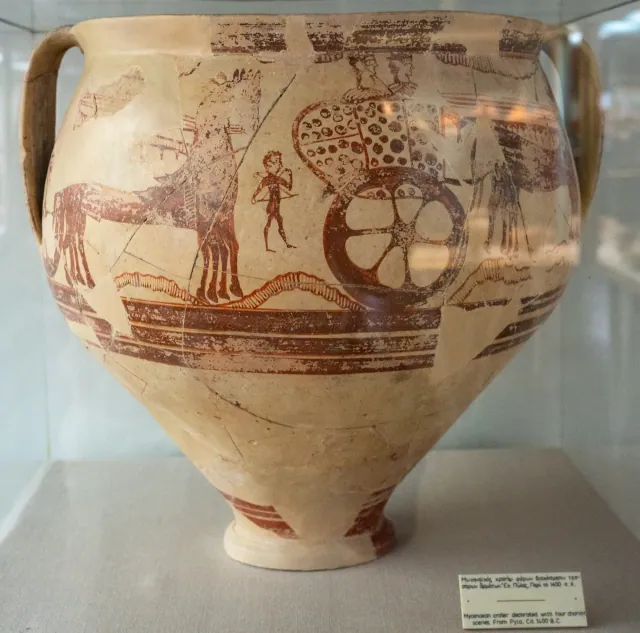
Examining the burning of Pylos, Thebes, Mycenae and Tiryns, Jung rejects climate change and earthquakes as causes: mudbrick-and-timber buildings required added fuel to burn, and at Tiryns fire targeted the Upper Citadel and gates while sparing the Lower Citadel. Drawing on Pylos and Mycenae battle frescoes, large workshops in Corinthia and Attica, and Amarna letters from Byblos on peasant coalitions with the Habiru, Jung argues that local figures such as the qa-si-re-we and elders (exemplified by an ashlar farmhouse at Chania in the Argolid) organised resistance during a late-13th-century crisis. Their break with the palace established 12th-century private landholding, and the brief restoration of central authority in Building T at Tiryns failed.
In the discussion afterwards, Vassos Karageorghis, Sophocles Hadjisavvas, Despo Pilides and George Papasavvas compare Ras Ibn Hani, Ugarit, Hazor and Late Cypriot Alassa and Ayios Sozomenos.
From our collection
Pieces in the Drakopoulos collection of the kinds and periods this talk covers: Late Cypriot (Late Bronze Age).
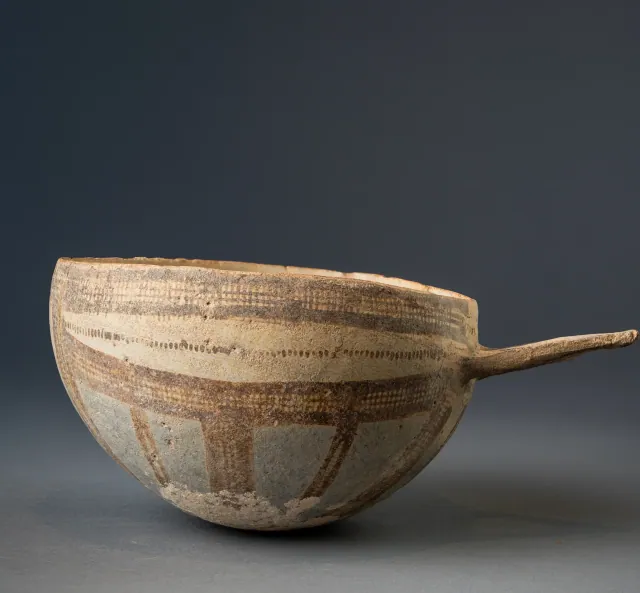
White Slip II Hemispherical Bowl with Wishbone Handle
Late Cypriot (Late Bronze Age)
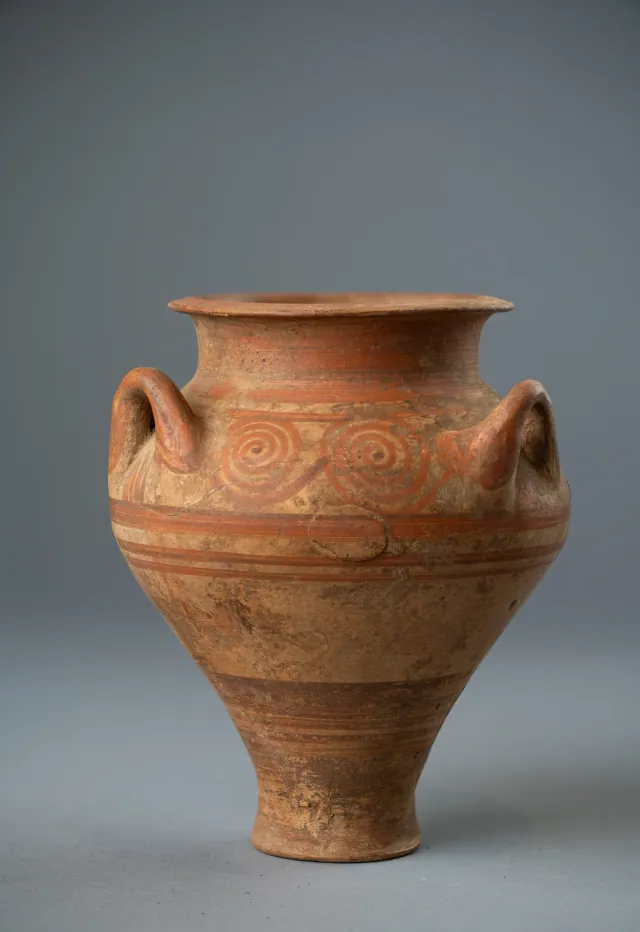
Cypriot Three-Handled Jar in the Mycenaean Style with Running Spirals
Late Cypriot (Late Bronze Age)
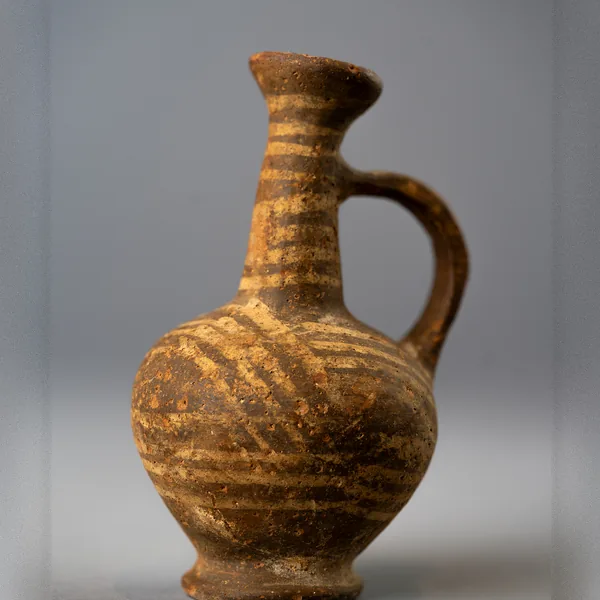
Base Ring II Bilbil Juglet with White-Painted Bands
Late Cypriot (Late Bronze Age)
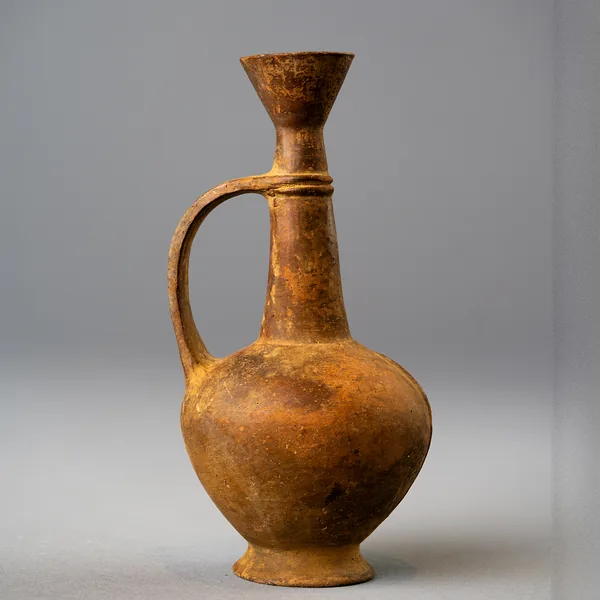
Base Ring Bilbil Juglet with Funnel Mouth and Neck Ridge
Late Cypriot (Late Bronze Age)
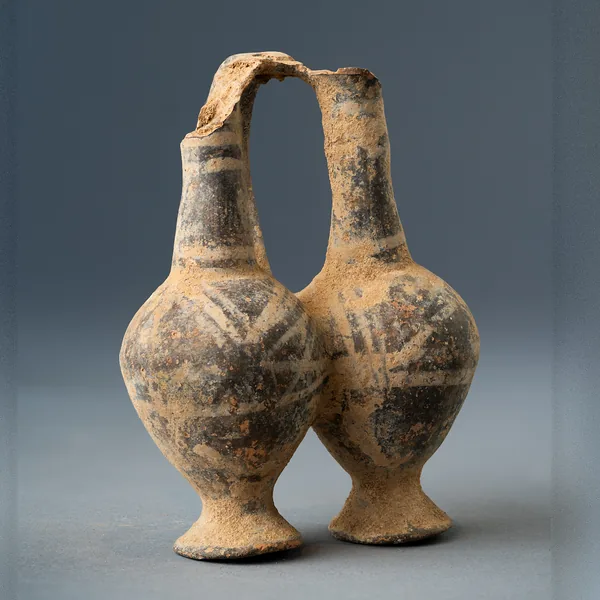
Base Ring II Double Juglet with White-Painted Decoration
Late Cypriot (Late Bronze Age)
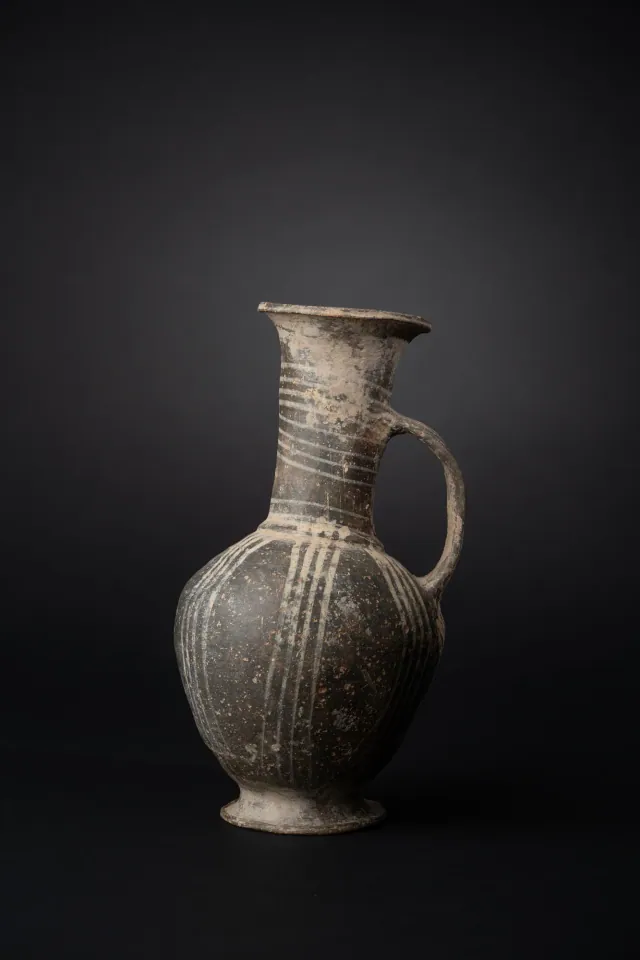
Base Ring II Jug with White-Painted Lattice Bands
Late Cypriot (Late Bronze Age)
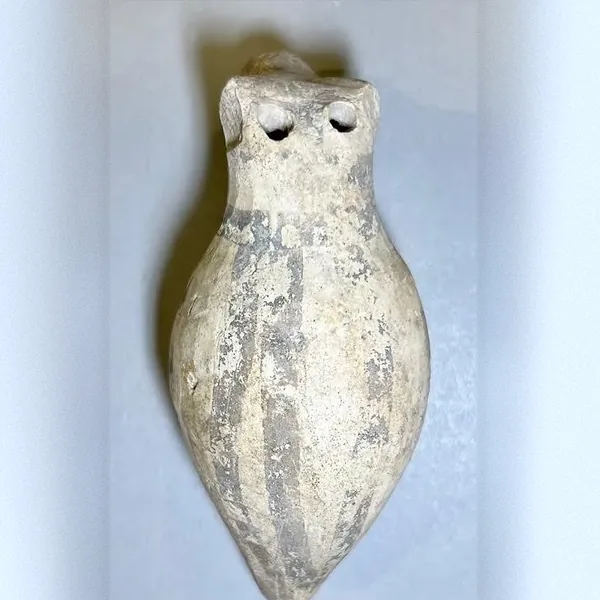
White Painted VI Owl-Headed Rattle
Late Cypriot (Late Bronze Age)
Background
Where to read more on this site before or after watching.
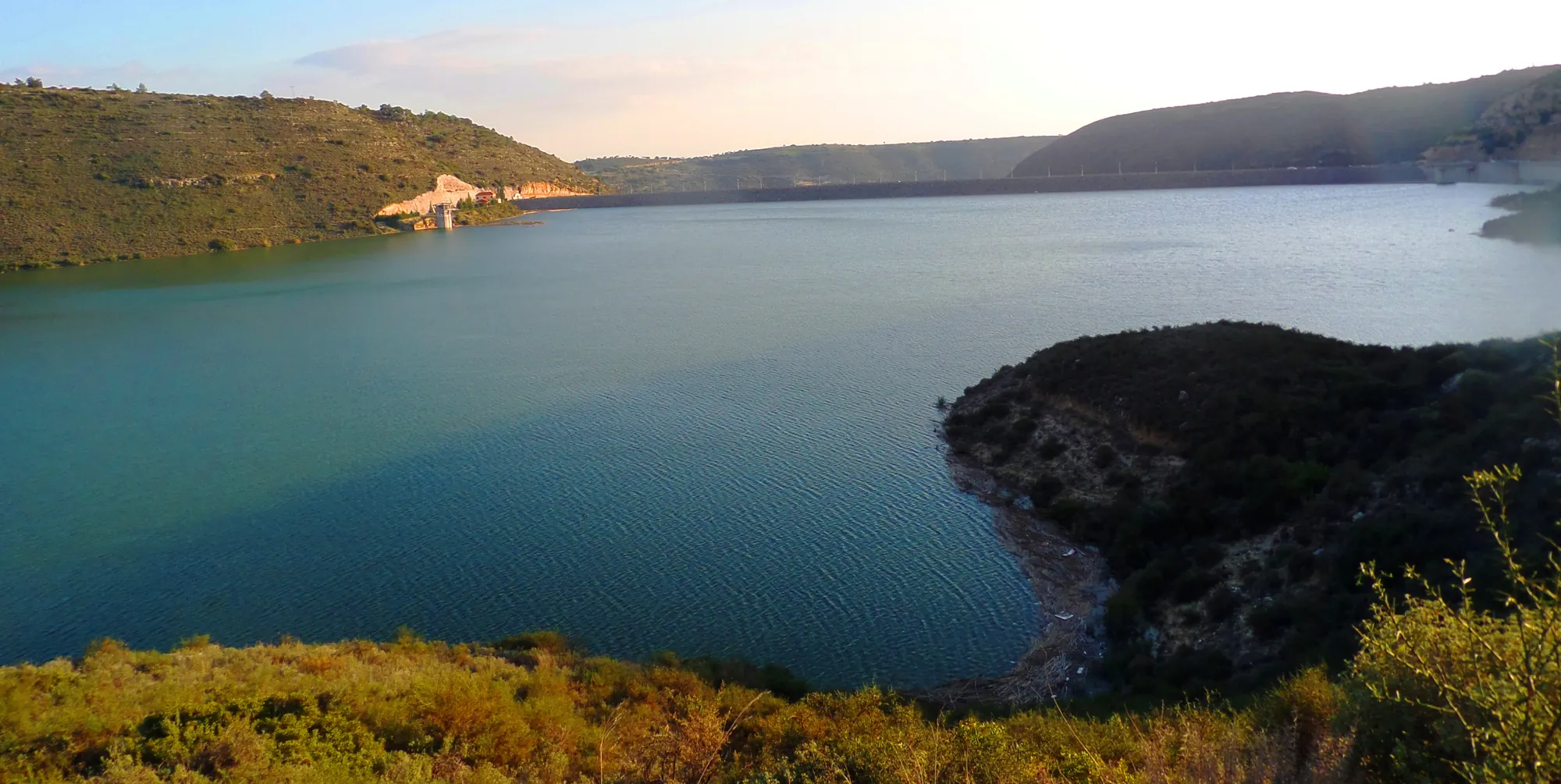
The site
Alassa
A Late Bronze Age town in the Kouris valley, found in 1983 during survey ahead of the Kouris dam and excavated by Sophocles Hadjisavvas for the Department of Antiquities from 1984 to 2000. Its upper quarter at Paliotaverna has the largest ashlar building of the period on Cyprus; houses and tombs lie downslope at Pano Mandilaris.
In the compendium
The Mycenaeans and Cyprus
The palatial Late Bronze Age societies of mainland Greece, whose pottery flooded Cypriot coastal towns in the 14th and 13th centuries BCE.

In the compendium
Ugarit and the Levant
The Syrian port kingdom of Ugarit and the wider Levantine coast, Cyprus's closest Bronze Age trading partners across the water.

The period
Late Bronze Age
The Late Cypriot period, c. 1650–1050 BCE, when copper exports made Cyprus an urban, literate trading power before the crisis around 1200 BCE.
Map of Cyprus
Places discussed in the talk
- Ground above 200, 500, 1,000 m
Places