
Lecture·Archaeological Research Unit - University of Cyprus·2017
New Swedish Cyprus Expedition excavations at Hala Sultan Tekke, 2010–2017
Chapters
About the lecture
Peter M. Fischer and Teresa Bürge present an overview of the 2010 to 2017 seasons of the New Swedish Cyprus Expedition at the Late Bronze Age city of Hala Sultan Tekke, west of the Salt Lake. Extending the earlier work of Paul Åström, the project combines geophysical prospection across roughly fifty hectares with stratigraphic excavation to investigate the extent of the city and its abandonment in the twelfth century BC. Fischer outlines the three main occupational strata identified in the settlement, destroyed around 1300 BC, 1200 BC, and the mid-twelfth century BC respectively, and explains how a calibration plateau between roughly 1225 and 1130 BC complicates precise radiocarbon dating.
Walking through City Quarters 1, 2, and 3, Fischer shows domestic compounds that also housed workshops. Numerous spindle whorls and loom weights, some of Minoan type, appear alongside basins and crushed murex shells for purple dyeing, with purple staining preserved in the soil. In Stratum 2 of City Quarter 2, an ash layer yielded melted silver and intact gold jewelry, indicating fire temperatures around 1000 degrees, as well as 300 kilograms of copper slag, furnace fragments, tuyères, moulds, and a 1.5-kilogram bronze ingot from copper metallurgy inside the settlement. Pottery includes local and imported Mycenaean wares and pictorial kraters depicting warriors, birds, bulls, and a horned figure.
Six hundred metres east, near the mosque, Area A contains wells, tombs, and ochre-sealed offering pits holding intact vessels without human remains. One reused well held six skeletons, including a young woman with an artificially deformed cranium and a large dog, thrown in without grave goods. Tomb X contained seventeen individuals and ceramics spanning c. 1550 to 1200 BC, including White Slip, Base Ring, and Red Lustrous Wheelmade ware spindle bottles, alongside a scarab of Thutmose III.
Bürge then examines nine cylinder seals found between 2010 and 2016 in haematite, steatite, chlorite, faience, and Egyptian blue. These include a two-register haematite seal probably recarved in Cyprus, Mitanni Common Style seals, and locally produced examples from Tomb X showing animals, trees, bucrania, and ingot symbols. After Fischer shows recent finds from the 2017 season, including notched scapulae and an ivory spindle with preserved wooden shaft, a long discussion addresses the warrior krater sherd, the origin of a black burnished ware, stone anchors and the salt lake harbour, and lead isotope analysis linking the copper slag to ores at Kalavasos.
From our collection
Pieces in the Drakopoulos collection of the kinds and periods this talk covers: Base Ring ware, Mycenaean pottery, Red Lustrous Wheelmade ware, White Slip ware, Late Cypriot (Late Bronze Age).
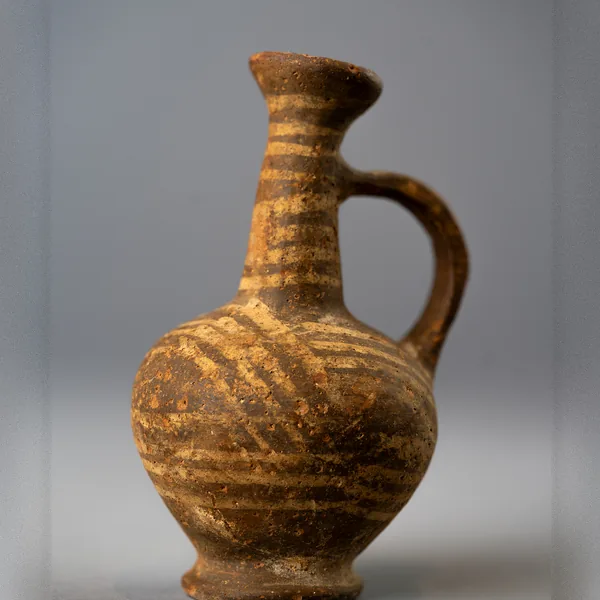
Base Ring II Bilbil Juglet with White-Painted Bands
Base Ring ware
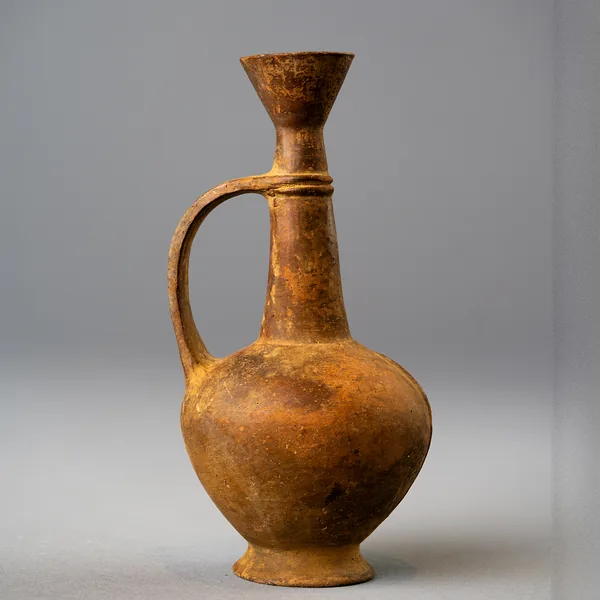
Base Ring Bilbil Juglet with Funnel Mouth and Neck Ridge
Base Ring ware
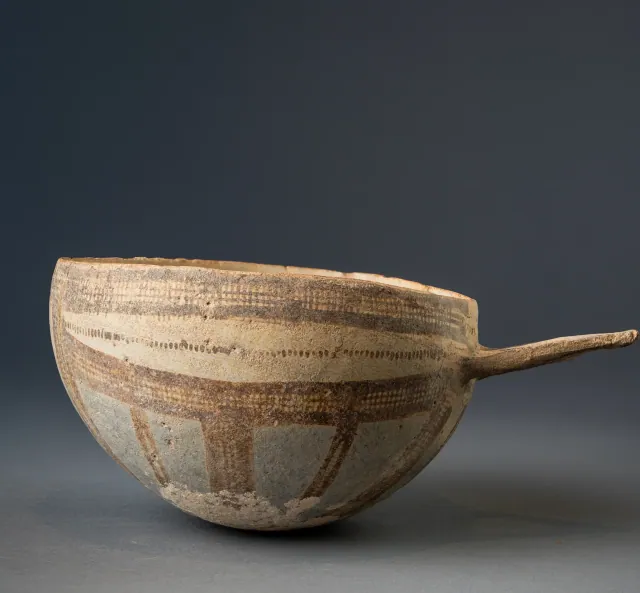
White Slip II Hemispherical Bowl with Wishbone Handle
White Slip ware
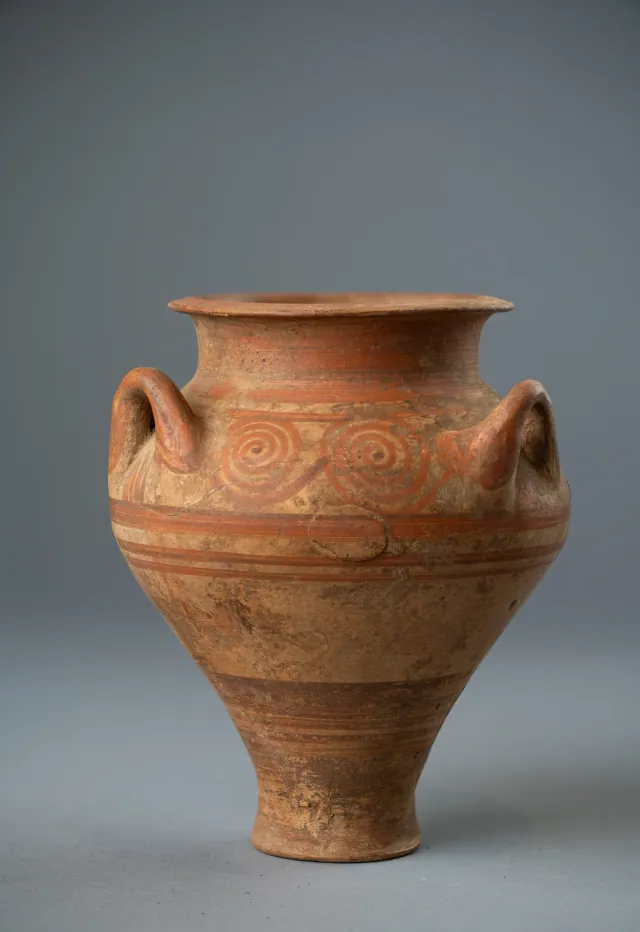
Cypriot Three-Handled Jar in the Mycenaean Style with Running Spirals
Mycenaean pottery
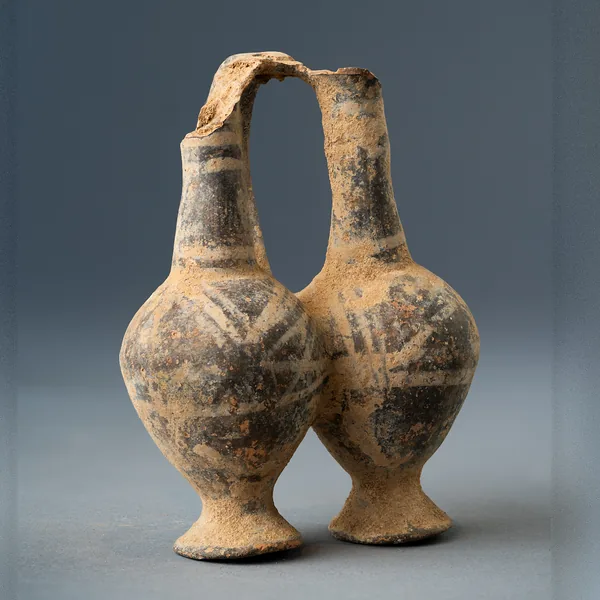
Base Ring II Double Juglet with White-Painted Decoration
Base Ring ware
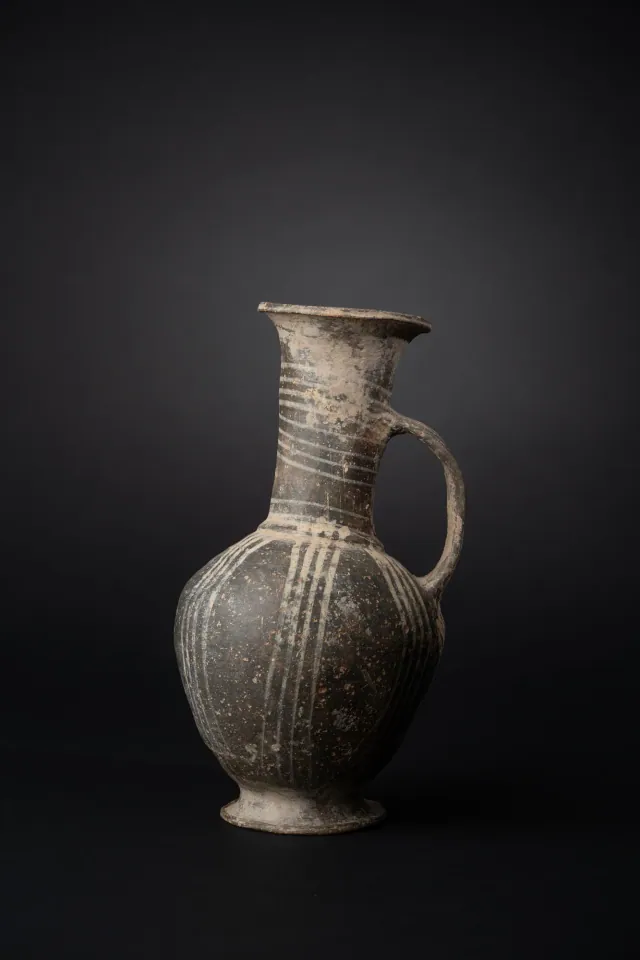
Base Ring II Jug with White-Painted Lattice Bands
Base Ring ware
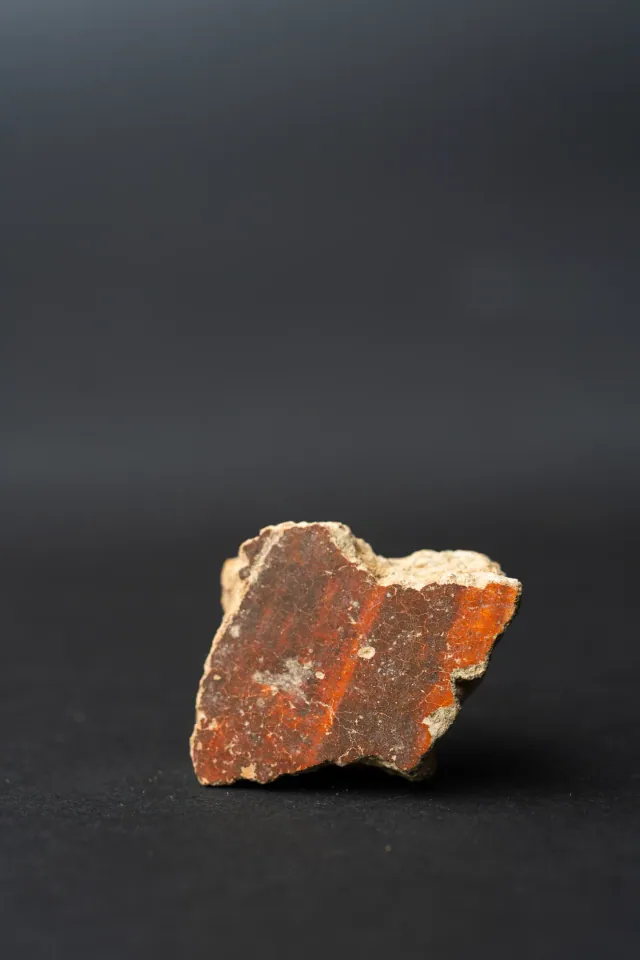
Red Lustrous Ware Body Sherd with Fire-Mottled Slip
Red Lustrous Wheelmade ware
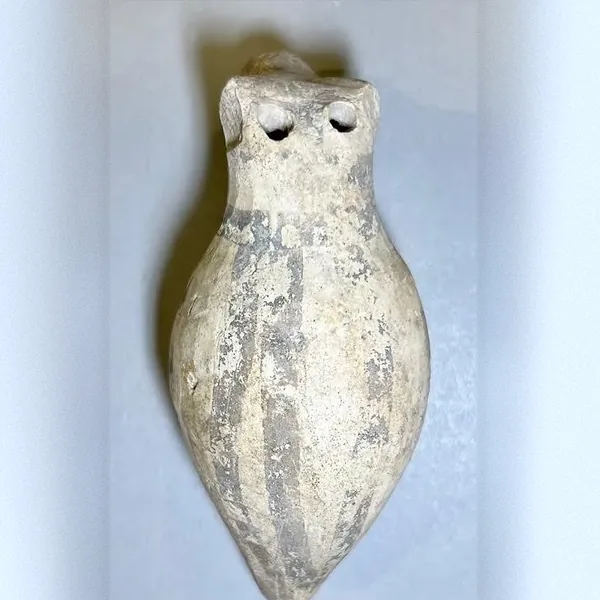
White Painted VI Owl-Headed Rattle
Late Cypriot (Late Bronze Age)
Found at the places discussed
Objects in our catalogue, in museum collections, recorded as found at these sites.
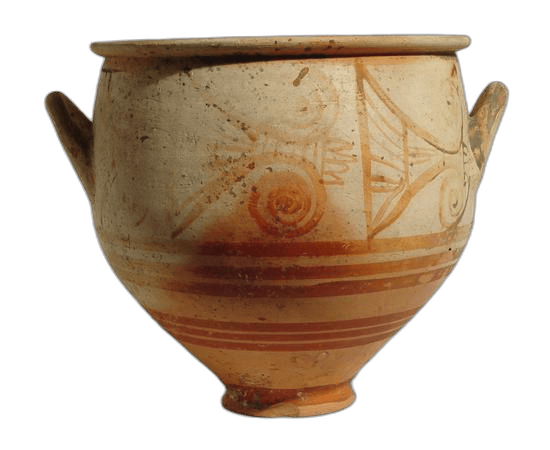
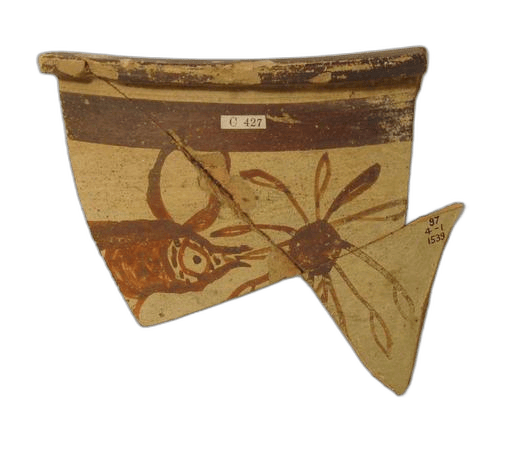
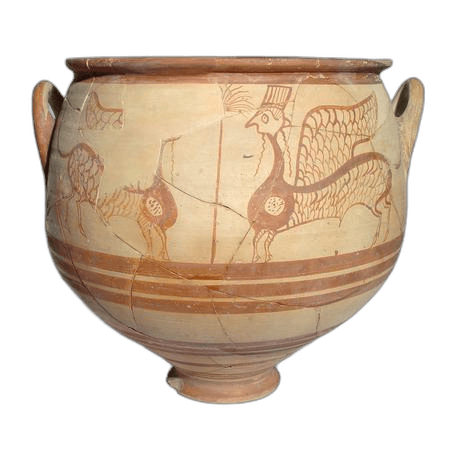
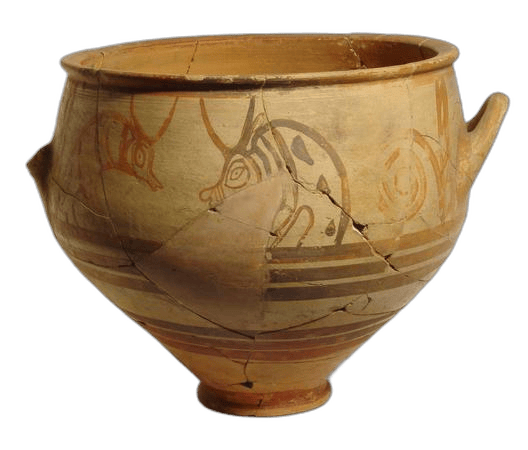
Background
Where to read more on this site before or after watching.
The site
Enkomi
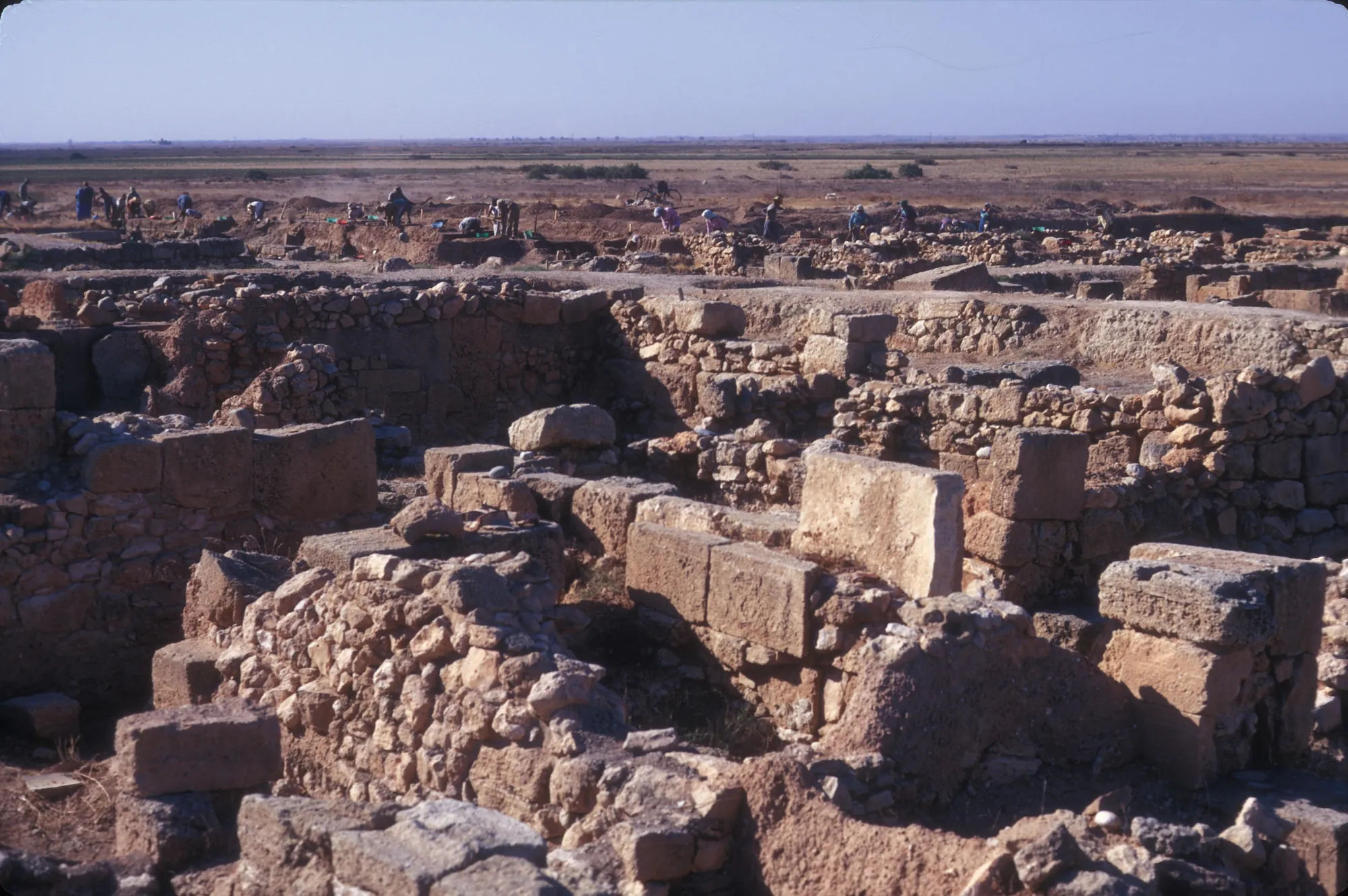
Enkomi is a walled Late Bronze Age town near the mouth of the Pedieos river on the bay of Famagusta, lived in from about 1650 BC until it was gradually abandoned for nearby Salamis. It was a port for Cypriot copper, and its excavations produced metal workshops, sanctuaries with bronze cult statues, rich tombs and the largest group of Cypro-Minoan inscriptions on the island.
In the compendium
Late Bronze Age Towns and Buildings
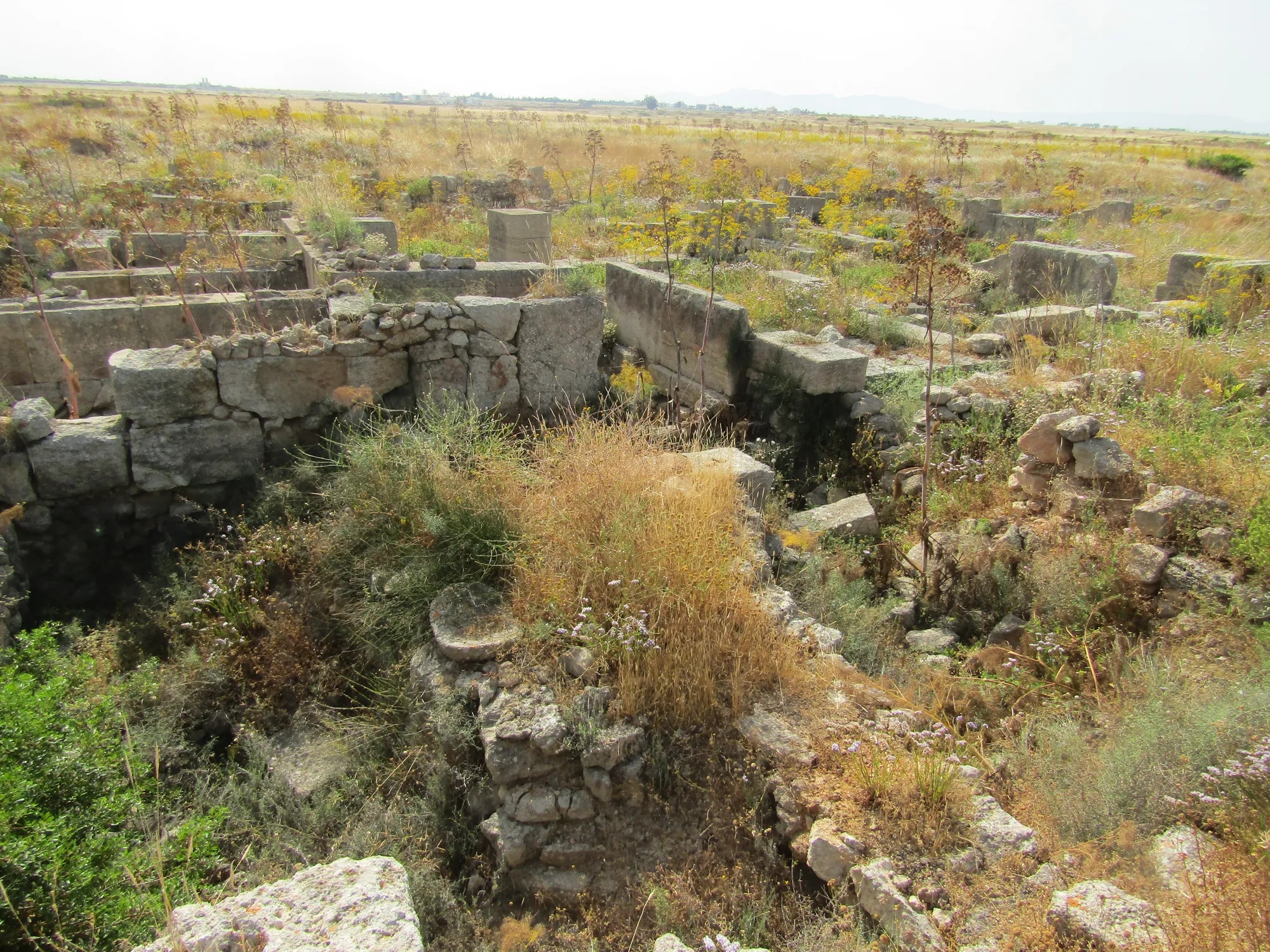
How Late Bronze Age Cyprus built its first towns: street grids, large ashlar buildings with storage halls, courtyard houses, and the short-lived settlements of the twelfth century.
In the compendium
Egypt
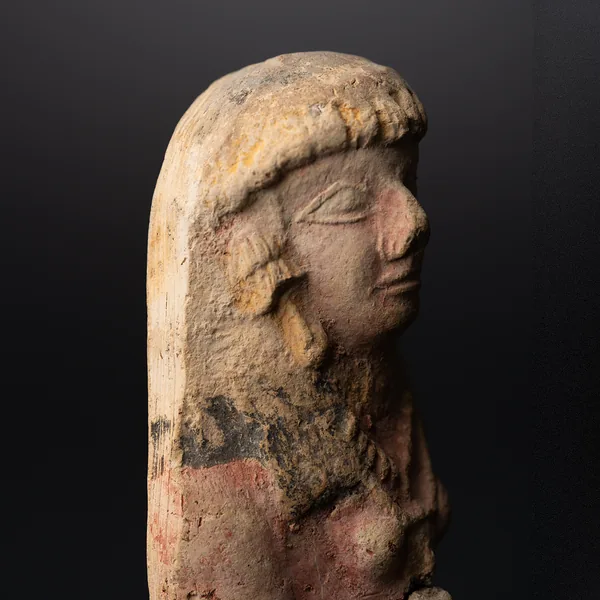
Ancient Egypt, Cyprus's partner in copper, pottery and prestige goods from the Middle Kingdom to the Ptolemies, who annexed the island.
In the compendium
The Mycenaeans and Cyprus
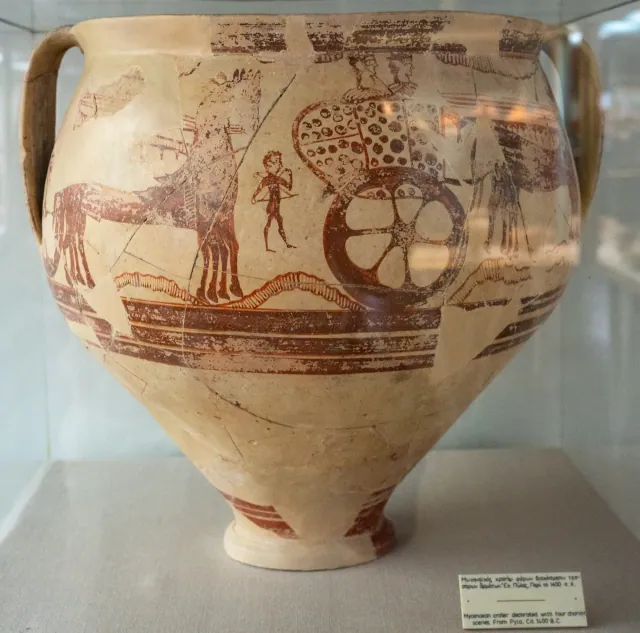
The palatial Late Bronze Age societies of mainland Greece, whose pottery flooded Cypriot coastal towns in the 14th and 13th centuries BCE.
Map of Cyprus
Places discussed in the talk
- Has a page on this site
- Other places
- Ground above 200, 500, 1,000 m