
Contents
Cyprus lies close to one of the active plate boundaries of the eastern Mediterranean, and earthquakes certainly struck it in antiquity. The written record of them begins only under Augustus, with a quake that damaged Paphos, and it is thickest in the fourth century AD, when a run of shocks hit Salamis, Paphos and Kourion and left the last of them, for a generation, an abandoned ruin. Before that there are no texts, only collapsed walls, burnt floors and bodies in rubble, and each of these can have other causes. This entry covers why the island shakes, how archaeologists have tried to recognise an earthquake in the ground, the earthquakes proposed for Cyprus and their evidence, and the dispute over the date of Kourion's destruction. It belongs with the entry on climate and landscape, which covers the island's other natural pressures.
Why Cyprus shakes
The island lies just north of the Cyprus Arc, the section of the boundary between the African and Eurasian plates that runs south of it; most Cypriot earthquakes come from the collision zone to the south-west [1, p. 1]. Costello puts the island's vulnerability down to "its proximity to the convergence of the African and Anatolian plates" [2, p. 14]. The arc does not release its strain evenly. It passes through long quiet periods and short active ones; the Kourion Urban Space Project team cites 1995 to 1999 as a recent active phase [1, p. 1]. Within the island the south-west is the most exposed: "the Paphos area is the most active seismic region in Cyprus based on the historical catalogue", according to Nicholas Kyriakides and colleagues, who recorded severe cracking of rock-cut walls and collapsed supports in the rock-cut hypogea of the Tombs of the Kings at Paphos [3, p. 1]. They also stress how little is known: "severe and repeated earthquakes devastated Cyprus in antiquity", yet information on ancient seismicity is "very limited" [3, p. 1].
The historical catalogue gives a sense of scale. Among later events Rapp cites the earthquake of 11 May 1222, which "completely destroyed Limassol and Paphos" [4, Rapp, p. 466]. Rapp argues that people living in south-west Cyprus in the third and second millennia BC "would have known the rumble of earth tremors", and that their buildings of mudbrick and mud-mortared stone, the standard materials described under architecture, were vulnerable: the Early Bronze Age houses at Sotira-Kaminoudhia would not have come through a shock of intensity VIII on the Modified Mercalli scale undamaged [4, Rapp, p. 466].
Reading an earthquake in the ground
Archaeologists rarely see an earthquake directly. Collapsed walls, crushed pots and people caught under rubble are what archaeologists find, and a fire, a flood, subsidence, poor construction or an attack can produce much the same deposit. The habit of attributing destructions to earthquakes has a history. Claude Schaeffer, excavator of Ugarit on the Syrian coast and of Enkomi, proposed in Stratigraphie comparée (1948) that the destruction layers of Near Eastern sites could be correlated as the marks of regional earthquakes, a method that paralleled Evans's "seismic stratigraphy" at Knossos (1928) [5, p. 227]. The Minoan volume edited by Jusseret and Sintubin in 2017 shows how many Cretan destructions were assigned to earthquakes on evidence of very uneven quality, and prefers to speak of "potential earthquake archaeological effects" rather than proven ones [5, p. 227].
Bernard Knapp and Sturt Manning state the difficulty for the end of the Bronze Age directly. It is hard "to demonstrate that the sites in question were destroyed by an earthquake as opposed to other natural or human-induced factors (flooding, subsidence or slipping of the earth beneath buildings, poor construction techniques, etc.)", and earthquakes "seldom" bring about society-ending change [6, p. 112]. Rapp makes the same point from the field: "assessing archaeological evidence for seismic activity must be approached with caution" [4, Rapp, p. 466]. The clearest Cypriot example of the problem comes from Alassa, discussed below, where one reading of the same building found fallen pillars and an earthquake, and another found a fire [7, p. 105].
The texts have problems of their own. Guidoboni has warned that written and archaeological sources run on "two conceptually different timescales", and that combining them carelessly risks creating "seismological 'monsters'" [8, p. 17]. The proposals discussed in this entry are these:
| Date | Place | Evidence | Proposed by | Status |
|---|---|---|---|---|
| Early Bronze Age | Sotira-Kaminoudhia | Wall tumble with blocks in order; skeletons outside graves | Rapp; Swiny (2003) | Possible |
| c.1050 BC and earlier | Enkomi | Upper levels | Schaeffer (1952); later Cline | Disputed; no evidence found by Knapp & Manning (2016) |
| c.1075 BC | Kition, Area II | Destruction and rapid rebuilding | Karageorghis & Demas (1985) | Excavators' reading |
| Late Bronze Age (first phase) | Alassa, Building II | Fallen pillars | Hadjisavvas (2017) | Contested: fire |
| c.15 or 14 BC | Paphos (and Kourion) | Dio Cassius, Seneca; theatre repairs | Ancient authors | Accepted |
| AD 76 or 77 | Salamis, Paphos and others | Sibylline Oracles 4 | Hill | Textual only |
| AD 331/2 and 341/2 | Salamis | Theophanes; refoundation as Constantia | Theophanes; Malalas | Second may be a doublet |
| Later 4th century AD | Kourion | Collapsed houses, victims, coins | Soren (365); Costello (c.370 to 380) | Date disputed |
| Later 4th century AD | Nea Paphos theatre | Final destruction, no rebuilding | Barker (2015) | Probable |
Bronze Age claims
The earliest case is modest. At Sotira-Kaminoudhia, an Early Bronze Age settlement in the south-west, Rapp describes a stretch of wall tumble in which the blocks lay in their original arrangement, and calls it "evidence of a possible earthquake" [4, Rapp, p. 466]. Swiny notes a skeleton in Unit 22 that was not a burial and suggests the person might have been an earthquake victim, as might remains found in Units 6 and 16; radiocarbon dating did not settle the matter [4, Swiny, p. 505].
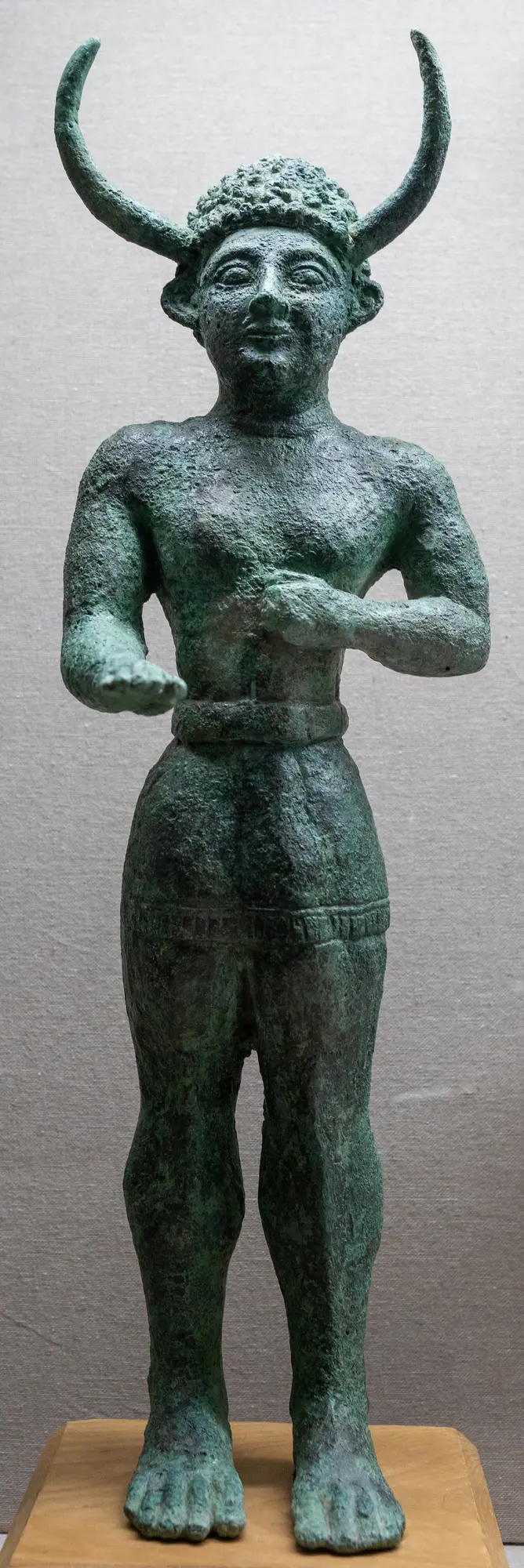
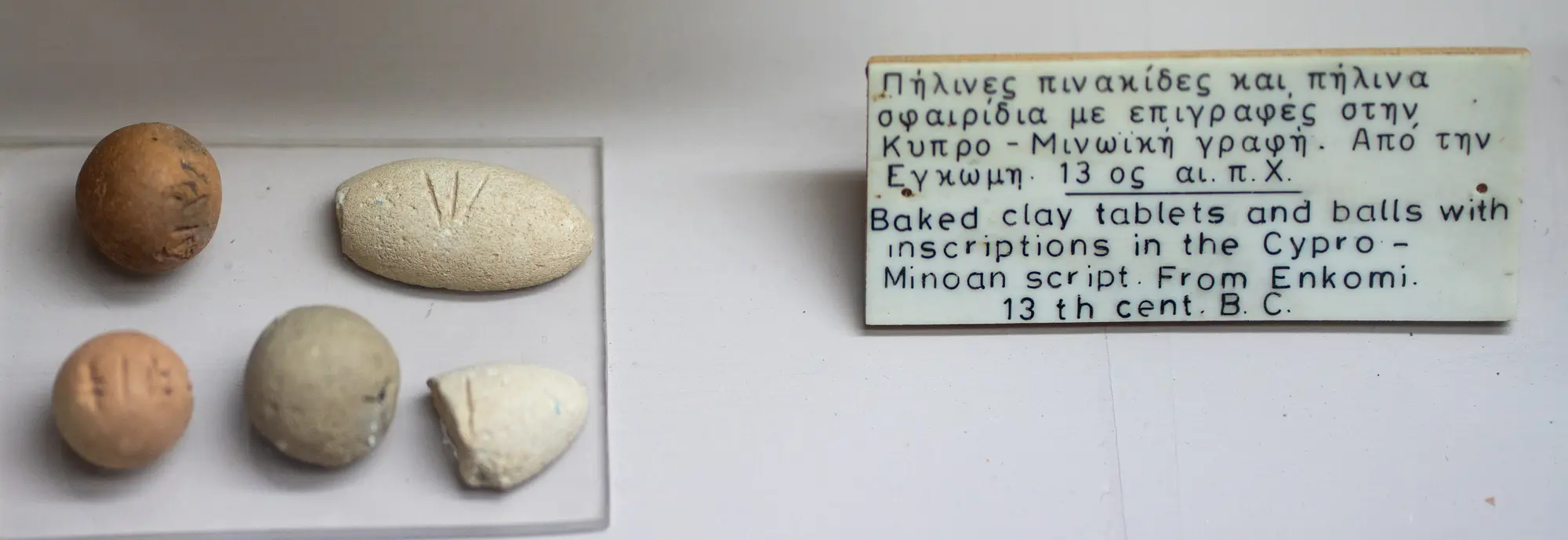
Enkomi, on the east coast, is the case where the method and the evidence part company. Schaeffer read the upper levels of the town as a sequence of "flood and earthquake ... up to its final destruction and desertion about 1050 B.C." [9, p. 1]. Amos Nur and Eric Cline revived the idea as a "storm" of earthquakes over about 1225 to 1175 BC that helped bring down the Late Bronze Age palaces; the argument is reviewed in the site's article on Cline's 1177 B.C.. Knapp and Manning note that Nur and Cline themselves said earthquakes alone would not end societies, and that Cline posits earthquake damage "even at Enkomi on Cyprus, where there is no such evidence" [6, p. 112]. They cite work by Langgut and colleagues that rejects the storm on palaeoseismic grounds, pointing out that there are no texts describing it and that destructions in the Levant continue down to about 1100 BC [6, p. 112]. Their own conclusion follows Dickinson: "it is a waste of effort to try to isolate a single cause or prime mover for the Collapse" [6, p. 113]. Objects from the town on this site include the bronze Ingot God and a group of clay balls inscribed in Cypro-Minoan, both in the Cyprus Museum, and a Late Cypriot III dish from Enkomi given to the Ashmolean Museum in 1953 by Hector Catling (AN1953.410.f.1).
Kition offers the most specific Bronze Age date. In the early twelfth century BC Area II (Kathari) was rebuilt on a monumental scale, with the ashlar Temple 1, Temples 4 and 5 and a Cyclopean wall. According to the excavators, Vassos Karageorghis and Demas, "in about 1075, Area II (Kathari) was destroyed by an earthquake and the site was rebuilt following a very short period of abandonment" [10, p. 1, citing Karageorghis and Demas 1985: 279]. Around 1000 BC the area was abandoned for about 150 years, possibly because the harbour silted up, before it was reused in the ninth century by the Phoenicians [10, p. 1]. The notice cited here reports the earthquake as the excavators' reading; it does not give the physical evidence for it.
Alassa-Paliotaverna shows how a single building can be read two ways. Building II is an ashlar structure of about 1,400 m². Its excavator, Sophocles Hadjisavvas, suggested that its first phase was destroyed by an earthquake, "based on several fallen pillars" [7, p. 105, citing Hadjisavvas 2017b: 157]. A later survey of destructions by fire in Late Bronze Age Cyprus points to charred floors, floors discoloured by heat and cracked ashlar, and concludes that "the entire building was destroyed by fire"; the final abandonment of the site in LC IIIA was gradual, with floors left empty [7, p. 105]. Alassa is also discussed under copper metallurgy.
The Iron Age and Classical centuries: a silent record
No earthquake is securely attested in Cyprus between the end of the Bronze Age and the Roman period. That covers the Cypro-Geometric, Cypro-Archaic and Cypro-Classical kingdoms and most of the Hellenistic period. The plate boundary did not stop moving in these centuries, and earthquakes must have occurred, but we know of no destruction of the period that has been attributed to one. The literary references to Cypriot earthquakes assembled by Kyriakides and colleagues start with the Augustan quake at Paphos [3, p. 1].
Roman Paphos and the Flavian earthquake
The first earthquake in Cyprus with a written date struck Paphos, the capital of the island for most of the Hellenistic and Roman periods [11, p. 33], under Augustus. The sources give the year differently. Davis dates it to 15 BC and says it destroyed Paphos, which received imperial aid and a new name [12, p. 9]. The Kourion Urban Space Project report cites Dio Cassius 54.23.7 for an earthquake that hit Paphos and Kourion, where the theatre was restored; the report prints the year as "15 CE", an error for 15 BCE [1, p. 1]. Craig Barker, who excavated the theatre of Nea Paphos for the University of Sydney, places the quake "around 14 BC": "according to Seneca, the town was nearly destroyed, and Dio Cassius tells us that Nea Paphos was restored by Augustus and called Augusta in his honour" [11, p. 40]. In Barker's sequence the theatre's third phase is a repair after that event, perhaps better called a restoration than a renovation [11, p. 40]. Two dedications to Tiberius at Palaepaphos were set up by the city under the name "Sebaste Paphos" [13, p. 210]. Nea Paphos was inscribed on the UNESCO World Heritage List in 1980 [11, p. 33].
A second disaster came under Vespasian. An earthquake "in the 8th or 9th year of Vespasian ... destroyed three or more cities of Cyprus, of which we have reason to believe that Paphos was one"; the article cites Hill for "a very serious disaster in A.D. 76 or 77", adding that two of the cities, "if the Sibylline Oracles may be trusted, were Salamis and Paphos" [13, p. 210 and n. 35]. The oracle in question, in Book 4 of the Sibylline Oracles, was written shortly after the eruption of Vesuvius in AD 79 and prophesies that "an earthquake will destroy at once Salamis and Paphos when the dark water overwhelms Cyprus" [14, p. 421]. It is a prophecy after the event, and it is the only text for the cities named. Davis suggests that a quake in the late 70s may explain why Flavian silver coins were minted on Cyprus [12, p. 9]. The second and third centuries AD were, in Davis's word, "seismically quiet" [12, p. 9]. Salamis and Paphos under Rome are covered under the Roman period.
The fourth-century sequence: Salamis-Constantia and Paphos
Earlier earthquakes, Costello writes, were mostly "not catastrophic" and left time for repair; the fourth century AD brought a series of them, which she calls earthquake "storms" [2, p. 15]. The first well-attested pair struck Salamis. The Byzantine chronicler Theophanes dates them to 331/2 and 341/2; Mango and Scott suggest the second "may be a doublet" of the first, the same event entered twice [15, p. 763]. Davis, who accepts both, writes that the quake of AD 342 "effectively destroyed Salamis and severely damaged Paphos" and badly damaged the temple of Zeus at Salamis [12, p. 10]. Costello adds that after the second quake taxes were remitted for four years and the city was refounded on a smaller scale as the capital, Constantia [2, p. 15].
Who refounded the city is less certain than the refoundation itself. Hill credited Constantius II, and most scholars have followed him; Claudia Rapp describes the city as "badly damaged in the earthquakes of 332 and 342" and rebuilt as Constantia, with its gymnasium "Christianised" [15, p. 762]. Malalas, writing in 528, placed the earthquake under Constantius Chlorus, who "remitted taxes from the surviving citizens for four years" and renamed the city Constantia, "now the metropolis of Cyprus"; modern scholars treat Malalas as mistaken on the emperor [15, p. 762]. The chapter's author concludes that the link to Constantius II "should not be taken as certain" [15, p. 763].
At Paphos the evidence is architectural. Barker dates the final destruction of the theatre to the late fourth century AD, "probably as a result of the famous cataclysmic earthquake of AD 365 or another in the following decades" [11, p. 36]. After it, "for the first time in the structure's history there was no attempt to rebuild", which Barker explains by a change in attitudes to pagan spectacle as much as by the damage, and the ruin became a quarry for a nearby basilica [11, pp. 33, 42]. Jerome, who visited Cyprus in 385 and wrote his Life of Hilarion about five years later, described Paphos as a city "on several occasions ... destroyed by earthquakes and whose ruins alone now provide evidence of what it once was" [12, p. 10; 8, p. 19]. Burrus notes that this picture is Jerome's, written two decades after the shocks, and that apart from Jerome and "one ambiguous statement by Libanius" no contemporary writer mentions Cypriot earthquakes of this period [8, pp. 18–19]. The statement is in Libanius's second oration, of 380/381: "we are not Cypriots, nor, heaven forbid, have we seen our city destroyed by earthquake" [8, p. 164 n. 26]. The temple of Aphrodite at Palaepaphos was also destroyed by an earthquake, at a date that cannot be fixed [12, p. 10].
Kourion and the AD 365 question
Kourion is the one Cypriot site where an ancient earthquake can be studied house by house. The city was thriving at the beginning of the fourth century AD and "an abandoned ruin" by its end [2, p. 14]; Costello describes the Earthquake House as "destroyed with little or no warning by a massive earthquake", with its contents in place, and calls Kourion a "'Pompeii' of the late Roman Empire" [2, p. 1]. The first debris was found by the University of Pennsylvania expedition, which began work in 1934 under George McFadden, in a trench that held two skeletons its excavators nicknamed "Romeo and Juliet" [12, p. 10]. David Soren of the University of Arizona reopened the area in 1984. He found about a metre of fill above the collapse, a pattern of fallen walls that he read as pointing to an epicentre to the south-west, and a stable in which a mule or horse was still tethered; the finds included a marble table top, a bronze lamp stand with dolphin-headed supports, glass, pottery and small coins [12, p. 10]. The city's earlier history is outlined in the article on Iron Age Kourion.
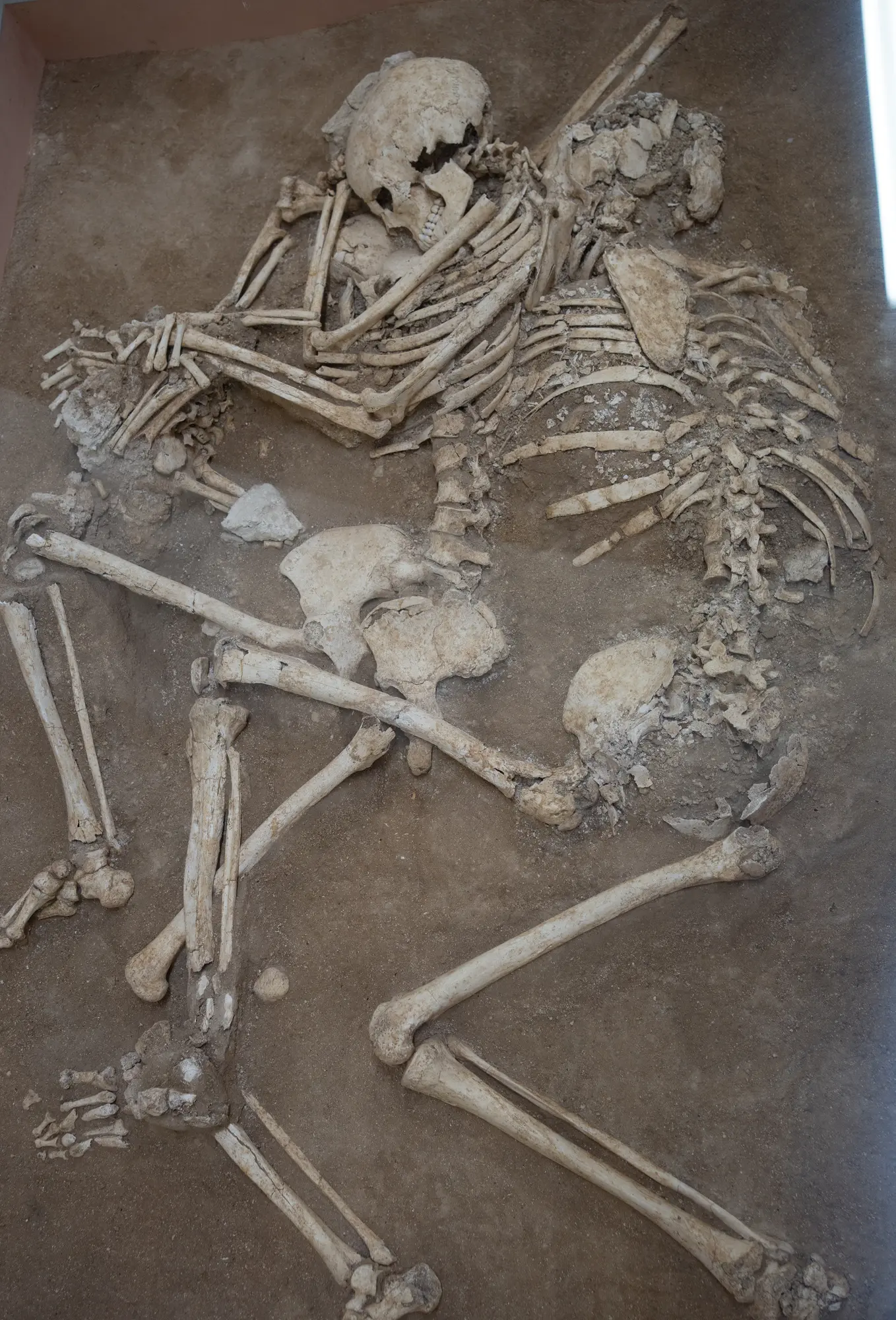
The sources count the victims differently, and the counts should be kept apart. Costello reports "the remains of seven individuals" in the Earthquake House [2, p. 1]. Davis counts "8 sets of human remains" in the house and its surroundings, among them a family found huddled together, the man wearing a ring with a Chi-Rho, the monogram of Christ [12, p. 10]. Burrus, following Soren's account, describes a girl of about thirteen lying across the hindquarters of the mule, whom the excavators called "Camelia"; a man in his fifties under a doorway; and a young woman holding a baby of about eighteen months, with a man who appears to have been shielding them [8, p. 18]. The remains shown in the Kourion Museum are recorded as a family found holding one another in a small house (Human remains, Kourion Museum; see also the Kourion Museum collection). The Kourion Urban Space Project, working from 2012, found a second building destroyed in the same way. Building 4, south-west of the Earthquake House, lay under thick tumble, "suddenly and catastrophically damaged", with late fourth-century pottery beneath it, and in 2014 the team recovered the commingled remains of four people: an adolescent, a child, a young child and an infant [1, p. 2].
The date is the argument. Soren first dated the destruction to AD 370, in a paper of 1981 [12, p. 10]. After the 1984 season he took the latest coins as evidence for the earthquake Ammianus describes, just after dawn on 21 July 365, and with James called it "the earthquake that ended Antiquity" (1988) [12, p. 10; 2, p. 15]. Burrus follows Soren, placing the destruction "most likely ... between March of 364 and September of 365" on the latest coins, and she accepts Stiros's model of a main shock off Crete followed by "a second, probably smaller event offshore Cyprus" [8, pp. 17–18].
Costello considers Soren's hypothesis "convincingly challenged and largely invalidated" on two grounds [2, p. 15]. First, the Valens coins of the "Split-S" type took time to reach Cyprus after they were struck, so the latest coins give only a date after which the destruction happened. Second, the earthquake of 365 lay off western Crete, where it destroyed Gortyn, Eleutherna and Kisamos; at about 860 km, its effect at Kourion would have been "minimal, if any", and the wider damage Ammianus reports was the work of the tsunami, which a hilltop city without a commercial harbour would largely have escaped [2, p. 15]. Burrus herself notes that recent fault modelling makes it unlikely that even an exceptionally powerful earthquake near Crete could have caused the damage seen on Cyprus, which is why she turns to a second, Cypriot shock [8, p. 17]. Costello's conclusion is that Kourion fell "sometime during the later 4th century AD, possibly ca. AD 370–380", while admitting there is no "smoking gun" [2, p. 15]; Davis reports that her study of the coin find-spots "supports a 370 date" [12, p. 16 n.]. Two catalogues reach similar results by other routes. Guidoboni and colleagues (1994) place the quake at about 370 on the strength of Jerome, and Ambraseys (2009) at about 375, because Libanius in 380/381 would hardly speak of a disaster as old as 365, and he reads the latest Kourion coins as 374/375, a reading Burrus contests [8, p. 164 n. 24]. The Kourion project report settles for "late 4th century" [1, p. 2].
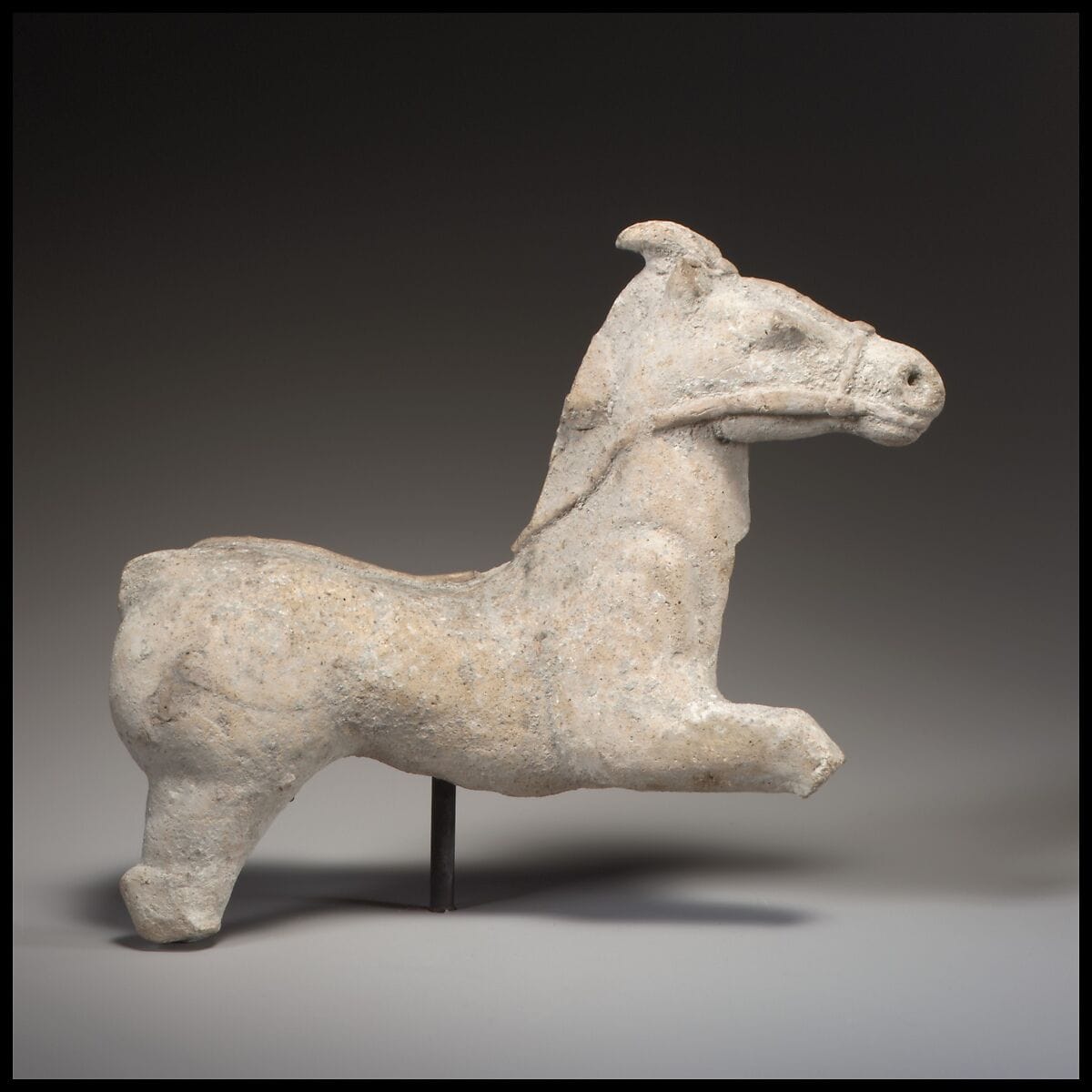
The aftermath is clearer than the date. Kourion stood empty for "at least forty years" [1, p. 2]. The sanctuary of Apollo Hylates outside the city, which Davis describes as "totally ruined" by the earthquake, was not rebuilt and was used only by squatters [12, p. 10; 2, p. 16]; a terracotta horse from a chariot group said to come from the sanctuary, now in the Metropolitan Museum (74.51.1809), belongs to its earlier use. When the city was reoccupied early in the fifth century, rebuilding was confined to the acropolis: the baths and nymphaeum were subdivided and a cathedral basilica rose over the Roman civic basilica [2, pp. 15–16]. A mosaic inscription in the House of Eustolios speaks of "restoring calm in the earthquake-struck land" [1, p. 2], and Costello takes the building to have been put up to help the inhabitants after the disaster [2, p. 16]. The city ended with the Arab raids of the seventh century, when its people moved to Episkopi [2, p. 16].
Objects on this page
References
- 1.Swantek, L. A., & Grimsley, L., with Davis, T. W., Davey, C. J., & Weir, W. J., Jr. (n.d.). Kourion Urban Space Project: Preliminary report of the 2018 season. Report of the Department of Antiquities, Cyprus.
- 2.Costello, B. (2014). Architecture and material culture from the Earthquake House at Kourion, Cyprus: A late Roman non-elite house destroyed in the 4th century AD (BAR International Series 2635). Archaeopress.
- 3.Kyriakides, N., Lysandrou, V., Agapiou, A., Illampas, R., & Charalambous, E. (2016). Correlating damage condition with historical seismic activity in underground sepulchral monuments of Cyprus. Journal of Archaeological Science: Reports. https://doi.org/10.1016/j.jasrep.2016.07.007 (open access)
- 4.Swiny, S., Rapp, G., & Herscher, E. (Eds.). (2003). Sotira Kaminoudhia: An Early Bronze Age site in Cyprus (CAARI Monograph 4; ASOR Archaeological Reports 8). American Schools of Oriental Research. (Geologic and geomorphic setting and resources, pp. 461–466, by G. Rapp; Chronology, pp. 495–506, by E. Herscher & S. Swiny.)
- 5.Jusseret, S. (2017). Archaeoseismological research on Minoan Crete: Past and present. In S. Jusseret & M. Sintubin (Eds.), Minoan earthquakes: Breaking the myth through interdisciplinarity (pp. 223–248). Leuven University Press.
- 6.Knapp, A. B., & Manning, S. W. (2016). Crisis in context: The end of the Late Bronze Age in the eastern Mediterranean. American Journal of Archaeology, 120(1), 99–149.
- 7.Kreimerman, I. (2023). Destruction by fire and its effect on settlement patterns on Cyprus during the 'crisis years': A view from the Levant. In T. Bürge & P. M. Fischer (Eds.), The decline of Bronze Age civilisations in the Mediterranean: Cyprus and beyond (Studies in Mediterranean Archaeology 154, pp. 97–116). Åström Editions.
- 8.Burrus, V. (2023). Earthquakes and gardens: Saint Hilarion's Cyprus. University of Chicago Press.
- 9.Woolley, L. (1952). Review of C. F. A. Schaeffer, Enkomi-Alasia I. The Antiquaries Journal. https://doi.org/10.1017/S0003581500058935
- 10.Kition. (2012). In The encyclopedia of ancient history. Wiley-Blackwell. https://doi.org/10.1002/9781444338386.wbeah02095
- 11.Barker, C. (2015). From performance to quarry: The evidence of architectural change in the theatre precinct of Nea Paphos in Cyprus over seven centuries. In S. Chandrasekaran & A. Kouremenos (Eds.), Continuity and destruction in the Greek East: The transformation of monumental space from the Hellenistic period to Late Antiquity (BAR International Series 2765). BAR Publishing.
- 12.Davis, T. W. (2010). Earthquakes and the crises of faith: Social transformation in late antique Cyprus. Buried History, 46, 5–16.
- 13.Mitford, T. B. (1947). Notes on some published inscriptions of Roman Cyprus. The Annual of the British School at Athens, 42, 201–230. https://doi.org/10.1017/S0068245400007322
- 14.Van Kooten, G. H. (2011). The Jewish War and the Roman civil war of 68–69 C.E.: Jewish, pagan, and Christian perspectives. In M. Popović (Ed.), The Jewish revolt against Rome: Interdisciplinary perspectives (pp. 419–451). Brill. https://doi.org/10.1163/9789004216693
- 15.Deligiannakis, G. (2019). Imperial and ecclesiastical patrons of fourth-century Salamis/Constantia. In S. Rogge, C. Ioannou, & T. Mavrojannis (Eds.), Salamis of Cyprus: History and archaeology from the earliest times to Late Antiquity (pp. 761–778). Waxmann.