
Excavator · Archaeologist · Scholar · Cataloguer
Einar Nilson Gjerstad
1897–1988 · Sweden
Swedish archaeologist who led the Swedish Cyprus Expedition of 1927-1931, set out the Cypriot Iron Age sequence in SCE IV:2 and later wrote Early Rome.

Key factsBorn 30 October 1897, Örebro; died 8 January 1988, Lund
- Born
- 30 October 1897, Örebro
- Died
- 8 January 1988, Lund
- Nationality
- Sweden
- Roles
- Excavator, Archaeologist, Scholar, Cataloguer, Expedition member, Donor
- Institutions
- Uppsala Universitystudied; lecturer, later professor of classical archaeology and ancient history, c. 1920–1935
- Swedish Cyprus Expeditionchief, organiser and director, 1927–1931
- Swedish Institute in Romedirector, 1935–1940
- Lund Universityprofessor of classical archaeology 1940-1957; research professor 1957-1972, 1940–1972
- Places
- Larnaca, Kalopsidha, Alambra, Nikolidhes, Phrenaros, Lapithos (settlement), Vouni, Ayia Irini, Idalion (West Acropolis, Ambelleri), Kition-Bamboula
- Also known as
- Einar Gjerstad; E. Gjerstad; Professor Einar Gjerstad
- Elsewhere
Biography
9 chapters · 11,800 words · about 50 minutes
Einar Gjerstad (1897-1988) studied classical archaeology at Uppsala, landed in Cyprus in October 1923 and in 1924 dug a Bronze Age settlement near Alambra1,61,62. His dissertation of 1926, Studies on Prehistoric Cyprus, was still called the fundamental work on the Cypriote Bronze Age half a century later14,63. From 1927 to 1931 he directed the Swedish Cyprus Expedition, whose finds included the palace of Vouni and the sanctuary of Ayia Irini1,64,65. In October 1930 he was one of the three men who drafted the division of about 18,000 finds between the Cyprus Museum and Sweden1. His Iron Age synthesis of 1948, SCE IV:2, set out the Cypro-Geometric, Cypro-Archaic and Cypro-Classical periods, and archaeologists have sorted their pottery by his system ever since16,66. He directed the Swedish Institute in Rome from 1935 and held the Lund chair of classical archaeology from 1940 to 1957, and from 1949 he argued in print that Rome was founded about 575 BC, not in 753 BC61. In 1972 Archbishop Makarios unveiled a monument at Vouni in honour of the expedition and its leader, and called Gjerstad "the founder and father of Cyprus archaeology"67,68.
Contents 9 chapters · 11,800 words · about 50 minutes
- IÖrebro, Uppsala, Asine and the first stay in Cyprus, 1897-1926
- IIFounding the expedition, 1926-1927
- IIIIn the field, 1927-1929: Lapithos, Soli, Vouni and Idalion
- IVIn the field, 1929-1931: Ayia Irini, Kition and Enkomi
- VThe division of the finds and the Swedish collections, 1930-1954
- VIPublishing the expedition: SCE I-IV, 1931-1972
- VIIRome and Lund, 1935-1972
- VIIIReturn to Cyprus and the last books, 1964-1988
- IXAssessments and legacy
Chapter I6 minutes
Örebro, Uppsala, Asine and the first stay in Cyprus, 1897-1926
Einar Nilson Gjerstad was born on 30 October 1897 in Örebro, where his father, Erik Nilson, was a merchant and local politician69. The title of Styrenius's obituary of him in the Medelhavsmuseet Bulletin gives his dates as 30/10 1897 to 8/1 198861. During the First World War the family moved to Stockholm, and in 1917 Gjerstad enrolled at Uppsala University69. Carl-Gustaf Styrenius dates the start of his studies there to the autumn of 191761. At Uppsala he studied classical archaeology and ancient history62. His teacher was Axel W. Persson, and when Persson began the Swedish excavations at Asine in Greece in 1922, Gjerstad became his assistant61,69.
The consul on the train
The invitation to Cyprus began with a meeting between Persson and Luke Zenon Pierides, Swedish consul in Cyprus, and the sources disagree on when and where it happened2. Gjerstad, in Ages and Days in Cyprus (1980), puts it in March 1922 at a railway station in Serbia1. Kristian Göransson also gives a railway station in Serbia in 19222. Persson's own account, in his popular book on Asine of 1931 as translated by Styrenius, sets it in August 1922 at the frontier between Hungary and Yugoslavia, with Persson travelling with a young assistant70. The Getty finding aid speaks of a chance encounter on a train in the Balkans in the summer of 192269. Sanne Houby-Nielsen tells the story with the Orient Express62.
The sources give the loan in different sums: in Persson's telling, Pierides, who had lost his money at the German border for not declaring it, borrowed ten pounds and then five more, having no visa for the transit through Bulgaria70. Gjerstad has two loans of five pounds, after the Serbian customs had taken all of Pierides's money1. Houby-Nielsen gives ten pounds for a transit visa through Bulgaria62. Pierides asked whether the Crown Prince might be interested in an excavation in Cyprus, and whether Persson had a young assistant to send instead of himself70. The money came back to Athens with a letter again urging a Swedish "archaeological invasion" of Cyprus1. Persson writes that an official invitation then arrived from the Archaeological Council of Cyprus, for him or for someone he chose to send70. He asked Gjerstad, whom he had thought of from the start, and Gjerstad at once said yes70. Gjerstad recalled that Persson recommended the invitation to him one summer night at Asine: "I really did not know anything about Cyprus and so said, yes, without too much deliberation. The unknown beckoned."1. Persson ended his story with the words "High interest on the small loan."70.
Houby-Nielsen notes that scholars have tended to see the turn to Cyprus as a young man's impulsiveness or pure coincidence62. She finds the story, "entertaining and funny as the story may be", hardly enough to explain Gjerstad's break with Swedish work in the Argolid and the founding of an institute in Rome, both with a more promising academic future than unknown Cyprus, or the project's scientific approach from 1923 on62.
Cyprus, 1923-1924
In October 1923 Gjerstad and his wife landed at Larnaca, where Pierides received them "with open arms"1. The sources differ on how long he stayed: Persson says sixteen months, with Pierides supporting him throughout "in the most generous way"70. The Getty finding aid also gives sixteen months, spent studying excavated material and making limited excavations69. Houby-Nielsen writes that he went for several months to plan a larger expedition62. The preface to the first volume of the Swedish Cyprus Expedition says that he had visited Cyprus "on two occasions" before 19273.
Menelaos Markides, curator of the Cyprus Museum, had shortly before excavated numerous Bronze Age tombs1. Gjerstad wrote that Markides fell ill with Parkinson's disease, could not do scientific work, and generously left all his excavated material to him to study1. According to Karin Nys, Gjerstad also explored the entire island by bicycle and made several small excavations to understand its habitation history71. In 1923 he visited Ayios Iakovos and came to know the Melia necropolis, whose tombs had been looted but never scientifically excavated2.
Gjerstad wrote that he made stratigraphic excavations of three settlements to complete the evidence of the tombs1. Styrenius lists four places: an Early Cypriote house at Alambra, a Middle Cypriote one at Kalopsidha, a Late Cypriote fortification at Nikolidhes, and Phrenaros70. Near Alambra, south of Nicosia, he dug in 1924 a house of two rooms with an enclosed court, which he dated to Early Cypriote III1,14. No one dug at Alambra again until Cornell University in 19761. He excavated the fort at Nikolidhes, near Dali, in 1924 and concluded that it was built and abandoned within Late Cypriot I1,72. Lindy Crewe, who lists the fort under Ayios Sozomenos-Glyka Vrysis, notes that its pottery has not been published72. His dissertation thanks Ewert Wrangel of Lund, whose interest made the Nikolidhes excavation possible14.
At Taoudi Chiftlik near Kalopsidha, about 15 km west of Famagusta, Gjerstad excavated a house which he describes as having ten rooms, with inner and outer courtyards and cut a stratigraphic sounding below it down to the rock, which established three periods in the Middle Bronze Age1. He dated the house to Middle Cypriot III and read it as the house of a merchant who traded in goods imported from Syria, against the farmhouse at Alambra1. Jennifer Webb explains that he based this on the quantity of wheel-made vessels thought to be Syrian imports73. She adds that later analyses by Paul Åström and Crewe suggest a date in Late Cypriot I, at least for its final abandonment73. The year of the dig is also given differently: Gjerstad and Webb say 1924, and Marie-Louise Winbladh writes 1923-51,11,73.
Near Phrenaros in the Famagusta district, worked flints on the surface drew Gjerstad to a place called Vounistiri, 1.5 km north of the village, where a small excavation found a house floor of stones, gravel and lime only 0.20 m below the surface27. No pottery was found there1. Gjerstad wrote in 1926 that there had until then been no evidence of a Stone Age in Cyprus27. The sources differ on the year: Åström says Gjerstad found the settlement in 1923, while Gjerstad dates his partial excavation to 19241,74.
Studies on Prehistoric Cyprus
Gjerstad published the results in February 1926 as his dissertation, Studies on Prehistoric Cyprus, on the Bronze Age of the island1,14. It was dedicated to the memory of his father, and its preface is dated Stockholm, February 192614. The preface thanks Markides for leave to study and publish the Cyprus Museum's collection and to use his manuscript excavation reports, and Pierides, thanks only to whose ἀρχαιοφιλία he was able to carry out some of the excavations14. It also thanks Professor Myres of Oxford for leave to publish Dudley Buxton's notes on burial customs from the Lapithos excavations of 1913, Persson for the suggestion that he go to Cyprus, and his wife for much valuable assistance14. For the book he studied material in museums from the Ashmolean and the Louvre to Cairo, Jerusalem and Beirut14. Gjerstad named fixing the chronology as one task of the prehistorian14.
He defended the dissertation at Uppsala in 1926, at the age of 292,61. Styrenius called it "a masterly account of the outlines of the island's prehistory", and in 1994 wrote that only with it were the real scientific foundations of the Cypriote Bronze Age laid61,70. The Medelhavsmuseet catalogue of 1977 called it still the fundamental work on the Cypriote Bronze Age, "although later studies have given a much more detailed picture"63. Styrenius recalled Vassos Karageorghis telling him that an unproven statement in the thesis had been proved correct nearly 40 years later61.
In 1926 Gjerstad gave the Museum of National Antiquities a group of Middle Cypriote vases and 60 boxes of sherds from Kalopsidha, now MM 1956:32811. From 1926 to 1935 he was Docent in Classical Archaeology and Ancient History at Uppsala, styled "Lecturer" in the English preface of the expedition's first volume3,69. After his first visit he concluded that a Swedish expedition could make a meaningful contribution if the money could be raised, and after the defence he began seeking scientific and financial support for it1,2.
Chapter II4 minutes
Founding the expedition, 1926-1927
In his recollection the plan began as a continuation of his own earlier excavations and was gradually widened until the whole cultural history of the island, from the Stone Age to the Roman period, fell within it1. He called it a moving, "ambulating" expedition whose excavation site was the entire island1. Earlier excavations on Cyprus had, with a few exceptions, served a commercial rather than a scientific purpose, in his words, and the expedition aimed to explore the ancient culture on a large scale1. Joanna S. Smith writes that the expedition at first planned to investigate prehistoric sites, one cemetery, one settlement and one sanctuary, and that acquiring objects for museum collections in Sweden was also a priority9.
The sources disagree on when the expedition was first proposed: the preface to the first volume of its results says that Gjerstad, then Lecturer in Classical Archaeology and Ancient History at Uppsala, "suggested in the year 1927" that more extensive research be started in Cyprus3. Smith dates to 1926 the request by Sigurd Curman, the King's Custodian of Antiquities in Sweden, for permission for a Swedish expedition, aimed at "scientific exploration of its prehistory and history"9. In his address opening the Legislative Council, printed on 18 January 1927, the Governor already said that two learned societies had asked permission to excavate and that their requests had the Government's favourable attention75.
The committee and the money
The Swedish Cyprus Committee was formed at Gjerstad's instigation to support his work in the field3. The Crown Prince Gustaf Adolf, later King Gustaf VI Adolf, chaired it19. Its members, as they signed the preface in 1934, were Gustaf Adolf, Johannes Hellner, Curman, Martin P. Nilsson and Axel W. Persson3. Gjerstad recalled that everyone he tried to interest was willing to support the project, and that the Crown Prince was its active patron from the outset1. Göransson calls the Crown Prince's support crucial and says funds from many private donors let the expedition launch in 19272.
The sources differ on the State's part in the money: Gjerstad says private donors funded the expedition from the beginning and that the Swedish Government contributed in the later years1. The 1934 preface records State grants of 35,000 kronor towards excavation expenses and 50,000 kronor for preparing the material for publication, beside considerable private support3. Its list of donors, omitting those who wished to stay anonymous, includes A. Ax:son Johnson, Harry Ax:son Johnson, Aug. Nachmanson, J. Sachs and O. Wallenberg, and the Committee says the programme would have been impossible without them3. Frederick Whitling has said in a lecture that there was "essentially" no state funding and that all the money came from private donors76.
The law of 1927
Gjerstad wrote that before the change all finds belonged automatically to the Cyprus Museum1. Thomas Kiely says the 1905 law's ban on exporting most antiquities proved a serious disincentive to foreign missions, and that official protection of antiquities in Cyprus had evolved from among the most lax in the Eastern Mediterranean to "possibly the most stringent"8.
The sources disagree on who began the change: Gjerstad says Luke Zenon Pierides, as a member of the Legislative Council, introduced the law that let the Museum cede part of the finds to the expedition1. In Persson's account Gjerstad had told Pierides during his stay in Cyprus that Swedish excavations could hardly happen before the law was changed so that the excavator received part of the finds, and Pierides "immediately took up the problem"19. Kiely writes that the change was "initially prompted" by Pierides's request on behalf of Gjerstad and his colleagues, but also reflects practice elsewhere in the British Empire, especially Palestine and Transjordan8. The Gazette shows a Government measure: the Governor's opening address listed a Bill to amend the law on ancient monuments and antiquities, and the Bill was printed over the name of the Attorney-General, C. C. Gerahty, in a supplement to the Gazette of 21 January 192775.
As printed, the Bill let the Governor, advised by the Museum Committee, stipulate in a permit the "retention" by the excavator of antiquities found75. The Legislative Council passed it on 26 January, and Law No. 6 of 1927, the Antiquities (Amendment) Law, is dated 29 January 1927 over the name of Ronald Storrs75. As enacted it spoke of granting the excavator a share, "to be fixed by the Museum Committee with the approval of the Governor after the conclusion of the excavation"75. The Gazette of 4 February 1927 notified it among the laws assented to75. Kiely judges that without this share the work would probably not have been carried out on such a large scale8.
Landowners and the permit
Gjerstad recalled that the expedition had "approval in principle" from the High Commissioner, Storrs, and that the Museum's committee, foremost Pierides, had been active on its behalf1. The formal permit required first the consent of each landowner, and with land split into small lots a site might have up to a hundred owners1. Antonios Papapetrou, assistant land registrar, went with him, and so did Pierides, whose standing as consul and legislator lent weight in the villages1. In Gjerstad's account the Lapithos landowners signed by sunset after the mayor, Kaplanis, spoke for the dig, while at Karavostassi (Soli) about 150 farmers from several villages held out for days1. The High Commissioner's permit followed shortly after1.
Departure
The expedition left for Cyprus in the autumn of 19271,19. Marie-Louise Winbladh gives September77. Gjerstad named the party: his wife Livia Gjerstad, their sons Martin and Stefan, aged 5 and 2, Gudrun Atterman, the architect John Lindros and his wife Rosa, Erik Sjöqvist and Alfred Westholm1. Winbladh, naming Gjerstad, Westholm, Sjöqvist and Lindros, writes that none of them was more than 30 years old77.
Chapter III7 minutes
In the field, 1927-1929: Lapithos, Soli, Vouni and Idalion
Arrival and organisation
In his memoir Ages and Days in Cyprus Gjerstad gives his stay on the island as lasting almost four years, from August 1927 to March 19311. The sources disagree on the year of arrival1,78. Houby-Nielsen says the expedition arrived in the autumn of 1926, at about the same time as Governor Ronald Storrs, while Gjerstad and Winbladh both give 19271,64,78. Winbladh dates the digging from September 1927 to the spring of 193164.
Then the workers had to be hired1. At Lapithos he offered 12 piastres a day "to leave some room for bargaining"; the villagers, in his telling, held out for "18 shillings", so he took men from neighbouring Karavas at 14 piastres1. At Karavostassi an American copper-mining company paid such wages that nobody would work for less than 22 piastres, until a truckload of Karavas men arrived and the local men accepted 141.
Winbladh describes Gjerstad as Director, who "organized and directed the entire excavation programme", with Westholm and Sjöqvist as assistants in charge of the work on the sites64. Göransson puts it the same way: Gjerstad directed, while Sjöqvist or Westholm ran each dig with a separate team of Cypriot workers, so that two sites in different parts of the island could be worked at once2. Lindros travelled between them to draw and photograph, and Gjerstad oversaw the work on his visits2. The sources count the sites differently: Göransson gives 21 sites excavated in all, with the stated aim of a chronology for the prehistory and early history of Cyprus, Giorgos Bourogiannis counts 22 dug in the four years, and the call for the expedition's centenary conference counts 25, including Gjerstad's own work of 1923 and 19242,65,79.
Lapithos and the Greek colonists
The expedition began at Lapithos and Karavostassi, the ancient Soli1. Gjerstad writes that "we" started at the end of September 1927 at Vrysi tou Barba, a burial ground by the shore used in the Early and Middle Bronze Ages, and stayed at Lapithos until the spring of 1928, lodging with the mayor, Kyrios Kaplanis1. Göransson and Winbladh name Sjöqvist as the excavator; Göransson writes that he dug 23 tombs at Vrysi tou Barba in September and October 1927, dated 2075-1050 BC2,64. The second cemetery, below the plateau of Kastros in the village, was a necropolis of the Late Bronze and Early Iron Ages1. Sjöqvist dug it too, but the two accounts of the dates differ2,64. Göransson gives November 1927 to the end of April 1928 and 30 tombs; Winbladh gives November-December 1927 and March-April 19282,64. Storrs, Houby-Nielsen writes, allowed the Swedes to dig at "no less than three" places at Lapithos and brought prominent British visitors to see the work78.
Gjerstad reported the first season in Antiquity in 192834. At Lapithos, he wrote, 23 tombs of the early and middle "Copper Age" and 20 of the early Iron Age had been opened; the gold rings of Early Cypriot III were "the first gold found in Cyprus of the early Copper Age", and the plank-shaped idols included a mother holding a baby and a man and a woman in a bed34. He hoped the skulls would help to settle "the origin of the Cypriote metal culture and of the people who developed it"34.
The same article set out a hypothesis34. Gjerstad placed the Greek colonisation of Cyprus in Late Cypriot III (1200-1000 BC) and called the Early Iron Age graves "the tombs of the first Greek colonists in Cyprus", identical in type with Mycenaean chamber tombs though smaller34. In one of them a woman had been buried with a head-dress covered in gold, with rondels, Mycenaean rosettes and plaques showing a naked goddess34. He did not treat the matter as closed: "The excavation of the late Bronze Age necropolis of Lapithos will give the final answer"34.
The team returned at the end of October 1928, Gjerstad recalls, "when the winter rains were already threatening", to dig the Chalcolithic settlements1. This dig, at Plakes, was his own2,64. Göransson and Winbladh credit it to him for October and November 1928, and the label of the field notebook gives 20 October to 8 November2,64,80. He found several hut foundations, three sacrificial pits cut in the rock and hearths2. Writing in 2016, Jennifer M. Webb counted 163 Bronze Age tombs excavated at Lapithos, of which only the 25 dug by the Swedes and one chamber dug by Hill, 15% in all, had been formally published81.
Soli
At Soli the work began in October 1927, and Göransson writes that Westholm began that month on the Roman theatre cut in the rock1,2. Winbladh dates the theatre dig to October-December 192764. In Antiquity Gjerstad dated the theatre to the Hellenistic period, used and rebuilt in late Roman times, and argued from architectural fragments in it that an Archaic Doric temple had been pulled down for its stone34. A trial trench west of the theatre found the foundations of an Archaic Greek temple, and he wrote: "so far our hope of finding Greek cultural monuments in Soli has been realized"34. In his memoir he calls the temple of the end of the sixth century BC on the acropolis "the oldest Greek temple which has been found in Cyprus hitherto", and says Soli gave "for the first time" the typical Cypriot city plan of acropolis, city temple, palace, theatre, square and harbour1.
Vouni
Vouni was found from Soli1. One of the workers, a young goatherd named Prodromos, remembered a stone statue built into a dry-stone wall on a mountain some five kilometres north-west, and the following Sunday he led them up1. Gjerstad writes that they could not help feeling there was an Archaic stronghold on the summit, and after the Greek Easter they went up to dig1. For two weeks they found nothing1. During an attack of malaria, he writes, "my thoughts drifted"; then came a woman's head from a life-size statue, crowned, "Archaic and the most beautiful head in Cyprus", and many kore figures followed1.
As the digging went on they uncovered massive walls of hewn blocks over more than 10,000 square metres, "all belonging to the same building, a palace!", with a colonnaded central court, a broad stair to the reception rooms, kitchens to the south and storerooms to the north1. Gjerstad read the temple and its treasure houses as "the king's own temple"1. He calls the palace "the greatest excavatory success of the expedition"1. Antiquity, relaying The Times of 30 May 1928, reported his royal palace at "Voumi", 100 metres square, with statues dated 700 to 450 BC82. The third volume of the expedition's results says the work found nothing older than the fifth century BC, and so disproved the theory that Vouni was Aipeia33.
The sources differ on who dug Vouni and when1,33,64,83. Gjerstad writes of "we", and names the "Vounites" as his wife, their sons, Atterman and Westholm, with Lazaros as foreman; Winbladh lists the site under Westholm1,64. The third volume gives the spring of 1928 to the autumn of 1929, with the summit cleared in the summer of 1928; Zournatzi gives 1928-1930; Winbladh dates the palace work to the spring of 1928 and the spring of 192933,64,83.
The treasure came one morning when the workman Kristos "swung his axe", and Gjerstad adds that Kristos did not try to steal it1. It lay in a clay jar in a cubbyhole under a staircase, beneath charcoal and ash that showed this part of the palace had burned1. The coin counts differ1,2,84. Gjerstad lists three silver bowls, four gold and 15 silver bracelets, 248 silver coins and four gold darics; the American Journal of Archaeology in 1930, summarising his article in The Illustrated London News of 9 November 1929, gives four gold and 249 silver coins; Göransson gives 252 gold and silver coins and dates the palace's destruction to around 380 BC1,2,84. The same summary says tombs at Marion were dug largely to illuminate the Vouni finds; Winbladh dates Sjöqvist's Marion work to March-July 192964,84.
Later scholars argued over Gjerstad's reading of the palace83. Zournatzi writes that he saw an "Eteo-Cypriot" style in its first layout and a more "Hellenic" spirit in the final plan, and that Valentin Müller argued as early as 1932 that the final plan was Mesopotamian in character83.
Idalion, Milia and the Karpass
At Idalion, after Ohnefalsch-Richter's digging, Gjerstad says the expedition opened a few unplundered tombs and turned to Ambelleri, the work of Sjöqvist and Lindros; Lindros's drawings placed all 1,500 finds of the temple precinct1. Göransson writes that in the summer of 1928 Sjöqvist found on the western acropolis a fortified sanctuary of Anat-Athena in use from 1200 to 470 BC, and the royal palace in trial trenches below, a site the expedition never returned to2. Winbladh gives summer-autumn 192864.
At Milia, after police reported clandestine digging, the expedition held a permit for February-March 19282. The sources differ on the excavator2,35,64. Göransson names Westholm, who found four tombs worth publishing; Winbladh records no excavator; Revue archéologique, citing The Times of 30 March 1928, says Gjerstad had resumed work at Lapithos, Soli and Milia, where four Bronze Age tombs held objects of Egyptian, Syrian and Mycenaean types2,35,64. In 1928 the expedition also dug a Bronze Age necropolis and an Archaic sanctuary at Neta in the Karpass, and in April Sjöqvist explored a field near the sanctuary of Aphrodite Ourania2.
Politics and the press
From 1927 Gjerstad wrote for Dagens Nyheter, then the largest Swedish newspaper, and readers followed the digs monthly under headings such as "Gold is pouring out of the tombs" (19 December 1927)85. Houby-Nielsen writes that the Swedes were caught from the start in the enosis conflict between the Greek Cypriots who had invited them and the British government78. By her account, in a letter to the Crown Prince of 21 August 1928 Gjerstad expressed complete mistrust of Storrs and his secretary Rupert Gunnis, and at the core lay Storrs's disapproval of his arguments for "Greek" features in the finds78. In her translation, Gjerstad wrote that to the British "the Cypriote culture is a Phoenician culture", that "both sides want us to politicize our excavations", and that his siding politically with the English "has nothing to do with the excavations and the results"78.
Chapter IV7 minutes
In the field, 1929-1931: Ayia Irini, Kition and Enkomi
Petra tou Limniti and Ayios Iakovos, 1929
During the harvest of 1929 the expedition could not hire enough workers near Vouni, and in May the team moved to Petra tou Limniti1. The sources differ on who led this dig: Gjerstad, in his memoir Ages and Days in Cyprus, writes that Stone Age layers on top of the rock made him decide to excavate it completely1. Kristian Göransson writes that Westholm excavated the site during two summer weeks in 1929, and that the expedition found there the first traces of the Neolithic in Cyprus2. Gjerstad notes that no pottery was found there1.
At Ayios Iakovos, Gjerstad writes, he had found on a reconnaissance trip sherds rare in Cyprus and "probably of North-Syrian origin", which in his opinion justified a trial dig1. The two accounts again differ on the excavator: Gjerstad writes "Erik and I started the excavation at dawn", while Göransson writes that Sjöqvist began excavating Melia in 1929 and found two looted tombs and fourteen intact1,2. The team lodged with the priest at Mandres, and in Gjerstad's telling the first few minutes' work uncovered "the golden treasure of a sanctuary", which he dated to about 1400-1350 BC1.
Ayia Irini, November-December 1929
In November 1929 Papa Prokopios, priest of Ayia Irini on the north-west coast, came to Nicosia with a gift for the museum: the head and upper part of a terracotta statue of the early 6th century BC1. Sanne Houby-Nielsen places the visit in early November78. She links the colonial government's interest in the figure to the "problematic" finds the Swedes had made at Kition a few weeks earlier and to the nearness of Lapithos78. Two days after the priest's visit, she writes, Ronald Storrs gave the expedition a permit for "a quick investigation" of the find-spot78. Gjerstad credits the Cyprus Museum and the British government for the permit, and writes that the priest had found an intact temple, apparently full of terracottas, and that the villagers were ready to stone him for stopping them from looting it1.
Sjöqvist left the Karpass forts for the dig1. Houby-Nielsen names Sjöqvist and Lindros as the two who excavated the sanctuary78. By 2 December, she writes, the Swedes had unearthed thousands of votives despite rain that swept away houses and bridges and blocked the road for days78. Eva Rystedt's 1994 book dates the excavation to 1930 instead19.
In Gjerstad's memoir a river in spate headed for the precinct at night; Sjöqvist and some workmen built a dam that turned it past the temple; the Panagra, Skilloura and Morphou bridges collapsed within half an hour; and Gjerstad and Lindros set out from Nicosia as a "search and rescue party"1. Houby-Nielsen, citing Westholm, writes that Gjerstad, as organiser, was based for some time at Kyrenia with his wife and two small children and visited Ayia Irini only on a few brief occasions78.
Gjerstad wrote that the terracottas stood in their original position round the altar in concentric semicircles, ranging from statuettes about 20 cm high to life size and numbering about 2,000, with 300 scarab seals among the other gifts1. Bourogiannis calls the sanctuary "the most extraordinary find of the SCE"65. Gjerstad dated the start of the cult to about 1200 BC and a second temenos to about 850-650 BC, and held that the site showed sculpture breaking from "idol plastic" in Cyprus about 650 BC1.
Houby-Nielsen writes that Sjöqvist and Gjerstad believed the finds had lain through a succession of ancient floods, and that Sjöqvist saw two floods while Gjerstad saw four, which divided the figures into "scientifically proved" periods78. She adds that Gjerstad published a sterile red stratum as an enclosure wall, an agger, going further than Sjöqvist78. The publication fell to him, she writes, when Sjöqvist changed career, and he "was not prepared for this turn of events"78. In her reading the surviving drafts show at least two sections, XIII and XVII, published in reverse, neither drafts nor published sections hold convincing evidence for four floods, and a new study shows the levels do not reflect the date of the objects78. She suggests a possible influence: a few weeks before the dig, British archaeologists at Ur had announced sterile alluvial strata from the "Great Flood" of Genesis78.
Kition-Bamboula, 1929-1930
The sources disagree on who dug Kition and for how long: Gjerstad's memoir says that in the autumn of 1929 the expedition dug at Larnaca, the site of Kition, at the place now called Bamboula1. Göransson writes that Westholm excavated there from October 1929 to April 19302. Antoine Hermary describes the excavations of 1929-1930 as carried out by Gjerstad and Westholm, and Marguerite Yon calls the 1929 work a sounding of a few weeks by Gjerstad and the expedition56,86.
Göransson gives the aim as a stratigraphic examination of the mound to date the Phoenician colonisation of Cyprus2. Gjerstad recalled that Bamboula had been a favourite field of treasure diggers under Turkish rule, that the British had levelled much of the hill the year after the occupation, and that John Linton Myres's survey of 1914 "yielded no elucidatory results"1. Within the first few days the Swedes struck a rich layer of stone sculptures1.
In his summary for Syria in 1931 Gjerstad reported that some of the sculptures showed Herakles, whom the Phoenicians identified with Melkart; since the same god appears on Kition's coins, he reasoned, the temenos must have been the city's principal sanctuary, though no inscriptions were found28. He later read the sculptures as sacred votives given ritual burial in a crypt, and assigned the earliest Melkart sanctuary to Cypro-Geometric III, about 850 BC, which he took as the approximate date of the Phoenician colonisation; he wrote that Vassos Karageorghis's excavations confirmed it1.
Hermary notes that the 1937 report bears Gjerstad's signature and catalogues 452 sculptures in the round, only 105 illustrated, "without any typological grouping"56. Joanna S. Smith writes that in his accounts of 1937, 1944, 1948 and 1979 Gjerstad held that the Kition stratigraphy gave settlement evidence for the pottery Types he had defined from tombs, but that, contrary to his conclusion, the published evidence does not conclusively support his Type II as an independent period, Cypro-Geometric II66.
Kythrea, Amathus, Marion and Nitovikla
Göransson writes that Westholm dug a small site near the church of Ayios Phokas in September 1929, and that after lithic tools were reported at Kythrea in the winter of 1930, Westholm led a dig in the spring that found a Chalcolithic settlement2. Gjerstad's memoir has the team moving "from sinful Kition" to the church of Saint Phokas in Kythrea in the spring of 19301. Digging at Amathus began at the end of March 1930; twenty-six tombs were examined, the oldest Early Iron Age and none Bronze Age1.
At Marion, reached in March 1929, Sjöqvist dug 98 tombs2. Gjerstad writes that one worker died there in the morning and was buried that evening, and that the expedition cared for his daughter Chrysanthou "since her father had been killed while in our service"1. In his telling Sjöqvist became her foster-father, the expedition pledged a dowry of fifty pounds against a marriage certificate, and Sjöqvist chose a chauffeur from among the suitors1.
Gjerstad described the fort at Nitovikla as a coastal refuge built to ward off attack from the sea, and noted that there and at Paleoskoutella the expedition worked for the first time in a purely Turkish district1.
Enkomi, 1930
After Ayios Iakovos, Gjerstad writes, he meant to dig the Enkomi necropolis to learn about the Late Bronze Age from its tombs1. The sources differ on who led the work. Claude Frédéric-Armand Schaeffer in 1948 and the Department of Antiquities guide of 1953 describe the 1930 dig as by an expedition directed or led by Gjerstad, and in 1931 Schaeffer wrote of "tombs dug by Mr Gjerstad"87,88,89. Göransson credits Sjöqvist, who began investigating the necropolis in the summer of 19302.
The team lodged with the monks of St Barnabas, in the guest-room otherwise kept for the archbishop1. Several tombs lay under ground water and a pump ran all the time1. Göransson writes that trial trenches showed Byzantine buildings had cut many tombs, and that most date to Late Cypriote II2. Lindy Crewe counts 22 tombs over two months72. Gjerstad recalled a woman's necklace with links shaped as Mycenaean shields and a lion signet ring that he called one of "the pearls of Cypriot" glyptic1.
Schaeffer, visiting in June, watched "thanks to Mr Gjerstad" the opening of two tombs, and Gjerstad gave him a sample of the copper slag lying in the spoil, in a note Schaeffer appended to Gjerstad's 1931 summary89. Gjerstad's own summary reported only that the necropolis was "again explored" and rich tombs found28.
Gjerstad later wrote that he had made "the worst kind of mistake a scholar can make": assuming cemetery and settlement were separate, as elsewhere in Bronze Age Cyprus, though a British Museum foundry inside the "necropolis" "ought to have opened my eyes"1. He credited Schaeffer with finding the settlement in 19341. Crewe writes that the pit digging was within the Late Cypriot settlement and that Gjerstad "later acknowledged their blunder"72. R. S. Merrillees cites the admission as one of three guiding principles in Gjerstad's scholarly attitude90.
The Crown Prince and the last season, 1930-1931
The Crown Prince of Sweden, Gustaf VI Adolf of Sweden, stepped ashore at Limassol in a grey lounge suit and was received by Storrs1. The sources differ slightly on the date: Bourogiannis gives September 1930 and a stay of almost a month, Göransson the autumn of 19302,65. Gjerstad gives three reasons for the visit: to inspect the work, to dig himself, and to attend the division of finds1. Bourogiannis judges supervising the division the "primary reason"65. At Stylli the Crown Prince uncovered Archaic vases from morning to evening while his aide Major Ekeroth worked the next tomb, and lunch was taken in a widow's orchard1. Göransson writes that he dug there with Sjöqvist, and that 17 dromos tombs were excavated there2.
Westholm dug at Cholades, east of Soli, from November 1930 to the end of February 1931; Göransson writes that Gjerstad and the others saw an excavation of the whole site was beyond the expedition's means2. Westholm's 1930 diary for Soli, Cholades and Mersinaki left one dig to its fate until the Crown Prince, the Governor, the Museum Committee, "doc. Gjerstad" and "Alfiros" decided its future91.
Chapter V5 minutes
The division of the finds and the Swedish collections, 1930-1954
Towards the end of the expedition, discussion began of how the finds were to be divided between Cyprus and Sweden2. Kristian Göransson writes that the expedition was greatly helped by the visit of Crown Prince Gustaf Adolf to Cyprus in the autumn of 19302.
Frederick Whitling, in a 2023 lecture, said that Gjerstad had discussed the division in a letter to the Crown Prince in 1928, apologising for suggesting a tremendous sacrifice on behalf of his royal chairman76.
The lower court and the high court
Gjerstad's memoir, Ages and Days in Cyprus (1980), says that while the Crown Prince was digging in Archaic graves and hunting for fossils, the share-out of the finds began at Nicosia1. On the Crown Prince's advice, Menelaos Markides, head of the Cyprus Museum, Rupert Gunnis, the Governor's private secretary, both as members of the Museum Committee, and Gjerstad, as representative of the expedition, formed a "lower court" to work out a suggestion for a fair distribution1,92. Gjerstad was therefore one of three who drafted the proposal, not its only author1,2. Cases the lower court could not decide went to a "high court" of the Crown Prince and the Governor, Sir Ronald Storrs, and the final proposal was then to go to the Museum Committee for ratification1,2.
Gjerstad wrote, as quoted by David Symons, that the work went on in calm and good humour, "a fact which must be ascribed to the angelic mildness of Messrs Markides, Gunnis and Gjerstad"92. Whitling, in the same lecture, quoted Gunnis's diary: all of 10 October was spent dividing the antiquities, "a long and tiring job"76.
The principles
The main rule, in Gjerstad's words, was that tomb groups and deposits "should not be split up but should accrue as an entity either to Cyprus or to Sweden"1. The expedition was to receive one representative series of finds from all epochs and all kinds of objects, but unique objects were to stay in Cyprus1. Gjerstad saw the difficulty: a sculpture worthy of the name of art "is always unique insofar as it differs in its execution from other sculptures"1. On the other side, the indivisibility of groups would give the Cyprus Museum objects that were not unique even in the narrowest sense1.
In a text Göransson quotes as written "elsewhere", Gjerstad wrote that "unique objects" was to be interpreted in a broad-minded way: objects that differed only in detail and artistic execution from similar ones in the Cyprus Museum did not count, and so the expedition could receive a representative series of sculptures2. He called the sharing out of an expedition's finds "a delicate matter", since it splits the connected results of the work, and thought it would be hard to find a better criterion than the one used2.
The Ayia Irini terracotta figures, around 2,000 of them, were an exception: they were divided between the two countries although they belong to one deposit2.
Three weeks to 27 October
The finds numbered about 18,000, Gjerstad says, which gave the lower court ample room for deliberation1. After three weeks of almost daily discussions, a few questions still went to the high court, and the final proposal was ready on 26 October 19301. By his account the Crown Prince and the Governor had their final discussion after the service in the English church in Nicosia, so the last points were settled "in a spirit of peace"1. Whitling quoted Gunnis's diary to the same effect: after church at St Paul's the two settled the division of the gold objects from Enkomi and other points76.
The sources may differ on timing: Gjerstad's memoir tells of the high court's final discussion, undated, straight after giving 26 October as the day the proposal was ready1. Whitling, in his lecture, said the Crown Prince left the island on 20 October, Gjerstad seeing him off at Limassol76.
On 27 October 1930 the proposal went to the Museum Committee, which in Gjerstad's words "adopted it wholeheartedly"; Göransson says it was ratified without any changes1,2. Gunnis's diary, as Whitling quoted it, notes that when the Committee inspected the division "there was a bit of difficulty about a gold necklace, but in the end everything was settled"76.
What went where
The sources disagree on the size of Sweden's share: Gjerstad in 1980 and Paul Åström in 1974 say more than half of the finds went to Sweden1,74. Gjerstad's 1932 account, as Göransson quotes it, gives about two-thirds of nearly 18,000 finds2. Marie-Louise Winbladh gives about 12,000 of c. 18,000, or 65 per cent, and Stylianou-Lambert and Bounia also give 65 per cent11,93. Persson, writing in 1931 as Carl-Gustaf Styrenius quotes him, put the share at 7,500 objects70.
The share was smaller in gold, silver and the large terracotta statues1. The whole Vouni treasure went to Cyprus except the coins, which were divided equally; Sweden had 30 per cent of the rest of the gold and only one, "but the best one", of the large Ayia Irini statues1. In recompense Sweden received most of the other sculptures, including the Kore from Vouni, a Mycenaean faience drinking vessel in the form of a goat's head, and large Mycenaean amphorae from Enkomi1. All the finds from the Crown Prince's digging at Stylli went to Sweden, which Gjerstad called "a fine tribute on the part of Cyprus" to his support1.
Judgements
Göransson calls it a "wise division", because a scholar can find a complete tomb group or deposit in either the Cyprus Museum or the Medelhavsmuseet2. The expedition committee's preface to the first volume of results, in 1934, credited "the generosity of Sir Ronald Storrs and the Museum Authorities" for the considerable number of finds allotted to it3. Anastasia Leriou calls the two-thirds share "a grand exception" to the Antiquities Law of the time, and suggests that generosity could be associated with concern in the Cypriot press from March 1926 that the export ban kept foreign excavators away94. Leriou judges that obtaining an adequate share was "such a major concern for the Swedes" that it was one of the principal reasons for the Crown Prince's visit, and that Storrs modified the law "most probably in an attempt to please the Swedish government"94. Whitling said in his lecture that the Crown Prince's presence "certainly had an impact on the negotiations"76. Stylianou-Lambert and Bounia set against the export that the expedition's finds enriched the Cyprus Museum and added "immeasurably to the archaeology of Cyprus"93.
The 771 cases and Stockholm
Sweden's share was packed into wooden chests, "771 of them in all", and a special train took them on the Cyprus Government Railway from Nicosia to Famagusta, where they were loaded on the Swedish Orient Line's Gotland1,2. Leriou gives 721 crates94. The ship sailed on 5 March 1931 with the finds and the members of the expedition, by way of Beirut and Constantinople; it was, Gjerstad wrote, "our last day in Cyprus"1,2.
In Stockholm the National Heritage Board stored the c. 12,000 objects and 5,000 boxes of sherds in Oxenstiernska Malmgården, an unheated 18th-century manor house2. In a minute of 24 August 1931, quoted by Raphael Marshall in a 2020 lecture, Donnelly wrote that in Stockholm he had seen Gjerstad "at his remarkable collection"95.
Winbladh records that the members were allowed to sell about 5 per cent of the finds to Swedish institutions and museums to pay for conservation and study, so tomb groups and sculpture went to Lund, Malmö, Uppsala and Copenhagen in the 1930s11.
Alfred Westholm was in charge of the Cyprus collections from 1934 to 19452. A government commission considered their future in 1935-36, and in 1944 they moved to the basement of the new museum building2. In 1954 the Medelhavsmuseet was founded by combining the Cyprus Collections, the Asine and Iranian collections and the Egyptian Museum2,96.
Chapter VI7 minutes
Publishing the expedition: SCE I-IV, 1931-1972
The three excavation volumes, 1934-1937
The preface to the first volume says that the publication was prepared after the expedition's return to Sweden, and that the Swedish state gave a further 50,000 crowns for the scientific preparation of the material3. The publication was entrusted to Gjerstad, and the text was written by him, Erik Sjöqvist and Alfred Westholm, each part signed with its author's initials3. Göransson describes the publication as a "Herculean task" undertaken by the three men in the 1930s, with drawings of the finds by Bror Millberg2.
The excavation reports appeared between 1934 and 1937 in three large volumes, each in two parts of text and plates2. Göransson counts about 2,000 pages and 600 plates in them2. In 1935 Charles Picard greeted the start of a publication he called "monumental in every respect", and noted that the Crown Prince himself had written the preface to the first volume97. Picard judged that the Swedish work marked a new era, and quoted an unnamed authority who called it "the most important contribution so far to the archaeology of the island"97. At Enkomi, however, Picard wrote that the French work of 1934 had usefully completed the Swedish exploration, because the Swedes had more or less followed A. S. Murray's incomplete indications, which made the Early Iron Age settlement remains there seem Byzantine97.
In the preface to the third volume Gjerstad regretted a delay of about a year, because the members of the expedition had had to give much of their time to other work, and he expected the fourth volume to be somewhat delayed for the same reason33. He thanked Joan du Plat Taylor, Kathleen M. Kenyon, Vivi Gjerstad, Margareta Sjöqvist, Millberg, Westholm and Tooulis Svidos for their help33.
Casson, 1939, and the two papers of 1944
Reviewing Stanley Casson's Ancient Cyprus in 1939, he wrote that Casson's theories of a Mycenaean colonisation of Cyprus were not supported by archaeological and anthropological evidence, and that the discussion would have to wait for volume IV98. Merrillees adds that in the same review Gjerstad took Casson to task for lacking first-hand knowledge of the evidence98.
Casson replied in the Journal of Hellenic Studies that same year, and a 1940 news note in the American Journal of Archaeology summarised his reply: the Swedish expedition under Gjerstad had not fully identified the Cypriot Neolithic, which was the work of P. Dikaios of the Cyprus Museum99. Casson also answered that his theories were "only deductions, and the archaeological evidence has increasingly proved their truth"99.
According to Merrillees, Gjerstad did not in the end write for SCE IV:1, but because the synthesis was delayed he dealt with two of its subjects beforehand98. These were "The initial date of the Cypriote Iron Age" and "The colonization of Cyprus in Greek legend", both published in 1944 in Opuscula Archaeologica III63,98. Anna Cannavò sees these two articles as the preparation for the 1948 synthesis100. In her account the first fixed the start of the Iron Age in Cyprus at about 1050 BC, "in a way that has remained definitive until today"100. Valerie Cook still used the Late Bronze to Early Iron Age chronology established by Gjerstad in 1944 and by Arne Furumark, as revised by Paul Åström in 1972, and called it "generally accepted"101.
In Cannavò's account these studies set out, after Sjöqvist, a theory of two colonising waves reaching the island a century apart at the end of the Bronze Age100. Gjerstad wrote that Cyprus was colonised by Anatolian tribes mixed with Achaeans in Late Cypriote IIIA, about 1200-1100 BC, when tradition placed the arrival of the Teucrians100. The second stage he assigned to Late Cypriote IIIB, about 1100 BC, and tied it to the Dorian invasion of Greece and to the rest of the foundation legends98. Merrillees reports that Åström, in his obituary of Gjerstad, wrote that there was now every indication that Gjerstad's opinion was right98. Merrillees also writes that Gjerstad did not think the SCE a suitable vehicle for conflicting opinions98.
SCE IV:2 and its chronology, 1948
The Iron Age synthesis appeared in 1948 as SCE IV:2, The Cypro-Geometric, Cypro-Archaic and Cypro-Classical Periods16. In its preface Gjerstad wrote that the publication of volume IV had been "much delayed", that the manuscript was begun before the war and completed in 1946, and that the break in international contacts during the war had kept him from following the literature of those years16. Volume IV was split into three: IV:1 for the Stone and Bronze Ages, IV:3 for the Hellenistic and Roman periods, and IV:2 as a survey of the Cypro-Geometric, Cypro-Archaic and Cypro-Classical epochs16.
The typology, Gjerstad wrote, was not a corpus but a selection of principal types, enough to support chronological and historical conclusions, and it treated only Cypriot types, leaving foreign ones to the chapter on foreign relations16. Following SCE I-III, he used Type I to VII for the successive stages of the pottery series, so that White Painted I and Bichrome I were both Type I16. Black-on-Red Ware did not appear in Cyprus, in his scheme, before Type III16. Cannavò describes the book as a typological and diachronic classification of architecture, pottery, sculpture and the minor arts from the start of the Iron Age to the end of the Classical period100.
Olof Vessberg, Keeper of the Cyprus Collections in Stockholm, supervised the printing, read proofs and compiled the list of pottery types; Millberg made all the drawings; James Stewart of Sydney University revised a section of the manuscript16. Kenyon revised the proofs, and Gjerstad asked her to excuse his "obstinacy in keeping the name Apollon in spite of her protests"16.
Gjerstad fixed his absolute dates by foreign datable objects found in Cyprus, Cypriot objects in dated strata abroad, and in part by matching archaeological phenomena with events known from literary sources16. He put the start of Cypro-Geometric I, at the end of Late Cypriote III, at about 1050 BC16. His summary table gave Cypro-Geometric I as 1050-950 BC, II as 950-850 BC and III as 850-700 BC, with Cypro-Archaic I at 700-600 BC16. The division between Cypro-Classical I and II he placed at about 400 BC16. According to Nicola Schreiber, Gjerstad regarded Black-on-Red as a foreign import from its first appearance until the start of Cypro-Geometric III, and linked its development with an immigrating people; he read the new pottery of that phase as "indicating an immigration of Syrian tribes to Cyprus"102.
Reception
The reviewer of SCE IV:2 in the American Journal of Archaeology in 1951 called the pottery chapter, with its seventy-one plates of drawings by Millberg, probably "the first well-illustrated, detailed account of the modern classification of Cypriot Iron Age pottery"103. Only a scholar who knew most Near Eastern excavations and excavators, the reviewer wrote, could have compiled Gjerstad's array of Cypriot and Cypriot-like pottery abroad, and the statement that a number of so-called Cypriot vases in Palestine, Syria and Asia Minor were not Cypriot was of considerable help103. The same reviewer praised the sculpture chapter for its stylistic analysis and named as Gjerstad's great achievement that he had shown exactly when Cypriot sculpture begins and insisted on its "somewhat primitive yet essentially independent character"103.
Gjerstad dated the rise of monumental sculpture in Cyprus to about 650 BC and credited it to Egyptian impulses under the Twenty-Sixth Dynasty, and the reviewer found it hard to believe that Cypriots had paid no heed to Syro-Hittite and Assyrian sculpture103. The reviewer could not subscribe to Gjerstad's explanation of likenesses between Proto-Cypriot, Syro-Anatolian and early Etruscan sculpture by similar "Armenoid" racial groups, and objected that he persisted in calling a ware "Thessalian Proto-Geometric"103.
The Black-on-Red debate
In 1951 Gus Van Beek, working in Palestine, proposed raising Gjerstad's chronology overall, putting the start of Cypro-Geometric I at 1100 BC and calling Cypro-Geometric II merely a transitional phase102. In 1953 W. F. Albright published a correspondence with Gjerstad on the gap between Black-on-Red dates in Palestine and in Cyprus, in which Gjerstad held that the challenge stood only if the early Palestinian pieces were proved Cypriot102. Swift, in 1958, allowed a slight raising of Gjerstad's dates but thought Van Beek's large change raised more difficulties than it removed102. In 1963 Judy Birmingham argued that the Swedish chronology was too low and had hidden the cultural unity of Cyprus and the Levant; Schreiber calls her article the main challenge to Gjerstad's views for the latter part of the century102. Joanna S. Smith calls it the most comprehensive revision of his system, but adds that its Levantine names have not generally replaced his Geometric and Archaic periods66.
Schreiber, in 2002, judged Van Beek's chronology too high, yet held his point that Gjerstad's view of the origin of Black-on-Red had little supporting evidence still valid102. She doubted Gjerstad's Cypro-Geometric dates because of inconsistencies in his typology, while noting that his typology and chronology were still largely in use102. Smith observes that Gjerstad reported a Cypro-Geometric II deposit at Kition but never published drawings or photographs of its pottery66.
Gjerstad's 1948 table ended Cypro-Geometric III at 700 BC, while Assaf Kleiman and his co-authors report that he later dated that period to about 850-750 BC16,104. Smith writes that scholars now put the start of Type IV at 750 rather than 700 BC66. Coldstream, as Kleiman and his co-authors report, held a century-long Cypro-Geometric II unsustainable and proposed raising the start of Cypro-Geometric III by half a century104. In 2019 the same team found by analysis that 10 Black-on-Red sherds from Megiddo were made in Cyprus, so that the ware was produced on the island by about 900 BC, and judged Gjerstad's "Levantine Phase" obsolete104. Kleiman and his co-authors also write that Van Beek's criticism of Gjerstad's chronology was justified but his own framework rested on an uncritical reading of the biblical text, and that many scholars had accepted Gjerstad's dates and theory of origin with some adjustments104.
The remaining volumes, to 1972
Lena Söderhjelm, who attended Gjerstad's lectures at Lund in the early 1950s, when he was working on early Rome, writes that when she later looked for a thesis subject the summary volumes for the various periods were being completed by their authors, and Gjerstad suggested she take the Late Cypriote gold and silver105. SCE IV:1A was written by Dikaios and Stewart, and the reviewer in the Journal of Hellenic Studies in 1966 noted a change of editorial policy, since neither was Swedish or had been on the expedition106. The reviewer judged Gjerstad's generosity in inviting them "fully justified"106. Merrillees writes that editing that volume strained Gjerstad's tolerance to the limit98. Åström took over the Late Bronze Age part of IV:1 from Furumark, and by 1972 the publication of the expedition was complete2,98.
Chapter VII3 minutes
Rome and Lund, 1935-1972
Gjerstad was appointed Director of the Swedish Institute in Rome in 193561. The Institute was then still housed in small premises at Palazzo Brancaccio in the via Merulana, and Styrenius writes that Gjerstad showed there "that he also had a talent for administration"61. The Getty finding aid speaks likewise of "great skill at administration"69. The board of the Institute, the Wallenberg Foundation and the Italian authorities agreed to his plans, and Crown Prince Gustaf Adolf gave him his constant support61. By 1940 he had inaugurated the new Institute in Via Omero near the Villa Borghese, designed by Ivar Tengbom61. From 1937 he took students on excursions to Greece as part of the Institute's annual course, and he edited its series from 1935 to 195761. Houby-Nielsen records investigations by Gjerstad on the Forum Romanum in 1938-3962.
The Lund chair
The sources name the Lund chair differently: Styrenius calls it the Professorship of Classical Archaeology, which Gjerstad took over from Martin P:son Nilsson on 1 July 194061, while the Getty finding aid gives Classical Archaeology and Ancient History69. From 1940 to 1957 he carried the chair's teaching and administration, though from 1948 he spent long periods in Rome61. In 1946 he was secretary at the constituent meeting of the Swedish Institute in Athens, held at the Royal Palace in Stockholm under the Crown Prince, and after its founding in 1948 he was Secretary of its Board until 195761.
Styrenius, a student in spring 1949, remembered "inspiring lectures and seminars"; six students, among them Paul Åström, studied stratigraphic excavation and the development of Cypriot pottery types, and Gjerstad took the group to Stockholm to see the Cyprus Collections, 12,000 objects in all61. Lena Söderhjelm found his lectures of the early 1950s "charming and inspiring"105. A dozen of his students finished dissertations, and Styrenius names Åström and Pär Göran Gierow as his heirs on the Cypriot and Roman sides61.
Styrenius says that in 1951 Gjerstad took over a building from the Faculty of Science and founded the Classical Institute, the first building of its own for the Faculty of Humanities at Lund61. Sylvia Törnkvist writes that it was built for physics and that when the physicists left in 1950 professors were asked on what conditions they would take it over107. By his own account to Törnkvist, Gjerstad offered to accept the house just as it was and got it, then raised funds for the changes, a "deception" for which, she writes, generations of Lund students had reason to be grateful107.
In 1944, during the Second World War, Gjerstad was a Red Cross delegate and member of the Commission to Greece61. Styrenius writes that "it was understood" he had to use all his persuasion with German occupation officers over supplies for the starving Greek population, and that once, when his lorry was attacked, bullets pierced his coat and his driver was hurt but brought the car through61.
Early Rome
Styrenius dates the end of his 25 years of Cypriot studies to 1948, with SCE IV:2, and says the second working period, on ancient Rome, grew from his time as Director there61. In 1949 he set out his theories in Roms grundläggning och dess kungar in Historisk tidskrift61. He held that Rome was founded not in 753 BC but about 575 BC, when the first floor was laid on the Forum Romanum, and that the Republic began about 450 BC rather than 50961. Styrenius writes that this raised "a storm of indignation and criticism", especially from Italian scholars61. Early Rome I, on the Forum and Sacra Via stratigraphy, appeared in 1953 and II, on the tombs, in 195661.
In 1957 he was given a personal professorship to finish the work, and Krister Hanell took over his chair61. He left the professorship in 1972, aged 75, with the manuscript of Early Rome VI finished, and volumes V and VI appeared in 197361.
Styrenius's OEANE entry calls Early Rome "the fundamental work"5. A note in Etruscan Italy calls it "only marginally useful as a catalogue", quoting R. E. A. Palmer's charge of "violation of the Latin language, of linguistic rules, of source criticism, of archaeological interpretation, and of logical argument" and D. Ridgway's verdict that "there is nothing to be said in favour of Gjerstad's method in either field"108. Styrenius notes that recent studies moved the first Forum floor from 575 to 625 BC, though some Italian scholars accept it as the sign of the city's foundation61.
Chapter VIII5 minutes
Return to Cyprus and the last books, 1964-1988
Audiences and honours, 1964-1972
On 6 January 1964 Archbishop Makarios, President of the Republic, received Einar Gjerstad, then Professor of Archaeology at the University of Lund, in audience109. The government's release on the visit credited him with eight volumes on Cypriot archaeology109.
In 1972 he was honoured for his 75th birthday110. On 1 November 1972, at the site of the palace of Vouni, Makarios unveiled a monument in honour of the members of the Swedish Cyprus Expedition and their leader67,111. The sources name the monument in two ways: the government release calls it a "memorial column", while Kyriakos Nicolaou, Carl-Gustaf Styrenius and Sylvia Törnkvist call it a stele61,67,111,112.
Speaking for the government, the Minister of Communications and Works, Y. Zambarloukos, said the Swedish expedition had "laid the foundations of Cypriot archaeology"110. Vassos Karageorghis, Director of the Department of Antiquities, praised his "immense contribution to Cyprus Archaeology"67. Styrenius records that high officials and diplomats came from Nicosia, among them Karageorghis, a close friend of Gjerstad for many years, and that "it seems" Gjerstad greatly appreciated the occasion, though he was generally averse to ceremonies61.
The Society of Cyprus Studies held another ceremony for him at the Old Archbishopric113. Cyprus Today reports that in his reply Gjerstad said he had been taught a lot by his excavations in Cyprus, thanked all who had helped him bring his work to a conclusion, and presented Makarios with the last volume of the expedition's publication, not yet in circulation113. The Report of the Department of Antiquities, Cyprus for 1972 was dedicated to him for the same birthday111.
The Turkish invasion of 1974 and the refugees
Karageorghis wrote that no one suspected in 1972 that two years later the stele and the palace of Vouni would lie in occupied territory, closed to Cypriots and to those who had excavated it63. After the Turkish invasion of 1974, which Styrenius calls "the tragic events in Cyprus in 1974", Gjerstad felt great sorrow, in Styrenius's words, and Karageorghis wrote that it "wounded the heart and the soul of Einar Gjerstad most profoundly"61,63. Three sources describe his help to the refugees, and they agree. Cyprus Today reported, when he was eighty, that he took a leading part in Swedish activities on behalf of Cyprus and sold a piece of his own land for £4,000, giving the whole sum to the Cypriot refugees through the Swedish Red Cross114. Styrenius says he gave part of his fortune to the Red Cross for those who suffered61. Karageorghis wrote that with Mrs Gjerstad he spared no effort to send material aid to the refugees, "even by selling their own property"63. Törnkvist adds that he "spent all his energy and much money on the Greek refugees"112. When he could visit Cyprus again, Törnkvist writes, he asked to see his own excavations at Vouni, where the stele bore his name, and permission was refused; his bitter comment was that it was "now a military area"112.
Back to Cypriot studies
Törnkvist judged that his research on early Rome "did not have the same success as his Cypriote activities", and that back in Lund in the early 1970s he longed to return to "his old hunting-grounds"112. Styrenius dates the return to the last volumes of Early Rome in 1973, after an absence of 25 years from Cypriot studies61. In his own account, Gjerstad met Jean Pouilloux and Karageorghis in Athens in 1975, his work on early Rome finished, and told them he intended to publish a corpus of the Greek Geometric and Archaic pottery imported to Cyprus13. He wrote that his chapter on this pottery in the fourth volume of the expedition's publication, of 1948, had been "far from complete and, worse than that, without illustrations"13. Karageorghis promised the finds from Kition, Calvet and Marguerite Yon took Salamis, and J. P. Thalmann took Amathus13. Gjerstad studied in the Cyprus Museum, thanking Karageorghis and Ino and Kyriakos Nicolaou for their help, wrote the section on pottery from various parts of Cyprus himself, and signed the preface at Lund on 7 July 197713.
His 80th birthday, on 30 October 1977, brought further tributes. The Medelhavsmuseet published its Memoir 2 in his honour, on Cypriot antiquities in Stockholm, illustrating some of his major discoveries; in it Karageorghis honoured "a teacher and a friend"63,115. Karageorghis wrote there that the growth of the Swedish link with Cypriot archaeology was "due to the greatness of one man", noted a second Swedish Cyprus Expedition under Gjerstad's disciple Paul Åström, and looked for a "happy and fruitful return" to Cypriot archaeology63. The volume carried a felicitation in Cypro-Minoan script, transcribed by Olivier Masson, and Karageorghis wrote that archaeologists from many lands would be sending good wishes to him and Mrs Vivi Gjerstad in Lund63. Karageorghis came from Nicosia to the birthday, and the next day Gjerstad took him to see the Ale stones at Kåseberga near Ystad112.
Styrenius lists The Phoenician Colonization and Expansion in Cyprus in 1979 and The Origin and Chronology of the Early Bronze Age in 198061. David W. Rupp quoted the 1979 article for the view that Phoenician expansion "was to begin with of economic and industrial character above all exploitation of the Cypriote copper mines"116.
In 1980 Paul Åströms Förlag of Göteborg published Ages and Days in Cyprus, translated by Patricia Wetterberg, supported by the Sven and Dagmar Salén Foundation and the Society of Cypriote Studies, and dedicated to the memory of Luke Zenon Pierides1. In it he counted himself among the scholars who held that Philia pottery was of foreign origin, brought by refugees from south-western Anatolia and Cilicia1. He dated the end of the Anatolian Early Bronze Age II to about 3000/2900 BC on radiocarbon and dendrochronological evidence, and proposed calling the immigrant pottery at Ambelikou Ayios Georghios Red Polished IA and IB1. E. J. Peltenburg's 1982 survey of later Cypriot prehistory called his 1980 article on the Early Bronze Age "a fundamental work", welcomed his separation of the circular building from most of the Ambelikou sounding, and had reservations about his reclassification of its pottery117.
The last years
On 16 September 1982 Gjerstad stood with King Carl XVI Gustaf, the education minister Jan-Erik Wikström, Alfred Westholm and Styrenius before the Ayia Irini terracottas at the opening of the new Medelhavsmuseet61. Afterwards he wrote to Styrenius proposing that the Vouni head stand close to the model of the Vouni palace, and Styrenius saw his "old dream" fulfilled61. Styrenius counts about 20 learned societies that honoured him, from the German Archaeological Institute in 1936 to Foreign Honorary Membership of the Archaeological Institute of America in 198461. The Society of Cypriot Studies counted him among its 33 honorary members at its fiftieth anniversary118. Törnkvist records his last months: his wife Vivi died half a year before him, when he was in a home for old people, and he suffered from aphasia, though his mind was clear112. With visitors he looked at his old photograph albums, "preferably from the happy days of the Swedish Cyprus Expedition"112. He died at Lund on 8 January 1988, aged 9061.
Chapter IX4 minutes
Assessments and legacy
Death and tributes
Carl-Gustaf Styrenius, his former student, closed his obituary by writing that with his death "one of the giants of Mediterranean archaeology has passed away"61. Styrenius remembered him as "an exigent but always inspiring professor" whose ties with many earlier students grew into friendship61. His wife Vivi (Livia), whom he married in 1921, had died the year before61.
His bibliography was compiled by Maj Callmer for 1924 to 1962 and by Maj and Christian Callmer for 1962 to 197761.
A museum to show the Cyprus Collections long eluded him, and the problem was not solved until 1982, when the Museum of Mediterranean and Near Eastern Antiquities moved to Gustav Adolf Square in Stockholm61.
The father of Cypriot archaeology
In his speech Makarios said that Cyprus owed Gjerstad "the systematic unearthing of its past" and that this work made him "the founder and father of Cyprus archaeology"68. Makarios called the expedition the first systematic excavation and study of the island's archaeology68. The title stayed with him: Åström in 2003 and Maria Iacovou in 2013 both use it119,120. A narrower title went elsewhere, since Stuart Swiny's 2001 volume on the earliest prehistory is dedicated to Porphyrios Dikaios as "father of Cypriot Prehistoric archaeology"121.
Styrenius called the Swedish Cyprus Expedition "the most important archaeological expedition to visit the island"61. Robert Merrillees, in a 1994 essay, called it the single most substantial contribution to a century of controlled fieldwork in Cyprus90. Merrillees held that all Gjerstad's contributions "remain of enduring value" and that his publications would still enlighten long after "the purveyors of social complexity and elitism in Cypriote prehistory have passed into obscurity"90. Merrillees also wrote that one may disagree with some of his conclusions, but that "the integrity of his motives and methods is beyond doubt"90. Vassos Karageorghis, a close friend for many years according to Styrenius, wrote in 1977 that Studies on Prehistoric Cyprus (1926) could "hardly be considered out of date"61,122. Karageorghis also told of Karpas villagers who, years later, still spoke to Gjerstad of a young Swedish archaeologist called Gjerstad who had toured the peninsula by bicycle122.
Typology and chronology
For the Iron Age, Anna Cannavò calls the 1948 volume "without doubt the founding act" of its study in Cyprus, and says all later work refers to it123. She adds that the "Copernican revolution" set off by his work caused the writings of his predecessors, on which he had relied, to be quickly forgotten123. On the date of the Phoenician settlement, she finds his chronology broadly exact up to the latest results123.
Joanna S. Smith writes that archaeologists have sorted their pottery by his system since 1948, but that it frustrates users, above all when only sherds are found66. Most of the vessels in it, 791 or 64.68%, came from expedition tombs, and Smith says funerary material is a poor basis for a typology though often the only one, and that Gjerstad knew it66. He kept testing the system even as he laid it out confidently, she writes66.
Nicola Schreiber reports Birmingham's charge that his Black-on-Red sequence was "compiled mostly from a series of tomb groups without absolute dating evidence", yet still defines that ware by his typology and finds his White Painted sequence satisfactory124. Francisco J. Núñez writes that the start of Cypro-Archaic I has been disputed ever since Gjerstad set the framework, and traces his date to his "intention to turn the island into a reflection of the Aegean", his use of tombs and the foreign references then known125. For sculpture, Andres T. Reyes says the German excavations at Samos after 1948 raised difficulties for his absolute chronology, and that Vermeule and Lewe proposed substantial changes to his groups126.
The sources disagree on his view that Mycenaean pottery in Cyprus was imported: Merrillees reports that Åström's obituary said there was "every indication" Gjerstad was right90. Merrillees himself calls Gjerstad's 1980 claim of proof by neutron activation "a highly debatable statement" and says there is no consensus on the issue90.
Peoples, kings and Vouni
Cannavò calls his analysis of outside influences on Cypriot art and civilisation, part of his study of foreign relations, one of the foundations of his history of the island, "and also one of the most criticised today"123. Reyes doubts that the shaft graves he gave to the so-called Eteocypriots were theirs, and thinks the differences in tomb types probably economic or geographical rather than ethnic126.
On kingship, Iacovou writes that preconceptions misled him into describing Cypriot kingship as Oriental despotism120. Christian Körner says his terms, "absolutism", "oriental despotism", "enlightened absolutism" and "tyranny", remained the reference points that research either adopted or tried to refute127. Cannavò goes further: his reading of kingship imposed itself on all later research and left a marked gap in its study123.
On Marion and Vouni, Josef Wiesehöfer, following Franz Georg Maier, calls his split of the kings of Marion into "medophile" and "hellenophile" rulers little more than speculation, finds no proof that Doxandros was pro-Persian, and says the evidence shows only that the first palace was built between 500 and 450/40 BC128. His story still reached visitors: a visitor's notes summarise the guides' account of Vouni, which echoed it: "The palace was Persian, then it became Greek... Soloi against Vouni"129.
The collections and the centenary
Kristian Göransson writes that the Medelhavsmuseet was created as the expedition's direct successor and keeps both its finds and its archives2. The A.G. Leventis Gallery of Cypriote Antiquities opened there in 2009, and well over 900 of the c. 1,000 Ayia Irini terracottas of the Swedish share are on display2. Göransson notes that some sites were never published, and that the 5,000 boxes of sherds hold promise, as G. Hult showed when she reconsidered Gjerstad's reading of the Nitovikla fortress2.
A centenary conference, "Archaeological legacies of the Swedish Cyprus Expedition: 100 years on", is called for Nicosia on 14 to 16 October 202779. Its call counts four volumes in nine monographs over 38 years79. The call judges the volumes of "inestimable value" today and notes that many of the sites lie in areas under Turkish occupation, which it calls "the occupied areas of Cyprus", where the volumes may be the only archaeological reference79.
Life and work
185 events, 1917–2026
1917
- Directed Swedish expedition at Soloi in 1917 which excavated the theatre and Hellenistic and Roman temples at Cholades.
1922
March
Axel W. Persson meets Luke Z. Pierides at a railway station in Serbia; Pierides urges a Swedish dig on Cyprus. Gjerstad, then at Asine with Persson, accepts the invitation (Gjerstad's own account; Persson's version translated by Styrenius, not held).SerbiaE. Gjerstad (1980). Ages and Days in Cyprus; Matthias Recke (2012). Deutschland und das antike Zypern. Beiträge zur Geschichte einer archäologischen Disziplin. Cahiers du Centre d'Études Chypriotes 42, 87-116
1923
October
Arrives with his wife in Larnaca, received by Pierides; studies Menelaos Markides's Bronze Age tomb material in the Cyprus Museum, which Markides (ill with Parkinson's disease) left to him for study.LarnacaE. Gjerstad (1980). Ages and Days in Cyprus; Matthias Recke (2012). Deutschland und das antike Zypern. Beiträge zur Geschichte einer archäologischen Disziplin. Cahiers du Centre d'Études Chypriotes 42, 87-116
1923–1924
Soundings at Phrenaros, Alambra, Kalopsidha and Nikolidhes; also visits Ayios Iakovos in 1923.CyprusMatthias Recke (2012). Deutschland und das antike Zypern. Beiträge zur Geschichte einer archäologischen Disziplin. Cahiers du Centre d'Études Chypriotes 42, 87-116; E. Rystedt (ed.) (1994). The Swedish Cyprus Expedition: The Living Past. Stockholm, Medelhavsmuseet
1923–1927
"Father of Cypriot archaeology": dug in Cyprus 1923-24 (PhD 1926); led the Swedish Cyprus Expedition 1927-31 at ~20 sites incl. Ayia Irini and Vouni; finds split Medelhavsmuseet/Cyprus Museum; built pottery and sculpture typology.- Discovered a Stone Age settlement at Frenaros in south-east Cyprus in 1923.
- Swedish archaeologist who travelled to Cyprus in 1923 to excavate the island archaeologically.
- Travelled to Cyprus in 1923 to excavate archaeologically and started the Swedish archaeological era there.
- Excavated a house at Alambra, a house at Kalopsida and a fortification at Nikolides on Cyprus in 1923–24.
- Went to Cyprus in 1923 to excavate archaeologically and began the Swedish archaeological era there.
1923–1926
Excavated prehistoric material at Kalopsidha on Cyprus in 1923–1925 and presented it to the museum in 1926.- Made his first expedition to Cyprus in 1923 and found the island heavily plundered of antiquities.
Vassos Karageorghis et al., The Cyprus Collections in the Medelhavsmuseet (2003), p. 10
1923–1931
Visited Cyprus for the first time in 1923 and led the Swedish Cyprus Expedition excavations between 1927 and 1931.Vassos Karageorghis et al., The Cyprus Collections in the Medelhavsmuseet (2003), p. 13
- Went to Cyprus in 1923 to study its culture and archaeology, excavating at Phrenaros, Alambra and Kalopsidha and discovering a fortress at Nikolidhes.
Vassos Karageorghis et al., The Cyprus Collections in the Medelhavsmuseet (2003), p. 15
1923–1926
Visited Cyprus for the first time in 1923 and later walked the island; wrote Studies on Prehistoric Cyprus (Uppsala, 1926).Vassos Karageorghis, Cypriote Antiquities in the Medelhavsmuseet, Stockholm (1977), p. 7
1923–1924
Started the Swedish excavations in Cyprus during his visit to the island in 1923-1924.Vassos Karageorghis, Cypriote Antiquities in the Medelhavsmuseet, Stockholm (1977), p. 11
1923–1931
Led the Swedish Cyprus Expedition and excavated in Cyprus from 1923-1924 and 1927 to 1931.Vassos Karageorghis, Cypriote Antiquities in the Medelhavsmuseet, Stockholm (1977), p. 12
1923–1927
Einar Gjerstad initiated the Swedish-Cyprus Expedition in 1927 after his preliminary investigations in 1923: «Einar Gjerstad initiated the Swedish-Cyprus Expedition in 1927 after his preliminary investigations in 1923»
1924
- Excavated a Middle Bronze Age house at Kalopsida in 1924
1924–1926
Excavated the settlement of Kalopsidha in 1924 and gave vases and sherds to the Museum of National Antiquities in 1926.Vassos Karageorghis et al., The Cyprus Collections in the Medelhavsmuseet (2003), p. 21
1924–1927
Named in 6 records of the CVAR (Costas and Rita Severis Foundation, Nicosia) collections (4 as named, 2 as creator), of Sweden, Uppsala, Leonarisso, Athienou, 1924–1927.- Swedish scholar who began Cyprus studies in 1924, led the Swedish Cyprus Expedition and published the prehistory and archaeology volumes.
- Explored Kalopsidha in 1924.
Karageorghis, "Chronique des fouilles à Chypre [1959]", BCH 84 (1960)
1925
- Excavates a small prehistoric house with flint tools at Vounistiri near Phrenaros (Famagusta district); a later review dates the dig to 1925. He publishes it as 'The Stone Age in Cyprus' (Antiquaries Journal, January 1926), claiming the first Stone Age remains from Cyprus; the article gives 82 flints, mostly from the cooking place and the house entrance.
Vounistiri / Phrenaros(1935). Review of The Swedish Cyprus Expedition, vols I-II. Syria 16; Einar Gjerstad (1926). The Stone Age in Cyprus. The Antiquaries Journal 6, 54-58, pp. 54-58; M. Aubert (ed.) (1928). Repertoire d'art et d'archeologie 1926. entries 331, 358; (various) (1936). Zeitschrift fuer Ethnologie 68. Zeitschrift fuer Ethnologie
1926
February
Publishes the results as the dissertation Studies on Prehistoric Cyprus (Uppsala); doctorate 1926.UppsalaE. Gjerstad (1980). Ages and Days in Cyprus; Matthias Recke (2012). Deutschland und das antike Zypern. Beiträge zur Geschichte einer archäologischen Disziplin. Cahiers du Centre d'Études Chypriotes 42, 87-116
- Listed for sale among Government publications (1926): GJERSTAD, E. Studies on Pre -Historic Cyprus. Uppsala 1926.
Colonial Office, Reports on Cyprus for 1953–1955 (bound together), p. 140
- Professor Gjerstad wrote a large study entitled "Studies on Prehistoric Cyprus" in 1926, and altogether wrote eight volumes on Cyprus archaeology.
- Gjerstad's doctoral dissertation, Studies on Prehistoric Cyprus, was published in 1926 by the University of Uppsala.
- Member of the Swedish Cyprus Expedition; published a chronological model for Cyprus in 1926.
- Gjerstad's dissertation of 1926 was based on field work in Cyprus; he later led the Swedish Cyprus Expedition in the 1930s.
Anon. (2014). The Archaeology of Early Rome and Latium. p. 47.
1927
- The 1905 antiquities law is amended so the Cyprus Museum may cede part of an expedition's finds. Gjerstad says Pierides, as Legislative Council member, introduced it; Kiely says it was prompted by Pierides's request on Gjerstad's behalf.
NicosiaE. Gjerstad (1980). Ages and Days in Cyprus; T. Kiely (2017). Britain and the archaeology of Cyprus II: 1914 to the present day. Cahiers du Centre d'Études Chypriotes 47, 253-310
- With Antonios Papapetrou and Pierides, negotiates landowners' consent at Lapithos and Karavostassi (Soli) before the formal permit from the High Commissioner.
Lapithos; KaravostassiE. Gjerstad (1980). Ages and Days in Cyprus
- Studies on Prehistoric Cyprus reviewed in Syria 8: Gjerstad is reported to think the dog, camel and horse were sacrificed over Bronze Age tombs and buried with their master, and to reject any Cypriot imitation of Mycenaean vases (he holds the chariot kraters imported); the reviewer doubts his many sub-divisions.
(1927). Review of Gjerstad, Studies on Prehistoric Cyprus. Syria 8, c. 177-178, p. 178
September
Excavations begin (end of September 1927), continuing to February 1931; the party leaves Cyprus 5 March 1931.CyprusE. Gjerstad, J. Lindros, E. Sjöqvist, A. Westholm (1934). The Swedish Cyprus Expedition: Finds and Results of the Excavations in Cyprus 1927-1931, Vol. I (text). Stockholm, The Swedish Cyprus Expedition; E. Gjerstad (1980). Ages and Days in Cyprus
- Led the Swedish Cyprus Expedition (1927–31), seen as opening 'the great epoch of Cypriote studies'; pioneer of Neolithic and EBA studies; Swedish dug Lapithos in 1927.
Robertson (ed.) 1975, The Archaeology of Cyprus: Recent Developments, pp. 10–11, 39–23, 51)
- In 1927 Einar Gjerstad led a group of Swedish archaeologists to Cyprus for large-scale excavations, which were carried out at many sites from Marion to Karpasia.
- In 1927 Einar Gjerstad returned to Cyprus as leader of a team of Swedish archaeologists to carry out extensive archaeological excavations, with the then Crown Prince of Sweden as a member for a while.
1927–1935
Swedish Cyprus Expedition 1927–31 dug the Idalion West Acropolis (Ambelleri), whose sequence underpins his ceramic typology; dated the kingdom's end c. 470 BCE (SCE II, 1935).- Visited Cyprus twice to prepare a larger expedition and carried out small soundings and excavations at Phrenaros, Alambra, Nikolidhes and Kalopsidha before 1927.
Vassos Karageorghis et al., The Cyprus Collections in the Medelhavsmuseet (2003), p. 24
- Led the Swedish Cyprus expedition of 1927-31, which investigated and partly excavated 25 sites across the island.
Medelhavsmuseet, Medelhavsmuseet: Focus on the Mediterranean 1 (2004), p. 31
- Led the Swedish Cyprus Expedition's four years of digging and study, working with his colleagues from 1927.
1927–1931
Director of the Swedish Cyprus Expedition 1927-1931, honoured by Memoir 2 on his 80th birthday.1927–1931
Led the Swedish Cyprus Expedition in Cyprus from 1927 and excavated 20 sites on the island during 1927–1931.- Leader of the Swedish Cyprus Expedition, which excavated twenty sites on the island during 1927—31
1927–1931
Led the Swedish Cyprus Expedition's excavations on Cyprus in 1927–1931.Medelhavsmuseet, Medelhavsmuseet: en introduktion (1982), p. 6
1927–1931
Leader of the Swedish Cyprus Expedition, which left Sweden in 1927 and stayed on Cyprus until 1931.Medelhavsmuseet, Medelhavsmuseet: en introduktion (1982), p. 139
1927–1931
One of four men who assisted the Swedish Cyprus Expedition's excavations at nearly twenty sites, 1927–1931.Eva Rystedt, The Swedish Cyprus Expedition: The Living Past (1994)
- Eighty-year-old professor who led the 1927 Swedish Archaeological Expedition to Cyprus; sold land to raise £4,000 for Cypriot refugees.
1927–1931
Professor considered founder of the scientific approach to Cyprus archaeology; Swedish Expedition excavations 1927-1931.1927–1931
Swedish archaeologist who, with others, dug at nearly twenty sites on Cyprus between 1927 and 1931.1927–1931
Led pioneering Swedish expedition to Cyprus 1927-1931 whose material went to Sweden.1927–1931
Renowned archaeologist, soul and spirit of the Swedish expedition; led extensive excavations in Cyprus 1927–1931.1927–1931
Professor leading the Swedish Archaeological Expedition, working all over Cyprus 1927-1931.- In the Medelhavsmuseet Bulletin: «Swedish excavations in Cyprus so energetically led by Einar Gjerstad in 1927—31»
1927–1931
Led the Swedish Cyprus Expedition excavations 1927-1931 at Lapithos, Enkomi, Vouni, Ayia Irini, Idalion and others; Bamboula sounding at Kition in 1929.1927–1931
Led the Swedish expedition to Cyprus 1927-1931 that surveyed many sites: «die schwedische Expedition von 1927 bis 1931 unter Einar Gjerstad»; Led Swedish expedition on Cyprus; interpreted finds as oriental autocracy of Cypriot kingship: «unter der Leitung von Einar Gjerstad, die von 1927 bis 1931 Grabungen»1927–1930
Director of the Swedish expedition to Cyprus whose work from 1927 to 1930 laid foundations of Cypriot chronology: «arqueológicos entre 1927 y 1930, El director del proyecto era el profesor Einar Gjerstad, quien más tarde investigaría la primitiva historia de Roma (véase»1927–1931
Leader of the Swedish Cyprus expedition of 1927-1931 that excavated sites from Neolithic to Late Roman: «under its leader Professor Einar Gjerstad, undertook a series of excavations at sites of all periods»- Led the party to Vouni and Soli; excavated the Soli theatre in 1927 and talked to his foreman at Vouni: «this Mr G. excavated in 1927.»
1927–1930
Led the Swedish Cyprus Expedition from 1927; at Enkomi in June–July 1930 it uncovered over 200 tombs.Tatton-Brown 2003, 'Enkomi: The Notebook in the British Museum', CCEC 33
- Leader of the Swedish Cyprus Expedition (1927–31) whose publication format shaped the Department of Antiquities' reports.
- Directed the Swedish Cyprus Expedition 1927–31; 771 crates of finds shipped from Famagusta to Sweden.
- Led the Swedish Cyprus Expedition (1927-31), invited via Luke Z. Pierides; c.18,000 objects found, two-thirds exported to Stockholm; teacher of Åström, lifelong friend of Karageorghis.
1927–1930
Leader of the Swedish Cyprus Expedition 1927–31; negotiated the 1930 division of finds for the expedition and signed the agreement; brought to Cyprus by Luki Pierides.- 'Father of Cypriot archaeology'; dug tombs at Enkomi in the 1920s but took the overlying settlement for Byzantine; devised the tomb-group publication system of the Swedish Cyprus Expedition (1927–31).
1928
21 August
Letter to the Crown Prince expressing complete mistrust of Storrs and Gunnis and saying the British want the finds read as Phoenician; he writes that he sides politically with the English.1928–1929
A French art periodical reports that Gjerstad has told the University of Uppsala the results of his Lapithos excavations on the north coast: 45 tombs opened, 1,750 objects, an early Bronze Age civilisation; full publication promised.
1929
October 1929 – April 1930
Excavates Kition-Bamboula acropolis: work began in October 1929 and continued to April 1930 with a winter interruption; aim to fix the date of the Phoenician colonisation by stratigraphy and to study the role of the Phoenicians in Cypriot culture. (Preface and Kition chapter of SCE III, signed by Gjerstad.)KitionE. Gjerstad, J. Lindros, E. Sjöqvist, A. Westholm (1937). The Swedish Cyprus Expedition: Finds and Results of the Excavations in Cyprus 1927-1931, vol. III. The Swedish Cyprus Expedition; Antoine Hermary (2007). Les liens entre Kition et Amrit au Ve s. av. J.-C.. Cahiers du Centre d'Études Chypriotes 37
- Photographed with Papa Polivios in Mandres, where he and Sjoqvist lodged with the priest while the expedition dug at Ayios Iakovos in 1929.
- Directed the SCE excavation at the fortress of Nitovikla in 1929 and proposed its interpretation as a refuge.
- Led the Swedish Cyprus Expedition's 1929 work near Polis tis Khrysokhou, including tomb excavations.
- Applied to the Colonial Secretary in 1929 to excavate for the Swedish Archaeological Society in the Ayios Demetrianos area near Kythrea.
1929–1930
Carried out scientific excavations at Kition in 1929 and 1930, of limited scope.
1930
26 October
Division of the finds (about 18,000): lower court of Markides, Gunnis and Gjerstad drafts it; Crown Prince and Governor Storrs settle contested points; final proposal ready 26 Oct, ratified by the Museum Committee 27 Oct. Principle: tomb groups and deposits not split, Sweden gets a representative series, 'unique' objects stay in Cyprus.NicosiaE. Gjerstad (1980). Ages and Days in Cyprus; Matthias Recke (2012). Deutschland und das antike Zypern. Beiträge zur Geschichte einer archäologischen Disziplin. Cahiers du Centre d'Études Chypriotes 42, 87-116
- Gjerstad led the Swedish archaeological mission in Cyprus, whose first systematic excavations were followed by Swedish missions; the Swedish crown prince Gustav Adolf took part in the excavations in 1930.
- Member of the Swedish Cyprus Expedition photographed in front of their hut at Mersinaki in 1930.
Vassos Karageorghis et al., The Cyprus Collections in the Medelhavsmuseet (2003), p. 14
- Member of the Swedish Cyprus Expedition, photographed at Pierides' house in Larnaca in 1930.
- Surveyed Kythrea Temenos, probably, and travelled to the north coast in 1930 searching for a site with votive sculptures.
- Reported the results of the 1930 excavations at Ajia Irini in the Swedish Cyprus Expedition Vol. II.
- Directed Swedish expedition that excavated at Amathus in 1930 and at the palace of Vouni on north coast of Cyprus.
- Directed Swedish expedition at Amathus in 1930; also linked to the palace of Vouni on the north coast of Cyprus.
- Directed the Swedish mission at Enkomi from 1930: «en 1930, par une mission suédoise dirigée par K. Gjerstad»
- Surveyed Cilician sites in 1930 and collected Helladic and Hellado-Cilician pottery at Kazanli.
- Crossed from Cyprus to Cilicia in 1930, examined sites and made a report.
1931
- Publishes 'Summary of Swedish excavations in Cyprus' in Syria 12 (pp. 58-66). It states the expedition has been in Cyprus since August 1927 under the patronage of the Crown Prince of Sweden and will finish in spring 1931; it lists Palaeolithic remains on Petra tou Limniti, Neolithic settlements at Lapithos and near Kythrea, the Late Cypriote 2 temenos at Ayios Iakovos, and the Enkomi tombs. The piece is Gjerstad's alone; Schaeffer's added note describes his own June visit to the sites.
Einar Gjerstad (1931). Summary of Swedish excavations in Cyprus. Syria 12, pp. 58-66; Bibliotheque d'art et d'archeologie (Paris) (1932). Repertoire d'art et d'archeologie 1931. entry 918
5 March
771 packing cases sent by special train to Famagusta and shipped on M/S Gotland; the expedition sails the same day.FamagustaE. Gjerstad (1980). Ages and Days in Cyprus; Matthias Recke (2012). Deutschland und das antike Zypern. Beiträge zur Geschichte einer archäologischen Disziplin. Cahiers du Centre d'Études Chypriotes 42, 87-116
- Work in Syria, 1931, on Soli/Vouni palace context: «in 312. ^ Gjerstad in Syria, 1931, pp»
G. Hill, A History of Cyprus. Volume 1: To the Conquest by Richard Lion Heart (1940), p. 134
1933
- Publishes the popular memoir Sekler och Dagar, later revised and translated as Ages and Days in Cyprus (1980).
- Publishes 'Die schwedischen Ausgrabungen auf Cypern' in Die Antike 9 (pp. 261-281), a brief report in the Bollettino/Studi Mediterranei, and with Valentin Muller 'Further remarks on the Palace of Vouni' in the American Journal of Archaeology (pp. 589-601). Muller's piece in AJA 1932 (pp. 408-417) had treated the palace as a mixture of Greek and Oriental traditions.
M. Aubert (ed.) (1934). Repertoire d'art et d'archeologie 1933. entries 1416-1418, 1428; M. Aubert (ed.) (1928). Repertoire d'art et d'archeologie 1926. entries 331, 358
1934
1934–1937
Edits and largely writes SCE I-III (parts signed E. G., E. S., A. W.), with Sjoqvist, Westholm and Lindros.StockholmE. Gjerstad, J. Lindros, E. Sjöqvist, A. Westholm (1934). The Swedish Cyprus Expedition: Finds and Results of the Excavations in Cyprus 1927-1931, Vol. I (text). Stockholm, The Swedish Cyprus Expedition; Matthias Recke (2012). Deutschland und das antike Zypern. Beiträge zur Geschichte einer archäologischen Disziplin. Cahiers du Centre d'Études Chypriotes 42, 87-116
- Excavator at Vouni (28 September 1934). Sir Charles Peers reports on the neglected state of Cyprus's ancient and historical monuments and urges scheduling, guardianship and scientific excavation of key sites.
- The report records that the buildings at Vouni were recently cleared by Dr. Gjerstad and the plan of a 5th century B.C. building group has been traced and exposed. (28 September 1934)
1935
- Reviews of SCE I-II: the Journal of Hellenic Studies reviewer credits the dating of tombs and objects but objects that Gjerstad warns against scarabs yet dates the bottom layer at Idalion from two (Amenhotep III and Seti I); Droop reviews vol. II in Annals of Archaeology and Anthropology; Syria's reviewer points readers to Studies (1926, p. 335) for the chronological scheme; Crawford's Antiquity prints Cuttle's review.
R. M. D. (1935). Review of The Swedish Cyprus Expedition vols I-II. Journal of Hellenic Studies 55; J. P. Droop (1936). Review of The Swedish Cyprus Expedition, vol. II. Annals of Archaeology and Anthropology 23; (1935). Review of The Swedish Cyprus Expedition, vols I-II. Syria 16; W. L. Cuttle (1935). The Swedish Cyprus Expeditions (review). Antiquity 9, 509ff., p. 509
1935–1940
Director of the Swedish Institute in Rome.
1937
- Casson's Ancient Cyprus (1937) is reviewed in Antiquity as a handbook after Myres and Gjerstad's Studies; on the chariot vases the reviewer thinks Gjerstad 'will be justified'.
(Antiquity reviewer) (1938). Review of S. Casson, Ancient Cyprus. Antiquity 12, 497-499, pp. 497-499
1938
- In a letter of 1938: «I hope you have had a good season both of you and not that sort of trouble with P.D. as I have heard from Stewart»
Penn Museum Archives, Kourion Expedition records (PU-Mu 1050), Box 1, folder 9, p. 17
1939
- Reviews Casson's Ancient Cyprus in the Journal of Hellenic Studies 59 (pp. 142-4): says he can only give examples of Casson's mistakes, notes that Casson wrongly says Studies ignored pre-Bronze Age culture (Studies p. 1 n. 1 refers to the Stone Age finds), and calls the book 'a step backwards' beside Myres. Casson replied (59:287).
E. Rystedt (ed.) (1994). The Swedish Cyprus Expedition: The Living Past. Stockholm, Medelhavsmuseet; E. Gjerstad (1939). Review of S. Casson, Ancient Cyprus: its art and archaeology. Journal of Hellenic Studies 59, 142-144, pp. 142-144
1940
- Professor at Lund (to 1957), then research professor to 1972; turns to early Rome from 1948.
- Took over the Professorship of Classical Archaeology at Lund University in 1940 and later studied Cypriot and Roman archaeology.
1944
- 'The Initial Date of the Cypriote Iron Age', Opuscula Archaeologica 3 (pp. 73-106), argues for a date near 1000 BC; discussed in Bibliotheca Orientalis 1946.
E. Gjerstad (1944). The Initial Date of the Cypriote Iron Age. Opuscula Archaeologica 3, 73-106, pp. 73-106; Bibliotheca Orientalis (1946). Bibliotheca Orientalis 3
- Gjerstad published a study in 1944 on the Greek colonisation of Cyprus around the end of the Late Bronze Age, combining literary tradition and archaeological evidence.
- Gjerstad published the study 'The colonization of Cyprus in Greek legend' in 1944, correlating literary tradition with archaeological reality.
1946
- 'Decorated metal bowls from Cyprus', Opuscula Archaeologica 4 (Acta Inst. Rom. Regni Sueciae XII).
1946–1955
Correspondence with Gjerstad on the chronology of 'Cypriote' pottery from early Iron Age levels in Palestine is printed in the Bulletin of the American Schools of Oriental Research.
1947
- author of an earlier chronological classification of Cypriot periods and of a later tripartite division in Claude Schaeffer's papers (Collège de France), 1 document, 1947.
1948
- SCE IV:2, the Cypro-Geometric, Cypro-Archaic and Cypro-Classical periods; the six parts of SCE IV appear 1948-1972.
Eric M. Meyers (ed.) (1997). The Oxford Encyclopedia of Archaeology in the Near East. New York, Oxford University Press, p. 928; Einar Gjerstad (1948). The Swedish Cyprus Expedition, Vol. IV Part 2: The Cypro-Geometric, Cypro-Archaic and Cypro-Classical Periods. Stockholm
- Listed for sale among Government publications (1948): For the student of the Geometric Archaic and Classical periods, the appearance of Dr. Gjerstad's Swedish Cyprus Expedition, Vol. IV.
- The Swedish expedition's first volume of synthetic work, written by Einar Gjerstad, was published in 1948, covering Cypriot history from 1050 BC to the Hellenistic period, based on the excavations.
- In 1948 the first volume of synthesis of the Swedish excavations was published, written by Einar Gjerstad, covering the period from 1050 to the Hellenistic period.
- In the Medelhavsmuseet Bulletin: «In 1948 E. Gjerstad devoted an entire chapter to foreign relations, several subheadings of which were devoted to sculpture.»
1949
- Schaeffer lowers the Vounous red-lustred ware to 2300-1800, thereby revising Gjerstad's 3000-2100 for Red Polished I-IV and Dikaios's Early Cypriote I-III.
1951
- SCE IV, part 2 is reviewed in the American Journal of Archaeology 55, pp. 424-428.
1956
- Was the source of an object ('jug', inv. MM 1956:328ö) that Medelhavsmuseet, Stockholm acquired (the record does not say how).
Medelhavsmuseet, Stockholm collection online, 'jug', inv. MM 1956:328ö
- Excavated an object ('fragment', inv. MM 1956:328p); now in Medelhavsmuseet, Stockholm.
Medelhavsmuseet, Stockholm collection online, 'fragment', inv. MM 1956:328p
1964
- scholar who named the submycenaean pottery 'debased levanto-helladic pottery' in Claude Schaeffer's papers (Collège de France), 1 document, 1964.
- scholar cited on the sub-Mycenaean pottery terminology in Claude Schaeffer's papers (Collège de France), 1 document, 1964.
1969
- E. Gjerstad first spotted a neolithic civilization on Cyprus; Porfyrios Dikaios later carried out real research into the neolithic period, extending knowledge back to the 6th millennium B.C.
- The Swedish mission, financed by the then heir to the Swedish throne, carried out excavations all over Cyprus under Prof. E. Gjerstad, laying the foundations of Cypriot archaeology.
1972
1 November
President Makarios unveils a commemorative stele at Vouni for Gjerstad and the expedition.VouniEinar Gjerstad. Wikipedia; Kyriakos Nicolaou (1973). Archaeological News from Cyprus, 1972. American Journal of Archaeology 77, 425-433, p. 425
- The Department of Antiquities published its annual periodical 'Report of the Department of Antiquities, Cyprus 1972', with contributions from Cypriot and foreign archaeologists, dedicated to Professor E. Gjerstad, head of the Swedish Mission, on her 75th birthday.
- The Department of Antiquities published its annual scientific periodical Report of the Department of Antiquities Cyprus 1972, dedicated to Professor E. Gjerstad, leader of the Swedish Cyprus Expedition, on his 75th birthday; it has 280 pages and 48 plates and is on sale at £5.000 mils.
- Minister G. Zamparloukos honoured Einar Gjerstad, on his 75th birthday, and the members of the Swedish Archaeological Expedition at the Vounos palace hill.
- Professor honoured on his 75th birthday; led the Swedish Archaeological Expedition at Vounos palace hill (1 November 1972). The Swedish Archaeological Expedition brought to light the palace hill at Vounos about forty years earlier, and its members laid the foundations of Cypriot archaeology.
- Minister Y. Zambarloukos addressed a ceremony at the Vouni Palace site honouring Professor Einar Gjerstad on his 75th birthday and the Swedish Cyprus Archaeological Expedition, whose work at Vouni, uncovered forty years earlier, he praised.
- At a ceremony at the ancient palace of Vounos, Archbishop Makarios honoured Professor Einar Gjerstad for revealing and scientifically illuminating Cyprus's ancestral heritage and founding Cypriot archaeology.
- Einar Gjerstad, leading the Swedish Cyprus Archaeological Expedition, excavated Cyprus soil in its first period, and his findings were later published in a number of volumes as the first systematic excavation and study of Cyprus archaeology.
- At a ceremony at the ancient Palace of Vouni, Archbishop Makarios honoured Einar Gjerstad, whose excavation unearthed the Palace, and dedicated a memorial column on the site to him.
- President Makarios unveiled a commemorative stele at the old palace of the House in honour of the Swedish Archaeological Mission and its leader Professor Einar Gjerstad, whose excavations laid the foundations of Cypriot archaeology.
- President Makarios unveiled a memorial column at the ancient Palace of Vouni in honour of the Swedish Cyprus Archaeological Expedition and its leader, Professor Einar Gjerstad.
- Professor Gjerstad presented His Beatitude with the last volume of his work on the findings of the Swedish Cyprus Archaeological Expedition, not yet in circulation.
- Gjerstad came to Cyprus with a select group of archaeologists to carry out wide-scale excavations, which uncovered Neolithic to Roman remains across the island.
- The Cyprus Society of Cypriot Studies awarded Einar Gjerstad an honorary diploma on parchment, presented via the Director of the Department of Antiquities, Dr Vasos Karageorghis.
- The Department held a ceremony honouring Professor Einar Gjerstad, head of the Swedish Mission, on his 75th birthday, at which President Makarios unveiled a stele in his honour.
- Buildings of the late 4th and early 3rd century B.C. were found in the western area; one, possibly the 'palace', had a part previously uncovered by Swedish archaeologist Gjerstad through a test trench.
- Structures of the late 4th-early 3rd centuries B.C. came to light on the West Terrace at Idalion, including a building of ashlar blocks that may be the palace mentioned by Gjerstad.
- In the Medelhavsmuseet Bulletin of 1972: «When he treated the subject in the SCE IV:2, Gjerstad much regretted that e. g. Cypriote sculpture found in Samos was not fully published then»
1973
- The Department honoured Professor Einar Gjerstad at a ceremony at Vouni Palace, where President Archbishop Makarios unveiled a stele in his and the Swedish Cyprus Expedition members' honour.
1974
- In the Medelhavsmuseet Bulletin of 1974: «The attribution has been confirmed by Professor Einar Gjerstad.»
1977
from 1977
From his 80th birthday winters in Cyprus each year with his wife; friend of Vassos Karageorghis.CyprusEva Rystedt (2010). Review of V. Karageorghis, A Lifetime in the Archaeology of Cyprus (2007), p. 5
- Gjerstad's 1977 contribution Pottery from various parts of Cyprus appeared in a volume edited by him and Y. Calvet: «Gjerstad, E. 1977. Pottery from various parts of Cyprus. In: E. Gjerstad, Y. Calvet (a cura di),»
1979
- Greek Geometric and Archaic Pottery found in Cyprus (Gjerstad et al., 1977) is reviewed by J. Boardman in The Classical Review 29, p. 334.
1980
- Ages and Days in Cyprus, translated by Patricia Wetterberg, Paul Astroms Forlag, Goteborg; dedicated to Luke Zenon Pierides; adds a short account of Dikaios's Ambelikou material.
After 1988
1991
- In the Medelhavsmuseet Bulletin of 1991: «Gjerstad, who published the site, divided the terracottas in human form in three large groups»
2020
- Said in the recorded talk «Political Control of Cypriot Archaeology in the Early Twentieth Century» (CAARI Cyprus, 2020-11-17): Leader of the Swedish Cyprus Expedition; Given suggested he colluded with Storrs to construct the Eteocypriots at Amathus.
2021
- Said in the recorded talk «The Swedish Cyprus Expedition and the contemporary media coverage» (CAARI Cyprus, 2021-02-03): Wrote many reports of the expedition's life and days in the Dagens Nyheter newspaper. Said in the recorded talk «The Swedish Cyprus Expedition and the contemporary media coverage» (CAARI Cyprus, 2021-02-03): Wrote for the Illustrated London News on the expedition.
- Said in the recorded talk «It Takes Two to Tango: The Philia-Drakos Chalcolithic Settlement at the Dawn of the Bronze Age» (CAARI Cyprus, 2021-12-03): Identified two Red Polished Philia sherds within the Site B assemblage.
2022
- Said in the recorded talk «1st Graduate Forum for Mediterranean Archaeology: Ceramic Technology and Provenance in Cyprus and the Eastern Mediterranean» (Archaeological Research Unit - University of Cyprus, 2022-12-10): Developed the tripartite Cypriot chronology scheme in the 1920s, based primarily on ceramics.
2026
- Said in the recorded talk «Ceramic Production and the Introduction of the Potter's Wheel in Bronze Age Cyprus» (CAARI Cyprus, 2026-05-28): Swedish archaeologist who developed the tripartite Bronze Age scheme in Cyprus sometime in the 1920s.
Undated
n.d.
- Leader of the Swedish Cyprus Expedition (excavated 1927–31); honoured 1972 by a stele unveiled at Vouni by Archbishop Makarios and by RDAC 1972 dedicated for his 75th birthday.
- Lund archaeology professor who excavated in Cyprus in 1927 and wrote eight volumes on Cyprus archaeology (6 January 1964).
- Archaeologist who researched Cypriot prehistory from 1925, led Swedish excavations, published synthesis volumes (1 November 1972). The Swedish archaeologists discovered the first remains of Neolithic culture on the islet northwest of the Vounos palace, known as Petra tou Limniti.
- Participated in the Asine excavations and, as part of the Swedish Cyprus Expedition, took part in its work.
Vassos Karageorghis et al., The Cyprus Collections in the Medelhavsmuseet (2003), p. 9
- Participated in the Asine excavations and was trained in Classical Archaeology and Nordic archaeology; enthusiastic about Cyprus.
Vassos Karageorghis et al., The Cyprus Collections in the Medelhavsmuseet (2003), p. 9
- Directed the Swedish Cyprus Expedition
Medelhavsmuseet, Medelhavsmuseet: Focus on the Mediterranean 2 (2005), p. 85
- Led the Swedish Cyprus Expedition, excavating at Kalopsidha, Ayios Iakovos and Hala Sultan Tekke.
- Describes how he and the Swedish expedition found the Cypro-archaic limestone head, which he recounts as a discovery he witnessed.
Medelhavsmuseet, Medelhavsmuseet: en introduktion (1982), p. 162
- Described as a father of Cypriot Archaeology, with scientific foundations due to Swedish archaeologists.
- Swedish archaeologist who led the Swedish Cyprus Archaeological Expedition; honoured with memorial column and diploma; described as founder and father of Cyprus Archaeology.
- Headed the Swedish-Cyprus Expedition whose work gave respectability to Cypriote archaeology.
- Swedish archaeologist who stated that the strigils found in Cyprus are of Greek type.
- Initiated Åström in Cypriote archaeology; Swedish Cyprus Expedition figure.
- Headed the Swedish archaeological group that excavated extensively in Cyprus.
- Said in the recorded talk «Cypro-Cilician connections in the Late Bronze Age» (Archaeological Research Unit - University of Cyprus, 2023-11-07): Carried out the first archaeological survey in Cilicia in 1931, published in 1934.
- Said in the recorded talk «Cyprus, an Archaeological Crossroads» (The Institute for the Study of Ancient Cultures, 2025-03-12): Led the Swedish Cyprus Expedition, which excavated 25 sites between 1927 and 1931.
- Said in the recorded talk «“Swedish Spades in Terra Incognita" Crown Prince Gustaf Adolf’s 1930 Cyprus Sojourn and the Division of Finds of the Swedish Cyprus Expedition» (CAARI Cyprus, 2023-10-30): Set foot on Cyprus for the first time in 1923, crisscrossed the island by bicycle and excavated at four sites in 1923-24, leading to the Swedish Cyprus Expedition.
- Said in the recorded talk «The archaeology of Bronze Age Lapithos: from 1913 to 2025» (Archaeological Research Unit - University of Cyprus, 2026-03-03): Came to Cyprus in 1924 and described many Lapithos tombs from the archival material for his PhD.
- Said in the recorded talk «The archaeology of Polis Chrysochous during the British colonial period» (CAARI Cyprus, 2020-11-17): Leader of the Swedish Cyprus Expedition, which began excavations at Polis in March 1929.
- In the Medelhavsmuseet Bulletin: «After its restoration our no. 1843 + 1726 (BMNE 3, figs. 21 f.) was described by E. Gjerstad as wearing a leather corslet with a neck collar.»
- director of the Swedish Cyprus expedition; led the Swedish Cyprus Expedition at Enkomi in 1930 in Claude Schaeffer's papers (Collège de France), 2 documents, 1952–1958.
- Introduced stratigraphic excavation methods to Cyprus; Swedish Cyprus Expedition work at Ayia Irini.
- Laid the foundations of Cypriot Archaeology in the 1930s and 1940s; pioneering study of Cypriot monumental sculpture.
Anon. (2017). Interpreting the Seventh Century BC. Oxford, Archaeopress. p. 60.
- Identified 'Mycenaean type' chamber tombs as such and excavated the first known examples at Lapithos.
- Head of the Swedish Expedition in Cyprus; directed excavations at Lapithos, Soli, Vouni and Dali.
- Consulted by Glanville; stated that base-ring ware is Cypriote and that the handle feature is an essentially Cypriote feature found in Middle and Early Cypriote pottery.
- Swedish archaeologist leading the Swedish Mission in Cyprus, excavating at Vouni and Marion and Petra tou Limniti.
- Built an elaborate Cypriot pottery typology based chiefly on external decoration, which the author criticises as largely artificial.
- Directed the Swedish Expedition at Salamis, Cyprus; the tombs were dated by him to the middle of the second millennium B.C.
Waldo H. Dubberstein (1934). The Oriental Institute Archaeological Report on the Near East. p. 65.
- leader of the Swedish Cyprus Expedition, which excavated tombs at Enkomi in 1930; discussed architectural and ceramic evidence in Rome in Claude Schaeffer's papers (Collège de France), 4 documents, 1947–1953.
- Used stratigraphy of Cypriot pottery under and on floors of Building IX at Tayinat to date his Cypriot pottery stages III and IV: «Gjerstad used this stratigraphical situation to date his Cypriot pottery of stages III and IV.»
«The Greeks in the East», British Museum Research Publication 157 (2005), p. 83
- Directed the Crown Prince of Sweden's excavations at Lapithos and Soli, results shortly to be exhibited: «the Crown Prince of Sweden’s excavations directed by Professor EK. Gjerstad at Lapithos and Soli»
«Cyprus: Report for 1927», Colonial Reports—Annual no. 1406 (1927), pp. 5-6, p. 6
- Gjerstad was met outside the Swedish house, five doors from the Hotel: «met Mr G. [Gjerstad] outside the Swedish house, five doors from the Hotel.»
- Cited: confirmed the Lyon mission's early-11th-c. dating of Salamis pottery (1970); as SCE excavator had partially explored Kition-Bamboula in 1929 (Heracles-Melqart deposit).
Karageorghis, Chronique des fouilles ... à Chypre (BCH 93-101, 1969-1977): 1970:; 1976:
- scholar who named the 'debased levanto-helladic ware'; cited for the term debased levanto-helladic ware in Claude Schaeffer's papers (Collège de France), 13 documents, 1939–1972.
- Found the camel skeleton in a Cypriot tomb at Katydhata (Gr. 69) and dated the tomb.
- Excavated Ayios Sozomenos Glyka Vrysis-Nikolidhes fortress and Kalopsidha strata.
Fieldwork and study
16 excavation projects · 99 records at 38 places · 40 records of study
Excavations
16 projects- 1923–1924Alambra and Kalopsidha: Gjerstad's Bronze Age soundings (1923–1924)Director · Excavation
- 1924Ayios Sozomenos: Gjerstad's excavation of the Bronze Age fortifications (1924)Director · Excavation
- 1924Frenaros (Vounistiri): Gjerstad's excavationDirector · Excavation
- 1927–1928Lapithos: the Swedish Cyprus ExpeditionWith Erik SjöqvistDirector · Excavation
- 1927–1931Soli: the Swedish Cyprus Expedition (1927–1931)Directed by Alfred WestholmExpedition leader · Excavation
- 1928Galinoporni: Swedish Cyprus Expedition at Trachonas, Kapsalia and OuraWith Erik SjöqvistDirector · Excavation
- 1928Idalion: the Swedish Cyprus ExpeditionWith Erik SjöqvistDirector · Excavation
- 1928Neta: the Swedish Cyprus Expedition necropolis and sanctuaryDirector · Excavation
Show all 16 projects
- 1928–1929Vouni: the Swedish Cyprus Expedition (1928–1929)Directed by Alfred WestholmExpedition leader · Excavation
- 1929Ayios Iakovos: the Swedish Cyprus Expedition, 1929With Erik Sjöqvist and Alfred WestholmDirector · Excavation
- 1929–1930Kition-Bamboula: the Swedish Cyprus ExpeditionWith Alfred WestholmDirector · Excavation
- 1929Korovia-Nitovikla: Swedish Cyprus ExpeditionWith Erik SjöqvistDirector · Excavation
- 1929Petra tou Limniti: the Swedish Cyprus ExpeditionWith Alfred WestholmDirector · Excavation
- 1930Amathus: the Swedish Cyprus Expedition necropolis surveyWith Alfred WestholmDirector · Excavation
- 1930Enkomi: the Swedish Cyprus ExpeditionWith Erik Sjöqvist (field work in the necropolis)Director · Excavation
- UndatedLythrangomi-Akhrades: tombs explored by GjerstadDirector · Excavation
In the field
99 recordsWhere they worked in the field
- Ground above 200, 500, 1,000 m
Sites
- 1Enkomi
- 2Frenaros (approx.)
- 3Kalopsidha (approx.)
- 4Alambra
- 5Soli
- 6Idalion
- 7Lapithos
- 8Kition
- 9Petra tou Limniti (approx.)
- 10Amathus
- 11Alambra-Mouttes
- 12Ayios Sozomenos
- 13Dhenia
- 14Idalion-Ambelleri (approx.)
- 15Karavas (approx.)
- 16Katydhata (approx.)
- 17Korovia-Nitovikla
- 18Kythrea (approx.)
- 19Marion
- 20Vouni
Enkomi
1920–1932
Directed · 1920–1932Einar Gjerstad led the Swedish Cyprus Expedition when it excavated at Enkomi in June and July 1930.
Directed The Swedish Cyprus Expeditionover two hundred tombsBarlow et al. 1991, p. 1Beer 1994, p. 72Counts 2001, p. 147Cyprus (Blue Guides), p. 163
Excavated · 1920Gjerstad excavated a number of tombs at Enkomi in the 1920s.
Directed · 1930E. Gjerstad directed the Swedish expedition when it recommenced research at Enkomi.
Recorded · 1930The Swedish mission led by Gjerstad briefly worked at Enkomi in 1930.
Directed excavations · 1930Einar Gjerstad directed the Swedish team at Enkomi.
Excavated · 1930Gjerstad found 28 additional tombs at Enkomi during the Swedish Cyprus Expedition in 1930.
Show 4 moreShow fewer
DirectedGjerstad directed the Swedish Cyprus Expedition's excavations, including those at Enkomi.
ExcavatedThe expedition excavated tombs at Enkomi, although Gjerstad did not find the city settlement.
Tombs and Bronze Age settlement materialGjerstad 1980, p. 68
RecordedDr. Einar Gjerstad led an expedition that explored sites and followed in Myres's tracks at Enkomi and Lapithos.
Sites at Enkomi and LapithosMyres 1946, p. 54
ExcavatedThe cylinder seal originated from Gjerstad's excavation of Enkomi tomb 2.
No. ##225Steele 2019, p. 14
Frenaros
1920–1926
Excavated · 1920Gjerstad and his Swedish colleagues excavated the listed sites.
sites at Phrenaros, Petra tou Limniti, Lapithos and KythreaCyprus in the Neolithic… 1970, p. 543
Excavated · 1924Gjerstad partially excavated a Stone Age settlement at Vounistiri in 1924.
Found · 1926Gjerstad found the Phrenaros site in 1926.
Phrenaros settlementDikaios 1953, p. B
ExcavatedEinar Gjerstad excavated a building near Phrenaros.
Kafkallia
1920
Surveyed · 1920Einar Gjerstad reconnoitered the site of Kafkallia in the 1920s.
Kafkallia siteOverbeck & Swiny 1972, p. 31
Kalopsidha
1920–1924
Excavated · 1920Gjerstad excavated at Kalopsidha in the 1920s.
Excavated · 1924Einar Gjerstad excavated a Middle Cypriote house at site C.
Excavated · 1924Einar Gjerstad excavated at Kalopsidha.
site at KalopsidhaÅström 1966, p. 116Bolger & Maguire 2010, p. 65Crewe 2007, p. 50Karageorghis 1960, p. 281
Excavated · 1924Einar Gjerstad excavated a Middle Cypriote house at Kalopsidha.
Found · 1924Gjerstad found Canaanite jars at Kalopsidha.
Excavated · 1924Gjerstad excavated a house and stratigraphic deposits at Taoudi Chiftlik in 1924.
Show 6 moreShow fewer
ExcavatedGjerstad found several sherds during excavations at Kalopsidha.
sherds of Black Slip exterior and White Painted III—IV interior wareÅström 1966, p. 69Åström 1966, p. 89Åström 1966, p. 227
ExcavatedGjerstad excavated at Kalopsidha, where fragmentary eyelet-decorated jugs were among the sherds.
Fragmentary jugs decorated with eyelets on pinched mouthsÅström 2007, p. 98
ExcavatedGjerstad excavated the MC III house at Kalopsidha Tsaoudhi Çiftlik.
ExcavatedEinar Gjerstad excavated part of a settlement at Kalopsidha for his doctoral research.
parts of a settlementGöransson 2012, p. 410
ExcavatedGjerstad excavated at Kalopsidha with Myres and Åström.
EC and MC settlement and cemeteryJones 1986, p. 330
ExcavatedE. Gjerstad excavated a house at Kalopsidha.
a house in the Middle Cypriot III town complexKarageorghis 1982, p. 55
Alambra
1924
Excavated · 1924E. Gjerstad opened a test trench through deposits containing ancient material at Alambra.
tranchée de sondage à travers des dépôts contenant du matériel ancienKarageorghis 1977, p. 748
Excavated · 1924Gjerstad excavated a Bronze Age house near Alambra in 1924.
Excavated · 1924Einar Gjerstad excavated part of a building and a trench at Mavroyi, Alambra.
building of two rooms and a courtyard; trenchMonahan 2010, p. 73
ExcavatedGjerstad excavated a small house at Alambra.
ExcavatedE. Gjerstad examined an Early Bronze Age III settlement at Alambra and cleared one house.
ExcavatedEinar Gjerstad carried out stratigraphic excavations at three Bronze Age sites.
stratified depositsFrankel 1974, p. 2
Show 3 moreShow fewer
ExcavatedGjerstad excavated a Prehistoric Bronze Age house at Alambra.
ExcavatedEinar Gjerstad made soundings and excavated a house at Alambra for his doctoral research.
settlement remainsGöransson 2012, p. 410
ExcavatedEinar Gjerstad excavated a house at Mavroyi that he dated to ECIII/MCI.
Arpera
1924
Found · 1924Gjerstad discovered a settlement associated with the Late Bronze Age cemetery at Arpera.
associated settlementGagné 2012, p. 198
Glyka Vrysis
1924
Excavated · 1924E. Gjerstad unearthed the wall foundations of a small rectangular construction at Glyka Vrysis.
ExcavatedGjerstad excavated a large structure at Glyka Vrysis.
locality Koufós
1924
Excavated · 1924Einar Gjerstad dug a four-metre-square shaft at Koufós.
Tsaoudhi Chiflik and Koufos
1924
Excavated · 1924Gjerstad excavated a house at Tsaoudhi Chiflik and a trial trench at Koufos.
a house and a trial trenchHein 2009, p. 82
Soli
1926
Directed excavations · 1926The Swedish expedition excavated Soloi in 1926 under Professor Gjerstad.
ExcavatedGjerstad’s expedition surveyed and excavated Soli, beginning its work there in October 1927.
City topography, theatre and temple areaGjerstad 1980, p. 160
FoundEinar Gjerstad and his party came across foundations of a Greek, archaic temple in a trial trench west of the theatre.
Chypre
1927–1931
Excavated with · 1927–1931Gjerstad and Sjöqvist worked on the Swedish Cyprus Expedition's excavations in Cyprus.
Excavated with Erik Sjöqvistarchaeological sitesGjerstad 1980, p. 60Hermary 1990, p. 16Meyers 1997, p. 412
Excavated with · 1927–1931Gjerstad and Westholm worked on the Swedish Cyprus Expedition's excavations in Cyprus.
Excavated with Alfred Westholmarchaeological sitesHermary 1990, p. 16Hermary 2007, p. 171Meyers 1997, p. 412
Excavated withGjerstad and Lindros worked on the Swedish Cyprus Expedition's fieldwork in Cyprus.
Excavated with John Lindrosarchaeological sitesHermary 1990, p. 16
Directed excavationspossiblyEinar Gjerstad was to direct a Swedish archaeological team sent to Cyprus to excavate.
With une importante équipe d'archéologues suédoisKarageorghis 2014, p. 19
Cyprus
1927–1931
Dug for · 1927–1931Einar Gjerstad led three young archaeologists in the work associated with the Expedition's investigation of sites in Cyprus.
Dug for Swedish Cyprus Expedition25 sitesBright 1995, p. 37Courtois 1984, p. 28Fischer 1986, p. 5Gagné 2012, p. 38
Helped byPapapetrou helped Gjerstad negotiate with farmers for permission to excavate their land.
Helped by Antonios PapapetrouGjerstad 1980, p. 12
Helped byPierides accompanied Gjerstad in the villages and lent authority to the expedition’s negotiations.
Helped by Luke Zenon PieridesGjerstad 1980, p. 13Hadjipaschalis et al. 2006, p. 211
Connected withAxel W. Persson chose Gjerstad to conduct archaeological research in Cyprus.
Connected with Axel W. PerssonWhitling 2014, p. 135
Idalion
1927–1931
Excavated with · 1927–1931Einar Gjerstad and the Swedish Cyprus Expedition dug tombs in the Idalion area.
Excavated with Swedish Cyprus ExpeditionConnelly 1988, p. 62Yon 2011, p. 21
Directed excavations · 1930E. Gjerstad directed the excavation of Idalion's western acropolis at Ambelliri.
l'acropole occidentale d'IdalionTrezigny 2016, p. 130
ExcavatedThe two LC III knives came from E. Gjerstad's excavations at Idalion.
No. 106, 1068Waldbaum 1978, p. 69
FoundGjerstad found a large and varied body of material at Idalion.
large and varied material found at IdalionStager & Walker 1989, p. 328
ExcavatedGjerstad excavated the West Acropolis at Idalion for the Swedish Cyprus Expedition.
loci from the West Acropolis excavationsStager & Walker 1989, p. 464
Lapithos
1927–1931
Excavated · 1927–1931Gjerstad and his colleagues excavated at Lapithos from 1927 to 1931.
Excavated · 1927Gjerstad's expedition began work at Vrysi tou Barba in Lapithos at the end of September 1927.
TombsGjerstad 1980, p. 38
ExcavatedThe text identifies Einar Gjerstad as the excavator of the Kastros cemetery and attributes to him an interpretation of its use.
cemetery at KastrosKarageorghis 2004, p. 137
nearly twenty different sites
1927–1931
Excavated with · 1927–1931Gjerstad excavated with Alfred Westholm at nearly twenty sites in Cyprus.
Excavated with Alfred WestholmStyrenius 1997, p. 412
Excavated with · 1927–1931Gjerstad excavated with Erik Sjöqvist at nearly twenty sites in Cyprus.
Excavated with Erik SjöqvistStyrenius 1997, p. 412
Vrysi tou Barba
1927
Excavated · 1927E. Gjerstad described beginning excavations near the earlier operations at the necropolis.
tombs at the necropolis, including twenty-three excavated tombsGjerstad et al. 1937, p. 34
Bamboula
1929
Directed · 1929Einar Gjerstad directed the Swedish archaeologists who worked at Bamboula.
Directed mission suédoiseCalvet 2002, p. 174
Kition
1929
Excavated · 1929E. Gjerstad excavated at the site of the Herakles-Melqart sanctuary in 1929.
site du sanctuaire d’Héraklès-MelqartKarageorghis 1978, p. 918
Petra tou Limniti
1929
Excavated · 1929Gjerstad and the expedition moved from Vouni to excavate Petra tou Limniti during the 1929 harvest season.
Stone Age settlementGjerstad 1980, p. 17
DirectedGjerstad led the Swedish Cyprus Expedition, which excavated the settlement at Petra tou Limniti.
Directed Swedish Cyprus Expeditionsettlement on the islet of Petra tou LimnitiDikaios 1953, p. bSchaeffer 1936, p. 64
Amathus
1930
Excavated · 1930The expedition examined twenty-six tombs at Amathus beginning in March 1930.
Directed excavations · 1930Einar Gjerstad led the Swedish mission that opened 26 tombs at Amathus.
Directed excavations · 1930Gjerstad led the Swedish mission that opened 26 tombs at Amathus in 1930.
Alambra-Mouttes
ExcavatedGjerstad sounded a settlement site at Alambra Asproyi.
a dwellingMerrillees 1973, p. 46
ExcavatedGjerstad sounded the settlement site at Alambra Asproyi.
a settlement siteMerrillees 1973, p. 46
Ayios Sozomenos
ExcavatedGjerstad excavated a Late Bronze Age fortification below the scarp at Ayios Sozomenos.
destruction layer, West Acropolis
FoundGjerstad reports finding post-Archaic coins in the destruction layer, which he dismissed as intrusive.
Dhenia
ExcavatedGjerstad first excavated the Kafkalla cemetery at Dhenia.
Idalion-Ambelleri
ExcavatedGjerstad and the expedition excavated at Ambelleri after earlier work elsewhere at Dali.
Temple precincts and findsGjerstad 1980, p. 120
islet of Petra tou Limniti
ExcavatedGjerstad and the Swedish Cyprus Expedition discovered and excavated a settlement on the islet of Petra tou Limniti.
settlement remainsDikaios 1953, p. b
Karavas
EmployedGjerstad engaged Kristos's services to organize a group of workers from Karavas.
Katydhata
FoundpossiblyEinar Gjerstad claimed to have found a camelid skeleton in tomb 69 at Katydhata.
skeleton of a camelFischer 2000, p. 33
Korovia-Nitovikla
ExcavatedE. Gjerstad excavated a fortress at Nitovikla.
une forteresseFourrier 2008, p. 106
ExcavatedEinar Gjerstad and his team excavated at three sites in northeastern Cyprus.
archaeological remainsSmith et al. 2008, p. 118
Kythrea
ExcavatedThe Vounites investigated a Chalcolithic settlement at Kythrea.
Marion
ExcavatedE. Gjerstad participated in soundings in the western and eastern settlements at Marion.
Melia
FoundE. Gjerstad collected potsherds at Melia.
potsherds of Black Slip, White Painted and Red-on-Black WaresGjerstad et al. 1937, p. 302
Mouttes
ExcavatedEinar Gjerstad dug a sounding at Mouttes.
Nikolidhes
ExcavatedEinar Gjerstad excavated what he interpreted as a small fortress at Nikolidhes.
FoundEinar Gjerstad discovered a fortification at Nikolidhes during his stay on the island.
ExcavatedGjerstad excavated the site of Nikolidhes, where a large fortification wall was identified.
a fortification wallMerrillees 1973, p. 26
Vouni
FoundGjerstad and the expedition discovered Vouni after Prodromos showed them the statue in the wall.
Stone statue built into a dry-stone wallGjerstad 1980, p. 78
Directed excavationsGjerstad supervised the excavation of the palace of Vouni, later published in 1937.
Vounistiri
ExcavatedEinar Gjerstad carried out a small excavation at Vounistiri.
house-floorGjerstad 1926, p. 52
Vounistiri près de Phrenaros, dans le district de Famagouste
ExcavatedGjerstad brought to light a prehistoric settlement at Vounistiri that yielded abundant Neolithic flints.
prehistoric settlement and Neolithic flintsDussaud 1927, p. 178
Fieldwork
1923–1930
Connected with · 1923–1927Loukos Pierides requested the legal change on behalf of Einar Gjerstad and his colleagues.
Connected with Luke Zenon PieridesKiely 2017, p. 259Whitling 2014, p. 123
Worked with · 1930Gunnis and Gjerstad worked out the division of finds for their respective institutions.
Worked with Rupert Forbes Gunnis18,000 objects foundSymons 1987, p. 4
FoundedEinar Gjerstad and colleagues formed the Swedish Cyprus Expedition.
Worked withGjerstad identified Sjöqvist as an archaeological collaborator.
Worked with Erik SjöqvistGjerstad 1980, p. 12
Worked withGjerstad identified Westholm as an archaeological collaborator.
Worked with Alfred WestholmGjerstad 1980, p. 12
HelpedGjerstad helped Forrer try to find a solution for the proposed excavation.
DirectedEinar Gjerstad led the Swedish Cyprus Expedition, which carried out planned field exploration in the 1920s.
Recording and study
40 records- Catalogued1
The Ayia Irini works were catalogued with the other material, classified by style, and related to stratigraphic periods.
environ 2.000 ex-voto en terre cuite d'Ayia Irinisanctuaire d'Ayia IriniHermary 1990, p. 17
- Published12
1926Einar Gjerstad published the excavated Bronze Age house at Kalopsidha.
1926Einar Gjerstad published Studies on prehistoric Cyprus.
UpsalDussaud 1927, p. 177
1926Einar Gjerstad published Studies in Prehistoric Cyprus in Uppsala.
1932Einar Gjerstad published a study on the palace's architecture in Arkeologiska Studier.
architecture of the palace at VouniStockholmGjerstad 1933, p. 589
1934–1972Einar Gjerstad and co-authors published the excavation results in The Swedish Cyprus Expedition.
results of the excavationsStockholm and LundHadjipaschalis et al. 2006, p. 214
1948Gjerstad published a typological and chronological study of Cypriot material from the Iron Age and Classical period.
Cypro-Geometric, Cypro-Archaic and Cypro-Classical archaeological materialStockholmCannavò 2012, p. 446
1948E. Gjerstad published a typo-chronological classification of archaic Cypriot sculpture based on finds from Agia Eirini.
1948Einar Gjerstad published a typology of Cypriot Black-on-Red pottery and surveyed related finds beyond Cyprus.
Black-on-Red pottery of Cyprus and similar pottery outside CyprusCyprus, the Levant and AnatoliaSchreiber 2003, p. xxi
Show 4 moreShow fewer
1977Einar Gjerstad published Greek Geometric and Archaic pottery found in Cyprus.
StockholmGjerstad et al. 1977
1980ManuscriptsGjerstad published Ages and Days in Cyprus in 1980.
GöteborgGjerstad 1980
Gjerstad published his findings from Vouni.
findings at VouniVouni in CyprusMüller 1932, p. 408
E. Gjerstad gave a summary of Mr. Markides's diary and notes on burial customs observed during the 1913 excavation.
a summary of Mr. Markides's diary and notes about burial customs observed during the 1913 excavationVrysi tou BarbaGjerstad et al. 1934, p. 33
- Studied22
1923Einar Gjerstad studied finds at the Cyprus Museum.
1924Gjerstad first identified the courtyard house at Alambra.
1937Einar Gjerstad studied Black-on-Red pottery from Megiddo available to him in 1937.
1980Gjerstad re-examined pottery from Ambelikou-Agios Georghios.
E. Gjerstad identified a sanctuary of Héracès-Melqart at Kition-Bamboula.
sanctuaire d'Héracès-MelqartKarageorghis 1977, p. 762
Gjerstad found no level of violent destruction within Kalopsidha's stratification.
Gjerstad extensively used the finds from Lapithos to create a typology of CG pottery.
Gjerstad made stratigraphical observations at the settlement of Kalopsida.
stratigraphical layers at KalopsidaDikaios 1940, p. 163
Show 14 moreShow fewer
E. Gjerstad investigated the Kalopsida settlement.
Professor Gjerstad inspected the Cypriot material from Al Mina.
Einar Gjerstad used the excavations’ stratigraphic sequence to construct a ceramic typology and chronological sequence.
ceramics from IdalionIdalionGaber 2008, p. 54
Gjerstad created a typology of Cypriot Bronze Age pottery using the classification system established by Myres and Ohnefalsch-Richter.
Bronze Age Cypriot potteryCyprus MuseumGagné 2012, p. 38
Einar Gjerstad analyzed the palace's building periods and architecture.
building periods and architecture of the palace at VouniVouniGjerstad 1933, p. 589
E. Gjerstad assigned sculptures of Style VII to Period 6 using typological criteria.
Ajia IriniGjerstad et al. 1935, p. 811
Gjerstad studied Cyprus Museum material from a stratigraphic digging carried out by Porphyrios Dikaios at Agios Georghios near Ambelikou.
Einar Gjerstad interpreted contexts from Ayia Irini to establish phases in his chronological system.
stratigraphical contexts from Ayia IriniHenke 2011, p. 211
E. Gjerstad examined the silver bowl in detail.
fragmentary silver bowlNo. 74.51.4557Hermary 2000, p. 68
E. Gjerstad studied material found by Dikaios at Ambelikou-Ayios Georghios.
material found by Dikaios in 1942Karageorghis 1982, p. 41
Einar Gjerstad reported that a considerable amount of the Black-on-Red pottery at Megiddo was non-Cypriot.
Black-on-Red pottery from MegiddoKleiman et al. 2019, p. 532
Gjerstad first recognised the Kahun sherd.
KAHUN No. 1, a W.P. Pendent jug sherdNo. KAHUN No. 1Merrillees 1968, p. 42
Gjerstad noticed that there were no architectural remains of the Cypro-Geometric I and II periods.
architectural remains at IdalionIdalionTatton-Brown 2002, p. 244
Einar Gjerstad used a statistical method to study Cyprian tomb pottery and establish a typological sequence.
pottery of the Cyprian tombsCyprian tombsBeek 1951, p. 26
- Photographed1
1923–1924Gjerstad photographed Katydhata Tomb 100 pottery, including pithoid jars, in 1923 or 1924.
LH III A2 squat alabastron and pithoid jars from Katydhata Tomb 100Graziadio 2017, p. 111
- Surveyed2
Gjerstad travelled on a mule to find more sites and used villagers in his survey method.
central, northern and eastern parts of Cyprus and around EpiskopiŞevketoğlu 1998, p. 22
Gjerstad first recorded the Erimi-Kafkalla site as an Early Cypriote cemetery.
cemetery site at Erimi-KafkallaJasink & Bombardieri 2010, p. 37
- Published material of1
E. Gjerstad published finds from Archaic and Classical tombs excavated by the Swedish Cyprus Expedition.
Published material of Swedish Cyprus ExpeditionDemesticha 2009, p. 393
- Other work1
1934Einar Gjerstad carried out archaeological work at Kythrea and Lapithos in 1934.
Trade and objects
5 records · 2 objects
Through their hands
5 records- 1930Partnership
PartnershipGjerstad and Markides worked out a proposal for dividing the expedition’s finds.
Worked with Menelaos MarkidesCyprusGöransson 2012, p. 410
- 1930Partnership
PartnershipGjerstad and Gunnis worked out a proposal for dividing the expedition’s finds.
Worked with Rupert Forbes GunnisCyprusGöransson 2012, p. 410
- n.d.Transfer
TransferEinar Gjerstad sent the skull, together with other skulls, to C. Fürst.
Passed objects to Carl M. Fürstthe skull and other skullsNo. FCL 21Fischer 1986, p. 42
- n.d.Note
NoteGjerstad represented the Swedish Expedition on the lower court that proposed a fair distribution of the finds.
Connected with Swedish Cyprus ExpeditionNicosiaGjerstad 1980, p. 172Whitling 2014, p. 124
- n.d.Acquisition
AcquisitionGjerstad collected Black Slip, White Painted and Red-on-Black potsherds at Melia.
Potsherds of Black Slip, White Painted and Red-on-Black WaresGjerstad et al. 1934, p. 302
Objects
2 objectsAbout two-thirds of the c.18,000 SCE finds (more than half by Gjerstad's 1980 wording), the Swedish share of the 1930 division, incl. the Vouni Kore, most sculptures, 30% of the gold other than the Vouni treasure, one large Ayia Irini statue, half the Vouni coins; shipped in 771 cases
From SCE sites across CyprusMedelhavsmuseet, StockholmOctober 1930
E. Gjerstad (1980). Ages and Days in Cyprus; Matthias Recke (2012). Deutschland und das antike Zypern. Beiträge zur Geschichte einer archäologischen Disziplin. Cahiers du Centre d'Études Chypriotes 42, 87-116
Stylli tomb finds from the Crown Prince's digging, allotted wholly to Sweden
From StylliMedelhavsmuseet, StockholmOctober 1930
Connections
97 people
Sales, gifts & bequests
- Represented by Luke Zenon Pieridespressed the 1927 amendment of the 1905 law on behalf of Gjerstad and colleagues; 1927 amendment to the 1905 antiquities law Kiely, 2017; N. Stanley-Price, 2025, n. 11; Kiely 20171925–1927
- Financed by Gustaf VI Adolf of SwedenSwedish Cyprus Expedition K. Göransson, 2012, The Swedish Cyprus Expedition: The Cyprus collections in Stockholm and the Swedish Excavations after the SCE, Cahiers du Centre d'Études Chypriotes 42, p. 131927–1931
- Gave to Bruncopper slag sample from Enkomi Syria revue Dʼart oriental et Dʼarcheologie tome.12 (1931)
- Passed objects to Carl M. FürstEinar Gjerstad sent the skull, together with other skulls, to C. Fürst. Fischer 1986, p. 42
- Passed objects to I. PerlmanGjerstad provided the first large assemblage of pottery from the Swedish Cyprus Expedition to Isadore Perlman. Artzy et al. 2013, p. 176
- Received objects from Menelaos MarkidesMarkides left his carefully excavated material to Gjerstad for study. Gjerstad 1980, p. 10
Family
- Married to Livia GjerstadSwedish Cyprus Expedition E. Gjerstad, 1980, Ages and Days in Cyprus; Gjerstad 1980, Ages and Days in Cyprus1927–1931
- Parent of Martin GjerstadGjerstad 1980, Ages and Days in Cyprus
- Parent of Stefan GjerstadGjerstad 1980, Ages and Days in Cyprus
Fieldwork & employment
- Employed by Luke Zenon PieridesEva Rystedt, The Swedish Cyprus Expedition The Living Past (1994)1923–1927
- Excavated with Alfred WestholmGjerstad and Westholm worked on the Swedish Cyprus Expedition's excavations in Cyprus. Hermary 1990, p. 16Hermary 2007, p. 171Meyers 1997, p. 4121927–1937
- Employed Alfred WestholmSwedish Cyprus Expedition (Gjerstad director; Westholm's own sites worked by his team of Cypriot workers) Kristian Göransson, 2012, The Swedish Cyprus Expedition, The Cyprus collections in Stockholm and the Swedish Excavations after the SCE; SCE I (1934), Preface p. XII1927–1931
- Guided by Aristides of Chrysochounew necropolis and cult-place Gjerstad 1980, Ages and Days in Cyprus1927–1931
- Employed Christos GrigoriouGjerstad engaged Kristos's services to organize a group of workers from Karavas. Gjerstad 1980, p. 151927–1931
- Employed ChrysanthosSwedish Cyprus Expedition, Idalion Einar Gjerstad, 1980, Ages and Days in Cyprus; Gjerstad 1980, Ages and Days in Cyprus1927–1931
- Employed Chrysostomos ParaskevaSwedish Cyprus Expedition E. Gjerstad et al., 1934, The Swedish Cyprus Expedition: Finds and Results of the Excavations in Cyprus 1927-1931, vol. I (text); SCE I (1934), p. XX1927–1931
- Excavated with Claude Frédéric-Armand SchaefferSwedish excavations in Cyprus Bibliothèque d'art et d'archéologie (Paris), Répertoire d'art et d'archéologie : dépouillement de périodiques français et étrangers (1931), p. 1851927–1931
- Excavated with Erik SjöqvistGjerstad and Sjöqvist worked on the Swedish Cyprus Expedition's excavations in Cyprus. Gjerstad 1980, p. 60Hermary 1990, p. 16Meyers 1997, p. 4121927–1931
- Employed Erik SjöqvistSCE I (1934), Preface p. XII1927–1931
- Employed George AnastasiouSwedish Cyprus Expedition E. Gjerstad et al., 1934, The Swedish Cyprus Expedition: Finds and Results of the Excavations in Cyprus 1927-1931, vol. I; SCE I (1934), p. XX1927–1931
- Employed Gudrun AttermanGjerstad 1980, Ages and Days in Cyprus1927–1931
- Employed John LindrosSCE I (1934), Preface p. XII1927–1931
- Employed Jorkis AndreaSwedish Cyprus Expedition E. Gjerstad et al., 1934, The Swedish Cyprus Expedition: Finds and Results of the Excavations in Cyprus 1927-1931, vol. I (text), p. XX; SCE I (1934), p. XX1927–1931
Show 21 moreShow fewer
- Employed Kakoulis GeorghiouSwedish Cyprus Expedition E. Gjerstad et al., 1934, The Swedish Cyprus Expedition: Finds and Results of the Excavations in Cyprus 1927-1931, Vol. I (text); SCE I (1934), p. XX1927–1931
- Employed KostasSwedish Cyprus Expedition E. Gjerstad, 1980, Ages and Days in Cyprus; Gjerstad 1980, Ages and Days in Cyprus1927–1931
- Employed Lazaros NikolaouSwedish Cyprus Expedition foreman; Vouni; Petra tou Limniti E. Gjerstad, J. Lindros, E. Sjöqvist, A. Westholm, 1934, The Swedish Cyprus Expedition: Finds and Results of the Excavations in Cyprus 1927-1931, Vol. I (text), Preface p. XX; SCE I (1934), p. XX1927–1931
- Guided by Leonidas MichailSwedish Cyprus Expedition site survey, by car to north-coast villages; SCE site survey Einar Gjerstad, 1980, Ages and Days in Cyprus, p. 79; Gjerstad 1980, Ages and Days in Cyprus1927–1931
- Employed Loizos VasiloiSCE I (1934), p. XX1927–1931
- Employed Michalis Nikolaouforeman of the Swedish Cyprus Expedition E. Gjerstad; J. Lindros; E. Sjoqvist; A. Westholm, 1934, The Swedish Cyprus Expedition: Finds and Results of the Excavations in Cyprus 1927-1931, Vol. I (text); SCE I (1934), p. XX1927–1931
- Employed Osman HusseinSwedish Cyprus Expedition at Dali E. Gjerstad, 1980, Ages and Days in Cyprus; Gjerstad 1980, Ages and Days in Cyprus1927–1931
- Employed ProdromosSwedish Cyprus Expedition, Soli dig Einar Gjerstad, 1980, Ages and Days in Cyprus; Gjerstad 1980, Ages and Days in Cyprus1927–1931
- Employed Simeon StavrouSwedish Cyprus Expedition E. Gjerstad et al., 1934, The Swedish Cyprus Expedition: Finds and Results of the Excavations in Cyprus 1927-1931, vol. I (text), p. XX; SCE I (1934), p. XX1927–1931
- Employed SolonEinar Gjerstad, 1980, Ages and Days in Cyprus; Gjerstad 1980, Ages and Days in Cyprus1927–1931
- Employed Tooulis Svidoschauffeur, restorer, factotum of the Swedish Cyprus Expedition; chauffeur, restorer Einar Gjerstad, 1980, Ages and Days in Cyprus, pp. 86-87; Gjerstad 1980, Ages and Days in Cyprus–87; Rystedt (ed.) 1994, L. Söderhjelm, 'Doing Thesis Work for the Expedition', p. 59 (IA leaf 62)1927–1934
- Employed TryfonasSwedish Cyprus Expedition, Lapithos E. Gjerstad, 1980, Ages and Days in Cyprus; Gjerstad 1980, Ages and Days in Cyprus1927
- Employed EleniSwedish Cyprus Expedition camp at Vouni E. Gjerstad, 1980, Ages and Days in Cyprus; Gjerstad 1980, Ages and Days in Cyprus1928–1929
- Excavated with John LindrosGjerstad and Lindros worked on the Swedish Cyprus Expedition's fieldwork in Cyprus. Hermary 1990, p. 161928–1929
- Guided by Prodromosdiscovery of Vouni Einar Gjerstad, 1980, Ages and Days in Cyprus; Gjerstad 1980, Ages and Days in Cyprus1928
- Employed SofoklesE. Gjerstad, 1980, Ages and Days in Cyprus; Gjerstad 1980, Ages and Days in Cyprus–211928–1930
Also: Andreas, Panagis, Margareta Sjöqvist, Bror Millberg, Tooulis Svidos.
Disputes & the law
- Rival of Ronald StorrsGjerstad's letter of Aug 1928 voicing mistrust; dispute over 'Greek' versus 'Phoenician' readings Sanne Houby-Nielsen, Excavations at Ayia Irini in the winter of 1929: tricky Phoenicians and Biblical floods, pp. 2-3; Houby-Nielsen, 'Excavations at Ayia Irini in the winter of 1929: tricky Phoenicians and Biblical floods', p. 21928–1929
- Rival of Jean BérardAntoine Hermary, Introduction. In: Cahiers du Centre d'Etudes Chypriotes. Volume 38, 2008. pp. 19-32 (2008), p. 211944–1950
- Rival of G. W. Van BeekCypro-Geometric I chronology An ultra-low chronology of Iron Age Palestine (1999), p. 4331951
- Rival of Cornelius C. Vermeule IIIAJA 1974 dispute over Cypro-Egyptian and Neo-Cypriote sculptural styles; Cypriot sculpture style classification Levant, 1990, Levant volume XXII, p. 120; Levant Volume XXII (1990) (1990), p. 1201974
- Rival of D. MetzlerCritique of Gjerstad's reading of the Vouni palace architecture P. Hellstrom, 2009, The Palace of Vouni Revisited, p. 81979
- Rival of Andres T. ReyesAssyrian domination hypothesis Olivier Masson, Andres T. Reyes, Archaic Cyprus, A Study of the Textual and Archaeological Evidence, 1994 (1995), p. 32
- Rival of Arne Furumarkdating of Lapithos Tomb 503: a and Kaloriziki tombs J. L. Benson; Edith Porada; E. A. Catling; H. W. Catling, The Necropolis of Kaloriziki (1973), p. 60
- Rival of Claude Frédéric-Armand Schaefferred polished ware chronology Nederlands Instituut voor het Nabije Oosten, Bibliotheca Orientalis 6 (1949) (1949)
Scholarship
- Student of Axel W. PerssonAsine excavations; Uppsala K. Goransson, 2012, The Swedish Cyprus Expedition (Cahiers du Centre d'Etudes Chypriotes 42), p. 3; The Swedish Cyprus Expedition and its Re[search background], p. 21; K. Göransson, 2012, The Swedish Cyprus Expedition: The Cyprus collections in Stockholm and the Swedish Excavations after the SCE, Cahiers du Centre d'Études Chypriotes 42, pp. 2–31922
- Published material of Menelaos MarkidesMarkides's Bronze Age tomb material left to Gjerstad for study; later on the 1930 'lower court' Einar Gjerstad, 1980, Ages and Days in Cyprus1923–1926
- Material published by Menelaos Markidesgave Gjerstad his Bronze Age tomb material for study E. Gjerstad, 1980, Ages and Days in Cyprus1923
- Corresponded with Gustaf VI Adolf of Swedenletter in the Royal Archive, Stockholm; letter of 21 Aug 1928 (Royal Archive, Stockholm) Sanne Houby-Nielsen, Excavations at Ayia Irini in the winter of 1929: tricky Phoenicians and Biblical floods, p. 2; Houby-Nielsen, 'Excavations at Ayia Irini in the winter of 1929: tricky Phoenicians and Biblical floods', p. 21928
- Corresponded with James Henry BreastedGjerstad tried to mediate after the withdrawal D. Pilides, 2008, "Welcome, Sir, to Cyprus": The Local Reaction to American Archaeological Research, p. 61930
- Material published by Percy E. NewberrySCE scarabs for volume II E. Gjerstad et al., 1934, The Swedish Cyprus Expedition: Finds and Results of the Excavations in Cyprus 1927-1931, Vol. I, Preface p. XIX1931–1934
- Material published by Carl M. FürstC. Fürst published an anthropological report on osteological material from excavations by Gjerstad and others. Fischer 1986, p. 51933
- Wrote with Alfred WestholmSCE vol. II; The Swedish Cyprus Expedition: Finds and Results of the Excavations in Cyprus 1927-1931 Vol. I (Text) P. Gaber, 2008, The History of History: Excavations at Idalion and the Changing History of a City-Kingdom, Near Eastern Archaeology 71.1–2, pp. 52–63; Gjerstad et al., The Swedish Cyprus Expedition: Finds and Results of the Excavations in Cyprus 1927-1931 Vol. I (Text), 19341934–1937
- Wrote with Erik SjöqvistSCE vol. II; The Swedish Cyprus Expedition: Finds and Results of the Excavations in Cyprus 1927-1931 Vol. I (Text) P. Gaber, 2008, The History of History: Excavations at Idalion and the Changing History of a City-Kingdom, Near Eastern Archaeology 71.1–2, pp. 52–63; Gjerstad et al., The Swedish Cyprus Expedition: Finds and Results of the Excavations in Cyprus 1927-1931 Vol. I (Text), 19341934–1935
- Wrote with John LindrosSCE vol. II; The Swedish Cyprus Expedition: Finds and Results of the Excavations in Cyprus 1927-1931 Vol. I (Text) P. Gaber, 2008, The History of History: Excavations at Idalion and the Changing History of a City-Kingdom, Near Eastern Archaeology 71.1–2, pp. 52–63; Gjerstad et al., The Swedish Cyprus Expedition: Finds and Results of the Excavations in Cyprus 1927-1931 Vol. I (Text), 19341934–1937
- Material published by Charles PicardReview of The Swedish Cyprus Expedition, Finds and Results 1927-1931 Charles Picard, 1935, L'archéologie suédoise à Chypre, p. 11935
- Published material of Erik SjöqvistAyia Irini sanctuary terracottas (SCE II) E. Gjerstad, J. Lindros, E. Sjöqvist and A. Westholm, 1935, The Swedish Cyprus Expedition: Finds and Results of the Excavations in Cyprus 1927-1931, Vol. II1935
- Material published by Max PieperAppendix II (Skarabäen), SCE II Lippke, 2015, Bibliography (Bible Orient), p. 2921935
- Wrote with Axel W. Perssonappendix in Swedish Cyprus Expedition III A. W. Persson, 1937, Appendix I: More Cypro-Minoan inscriptions, in The Swedish Cyprus Expedition III, n.p.1937
Show 14 moreShow fewer
- Material published by Willy SchwabacherprobablyVouni excavations of the Swedish Cyprus Expedition 2012, City of Gold: Tomb and Temple in Ancient Cyprus, p. 54 n. 35; Salamis of Cyprus conference volume, 2019, Salamis of Cyprus: History and Archaeology from the Earliest Times to Late Antiquity, p. 3871946
- Teacher of Lena SöderhjelmLund; he proposed her thesis subject from the SCE material Lena Söderhjelm, 1994, Doing Thesis Work for the Expedition: A Review of the Cypriote Period of my Life, p. 59; Rystedt (ed.) 1994, Söderhjelm, p. 59 (IA leaf 62)1950–1967
- Corresponded with William Foxwell AlbrightChronology of Cypriote pottery from early Iron Age Palestine / Cypro-Geometric dating Lawrence E. Stager, Anita M. Walker, G. Ernest Wright, Thomas D. Newman, Vassos Karageorgis (eds), 1974, American Expedition to Idalion, Cyprus: First Preliminary Report, Seasons of 1971 and 19721953
- Corresponded with Porphyrios DikaiosDikaios sent his Neolithic manuscript to Gjerstad (1959) and reported on Stewart's health (June 1961) Powell, J., 2013, Love's Obsession: The Lives and Archaeology of Jim and Eve Stewart1959–1961
- Wrote with J. P. ThalmannGreek Geometric and Archaic Pottery found in Cyprus Gjerstad et al., Greek Geometric and Archaic Pottery found in Cyprus, 19771977
- Wrote with Marguerite YonGreek Geometric and Archaic Pottery found in Cyprus E. Gjerstad, Y. Calvet, M. Yon, V. Karageorghis, J. P. Thalmann, 1977, Greek Geometric and Archaic Pottery found in Cyprus, record; Gjerstad et al., Greek Geometric and Archaic Pottery found in Cyprus, 19771977
- Wrote with Vassos KarageorghisGreek Geometric and Archaic Pottery found in Cyprus E. Gjerstad, Y. Calvet, M. Yon, V. Karageorghis, J. P. Thalmann, 1977, Greek Geometric and Archaic Pottery found in Cyprus, record; Gjerstad et al., Greek Geometric and Archaic Pottery found in Cyprus, 19771977
- Wrote with Yves CalvetGreek Geometric and Archaic Pottery found in Cyprus E. Gjerstad, Y. Calvet, M. Yon, V. Karageorghis, J. P. Thalmann, 1977, Greek Geometric and Archaic Pottery found in Cyprus, record; Gjerstad et al., Greek Geometric and Archaic Pottery found in Cyprus, 19771977
- Corresponded with Peter M. FischerGjerstad wrote Peter M. Fischer a letter dated 21st February 1984, which gave no further valuable information. Fischer 1986, p. 461984
- Material published by Sanne Houby-NielsenSwedish Cyprus Expedition history and archives S. Houby-Nielsen, 2003, The Swedish Cyprus Expedition 1927-1931 and its relation to contemporary prehistoric archaeology in Sweden, pp. 1-12; S. Houby-Nielsen, 2016, Excavations at Ayia Irini in the winter of 1929: tricky Phoenicians and Biblical floods2003–2016
- Material published by Pontus HellströmRe-examination of the Vouni palace excavated 1928-29 by the Swedish Cyprus Expedition Pontus Hellström, 2009, The Palace of Vouni Revisited, p. 22009
- Material published by Giorgos BourogiannisRe-study of the SCE sanctuary archive at Ayia Irini, published by Gjerstad in SCE II (1935) G. Bourogiannis, 2015, The Ayia Irini Project at Medelhavsmuseet, Stockholm, pp. 4-52011
- Teacher of Paul Åströmdoctoral teacher; Gjerstad's Cypriot bibliography compiled by Åström (Archaeologia Cypria I, 1985) Robert Stuart Merrillees; Annie Caubet, 2008, In memoriam Paul Åström 1929-2008, p. 5; Paul Åström; Paul Åström, 1985, Einar Gjerstad's Cypriote publications: a bibliography by Paul Åström, pp. 9-14; Manfred Bietak, 2009, obituary of Paul Åström, Ägypten und Levante / Egypt and the Levant XIX, pp. 16–18
- Corresponded with Paul FossingMedelhavsmuseet, The Cyprus Collections In The Medelhavsm (2003)
Colleagues & contacts
- Connected with Ludwig RossChatsworth Head The Classical Weekly 1948-05-03: Vol 41 Iss 15 (1948)1852
- Connected with Axel W. PerssonAxel W. Persson chose Gjerstad to conduct archaeological research in Cyprus. Whitling 2014, p. 1351922–1923
- Worked with Axel W. PerssonAsine fieldwork; Swedish archaeological mission to Cyprus Luca Bombardieri; Elisa Panero, Cyprus: Crossroads of Civilizations (2021), p. 66; Annie Caubet; Robert Stuart Merrillees, Cahiers du Centre d'Etudes Chypriotes, Volume 44, 2014 (2014), p. 4341922–1937
- Connected with Luke Zenon PieridesLoukos Pierides requested the legal change on behalf of Einar Gjerstad and his colleagues. Kiely 2017, p. 259Whitling 2014, p. 1231922–1931
- Worked with Gustaf VI Adolf of Swedendivision of finds (high court) and Stylli visit; Swedish Cyprus Expedition committee Einar Gjerstad, 1980, Ages and Days in Cyprus; Eva Rystedt, The Swedish Cyprus Expedition The Living Past (1994)1923–1930
- Worked with Luke Zenon PieridesPierides invited and hosted him; helped with the 1927 law and landowners' permits; Ages and Days is dedicated to his memory Einar Gjerstad, 1980, Ages and Days in Cyprus; Kristian Göransson, 2012, The Swedish Cyprus Expedition, The Cyprus collections in Stockholm and the Swedish Excavations after the SCE1923–1931
- Connected with Menelaos MarkidesMarkides's tomb material K. Göransson, 2012, The Swedish Cyprus Expedition: The Cyprus collections in Stockholm and the Swedish Excavations after the SCE, Cahiers du Centre d'Études Chypriotes 42, pp. 2–31923
- Worked with Erik SjöqvistGjerstad identified Sjöqvist as an archaeological collaborator. Gjerstad 1980, p. 121924–1948
- Worked with Sigurd CurmanSwedish Cyprus Committee (Curman asked for the permit in 1926 per Smith 2012) E. Gjerstad, J. Lindros, E. Sjöqvist, A. Westholm, 1934, The Swedish Cyprus Expedition: Finds and Results of the Excavations in Cyprus 1927-1931, vol. I; Smith, 2012, Histories of Archaeology at Polis Chrysochous, in Childs, Smith and Padgett (eds), City of Gold1926–1934
- Worked with Alfred WestholmGjerstad identified Westholm as an archaeological collaborator. Gjerstad 1980, p. 121927–1982
- Worked with Antonios Papapetroulandowners' consent for the Swedish Cyprus Expedition at Lapithos and Soli Einar Gjerstad, 1980, Ages and Days in Cyprus1927
- Worked with BakkallourisSoli landowners' permission E. Gjerstad, 1980, Ages and Days in Cyprus, pp. 16-17; Gjerstad 1980, Ages and Days in Cyprus1927
- Worked with Claude Frédéric-Armand SchaefferSwedish excavations in Cyprus; summary of Swedish excavations in Cyprus Aubert, Marcel, Repertoire D’art Et D’archeologie 1931 (1932); Palestine exploration fund quarterly Statement for 1931 (1931); Palestine exploration fund: patron-the king quarterly statement for 19311927–1931
- Worked with DragosSoli landowners' permission E. Gjerstad, 1980, Ages and Days in Cyprus, pp. 16-17; Gjerstad 1980, Ages and Days in Cyprus1927
Show 50 moreShow fewer
- Worked with Gudrun AttermanE. Gjerstad, 1980, Ages and Days in Cyprus1927–1931
- Connected with Ibrahim HassanSoli excavation permission; house used as store; Soli dig permission; finds store E. Gjerstad, 1980, Ages and Days in Cyprus; Gjerstad 1980, Ages and Days in Cyprus1927
- Worked with Johannes HellnerSwedish Cyprus Committee E. Gjerstad, J. Lindros, E. Sjöqvist, A. Westholm, 1934, The Swedish Cyprus Expedition: Finds and Results of the Excavations in Cyprus 1927-1931, vol. I1927–1934
- Worked with John Lindrosarchitect, draughtsman and photographer of the expedition; The Swedish Cyprus expedition: Finds and results of the excavations in Cyprus 1927-1931, vol. iii; The Swedish Cyprus expedition E. Gjerstad, J. Lindros, E. Sjöqvist, A. Westholm, 1934, The Swedish Cyprus Expedition: Finds and Results of the Excavations in Cyprus 1927-1931, vol. I; Journal of Hellenic studies vol.59 (1939); Bibliothèque d'art et d'archéologie (Paris), Répertoire d'art et d'archéologie : dépouillement de périodiques français et étrangers (1936), p. 4551927–1948
- Worked with KleanthisSoli landowners' permission E. Gjerstad, 1980, Ages and Days in Cyprus, pp. 16-17; Gjerstad 1980, Ages and Days in Cyprus1927
- Worked with Martin Persson NilssonSwedish Cyprus Committee E. Gjerstad, J. Lindros, E. Sjöqvist, A. Westholm, 1934, The Swedish Cyprus Expedition: Finds and Results of the Excavations in Cyprus 1927-1931, vol. I1927–1934
- Worked with Ronald Storrspermits and the 1930 division; Storrs thanked in SCE I preface for the generosity of the division E. Gjerstad, J. Lindros, E. Sjöqvist, A. Westholm, 1934, The Swedish Cyprus Expedition: Finds and Results of the Excavations in Cyprus 1927-1931, vol. I; Einar Gjerstad, 1980, Ages and Days in Cyprus1927–1931
- Connected with A. M. Woodwardphotographs of Cyprus finds The Illustrated London News 1928-09-22: Vol 173 Iss 4666 (1928)1928
- Connected with Ronald StorrsSCE division S. Houby-Nielsen, Excavations at Ayia Irini in the winter of 1929: tricky Phoenicians and Biblical floods, p. 2; E. Gjerstad; Ronald Storrs, 1937, Orientations, Ivor Nicholson and Watson, London; K. Göransson, 2012, The Swedish Cyprus Expedition: The Cyprus collections in Stockholm and the Swedish Excavations after the SCE, Cahiers du Centre d'Études Chypriotes 42, p. 131928–1930
- Connected with Papa Polivioshost and protector during Ayios Iakovos excavation Einar Gjerstad, 1980, Ages and Days in Cyprus, p. 621929
- Worked with Papa Prokopiosshowed the Swedish Cyprus Expedition his field and welcomed the dig Einar Gjerstad, 1980, Ages and Days in Cyprus1929–1930
- Worked with Rupert Forbes GunnisGjerstad and Gunnis worked out a proposal for dividing the expedition’s finds. Göransson 2012, p. 4101929–1930
- Worked with Emil Orgetorix Gustav ForrerAntoine Hermary, Le projet de fouilles à Amathonte de l'Oriental Institute de Chicago (1930) (2006), p. 2151930
- Worked with Leonidas Michailguiding site search Medelhavsmuseet, The Cyprus Collections In The Medelhavsm (2003)1930
- Worked with Menelaos MarkidesGjerstad and Markides worked out a proposal for dividing the expedition’s finds. Göransson 2012, p. 4101930
- Connected with Claude Frédéric-Armand SchaefferSchaeffer's note after Gjerstad's Syria summary; later lower Vounous chronology E. Gjerstad, 1931, Summary of Swedish excavations in Cyprus; Bibliotheca Orientalis, 1949, Review of Schaeffer's chronology of the Cypriot Bronze Age1931–1949
Also: Valentin Müller, Bror Millberg, George Hill, Stanley Casson, Engberg, P. L. O. Guy, John Davidson Beazley, Vassos Karageorghis, G. W. Van Beek, Gustavus Swift, James Rivers Barrington Stewart, Archbishop Makarios III, Mellaart, J. P. Thalmann, Marguerite Yon, Yves Calvet, Carl-Gustaf Styrenius, Peter M. Fischer, Pamela Gaber, Alfred Westholm, Lindy Crewe, Antonios Papapetrou, Cornelius C. Vermeule III, Emil Orgetorix Gustav Forrer, F. Pryce, Gunnel Hult, Gustaf VI Adolf of Sweden, H. Frankfort, John Linton Myres, Kathleen M. Kenyon, Luke Zenon Pierides, Olga Tufnell, Paul Åström, William Foxwell Albright.
Archive and mentions
Where else on Ancient Cyprus this person appears
In the Archive
67 itemsPhotographs by Einar Nilson Gjerstad
4 photographs in the field.
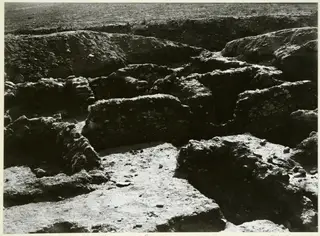 Csn3624Walls and stones during excavation
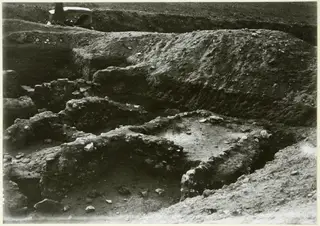 Csn3625Excavation with stones and a person, 1924
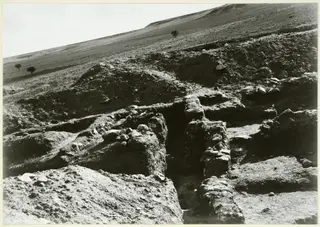 Csn3626Excavation with stones and trees
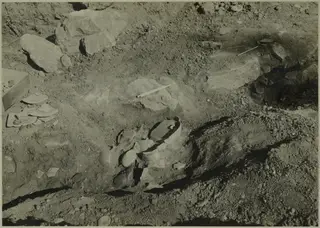 Csn3627Objects and stones during excavation
Photographs: Swedish Cyprus Expedition, Medelhavsmuseet, Stockholm (CC0)
Einar Nilson Gjerstad in the Archive
63 photographs in the field. A selection is shown here.
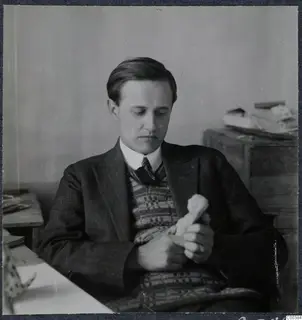 C00384Einar Gjerstad holding a small sculpture or figurine, Nicosia
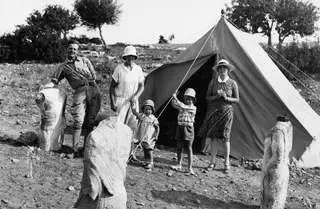 C00508The Gjerstad family and their nanny outside the tents at Vouni
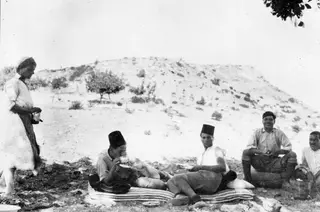 C00646Five people outdoors at Vouni, including Einar Gjerstad and Alfred Westholm
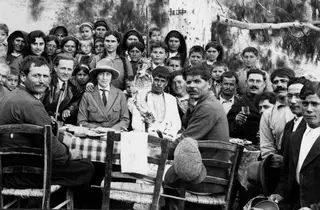 C00725Feast at Galini, with Einar and Vivi Gjersted
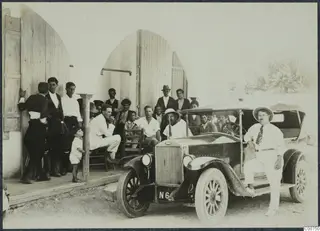 C00750Toulis Souidos by the Volvo outside the café in Pyrgos
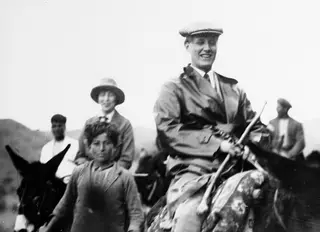 C00753Journey to Galini
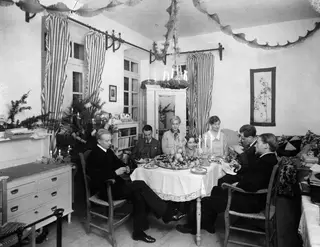 C00908Christmas Eve 1927, breakfast table, Nicosia
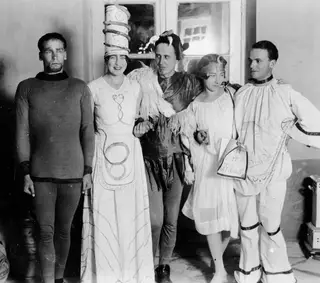 C00918The masquerade, Nicosia
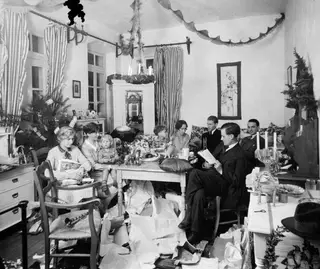 C00919Christmas Eve 1927, distribution of Christmas presents, Nicosia
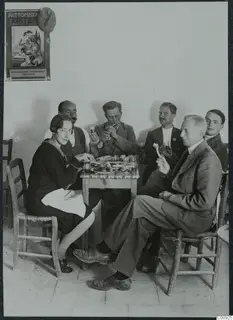 C00925Meal at Demitri's, Lapithos
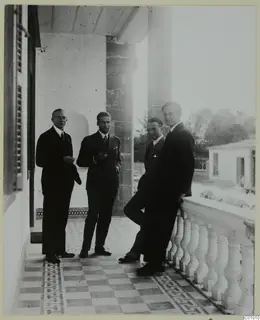 C01010Group portrait: John Lindros, Alfred Westholm, Erik Sjöqvist and Einar Gjerstad
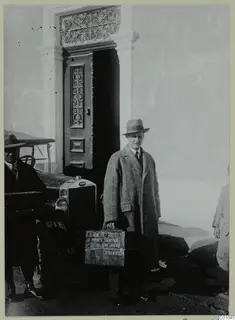 C01045Einar Gjerstad sends the gold box to Sweden, Nicosia
Photographs: Swedish Cyprus Expedition, Medelhavsmuseet, Stockholm (CC0)
Mentioned in
451 mentionsDocuments · 194
- Einar Gjerstad. Studies on prehistoric Cyprus (review)
1926 · pp. 177, 178
Einar Gjerstad published Studies on prehistoric Cyprus.
Dussaud 1927
- I. Chypre dans les études historiques des XIXe et XXe siècles. Découverte de l'antique, construction du passé
1948 · p. 446
Gjerstad published a typological and chronological study of Cypriot material from the Iron Age and Classical period.
Cannavò 2012
- A Guide to the Cyprus Museum
Directed · 1920 · xi
Einar Gjerstad led the Swedish Cyprus Expedition when it excavated at Enkomi in June and July 1930.
Dikaios 1947
Also in Dikaios 1961; Stager et al. 1974; Karageorghis et al. 2000; Karageorghis et al. 1985; Reyes 1994; Iacovou 2014
- Cyprus in the Neolithic and Chalcolithic Periods
1920 · p. 543
Gjerstad and his Swedish colleagues excavated the listed sites.
1970
- The British Museum and the invention of the Cypriot Late Bronze Age
1920 · p. 162
Gjerstad excavated a number of tombs at Enkomi in the 1920s.
Steel 2001
- The Cypriot Bronze Age: Some Recent Australian Contributions to the Prehistory of Cyprus
1920 · p. 25
Gjerstad excavated at Kalopsidha in the 1920s.
Birmingham 1973
Lectures and videos · 14
- Continuities and Discontinuities in Cypriot Prehistory and the Study of Cultural Change
2017
Voskos 2017
- Political Control of Cypriot Archaeology in the Early Twentieth Century
2020
Marshall 2020
- The archaeology of Polis Chrysochous during the British colonial period
2020
Smith 2020
- Formation and Transformation of Archaeological Discourse and Its Dissemination
2021
Leriou & Vavouranakis 2021
- It Takes Two to Tango: The Philia-Drakos Chalcolithic Settlement at the Dawn of the Bronze Age
2021
Paraskeva 2021
- The Swedish Cyprus Expedition and the Contemporary Media Coverage
2021
Göransson 2021
On Ancient Cyprus · 76
Institutions · 11
- Swedish Cyprus Expedition
Director (1927–1931) · 1920
Luke Z. Pierides, Swedish consul at Larnaca, met Axel W. Persson at a railway station in Serbia and asked for a young Swedish archaeologist; Persson passed…
Gjerstad et al. 1934; Recke 2012, pp. 399-401; Gjerstad 1980
- Uppsala University
Staff (c. 1920–1935) · 1920
Gjerstad et al. 1934
- Medelhavsmuseet (Museum of Mediterranean and Near Eastern Antiquities)
Field director (1927–1931), object from them · 1923
Gjerstad excavated at a few sites in Cyprus for his doctoral dissertation, arriving at Larnaca in October 1923 and studying finds in the Cyprus Museum; the…
Recke 2012; Gjerstad 1980; Winbladh 1994, pp. 20-21
- Statens historiska museum
Donor (1926), object from them · 1926
Middle Cypriote vases and 60 boxes of sherds from Kalopsidha
Winbladh 1994, pp. 20-21
- Cyprus Museum
1927
Swedish Cyprus Expedition finds divided: the law was amended in 1927 so the Expedition could take a share. A 1930 'lower court' (Markides, Gunnis, Gjerstad)…
Recke 2012; Pilides & Papadimitriou 2012, p. 23; Gjerstad 1980
- Government of Cyprus (British colonial administration)
1927
The 1905 law is amended so that the Swedish Cyprus Expedition can keep a significant share of its finds, at the request of Loukos Pierides on behalf of…
Kiely 2017; Houby-Nielsen 2016
News · 3
Objects · 55
- Bichrome Amphora on a Pedestal Foot with Wavy Lines on the Neck
- Bichrome Barrel Jug with Circled End-Knobs
- Bichrome IV Amphora with a Lotus-and-Bud Shoulder Frieze
- Bichrome IV Amphora with Shoulder Handles and Banded Decoration
- Bichrome IV Amphoriskos with Concentric Circles
- Bichrome IV Bowl with Red-Painted Pierced Lug Handles
- Excavations · 14listed under Excavations
- People · 84listed under Connections
- Archivelisted under In the Archive
Sources
505 works and documents
- 1.E. Gjerstad (1980). Ages and Days in Cyprus.
- 2.Matthias Recke (2012). “Deutschland und das antike Zypern. Beiträge zur Geschichte einer archäologischen Disziplin”. Cahiers du Centre d'Études Chypriotes 42, 87-116.
- 3.E. Gjerstad, J. Lindros, E. Sjöqvist, A. Westholm (1934). The Swedish Cyprus Expedition: Finds and Results of the Excavations in Cyprus 1927-1931, Vol. I (text). Stockholm, The Swedish Cyprus Expedition.
- 4.S. Houby-Nielsen (2016). “Excavations at Ayia Irini in the winter of 1929: tricky Phoenicians and Biblical floods”. Ancient Cyprus Today: Museum Collections and New Research, 105-117. Uppsala.
- 5.Eric M. Meyers (ed.) (1997). The Oxford Encyclopedia of Archaeology in the Near East. New York, Oxford University Press.
- 6.“Einar Gjerstad”. Wikipedia. Online
- 7.Wikidata Q481299 / GND 118717715. Online
- 8.T. Kiely (2017). “Britain and the archaeology of Cyprus II: 1914 to the present day”. Cahiers du Centre d'Études Chypriotes 47, 253-310. Online
- 9.W. A. P. Childs (ed.), J. S. Smith (ed.), J. M. Padgett (ed.) (2012). City of Gold: The Archaeology of Polis Chrysochous, Cyprus. Princeton, Princeton University Art Museum.
- 10.Eva Rystedt (2010). “Review of V. Karageorghis, A Lifetime in the Archaeology of Cyprus (2007)”.
- 11.Marie-Louise Winbladh (1994). “The Cyprus Collections in the Medelhavsmuseet”. The Swedish Cyprus Expedition: The Living Past, 20-21. Stockholm, Medelhavsmuseet.
- 12.Kyriakos Nicolaou (1973). “Archaeological News from Cyprus, 1972”. American Journal of Archaeology 77, 425-433.
- 13.E. Gjerstad, Y. Calvet, M. Yon, V. Karageorghis et al. (1977). Greek Geometric and Archaic Pottery Found in Cyprus. Stockholm, Swedish Institute in Athens.
- 14.Einar Gjerstad (1926). “Studies on Prehistoric Cyprus”. Uppsala University. Uppsala.
- 15.Einar Gjerstad (1933). Sekler och Dagar.
- 16.Einar Gjerstad (1948). The Swedish Cyprus Expedition, Vol. IV Part 2: The Cypro-Geometric, Cypro-Archaic and Cypro-Classical Periods. Stockholm.
- 17.René Dussaud (1927). “Einar Gjerstad. Studies on prehistoric Cyprus (review)”.
- 18.Antoine Hermary (1990). Histoire des études sur la sculpture chypriote. p. 27.
- 19.E. Rystedt (ed.) (1994). The Swedish Cyprus Expedition: The Living Past. Stockholm, Medelhavsmuseet.
- 20. (1980). “Bulletin 15”. Museum of Mediterranean and Near Eastern Antiquities, Stockholm.
- 21. (2007). “The history of the Lawrence Berkeley National Laboratory instrumental neutron activation analysis programme for archaeological and geological materials”. p. 204.
- 22. (1945). “Study of the bronze Apollo head from the Chatsworth collection”.
- 23.Einar Gjerstad (1931). Cypriote pottery from the Neolithic to the Hellenistic period.
- 24.Einar Gjerstad (1956). Terracotta Lamps, the Hellenistic and Roman Remains in Cyprus (SCE IV).
- 25.Einar Gjerstad (1963). Supplementary Notes on Finds from Ajia Irini in Cyprus.
- 26.Einar Gjerstad (1944). The colonization of Cyprus in Greek legend.
- 27.Einar Gjerstad (1926). “The Stone Age in Cyprus”. The Antiquaries Journal 6, 54-58.
- 28.Einar Gjerstad (1931). “Summary of Swedish excavations in Cyprus”. Syria 12.
- 29.Bibliotheque d'art et d'archeologie (Paris) (1932). “Repertoire d'art et d'archeologie 1931”. entry 918.
- 30.M. Aubert (ed.) (1928). “Repertoire d'art et d'archeologie 1926”. entries 331, 358.
- 31.M. Aubert (ed.) (1934). “Repertoire d'art et d'archeologie 1933”. entries 1416-1418, 1428.
- 32.Bibliotheque d'art et d'archeologie (Paris) (1946). “Repertoire d'art et d'archeologie (1945-46 entries)”. entries 3595, 3599, 3932.
- 33.E. Gjerstad, J. Lindros, E. Sjöqvist, A. Westholm (1937). The Swedish Cyprus Expedition: Finds and Results of the Excavations in Cyprus 1927-1931, vol. III. The Swedish Cyprus Expedition.
- 34.Einar Gjerstad (1928). “The Swedish Excavations in Cyprus”. Antiquity 2, 189-191.
- 35.S. R. (1928). “[Nouvelles archéologiques: Chypre]”. Revue archéologique.
- 36.American Journal of Archaeology (1930). “Archaeological notes and news (Cyprus)”. American Journal of Archaeology 34.
- 37. (1927). “Review of Gjerstad, Studies on Prehistoric Cyprus”. Syria 8, c. 177-178.
- 38. (1935). “Review of The Swedish Cyprus Expedition, vols I-II”. Syria 16.
- 39.R. M. D. (1935). “Review of The Swedish Cyprus Expedition vols I-II”. Journal of Hellenic Studies 55.
- 40.W. L. Cuttle (1935). “The Swedish Cyprus Expeditions (review)”. Antiquity 9, 509ff..
- 41.J. P. Droop (1936). “Review of The Swedish Cyprus Expedition, vol. II”. Annals of Archaeology and Anthropology 23.
- 42.E. Gjerstad (1939). “Review of S. Casson, Ancient Cyprus: its art and archaeology”. Journal of Hellenic Studies 59, 142-144.
- 43.(Antiquity reviewer) (1938). “Review of S. Casson, Ancient Cyprus”. Antiquity 12, 497-499.
- 44. (1942). “The Progress of Greek Epigraphy, 1939-1940”. Journal of Hellenic Studies, p. 79.
- 45.E. Gjerstad (1944). “The Initial Date of the Cypriote Iron Age”. Opuscula Archaeologica 3, 73-106.
- 46.Bibliotheca Orientalis (1946). “Bibliotheca Orientalis 3”.
- 47.Bibliotheca Orientalis (1949). “Review of Schaeffer's chronology of the Cypriot Bronze Age”. Bibliotheca Orientalis 6.
- 48. (1945). “Article on Mycenaean pottery, notes citing Gjerstad”. American Journal of Archaeology 49.
- 49.H. Frankfort (1939). “Cylinder Seals”. London: Macmillan, c. 290 (note).
- 50.J. A. Hammerton (ed.) (1948). “Wonders of the Past (new edition in two volumes)”. New York: Wise & Co., c. pp. 232-236.
- 51.A. R. Burn (1930). “Minoans, Philistines and Greeks”. London, p. 238 area.
- 52.Revue des etudes grecques (1935). “Chronique archeologique (Cilicie; Chypre)”. Revue des etudes grecques 48.
- 53.A. W. Persson (1942). “New Tombs at Dendra near Midea”. Lund.
- 54.(various) (1936). “Zeitschrift fuer Ethnologie 68”. Zeitschrift fuer Ethnologie.
- 55.(unsigned) (1929?). Annual volume of a French art periodical, item 'Trouvailles archeologiques a Chypre'.
- 56.Antoine Hermary (2007). “Les liens entre Kition et Amrit au Ve s. av. J.-C.”. Cahiers du Centre d'Études Chypriotes 37.
- 57.(American Schools of Oriental Research) (1955). “Bulletin of the American Schools of Oriental Research 1946-1955: Index”. BASOR.
- 58.Institute for Advanced Study (1955). “Publications of members, 1930-1954”. Institute for Advanced Study.
- 59.(various) (1979). “The Classical Review 29: index and table of contents”. The Classical Review.
- 60.Ian Robertson (1981). “Cyprus (The Blue Guides)”. Blue Guides.
- 61.Carl-Gustaf Styrenius (1988). “Einar Gjerstad 30/10 1897-8/1 1988”. Medelhavsmuseet Bulletin 23, 3-8. Medelhavsmuseet.
- 62.S. Houby-Nielsen (2003). “The Swedish Cyprus Expedition 1927-1931 and its relation to contemporary prehistoric archaeology in Sweden”. The Cyprus Collections in the Medelhavsmuseet, 1-12. Nicosia, A. G. Leventis Foundation and the Medelhavsmuseet.
- 63.V. Karageorghis, C.-G. Styrenius, M.-L. Winbladh (1977). Cypriote Antiquities in the Medelhavsmuseet. Stockholm, Medelhavsmuseet.
- 64.Marie-Louise Winbladh (2003). “The Swedish Cyprus Expedition: a summary of the sites excavated”. V. Karageorghis et al., The Cyprus Collections in the Medelhavsmuseet, 24-26.
- 65.G. Bourogiannis (2021). “The Swedish Cyprus Expedition. A unique landmark in the archaeology of Cyprus”. Cipro. Crocevia delle civiltà, 64-72. Turin.
- 66.Joanna S. Smith (2009). Art and Society in Cyprus from the Bronze Age into the Iron Age. Cambridge, Cambridge University Press.
- 67.Public Information Office, Cyprus (1972). “Ceremony in honour of the members of the Swedish Cyprus Archaeological Expedition and their leader, Professor Einar Gjerstad”. PIO press release No. 7, 1 November 1972.
- 68.Public Information Office, Cyprus (1972). “Speech by his Beatitude, the President of the Republic, Archbishop Makarios, at a Ceremony in Honour of Professor Einar Gjerstad at the Site of the Ancient Palace of Vouni”. PIO Press Release No. 6, 1 November 1972.
- 69.Getty Research Institute. “Finding aid for the Einar Gjerstad research papers, 1806-1984 (Accession no. 900228)”. Getty Research Institute, Special Collections. Online
- 70.Carl-Gustaf Styrenius (1994). “From the Swedish Cyprus Expedition to the Medelhavsmuseet of Today”. The Swedish Cyprus Expedition: The Living Past, 7-17. Stockholm, Medelhavsmuseet.
- 71.Despo Pilides (ed.), Nikolas Papadimitriou (ed.) (2012). Ancient Cyprus: Cultures in Dialogue. Department of Antiquities, Cyprus.
- 72.Lindy Crewe (2007). Early Enkomi: Regionalism, Trade and Society at the Beginning of the Late Bronze Age on Cyprus. Oxford, Archaeopress.
- 73.Jennifer M. Webb (2009). “[Chapter on the Cypriot household, 1926-2006]”. Finds and Results from the Swedish Cyprus Expedition 1927-1931: A Gender Perspective (Medelhavsmuseet, Focus on the Mediterranean 5), 255-.
- 74.Paul Åström (1974). Cypern - motsättningarnas ö: cypriska fornfynd från Medelhavsmuseet, Stockholm. Stockholm.
- 75.Government of Cyprus (1927). The Cyprus Gazette 1927. Government Printing Office, Nicosia.
- 76.Frederick Whitling (2023). “Swedish Spades in Terra Incognita: Crown Prince Gustaf Adolf's 1930 Cyprus Sojourn and the Division of Finds of the Swedish Cyprus Expedition”. CAARI lecture, Nicosia. Online
- 77.Marie-Louise Winbladh. “The Swedish Cyprus Expedition 1927-1931”. Cyprus Today.
- 78.Sanne Houby-Nielsen (2016). “Excavations at Ayia Irini in the winter of 1929: tricky Phoenicians and Biblical floods”. G. Bourogiannis and C. Mühlenbock (eds), Ancient Cyprus Today: Museum Collections and New Research (SIMA PB 184), 105-118. Åströms förlag, Uppsala.
- 79.CAARI, Archaeological Research Unit of the University of Cyprus and Department of Antiquities, Cyprus (2026). Call for papers: Archaeological legacies of the Swedish Cyprus Expedition: 100 years on, 14-16 October 2027, Nicosia. Online
- 80.Swedish Cyprus Expedition (1928). “[Field notebook D II:1d: Dali (Idalion) acropolis and Lapithos, Plakes, autumn 1928]”. Swedish Cyprus Expedition archive, Medelhavsmuseet, Stockholm.
- 81.Jennifer M. Webb (2016). “Lapithos revisited: a fresh look at a key Middle Bronze Age site in Cyprus”. G. Bourogiannis and C. Mühlenbock (eds), Ancient Cyprus Today: Museum Collections and New Research (SIMA PB 184), 57-68. Åströms förlag, Uppsala.
- 82.[Editor] (1928). “Recent Events”. Antiquity 2, 355.
- 83.Antigoni Zournatzi. “The palace of Vouni (Cyprus): an Achaemenid perspective”.
- 84.[Archaeological News] (1930). “Archaeological News: Vouni, Swedish Excavations”. American Journal of Archaeology 34.
- 85.Giorgos Bourogiannis and Christian Mühlenbock (2016). “Preface”. Ancient Cyprus Today: Museum Collections and New Research (SIMA PB 184), vii. Åströms förlag, Uppsala.
- 86.Marguerite Yon (2011). “Conférence inaugurale : Larnaca et Kition aux XVIIIe et XIXe siècles”. Cahiers du Centre d'Études Chypriotes 41, 21-52.
- 87.Claude F.-A. Schaeffer (1948). “[Enkomi article]”. American Journal of Archaeology 52.
- 88.Cyprus Department of Antiquities (1953). “Enkomi-Alasia: summary of research at Enkomi and the discovery of the town”. Fonds Schaeffer, Collège de France, 34 CDF art. 158.
- 89.Claude F.-A. Schaeffer (1931). “Note additionnelle (à E. Gjerstad)”. Syria 12.
- 90.R.S. Merrillees (1994). “Einar Gjerstad: Reflections on the Past and the Present”. E. Rystedt (ed.), The Swedish Cyprus Expedition: The Living Past (Medelhavsmuseet Memoir 9). Medelhavsmuseet.
- 91.Swedish Cyprus Expedition (1930). “Soli, Cholades, and Mersinaki: excavation diary DII:2d”. Swedish Cyprus Expedition diaries, Medelhavsmuseet.
- 92.D. Symons (1987). “Rupert Gunnis (1899-1965)”. Cahiers du Centre d'Études Chypriotes 7, 3-9. Online
- 93.Theopisti Stylianou-Lambert, Alexandra Bounia (2016). The Political Museum: Power, Conflict, and Identity in Cyprus. Routledge.
- 94.Anastasia Leriou (2015). “The discovery of ancient Cyprus: archaeological sponsorship from the 19th century to the present day”. Aegis: Essays in Mediterranean Archaeology presented to Matti Egon by the scholars of the Greek Archaeological Committee UK (ed. Z. Theodoropoulou Polychroniadis and D. Evely), 221-234. Archaeopress, Oxford.
- 95.Raphael Marshall (2020). “[Lecture on the political control of Cypriot archaeology under British rule]”. CAARI and British Museum conference. Online
- 96. (1976). “[Obituary of Olof Vessberg]”. Medelhavsmuseet Bulletin 11. Stockholm.
- 97.Charles Picard (1935). “L'archéologie suédoise à Chypre”. Journal des savants, 241-255. Online
- 98.R. S. Merrillees (1994). “Einar Gjerstad: Reflections on the Past and the Present”. The Swedish Cyprus Expedition: The Living Past (ed. E. Rystedt).
- 99. (1940). “[News note: Gjerstad on Cyprus]”. American Journal of Archaeology 44.
- 100.Anna Cannavò (2012). “I. Chypre dans les études historiques des XIXe et XXe siècles. Découverte de l'antique, construction du passé”. Cahiers du Centre d'Études Chypriotes 42.
- 101.Valerie Cook. Cyprus during the Transition from the Bronze to the Iron Age.
- 102.Nicola Schreiber (2002). The Cypro-Phoenician Pottery of the Iron Age. Brill.
- 103. (1951). “[Review of E. Gjerstad, The Swedish Cyprus Expedition IV:2]”. American Journal of Archaeology 55.
- 104.A. Kleiman, A. Fantalkin, H. Mommsen, I. Finkelstein (2019). “The Date and Origin of Black-on-Red Ware: The View from Megiddo”. American Journal of Archaeology 123, 531-555.
- 105.Lena Söderhjelm (1994). “Doing Thesis Work for the Expedition: A Review of the Cypriote Period of my Life”. The Swedish Cyprus Expedition: The Living Past (ed. E. Rystedt), 59-62.
- 106. (1966). “[Review of The Swedish Cyprus Expedition IV:1A, by P. Dikaios and J. R. Stewart]”. Journal of Hellenic Studies 86.
- 107.Sylvia Törnkvist (1994). “Memories of Einar Gjerstad”. Eva Rystedt (ed.), The Swedish Cyprus Expedition: The Living Past, 55.
- 108.John F. Hall. Etruscan Italy: Etruscan Influences on the Civilizations of Italy from Antiquity to the Modern Era. 172.
- 109.Public Information Office, Cyprus (1964). “President receives Swedish professor of archaeology”. PIO press release No. 2, 6 January 1964.
- 110.Public Information Office, Cyprus (1972). “Address by the Minister of Communications and Works Mr. Y. Zambarloukos at the ceremony in honour of Professor Einar Gjerstad held at the site of Vouni Palace”. PIO press release No. 1, 1 November 1972.
- 111.Kyriakos Nicolaou (1973). “Archaeological News from Cyprus, 1972”. American Journal of Archaeology 77.
- 112.Sylvia Törnkvist (1994). “[Recollections of Einar Gjerstad]”. E. Rystedt (ed.), The Swedish Cyprus Expedition: The Living Past (Medelhavsmuseet Memoir 9), Stockholm.
- 113.Cyprus Today (1972). “Ceremony in honour of the members of the Swedish Cyprus Archaeological Expedition and their leader, Professor Einar Gjerstad”. Cyprus Today.
- 114.Cyprus Today. “[Swedish activities on behalf of Cypriot refugees]”. Cyprus Today.
- 115.Medelhavsmuseet (1978). “[Annual report of the museum for 1977]”. Medelhavsmuseet Bulletin 13.
- 116.D. W. Rupp (1987). “'Vive le Roi': the emergence of the state in Iron Age Cyprus”. Western Cyprus: Connections. An Archaeological Symposium held at Brock University, St. Catharines, Ontario, Canada, March 21-22, 1986, 147-168. Göteborg, Åström.
- 117.E. J. Peltenburg (1982). “Recent Developments in the Later Prehistory of Cyprus”. Studies in Mediterranean Archaeology, Pocket-books.
- 118. (1987). “[Address on the fiftieth anniversary of the Society of Cypriot Studies]”. Cyprus Today.
- 119.Paul Åström (2003). “The Stone Age”. V. Karageorghis et al., The Cyprus Collections in the Medelhavsmuseet, 31.
- 120.Maria Iacovou (2013). “Historically Elusive and Internally Fragile Island Polities: The Intricacies of Cyprus's Political Geography in the Iron Age”. Bulletin of the American Schools of Oriental Research 370.
- 121.Stuart Swiny (ed.) (2001). The Earliest Prehistory of Cyprus: From Colonization to Exploitation. Boston, American Schools of Oriental Research.
- 122.Vassos Karageorghis (1977). “Professor Einar Gjerstad and the Archaeology of Cyprus”. Cypriote Antiquities in the Medelhavsmuseet, Stockholm.
- 123.Anna Cannavò (2012). “I. Chypre dans les études historiques des XIXe et XXe siècles. Découverte de l'antique, construction du passé”. Cahiers du Centre d'Études Chypriotes 42.
- 124.Nicola Schreiber (2003). The Cypro-Phoenician Pottery of the Iron Age. Leiden, Brill.
- 125.Francisco J. Núñez. “The beginning of the Cypro-Archaic I period: A revision proposal”. AURA Supplement 9.
- 126.Andrés T. Reyes (1994). Archaic Cyprus: A Study of the Textual and Archaeological Evidence. Oxford, Clarendon Press.
- 127.Christian Körner. Die zyprischen Königtümer im Schatten der Großreiche des Vorderen Orients: Studien zu den zyprischen Monarchien vom 8. bis zum 4. Jh. v. Chr..
- 128.Josef Wiesehöfer. “Zypern unter persischer Herrschaft”. Achaemenid History IV: Centre and Periphery, 239-252.
- 129.Carlotta Brignone and Lorenzo Calvelli (eds) (2025). A Land for Strangers: Non-Native Individuals and Communities in Cyprus.
- 130.K. Göransson (2012). “The Swedish Cyprus Expedition: The Cyprus collections in Stockholm and the Swedish excavations after the SCE”. Cahiers du Centre d'Études Chypriotes 42, 399-421. Online
- 131.Peter M. Fischer (1986). Prehistoric Cypriot Skulls: A medico-anthropological, archaeological and micro-analytical investigation. Göteborg, Paul Åströms Förlag.
- 132.F. Whitling (2014). “'The Wonderful Adventures of the Swedish Cyprus Expedition': Einar Gjerstad, Erik Sjöqvist, the Swedish Institute in Rome and the Cyprus Expedition”. Islands of the Eastern Mediterranean, 123-139. I.B. Tauris. Online
- 133.J. A. Barlow (ed.), D. L. Bolger (ed.), B. Kling (ed.) (1991). Cypriot Ceramics: Reading the Prehistoric Record. Philadelphia, University Museum.
- 134.C. Beer (1994). Temple-boys: A Study of Cypriote Votive Sculpture, Part 1. Catalogue. Jonsered, Paul Åströms Förlag.
- 135.Derek Counts (2001). “Prolegomena to the Study of Cypriote Sculpture”. Cahiers du Centre d'Études Chypriotes 31, 129-181.
- 136.Cyprus (Blue Guides).
- 137.Cyprus.
- 138.P. Dikaios (1947). A Guide to the Cyprus Museum. Nicosia, Department of Antiquities.
- 139.P. Dikaios (1961). A Guide to the Cyprus Museum. Nicosia, Department of Antiquities.
- 140.M. Dikomitou (2012). “Ceramic production, distribution, and social interaction. An analytical approach to the study of Early and Middle Bronze Age pottery from Cyprus”. University College London.
- 141.Sabine Fourrier (2014). “Espaces et gestes cultuels dans les sanctuaires chypriotes de l'Âge du Fer : l'exemple de Kition-Bamboula”. Cahiers du Centre d'Études Chypriotes 44, 281-298.
- 142.Pamela Gaber (2008). “The History of History: Excavations at Idalion and the Changing History of a City-Kingdom”. Near Eastern Archaeology 71. Online
- 143.A. Georgiou (2013). “Enkomi in Cyprus”. The Encyclopedia of Ancient History. Malden and Oxford, Wiley-Blackwell. Online
- 144.E. Gjerstad, J. Lindros, E. Sjöqvist, A. Westholm (1937). The Swedish Cyprus Expedition: Finds and Results of the Excavations in Cyprus 1927-1931, Vol. III. Stockholm, The Swedish Cyprus Expedition.
- 145.Giampaolo Graziadio (2025). The Aegean and Cyprus: Interaction Between Two Distinct Cultural Mediterranean Areas from the Third Millennium to ca. 1200 BC.
- 146.E. Hadjipaschalis (ed.), P. Lyssiotis (ed.), A. Lyritsas (ed.) (2006). Cyprus Has Always Been Europe. Nicosia, Press and Information Office, Republic of Cyprus.
- 147.Antoine Hermary (1990). “Histoire des études sur la sculpture chypriote”. Cahiers du Centre d'Études Chypriotes 14.
- 148.E. Herscher (1997). “Lapithos”. The Oxford Encyclopedia of Archaeology in the Near East, vol. 3, 330-331. Oxford University Press.
- 149.Gordon Home (1960). Cyprus Then and Now. London, J. M. Dent & Sons.
- 150.M. Iacovou (2014). “Beyond the Athenocentric misconceptions: The Cypriote polities in their economic context”. Cahiers du Centre d'Études Chypriotes 44, 95-117. Online
- 151.V. Karageorghis (1969). The Ancient Civilization of Cyprus. New York, Cowles.
- 152.V. Karageorghis (1973). Cypriote Antiquities in the Pierides Collection, Larnaca, Cyprus. Athens, Ekdotiki Hellados.
- 153.V. Karageorghis, P. Stavrou (1976). Treasures of Cyprus: An Exhibition of Cypriot Art.
- 154.V. Karageorghis, F. Rizopoulou-Egoumenidou, D. Papanikola-Bakirtzis, C. Elliott (1985). Ancient Cypriote Art in the Pierides Foundation Museum. Larnaca, Pierides Foundation.
- 155.V. Karageorghis (1989). The Cyprus Museum, Nicosia.
- 156.V. Karageorghis (2000). “Cypriote archaeology: 125 years after Cesnola”. Cahiers du Centre d'Études Chypriotes 30, 2-.
- 157.V. Karageorghis, J. R. Mertens, M. E. Rose (2000). Ancient Art from Cyprus: The Cesnola Collection in The Metropolitan Museum of Art. New York, Metropolitan Museum of Art.
- 158.Christian Körner (2017). “Monarchie auf Zypern im 5. und 4. Jahrhundert v. Chr. Herrschaft von König und Polis”. Monarchische Herrschaft im Altertum, 217-244. Berlin.
- 159.A. Leriou (2018). “Re-positioning 'rural' sanctuaries within the Cypro-Archaic societies: some considerations”. Popular Religion and Ritual in Prehistoric and Ancient Greece and the Eastern Mediterranean, 97-104. Archaeopress.
- 160.Anastasia Leriou, Giorgos Vavouranakis (2025). “Communicating archaeology in British-period Cyprus: from Ohnefalsch-Richter to Dikaios”. Empire & Excavation: Critical perspectives on archaeology in British-period Cyprus, 1878-1960. Sidestone Press.
- 161.Christopher S. Lightfoot (2021). The Cesnola Collection of Cypriot Art: Terracotta Oil Lamps. New York, Metropolitan Museum of Art.
- 162.Stella M. Lubsen-Admiraal, Joost Crouwel (1989). Cyprus & Aphrodite. 's-Gravenhage, SDU uitgeverij.
- 163.John L. Myres (1945). “The Topographical History of Enkomi, Salamis, and Famagusta”. The Annual of the British School at Athens 41, 68-72.
- 164.G. Papantoniou (2012). Religion and Social Transformations in Cyprus: From the Cypriot Basileis to the Hellenistic Strategos. Leiden and Boston, Brill. Online
- 165.Charles Picard (1935). “L'archéologie suédoise à Chypre”. Journal des Savants.
- 166.Noel Robertson (ed.) (1975). The Archaeology of Cyprus: Recent Developments. Park Ridge, N.J., Noyes Press.
- 167.A. Bernhard-Walcher, G. Dembski, K. Gschwantler, V. Karageorghis (1999). Die Sammlung zyprischer Antiken im Kunsthistorischen Museum / The Collection of Cypriote Antiquities in the Kunsthistorisches Museum. Vienna, Kunsthistorisches Museum.
- 168.Nancy Serwint (1996). “Cyprus American Archaeological Research Institute, Nicosia, Cyprus: Project Descriptions of CAARI Appointees 1995–1996”. Bulletin of the American Schools of Oriental Research 303, 95-96.
- 169.L. E. Stager (ed.), A. Walker (ed.), G. E. Wright (ed.) (1974). American Expedition to Idalion, Cyprus: First Preliminary Report, Seasons of 1971 and 1972. Cambridge, Mass., American Schools of Oriental Research.
- 170.L. Steel (2004). Cyprus before History: From the Earliest Settlers to the End of the Bronze Age. London, Duckworth.
- 171.Veronica Tatton-Brown (2003). “Enkomi: The Notebook in the British Museum”. Cahiers du Centre d'Études Chypriotes 33, 9-66. Online
- 172.Henri Trezigny (2016). “Des tours internes aux sanctuaires suburbains. Regards occidentaux sur des questions chypriotes”. Cahiers du Centre d'Études Chypriotes 46, 129-138.
- 173.Netice Yildiz (2018). “Vounous revisited: teaching history through a symposium and a ceramic workshop”. Arts & Humanities Open Access Journal 2, 79-91. Online
- 174.L. Bright (1995). “A possible case for the practice of abandonment during the Late Cypriot and Cypro-Geometric periods”. Klados. Essays in Honour of J. N. Coldstream, 35-43. London, Institute of Classical Studies.
- 175.Jacques-Claude Courtois (1984). “Enkomi-Alasia, un des principaux sites de l'Âge du Bronze récent chypriote (1650-1100 av. J.-C.)”. Cahiers du Centre d'Études Chypriotes 1.
- 176.Laura Ann Campbell Gagné (2012). Middle Cypriot White Painted Ware: A Study of Pottery Production and Distribution in Middle Bronze Age Cyprus. University of Toronto.
- 177.Untidy essays: a journeyman in Cyprus.
- 178.J. B. Connelly (1988). Votive Sculpture of Hellenistic Cyprus. New York, New York University Press.
- 179.Marguerite Yon (2011). “Conférence inaugurale : Larnaca et Kition aux XVIIIe et XIXe siècles”. Cahiers du Centre d'Études Chypriotes 41, 21-52. Online
- 180.Antoine Hermary (2007). “Les liens entre Kition et Amrit au Ve s. av. J.-C.”. Cahiers du Centre d'Études Chypriotes 37, 167-184.
- 181.Carl-Gustaf Styrenius (1997). “Gjerstad, Einar”. The Oxford Encyclopedia of Archaeology in the Near East 2, 412-413. New York, Oxford University Press.
- 182.Yves Calvet (2002). “La fondation d'un sanctuaire phénicien à Kition-Bamboula”. Cahiers du Centre d'Études Chypriotes 32, 174-183.
- 183.C. F. A. Schaeffer (1948). “Enkomi”. American Journal of Archaeology 52.
- 184.Michal Artzy, Ragna Stidsing, Yossi Salmon (2013). “Market strategy: Cypriot Bichrome Wheel-made ware for export”. J.R.B. Stewart: An Archaeological Legacy. Uppsala, Åströms Förlag.
- 185.S. Demesticha (2009). “Questions on trade: the case of the Mazotos shipwreck”. Cahiers du Centre d'Études Chypriotes 39, 387-402.
- 186.Antoine Hermary (2006). “Le projet de fouilles à Amathonte de l'Oriental Institute de Chicago (1930)”. Cahiers du Centre d'Études Chypriotes 36, 195-217.
- 187.C. F.-A. Schaeffer (1936). Missions en Chypre, 1932-1935. Paris.
- 188.P. Dikaios (1953). Khirokitia: Final Report on the Excavation of a Neolithic Settlement in Cyprus on Behalf of the Department of Antiquities, 1936-1946. Oxford, Oxford University Press.
- 189.Catherine Kearns (2013). “'On a clear day the Taurus Mountains hang like a cloud': On environmental thought in Cypriot archaeology”. J.R.B. Stewart: An Archaeological Legacy, 121-132. Uppsala, Åström Förlag.
- 190. (1970). “Cyprus in the Neolithic and Chalcolithic Periods”. 539-556.
- 191.J. Birmingham (ed.) (1973). The Cypriot Bronze Age: Some Recent Australian Contributions to the Prehistory of Cyprus. Sydney, Southwood.
- 192.John C. Overbeck, Stuart Swiny (1972). Two Cypriot Bronze Age Sites at Kafkallia (Dhali). 31 pp.. Åström, Göteborg.
- 193.L. Steel (2001). “The British Museum and the invention of the Cypriot Late Bronze Age”. Cyprus in the 19th Century AD: Fact, Fancy and Fiction, 160-167. Oxford, Oxbow.
- 194.Giampaolo Graziadio (2017). The Earliest Production of Aegean-Type Pottery in Cyprus. Pisa, Pisa University Press.
- 195.Marialucia Amadio (2023). Building in Prehistoric Cyprus. Tracing Transformations in the Built and Social Environment of Early Cypriot Communities. Venice, Edizioni Ca' Foscari.
- 196.Paul Åström (1966). Excavations at Kalopsidha and Ayios Iakovos in Cyprus. Lund.
- 197.D. Bolger (ed.), L. C. Maguire (ed.) (2010). The Development of Pre-State Communities in the Ancient Near East: Studies in Honour of Edgar Peltenburg. Oxford, Oxbow Books.
- 198.V. Karageorghis (1960). “Chronique des fouilles et découvertes archéologiques à Chypre en 1959”. Bulletin de correspondance hellénique 84.
- 199.V. Karageorghis (1977). “Chronique des fouilles et découvertes archéologiques à Chypre en 1976”. Bulletin de correspondance hellénique 101.
- 200.Michel Fortin (1995). “A Cluster of Middle Cypriot III to Late Cypriot I Fortified Sites on the Ayios Sozomenos Plateau”. Klados. Essays in Honour of J. N. Coldstream, 87-102. London.
- 201.I. Hein (ed.) (2009). The formation of Cyprus in the 2nd millennium B.C.: Studies in regionalism during the Middle and Late Bronze Ages. Österreichische Akademie der Wissenschaften.
- 202.Eilis M. Monahan (2010). “Dwelling with the Dead: Mortuary Landscapes and the Production of Community During the Prehistoric Bronze Age on Cyprus”. MA thesis, Cornell University.
- 203.D. Bolger (ed.), N. Serwint (ed.) (2002). Engendering Aphrodite: Women and Society in Ancient Cyprus. Boston, American Schools of Oriental Research.
- 204.L. E. Talalay, T. Cullen (2002). “Sexual ambiguity in plank figures from Bronze Age Cyprus”. Engendering Aphrodite: Women and Society in Ancient Cyprus, 181-195.
- 205.V. Karageorghis (1978). “Chronique des fouilles et découvertes archéologiques à Chypre en 1977”. Bulletin de correspondance hellénique 102.
- 206.Annie Caubet (2012). “Les collections d'antiquités chypriotes au musée du Louvre”. Cahiers du Centre d'Études Chypriotes 42, 11-14.
- 207.Lemesos: A History of Limassol in Cyprus from Antiquity to the Ottoman Conquest.
- 208.G. J. Van Wijngaarden (2002). Use and Appreciation of Mycenaean Pottery in the Levant, Cyprus and Italy (1600-1200 BC). Amsterdam.
- 209.A. Jasink (ed.), L. Bombardieri (ed.) (2010). Researches in Cypriote History and Archaeology. Proceedings of the Meeting held in Florence April 29th-30th, 2009. Florence, Firenze University Press.
- 210.A. Hermary (2015). “Amathus, Capital of the Kingdom and City-State”. Lemesos: A History of Limassol in Cyprus from Antiquity to the Ottoman Conquest, 1-48. Newcastle upon Tyne, Cambridge Scholars Publishing.
- 211.Einar Gjerstad (1933). “Further Remarks on the Palace of Vouni”. American Journal of Archaeology 37, 589-598.
- 212.Stuart Swiny (1989). “Prehistoric Cyprus: A Current Perspective”. The Biblical Archaeologist 52, 178-189.
- 213.W. F. Albright, E. Gjerstad (1953). “Correspondence with Professor Einar Gjerstad on the chronology of 'Cypriote' pottery from Early Iron levels in Palestine”. Bulletin of the American Schools of Oriental Research 130, 22-26.
- 214.Anna Cannavò (2012). “I. Chypre dans les études historiques des XIXe et XXe siècles. Découverte de l'antique, construction du passé”. Cahiers du Centre d'Études Chypriotes 42, 423-457. Online
- 215.S. Fourrier (2007). La coroplastie chypriote archaïque. Identités culturelles et politiques à l'époque des royaumes. Lyon.
- 216.Maria Hadjigavriel, Maria Dikomitou Eliadou (2025). “Tracing traditions: An analytical study of Late Chalcolithic ceramics from Cyprus”. Journal of Archaeological Science: Reports.
- 217.Paul Åström (2007). “White Painted V eye-pitchers in Cyprus and the Levant”. Cahiers du Centre d'Études Chypriotes 37, 97-114.
- 218.Michael Brown (2013). “Waterways and the political geography of south-east Cyprus in the second millennium BC”. The Annual of the British School at Athens 108, 121-136.
- 219. (1973). “Cyprus in the Middle Bronze Age”. 165-175.
- 220.J. R. Carpenter (1981). “Excavations at Phaneromeni: 1975-1978”. Studies in Cypriote Archaeology, 59-78.
- 221.S. Diakou (2019). “The Archaeology of the North Coast of Cyprus. The Evidence from Lapithos”. New Directions in Cypriot Archaeology, 241-265. Ithaca/New York.
- 222.P. Dikaios (1940). “The Excavations at Vounous-Bellapais in Cyprus, 1931-2”. Archaeologia 88, 1-174.
- 223.P. Dikaios (1962). “Archaeology in Cyprus, 1959-61”. Archaeological Reports 8, 32-46. Society for the Promotion of Hellenic Studies. Online
- 224.Joan Du Plat Taylor (1959). “The Cypriot and Syrian Pottery from Al Mina, Syria”. Iraq 21, 62-92.
- 225.Bettina Fischer (2000). “Un dromadaire égaré ? A propos d'une figurine archaïque en terre cuite de l'acropole d'Amathonte à Chypre”. Cahiers du Centre d'Études Chypriotes 30.
- 226.K. D. Fisher (2014). “Rethinking the Late Cypriot built environment”. The Cambridge Prehistory of the Bronze and Iron Age Mediterranean, 399-416. Cambridge, Cambridge University Press.
- 227.S. Fourrier (2008). “Légendes de fondation et hellénisation de Chypre. Parcours historiographique”. Cahiers du Centre d'Études Chypriotes 38, 103-118.
- 228.D. Frankel (1974). Middle Cypriot White Painted Pottery: An Analytical Study of the Decoration. Göteborg, Paul Åströms Förlag.
- 229.D. Frankel (1994). “Color variation on prehistoric Cypriot Red Polished pottery”. Journal of Field Archaeology 21, 205-219. Online
- 230.Einar Gjerstad (1926). “The Stone Age in Cyprus”. The Antiquaries Journal, 55-58.
- 231.E. Gjerstad, J. Lindros, E. Sjöqvist, A. Westholm (1935). The Swedish Cyprus Expedition: Finds and Results of the Excavations in Cyprus 1927-1931, Vol. II (text). Stockholm, The Swedish Cyprus Expedition.
- 232.J.-M. Henke (2011). “New evidence for the definition of workshops of Cypriot terracotta at East Aegean findspots and its chronological background”. Cahiers du Centre d'Études Chypriotes 41, 211-222.
- 233.A. Hermary (2000). “Déesse plutôt que reine? A propos d'une coupe en argent de la collection Cesnola”. Cahiers du Centre d'Études Chypriotes 30, 67-77.
- 234.R. E. Jones (1986). Greek and Cypriot Pottery: A Review of Scientific Studies. Athens, British School at Athens.
- 235.V. Karageorghis (1982). Cyprus: From the Stone Age to the Romans. London, Thames and Hudson.
- 236.Vassos Karageorghis (2004). Chipre: encrucijada del Mediterráneo oriental 1600-500 a.C.. Barcelona, Edicions Bellaterra.
- 237.V. Karageorghis (2014). “Jean Pouilloux à Salamine de Chypre”. Cahiers du Centre d'Études Chypriotes 44, 19-24.
- 238.R. S. Merrillees (1968). The Cypriote Bronze Age Pottery Found in Egypt. Lund.
- 239.R. S. Merrillees (1973). The Cypriot Bronze Age. 63-66.
- 240.R. S. Merrillees (1973). “Settlement, sanctuary and cemetery in Bronze Age Cyprus”. The Cypriot Bronze Age: Some Recent Australian Contributions to the Prehistory of Cyprus, 44-57.
- 241.Valentin Müller (1932). “The Palace of Vouni in Cyprus”. American Journal of Archaeology 36, 408-417.
- 242.J. L. Myres (1946). “A Sanctuary Site of Lefkoniko”. Annual of the British School at Athens 41.
- 243.Müge Hüseyin Şevketoğlu (1998). “Archaeological Field Survey of the Neolithic and Chalcolithic Settlement Sites in Kyrenia District, North Cyprus: Systematic Surface Collection and the Interpretation of Artefact Scatters”. PhD thesis, University of Edinburgh.
- 244.Joanna S. Smith, Despo Pilides, Jay Stratton Noller, Allan S. Gilbert (2008). Views from Phlamoudhi, Cyprus. Boston, American Schools of Oriental Research.
- 245.Philippa M. Steele (2019). Writing and Society in Ancient Cyprus. Cambridge, Cambridge University Press.
- 246. (1928). “The Swedish Excavations in Cyprus”. Antiquity.
- 247.Veronica Tatton-Brown (2002). “The kingdom of Idalion. Lang's excavations in the British Museum”. Cahiers du Centre d'Études Chypriotes 32.
- 248.G. W. Van Beek (1951). “Cypriote Chronology and the Dating of Iron I Sites in Palestine”. Bulletin of the American Schools of Oriental Research 124, 26-29.
- 249.J. C. Waldbaum (1978). From Bronze to Iron: The Transition from the Bronze Age to the Iron Age in the Eastern Mediterranean. Göteborg, Paul Åströms Förlag.
- 250.Lawrence E. Stager (ed.), Anita M. Walker (ed.) (1989). American Expedition to Idalion, Cyprus, 1973-1980. Chicago, Oriental Institute of the University of Chicago.
- 251.A. Hermary (2013). “Building Power: Palaces and the Built Environment in Cyprus in the Archaic and Classical Periods”. Bulletin of the American Schools of Oriental Research 370, 83-101.
- 252.Museum of Mediterranean and Near Eastern Antiquities (Medelhavsmuseet), Stockholm, Swedish Cyprus Expedition archive, photographs C09751 (Papa Polivios and Einar Gjerstad in Mandres, end of June to mid-August 1929).
- 253.Nicolaou AJN 1972.
- 254.The Cyprus Gazette No. 1018 of 28 September 1934. Online
- 255.Colonial Office, Annual Report on Cyprus for 1948.
- 256.Colonial Office, Reports on Cyprus for 1953–1955 (bound together).
- 257.Medelhavsmuseet, Stockholm collection online, 'jug', inv. MM 1956:328ö.
- 258.Medelhavsmuseet, Stockholm collection online, 'fragment', inv. MM 1956:328p.
- 259.OEANE 1997, s.v. 'Gjerstad, Einar'–929; OEANE 1997, s.v. 'History of the Field: Archaeology in Cyprus' (E. Peltenburg)| Stylianou-Lambert & Bounia 2016, The Political Museum.
- 260.Robertson (ed.) 1975, The Archaeology of Cyprus: Recent Developments, pp. 10–11, 39–23, 51).
- 261.Press and Information Office, Republic of Cyprus, press release of 14 April 1969, «Address by H.E. Dr. Constantinos Spyridakis, Minister of Education Cyprus and President of the Society of Cypriot studies at the official opening of the First International Congress of Cypriot studies on 14th April 1969 at the Hilton Hotel in Nicosia».
- 262.Press and Information Office, Republic of Cyprus, press release No. 2 of 6 January 1964, «Messenger of the German Embassy missing».
- 263.Press and Information Office, Republic of Cyprus, press release of 3 November 1972, «Έκθεσις του Τμήματος Αρχαιοτήτων // Αίρονται τα περιοριστικά μέτρα δια την εισαγωγήν αλλαντικών εξ Ιταλίας // Αεροψεκασμοί».
- 264.Press and Information Office, Republic of Cyprus, press release of 3 November 1972, «Report of the Department of Antiquities».
- 265.Press and Information Office, Republic of Cyprus, press release of 1 November 1972, «Προσφώνησις του Υπουργού Συγκοινωνιών και Έργων κ. Γ. Ζαμπαρλούκου κατά την τελετήν προς τιμήν του καθηγητού Einar Gjerstad εις τον χώρον του Ανάκτορου του Βουνίου σήμερον και ώραν 10.30 π.μ.».
- 266.Press and Information Office, Republic of Cyprus, press release No. 1 of 1 November 1972, «Address by the Minister of Communications and Works Mr. Y. Zambarloukos at the Ceremony in Honour of Professor Einar Gjerstad held at the site of Vouni Palace at 10.30 a.m. to-tay».
- 267.Press and Information Office, Republic of Cyprus, press release No. 2 of 1 November 1972, «Προσφώνησις υπό του Διευθυντού του Τμήματος Αρχαιοτήτων Δρος. Β. Καραγιώρτη κατά την τελετή προς τιμήν του Καθηγητού Einar Gjerstad εις τον χώρον του Ανάκτορου του Βουνίου σήμερον και ώραν 10.30 π.μ.».
- 268.Press and Information Office, Republic of Cyprus, press release No. 2 of 1 November 1972, «Address by the Director of the Department of antiquities Dr. Vassos Karageorgis at the Ceremony in Honour of Professor Eiran Gjerstad at the Site of the Ancient Palace of Vouni at 10.30 a.m. to-day».
- 269.Press and Information Office, Republic of Cyprus, press release No. 6 of 1 November 1972, «Ομιλία της Α.Μ. του Προέδρου της Δημοκρατίας Αρχιεπισκόπου Μακαρίου κατά την Τελετήν προς Τιμής του Καθηγητού Eianr Gjerstad εις το Αρχαίον Ανάκτορον Βουνίου».
- 270.Press and Information Office, Republic of Cyprus, press release No. 6 of 1 November 1972, «Speech by his Beatitude, the President of the Republic, Archbishop Makarios, at a Ceremony in Honour of Professor Einar Gjerstad at the Site of the Ancient Palace of Vouni».
- 271.Press and Information Office, Republic of Cyprus, press release No. 7 of 1 November 1972, «Τελετή προς Τιμήν των Μελών της Σουηδικής Αρχαιολογικής Αποστολής και του Αρχηγού αυτής Καθηγητού Einar Gjerstad».
- 272.Press and Information Office, Republic of Cyprus, press release No. 7 of 1 November 1972, «Ceremony in Honour of the Members of the Swedish Cyprus Archaelogical Expedition and their Leader, Professor Einar Gjerstad».
- 273.Press and Information Office, Republic of Cyprus, press release of 2 November 1972, «Ομιλία του Προέδρου του Διοικητικού Συμβουλίου της Εταιρείας Κυπριακών Σπουδών Κωνσταντίνου Σπυριδάκη κατά την υπό Εταιρείας Επιδοσιν Τιμητικού Διπλώματος εις τον Σουηδόν Καθηγητήν Αινάρ Τζερτατ, πρώην Αρχηγόν της εν Κύπρω Σουηδικής Αρχαιολογικής Αποστολή».
- 274.Press and Information Office, Republic of Cyprus, press release No. 4 of 20 June 1972, «Η ετήσια έκθεσις του Διευθυντού του τμήματος Αρχαιοτήτων δια έτους 1972».
- 275.Press and Information Office, Republic of Cyprus, press release No. 4 of 20 June 1973, «The annual report of the director of the Department of antiquities for 1972».
- 276.Press and Information Office, Republic of Cyprus, press release No. 3 of 26 September 1972, «Επερατώθησαν αι Ανασκαφαί εις Ιδαλίον».
- 277.Press and Information Office, Republic of Cyprus, press release No. 3 of 26 September 1972, «Excavations at Idalion Completed».
- 278.P. Gaber, 2008, The History of History: Excavations at Idalion and the Changing History of a City-Kingdom, Near Eastern Archaeology 71.1–2.
- 279.Paul Åström, Cypern – motsättningarnas ö: cypriska fornfynd från Medelhavsmuseet, Stockholm (1974).
- 280.Kungl. Vitterhets Historie och Antikvitets Akademien, Corpus Vasorum Antiquorum. Sweden 2: Medelhavsmuseet and Nationalmuseum (1983).
- 281.Vassos Karageorghis et al., The Cyprus Collections in the Medelhavsmuseet (2003).
- 282.Medelhavsmuseet, Medelhavsmuseet: Focus on the Mediterranean 1 (2004).
- 283.Medelhavsmuseet, Medelhavsmuseet: Focus on the Mediterranean 2 (2005).
- 284.Medelhavsmuseet, Medelhavsmuseet: Focus on the Mediterranean 5 (Finds and Results from the Swedish Cyprus Expedition 1927–1931: A Gender Perspective) (2009).
- 285.Vassos Karageorghis, Cypriote Antiquities in the Medelhavsmuseet, Stockholm (1977).
- 286.Medelhavsmuseet, Medelhavsmuseet Bulletin 13 (1978).
- 287.Medelhavsmuseet, Medelhavsmuseet Bulletin 23 (1988).
- 288.Medelhavsmuseet, Medelhavsmuseet Bulletin 28 (1993).
- 289.Medelhavsmuseet, Medelhavsmuseet Bulletin 6 (1973).
- 290.Medelhavsmuseet, Medelhavsmuseet Bulletin 9 (1974).
- 291.Medelhavsmuseet, Medelhavsmuseet: en introduktion (1982).
- 292.Eva Rystedt, The Swedish Cyprus Expedition: The Living Past (1994).
- 293.Centre of Visual Arts and Research (CVAR), Costas and Rita Severis Foundation, Nicosia, online catalogue: ARF_00680, “Studies on Prehistoric Cyprus”, 1926, ARF_00681a, “Letter by Melis Charalampidis to Einar Gjestard”, 1924--04-22, ARF_00681b, “Letter to Einar Gjestard”, 1924--05-08, and 3 more records. Online
- 294.V. KARAGEORGHIS, "Forty Years of Swedish Scholarship on Cyprus", Cyprus Today vol. 3, no. 3 (May–June 1965).
- 295.Anon., "Treasures of Cyprus Exhibition", Cyprus Today vol. 10, no. 1 (January–February 1972).
- 296.Anon., "Ceremony in Honour of the Members of the Swedish Cyprus Archaeological Expedition and their Leader, Professor Einar Gjerstad", Cyprus Today vol. 10, no. 5-6 (September–December 1972).
- 297.Anon., "Swedish Universities and Scholars Aid Cyprus", Cyprus Today vol. 13, no. 1 (January–February 1975).
- 298.V. Karageorghis, "The 50th Anniversary of the Department of Antiquities", Cyprus Today vol. 23, no. 2 (April–June 1985).
- 299.M.C. Loulloupis, "The National Archaeological Museums of Cyprus", Cyprus Today vol. 23, no. 2 (April–June 1985).
- 300.Clea Hadjistephanou, "Athletics in Ancient Cyprus and the Greek Tradition", Cyprus Today vol. 32, no. 3-4 (July–December 1994).
- 301.Anon., "Hidden Treasures in the Storerooms", Cyprus Today vol. 36, no. 3-4 (July–December 1998).
- 302.Anon., "The Swedish Cyprus Expedition Visits Bucharest", Cyprus Today vol. 43, no. 3-4 (July–December 2005).
- 303.Petre Alexandrescu, "The Swedish Museum of Mediterranean and Far East Antiquities", Cyprus Today vol. 43, no. 3-4 (July–December 2005).
- 304.Vassos Karageorghis, "Professor Emeritus Paul Åström", Cyprus Today vol. 46, no. 4 (October–December 2008).
- 305.Vassos Karageorghis, "A New Leventis Gallery in the Mediterranean Museum of Stockholm", Cyprus Today vol. 47, no. 1 (January–March 2009).
- 306.Anon., "The Pierides Archaeological Museum", Cyprus Today vol. 47, no. 2 (April–June 2009).
- 307.Michalis Pappas and Maria Alonetou, «Ceramic Production and the Introduction of the Potter's Wheel in Bronze Age Cyprus», recorded workshop talk, CraftCY Workshop, CAARI Cyprus, published on YouTube 2026-05-28, at 0:15:51. Online
- 308.Ekin Kozal, «Cypro-Cilician connections in the Late Bronze Age», recorded lecture, 60th Public Lecture Series, Winter Semester 2023, Archaeological Research Unit - University of Cyprus, published on YouTube 2023-11-07, at 0:12:02. Online
- 309.Christian Göransson, «The Swedish Cyprus Expedition and the contemporary media coverage», recorded conference paper, Empire and Excavation: Critical Perspectives on archaeology in British-period Cyprus, 1878-1960, CAARI Cyprus, published on YouTube 2021-02-03, at 0:11:57. Online
- 310.Catherine Kearns, «Cyprus, an Archaeological Crossroads», recorded lecture, ISAC Member Lecture, The Institute for the Study of Ancient Cultures, published on YouTube 2025-03-12, at 0:27:54. Online
- 311.Raphael Marshall, «Political Control of Cypriot Archaeology in the Early Twentieth Century», recorded conference paper, Empire and Excavation: Critical Perspectives on Archaeology in British-Period Cyprus, 1878-1960, CAARI Cyprus, published on YouTube 2020-11-17, at 0:09:55. Online
- 312.Fredrik Whitling, «“Swedish Spades in Terra Incognita" Crown Prince Gustaf Adolf’s 1930 Cyprus Sojourn and the Division of Finds of the Swedish Cyprus Expedition», recorded lecture, CAARI Lecture Series, CAARI Cyprus, published on YouTube 2023-10-30, at 0:03:59. Online
- 313.Jenny Webb, «The archaeology of Bronze Age Lapithos: from 1913 to 2025», recorded lecture, 65th Public Lecture Series, Archaeological Research Unit - University of Cyprus, published on YouTube 2026-03-03, at 0:23:58. Online
- 314.Sarah, Chase Minos, Timothée Ogier, Christiana Kelepeshi and Theodoros Lambropoulos, «1st Graduate Forum for Mediterranean Archaeology: Ceramic Technology and Provenance in Cyprus and the Eastern Mediterranean», recorded conference paper, 1st Graduate Forum for Mediterranean Archaeology, Archaeological Research Unit - University of Cyprus, published on YouTube 2022-12-10, at 0:14:02. Online
- 315.Charalambos Paraskeva, «It Takes Two to Tango: The Philia-Drakos Chalcolithic Settlement at the Dawn of the Bronze Age», recorded lecture, CAARI Online Lecture Series 2021, CAARI Cyprus, published on YouTube 2021-12-03, at 0:32:04. Online
- 316.Joanna Smith, «The archaeology of Polis Chrysochous during the British colonial period», recorded conference paper, Empire and Excavation: Critical Perspectives on Archaeology in British-Period Cyprus, 1878-1960, CAARI Cyprus, published on YouTube 2020-11-17, at 0:20:09. Online
- 317.Olof Vessberg, «The Museum of Mediterranean and Near Eastern Antiquities: Medelhavsmuseet — A Presentation», Medelhavsmuseet Bulletin 1 (1961).
- 318.Sylvia Törnkvist, «Arms, Armour and Dress of the Terracotta Sculpture from Ajia Irini, Cyprus», Medelhavsmuseet Bulletin 6 (1972).
- 319.Gisela Walberg, «Some Cypriote and Palestinian Pottery and Figurines», Medelhavsmuseet Bulletin 9 (1974).
- 320.Pamela Gaber-Saletan, «The Limestone Sculpture from Kition», Medelhavsmuseet Bulletin 15 (1980).
- 321.Gloria Ikosi, «Unpublished Terracottas from Ajia Irini», Medelhavsmuseet Bulletin 26-27 (1991-92).
- 322.Collège de France, Paris, Fonds Claude Schaeffer (34 CDF), 34 CDF art. 168-3, «["Achéens et peuples de la mer, les fouilles franco-britanniques de Chypre"]», 8 August 1952of 2, Collège de France, Paris, Fonds Claude Schaeffer (34 CDF), 34 CDF art. 172, «["A brief History and Description of the Remains of the Bronze Age City Enkomi-Alasia"]», 1958of 8. Online
- 323.Eric M. Meyers; William G. Dever; Carol L. Meyers; James D. Muhly; Dennis Pardee; James A. Sauer (1997). The Oxford Encyclopedia of Archaeology in the Near East. p. 87.; Eric M. Meyers; William G. Dever; Carol L. Meyers; James D. Muhly; Dennis Pardee; James A. Sauer (1997). The Oxford Encyclopedia of Archaeology in the Near East. p. 412.; Eric M. Meyers; William G. Dever; Carol L. Meyers; James D. Muhly; Dennis Pardee; James A. Sauer (1997). The Oxford Encyclopedia of Archaeology in the Near East. p. 71.; Eric M. Meyers; William G. Dever; Carol L. Meyers; James D. Muhly; Dennis Pardee; James A. Sauer (1997). The Oxford Encyclopedia of Archaeology in the Near East. p. 301.; Eric M. Meyers; William G. Dever; Carol L. Meyers; James D. Muhly; Dennis Pardee; James A. Sauer (1997). The Oxford Encyclopedia of Archaeology in the Near East. p. 494..
- 324.Erin D. Darby; Izaak J. de Hulster (2022). Iron Age Terracotta Figurines from the Southern Levant in Context. In Culture and History of the Ancient Near East 125. p. 298..
- 325.William G. Dever; Carol L. Meyers; James D. Muhly; Dennis Pardee; James A. Sauer; Eric M. Meyers (1997). The Oxford Encyclopedia of Archaeology in the Near East. p. 87..
- 326.Eric M. Meyers; William G. Dever; Carol L. Meyers; James D. Muhly; Dennis Pardee; James A. Sauer; Paul Corby Finney; John S. Jorgensen (1997). The Oxford Encyclopedia of Archaeology in the Near East. New York Oxford, Oxford University Press. p. 58.; Eric M. Meyers; William G. Dever; Carol L. Meyers; James D. Muhly; Dennis Pardee; James A. Sauer; Paul Corby Finney; John S. Jorgensen (1997). The Oxford Encyclopedia of Archaeology in the Near East. New York Oxford, Oxford University Press. p. 495..
- 327.Anon. (2017). Interpreting the Seventh Century BC. Oxford, Archaeopress. p. 60.. Online
- 328.Elisabetta BORGNA; Ilaria CALOI; Filippo Maria CARINCI; Robert LAFFINEUR (2019). MNHMH / MNEME: Past and Memory in the Aegean Bronze Age. In Aegaeum 43. p. 719..
- 329.Eric M. Meyers; William G. Dever; Carol L. Meyers; James D. Muhly; Dennis Pardee; James A. Sauer (1997). The Oxford Encyclopedia of Archaeology in the Near East. New York Oxford, Oxford University Press. p. 70..
- 330.Edward H. Heffner; W. F. Albright; E. P. B. (1929). Archaeological News. In American Journal of Archaeology. pp. 108-145. Archaeological Institute of America. p. 116.. Online
- 331.Ilan Sharon (2013). Levantine Chronology. In The Oxford Handbook of the Archaeology of the Levant: c. 8000-332 BCE. PDF p. 26.. Online
- 332.Anon. (2014). The Archaeology of Early Rome and Latium. p. 47.. Online
- 333.S. R. K. Glanville (1926). Egyptian Theriomorphic Vessels in the British Museum. In The Journal of Egyptian Archaeology. pp. 52-69. Egypt Exploration Society. p. 59.. Online
- 334.Anon. (1929). Archaeology in Greece, 1928–1929. p. 236.. Online
- 335.G. Ernest Wright (1975). The "New" Archaeology: An Address Prepared to Be Given at Idalion, Summer, 1974. In The Biblical Archaeologist. pp. 104-115. The American Schools of Oriental Research. p. 113.. Online
- 336.Waldo H. Dubberstein (1934). The Oriental Institute Archaeological Report on the Near East. p. 65.. Online
- 337.Penn Museum Archives, Kourion Expedition records (PU-Mu 1050), Box 1, folder 9.
- 338.Collège de France, Paris, Fonds Claude Schaeffer (34 CDF), 34 CDF art. 158, «[Summary of research at Enkomi-Alasia and the discovery of the town]», 27 April 1953of 22, Collège de France, Paris, Fonds Claude Schaeffer (34 CDF), 34 CDF art. 168-1, «["Contribution fo Enkomi I, Text, Preliminary Report on the Cyprus Department of Antiquities excavations at Enkomi, The Bronze Statue of a Horned God" annoté et commenté par Schaeffer]», 1949of 438, Collège de France, Paris, Fonds Claude Schaeffer (34 CDF), 34 CDF art. 175, «["Enkomi C.F.F Schaeffer Plates IV-VII"]», 1947of 48, Collège de France, Paris, Fonds Claude Schaeffer (34 CDF), 34 CDF art. 242, «[Cahier de notes concernant Chypre, Gaza, Jéricho, l'Egypte, la Syrie (chronologies)]», undatedof 107. Online
- 339.«The Greeks in the East», British Museum Research Publication 157 (2005).
- 340.Claude F. A. Schaeffer, «Nouvelles archéologiques de Chypre. I. Découverte d'une ville du Bronze à Enkomi», Revue archéologique 27 (6e série) (January-June 1947).
- 341.Anna Margherita Jasink, Luca Bombardieri (eds), AKROTHINIA: contributi di giovani ricercatori italiani agli studi egei e ciprioti (Florence, 2015).
- 342.«Cyprus: Report for 1927», Colonial Reports—Annual no. 1406 (1927).
- 343.G. Hill, A History of Cyprus. Volume 1: To the Conquest by Richard Lion Heart (1940).
- 344.Christian Körner, Die zyprischen Königtümer im Schatten der Großreiche des Vorderen Orients. Studien zu den zyprischen Monarchien vom 8. bis zum 4. Jh. v. Chr. (2017).
- 345.Peter James, Siglos De Oscuridad Desafío A La Cronología Tradicional Del Mundo Antiguo (1993).
- 346.A. C. Brown; H. W. Catling, Ancient Cyprus (1975).
- 347.J. D. M. Green; R. Henry, Olga Tufnell's 'Perfect Journey': letters and photographs of an archaeologist in the Levant and Mediterranean (2021).
- 348.Karageorghis, Chronique des fouilles ... à Chypre (BCH 93-101, 1969-1977): 1970:; 1976:.
- 349.Tatton-Brown 2003, 'Enkomi: The Notebook in the British Museum', CCEC 33.
- 350.Leriou & Vavouranakis 2025, 'Communicating archaeology in British-period Cyprus: from Ohnefalsch-Richter to Dikaios', in Kiely, Reeve & Crewe (eds), Empire & Excavation.
- 351.Powell, Love's Obsession (2013), pp. 30–31–46).
- 352.Karolina Zeman-Wiśniewska, 2021, The Cyprus Museum and the beginnings of heritage protection in Cyprus.
- 353.Marc Fehlmann, 2014, Looting and Losing the Archaeological Heritage of Cyprus, in Islands of the Eastern Mediterranean: A History of Cross-Cultural Encounters.
- 354.Karageorghis, "Chronique des fouilles à Chypre [1959]", BCH 84 (1960).
- 355.Merrillees 2001, 'T. B. Sandwith and the beginnings of Cypriote archaeology', in Tatton-Brown (ed.), Cyprus in the 19th Century AD, pp. 232–233–255) | Steel 2001, 'The British Museum and the invention of the Cypriot Late Bronze Age', in Tatton-Brown (ed.), Cyprus in the 19th Century AD, pp. 162–163–185).
- 356.Collège de France, Paris, Fonds Claude Schaeffer (34 CDF), 34 CDF art.25, «[Les nouvelles découvertes d'Enkomi en Chypre, campagne de fouilles, automne 1950]», 1 June 1951of 36, Collège de France, Paris, Fonds Claude Schaeffer (34 CDF), 34 CDF art.25, «[Les nouvelles découvertes d'Enkomi en Chypre, campagne de fouilles, automne 1950 et un résumé]», 1 June 1951of 42, Collège de France, Paris, Fonds Claude Schaeffer (34 CDF), 34 CDF art. 168-1, «["Résumé en langue anglaise, Summary" Combined Expedition Enkomi]», 1964of 42, Collège de France, Paris, Fonds Claude Schaeffer (34 CDF), 34 CDF art. 168-1, «[Inventaire des objets trouvés à Enkomi (partiel)]», undatedof 300, Collège de France, Paris, Fonds Claude Schaeffer (34 CDF), 34 CDF art. 168-1, «[Lettre de Schaeffer à Dikaios et Megaw à propos de la mission commune avec analyse précise des résultats de fouilles de Dekaios par Schaeffer]», 20 June 1950of 36, and 8 more. Online
- 357.Collège de France, Paris, Fonds Claude Schaeffer (34 CDF), 34 CDF art. 168-1, «["Résumé en langue anglaise, Summary" Combined Expedition Enkomi]», 1964of 42. Online
- 358.Collège de France, Paris, Fonds Claude Schaeffer (34 CDF), 34 CDF art. 168-4, «[Brouillons : lettre à Megaw et "Draft for Anouncement]», 1947of 4. Online
- 359.E. S. Sherratt; J. H. Crouwel (1987). Mycenaean Pottery from Cilicia in Oxford. In Oxford Journal of Archaeology 6(3). p. 325.. Online
- 360.Avner Raban (1988). Archaeology of Coastal Changes: Proceedings of the First International Symposium 'Cities on the Sea–Past and Present'. p. 40..
- 361.Burchard Brentjes (1960). Das Kamel im Alten Orient. p. 33.. Online
- 362.P. R. S. Moorey; C. M. Bennett; M. H. Burgoyne; A. Cecilia Western; Juliet Clutton-Brock; R. S. Merrillees; E. D. Stockton; Olga Tufnell; William Culican; P. R. S. Moorey; John Landgraf; P. D. C. Brown; J. B. Hennessy (1971). Levant: Journal of the British School of Archaeology in Jerusalem, Volume III. Vol. III. London, The British School of Archaeology in Jerusalem. p. 61..
- 363.M. V. Seton-Williams (1954). Cilician Survey. In Anatolian Studies. pp. 121-174. British Institute at Ankara. p. 124.. Online
- 364.Swedish Cyprus Expedition (E. Gjerstad et al.), 1934, The Swedish Cyprus Expedition: Finds and Results of the Excavations in Cyprus 1927-1931, vol. 1 (text).
- 365.SCE I (1934).
- 366.Gjerstad 1980, Ages and Days in Cyprus.
- 367.The Illustrated London News 1928-09-22: Vol 173 Iss 4666 (1928).
- 368.E. Gjerstad et al., 1934, The Swedish Cyprus Expedition: Finds and Results of the Excavations in Cyprus 1927-1931, vol. I.
- 369.Einar Gjerstad, 1980, Ages and Days in Cyprus.
- 370.E. Gjerstad, 1980, Ages and Days in Cyprus.
- 371.Nicolaou, 'Archaeological News from Cyprus, 1972', AJA 77 (1973) 425–433.
- 372.Robert Stuart Merrillees; Annie Caubet, 2008, In memoriam Paul Åström 1929-2008, p. 5; Paul Åström; Paul Åström, 1985, Einar Gjerstad's Cypriote publications: a bibliography by Paul Åström.
- 373.Louise C. Maguire, The Circulation of Cypriot Pottery in the Middle Bronze Age (1990).
- 374.Museum of Mediterranean and Near Eastern Antiquities, Bulletin 23 (1988).
- 375.Manfred Bietak, 2009, obituary of Paul Åström, Ägypten und Levante / Egypt and the Levant XIX.
- 376.F. Whitling, 2014, 'The Wonderful Adventures of the Swedish Cyprus Expedition': Einar Gjerstad, Erik Sjöqvist, the Swedish Institute in Rome and the Cyprus Expedition.
- 377.K. Goransson, 2012, The Swedish Cyprus Expedition (Cahiers du Centre d'Etudes Chypriotes 42), p. 3; The Swedish Cyprus Expedition and its Re[search background].
- 378.A. W. Persson, 1937, Appendix I: More Cypro-Minoan inscriptions, in The Swedish Cyprus Expedition III, n.p..
- 379.Luca Bombardieri; Elisa Panero, Cyprus: Crossroads of Civilizations (2021).
- 380.Annie Caubet; Robert Stuart Merrillees, Cahiers du Centre d'Etudes Chypriotes, Volume 44, 2014 (2014).
- 381.Styrenius 1994, 'From the Swedish Cyprus Expedition to the Medelhavsmuseet of Today', in Rystedt (ed.), The Swedish Cyprus Expedition: The Living Past (Medelhavsmuseet Memoir 9), p. 8 quoting Persson 1931 (IA leaf 11).
- 382.K. Göransson, 2012, The Swedish Cyprus Expedition: The Cyprus collections in Stockholm and the Swedish Excavations after the SCE, Cahiers du Centre d'Études Chypriotes 42.
- 383.Antoine Hermary, Introduction. In: Cahiers du Centre d'Etudes Chypriotes. Volume 38, 2008. pp. 19-32 (2008).
- 384.E. Gjerstad, J. Lindros, E. Sjöqvist, A. Westholm, 1934, The Swedish Cyprus Expedition: Finds and Results of the Excavations in Cyprus 1927-1931, vol. I (text)(printed XX).
- 385.<i>The Swedish Cyprus Expedition, Vol. IV, Part 2; The Cypro-Geometric, Cypro-Archaic, and Cypro-Classical Periods</i>. By Einar Gjerstad. (1951).
- 386.Syria revue Dʼart oriental et Dʼarcheologie tome.12 (1931).
- 387.Peter M. Fischer, 1986, Prehistoric Cypriot Skulls: A medico-anthropological, archaeological and micro-analytical investigation.
- 388.Carl-Gustaf Styrenius, 1994, From the Swedish Cyprus Expedition to the Medelhavsmuseet of Today, leaf 19.
- 389.Antiquity 1938-12: Vol 12 Iss 48 (1938).
- 390.Art Index 1941: Vol 4.
- 391.Charles Picard, 1935, L'archéologie suédoise à Chypre.
- 392.Lindy Crewe, Early Enkomi: Regionalism, trade and society at the beginning of the Late Bronze Age on Cyprus (2007).
- 393.P. Hellstrom, 2009, The Palace of Vouni Revisited.
- 394.Powell, J., 2013, Love's Obsession: The Lives and Archaeology of Jim and Eve Stewart.
- 395.Matthew J. Adams; Eran Arie; Eric H. Cline; Israel Finkelstein; Norma Franklin; Mario A.S. Martin; David Ussishkin, Megiddo V: The 2004-2008 Seasons (2013).
- 396.Medelhavsmuseet, The Cyprus Collections In The Medelhavsm (2003).
- 397.Bulletin of the American Schools of Oriental Research 1936-10: Iss 63 (1936).
- 398.J. L. Benson; Edith Porada; E. A. Catling; H. W. Catling, The Necropolis of Kaloriziki (1973).
- 399.American Expedition to Idalion, 1974, American Expedition to Idalion, Cyprus: First Preliminary Report, Seasons of 1971 and 1972.
- 400.An ultra-low chronology of Iron Age Palestine (1999).
- 401.The Eighty-Sixth General Meeting of the Archaeological Institute of America Toronto, Ontario, December 27-30, 1984 (1985).
- 402.G. Bourogiannis, 2015, The Ayia Irini Project at Medelhavsmuseet, Stockholm.
- 403.K. Göransson, 2012, The Swedish Cyprus Expedition: The Cyprus collections in Stockholm and the Swedish excavations after the SCE.
- 404.Antoine Hermary, 1990, Histoire des études sur la sculpture chypriote.
- 405.Michal Artzy et al., 2013, Market strategy: Cypriot Bichrome Wheel-made ware for export.
- 406.Antoine Hermary, 2006, Le projet de fouilles à Amathonte de l'Oriental Institute de Chicago (1930).
- 407.A. Kleiman et al., 2019, The Date and Origin of Black-on-Red Ware: The View from Megiddo.
- 408.Kristian Göransson, 2012, The Swedish Cyprus Expedition, The Cyprus collections in Stockholm and the Swedish Excavations after the SCE; Einar Gjerstad, 1980, Ages and Days in Cyprus.
- 409.Einar Gjerstad, 1980, Ages and Days in Cyprus; Kristian Göransson, 2012, The Swedish Cyprus Expedition, The Cyprus collections in Stockholm and the Swedish Excavations after the SCE.
- 410.Sanne Houby-Nielsen, Excavations at Ayia Irini in the winter of 1929: tricky Phoenicians and Biblical floods.
- 411.E. Gjerstad, J. Lindros, E. Sjöqvist, A. Westholm, 1934, The Swedish Cyprus Expedition: Finds and Results of the Excavations in Cyprus 1927-1931, vol. I; Einar Gjerstad, 1980, Ages and Days in Cyprus.
- 412.Einar Gjerstad, 1980, Ages and Days in Cyprus; E. Gjerstad, J. Lindros, E. Sjöqvist, A. Westholm, 1934, The Swedish Cyprus Expedition: Finds and Results of the Excavations in Cyprus 1927-1931, vol. I.
- 413.E. Gjerstad, J. Lindros, E. Sjöqvist, A. Westholm, 1934, The Swedish Cyprus Expedition: Finds and Results of the Excavations in Cyprus 1927-1931, vol. I; Kristian Göransson, 2012, The Swedish Cyprus Expedition, The Cyprus collections in Stockholm and the Swedish Excavations after the SCE.
- 414.E. Gjerstad, J. Lindros, E. Sjöqvist, A. Westholm, 1934, The Swedish Cyprus Expedition: Finds and Results of the Excavations in Cyprus 1927-1931, vol. I.
- 415.E. Gjerstad, J. Lindros, E. Sjöqvist, A. Westholm, 1934, The Swedish Cyprus Expedition: Finds and Results of the Excavations in Cyprus 1927-1931, vol. I; Smith, 2012, Histories of Archaeology at Polis Chrysochous, in Childs, Smith and Padgett (eds), City of Gold.
- 416.2010, Review of Karageorghis, A Lifetime in the Archaeology of Cyprus (2007).
- 417.E. Gjerstad, Y. Calvet, M. Yon, V. Karageorghis, J. P. Thalmann, 1977, Greek Geometric and Archaic Pottery found in Cyprus, record.
- 418.Eva Rystedt (ed.), 1994, The Swedish Cyprus Expedition: The Living Past.
- 419.M. Aubert (ed.), 1934, Repertoire d'art et d'archeologie 1933, entry 1428.
- 420.E. Gjerstad, 1939, Review of S. Casson, Ancient Cyprus: its art and archaeology.
- 421.(not seen), 1942, The Progress of Greek Epigraphy, 1939-1940.
- 422.E. Gjerstad, 1931, Summary of Swedish excavations in Cyprus; Bibliotheca Orientalis, 1949, Review of Schaeffer's chronology of the Cypriot Bronze Age.
- 423.Yahweh And The Sun: Biblical And Archaeological Evidence For Sun Worship In Ancient Israel (J. Glen Taylor_Berserker Books) (1988). Online
- 424.Journal of Hellenic studies vol.59 (1939).
- 425.Bibliothèque d'art et d'archéologie (Paris), Répertoire d'art et d'archéologie : dépouillement de périodiques français et étrangers (1936).
- 426.Bibliothèque d'art et d'archéologie (Paris), Répertoire d'art et d'archéologie : dépouillement de périodiques français et étrangers (1933).
- 427.Bibliothèque d'art et d'archéologie (Paris), Répertoire d'art et d'archéologie : dépouillement de périodiques français et étrangers (1931).
- 428.Aubert, Marcel, Repertoire D’art Et D’archeologie 1931 (1932).
- 429.Crawford, O.g.s., Antiquity A Quarterly Review Of Archaeology Vol.12 (1938).
- 430.Nancy Serwint, Gifts for the Goddess: Votive Offerings at Ancient Marion (2015).
- 431.Nederlands Instituut voor het Nabije Oosten, Bibliotheca Orientalis 6 (1949) (1949).
- 432.Palestine exploration fund quarterly Statement for 1931 (1931).
- 433.IMHICIHU-CONICET, Tell El Ghaba II (2008).
- 434.Palestine exploration fund: patron-the king quarterly statement for 1931.
- 435.Paul Åström, Excavations at Kalopsidha and Ayios Iakovos in Cyprus (1966).
- 436.Nicole Weill, Chapitre IV. — Une tête de Kouros archaïque à Salamine de Chypre (1973).
- 437.Antoine Hermary, Les liens entre Kition et Amrit au Ve s. av. J.-C (2007).
- 438.Olivier Masson, Andres T. Reyes, Archaic Cyprus, A Study of the Textual and Archaeological Evidence, 1994 (1995).
- 439.William A. P. Childs, Le rôle de Chypre dans la naissance de la plastique monumentale en Grèce (2001).
- 440.Antoine Hermary, Histoire des études sur la sculpture chypriote (1990).
- 441.Eva Rystedt, The Swedish Cyprus Expedition The Living Past (1994).
- 442.Antoine Hermary, Le projet de fouilles à Amathonte de l'Oriental Institute de Chicago (1930) (2006).
- 443.OEANE 1997, s.v. 'Gjerstad, Einar'.
- 444.E. Gjerstad, J. Lindros, E. Sjöqvist and A. Westholm, 1937, The Swedish Cyprus Expedition, vol. III, Stockholm.
- 445.E. Gjerstad, J. Lindros, E. Sjöqvist and A. Westholm, 1935, The Swedish Cyprus Expedition: Finds and Results of the Excavations in Cyprus 1927-1931, Vol. II.
- 446.Rystedt 2010, review of Karageorghis, A Lifetime in the Archaeology of Cyprus (2007).
- 447.Gjerstad 1980, Ages and Days in Cyprus–16.
- 448.Houby-Nielsen, 'Excavations at Ayia Irini in the winter of 1929: tricky Phoenicians and Biblical floods'.
- 449.Gjerstad et al., The Swedish Cyprus Expedition: Finds and Results of the Excavations in Cyprus 1927-1931 Vol. I (Text), 1934.
- 450.Gjerstad et al., Greek Geometric and Archaic Pottery found in Cyprus, 1977.
- 451.K. Göransson, 2012, (article on the Swedish Cyprus Expedition and the Cyprus collections in the Medelhavsmuseet).
- 452.D. Symons, 1987, Rupert Gunnis (1899-1965).
- 453.E. Gjerstad, 1980, Ages and Days in Cyprus; E. Gjerstad et al., 1934, The Swedish Cyprus Expedition: Finds and Results of the Excavations in Cyprus 1927-1931, vol. I, Preface p. XIII; D. Symons, 1987, Rupert Gunnis (1899-1965).
- 454.S. Houby-Nielsen, Excavations at Ayia Irini in the winter of 1929: tricky Phoenicians and Biblical floods.
- 455.The Annual of the British School at Athens 1940-1945: Iss 41.
- 456.Nicola Schreiber, 2002, The Cypro-Phoenician Pottery of the Iron Age.
- 457.D. Pilides, 2008, "Welcome, Sir, to Cyprus": The Local Reaction to American Archaeological Research.
- 458.A. T. Reyes, Archaic Cyprus: A Study of the Textual and Archaeological Evidence (1994).
- 459.E. Gjerstad et al., 1934, The Swedish Cyprus Expedition: Finds and Results of the Excavations in Cyprus 1927-1931, vol. I (text).
- 460.E. Gjerstad et al., 1934, The Swedish Cyprus Expedition: Finds and Results of the Excavations in Cyprus 1927-1931, Vol. I (text).
- 461.Eva Rystedt, 2010, Review of V. Karageorghis, A Lifetime in the Archaeology of Cyprus (2007).
- 462.Hector W. Catling, 2009, review of V. Karageorghis, A Lifetime in the Archaeology of Cyprus, Cahiers du Centre d'Études Chypriotes 39.
- 463.Ron E. Tappy, The Archaeology of Israelite Samaria, Volume 1: Early Iron Age through the Ninth Century BCE (1992).
- 464.E. Gjerstad, J. Lindros, E. Sjöqvist, A. Westholm, 1934, The Swedish Cyprus Expedition: Finds and Results of the Excavations in Cyprus 1927-1931, Vol. I (text).
- 465.Lena Söderhjelm, 1994, Doing Thesis Work for the Expedition: A Review of the Cypriote Period of my Life.
- 466.Rystedt (ed.) 1994, Söderhjelm, p. 59 (IA leaf 62).
- 467.E. Gjerstad, J. Lindros, E. Sjöqvist, A. Westholm, 1934, The Swedish Cyprus Expedition: Finds and Results of the Excavations in Cyprus 1927-1931, Vol. I (Text).
- 468.E. Gjerstad, J. Lindros, E. Sjöqvist, A. Westholm, 1934, The Swedish Cyprus Expedition: Finds and Results of the Excavations in Cyprus 1927-1931, Vol. I (Text), title page.
- 469.Association pour l'encouragement des études grecques en France, Revue des études grecques : publication trimestrielle de l'Association pour l'encouragement des études grecques (1936).
- 470.T. Kiely, 2017, Britain and the archaeology of Cyprus II: 1914 to the present day, p. 259; F. Whitling, 2014, 'The Wonderful Adventures of the Swedish Cyprus Expedition': Einar Gjerstad, Erik Sjöqvist, the Swedish Institute in Rome and the Cyprus Expedition.
- 471.Einar Gjerstad, 1980, Ages and Days in Cyprus; Göransson, 2012.
- 472.Kiely, 2017; N. Stanley-Price, 2025, n. 11.
- 473.Styrenius 1994, 'From the Swedish Cyprus Expedition to the Medelhavsmuseet of Today', in Rystedt (ed.), The Swedish Cyprus Expedition: The Living Past (Medelhavsmuseet Memoir 9), p. 8 (IA leaf 11).
- 474.Karageorghis et al., Ancient Cypriote Art in the Pierides Foundation Museum (1985).
- 475.Kiely 2017.
- 476.E. Gjerstad, 1980, Ages and Days in Cyprus, lines 1663-1669.
- 477.E. Gjerstad, J. Lindros, E. Sjoqvist, A. Westholm, 1934, The Swedish Cyprus Expedition: Finds and Results of the Excavations in Cyprus 1927-1931, vol. I (text).
- 478.Lippke, 2015, Bibliography (Bible Orient).
- 479.D. Morris, 1985, The Art of Ancient Cyprus, with a check-list of the author's collection.
- 480.E. Gjerstad; J. Lindros; E. Sjoqvist; A. Westholm, 1934, The Swedish Cyprus Expedition: Finds and Results of the Excavations in Cyprus 1927-1931, Vol. I (text).
- 481.E. Gjerstad et al., 1934, The Swedish Cyprus Expedition: Finds and Results of the Excavations in Cyprus 1927-1931, Vol. I.
- 482.Pontus Hellström, 2009, The Palace of Vouni Revisited.
- 483.The journal of Egyptian archaeology (1926).
- 484.The Classical Weekly 1948-05-03: Vol 41 Iss 15 (1948).
- 485.S. Houby-Nielsen, 2003, The Swedish Cyprus Expedition 1927-1931 and its relation to contemporary prehistoric archaeology in Sweden, pp. 1-12; S. Houby-Nielsen, 2016, Excavations at Ayia Irini in the winter of 1929: tricky Phoenicians and Biblical floods.
- 486.The Bronze Age in the Near East: A Review Article (1952).
- 487.Einar Gjerstad: Ages and Days in Cyprus. (Studies in Mediterranean Archaeology, Pocket-book 12.) Pp. 174; 1 map and some 10 drawings and 80 photos scattered thr (1983).
- 488.Smith, Joanna S., 2012, Histories of Archaeology at Polis Chrysochous; The Swedish Cyprus Expedition and its Re[sults], p. 16; E. Gjerstad, J. Lindros, E. Sjöqvist, A. Westholm, 1934, The Swedish Cyprus Expedition: Finds and Results of the Excavations in Cyprus 1927-1931, vol. I.
- 489.E. Gjerstad, J. Lindros, E. Sjöqvist, A. Westholm, 1934, The Swedish Cyprus Expedition: Finds and Results of the Excavations in Cyprus 1927-1931, Vol. I (Text); K. Göransson, 2012, The Swedish Cyprus Expedition, The Cyprus collections in Stockholm and the Swedish Excavations after the SCE.
- 490.Gjerstad 1980, Ages and Days in Cyprus–21.
- 491.Netice Yildiz, 2018, Vounous revisited: teaching history through a symposium and a ceramic workshop.
- 492.Allen Memorial Art Museum Bulletin Spring 1960: Vol 17 Iss 3.
- 493.Ronald Storrs, 1937, Orientations, Ivor Nicholson and Watson, London.
- 494.2012, City of Gold (bibliography line read at.
- 495.Gjerstad 1980, Ages and Days in Cyprus–87.
- 496.Rystedt (ed.) 1994, L. Söderhjelm, 'Doing Thesis Work for the Expedition', p. 59 (IA leaf 62).
- 497.Levant, 1990, Levant volume XXII.
- 498.The cypriote surrender to Persia (1987).
- 499.Levant Volume XXII (1990) (1990).
- 500.Kristian Göransson, 2012, The Swedish Cyprus Expedition, The Cyprus collections in Stockholm and the Swedish Excavations after the SCE.
- 501.E. Gjerstad, J. Lindros, E. Sjöqvist, A. Westholm, 1934, The Swedish Cyprus Expedition: Finds and Results of the Excavations in Cyprus 1927-1931, Vol. I.
- 502.Winbladh, The Northern Face of Cyprus: New Studies.
- 503.Lawrence E. Stager, Anita M. Walker, G. Ernest Wright, Thomas D. Newman, Vassos Karageorgis (eds), 1974, American Expedition to Idalion, Cyprus: First Preliminary Report, Seasons of 1971 and 1972.
- 504.2012, City of Gold: Tomb and Temple in Ancient Cyprus, p. 54 n. 35; Salamis of Cyprus conference volume, 2019, Salamis of Cyprus: History and Archaeology from the Earliest Times to Late Antiquity.
- 505.2012, City of Gold.
Corrections and additions
Did you know this person?
We would like to hear from relatives, colleagues and anyone who knows more about this person's life and work.
We would like to hear about
- Dates and places of birth and death
- Other spellings or names they used
- Photographs, letters or papers
- Their work, collections or excavations
- A mistake in what we say
If this page is about you, write to us and we will correct it or take it down. Tell us if you would like to be thanked by name on the page.