
Consul / diplomat · Excavator · Collector · Dealer
Luigi Palma di Cesnola
Emmanuele Pietro Paolo Maria Luigi Palma di Cesnola
1832–1904 · Italy, United States
US consul at Larnaca who dug and bought across Cyprus in 1866-76, sold two collections to the Metropolitan Museum and, as its director, was sued for libel by Gaston Feuardent.
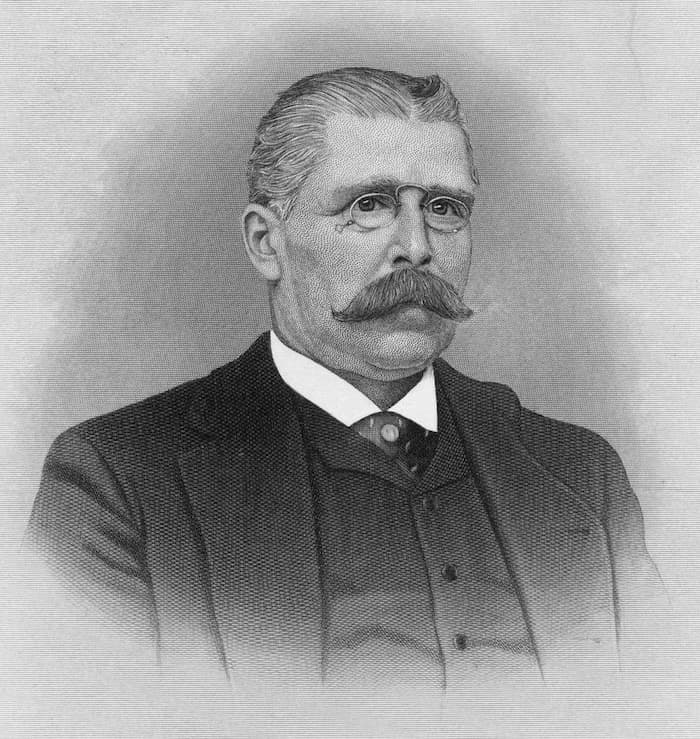
Biography
The Metropolitan Museum of Art decided to buy its first Cypriot collection in the last days of 1872, after the trustee William T. Blodgett visited an exhibition of the antiquities that Gaston Feuardent had organised in London2. They belonged to Luigi Palma di Cesnola, the United States consul at Larnaca, who sold the museum a second collection in 1876 and was its director from 1879 until his death2. Feuardent, who had charged the museum with tampering with its sculptures, later sued him for libel1,17.
Cesnola was born in 1832 at Rivarolo Canavese in Piedmont and joined the Piedmontese army as a volunteer at fifteen. He left it as a lieutenant in 1854 by "voluntary dismissal" and served in the Crimea as aide-de-camp to a general with the Anglo-Turkish forces1. He went to the United States in 18582 and in the Civil War was colonel of the Fourth New York Cavalry and spent months in Libby Prison before his release in 18641. Olivier Masson writes that he left the army as a colonel or brigadier-general, and that "general" was a title he claimed Lincoln had given him2; Marangou says it was a brevet of 18651. He became a United States citizen on 16 August 18651 and reached Larnaca in the last days of that year2.
Digging from Larnaca
The consulate paid $1,000 a year, and by October 1866 Cesnola was asking his friend and creditor Hiram Hitchcock in New York to find him a posting in a European capital1. Antiquities kept him at Larnaca. He began digging in 1866 at Dali, Alambra and Potamia, "in a mere amateur way" by his own account1. Nicholas Stanley-Price describes his method as buying casual finds and paying villagers to dig, and quotes his admission that the excavations were "perhaps not conducted in all their details according to the usual manner"18. A colossal head found at Golgoi, near Athienou, on 6 March 1870 made that site the centre of his work2.
An Ottoman decree of 1869 forbade the export of finds from excavations, coins excepted. Stanley-Price says Cesnola's mass exports challenged it directly, and that the American minister in Constantinople, George Henry Boker, obtained a firman for his digging and helped him export18. In 1871 the Ottoman authorities stopped excavation and export altogether1. Cesnola later told Hitchcock that, such was his influence with the Turks, he had been digging without showing the governor the firman he held1.
Two collections for New York
Cesnola sold or gave away a great deal before New York. Carl Friederichs bought for the Berlin museums in the autumn of 1869. An auction at the Hôtel Drouot in Paris on 25 and 26 March 1870, with a catalogue by W. Froehner, sent pieces to the Louvre, Marseille and the collector Louis De Clercq. Sotheby's sold more in London in January and May 1871; at the second sale Colonel Fox, later Pitt Rivers, bought nine votive figures labelled as from Golgoi, now in the Pitt Rivers Museum at Oxford (1884.56/91-99)2. Smaller lots, some of them gifts, went to Turin, Boston, Munich and Istanbul2.
About 6,000 items reached London in the autumn of 1872 and were received by the London branch of Rollin & Feuardent, whose young representative Gaston Feuardent put them on show1,2. John Taylor Johnston, the museum's president, advanced the money for the purchase, which became final in May 18741,2.
He returned to Larnaca in the autumn of 1873, with his brother Alessandro Palma di Cesnola as chief digger2. Until June 1876 he dug at Salamis, Amathus, Kourion and Soli and in the Karpas, and bought heavily from others1,2. By his own count the second collection held 7,160 objects1. The Metropolitan decided to buy it in November 1876, and Cesnola became its Secretary in May 18772. Anna Marangou writes that New York offered $60,000 for the whole collection together with the post1. In a letter of December 1876 Cesnola told Heinrich Schliemann that his entire discoveries were going to the New York museum, which had bought them for $66,000, exclusive of expenses1.
The Curium treasure
Cesnola presented his gold from Curium as a rival to Schliemann's finds, telling Hitchcock that it surpassed them "by a great deal"1. In Cyprus: Its Ancient Cities, Tombs, and Temples (1877) he described four chambers beneath a mosaic pavement near the church of Agios Ermogenis, with a gold room, a silver room and armlets naming Eteandros, king of Paphos, and wrote of the gold room that "every object was discovered in my presence"1. Marangou concludes that no such chambers existed and that the objects were bought from local diggers across the island1.
The workmen's accounts differ from his and from each other. A deposition by his foreman Ioannis Koutsocheris before the Greek consul describes a tomb of four rooms opened in 1875 with Cesnola present1. The other foreman, Christofis Christodoulou, stated in an affidavit published in 1885 and addressed to Max Ohnefalsch-Richter that he had himself found the richest tomb, in the plain and not under the mosaic, with three chambers, and that Cesnola was absent for nearly all the work1. In the Cyprus Herald of 6 October 1883 Ohnefalsch-Richter had written that no honest man could any longer believe in the treasure1. The report that William James Stillman made to the American Numismatic and Archaeological Society on 28 March 1885 held that the treasure contained rare and important objects but that they came from tombs scattered around Kourion1. In 1971 T. B. Mitford wrote that "the suspicion persists" that Cesnola obtained it by "clandestine exploitation of some royal cemetery"4.
Feuardent against Cesnola
Cesnola was appointed the museum's director on 15 May 1879, after persuading the trustees that the post should be for life1. In August 1880 the Art Amateur printed Feuardent's article "Tampering with Antiquities", which charged that a small statuette of Elpis had been turned into an Aphrodite by carving a mirror into her left hand1. Cesnola called the charges "maliciously made and absolutely without foundation in fact" and asked the trustees to investigate. A committee under F. A. P. Barnard found "each and all of the charges" without foundation17. Feuardent's action for libel was entered in May 1881, claiming $5,000 on each of five causes17. Clarence Cook's pamphlet of 1882, published by Feuardent, argued that the statuary was largely unrelated fragments, repaired and painted1.
On Cesnola's petition, which said that Feuardent was an alien, the case went to the United States Circuit Court. It opened on 31 October 1883 before Judge Nathaniel Shipman, with Francis Bangs for Feuardent and Joseph H. Choate for Cesnola1,17. Cesnola testified for six days and agreed that he had "repaired" 1,200 to 1,300 stone pieces1. In an editorial that the Art Amateur reprinted, The Sun wrote that he had admitted that about a third of the statues had pieces stuck back on under a wash, and that he had since found several false noses17.
The two accounts of the verdict differ. Marangou writes that after 28 hours the jury returned a complete vindication, rejecting all of Feuardent's accusations as "maliciously made and totally without foundation"1. The Art Amateur, which had published Feuardent's article, reported that the jury found for Cesnola on two of the three counts put to it and disagreed on the third, whether Feuardent was owed damages for Cesnola's accusation that he had overcharged for cartage in London and, as his agent, had failed to make proper efforts to sell the collection; it added that the judge had left the archaeological questions out of his charge17. Stillman's report returned to those questions and found the collection impaired by "a deplorable recklessness of attribution as to the localities of discovery" and by coatings that hid the original surfaces of important pieces1.
Cesnola remained director until his death in November 19042. About 5,000 duplicates went to Leland Stanford in 1896, and in March and April 1928 the museum sold 965 lots of duplicates at the Anderson Galleries in New York, where the circus owner John Ringling was the most frequent buyer2. The large sculptures, the representative vases, the gold and silver and the inscriptions stayed in New York2.
Life and work
- 29 July 1832Born at Rivarolo Canavese, second of four sons of Count Luigi Maurizio Palma di Cesnola and Countess Eugenia Ricca di Castelvecchio
Rivarolo CanaveseMarangou 2000, p. 147Marangou 2000, p. 367
- 9 September 1847Left school and joined the Fourth Infantry Regiment of the Piedmontese army as a volunteer aged fifteen; later Royal Military Academy at Cherasco
PiedmontMarangou 2000, pp. 147-148
- October 1854Promoted lieutenant in September 1854, then within a month allowed to accept 'voluntary dismissal' after an episode whose details Marangou says remain obscure; went on to serve as aide-de-camp to General Ansaldi with the Anglo-Turkish forces in the Crimean War
PiedmontMarangou 2000, p. 148
- c. 1858Emigrated to New York; Marangou thinks 1858 more likely than the 1860 he gave
New YorkMarangou 2000, p. 149Masson 1996
- 11 June 1861Married Mary Jennings Reid
New YorkMarangou 2000, p. 151
- 1862Commissioned colonel of the Fourth New York Cavalry; taken prisoner and held at Libby Prison, Richmond, in 1863; released 1864
United StatesMarangou 2000, p. 152Marangou 2000, p. 367
- 16 August 1865Naturalised as a United States citizen in the Superior Court of the City of New York (occupation given as 'soldier')
New YorkMarangou 2000, pp. 154-155
- 1865Appointed US Consul in Cyprus (notified by State Department despatch of 8 May 1865, per his reply of 13 August 1865; supported by senators Morgan and Harris)
WashingtonMarangou 2000, pp. 154-155
- 27 December 1865Arrived at Larnaca (Marangou's narrative says Christmas Day; her chronology says 24 December) and took over the consulate, entering on duty on 27 December
- 1866First excavations at Dali, Alambra and Potamia, begun, in his words, 'in a mere amateur way'
- 1867Hiram and Mary Hitchcock visited Cyprus; Cesnola then went to Italy after his mother's death
Cyprus; RivaroloMarangou 2000, p. 167
- 15 August 1868First report to the State Department on antiquities found in the island
- November 1868Wrote to Hitchcock that he had arranged for New York missionaries at Beirut to print a catalogue of his small collection for travellers; a brochure 'Catalogue of Collection of General Cesnola For Sale to suit Amateurs, Cyprus, 1869' is also reported (Masson has seen neither)
LarnacaMasson 1996
- 1868Gift of Cypriot pottery to the newly founded American University of Beirut (Karageorghis's communication to Masson, citing Wolley's 1921 museum guide; confirmed by the museum curator)
BeirutMasson 1996
- 1869–1870Excavated at Kouklia (Palaipaphos) in 1869, returning in 1870 with Carl Friederichs of the Berlin Museums; later claimed to have bought the temple area
KoukliaMarangou 2000, p. 248
- 1869Before 1870 he also sent a lot to Rollin et Feuardent in Paris, made a first gift to Turin, and made proposals to London and Berlin; he hoped to sell his 'Phoenician Museum' to the New York Historical Society (Masson: 'il semble')
ParisMasson 1996
- October–December 1869Carl Friederichs, sent to Cyprus for the Berlin museums with the help of George Bancroft, bought stone objects, bronzes, terracottas, engraved gems and glass for Berlin in autumn 1869; Masson says part of the same purchase, a selection of vases, terracottas and limestone statuettes procured by 'C. Friederichs, Berlin', went to the Kunsthistorisches Museum, Vienna
LarnacaMasson 1996
- 6 March 1870Discovery of the colossal head at Agios Photios (Golgoi/Athienou) and excavation there
- 25 March 1870 – 26 March 1870Sale of Cypriot antiquities at Paris, catalogue preface by Froehner; Louvre, Autun, Saint-Germain, Marseilles, Orleans and private collectors (including Louis de Clercq) bought
- 1870Offered the collection to the Hermitage (letters to Gedeonov from 2 January 1870; Johannes Doell catalogued it in Larnaca from June); Russia declined to buy en bloc
LarnacaMarangou 2000, pp. 191-198
- 25 March 1870 – 26 March 1870Hotel Drouot sale, catalogue by Froehner ('Antiquités chypriotes provenant de fouilles faites en 1868 par M. Cesnola', expert H. Hoffmann). Buyers: Louvre (inventory N 3519-3532, including an inscribed base from Salamis, a few sculptures, small terracottas), Saint-Germain-en-Laye (nos 15132-15169, bought by Alexandre Bertrand), about forty pieces for Marseille (Musee Borely), single pieces in Autun and Orleans, Louis De Clercq and dealers. A second Paris sale planned for 1871 was prevented by the war
ParisMasson 1996
- June 1870A lot of antiquities reached Turin after the Golgoi finds and was given to the Academy of Sciences (Accademia delle Scienze), then passed to the Museo di Antichita; published by F. G. Lo Porto in 1986. (A smaller lot was given in 1877 by his brother Alessandro, not by Luigi.)
TurinMasson 1996
- June–December 1870Hermitage negotiation: Johannes Doell, sent by the Hermitage, catalogued the collection at Larnaca in summer 1870 (Die Sammlung Cesnola); Marangou says Cesnola told him he valued it at 270,000-400,000 francs and settled on 300,000. Masson says the talks ended negatively by the end of 1870. No sale to Russia took place
- 9 January 1871First Sotheby's sale of Cesnola antiquities in London; second sale 1 May 1871
- 1871Ottoman authorities banned further excavation and export; Cesnola, in his own account, asked for a warship to remove his collection and the State Department agreed to send one
- 9 January 1871 – 10 January 1871First Sotheby, Wilkinson & Hodge sale, 13 Wellington Street, Strand: 'Catalogue of a very interesting collection of early Greek antiquities ... discovered in the Island of Cyprus ... by General de Cesnola', with another property 'formed by an amateur'
LondonMasson 1996
- 1 May 1871Second Sotheby sale ('Catalogue of some most select antiquities ...'). Named buyers include W. Loftie, Lord Ranelagh, General Fox (numismatist), Colonel Fox (Pitt Rivers), Feuardent and Hoffmann. Pitt Rivers bought lot 142 (nine Golgoi ex-votos, now Pitt Rivers Museum 1884.56/91-99) and lot 48 (vase with bull, man and bird, 1884.38/2803); the British Museum bought through Rollin and Feuardent a small lot, 1871.7-8,1-6; 'Hall Esq.' bought lot 47 (BM 1928.1-17.25 from Mrs W. E. Hall); Feuardent bought lot 31 (amphora with a human face, now Saint-Germain 22.231 after Rollin and Feuardent, 1874)
LondonMasson 1996
- c. 1871Gift of a larger series to Hiram Hitchcock ('probably 1871', Masson); after Mrs Hitchcock's bequest to Dartmouth College the objects remained at Hanover. Smaller gifts: vases to the Rev. Joseph Owens (now National Museum, Edinburgh)
Hanover, NHMasson 1996
- 1871–1872Gifts or sales named by J. T. Johnston (1878) and traced by Masson: Istanbul (large conciliatory gifts to the Ottoman museum), the Archaeological Society of Athens (vases, now National Museum Athens, e.g. NM 76), Munich (about 90 pieces, Brunn's March 1876 inventory 2029-2120), Perugia (Late Bronze Age vases and a Temple boy), the South Kensington Museum, the Smithsonian (no trace found by Masson), Fitzwilliam (glass, GR.1.1876 series)
- September–December 1872Exhibited the first collection at 61 Great Russell Street, London, through Rollin & Feuardent; visited by J. S. Morgan and W. T. Blodgett of the Metropolitan Museum's circle in September; Newton reviewed it in The Academy
- December 1872Decision that the first collection be bought for the new Metropolitan Museum (the British Museum had offered 10,000 pounds for the Golgoi sculptures and inscriptions, refused because Cesnola insisted on selling en bloc; John Taylor Johnston offered 60,000 dollars, which he advanced personally); shipped in 275 chests and exhibited at the Douglas Mansion in 1873
London; New YorkMarangou 2000, p. 227Marangou 2000, p. 233Marangou 2000, pp. 237-242
- May 1872Boston Museum of Fine Arts acquired and registered a series of Cypriot objects from Cesnola in May 1872: vases 72.1-133, terracottas 72.134-203 and further series, later published in part (vases, bronzes, sculptures)
BostonMasson 1996
- December 1872Decision of the Metropolitan Museum to buy the first collection (Masson: end of 1872, Blodgett's visit decisive). John Taylor Johnston advanced the funds; Marangou: Johnston offered $60,000. Purchase became definitive only in May 1874, the origin of the '74' in accession numbers. Marangou quotes the museum's report that the collection was 'purchased by the President and deposited ... as a loan'
New YorkMasson 1996Marangou 2000
- January–August 1873In New York arranging the collection; arranged for brother Alessandro to be appointed US consular agent at Paphos (approved within two days); obtained a memorandum that his future finds would belong to the museum, with up to 5,000 dollars a year for digging; sailed back to Cyprus with his family
New YorkMarangou 2000, pp. 239-241
- 7 March 1873Began unpacking and arranging the collection at the Douglas Mansion, New York; before returning to Cyprus obtained a memorandum that all his future discoveries would belong to the Museum, with up to $5,000 a year for digs and expenses (his salary to depend on the value of the finds, set by the Museum)
New YorkMarangou 2000, pp. 240-241
- 1874After the 1873 financial crisis suspended the museum contract, dug simultaneously at Salamis, Amathus, Kourion, Soli and in the Karpas, buying heavily from others as well
- 17 September 1874By his own account discovered 'the city of Curium' (Kourion) and the temple of Apollo Hylates
KourionMarangou 2000, p. 257
- 1875Amathus: great sarcophagus found early in the year; Ruskin paid for further digging; 143 boxes sent to New York on the 'Madagascar' in March; 'Treasure of Curium' announced from summer
Amathus; KourionMarangou 2000, pp. 250-256Marangou 2000, p. 261
- c. 1875Gifts to John Ruskin in thanks for 1,000 pounds he gave about 1874: a cup from Amathus (1875; BM WA Dept 123053, reached the British Museum 1931) and a shield from the same place (BM 1972); sculptures and heads later given by R. G. Collingwood to the Ashmolean (1933 or 1938, Masson gives both)
- 1875–1904NamedMitford (1971, 3-4) writes that 'the suspicion persists' that Cesnola acquired the Kourion treasure through 'a long and (it may be) clandestine exploitation of some royal cemetery, very probably at Kourion but possibly at Old Paphos', and that Cesnola 'was at some pains to provide this treasure with ... a good home'. Mitford's suspicion as stated, attributed to him; not a finding.
- November 1876After offering the second collection (7,161 items; Curium finds) to the Metropolitan, the British Museum (10,000 pounds offered, three days to accept) and the Louvre, sold it to the Metropolitan for 60,000 dollars, with the post of Secretary
London; New YorkMarangou 2000, pp. 273-281
- 1876Left Cyprus in autumn 1876; learned in London that the consulate had been abolished
Larnaca; LondonMarangou 2000, p. 277Marangou 2000, p. 367
- July–September 1876British Museum purchase direct from Cesnola through Samuel Birch: BM 1876.9-9,1-127 (over eighty vases of various periods, some terracottas, miscellaneous); Cesnola's letters to Birch of July-August 1876 speak of a 'collection of vases'; the Trustees paid 300 pounds, split into tranches of 213 and 87 pounds
LondonMasson 1996
- July–November 1876Second collection offered (Marangou: 7,160/7,161 objects, 2 years' digging, 9,000 pounds expenses): first at 15,000 pounds, then the whole at 20,000 pounds (Curium collection 12,000, the rest with three sarcophagi 8,000). The British Museum Trustees authorised up to 10,000 pounds for the Curium group; the Metropolitan telegram offered $60,000 gold half in cash plus arranging the collection in the Park museum, which Marangou says Cesnola first rejected; he then accepted $60,000 and the Secretary's post
- November 1876Purchase of the second collection by the Metropolitan. The Curium finds (except the gold) went from London to New York on the 'Danemark'; the British Museum restored the Curium bronzes for about $1,000 before they left. The two collections were registered together as 'The Cesnola Collection, purchased by subscription, 1874-1876', 74.51.0001 to 74.51.6714 (plus a small group 74.57.)
New YorkMasson 1996Marangou 2000, p. 281
- 1877Cyprus: Its Ancient Cities, Tombs, and Temples published by John Murray, London (New York edition 1878, German edition 1879); the family left London for New York on 26 April 1877
LondonMarangou 2000, pp. 276-277Marangou 2000, p. 283Marangou 2000, p. 367
- 15 May 1879Appointed first Director of the Metropolitan Museum of Art, for life on his terms
- 30 March 1880Opening of the new Museum building in Central Park with the Cesnola Collection as its focal point
- August 1880Feuardent's article 'Tampering with Antiquities' in the Art Amateur opened the public dispute over restorations in the Cesnola Collection
New YorkMarangou 2000, p. 304
- 1880–1882AccusedFeuardent (Art Amateur, August 1880, and New York Times letters) charged that statues in the Cesnola Collection had been altered, composed of unrelated fragments and misattributed (the case starting with a small statuette of Elpis turned into an Aphrodite); Clarence Cook's pamphlet 'Transformations and Migrations of certain statues of the Cesnola Collection' (1882) repeated and extended this. A museum committee under F. A. P. Barnard reported for Cesnola in 1881; the Trustees resolved on 21 February 1881 that the charges were false; his assistant A. D. Savage resigned in 1882 when he refused to reveal restorations and gave the New York Times a list of sixteen restorations, most of them plastic noses. These are the charges as Marangou reports them, with the Trustees' response.
Marangou 2000, pp. 304-315Marangou 2000, p. 311Marangou 2000, p. 324
- December 1883 – February 1884Libel action Feuardent v. Cesnola tried before Judge Nathaniel Shipman; the jury found for Cesnola
New YorkMarangou 2000, pp. 323-328
- 1883–1884Civil suitLibel action brought by the dealer Gaston Feuardent, served on Cesnola in 1881 and tried at New York before Judge Nathaniel Shipman over nine and a half weeks from late 1883 into 1884 (Cesnola defended by the museum's lawyers headed by Joseph H. Choate; Feuardent's counsel Francis Bangs). The jury, after a day and night of deliberation, returned a verdict for Cesnola: Marangou writes that it rejected Feuardent's accusations 'as being maliciously made and totally without foundation', and the suit ended. This is a jury verdict, not a finding of fact about the objects.
- 1883–1885AccusedMax Ohnefalsch-Richter's article in the Cyprus Herald of 6 October 1883 called the 'Treasure of Curium' and the Golgoi temple inventions; Cesnola instructed George Menardos to find a lawyer for a libel action in Cyprus (the lawyer Collyre took it on); Marangou does not report an outcome. In 1885 William J. Stillman's report to the American Numismatic and Archaeological Society (28 March 1885) found the collection of real value but criticised 'recklessness of attribution', concealed repairs and, for the Curium Treasure, concluded the objects came from tombs scattered round Kourion and not from the 'treasure chambers' of Cesnola's narrative; Marangou calls it a vindication of Feuardent. A society report, not a court ruling.
- 1896Met sold Leland Stanford 'about 5,000 duplicates of the Cesnola Collection' (Cesnola still director); they went to the Stanford University Museum and many were destroyed or damaged in the 1906 earthquake
New YorkMasson 1996
- 18 November 1904Died in New York after falling ill at a veterans' dinner
- 1911Exchange of duplicates between the Metropolitan and the Ashmolean Museum: vases
New YorkMasson 1996
- 1914Myres, Handbook of the Cesnola Collection of Antiquities from Cyprus (New York): numbered 1-5985, a guide not a catalogue (Masson: 'hypercritical' on findspots; Atlas I-III 1885-1903 is the other record). Not the same as the accession numbers 74.51.0001-6714
New YorkMasson 1996King 1916, pp. 66-68
- 1925–1927Private sales of Cesnola duplicates by the Metropolitan in 1925, 1926 and 1927 (detail in the museum archive); the Nicholson Museum, Sydney, bought 23 Cypriot objects (glass, sculpture, vases, terracottas) in 1927 for $342, charged $290.70 (about 60 pounds) after a 15% public-institution discount, after an exchange with Gisela Richter; Nicholson accessioned them as NM48.270-278 and others
- 30 March 1928 – April 1928Anderson Galleries sale no. 2253, 'Cypriote & Classical Antiquities: Duplicates of the Cesnola & other collections', sold by order of the Trustees of the Metropolitan Museum (president R. W. de Forest); two catalogues, 965 lots in all. De Forest's letter says the Trustees preferred to disperse stored duplicates rather than give them to other museums. Masson's annotated copy shows John Ringling as the most frequent buyer (13 Temple boys, Pyla statuettes ex R. H. Lang, many vases) and F. W. Collins (five Temple boys, to Roanoke)
New YorkGalleries 1928Masson 1996
Through their hands
232 recordsCame from
and 5 more in the ledger
Went to
and 95 more in the ledger
- 1865–1875Rivalry
RivalryR.H. Lang and Palma Luigi di Cesnola competed fiercely in the trade in antiquities.
Rival of Robert Hamilton LangCyprusCesnola 1878, p. 82Panteli 1995, p. 26
- 1865–1875Rivalry
RivalryT.B. Sandwith and Palma Luigi di Cesnola competed fiercely in the trade in antiquities.
Rival of Thomas Backhouse SandwithCyprusPanteli 1995, p. 26
- 1865–1875Rivalry
RivalryG. Collona-Ceccaldi and Palma Luigi di Cesnola competed fiercely in the trade in antiquities.
Rival of Georges Colonna CeccaldiCyprusPanteli 1995, p. 26
- 1867–1871Sale
SaleCesnola said he sold 2,700 pieces at auction between 1867 and 1871 for about 14,000.
about 14.000Marangou 2000, p. 183
- 1868–1869Transfer
TransferCesnola said he ceded two inscribed vases from tombs at Citium to Péretié in 1868 or 1869.
Passed objects to Napoléon Antoine Aimé Péretié2 vases en terre cuite jaunâtreCassimatis 2001, p. 220Masson 1989, p. 42Tatton-Brown 2001, p. 220
- 1868Gift
GiftCesnola gave antiquities to the Smithsonian Institute at Washington in 1868.
Gave to Smithsonian Institute at Washingtontwo boxes of Phoenician and Greek antiquitiesNo. accession 2258Cesnola 1878, p. 454Marangou 2000, p. 209Masson 1996, p. 27
- 1868Sale
SaleCesnola offered his 1,600-piece “Phoenician Museum” to Hamilton Fish for $15,000.
Sold to Hamilton Fish“Phoenician Museum”, 1600 pieces$15,000Hermary & Mertens 2014, p. 13Marangou 2000, p. 174
- 1868Gift
GiftLuigi Palma di Cesnola gifted a nucleus of objects to the Archaeological Museum at the American University of Beirut.
Gave to Archaeological Museum at the American University of BeirutThe A. G. Leventis… 2009, p. 45Masson 1996, p. 25
- 1868Offer
OfferpossiblyAccording to his biographer, a sale was reportedly arranged in 1868 through a catalogue of Cesnola’s small collection.
small collection of antiquitiesBeyrouthMasson 1996, p. 4
- 1869Sale
SaleLuigi Palma di Cesnola sold 180 objects to the Berlin museums in Larnaka through Carl Friederichs.
Sold to Berlin Museum180 ObjekteCesnola 1878, p. 454Hermary 1990, p. 20Marangou 2000, p. 118Recke 2012, p. 91
- 1869Sale
SaleCarl Friederichs met Cesnola in Cyprus and bought 180 objects from him for his museum.
Sold to Karl (Carl) Friederichs180 oggetti, compreso un lotto di terrecotteCiproPaolo 2010, p. 80Maier 1997, p. 129Marangou 2000, p. 177Masson 1990, p. 40
- 1869Help
HelpBancroft helped Cesnola obtain the Berlin museum’s dispatch of Friederichs to Cyprus.
Helped by George BancroftChypreMasson 1996, p. 4
Show 220 moreShow fewer
- 1869Transfer
TransferThe Antikensammlung acquired the spouted jug from Luigi Palma di Cesnola.
Passed objects to AntikensammlungSpouted jug, cat. no. 37No. V 1112Bernhard-Walcher et al. 1999, p. 108
- 1870–1876Sale
SaleCesnola agreed to sell his collection to the Metropolitan Museum for £1,200.
Sold to Metropolitan Museum of Art£1,200New YorkBarker & Merrillees 2017, p. 51Belloni 1995, p. 66Bonato 2012, p. 50Cannavò 2012, p. 429
- 1870–1876Transfer
TransferThe dedication arrived at the Metropolitan Museum with most of the objects from the Cesnola collection.
Passed objects to New York Metropolitan Museum of Artdedication to Apollo AmphidexiosNo. ICS 325New YorkBarlow et al. 1991, p. 1Buitron-Oliver 1997, p. 29Caubet 1993, p. 31Caubet 2012, p. 150
- 1870–1873Gift
GiftA crate containing Phoenician skulls sent by Luigi Palma di Cesnola arrived, and the Academy made him an honorary member in consideration of the gift.
Gave to Royal Academy of MedicineTurinBombardieri & Cannavò 2016, p. 38Bombardieri & Cannavò 2016, p. 46Bombardieri & Cannavò 2016, p. 40
- 1870Gift
GiftLuigi Palma di Cesnola donated a small collection of antiquities to the Royal Academy of Sciences in Turin.
Gave to Academy of Sciences of TurinBombardieri & Cannavò 2016, p. 40Bombardieri & Panero 2021, p. 1Hermary & Mertens 2014, p. 13Soldi 2025, p. 98
- 1870Sale
SaleLuigi Palma di Cesnola's collection sale supplied the museum with more than eighty Cypriot objects.
Sold to Musée d'Archéologie nationaleUn peu plus de quatre-vingts objets archéologiques provenant de ChypreNo. 13132a et b, puis 15132 à 15169ParisBoucher 2012, p. 164
- 1870Sale
SaleHenri Léman bought objects at the Cesnola sale, as indicated by Alexandre Bertrand's catalogue annotations.
Sold to Henri LémanParisBoucher 2012, p. 165
- 1870Sale
SaleThe Louvre acquired objects at Cesnola's Paris sale.
Sold to Louvreobjets de ses collectionsCassimatis 2001, p. 217Caubet 2012, p. 150Bombardieri & Panero 2021, p. 22Hardy 2014, p. 461
- 1870Sale
SaleGedeonov was authorized to purchase nine objects from Cesnola for the Hermitage.
Sold to Hermitage Museumthree painted vases, two heads, two limestone statues and two terracotta idols6.000 francs ($1.200)Karageorghis 1998, p. 119Karageorghis & Bukina 2005, p. 93Marangou 2000, p. 191
- 1870Transfer
TransferCesnola sent an album of photographs from Cyprus to Count Sclopis di Salerano.
Passed objects to Federico Sclopis di Saleranoalbum containing photographs of objects found at GolgoiTurinMarangou 2000, p. 96
- 1870Consignment
ConsignmentCesnola reported sending his first Paris shipment to Rollin and Feuardent.
Consigned to Felix-Bienaime Feuardentat least 30 similar terracotta heads and 20 superior onesMasson 1990, p. 37
- 1870Consignment
ConsignmentCesnola reported sending his first Paris shipment to Rollin and Feuardent.
Consigned to C. Rollinat least 30 similar terracotta heads and 20 superior onesMasson 1990, p. 37
- 1870Sale
SaleCesnola reported that Feuardent paid him 800 francs in Italian paper money for the shipment.
Sold to Felix-Bienaime Feuardenthis first Paris shipment, including terracotta heads800 fr. en papier monnaie d'ItalieParisMasson 1990, p. 38Masson 1990, p. 39
- 1870–1871Auction
AuctionParts of Cesnola’s collection were offered at public auctions in Paris and London.
part of Cesnola’s collectionParis; LondonCaubet 1993, p. 31
- 1870Sale
SaleNinety-two limestone works were sold in Paris, including 48 heads found at Dali.
With buyers at the Paris sale92 limestone works, including 48 heads found at DaliHermary & Mertens 2014, p. 13
- 1870Acquisition
AcquisitionL. Palma di Cosenola obtained a Greek inscription at Melousha.
Inscription grecqueKarageorghis 1962, p. 350
- 1870Auction
AuctionCesnola's antiquities were sold at public auction in Paris on 25 and 26 March 1870.
With unnamed auction buyersCypriot antiquities from excavations made in 1868Marangou 2000, p. 186Marangou 2000, p. 367Masson 1990, p. 42Merrillees 2010, p. 36
- 1870Collection
CollectionCesnola said his collection contained over 12,000 pieces.
over 12.000 pieces, including statues, gold ornaments, lamps, glasses, vases, coins, bronzes and inscriptionsLarnacaMarangou 2000, p. 195
- 1870Acquisition
AcquisitionCesnola recovered objects held by the peasants at Athienou-Golgoi using a stratagem.
With les paysansa number of objects held by peasantsMasson 1994, p. 8
- 1870Auction
AuctionCesnola’s antiquities were sold at public auction in Paris.
With unnamed buyersCypriot antiquities from excavations made in 1868Hôtel Drouot, ParisMasson 1996, p. 5Stylianou-Lambert & Bounia 2016, p. 74Tatton-Brown 2001, p. 6
- 1870Auction
AuctionAntiquities from Cesnola’s collection were sold at auction in 1870.
With auction buyersMerrillees 2010, p. 117
- 1870Export
ExportThe text reports that Cesnola took some 35,500 objects from Cyprus in the 1870s.
- 1870Auction
AuctionLuigi Palma di Cesnola auctioned large parts of his collection in Paris and London and also sold directly to museums and collections.
umfangreiche Bestände seiner rund 35.000 Objekte umfassenden SammlungParis und LondonRecke 2012, p. 91
- 1871–1876Sale
SaleCesnola sold a substantial series of antiquities directly to the British Museum through Birch.
Sold to British Museummore than eighty vases, terracottas and other objectsNo. 1876.9-9, 1 à 127300 livresLondonChristofi 2024, p. 116Cook 1979, p. 4Bombardieri & Panero 2021, p. 22Hardy 2014, p. 461
- 1871Sale
SaleGeneral Pitt-Rivers acquired a face bead at the Cesnola sale in London.
Sold to Augustus Henry Lane Fox Pitt RiversChristofi 2024, p. 116Lightfoot 2017, p. 310
- 1871–1872Gift
GiftCesnola gave fifty-nine lamps to Hiram Hitchcock.
Gave to Hiram HitchcockLightfoot 2021, p. 13Marangou 2000, p. 79Masson 1996, p. 13Lightfoot 2017, p. 15
- 1871–1876Transfer
TransferLuigi Palma di Cesnola transferred the bowl to The British Museum.
Passed objects to The British Museumhemispherical bowl resting on three small feetNo. 1876,0909.35Lund 2015, p. 265Lund 2015, p. 266Lightfoot 2017, p. 84Lightfoot 2017, p. 127
- 1871Consignment
ConsignmentCesnola sent 66 boxes of antiquities to Rollin and Feuardent for sale.
Consigned to Rollin and Feuardent66 boxes of antiquities containing 5.756 itemsLondonMarangou 2000, p. 187Marangou 2000, p. 167Marangou 2000, p. 227
- 1871Consignment
ConsignmentCesnola sent further series of antiquities to London for two sales held by Sotheby.
Consigned to Sothebyseries of Cypriot antiquitiesMasson 1990, p. 38
- 1871–1872Sale
SaleprobablyMasson believed Fothergill bought a lot of second-choice antiquities directly from Cesnola at Larnaca.
Sold to Captain Fothergillun lot d'antiquités de deuxième choixMasson 1996, p. 26
- 1871Gift
GiftCesnola donated Cypriote antiquities to the National Museum of Natural History.
Gave to National Museum of Natural HistoryNo. Accession No. 002258WashingtonMerrillees 2010, p. 119
- 1871Sale
SalePitt-Rivers purchased a Cesnola face bead at the 1871 Sotheby's auction.
Sold to Augustus Henry Lane Fox Pitt RiversNo. 1884.76.142LondonLightfoot 2017, p. 14
- 1871Record
RecordAbout 5,000 objects from the explorations were lost at sea near the coast of Syria while being taken to America.
about 5000 of these objectsCesnola 1878, p. 454Marangou 2000, p. 118
- 1871Auction
AuctionCesnola’s two large batches of Cypriot antiquities were sold at London auction sales.
With unnamed buyersover £1440 poundsMarangou 2000, p. 187Marangou 2000, p. 188Reeve 2021, p. 90Ulbrich & Kiely 2012, p. 327
- 1871Export
ExportCesnola’s collection left Cyprus for London in September and arrived there in December.
collection and antiquities in packed casesCyprus to LondonMarangou 2000, p. 219
- 1871–1872Sale
SaleFrom 1871–1872, Cesnola sold his finds as entire collections to avoid auction dispersal.
With unnamed buyershis finds, sold as entire collectionsMasson 1990, p. 39
- 1871Offer
OfferCesnola selected some ex-voto for the London sale and kept the more remarkable objects.
- 1871Record
RecordAround 5,000 items from Palma Luigi di Cesnola’s collection were lost at sea on their way to the United States.
Off the coast of SyriaPanteli 1995, p. 36
- 1872Sale
SaleCesnola sold seventy terracotta lamps and one bronze lamp directly to the Museum of Fine Arts, Boston.
Sold to Boston Museum of ArtNo. MFA 72.392Cesnola 1878, p. 454Vermeule & Comstock 1972Counts 2001, p. 134Lightfoot 2021, p. 13
- 1872Transfer
TransferThe Museum of Fine Arts, Boston, acquired a lamp with gladiatorial equipment from Cesnola.
Passed objects to Museum of Fine Arts, BostonNo. MFA 72.260Lightfoot 2021, p. 244Lightfoot 2021, p. 248Lightfoot 2021, p. 198Lightfoot 2021, p. 274
- 1872Export
ExportLuigi Palma di Cesnola had major pieces from his collection shipped to England despite the export ban.
the major pieces in his collection, notably the sculptureKarageorghis et al. 2000
- 1872Offer
OfferLuigi Palma di Cesnola haggled with representatives from several cities over the sale of his collection.
With representatives from Saint Petersburg, Berlin, London, Paris, and New YorkKarageorghis et al. 2000
- 1873–1876Gift
GiftCesnola said that he voluntarily gave several thousand Cypriot antiquities to the Ottoman Imperial Museum.
Gave to Imperial Ottoman Museum at ConstantinopleConstantinopleCesnola 1878, p. 454Marangou 2000, p. 118Marangou 2000, p. 204Masson 1996, p. 10
- 1873Sale
SaleL. P. Cesnola vendit le didrachme à Fox lors de sa vente de mai 1873 à Londres.
Sold to General Fox (numismatist)un didrachme demeuré unique, ville d'émission inconnueNo. no. 35713 livres 10 sh.Masson 1996
- 1873Gift
GiftAlmost 400 stone objects were given over to the Turkish authorities after they declined to renew the firman.
With Turkish authoritiesHermary & Mertens 2014, p. 17
- 1874Note
NoteDethier and Cesnola made an agreement in Larnaca in 1874 after which 88 chests of Cypriot antiquities were brought to Istanbul.
Connected with Philipp DethierAntiquities from various sites in Cyprus, in 88 chestsBursa & Pitarakis 2005, p. 29
- 1875Gift
GiftprobablyLuppatelli reported that Cesnola sent over a hundred pieces from Cyprus to Perugia in the summer of 1875.
Gave to Museum of PerugiaTatton-Brown 2001, p. 139
- 1875Collection
CollectionThe author said Cesnola gathered finds from several rich tombs at Kourion into the Treasure.
discoveries from several rich tombs at Kourion, assembled as the TreasureMasson 1994, p. 9
- 1875Acquisition
AcquisitionpossiblyThe bowl was attributed to Cesnola as either acquired or excavated by him, probably from a tomb.
a fragmentary silver bowlNo. Metropolitan Museum Reg. nos. 74, 51, 4557 and 4559Kourion?Mitford 1971, p. 11Mitford 1971, p. 14Mitford 1971, p. 16
- 1876Sale
SaleCesnola sold about one hundred pieces of Cypriot pottery to the South Kensington Museum.
Sold to Kensington Museumabout a hundred pieces of Cypriot potteryNo. 2067-1876 to 2169-1876£100LondonCesnola 1878, p. 454Christofi 2024, p. 116Marangou 2000, p. 118Masson 1996, p. 27
- 1876Sale
SaleLuigi Palma di Cesnola sold the flask to the Fitzwilliam Museum.
Sold to Fitzwilliam MuseumSnake-coil decorated flaskNo. GR.61.1876Christofi 2024, p. 116Karageorghis et al. 1999, p. 141Karageorghis et al. 1999, p. 144Lightfoot 2017, p. 13
- 1876–1878Note
NoteA. Palma di Cesnola excavated or collected antiquities in financial collaboration with Sir Edwin Lawrence.
Connected with Edwin Henry LawrenceCypriot antiquitiesCyprus, especially in the Salamis regionKiely & Perna 2010, p. 110
- 1876–1878Collection
CollectionA. Palma di Cesnola excavated or collected antiquities on Cyprus, especially in the Salamis region.
a large and diverse quantity of Cypriot antiquitiesCyprus, especially the Salamis regionKiely & Perna 2010, p. 110
- 1876Record
RecordDi Cesnola was making arrangements for dispatch of a second consignment to America.
- 1876Purchase
PurchaseprobablyL. P. di Cesnola probably purchased the inscribed green-stone vase in a Nicosia bazaar.
vase made of green stone with a short Phoenician inscriptiona bazaar at NicosiaReyes 1994, p. 18
- 1876Record
RecordCesnola arranged for the dispatch of his second collection to America.
his second collection of antiquitiesfrom Cyprus to AmericaTatton-Brown 2001, p. 266
- 1880Transfer
TransferCesnola sent the lamp to California on behalf of the Metropolitan.
No. 1966.470Lightfoot 2021, p. 185
- 1883Lawsuit
LawsuitFeuardent sued Cesnola for defamation after Cesnola accused him of stealing an anthropomorphic vase.
In litigation with Gaston Louis FeuardentAccusation concerning an anthropomorphic vaseNo. 22231Boucher 2012, p. 178Christofi 2024, p. 117Marangou 2000, p. 325Merrillees 2010, p. 118
- 1884Sale
SaleCesnola sold five saucer lamps to Leland Stanford, Sr.
Sold to Leland StanfordNo. JLS.1802, JLS.1803, JLS.1807, 1966.385, JLS.1804Lightfoot 2021, p. 32Lightfoot 2017, p. 132
- 1884Agency
AgencyBalliard wrote to Heuzey on Cesnola’s behalf, asking him to return the crate of terracottas sent to the Louvre.
Represented by Charles Balliarda crate of terracottasMerrillees 2010, p. 116
- 1903Purchase
PurchaseLuigi Palma di Cesnola bought the chariot and related finds on the Paris art market.
chariot and related materialPicón et al. 2007, p. 470
- n.d.Gift
GiftLuigi Palma di Cesnola gave a temple-boy statuette to the Museo Archeologico Nazionale.
Gave to Museo Archeologico NazionaleLimestone temple-boy statuetteNo. Inv. Bellucci no. 68Beer 1994, p. 66
- n.d.Transfer
TransferA figurine from Amathus passed from Cesnola to De Agostini; the manner of transfer was not specified.
Passed objects to Giovanni De-AgostiniA similar figurine from Amathus, with legs and feet missingBolger & Serwint 2002, p. 361
- n.d.Note
NoteLuigi Palma di Cesnola said he had set aside skulls to send to Felice Finzi, but Finzi's death prevented the sending.
Connected with Felice Finzialcuni di questi cranjBombardieri 2012, p. 373
- n.d.Transfer
TransferTwo skulls that Cesnola said he found at Idalion were later sent to the Musée Anthropologique de l'Académie Médicale de Turin.
Passed objects to Musée Anthropologique de l'Académie Médicale de Turintwo skulls found at IdalionBombardieri 2012, p. 367
- n.d.Transfer
TransferprobablyThe authors considered it probable that the Istanbul jug group had been acquired through Cesnola, but could not verify this.
Passed objects to Istanbul Archaeological MuseumsSeven copper-alloy jugsNo. inv. nos 51-54, 57-58, 60Bursa & Pitarakis 2005, p. 30Michaelides et al. 2012, p. 135Panayides & Jacobs 2023, p. 21
- n.d.Gift
GiftCesnola presented several skulls to the Royal Academy of Medicine in Turin.
Gave to Royal Academy of Medicine in TurinCesnola 1878, p. 77
- n.d.Sale
SaleEmperor Napoleon had decided to purchase Cesnola’s discoveries and present them to the Louvre, but the negotiations ended.
Sold to Napoleon IIIthe whole of my discoveriesCesnola 1878, p. 170
- n.d.Transfer
TransferGeneral di Cesnola transferred a large collection to the Ottoman government as royalty for his firman.
Passed objects to Ottoman governmenta large and judiciously selected collectionCesnola 1878, p. 454Marangou 2000, p. 118
- n.d.Gift
GiftCesnola presented antiquities to the Royal Museum in Munich.
Gave to Royal Museum at Munichvarious specimensCesnola 1878, p. 454Marangou 2000, p. 118
- n.d.Gift
GiftGeneral di Cesnola gratuitously presented specimens to the Egyptian Museum at Turin.
Gave to Egyptian Museum at Turinvarious specimensCesnola 1878, p. 454
- n.d.Gift
GiftGeneral di Cesnola gratuitously presented specimens to the Anthropological Museum at Turin.
Gave to Anthropological Museum at Turinvarious specimensCesnola 1878, p. 454
- n.d.Gift
GiftCesnola presented antiquities to the Archaeological Society at Athens.
Gave to Archaeological Society at Athensvarious specimensCesnola 1878, p. 454Marangou 2000, p. 118Masson 1996, p. 11
- n.d.Gift
GiftGeneral di Cesnola gratuitously presented specimens to the Museum at Perugia.
Gave to Museum at Perugiavarious specimensCesnola 1878, p. 454
- n.d.Sale
SaleprobablySmall collections were sold to the Cambridge Museum in the account of the dispersals of Cesnola's finds.
Sold to Cambridge MuseumCesnola 1878, p. 454
- n.d.Transfer
TransferpossiblyG. Nicole’s account indicated that part of Castan’s collection came from Cesnola, possibly including the Geneva sculptures.
Passed objects to Louis CastanPart of Castan’s collection; possibly the sculptures now in GenèveChamay 1991, p. 30
- n.d.Note
NoteThe Cesnolas negotiated with Napoleon III about shipping the collection to the Louvre.
Connected with Napoleon IIIthe whole collectionChristofi 2024, p. 116
- n.d.Sale
SaleIn negotiations with Doell, the Imperial Museum's agent, Cesnola estimated his collection's value at 270,000 to 400,000 francs.
Sold to Imperial Ottoman Museumbetween 270.000 and 400.000 francsConnelly 1988, p. 80Hardy 2014, p. 461Marangou 2000, p. 195
- n.d.Transfer
TransferOne of Luigi Palma di Cesnola's small collections of antiquities went to Vercelli and then entered Museo Leone.
Passed objects to Museo Leonea small collection of antiquitiesBombardieri & Panero 2021, p. 17
- n.d.Transfer
TransferpossiblyThe author questioned whether Cesnola might have ceded some objects to Colucci as coming from Paphos.
Passed objects to Riccardo Colucciuna parte della raccolta italianaPaolo 2010, p. 81
- n.d.Sale
SalepossiblyThe article raises the possibility that Colucci bought Paphos-attributed objects directly from Cesnola.
Sold to Riccardo Coluccigroup of objects attributed to PaphosPaolo 2012, p. 385
- n.d.Gift
GiftprobablyThe article says the Perugia group appears to consist of duplicates Cesnola chose as gifts for the city museum.
Gave to Museo Archeologico Nazionale of PerugiaCypriote objects, described as duplicatesPaolo 2012, p. 387
- n.d.Gift
GiftprobablyThe article says the Turin group appears to consist of duplicates Cesnola chose as gifts for the city museum.
Gave to Museo di Antichità of TurinCypriote objects, described as duplicatesPaolo 2012, p. 387
- n.d.Note
NotepossiblyLuigi Palma di Cesnola was named among those through whom the Musée du Louvre came to keep two patères.
Connected with Musée du Louvredeux patères d'IdalionGubel 2007, p. 160
- n.d.Help
HelppossiblyPapa Petro distributed goods through which Luigi Palma di Cesnola rewarded villagers who collected antiquities.
Helped by Papa Petrogoods, such as flour and wheatOrmideiaHadjicosti 2001, p. 57Tatton-Brown 2001, p. 57
- n.d.Agency
AgencyThe Museum acquired the bowls and bowl fragments through General L. P. di Cesnola.
Agent for The Metropolitan Museum of ArtSilver bowls and bowl fragments, among othersNo. MMA 74.51.4556, 4557, 4558, and 4559Hendrix 1999, p. 21
- n.d.Transfer
TransferSome of Cesnola’s duplicate sculptures were dispersed to his friend John Ruskin.
Passed objects to John RuskinHermary & Mertens 2014, p. 17
- n.d.Transfer
TransferSome of Cesnola’s duplicate sculptures were dispersed to his friend Hiram Hitchcock.
Passed objects to Hiram HitchcockHermary & Mertens 2014, p. 17Marangou 2000, p. 209
- n.d.Gift
GiftCesnola gave Lang three inscribed alabaster vases from Golgoi-Ayios Photos.
Gave to Robert Hamilton LangThree alabaster vases bearing syllabic inscriptions, including a dedication to ApolloHermary & Mertens 2014, p. 384
- n.d.Transfer
TransferJohn Myres reported that many Cypriot objects were acquired by Pitt Rivers from General Louis Palma di Cesnola.
Passed objects to Augustus Henry Lane Fox Pitt Riversmany of the Cypriot objectsKarageorghis 1991, p. 29
- n.d.Sale
SaleLuigi Palma di Cesnola sold Cypriote antiquities to the university museums of Oxford and Cambridge.
- n.d.Sale
SaleLuigi Palma di Cesnola sold Cypriote antiquities to the university museums of Oxford and Cambridge.
Sold to University of CambridgeKarageorghis et al. 1999, p. ix
- n.d.Sale
SalepossiblyThe authors considered it quite likely that Uvarov bought these figurines from Cesnola rather than Yusefovich.
Sold to Count Alexei Sergeevich Uvarovterracotta figurines in 'Base-ring' ware styleNo. no. SHM 56 and three othersKarageorghis & Bukina 2005, p. 4
- n.d.Agency
AgencyCesnola's account says Besbes applied for an export permit for him as Russian Consul.
Represented by Bostantus BeshesCesnola's antiquitiesKnoblauch 2019, p. 67Masson 1996, p. 3
- n.d.Gift
GiftThe Misses Norton had received a Hellenistic lamp from Cesnola.
Gave to Misses Nortona Hellenistic lamp with two winged cupidsNo. MFA 12.790Lightfoot 2021, p. 65
- n.d.Agency
AgencyHitchcock was authorized to sell Cesnola’s collection and refer prospective buyers to him.
Represented by Hiram HitchcockMarangou 2000, p. 77Marangou 2000, p. 130Marangou 2000, p. 254
- n.d.Sale
SaleCesnola offered the Collection to the Newfort Museum and authorized Hitchcock to negotiate its purchase in his name.
Sold to New York Museum$60.00Marangou 2000, p. 78
- n.d.Sale
SaleDelgado reported that Cesnola proposed selling the Collection to the Spanish Scientific Mission.
Sold to Spanish Scientific MissionMarangou 2000, p. 41
- n.d.Sale
SaleCesnola sold a small collection to the Cambridge Museums.
Sold to Cambridge Museumssmall collections of antiquitiesMarangou 2000, p. 118
- n.d.Gift
GiftCesnola presented antiquities to the Egyptian Museum in Turin.
Gave to Egyptian Museum in Turinvarious specimensMarangou 2000, p. 118
- n.d.Gift
GiftCesnola presented antiquities to the Museum in Perugia.
Gave to Museum in Perugiavarious specimensMarangou 2000, p. 118
- n.d.Note
NoteCesnola offered two boxes of antiquities as a present to the Smithsonian; they were never claimed.
Connected with Smithsonian Institutetwo boxes containing a collection of antiquitiesMarangou 2000, p. 200
- n.d.Gift
GiftCesnola gave two boxes intended for the Smithsonian, along with other boxes, to the American Missionary College at Beirut.
Gave to American Missionary College at Beiruttwo boxes of antiquities and several other boxesMarangou 2000, p. 200
- n.d.Sale
SaleprobablyA ready-made pack of Cesnola's antiquities was expected to be purchased by the Sèvres Museum.
Sold to Sèvres Museumready-made pack of antiquitiesMarangou 2000, p. 179
- n.d.Sale
SaleCesnola received Johnston’s $60,000 offer for the collection, with the money to be advanced to the Museum.
Sold to John Taylor JohnstonCesnola’s collection$60,000New YorkMarangou 2000, p. 227
- n.d.Sale
SaleCesnola offered the collection for sale to the Centennial Exhibition committee and authorized Hitchcock to sell it at the stated prices.
Sold to Committee of the Centennial Exhibitionwhole collection$60,000 in gold; Hitchcock instructed to sell at $50,000 if necessaryPhiladelphiaMarangou 2000, p. 254
- n.d.Gift
GiftpossiblyCesnola said he had packed a box of Phoenician vases for the New York Historical Society.
- n.d.Sale
SaleCesnola asked Cook to help the Philadelphia museum buy a collection he could prepare.
Sold to Philadelphia museum2000 already existent vases and finds from another 6,000 unopened tombsMarangou 2000, p. 315
- n.d.Note
NoteHulbert promised Cesnola that he would try to persuade New York authorities to purchase the collection.
Connected with Henry Hulbertthe Cesnola CollectionMarangou 2000, p. 390
- n.d.Gift
GiftCesnola's letter said he sent Renan a box of inscription impressions and a sheet copying inscriptions painted on vases.
Gave to Ernest RenanEstampages of Phoenician inscriptions from Cyprus and copies of inscriptions painted on vasesMasson 1989
- n.d.Sale
SaleL. De Clercq was among the named collectors who bought pieces from the Cesnola sale.
Sold to Louis Constantin Henri François-Xavier de ClercqParisMasson 1990, p. 38
- n.d.Sale
SaleHoffmann was among the named antiquarians who bought pieces from the Cesnola sale.
Sold to Henri HoffmannParisMasson 1990, p. 38Masson 1990, p. 39
- n.d.Sale
SaleRollin was among the named antiquarians who bought pieces from the Cesnola sale.
Sold to C. RollinParisMasson 1990, p. 38
- n.d.Loan
LoanpossiblyMasson suggested that Cesnola lent the lamp to Colonna-Ceccaldi for a time.
Lent to Georges Colonna Ceccaldila lampeNo. ICS 329Masson 1990
- n.d.Sale
SaleAl(exandre) Bertrand bought objects at the Cesnola sale for the Musée des Antiquités nationales.
Sold to Alexandre Bertrandobjects from Cesnola’s saleNo. 15132 à 15169Masson 1996, p. 7
- n.d.Gift
GiftCesnola gave antiquities to Ruskin in thanks for Ruskin’s gift of 1000 livres.
Gave to John RuskinMasson 1996, p. 13Ulbrich & Kiely 2012, p. 340
- n.d.Gift
GiftCesnola gave Gladstone the funerary inscription, which remained at Hawarden Castle.
Gave to William Ewart Gladstonefunerary epigram for PhileasNo. Salamina, p. 104; Corpus no. 192Masson 1996, p. 26
- n.d.Sale
SalepossiblyCesnola considered trying to sell his “Phoenician Museum” to the New York Historical Society.
- n.d.Sale
SaleSandwith purchased an archaic vase from Cesnola.
Sold to Thomas Backhouse Sandwithan archaic vase depicting a warrior in a chariotNo. B.M. 1875.3–10.1Merrillees 2001, p. 228
- n.d.Gift
GiftpossiblyThe exhibition catalogue said it was possible that Cesnola gave pieces from his personal collection to Balliard.
Gave to Charles Balliardpieces from Cesnola’s ‘fonds personnel’Merrillees 2010, p. 114
- n.d.Sale
SalepossiblyThe exhibition catalogue said it was possible that Cesnola sold pieces from his personal collection to Balliard.
Sold to Charles Balliardpieces from Cesnola’s ‘fonds personnel’Merrillees 2010, p. 114
- n.d.Sale
SaleCesnola sold the Ennion amphoriskos in Europe, and Charvet acquired it.
Sold to Jules Charvetmold-blown blue amphoriskos signed by EnnionLightfoot 2017, p. 13
- n.d.Sale
SaleLawrence reported acquiring valuable relics, including glass, from Luigi Palma di Cesnola.
Sold to Edwin Henry Lawrencechoice and valuable relics, including glassLightfoot 2017, p. 14
- n.d.Sale
SaleCesnola sold another cup to John Henderson in London.
- n.d.Transfer
TransferpossiblyThe beaker may have been one of those Cesnola sent to Governor Stanford.
Passed objects to Leland StanfordNo. JLS.1949; C.G. 1488Lightfoot 2017, p. 87
- n.d.Sale
SaleCesnola sold a large example to Stanford; it is now in the Iris & B. Gerald Cantor Center for Visual Arts, Stanford University.
Sold to Stanfordlarge perfume bottleNo. JLS.1910Lightfoot 2017, p. 251Lightfoot 2017, p. 257Lightfoot 2017, p. 263
- n.d.Sale
SaleFelix Slade bought a flask from Cesnola.
Sold to Felix SladeNo. BM GR 71.7-13.8Lightfoot 2017, p. 175
- n.d.Gift
GiftGen. L. P. di Cesnola presented a painted white ware vase from Throni to the Turin Museum.
Gave to Turin MuseumMyres 1897, p. 148Myres 1897, p. 145
- n.d.Gift
GiftCesnola gave objects from his collection to General Pitt-Rivers.
Gave to Augustus Henry Lane Fox Pitt Riverssmall series selected from Cesnola's collectionMyres 1933, p. 27
- n.d.Sale
SaleAugustus W. Franks bought Cypriot metal artefacts from Luigi Palma di Cesnola.
- n.d.Sale
SaleCesnola sold a selection of Cypriote antiquities to the Imperial and Royal Coin and Antiquity Collection.
Sold to Imperial and Royal Coin and Antiquity Collection155 Cypriote finds, including vases, sculptures, statuettes, bronzes, lamps, jewelry and seals1000 florins Austrian currency in silverViennaBernhard-Walcher et al. 1999, p. 39
- n.d.Gift
GiftLuigi Palma di Cesnola donated a group of Cypriot skulls to Turin's Museum of Medicine.
Gave to Turin's Museum of Medicinegroup of skulls from CyprusSoldi 2025, p. 98
- n.d.Agency
AgencyLang identified Hasen as General Cesnola's middleman in the antiquities trade.
Represented by Hasan (Hasen) of DaliDaliSolomon 2021, p. 113
- n.d.Gift
GiftLuigi Palma di Cesnola gave Boker gold trinkets from his collection.
- n.d.Agency
AgencyBoker obtained a firman for Luigi Palma di Cesnola’s digging and helped him export his finds.
Represented by George Henry Bokerfirman for digging and exported findsCyprusStanley-Price 2018, p. 299
- n.d.Gift
GiftprobablyCesnola apparently chose duplicates from his collection as gifts for the museums of Turin and Perugia.
Gave to Archaeological Museum of Turinduplicates from Cesnola’s Cypriot antiquities collectionTatton-Brown 2001, p. 134
- n.d.Transfer
TransferThe South Kensington Museum acquired at least 92 pottery items from Cesnola, part of a larger group left on deposit in Bloomsbury.
Passed objects to South Kensington Museumat least 92 items of potteryUlbrich & Kiely 2012, p. 323
- n.d.Funding
FundingRuskin financially supported Cesnola’s excavations.
Financed by John RuskinUlbrich & Kiely 2012, p. 340
- n.d.Purchase
PurchaseCesnola purchased two inscriptions at New Paphos.
- n.d.Export
ExportThe article reported that Luigi Palma di Cesnola subsequently removed the recovered antiquities from Cyprus.
35,573 antiquitiesBarker & Merrillees 2017, p. 53
- n.d.Export
ExportpossiblyThe catalogue said Cesnola may have brought some of the pieces to England.
some pieces in the Birmingham collectionBeer 1994, p. 40
- n.d.Record
RecordPart of the finds from Cesnola's visits was destined for the sultan.
With the sultanpart of the fruits of these “visits”Belloni 1995, p. 66
- n.d.Offer
OfferLuigi Palma di Cesnola promoted his archaeological collection internationally while seeking buyers.
With acheteursBombardieri 2012, p. 358
- n.d.Sale
SaleLuigi Palma di Cesnola completed the sale of his Cypriot collection successfully.
With acheteursBombardieri 2012, p. 359
- n.d.Acquisition
AcquisitionpossiblyThe article reported a suggestion that Cesnola assembled the treasure's objects from various sources, acquiring them from dealers and tomb robbers.
With dealers and tomb robersObjects assembled as the Treasure of CuriumBuitron-Oliver 1997, p. 31
- n.d.Dispersal
DispersalCesnola's collections were divided among public sales and a large transfer to the Metropolitan Museum.
collections considérablesParis; Londres; New YorkCaubet 2012, p. 150
- n.d.Collection
CollectionCesnola collected many vases and sepulchral objects from the tombs at Dali.
immense number of vases and other sepulchral objectsCesnola 1878, p. 83
- n.d.Purchase
PurchaseCesnola paid peasants for sculptures they had secretly taken to their homes.
With peasants who had secreted the objectssculptures secretly retained by peasantsa liberal sum for each objectAthienoCesnola 1878, p. 126
- n.d.Collection
CollectionCesnola’s house and adjoining rented warehouses at Larnaca were filled with antiquities.
- n.d.Export
ExportCesnola shipped his cases from Larnaca to Alexandria for re-shipment to London after obtaining permission as Consul for Russia.
all my casesCesnola 1878, p. 175
- n.d.Loan
LoanAfter copying the inscriptions, Cesnola permitted the diggers to take the marbles to Nouni and keep them until further orders.
With the diggersthe inscribed marblesCesnola 1878, p. 244
- n.d.Transfer
TransferCesnola had the sarcophagus conveyed aboard the Mahòna, which then sailed for Larnaca.
a white marble sarcophagus with a female head sculptured on its lidfrom Amathus to LarnacaCesnola 1878, p. 289
- n.d.Collection
CollectionCesnola had antiquities filling his house and adjoining rented warehouses in Larnaca.
- n.d.Export
ExportCesnola shipped his collection to Britain after hearing of a possible export ban.
his collection of antiquitiesfrom Cyprus to BritainChristofi 2024, p. 114
- n.d.Record
RecordThe Cesnolas courted Russian officials for the Hermitage Museum.
With Russian officialsChristofi 2024, p. 116
- n.d.Export
ExportLuigi Cesnola hurriedly shipped everything he had to Britain.
- n.d.Record
RecordCesnola accidentally lost 5,000 Cypriot antiquities at sea.
- n.d.Export
ExportCesnola removed the Golgoi sculptures and a group of about 35,000 objects from Cyprus.
about 35,000 objects collected throughout Cyprus, including Golgoi sculpturesConnelly 1988, p. 77
- n.d.Purchase
PurchaseThe author states that the artifacts Cesnola represented as the Treasure of Kourion had been bought and collected from native diggers.
With native diggersartifacts represented as the Treasure of Kourionthroughout the islandIV 2014, p. 17
- n.d.Gift
GiftpossiblyCounts suggested that Cesnola was fond of donating duplicates to officials and museums around the world.
With various officials and museums around the worldCounts 2001, p. 135
- n.d.Collection
CollectionLuigi Palma di Cesnola amassed a huge collection of antiquities in his consular home in Larnaka.
- n.d.Transfer
TransferSeiff reported that Cesnola had handed over his more important finds to various European museums.
With vari musei europeii ritrovamenti più importantiPaolo 2010, p. 78
- n.d.Acquisition
AcquisitionLuigi Palma di Cesnola said he had collected figurines at Alampra; several were of Idalion style.
figurines, dont plusieurs de style idalienFourrier 2004, p. 198
- n.d.Acquisition
AcquisitionCesnola acquired figurines associated with Ormideia, whose provenance was doubtful.
figurines d'OrmideiaFourrier 2004, p. 200
- n.d.Gift
GiftpossiblyLuigi Palma di Cesnola rewarded villagers who collected antiquities with goods, including flour and wheat.
With the poor villagers collecting antiquitiesgoods, such as flour and wheatOrmideiaHadjicosti 2001, p. 57
- n.d.Purchase
PurchaseHogarth said many objects were purchased from villagers rather than unearthed by General di Cesnola.
With villagersHogarth 1888, p. 150
- n.d.Acquisition
AcquisitionLuigi Palma di Cesnola acquired fragment ICS² 254 during the later nineteenth century.
No. $ ICS^{2} $ 254Kearns 2022, p. 286
- n.d.Collection
CollectionLouis Palma di Cesnola collected thousands of antiquities from all over the island.
- n.d.Transfer
TransferCesnola sent a large group of lamps to California at Stanford’s urging for a new eponymous museum.
With new eponymous museum at Berkeleyone large group of lampsLightfoot 2021, p. 14
- n.d.Acquisition
AcquisitionpossiblyCesnola may have acquired the lamp mold fragment in Cyprus.
fragmentary lamp moldNo. C.P. 3806Lightfoot 2021, p. 343
- n.d.Sale
SaleL. Palma di Cesnola sold a skyphos to an unnamed buyer.
With unnamed buyerLund 2015, p. 170
- n.d.Acquisition
AcquisitionpossiblyCesnola claimed to have acquired votive terracottas from the temple site, without saying whether he dug or bought them.
temple site at KoukliaMaier 1997, p. 129
- n.d.Collection
CollectionLuigi Palma di Cesnola reportedly assembled the largest collection of terracotta figurines, numbering at least one thousand.
Environ mille figurines en terre cuite, dont cinq cents en bon étatSalinesMaillard 2016, p. 270
- n.d.Export
ExportCesnola reported sending more than a third of his collection out of Cyprus and paying export duty on the declared value.
more than one third of his collection8% export dutyMarangou 2000, p. IXMarangou 2000, p. 209Marangou 2000, p. 255Marangou 2000, p. 364
- n.d.Purchase
PurchaseCesnola bought marble heads and terra-cotta figures from natives near Amathus.
With nativestwo life-size marble heads and small terra-cotta figuresMarangou 2000, p. 159
- n.d.Acquisition
AcquisitionCesnola took the colossal head and other statues away after his diggers found them.
Aghios PhotiosMarangou 2000, p. 189
- n.d.Offer
OfferCesnola used photographs to inform interested museums and individuals of proposed collection sales.
With interested museums and individualscollection of antiquitiesMarangou 2000, p. 112Marangou 2000, p. 219
- n.d.Gift
GiftAntiquities were handed out to acquaintances of the General as gifts and tokens.
With acquaintances of the GeneralMarangou 2000, p. 124
- n.d.Export
ExportCesnola arranged for 360 boxes of antiquities to leave Cyprus on behalf of the Russian Consul, bound for Alexandria and London.
With Russian Consul360 large boxes of antiquitiesCyprus to Alexandria, then LondonMarangou 2000, p. 208
- n.d.Purchase
PurchaseCesnola said he surveyed the ground at Paphos, fixed the Temple’s site, and purchased it.
ground at Paphos where the Temple of Venus stoodMarangou 2000, p. 218
- n.d.Purchase
PurchaseCesnola purchased antiquities from numerous people without recording their provenance.
With numerous peoplevases, torsos, limbs and other antiquitiesCyprusMarangou 2000, p. 246
- n.d.Purchase
PurchaseCesnola bought vases, torsos and limbs from peasants while exploring the eastern part of the island.
With peasantsMarangou 2000, p. 247
- n.d.Record
RecordpossiblyCesnola planned to send eight more boxes to Liverpool for storage.
eight boxes of findsMarangou 2000, p. 255
- n.d.Purchase
PurchaseThe document says the antiquities attributed to the Curium Treasure were bought from native diggers from all over the island.
With native diggersMarangou 2000, p. 263
- n.d.Record
RecordPeristianis reported that Cesnola's shipment of nearly sixty boxes was lost when the vessel sank.
nearly sixty boxes of antiquitiesAustrian vessel off the Syrian coastMarangou 2000, p. 365
- n.d.Offer
OfferTiburce Colonna-Ceccaldi reported that Cesnola was asking 2000 francs for the bardaque.
a large bardaque with a female head and relief decoration2000 francsMasson 1990, p. 31
- n.d.Purchase
PurchaseThe author concluded that pieces found by peasants were sold to Cesnola.
With les paysansMasson 1990, p. 42
- n.d.Acquisition
AcquisitionpossiblyThe lamp was described as found or acquired by Cesnola.
une lampe ou plutôt une applique murale en terre cuite, décorée d'une figure de BèsNo. ICS 329Masson 1990
- n.d.Transfer
TransferpossiblyMasson suggested that Cesnola may have confused or transferred the small lamp.
des objets de petite dimension, dont la lampeNo. ICS 329Masson 1990, p. 20
- n.d.Collection
CollectionCesnola assembled antiquities from Larnaca and its surroundings, buying from inhabitants and subsidizing small excavations.
objects from Larnaca and its surroundingsMasson 1996, p. 3
- n.d.Transfer
TransferpossiblyCesnola apparently sent a lot of antiquities to the Paris antiquaries Rollin and Feuardent.
With Rollin et FeuardentMasson 1996, p. 4
- n.d.Collection
CollectionThe Golgoi ex-voto in the New York group had remained in Cesnola's principal collection.
Golgoi ex-voto in the main Cesnola collectionNew York, Metropolitan Museum of ArtMasson 1997, p. 26
- n.d.Acquisition
AcquisitionpossiblyCesnola said his foreman handed him two gold armlets during clearance at Curium.
With his foremanMerrillees 2010, p. 107
- n.d.Record
RecordA consignment of about 5,000 pieces from Cesnola's material was lost at sea off Beirut.
- n.d.Gift
GiftCesnola sent a group of antiquities to Turin as a gift to his native land.
With his native landLightfoot 2017, p. 11
- n.d.Offer
OfferCesnola attempted to sell his collection in London.
- n.d.Sale
SaleCesnola sold a tall, sack-shaped jar in London; it later passed via Felix Slade to the British Museum.
With unnamed buyerNo. BM GR 71.10-4.5Lightfoot 2017, p. 127
- n.d.Acquisition
AcquisitionLuigi Palma di Cesnola removed many artifacts from Kourion.
- n.d.Acquisition
AcquisitionAllegedpossiblyThe author suspected that Cesnola acquired objects from a possibly clandestine exploitation of a royal cemetery.
proceeds of a long exploitation of a royal cemeteryKourion or Old PaphosMitford 1971, p. 3
- n.d.Collection
CollectionCesnola included the bracelets in his “Kourion Treasure.”
two gold braceletsNo. Metropolitan Museum Reg. nos. 74, 51, 3552 and 3553Mitford 1971, p. 7
- n.d.Gift
GiftSome of Palma Luigi di Cesnola’s finds were given as gifts to the Sultan.
With the SultanSome of the findsPanteli 1995, p. 36
- n.d.Sale
SaleSome of Palma Luigi di Cesnola’s finds were sold on the open market.
Some of the findsPanteli 1995, p. 36
- n.d.Export
ExportDi Cesnola exported Cypriot antiquities to America.
from Cyprus to AmericaPilides 2008, p. 6
- n.d.Export
ExportDi Cesnola managed to pack and export two hundred cases of the best objects before the firman arrived.
two-hundred cases with the best objectsfrom CyprusPilides 2008, p. 14
- n.d.Dealing
DealingLuigi Palma di Cesnola dealt in antiquities locally, particularly in Larnaka.
AntikenRecke 2012, p. 91
- n.d.Sale
SaleThe Cesnola brothers’ collections were sold to museums and through auctions.
With museums and auction buyersCypriot antiquities from the Cesnola collectionsReeve & Waite 2020
- n.d.Collection
CollectionCesnola had previously owned stamp-seal cat. 192.
No. cat. 192Reyes 2001, p. 101Reyes 2001, p. 104Reyes 2001, p. 105Reyes 2001, p. 157
- n.d.Collection
CollectionLouis Palma di Cesnola owned the krater and a vast collection that came to the Metropolitan Museum of Art.
the Cesnola Collection, including the krater from KourionNo. Metropolitan Museum 74.51.965Robertson 1975, p. 152
- n.d.Acquisition
AcquisitionpossiblyA ledger notation suggested that Luigi Palma di Cesnola may have collected the hand-and-bird fragment.
hand holding birdNo. MS 292Romano 2006, p. 19
- n.d.Purchase
PurchaseCesnola purchased antiquities from local tomb-looters as well as excavating them himself.
With local tomb-lootersCypriote antiquitiesCyprusBernhard-Walcher et al. 1999, p. 23
- n.d.Export
ExportCesnola exported 360 large cases of antiquities, of which only half reached America.
from Cyprus to AmericaŞevketoğlu 1998, p. 16
- n.d.Offer
OfferpossiblyCesnola suggested that exhibiting his collection might persuade Philadelphia people to buy it.
With Philadelphia people (males)entire CollectionSoren 1987, p. 302
- n.d.Purchase
PurchasepossiblySome items in the Treasure of Curium were apparently bought by Cesnola from antique dealers.
With antique dealersSoren & James 1988, p. 177
- n.d.Purchase
PurchaseLuigi Palma di Cesnola reportedly bought a small two-handled chlorite jar at a bazaar in Nicosia.
- n.d.Purchase
PurchasepossiblyLuigi Palma di Cesnola reportedly purchased the chlorite jar at a bazaar in Nicosia.
small two-handled jar made of chloriteSteele 2019, p. 70
- n.d.Collection
CollectionLuigi di Cesnola had his collection of objects from Dali, Athienou, and Amathus in his private museum in Larnaca.
- n.d.Collection
CollectionCesnola assembled finds from Dali, Athienou and Amathus in his private museum in Larnaca.
- n.d.Export
ExportCesnola used his Russian consulship to send the collection by ship to Alexandria, from where it was supposed to proceed to London.
- n.d.Acquisition
AcquisitionprobablyThe account says Cesnola won the race to buy the land and discoveries at Ayios Photos.
land and discoveries made on itTatton-Brown 2001, p. 103
- n.d.Acquisition
AcquisitionpossiblyCesnola seemed to have obtained some ceramics from the Vounous tombs.
ceramics from Vounous tombsYildiz 2018, p. 81
Excavations
12 projects- 1866–1875Idalion: Luigi Palma di Cesnola's excavations at DaliDirector · Clearance and early digging
- 1866–1870Kition: Luigi Palma di Cesnola's ExcavationsDirector · Clearance and early digging
- 1867–1873Golgoi: Cesnola's excavations at Ayios PhotiosDirector · Clearance and early digging
- 1868–1874Alambra: Cesnola's tomb clearancesDirector · Clearance and early digging
- 1868–1869Nea Paphos: Luigi Palma di Cesnola's trial digsDirector · Clearance and early digging
- 1869–1875Palaepaphos: Cesnola's diggings at KoukliaDirector · Clearance and early digging
- 1870–1875Ormidhia: Luigi Palma di Cesnola's tomb clearancesDirector · Clearance and early digging
- 1874–1876Amathus: Cesnola's tomb clearanceDirector · Clearance and early digging
Show all 12 projects
- 1874–1875Kourion: Luigi Palma di Cesnola's excavationsDirector · Clearance and early digging
- 1876–1878Salamis and Enkomi: Alessandro Palma di Cesnola's excavationsDirected by Alessandro (Alexander) Palma di Cesnola and Lazaris Philippi (supervisor on Cesnola's behalf)Team · Clearance and early digging
- UndatedAchna (Pharangas): Cesnola's excavationDirector · Excavation
- UndatedPhasoula: Cesnola at the sanctuary of Zeus LabraniosDirector · Survey
In the field
220 recordsWhere they worked in the field
- Ground above 200, 500, 1,000 m
Athienou
1860–1870
Found · 1860Cesnola discovered a large temple site and many statues near Athienou.
temple site and statuesGunnis 1936, p. 184
Excavated · 1867Cesnola excavated in the cemeteries east of Iorgos and found the Golgoi sarcophagus.
the Golgoi cemeteries, including the Golgoi sarcophagusConnelly 1988, p. 76
Directed excavations · 1870Luigi Palma di Cesnola directed excavations at a temenos near Ayios Photios.
Sculpted limestone monumentsCounts 2014, p. 285
Kourion
1865–1877
Excavated · 1865–1877Luigi Palma di Cesnola carried out extensive excavations at several Cypriot sites while serving in Larnaca.
antiquities at sites including Kourion, Larnaca, Soli and PaphosBarker & Merrillees 2017, p. 52
Excavated · 1865Di Cesnola explored the Curium settlement in 1865.
Recorded · 1868The article reported that Cesnola worked at the Sanctuary of Apollo, citing an inscription marked "LC 1868."
Found · 1870Luigi Palma de Cesnola found the Kourion Treasure in the 1870s.
Found · 1874Cesnola was reported to have discovered the city of Curium and the temple of Apollo Hylates.
city of Curium and temple of Apollo HylatesMarangou 2000, p. 257Tatton-Brown 2001, p. 7
Excavated · 1874–1875Cesnola excavated at Kourion and the sanctuary of Apollo Hylates in 1874–1875.
Excavated with · 1875Koutsocheris testified that he and other diggers worked with Cesnola at Curium and found many objects in a four-room tomb.
Excavated with Theocharis Koutsocherisa tomb comprising four rooms and many objectsMarangou 2000, p. 264
Found · 1875Cesnola reportedly found the bracelets and included them in his Kourion Treasure.
two inscribed gold braceletsNo. Metropolitan Museum Reg. nos. 74, 51, 3552 and 3553Buitron-Oliver 1997, p. 29Mitford 1971, p. 7
Directed excavations · 1875Koutsocheris testified that Cesnola directed the Curium excavations and lived there under tents.
Found · 1875Cesnola reported finding silver, bronze and gold objects in a tomb at Curium.
four silver vases, nine alabastrons, three bronze vases, gold ornamentsMasson 1984, p. 3Masson 1984, p. 4
Excavated · 1875Cesnola reported working for ten days to remove earth from an inner chamber and continuing the excavation.
Excavated · 1876Gen. Luigi Palma di Cesnola excavated at Kourion in 1876.
Excavations at KourionCyprus (Blue Guides), p. 124
Excavated · 1876Luigi Palma di Cesnola partially cleared the sanctuary of Apollo around 1876.
FoundpossiblyThe author associated the discovery of the famous treasure at Kourion with Cesnola's activities there.
le fameux "trésor"Chamay 1991, p. 29
FoundpossiblyL.P. di Cesnola was reported to have found three Greek Geometric figured vases in a treasure chamber at Kourion.
three Greek Geometric figured vases: a huge krater and two oinochoaiColdstream 2009, p. 30
FoundpossiblyBeaudoin and Pottier reported that Cesnola found the so-called treasure of Curium; Hermary noted that they trusted Cesnola’s account.
FoundpossiblyGeneral L. P. di Cesnola was reported to have found a hoard of precious metal objects, including the bowl, at Kourion.
No. MMA 74.51.4557Karageorghis 1999, p. 15
FoundCesnola's official account said the Curium Treasure had been found in an underground four-chamber structure on the acropolis at Kourion.
Trésor de CuriumMasson 1984, p. 19
FoundIn a letter, Cesnola claimed he had discovered a royal tomb containing gold, silver, and bronze objects.
tombe royale; objets en or, en argent et en bronzeMasson 1984, p. 22
FoundpossiblyThe catalogue reports that Cesnola said he had found the 'Curium Treasure', but the site examination justified an absolute denial of his story.
ExcavatedThe catalogue stated that Cesnola was known to have excavated numerous rich tombs at the site.
ExcavatedCesnola conducted the first published excavations at the sanctuary.
Temple of Apollo and sanctuary remainsSoren 1987, p. 24
FoundpossiblyCesnola wrote that he had found many gold objects beneath a temple at Kourion.
many gold things beneath a templeSoren 1987, p. 24
FoundCesnola reported finding terracotta warriors and inscribed jar fragments during his temple excavation.
terracotta warriors and fragments of an inscribed jar dedicated to Apollo HylatesSoren 1987, p. 120
FoundAllegedpossiblyC. Thubron called Di Cesnola a systematic plunderer and said he discovered the chambers; many doubted the treasure came from one place.
A priceless treasure of bronze, silver and gold objectsThubron 1975, p. 153
FoundThe authors report Cesnola's claim that he found many terracottas while digging at Kourion.
Terracotta figurinesYoung & Young 1955, p. 2
Golgoi
1866–1873
Directed excavations · 1866Cesnola caused excavations to be made in several places at Golgi.
Excavated · 1867–1873Luigi Palma de Cesnola excavated at Ayios Photos and near Golgoi, recovering thousands of objects.
thousands of pieces of statuary and other objectsToumazou et al. 1998, p. 166
Found · 1868Cesnola wrote that he had found the statue at Golgos.
a colossal stone statue holding a bull's headNo. 74.51.2463Hermary 2001, p. 154Tatton-Brown 2001, p. 154
Found · 1868Cesnola reported finding a colossal stone statue at Golgos.
colossal stone statue, with head and feet broken, holding an ox headHermary & Mertens 2014, p. 13
Guided · 1870Cesnola showed Colonna-Ceccaldi the Golgoi site.
Guided Georges Colonna CeccaldiHermary & Mertens 2014, p. 15
Excavated · 1870Cesnola unearthed most of his sculpture collection at Golgoi-Ayios Photos.
the main body of his collection of sculpturesHermary 2001, p. 154Tatton-Brown 2001, p. 154
Found · 1870Luigi Palma di Cesnola found the statue in the sanctuary of Golgoi-Ayios Photos.
over-lifesize statue of a male votary, the “priest with dove”Hermary 2014, p. 379
Found · 1870Cesnola made major discoveries at Golgoi-Ayios Photios.
Found · 1870Luigi Palma di Cesnola discovered several hundred limestone statues at what he called the 'Temple of Golgoi'.
Found · 1870Cesnola reported finding the necropolis of Golgi and the Temple of Venus at Athieno.
Excavated · 1870L. Palma di Cesnola excavated the temple at Golgoi with peasants from Athiénou, where a rich group of ex-voto was found.
un lot assez riche d’ex-votoMasson 1997, p. 25
Excavated · 1873Cesnola said he re-excavated the first site to virgin soil and found no trace of major construction.
the first site at GolgoiConnelly 1988, p. 76
FoundLuigi Palma di Cesnola found the limestone funerary cippus during excavations at ancient Golgoi.
A limestone funerary cippusKarageorghis 1997, p. 121
ExcavatedCesnola excavated several temples and sanctuaries, notably at Golgoi.
FoundCesnola found some of the fine works illustrated in the catalogue at Golgoi.
FoundpossiblySenff reported Cesnola's account that he found most of his important statues in a cult building at Golgoi.
ExcavatedLuigi (Louis) Palma di Cesnola continued excavations along the eastern wall at Golgoi.
statues and pedestalsVermeule 1974, p. 288
FoundLuigi (Louis) Palma di Cesnola unearthed a statue that he called “MY statue.”
statue with a pointed head-dressVermeule 1974, p. 288
FoundLuigi (Louis) Palma di Cesnola found the first two heads in or at the Golgoi temple.
first two limestone headsVermeule 1974, p. 288
FoundpossiblyA third head came from the United States Consul's explorations at Golgoi or the nearby second site.
third limestone headVermeule 1974, p. 288
Kition
1866
Excavated · 1866Cesnola recalled starting investigations on a low hill west of Marina, where ancient Citium stood.
FoundL. Palma di Cesnola found a funerary inscription, probably at Kition.
inscription funéraire crypto-chrétienneFoulias 2013, p. 203
FoundDi Cesnola discovered a finely sculptured Greek head during excavations at Citium.
a very finely sculptured Greek headHome 1960, p. 155
Larnaca
1866
Excavated · 1866Cesnola explored more than 3,000 tombs, mostly west of the Marina at Larnaca.
Rival ofLang was Cesnola's most serious competitor in collecting and excavating Cypriot antiquities.
FoundL. P. di Cesnola found a large statue of a bearded figure holding a cup and a dove at Larnaca.
Salines
1866–1867
Directed excavations · 1866–1867Luigi Palma di Cesnola directed an excavation team at the Salines between the summer of 1866 and the summer of 1867.
Figurines en terre cuiteMaillard 2016, p. 270
sanctuaire des Salines
1866
Found · 1866Luigi Palma di Cesnola discovered two Roman-period inscriptions at the sanctuary.
deux inscriptions d’époque romaineBonato 2015, p. 311
Aghios Iorgos, near Athieno
1867
Directed excavations · 1867Cesnola directed excavations near Athieno and found part of the city wall.
Idalion
1867–1875
Excavated · 1867–1875Cesnola dug in the fields west of Dali from 1867 until the end of 1875.
tombs and sepulchral objectsCesnola 1878, p. 83Ulbrich 2011, p. 191
Excavated · 1867–1875Cesnola excavated at Dhali and claimed to have opened 15,000 tombs.
tombs; he claimed to have opened 15,000Stager et al. 1974, p. XXVI
Excavated · 1867–1875Luigi Palma di Cesnola exploited the necropoleis of Idalion.
Excavated · 1868Cesnola conducted excavations at Idalion.
Held a permit to dig · 1868The Ottoman authorities officially permitted Cesnola to excavate at Idalion.
Excavated · 1869–1875Peristianis reported that Cesnola opened 15,000 tombs and collected antiquities from them.
15,000 tombs and numberless vases and other treasuresMarangou 2000, p. 365
Helped byCosma greatly assisted Cesnola in arranging the lease of land at Dali.
FoundLuigi Palma di Cesnola claimed to have found two well-preserved skulls in a funerary chamber at Idalion.
FoundGeneral di Cesnola discovered and explored necropoli, including one at Dali containing about 25,000 tombs.
necropoli, including about 25,000 tombs at DaliCesnola 1878, p. 452
FoundpossiblyL. Palma di Cesnola claimed to have found camel teeth and animal bones in graves at the listed Cyprus sites.
Camel teeth and bonesFischer 2000, p. 32
ExcavatedLuigi Palma di Cesnola claimed to have opened fifteen thousand tombs at Dhali.
ExcavatedCesnola said that he opened more than ten thousand tombs at Idalion.
FoundGen. Luigi Palma di Cesnola discovered a collection of Cypriote antiquities at the named ancient sites and elsewhere.
valuable collection of Cypriote AntiquitiesHall 1874, p. 29
FoundGeneral Cesnola discovered many antiquities at Dali.
ExcavatedCesnola obtained a firman and employed men to dig at Dali.
tombs and Phoenician and Greek antiquitiesMarangou 2000, p. 170Marangou 2000, p. 188
ExcavatedCesnola said he and his men opened over eight thousand tombs during three years of digging.
ExcavatedAccording to notes copied from Froehner, Cesnola obtained a firman and excavated at Dali for a month with 50 men.
about one hundred Phoenician tombsMasson 1990, p. 36
ExcavatedCesnola collected and excavated antiquities at several Cypriot sites.
antiquities, including glassLightfoot 2017, p. 11
ExcavatedpossiblyThe text reports that Cesnola was said to have opened several thousand tombs at Idalion in two years.
ExcavatedpossiblyDi Cesnola claimed to have opened more than ten thousand graves in the necropolis.
FoundpossiblyDi Cesnola claimed to have found forty gold earrings with bull-head pendants in the necropolis.
Alambra
1868–1874
Excavated · 1868–1874L. Palma di Cesnola declared that he had opened eighty-two tombs at Alambra.
quatre-vingt-deux tombesKarageorghis 1977, p. 748Bombardieri 2012, p. 366Cesnola 1878, p. 87Monahan 2010, p. 73
RecordedLuigi Palma di Cesnola said he was present when the tombs were opened and that skulls were exhumed.
tombs; skullsBombardieri 2012, p. 366
ExcavatedCesnola excavated a Bronze Age necropolis near Alambra.
Nea Paphos
1868
Directed excavations · 1868Cesnola sent a party of diggers to make experimental borings at Neo-Paphos; Turks stoned them and drove them away.
Directed excavationsCesnola sent another party with Besbes to dig at Neo-Paphos, where a Turkish mob attacked them and forced them to leave.
diggings at Neo-PaphosCesnola 1878, p. 220
ExcavatedCesnola found a Vespasian silver coin and Roman lamps during a week's exploration at Neo-Paphos.
a silver coin of Vespasian and Roman lampsCesnola 1878, p. 223
Batsalos
1869–1870
Excavated · 1869Luigi Palma di Cesnola excavated at Batsalos, where the inscribed marble bowl fragment was discovered.
a marble bowl fragment with a Phoenician inscriptionBombardieri & Cannavò 2016, p. 45
Found · 1869–1870Luigi Palma di Cesnola found the inscribed marble bowl fragment during excavations at Batsalos.
the small inscribed fragment of a marble bowlBombardieri & Cannavò 2016, p. 45Yon 2011, p. 45
colline de Batsalos, à l'ouest de la ville
1869
Found · 1869Cesnola brought to light small Phoenician inscriptions of Kition at Batsalos hill.
petites inscriptions phéniciennes de KitionMasson 1984, p. 16
Palaepaphos (Kouklia)
1869–1875
Excavated · 1869Cesnola superintended excavations at Palaeo-Paphos for several months with a score of diggers, without important discoveries.
Directed excavations · 1869Cesnola said he superintended excavations at Paphos for several months in 1869.
Paolo 2010, p. 79Paolo 2012, p. 384The Temple; Results of… 1888, p. 204
Excavated · 1869–1875possiblyCesnola claimed in his own record to have dug at the temple site in 1869, 1874 and 1875.
Excavated · 1869–1875Cesnola excavated at Kouklia for several months.
Excavated · 1870Cesnola returned to excavate at Kouklia, accompanied by Dr. Friedrichs.
antiquitiesMarangou 2000, p. 248
Connected with · 1875Cesnola arranged for his foreman to plant two Heraclius coins as apparent finds, which were then handed to Osman Aga.
Connected with Osman Agatwo gold coins of the Emperor HeracliusCesnola 1878, p. 209
Helped byFriederichs personally assisted Cesnola in repeating an unsuccessful exploration at Paphos.
Helped by Karl (Carl) Friederichsexcavations at PaphosCesnola 1878, p. 206The Temple; Results of… 1888, p. 204Maier & Karageorghis 1984, p. 16
Excavated withCesnola reported that Friederichs collaborated in his excavations at Paphos.
Excavated with Karl (Carl) Friederichsantichità dagli scavi di PaphosPaolo 2010, p. 80
various parts of Cyprus
1869–1876
Excavated · 1869–1876Cesnola dug in various parts of Cyprus and assembled a large collection of Cypriot antiquities.
Aghios Photios
1870
Directed excavations · 1870Cesnola provided funds and directed two diggers to dig at Aghios Photios.
stone head and other sculpturesCesnola 1878, p. 118
Ayios Photos near Golgoi
1870
Excavated · 1870Cesnola intensively excavated the sanctuary at Ayios Photos.
sanctuary finds at Ayios PhotosTatton-Brown 2001, p. 97
Ayios Photos of Atheainou, ancient Golgoi
1870
Excavated · 1870L. Palma di Cesnola excavated a large group of anatomical ex-votos at Golgoi.
between Ormidia, Timbo, and Afgoro
1870–1875
Excavated · 1870–1875Luigi Palma di Cesnola said he undertook systematic explorations at the burying-ground.
a burying-ground and tombsHadjicosti 2001, p. 54
Cape Andreas-Kastros
1870
Recorded · 1870Louis Palma di Cesnola visited Cape St Andreas in the early 1870s.
near Ayios Photios, in the area of ancient Golgoi
1870
Excavated · 1870Cesnola reported that 72 statue bases and 228 limestone votive sculptures were discovered.
Ormideia
1870–1875
Excavated · 1870–1875Cesnola wrote that he undertook systematic explorations at Ormideia in 1870–71 and 1875.
près du village d'Athiénou, sur un site dépendant de l'ancienne cité de Golgoi
1870
Found · 1870Cesnola’s discovery of a colossal head near Athiénou brought scholarly attention to his work.
tête colossaleMasson 1984, p. 16
region of Athienou, near the chapel of Ayios Photos
1870
Found · 1870Cesnola recounted the discovery of a group of limestone sculptures near Ayios Photos.
site d'un sanctuaire proche de Golgoi
1870
Directed excavations · 1870Cesnola directed the digging by Athienou peasants at a sanctuary near Golgoi, where the statue was among the objects uncovered.
la grande statue dite du « Prêtre à la colombe »No. inv. 74. 51. 2466Masson & Hermary 1993, p. 25
temple of Aphrodite at Golgoi-Ayios Photios
1870
Excavated · 1870Luigi Palma di Cesnola unearthed limestone sculpture at the temple of Aphrodite at Golgoi-Ayios Photios.
the burying-ground between Ormidia, Timbo, and Afgoro
1870–1875
Excavated · 1870–1875Cesnola undertook systematic explorations of the cemetery between Ormidia, Timbo, and Afgoro.
tombs and decorated vasesCesnola 1878, p. 181
Larnaca of Lapethus
1872
Excavated · 1872Cesnola dug at Larnaca of Lapethus for five days and laid bare granite pedestals bearing Greek inscriptions.
large granite pedestals with Greek inscriptionsCesnola 1878, p. 233
the south-east coast of the Island
1872
Surveyed · 1872Cesnola arrived at Ormideia in spring 1872 and resolved to explore the south-east coast of the island.
Cyprus
1873–1876
Had digging done by · 1873Alessandro assisted his brother as chief digger and partner.
Had digging done by Alessandro (Alexander) Palma di CesnolaCypriot antiquitiesMasson 1996, p. 18
Dug for · 1876The Museum agreed that future discoveries by Cesnola would belong to it and offered payment for his service and excavation expenses.
Dug for The Metropolitan Museum of Artup to $5,000 a year, including dig expensesKarageorghis et al. 2000Marangou 2000, p. 241Şevketoğlu 1998, p. 16Tatton-Brown 2001, p. 7
Helped byMajor di Cesnola assisted General di Cesnola in explorations in Cyprus.
Helped by Alessandro (Alexander) Palma di CesnolaCesnola 1881
Excavated withCesnola and Lang undertook joint expeditions with workers from Larnaca and surrounding villages.
Excavated with Robert Hamilton LangMarangou 2000, p. 164
Excavated withCesnola and Sandwith undertook joint expeditions with workers from Larnaca and surrounding villages.
Excavated with Thomas Backhouse SandwithMarangou 2000, p. 164
Connected withCesnola sought to appoint his brother to share the finds and oversee the excavations.
Connected with Alessandro (Alexander) Palma di Cesnolafinds from ongoing excavationsMarangou 2000, p. 239
Helped byDemetrios Pierides supported Cesnola during the first excavations in Cyprus.
Helped by Demetrios PieridesEarly excavations in CyprusBernhard-Walcher et al. 1999, p. 44
Teacher ofLuigi Palma di Cesnola instructed Alessandro Palma di Cesnola in his methods and how to manage workmen and local Turkish officials.
Teacher of Alessandro (Alexander) Palma di CesnolaStanley-Price 2018, p. 300
ExcavatedCesnola excavated the lamp in Cyprus.
lamp with two nozzles and a handle ornamentNo. 1966.492Lightfoot 2021, p. 108
FoundCesnola found a lamp in Cyprus.
No. MFA 72.235Lightfoot 2021, p. 314
ExcavatedLuigi Palma di Cesnola amassed a collection by purchasing casual finds and paying villagers to dig at archaeological sites.
With villagersantiquitiesStanley-Price 2018, p. 297
Amathus
1874–1876
Had digging done by · 1874Koutsocheris testified that he worked in Cesnola’s excavations and was ordered to dig at Amathus.
Had digging done by Theocharis Koutsocherisstone-built tombs and sarcophagiMarangou 2000, p. 253Marangou 2000, p. 393Masson 1984, p. 24
Excavated · 1874–1875Cesnola conducted archaeological work at the Amathus necropoleis.
Surveyed · 1874–1875Cesnola’s report stated that the sites of Amathus, Curium and Kuri were correctly defined in 1874 and 1875.
Excavated · 1875Cesnola said he stayed at Amathus for four weeks with twenty workers during the excavations.
tombs and antiquitiesLemesos: A History of…, p. 3Marangou 2000, p. 250Marangou 2000, p. 251
Found · 1875Cesnola reported finding a fine white marble sarcophagus at Amathus.
No. Myres 1366Masson 1990, p. 16
Excavated · 1876General Luigi P. di Cesnola excavated a tomb at Amathus.
Dug forCesnola reported that he discovered a sarcophagus before he began digging for Mr Ruskin at Amathunta.
Dug for John RuskinLemesos: A History of…, p. 25Masson 1990, p. 15
FoundLuigi Palma de Cesnola made finds at Amathonte, including the sarcophagus from the north necropolis.
trouvailles d'Amathonte, dont le sarcophageBlandin et al. 2008, p. 129
ExcavatedAfter removing fragments, human remains, and rubbish, Cesnola found fragments of sixty terra-cotta vases in a tomb.
ExcavatedGen. Luigi Palma di Cesnola excavated tomb contents and sculptured panels at Amathus.
Contents of tombs and sculptured panelsCyprus (Blue Guides), p. 95
ExcavatedGeneral Luigi Palma di Cesnola made extensive excavations in the Amathus necropolis.
the necropolisGjerstad et al. 1935, p. 1
FoundCesnola's excavations resulted in the finding of the remarkable sarcophagus.
ExcavatedCesnola excavated many tombs at Amathus and found sarcophagi with sculptured panels.
tombs and sarcophagiGunnis 1936, p. 210
ExcavatedAllegedThe author alleged that L. P. di Cesnola rifled many tombs in the neighbourhood of Amathus.
FoundLuigi Palma di Cesnola recovered bronze jugs at Amathous, Lapithos, and Alassa-Agia Mavri.
FoundA letter by Luigi Palma di Cesnola reported that he had discovered tombs with vases and other Late Bronze Age-style objects around Amathus.
tombs containing vases and other objects of Late Bronze Age styleKearns 2022, p. 283
ExcavatedGeneral Cesnola opened tombs at Amathus and found a sculptured sarcophagus and other objects.
tombs and a sculptured sarcophagusKiely 2010, p. 248
FoundIn a letter, Cesnola reported discovering a large necropolis and a sarcophagus at Amathunta.
large necropolis; sarcophagus broken into 792 fragmentsLemesos: A History of…, p. 25
FoundCesnola reported discovering a sarcophagus at Amathus, broken into 792 fragments.
sarcophagus in 792 fragmentsMarangou 2000, p. 251
FoundBoutkowski reported that Luigi Palma di Cesnola had discovered Phoenician tombs at Amathus.
FoundCesnola reported finding a rare kind of vase in tombs at Amathus.
a very rare kind of vasesMasson 1990, p. 16
ExcavatedLuigi Palma di Cesnola had numerous tombs opened at Amathonte and Kourion.
ravine southeast of the temple of Apollo
1874
Found · 1874probablyCesnola reported discovering some twenty-five statuettes of seated youths near the temple of Apollo.
à l'est de l'acropole de Kourion
1875
Found · 1875Cesnola, guided by his trusted men, discovered a group of rich tombs east of Kourion's acropolis.
groupe de tombesMasson 1984, p. 18
au voisinage d'Amathonte
1875
Found · 1875Cesnola reported discovering a necropolis near Amathonte.
une nécropoleMasson 1990, p. 15
ruins of the temple at Curium
1875
Found · 1875probablyCesnola reportedly found the inscribed fragment in the ruins of the temple at Curium.
a fragment of a dedication to ApolloNo. Metropolitan Museum Reg. no. 74.51.2316Mitford 1971, p. 56
the castle at Palaeo-Paphos
1875
Excavated · 1875During his last exploration in 1875, Cesnola excavated beneath the castle at Palaeo-Paphos and found jars and painted vase fragments.
broken jars and fragments of painted terra-cotta vasesCesnola 1878, p. 209
the treasure chambers of Curium
1875
Found · 1875probablyCesnola said he found the stone in the treasure chambers of Curium.
a stone dedication attributed to Pausandros’ sonNo. Metropolitan Museum Reg. no. 74. 51. 2322Mitford 1971, p. 19
Near the site of the ancient amphitheatre
1876
Found · 1876possiblyThe book reported that Luigi Palma di Cesnola was said to have discovered the Curium Treasure near the ancient amphitheatre.
The “Curium Treasure” of gold, silver and jewelleryKyriakou 1987, p. 29
sanctuary of Apollo Hylates at Kourion
1876
Excavated · 1876probablyScranton wrote that Cesnola seems to have made the first attempt to excavate the site in 1876.
part of a templeScranton 1967, p. 3
Found · 1876probablyCesnola found column drums, terracotta figurines, and inscriptions, including fragments of a large inscribed pithos.
column drums, terracotta figurines, inscriptions, and fragments of a large pithosScranton 1967, p. 3
Salamis
1877–1878
Excavated · 1877–1878L. Palma di Cesnola excavated at Salamina in 1877 and 1878.
Excavated · 1877possiblyCesnola claimed to have begun activity in the Salamis area in November 1877 and continued until the British Occupation the following year.
ExcavatedCesnola spent large sums at Salamis on three occasions, but reported no satisfactory result.
large sums of moneyCesnola 1878, p. 202
RecordedLuigi Palma di Cesnola spent large sums at Salamis on three occasions without satisfactory results.
large sums of moneyKarageorghis 1969, p. 17
ExcavatedCesnola conducted excavations simultaneously at several sites across Cyprus.
tombs and antiquitiesMarangou 2000, p. 246
RecordedGeneral di Cesnola spent large sums of money at Salamis on three different occasions, but with no satisfactory result.
Excavations at Salamislarge sums of moneyMunro et al. 1891, p. 59
Soli
1877
Excavated · 1877AllegedThe author accused Cesnola of looting tombs after finding the theatre emplacement and doing work in the area.
FoundCesnola found architectural fragments, an inscribed marble slab, and a headless marble figure of Cybele at Soli.
fragments of columns and capitals, an inscribed marble slab, and a figure of CybeleCesnola 1878, p. 229
FoundLuigi Palma di Cesnola found the site of the theatre at Soloi.
ExcavatedLuigi Palma di Cesnola excavated tombs at Soloi.
A necropolis at Amathus
FoundCesnola uncovered two small terracotta statues of a bearded figure in a necropolis at Amathus.
Aghios Photos
ExcavatedCesnola and 110 men excavated a line of the site, unearthing 228 sculptures.
along the road from Kourion towards Piskopi
ExcavatedGeneral Cesnola opened tombs along the road from Kourion towards Piskopi.
Ayios Photios
Had digging done byVondiziano supervised excavations for Cesnola.
Had digging done by Andreas VondizianoHermary & Mertens 2014, p. 16
Ayios Photos à Golgoi
FoundCesnola found a large inscribed stone box at the temple site of Ayios Photos.
un grand coffret en pierreNo. ICS 286; inv. 74.51.2324Karageorghis 1997, p. 112
between Aghios Dimitri and Fasuli
FoundCesnola found Greek characters cut into the bases of two life-size statues at the site of an elliptical structure.
Greek characters cut on the bases of two life-size statuesCesnola 1878, p. 285
Carpass
FoundCesnola wrote that he found the lamp in a tomb at Carpass.
une lampe en terre cuite avec figure d'une divinité phénicienneNo. ICS 329Masson 1990
Catalima
ExcavatedCesnola dug briefly at Catalima and uncovered an elliptical building’s foundations, a marble capital, tiles, and jars.
foundations, a Corinthian capital, tiles, and jarsCesnola 1878, p. 188
cemeteries of the city
FoundLuigi Palma di Cesnola discovered a relief decorated sarcophagus at the cemeteries of Amathous.
early 5th century relief decorated sarcophagusSatraki 2008, p. 32
Cerina or Cyrene on the north coast of Cyprus
FoundA. Palma di Cesnola said he discovered the inscription at Cerina or Cyrene, a findspot the authors noted was not always reliable.
a limestone tablet inscriptionNo. BM GR 1884.4-19.9Kiely & Perna 2010, p. 110
Cipro
Excavated withColonna-Ceccaldi and Cesnola took part in a joint expedition.
Excavated with Dominique Albert Edouard Tiburce Colonna-CeccaldiPaolo 2010, p. 78
Excavated withLang and Cesnola took part in a joint expedition.
Excavated with Robert Hamilton LangPaolo 2010, p. 78
Constantinople
Helped byMorris used his influence with the Porte to obtain Cesnola’s excavation firman.
Helped by Edward Joy MorrisCesnola 1878, p. 65
Cyprus, including Idalion
ExcavatedCesnola excavated extensively in Cyprus, including at Idalion.
Cypriote antiquitiesBernhard-Walcher et al. 1999, p. 39
Dhrymou
Had digging done byAccording to villagers questioned by D.G. Hogarth, Besh-Besh dug at Dhrymou for Luigi Palma di Cesnola and found terracottas and statuettes.
Had digging done by Bostantus BeshesBiers & Soren 1981, p. 145Christofi 2024, p. 114Hogarth 1888, p. 150Hunt 1989, p. 111
eastern side of the river Pedeus
FoundCesnola discovered as many as five ancient burying-grounds east of the river Pedeus.
elsewhere in Cyprus
FoundGen. di Cesnola found about thirty complete stamped amphorae and a number of broken-off handles elsewhere in Cyprus.
some thirty complete amphorae of the sort, all with stamps on the handles; besides a number of handles that were broken offHall 1885, p. 389
emplacement d'un temple à Golgoi
Directed excavationsCesnola gathered peasants whose work brought antiquities, including large statues, to light at the temple site.
une série d'antiquités, notamment de grandes statuesMasson 1984, p. 16
fields southeast of the mound at Golgoi
ExcavatedCesnola excavated southeast of the mound and uncovered a structure, pedestals, and sculptures.
foundations of a rectangular structure, pedestals, and sculpturesConnelly 1988, p. 76
Kastro
FoundThe cited Handbook reported that Cesnola found two inscriptions, which he did not publish.
two inscriptions of Zeus LabraniosNo. Myres, Handbook, nos. 1914 and 1915Mitford 1947, p. 208
Kophino
ExcavatedGeneral Cesnola partially explored tombs at Kophino.
ancient tombsKiely 2010, p. 247
Kourion-Sanctuary of Apollo Hylates
ExcavatedL. P. di Cesnola dug along the temple’s eastern foundations for several weeks and exposed part of its pavement.
temple pavementCesnola 1878, p. 343
FoundL. P. di Cesnola found terra-cotta warriors and fragments of a jar inscribed with a dedication to Apollo Hylates.
terra-cotta warriors and fragments of an inscribed jarCesnola 1878, p. 343
ExcavatedLuigi Palma di Cesnola's excavation at the Sanctuary of Apollo Hylates stopped for the harvest.
ExcavatedCesnola said he dug along the Temple's eastern foundations for several weeks and exposed part of its pavement.
Eastern foundations and part of the pavement of the TempleScranton 1967, p. 25
FoundCesnola reported finding inscribed jar fragments beneath the Temple's stone pavement.
Fragments of a large earthenware jar inscribed with a dedication to Apollo HylatesScranton 1967, p. 25
Kythrea
ExcavatedGeneral di Cesnola partially excavated the ruins of ancient Kythrea.
ExcavatedCesnola discovered the site of two oblong temples at Cythrea and partially explored one.
la butte
FoundLuigi Palma di Cesnola said he discovered two small marble pedestals bearing dedications to Artemis Paralia on the mound.
Deux petits piédestaux en marbre portant des dédicaces à Artémis ParaliaNo. n°s 74.51.2432 et 74.51.2440Maillard 2016, p. 270
Leucolla
FoundCesnola said he brought out large heads and fragments of stone sculpture at Leucolla.
ExcavatedAfter several days of digging at Leucolla, Cesnola uncovered building foundations, sculpted heads, and stone sculpture fragments.
heads and fragments of stone sculptureCesnola 1878, p. 191
Limassol
FoundCesnola found two inscribed plinths at the sanctuary of Zeus Labranios.
two inscribed plinths with the feet of a figureHermary & Mertens 2014, p. 250
Maroni
ExcavatedprobablyThe author said Cesnola appeared to have opened some Late Cypriot tombs in the area.
near Karavostasi
FoundMitford reported that Cesnola found the inscription near Karavostasi.
inscription IGR iii, 930No. IGR iii, 930Mitford 1947, p. 203
nécropoles amathousiennes
FoundLuigi Palma Di Cesnola made discoveries in the Amathusian necropolises.
découvertes dans les nécropoles amathousiennesHermary 2014, p. 240
Ormidhia
Excavateddi Cesnola unearthed two masked figurines from unspecified graves in the area of Ormidhia.
No. cat. nos. 102, 103Averett 2015, p. 11
ExcavatedOhnefalsch-Richter said that Cesnola, among others, dug tombs at Ormidhia.
Phasoula
SurveyedCesnola first reported the temple and identified the remains of an elliptical structure there.
restes d'une construction elliptiqueKarageorghis 1959, p. 359
ravine near the temple of Apollo Hylates
FoundL. P. di Cesnola discovered about twenty-five statuettes farther west in the ravine.
some twenty-five statuettes in calcareous stoneCesnola 1878, p. 345
region of Cape Greco
FoundpossiblyCesnola claimed to have found the crown fragment near Cape Greco, at a site he identified as Leucolla.
fragment of a crown belonging to an over-lifesize statue of the Great GoddessNo. 74.51.2640Hermary & Mertens 2014, p. 265
sanctuary site to the east of Athienou, near the church of Ayios Photios
ExcavatedLuigi Palma di Cesnola excavated several sites in the region, including a sanctuary near Ayios Photios.
enormous cache of sculpture and ceramicsCounts 2004, p. 176
site ancien connu près du village
FoundThe author reported that Cesnola claimed to have discovered a temple of Aphrodite at the site.
un temple d'AphroditeKarageorghis 1997, p. 111
Stillarka
ExcavatedLuigi Palma di Cesnola excavated at the monoliths while trying to reach the bottom of one stone.
better-preserved perforated stoneMaier 2004, p. 84
summit of the Kastro site
FoundpossiblyMitford reported Cesnola's claim that he discovered ruins on the summit.
ruins of an elliptical structureMitford 1947, p. 208
temple
FoundLuigi Palma di Cesnola claimed that he found the bowls in a temple.
inscribed bowlsFeldman 2014, p. 120
the field at Golgoi
FoundCesnola reported finding 32 statues, 26 bases, and masses of fragmentary body parts in the field.
32 statues, 26 bases, and fragmentary body partsConnelly 1988, p. 76
tombs and sanctuaries of several Iron Age sites
ExcavatedLuigi Palma di Cesnola recovered a large quantity of artifacts from tombs and sanctuaries of several Iron Age sites.
vicinity of Maroni-Tsaroukkas
ExcavatedCesnola opened numerous tombs near the site he identified as the ancient city kingdom of Marion.
West Acropolis
ExcavatedCesnola reported having many borings made at different places on the West Acropolis.
borings on the West AcropolisStager et al. 1974, p. XXVI
West of the 'Temenos' at Salamis
ExcavatedpossiblyThe author reported that L. P. di Cesnola claimed to have excavated the tumulus to its base.
A high tumulusOhnefalsch-Richter 1883, p. 115
Fieldwork
Helped byGeorge Henry Boker helped Cesnola obtain an Ottoman firman to dig.
Helped by George Henry BokerChristofi 2024, p. 114
EmployedLuigi Palma di Cesnola employed Christofi Christodulu as a worker.
EmployedLuigi Palma di Cesnola employed Theocharis Kutzochairos as a worker.
Connected withJohn Ruskin was described as patron of the Cesnola excavations at that time.
Connected with John RuskinLemesos: A History of…, p. 26
Had digging done byChristodoulou was Cesnola's foreman.
Had digging done by Christofis ChristodoulouMarangou 2000, p. 388
EmployedThéocharis had been a chief workman of Cesnola.
Worked withAndreas Vondiziano was one of Luigi Palma di Cesnola's collaborators.
Worked with Andreas VondizianoMasson 1987, p. 13
Connections
224 peopleSales, gifts & bequests
- Received from Hadji Georgi Styllis1865–1866
- Financed by Hiram Hitchcock1865–1870
- Represented by Mr. Cosma1866–1868
- Sold to Napoléon Antoine Aimé Péretié1866–1868
- Consigned to C. RollinCesnola reported sending his first Paris shipment to Rollin and Feuardent. Masson 1990, p. 371868–1872
- Sold to Hamilton FishCesnola offered his 1,600-piece “Phoenician Museum” to Hamilton Fish for $15,000. Hermary & Mertens 2014, p. 13Marangou 2000, p. 1741868
- Passed objects to Napoléon Antoine Aimé PéretiéCesnola said he ceded two inscribed vases from tombs at Citium to Péretié in 1868 or 1869. Cassimatis 2001, p. 220Masson 1989, p. 42Tatton-Brown 2001, p. 2201868–1869
- Gave to Ahmet Kaiserli Pasha1869–1870
- Represented by C. Rollin1869–1872
- Sold to Eugène Piot1869
- Sold to Felix-Bienaime FeuardentCesnola reported that Feuardent paid him 800 francs in Italian paper money for the shipment. Masson 1990, p. 38Masson 1990, p. 391869–1870
- Represented by Gaston Louis Feuardent1869–1874
- Sold to Joseph Bergmann1869–1870
- Sold to Karl (Carl) FriederichsCarl Friederichs met Cesnola in Cyprus and bought 180 objects from him for his museum. Paolo 2010, p. 80Maier 1997, p. 129Marangou 2000, p. 177Masson 1990, p. 401869
Show 55 moreShow fewer
- Sold to Alexandre BertrandAl(exandre) Bertrand bought objects at the Cesnola sale for the Musée des Antiquités nationales. Masson 1996, p. 71870
- Represented by Bostantus BeshesCesnola's account says Besbes applied for an export permit for him as Russian Consul. Knoblauch 2019, p. 67Masson 1996, p. 31870–1872
- Sold to Count Alexei Sergeevich UvarovpossiblyThe authors considered it quite likely that Uvarov bought these figurines from Cesnola rather than Yusefovich. Karageorghis & Bukina 2005, p. 41870
- Represented by Dominique Albert Edouard Tiburce Colonna-Ceccaldi1870
- Sold to Edwin Henry LawrenceLawrence reported acquiring valuable relics, including glass, from Luigi Palma di Cesnola. Lightfoot 2017, p. 141870
- Gave to Federico Sclopis di Salerano1870–1871
- Passed objects to Federico Sclopis di SaleranoCesnola sent an album of photographs from Cyprus to Count Sclopis di Salerano. Marangou 2000, p. 961870
- Consigned to Felix-Bienaime FeuardentCesnola reported sending his first Paris shipment to Rollin and Feuardent. Masson 1990, p. 371870
- Represented by Henri Hoffmann1870
- Sold to Henri HoffmannHoffmann was among the named antiquarians who bought pieces from the Cesnola sale. Masson 1990, p. 38Masson 1990, p. 391870–1871
- Sold to Henri LémanHenri Léman bought objects at the Cesnola sale, as indicated by Alexandre Bertrand's catalogue annotations. Boucher 2012, p. 1651870
- Represented by Hiram HitchcockHitchcock was authorized to sell Cesnola’s collection and refer prospective buyers to him. Marangou 2000, p. 77Marangou 2000, p. 130Marangou 2000, p. 2541870–1877
- Financed by John RuskinRuskin financially supported Cesnola’s excavations. Ulbrich & Kiely 2012, p. 3401870–1875
- Sold to Louis Castan1870–1879
- Sold to Louis Constantin Henri François-Xavier de ClercqL. De Clercq was among the named collectors who bought pieces from the Cesnola sale. Masson 1990, p. 381870
- Sold to Stepan Alexandrovich Gedeonov1870
Also: Augustus Henry Lane Fox Pitt Rivers, Captain Fothergill, Charles Newton, Felix-Bienaime Feuardent, Hiram Hitchcock, J. W. Flower, Robert Hamilton Lang, Robert Hoe, John Taylor Johnston, Theodore Peristianis, General Fox (numismatist), John Ruskin, Giancarlo Conestabile della Staffa, Thomas Backhouse Sandwith, George Menardos, Samuel Birch, Ernest Renan, Joseph H. Choate, William Collyer, Charles Balliard, Leland Stanford, Augustus Wollaston Franks, C. Rollin, Carl Anton Milani, Felix Slade, George Henry Boker, Georges Colonna Ceccaldi, Giovanni De-Agostini, Hasan (Hasen) of Dali, Henri Hoffmann, John Henderson, Joseph Owens, Jules Charvet, Louis Castan, Misses Norton, Napoleon III, Riccardo Colucci, Wilhelm Froehner, William Ewart Gladstone.
Family
- Sibling of Alessandro (Alexander) Palma di CesnolaLuigi Palma di Cesnola and Alessandro Palma di Cesnola were brothers. Barker & Merrillees 2017, p. 51Bettelli & Schiavo 2010, p. 86Bombardieri & Cannavò 2016, p. 37Christofi 2024, p. 115
- Parent of Cesnola, Eugenia Gabriella Palma diEugenia Gabriella Palma di Cesnola was Luigi Palma di Cesnola’s eldest daughter. Marangou 2000, p. 388
- Child of Cesnola, Luigi Maurizio Palma diLuigi Maurizio Palma di Cesnola was Luigi Palma di Cesnola’s father. Marangou 2000, p. 388
- Married to Mary Reid CesnolaMary Reid was Luigi Palma di Cesnola’s wife. Marangou 2000, p. 392
- Child of Maurizio Palma di Cesnola
Fieldwork & employment
- Employed Mustafa Fefsi1864–1876
- Employed Bostantus Beshes1865–1878
- Employed by W. H. Seward1865–1869
- Held a permit from Edward Joy Morris1866–1870
- Had digging done by Hadji Georgi Styllis1866–1868
- Excavated with Thomas Backhouse SandwithCesnola and Sandwith undertook joint expeditions with workers from Larnaca and surrounding villages. Marangou 2000, p. 1641866–1869
- Employed Federico Murad1868–1871
- Excavated with Robert Hamilton LangLang and Cesnola took part in a joint expedition. Paolo 2010, p. 781868
- Employed Zeno D. Pierides1868
- Employed Andreas Vondiziano1870
- Employed Christofis ChristodoulouLuigi Palma di Cesnola employed Christofi Christodulu as a worker. Given 2025, p. 421870–1885
- Guided Georges Colonna CeccaldiCesnola showed Colonna-Ceccaldi the Golgoi site. Hermary & Mertens 2014, p. 151870
- Employed Papa Petro1870
- Employed Theocharis KoutsocherisLuigi Palma di Cesnola employed Theocharis Kutzochairos as a worker. Given 2025, p. 421870–1885
Show 32 moreShow fewer
- Had digging done by Alessandro (Alexander) Palma di CesnolaAlessandro assisted his brother as chief digger and partner. Masson 1996, p. 181873
- Employed Alessandro (Alexander) Palma di Cesnola1873–1879
- Excavated with Alessandro (Alexander) Palma di Cesnola1873–1876
- Employed Theodore Gehlen1873
- Employed A. L. Rawson1874–1876
- Employed Charles Henkelprobably1874–1882
- Had digging done by Theocharis KoutsocherisKoutsocheris testified that he worked in Cesnola’s excavations and was ordered to dig at Amathus. Marangou 2000, p. 253Marangou 2000, p. 393Masson 1984, p. 241874–1876
- Had digging done by Giannispossibly1875
- Dug for John RuskinCesnola reported that he discovered a sarcophagus before he began digging for Mr Ruskin at Amathunta. Lemesos: A History of…, p. 25Masson 1990, p. 151875
- Excavated with Theocharis KoutsocherisKoutsocheris testified that he and other diggers worked with Cesnola at Curium and found many objects in a four-room tomb. Marangou 2000, p. 2641875
- Guided Isaac Holister Hall1876
- Employed by John Taylor Johnston1877–1879
- Employed Alexander D. SavageSavage, Cesnola's assistant, resigned when Cesnola refused to reveal restorations. Marangou 2000, p. 3241879–1882
- Employed Charles BalliardGeneral di Cesnola entrusted Charles Balliard with extensive repairs and restorations of the sculptures. Myres 1910, p. 2311879–1881
- Employed Joseph H. Choate1881–1884
- Employed Lazaris1884
Also: Alessandro Koukomo, Andreas Vondiziano, Bostantus Beshes, Captain Andrea, Christofis Christodoulou, Demetrios Pierides, Dominique Albert Edouard Tiburce Colonna-Ceccaldi, Ernest Renan, Hadji Georgi Styllis, Hasan (Hasen) of Dali, Henry William Waddington, Karl (Carl) Friederichs, Léon Heuzey, Mr. Ripley, Mustafa, Vallosio.
Disputes & the law
- Rival of Genab Effendi1860–1866
- Rival of Georges Colonna CeccaldiG. Collona-Ceccaldi and Palma Luigi di Cesnola competed fiercely in the trade in antiquities. Panteli 1995, p. 261865–1875
- Rival of Robert Hamilton LangR.H. Lang and Palma Luigi di Cesnola competed fiercely in the trade in antiquities. Cesnola 1878, p. 82Panteli 1995, p. 261865–1875
- Rival of S.A. Aali Pacha1865
- Rival of Thomas Backhouse SandwithT.B. Sandwith and Palma Luigi di Cesnola competed fiercely in the trade in antiquities. Panteli 1995, p. 261865–1877
- Subject of testimony by Reginald Stuart Poole1869–1870
- Rival of Riccardo Coluccipossibly1870–1872
- Rival of Russian consul Yusefovichpossibly1870
- Rival of Heinrich SchliemannThe article described Cesnola as a contemporary and rival of Heinrich Schliemann. Barker & Merrillees 2017, p. 511873
- Rival of Philipp Dethier1873
- Subject of testimony by Theocharis Koutsocheris1875–1885
- Rival of William James StillmanStillman was one of Cesnola's adversaries during the Metropolitan Museum controversy launched by Feuardent. Masson 1994, p. 131876–1886
- Rival of Georges Perrot1877–1879
- Rival of Max Ohnefalsch-Richter1878–1893
Show 25 moreShow fewer
- Subject of testimony by Georges Perrot1879
- In litigation with Gaston Louis FeuardentFeuardent sued Cesnola for defamation after Cesnola accused him of stealing an anthropomorphic vase. Boucher 2012, p. 178Christofi 2024, p. 117Marangou 2000, p. 325Merrillees 2010, p. 1181880–1884
- Rival of Gaston Louis Feuardent1880–1881
- Subject of testimony by Clarence Cook1882
- Rival of Clarence Cook1882
- Rival of Salomon Reinach1882–1905
- Subject of testimony by Alexander D. Savage1883
- Subject of testimony by Augustus Wollaston Franks1883
- Subject of testimony by Dickson B. Alley1883–1884
- In litigation with Francis Bangs1883–1884
- Subject of testimony by George C. Cox1883–1884
- Rival of Henri de Morgan1883–1884
- Subject of testimony by Henry W. Troy1883
- Rival of John William Williamsonprobably1883
- Subject of testimony by Lucy W. Mitchell1883–1884
- In litigation with Max Ohnefalsch-Richterpossibly1883–1884
Also: Richard Watson Gilder, Olin A. Warner, Christofis Christodoulou, David George Hogarth, Louis Dyer, Dominique Albert Edouard Tiburce Colonna-Ceccaldi, Felix-Bienaime Feuardent, George Akamas, Mehemet Effendi Potamialick.
Scholarship
- Corresponded with Hiram HitchcockCesnola wrote to Hiram Hitchcock about the discovery of the Amathus sarcophagus. Hermary & Mertens 2014, p. 353Lemesos: A History of…, p. 25Marangou 2000, p. 247Masson 1984, p. 231860–1900
- Material published by Georges Colonna CeccaldiCeccaldi published and described fragments found by Cesnola in an Amathus tomb. Cesnola 1878, p. 276Lemesos: A History of…, p. 25Marangou 2000, p. 53Marangou 2000, p. 2291866–1879
- Corresponded with Samuel BirchManuscriptsL. Palma di Cesnola's letter to Samuel Birch included observations about two large stone vases at Amathunta. Fivel 1990, p. 12Lemesos: A History of…, p. 25Marangou 2000, p. 273Masson 1984, p. 31866–1883
- Corresponded with Hamilton Fish1868–1873
- Corresponded with Wilhelm FroehnerCesnola wrote Froehner about a statue he had found. Hermary 2001, p. 1531868–1870
- Corresponded with Dominique Albert Edouard Tiburce Colonna-Ceccaldi1869–1870
- Corresponded with George Menardos1869–1886
- Collection catalogued by Wilhelm FroehnerFroehner began cataloguing Cesnola's collection of Cypriot antiquities for Hoffmann. Hellmann 1991, p. 181869–1871
- Corresponded with Charles Newton1870–1881
- Corresponded with Federico Sclopis di SaleranoManuscriptsLetters sent by Cesnola to Comte Sclopis dated from March 1870 to February 1878. Masson 1996, p. 281870–1878
- Collection catalogued by Johannes DoellDoell catalogued Cesnola’s collection in Larnaca. Cesnola 1878, p. 170Karageorghis & Bukina 2005, p. viiMarangou 2000, p. 195Marangou 2000, p. 3881870–1873
- Corresponded with Ludolf Stephani1870
- Corresponded with Paul Schroederpossibly1870–1876
- Material published by Rödiger1870
Show 69 moreShow fewer
- Corresponded with Stepan Alexandrovich Gedeonov1870
- Corresponded with George Henry Boker1871–1875
- Material published by Giovanni De-Agostini1871–1872
- Corresponded with Giovanni De-Agostini1871–1872
- Corresponded with J. P. Brown1871
- Corresponded with Austen Henry LayardManuscriptsCesnola was in correspondence and on good terms with Layard. Masson 1994, p. 81872–1876
- Corresponded with Clarence CookCesnola wrote to Clarence Cook about his Curium discoveries and claimed he had found a royal tomb and valuable objects. Masson 1984, p. 221872–1882
- Corresponded with Georges Colonna Ceccaldi1872–1875
- Material published by Hiram HitchcockHiram Hitchcock published an essay about Luigi Palma di Cesnola and his antiquities. Christofi 2024, p. 115Knoblauch 2019, p. 203Marangou 2000, p. 2221872
- Corresponded with J. S. Morgan1872
- Material published by Mansell1872–1873
- Corresponded with William Ewart Gladstone1872–1877
- Corresponded with Henry G. Hutchins1873
- Material published by Johannes DoellDoell published an illustrated description of the Cesnola collection in German. Karageorghis & Bukina 2005, p. 931873
- Material published by Sidney ColvinColvin wrote the introduction to the album about antiquities discovered by Cesnola. Marangou 2000, p. 891873
- Material published by Isaac Holister HallHall, Isaac H. wrote about Cypriote inscriptions in the Di Cesnola collection. Cobham 1908, p. 508Tatton-Brown 2001, p. xiii1874–1885
Also: Moriz Schmidt, Baraezi, Dominique Albert Edouard Tiburce Colonna-Ceccaldi, Melchior de Vogüé, Samuel Birch, Alessandro Castellani, Ernest Renan, Heinrich Brunn, Heinrich Schliemann, Léon Heuzey, Roosevelt, C. W. King, François Lenormant, John Murray, Georges Perrot, Karl Richard Lepsius, Ludwig Stern, Alberto Gamba, Alexandre Bertrand, Wilhelm Deecke, Salomon Reinach, Demetrios Pierides, Samuel Putnam Avery, John Linton Myres, Olivier Masson, Terence Bruce Mitford, Elizabeth McFadden, Cornelius C. Vermeule III, R. D. Barnett, F. G. Lo Porto, Cecilia Beer, Frieda Vandenabeele, Diana Buitron, Helena Wylde Swiny, Joan R. Mertens, Marice E. Rose, Vassos Karageorghis, M.L. Moncassoli Tibone, Maria Cristina Preacco, Silvana Di Paolo, Antoine Hermary, Ann-Marie Knoblauch, Anna Cannavò, Alessandro (Alexander) Palma di Cesnola, Archibald Henry Sayce, Aziz Pasha, Charles Chipiez, Ernst Curtius, Gloria S. Merker, John Taylor Johnston, Kevin Herbert, Napoléon Antoine Aimé Péretié, Wilhelm Froehner.
Colleagues & contacts
- Succeeded J. Judson Barclay1864–1865
- Met Demetrios Pierides1866
- Connected with Edward Joy Morris1866–1870
- Connected with Said Pasha1867–1870
- Connected with Thomas Backhouse Sandwith1867
- Connected with Gustave Laffon1868–1869
- Connected with Hamilton FishCesnola told Fish that Sandwith had informed the British Museum about their finds. Merrillees 2001, p. 2271868
- Connected with Henry William Waddington1868
- Connected with L. Badre1868
- Worked with Robert Hamilton Lang1868
- Met Frederick Church1869
- Connected with George Bancroft1869
- Helped by George BancroftBancroft helped Cesnola obtain the Berlin museum’s dispatch of Friederichs to Cyprus. Masson 1996, p. 41869
- Worked with George Menardos1869
Show 115 moreShow fewer
- Connected with Henry Harper1869
- Connected with Henry HulbertHulbert promised Cesnola that he would try to persuade New York authorities to purchase the collection. Marangou 2000, p. 3901869–1870
- Worked with Karl (Carl) Friederichs1869–1870
- Met Karl (Carl) Friederichs1869–1870
- Connected with Napoleon IIIThe Cesnolas negotiated with Napoleon III about shipping the collection to the Louvre. Christofi 2024, p. 1161869–1870
- Met Reginald Stuart Poole1869
- Worked with Wilhelm Froehner1869–1870
- Connected with Alexander II1870
- Connected with Arif Effendi1870
- Met Felice FinziManuscriptsFelice Finzi met Luigi Palma di Cesnola in Rome and showed him photographs relating to Cesnola. Bombardieri 2012, p. 3671870
- Connected with Georges Colonna CeccaldiGeorges Colonna-Ceccaldi undertook to classify sculptures discovered by Cesnola. Caubet 1993, p. 301870
- Connected with Gouldpossibly1870
- Worked with Hiram Hitchcock1870–1877
- Worked with Johannes Doell1870
- Connected with Johannes Doell1870
- Connected with Julien Gréau1870
Also: Louis Castan, Ludolf Stephani, Mehemet Bey, Papa Petro, Rada y Delgado, Reginald Stuart Poole, Robert Hamilton Lang, V. Delbergue-Cormont, William Cowper Prime, Ariodante Fabretti, Gaston Louis Feuardent, W. H. Seward, Charles Newton, Hiram Hitchcock, J. S. Morgan, Russell Sturgis, Stephen Thompson, William T. Blodgett, Alessandro (Alexander) Palma di Cesnola, Nicolaos Vondiziano, Rev. Mr. Leeds, Pach, Philipp Dethier, Franz von Löher, George Henry Boker, Giancarlo Conestabile della Staffa, Isaac Holister Hall, Justus Siegismund, Osman Aga, Samuel Birch, Edwin Henry Lawrence, F. Ravaisson, George Smith, Heinrich Schliemann, John Murray, S. W. Crawford, William Ewart Gladstone, Alexander Stuart Murray, C. W. King, Demetrios Pierides, W. Helbig, Charles Clermont-Ganneau, Georges Perrot, Charles Patrick Daly, Frederick A. P. Barnard, John Quincy Adams Ward, George Gibson, N. P. Tsikinis, Henri de Morgan, Mr. Stickney, Nathaniel Shipman, Weston, G. R. Halm, Ferdinand Dümmler, Max Ohnefalsch-Richter, William James Stillman, Vicomte Eugène de Castillon de Saint-Victor, David George Hogarth, Ernest Arthur Gardner, Louis Dyer, M. R. James, William Goodyear, Leland Stanford, Yiorgos Frangoudes, Ieronymos K. Peristianis, Calvin Tomkins, Elizabeth McFadden, Stuart Swiny, Haris Yiakoumis, Anna G. Marangou, A. L. Rawson, Alexander D. Savage, Andreas Vondiziano, Athanasios A. Sakellarios, Augustus J. Johnson, Charles Balliard, Dominique Albert Edouard Tiburce Colonna-Ceccaldi, Edward Joy Morris, Emily Howe Hitchcock, Ernst Curtius, Felice Finzi, Felix-Bienaime Feuardent, François Lenormant, Georges Colonna Ceccaldi, Janet Daniels Schenck, John H. Goodenow, John Ruskin, John Taylor Johnston, Karl (Carl) Friederichs, Lennon, McVeah, Michel Bréal, Mr. Cosma, Mr. Rhinelander (Metropolitan Museum trustee), R. D. Barnett, Roswell Dwight Hitchcock, Stanley Moss, Theodore Gehlen, Thomas Backhouse Sandwith.
Recording and study
39 records- Catalogued1
Cesnola said he would arrange and list the objects for several months.
New YorkMarangou 2000, p. 291
- Published11
1871Cesnola's report on the discovery at Golgos was communicated to the Academy of Sciences in Turin.
découverte du temple de Vénus à GolgosMasson & Hermary 1993, p. 25
1877Luigi Palma di Cesnola discussed the Alambra necropolis excavations in his published account.
1877The statue was listed in the Golgoi chapter of Cyprus.
No. 74.51.2463Hermary 2001, p. 155Masson & Hermary 1993, p. 28Swiny 2008, p. 4]
1882Cesnola edited a booklet describing the museum's finds and exhibits.
finds and exhibits of the new museumNew YorkMarangou 2000, p. 297
1883–1903Cesnola completed the Atlas of the Cesnola Collection, which depicted both collections.
New YorkMarangou 2000, p. 331
1885–1903The Atlas caption gave the statue's provenance as Golgoi temple.
No. 74.51.2463Cesnola 1885Hermary 2001, p. 155Karageorghis et al. 2016, p. 6Marangou 2000, p. XIV
1885–1903Luigi Palma di Cesnola published a three-volume catalogue of his collection in Boston and New York.
the Cesnola CollectionKarageorghis et al. 2000
1887Palma di Cesnola published lead seals from Constantia in Salaminia.
Show 3 moreShow fewer
1903L.P. di Cesnola published a group of small silver plaques from Curium with heads of a single goddess.
Small silver plaques with heads of a single goddessBailey & Hockey 2001, p. 118
General Cesnola described remarkable tombs with Doric fronts at New Paphos in his Cyprus.
Cesnola published the cippus in Atlas I.
A limestone funerary cippusNo. Atlas I, pl. CXXII, no. 904Karageorghis 1997, p. 121
- Studied2
1870Cesnola investigated Tomb 7 at the Tombs of the Kings.
Tomb 7, Tombs of the KingsNea PaphosMichaelides et al. 2009, p. 219
L. Palma de Cesnola conducted research on the ancient site near the village.
site ancienprès du villageKarageorghis 1997, p. 111
- Restored2
1875Cesnola was assembling the sarcophagus fragments when von Löher visited.
les fragments du sarcophageLarnacaMasson 1990, p. 16
Cesnola acknowledged that he repaired 1200 to 1300 stone pieces in the museum.
1200 to 1300 stone pieces of the museumMetropolitan Museum of ArtMarangou 2000, p. 327
- Photographed3
1870Cesnola's album identified photographs of objects found in the temple of Venus at Golgos as taken by him.
objets trouvés dans le temple de Vénus à GolgosMasson & Hermary 1993, p. 26
Cesnola made the first photographs of his collection in a room in the Museum.
antiquities in the Larnaca MuseumLarnacaMarangou 2000, p. 207
Cesnola photographed his collection in Cyprus and during attempts to sell it in London.
glass in his collectionCyprus and LondonLightfoot 2017, p. 15
- Curated3
1873Luigi Palma di Cesnola installed his collection at the Metropolitan Museum of Art.
With Metropolitan Museum of Arthis antiquities collectionNew YorkTatton-Brown 2001, p. 168
Cesnola managed the collection's listing and arrangement in the new museum.
Cypriot antiquities in the Cesnola CollectionMetropolitan Museum of ArtMarangou 2000, p. 292
Luigi Palma di Cesnola classified and arranged the objects in the new museum.
tous les objets dans le nouveau MuséeCentral ParkMasson 1988, p. 12
- Employed by4
1865Cesnola was appointed United States Consul to Cyprus.
Employed by United StatesChristofi 2024, p. 113
1865–1876Cesnola served as United States consul in Cyprus from 1865 to 1876.
Employed by Etats-UnisChypreMasson 1984, p. 16Vandenabeele 1994, p. 28
1877–1904The trustees hired Cesnola to unpack, arrange and classify the collection.
Employed by New York Metropolitan Museum of Art$500 a monthNew YorkBarlow et al. 1991, p. 1Bombardieri 2012, p. 358Cannavò 2012, p. 429Casson 1937, p. 9
Cesnola also took a job as the Russian Consul while he was in Cyprus.
Employed by RussiaChristofi 2024, p. 113
- Found2
1874The article reports that Cesnola claimed to have found the Treasure of Kourion at Kourion.
L. Palma di Cesnola said he found two other large stone vases at Amathunta that were too broken to remove.
- Connected with2
The Cesnolas exhibited items at Rollin & Feuerdent's premises.
Connected with Rollin & FeuerdentGreat Russell StreetChristofi 2024, p. 116
The Metropolitan Museum financed Cesnola to conduct further research for antiquities on the island.
Connected with Metropolitan Museum of ArtCyprusStylianou-Lambert & Bounia 2016, p. 74
- Surveyed2
Cesnola surveyed the ground and discovered a cluster of fifty graves occupying about half an acre near Kouklia.
Cesnola explored the surrounding hills and mountains in search of the ancient copper mines of Amathus.
possible ancient copper minesthe mountains near Amathus and TamassusCesnola 1878, p. 284
- Directed1
1879Cesnola told Renan that he was Director of the Metropolitan Museum and supervised its work.
Directed Metropolitan Museum of Artmuseum collectionNew YorkMarangou 2000, p. 290Masson 1988, p. 13Picón et al. 2007, p. 4
- Founded1
Luigi Palma di Cesnola used what he had looted, by his own account, to help found New York's Metropolitan Museum.
- Catalogued the collection of1
Cesnola worked on the catalogue of the Museum’s Cypriot collection.
Catalogued the collection of Metropolitan Museum of ArtNew YorkMarangou 2000, p. 291
- Employed1
1877–1879Cesnola became secretary of the Metropolitan Museum in 1877 and its director in 1879.
Employed Metropolitan Museum of ArtNew YorkMasson 1996, p. 13
- Other work3
1876possiblyLuigi Palma di Cesnola wrote that he made a two-day visit to Polis, possibly in 1876.
Cesnola later reassigned the findspots of terracottas and syllabic inscriptions to other sites.
terrecotte e iscrizioni sillabicheCipro occidentalePaolo 2010, p. 80
The catalogue stated that Cesnola sawed flat the lower part of the statuette.
lower part of a draped female statuetteNo. 74.51.2558 (Myres 1262)Karageorghis et al. 2000, p. 342
Objects
Limestone sarcophagus (the Amathus sarcophagus), Cypro-Archaic
From AmathusMetropolitan Museum of Art, New York 74.51.24531875Metropolitan Museum of Art…Marangou 2000
Limestone statue of a male votary, first half of 5th c. BCE
Metropolitan Museum of Art, New York 74.51.24581872–1876Metropolitan Museum of Art…
Limestone votary, bearded, with wreath (179 cm), Cypro-Classical
Metropolitan Museum of Art, New York 74.51.24621872–1876Metropolitan Museum of Art…
Marble anthropoid sarcophagus, Graeco-Phoenician
Metropolitan Museum of Art, New York 74.51.24541872–1876Metropolitan Museum of Art…
Four-handled krater with lid (Euboean Geometric, the Cesnola Painter), 130.8 cm
Metropolitan Museum of Art, New York 74.51.9651872–1876Metropolitan Museum of Art…
Pair of gold bracelets, Cypriot, 6th-5th c. BCE
Metropolitan Museum of Art, New York 74.51.3554-35551872–1876Metropolitan Museum of Art…
Syllabic inscription from Golgoi (ICS 261)
From GolgoiMetropolitan Museum of Art, New York 74.51.23171870–1872Masson 1996
Nine small ex-voto statuettes labelled 'Ruins Golgoi temple 1865'
From GolgoiPitt Rivers Museum, Oxford 1884.56/91-99May 1871Masson 1996
Small amphora with a human face (VI c. BCE), 20 cm
Musee d'Archeologie nationale, Saint-Germain-en-Laye 22.2311874Masson 1996
Series of antiquities from the Paris sale, including an inscribed base from Salamis
From SalamisMusee du Louvre, Paris Inventory N 3519-3532March 1870Masson 1996
About forty objects bought at the 1870 Paris sale
Musee Borely, Marseille numbers in the 1870 sale catalogue, noted by Froehner for the 1897 Marseille catalogueMarch 1870Masson 1996
Small lot of terracottas bought through Rollin and Feuardent
British Museum, London 1871.7-8,1-6July–August 1871Masson 1996
Series of vases (over 80), terracottas and miscellaneous pieces, bought direct from Cesnola through Birch
From CyprusBritish Museum, London 1876.9-9,1-127September 1876Masson 1996
Cup from Amathus (1875) given to Ruskin; reached the BM 1931. A shield from Amathus reached the BM in 1972
From AmathusBritish Museum, London WA Dept 1230531931Masson 1996
Cypriot vases, terracottas, sculpture (Cesnola gifts to Berlin from the 1869 purchase)
From CyprusStaatliche Museen zu Berlin, Antikensammlung vases catalogued by Furtwangler; accession numbers not seen1869Masson 1996
Vases, terracottas and limestone statuettes
From CyprusKunsthistorisches Museum, Vienna not seen1869Masson 1996
Cypriot antiquities given to the Academy of Sciences, Turin, later the Museo di Antichita
From Cyprus (Golgoi finds period)Museo di Antichita, Turin published Lo Porto 1986; numbers not seenJune 1870Masson 1996
Vases 72.1-133, terracottas 72.134-203, bronzes, sculpture
From CyprusMuseum of Fine Arts, Boston 72.1-72.203 and later 72.xMay 1872Masson 1996
About 90 vases 'Cypern, Sammlung Cesnola'
From CyprusStaatliche Antikensammlungen, Munich 2029-2120 (Brunn inventory March 1876)March 1876Masson 1996
Glass vessels 'formerly in the collection of L. Palma di Cesnola' and the 'Temple girl' statuette
From CyprusFitzwilliam Museum, Cambridge GR.1.1876 (glass series); GR.1.1917 (statuette)1876Masson 1996
Vase with a woman's head (Idalion), ex Barre, Piot, Rollin, De Clercq no. 563
From IdalionAshmolean Museum, Oxford 1974.4371974Masson 1996
Ex-Cesnola vases from an exchange with the Metropolitan
Ashmolean Museum, Oxford not seen1911Masson 1996
About 5,000 'duplicates' of the Cesnola Collection
From CyprusStanford University Museum not seen (terracotta catalogue 1964)1896Masson 1996
At least 13 Temple boys, Pyla statuettes ex R. H. Lang through Cesnola, many vases
From Cyprus (Pyla for the Lang statuettes, per Masson)John and Mable Ringling Museum, Sarasota not seenMarch–April 1928Masson 1996
Five Temple boys (Roanoke, Virginia, first in the public library, then the Museum of Fine Arts)
From CyprusRoanoke Museum of Fine Arts not seen1928Masson 1996
23 Cypriot objects (glass, sculpture, vases, terracottas), e.g. Red Polished III amphora NM48.270, Red Polished II bowl NM48.271
From CyprusNicholson Museum, University of Sydney NM48.270-278; NM47.348; NM64.467 (others)January 1927Barker & Merrillees 2017, pp. 51-71
Series of Cypriot objects given to Hiram Hitchcock
From CyprusDartmouth College, Hanover not seenc. 1871Masson 1996
Discussed in documents
- Mertens (2015). Luigi Palma di Cesnola in Libby Prison (1863-1864)Union cavalry officer held at Libby Prison
- Sandwith (1880). On the different styles of pottery found in ancient tombs in the island of CyprusProposed tomb superposition near Idalium
- Myres (1946). A Sanctuary Site of LefkonikoExcavated Cypriote sanctuaries
- Mitford (1961). Studies in the Signaries of South-Western CyprusReported finding the Curium Treasure
- Buchholz (1989). Max Ohnefalsch-Richter als Archäologe auf ZypernEarlier excavator whose find records are disputed
- Connelly (1989). Standing Before One's God: Votive Sculpture and the Cypriot Religious TraditionReported on the arrangement of Golgoi sculpture
- Caubet et al. (1992). Art antique de Chypre au Musée du Louvre: du Chalcolithique à l'époque romaineTraveller and collector in Cyprus
- Dubois (1997). Bibliographie thématique des travaux d'Olivier Masson concernant ChypreSubject of correspondence and collecting entries
- Merrillees and Krpata (1997). Schliemann and Ohnefalsch-Richter. The Cyprus ConnectionCollector and critic of Ohnefalsch-Richter
- Kagan (1999). The Archaic and Early Classical Coinage of KourionClaimed discovery of the Treasure of Curium
- Karageorghis (2001). The Cypriote collection in the Ringling Museum, Sarasota (Florida)Associated with an early Cypriote collection
- Pilides (2001). A 19th century view of St George's Hill in Nicosia: fact or fictionWrote about Nicosia's antiquities
- Vandenabeele (2001). Collecting vases with figurines/protomes in the nineteenth century ADCollector and excavator
- Violaris (2001). Max Ohnefalsch-Richter and the HesperosCriticised by Ohnefalsch-Richter
- Steel (2004). Cyprus before History: From the Earliest Settlers to the End of the Bronze AgeExplored tombs and sanctuaries
- Keswani (2005). Death, Prestige, and Copper in Bronze Age CyprusNineteenth-century excavator
- Janes (2013). Death and Burial in the Age of the Cypriot City-Kingdoms: Social Complexity Based on Mortuary EvidenceInvestigated Kambos in 1874/1875
- Lawall and Lund (2013). The Transport Amphorae and Trade of CyprusConducted excavations on Cyprus
- Merrillees (2016). Studies on the provenances of the stele of Sargon II from Larnaca (Kition) and the two so-called Dhali (Idalion) silver bowls in the LouvreReported competing accounts of the objects
- Knox (2017). Mediterranean — CyprusEarly interpreter of Cypriot figurines
- Leriou and Vavouranakis (2025). Communicating archaeology in British-period Cyprus: from Ohnefalsch-Richter to DikaiosAntiquities excavator and author
Also named in
- Averett. The Iron Age Terracotta Figurines from Cyprus
- Karageorghis and Karageorghis (1956). Some Inscribed Iron-Age Vases from Cyprus
- Masson (1991). En marge du déchiffrement du syllabaire chypriote, II: W. Deecke et le premier corpus épigraphique (1883)
- Hermary (1994). Un lot d'antiquités chypriotes du Louvre : la vente Hoffmann de mars 1890
- Smith (2014). Histories of Cypriot Art through Seal Carving
- Aruz and Seymour (2016). Assyria to Iberia: Art and Culture in the Iron Age
On Ancient Cyprus
40 pages- A Bird in the Hand: The 2,700-Year Journey of a Cypriot JugArticle
- A Short History of Cypriot ArcheologyArticle
- Cypriot Free-Field Art: One Bird on an Empty JugArticle
- Cypriot Pottery Replicas and Fakes: Is My Piece Real?Article
- Cyprus Export Licences, Lead Seals and Labels: Reading the MarksArticle
- From Colonial Bargains to Contested Heritage: Tracing the Price and Provenance of Cypriot Antiquities (1883-Present)Article
- Houses for the GodsArticle
- How many Cypriot artifacts exist outside of Cyprus?Article
- I Inherited Antiquities: What to Do First, Step by StepArticle
- Inherited Cypriot Antiquities? What You Have and Your OptionsArticle
- Iron Age Cities: KourionArticle
- Licence No. 7070: How Cypriot Antiquities Left the Island LegallyArticle
- Max Ohnefalsch-Richter: The Excavator Who Recorded Cyprus and Scattered ItArticle
- Navigating the Grey: The UNESCO 1970 Convention and the Ethics Antiquities CollectionsArticle
- Selling Cypriot Antiquities in the US: What the Law AllowsArticle
- Smoking Strictly Prohibited: How the Cyprus Museum Sold Antiquities Across a CounterArticle
- The Bronze Age Ingot Which Sold for $208,250Article
- The First Photographs of CyprusArticle
- The Island With No Dark Age: Maria Iacovou and the Kingdoms of CyprusArticle
- The Night of the Colossal HeadArticle
- The Price of Rough MetalArticle
- The Savant of LarnacaArticle
- The Severis Collection of Cypriote ArtArticle
- The Shockingly Bad Art of CyprusArticle
- The Short History of Denmarks Cypriot Art CollectionsArticle
- The Unsung Digger: Hadji Jorghi and the Tombs of IdaliumArticle
- Two Figures and a TreeArticle
- Unearthing the Secrets of Ancient Idalion: A Journey Through Archaeological ExcavationsArticle
- What Is My Cypriot Antiquity Worth? Real Auction PricesArticle
- AchnaSite
- AlambraSite
- AthienouSite
- GolgoiSite
- OrmideiaSite
- AmphoraCompendium
- Collecting Cypriot Antiquities Today: Law, Provenance and Due DiligenceCompendium
- Free-Field Style: Birds, Bulls and Lotus on Cypro-Archaic JugsCompendium
- How Cypriot Figurines Are ClassifiedCompendium
- The Legal Export of Cypriot AntiquitiesCompendium
- Writing and Literacy in Ancient CyprusCompendium
Sources
- 1.A. G. Marangou (ed.) (2000). The Consul Luigi Palma di Cesnola 1832-1904: Life and Deeds.
- 2.Olivier Masson (1996). “La dispersion des antiquités chypriotes: les deux collections Cesnola”. Cahiers du Centre d'Études Chypriotes 25, 3-32. Online
- 3.Nicholas Stanley-Price (2018). “Illicit excavation: the trial of Alessandro Palma di Cesnola in Cyprus in 1878”. The Antiquaries Journal 98, 297-317.
- 4.T. B. Mitford (1971). The Inscriptions of Kourion. Philadelphia, American Philosophical Society.
- 5.L. P. di Cesnola (1878). Cyprus: Its Ancient Cities, Tombs, and Temples.
- 6.J. L. Myres (1897). “Excavations in Cyprus in 1894”. Journal of Hellenic Studies 17, 134-173. Online
- 7.Anderson Galleries (1928). Cypriote & Classical Antiquities: Duplicates of the Cesnola & Other Collections, Part One (sale number 2253, New York, 30-31 March 1928). New York, Anderson Galleries. Online
- 8.Craig Barker, Robert S. Merrillees (2017). “Cypriot Antiquities from the Cesnola Collections in the Nicholson Museum at the University of Sydney”. Mediterranean Archaeology 30, 51-71.
- 9.L. W. King (1916). “Review of Handbook of the Cesnola Collection of Antiquities from Cyprus by John L. Myres”. Journal of Egyptian Archaeology 3, 66-68. Online
- 10. (1871). Catalogue of a very interesting collection of early Greek antiquities ... discovered in the Island of Cyprus ... by General de Cesnola, 9 January 1871. London, Sotheby, Wilkinson & Hodge.
- 11.“Metropolitan Museum of Art online record 74.51.2453”. Metropolitan Museum of Art.
- 12.“Metropolitan Museum of Art online record 74.51.2458”. Metropolitan Museum of Art.
- 13.“Metropolitan Museum of Art online record 74.51.2462”. Metropolitan Museum of Art.
- 14.“Metropolitan Museum of Art online record 74.51.2454”. Metropolitan Museum of Art.
- 15.“Metropolitan Museum of Art online record 74.51.965”. Metropolitan Museum of Art.
- 16.“Metropolitan Museum of Art online record 74.51.3554-3555”. Metropolitan Museum of Art.
- 17. (1884). “The End of the Feuardent-Cesnola Trial”. The Art Amateur 10, 96-97. Online
- 18.Nicholas Stanley-Price (2018). “Illicit excavation: the trial of Alessandro Palma di Cesnola in Cyprus in 1878”. The Antiquaries Journal 98, 297-317.
- 19.Panteli (1995). Historical Dictionary of Cyprus.
- 20.Hélène Cassimatis (2001). “Melchior de Vogüé et alii and Cyprus: Monsieur Péretié”. Cyprus in the 19th Century AD: Fact, Fancy and Fiction, 216-221. Oxford, Oxbow Books.
- 21.Olivier Masson (1989). “Lettres de L. Palma di Cesnola à E. Renan (1879), suite”. Cahiers du Centre d'Études Chypriotes 11, 41-44. Online
- 22.Veronica Tatton-Brown (ed.) (2001). Cyprus in the 19th Century AD: Fact, Fancy and Fiction. Oxford, Oxbow.
- 23.Olivier Masson (1996). “Les deux collections Cesnola : quelques compléments”. Cahiers du Centre d'Études Chypriotes 26.
- 24.A. Hermary, J. R. Mertens (2014). The Cesnola Collection of Cypriot Art: Stone Sculpture. New York, Metropolitan Museum of Art.
- 25. (2009). The A. G. Leventis Foundation: third decade 1999 to 2008. A. G. Leventis Foundation.
- 26.Antoine Hermary (1990). “Histoire des études sur la sculpture chypriote”. Cahiers du Centre d'Études Chypriotes 14.
- 27.Matthias Recke (2012). “Deutschland und das antike Zypern. Beiträge zur Geschichte einer archäologischen Disziplin”. Cahiers du Centre d'Études Chypriotes 42.
- 28.Silvana Di Paolo (2010). “"...dall'esempio dei suoi colleghi di Francia, Inghilterra e d'America..." ovvero il collezionismo di emulazione: la raccolta Colucci nel quadro dell'archeologia cipriota della seconda metà del XIX secolo”. Researches in Cypriote History and Archaeology, 75-83. Florence, Florence University Press.
- 29.F. G. Maier (1997). “A hundred years after Hogarth: Digging at Aphrodite's Sanctuary at Palaipaphos”. Cahiers du Centre d'Études Chypriotes 27, 127-136. Online
- 30.O. Masson (1990). “Correspondances chypriotes: lettres des frères Colonna-Ceccaldi et de L. Palma di Cesnola à W. Froehner”. Cahiers du Centre d'Études Chypriotes 14, 29-44. Online
- 31.A. Bernhard-Walcher, G. Dembski, K. Gschwantler, V. Karageorghis (1999). Die Sammlung zyprischer Antiken im Kunsthistorischen Museum / The Collection of Cypriote Antiquities in the Kunsthistorisches Museum. Vienna, Kunsthistorisches Museum.
- 32.Belloni (1995). Cyprus: The Island of Venus.
- 33.Lucie Bonato (2012). “Chypre, Cyprus, Zypern, Cipro, Cypern, Κύπρος… Les voyageurs européens à Chypre au XIXe siècle”. Cahiers du Centre d'Études Chypriotes 42, 25-86. Online
- 34.Anna Cannavò (2012). “I. Chypre dans les études historiques des XIXe et XXe siècles. Découverte de l'antique, construction du passé”. Cahiers du Centre d'Études Chypriotes 42, 423-457. Online
- 35.S. Casson (1937). Ancient Cyprus: Its Art and Archaeology. London, Methuen.
- 36.Alex Christofi (2024). Cypria: A Journey to the Heart of the Mediterranean. Bloomsbury Continuum.
- 37.C. D. Cobham (1908). Excerpta Cypria: Materials for a History of Cyprus. Cambridge, Cambridge University Press. Online
- 38.L. Bombardieri (ed.), E. Panero (ed.) (2021). Cyprus: Crossroads of Civilizations. Turin.
- 39.Antoinette J. Decaudin (1993). “Musée de Cannes. Chypre dans l'antiquité. Catalogue”. Cahiers du Centre d'Études Chypriotes 19. Online
- 40.Alexander Gatzsche (2023). “From Cyprus to Leipzig: Provenance Research”. Alexander Malios Collection, Volume 1: Cypriot Antiquities, 20-31. Leipzig, AMRICHA.
- 41.J. M. Gordon, E. Cova (2010). “Romanesis in Cyprus: A Lamp from Athienou-Malloura”. Cahiers du Centre d'Études Chypriotes 40, 277-294.
- 42.Samuel Andrew Hardy (2014). “Using Open-Source Data to Identify Participation in the Illicit Antiquities Trade: A Case Study on the Cypriot Civil War”. European Journal on Criminal Policy and Research 20. Online
- 43.V. Karageorghis (1969). The Ancient Civilization of Cyprus. New York, Cowles.
- 44.V. Karageorghis, P. Stavrou (1976). Treasures of Cyprus: An Exhibition of Cypriot Art.
- 45.V. Karageorghis, J. R. Mertens, M. E. Rose (2000). Ancient Art from Cyprus: The Cesnola Collection in The Metropolitan Museum of Art. New York, Metropolitan Museum of Art.
- 46.V. Karageorghis, G. S. Merker, J. R. Mertens (2016). The Cesnola Collection of Cypriot Art: Terracottas. New York, Metropolitan Museum of Art.
- 47.T. Kiely (2010). “Charles Newton and the archaeology of Cyprus”. Cahiers du Centre d'Études Chypriotes 40, 231-251. Online
- 48.Ann-Marie Knoblauch (2019). “The Mainstream Media and the "Shocking Bad Art" from Cyprus: 1870s New York Reacts to the Cesnola Collections”.
- 49.Kyriakou, Vickers (1987). Cyprus in colour: 9000 years of history the magic is still there.
- 50.Christopher S. Lightfoot (2021). The Cesnola Collection of Cypriot Art: Terracotta Oil Lamps. New York, Metropolitan Museum of Art.
- 51.O. Masson (1984). “Cesnola et le trésor de Curium (I)”. Cahiers du Centre d'Études Chypriotes 1.
- 52.Olivier Masson (1994). “L. Palma di Cesnola, H. Schliemann et l'éditeur John Murray”. Cahiers du Centre d'Études Chypriotes 21, 7-14.
- 53.R. S. Merrillees (2010). “Another Cesnola Puzzle: A pair of reproduction bracelets from Kourion in the Musée-château”. Cahiers du Centre d'Études Chypriotes 40, 101-123.
- 54.C. S. Lightfoot (2017). The Cesnola Collection of Cypriot Art: Ancient Glass. New York, The Metropolitan Museum of Art.
- 55.F. Mirbagheri (2010). Historical dictionary of Cyprus. Lanham, MD, Scarecrow Press.
- 56.Carlos A. Picón, Joan R. Mertens, Elizabeth J. Milleker, Christopher S. Lightfoot et al. (2007). Art of the Classical World in the Metropolitan Museum of Art: Greece, Cyprus, Etruria, Rome. New York; New Haven and London, The Metropolitan Museum of Art / Yale University Press.
- 57.Anna Holly Reeve (2021). “Ancient Cyprus in Leeds: Objects, Networks and Museums from 1870 to 1947”. PhD thesis, University of Leeds.
- 58.Müge Hüseyin Şevketoğlu (1998). “Archaeological Field Survey of the Neolithic and Chalcolithic Settlement Sites in Kyrenia District, North Cyprus: Systematic Surface Collection and the Interpretation of Artefact Scatters”. PhD thesis, University of Edinburgh.
- 59.Esther Solomon (ed.) (2021). Contested Antiquity: Archaeological Heritage and Social Conflict in Modern Greece and Cyprus. Bloomington, Indiana University Press.
- 60.David Soren, Jamie James (1988). Kourion: The Search for a Lost Roman City. New York, Doubleday.
- 61.Theopisti Stylianou-Lambert, Alexandra Bounia (2016). The Political Museum: Power, Conflict, and Identity in Cyprus. Routledge.
- 62.Frieda Vandenabeele (1994). “Ohnefalsch-Richter - Cesnola: ou la recherche des cruches à terres cuites tenant une oinochoe”. Cahiers du Centre d'Études Chypriotes 22, 19-31.
- 63.J. A. Barlow (ed.), D. L. Bolger (ed.), B. Kling (ed.) (1991). Cypriot Ceramics: Reading the Prehistoric Record. Philadelphia, University Museum.
- 64.D. Buitron-Oliver (1997). “Kourion: The Evidence for the Kingdom from the 11th to the 6th Century B.C.”. Bulletin of the American Schools of Oriental Research 308, 27-36.
- 65.Annie Caubet (1993). “Les antiquités chypriotes au Musée du Louvre”. Kinyras : l'archéologie française à Chypre. Lyon. Online
- 66.Annie Caubet (2012). “Les collections d'antiquités chypriotes au musée du Louvre”. Cahiers du Centre d'Études Chypriotes 42, 11-14.
- 67.J. B. Connelly (1988). Votive Sculpture of Hellenistic Cyprus. New York, New York University Press.
- 68.B. F. Cook (ed.) (1979). Cypriote Art in the British Museum. London, British Museum.
- 69.O. Masson (1997). “À propos des inscriptions syllabiques de Dhrymou (Paphos) et du site antique correspondant”. Cahiers du Centre d'Études Chypriotes 27. Online
- 70.J. L. Myres (1954). “A Painted Graeco-Phoenician Vase from Ormidhia in Cyprus”. American Journal of Archaeology 58, 39-44.
- 71.Panayiotis Panayides (ed.), Ine Jacobs (ed.) (2023). Cyprus in the Long Late Antiquity: History and Archaeology Between the Sixth and the Eighth Centuries. Oxford and Philadelphia, Oxbow Books.
- 72.David Soren (ed.) (1987). The Sanctuary of Apollo Hylates at Kourion, Cyprus. Tucson, University of Arizona Press.
- 73.Veronica Tatton-Brown (1987). Ancient Cyprus. London, British Museum Publications.
- 74.L. Thély (2014). “La naissance de la mission de l'École française d'Athènes à Amathonte (1969-1975)”. Cahiers du Centre d'Études Chypriotes 44, 53-73. Online
- 75.M. K. Toumazou (ed.), P. N. Kardulias (ed.), D. B. Counts (ed.) (2011). Crossroads and Boundaries: The Archaeology of Past and Present in the Malloura Valley, Cyprus.
- 76.L. Bombardieri, A. Cannavò (2016). “A Phoenician inscription from Cyprus in the Cesnola Collection at the Turin University Museum of Anthropology and Ethnography”. Kadmos 55, 37-48. Online
- 77.Sebastiano Soldi (2025). “The Italian entomologist Giacomo Cecconi and Cyprus: a step towards the formation of the Cypriot collection in the National Archaeological Museum of Florence”. Empire & Excavation: Critical perspectives on archaeology in British-period Cyprus, 1878-1960, 93-.
- 78.Anaïs Boucher (2012). “La collection chypriote du musée d'Archéologie nationale (MAN) de Saint-Germain-en-Laye”. Cahiers du Centre d'Études Chypriotes 42, 159-179. Online
- 79.V. Karageorghis (1998). “Cypriote Antiquities in Foreign Museums”. Cahiers du Centre d'Études Chypriotes 28, 118-119.
- 80.V. Karageorghis, O. Bukina (2005). Ancient Cypriote Art in Russian Museums. A. G. Leventis Foundation.
- 81.O. Masson (1990). “Cesnola à Amathonte, 1874-1875”. Cahiers du Centre d'Études Chypriotes 13, 15-18.
- 82.J. Lund (2015). A Study of the Circulation of Ceramics in Cyprus from the 3rd Century BC to the 3rd Century AD. Aarhus, Aarhus University Press.
- 83.C. C. Vermeule, M. B. Comstock (1972). Greek, Etruscan & Roman Art: The Classical Collections of the Museum of Fine Arts. Boston.
- 84.Derek Counts (2001). “Prolegomena to the Study of Cypriote Sculpture”. Cahiers du Centre d'Études Chypriotes 31, 129-181.
- 85.Cornelius Vermeule (1972). Art of Ancient Cyprus. Boston, Museum of Fine Arts, Boston.
- 86.C. Vermeule (1974). “Cypriote sculpture, the late Archaic and early Classical Periods: towards a more precise understanding”. American Journal of Archaeology 78, 287-290.
- 87.Olivier Masson (1996). “Le nom d'Idalion sur des monnaies de la ville”. Cahiers du Centre d'Études Chypriotes 25.
- 88.Pinar Bursa, Brigitte Pitarakis (2005). “A group of bronze jugs in the Istanbul Archaeological Museums and the issue of their Cypriot origin”. Antiquité Tardive 13, 29-36.
- 89.V. Karageorghis, E. Vassilika, P. Wilson (1999). The Art of Ancient Cyprus in the Fitzwilliam Museum, Cambridge. Nicosia, A. G. Leventis Foundation.
- 90.T. Kiely, M. Perna (2010). “Four Unpublished Inscriptions in Cypriot Syllabic Script in the British Museum”. Kadmos 49, 93-168.
- 91.C. Beer (1994). Temple-boys: A Study of Cypriote Votive Sculpture, Part 1. Catalogue. Jonsered, Paul Åströms Förlag.
- 92.D. Bolger (ed.), N. Serwint (ed.) (2002). Engendering Aphrodite: Women and Society in Ancient Cyprus. Boston, American Schools of Oriental Research.
- 93.Luca Bombardieri (2012). “Intérêts particuliers et débat public. Une lettre inédite à Paolo Mantegazza dans le cadre des rapports entre Luigi Palma di Cesnola et ses correspondants italiens”. Cahiers du Centre d'Études Chypriotes 42.
- 94.Demetrios Michaelides (ed.), Philippe Pergola (ed.), Enrico Zanini (ed.) (2012). The Insular System of the Early Byzantine Mediterranean: Archaeology and History.
- 95.Jacques Chamay (1991). “Sculptures du sanctuaire d'Apollon Hylates au Musée de Genève”. Cahiers du Centre d'Études Chypriotes 16.
- 96.S. Di Paolo (2012). “From Italy to Cyprus and back again. Completed research and ongoing projects”. Cahiers du Centre d'Études Chypriotes 42, 325-346.
- 97.Gubel (2007). “Quelques aspects de l'interaction culturelle entre Chypre et la Phénicie”.
- 98.M. Hadjicosti (2001). “Ormideia: tracing Cesnola's footsteps. Archaeological research and finds”. Cyprus in the 19th Century AD: Fact, Fancy and Fiction, 53-69.
- 99.E. Hendrix (1999). “A Cypriot silver bowl reconsidered: II. The technique and physical history of the bowl”. Metropolitan Museum Journal 34, 21-30.
- 100.Vassos Karageorghis (1991). “A Cypriote centaur figurine rediscovered”. Cahiers du Centre d'Études Chypriotes 15.
- 101.Olivier Masson (1990). “L'inscription syllabique ICS 329 rendue à Amathonte”. Cahiers du Centre d'Études Chypriotes 13.
- 102.Anja Ulbrich, Thomas Kiely (2012). “Britain and the Archaeology of Cyprus. I. The long 19th century”. Cahiers du Centre d'Études Chypriotes 42. Online
- 103.R. S. Merrillees (2001). “T. B. Sandwith and the beginnings of Cypriote archaeology”. Cyprus in the 19th Century AD: Fact, Fancy and Fiction, 222-239. Oxford, Oxbow.
- 104.J. L. Myres (1933). “The Amathus Bowl: A Long-Lost Masterpiece of Oriental Engraving”. The Journal of Hellenic Studies 53.
- 105.S. Rogge (ed.), C. Ioannou (ed.), T. Mavrojannis (ed.) (2019). Salamis of Cyprus: History and Archaeology from the Earliest Times to Late Antiquity. Münster, Waxmann.
- 106.A. Hermary (2001). “Sculptures de la collection Cesnola: le prêtre à la tête de taureau”. Cyprus in the 19th Century AD: Fact, Fancy and Fiction, 153-155.
- 107.Marie-Christine Hellmann (1991). “W. Froehner et Chypre”. Cahiers du Centre d'Études Chypriotes 16, 17-28. Online
- 108.Léon Fivel (1990). “Le second vase d'Amathonte”. Cahiers du Centre d'Études Chypriotes 13. Online
- 109.Lemesos: A History of Limassol in Cyprus from Antiquity to the Ottoman Conquest.
- 110.O. Masson (1984). “Cesnola et le trésor de Curium (II)”. Cahiers du Centre d'Études Chypriotes 2.
- 111.O. Masson (1987). “Sur le site d'Amathonte en 1876: J. Siegismund et J. P. Vondiziano”. Cahiers du Centre d'Études Chypriotes 7, 11-15.
- 112.K. D. Fisher (2018). “Cyprus, Archaeology of”. Encyclopedia of Global Archaeology. Springer International Publishing. Online
- 113.Antoine Hermary (2012). “L'archéologie de Chypre en Europe”. Cahiers du Centre d'Études Chypriotes 42.
- 114.V. Karageorghis (1999). “A Cypriot Silver Bowl Reconsidered: I. The Iconography of the Decoration”. Metropolitan Museum Journal 34.
- 115.Olivier Masson (1988). “Lettres de L. Palma di Cesnola à Ernest Renan (1879)”. Cahiers du Centre d'Études Chypriotes 9.
- 116.M. K. Toumazou, R. W. Yerkes, P. N. Kardulias (1998). “Athienou Archaeological Project: Investigations in the Malloura Valley, Cyprus, 1990-1995”. Journal of Field Archaeology 25, 163-182.
- 117.David Hunt (1989). “Mischievous Digging (review of E. Goring, A Mischievous Pastime: Digging in Cyprus in the Nineteenth Century, Edinburgh 1988)”. The Classical Review. Online
- 118.Giampaolo Graziadio (2025). The Aegean and Cyprus: Interaction Between Two Distinct Cultural Mediterranean Areas from the Third Millennium to ca. 1200 BC.
- 119.Marc Aymes (2004). “« Chypre à la turque » : frontières et territoires d'une province ottomane au XIXe siècle”. Cahiers du Centre d'Études Chypriotes 34.
- 120.M. Bettelli, F. Lo Schiavo (2010). “La raccolta del Museo archeologico di Firenze nel quadro della storia del collezionismo di antichità cipriote in Italia”. Researches in Cypriote History and Archaeology, 85-94. Florence University Press.
- 121.T. Kiely (2019). “From Salamis to Bloomsbury: Transporting the Bull's Head Capital to the British Museum in 1891”. Salamis of Cyprus: History and Archaeology from the Earliest Times to Late Antiquity, 51-76. Waxmann.
- 122.Jane C. Biers (ed.), David Soren (ed.) (1981). Studies in Cypriote Archaeology. Los Angeles, Institute of Archaeology, University of California, Los Angeles.
- 123.D. G. Hogarth (1888). “The First Season's Work: Preliminary Narrative”. Journal of Hellenic Studies 9, 149-174.
- 124.Lucie Bonato (2000). “Chypre dans les archives de Melchior de Vogüé, III-IV : la correspondance de Dimitri Piérides”. Cahiers du Centre d'Études Chypriotes 30, 99-118.
- 125. (1888). “The Temple; Results of the Architectural Evidence”.
- 126.F. G. Maier, V. Karageorghis (1984). Paphos: History and Archaeology. 383 pp.. Nicosia, A. G. Leventis Foundation.
- 127.A. P. di Cesnola (1881). Lawrence-Cesnola Collection. Cyprus Antiquities excavated by Major Alexander Palma di Cesnola, 1876 to 1879. London, W. Holmes & Son.
- 128.Michael Given (2025). “Over the landscape, in the landscape? Knowledge and agency in Cypriot archaeology, 1870-1910”. Empire & Excavation: Critical perspectives on archaeology in British-period Cyprus, 1878-1960. Leiden, Sidestone Press.
- 129.Isaac H. Hall (1874). “The Cypriote Inscriptions of the Di Cesnola Collection in the Metropolitan Museum of Art, in New York City”. Journal of the American Oriental Society 10, 201-218.
- 130.Kevin Herbert. “Greek and Latin Inscriptions at Bowdoin”. American Journal of Archaeology. Online
- 131.Antoine Hermary (2012). “L'École française d'Athènes et Chypre : 135 ans d'histoire”. Cahiers du Centre d'Études Chypriotes 42.
- 132.Antoine Hermary (2014). “The "Priest with dove" did not belong to the Paphian Goddess”. Cahiers du Centre d'Études Chypriotes 44, 379-384.
- 133.T. Kiely (ed.), A. Reeve (ed.), L. Crewe (ed.) (2025). Empire & Excavation: Critical perspectives on archaeology in British-period Cyprus, 1878-1960. Leiden, Sidestone Press.
- 134.J. L. Myres (1910). “The Cesnola collection of Cypriote antiquities: Third report. Note”. Metropolitan Museum of Art Bulletin 5, 229-233.
- 135.R. Gunnis (1936). Historic Cyprus: A Guide to its Towns and Villages, Monasteries and Castles. London, Methuen.
- 136.Gordon Home (1960). Cyprus Then and Now. London, J. M. Dent & Sons.
- 137.Lucie Bonato (2015). “De Fénelon à la Grande Déesse de Chypre. Souvenirs de Léon de Maricourt 1864-1865”. Cahiers du Centre d'Études Chypriotes 45, 309-316. Online
- 138.Pauline Maillard (2016). “Diplomates, archéologues et joggeurs aux Salines de Kition. La localisation du sanctuaire « de la Paralia »”. Cahiers du Centre d'Études Chypriotes (Hommage à Antoine Hermary) 46, 265-274. Online
- 139.A. Ulbrich (2011). “Unpublished sculpture from ancient Idalion”. Cahiers du Centre d'Études Chypriotes 41.
- 140.L. E. Stager (ed.), A. Walker (ed.), G. E. Wright (ed.) (1974). American Expedition to Idalion, Cyprus: First Preliminary Report, Seasons of 1971 and 1972. Cambridge, Mass., American Schools of Oriental Research.
- 141.Anja Ulbrich (2011). “Unpublished Sculptures from Ancient Idalion: The Earliest Provenanced Find-Assemblage in the Ashmolean Cypriot Collection”. Cahiers du Centre d'Études Chypriotes 41, 183-210. Online
- 142.V. Karageorghis (1977). “Chronique des fouilles et découvertes archéologiques à Chypre en 1976”. Bulletin de correspondance hellénique 101.
- 143.Eilis M. Monahan (2010). “Dwelling with the Dead: Mortuary Landscapes and the Production of Community During the Prehistoric Bronze Age on Cyprus”. MA thesis, Cornell University.
- 144.Marguerite Yon (2011). “Conférence inaugurale : Larnaca et Kition aux XVIIIe et XIXe siècles”. Cahiers du Centre d'Études Chypriotes 41, 21-52. Online
- 145.Derek B. Counts (2014). “Myth into Art: Foreign Impulses and Local Responses in Archaic Cypriot Sanctuaries”. The Cambridge Prehistory of the Bronze and Iron Age Mediterranean, 285-298. Cambridge University Press.
- 146.Matthew Harpster (2009). “The 2008 Maritime Heritage Assessment Survey along the Karpaz Peninsula, Cyprus”. International Journal of Nautical Archaeology 38.
- 147.V. Karageorghis (1962). “Chronique des fouilles et découvertes archéologiques à Chypre en 1961”. Bulletin de correspondance hellénique 86.
- 148.R. S. Merrillees (2010). “III. The Bronze Age antiquities”. Cahiers du Centre d'Études Chypriotes 40. Online
- 149.O. Masson (1997). “Les ex-voto trouvés par L. Palma di Cesnola à Golgoi en 1870”. Cahiers du Centre d'Études Chypriotes, 25-30.
- 150.Olivier Masson, Antoine Hermary (1993). “À propos du "Prêtre à la colombe" de New York”. Cahiers du Centre d'Études Chypriotes 20.
- 151.Demetrios Michaelides (ed.) (2014). Medicine and Healing in the Ancient Mediterranean World. Oxford, Oxbow Books.
- 152.D. Michaelides (ed.), V. Kassianidou (ed.), R. S. Merrillees (ed.) (2009). Egypt and Cyprus in Antiquity: proceedings of the international conference, Nicosia, 3-6 April 2003. Oxford, Oxbow Books.
- 153.D. Soren (1985). “An Earthquake on Cyprus: New Discoveries from Kourion”. Archaeology 38, 52-59. Online
- 154.Ellen Herscher (1995). “Archaeology in Cyprus”. American Journal of Archaeology 99, 257-294.
- 155.W. A. P. Childs (ed.), J. S. Smith (ed.), J. M. Padgett (ed.) (2012). City of Gold: The Archaeology of Polis Chrysochous, Cyprus. Princeton, Princeton University Art Museum.
- 156.Cyprus (Blue Guides).
- 157.E. Gjerstad, J. Lindros, E. Sjöqvist, A. Westholm (1935). The Swedish Cyprus Expedition: Finds and Results of the Excavations in Cyprus 1927-1931, Vol. II (text). Stockholm, The Swedish Cyprus Expedition. Online
- 158.V. Karageorghis (1979). “Chronique des fouilles et découvertes archéologiques à Chypre en 1978”. Bulletin de correspondance hellénique 103.
- 159.Despina Pilides (2008). “"Welcome, Sir, to Cyprus": The Local Reaction to American Archaeological Research”. Near Eastern Archaeology 71, 6-15.
- 160.Andrés T. Reyes (1994). Archaic Cyprus: A Study of the Textual and Archaeological Evidence. Oxford, Clarendon Press.
- 161.R. Scranton (1967). “The Architecture of the Sanctuary of Apollo Hylates at Kourion”. Transactions of the American Philosophical Society, New Series 57, 3-85.
- 162.Stuart Swiny (2008). “Of Cows, Copper, Corners, and Cult: The Emergence of the Cypriot Bronze Age”. Near Eastern Archaeology 71, 41-51.
- 163.Noel Robertson (ed.) (1975). The Archaeology of Cyprus: Recent Developments. Park Ridge, N.J., Noyes Press.
- 164.Luigi Palma di Cesnola (1885). A Descriptive Atlas of the Cesnola Collection of Cypriote Antiquities in the Metropolitan Museum of Art, New York, Vol. 1. Boston, James R. Osgood and Company.
- 165.D. M. Metcalf (2009). Byzantine Cyprus 491-1191. Nicosia, Cyprus Research Centre.
- 166.Donald M. Bailey, Marilyn Hockey (2001). “'New' objects from British Museum Tomb 73 at Curium”. Cyprus in the 19th Century AD: Fact, Fancy and Fiction, 109-133. Oxford, Oxbow Books.
- 167. (1946). “Religious Documents from Roman Cyprus”. 24-42.
- 168.E. W. Averett (2015). “Masks and Ritual Performance on the Island of Cyprus”. American Journal of Archaeology 119, 3-45.
- 169.Samuel W. Baker (1879). Cyprus as I Saw It in 1879. London, Macmillan. Online
- 170.Cecilia Beer (2002). “A head of a marble Tyche from Idalion”. Cahiers du Centre d'Études Chypriotes 32.
- 171.Béatrice Blandin, Thierry Petit, Isabelle Tassignon (2008). “Recherches récentes au palais d'Amathonte”. Cahiers du Centre d'Études Chypriotes 38.
- 172.J. N. Coldstream (2009). “Cypriot taste in early Greek ceramic imports”. Ancient West & East 8, 21-36.
- 173.Benjamin Costello IV (2014). Architecture and Material Culture from the Earthquake House at Kourion, Cyprus. Oxford, Archaeopress.
- 174.Derek B. Counts (2004). “Art and religion in the Cypriote Mesaoria. The view from Athienou-Malloura”. Cahiers du Centre d'Études Chypriotes 34.
- 175.M. H. Feldman (2014). Communities of style: Portable luxury arts, identity, and collective memory in the Iron Age Levant. University of Chicago Press.
- 176.Bettina Fischer (2000). “Un dromadaire égaré ? A propos d'une figurine archaïque en terre cuite de l'acropole d'Amathonte à Chypre”. Cahiers du Centre d'Études Chypriotes 30.
- 177.Foulias (2013). L'architecture funéraire à Chypre du Ier au Xe siècle.
- 178.Sabine Fourrier (2004). “La coroplastie d'Idalion à l'époque archaïque. Ateliers et diffusion”. Cahiers du Centre d'Études Chypriotes 34.
- 179.Pamela Gaber (2008). “The History of History: Excavations at Idalion and the Changing History of a City-Kingdom”. Near Eastern Archaeology 71. Online
- 180.E. A. Gardner, D. G. Hogarth, M. R. James, R. Elsey Smith (1888). “Excavations in Cyprus, 1887-88”. Journal of Hellenic Studies 9, 147-271.
- 181.Isaac H. Hall (1885). “The Greek Stamps on the Handles of Rhodian Amphorae, Found in Cyprus, and Now in the Metropolitan Museum of New York”. Journal of the American Oriental Society 11, 389-396.
- 182.Antoine Hermary (2014). “Les textes antiques ont-ils créé le mythe d'une prostitution sacrée à Chypre ?”. Cahiers du Centre d'Études Chypriotes 44, 239-260.
- 183.George Hill (2010). “The Religion of Early Cyprus”. A History of Cyprus 1.
- 184.V. Karageorghis (1959). “Chronique des fouilles et découvertes archéologiques à Chypre en 1958”. Bulletin de correspondance hellénique 83.
- 185.V. Karageorghis (1969). Salamis in Cyprus: Homeric, Hellenistic and Roman. London, Thames and Hudson.
- 186.Vassos Karageorghis (1997). “A Phoenician type funerary cippus from Cyprus”. Cahiers du Centre d'Études Chypriotes 27.
- 187.Jacqueline V. Karageorghis (1997). “Les noms de la Grande Déesse dans les inscriptions syllabiques chypriotes”. Cahiers du Centre d'Études Chypriotes 27.
- 188.C. T. Keane (2024). More than a Church: Late Antique Ecclesiastical Complexes in Cyprus. Leiden, Brill.
- 189.Catherine Kearns (2022). The Rural Landscapes of Archaic Cyprus: An Archaeology of Environmental and Social Change. Cambridge University Press.
- 190.F. G. Maier (2004). Guide to Palaipaphos (Kouklia). Nicosia, Bank of Cyprus Cultural Foundation.
- 191.T. B. Mitford (1947). “Notes on some published inscriptions of Roman Cyprus”. The Annual of the British School at Athens 42, 201-230. Online
- 192.J. A. R. Munro, H. A. Tubbs, W. Wroth (1891). “Excavations in Cyprus, 1890: Third Season's Work: Salamis”. Journal of Hellenic Studies 12, 59-198. Online
- 193.J. L. Myres, M. Ohnefalsch-Richter (1899). A Catalogue of the Cyprus Museum. Oxford, Clarendon Press.
- 194.M. Ohnefalsch-Richter (1883). “A pre-historic building at Salamis”. Journal of Hellenic Studies 4, 111-116.
- 195.G. Papantoniou (2012). Religion and Social Transformations in Cyprus: From the Cypriot Basileis to the Hellenistic Strategos. Leiden and Boston, Brill. Online
- 196.A. Reeve, S. Waite (2020). “Re-collecting Cypriot antiquity: The Kent collection in Harrogate”. Journal of the History of Collections. Online
- 197.A. T. Reyes (2001). The Stamp-Seals of Ancient Cyprus. Oxford, Oxford University School of Archaeology.
- 198.Irene Bald Romano (2006). Classical Sculpture: Catalogue of the Cypriot, Greek, and Roman Stone Sculpture in the University of Pennsylvania Museum of Archaeology and Anthropology. Philadelphia, University of Pennsylvania Museum of Archaeology and Anthropology.
- 199.A. Satraki (2008). “Manifestations of royalty in Cypriot sculpture”. POCA 2005: Postgraduate Cypriot Archaeology: Proceedings of the Fifth Annual Meeting of Young Researchers on Cypriot Archaeology, 27-35. Archaeopress.
- 200.Reinhard Senff (2016). “The Early Stone Sculpture of Cyprus in the Archaic Age. Questions of Meaning and External Relations”. Cahiers du Centre d'Études Chypriotes 46, 235-252. Online
- 201.L. Steel (2001). “The British Museum and the invention of the Cypriot Late Bronze Age”. Cyprus in the 19th Century AD: Fact, Fancy and Fiction, 160-167. Oxford, Oxbow.
- 202.P. M. Steele (2018). “A period in flux? The Cypro-Geometric period”. Writing and Society in Ancient Cyprus, 45-69. Cambridge University Press. Online
- 203.Philippa M. Steele (2019). Writing and Society in Ancient Cyprus. Cambridge, Cambridge University Press.
- 204.C. Thubron (1975). Journey into Cyprus.
- 205.Netice Yildiz (2018). “Vounous revisited: teaching history through a symposium and a ceramic workshop”. Arts & Humanities Open Access Journal 2, 79-91. Online
- 206.John Howard Young, Suzanne Halstead Young (1955). Terracotta Figurines from Kourion in Cyprus. Philadelphia, University Museum, University of Pennsylvania.