
Research·Brief
Laser scans find 23 more possible ships carved on a Bronze Age temple at Kition
Nine of the 23 additions are rated certain; the authors argue ships were cut into Temple 1 for perhaps 300 years, from about 1200 BCE into the Early Iron Age.



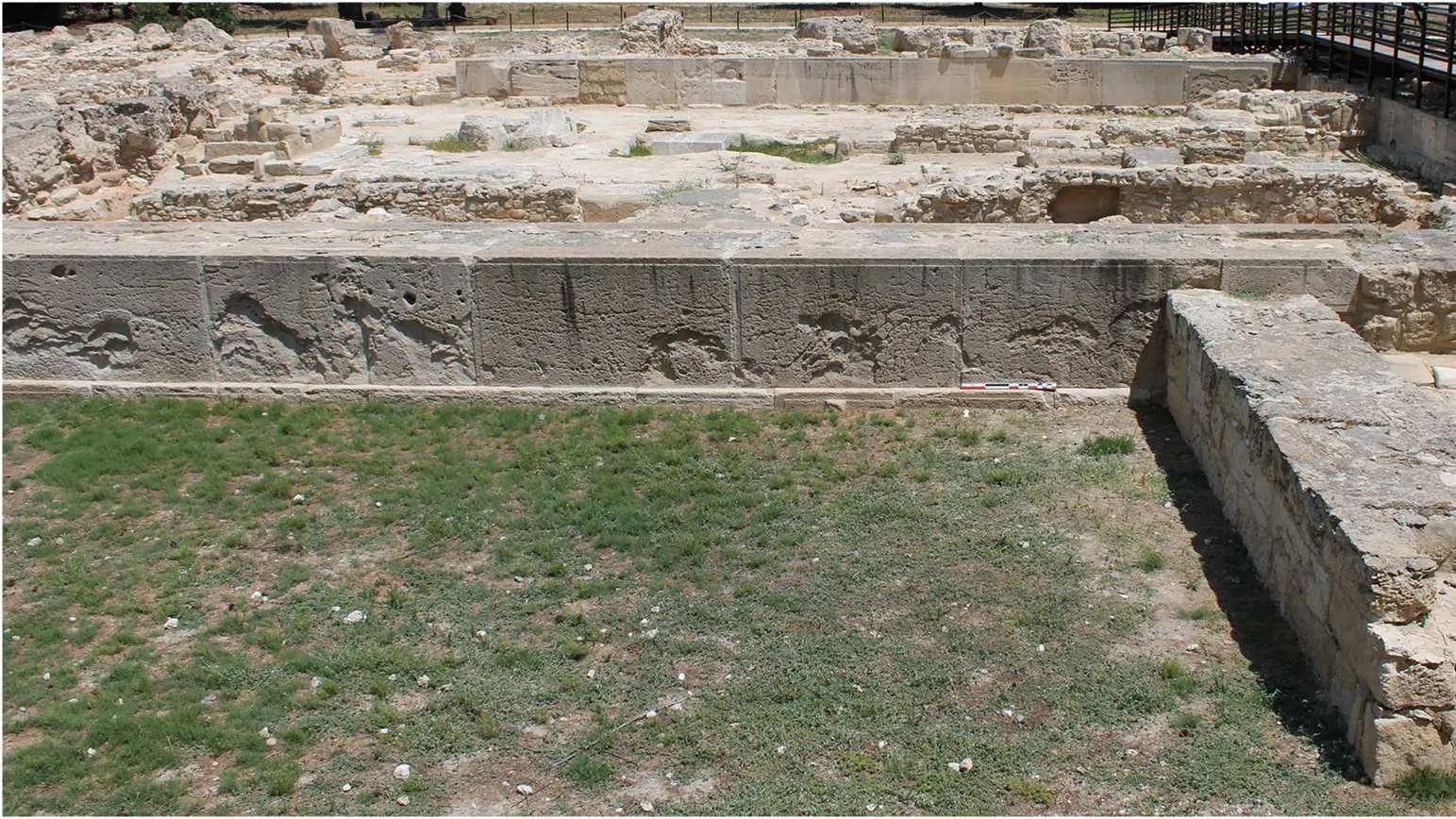
Ships scratched into the stone of the Late Bronze Age temples at Kition, under modern Larnaca, are more numerous and were carved over a longer span than first thought, according to a study published online on 18 August 2026 in the International Journal of Nautical Archaeology. Graham C. Braun of the University of Cincinnati, Caroline Barnes of the University of British Columbia and Tzveta V. Manolova of Ludwig-Maximilians-Universität Munich recorded the carvings in 2024 and found 23 possible ships beyond the 19 already known on Temple 1.
The carvings and their first study
The graffiti are on two buildings in the sacred quarter at Kathari, which Vassos Karageorghis excavated for the Department of Antiquities. Most are on the orthostats (upright limestone slabs) of the outer south wall of Temple 1; two are on an altar in Temple 4. Lucien Basch and Michal Artzy published them in 1985, in an appendix to Excavations at Kition V, the report on the pre-Phoenician levels by Karageorghis and Martha Demas, and counted 19 ships on Temple 1.
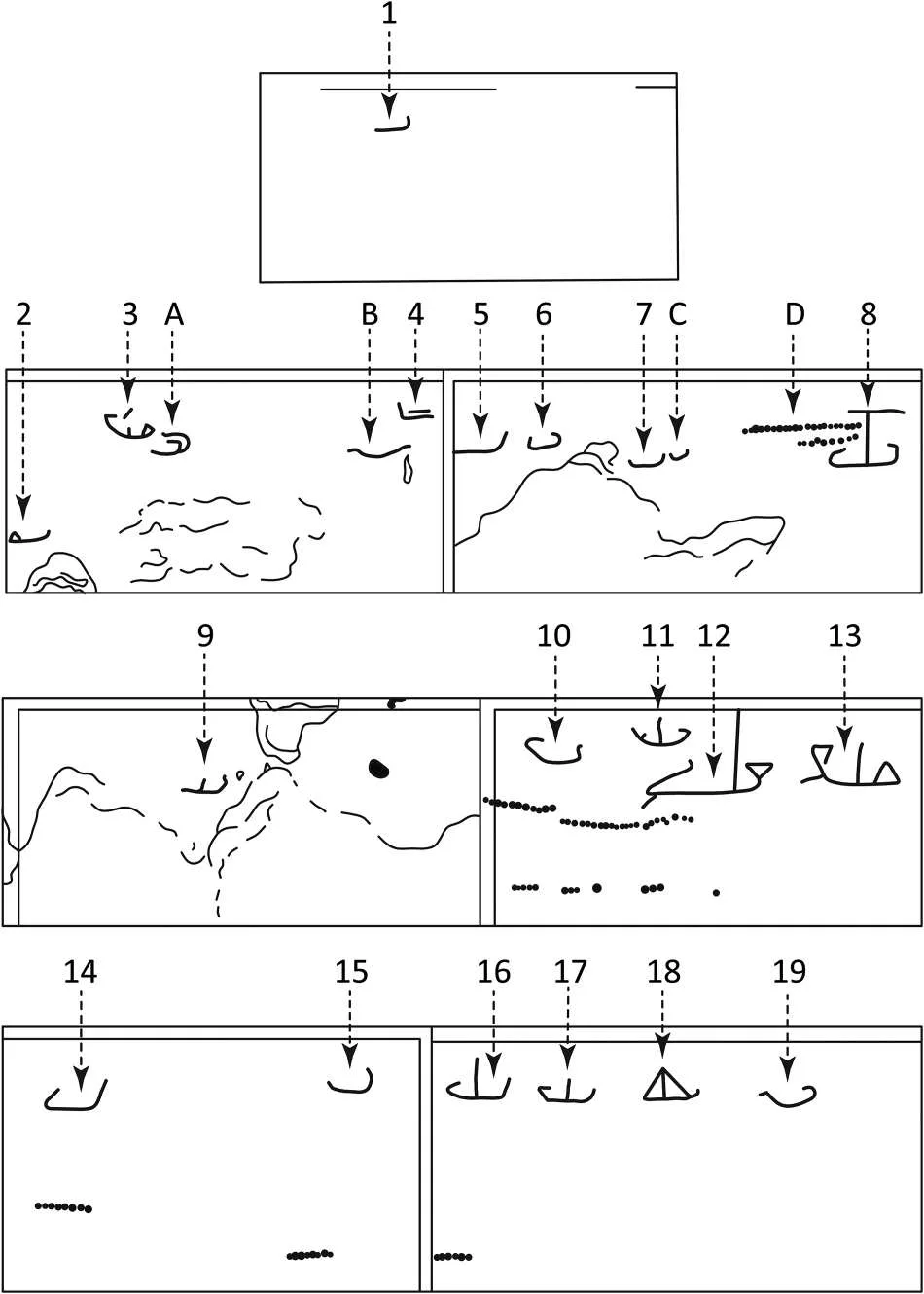
Already in 1985 Basch and Artzy found the Temple 1 ships too eroded to draw reliably, unlike those on the altar, which later floors had sealed. Both have stood in the open since. In 1998 Shelley Wachsmann noted that the worn lines allowed more than one reading and, given the Late Helladic IIIC pottery at the site, suggested Achaean ships [1, pp. 147–148].
What the scans show
In 2024 the team laser-scanned the seven Temple 1 orthostats that carry ships, together with block T1.8; the Temple 4 altar was modelled by photogrammetry. Mapping the depth and angle of each cut separated tool marks from weathering. Of the 23 additions, nine are rated certain, six probable and eight low confidence. Two marks that Basch and Artzy had flagged as possible ships proved on the scans to be damage.
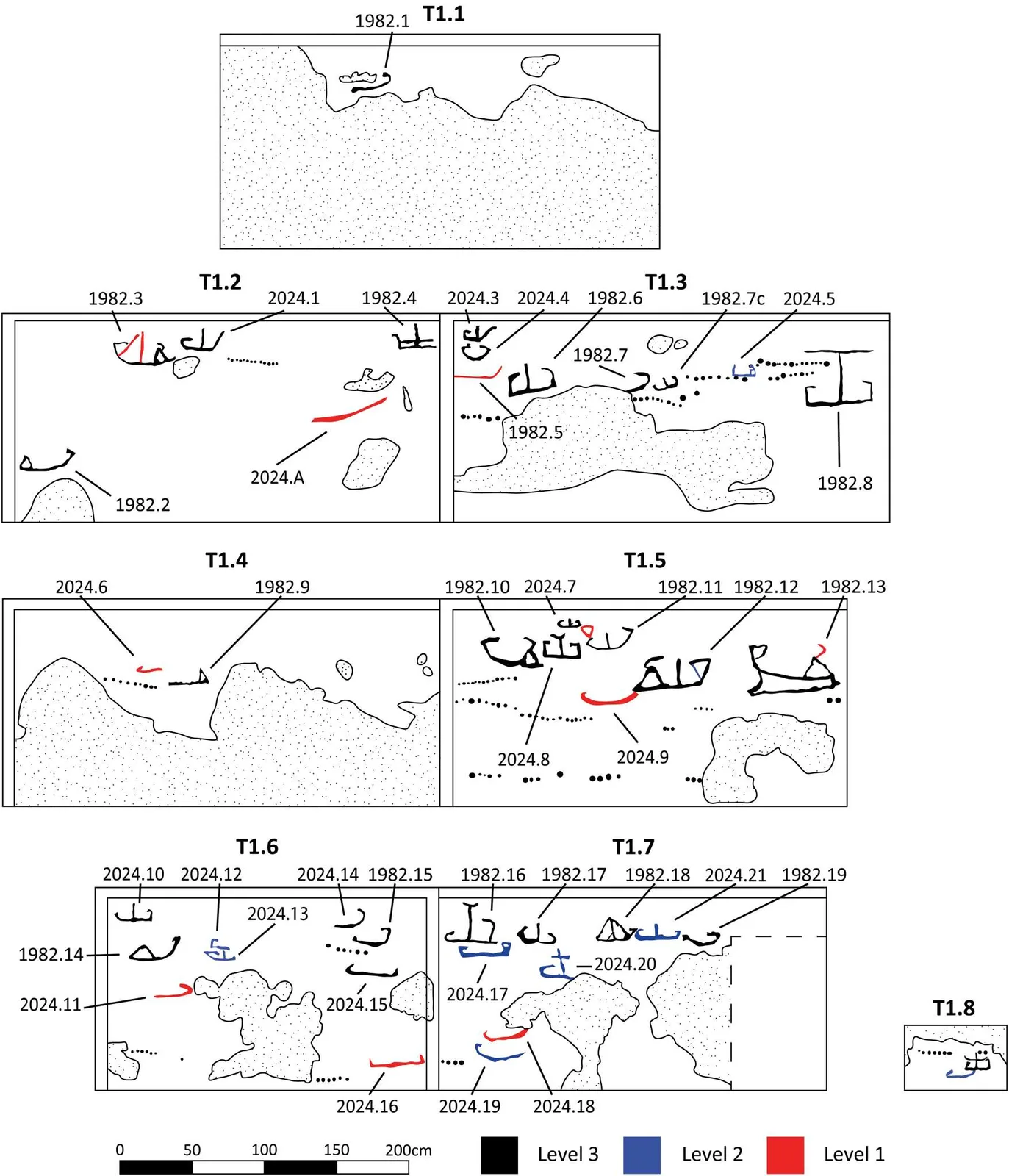
At least eleven rows of small bored dots cross the façade, where the 1985 drawing had seven; often set just below the keels, they may stand for ripples or light on water, the authors suggest. The ships fall into six groups by shape, plus a few one-off forms; most are Levantine and Cypriot types, with a smaller set of Aegean vessels.
A repair block and the dating
The dating turns on block T1.8, a yellow sandstone repair by the south-east entrance of Temple 1 carrying at least one and possibly two ship graffiti. Following Demas, the authors place the repair in Floor I, dated by its pottery to Cypro-Geometric I–II, about a century and a half after the orthostats were raised; that stone was used at Kathari only after the end of the Late Bronze Age. The ships on it, they conclude, were probably not cut in the Bronze Age.
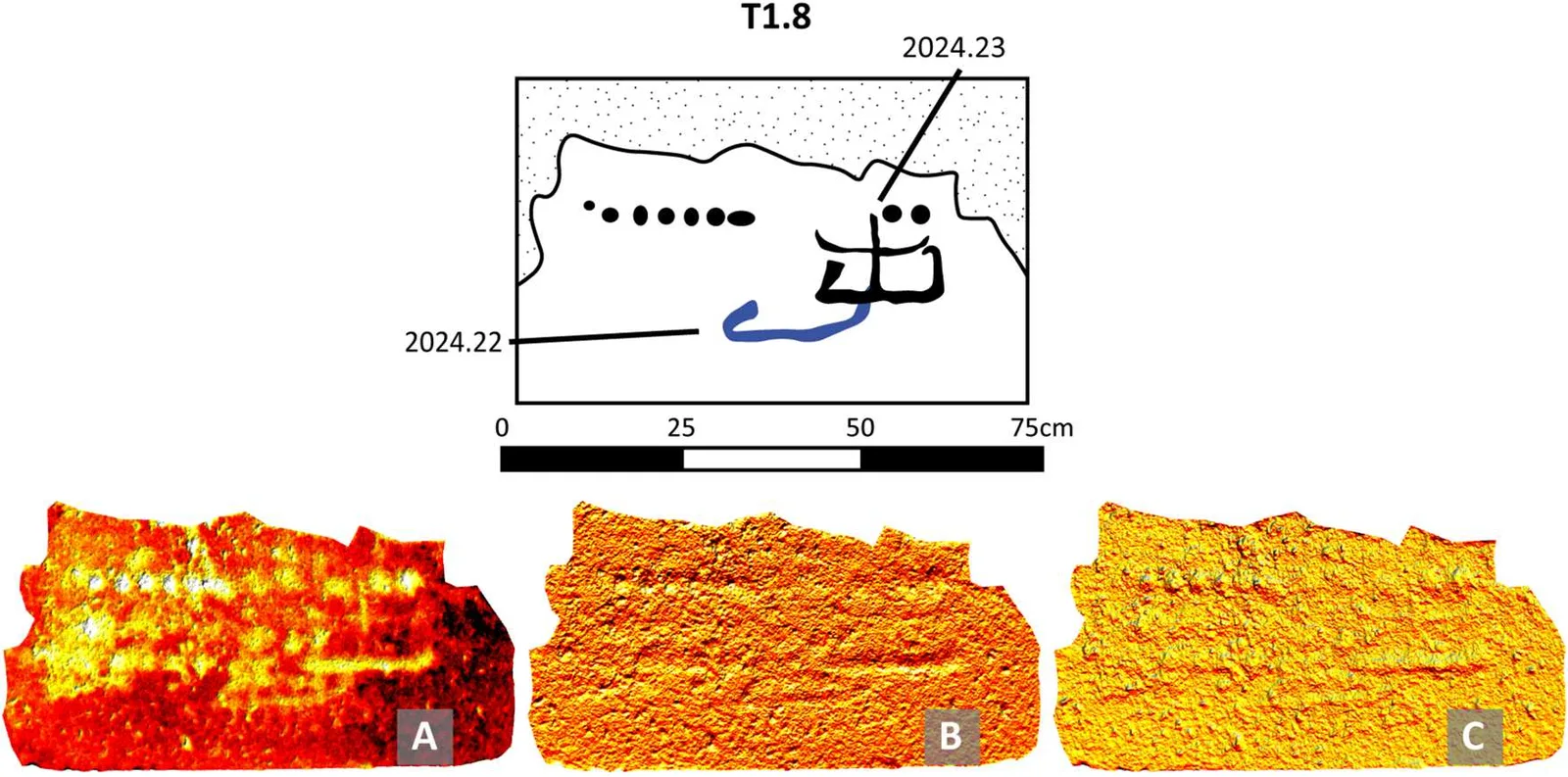
From this and from dated parallels for each ship type, the authors argue that the façade was carved continuously from about 1200 BCE into the Early Iron Age, perhaps for as long as 300 years, though they call stylistic dating coarse. On that reading the ships do not form the single procession that Basch and Artzy proposed. The Aegean types appear to have no parallels later than Late Cypriot IIIB, while Cypriot and Levantine ships run throughout; the authors read this as the work of a local community over generations, against Karageorghis's 1976 view of Kition as a Mycenaean foundation.
The authors leave open why the ships were carved, considering both votive images by seafarers, as Basch and Artzy thought, and silhouettes cut by people watching ships from the shore. The article's DOI is 10.1080/10572414.2026.2702905.
Original sources
On ancientcyprus.com
- Sites
- Kition
- People
- Vassos Karageorghis, Martha Demas
- Periods
- Late Bronze Age, Cypro-Geometric
References
- 1.Wachsmann, S. (1998). Seagoing Ships and Seamanship in the Bronze Age Levant. Texas A&M University Press.
More in Research
- Wheat traces at Chlorakas-Palloures question the view that cereals were minor in Chalcolithic Cyprus
- Strabo's Arsinoe near Palaepaphos probably never existed, argues study of a Ptolemaic queen's cult
- Charred barley and chaff in a Pyla shaft point to stored animal fodder around 1200 BCE
- Late Bronze Age hoard of at least 111 bronzes at Galinoporni was packed in cloth, cord and grass
- Bronze Age tombs at Hala Sultan Tekke held what may be burnt bouquets of grain and wild flowers