
Lecture·Archaeological Research Unit - University of Cyprus·2018
Hala Sultan Tekke: New discoveries in the Late Cypriot city and cemetery
Chapters
About the lecture
Peter Fischer and Teresa Bürge report on the 2017 and 2018 seasons of the New Swedish Cyprus Expedition at Hala Sultan Tekke, following the publication of their volume on City Quarters 1 and 2. Using a ten-sensor magnetometer array, the team surveyed 23 hectares in five days, estimating the Late Bronze Age settlement covered 25 to 50 hectares, bounded by what may be a city wall. Fischer outlines the stratigraphy of City Quarter 1, where three occupation layers span Late Cypriot IIC in the late 13th century BC through Late Cypriot IIIA in the early 12th century BC, when the city was destroyed around 1150 BC.
City Quarter 1 produced nearly 800 kilograms of slag, furnace fragments, and tuyeres from urban copper metallurgy, alongside pictorial kraters, a violin-bow fibula with an Italian parallel, and an ivory dagger pommel. In the newly opened City Quarter 4, excavation exposed a Late Cypriot IIIA bathroom built with ashlar masonry, a sloping floor, water inlet, and drain, bordered by a storage corridor of broken pithoi and concentrations of murex shells. Because modern ploughing cuts 25 centimetres into the upper strata, the team fenced the quarter with the farmer's agreement.
Bürge examines Area A, an unbuilt suburban zone 600 metres east of City Quarter 1. Magnetic anomalies there included 22 wells, 15 offering pits, and several tombs. One group of pits, sealed with ochre and dating back to Late Cypriot IB, held complete vessels, figurines, loom weights, notched scapulae, and a wooden spindle with an ivory whorl. A second group of figure-of-eight pits contained broken tableware, over 30 percent of it Mycenaean pottery including a chariot krater painted with a woman in Minoan dress, interpreted as remains of ritual feasts commemorating the dead. Rich chamber tombs of Late Cypriot I to IIC (Tombs X, LL, and RR) yielded Base Ring ware, White Slip ware, a Late Minoan II–IIIA piriform jar, haematite balance weights based on a 9.4-gram unit, carved ivory plates, and another chariot krater. By contrast, two reused 12th-century BC wells (Tombs A and Z9) contained skeletons, including a woman with an artificially deformed cranium and three infants, thrown in without grave goods.
Fischer concludes with the city's economy: copper and bronze working, purple dye production in lime-plastered rooftop basins, agricultural storage at nearby Dromolaxia-Trypes, imports of dried Nile perch and tilapia, and lead isotope evidence suggesting Cypriot copper reached Scandinavia around 1600–1500 BC. The discussion afterwards considers the ancient shoreline of the Larnaca Salt Lake, population estimates of around 10,000, and ongoing DNA analysis of the bodies in the wells.
From our collection
Pieces in the Drakopoulos collection of the kinds and periods this talk covers: Base Ring ware, Bichrome ware (Iron Age), Mycenaean pottery.
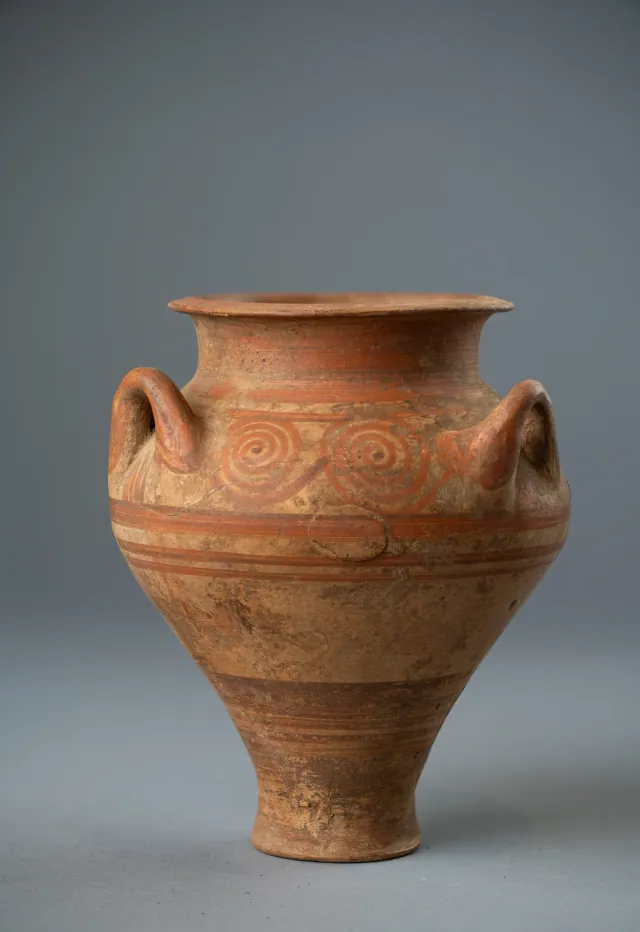
Cypriot Three-Handled Jar in the Mycenaean Style with Running Spirals
Mycenaean pottery
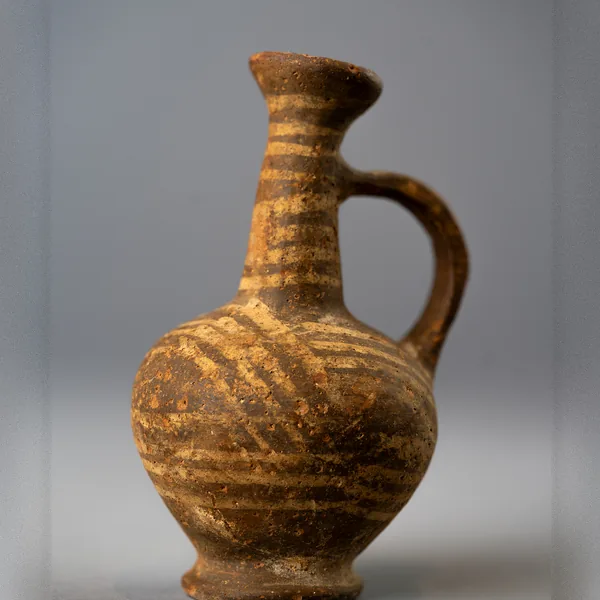
Base Ring II Bilbil Juglet with White-Painted Bands
Base Ring ware
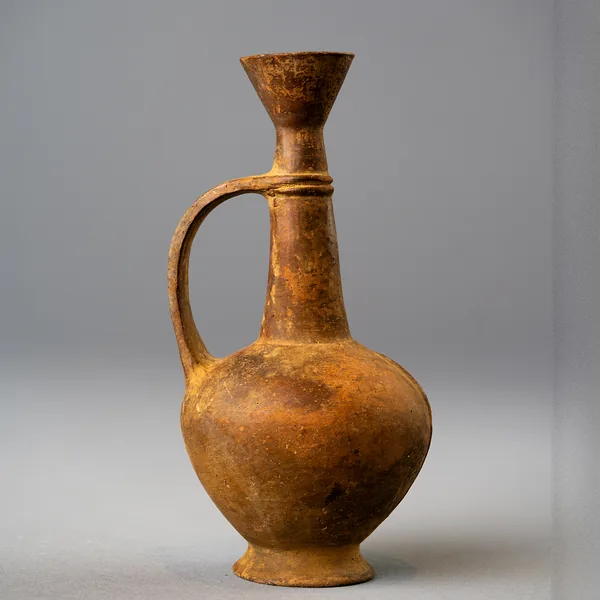
Base Ring Bilbil Juglet with Funnel Mouth and Neck Ridge
Base Ring ware
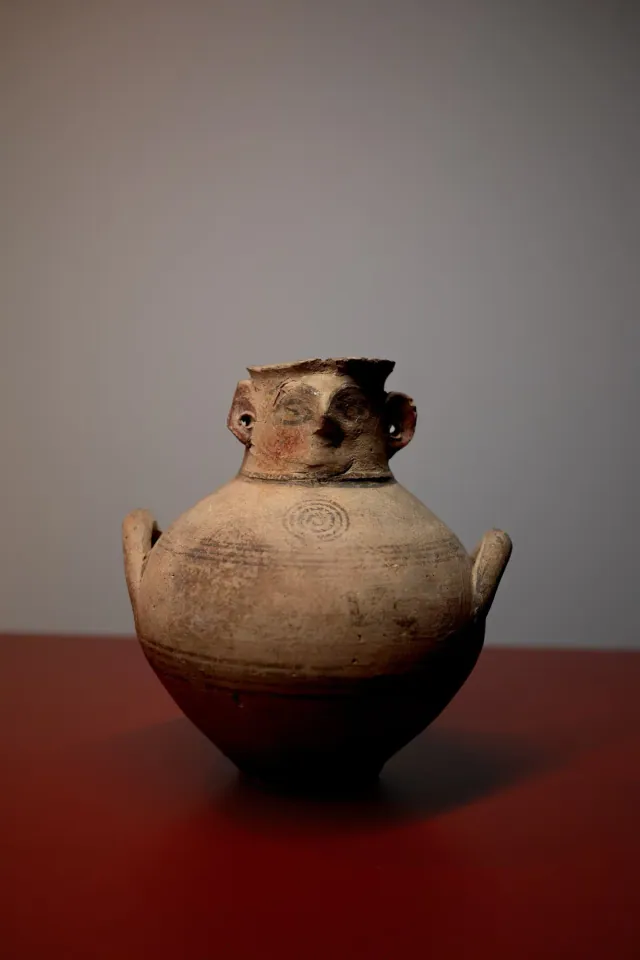
Bichrome IV Face-Neck Jar of the Kourion Type
Bichrome ware (Iron Age)
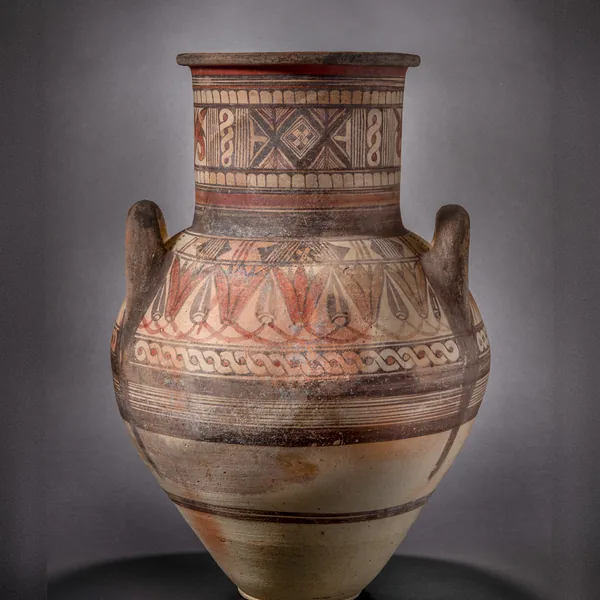
Bichrome IV Amphora with a Lotus-and-Bud Shoulder Frieze
Bichrome ware (Iron Age)
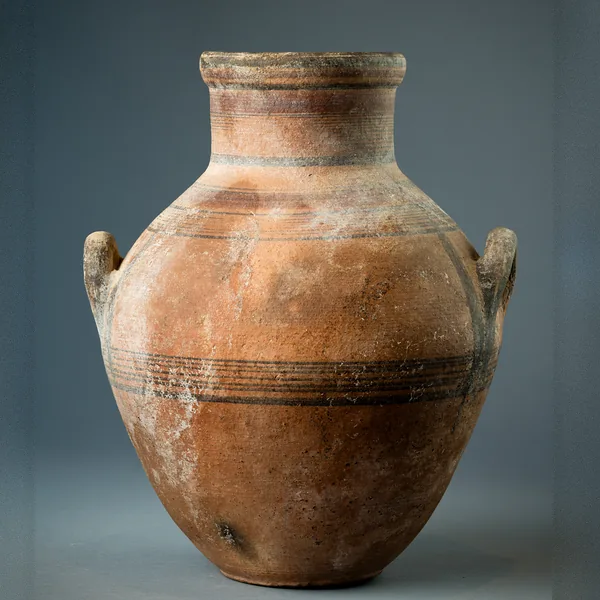
Bichrome IV Amphora with Shoulder Handles and Banded Decoration
Bichrome ware (Iron Age)
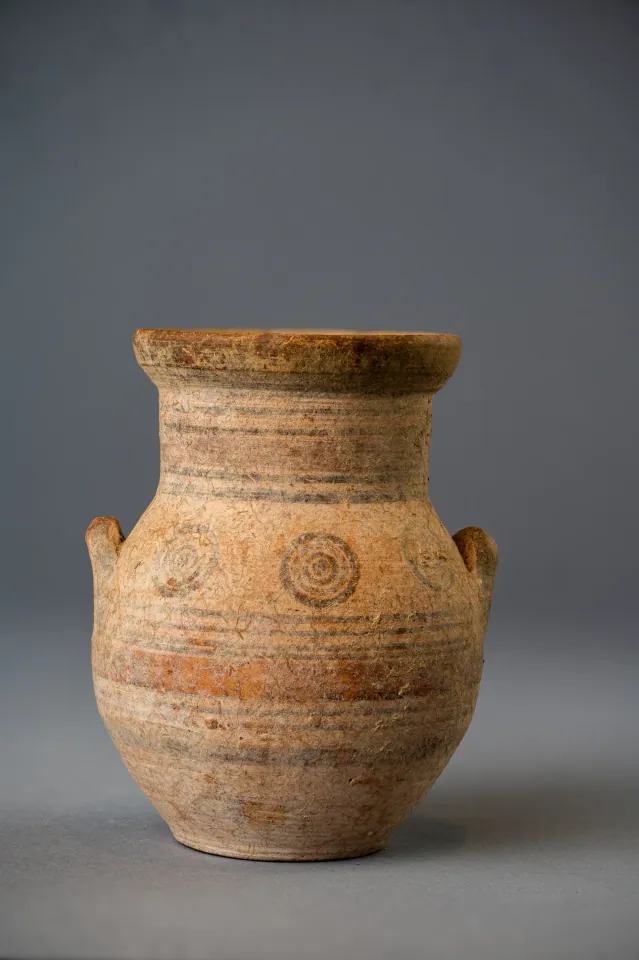
Bichrome IV Amphoriskos with Concentric Circles
Bichrome ware (Iron Age)
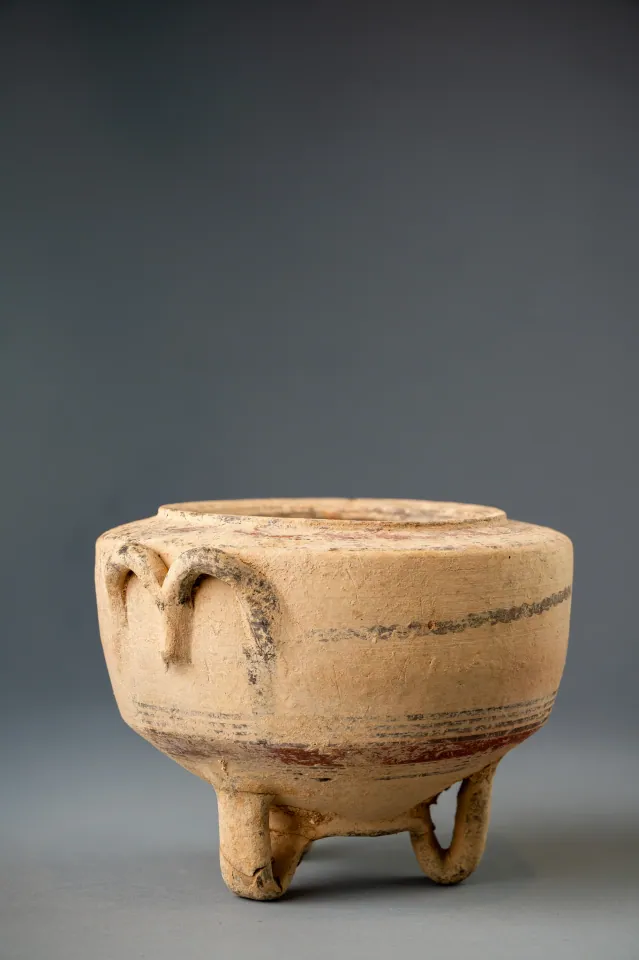
Bichrome Tripod Jar with Double-Loop Handles
Bichrome ware (Iron Age)
Found at the places discussed
Objects in our catalogue, in museum collections, recorded as found at these sites.
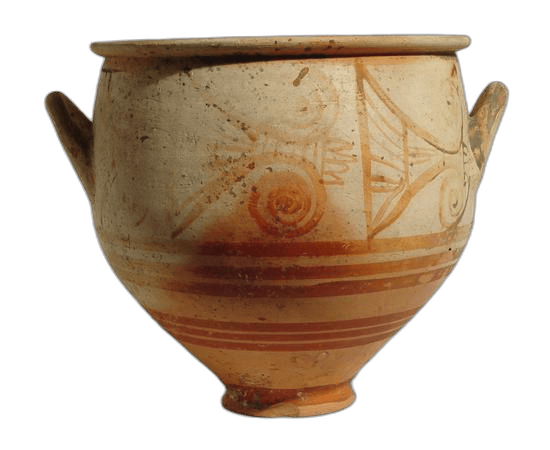
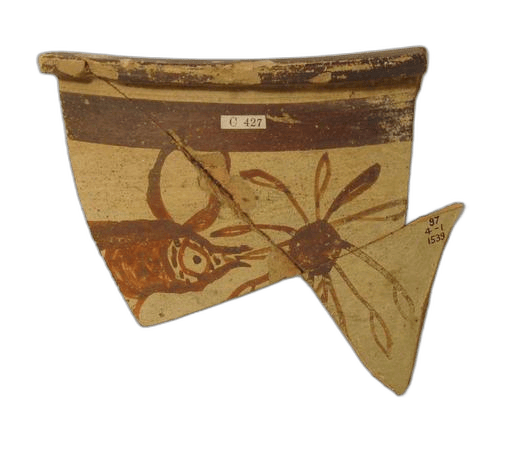
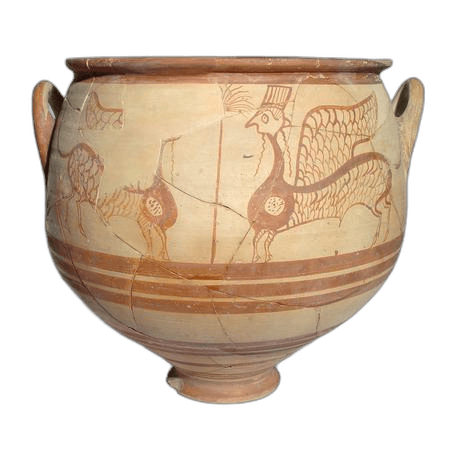
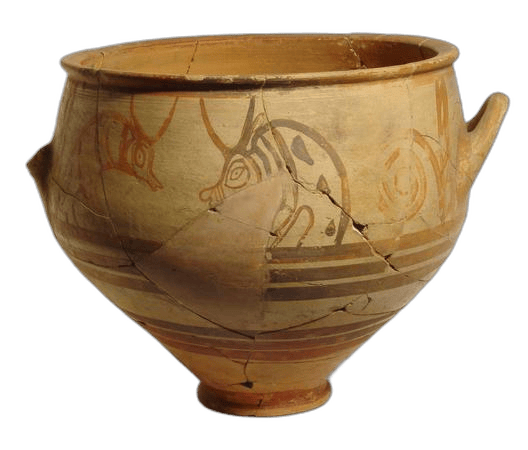
Background
Where to read more on this site before or after watching.
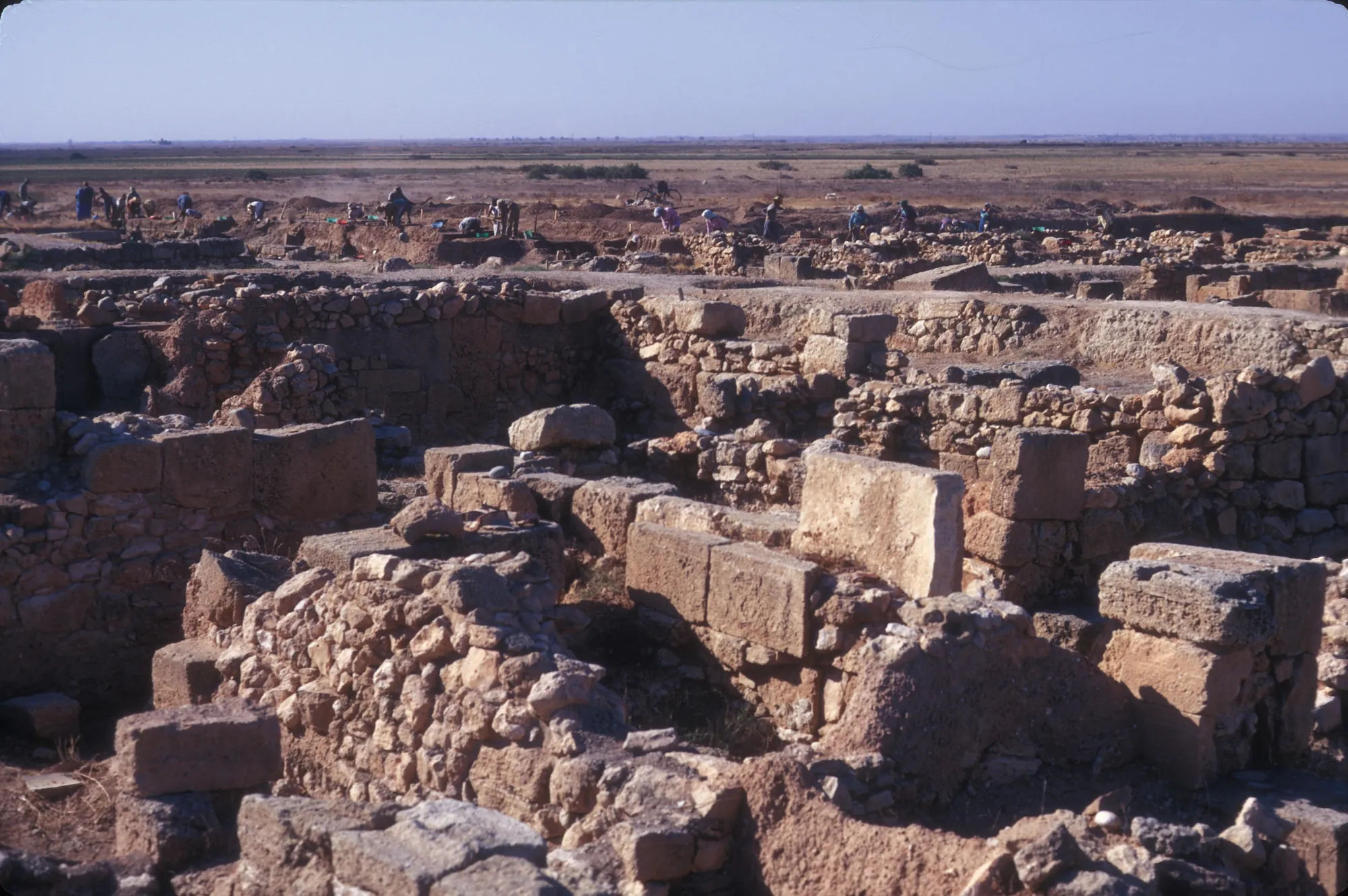
The site
Enkomi
Enkomi is a walled Late Bronze Age town near the mouth of the Pedieos river on the bay of Famagusta, lived in from about 1650 BC until it was gradually abandoned for nearby Salamis. It was a port for Cypriot copper, and its excavations produced metal workshops, sanctuaries with bronze cult statues, rich tombs and the largest group of Cypro-Minoan inscriptions on the island.
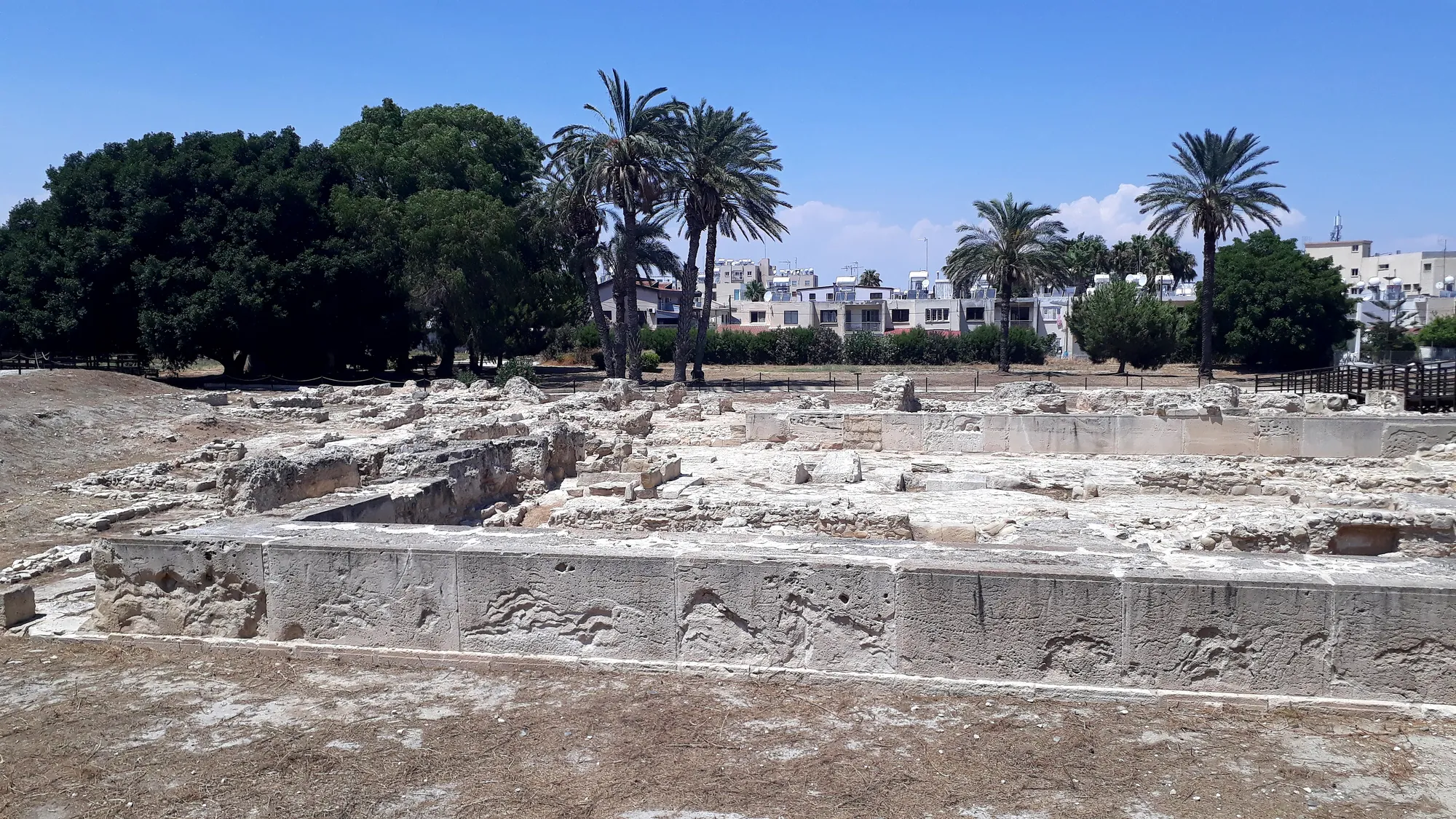
In the compendium
Ashlar Masonry
Squared, dressed stone used on Cyprus from about 1500 BC for gateways, tombs and the largest buildings of the Late Bronze Age towns, set below walls of mudbrick.
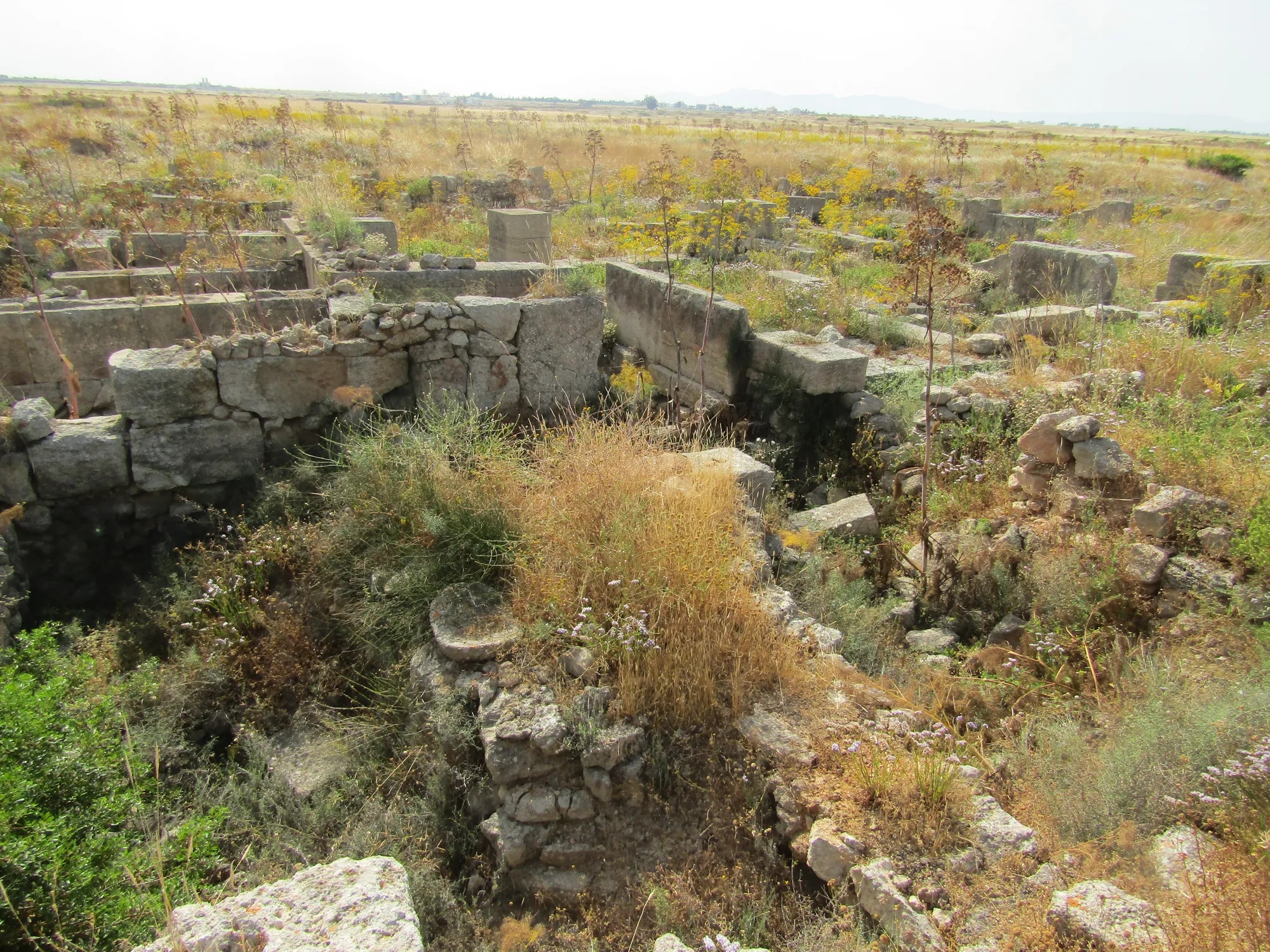
In the compendium
Late Bronze Age Towns and Buildings
How Late Bronze Age Cyprus built its first towns: street grids, large ashlar buildings with storage halls, courtyard houses, and the short-lived settlements of the twelfth century.
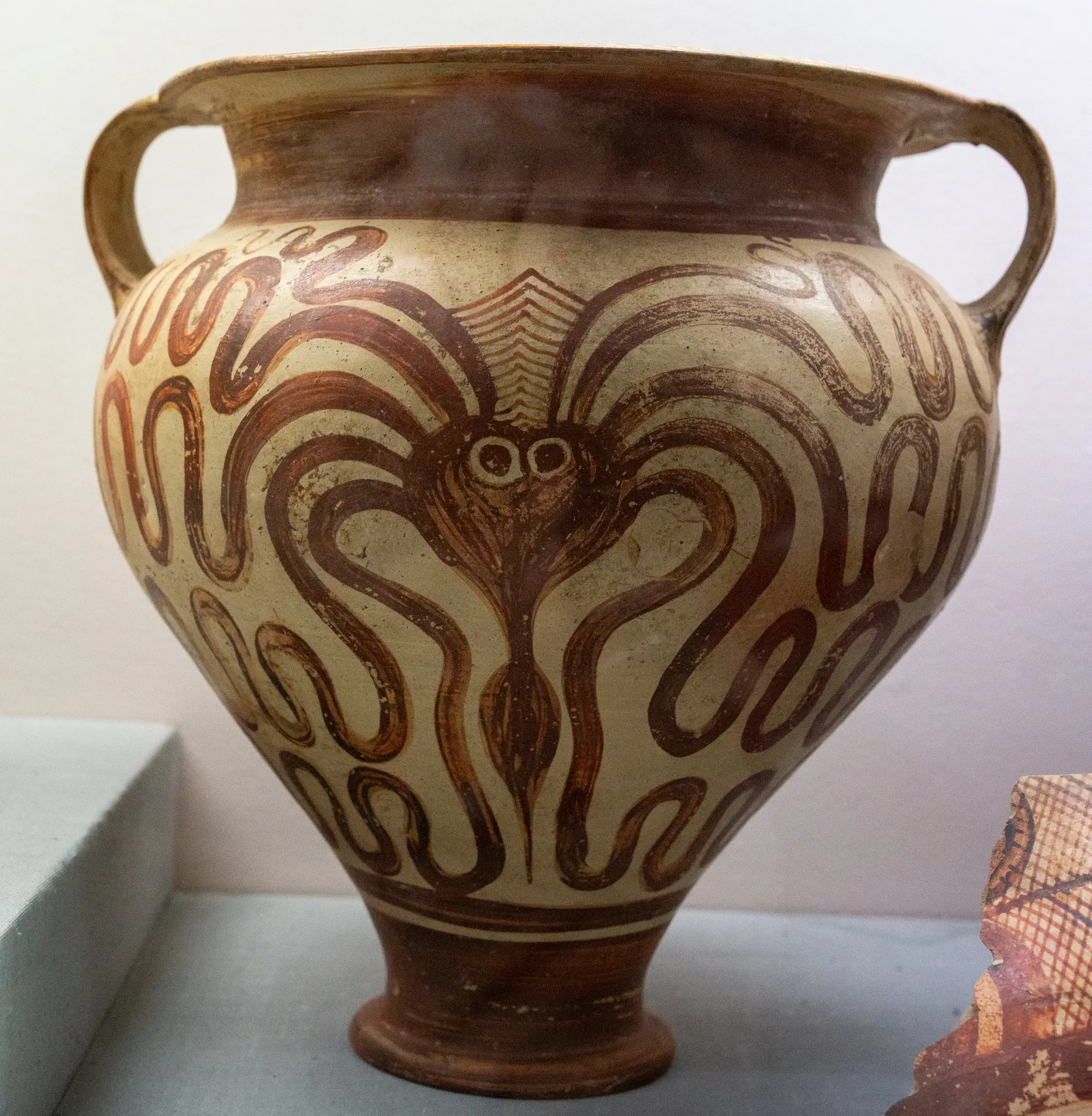
In the compendium
The Minoans
The palatial Bronze Age civilization of Crete, which took Cypriot copper and passed writing to Cyprus in the early Late Bronze Age.
Map of Cyprus
Places discussed in the talk
- Has a page on this site
- Other places
- Ground above 200, 500, 1,000 m