
Scholar · Archaeologist · Cataloguer
Robert Stuart Merrillees
b. 1938 · Australia
Australian diplomat and archaeologist who dug at Karmi and Phlamoudhi, argued the opium and Alashiya questions, wrote the history of Cypriot archaeology and directed CAARI from 1999 to 2003.
Key factsBorn 25 July 1938
- Born
- 25 July 1938
- Nationality
- Australia
- Roles
- Scholar, Archaeologist, Cataloguer
- Institutions
- Department of External Affairs, Australiadiplomat, later ambassador, 1964–1998
- University of Sydney (Stewart's Karmi team)official Sydney University team member at Karmi, 1961–1962
- Places
- Karmi, Phlamoudhi, Kition (stele of Sargon II provenance), Famagusta (Palma collection)
- Also known as
- R. S. Merrillees
Biography
6 chapters · 1,600 words · about 7 minutes
Robert S. Merrillees is an Australian archaeologist and former diplomat who studied the Cypriot Bronze Age pottery found in Egypt, proposed that Base Ring juglets carried opium, and in later life became a historian of archaeology in Cyprus22,23,24. The German National Library gives his year of birth as 193825. Wikipedia gives the day as 25 July1.
Contents 6 chapters · 1,600 words · about 7 minutes
Chapter I1 minute
A student of J. R. B. Stewart
A graduate of the Sydney Church of England Grammar School, Merrillees enrolled at Sydney University in 1956 to study ancient history and Latin26. He had first met Paul Åström in 1955 at Mount Pleasant in Bathurst, where Åström was staying with Professor J. R. B. Stewart to research his dissertation on the Middle Cypriote Bronze Age27. Soon after his studies began the two started a correspondence that ran without interruption until Åström's death27. He later wrote that Professors Stewart and Hennessy, under whose direction he studied, oriented him away from Egypt and towards Cyprus, which he made his own specialization, and that he was one of very few of his generation still active who had studied Cypriot prehistory as an undergraduate28.
Judith Powell, Stewart's biographer, counts him among Stewart's most promising students, and he was the only student in 1959 to complete an Honours year26. He left Australia in November 1958 to join Stewart and Eve Stewart in England, and in April 1959 he wrote that he was "overwhelmed by the recollection" of the five months in Europe26. Back in Australia he moved to the Stewarts' house, The Mount, to work on the Vounous material of Schaeffer26. At the beginning of 1961 Stewart made him his research assistant26.
That year he dug with Stewart at Karmi, on the north coast of Cyprus29. Apart from Jim and Betty, Powell writes, he was the only other "official" Sydney University team member, and he was on salary; he shared a smaller house with Derek Howlett and Mary Ann Meagher, and Howlett criticised his lack of practical surveying skills26. In Powell's account, a final rupture with Stewart came on the voyage home, and Stewart's later reference for him was "vicious"26. His diaries of the dig played an important part in the publication of Stewart's Karmi excavations in 2009, a book he did not write: he supplied information, commented on the final text, and several of its site photographs are his24,29.
Chapter II1 minute
London and the pottery in Egypt
Merrillees took part in excavations in Cyprus and Nubia and obtained his doctorate in 196528. The sources name the department differently: he places it in the Department of Egyptology at University College London, and his book's preface thanks Professor W. B. Emery, who supervised the thesis throughout10,28. Thomas Kiely writes that he completed the PhD at the Institute of Archaeology24. The thesis was submitted in April 1965, examined in June, and the degree awarded on 7 July 196510. Åström and his Swedish colleagues, especially Einar Gjerstad, arranged its publication, which appeared in 1968 as The Cypriote Bronze Age Pottery Found in Egypt10.
The book concludes that the inhabitants of Cyprus made the hand-made pots found in Egypt and "probably also transported them there", and that the initiative for the exchanges probably lay with the Cypriots, who found markets in Syria and Egypt10. He held that Ras Shamra, ancient Ugarit, played "an integral part" in communications between Cyprus and Egypt, and that Pharaoh did not enjoy an exclusive monopoly on overseas trade10. He made the same point about Mycenaean pottery in Egypt at an international archaeological symposium in Cyprus in 197230.
Chapter III1 minute
Opium and the Base Ring juglets
His opium proposal dates from 1962, when, as a research student, he published "Opium trade in the Bronze Age Levant" in Antiquity31. As Chovanec, Bunimovitz and Lederman sum it up, the idea rests on the close resemblance between Base Ring juglets and the seed head of an opium poppy incised to draw its latex; since the narrow necks pass only fluids, it was suggested the opium travelled in a syrup such as honey23. In the 1968 book he granted that the contention could not "a priori" be proved beyond doubt, though fresh data seemed to enhance its plausibility10. On a visit to Cyprus in 1963 he saw the opium poppy growing wild on the north and south coasts, and experiments with green capsules showed how the juglet's form could have been derived from the poppy head10.
Reviewing Trade and Transcendence in the Bronze Age Levant, James Weinstein noted that Merrillees renewed the thesis while admitting that analyses of juglet contents had failed to prove it32. Chovanec, Bunimovitz and Lederman note that analyses he reported in 1989 claimed opium in two juglets, but that the results were criticised as methodologically vague, and that Koschel and Bisset and colleagues warned against taking a single positive analysis as vindication23. Louise Steel judged that the hypothesis "has received some support" from recent chemical analyses of residues in Base Ring juglets33. Chovanec, Bunimovitz and Lederman, who called it "a brilliant hypothesis", found no opium but aromatic oils in three juglets from Tel Beth-Shemesh, and concluded that their results cast "grave doubts" on the idea23. Bunimovitz and Lederman added that the poppy-head shape was not a reference to the contents, and that his argument disregarded the Late Bronze Age texts on Cypriot trade31.
Chapter IV1 minute
Diplomacy and Phlamoudhi
By 1965 he had joined the Australian foreign service, which, he wrote, "put paid, not unhappily, to my digging days"28. He described the department as run on club-like lines, "requiring exclusive adherence"28. In 1971 he was First Secretary of the Australian Mission to the United Nations in New York, and spoke in Canada that October on "Problems in Cypriot History"16,34. He served as Australia's ambassador to Sweden in the early 1990s, and most recently as ambassador to Greece and Bulgaria before 199935,36,37. Wikipedia adds that he was ambassador to Israel from 1983 to 1987 and led a team to Cambodia in 1990 for talks with officials of the Phnom Penh government before a peace agreement1. He called Cambodia and Israel "exceptional cases of professional synergy" between the two callings28.
During annual leave he acted as pottery consultant to Edith Porada's Columbia University expedition to Phlamoudhi, taking part in 1971 and 197228,38. Through Porada he was appointed Adjunct Professor of Art History and Archaeology at Columbia38. He was asked to give the closing paper at the New York symposium on Phlamoudhi on 21 January 2005, and in the published volume argued that Red-on-Black pottery marked a cultural region in northeast Cyprus lasting three hundred years38.
Chapter V1 minute
Alashiya
He and James D. Muhly both wrote on Alashiya for the First International Cypriological Congress in Nicosia in April 1969, and their views on its location, he wrote, were "diametrically opposed" and unchanged since39. A. Bernard Knapp lists him among the detractors of the identification of Alashiya with Cyprus40. In 1995 he wrote that the study of Old World prehistory had "entered the silly season" and attacked the "vacuous theorising" of the New Archaeology, "epitomised by the writings of A. B. Knapp"41. The same article printed a satire, "The Alashia/Cyprus Equation Made Easy", which ironically concludes that "Alashia can only be Cyprus"41.
In 2009 he restated his central objection: the texts imply that Alashiya was a Late Bronze Age superpower, while the archaeology of Cyprus "suggests just the opposite"39. He held that the petrographic study of the Amarna letters by Goren, Finkelstein and Na'aman would not lessen scepticism, objecting that they examined no pottery from Alassa or Kalavasos-Ayios Dhimitrios, the sites they named39. Knapp judged the recent round of the debate "superficial at best", and Bunimovitz and Lederman call his stance "uncompromising"31,42.
Chapter VI1 minute
Museums, archives and CAARI
Kept from digging, he found the reward of "excavating in museum storerooms, libraries, and archives"28. In 1983 he compiled a catalogue of finds from Dikaios's excavations at Ambelikou-Aletri, and his 1984 report on the site was later called invaluable by those to whom he handed the project43. In 1992 he traced a Base-ring figurine with child from the collection of the French consul Auguste-Emile Boysset, concluding that Boysset's antiquities came mainly if not wholly from Marius Tano44. His 2001 paper presented T. B. Sandwith's paper of 1871 as the first academic attempt at a synthesis of Cypriot prehistory11.
In 2005, writing of "45 years' association with the Cyprus Museum", he published Jerome Farrell's unpublished report of 1909 on its condition, first seen in 1978 among the papers of Claude Delaval Cobham45. Later studies reassembled the collection of the Famagusta chemist George Basil Palma from Department of Antiquities inventories, and argued that the stele of Sargon II more probably came from the city wall of Kition near the Phaneromeni church than from Bamboula6,7. Kiely calls this "indefatigable historiographical work" of "immense importance"24.
He directed the Cyprus American Archaeological Research Institute from 1 July 1999 to 2003, his only full-time academic post28,37. The conference "Egypt and Cyprus in Antiquity", held in Nicosia in 2003 for the institute's 25th anniversary, originated with him, then the institute's director, and with Maria Iacovou, and he co-edited its proceedings46. As he left the post, an honorary volume of 30 of his papers appeared, On Opium, Pots, People and Places, with a bibliography of 146 titles22. Reviewing it, Sabine Fourrier called him a pioneer in showing, from 1965, regional cultural facies in Bronze Age Cyprus22. She also called him a man of strong and of fixed ideas, citing his refusal to identify Alashiya with Cyprus and a humorous text written "with as much brio as bad faith"22. She likened him, archaeologist and diplomat, to the great nineteenth-century figures whose portraits he drew22.
Life and work
35 events, 1955–2021
1955
- Helped H. W. Catling's attempts to recover the Asproyi Tomb IV records and finds, which the 1955 division of finds had allocated to the Nicholson Museum in return for Sydney University funding
1960
1960–1963
sorting prints of the pottery photographs in Australia; Research Assistant at the University of Sydney; catalogued Vounous material in Cyprus Museum in Claude Schaeffer's papers (Collège de France), 8 documents, 1960–1963.
1961
- Joined J. R. B. Stewart's Australian excavation at Karmi (Lapatsa / Palealona) on the north coast, with Betty Stewart, Eve Stewart, Derek Howlett and Mary Ann Meagher; described as, apart from Jim and Betty, the only other 'official' Sydney University team member. Stewart worked in the Cyprus Museum on earlier Vasilia and Ayia Paraskevi material in the same visit.
1971
1971–1973
With wife and two daughters took part in two seasons of the Columbia University Expedition to Phlamoudhi, led by Edith Porada (Wikipedia: 'early 1970s').PhlamoudhiWikipedia contributors (2026). Robert Merrillees. Wikipedia (en)
- Internationally renowned archaeologist; spoke at the symposium on problems of Cypriot history (26 October 1971).
- Dr. R. Merrillees, an archaeologist of international renown, spoke at the symposium on the problems of Cypriot history, stressing the vitality of Cypriot culture and its ability to keep its identity despite foreign influences.
- Brock University organized a Cyprus Archaeology Symposium attended by some 80 archaeologists, with papers by 15 professors and Dr. Karageorghis, and a talk by Dr. R. S. Merrillees on Problems in Cypriot History.
1972
- Merrillees discussed Mycenaean pottery found in Egypt, stating it was not a monopoly of the Pharaohs but also of private merchants, probably Syrians.
1975
1975–1985
Thanked in Morris's acknowledgements for help with research on his Cypriot collection (1985); published (1980) the 61 cm stone plank figure sold Sotheby's 1975.
1987
- Australian scholar and diplomat who suggested the thematic arrangement of the BM's A. G. Leventis Gallery of Cypriot Antiquities (1987).
1988
1988–1992
Catalogued Base-ring mother-and-child figurines (1988, update 1992) and researched consul Boysset in the Quai d'Orsay archives.
1999
1999–2003
Served as director of the Cyprus American Archaeological Research Institute (CAARI) in Nicosia from 1999 to 2003; researches Cypriot archaeology historiography.
2005
- Published Farrell's unpublished 1909 report on the condition of the Cyprus Museum (seen first in 1978 among Cobham's papers), writing of '45 years' association with the Cyprus Museum'
2012
- With T. Kiely, published a study of the engineer Samuel Brown (1836-1891) and his circle of Cypriot collectors
2014
- Published the Famagusta chemist and collector George Basil Palma, reconstructing his collection from Department of Antiquities inventories (many pieces later bought by or given to the Cyprus Museum); information came partly via descendants and his daughter Dolla Merrillees's colleague
2016
- Studied the provenance of the Sargon II stele (found at Larnaca/Kition 1845, acquired by Berlin 1846; probably near the city wall and Phaneromeni church rather than Bamboula) and of the two 'Dhali' silver bowls in the Louvre
2019
2019–2021
Said in the recorded talk «Cypriot Antiquities in the Antipodes: The diaspora of Cypriot material culture to Australia during the era of British colonialism» (CAARI Cyprus, 2021-02-04): Co-authored a 2019 paper on 24 Cesnola collection items that ended up in Australia.
2021
- Said in the recorded talk «New Research at the Middle Bronze Age site of Alambra» (CAARI Cyprus, 2021-03-11): Participated in digs at Flamoudi and Karmi.
- Said in the recorded talk «Cypriot Aphrodite and British Colonial Discourse: A Reappraisal» (CAARI Cyprus, 2021-02-02): Scholar whose careful historiographic work showed the Rock of Aphrodite is a modern mythic addition.
Undated
n.d.
- Named in 12 records of the CVAR (Costas and Rita Severis Foundation, Nicosia) collections (10 as creator, 2 as named), of France, United States, Washington, Dc, Sweden, 1991–2015.
- Australian diplomat and scholar of Cypriot archaeology credited with suggesting the thematic arrangement of the gallery.
- Director of the Cyprus American Archaeological Research Institute; gave a paper on stone vases of the Philia culture from Vasilia and wrote the exhibition leaflet account.
- Said in the recorded talk «Through the looking-glass: Investigating Egyptian and Levantine imitations of Bronze Age Cypriot ceramics» (Archaeological Research Unit - University of Cyprus, 2024-10-08): Studied Cypriot Base Ring juglets from Egypt in his PhD, published 1968.
- Spoke in the recorded talk «Leonardo da Vinci's legendary visit to Cyprus in 1481 A.D. and its link to Lefkara» (CAARI Cyprus, 2021-05-21). As stated in the recording: Was rapporteur of the Commonwealth Committee on Cyprus in 1977; Was director of CAARI when Michelle Anderson was undertaking PhD research there; Graduated from the University of Sydney in 1959 and received PhD from University College London in 1965; Served as Australian diplomat, including as ambassador to Sweden, Finland and Estonia, Israel and later Greece and Bulgaria; Wrote the book Diplomatic Digs.
- Spoke in the recorded talk «Dr Francis Henry Hill Guillemard (1852–1933): Ornithologist, incidental antiquarian and snob» (CAARI Cyprus, 2021-02-01). As stated in the recording: Speaker describes himself as an elderly antipodean living in France; Paper given at the CAARI and British Museum conference on Empire and Excavation, 1878-1960.
- Cited in connection with the Enkomi terra-cotta ship model of Late Cypriot I–II date.
Shelley Wachsmann (1998). Seagoing Ships & Seamanship in the Bronze Age Levant. PDF p. 106.
- Robert Stuart Merrillees wrote on Cypriote Bronze Age pottery found in Egypt: «R. S. Merrillees, The Cypriote Bronze Age Pottery Found in Egypt»
«Edith Porada zum 100. Geburtstag», Orbis Biblicus et Orientalis 268 (2014), p. 10
- Published a detailed study (1986) of the Ayia Paraskevi cuneiform cylinder found in 1884 (old Cyprus Museum no. 4501), dating tomb 1 to the 16th c.; wrote the Neolithic–MBA survey in Archaeology in Cyprus 1960–1985.
- Author on Sandwith and of the colloquium summing-up; traced Sandwith's collection and papers via descendants; wrote on Cypriot pottery classification (1978, 1991); at CAARI Nicosia in 2001.
- Paper 'Problems in Cypriote History' (1971) critiquing Bronze Age historiography; Hardy cites his work on the Lambousa treasures and the 1909 Farrell report.
- Friend of Åström from 1955; co-catalogued NGV Melbourne Cypriot pottery (2003); rejects Cyprus = Alashiya; wrote 'Towards a fuller history of the Cyprus Museum' (2005).
- Director of the Cyprus American Archaeological Research Institute (CAARI), which hosted and supported the Athienou Archaeological Project.
Toumazou, Kardulias & Counts (eds) 2011, Crossroads and Boundaries, Acknowledgments p. xv
- Helped J. R. Stewart study Schaeffer's Vounous material in the 1950s; Sydney thesis 1959; set out the project's problems in 1988.
- Student of J. R. Stewart on the 1961 Karmi excavation; traced the Vounous finds (1961 thesis); co-author (2017) of the study of the Nicholson's ex-Cesnola antiquities.
- Wrote on Paul Marguerite de La Charlonie, who formed the Laon Cypriot collection, and on its Bronze Age material (2010); cited for a Cannes vase (Cahier 18, 1992).
Fieldwork and study
3 records at 2 places · 32 records of study
In the field
3 recordsWhere they worked in the field
- Ground above 200, 500, 1,000 m
Sites
- 1Phlamoudhi (approx.)
Phlamoudhi
1971–1972
Connected with · 1971–1972Robert Merrillees participated in the expedition during the 1971 and 1972 seasons.
Connected with Columbia University ExpeditionBirmingham 1973, p. 52Merrillees 1973, p. 52Smith et al. 2008, p. 33
Excavated · 1971–1972Robert S. Merrillees took part in excavations at Phlamoudhi in 1971 and 1972.
Fieldwork
Connected withEdith Porada recruited Robert S. Merrillees to the expedition as a pottery consultant.
Connected with Edith PoradaSmith et al. 2008, p. 112
Recording and study
32 records- Catalogued5
Merrillees catalogued Cypriot Bronze Age pottery found in Egypt and contextualised its funerary deposits and chronology.
Cypriot Bronze Age pottery in EgyptBushnell 2016, p. 5
Robert S. Merrillees établit les notices du catalogue pour les numéros 1, 2 et 29.
notices du catalogue d'antiquitésNo. nos 1, 2 et 29Caubet 2006, p. 221
Merrillees updated the catalogues of the Cypriote Bronze Age antiquities in the Musée de Laon.
Robert catalogued, drew and photographed pottery and bronzes excavated by Schaeffer at Vounous with Jim.
pottery and bronzes excavated at VounousLouvrePowell 2013, p. 183
R. S. Merrillees compiled a catalogue from the available records of the tomb objects.
Kalavasos Mavrovouni Tomb 2 grave objectsNo. 1940/XII - 18/2; R.R. 1246Kalavasos MavrovouniTubb 1985, p. 114
- Published7
1974Merrillees later published a conical jar from Arpera-Mosphilos.
2010Robert Merrillees contributed a text to the publication on the Laon Cypriot collection.
antiquités chypriotes de LaonYon et al. 2012, p. 139
2012Robert Stuart Merrillees published a catalogue on The “Ochsenkrater-Grab” from Nicosia Ayia Paraskevi.
R. S. Merrillees wrote an appendix on an Early Cypriote tomb group.
Kalopsidha and Ayios IakovosFrankel 1974, p. 141
Merrillees published a description of the figurine in this article.
Base-ring female figurine with childNo. Musée de Sèvres N° 106873Merrillees 1992, p. 3
Robert Stuart Merrillees published an article about reproduction bracelets from Kourion in the Musée-château d’Annecy.
No. Inv. Nos. 12090 and 12091Merrillees 2010, p. 101
Robert Merrillees published a contribution concerning the Annecy museum.
collection du musée d'AnnecyYon et al. 2012, p. 138
- Studied13
1950Robert Stuart Merrillees classified the 33 vases while attached to the University of Sydney in the late 1950s.
33 exchange vases from Nicosia Ayia Paraskevi Gladstone StreetNo. NM 58.139, NM 58.140, NM 58.141, UNEMA 74/16/1, NM 58.142, NM 58.143, UNEMA 74/17/1, NM 58.144, NM 58.145, NM 58.146, UNEMA 78/59/1, UNEMA 78/58/1, UNEMA 78/56/1, NM 58.05, UNEMA 78/75/1, NM 58.132, UNEMA 78/60/1, NM 58.136, UNEMA 78/62/1, NM 58.137, NM 58.138, NM 58.134, UNEMA 78/63/1, NM 58.135, UNEMA 78/64/1, NM 58.147, NM 58.148, NM 58.133, NM 58.04, NM 58.149, NM 58.150, NM 58.151Nicosia Ayia Paraskevi Gladstone StreetMerrillees 2008, p. 68
1963R. S. Merrillees made notes on the tomb objects at Larnaca Fort.
objects from Kalavasos Mavrovouni Tomb 2No. 1940/XII - 18/2; R.R. 1246Tubb 1985, p. 114
R. S. Merrillees examined thousands of sherds from Vounari for changes in local pottery.
R.S. Merrillees restudied material from tomb 1884, I, excavated by Ohnefalsch-Richter.
the grave goods from tomb 1884, INo. tombe 1884, IAyia ParaskeviCassimatis 1985, p. 63
Merrillees studied ceramic material from the site and stated that it required no date earlier than LCI.
Ceramics from Athienou-Bamboulari tis KoukounninasAthienou-Bamboulari tis KoukounninasCrewe 2007, p. 58
possiblyRobert S. Merrillees observed a jug at Castel Blanc and attributed it to tomb 53, which he presumed had been pillaged.
une cruche Red Polished IIIDunn-Vaturi 2001, p. 22
Merrillees studied Cypriot pottery in Egypt, including RL.
R. S. Merrillees studied Cypriote Bronze Age pots found in Egypt.
Show 5 moreShow fewer
R. S. Merrillees critically examined Cypriote Bronze Age pottery found in Egypt.
R. S. Merrillees examined thousands of sherds from Vounari to identify changes in local pottery.
Merrillees studied Kalopsidha Tomb 34 to address the distinction between the Philia Culture and the Early Cypriot period.
No. Tomb 34Merrillees 1973, p. 58
Merrillees studied three stone vases from Vasilia Kilistra Tomb 103 at the Cyprus Museum.
No. Nos. 3, 4 and 55Michaelides et al. 2009, p. 23
Smith said Robert Merrillees had been reworking a deposit at Enkomi.
one deposit at EnkomiStampolidis & Karageorghis 2003, p. 304
- Drew1
1950Robert Stuart Merrillees sketched the 33 vases while attached to the University of Sydney in the late 1950s.
33 exchange vases from Nicosia Ayia Paraskevi Gladstone StreetNo. NM 58.139, NM 58.140, NM 58.141, UNEMA 74/16/1, NM 58.142, NM 58.143, UNEMA 74/17/1, NM 58.144, NM 58.145, NM 58.146, UNEMA 78/59/1, UNEMA 78/58/1, UNEMA 78/56/1, NM 58.05, UNEMA 78/75/1, NM 58.132, UNEMA 78/60/1, NM 58.136, UNEMA 78/62/1, NM 58.137, NM 58.138, NM 58.134, UNEMA 78/63/1, NM 58.135, UNEMA 78/64/1, NM 58.147, NM 58.148, NM 58.133, NM 58.04, NM 58.149, NM 58.150, NM 58.151Nicosia Ayia Paraskevi Gladstone StreetMerrillees 2008, p. 68
- Found2
2010Merrillees discovered three previously unidentified Cypriote Bronze Age vases during his visit to the Musée de Laon.
Merrillees rediscovered Jar 68:1 while working on the Vounous B material.
No. 68:1Ross 1994, p. 21
- Published material of2
Robert Merrillées wrote about Paul Marguerite de La Charlonie and presented the Bronze Age material.
Published material of Musée municipal de Laonmobilier de l'Âge du BronzeJorrand et al. 2010, p. 18Jorrand 2010, p. 18
Robert Merrillees published an article about the expedition excavations.
Published material of Columbia University Expedition to Phlamoudhiexcavation discoveriesPhlamoudhiSmith, p. 31
- Catalogued the collection of1
2003Robert Stuart Merrillees co-authored a catalogue of Cypriote pottery in the National Gallery of Victoria.
Catalogued the collection of National Gallery of VictoriaMelbourneMerrillees & Caubet 2008, p. 11
- Other work1
Merrillees chose to write an article about an exceptional Late Cypriote Bronze Age askos in the Antikensammlung.
An Exceptional Late Cypriote Bronze Age Askos with Animal ProtomeMerrillees 2012, p. 477
Trade
1 record
Through their hands
1 record- n.d.Gift received
Gift receivedClaude Schaeffer gave Robert Stuart Merrillles a souvenir from the Bellapais Vounous pottery.
Received from Claude Frédéric-Armand SchaefferMerrillees 2007, p. 89
Connections
54 people
Sales, gifts & bequests
- Received from Porphyrios Dikaiosnotes and drawings of Vounous excavation Marguerite Yon, Review of Ann-Elizabeth Dunn-Vaturi, Vounous. C. F.-A. Schaeffer's Excavations in 1933: Tombs 47-79, SIMA 130, 2003 (2004), p. 2711959–1961
- Gave to Anne-Elizabeth Dunn-VaturiMarguerite Yon, Review of Ann-Elizabeth Dunn-Vaturi, Vounous. C. F.-A. Schaeffer's Excavations in 1933: Tombs 47-79, SIMA 130, 2003 (2004), p. 2712003
- Received from Claude Frédéric-Armand SchaefferClaude Schaeffer gave Robert Stuart Merrillles a souvenir from the Bellapais Vounous pottery. Merrillees 2007, p. 89
Family
- Married to Helen P. MerrilleesHelen Merrillees was Robert S. Merrillees's wife. Smith et al. 2008, p. 111
Fieldwork & employment
- Excavated with Derek HowlettKarmi J. Powell, 2013, Love's Obsession: The Lives and Archaeology of Jim and Eve Stewart1961
- Guided by Vassos KarageorghisDr Karageorghis took R.S. Merrillees on a guided tour of Salamis. Ioannides 1992, p. 3691961
Disputes & the law
- Rival of Kathryn ErikssonBase Ring I chronology; Base Ring I import dating into Egypt; Base Ring I vessels, Second Intermediate Period imports Hatshepsut, from Queen to Pharaoh (2019); Hatshepsut From Queen To Pharaoh (2005); Catharine H. Roehrig; Renée Dreyfus; Cathleen A. Keller, Hatshepsut: From Queen to Pharaoh (2005), p. 1571968–2001
- Rival of Inga Jacobssontheory of a break in Cyprus-Egypt trade after the Amarna period <i>Aegyptiaca from Late Bronze Age Cyprus</i>. Inga Jacobsson. (1995), p. 127
Scholarship
- Student of Basil HennessyBourke 2014, "J. Basil Hennessy AO (1925–2013)", Levant 46:1, 1-3, p. 11955–1961
- Wrote with Paul ÅströmCypriote antiquities in the National Gallery of Victoria (CCA 24, 2003); publisher of Merrillees's papers; correspondence from 1956 to 2008 Robert Stuart Merrillees; Annie Caubet, 2008, In memoriam Paul Åström 1929-2008, pp. 3-41955–2008
- Corresponded with Claude Frédéric-Armand SchaefferCollège de France, Paris, Fonds Claude Schaeffer (34 CDF), 34 CDF art. 188, «[Lettre de Merillees à Schaeffer à propos des matériaux trouvés à Cnossos]», 19 August 19611961
- Student of James Rivers Barrington StewartR. S. Merrillees was one of J. R. B. Stewart's last students. Birmingham 1973, p. -1Kiely 2017, p. 282Merrillees 1973, p. -11961–1962
- Material published by Paul ÅströmThe Cypriote bronze age pottery found in Egypt Cumulative Book Index 1969: Cumulative Index (1969)1968
- Material published by Noel Robertsonedited their paper 'Problems in Cypriote History' in The Archaeology of Cyprus: Recent Developments N. Robertson (ed.), 1975, The Archaeology of Cyprus: Recent Developments. Papers from the first International Colloquium on Ancient Cyprus held at Brock University, October 19711971–1975
- Wrote with Basil HennessyThe Cypriot Bronze Age: Some recent Australian contributions to the prehistory of Cyprus Birmingham et al., The Cypriot Bronze Age: Some recent Australian contributions to the prehistory of Cyprus, 19731973
- Wrote with David FrankelThe Cypriot Bronze Age: Some recent Australian contributions to the prehistory of Cyprus Birmingham et al., The Cypriot Bronze Age: Some recent Australian contributions to the prehistory of Cyprus, 19731973
- Material published by Judy Birminghameditor of The Cypriot Bronze Age (1973), Merrillees's chapter pp. 44-57 J. S. Smith et al., 2008, Views from Phlamoudhi, Cyprus (Annual of ASOR 63), p. 1361973
- Wrote with Judy BirminghamThe Cypriot Bronze Age: Some recent Australian contributions to the prehistory of Cyprus Birmingham et al., The Cypriot Bronze Age: Some recent Australian contributions to the prehistory of Cyprus, 19731973
- Published material of George Basil PalmaCCEC 44 pp. 401-429; collection of Cypriote antiquities in Famagusta R. S. Merrillees, 2014, George Basil Palma, Chemist and Collector of Cypriote Antiquities in Famagusta, Cyprus, in the 20th Century A.D., p. 401; Thomas Kiely; Anna Reeve; Lindy Crewe, Empire & Excavation: Critical perspectives on archaeology in British-period Cyprus, 1878–1960 (2025), p. 4381978–2017
- Published material of Auguste-Emile BoyssetBoysset collection, Sèvres Merrillees 1992, "A Late Cypriote figurine with child from the Boysset Collection", CCEC 18, p. 31992
- Wrote with Annie Caubetaskoi paper, Nicosia; LA COLLECTION CHYPRIOTE DU MUSÉE MUNICIPAL DE LAON (AISNE) V. Karageorghis; R. Laffineur; F. Vandenabeele (eds), 1999, Four Thousand Years of Images on Cypriote Pottery, p. 300; Jorrand et al., LA COLLECTION CHYPRIOTE DU MUSÉE MUNICIPAL DE LAON (AISNE), 20101996–2010
- Wrote with Margit Z. KrpataSchliemann and Ohnefalsch-Richter. The Cyprus Connection 2018, "I don't know what am I myself, it is so very difficult to explain." Max Ohnefalsch-Richter (1850-1917) und die Archaeologie Zyperns, bibliography1997
Show 16 moreShow fewer
- Corresponded with Tessa MacMorrowR. S. Merrillees, 2014, George Basil Palma, Chemist and Collector of Cypriote Antiquities in Famagusta, Cyprus, in the 20th Century A.D., pp. 404-4052006
- Corresponded with M. Theodossiadougave family information on George Basil Palma Robert Stuart Merrillees, 2014, George Basil Palma, Chemist and Collector of Cypriote Antiquities in Famagusta, Cyprus, in the 20th Century A.D.2007
- Wrote with Joanna S. SmithVIEWS FROM PHLAMOUDHI, CYPRUS Smith et al., VIEWS FROM PHLAMOUDHI, CYPRUS, 20082008
- Wrote with Vassos KarageorghisIn memoriam Nicolas Coldstream 1928-2008 Merrillees and Karageorghis, In memoriam Nicolas Coldstream 1928-2008, 20082008
- Wrote with Vassiliki Kassianidousame volume, co-editors D. Michaelides, V. Kassianidou and R. S. Merrillees (eds), 2009, Egypt and Cyprus in Antiquity, cited in reference lists (Counts 2011; Dissinger 20172009
- Wrote with Antoine HermaryLA COLLECTION CHYPRIOTE DU MUSÉE MUNICIPAL DE LAON (AISNE) Jorrand et al., LA COLLECTION CHYPRIOTE DU MUSÉE MUNICIPAL DE LAON (AISNE), 20102010
- Wrote with Caroline JorrandLa collection chypriote du musée municipal de Laon (chapters II-III: La Charlonie and Bronze Age material); LA COLLECTION CHYPRIOTE DU MUSÉE MUNICIPAL DE LAON (AISNE) C. Jorrand, R. Merrillees, S. Fourrier, M. Yon, A. Caubet, A. Hermary, 2010, La collection chypriote du musée municipal de Laon (Aisne); Jorrand et al., LA COLLECTION CHYPRIOTE DU MUSÉE MUNICIPAL DE LAON (AISNE), 20102010
- Wrote with Marguerite YonLA COLLECTION CHYPRIOTE DU MUSÉE MUNICIPAL DE LAON (AISNE) Jorrand et al., LA COLLECTION CHYPRIOTE DU MUSÉE MUNICIPAL DE LAON (AISNE), 20102010
- Wrote with Sabine FourrierLA COLLECTION CHYPRIOTE DU MUSÉE MUNICIPAL DE LAON (AISNE) Jorrand et al., LA COLLECTION CHYPRIOTE DU MUSÉE MUNICIPAL DE LAON (AISNE), 20102010
- Published material of Samuel BrownCCEC 42 T. Kiely and R. S. Merrillees, 2012, The archaeological interests of Samuel Brown, government engineer, and his circle of acquaintances in late 19th century Cyprus, p. 42012
- Wrote with Thomas KielySamuel Brown and his circle T. Kiely & R. S. Merrillees, 2012, The archaeological interests of Samuel Brown, Government Engineer, and his circle of acquaintances in late 19th century Cyprus2012
- Corresponded with Lutz Martinweight estimate of the Sargon stele R. S. Merrillees, 20162016
- Wrote with Craig BarkerCypriot Antiquities from the Cesnola Collections in the Nicholson Museum, Meditarch 30; Meditarch 30; Cypriot Antiquities from the Cesnola Collections in the Nicholson Museum at The University of Sydney C. Barker and R. S. Merrillees, 2017, Cypriot Antiquities from the Cesnola Collections in the Nicholson Museum at The University of Sydney, pp. 51-71; Barker & Merrillees 2017, 'Cypriot Antiquities from the Cesnola Collections in the Nicholson Museum', Meditarch 30, p. 51; Barker and Merrillees, Cypriot Antiquities from the Cesnola Collections in the Nicholson Museum at The University of Sydney, 20172017
- Corresponded with Edith PoradaEdith Porada wrote Robert S. Merrillees about the Phlamoudhi season and its finds. Smith et al. 2008, p. 119
- Corresponded with Karen Radnerprobablysupplied him with information on the Sargon stele; thanked in his 2016 study R. S. Merrillees, 2016, Studies on the provenances of the stele of Sargon II ...
- Corresponded with Paul ÅströmRobert Stuart Merrillees and Paul Åström began a correspondence that continued until Paul Åström’s death. Merrillees & Caubet 2008, p. 10
Colleagues & contacts
- Connected with William Flinders PetrieCatharine H. Roehrig; Renée Dreyfus; Cathleen A. Keller, Hatshepsut: From Queen to Pharaoh (2005), p. 1571920–1921
- Worked with James Rivers Barrington StewartRobert worked with Jim on Schaeffer’s Vounous material at the Louvre. Powell 2013, p. 1831937–1961
- Helped James Rivers Barrington StewartRobert S. Merrillees assisted James R. Stewart in studying the Vounous material. Dunn-Vaturi 2001, p. 221950
- Connected with Paul ÅströmRobert Merrillees showed Paul Åström the eye pitcher from Glasgow. Åström 2007, p. 1031955
- Met Paul ÅströmRobert Stuart Merrillees and Paul Åström met in Stockholm for a meeting celebrating the Swedish Cyprus Expedition’s anniversary. Merrillees & Caubet 2008, p. 10Merrillees & Caubet 2008, p. 121955–2007
- Worked with Paul ÅströmRobert Stuart Merrillees and Paul Åström jointly authored a catalogue of Cypriote pottery in the National Gallery of Victoria. Merrillees & Caubet 2008, p. 111955–2003
- Connected with Anne-Elizabeth Dunn-Vaturicontinued Merrillees's unfinished Vounous 1933 catalogue project Anne-Elizabeth Dunn-Vaturi, 2001, Les fouilles de Claude Schaeffer à Vounous en 1933, p. 31959–1961
- Connected with Claude Frédéric-Armand SchaefferMerrillees worked on the Schaeffer Vounous material in Paris and Bathurst for Stewart Powell, Judith, 2013, Love's Obsession: The Lives and Archaeology of Jim and Eve Stewart; A.-E. Dunn-Vaturi, 2001, Les fouilles de Claude Schaeffer à Vounous en 19331959
- Worked with Mary-Ann MeagherKarmi excavation Judy Powell, 2013, Love's Obsession: The Lives and Archaeology of Jim and Eve Stewart1961
- Worked with Robert DeanesprobablyKarmi excavation Barker et al., 2012, The Cypriot Collection of the Nicholson Museum (Aphrodite's Island exh. cat., Sydney)1961
- Worked with Claude Frédéric-Armand SchaefferVounous excavation material Sabine Fourrier, Cahiers du Centre d'Etudes Chypriotes (2004), p. 2741962
- Worked with Emilia MassonRed Lustrous Ware bottles G.C. IOANNIDES, ΑΦΙΕΡΩΜΑ ΣΤΟ ΒΑΣΟ ΚΑΡΑΓΙΩΡΓΗ / Studies in Honour of Vassos Karageorghis (1992), p. 951962
- Connected with Kathryn ErikssonBase Ring I chronology in Egypt Umair Mirza, Hatshepsut: From Queen To Pharaoh (2000)1968–2001
- Helped J. Nicolas ColdstreamRobert Stuart Merrillees helped Nicolas Coldstream give practical lessons in Cypriote Bronze Age ceramics. Merrillees & Karageorghis 2008, p. 171970
Show 26 moreShow fewer
- Worked with Antoinette MerrilleesPhlamoudhi-Melissa trenches Joanna S. Smith, Views from Phlamoudhi, Cyprus (2008), p. xii1971–1972
- Worked with Dolla S. MerrilleesPhlamoudhi-Melissa trenches Joanna S. Smith, Views from Phlamoudhi, Cyprus (2008), p. xii1971–1972
- Worked with Edith PoradaColumbia University Expedition to Phlamoudhi Robert Merrillees1971–1973
- Worked with Sarandis SymeonoglouMerrillees and family took part in the 1971 and 1972 seasons Joanna S. Smith et al., 2008, Views from Phlamoudhi, Cyprus, p. 431971–1972
- Connected with Vassos KarageorghisMosphilos tomb group manuscript R. S. Merrillees, 1974, Trade and Transcendence in the Bronze Age Levant: Three Studies, p. 111974
- Connected with Thomas Backhouse SandwithSandwith's publication and collection; T.B. Sandwith and the beginnings of Cypriote archaeology <i>Cyprus in the 19th Century AD: Fact, Fancy and Fiction: Papers of the 22nd British Museum Classical Colloquium, December 1998</i>. Veronica Tatton-Brown, ed. (2005), p. 111; Thomas Kiely; Anna Reeve; Lindy Crewe, Empire & Excavation: Critical perspectives on archaeology in British-period Cyprus, 1878–1960 (2025), p. 4381978–2017
- Connected with J. Nicolas ColdstreamRobert Stuart Merrillees invited Nicolas Coldstream to write a chapter on imports found in the Kition excavations. Merrillees & Karageorghis 2008, p. 131981
- Worked with Anne-Elizabeth Dunn-VaturiAmbelikou Aletri Jennifer M. Webb; David Frankel; Myrto Georgakopoulou; Thilo Rehren; George Constantinou; Ioannis Panayides, Metallurgy and Pottery Production in Middle Bronze Age Cyprus (2013), p. xix1983–2006
- Connected with Desmond MorrisMorris 1985, The Art of Ancient Cyprus1985
- Connected with John E. ColemanColeman 1985 'a brief reply to Dr. Merrillees' on Alambra chronology; Merrillees 2001 criticises the Alambra volume's rejection of the Swedish typology 1989, Reference list in Archaeometry article doi 10.1111/j.1475-4754.1989.tb01057.x, p. 10; R. S. Merrillees, p. 2331985–2001
- Worked with A. Schafferpossiblyinscription on the Ayia Paraskevi cylinder, Acts 1985 congress, p. 147 n. 1 O. Masson; A. Hermary, 1988, n. 141986
- Worked with Annie Caubethelped him on the Boysset figurine; co-authors and Hommage organisers; Les askoi anthropomorphes et zoomorphes aux périodes CA et CM R. S. Merrillees, 1992, A Late Cypriote figurine with child from the Boysset Collection, acknowledgement; A. Hermary, S. Fourrier, R. S. Merrillees, M. Yon, 2007, Avant-propos [Annie Caubet], p. 3; D. F. M<scp>ackreth</scp>: <i>Orton Hall Farm: a Roman and Early Anglo-Saxon Farmstead</i>. (East AnglianArchaeology, 76.) Pp. xvii + 255. Manchester: Nene Vall (1999), p. 300; A. Mastino, P. Ruggeri (edd.): L’Africa romana: Atti del X convegno di studio Oristano, 11–13 dicembre 1992. 3 vols. Pp. 502; 503–1059; 1060–1438. Sassari: Edit (1999), p. 3001992–1997
- Connected with Antoinette Halléprobablyhelp with the Boysset figurine article, CCEC 18 Merrillees, 1992, A Late Cypriote figurine with child from the Boysset Collection1992
- Succeeded Nancy SerwintCAARI directorship (Merrillees from 1 July 1999) 1999, CAARI News 18, Spring 1999, p. 51999
- Connected with Despina PilidesPithoi of the Late Bronze Age in Cyprus Marsa Matruh I. The Excavation and Marsa Matruh II. The Objects. The University of Pennsylvania Museum of Archaeology and Anthropology's Excavations on Bates's (2004), p. 2022004
- Connected with Linda HulinBates's Island historical observations Marsa Matruh I. The Excavation and Marsa Matruh II. The Objects. The University of Pennsylvania Museum of Archaeology and Anthropology's Excavations on Bates's (2004), p. 2022004
Also: Chris Entwistle, Stuart Pyhrr, Joseph Eugène Paul Marguerite de la Charlonie, Craig Barker, Daphne Achilles, Edith Porada, Hector Catling, J. Nicolas Coldstream, Manfred Bietak, Samuel Brown.
Archive and mentions
Where else on Ancient Cyprus this person appears
In the Archive
1 item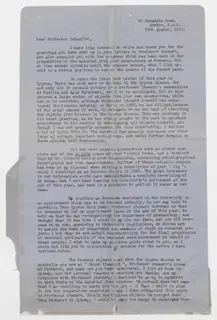
Mentioned in
198 mentionsDocuments · 95
- Palestine in the Bronze and Iron Ages: Papers in honour of Olga Tufnell
1963 · p. 114
R. S. Merrillees made notes on the tomb objects at Larnaca Fort.
Tubb 1985
- Cypriot Ceramics: Reading the Prehistoric Record
1974 · p. 68
Merrillees later published a conical jar from Arpera-Mosphilos.
Barlow et al. 1991
- Cypriote Antiquities from Nicosia-Ayia Paraskevi acquired by the Melbourne Cyprus Expedition in 1955/56
1950 · p. 68
Robert Stuart Merrillees sketched the 33 vases while attached to the University of Sydney in the late 1950s.
Merrillees 2008
- Les fouilles de Claude Schaeffer à Vounous en 1933
Helped · 1950 · p. 22
Robert S. Merrillees assisted James R. Stewart in studying the Vounous material.
Dunn-Vaturi 2001
- In memoriam Paul Åström 1929-2008
Meeting, partnership, catalogued · 1955 · 10, 12; p. 11; p. 10
Robert Stuart Merrillees and Paul Åström met in Stockholm for a meeting celebrating the Swedish Cyprus Expedition’s anniversary.
Merrillees & Caubet 2008
- In memoriam Nicolas Coldstream 1928-2008
Helped, partnership · 1970 · pp. 13, 17
Robert Stuart Merrillees helped Nicolas Coldstream give practical lessons in Cypriote Bronze Age ceramics.
Merrillees & Karageorghis 2008
Lectures and videos · 5
- Dr Francis Henry Hill Guillemard (1852–1933): Ornithologist, Incidental Antiquarian and Snob
Speaker · 2021
Merrillees 2021
- Leonardo da Vinci's Alleged Visit to Cyprus in 1481 AD and Its Link to Lefkara
Speaker · 2021
Merrillees 2021
- Skouriotissa: The Archaeology and History of the Mine through Archival Material and Interdisciplinary Studies
2018
Kassianidou 2018
- Cypriot Aphrodite and British Colonial Discourse: A Reappraisal
2021
Morris & Papantoniou 2021
- Through the Looking-Glass: Investigating Egyptian and Levantine Imitations of Bronze Age Cypriot Ceramics
2024
Vilain 2024
On Ancient Cyprus · 33
Institutions · 13
- University of Sydney
Student (1961–1962) · 1960
Stewart's final Cyprus season, at Karmi-Lapatsa (17 tombs) and Karmi-Palealona (18 tombs), under the auspices of Melbourne University; Sydney paid salaries of…
Powell 2013; Barker 2012
- Nicholson Museum
Student (1956–1961) · 1961
Stewart's last Cyprus season at Karmi-Palealona and Karmi-Lapatsa with students and the museum's conservator Derek Howlett; finds include the 'Tomb of the…
Barker 2012; Barker & Merrillees 2017
- UCL Institute of Archaeology
Student (by 1965) · 1965
Robert Merrillees completed his PhD at the Institute on Bronze Age Cypriot pottery found in Egypt.
Kiely 2017
- University College London
Student (1965) · 1965
Robert Merrillees completes his PhD at the Institute of Archaeology on Bronze Age Cypriot pottery found in Egypt (Kiely lists this under UCL).
Kiely 2017, p. 31
- Columbia University
Published material of · 1971
Joanna S. Smith (ed.), Views from Phlamoudhi, Cyprus, Annual of ASOR 63 (contributors including Horowitz, Merrillees, Pilides)
Birmingham 1973, p. 52; Merrillees 1973, p. 52; Smith et al. 2008, p. 33
- Phoebe A. Hearst Museum of Anthropology
1976
R. S. Merrillees published a review article of CCA 5 in RDAC 1976, pp. 98-142.
Merrillees 1976
Objects · 5
- People · 47listed under Connections
- Archivelisted under In the Archive
Sources
184 works and documents
- 1.Wikipedia contributors (2026). “Robert Merrillees”. Wikipedia (en). Online
- 2.Judy Powell (2013). Love's Obsession: The Lives and Archaeology of Jim and Eve Stewart. Kent Town, South Australia, Wakefield Press.
- 3.H. W. Catling (2020). Kouklia: Late Bronze Age and Early Iron Age Tombs at Palaepaphos 1951-1954. Oxford, BAR Publishing.
- 4.Robert Stuart Merrillees (2005). “Towards a fuller history of the Cyprus Museum”. Cahiers du Centre d'Études Chypriotes 35, 191-214. Online
- 5.T. Kiely, R. S. Merrillees (2012). “The archaeological interests of Samuel Brown, government engineer, and his circle of acquaintances in late nineteenth-century Cyprus”. Cahiers du Centre d'Études Chypriotes 42, 245-272. Online
- 6.Robert Stuart Merrillees (2014). “George Basil Palma, Chemist and Collector of Cypriote Antiquities in Famagusta, Cyprus, in the 20th Century A.D.”. Cahiers du Centre d'Études Chypriotes 44, 401-429. Online
- 7.Robert Stuart Merrillees (2016). “Studies on the provenances of the stele of Sargon II from Larnaca (Kition) and the two so-called Dhali (Idalion) silver bowls in the Louvre”. Cahiers du Centre d'Études Chypriotes 46, 349-386. Online
- 8.Craig Barker, Robert S. Merrillees (2017). “Cypriot Antiquities from the Cesnola Collections in the Nicholson Museum at the University of Sydney”. Mediterranean Archaeology 30, 51-71.
- 9.R. S. Merrillees (2012). The 'Ochsenkrater-Grab' from Nicosia, Ayia Paraskevi. Uppsala.
- 10.R. S. Merrillees (1968). The Cypriote Bronze Age Pottery Found in Egypt. Lund.
- 11.R. S. Merrillees (2001). “T. B. Sandwith and the beginnings of Cypriote archaeology”. Cyprus in the 19th Century AD: Fact, Fancy and Fiction, 222-239. Oxford, Oxbow.
- 12.R. S. Merrillees (1986). “A 16th Century B.C. Tomb Group from Central Cyprus with Links both East and West”. Cyprus between the Orient and Occident: Acts of the International Archaeological Symposium, Nicosia 1985, 114-148.
- 13.R. S. Merrillees (2000). “Max Ohnefalsch-Richter and the British”. Periplus: Festschrift für Hans-Günter Buchholz zu seinem 70. Geburtstag, 107-117.
- 14.M. Yon (2004). “Review of A.-E. Dunn-Vaturi, Vounous. C. F.-A. Schaeffer's Excavations in 1933: Tombs 47-79 (SIMA 130, 2003)”. Cahiers du Centre d'Etudes Chypriotes.
- 15.Jennifer M. Webb, David Frankel (2013). Ambelikou-Aletri: Metallurgy and Pottery Production in Middle Bronze Age Cyprus. Uppsala, Åströms Förlag.
- 16.J. S. Smith et al. (2008). “Views from Phlamoudhi, Cyprus”. Annual of the American Schools of Oriental Research 63.
- 17.Daisy-Kate Knox (2012). “Making Sense of Figurines in Bronze Age Cyprus: A Comprehensive Analysis of Cypriot Ceramic Figurative Material from EC I - LC IIIA (c. 2300 BC - c. 1100 BC)”. PhD thesis, University of Manchester.
- 18.L. Bushnell (2016). Precious Commodities: The Socio-economic Implications of the Distribution of Juglets in the Eastern Mediterranean during the Middle and Late Bronze Age.
- 19.V. Karageorghis (2008). In memoriam Nicolas Coldstream 1928-2008 (with R. S. Merrillees).
- 20.K. S. B. Ryholt; A. Bulow-Jacobsen (1997). The Political Situation in Egypt during the Second Intermediate Period, c. 1800-1550 B.C..
- 21.V. Karageorghis; R. Laffineur; F. Vandenabeele (eds) (1999). Four Thousand Years of Images on Cypriote Pottery.
- 22.Sabine Fourrier (2004). “Review of On Opium, Pots, People and Places. Selected Papers. An Honorary Volume for Robert S. Merrillees (SIMA Pocket-book 167, 2003)”. Cahiers du Centre d'Études Chypriotes 34.
- 23.Chovanec (2015). “Is there opium here? Analysis of Cypriot Base Ring juglets from Tel Beth-Shemesh, Israel”.
- 24.T. Kiely (2017). “Britain and the archaeology of Cyprus II: 1914 to the present day”. Cahiers du Centre d'Études Chypriotes 47, 253-310. Online
- 25.Deutsche Nationalbibliothek. “Merrillees, Robert S. (1938-?) (GND 129099597)”. Online
- 26.Judy Powell (2013). Love's Obsession: The Lives and Archaeology of Jim and Eve Stewart. Kent Town, South Australia, Wakefield Press.
- 27.Robert Stuart Merrillees, Annie Caubet (2008). “In memoriam Paul Åström 1929-2008”. Cahiers du Centre d'Études Chypriotes 38, 9-12. Online
- 28.R. S. Merrillees (2015). “Ruminations on a Lifetime Spent in Archaeological Research”. Journal of Eastern Mediterranean Archaeology & Heritage Studies 3, 246-250. Penn State University Press.
- 29.J. M. Webb et al. (2009). “The Bronze Age Cemeteries at Karmi Palealona and Lapatsa in Cyprus: Excavations by J. R. B. Stewart”. Studies in Mediterranean Archaeology 136. Åströms Förlag, Sävedalen.
- 30.Press and Information Office, Republic of Cyprus (1972). Αι Εργασίαι του Διεθνούς Αρχαιολογικού Συμποσίου (PIO press release, 31 March 1972).
- 31.Shlomo Bunimovitz, Zvi Lederman (2016). “Opium or oil? Late Bronze Age Cypriot Base Ring juglets and international trade revisited”. Antiquity. Online
- 32.James Weinstein (1977). “Review of R. S. Merrillees, Trade and Transcendence in the Bronze Age Levant”. Journal of the American Research Center in Egypt 14, 111-115.
- 33.Louise Steel (2010). “Cyprus”. E. H. Cline (ed.), The Oxford Handbook of the Bronze Age Aegean.
- 34.Press and Information Office, Republic of Cyprus (1971). Cyprus Archaeology Symposium in Canada (PIO press release No. 3, 26 October 1971).
- 35.Medelhavsmuseet (1993). “Annual report”. Medelhavsmuseet Bulletin 28.
- 36.R. S. Merrillees (1994). “Einar Gjerstad: Reflections on the Past and the Present”. E. Rystedt (ed.), The Swedish Cyprus Expedition: The Living Past, 45-51.
- 37. (1999). “CAARI News 18 (Spring 1999)”. CAARI News 18.
- 38.R. S. Merrillees (2008). “Phlamoudhi Vounari and Melissa: 35 Years and 35 Centuries Later”. J. S. Smith (ed.), Views from Phlamoudhi, Cyprus (Annual of the American Schools of Oriental Research 63), 111-120.
- 39.R. S. Merrillees (with contributions by Allan Gilbert and Costas Xenophontos) (2009). “Alashiya: A Scientific Quest for Its Location”. Metallurgy: Understanding How, Learning Why. Studies in Honor of James D. Muhly (Prehistory Monographs), 255-.
- 40.A. Bernard Knapp (2009). “Cyprus, Copper, and Alashiya”. Metallurgy: Understanding How, Learning Why. Studies in Honor of James D. Muhly (Prehistory Monographs).
- 41.R. S. Merrillees (1995). “Alashia Revisited Again”. Cahiers du Centre d'Études Chypriotes 23.
- 42.A. Bernard Knapp (2008). Prehistoric and Protohistoric Cyprus: Identity, Insularity, and Connectivity. Oxford University Press.
- 43.Jennifer M. Webb, David Frankel (2013). Ambelikou-Aletri: Metallurgy and Pottery Production in Middle Bronze Age Cyprus. Uppsala, Åströms Förlag.
- 44.Robert S. Merrillees (1992). “A Late Cypriote figurine with child from the Boysset Collection (now Sèvres Museum)”. Cahiers du Centre d'Études Chypriotes 18, 3-7. Online
- 45.Robert Stuart Merrillees (2005). “Towards a fuller history of the Cyprus Museum”. Cahiers du Centre d'Études Chypriotes 35, 191-214. Online
- 46.D. Michaelides, V. Kassianidou and R. S. Merrillees (eds) (2009). Egypt and Cyprus in Antiquity. Proceedings of the International Conference, Nicosia, 3-6 April 2003. Oxbow Books, Oxford.
- 47.R. S. Merrillees (2007). “The ethnic implications of Tell el-Yahudiyeh Ware for the history of the Middle to Late Bronze Age in Cyprus”. Cahiers du Centre d'Études Chypriotes 37, 87-96. Online
- 48.Anne-Elizabeth Dunn-Vaturi (2001). “Les fouilles de Claude Schaeffer à Vounous en 1933”. Cahiers du Centre d'Études Chypriotes 31. Online
- 49.G. C. Ioannides (ed.) (1992). Αφιέρωμα στο Βάσο Καραγιώργη / Studies in Honour of Vassos Karageorghis. Nicosia, Society of Cypriot Studies.
- 50.Robert Stuart Merrillees, Vassos Karageorghis (2008). “In memoriam Nicolas Coldstream 1928-2008”. Cahiers du Centre d'Études Chypriotes 38, 13-18.
- 51.J. Birmingham (ed.) (1973). The Cypriot Bronze Age: Some Recent Australian Contributions to the Prehistory of Cyprus. Sydney, Southwood.
- 52.R. S. Merrillees (1973). The Cypriot Bronze Age. 63-66.
- 53.Joanna S. Smith, Despo Pilides, Jay Stratton Noller, Allan S. Gilbert (2008). Views from Phlamoudhi, Cyprus. Boston, American Schools of Oriental Research.
- 54.Paul Åström (2007). “White Painted V eye-pitchers in Cyprus and the Levant”. Cahiers du Centre d'Études Chypriotes 37, 97-114.
- 55.Caroline Jorrand, Robert Merrillees, Sabine Fourrier, Marguerite Yon et al. (2010). “La collection chypriote du musée municipal de Laon (Aisne)”. Cahiers du Centre d'Études Chypriotes 40, 17-18. Online
- 56.Caroline Jorrand (2010). “Les nouvelles salles d'archéologie méditerranéenne du Musée de Laon : les salles Paul Marguerite de La Charlonie”. Cahiers du Centre d'Études Chypriotes 40, 19-22. Online
- 57.J. S. Smith. “Bringing Old Excavations to Life”. Near Eastern Archaeology. Online
- 58.P. Åström, L. Åström (1972). The Swedish Cyprus Expedition, Vol. IV, Part 1D: The Late Cypriote Bronze Age. Other Arts and Crafts. Relative and Absolute Chronology, Foreign Relations, Historical Conclusions. Lund.
- 59.V. Tatton-Brown (ed.) (1989). Cyprus and the East Mediterranean in the Iron Age: Proceedings of the Seventh British Museum Classical Colloquium, April 1988. London, British Museum Publications.
- 60.Robert Stuart Merrillees (2008). “Cypriote Antiquities from Nicosia-Ayia Paraskevi acquired by the Melbourne Cyprus Expedition in 1955/56”. Cahiers du Centre d'Études Chypriotes 38, 63-70.
- 61.J. N. Tubb (ed.) (1985). Palestine in the Bronze and Iron Ages: Papers in honour of Olga Tufnell. London, Institute of Archaeology.
- 62.J. A. Barlow (ed.), D. L. Bolger (ed.), B. Kling (ed.) (1991). Cypriot Ceramics: Reading the Prehistoric Record. Philadelphia, University Museum.
- 63.R. S. Merrillees (2010). “III. The Bronze Age antiquities”. Cahiers du Centre d'Études Chypriotes 40, 29-37. Online
- 64.Marguerite Yon, Annie Caubet, Antoine Hermary (2012). “La France et l'archéologie chypriote. Introduction”. Cahiers du Centre d'Études Chypriotes 42, 133-140. Online
- 65.Robert Stuart Merrillees (2012). “'Cypriote Antiquities in Berlin. In the focus of new research': An Anniversary Conference in Berlin, 8 May 2013”. Cahiers du Centre d'Études Chypriotes 42, 3-4.
- 66.Lesley Bushnell (2016). Precious Commodities: The Socio-economic Implications of the Distribution of Juglets in the Eastern Mediterranean during the Middle and Late Bronze Age. Oxford, BAR Publishing.
- 67.Hélène Cassimatis (1985). “Colloque archéologique international "Chypre entre l'Orient et l'Occident", Nicosie 8-14 septembre 1985”. Cahiers du Centre d'Études Chypriotes 4, 61-73.
- 68.Annie Caubet (2006). “La collection d'antiquités du musée Christian Zervos à Vézelay”. Cahiers du Centre d'Études Chypriotes 36, 219-232.
- 69.Lindy Crewe (2007). Early Enkomi: Regionalism, Trade and Society at the Beginning of the Late Bronze Age on Cyprus. Oxford, Archaeopress.
- 70.K. O. Eriksson (1991). “Red Lustrous Wheelmade Ware: A product of Late Bronze Age Cyprus”. Cypriot Ceramics: Reading the Prehistoric Record, 81-96.
- 71.D. Frankel (1974). Middle Cypriot White Painted Pottery: An Analytical Study of the Decoration. Göteborg, Paul Åströms Förlag.
- 72.R. S. Merrillees (1962). “Opium trade in the Bronze Age Levant”. Antiquity 36, 287-292.
- 73.R. S. Merrillees (1973). “Settlement, sanctuary and cemetery in Bronze Age Cyprus”. The Cypriot Bronze Age: Some Recent Australian Contributions to the Prehistory of Cyprus, 44-57.
- 74.R. S. Merrillees (2010). “Another Cesnola Puzzle: A pair of reproduction bracelets from Kourion in the Musée-château”. Cahiers du Centre d'Études Chypriotes 40, 101-123.
- 75.D. Michaelides (ed.), V. Kassianidou (ed.), R. S. Merrillees (ed.) (2009). Egypt and Cyprus in Antiquity: proceedings of the international conference, Nicosia, 3-6 April 2003. Oxford, Oxbow Books.
- 76.James F. Ross (1994). “The Vounous Jars Revisited”. Bulletin of the American Schools of Oriental Research 296, 15-30.
- 77.Nicholas Chr. Stampolidis (ed.), Vassos Karageorghis (ed.) (2003). ΠΛΟΕΣ: Sea Routes... Interconnections in the Mediterranean 16th-6th c. BC. Proceedings of the International Symposium held at Rethymnon, Crete, September 29th-October 2nd 2002. Athens, University of Crete and A. G. Leventis Foundation.
- 78.Tatton-Brown 1987, Ancient Cyprus (British Museum).
- 79.Press and Information Office, Republic of Cyprus, press release of 26 October 1971, «Συμπόσιον Κυπριακής Αρχαιολογίας εις Καναδάν».
- 80.Press and Information Office, Republic of Cyprus, press release No. 3 of 26 October 1971, «Cyprus Archaeology Symposium in Canada».
- 81.Press and Information Office, Republic of Cyprus, press release of 31 March 1972, «Αι Εργασίαι του Διεθνούς Αρχαιολογικού Συμποσίου».
- 82.Centre of Visual Arts and Research (CVAR), Costas and Rita Severis Foundation, Nicosia, online catalogue: ARF_00068, “Australian “Diggers” in Cyprus in 1941”, 1991, ARF_00085, “Another Australian Connection with Cyprus’ Past: George Basil Palma, Chemist and Collector of Cypriote Antiquities”, 2010, ARF_00137, “Opium for the Masses: How the Ancients Got High”, 1999, and 9 more records. Online
- 83.Maro Theodossiadou, "The A. G. Leventis Foundation Gallery of Cypriot Antiquities in the British Museum, London", Cyprus Today vol. 26, no. 3 (July–September 1988).
- 84.Anon., "Egypt and Cyprus in Antiquity", Cyprus Today vol. 41, no. 2 (May–August 2003).
- 85.Sarah Vilain, «Through the looking-glass: Investigating Egyptian and Levantine imitations of Bronze Age Cypriot ceramics», recorded lecture, 62nd Public Lecture Series, Archaeological Research Unit - University of Cyprus, published on YouTube 2024-10-08, at 0:40:09. Online
- 86.Robert Merrillees, «Leonardo da Vinci's legendary visit to Cyprus in 1481 A.D. and its link to Lefkara», recorded lecture, CAARI Online Lecture Series, CAARI Cyprus, published on YouTube 2021-05-21, at 0:01:57. Online
- 87.Robert Merrillees, «Dr Francis Henry Hill Guillemard (1852–1933): Ornithologist, incidental antiquarian and snob», recorded conference paper, Empire and Excavation: Critical Perspectives on archaeology in British-period Cyprus, 1878-1960, CAARI Cyprus, published on YouTube 2021-02-01, at 0:00:00. Online
- 88.Andrew Sneddon, «New Research at the Middle Bronze Age site of Alambra», recorded lecture, CAARI Online Lecture, CAARI Cyprus, published on YouTube 2021-03-11, at 0:01:59. Online
- 89.Christine Morris and Giorgos Papantoniou, «Cypriot Aphrodite and British Colonial Discourse: A Reappraisal», recorded conference paper, Empire and Excavation: Critical Perspectives on archaeology in British-period Cyprus, 1878-1960, CAARI Cyprus, published on YouTube 2021-02-02, at 0:17:54. Online
- 90.Craig Barker, «Cypriot Antiquities in the Antipodes: The diaspora of Cypriot material culture to Australia during the era of British colonialism», recorded conference paper, Empire and Excavation: Critical Perspectives on archaeology in British-period Cyprus, 1878-1960, CAARI Cyprus, published on YouTube 2021-02-04, at 0:23:57. Online
- 91.Shelley Wachsmann (1998). Seagoing Ships & Seamanship in the Bronze Age Levant. PDF p. 106..
- 92.Robert S. Merrillees (2015). Ruminations on a Lifetime Spent in Archaeological Research. In Journal of Eastern Mediterranean Archaeology & Heritage Studies. pp. 246-250. Penn State University Press. p. 250.. Online
- 93.Collège de France, Paris, Fonds Claude Schaeffer (34 CDF), 34 CDF art. 188, «[Lettre de Stewart à propos des photographies des matériaux de Vounous]», 30 January 1960of 2, Collège de France, Paris, Fonds Claude Schaeffer (34 CDF), 34 CDF art. 188, «[Lettre de Merillees à Schaeffer à propos des matériaux trouvés à Cnossos]», 19 August 1961of 2, Collège de France, Paris, Fonds Claude Schaeffer (34 CDF), 34 CDF art. 188, «[Lettre de Schaeffer à Stewart pour que les matériaux trouvés à Cnossos soient rapportés pour cataloguage à l'Université de Sydney]», 16 September 1961of 2, Collège de France, Paris, Fonds Claude Schaeffer (34 CDF), 34 CDF art. 188, «[Correspondance entre Schaeffer et Birmingham à propos des fouilles de M. Berard à Ktima]», 29 September 1961of 4, Collège de France, Paris, Fonds Claude Schaeffer (34 CDF), 34 CDF art. 188, «[Correspondance entre Stewart et Schaeffer au sujet de Merillees]», 4 October 1961of 4, and 3 more. Online
- 94.«Edith Porada zum 100. Geburtstag», Orbis Biblicus et Orientalis 268 (2014).
- 95.Merrillees 1992, "A Late Cypriote figurine with child from the Boysset Collection", CCEC 18, pp. 3–7–6).
- 96.Masson & Hermary 1988, CCEC 10, n. 14–15; Hermary 1986, Chronique d'archéologie chypriote (1984-1985), CCEC 5.
- 97.Morris 1985, The Art of Ancient Cyprus.
- 98.Merrillees 2001, 'T. B. Sandwith and the beginnings of Cypriote archaeology', in Tatton-Brown (ed.), Cyprus in the 19th Century AD, pp. 222–238–260).
- 99.Robertson (ed.) 1975, The Archaeology of Cyprus: Recent Developments, pp. 15–38–50); Hardy 2014, 'Using Open-Source Data to Identify Participation in the Illicit Antiquities Trade: A Case Study on the Cypriot Civil War', Eur. J. Crim. Policy Res. (open access).
- 100.R. S. Merrillees and Annie Caubet, 2008, In memoriam Paul Åström (1929–2008), Cahiers du Centre d'Études Chypriotes 38.
- 101.Toumazou, Kardulias & Counts (eds) 2011, Crossroads and Boundaries, Acknowledgments p. xv.
- 102.Dunn-Vaturi 2001, CCEC 31.
- 103.Barker & Merrillees 2017, 'Cypriot Antiquities from the Cesnola Collections in the Nicholson Museum', Meditarch 30, p. 51; Barker et al. 2012, The Cypriot Collection of the Nicholson Museum (Aphrodite's Island exh. cat., Sydney); Barker et al. 2012, The Cypriot Collection of the Nicholson Museum (Aphrodite's Island exh. cat., Sydney); Barker et al. 2012, The Cypriot Collection of the Nicholson Museum (Aphrodite's Island exh. cat., Sydney).
- 104.'La collection chypriote du musée municipal de Laon', CCEC 40 (2010), résumé pp. 17–18; Decaudin 1993, 'Musée de Cannes, Chypre dans l'Antiquité, Catalogue', CCEC 19.
- 105.Anne-Elizabeth Dunn-Vaturi, 2001, Les fouilles de Claude Schaeffer à Vounous en 1933.
- 106.Jennifer M. Webb; David Frankel; Myrto Georgakopoulou; Thilo Rehren; George Constantinou; Ioannis Panayides, Metallurgy and Pottery Production in Middle Bronze Age Cyprus (2013).
- 107.Marguerite Yon, Review of Ann-Elizabeth Dunn-Vaturi, Vounous. C. F.-A. Schaeffer's Excavations in 1933: Tombs 47-79, SIMA 130, 2003 (2004).
- 108.Joanna S. Smith, Views from Phlamoudhi, Cyprus (2008).
- 109.Robert Stuart Merrillees et al., 2008, In memoriam Paul Åström 1929-2008.
- 110.Robert Stuart Merrillees; Annie Caubet, 2008, In memoriam Paul Åström 1929-2008.
- 111.Cumulative Book Index 1969: Cumulative Index (1969).
- 112.P. Åström et al., 1972, The Swedish Cyprus Expedition, Vol. IV, Part 1D: The Late Cypriote Bronze Age. Other Arts and Crafts. Relative and Absolute Chronology, Foreign Relations, Historical Conclusions.
- 113.Manfred Bietak, 2009, obituary of Paul Åström, Ägypten und Levante / Egypt and the Levant XIX.
- 114.Thomas Kiely; Anna Reeve; Lindy Crewe, Empire & Excavation: Critical perspectives on archaeology in British-period Cyprus, 1878–1960 (2025).
- 115.C. Jorrand, R. Merrillees, S. Fourrier, M. Yon, A. Caubet, A. Hermary, 2010, La collection chypriote du musée municipal de Laon (Aisne).
- 116.Jorrand et al., LA COLLECTION CHYPRIOTE DU MUSÉE MUNICIPAL DE LAON (AISNE), 2010.
- 117.R. S. Merrillees, 1992, A Late Cypriote figurine with child from the Boysset Collection, acknowledgement; A. Hermary, S. Fourrier, R. S. Merrillees, M. Yon, 2007, Avant-propos [Annie Caubet].
- 118.D. F. M<scp>ackreth</scp>: <i>Orton Hall Farm: a Roman and Early Anglo-Saxon Farmstead</i>. (East AnglianArchaeology, 76.) Pp. xvii + 255. Manchester: Nene Vall (1999).
- 119.A. Mastino, P. Ruggeri (edd.): L’Africa romana: Atti del X convegno di studio Oristano, 11–13 dicembre 1992. 3 vols. Pp. 502; 503–1059; 1060–1438. Sassari: Edit (1999).
- 120.R. S. Merrillees, 2009, The modern history of the first Lambousa treasure of Byzantine silverware from Cyprus.
- 121.Merrillees, 'The modern history of the first Lambousa treasure', Antiquaries Journal 89 (2009).
- 122.1989, Reference list in Archaeometry article doi 10.1111/j.1475-4754.1989.tb01057.x.
- 123.C. Barker and R. S. Merrillees, 2017, Cypriot Antiquities from the Cesnola Collections in the Nicholson Museum at The University of Sydney.
- 124.C. Barker (ed.), 2012, Aphrodite's Island: Australian Archaeologists in Cyprus. The Cypriot Collection of the Nicholson Museum.
- 125.Barker & Merrillees 2017, 'Cypriot Antiquities from the Cesnola Collections in the Nicholson Museum', Meditarch 30.
- 126.Barker and Merrillees, Cypriot Antiquities from the Cesnola Collections in the Nicholson Museum at The University of Sydney, 2017.
- 127.J. S. Smith (ed.), 2008, Views from Phlamoudhi, Cyprus.
- 128.J. Powell, 2013, Love's Obsession: The Lives and Archaeology of Jim and Eve Stewart.
- 129.Birmingham et al., The Cypriot Bronze Age: Some recent Australian contributions to the prehistory of Cyprus, 1973.
- 130.Merrillees, 1992, A Late Cypriote figurine with child from the Boysset Collection.
- 131.Bourke 2014, "J. Basil Hennessy AO (1925–2013)", Levant 46:1, 1-3.
- 132.Smith et al., VIEWS FROM PHLAMOUDHI, CYPRUS, 2008.
- 133.2010, La collection chypriote du musée municipal de Laon (résumé).
- 134.J. S. Smith et al., 2008, Views from Phlamoudhi, Cyprus (Annual of ASOR 63).
- 135.G. C. Ioannides, 1992, Αφιέρωμα στο Βάσο Καραγιώργη / Studies in Honour of Vassos Karageorghis.
- 136.R. S. Merrillees, 1974, Trade and Transcendence in the Bronze Age Levant: Three Studies.
- 137.R. S. Merrillees, 2016, Studies on the provenances of the stele of Sargon II ....
- 138.Hatshepsut, from Queen to Pharaoh (2019).
- 139.Umair Mirza, Hatshepsut: From Queen To Pharaoh (2000).
- 140.Hatshepsut From Queen To Pharaoh (2005).
- 141.Catharine H. Roehrig; Renée Dreyfus; Cathleen A. Keller, Hatshepsut: From Queen to Pharaoh (2005).
- 142.T. Kiely & R. S. Merrillees, 2012, The archaeological interests of Samuel Brown, Government Engineer, and his circle of acquaintances in late 19th century Cyprus.
- 143.R. S. Merrillees, 2016.
- 144.R. S. Merrillees, 2002, The Relative and Absolute Chronology of the Cypriote White Painted Pendent Line Style.
- 145.2018, "I don't know what am I myself, it is so very difficult to explain." Max Ohnefalsch-Richter (1850-1917) und die Archaeologie Zyperns, bibliography.
- 146.Judy Powell, 2013, Love's Obsession: The Lives and Archaeology of Jim and Eve Stewart.
- 147.Robert Stuart Merrillees et al., 2008, In memoriam Nicolas Coldstream 1928-2008.
- 148.Paul Åström, 2007, White Painted V eye-pitchers in Cyprus and the Levant.
- 149.J. Birmingham, 1973, The Cypriot Bronze Age: Some Recent Australian Contributions to the Prehistory of Cyprus, p. -1; T. Kiely, 2017, Britain and the archaeology of Cyprus II: 1914 to the present day.
- 150.Joanna S. Smith et al., 2008, Views from Phlamoudhi, Cyprus.
- 151.Love's Obsession: the lives and archaeology of Jim and Eve Stewart.
- 152.H. W. Catling (ed. R. W. V. Catling), 2020, Kouklia. Late Bronze Age and Early Iron Age Tombs at Palaepaphos 1951-1954.
- 153.Robert Merrillees.
- 154.T. Kiely and R. S. Merrillees, 2012, The archaeological interests of Samuel Brown, government engineer, and his circle of acquaintances in late 19th century Cyprus.
- 155.R. S. Merrillees, 2014, George Basil Palma, Chemist and Collector of Cypriote Antiquities in Famagusta, Cyprus, in the 20th Century A.D..
- 156.V. Karageorghis; R. Laffineur; F. Vandenabeele (eds), 1999, Four Thousand Years of Images on Cypriote Pottery.
- 157.<i>Aegyptiaca from Late Bronze Age Cyprus</i>. Inga Jacobsson. (1995).
- 158.<i>Cyprus in the 19th Century AD: Fact, Fancy and Fiction: Papers of the 22nd British Museum Classical Colloquium, December 1998</i>. Veronica Tatton-Brown, ed. (2005).
- 159.Sabine Fourrier, Cahiers du Centre d'Etudes Chypriotes (2004).
- 160.(P.) Åström Excavations at Kalopsidha and Ayios Iakovos in Cyprus. (Studies in Mediterranean archaeology, 2.) Lund: Studies in Mediterranean Archaeology. 1966. (1969).
- 161.Robert Stuart Merrillees; Vassos Karageorghis, In memoriam Nicolas Coldstream 1928-2008 (2008).
- 162.G.C. IOANNIDES, ΑΦΙΕΡΩΜΑ ΣΤΟ ΒΑΣΟ ΚΑΡΑΓΙΩΡΓΗ / Studies in Honour of Vassos Karageorghis (1992).
- 163.R. S. Merrillees, Trade and Transcendence in the Bronze Age Levant: Three Studies (1974).
- 164.Marsa Matruh I. The Excavation and Marsa Matruh II. The Objects. The University of Pennsylvania Museum of Archaeology and Anthropology's Excavations on Bates's (2004).
- 165.V. Karageorghis, R. Laffineur, F. Vandenabeele (edd.): Four Thousand Years of Images on Cypriote Pottery. Proceedings of the Third International Conference of C (1999).
- 166.Collège de France, Paris, Fonds Claude Schaeffer (34 CDF), 34 CDF art. 188, «[Lettre de Merillees à Schaeffer à propos des matériaux trouvés à Cnossos]», 19 August 1961. Online
- 167.Merrillees 1992, "A Late Cypriote figurine with child from the Boysset Collection", CCEC 18.
- 168.Barker et al. 2012, The Cypriot Collection of the Nicholson Museum (Aphrodite's Island exh. cat., Sydney).
- 169.'La collection chypriote du musée municipal de Laon', CCEC 40 (2010), résumé pp. 17–18.
- 170.Merrillees and Krpata, Schliemann and Ohnefalsch-Richter : The Cyprus connection, 1997.
- 171.Merrillees and Karageorghis, In memoriam Nicolas Coldstream 1928-2008, 2008.
- 172.Merrillees and Kiely, The archaeological interests of Samuel Brown, government engineer, and his circle of acquaintances in late 19th century…, 2012.
- 173.N. Robertson (ed.), 1975, The Archaeology of Cyprus: Recent Developments. Papers from the first International Colloquium on Ancient Cyprus held at Brock University, October 1971.
- 174.2005, CAARI News No. 29, Winter 2005.
- 175.Barker et al., 2012, The Cypriot Collection of the Nicholson Museum (Aphrodite's Island exh. cat., Sydney).
- 176.C. Jorrand et al., 2010, La collection chypriote du musée municipal de Laon (Aisne).
- 177.R. S. Merrillees, 2007, The ethnic implications of Tell el-Yahudiyeh Ware for the history of the Middle to Late Bronze Age in Cyprus.
- 178.Powell, Judith, 2013, Love's Obsession: The Lives and Archaeology of Jim and Eve Stewart; A.-E. Dunn-Vaturi, 2001, Les fouilles de Claude Schaeffer à Vounous en 1933.
- 179.O. Masson; A. Hermary, 1988, n. 14.
- 180.1999, CAARI News 18, Spring 1999.
- 181.V. Tatton-Brown, 1989, Cyprus and the East Mediterranean in the Iron Age: Proceedings of the Seventh British Museum Classical Colloquium, April 1988.
- 182.R. S. Merrillees, 2009, The modern history of the first Lambousa treasure.
- 183.Robert Stuart Merrillees, 2014, George Basil Palma, Chemist and Collector of Cypriote Antiquities in Famagusta, Cyprus, in the 20th Century A.D..
- 184.D. Michaelides, V. Kassianidou and R. S. Merrillees (eds), 2009, Egypt and Cyprus in Antiquity, cited in reference lists (Counts 2011; Dissinger 2017.
Corrections and additions
Did you know this person?
We would like to hear from relatives, colleagues and anyone who knows more about this person's life and work.
Missing from this record
- No photograph
We would like to hear about
- Dates and places of birth and death
- Other spellings or names they used
- Photographs, letters or papers
- Their work, collections or excavations
- A mistake in what we say
If this page is about you, write to us and we will correct it or take it down. Tell us if you would like to be thanked by name on the page.