
Research·Brief
Charred barley and chaff in a Pyla shaft point to stored animal fodder around 1200 BCE
Of 15,134 plant remains from Pyla-Kokkinokremos, 99% came from one rock-cut shaft, which the authors read as an animal-fodder store later given up.



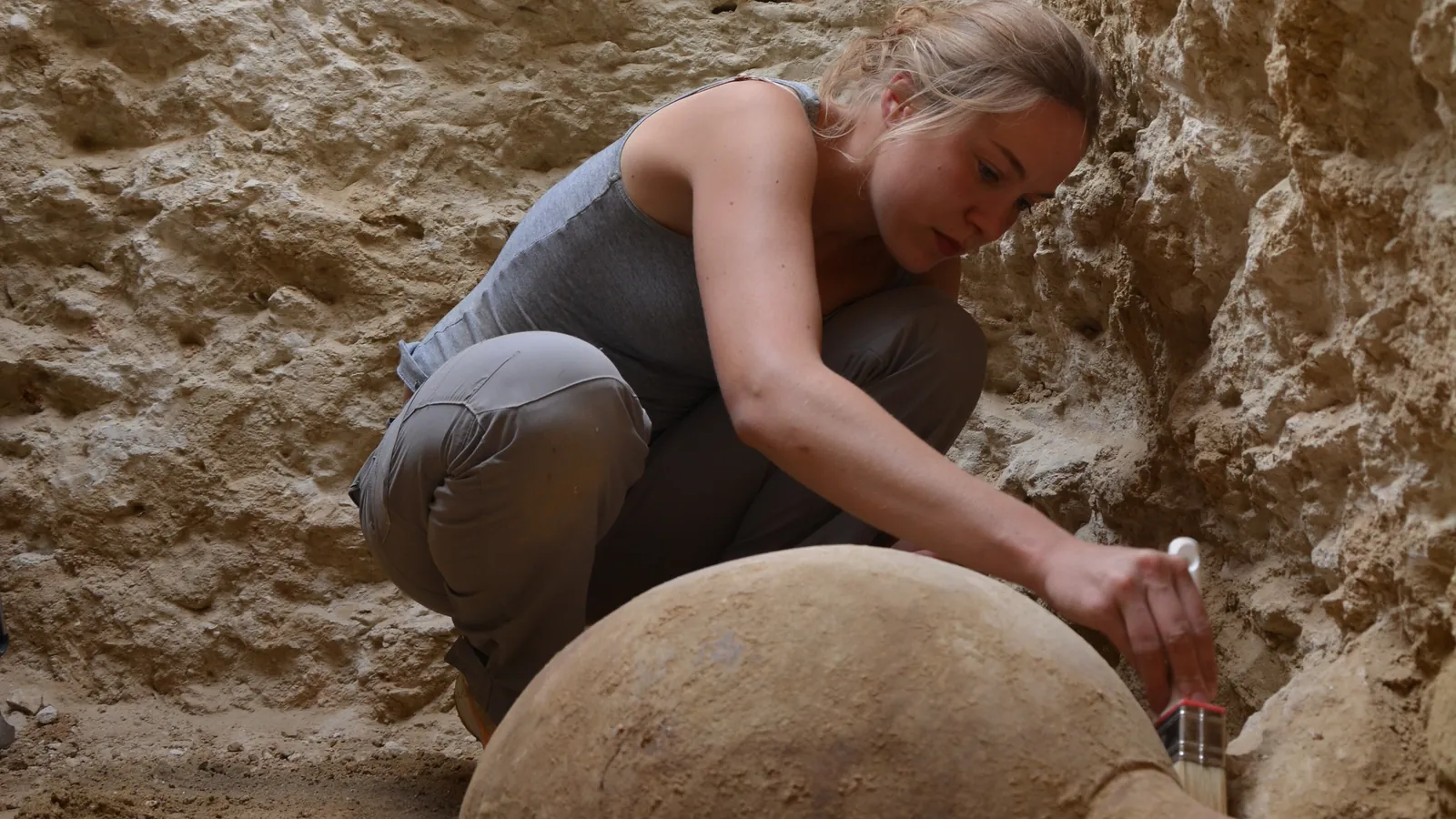
A deep rock-cut shaft at Pyla-Kokkinokremos, the short-lived hilltop town near Larnaca, held a burnt store of barley grain mixed with wheat chaff, straw and weed seeds, a blend its authors read as fodder kept for animals. The study, by Carly Henkel and Evi Margaritis of The Cyprus Institute with the site's three excavation directors, went online in the Journal of Archaeological Science: Reports on 20 September 2026. Its samples are the first taken at the settlement for plant study; the authors date the town to the Late Cypriot IIC period, c. 1230–1190 BCE.
Nearly every seed from one shaft
The samples come from the joint excavation that J. Bretschneider of Ghent University, J. Driessen of the Université catholique de Louvain and Athanasia Kanta have led since 2014 in Sectors 3, 4 and 5. Most of the 268 sediment samples, floated at the Cyprus Institute's laboratory, gave little: the town was never burnt, no hearths have yet been found, and its shallow deposits suffer from erosion and ploughing.
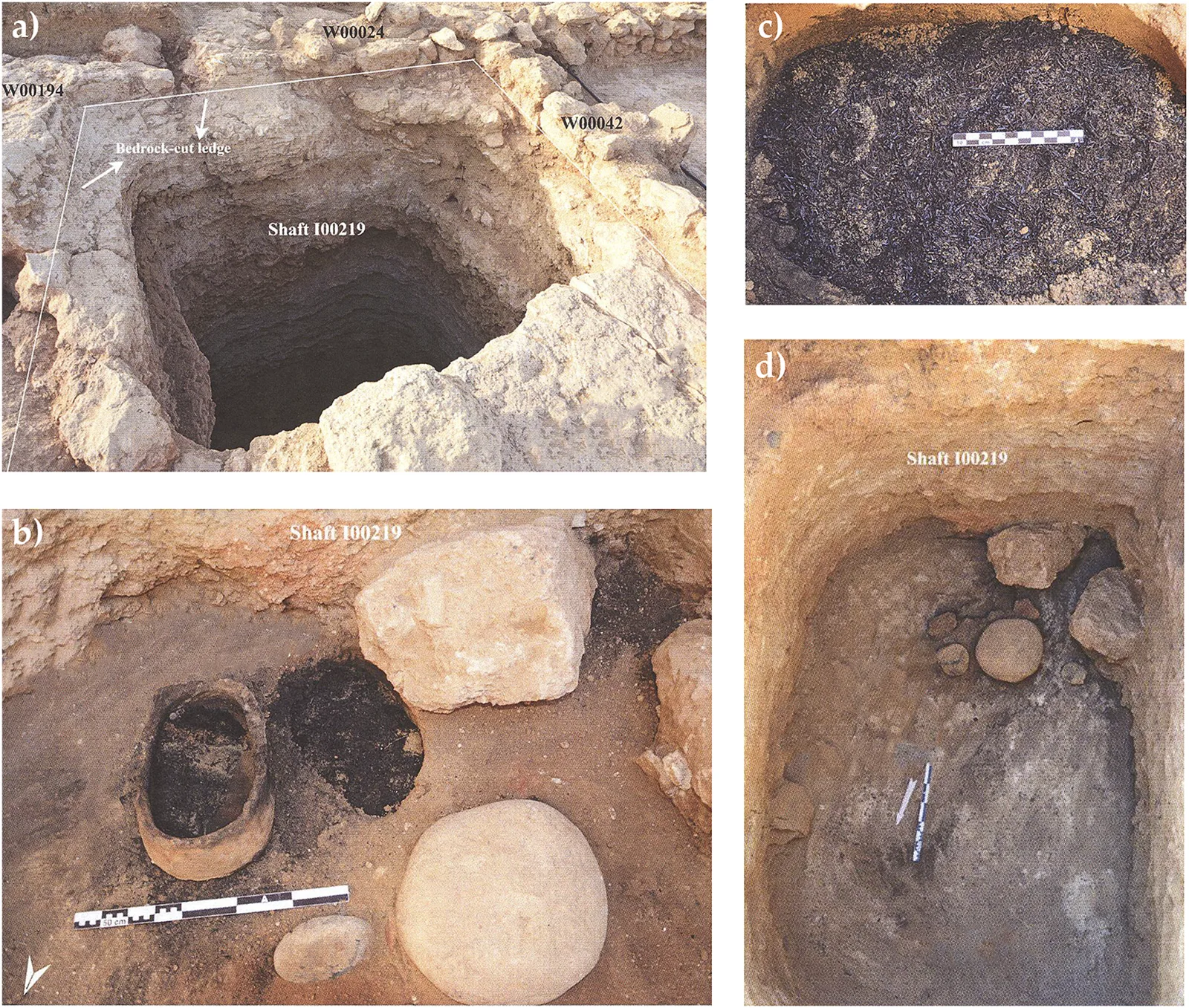
Of the 15,134 plant remains identified, 99% came from the bottom of shaft I00219, which fills nearly all of Room 5.6 in Sector 5. It measures 2.5 by 3 m, is 3 m deep, and had a layer of ash c. 10–30 cm thick on its floor.
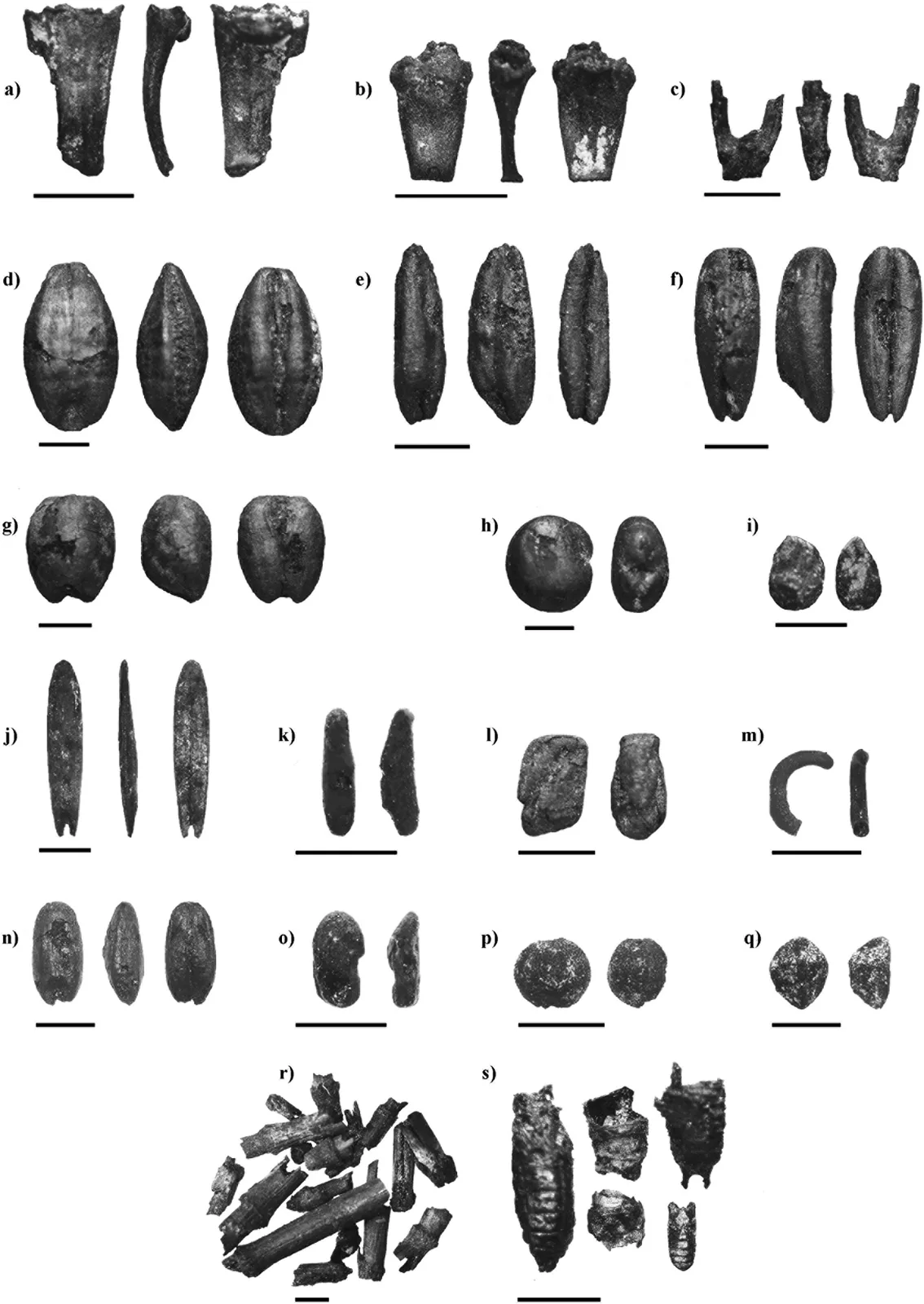
Hulled barley grain and the rachises, or ear stalks, of free-threshing wheat (mostly durum, some bread wheat) made up the bulk; einkorn, emmer, oat, rye and three lentils were minor parts. The authors count the durum rachises as the largest group of free-threshing wheat remains yet recovered in Late Bronze Age Cyprus. The previous largest was 22 grains of bread wheat from the copper-mining village of Apliki-Karamallos, published by H. Helbaek in 1962.
Fodder, sown in autumn and cut low
Samples from across the ash layer held much the same mix. A chaff lining around stored barley would have left more chaff near the walls, so the authors treat the deposit as one stored product, and adding coarse waste to barley grain suggests feed for livestock.
The weeds date the farming year. Their flowering times point to an April–May harvest of a crop sown in autumn and fed by winter rain. Their heights show the cereals were cut some 11–20 cm above the ground, presumably with sickles, which yields straw and leaves stubble for grazing. The team reads this as mixed crop and livestock farming on the edge of the Mesaoria plain.
Pyla and the crisis years
Pyla's short life fell in what are often called the "crisis years" around 1200 BCE, a time of moving peoples, violence and drought across the eastern Mediterranean. Vassos Karageorghis dug the site with Martha Demas in 1981–1982 and with Kanta from 2010. Why it was founded is still argued: a stronghold of Aegean newcomers, an outpost of Kition, or a breakaway town of merchant elites.
Later the shaft stopped serving as a store: an oval stone setting, a plain pithos and a Plain White Handmade jug were placed on the ash, and the shaft above them was filled with soil. The team cautiously suggests that falling harvests nearby may have helped cause the town's abandonment. Pollen from a core at nearby Hala Sultan Tekke, published by D. Kaniewski and colleagues in 2013, records about three centuries of lower rainfall from c. 1200 BCE, though its dating is coarse.
A pithos found at Pyla has been traced by its clay to Apliki, and isotope work on plant remains from both sites is due to test whether the two were linked by food supply.
Original sources
On ancientcyprus.com
- Sites
- Kition
- Excavations
- Pyla-Kokkinokremos: the Bretschneider, Driessen and Kanta excavations, Pyla-Kokkinokremos: Karageorghis and Demas's excavations, Pyla-Kokkinokremos: Karageorghis and Kanta's excavations, Apliki-Karamallos: the Late Bronze Age mining settlement (du Plat Taylor, 1938–1939)
- People
- Athanasia Kanta, J. Bretschneider, J. Driessen, Vassos Karageorghis, Martha Demas, Hans Helbaek, David Kaniewski
- Periods
- Late Bronze Age
More in Research
- Wheat traces at Chlorakas-Palloures question the view that cereals were minor in Chalcolithic Cyprus
- Strabo's Arsinoe near Palaepaphos probably never existed, argues study of a Ptolemaic queen's cult
- Late Bronze Age hoard of at least 111 bronzes at Galinoporni was packed in cloth, cord and grass
- Bronze Age tombs at Hala Sultan Tekke held what may be burnt bouquets of grain and wild flowers
- 48 carved stones near Kourion may come from an unknown Roman temple, study argues