Museum

Penn Museum (University of Pennsylvania Museum of Archaeology and Anthropology)

Philadelphia, United States · founded 1887

Philadelphia museum that sponsored the only large American excavations in Cyprus before 1967, at Lapithos in 1931 and at Kourion from 1934 to 1954, and later the Kyrenia ship excavation.

About

The University of Pennsylvania Museum's Cypriot story is mostly the story of Kourion. Between 1934 and 1954 it sponsored the Curium Expedition on the south coast, and Thomas Davis's survey of American archaeology on Cyprus treats this as the Museum's main enterprise on the island2. The Museum was founded in 1887 and is part of the University of Pennsylvania in Philadelphia1. No total is published for its Cypriot holding; its online catalogue holds Kourion material, finds from the Lapithos tombs of 1931 and earlier purchases and gifts19.

Richter, Macauley and the first collections, 1890 to 1919

The Museum's Cypriot material begins before any excavation of its own. In 1890 it acquired a "Richter-Collection" from Max Ohnefalsch-Richter, recorded in its archive as MS 1-204 and 475-4889. Sara Yorke Stevenson, who was in charge of the Egyptian and Mediterranean section, exchanged about forty letters with him between 1892 and 1900, and the file holds object lists and some sixty photographs9. In 1893 the Museum's Mediterranean section showed Ohnefalsch-Richter's collection of Cypriot antiquities at the World's Columbian Exposition in Chicago23. He sent the Museum offers of antiquities on 13 January and 16 March 18959. A terracotta seal from Ayia Paraskevi (219769) is recorded in the online catalogue as bought from him in 189519.

Francis C. Macauley gave Cypriot pieces in 1890, among them a bowl (64221) and a bottle (61519), and his estate sold a further sherd (31638) in 189719. Stone sculpture arrived by purchase: Irene Bald Romano's 2006 catalogue of the Museum's Cypriot, Greek and Roman stone sculpture records sales by Edward Perry Warren in 1901 and Hagop Kevorkian in 191664. In 1914 the Museum gave sixteen Greek prehistoric pieces to the Metropolitan Museum of Art in exchange for duplicate Cypriot vases25. In 1919 the Museum Journal reported a collection of antiquities from Cyprus27.

Lapithos, 1931

The Museum ran the first organised American dig on the island. In 1931 Bert Hodge Hill led a small team at the Vrysi tou Barba cemetery at Lapithos, opening tombs 801 to 838, with Virginia Grace and the architect Dorothy H. Cox on the staff2,21. A Minoan jar from tomb 806A was published by Grace21. The finds are in Philadelphia; an unprovenanced red polished jug (530701) is tagged as possibly from Lapithos but not from tomb 806A19.

The Curium Expedition, 1934 to 1954

Kourion was the plan of George H. McFadden, a wealthy bachelor who financed the work and dug much of it himself, with Hill as director and John Franklin Daniel as his assistant2,3. The colonial government welcomed the project because it cost the government little2. Costello calls Hill the "titular director" and says the dig aimed at public buildings likely to yield objects for the Museum3. Work ran from 1934 to 1954 with a pause from 1942 to 19462. It covered the sanctuary of Apollo Hylates, the city site with its theatre, basilica and houses, the stadium, and the Bamboula, Kaloriziki and Ayios Ermoyenis cemeteries3.

McFadden worked chiefly at the sanctuary, Daniel on the city and Bamboula3,7. After the war the Museum resumed work at the sanctuary in 1950 and 1951 under Hill's general direction44. In 1952 McFadden relocated the Kaloriziki tomb in which looters had found a gold sceptre-head about fifty years before, and re-excavated it as Tomb 405,13. The Expedition also invited and paid for Porphyrios Dikaios to dig the Neolithic settlement of Sotira, and the Museum published his report in 19616.

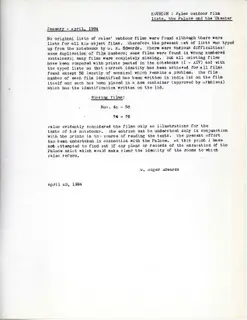
McFadden drowned in a sailing accident in April 1953 and Daniel had died in 19482,14. G. Roger Edwards was sent from Philadelphia to close the work, and a short season followed in 19542. The McFadden family gave the Episkopi house to the Department of Antiquities, and it became the Kourion Museum2. Davis writes that the Museum's commitment had been primarily McFadden's, and its interest in Cyprus lay dormant until the late 1960s2.

Publishing and dividing the finds

Pennsylvania left the Kourion basilica partly cleared, and A. H. S. Megaw as Director of Antiquities completed it in 1956 to 19583. The final reports went to others. John and Suzanne Young published the terracotta figurines in 19557. Terence Mitford edited The Inscriptions of Kourion from Daniel's field books in 19718. Jack L. Benson published Bamboula at Kourion in 1972 and The Necropolis of Kaloriziki in 1973; McFadden's sisters Carolyn B. McFadden and Emily McFadden Staempfli helped pay for printing the second4,5. The finds were divided among Curium House, the Cyprus Museum and the University Museum4. The Philadelphia share includes the Bamboula seal impressions (532259 to 532268)19. Between 1984 and 1987 a University of Arizona mission under David Soren reopened Daniel's Trench III, with Edwards supplying Daniel's notebooks3.

Kyrenia, 1967 to 1969, and the sculpture catalogue

Davis calls the 1967 survey and the excavation that followed under Michael Katzev the first American effort in independent Cyprus2. The University Museum sponsored the excavation of the Kyrenia ship, a wreck off the north coast, in 1968 and 196918,62. Its hull was rebuilt in Kyrenia Castle, which now stands in the occupied north62.

In 2006 Romano published the Museum's Cypriot, Greek and Roman stone sculpture, including pieces from the Kourion excavations and works bought from Cypriot sites52,64.

History

  1. 1887
    Founded as the University of Pennsylvania's museum of archaeology and anthropology (per Wikipedia, following the Nippur expeditions).

    University of Pennsylvania Museum of Archaeology and Anthropology. Wikipedia

  2. 1888
    The museum's archaeological section was founded; it held a Cypriot collection and a gem cabinet deposited by Maxwell Sommerville.

    (1893). Revue Archeologique July-December 1893: Vol 22 (1893)

  3. 1890
    Francis C. Macauley gave Cypriot pieces (bowl 64221, bottle 61519); his estate sold a further sherd (31638) in 1897.

    Francis C. MacauleyPenn Museum (2026). Online collection database

  4. 1890
    A 'Richter-Collection' (MS 1-204, 475-488 in the Museum archive) from Ohnefalsch-Richter was acquired; Sara Yorke Stevenson ran the Egyptian and Mediterranean section and corresponded with him (about forty letters, 1892-1900).

    Max Ohnefalsch-RichterSara Yorke StevensonLéon Fivel (1996). Ohnefalsch-Richter vendeur d'antiquités chypriotes (1895). Cahiers du Centre d'Études Chypriotes 25, 29-35

  5. 1893
    The museum's Mediterranean section exhibited Max Ohnefalsch-Richter's collection of Cypriot antiquities at the World's Columbian Exposition in Chicago.

    (1901). United States. World's Columbian Commission Committee on Awards, World's Columbian Exposition, Chicago, Ill., 1893 (1901)

  6. 1895
  7. 1901
  8. 1914
    The museum gave sixteen original Greek prehistoric pieces to the Metropolitan Museum in 1914 in exchange for duplicate Cypriot vases.

    (1915). Gisela M. A. Richter, Greek Prehistoric Art (1915)

  9. 1914
    The Metropolitan Museum acquired sixteen Greek prehistoric objects from the museum in 1914 in exchange for duplicate Cypriot material.

    (1915). Bulletin of the Metropolitan Museum of Art 1915-01: Vol 10 Iss 1 (1915)

  10. 1914
    The museum received duplicate Cypriot vases from the Metropolitan Museum in exchange for sixteen original pieces.

    (1915). Greek Prehistoric Art (1915)

  11. 1914
    Penn Museum exchanged 2 objects ('Terracotta spouted cup', 'Terracotta one-handled cup'; inv. 14.89.1 and others) with the Metropolitan Museum of Art in 1914.

    Metropolitan Museum of Art. Terracotta spouted cup, 14.89.1, and 1 other object record. Metropolitan Museum of Art collection online

  12. 1914
    Penn Museum exchanged an object ('Terracotta one-handled cup, white-on-dark ware', inv. 14.89.4) with the Metropolitan Museum of Art in 1914.

    Metropolitan Museum of Art. Terracotta one-handled cup, white-on-dark ware, 14.89.4. Metropolitan Museum of Art collection online

  13. 1914
    Penn Museum owned 2 objects ('Terracotta spouted cup', 'Terracotta one-handled cup'; inv. 14.89.1 and others) in 1914, now in the Metropolitan Museum of Art.

    Metropolitan Museum of Art. Terracotta spouted cup, 14.89.1, and 1 other object record. Metropolitan Museum of Art collection online

  14. 1916
  15. 1919
    The museum received a collection of antiquities from Cyprus, with which came a small Daunian cup of unknown provenance.

    (1919). The University Museum, University Of Pennsylvania The Museum Journal Vo1.10 (1919)

  16. 1930
    The expedition's field work at the Meydum mastabah found the intrusive tomb of Gemesh with Late Bronze Age Cypriote spindle pottery.

    (1930). The Illustrated London News, 5 April 1930, vol. 176, no. 4746. The Illustrated London News 176

  17. 1931
  18. 1931
    The museum's expedition excavated a tomb-chamber at Lapithos in 1931, later published by Miss Grace.

    (1940). Crawford, O.G.S., Antiquity a quarterly review of Archaeology vol.14 (1940)

  19. 1931
    The museum's expedition excavated a tomb-chamber at Lapithos, Cyprus, in 1931.

    (1940). Crawford, O.g.s., Antiquity A Quarterly Review Of Archaeology Vol.14 (1940)

  20. 1931–1961
    The expedition excavated a series of sites centred on Curium, ranging between Late Cypriote and Early Christian, before commissioning the Sotira excavation.

    Porphyrios Dikaios, J. Lawrence Angel, M. Stekelis, F. E. Zeuner, A. Grosvenor Ellis, S. P. Dance (1961). Sotira, p. iii

  21. 1931
    The Musée de Pennsylvanie expedition found an amphora at Lapithos in 1931.

    (1949). Revue Archeologique, 1949, vol. 1. Revue Archeologique 1

  22. 1931–1935
    The University of Pennsylvania Expedition to Cyprus excavated at Lepithos from 1931 to 1935 and at Kourion in 1934, directed by Bert H. Hill.

    Madeleine S. Miller, J. Lane Miller (1955). Encyclopedia of Bible life

  23. 1932
    The museum's expedition under B. H. Hill excavated Bronze Age tombs at Lapithos, finding bronzes, jewels and a silver diadem.

    (1932). St. Louis Post-Dispatch 1932-03-14: Vol 84 Iss 190 (1932)

  24. 1932
    The museum financed the Lapithos expedition directed by B. H. Hill, which found gold and bronze objects in 1932.

    The Christian Science Monitor 1932-03-15: Vol 24 Iss 92

  25. 1932–1953
    The museum excavated at Curium (Kourion) between 1932 and 1953; the coins found were catalogued by Dorothy H. Cox.

    (1960). American Numismatic Society, Numismatic Literature (1960-1961) (1961)

  26. 1932–1953
    The museum sponsored excavations at Curium on the south coast of Cyprus, 1932–1953; the coins were published in 1959.

    (1994). Classical Numismatic Group, A Mail Bid Auction Sale of Classical Coins (1994)

  27. 1932–1953
    The museum excavated at Curium, where the coins catalogued by D. H. Cox were found, 1932–1953.

    A Mail Bid Sale of the Classical Numismatic Group

  28. 1932
    A group of travellers from the University of Pennsylvania Museum discovered bronze jewellery, ornaments and weapons in a Cyprus tomb, dated to about 4,000 years ago.

    (1932). Paris-midi : seul journal quotidien paraissant à midi, 1932-03-29, p. 4

  29. 1934
    Kourion expedition begins: Hill titular director, McFadden financial backer and field excavator, J. F. Daniel his assistant; aim to trace the city's history to the end of the Roman Empire. The colonial government allowed it because it cost the government little.

    KourionGeorge H. McFaddenJohn Franklin DanielBert Hodge HillThomas W. Davis (1989). A History of American Archaeology on Cyprus. The Biblical Archaeologist 52, 163-169; Benjamin Costello IV (2014). Architecture and Material Culture from the Earthquake House at Kourion, Cyprus. Oxford, Archaeopress

  30. 1934–1954
    Excavations at Kourion (suspended 1942-46): sanctuary of Apollo Hylates, city site (theatre, basilica, House of Achilles, House of Eustolios), stadium, Bamboula, Kaloriziki and Ayios Ermoyenis necropoleis. Costello says the dig prioritised public buildings likely to yield objects for the Museum.

    KourionGeorge H. McFaddenJohn Franklin DanielJ. S. LastBenjamin Costello IV (2014). Architecture and Material Culture from the Earthquake House at Kourion, Cyprus. Oxford, Archaeopress

  31. 1934
    The museum began systematic excavations at Kourion, including the Theatre, the Early Christian Basilica, the House of Achilles, the Stadium and Bamboula.

    (2021). Luca Bombardieri; Elisa Panero, Cyprus: Crossroads of Civilizations (2021), p. 125

  32. 1934–1953
    The museum sponsored George McFadden's and Bert Hodge Hill's excavations of the sanctuary of Apollo at Kourion, 1934–1953.

    (1997). Eric M. Meyers; William G. Dever; Carol L. Meyers; James D. Muhly; Dennis Pardee; James A. Sauer, The Oxford Encyclopedia of Archaeology in the Near East (1997), p. 305

  33. 1934–1954
    The expedition conducted excavations at Lapithos and Curium in Cyprus under its director between 1934 and 1954.

    (1959). American Journal of Archaeology, 1959, vol. 63. American Journal of Archaeology 63

  34. 8 February 1934
    Letter of 8 February 1934: «I contemplate with much satisfaction the possibility of working again for the University Museum in Cyprus»

    Bert Hodge HillKourion Expedition records (PU-Mu 1050). Philadelphia, Penn Museum Archives, Box 1, folder 2, p. 9

  35. 30 November 1934
    Letter of 30 November 1934: «the Museum will be able to support the next expedition and keep the work going for three years.»

    Kourion Expedition records (PU-Mu 1050). Philadelphia, Penn Museum Archives, Box 1, folder 3, p. 105

  36. 19 December 1934
    Letter of 19 December 1934: «the University Museum will also take some financial responsibility for the excavation»

    Kourion Expedition records (PU-Mu 1050). Philadelphia, Penn Museum Archives, Box 1, folder 3, p. 109

  37. 1934
    Kourion expedition papers, 1934: «Bert Hodge Hill, acting for and on behalf of the University Museum, University of Pennsylvania, of Philadelphia»

    Bert Hodge HillKourion Expedition records (PU-Mu 1050). Philadelphia, Penn Museum Archives, Box 1, folder 5, p. 18

  38. 1934
    Kourion expedition papers, 1934: «the Curium Expedition of the University Museum, Philadelphia, which excavated the theater in 1934»

    Kourion Expedition records (PU-Mu 1050). Philadelphia, Penn Museum Archives, Box 4, folder 3, p. 1; Kourion Expedition records (PU-Mu 1050). Philadelphia, Penn Museum Archives, Box 4, folder 3, p. 20

  39. 31 December 1934
    Letter of 31 December 1934: «Christo's wages as guard at Kourion were paid through the Museum for August, September, October and November»

    Kourion Expedition records (PU-Mu 1050). Philadelphia, Penn Museum Archives, Box 1, folder 3, p. 142

  40. 1935
    The museum's excavations on the Kourion acropolis found a fragment of the inscription of Onias.

    (2004). David Noy; Hanswulf Bloedhorn, Inscriptiones Judaicae Orientis Volume III Syria and Cyprus (2004), p. 222

  41. 1935–1938
    The museum ceded to the Metropolitan Museum, in an exchange, an inscribed storage jar fragment found in its recent excavations in Cyprus.

    (1938). Bulletin of the Metropolitan Museum of Art 1938-03: Vol 33 Iss 3 (1938)

  42. 1930s
    Members of the American Mission excavated the foundations of the so-called Annexe of Eustolios at Kourion in the 1930s.

    Hans Hauben, Peter Van Nuffelen (2012). Studies on the Melitian Schism in Egypt (AD 306–335), p. 272

  43. 7 January 1935
    Letter of 7 January 1935: «On behalf of the University Museum, Philadelphia, (as before), we are planning to excavate at Kourion»

    Kourion Expedition records (PU-Mu 1050). Philadelphia, Penn Museum Archives, Box 1, folder 4, p. 9

  44. 25 May 1935
    Letter of 25 May 1935: «apply to the University Museum for a position on the staff of the Museum's excavations in Cyprus»

    Kourion Expedition records (PU-Mu 1050). Philadelphia, Penn Museum Archives, Box 1, folder 4, p. 99

  45. 31 July 1935
    Letter of 31 July 1935: «the large quantity of pottery belonging to the University Museum but not shipped to Philadelphia in 1932»

    Kourion Expedition records (PU-Mu 1050). Philadelphia, Penn Museum Archives, Box 1, folder 5, p. 4

  46. 16 January 1936
    The Governor directs that properties in the village of Episkopi and the localities of Ayrani and Palaeokastron be acquired by Bert Hodge Hill for the University Museum under the Antiquities Law, 1935 and the Land Acquisition Laws.

    EpiskopiBert Hodge Hill(1936). The Cyprus Gazette 1936. Government of Cyprus, p. 42

  47. 20 March 1936
    The Governor directs the Commissioner of Limassol to ascertain compensation for properties at Episkopi where excavations are being carried out, so they can be compulsorily acquired by the excavator.

    EpiskopiBert Hodge HillRichmond Palmer(1936). The Cyprus Gazette 1936. Government of Cyprus, p. 181

  48. 17 May 1936
    Letter of 17 May 1936: «I have, however, had the drawings made by Miss Coxe sent to the University Museum»

    Kourion Expedition records (PU-Mu 1050). Philadelphia, Penn Museum Archives, Box 1, folder 6, p. 77

  49. 1937
    Fragment of a grayish-white marble plaque no. 190 from the Sanctuary of Apollo was excavated by the University Museum and is held in Episkopi Museum as I 69.

    T. B. Mitford (1971). The Inscriptions of Kourion. Philadelphia, American Philosophical Society, p. 327

  50. 12 October 1937
    Letter of 12 October 1937: «being a contribution from Mr. George H. McFadden towards the maintenance of the Museum.»

    George H. McFaddenKourion Expedition records (PU-Mu 1050). Philadelphia, Penn Museum Archives, Box 1, folder 8, p. 42

  51. 1938
    An inscribed terracotta storage jar fragment was found during the museum's recent excavations in Cyprus.

    (1938). Bulletin of the Metropolitan Museum of Art 1938-03: Vol 33 Iss 3 (1938)

  52. 1938
    The museum excavated the sanctuary of Apollo Hylates in Cyprus under director Bert H. Hill, finding an inscribed jar fragment.

    (1938). Mouseion. Supplément mensuel, April 1938. Mouseion. Supplément mensuel, p. 60

  53. 1938
    The museum ceded the jar fragment to the Metropolitan Museum of Art in exchange for another object.

    (1938). Mouseion. Supplément mensuel, April 1938. Mouseion. Supplément mensuel, p. 60

  54. 1938
    The University Museum of Pennsylvania employed Virginia Grace to research amphora handles while she was studying in Cyprus.

    Bryn Mawr College. Alumnae Association (1938). Bryn Mawr Alumnae Bulletin, 1938

  55. 1938–1939
    J. F. Daniel excavated Tomb 4 at Bamboula near Episkopi, Limassol, under the Curium Excavations of the University Museum, Philadelphia.

    (1956). American Journal of Archaeology 1956-01: Vol 60 Iss 1 (1956)

  56. 1940
    The museum sponsored the Cyprus Expedition, whose member John Franklin Daniel presented results on Kourion in the Late Bronze Age in 1940.

    (1940). The American Philosophical Society(1940) (1940)

  57. 1940–1941
    The Ayios Ermoyenis necropolis at Kourion was excavated under the museum's auspices by George McFadden in 1940–1941.

    (1948). Antiquity 1948-09: Vol 22 Iss 87 (1948)

  58. 1940
    The expedition's work at Kourion was the subject of a paper read in 1940 by member John Franklin Daniel.

    The American Philosophical (1940). The American Philosophical Society(1940)

  59. 7 March 1940
    Letter of 7 March 1940: «totalling $4822.60 which have been expended towards the costs of the Curium Excavations»

    Kourion Expedition records (PU-Mu 1050). Philadelphia, Penn Museum Archives, Box 1, folder 11, p. 38

  60. 1942
    Work carried out at Kourion, Cyprus, whose results are used in Sjöqvist's volume.

    E. Sjöqvist (1942). Reports on Excavations in Cyprus, p. 286

  61. 1945
    The museum's expedition under George McFadden continued exploring Curium, digging east of the town hill near the chapel of Ayios Ermogenis.

    (1945). Archaeology in Cyprus, 1939–45 (1945), p. 105

  62. 1945
    Kourion expedition papers, 1945: «The expedition of the University of Pennsylvania Museum began excavations at Curium (Kourion) in 1934 and has continued work intermittently»

    Kourion Expedition records (PU-Mu 1050). Philadelphia, Penn Museum Archives, Box 3, folder 14, p. 1

  63. 1945
    Kourion expedition papers, 1945: «The Curium (Kourion) expedition of the university of Pennsylvania Museum under the general direction of Mr. Bert Hodge Hill»

    Bert Hodge HillKourion Expedition records (PU-Mu 1050). Philadelphia, Penn Museum Archives, Box 3, folder 14, p. 16

  64. 6 November 1946
    Letter of 6 November 1946: «The three thousand dollars given by you since the beginning of this fiscal year, July first, has been put in the Curium Excavations Fund in the Ottoman Bank in Limassol»

    Kourion Expedition records (PU-Mu 1050). Philadelphia, Penn Museum Archives, Box 1, folder 13, p. 122

  65. 25 November 1946
    Letter of 25 November 1946: «you were quite right in believing that The University Museum had already met their full commitments of $3,000.00»

    Kourion Expedition records (PU-Mu 1050). Philadelphia, Penn Museum Archives, Box 1, folder 13, p. 132

  66. 3 April 1946
    Kourion expedition papers, 3 April 1946: «McFadden would like to invite Dikaios to excavate for Museum which would pay his salary and half finds going to Philadelphia.»

    George H. McFaddenPorphyrios DikaiosKourion Expedition records (PU-Mu 1050). Philadelphia, Penn Museum Archives, Box 1, folder 13, p. 38

  67. 16 April 1946
    Letter of 16 April 1946: «the Museum's commitment, one thousand, or 25% of the total alloted.»

    Kourion Expedition records (PU-Mu 1050). Philadelphia, Penn Museum Archives, Box 1, folder 13, p. 45

  68. 1947
    The Curium Expedition resumed clearance and investigation of the Stadium and cleared much of the area at the Apollo Sanctuary during the year.

    CuriumColonial Office (1947). Annual Report on Cyprus for the Year 1947. London, His Majesty's Stationery Office, p. 46

  69. 1947
    The Pennsylvania Museum expedition recently uncovered magnificent Roman mosaic pavements at Curium.

    Rupert Gunnis (1947). Historic Cyprus: A Guide to its Towns and Villages, Monasteries and Castles, p. 230

  70. 4 June 1947
    Letter of 4 June 1947: «without modifying the final division with at least half the finds going to the University Museum.»

    Kourion Expedition records (PU-Mu 1050). Philadelphia, Penn Museum Archives, Box 1, folder 14, p. 57

  71. 1947
    Kourion expedition papers, 1947: «For University Museum Tomb 18 All found. Packed.»

    Kourion Expedition records (PU-Mu 1050). Philadelphia, Penn Museum Archives, Box 1, folder 15, p. 22

  72. 17 August 1947
    Letter of 17 August 1947: «which were allocated to the University Museum, have been packed in Cases 1-16. These cases are now ready to be sealed»

    Kourion Expedition records (PU-Mu 1050). Philadelphia, Penn Museum Archives, Box 1, folder 15, p. 27

  73. 10 September 1947
    Letter of 10 September 1947: «the publication of the history of Curium to the best credit of the University Museum.»

    Kourion Expedition records (PU-Mu 1050). Philadelphia, Penn Museum Archives, Box 1, folder 15, p. 54

  74. 11 September 1947
    Letter of 11 September 1947: «The Kourion expedition is an activity of the Mediterranean Section of the Museum»

    Kourion Expedition records (PU-Mu 1050). Philadelphia, Penn Museum Archives, Box 1, folder 15, p. 56

  75. 11 September 1947
    Letter of 11 September 1947: «we may be able to publish in the Museum Bulletin information on the work in Cyprus»

    Kourion Expedition records (PU-Mu 1050). Philadelphia, Penn Museum Archives, Box 1, folder 15, p. 58

  76. 1948
    The University Museum Cyprus Expedition conducted trial excavations at Sotira, Site Teppés, reported in 1948.

    American Anthropologist October-December 1948: Vol 50 Iss 4

  77. 20 January 1948
    Letter of 20 January 1948: «includes $15,000 from Museum funds and $30,000 presumably to be contributed by you»

    Kourion Expedition records (PU-Mu 1050). Philadelphia, Penn Museum Archives, Box 1, folder 16, p. 38

  78. 1949
    Kourion expedition papers, 1949: «for purposes of study by the University Museum of Pennsylvania under Licence to export antiquities Nos.2763 & 2764»

    Kourion Expedition records (PU-Mu 1050). Philadelphia, Penn Museum Archives, Box 2, folder 1, p. 86

  79. 1950
    The museum's expedition worked on the acropolis of Curium, the 'Palace' bath complex and the theatre.

    (1950). The journal of Hellenic studies (1950)

  80. 1950
    The museum's excavation at Kourion found the Head of Apollo (inv. ST 874) in the Southeast Building of the Sanctuary of Apollo in 1950; it is now in the Limassol District Museum.

    (2010). Sophocles Hadjisavvas, Cyprus: Crossroads of Civilizations (2010), p. 187

  81. 1950–1951
    The museum resumed excavations at the sanctuary of Apollo Hylates at Kourion in 1950–1951 and took part in the Neolithic excavation at Sotira with P. Dikaios.

    (1952). American Journal of Archaeology 1952-04: Vol 56 Iss 2 (1952)

  82. 29 March 1950
    Kourion expedition papers, 29 March 1950: «the undersigned, are lent by the University Museum to the undersigned for a period of 3 months from April 1st»

    Kourion Expedition records (PU-Mu 1050). Philadelphia, Penn Museum Archives, Box 2, folder 2, p. 18; Kourion Expedition records (PU-Mu 1050). Philadelphia, Penn Museum Archives, Box 2, folder 2, p. 2

  83. 29 March 1950
  84. 1951
    The Pennsylvania University Museum excavated the Apollo Sanctuary at Curium, re-erecting Roman Doric columns of the South Building and uncovering an arched aqueduct.

    CuriumBert Hodge HillColonial Office (1951). Report on Cyprus for the Year 1951. London, Her Majesty's Stationery Office, p. 56

  85. 1951
    Kourion expedition papers, 1951: «Half of the finds from this and other sites of the University will eventually go to the University Museum.»

    Kourion Expedition records (PU-Mu 1050). Philadelphia, Penn Museum Archives, Box 2, folder 4, p. 36

  86. 9 February 1951
    Letter of 9 February 1951: «The University Museum and the Cyprus Museum are sharing the expenses, as you know, and half the finds are to go to Philadelphia.»

    Kourion Expedition records (PU-Mu 1050). Philadelphia, Penn Museum Archives, Box 2, folder 4, p. 8

  87. 1952
  88. 1952
    The museum sponsored George McFadden's re-excavation of the Kourion tomb that yielded the gold sceptre-head and a bronze crater.

    (1953). Journal of Hellenic studies vol.73 (1953)

  89. 1952
    The Pennsylvania University Museum expedition at Curium located a probable royal tomb in the Kaloriziki area, identified as the source of a gold sceptre and bronze objects illicitly excavated about 50 years earlier.

    CuriumColonial Office (1952). Report on Cyprus for the Year 1952. London, Her Majesty's Stationery Office, p. 58

  90. 1952
    The Curium expedition discovered a new Roman-period bathing establishment at the western entrance to the city, with mosaic pavements showing Greek mythological scenes.

    CuriumColonial Office (1952). Report on Cyprus for the Year 1952. London, Her Majesty's Stationery Office, p. 58

  91. 3 December 1952
    Letter of 3 December 1952: «in order to appropriate another two-hundred pounds to Curium I will have to get Board action.»

    Kourion Expedition records (PU-Mu 1050). Philadelphia, Penn Museum Archives, Box 2, folder 5, p. 76

  92. 1952
  93. 1953
    McFadden drowned in a sailing accident off the south coast in April; Roger Edwards was sent from Philadelphia to close down the work. A short last season followed in 1954 and McFadden's family gave the Episkopi house to the Department of Antiquities (it became the Kourion Museum).

    George H. McFaddenG. Roger EdwardsThomas W. Davis (1989). A History of American Archaeology on Cyprus. The Biblical Archaeologist 52, 163-169; A. H. S. Megaw (1954). Archaeology in Cyprus, 1953. Journal of Hellenic Studies 74, 172-176. Society for the Promotion of Hellenic Studies

  94. 1953
    New museum staff arrived at Curium in September 1953 to resume the investigation of the site.

    Journal of Hellenic studies vol.74

  95. 1953
    The museum resumed its investigation of Curium with new staff in September 1953, after McFadden's death.

    (1954). Archaeology in Cyprus, 1953 (1954), p. 174

  96. 1953
    Letter, 1953: «I am advised that the $10,000. legacy to the University Museum has been paid.»

    George H. McFaddenKourion Expedition records (PU-Mu 1050). Philadelphia, Penn Museum Archives, Box 2, folder 6, p. 117

  97. 6 June 1953
    Letter of 6 June 1953: «For Curium the powers that be have decided on a one year's program from September 1953 to August 1954»

    Kourion Expedition records (PU-Mu 1050). Philadelphia, Penn Museum Archives, Box 2, folder 6, p. 85

  98. 12 August 1953
    Letter of 12 August 1953: «Such purchases were in effect gifts outside his usual large contributions to the University Museum for Curium»

    George H. McFaddenKourion Expedition records (PU-Mu 1050). Philadelphia, Penn Museum Archives, Box 2, folder 7, p. 18

  99. 16 October 1953
    Letter of 16 October 1953: «I am writing to request that you grant the University Museum's expedition in Cyprus at Curium the benefits of customs exemption»

    Kourion Expedition records (PU-Mu 1050). Philadelphia, Penn Museum Archives, Box 2, folder 7, p. 79

  100. 14 May 1953
    Letter of 14 May 1953: «at the Board meeting on Tuesday everyone was determined that we should complete all the publications on the excavations»

    Kourion Expedition records (PU-Mu 1050). Philadelphia, Penn Museum Archives, Box 2, folder 6, p. 41

  101. 1953
  102. 1954
    Curium Expedition's supplementary work: Dikaios (invited by the Expedition) at Sotira-Teppes; Benson at Bamboula; Stillwell on the Kourion theatre.

    SotiraPorphyrios DikaiosJack L. BensonRichard StillwellA. H. S. Megaw (1954). Archaeology in Cyprus, 1954. Archaeological Reports 1, 28-34. Society for the Promotion of Hellenic Studies

  103. 1954
    Penn Museum sold an object ('Lamp', inv. y1988-38) to Howard Spencer Levy in 1954; now in the Princeton University Art Museum.

    Howard Spencer LevyPrinceton University Art Museum. Lamp, y1988-38. Princeton University Art Museum collection online

  104. 1954
    Kourion expedition papers, 1954: «the Museum can make no claim for division under this category.»

    Kourion Expedition records (PU-Mu 1050). Philadelphia, Penn Museum Archives, Box 2, folder 10, p. 59

  105. 1954
    Kourion expedition papers, 1954: «Dikaios and I had agreed to the assignment to the University Museum of:»

    Porphyrios DikaiosKourion Expedition records (PU-Mu 1050). Philadelphia, Penn Museum Archives, Box 2, folder 10, p. 62

  106. 28 August 1954
    Letter of 28 August 1954: «It is understood that the items allocated to the Expedition will be lodged in the Pennsylvania University Museum»

    Kourion Expedition records (PU-Mu 1050). Philadelphia, Penn Museum Archives, Box 2, folder 10, p. 77; Kourion Expedition records (PU-Mu 1050). Philadelphia, Penn Museum Archives, Box 2, folder 10, p. 87

  107. 3 September 1954
    Letter of 3 September 1954: «The terms on which the Department is taking over this furniture etc. from the Pennsylvania University Museum have yet to be arranged.»

    Kourion Expedition records (PU-Mu 1050). Philadelphia, Penn Museum Archives, Box 2, folder 10, p. 94

  108. 25 February 1954
    Letter of 25 February 1954: «The will gives to the University Museum any money on deposit in the decedent's name in Cyprus.»

    George H. McFaddenKourion Expedition records (PU-Mu 1050). Philadelphia, Penn Museum Archives, Box 2, folder 9, p. 74

  109. 30 April 1954
    Letter of 30 April 1954: «The Executors have selected the University Museum as one of the parties to participate in this bequest.»

    Kourion Expedition records (PU-Mu 1050). Philadelphia, Penn Museum Archives, Box 2, folder 9, p. 82

  110. 1954
  111. 1954
  112. 1955
  113. 1955
    The museum partly excavated the fifth-century episcopal basilica at Curium in 1955, with A. H. S. Megaw, and the baths by the theatre.

    11. Akten Des XI Internationalen Byzantinistenkongresses Munchen 1958

  114. 1955
    The museum undertook the publication of the study of the terracotta figurines from Kourion by John Howard Young and Suzanne Halstead Young.

    (1955). John Howard Young; Suzanne Halstead Young, Terracotta Figurines from Kourion in Cyprus (1955), p. v

  115. 16 May 1955
    Kourion expedition papers, 16 May 1955: «List of skeletal material sent on loan to the University Museum Philadelphia, under licence to export Antiquities, No. 30045 of 16.5.1955.»

    Kourion Expedition records (PU-Mu 1050). Philadelphia, Penn Museum Archives, Box 2, folder 12, p. 42

  116. 21 June 1955
    Letter of 21 June 1955: «This was excavated by a museum expedition to Cyprus and is being sent to us by the Director of Antiquities there for study»

    Kourion Expedition records (PU-Mu 1050). Philadelphia, Penn Museum Archives, Box 2, folder 11, p. 16

  117. 5 August 1955
    Letter of 5 August 1955: «It is understood that the items allocated to the Expedition will be lodged in the Pennsylvania University Museum»

    Kourion Expedition records (PU-Mu 1050). Philadelphia, Penn Museum Archives, Box 2, folder 11, p. 25; Kourion Expedition records (PU-Mu 1050). Philadelphia, Penn Museum Archives, Box 2, folder 11, p. 31

  118. 1955
    Earlier work at Curium; study of its material published in connection with Edwards and Jones.

    A. H. S. Megaw (1955). Archaeology in Cyprus, 1955. Archaeological Reports 2, 41-46. Society for the Promotion of Hellenic Studies, p. 43

  119. 1956
  120. 1956
    Dr. P. Dikaios, Curator of the Cyprus Museum, revisited the Neolithic site at Sotira for final verifications before publishing a report on his excavations there for the Curium expedition.

    SotiraColonial Office (1956). Cyprus: Reports for the Years 1956, 1957 and 1958. London, Her Majesty's Stationery Office, Report for 1956, p. 87

  121. 1956
  122. 1956
  123. 8 August 1957
    Letter of 8 August 1957: «G 19, 34, 36, 26, 27 assigned to University Museum by paragraph 2 B 5 of my copy of letter of division.»

    Kourion Expedition records (PU-Mu 1050). Philadelphia, Penn Museum Archives, Box 2, folder 12, p. 87

  124. 1958
    The Antiquities Department completed clearance of the basilican church at Curium, which the Pennsylvania University Museum expedition had left partly excavated in 1953, and found a street along its east end.

    CuriumColonial Office (1959). Cyprus: Report for the Year 1959. London, Her Majesty's Stationery Office, Report for 1959, p. 85

  125. 1958
    The University Museum of the University of Pennsylvania excavated at Lepethus in Cyprus, and the numismatic part of the work was prepared for publication through the Society.

    Howard L. Adelson (1958). The American Numismatic Society, 1858-1958. New York, American Numismatic Society

  126. 1959
    The museum's expedition sponsored Megaw's completion of the excavation of the basilica at Kourion in 1959.

    (1961). Archaeology in Cyprus, 1959-61 (1961), p. 45

  127. 26 January 1959
    Letter of 26 January 1959: «including some of the floor mosaics at Curium excavated by the University Museum expedition.»

    Kourion Expedition records (PU-Mu 1050). Philadelphia, Penn Museum Archives, Box 2, folder 14, p. 14

  128. 22 July 1959
    Letter of 22 July 1959: «The University Museum is entitled to its half share of the Curium Expedition's Basilica finds»

    Kourion Expedition records (PU-Mu 1050). Philadelphia, Penn Museum Archives, Box 2, folder 14, p. 21

  129. 1959
    Letter, 1959: «for our newly reorganized Museum bulletin, now called Expedition.»

    Kourion Expedition records (PU-Mu 1050). Philadelphia, Penn Museum Archives, Box 2, folder 14, p. 22

  130. 1961
  131. 1961
    The expedition commissioned Porphyrios Dikaios to conduct the excavations at Sotira, a prehistoric site near Curium.

    Porphyrios Dikaios, J. Lawrence Angel, M. Stekelis, F. E. Zeuner, A. Grosvenor Ellis, S. P. Dance (1961). Sotira, p. iii

  132. 1963
  133. 1965
  134. 1967–1969
    University Museum underwater mission to the Kyrenia shipwreck under Michael Katzev; Davis calls Katzev's 1967 survey and following excavation the first American effort in independent Cyprus.

    KyreniaMichael KatzevGeorge Fletcher BassDavid OwenThomas W. Davis (1989). A History of American Archaeology on Cyprus. The Biblical Archaeologist 52, 163-169; V. Karageorghis (1969). Chronique des fouilles et découvertes archéologiques à Chypre en 1968. Bulletin de correspondance hellénique 93

  135. 1968–1969
    A research group of the University Museum directed by Michael Katzev excavated a Greek shipwreck northwest of Kyrenia at a depth of 30 m, recovering 404 amphorae.

    Gianfrotta e Pomey, Archeologia subacquea

  136. 1968
  137. 1968
    Sent a mission that excavated underwater a Greek merchant ship wrecked off Kyrenia, beginning in May 1968 with diving from 14 June to 18 August.

    V. Karageorghis (1969). Chronique des fouilles et découvertes archéologiques à Chypre en 1968. Bulletin de correspondance hellénique 93, p. 562

  138. 1969
  139. 1969
    Continued the underwater excavation of the Kyrenia shipwreck during 1969 and restored its wooden framework at Kyrenia Castle.

    V. Karageorghis (1970). Chronique des fouilles et découvertes archéologiques à Chypre en 1969. Bulletin de correspondance hellénique 94, p. 291

  140. 1971
    Mitford, The Inscriptions of Kourion, covering the inscriptions from the Pennsylvania expedition; plans by J. S. Last.

    Terence Bruce MitfordJ. S. LastT. B. Mitford (1971). The Inscriptions of Kourion. Philadelphia, American Philosophical Society

  141. 1971
    Fragment of an epigram inscription no. 180 from the Sanctuary of Apollo was excavated by the University Museum and is held in Episkopi Museum as I 140.

    T. B. Mitford (1971). The Inscriptions of Kourion. Philadelphia, American Philosophical Society, p. 327

  142. 1972
  143. 1973
    Letter, 1973: «excavated by the University Museum for a number of years.»

    Kourion Expedition records (PU-Mu 1050). Philadelphia, Penn Museum Archives, Box 2, folder 16, p. 1

  144. 11 May 1976
    Letter of 11 May 1976: «we have decided to terminate the assignment and to look for someone else to undertake the work so that the Curium publications can be completed.»

    Kourion Expedition records (PU-Mu 1050). Philadelphia, Penn Museum Archives, Box 2, folder 15, p. 12

  145. 12 May 1978
    Letter of 12 May 1978: «The mosaics were excavated by the University Museum. I am in charge of the publication of the site.»

    Kourion Expedition records (PU-Mu 1050). Philadelphia, Penn Museum Archives, Box 3, folder 1, p. 16

  146. 12 July 1979
    Letter of 12 July 1979: «The expenses of publication of this study have been budgeted by the Museum on the basis of an estimate which you supplied in Nov., 1978.»

    Kourion Expedition records (PU-Mu 1050). Philadelphia, Penn Museum Archives, Box 3, folder 1, p. 60

  147. 27 May 1982
    Letter of 27 May 1982: «During 1981 we obtained from Museum funds the sum of 1,426.52 for photography for your Cypriote picture book.»

    Kourion Expedition records (PU-Mu 1050). Philadelphia, Penn Museum Archives, Box 3, folder 2, p. 14

  148. 8 February 1983
    Kourion expedition papers, 8 February 1983: «the future of the Museum project in Cyprus depends on their delivering their manuscripts»

    Kourion Expedition records (PU-Mu 1050). Philadelphia, Penn Museum Archives, Box 3, folder 2, p. 29

  149. 21 March 1983
    Letter of 21 March 1983: «I was delighted to hear that the University Museum is considering resuming work on Cyprus.»

    Kourion Expedition records (PU-Mu 1050). Philadelphia, Penn Museum Archives, Box 3, folder 2, p. 35

  150. 1984–1987
    University of Arizona mission (David Soren) reopened Daniel's Trench III with the help of Roger Edwards, who supplied Daniel's notebooks and a Museum archive photograph.

    David SorenG. Roger EdwardsBenjamin Costello IV (2014). Architecture and Material Culture from the Earthquake House at Kourion, Cyprus. Oxford, Archaeopress

  151. 1999
    The MASCA laboratory performed neutron activation analysis of ceramic containers showing Southern Palestinian olive oil and wine were shipped to other eastern Mediterranean places, including Cyprus.

    Kathryn A. Bard, Steven Blake Shubert (1999). Encyclopedia of the Archaeology of Ancient Egypt, p. 378

  152. 2006
  153. 2006
    The 2006 catalogue covered the museum's Cypriot sculptures, including pieces from University of Pennsylvania excavations at Kourion and works bought from various Cypriot sites.

    (2007). Classical Sculpture: Catalogue of the Cypriot, Greek, and Roman Stone Sculpture in the University of Pennsylvania Museum of Archaeology and Anthropology (review (2007), p. 155

  154. Undated
  155. Undated
    After the First World War the museum acquired fragmentary inscribed sherds from the looted Nymph cave at Kafizin.

    (2006). Antoine Hermary, Un nouveau vase inscrit de Kafizin (2006), p. 2

  156. Undated
    The museum's expedition under George F. Bass found the shipwreck off Cape Gelidonya, carrying copper ingots from Cyprus stamped with Cypro-Minoan signs and bronze scrap.

    (1967). Michael C. Astour; Cyrus H. Gordon, Hellenosemitica: An Ethnic and Cultural Study in West Semitic Impact on Mycenaean Greece (1967), p. 349

  157. Undated
    The museum's expedition found a wreck off Cape Gelidonya in Lycia, a small ship of about 1200 BC loaded with copper ingots from Cyprus stamped with Cypro-Minoan signs and bronze scrap.

    (1967). Michael C. Astour; Cyrus H. Gordon, Hellenosemitica: An Ethnic and Cultural Study in West Semitic Impact on Mycenaean Greece (1967), p. 349

  158. Undated
    The museum excavated the theatre at Kourion, later published by R. Stillwell.

    (1961). Archaeology in Cyprus, 1959-61 (1961), p. 44

  159. Undated
    The museum sponsored several seasons of excavation at Kourion conducted by J. F. Daniel, with preliminary reports in its Bulletin.

    (1951). Frank H. Stubbings, Mycenaean Pottery from the Levant (1951), p. 32

  160. Undated
    The museum bought an inscribed bowl and fragments from Cyprus from a Cypriot dealer some years before 1926.

    (1926). American Journal of Archaeology 1926: Vol 30 Iss 1 (1926)

  161. Undated
    The museum excavated later tombs at Bamboula (Kourion), the latest Cypro-Geometric I, and the area of Tomb 4.

    (1956). American Journal of Archaeology 1956-01: Vol 60 Iss 1 (1956)

  162. Undated
    The museum excavated 38 tombs at Lapithos, which yielded a single plank figure fragment.

    (2002). Diane Bolger; Nancy Serwint, Engendering Aphrodite: Women and Society in Ancient Cyprus (2002), p. 185

  163. Undated
    The museum received the Cypriot Base Ring I juglet E15425 as a gift of the Egypt Exploration Fund.

    Brother Elias, The History of Queen Hatshepsut

  164. Undated
    Penn Museum owned an object ('Lamp', inv. y1988-38), now in the Princeton University Art Museum.

    Princeton University Art Museum. Lamp, y1988-38. Princeton University Art Museum collection online

  165. Undated
    The Kourion Expedition of the University Museum of the University of Pennsylvania excavated at Kourion in Cyprus.

    (1972). <i>The Inscriptions of Kourion</i>. By T. B. Mitford., p. 332

  166. Undated
    The Mission du Musée de l'Université de Pennsylvania explored the Courion basilica site, which was among the first sites investigated there.

    Vassos Karageorghis (1960). Chronique des fouilles à Chypre, p. 290

  167. Undated
    The Pennsylvania expedition excavated Lapithos Tomb 6A, which yielded a Prepalatial bridge-spouted jar and other metal artifacts.

    Giampaolo Graziadio (2025). The Aegean and Cyprus: Interaction Between Two Distinct Cultural Mediterranean Areas from the Third Millennium to ca. 1200 BC, p. 481

  168. Undated
  169. Undated
    The University Museum expedition found terracotta figurines at Kourion, later studied and catalogued in the 1955 publication.

    John Howard Young, Suzanne Halstead Young (1955). Terracotta Figurines from Kourion in Cyprus. Philadelphia, University Museum, University of Pennsylvania, p. 2

  170. Undated
  171. Undated
  172. Undated
  173. Undated
    Named in the Chronique des fouilles et découvertes archéologiques à Chypre (Bulletin de correspondance hellénique) for 1991.

    Dimos Christou (1992). Chronique des fouilles et découvertes archéologiques à Chypre en 1991. Bulletin de correspondance hellénique 116, 793-831, p. 813

  174. Undated
  175. Undated
  176. Undated
  177. Undated
  178. Undated
  179. Undated
  180. Undated
  181. Undated
  182. Undated
  183. Undated
  184. Undated
  185. Undated
    Kourion expedition papers: «Objects sent on loan to University Museum by boat»

    Kourion Expedition records (PU-Mu 1050). Philadelphia, Penn Museum Archives, Box 24, folder 20, p. 28

  186. Undated
    Kourion expedition papers: «Object sent on loan to University Museum by Air Mail»

    Kourion Expedition records (PU-Mu 1050). Philadelphia, Penn Museum Archives, Box 24, folder 20, p. 30

  187. Undated
  188. Undated
    Conducted excavations at the temple of Apollo Hylates at Kourion from 1935 to 1953.

    K. Nicolaou (1981). Archaeology in Cyprus, 1976-80. Archaeological Reports 27, p. 60

  189. Undated
    Continued work at Curium during early war years, then closed down.

    P. Dikaios (1945). Archaeology in Cyprus, 1939-45. Journal of Hellenic Studies 65, 104-105, p. 104

  190. Undated
    Expedition of the museum conducted the Curium excavations, continuing work begun between 1934 and the outbreak of war.

    E. Bacon (1960). Digging for History. A Survey of Recent World Archaeological Discoveries 1945—59. London, p. 110

Acquisitions and dealings

52 records

Gifts, purchases, bequests and loans

  1. 1890

    GiftFrancis C. Macauley

    F. C. Macauley gave the hand-and-bird fragment to the Museum.

    hand holding birdNo. MS 292Romano 2006, p. 19

  2. 1890–1895

    PurchaseMax Ohnefalsch-Richter

    Max Ohnefalsch-Richter offered antiquities to the museum of the University of Philadelphia.

    antiquitésBuchholz 1989, p. 17Fivel 1996, p. 29Romano 2006, p. 1

  3. 1897

    PurchaseAlfredo Barsanti

    Archival sources indicate that A. Barsanti sold the relief to the Museum separately from the main group of Nemi sculptures.

    Romano 2006, p. 144

  4. 1901

    PurchaseEdward Perry Warren

    The Museum bought the head of Menander from Edward Perry Warren.

    No. MS 4028Romano 2006, p. 69

  5. 1904

    PurchasePaul Julius Arndt

    Paul Arndt sold four sculptures to the Museum in Munich.

    two Attic funerary monuments, a Hellenistic head of Herakles, and a probable forgery of a female headNo. 20, 21, 31, 126Romano 2006

  6. 1916

    PurchaseHagop Kevorkian

    H. Kevorkian sold the nude male torso to the Museum.

    No. MS 5461Romano 2006, p. 55

  7. 1919

    GiftMrs. J. Harrison

    Mrs. J. Harrison gave an East Greek grave stele to the Museum prior to 1919.

    No. MS 4023Romano 2006, p. 34

  8. 1924

    GiftJohn Frederick Lewis

    John Frederick Lewis gave the statuette head to the Museum.

    small head from statuetteNo. MS 5700Romano 2006, p. 62

  9. 1926

    PurchaseJoseph Brummer

    Joseph Brummer sold two Attic grave monuments to the Museum in Paris.

    two Attic funerary monumentsNo. 17, 18Romano 2006

  10. 1926

    PurchaseSotirios S. Anastasios

    Sotirios S. Anastasios sold the Attic grave stele to the Museum and said it came from Cyprus.

    No. MS 5675PhiladelphiaRomano 2006, p. 24Romano 2006, p. 15

  11. 1938

    GiftMenander T. Constant

    Menander T. Constant gave an East Greek funerary stele to the Museum.

    No. 38-19-1Romano 2006, p. 33

  12. 1950

    GiftR. Hare Davis

    Mrs. R. Hare Davis gave the female head from her husband's collection to the Museum.

    No. ,0-1-110Romano 2006, p. 66

  13. 1963

    GiftJoseph Veach Noble

    Joseph V. Noble gave the Attic grave relief to the Museum.

    No. 63-6-1Romano 2006, p. 31

  14. 1965

    GiftVirginia Randolph Grace

    Virginia R. Grace gave the Museum a female statuette fragment.

    No. 64-28-69Romano 2006, p. 16

  15. n.d.

    GiftJohn Cadwalader

    John Cadwalader gave the male votary head to the Museum.

    No. MS 5674Romano 2006, p. 17

  16. n.d.

    PurchaseLuigi Palma di Cesnola

    Cesnola asked Cook to help the Philadelphia museum buy a collection he could prepare.

    2000 already existent vases and finds from another 6,000 unopened tombsMarangou 2000, p. 315

People’s work with it

Fieldwork

5 projects

People

105 people

Staff and members · 35

11 more

Fieldwork · 18

Donors and lenders · 27

3 more

Sellers and consignors · 10

Buyers · 1

Others connected · 14

Objects

In the Archive

440 items

Collection held here

The Penn Museum's excavations at Kourion, 1934–1954

440 items, 1933–1985: 118 photographs (86 other, 17 in the field, 15 of objects), 134 object cards, 110 manuscripts, 37 documents, 35 letters, 4 drawings and 2 plans.

Explore the collection →Rights and credits →

118 photographs (86 other, 17 in the field, 15 of objects), 134 object cards, 110 manuscripts, 37 documents, 35 letters, 4 drawings and 2 plans. A selection is shown here.

Explore the Kourion, Penn Museum expedition collection →

Mentioned in

121 mentions

Documents · 50

On Ancient Cyprus · 1

Institutions · 7

Sources

  1. 1.“University of Pennsylvania Museum of Archaeology and Anthropology”. Wikipedia. Online
  2. 2.Thomas W. Davis (1989). “A History of American Archaeology on Cyprus”. The Biblical Archaeologist 52, 163-169. Online
  3. 3.Benjamin Costello IV (2014). Architecture and Material Culture from the Earthquake House at Kourion, Cyprus. Oxford, Archaeopress.
  4. 4.J. L. Benson (1972). Bamboula at Kourion: The Necropolis and the Finds Excavated by J. F. Daniel. Philadelphia, University Museum, University of Pennsylvania.
  5. 5.J. L. Benson (1973). The Necropolis of Kaloriziki, excavated by J. F. Daniel and G. H. McFadden for the University Museum, University of Pennsylvania.
  6. 6.P. Dikaios (1961). Sotira. Philadelphia, University Museum, University of Pennsylvania.
  7. 7.John Howard Young, Suzanne Halstead Young (1955). Terracotta Figurines from Kourion in Cyprus. Philadelphia, University Museum, University of Pennsylvania.
  8. 8.T. B. Mitford (1971). The Inscriptions of Kourion. Philadelphia, American Philosophical Society.
  9. 9.Léon Fivel (1996). “Ohnefalsch-Richter vendeur d'antiquités chypriotes (1895)”. Cahiers du Centre d'Études Chypriotes 25, 29-35. Online
  10. 10.Robert S. Merrillees (2017). “Cypriote antiquities in Late Ottoman Istanbul and Smyrna - II: Cypriote antiquities in the Greek Evangelical School Museum and their Trading in Late Ottoman Smyrna (Modern Izmir)”. Cahiers du Centre d'Études Chypriotes 47, 121-164. Online
  11. 11.P. Dikaios (1945). “Archaeology in Cyprus, 1939-45”. Journal of Hellenic Studies 65, 104-105.
  12. 12.A. H. S. Megaw (1951). “Archaeology in Cyprus, 1949-1950”. Journal of Hellenic Studies 71, 258-260. Online
  13. 13.A. H. S. Megaw (1953). “Archaeology in Cyprus, 1952”. Journal of Hellenic Studies 73, 133-137. Society for the Promotion of Hellenic Studies.
  14. 14.A. H. S. Megaw (1954). “Archaeology in Cyprus, 1953”. Journal of Hellenic Studies 74, 172-176. Society for the Promotion of Hellenic Studies.
  15. 15.A. H. S. Megaw (1954). “Archaeology in Cyprus, 1954”. Archaeological Reports 1, 28-34. Society for the Promotion of Hellenic Studies.
  16. 16.A. H. S. Megaw (1955). “Archaeology in Cyprus, 1955”. Archaeological Reports 2, 41-46. Society for the Promotion of Hellenic Studies.
  17. 17.A. H. S. Megaw (1956). “Archaeology in Cyprus, 1956”. Archaeological Reports 3, 24-31. Society for the Promotion of Hellenic Studies.
  18. 18.V. Karageorghis (1969). “Chronique des fouilles et découvertes archéologiques à Chypre en 1968”. Bulletin de correspondance hellénique 93.
  19. 19.Penn Museum (2026). “Online collection database”.
  20. 20.Ellen Herscher (1995). “Archaeology in Cyprus”. American Journal of Archaeology 99, 257-294.
  21. 21.Noel Robertson (ed.) (1975). The Archaeology of Cyprus: Recent Developments. Park Ridge, N.J., Noyes Press.
  22. 22. (1893). Revue Archeologique July-December 1893: Vol 22 (1893).
  23. 23. (1901). United States. World's Columbian Commission Committee on Awards, World's Columbian Exposition, Chicago, Ill., 1893 (1901).
  24. 24. (1915). Gisela M. A. Richter, Greek Prehistoric Art (1915).
  25. 25. (1915). Bulletin of the Metropolitan Museum of Art 1915-01: Vol 10 Iss 1 (1915).
  26. 26. (1915). Greek Prehistoric Art (1915).
  27. 27. (1919). The University Museum, University Of Pennsylvania The Museum Journal Vo1.10 (1919).
  28. 28. (1940). Crawford, O.G.S., Antiquity a quarterly review of Archaeology vol.14 (1940).
  29. 29. (1940). Crawford, O.g.s., Antiquity A Quarterly Review Of Archaeology Vol.14 (1940).
  30. 30. (1932). St. Louis Post-Dispatch 1932-03-14: Vol 84 Iss 190 (1932).
  31. 31.The Christian Science Monitor 1932-03-15: Vol 24 Iss 92.
  32. 32. (1960). American Numismatic Society, Numismatic Literature (1960-1961) (1961).
  33. 33. (1994). Classical Numismatic Group, A Mail Bid Auction Sale of Classical Coins (1994).
  34. 34.A Mail Bid Sale of the Classical Numismatic Group.
  35. 35. (2021). Luca Bombardieri; Elisa Panero, Cyprus: Crossroads of Civilizations (2021), p. 125.
  36. 36. (1997). Eric M. Meyers; William G. Dever; Carol L. Meyers; James D. Muhly; Dennis Pardee; James A. Sauer, The Oxford Encyclopedia of Archaeology in the Near East (1997), p. 305.
  37. 37. (2004). David Noy; Hanswulf Bloedhorn, Inscriptiones Judaicae Orientis Volume III Syria and Cyprus (2004), p. 222.
  38. 38. (1938). Bulletin of the Metropolitan Museum of Art 1938-03: Vol 33 Iss 3 (1938).
  39. 39. (1940). The American Philosophical Society(1940) (1940).
  40. 40. (1948). Antiquity 1948-09: Vol 22 Iss 87 (1948).
  41. 41. (1945). Archaeology in Cyprus, 1939–45 (1945), p. 105.
  42. 42. (1950). The journal of Hellenic studies (1950).
  43. 43. (2010). Sophocles Hadjisavvas, Cyprus: Crossroads of Civilizations (2010), p. 187.
  44. 44. (1952). American Journal of Archaeology 1952-04: Vol 56 Iss 2 (1952).
  45. 45. (1953). Journal of Hellenic studies vol.73 (1953).
  46. 46.Journal of Hellenic studies vol.74.
  47. 47. (1954). Archaeology in Cyprus, 1953 (1954), p. 174.
  48. 48.11. Akten Des XI Internationalen Byzantinistenkongresses Munchen 1958.
  49. 49. (1955). John Howard Young; Suzanne Halstead Young, Terracotta Figurines from Kourion in Cyprus (1955), p. v.
  50. 50. (1961). Archaeology in Cyprus, 1959-61 (1961), p. 45.
  51. 51. (2007). Classical and Hellenistic periods - Swedish Institute at Athens. Opuscula Atheniensia (Annual ofthe Swedish Institute at Athens) 30, 2005. 222 pages, numerous i (2007), p. 503.
  52. 52. (2007). Classical Sculpture: Catalogue of the Cypriot, Greek, and Roman Stone Sculpture in the University of Pennsylvania Museum of Archaeology and Anthropology (review (2007), p. 155.
  53. 53. (1926). Association pour l'encouragement des études grecques en France, Revue des études grecques : publication trimestrielle de l'Association pour l'encouragement des études grecques (1926-01), p. 1130.
  54. 54. (2006). Antoine Hermary, Un nouveau vase inscrit de Kafizin (2006), p. 2.
  55. 55. (1967). Michael C. Astour; Cyrus H. Gordon, Hellenosemitica: An Ethnic and Cultural Study in West Semitic Impact on Mycenaean Greece (1967), p. 349.
  56. 56. (1961). Archaeology in Cyprus, 1959-61 (1961), p. 44.
  57. 57. (1951). Frank H. Stubbings, Mycenaean Pottery from the Levant (1951), p. 32.
  58. 58. (1926). American Journal of Archaeology 1926: Vol 30 Iss 1 (1926).
  59. 59. (1956). American Journal of Archaeology 1956-01: Vol 60 Iss 1 (1956).
  60. 60. (2002). Diane Bolger; Nancy Serwint, Engendering Aphrodite: Women and Society in Ancient Cyprus (2002), p. 185.
  61. 61.Brother Elias, The History of Queen Hatshepsut.
  62. 62.Matthew Harpster (2018). “Kyrenia Shipwreck Excavation”. Encyclopedia of Global Archaeology. Springer. Online
  63. 63.Stuart Swiny (1997). “McFadden, George”. The Oxford Encyclopedia of Archaeology in the Near East 3, 444-445. New York, Oxford University Press.
  64. 64.Irene Bald Romano (2006). Classical Sculpture: Catalogue of the Cypriot, Greek, and Roman Stone Sculpture in the University of Pennsylvania Museum of Archaeology and Anthropology. University of Pennsylvania Museum.
  65. 65. (1936). The Cyprus Gazette 1936. Government of Cyprus. Online
  66. 66.Colonial Office (1947). Annual Report on Cyprus for the Year 1947. London, His Majesty's Stationery Office.
  67. 67.Colonial Office (1951). Report on Cyprus for the Year 1951. London, Her Majesty's Stationery Office.
  68. 68.Colonial Office (1952). Report on Cyprus for the Year 1952. London, Her Majesty's Stationery Office.
  69. 69.Colonial Office (1956). Cyprus: Reports for the Years 1956, 1957 and 1958. London, Her Majesty's Stationery Office.
  70. 70.Colonial Office (1959). Cyprus: Report for the Year 1959. London, Her Majesty's Stationery Office.
  71. 71.Metropolitan Museum of Art. “Terracotta spouted cup, 14.89.1, and 1 other object record”. Metropolitan Museum of Art collection online. Online
  72. 72.Metropolitan Museum of Art. “Terracotta one-handled cup, white-on-dark ware, 14.89.4”. Metropolitan Museum of Art collection online. Online
  73. 73.Princeton University Art Museum. “Lamp, y1988-38”. Princeton University Art Museum collection online. Online
  74. 74.Hans Hauben, Peter Van Nuffelen (2012). Studies on the Melitian Schism in Egypt (AD 306–335).
  75. 75.The American Philosophical (1940). The American Philosophical Society(1940).
  76. 76.Porphyrios Dikaios, J. Lawrence Angel, M. Stekelis, F. E. Zeuner, A. Grosvenor Ellis, S. P. Dance (1961). Sotira.
  77. 77. (1972). <i>The Inscriptions of Kourion</i>. By T. B. Mitford..
  78. 78.Howard L. Adelson (1958). The American Numismatic Society, 1858-1958. New York, American Numismatic Society.
  79. 79.Kathryn A. Bard, Steven Blake Shubert (1999). Encyclopedia of the Archaeology of Ancient Egypt.
  80. 80.Vassos Karageorghis (1960). Chronique des fouilles à Chypre.
  81. 81. (1938). “Mouseion. Supplément mensuel, April 1938”. Mouseion. Supplément mensuel.
  82. 82. (1949). “Revue Archeologique, 1949, vol. 1”. Revue Archeologique 1.
  83. 83. (1932). Paris-midi : seul journal quotidien paraissant à midi, 1932-03-29.
  84. 84.Giampaolo Graziadio (2025). The Aegean and Cyprus: Interaction Between Two Distinct Cultural Mediterranean Areas from the Third Millennium to ca. 1200 BC.
  85. 85.Rupert Gunnis (1947). Historic Cyprus: A Guide to its Towns and Villages, Monasteries and Castles.
  86. 86. (1930). “The Illustrated London News, 5 April 1930, vol. 176, no. 4746”. The Illustrated London News 176.
  87. 87.International Congress of Numismatics (2017). XV International Numismatic Congress Taormina 2015 Proceedings / edited by Maria Caccamo Caltabiano ; coeditors, Benedetto Carroccio, Daniele Castrizio, Mariangela Puglisi, Grazia Salamone.
  88. 88.Österreichisches Handelsmuseum, Österreichische Orient- und Übersee-Gesellschaft, Vienna. Oesterreichische Monatsschrift für den Orient.
  89. 89.E. Sjöqvist (1942). Reports on Excavations in Cyprus. Online
  90. 90.American Anthropologist October-December 1948: Vol 50 Iss 4.
  91. 91.Gianfrotta e Pomey, Archeologia subacquea.
  92. 92.Benjamin Costello IV (2014). Architecture and Material Culture from the Earthquake House at Kourion, Cyprus: A Late Roman Non-Elite House Destroyed in the 4th Century AD.
  93. 93.Bryn Mawr College. Alumnae Association (1938). Bryn Mawr Alumnae Bulletin, 1938.
  94. 94. (1959). “American Journal of Archaeology, 1959, vol. 63”. American Journal of Archaeology 63.
  95. 95.Madeleine S. Miller, J. Lane Miller (1955). Encyclopedia of Bible life.
  96. 96.Sanne Houby-Nielsen (ed.) (2009). “Finds and Results from the Swedish Cyprus Expedition 1927–1931: A Gender Perspective”. Medelhavsmuseet. Focus on the Mediterranean 5. Medelhavsmuseet.
  97. 97. (1997). “Medelhavsmuseet Bulletin 30”. Medelhavsmuseet Bulletin 30. Stockholm, Medelhavsmuseet.
  98. 98.J. L. Myres, M. Ohnefalsch-Richter (1899). A Catalogue of the Cyprus Museum. Oxford, Clarendon Press.
  99. 99.Dimos Christou (1992). “Chronique des fouilles et découvertes archéologiques à Chypre en 1991”. Bulletin de correspondance hellénique 116, 793-831. Online
  100. 100.Stuart Swiny (1997). “McFadden, George”. The Oxford Encyclopedia of Archaeology in the Near East 3, 444-445. New York, Oxford University Press.
  101. 101. (1968). “Underwater Excavation”. Cyprus Today 6, 40–41. Nicosia, The public information office for the Ministry of Education. Online
  102. 102.K. Nicolaou (1969). “The Archaeological Museums of Cyprus”. Cyprus Today 7, 28–35. Nicosia, Ministry of Education. Online
  103. 103.Ellen Herscher (1998). “Tarnished Reputations”. Archaeology 51, 66-68, 74, 76-81. Archaeological Institute of America. Online
  104. 104.Catherine Kearns (ed.), Sturt W. Manning (ed.) (2019). New Directions in Cypriot Archaeology. Ithaca, NY, Cornell University Press.
  105. 105.Harold N. Fowler (1905). “Archaeological News”. American Journal of Archaeology, 335-388. Archaeological Institute of America. Online
  106. 106.Edward H. Heffner, Elizabeth Pierce Blegen (1932). “Archaeological Discussions”. American Journal of Archaeology, 173-193. Archaeological Institute of America. Online
  107. 107.Jessica Powers (2007). “Classical Sculpture: Catalogue of the Cypriot, Greek, and Roman Stone Sculpture in the University of Pennsylvania Museum of Archaeology and Anthropology (review)”. Mouseion: Journal of the Classical Association of Canada, 155-158. University of Toronto Press. Online
  108. 108.Claude F.-A. Schaeffer (1933-1972). Fonds Claude Schaeffer (34 CDF): papers on Cyprus and the excavations at Enkomi, 1933–1972. Paris, Collège de France, Archives.
  109. 109.Stella Diakou (2020). “Law and archaeology in British-period Cyprus: the case of Lapithos”. recorded conference paper, Empire and Excavation: Critical Perspectives on Archaeology in British-Period Cyprus, 1878-1960, CAARI Cyprus, published on YouTube 2020-11-17. Online
  110. 110.Andreas Charalambous (2019). “Χημική ανάλυση χάλκινων αντικειμένων της Πρώιμης και Μέσης Εποχής του Χαλκού από τη θέση Λάπηθος Βρύση του Πάρπα”. recorded conference paper, Το Αρχαιολογικό έργο του Πανεπιστημίου Κύπρου, 2018, Το Αρχαιολογικό έργο του Πανεπιστημίου Κύπρου, Archaeological Research Unit - University of Cyprus, published on YouTube 2019-02-21. Online
  111. 111.Kourion Expedition records (PU-Mu 1050). Philadelphia, Penn Museum Archives.

  112. 112.V. Karageorghis (1964). “Chronique des fouilles et découvertes archéologiques à Chypre en 1963”. Bulletin de correspondance hellénique 88.
  113. 113.V. Karageorghis (1970). “Chronique des fouilles et découvertes archéologiques à Chypre en 1969”. Bulletin de correspondance hellénique 94.
  114. 114.P. Dikaios (1962). “Archaeology in Cyprus, 1959-61”. Archaeological Reports 8, 32-46. Society for the Promotion of Hellenic Studies. Online
  115. 115.A. H. S. Megaw (1953). “Archaeology in Cyprus, 1952”. Journal of Hellenic Studies 73, 133-137. Society for the Promotion of Hellenic Studies.
  116. 116.A. H. S. Megaw (1954). “Archaeology in Cyprus, 1954”. Archaeological Reports 1, 28-34. Society for the Promotion of Hellenic Studies.
  117. 117.A. H. S. Megaw (1955). “Archaeology in Cyprus, 1955”. Archaeological Reports 2, 41-46. Society for the Promotion of Hellenic Studies.
  118. 118.A. H. S. Megaw (1956). “Archaeology in Cyprus, 1956”. Archaeological Reports 3, 24-31. Society for the Promotion of Hellenic Studies.
  119. 119.K. Nicolaou (1981). “Archaeology in Cyprus, 1976-80”. Archaeological Reports 27.
  120. 120.P. Dikaios (1945). “Archaeology in Cyprus, 1939-45”. Journal of Hellenic Studies 65, 104-105.
  121. 121.A. H. S. Megaw (1954). “Archaeology in Cyprus, 1953”. Journal of Hellenic Studies 74, 172-176. Society for the Promotion of Hellenic Studies.
  122. 122.E. Bacon (1960). Digging for History. A Survey of Recent World Archaeological Discoveries 1945—59. London.

Corrections and additions

Work here, or visited recently?

Institutions can send their own description, and anyone can tell us when something has changed.

Missing from this record

  • No account of its Cypriot holdings

We would like to hear about

  • Opening hours, closures or a new address
  • What the collection holds
  • Contact details and website
  • A description from the institution itself

Tell us if you would like to be thanked by name on the page.