
Video·Archaeological Research Unit - University of Cyprus·2017·In Greek
The Archaeological Work of the University of Cyprus, 2016 (Part 1)
Το αρχαιολογικό έργο του Πανεπιστημίου Κύπρου 2016
Vasiliki Kassianidou, Constantinos Christofides, Marina Solomidou-Ieronymidou, Maria Iacovou, Stella Diakou, Athanasios Vionis, Ourania Kouka, George Papasavvas and Andreas Charalambous
Chapters
About the video
This video, given in Greek, presents the opening addresses and the first two academic sessions of the second annual conference of the Archaeological Research Unit on the archaeological work of the University of Cyprus in 2016. Vasiliki Kassianidou opens the event by reviewing the unit's research grants, infrastructure upgrades, and the donation of Glafcos Clerides' antiquities collection by Kate Clerides, followed by welcomes from Rector Constantinos Christofides and Department of Antiquities Director Marina Solomidou-Ieronymidou.
Maria Iacovou presents the 2016 fieldwork of the Palaepaphos Urban Landscape Project at Palaepaphos (Hadjiabdullah and Laona). Focusing on the western complex at Hadjiabdullah, she describes the excavation of storage and industrial workshops along the acropolis wall, archaeobotanical sampling with the Wiener Laboratory, evidence for purple-dye production from murex shells, and imported Aegean amphorae showing that the complex remained in use down to the late 2nd century BC. Stella Diakou then explains how the project records and analyses this material using a renewed FileMaker Pro database and three-scale GIS mapping developed with Athos Agapiou, using the 5th- to 2nd-century BC amphorae from Room 1, studied with Antigone Marangou, as a case study.
Athanasios Vionis reports on the third season of the Settled and Sacred Landscapes of Cyprus survey around Kofinou, Ayios Theodoros, Alaminos, and Menogeia. Using pedestrian transects, ArcPad recording, and 3D modelling, the team identified major settlements around Panagia Kofinou and in the Alaminos valley alongside smaller satellite sites, which Vionis interprets through settlement-chamber theory, focusing on land use in the Late Antique period. Ourania Kouka follows with the university's excavations at the Heraion of Samos, presenting Middle Bronze Age architectural phases, flood defences, and Minoan and Cycladic ceramic imports that show the settlement's role in Aegean trade networks.
After the break, Solomidou-Ieronymidou and Vassos Karageorghis briefly discuss tomb looting at Kouklia and police operations. George Papasavvas then examines Cypriot four-sided bronze stands and amphoroid kraters in Early Iron Age Aegean burials, focusing on a fragmentary Cypriot stand from Tomb 201 in the North Cemetery of Knossos and comparable finds from Lefkandi. By calculating the missing weight and analysing heat damage and mechanical breakage, he argues that the stand was deliberately broken before cremation and that parts of such objects were retained by families for other burials. Kassianidou next investigates copper metallurgy in the Cypro-Archaic and Cypro-Classical kingdom of Kition, comparing casting waste from the sanctuaries of Bamboula and Kathari with smelting slag at Troulloi and in the Troodos, and arguing that Iron Age copper production expanded to meet demand for weapons and warship rams after Levantine centres at Feynan and Timna declined. Finally, Andreas Charalambous presents chemical analyses of silver and gold coins from the Larnaca and Vouni hoards, detailing issues of Marion and Kition before the video ends mid-paper.
From our collection
Pieces in the Drakopoulos collection of the kinds and periods this talk covers: Amphora.
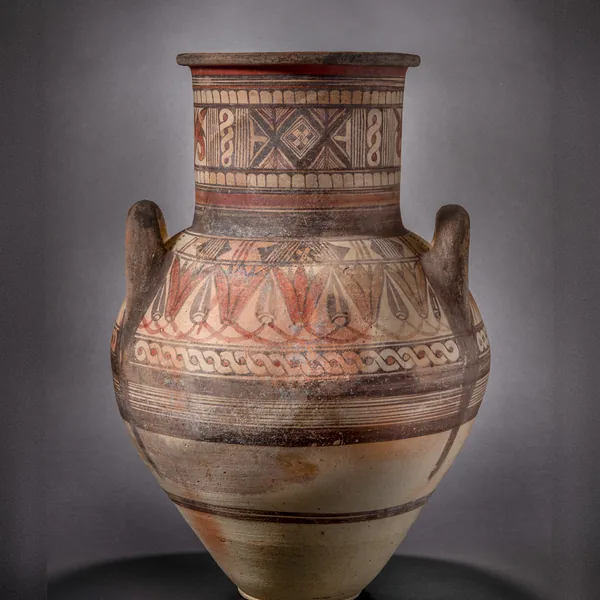
Bichrome IV Amphora with a Lotus-and-Bud Shoulder Frieze
Amphora
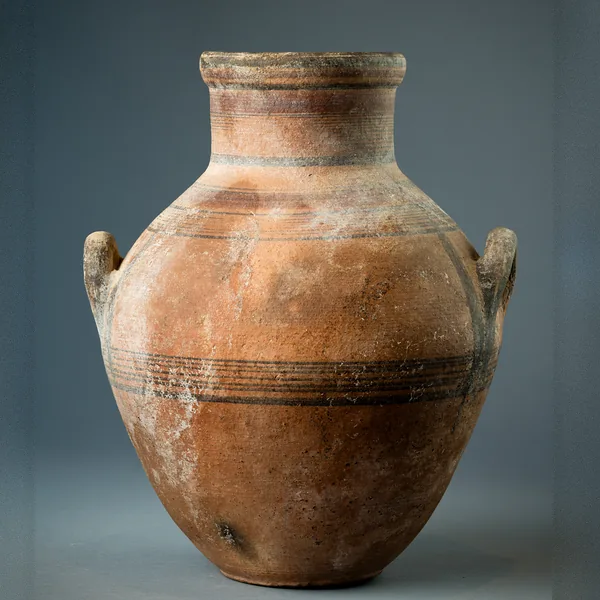
Bichrome IV Amphora with Shoulder Handles and Banded Decoration
Amphora
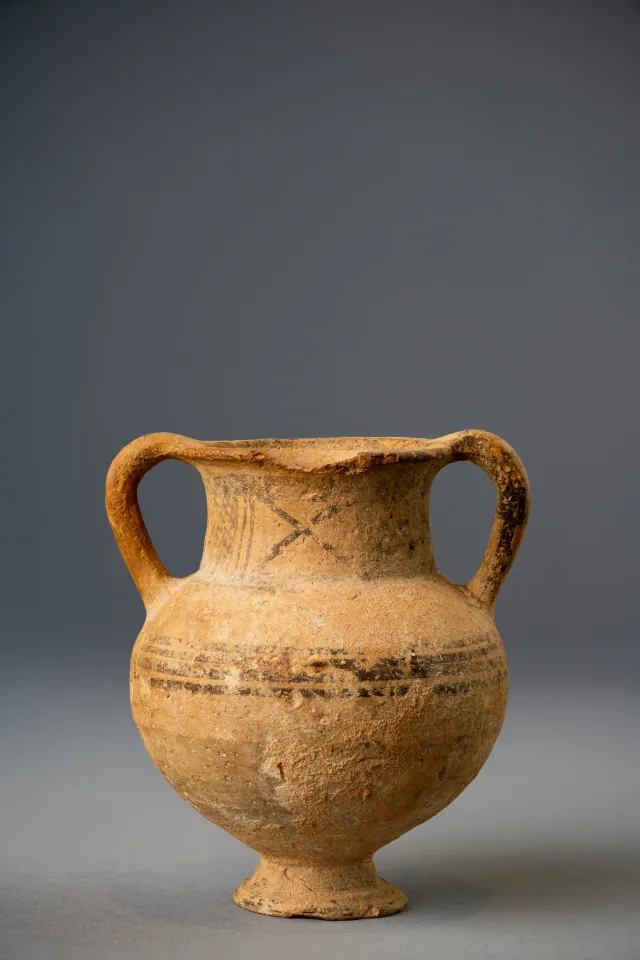
White Painted Amphoriskos on a Conical Foot
Amphora
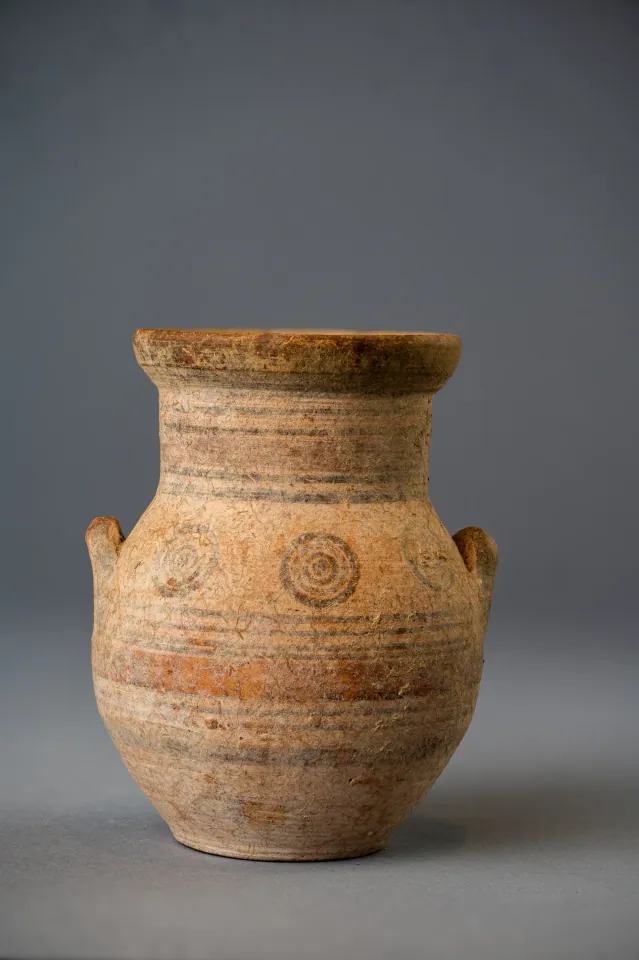
Bichrome IV Amphoriskos with Concentric Circles
Amphora
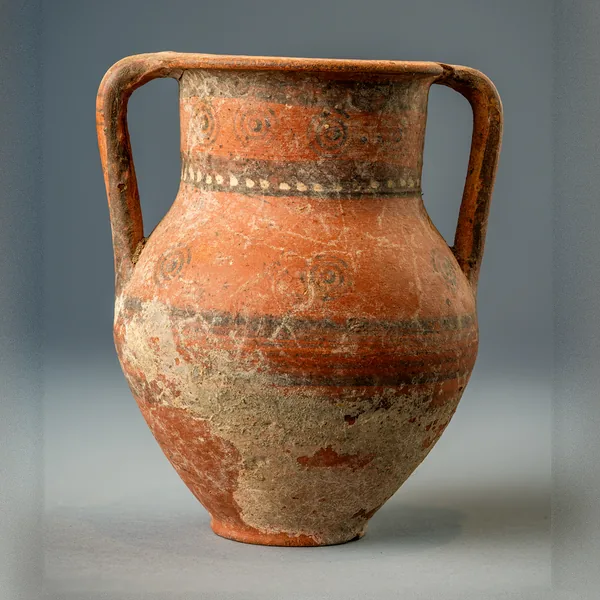
Bichrome Red Amphora with Concentric Circles and a Row of White Dots
Amphora
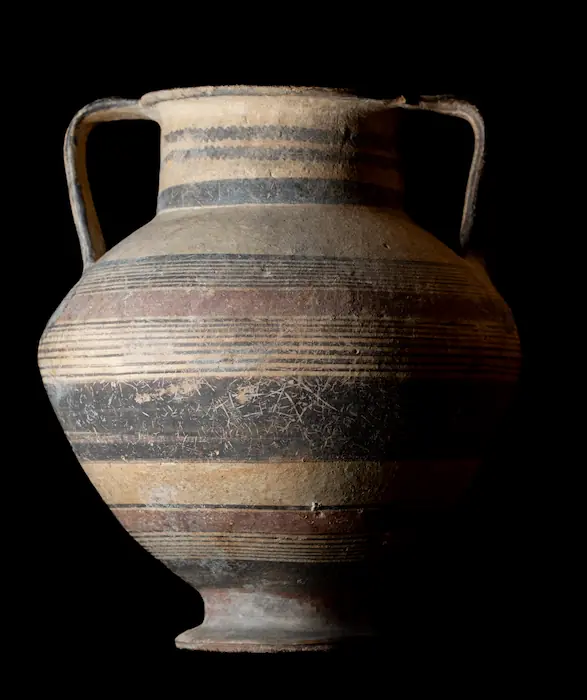
Bichrome Amphora on a Pedestal Foot with Wavy Lines on the Neck
Amphora
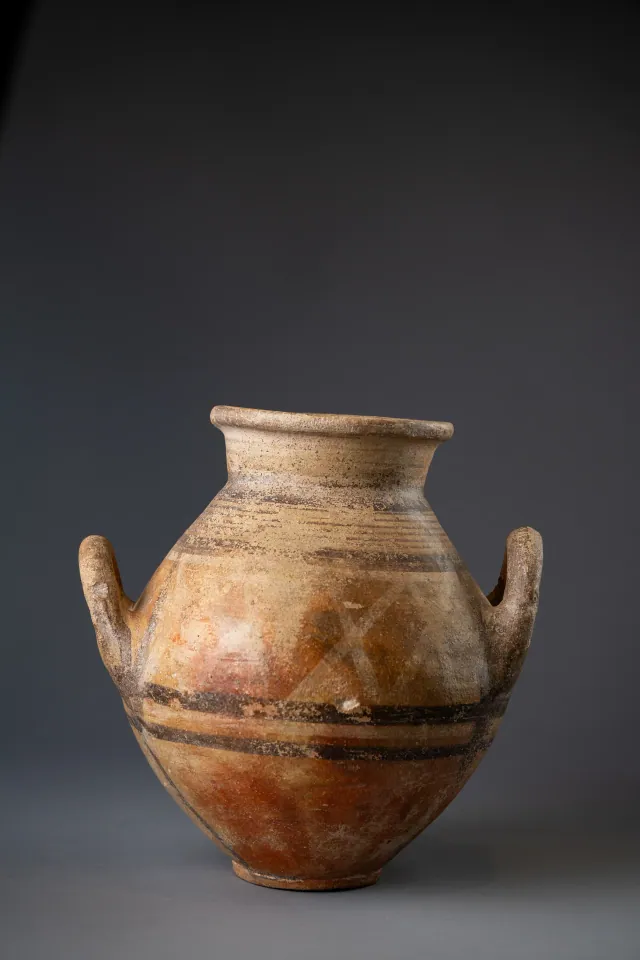
Red-Slipped Amphora with Pale Crosses on the Shoulder, probably Bichrome Red Ware
Amphora
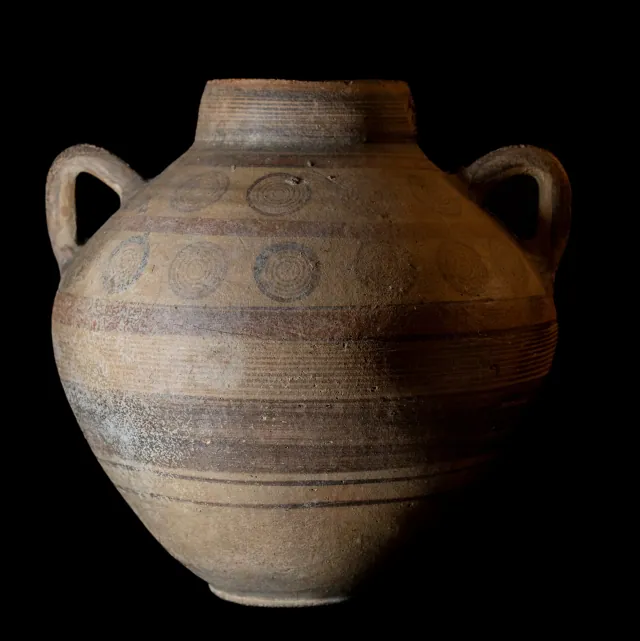
Globular Bichrome Amphora with Two Registers of Concentric Circles
Amphora
Found at the places discussed
Objects in our catalogue, in museum collections, recorded as found at these sites.


Background
Where to read more on this site before or after watching.
The site
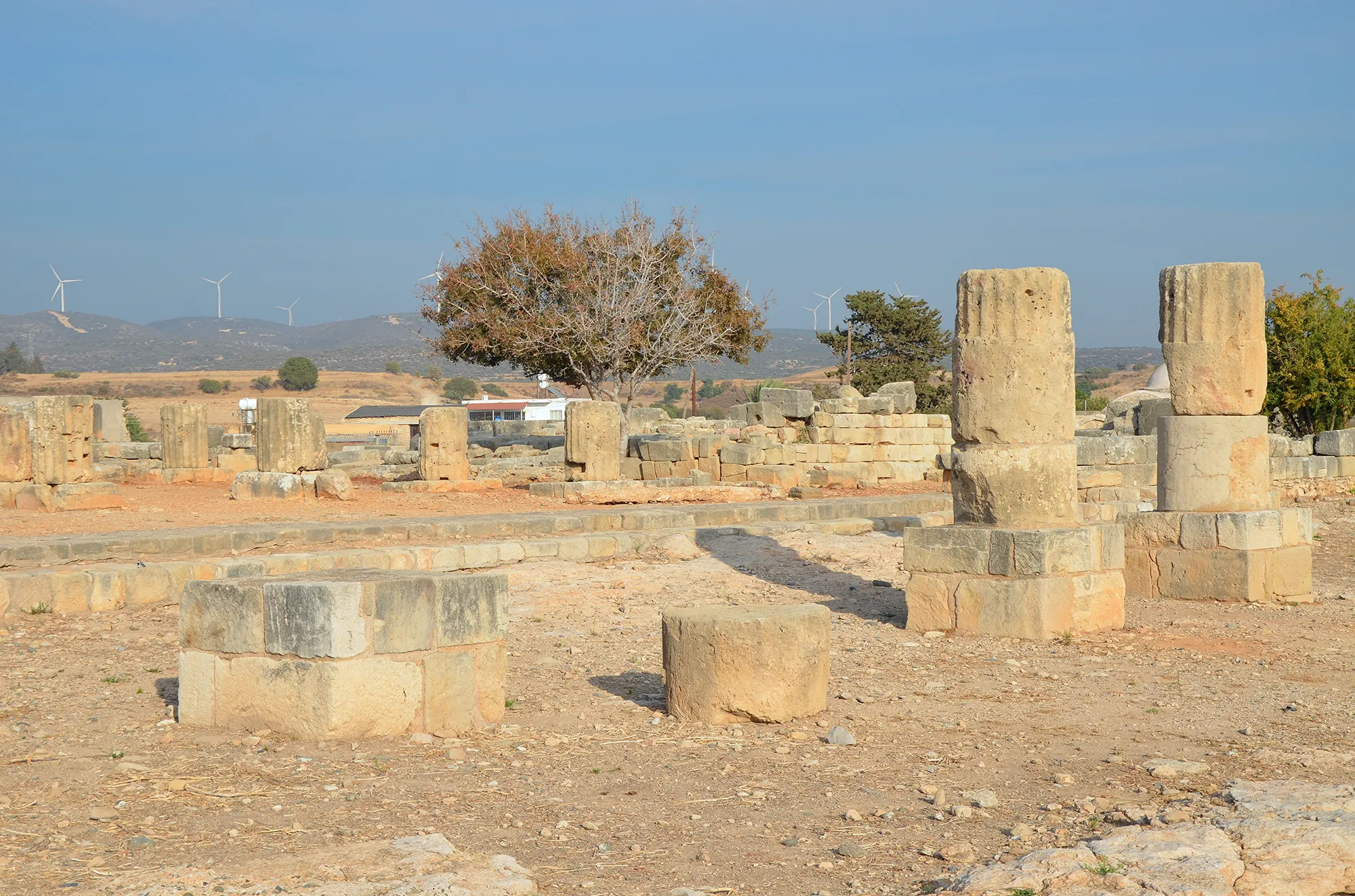
Palaepaphos (Kouklia)
Palaepaphos, Old Paphos, lies under and around the village of Kouklia in western Cyprus. Founded in the Middle Bronze Age, it was the only large town of the south-west until the early Hellenistic period, the seat of the kings of Paphos and the site of the sanctuary of the Paphian goddess, Aphrodite, worshipped here from about 1200 BC to the end of the 4th century AD.
In the compendium
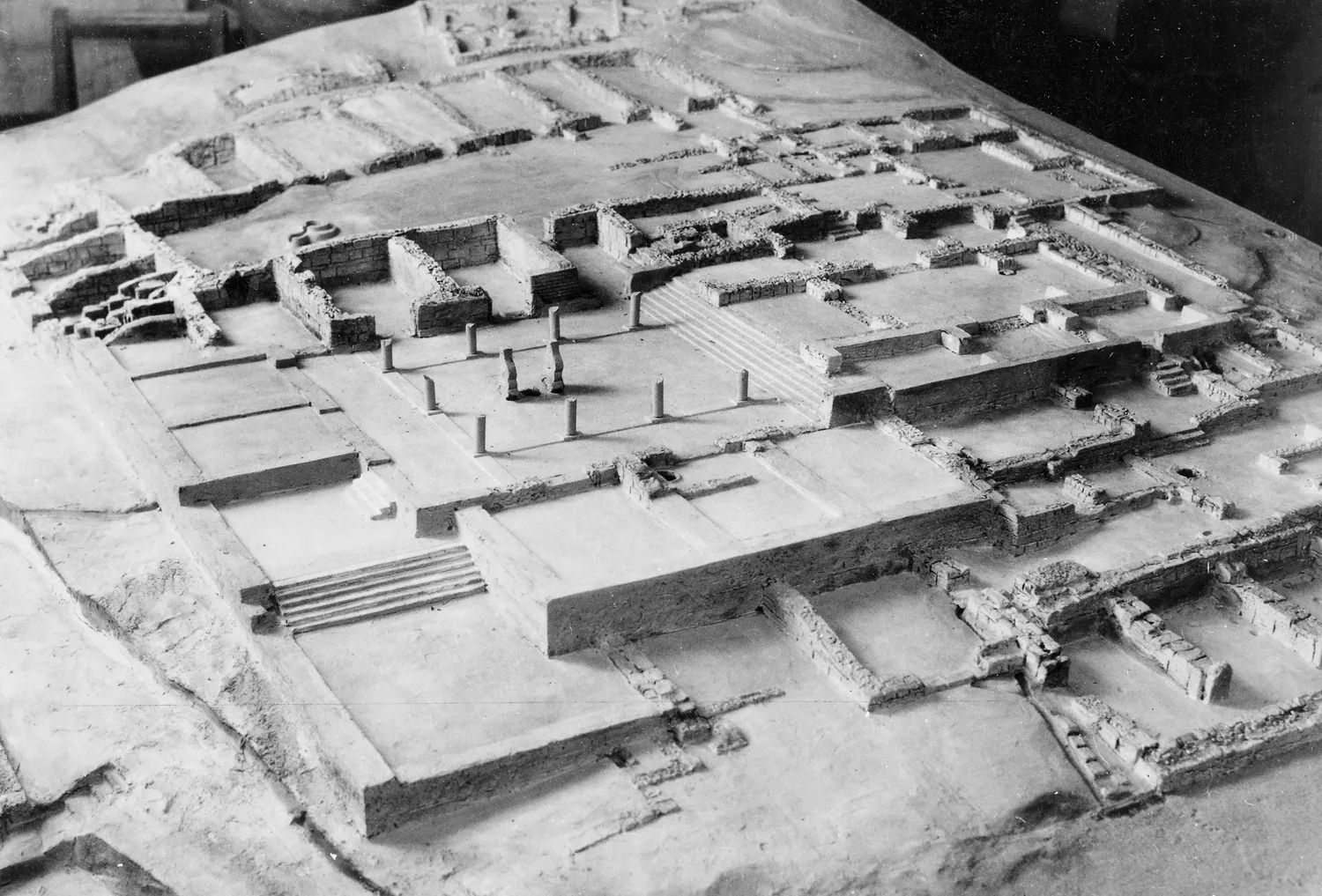
Iron Age Cities and Palaces
The capitals of the Iron Age kingdoms of Cyprus, their palaces at Vouni, Amathus, Idalion and Palaepaphos, their houses, and the volute and Hathor capitals of the period.
In the compendium
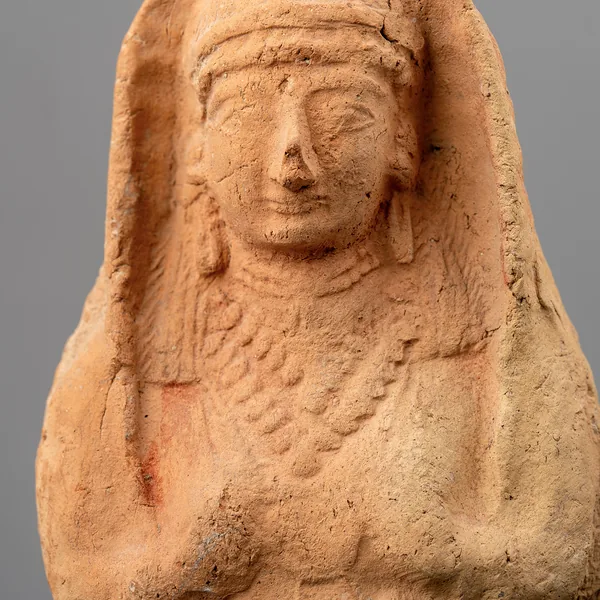
Iron Age Sanctuaries
The Cypriot Iron Age sanctuary was a walled open-air court with an altar, sacred trees and small roofed rooms; Greek-style temples arrived only under Rome.
In the compendium
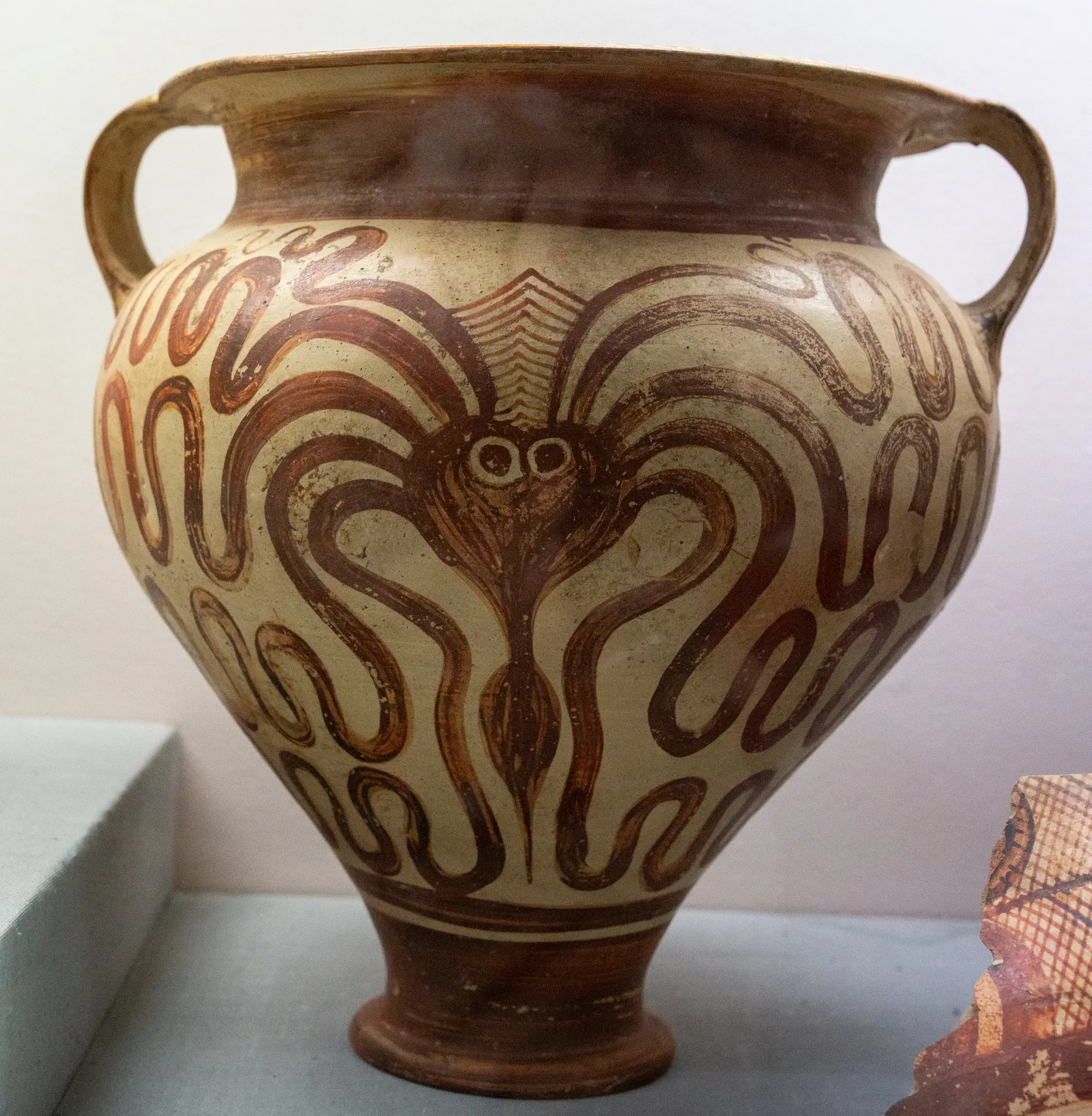
The Minoans
The palatial Bronze Age civilization of Crete, which took Cypriot copper and passed writing to Cyprus in the early Late Bronze Age.
Map of Cyprus
Places discussed in the talk
- Has a page on this site
- Other places
- Ground above 200, 500, 1,000 m