
Books·Brief
Bronze Age wells and pits at Hala Sultan Tekke were filled on purpose, new book argues
Teresa Bürge's study of more than 60 features dug in 2014–2022 finds figurines, seals and imports from Egypt to Sardinia in fills unlike household refuse.



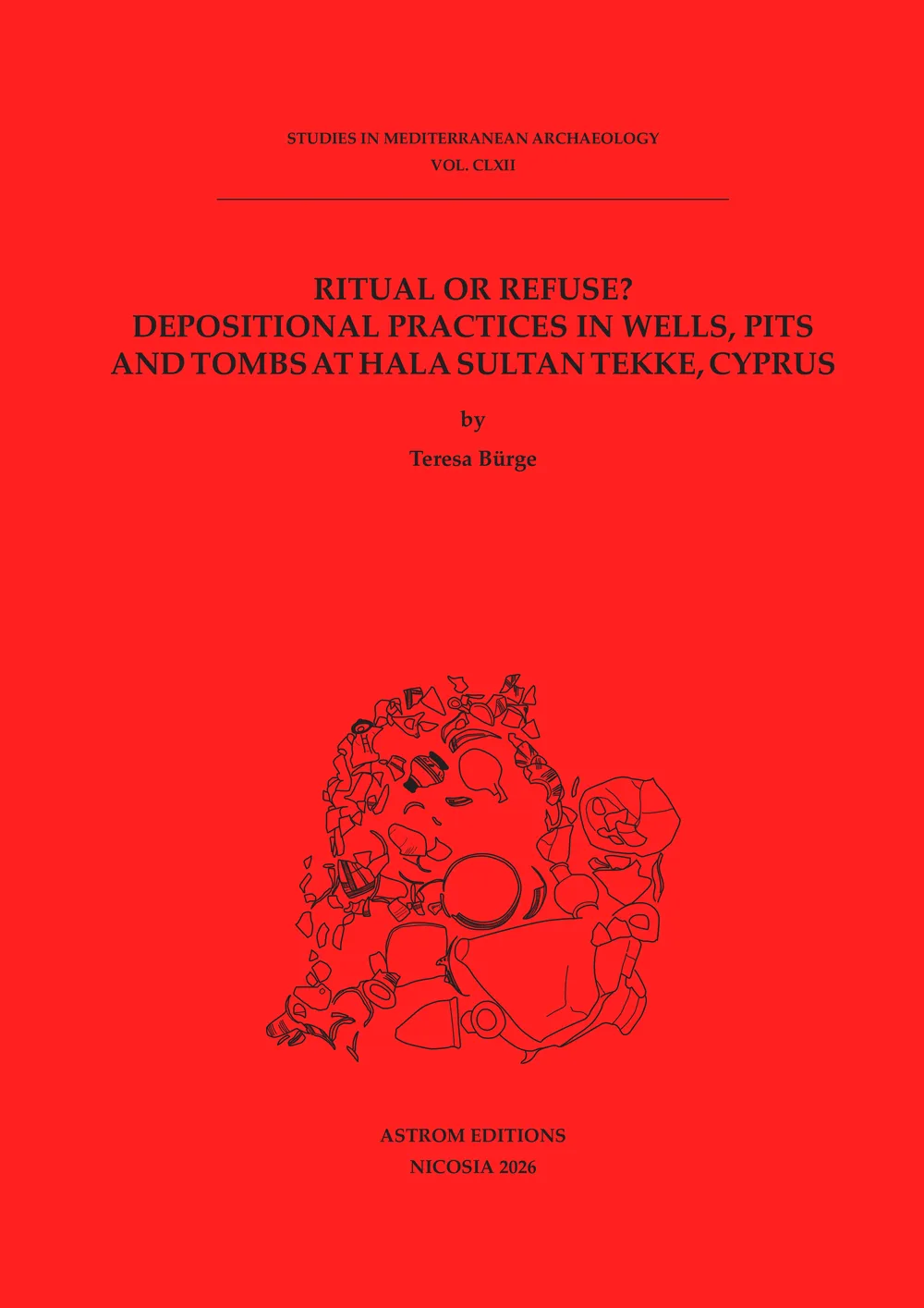
A new monograph by Teresa Bürge reads the contents of more than 60 pits, wells and tombs on the edge of the Late Bronze Age city at Hala Sultan Tekke, near Larnaca, as objects put in the ground on purpose. Ritual or Refuse? Depositional Practices in Wells, Pits and Tombs at Hala Sultan Tekke, Cyprus is volume M162 of Studies in Mediterranean Archaeology (SIMA), issued with a 2026 date by Åström Editions in Nicosia.
What the book covers
The fills, Bürge finds, differ clearly from what a house or a workshop throws away: there is pottery in bulk, along with clay figurines, seals, textile tools, bronze and stone objects, animal bones and burnt plant remains.
Swedish teams dug them between 2014 and 2022 on unbuilt ground just outside the crowded town centre; besides 21 wells and 16 pits or shafts of unclear purpose, they include numerous tombs. Across 585 pages the book follows how each deposit formed, how its objects were used and handed on, when they date, and which came from abroad: Egypt, the Aegean, the Levant, Anatolia and Sardinia are all represented. A final part looks again at similar deposits elsewhere in Cyprus. The book is in English, under a CC BY-NC 4.0 licence (ISBN 978-9925-8236-3-5; DOI 10.68546/0mae-099g).
The excavations behind it
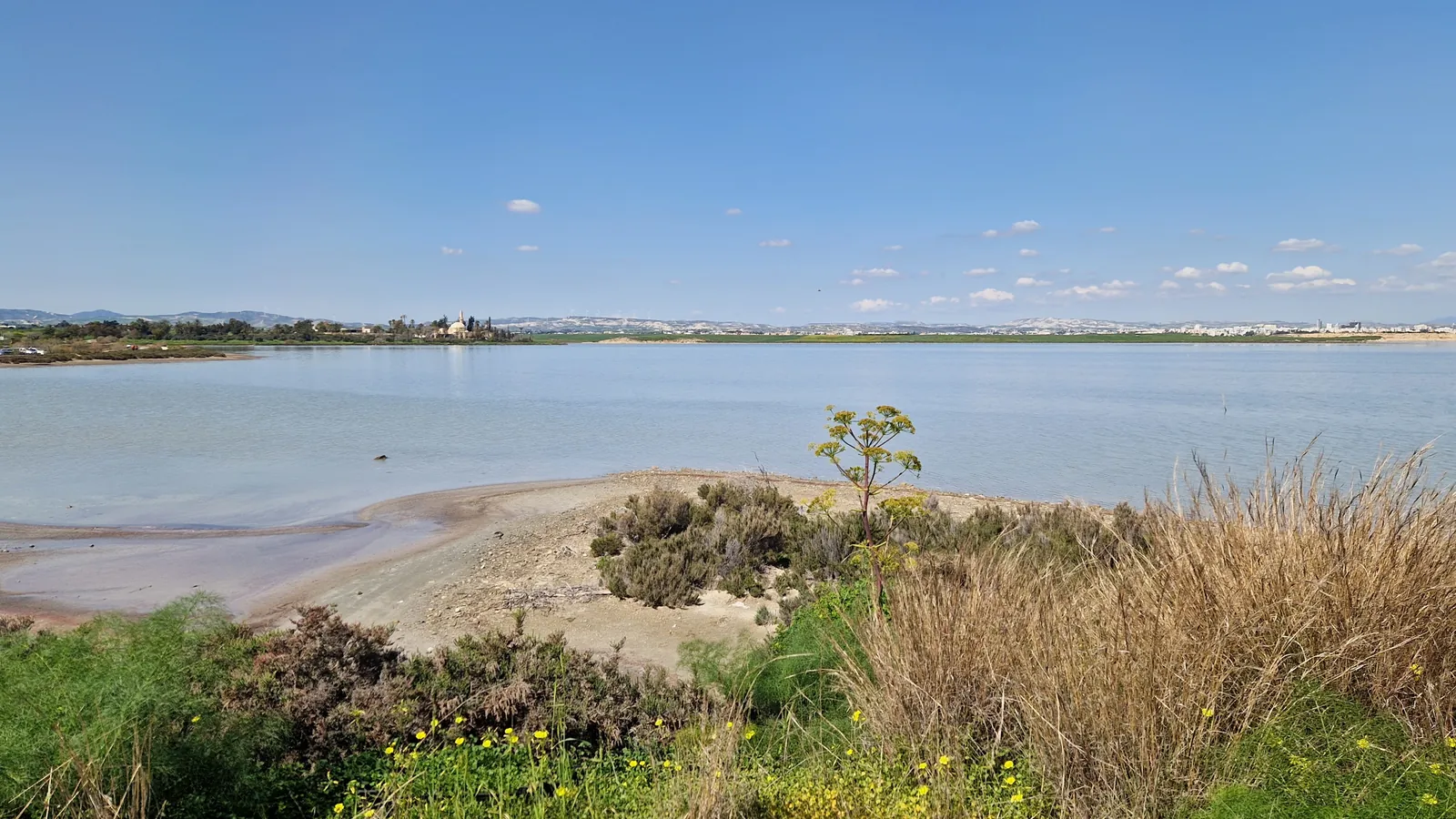
Bürge is the pottery specialist of the New Swedish Cyprus Expedition, directed since 2010 by Peter M. Fischer. She was its assisting field director from 2012 [1, p. 163] and has been co-director since 2019. The town was lived in from around 1600 BCE, in the Middle Cypriot III to Late Cypriot IA period, and flourished mainly in the 13th and 12th centuries BCE [1, p. 161], the later part of the Late Bronze Age. Its harbour turned into a lagoon cut off from the sea at the end of the 2nd millennium BCE and is now the Larnaca Salt Lake [1, p. 163].
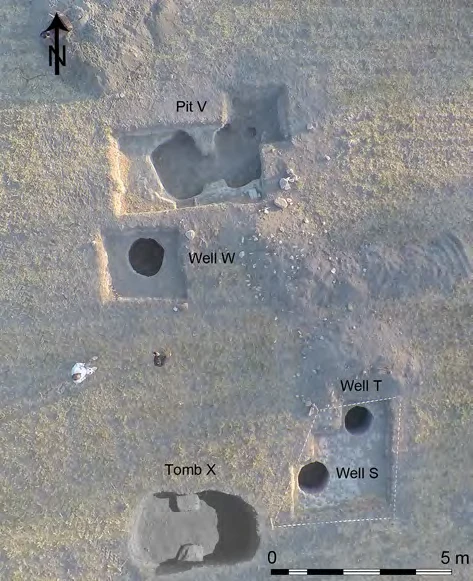
The pits lie in Area A, a plateau about 600 m east of City Quarter 1, opposite the mosque. Georadar and magnetometer surveys there picked out more than 80 roughly circular anomalies. Two of the seven opened in 2016, Tomb X and Offering Pit V, held objects from the Aegean, the Levant, Egypt and possibly Anatolia, and both are older than the town quarters dug earlier [1, p. 161].
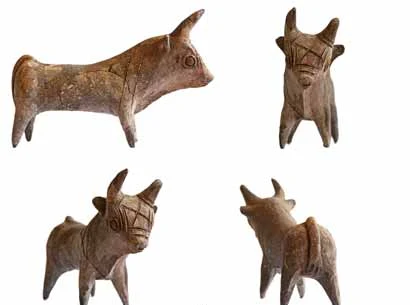
The first two anomalies opened, in 2014, were Pit B and Well C. Well C had dried out and was later reused: under a layer of ash lay a complete equid skeleton with a haematite cylinder seal, and about 0.7 m lower a complete Base-ring figurine of a bull [2, pp. 46–47].
Earlier work at the site
John Myres opened the first recorded trenches in 1894, west of the lake, and found only stray sherds [1, p. 161]. Henry B. Walters dug near the mosque for the British Museum in late 1897, finding tombs already partly looted; J. W. Crowfoot reopened 50–60 robbed tombs in 1898 [1, pp. 161–162]. In 1968 Vassos Karageorghis excavated two rich tombs west of the mosque that erosion had exposed, and in the 1970s Paul Åström cut test trenches in Area A without finding tombs [1, p. 162].
Åström's Gothenburg mission worked in the town from 1971 to 1987. In its first season it emptied a well holding copper slag, charcoal, bones and pottery of about 1200 BCE. Fischer, his former student, came back to the site in 2010, two years after Åström's death [1, p. 163].
Original source
On ancientcyprus.com
- Excavations
- Hala Sultan Tekke: the New Swedish Cyprus Expedition (2010-), Hala Sultan Tekke: Myres's trench (1894), Hala Sultan Tekke: the British Museum excavations (1897–1898), Hala Sultan Tekke: Department rescue of two tombs (1968), Hala Sultan Tekke: the Swedish Mission of Gothenburg University (1971–1987)
- People
- Teresa Bürge, Peter M. Fischer, Paul Åström, Vassos Karageorghis, Henry Beauchamp Walters, John Linton Myres
- Institutions
- Paul Åströms Förlag
- Periods
- Middle Bronze Age, Late Bronze Age
References
- 1.Fischer, P. M. and Bürge, T. (2017). Tombs and Offering Pits at the Late Bronze Age Metropolis of Hala Sultan Tekke, Cyprus. Bulletin of the American Schools of Oriental Research 377, 161–218.
- 2.Fischer, P. M. and Bürge, T. (2015). The New Swedish Cyprus Expedition 2014. Excavations at Hala Sultan Tekke: Preliminary results. Opuscula 8, 27–79.
More in Books
- Children painted some 'crude' Bronze Age pots at Kalopsidha, new book on Cypriot ceramics argues
- New Tombs of the Kings volume centres on the Paphos tomb linked to Ptolemy, king of Cyprus
- This Week in Cypriot Archaeology: 7–13 September 2026
- Cyprus's first Director of Antiquities was sacked within a year; his memoir is now in print