
Conference paper·Archaeological Research Unit - University of Cyprus·2017·In Greek
Study Day on Book 23 of the Iliad: Cremation Burials and Homeric Heirlooms in Cyprus
ΗΜΕΡΙΔΑ ΑΦΙΕΡΩΜΕΝΗ ΣΤΗΝ 23 ΡΑΨΩΔΙΑ ΤΗΣ ΙΛΙΑΔΑΣ
Vassos Karageorghis, Efstathios Raptou and George Papasavvas
Chapters
About the video
This second part of a Greek-language study day on Book 23 of the Iliad pairs a dramatic reading and archaeological commentary by Vassos Karageorghis with two papers by Efstathios Raptou and George Papasavvas comparing Homeric epic with finds from Cyprus and the Aegean.
The recording opens with a recitation in Modern Greek translation of the chariot race at the funeral games of Patroclus. Vassos Karageorghis comments on two objects named in the passage: the bronze corselet Achilles awards to Eumelus and the herald's sceptre placed in Menelaus's hand. He compares the corselet with the one Cinyras gave Agamemnon, an 8th-century BC bronze warrior figurine from Tomb 79 at Salamis, and terracotta warrior figurines excavated in 1891 at Toumba near Salamis. For the sceptre, he discusses five or six 11th to 10th-century BC cylindrical bronze objects from tombs at Palaepaphos, Amathus, and Lefkandi, citing Nota Kourou's view that these were emblems of authority over sanctuaries or the copper trade, distinct from the royal sceptre of Kourion.
Efstathios Raptou (the Department of Antiquities) examines cremation in Homer and in Cyprus. After outlining the funerals of Patroclus, Hector, and Achilles and the spread of cremation from the end of the Late Bronze Age, he surveys Cypriot cremations from the 11th century BC to the Cypro-Archaic period. Beginning with Tombs 40 and 19 at Kaloriziki and Bamboula near Episkopi, he focuses on Palaepaphos, where recent excavations at Skales, Plakes, and Eliomylia have raised known cremations to around twenty. He presents Cypro-Geometric chamber tombs, small rock-cut niches such as Tomb 188 with a bronze helmet and sceptre, urns under stone cairns, and a newly identified Geometric cremation at Marion preserving mineralised linen cloth studied by Diana Wood Conroy. He also covers 9th-century and Archaic cauldron cremations at Salamis and Palaepaphos, bronze phialai inside urns, empty bronze amphorae in inhumation graves, Tomb 277 combining cremation in a louterion with an inhumed warrior and two sceptres, iron obeloi, and horse burials. Raptou argues that cremation arrived with Achaean populations rather than by diffusion alone.
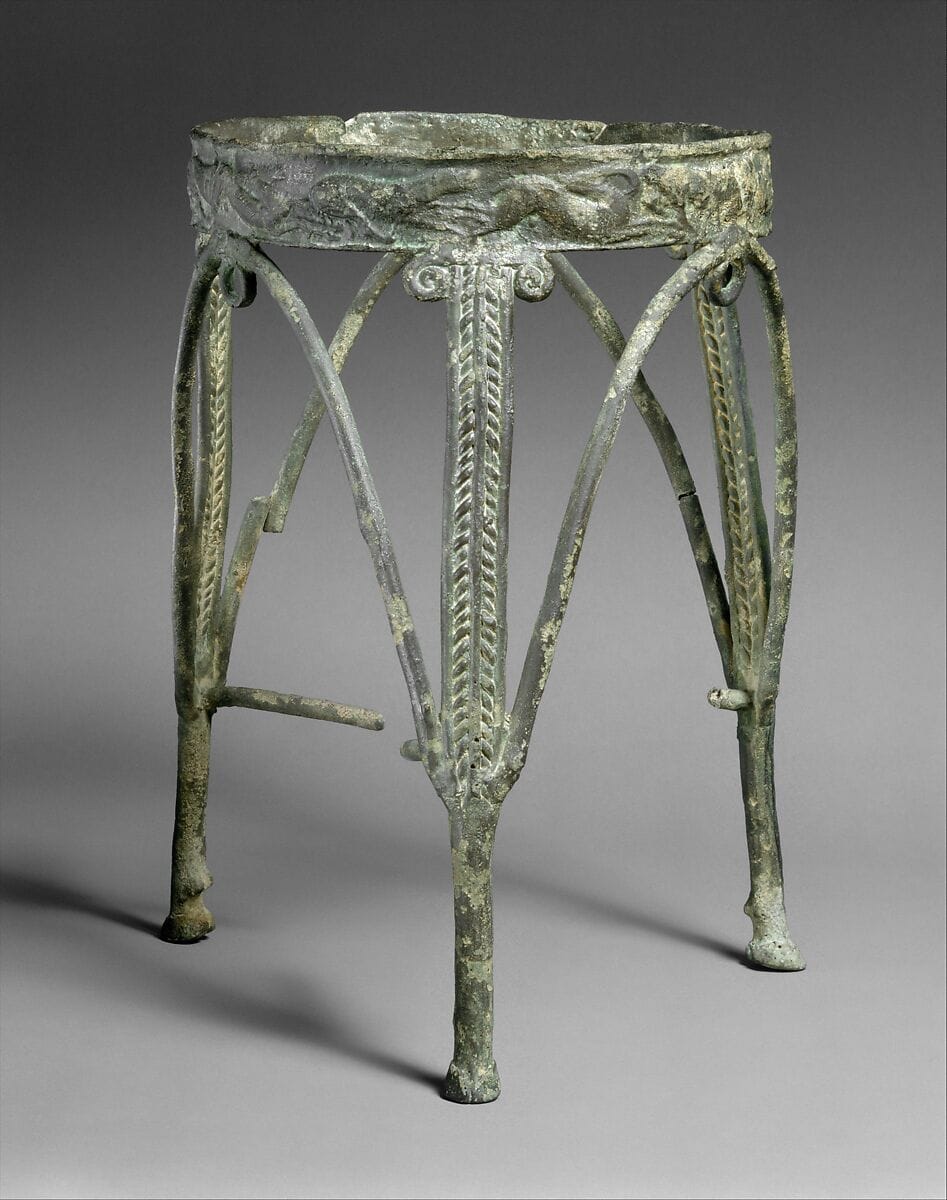
George Papasavvas addresses the biographies of people and objects through Homeric heirlooms (keimelia). Starting from the phiale Achilles gives Nestor and the c. 1000 BC Toumba burial at Lefkandi, where cremated bones wrapped in purple cloth lay inside a 13th or 12th-century BC Cypriot bronze amphoroid krater, he traces how keimelia functioned as vehicles of memory and aristocratic status, citing Agamemnon's sceptre, the Sidonian silver krater, and Meriones's boar's-tusk helmet. Turning to 11th and early 10th-century BC graves, he compares Cypriot bronze kraters from Kaloriziki Tomb 40, Palaepaphos-Skales, Lefkandi, and Pantanassa in Crete, alongside a Mycenaean boar's-tusk helmet buried with a Cypriot four-sided stand at Knossos.
In the closing discussion, Karageorghis asks why cremated bones were wrapped in double fat, and Papasavvas discusses the Kourion sceptre from Kaloriziki Tomb 40, looted before George McFadden located the tomb fifty years later.
From our collection
Pieces in the Drakopoulos collection of the kinds and periods this talk covers: Cypro-Geometric, Cypro-Archaic.
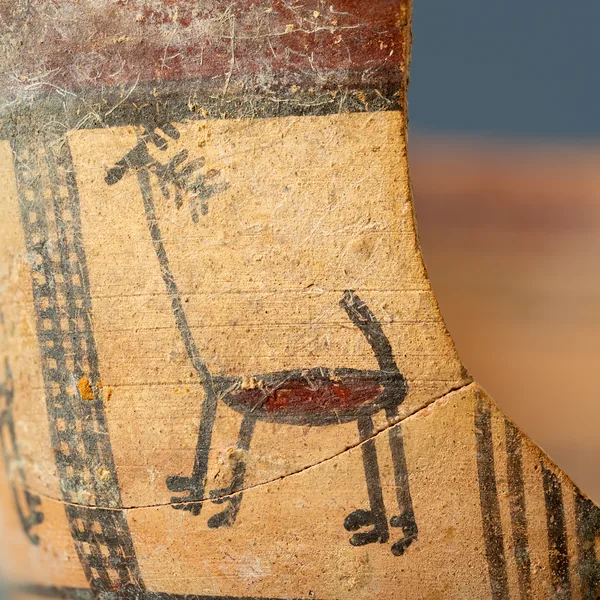
Bichrome Skyphos with Stags in Metopes
Cypro-Archaic
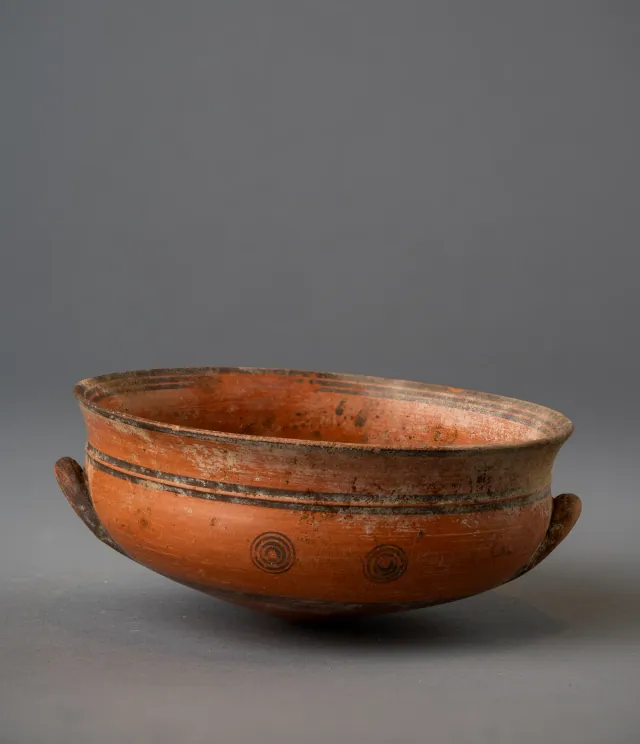
Black-on-Red Two-Handled Bowl with Raised Flaring Rim
Cypro-Archaic
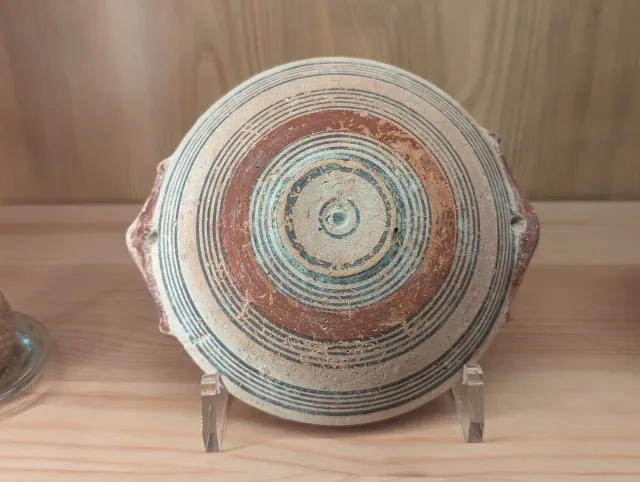
Bichrome IV Bowl with Red-Painted Pierced Lug Handles
Cypro-Archaic
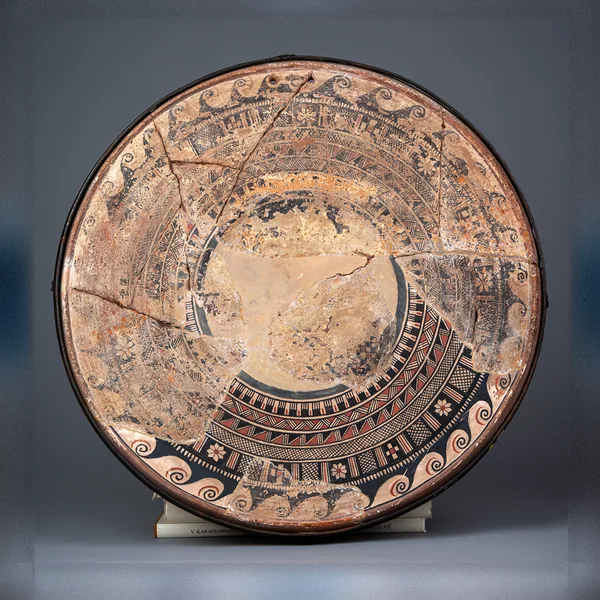
Large Bichrome Plate from Salamis with a Wave Band and Rosette Metopes
Cypro-Archaic
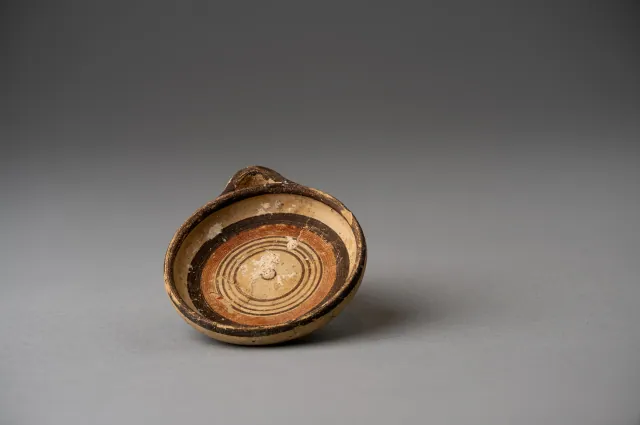
Miniature Bichrome Plate with Concentric Circles
Cypro-Archaic
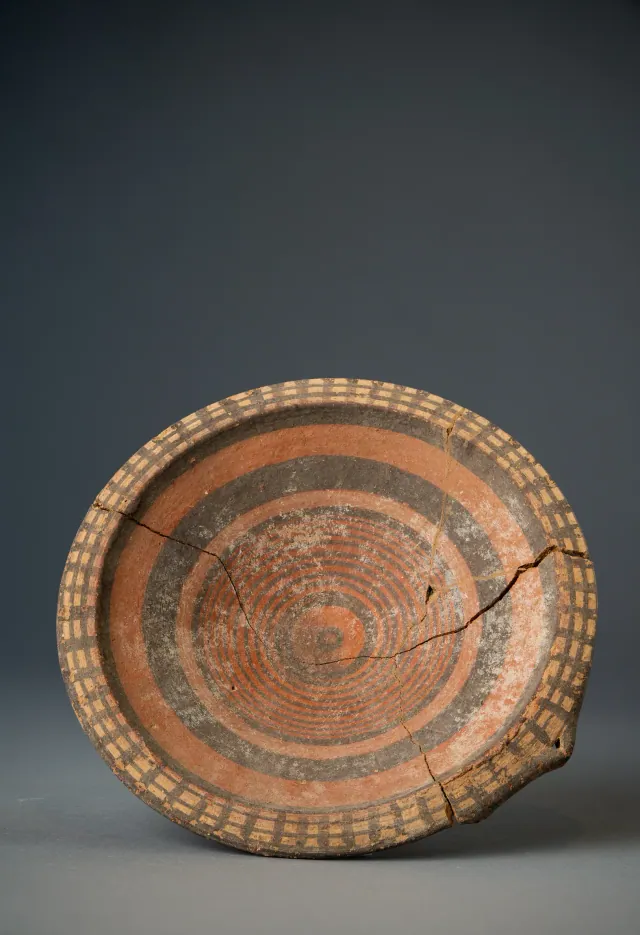
Black-on-Red Plate with Barred Rim and Concentric Circles
Cypro-Archaic
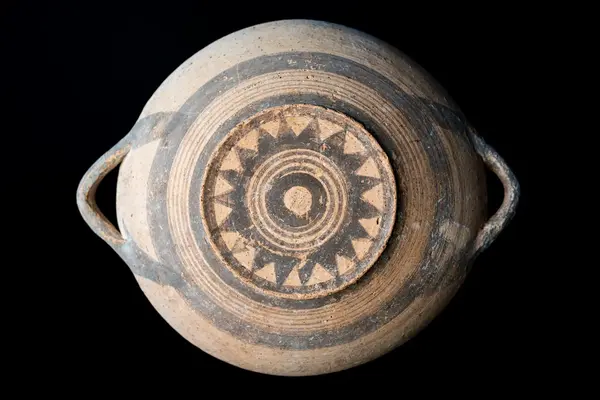
White Painted Plate with a Sawtooth Star on the Underside
Cypro-Geometric
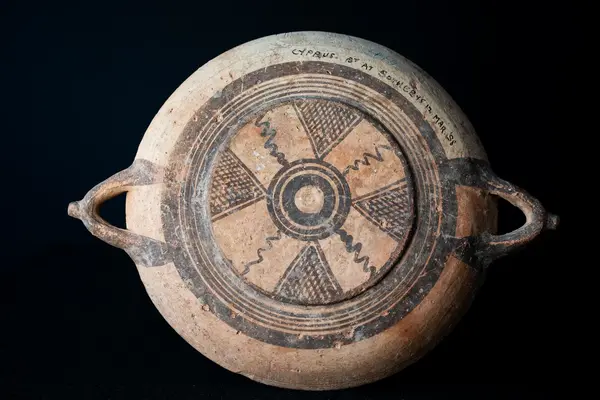
White Painted Plate with Latticed Triangles and Wavy Lines on the Underside
Cypro-Geometric
Found at the places discussed
Objects in our catalogue, in museum collections, recorded as found at these sites.
Background
Where to read more on this site before or after watching.
The site
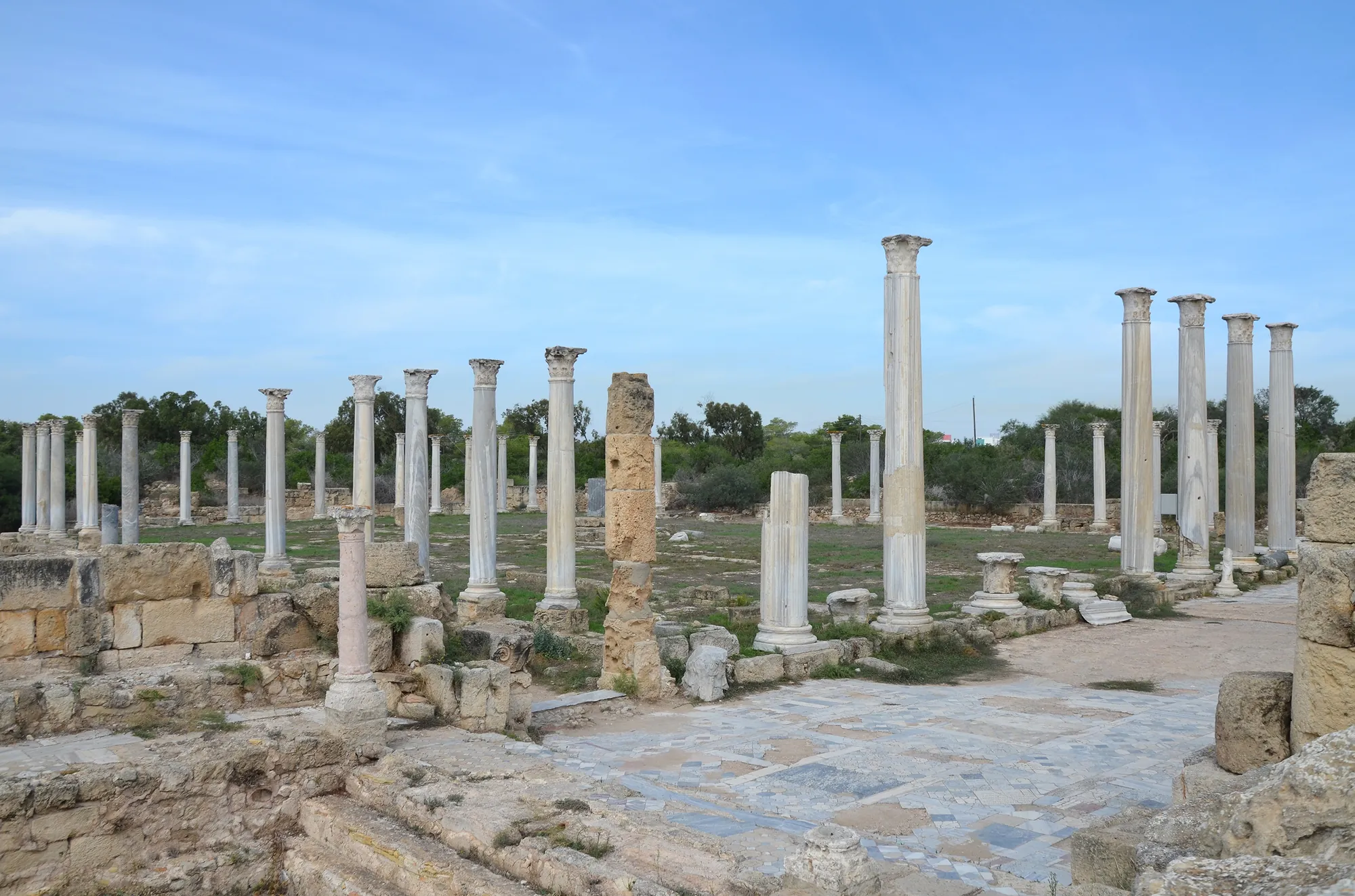
Salamis
A city on the east coast of Cyprus at the mouth of the Pedieos river, founded in the 11th century BC and one of the leading city-kingdoms of the island until 311/310 BC. It is known for the Royal Tombs with their sacrificed horses and chariots, for its Roman gymnasium, baths and theatre, and as Constantia, seat of the bishops of Cyprus from the 4th century AD. The site lies in the north of the island; the Cypriot and French excavations stopped in 1974.
In the compendium
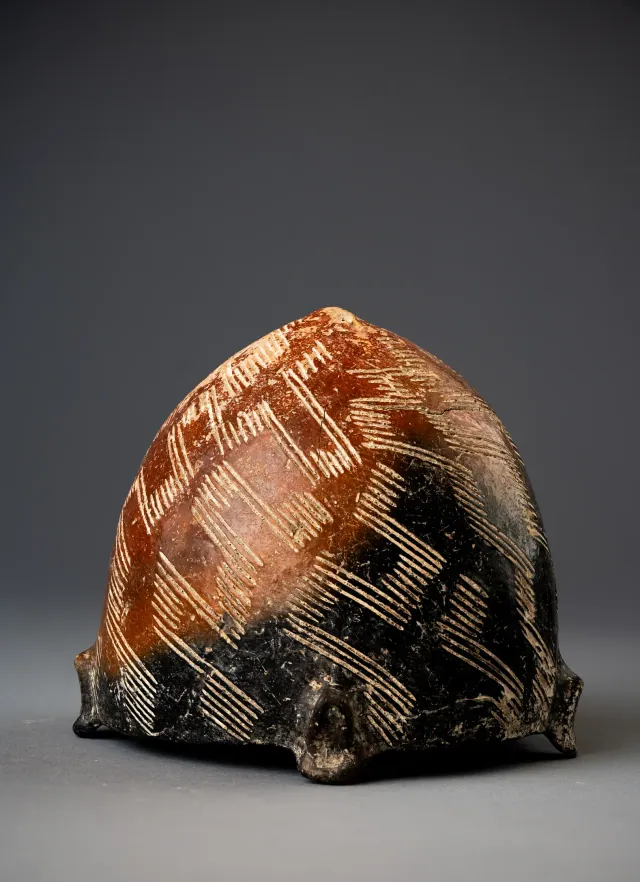
Bronze Age Chamber Tombs
Rock-cut chambers entered by a dromos and reopened for successive burials were the standard Cypriot grave from the Philia phase to the end of the Bronze Age.
In the compendium
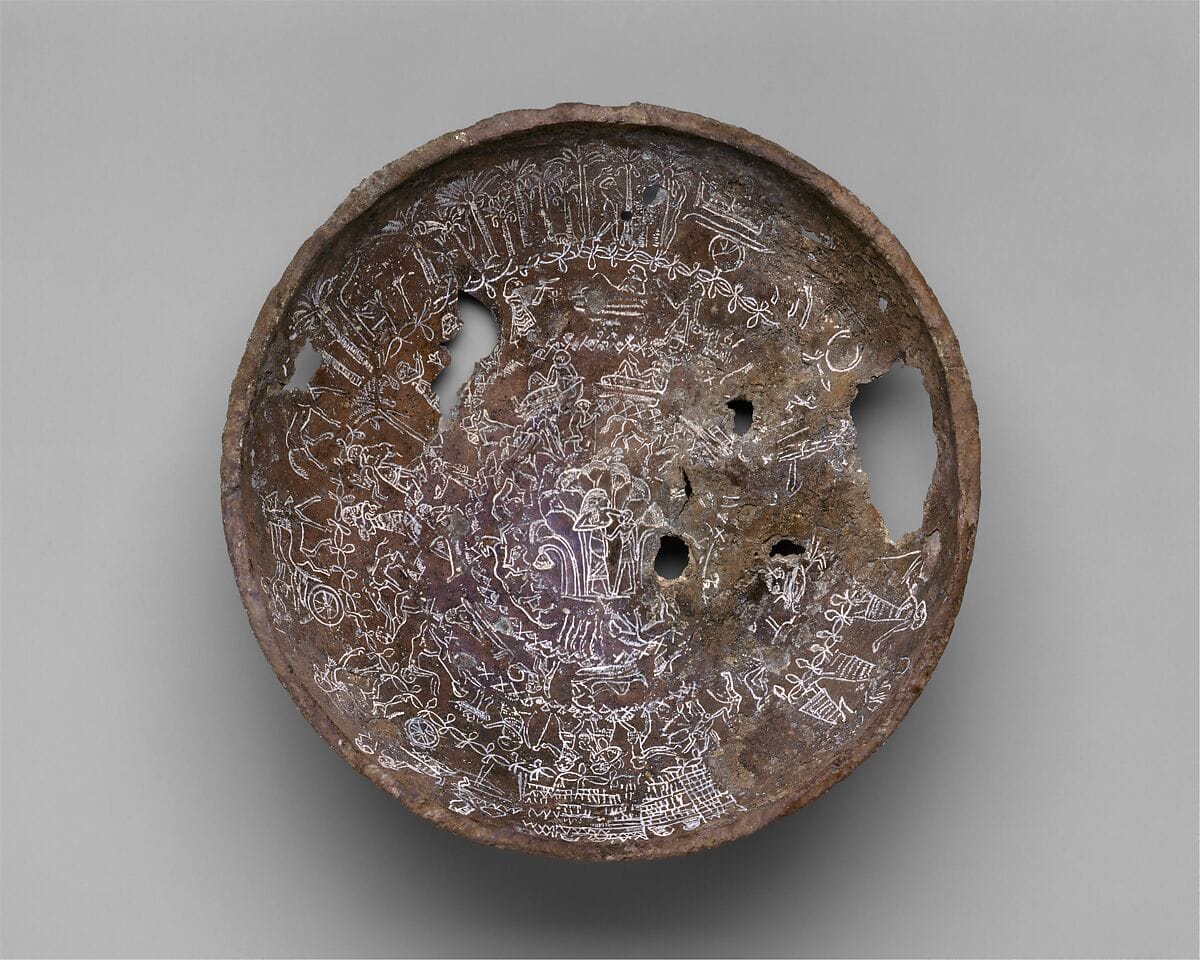
Metal Vessels
Bowls, cauldrons, jugs, cups, strainers and the bronze stands that carried them, made in Cyprus from the Late Bronze Age to the Cypro-Archaic period.
In the compendium
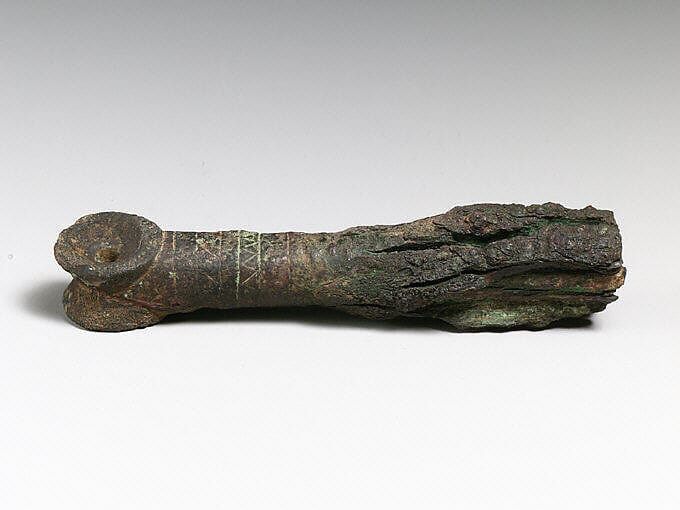
Gold, Silver, Tin, Arsenic and Iron in Ancient Cyprus
The metals other than copper used by Cypriot smiths from the Philia facies to the Hellenistic period, including arsenic, tin, gold, electrum, silver, lead and iron.
Map of Cyprus
Places discussed in the talk
- Has a page on this site
- Other places
- Ground above 200, 500, 1,000 m