
The Savant of Larnaca
Demetrios Pierides assembled the oldest private collection of antiquities on Cyprus to keep the island's past at home, and auctioned a thousand pieces at the Hôtel Drouot in Paris. In the Cyprus of his century, those were the same occupation.
Alexis Drakopoulos
June 11, 2026·History · Collecting · Archeology·15 min read


Share


Alexis Drakopoulos is a Greek Cypriot Machine Learning Engineer working in Financial Crimes. He is passionate about Archeology and making it accessible to everyone. About Me.
On 17 September 2019 the Paris auction house Artcurial sold a squat Bronze Age jar from Cyprus for 10,400 euros, nearly nine times its high estimate. The jar is Base-ring ware, a Cypriot fabric of the Late Bronze Age, in a pithoid shape that has no exact parallel. Glued to its body is a small handwritten label in the French of another century: ILE DE CHYPRE. FOUILLES DE M. PIÉRIDÈS. CH.-L. FROSSARD 1873 [1].
The label is a provenance in miniature: island of Cyprus; from the excavations of M. Piéridès; acquired by Charles-Louis Frossard, 1873. The surprise is the name in the middle. In Cyprus, Pierides means keeping things in. Demetrios Pierides of Larnaca (1811–1895) is remembered as the man who watched the island's tombs being emptied into the museums of Europe and decided to hold what he could at home: founder, from 1839, of the oldest private collection of antiquities on the island, enlarged by five generations of his family and still open to visitors in the family house. The family's own catalogue describes a nineteenth century in which "a large portion of the island's cultural property was lost," and credits Pierides and "several other enlightened Cypriots" with having "saved some of these antiquities for the country" [2].
And yet. On 10 February 1873, at the Hôtel Drouot in Paris, an auction opened under the title Antiquités chypriotes… provenant des fouilles faites dans l'île de Chypre par M. Piéridès: Cypriot antiquities from the excavations made on the island of Cyprus by Mr Pierides. There were 261 lots, around a thousand pieces in all: glass, gold jewellery, vases, terracottas. The seller was the same Demetrios Pierides. Somewhere among the buyers was Frossard, a Protestant pastor and antiquarian from the south of France, who carried off a jar and labelled it [1].
Both facts are true, and neither cancels the other. Between them lies the whole economy of nineteenth-century Cyprus, which sent the island's past out into the world and, in the same generation, often through the same hands, began to keep some of it at home.
The orphan of 1821
Demetrios was born in Larnaca in 1811, the eldest son of Pierakis Corella, dragoman, or official interpreter, of the Venetian consulate. The Corellas had come from Zakynthos in 1772 and supplied the consulates with dragomans for three generations; in the Ottoman Levant, consular service was the career of the Greek commercial elite [3].
On 10 July 1821, in reprisal for the outbreak of the Greek War of Independence, the Ottoman authorities executed Archbishop Kyprianos and the leading Greek men of Cyprus. Pierakis Corella was beheaded among them. His eldest son was ten. The family history, written a century and a half later by a great-great-grandson, says simply that "Demetrios' love for his country was inspired by the heroic death of his father" [2].
Within a year or two the boy and his brother were in London, taken there under the protection of the missionary Joseph Wolff. He was schooled by the Central British and Foreign School Society, taught Greek to the Duke of Sutherland, and was appointed by Ioannis Kapodistrias, the first governor of independent Greece, to teach English on the island of Syros. The three sons of the executed dragoman dropped the Italianate Corella and took a new surname from their father's first name: Pierides [3].
In 1839, aged twenty-eight, Demetrios returned to Larnaca to take over the family business, and that is the year the family has always counted as the founding of the collection. For the rest of the century he was a banker, a consular officer (nominated British vice-consul in 1849, though the appointment was annulled because, as a rayah, a non-Muslim Ottoman subject, he was barred from the post), a companion of Captain Thomas Graves on the first accurate survey of the island, a legislator under the British, and, in every hour left over, an antiquarian [1][2][3].
Twenty pounds for the Sargon stele
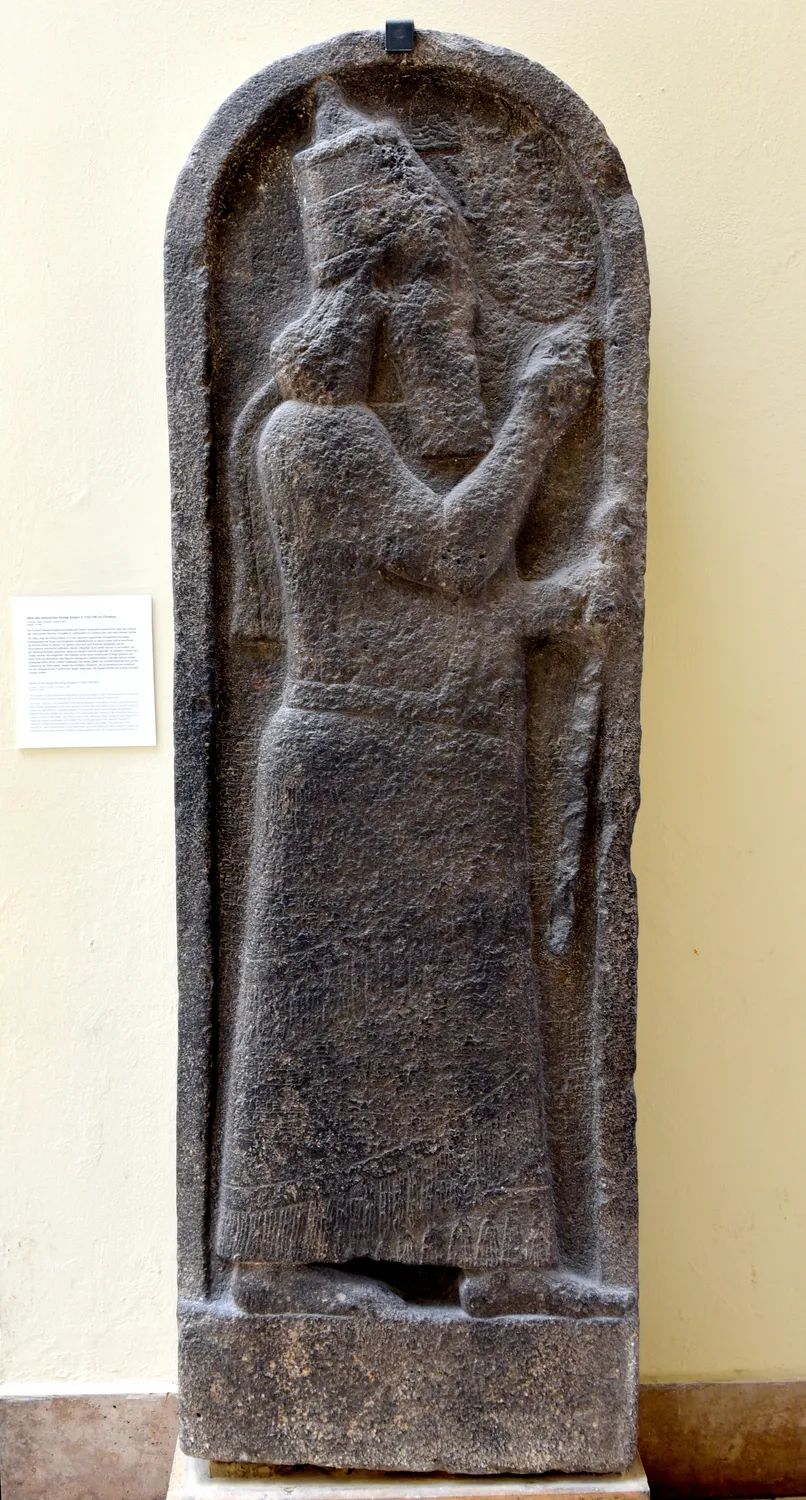
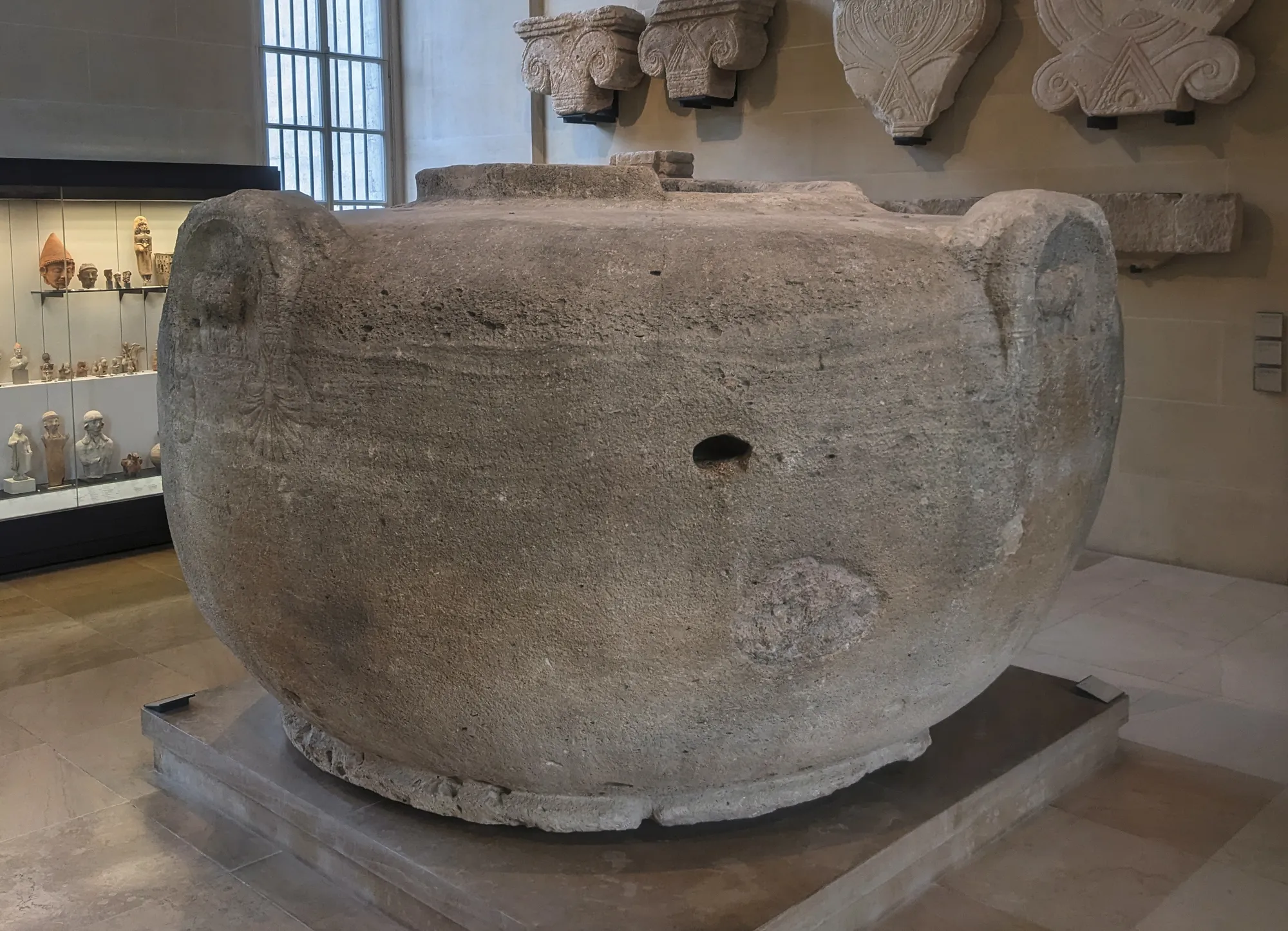
The Cyprus he returned to had no museum, no antiquities law, and an apparently bottomless supply. In 1845 a stele of the Assyrian king Sargon II came out of the ground at Kition, on the edge of Larnaca; the British Museum offered twenty pounds for it, Berlin offered fifty and took it. Around 1850 the Idalion bronze tablet, a long inscription in the island's own script, was bought for the Duc de Luynes, whose study of it in 1852 founded Cypriot epigraphy. In 1865 the great stone vase of Amathus was hauled off to the Louvre. The diggers were mostly peasants, and the sources are blunt about why: under crushing taxation, selling what came out of a tomb was "a matter of survival for the local folk." The buyers were mostly consuls, who alone had the standing, the shipping connections and the diplomatic cover to dig and export [4].
The American consul outdid them all. Luigi Palma di Cesnola, in a decade of digging, took some ten thousand objects out of the island, shipped from 1873 to the new Metropolitan Museum of Art in New York; the Cypriot scholar Sakellarios recorded the price, 320,000 drachmas [4].
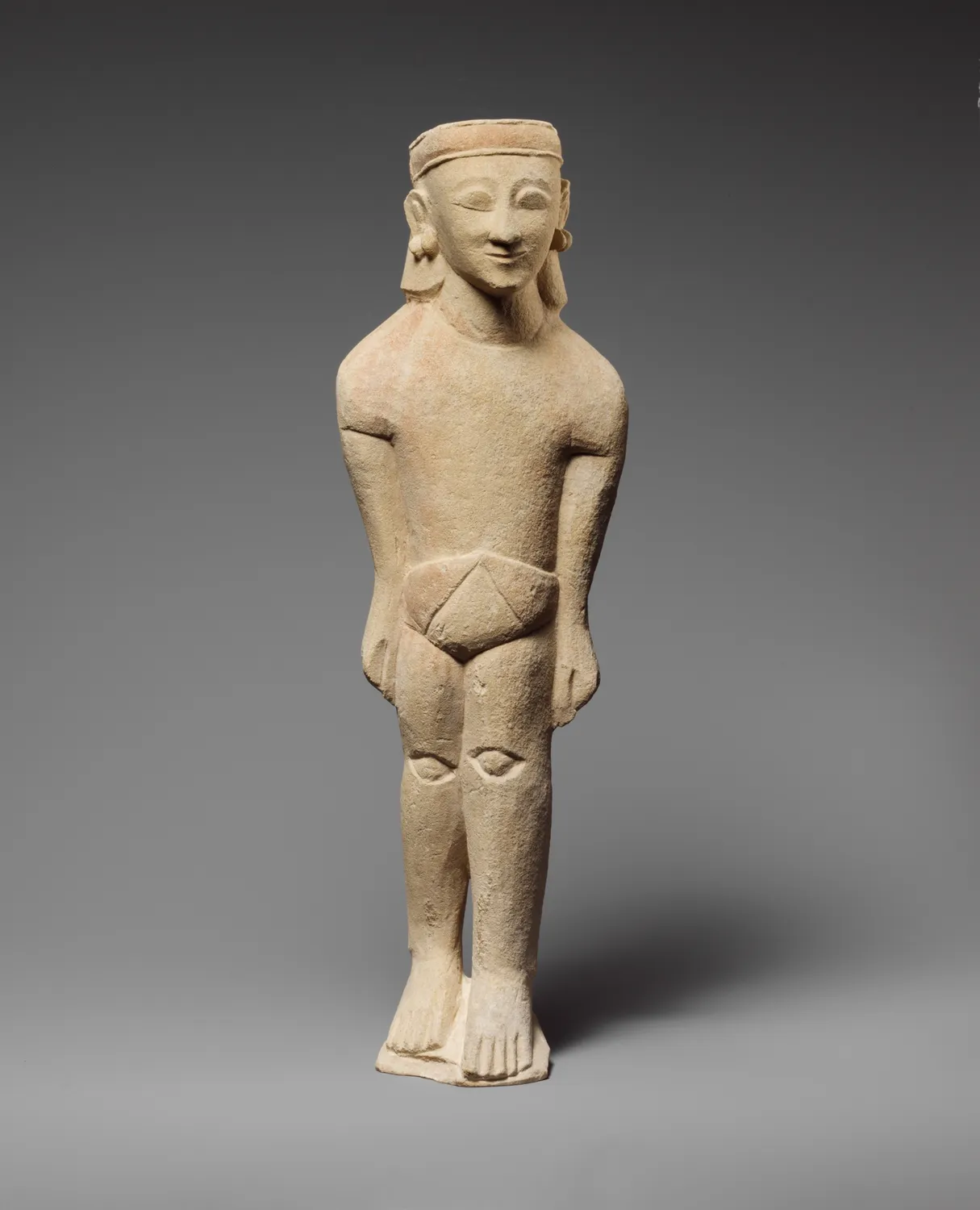
Plunder is one name for what happened in those decades, and not the wrong one. It is also the reason ancient Cyprus can be seen anywhere outside Cyprus. The consular collections became the Cypriot rooms of the Louvre, the British Museum, Berlin and the Metropolitan. The sale rooms moved what the museums declined: Sotheby's auctioned two batches of Cesnola's material in London in 1871, and between 1883 and 1892 some fourteen thousand pieces excavated by his brother Alexander with Edwin Lawrence were dispersed in four further sales. The catalogues talked like curators, promising that the sale would benefit "Museum, Antiquaries, Artists, Collectors" and "direct public attention to the desirability of further exploration in Cyprus." The buyers ranged from General Pitt Rivers to provincial collectors whose Cypriot pots were still surfacing in the municipal museums of Hull and Bradford half a century later [7].
The nineteenth century had a single word for the men who dug, studied, kept and sold all this, and saw no strain in the combination: antiquarian.
Le Savant Grec
Pierides was the island's own master of the type. His house in Larnaca worked as Cyprus's unofficial museum and reading room: villagers brought their finds there, along with the circumstances of the finding, and every scholar and consul who passed through came to him for dates, readings and provenances. Max Ohnefalsch-Richter, the German excavator, called him le Savant Grec, the Greek Scholar. Ieronymos Peristianis, the island's historian, ranked him in 1922 as "the most prominent scholar in Cyprus in the 19th century... the teacher and guide of all the Europeans who visited Cyprus in the archaeology and history of the island" [2][10].
The Europeans agreed. Robert Hamilton Lang, the British consul who worked beside Pierides at the Imperial Ottoman Bank, arrived knowing nothing of antiquities and left a convert: "I was thrown, however, much into intercourse with a very learned local antiquarian, Mr Demetrius Pierides, and by degrees began to take an interest in his absorbing pastime, and to listen with increasing attention to his animated description of some coin, over 2000 years old which he had picked up, or some inscription in Cypriote characters which he had unearthed" [4]. Georges Perrot, the French historian of ancient art, wrote in 1878: "We can never forget the services offered to us by a Greek from Larnaca, Mr Demetrios Pierides. He salvaged and published many inscriptions, Phoenician, Cypriot and Greek; but it was in the field of numismatics where he thrived" [4].
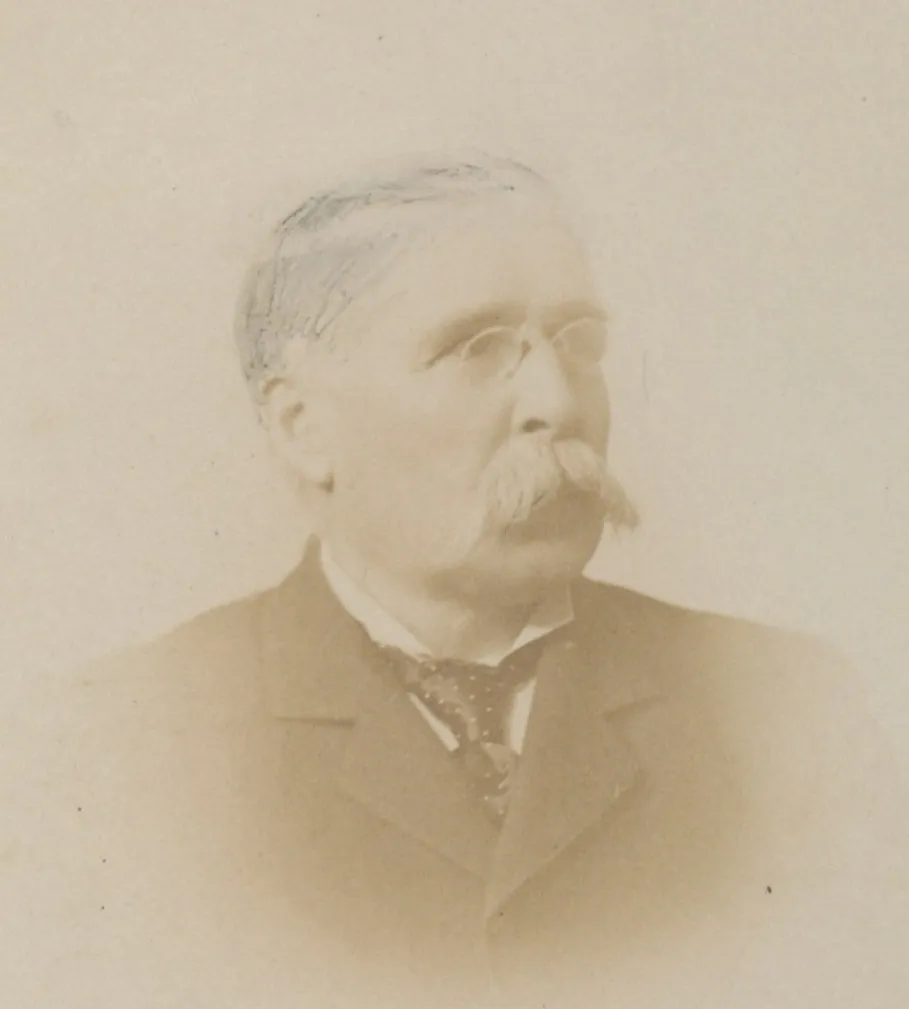
The Cesnolas leaned on him hardest. The appendix of Greek inscriptions at the back of Luigi's Cyprus: Its Ancient Cities, Tombs, and Temples (1877) credits him line after line: "The reading is by M. Pierides"; "M. Pierides, to whom I owe the above reading of the inscription, adds the following remarks." It is Pierides who dates a decree from Curium to the second century BC, Pierides who recognises an unrecorded Roman proconsul of Cyprus in a battered dedication, Pierides who reports that a copper vessel holding twelve to fourteen hundred gold staters of Philip and Alexander had been found by the Larnaca salt lake. Asked to read a late epitaph in honour of a cook, he supplies the text and a remark of his own: Cyprus has always been famous for its cooks; "down to recent times Cypriote cooks were in request at the embassies and consulates of the Levant" [5].
Luigi's brother Alexander, who dug at Salamis, thanked "my dear friend, Mr. Demetrius Pierides, a great antiquary and numismatist, who is thoroughly acquainted with Cypriote monuments, which he has studied indefatigably for about half a century. He is an honourable gentleman, whose presence adorns the island of Cyprus" [6].
Pierides returned the compliments at a banker's exchange rate. His verdict on Luigi: "Cesnola is a general and not an archaeologist" [4].
His own scholarship is still traceable in print. His letters announcing new finds, addressed to Charles Newton of the British Museum, were read before the Royal Society of Literature and published in its Transactions in 1863 [8]. And when the Cypriot syllabary, the island's pre-alphabetic script, was deciphered in 1871, the breakthrough was made in London by the Assyriologist George Smith, working from a bilingual inscription, Phoenician and syllabic Greek, that Lang had dug up at Idalion; the first word read was pa-si-le-wo-se: basileus, king [9]. Cypriot tradition has been generous to Pierides here. Peristianis called him "the first Cypriote to have deciphered inscriptions in the Cypriote Syllabary," which overstates it; the decipherment was Smith's. What the tradition gets right is that Pierides had been collecting and publishing the island's inscriptions years before anyone could read them, and that he belonged to the same London society at which Smith announced his solution [10].
A thousand pieces at the Hôtel Drouot
So runs the founding story: the learned counterweight to the consuls, the man who kept things in. The archives hold a second Pierides. In 2020 Thomas Kiely, a curator at the British Museum, and the archaeologist Robert Merrillees followed the label on the Artcurial jar back through auction records and museum registers, and reconstructed the career it came out of [1].
Pierides excavated. The limestone sculptures the British Museum acquired from him came from Dali, the ancient Idalion, where Lang was also digging. From the spring of 1865 he worked at the newly found sanctuary of Artemis Paralia by the Larnaca salt lake, beside the British consul Dominic Colnaghi and the French diplomat Charles du Mesnil de Maricourt; that October he wrote to the British Museum's trustees, "Should the trustees of the British Museum feel inclined to grant a small sum for continuing these excavations... I would be very happy to do what I can." And he supplied precisely the museums the rescue narrative casts him against: a donation to the British Museum in 1855 and purchases through the late 1860s, with letters surviving in which he haggles over sums of twenty-five and twenty-eight pounds; forty terracottas to Berlin in 1870; fifty-eight terracottas and seven inscriptions to the Louvre in the 1880s [1].
Then Paris. The Drouot sale of February 1873 had as its expert the dealer and numismatist Jean-Henri Hoffmann, and much of what it offered was catalogued as coming from "the salt-marshes near Larnaca, the ancient Citium": from Artemis Paralia, that is, from Pierides's own trench. The same year, Cesnola's ten thousand were crossing the Atlantic [1].
Kiely and Merrillees decline to be scandalised. Pierides was, they conclude, "neither anomalous nor uniquely unscrupulous" for his time; the collection in his house and the lots at the Drouot came out of the same trowel, the same learning and the same market. "He may not have been selling antiquities purely for profit," they allow, "though he clearly wished to get a fair price" [1].
His sales had the same afterlife as everyone else's. The terracottas are in the Louvre and Berlin; the Dali limestones are in the British Museum; the Drouot lots went into French collections, where, like Frossard's jar, they are still being rediscovered. The man remembered for keeping Cyprus's antiquities at home was also one of the documented sources of their diaspora, and the two reputations rest on the same body of work [1].
The counterweights were going up at the same time, and Pierides helped build them. The Ottoman antiquities regulation of 1874 put the first legal limits on digging and export. The Cyprus Museum was founded in 1882, with Pierides among its founding members and benefactors; the following year, according to Salomon Reinach, he started a periodical, The Cyprus Museum, to publicise new finds. In 1886, when the Colonial and Indian Exhibition in London gave Cyprus a court of its own, the South Kensington Museum acquired examples of contemporary Cypriot lace donated by Pierides, which visitors, Queen Victoria among them, had admired [2][4][7].
Four more generations
He died in 1895 and divided the collection between his sons: the pottery and limestone sculpture to Zeno, the Mycenaean vases to Kyprael, called Giabra, whose share moved with his descendants to Nicosia. The halves would stay apart for a century [2][3].
Zeno ran the family shipping and banking house and became the first Greek mayor of Larnaca. For the next three generations, collecting ran alongside office; between them the Pierides men held, at various times, the consulates of Sweden, Norway, Germany and Austria, the old dragoman trade in modern dress. Zeno's son Luki, a historian and co-founder of the journal Kypriaka Chronika, bought the collection's best-known pots: the Cypro-Archaic "free-field" jugs, on which a single painted figure has the whole pale surface of the vessel to itself. On one the war god Reshef strides in profile with a spear and a Syrian axe, an Egyptian crown on his head; on another sits the stiff frontal figure that Vassos Karageorghis, cataloguing the collection in 1973, described as "a humorous space traveller" [2][3].
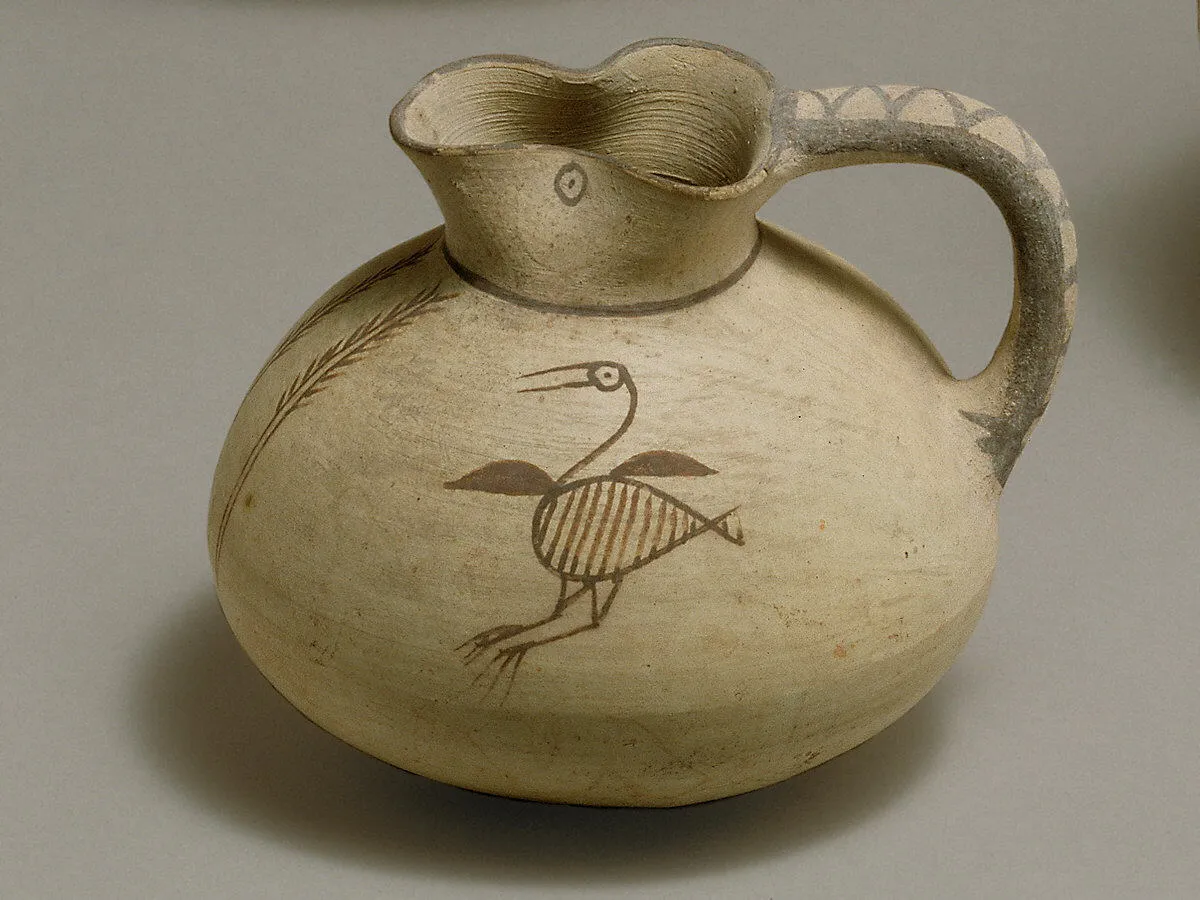
Luki also widened the diaspora in the most respectable way available. A friend of King Gustaf VI Adolf of Sweden, he helped bring the Swedish Cyprus Expedition to the island in 1927; its four years of excavation under Einar Gjerstad put Cypriot archaeology on a modern scientific footing. Of the roughly eighteen thousand objects it dug up, Sweden carried home about twelve thousand, close to two-thirds, after the same Gustaf Adolf, then crown prince, spent a month on the island in 1930 to see the division settled in his country's favour; they became the core of the Museum of Mediterranean and Near Eastern Antiquities in Stockholm [2][3][11].
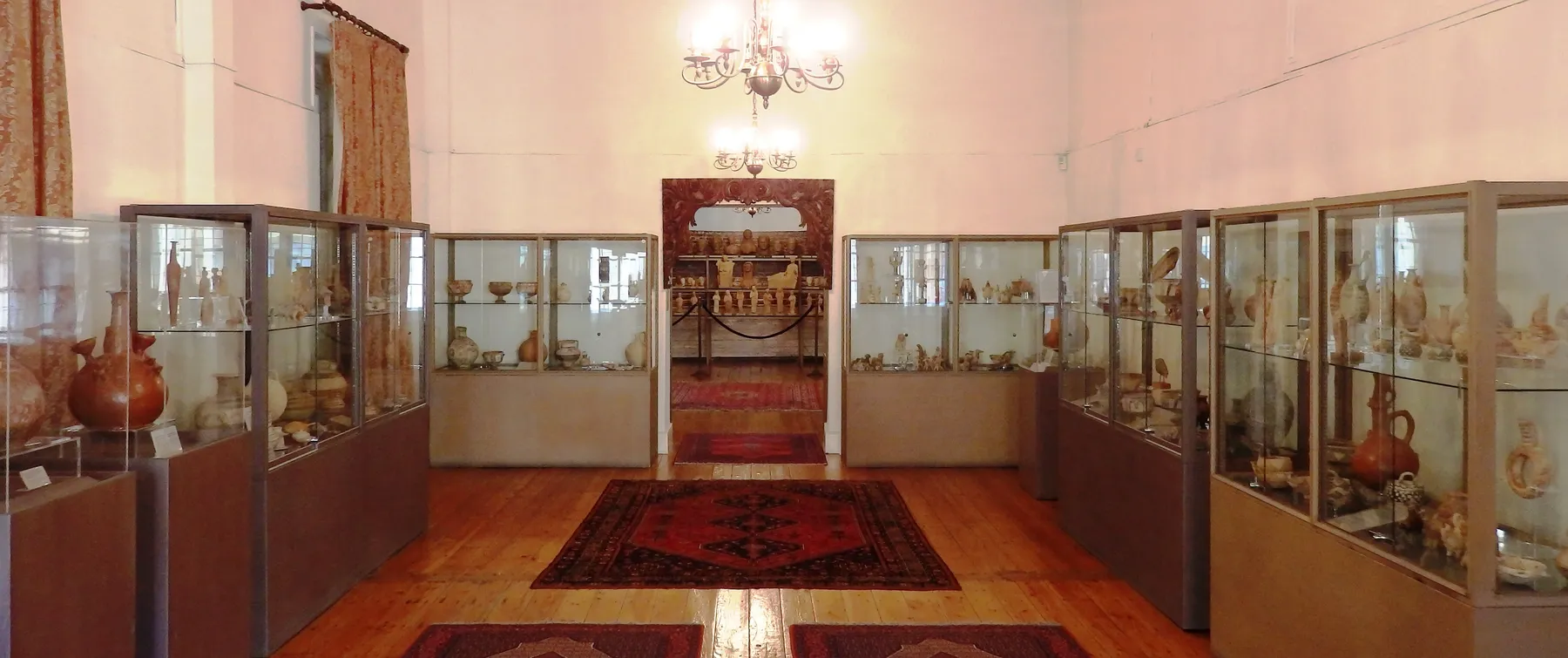
The fourth generation, another Zeno, added Roman glass and old maps of the island. After his death in 1967 his widow Theodora arranged the collection through the rooms of the family residence, a house built in 1825, and in 1974 opened it to the public. That June, weeks before the Turkish invasion cost the family its Famagusta business base, the fifth-generation Demetrios, the founder's namesake and author of the collection's first published history, established the Pierides Foundation and made the whole collection over to it [2][3].
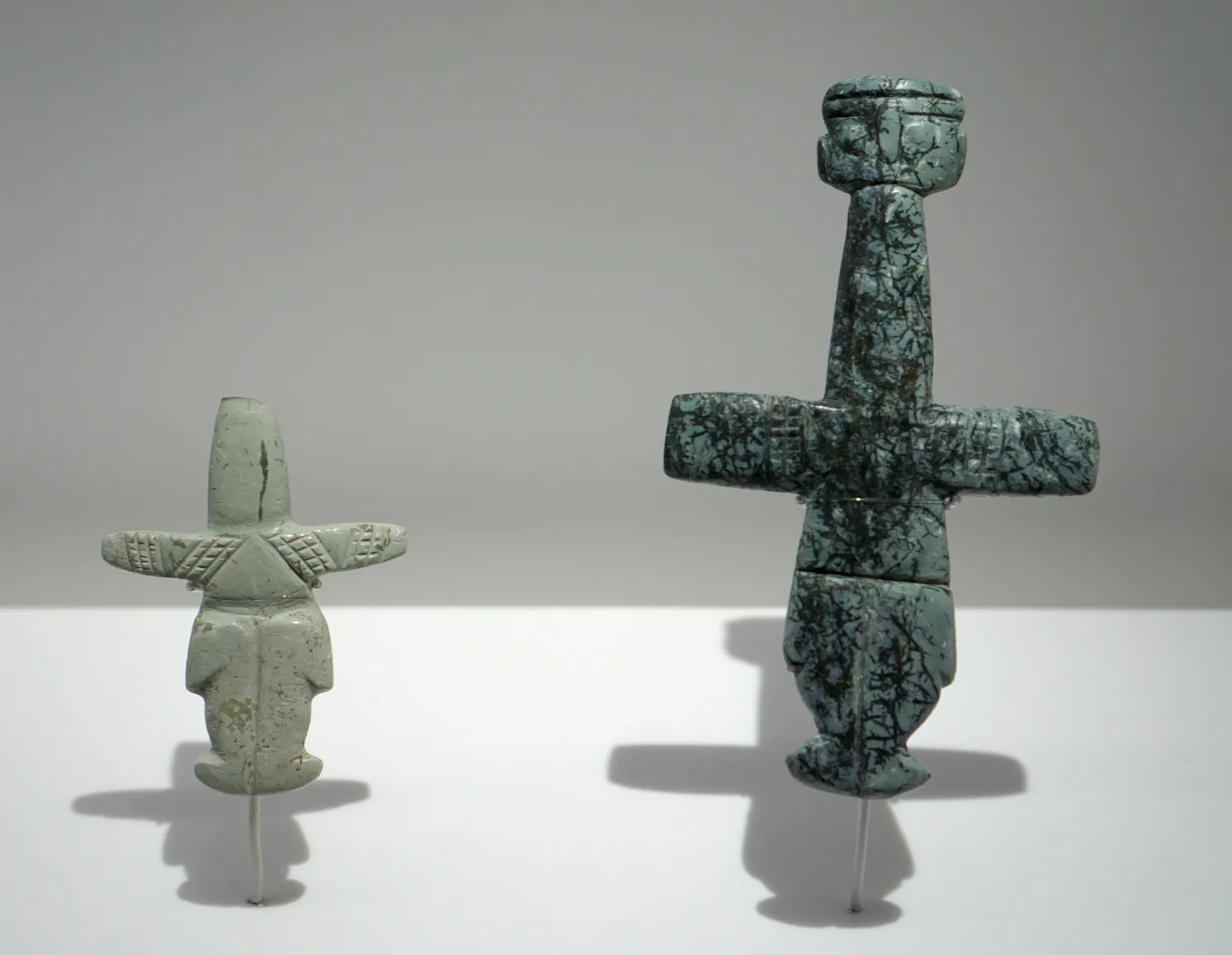
He also did something no Pierides had done before: he bought antiquities back. Chalcolithic and Early Bronze Age pieces that had left the island illicitly were traced on the foreign market, purchased and returned to Larnaca. A hundred years after the Hôtel Drouot, a Pierides was bidding in the other direction [3].
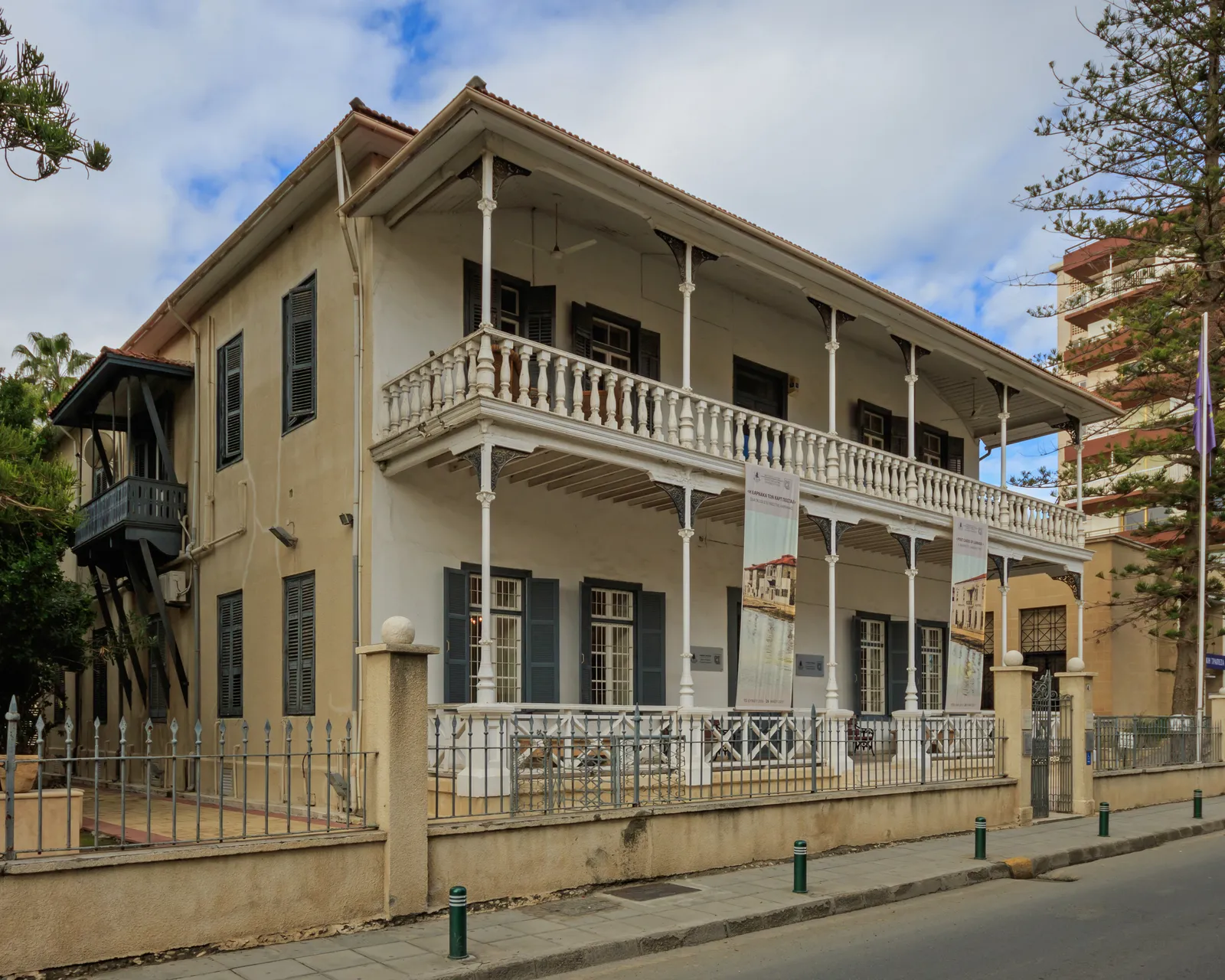
Since then the museum's history has run through the island's banks: the collection passed into the care of Laiki Bank's cultural foundation, and when Laiki failed in the banking crisis of 2013, management moved to the Bank of Cyprus Cultural Foundation, which since 1999 had already housed the Nicosia branch's Mycenaean vases. The two halves of the 1895 division now sit, by very different routes, under a single institutional roof: about 2,500 objects spanning nine thousand years, from picrolite figurines, carved in the island's soft blue-green stone, to medieval glazed bowls, still shown in the family house in Larnaca [2][3].
The Base-ring jar is on the island too. The Artcurial buyer, a collector named David Johnson, placed it on permanent loan at Kykko Monastery, and Kiely and Merrillees published its full itinerary the following year: dug up by the first Demetrios, sold under Hoffmann's hammer in 1873, kept by the Frossards, held in a dealer's collection at Mâcon from 1928, and home after 146 years, so far the only piece of the Drouot thousand traced all the way back. The label is still glued to its side [1].
References
- 1.Kiely, T., & Merrillees, R. S. (2020). A unique Late Cypriote Bronze Age jar from Demetrios Pierides' excavations in Cyprus, formerly in the Joseph Altounian Collection, Mâcon, France, and the circulation of Cypriote antiquities in the 19th century AD. Cahiers du Centre d'Études Chypriotes, 50, 459–482.
- 2.Karageorghis, V. (1973). Cypriote Antiquities in the Pierides Collection, Larnaca, Cyprus. Pierides Foundation, with the 'History of the Collection' by Demetrios Z. Pierides.
- 3.Karageorghis, V., Risopoulou-Egoumenidou, F., Bakirtzi, D., & Elliott, C. (1985). Ancient Cypriote Art in the Pierides Foundation Museum. Pierides Foundation, with the family history by Aristeidis Koudounaris.
- 4.Marangou, A. G. (2000). Life and Deeds: The Consul Luigi Palma di Cesnola 1832–1904. Nicosia: Cultural Centre of the Popular Bank Group, ch. 'Le Savant Grec'.
- 5.Palma di Cesnola, L. (1877). Cyprus: Its Ancient Cities, Tombs, and Temples. A Narrative of Researches and Excavations During Ten Years' Residence in That Island. Appendix of Greek inscriptions; the Pierides readings quoted here at pp. 427–432.
- 6.Palma di Cesnola, A. (1882). Salaminia (Cyprus): The History, Treasures, and Antiquities of Salamis in the Island of Cyprus. Preface, p. xxiv.
- 7.Kiely, T., & Ulbrich, A. (2012). Britain and the Archaeology of Cyprus. I. The long 19th century. Cahiers du Centre d'Études Chypriotes, 42.
- 8.Vaux, W. S. W. (1863). Extracts from letters addressed to C. T. Newton, Esq. by M. Demetrius Pierides and M. F. Calvert. Transactions of the Royal Society of Literature, VII (2nd series), 394–398.
- 9.Smith, G. (1872). On the Reading of the Cypriote Inscriptions. Transactions of the Society of Biblical Archaeology, 1.
- 10.Peristianis, I. (1922). Ανασκόπησις του Πνευματικού Βίου των Κυπρίων. Nicosia, p. 35, translated in the 1985 Pierides Foundation catalogue.
- 11.Ioannou, C. (2021). The Swedish Cyprus Expedition: A unique landmark in the archaeology of Cyprus. In L. Bombardieri & E. Panero (eds.), Cyprus: Crossroad of Civilizations (Turin & London), 64–72; division of the finds at pp. 71–72.