
Lecture·Archaeological Research Unit - University of Cyprus·2018
Bronze Age Demise, Iron Age Regeneration on Cyprus
Chapters
About the lecture
A. Bernard Knapp and Nathan Meyer examine the political and economic transition on Cyprus between the Late Bronze Age and the Cypro-Geometric period, arguing against models of continuous statehood from the twelfth century BC into the Iron Age. While acknowledging that geography and the distribution of copper ores created persistent regional patterns, Knapp contends that Late Bronze Age Cyprus operated as a centralized state under an internationally recognized king who organized bulk copper production. Following the collapse of this system, he argues, state-level organization disappeared between the mid-eleventh and mid-ninth centuries BC, re-emerging only in the eighth century BC with the formation of the Cypriot city-kingdoms.
Meyer presents four lines of evidence for the political economy during this interval: settlement patterns, mortuary practices, ceramic production, and rural sanctuaries. He notes the abandonment of major Late Bronze Age storage and production centres such as Ayios Dhimitrios, Maroni-Vournes, and Paleaokastro (Palia Taverna). Although Enkomi, Kition, and Palaepaphos survived into the twelfth century BC, the eleventh century lacked an integrated urban hierarchy. In the mortuary record, building on Priscilla Keswani's work on Bronze Age burials and subsequent studies of Salamis, Amathus, Palaepaphos, and Lapithos, Meyer traces a shift back to extramural cemeteries, a drop in burial wealth during Cypro-Geometric II, and a renewed hardening of social stratification at the transition to the Cypro-Archaic period.
Turning to ceramics, Meyer contrasts the standardized, fast-wheel production of eleventh-century Proto-White Painted ware with the sharp drop in Cypriot exports to the Levant, suggesting a contracted economy focused on internal exchange before regional styles re-emerged in the Cypro-Geometric period. Drawing on the work of Giorgos Papantoniou and Sabine Fourrier, he argues that rural sanctuaries proliferated only at the end of the Cypro-Geometric III and in the Cypro-Archaic I periods, marking new territorial claims driven by revived copper exports.
Knapp places Cyprus alongside the post-Mycenaean Aegean and the Levant, arguing that Iron Age polities across the eastern Mediterranean formed anew rather than by reconstructing Bronze Age states. A substantial discussion follows with Vasiliki Kassianidou, Maria Iacovou, Giorgos Papantoniou, and other members of the audience, debating the radiocarbon dates for early Iron Age mining, the role of metal objects and olive oil, and the accuracy of settlement maps for sites such as Idalion, Chytroi, and Ledra.
From our collection
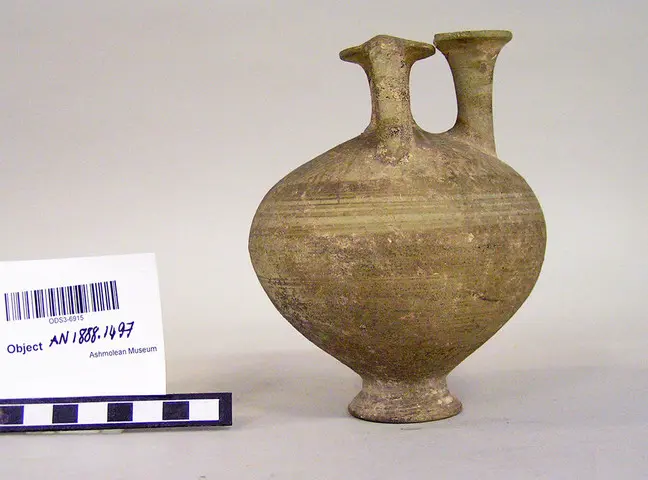
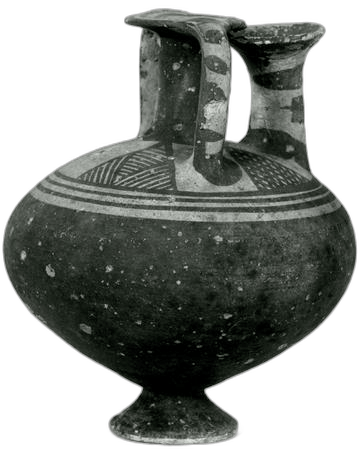
Pieces in the Drakopoulos collection of the kinds and periods this talk covers: Cypro-Geometric, Cypro-Archaic.
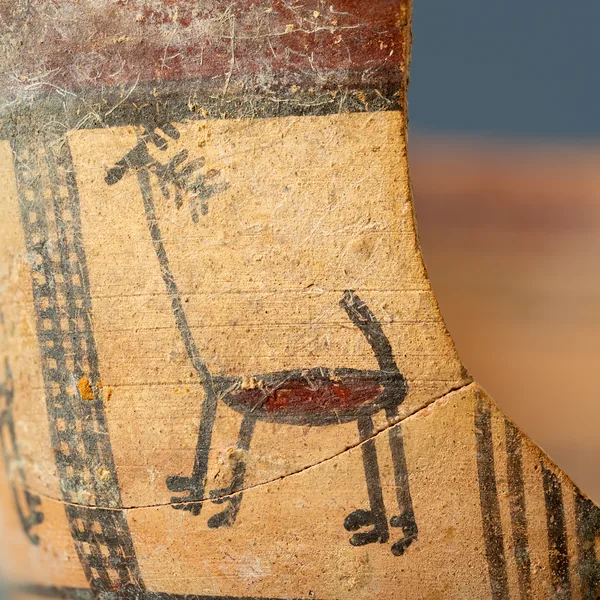
Bichrome Skyphos with Stags in Metopes
Cypro-Archaic
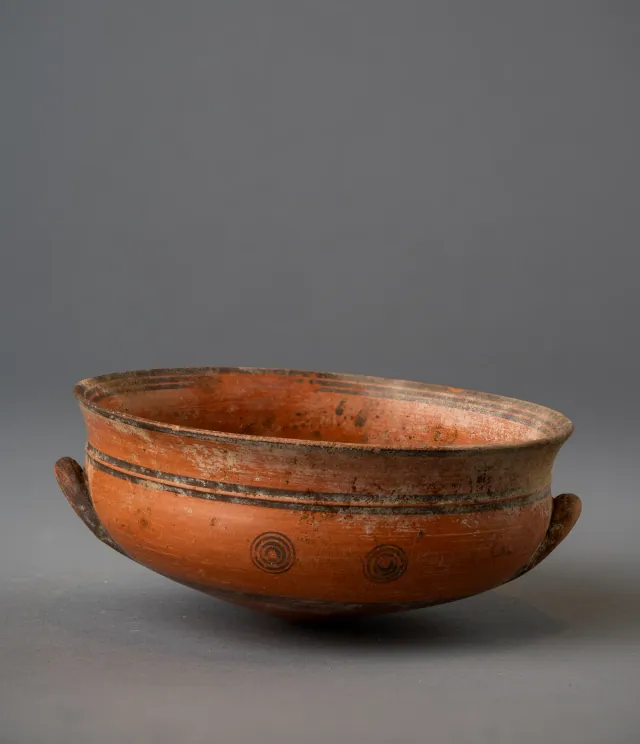
Black-on-Red Two-Handled Bowl with Raised Flaring Rim
Cypro-Archaic
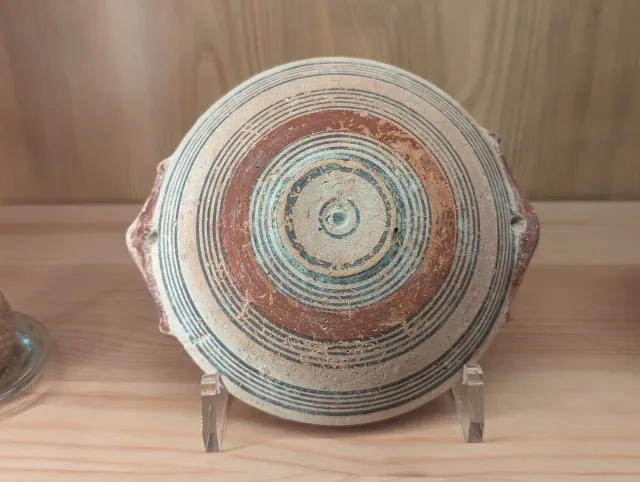
Bichrome IV Bowl with Red-Painted Pierced Lug Handles
Cypro-Archaic
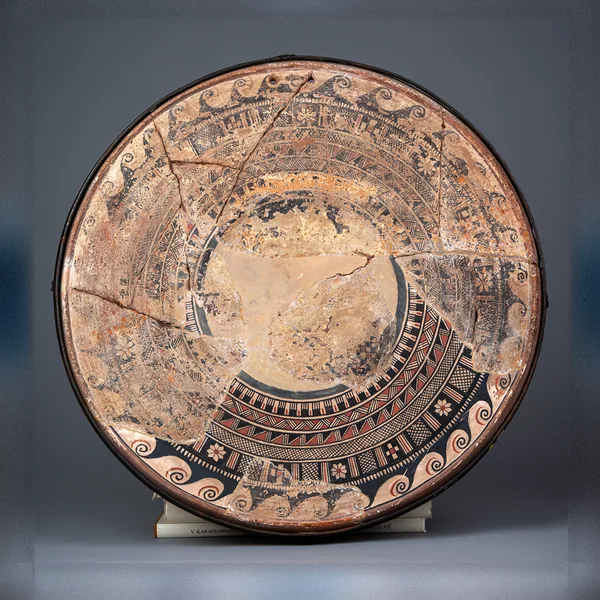
Large Bichrome Plate from Salamis with a Wave Band and Rosette Metopes
Cypro-Archaic
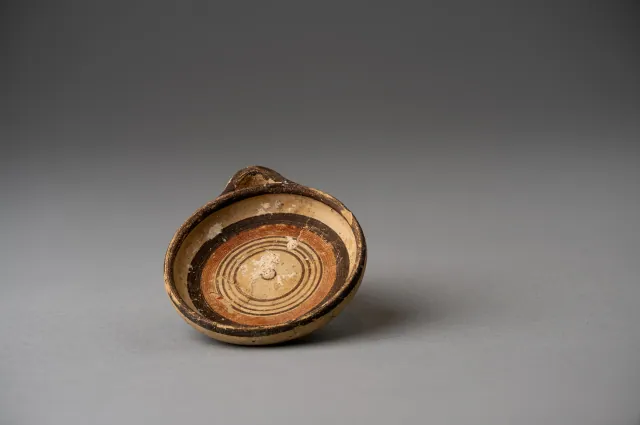
Miniature Bichrome Plate with Concentric Circles
Cypro-Archaic
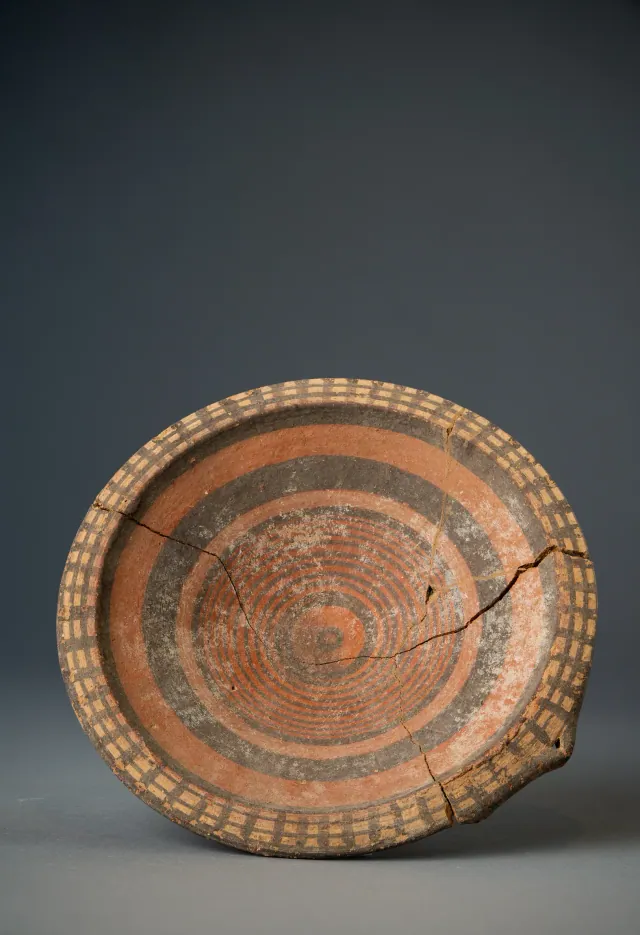
Black-on-Red Plate with Barred Rim and Concentric Circles
Cypro-Archaic
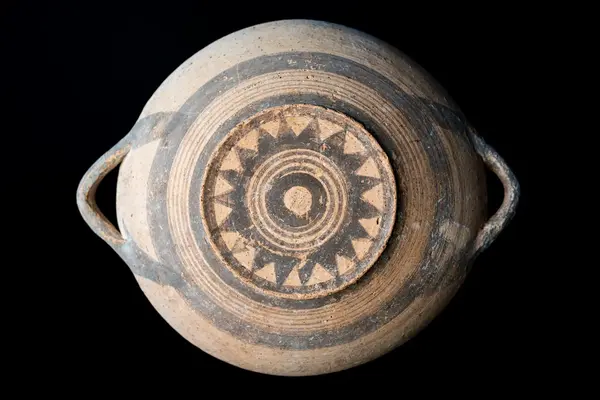
White Painted Plate with a Sawtooth Star on the Underside
Cypro-Geometric
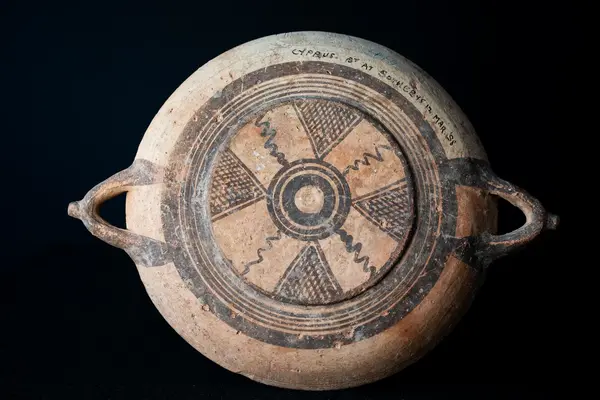
White Painted Plate with Latticed Triangles and Wavy Lines on the Underside
Cypro-Geometric
Found at the places discussed
Objects in our catalogue, in museum collections, recorded as found at these sites.

).webp)
Background
Where to read more on this site before or after watching.
The site
Enkomi
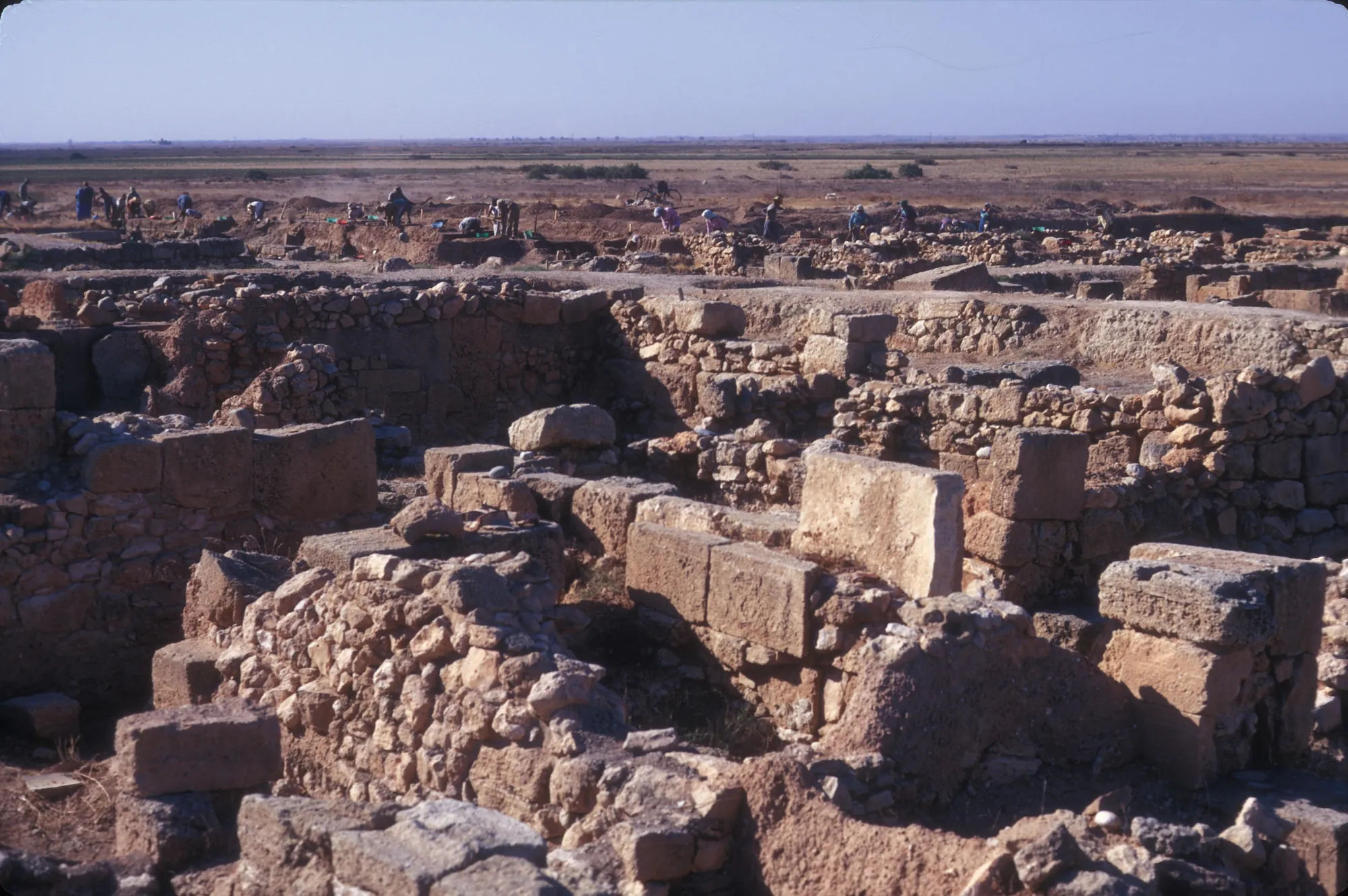
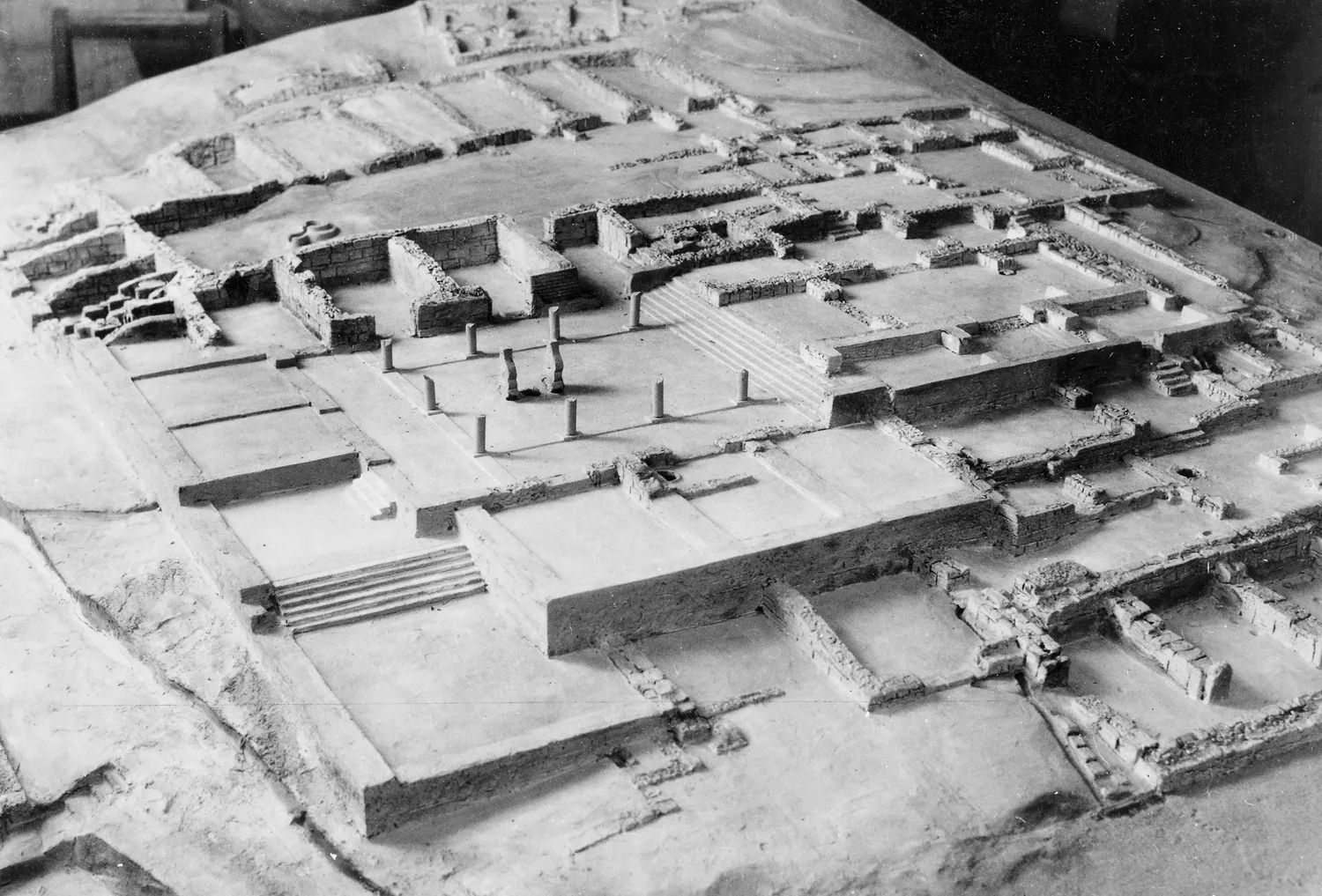
Enkomi is a walled Late Bronze Age town near the mouth of the Pedieos river on the bay of Famagusta, lived in from about 1650 BC until it was gradually abandoned for nearby Salamis. It was a port for Cypriot copper, and its excavations produced metal workshops, sanctuaries with bronze cult statues, rich tombs and the largest group of Cypro-Minoan inscriptions on the island.
In the compendium
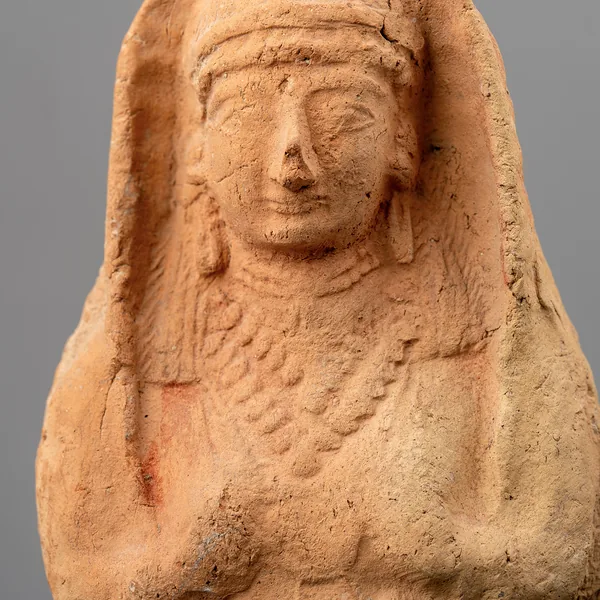
Iron Age Cities and Palaces
The capitals of the Iron Age kingdoms of Cyprus, their palaces at Vouni, Amathus, Idalion and Palaepaphos, their houses, and the volute and Hathor capitals of the period.
In the compendium
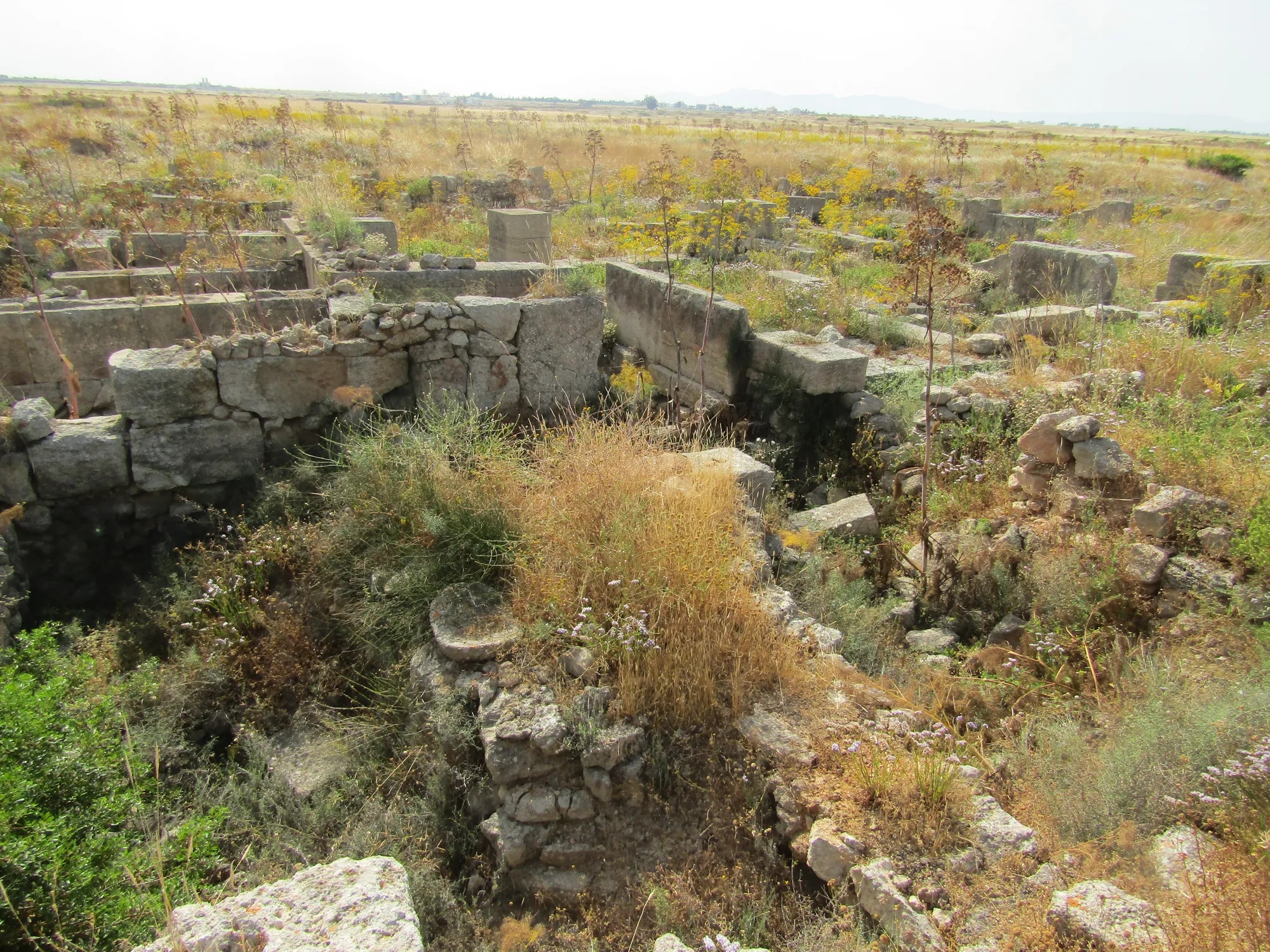
Iron Age Sanctuaries
The Cypriot Iron Age sanctuary was a walled open-air court with an altar, sacred trees and small roofed rooms; Greek-style temples arrived only under Rome.
In the compendium
Late Bronze Age Towns and Buildings
How Late Bronze Age Cyprus built its first towns: street grids, large ashlar buildings with storage halls, courtyard houses, and the short-lived settlements of the twelfth century.
Map of Cyprus
Places discussed in the talk
- Has a page on this site
- Other places
- Ground above 200, 500, 1,000 m