
Fieldwork·In brief
Bronze Age Pyla-Kokkinokremos, beside a British firing range, will not open to visitors
The minister told MPs the walls are too scant for visitors to read; the two Cypro-Minoan tablets found there are on show in the Larnaca District Museum.



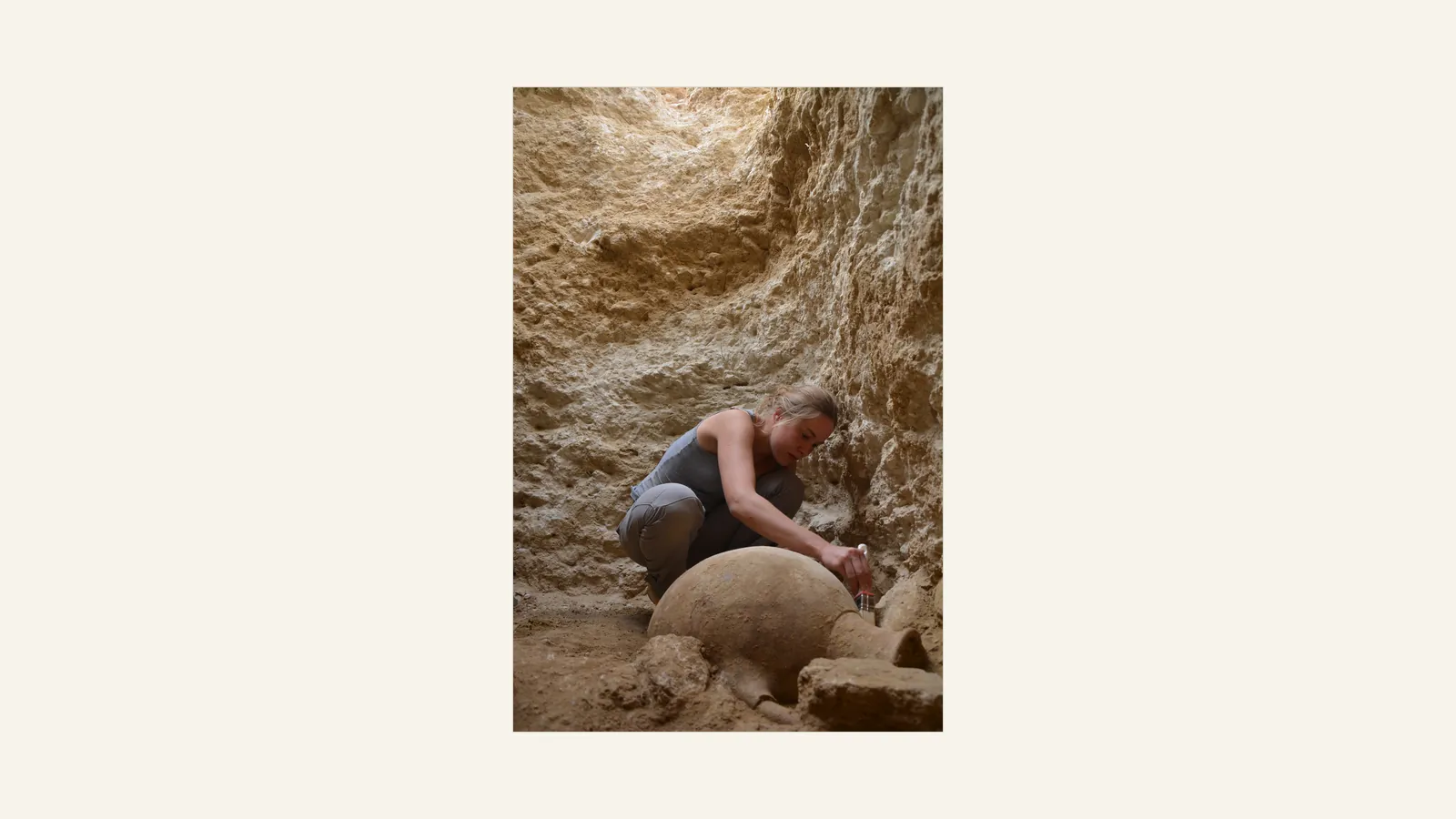
The Late Bronze Age settlement of Pyla-Kokkinokremos will not be opened to the public, the Minister of Education, Sport and Youth, Athena Michaelidou, has told the House of Representatives. Her written answer of 14 October 2026 replies to a question tabled on 19 June by Andreas Pasiourtides, an AKEL member for Larnaca.
She said the steep hill lies inside a British Sovereign Base military installation next to a firing range, and even the excavators work to the range's timetable. The walls uncovered so far are meagre, and the finds too fragmentary for visitors to grasp.
Pasiourtides had written of "the oldest organised library in the Mediterranean" (our translation). The minister traced it to two Cypro-Minoan tablets with signs on their spines, perhaps once shelved. Athanasia Kanta proposed the shelf reading after their discovery in 2012, but she and her co-directors have since judged two undeciphered texts too slight a basis for full record-keeping there. With no kilns on the site, the tablets may have been fired elsewhere; Vassos Karageorghis wondered whether refugees brought them from a sanctuary or palace [1, p. 625]. Both are shown in the Larnaca District Museum.
The excavators date the settlement's short life from the late 13th century BCE to early in the 12th [1, p. 608]. Porphyrios Dikaios first dug there in 1952; Karageorghis and Martha Demas followed in 1981–82, Karageorghis and Kanta returned in 2010, and a joint mission under Joachim Bretschneider of Ghent University has dug since 2014.
Original sources
On ancientcyprus.com
- Excavations
- Pyla: Dikaios's trial excavations at Kokkinokremos and the Verghi tomb, Pyla-Kokkinokremos: Karageorghis and Demas's excavations, Pyla-Kokkinokremos: Karageorghis and Kanta's excavations, Pyla-Kokkinokremos: the Bretschneider, Driessen and Kanta excavations
- Institutions
- Larnaca District Museum
- Periods
- Late Bronze Age
References
- 1.Bretschneider, J., Driessen, J. & Kanta, A. (2021). Cyprus and Ugarit at the end of the Late Bronze Age: Insights from Pyla-Kokkinokremos. In V. Matoïan (Ed.), Ougarit, un anniversaire. Bilans et recherches en cours (Ras Shamra-Ougarit 28), pp. 607–638. Leuven: Peeters.
More in Fieldwork
- Hexagonal church of Apsinthiotissa and Byzantine Agios Prokopios restored in the occupied north
- Kourion's mosaic conservators are to get two prefabricated buildings in a €113,447 tender
- 167 Roman granite column fragments trace the main streets of ancient Paphos
- Idalion excavators fixed points by RTK, 3D-scanned a statue fragment and logged finds in OCHRE
- Rescue dig in the Nile Delta finds a 1.6-metre head of Ramesses II