
Lecture·Archaeological Research Unit - University of Cyprus·2021
Bringing Life to Old Museum Collections: The Interdisciplinary Study of Pottery from the Iron Age Polities of Salamis, Soloi, Lapithos and Chytroi
Chapters
About the lecture
Anna Georgiadou and Maria Dikomitou-Eliadou present the first results of the MUSECO research project, which investigates Iron Age pottery assemblages stored in the Cyprus Museum from sites in the occupied north of the island. Because fieldwork in these areas has been discontinued since the Turkish invasion of 1974, the project examines unpublished vessels recovered between 1933 and 1974 by the Department of Antiquities and the Cyprus Survey from the polities of Salamis, Soloi, Lapithos, and Chytroi. The lecture focuses on the principal case study of Salamis and its territory across the eastern Mesaoria plain and the Karpas peninsula during the Cypro-Geometric, Cypro-Archaic, and Cypro-Classical periods.
In the first part, Georgiadou outlines the archival and archaeological context of 41 burial sites outside the capital of Salamis, alongside the material excavated before 1974 at Salamis itself. Over 1,100 vessels from these hinterland tombs, peaking in the Cypro-Archaic I period, consist mostly of decorated tableware. Georgiadou defines the stylistic profile of the Salaminian workshops, which are marked from the 11th century BC by a strong preference for Bichrome ware alongside Iron Age White Painted ware. She traces specific regional series: footed deep bowls painted red inside and out, shallow bowls with strap or red-painted lug handles, belly-handled amphorae in geometric, pictorial, or seventh- and sixth-century floral styles, large barrel jugs that remained in production long after disappearing elsewhere on Cyprus, and trefoil-mouthed jugs decorated with small geometric motifs or in the pictorial free-field style with waterbirds.
In the second part, Dikomitou-Eliadou sets out the project's sampling strategy and analytical methodology, which combines macroscopic fabric study, ceramic petrography, X-ray fluorescence, and scanning electron microscopy. Presenting preliminary petrographic observations on 130 White Painted and Bichrome samples from Salamis and its periphery, she identifies two dominant, closely related high-fired fabrics that each account for roughly 40 percent of the assemblage: a semi-coarse fabric showing clay mixing, and a coarser version tempered with quartz and feldspar sand. Both match the alluvial geology of the Pedieos and Yialias rivers in the Enkomi and Salamis area and correspond to Salaminian exports analysed at Tel Dor. Because the same two fabric recipes and stylistic norms appear across the capital, the eastern Mesaoria, and the Karpas over several centuries, the speakers argue that multiple workshops operated under centralised standards within a unified Salaminian territory.
From our collection
Pieces in the Drakopoulos collection of the kinds and periods this talk covers: Bichrome ware (Iron Age), Black-on-Red ware, White Painted ware (Iron Age).
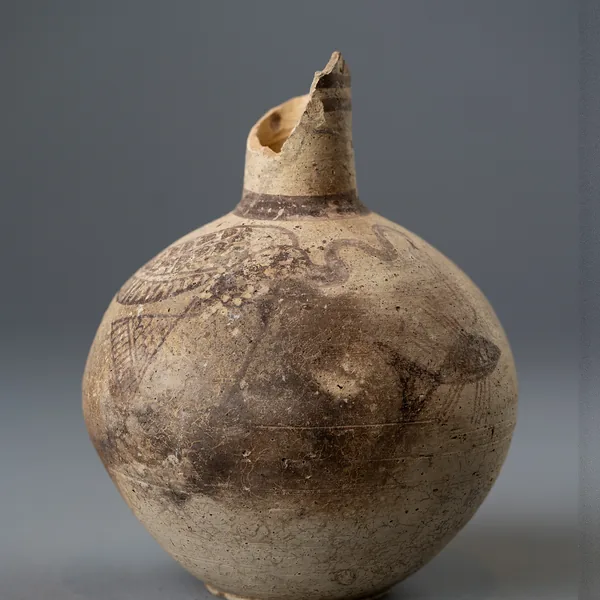
Bichrome IV Jug with a Waterfowl Catching a Fish
Bichrome ware (Iron Age)
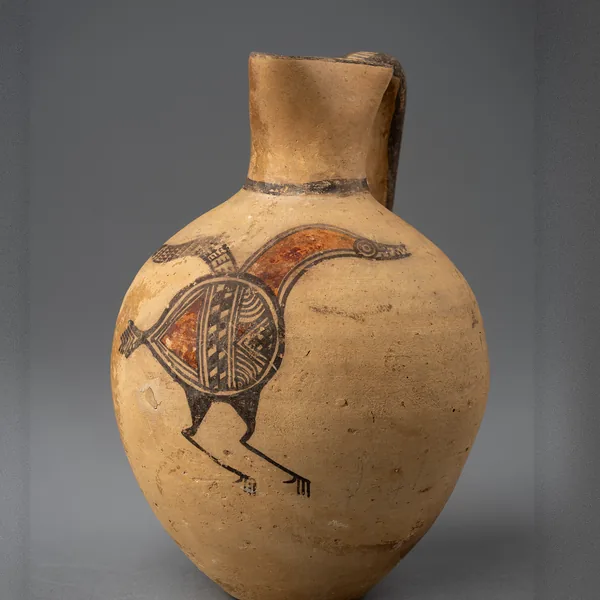
Bichrome IV Trefoil Jug with a Striding Bird
Bichrome ware (Iron Age)
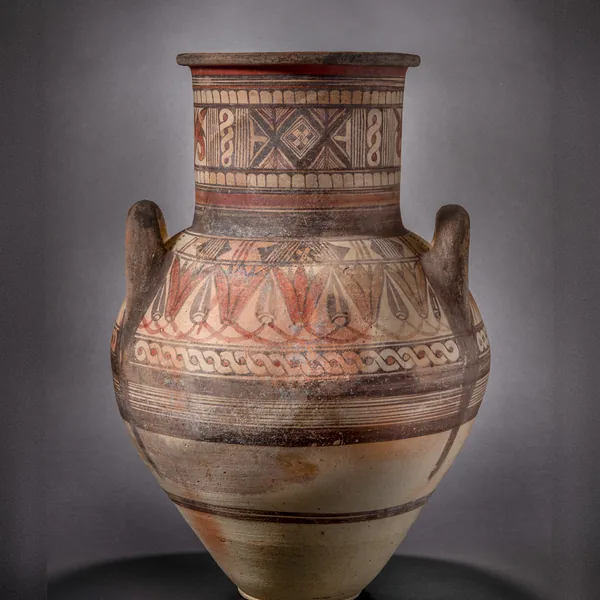
Bichrome IV Amphora with a Lotus-and-Bud Shoulder Frieze
Bichrome ware (Iron Age)
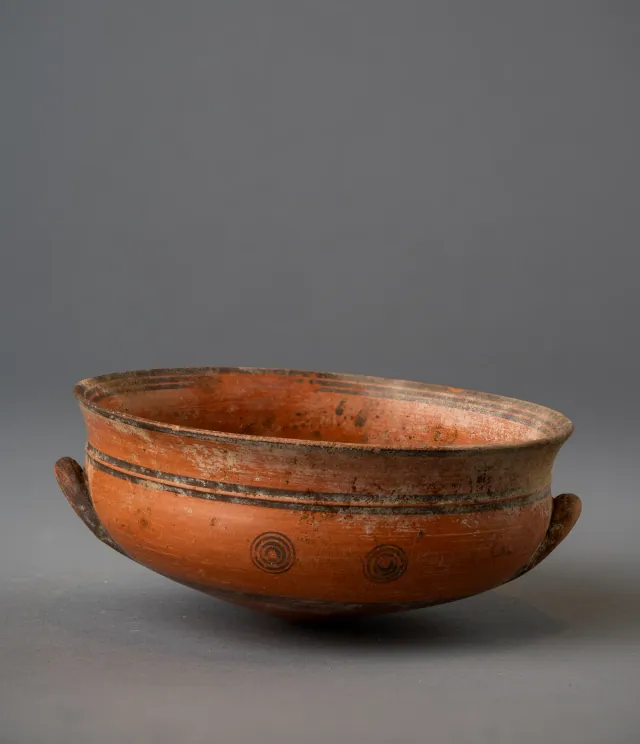
Black-on-Red Two-Handled Bowl with Raised Flaring Rim
Black-on-Red ware
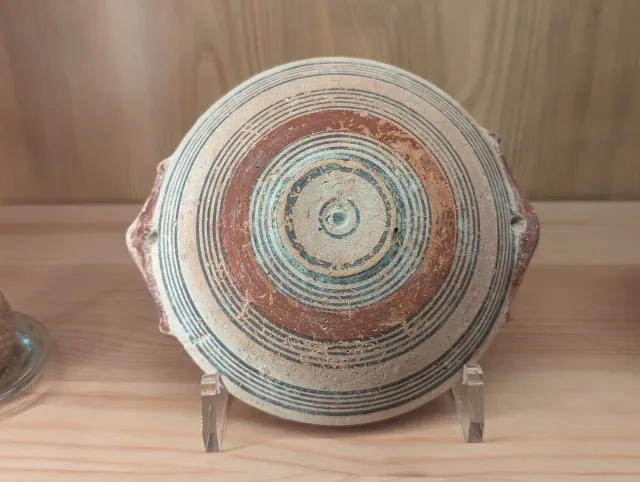
Bichrome IV Bowl with Red-Painted Pierced Lug Handles
Bichrome ware (Iron Age)
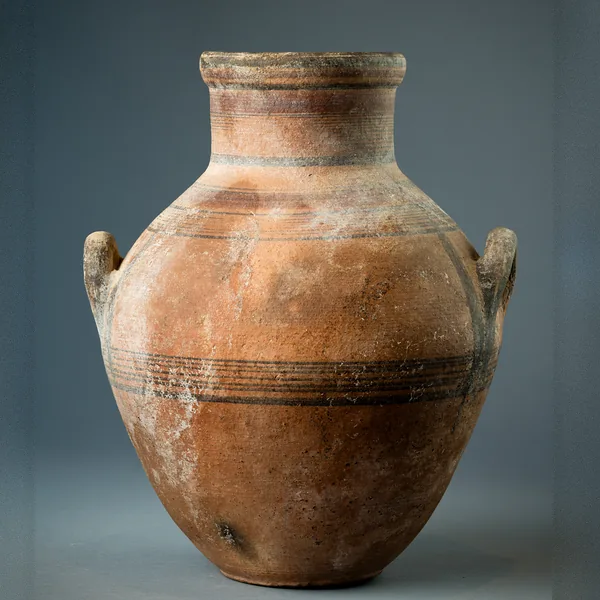
Bichrome IV Amphora with Shoulder Handles and Banded Decoration
Bichrome ware (Iron Age)
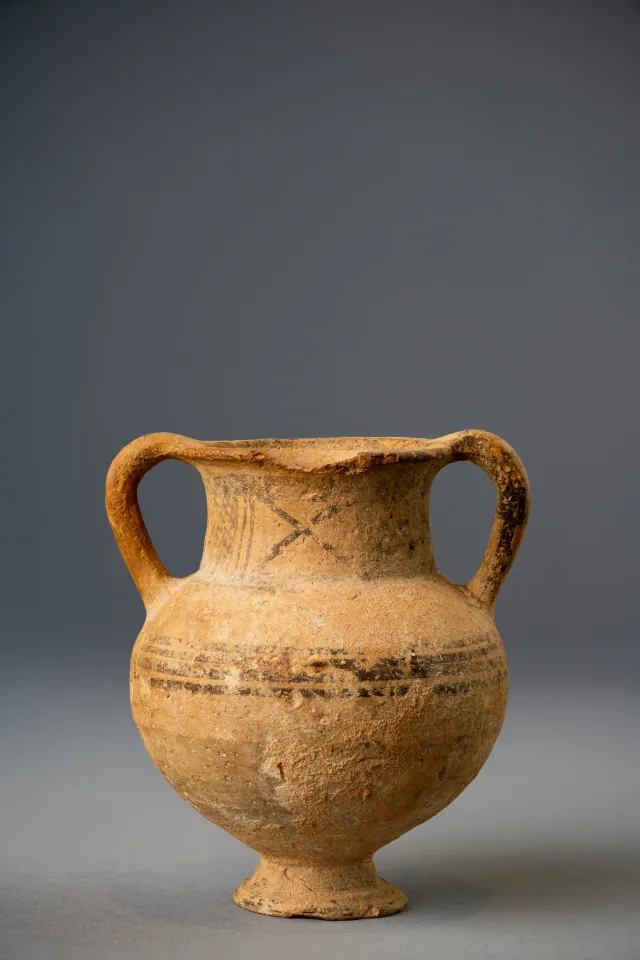
White Painted Amphoriskos on a Conical Foot
White Painted ware (Iron Age)
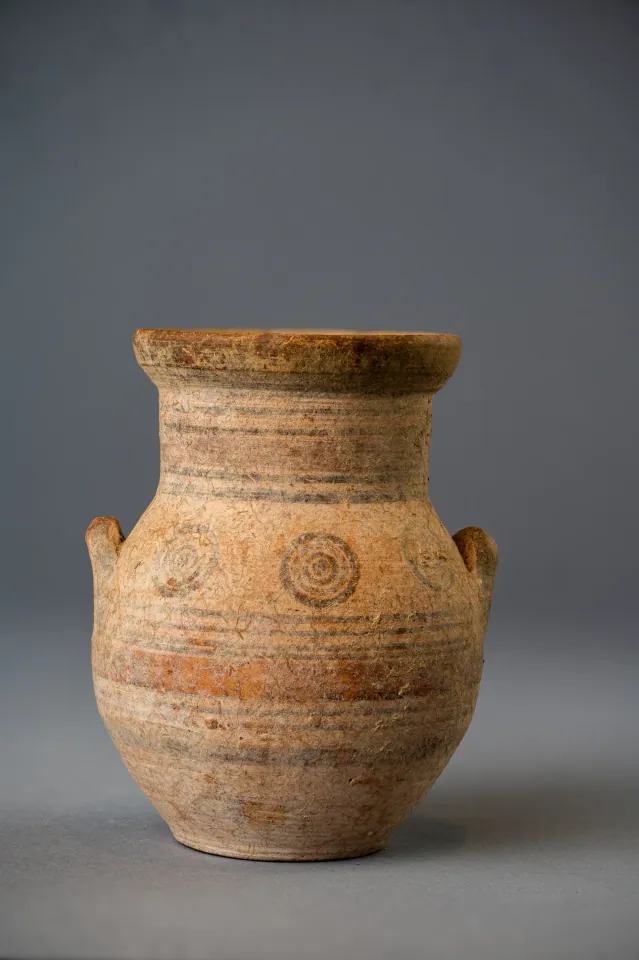
Bichrome IV Amphoriskos with Concentric Circles
Bichrome ware (Iron Age)
Found at the places discussed
Objects in our catalogue, in museum collections, recorded as found at these sites.


Background
Where to read more on this site before or after watching.
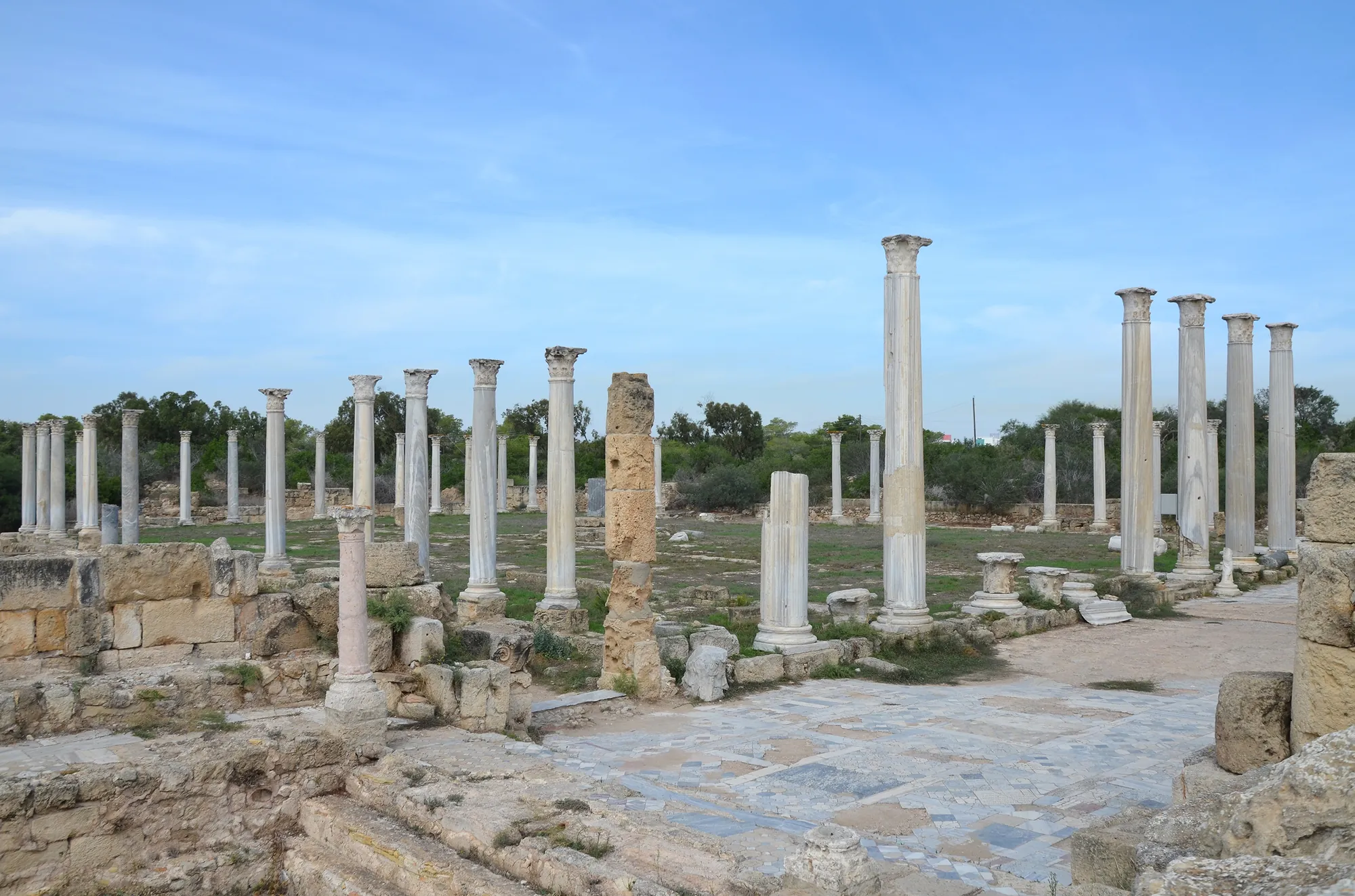
The site
Salamis
A city on the east coast of Cyprus at the mouth of the Pedieos river, founded in the 11th century BC and one of the leading city-kingdoms of the island until 311/310 BC. It is known for the Royal Tombs with their sacrificed horses and chariots, for its Roman gymnasium, baths and theatre, and as Constantia, seat of the bishops of Cyprus from the 4th century AD. The site lies in the north of the island; the Cypriot and French excavations stopped in 1974.
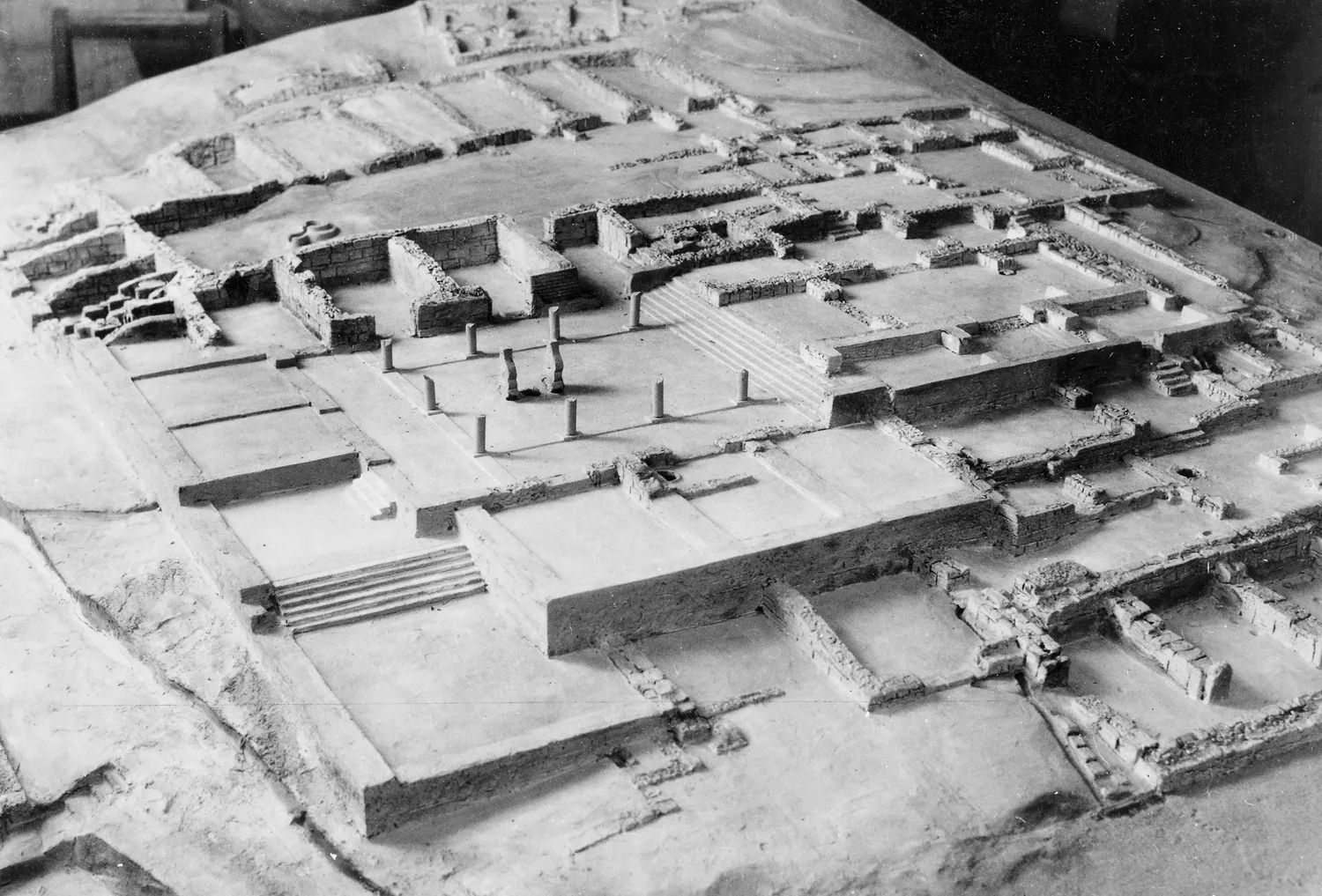
In the compendium
Iron Age Cities and Palaces
The capitals of the Iron Age kingdoms of Cyprus, their palaces at Vouni, Amathus, Idalion and Palaepaphos, their houses, and the volute and Hathor capitals of the period.
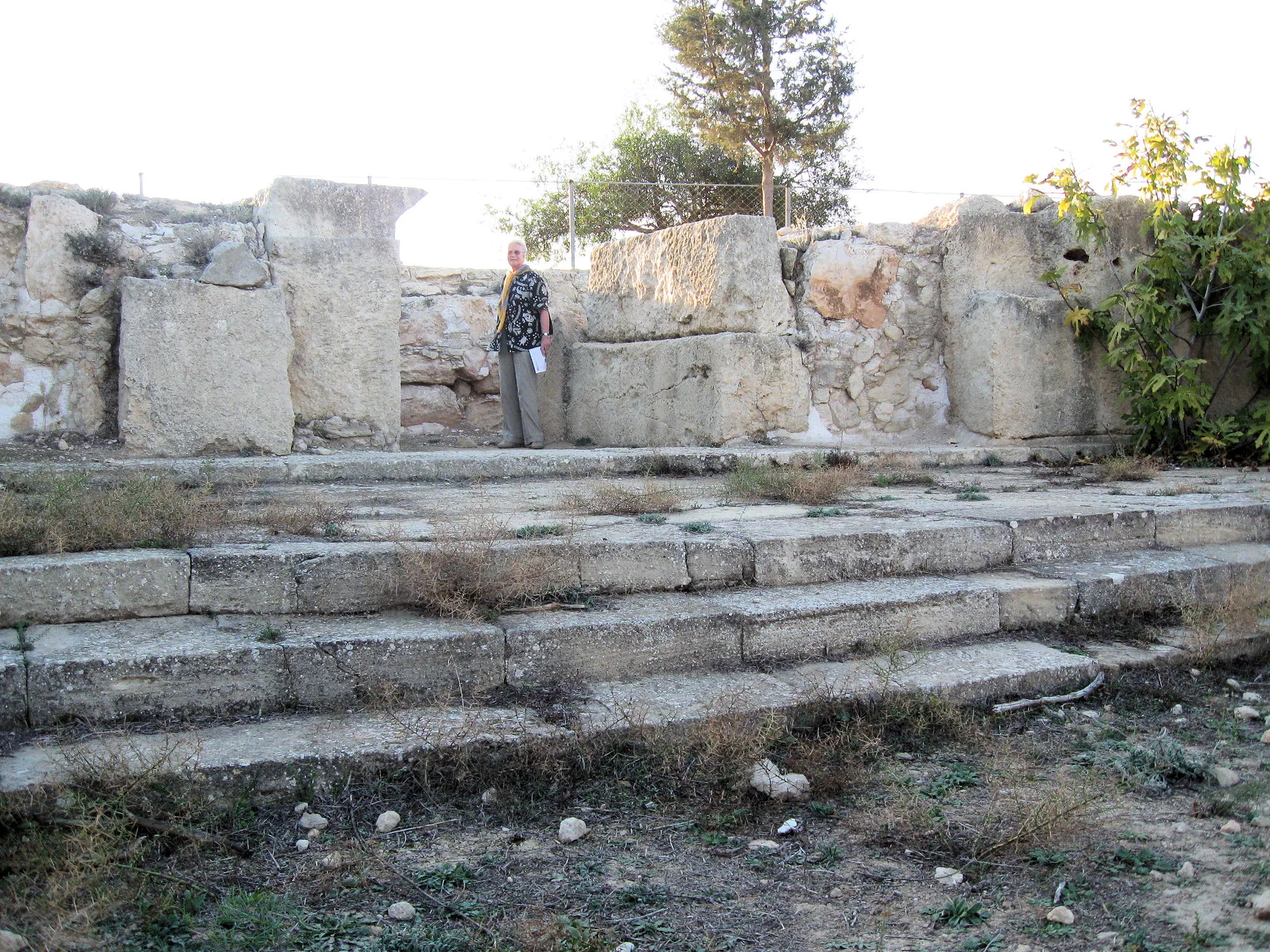
In the compendium
Royal and Built Tombs
Tombs built of cut stone in Cyprus, from the ashlar tombs under Late Bronze Age houses at Enkomi to the royal tombs of Salamis and Tamassos and the rock-cut courts of Nea Paphos.
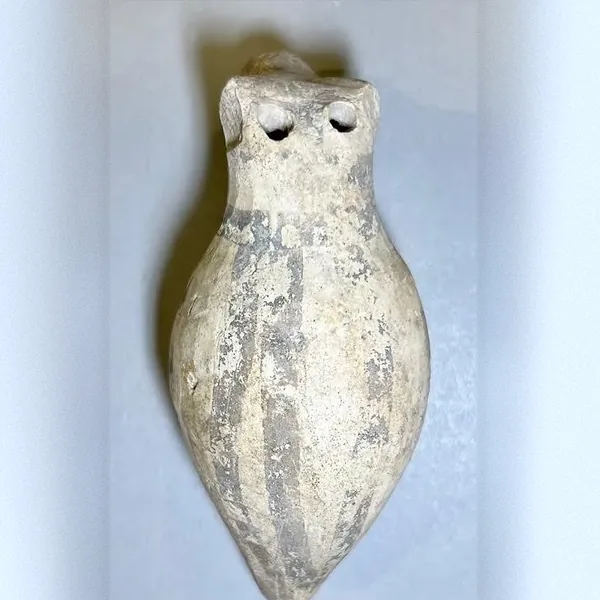
In the compendium
Birds
The bird on Cypriot pottery, modelled on Bronze Age Red Polished vessels and painted as the main subject of Cypro-Archaic free-field jugs.
Map of Cyprus
Places discussed in the talk
- Has a page on this site
- Other places
- Ground above 200, 500, 1,000 m