
Conference paper·Archaeological Research Unit - University of Cyprus·2017·In Greek
Second Annual Study Day of the Archaeological Research Unit: Prehistoric Stone, Palaepaphos, and Ceramic Studies
Δεύτερη Ετήσια Ημερίδα Ερευνητικής Μονάδας Αρχαιολογίας: «Το Αρχαιολογικό ΄Εργο του Πανεπιστημίου Κύπρου»
Artemis Georgiou, Maria Dikomitou-Eliadou and Charis Paraskeva
Chapters
About the video
This session from the Second Annual Study Day of the Archaeological Research Unit of the University of Cyprus, given in Greek, presents four papers on current research projects at the university.
The recording opens mid-sentence in a paper examining the distribution and chemical sourcing of three rare raw materials in Epipalaeolithic and Neolithic Cyprus: obsidian (used for blades), carnelian (used for beads), and picrolite (used for beads, pendants, rings, and small vessels). Only three Aceramic Neolithic sites have yielded all three materials: Ayios Georgios, Kalavasos-Tenta, and Khirokitia. Using portable X-ray fluorescence (pXRF) on around 300 objects from six sites, the speaker identifies multiple geological sources for each material. The six picrolite items from Akrotiri-Aetokremnos fall into two chemical groups, a necklace of 21 carnelian and shell beads from Khirokitia shows at least two sources, and obsidian from Ayios Georgios comes from at least two Anatolian sources. The speaker suggests these materials functioned as symbols of relatedness across social networks.
Artemis Georgiou then presents the Marie Curie project ARIEL, supervised by Maria Iacovou, which studies the Late Bronze Age in the Paphos region. She first summarizes ceramic finds from the Palaepaphos Urban Landscape Project at Palaepaphos (Hadjiabdoulla and Laona), including local Paphian variations of White Slip ware and large storage pithoi. She then discusses the 2016 publication, co-edited with Constance von Rüden, Ariane Jacobs, and Paul Halstead, of Wells TE III and TE VIII at Evreti, excavated by Franz Georg Maier in 1967 and 1968. Filled in a single deposition in the early 12th century BC, the wells held 482 sherds of White Painted Wheelmade III drinking and feasting vessels, local Splash Painted Ware, Minoan, Mycenaean, and Canaanite imports, high proportions of deer and cattle bones, and 619 pieces of African elephant ivory including waste from a nearby workshop. In the discussion afterwards, participants ask about 14th- and 13th-century BC tombs and the high proportion of deer bones compared with Alassa.
Maria Dikomitou-Eliadou outlines three archaeometric pottery projects. The first, coordinated by Athanasios Vionis, studies Cypriot cooking pots from the 3rd millennium BC to the medieval period using thin-section petrography, scanning electron microscopy, and organic residue analysis across 600 samples from 30 sites, including Ayios Georgios (PA.SY.D.Y.) in Nicosia. The second, with the University of Pisa, used pXRF to distinguish imported Mycenaean stirrup jars from local Cypriot products. The third, led by Jennifer Webb, applies pXRF to 900 Middle Bronze Age vessels and figurines excavated by Menelaos Markides at Lapithos Vrysi tou Barba and stored in the Cyprus Museum since before 1974. In the questions, Vassos Karageorghis comments on flat-based versus round-based cooking pots and early 10th-century BC hearth construction.
Finally, Charis Paraskeva introduces SIMPLEX, a postdoctoral project within Athanasios Vionis's Settled and Sacred Landscapes of Cyprus (SeSaLaC) survey around Kofinou and Alaminos. He describes building a relational database in Microsoft Access based on CIDOC CRM ontologies, using period-filtered vocabularies of 120 shapes and 350 wares, alongside laser profilometry and photogrammetry.
From our collection
Pieces in the Drakopoulos collection of the kinds and periods this talk covers: White Slip ware, Base Ring ware, Mycenaean pottery, Red Polished ware.
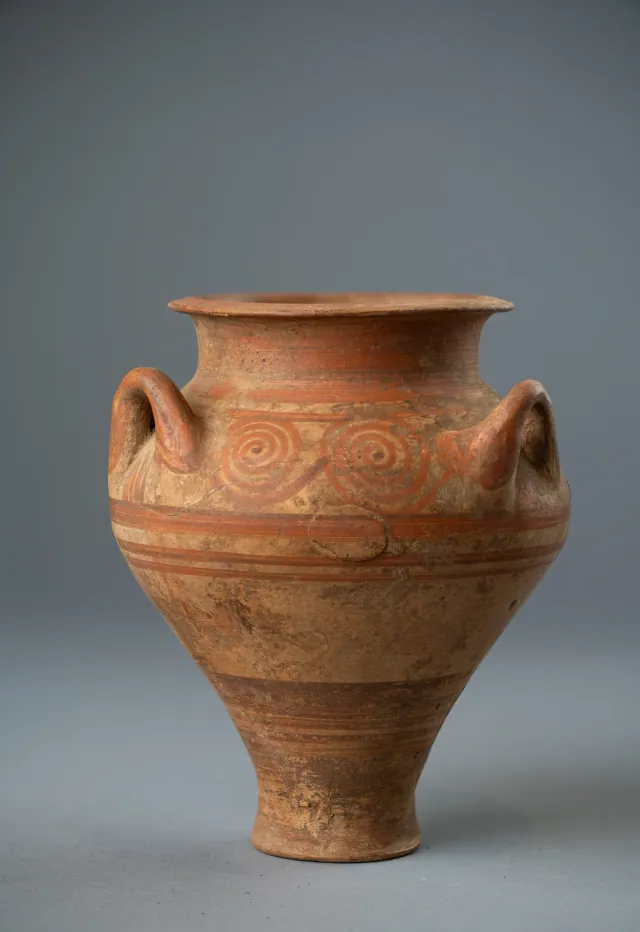
Cypriot Three-Handled Jar in the Mycenaean Style with Running Spirals
Mycenaean pottery
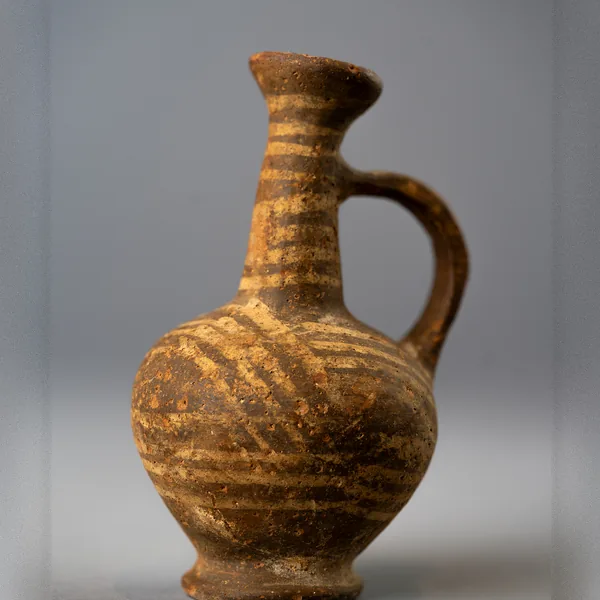
Base Ring II Bilbil Juglet with White-Painted Bands
Base Ring ware
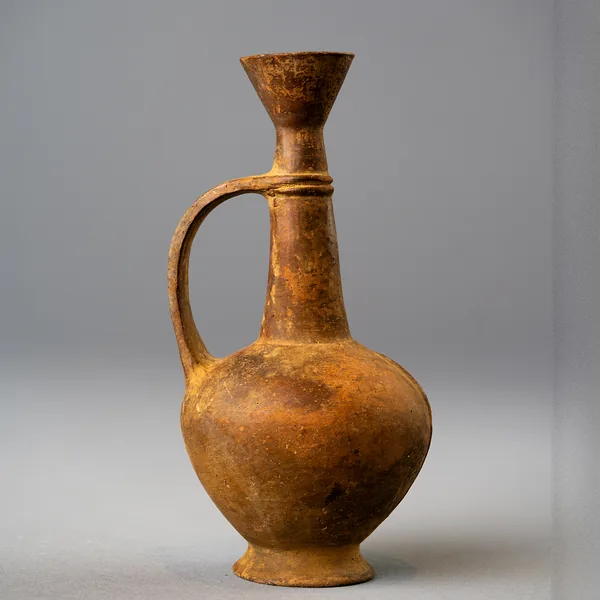
Base Ring Bilbil Juglet with Funnel Mouth and Neck Ridge
Base Ring ware
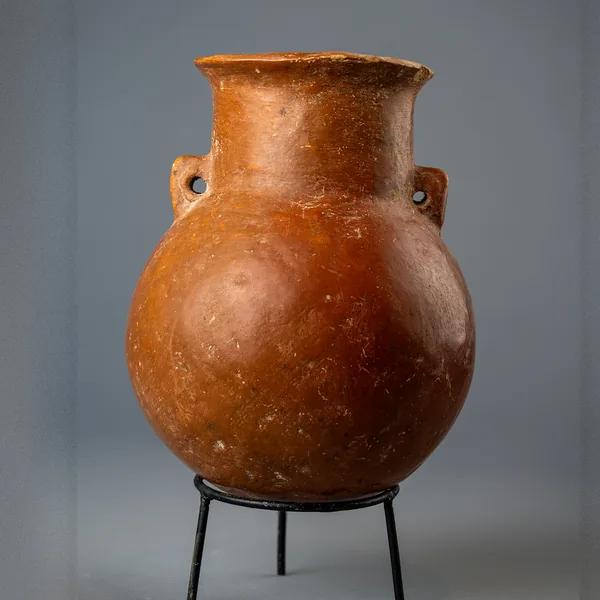
Red Polished Ear-Lug Jar
Red Polished ware
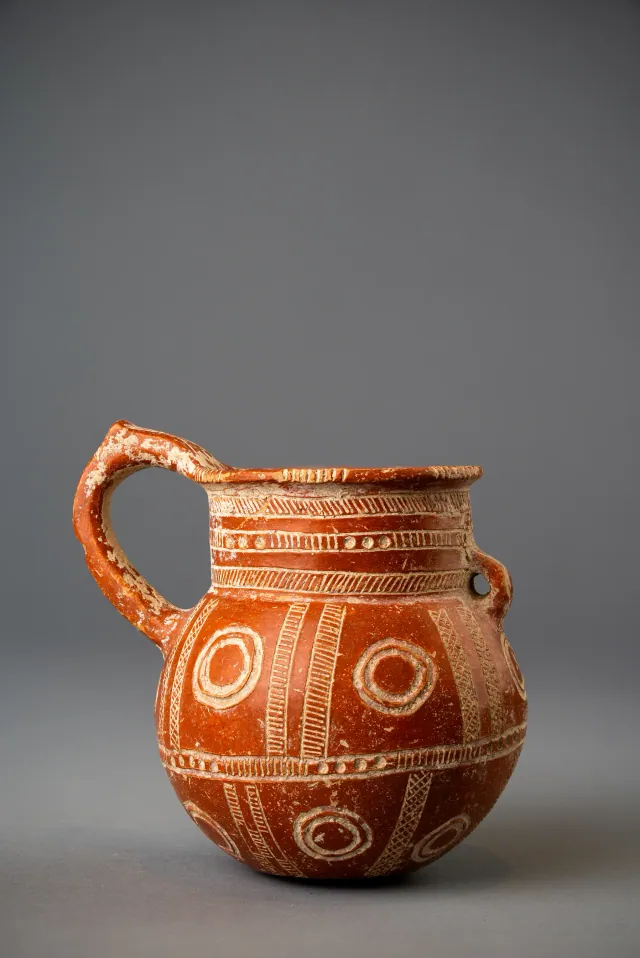
Red Polished One-Handled Jar with Concentric Circles, Deneia Style
Red Polished ware
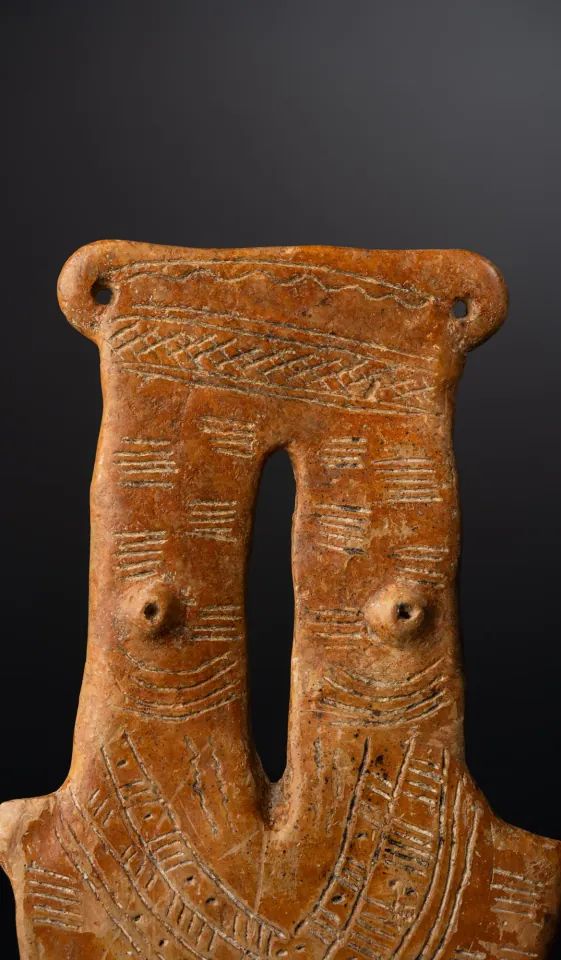
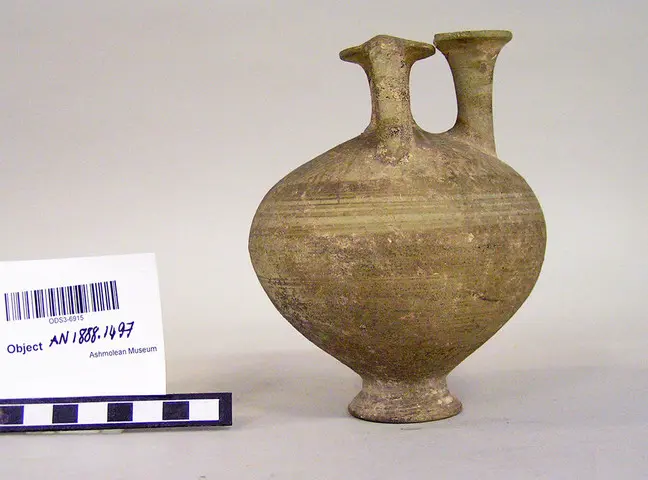
Red Polished Two-Necked Plank Figure
Red Polished ware
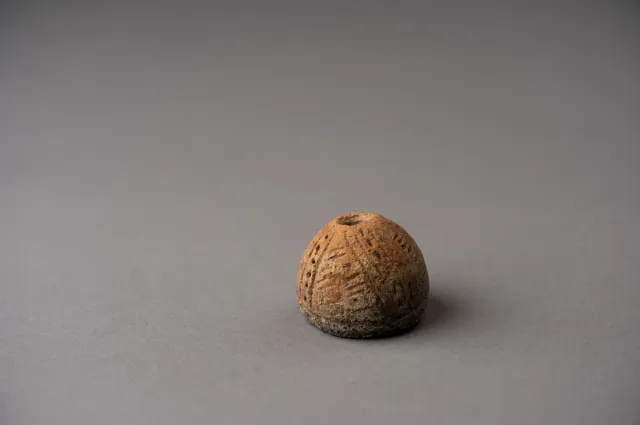
Red Polished Spindle Whorl with Incised Lattice and Dotted Bands
Red Polished ware
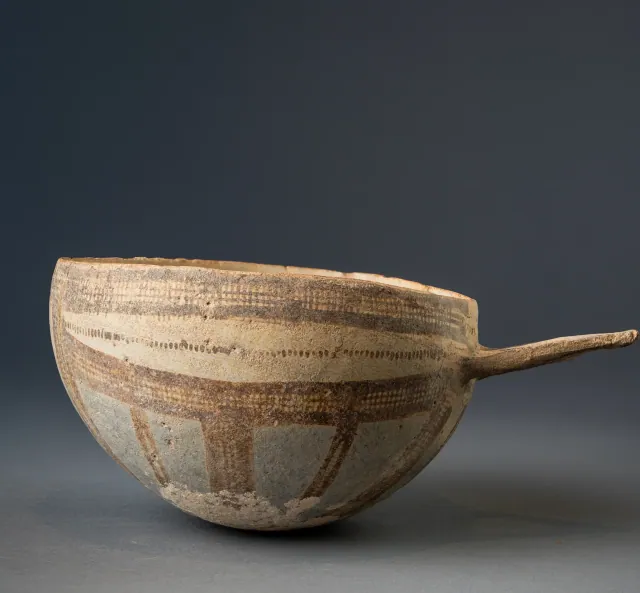
White Slip II Hemispherical Bowl with Wishbone Handle
White Slip ware
Found at the places discussed
Objects in our catalogue, in museum collections, recorded as found at these sites.
).webp)

Background
Where to read more on this site before or after watching.
The site
Khirokitia
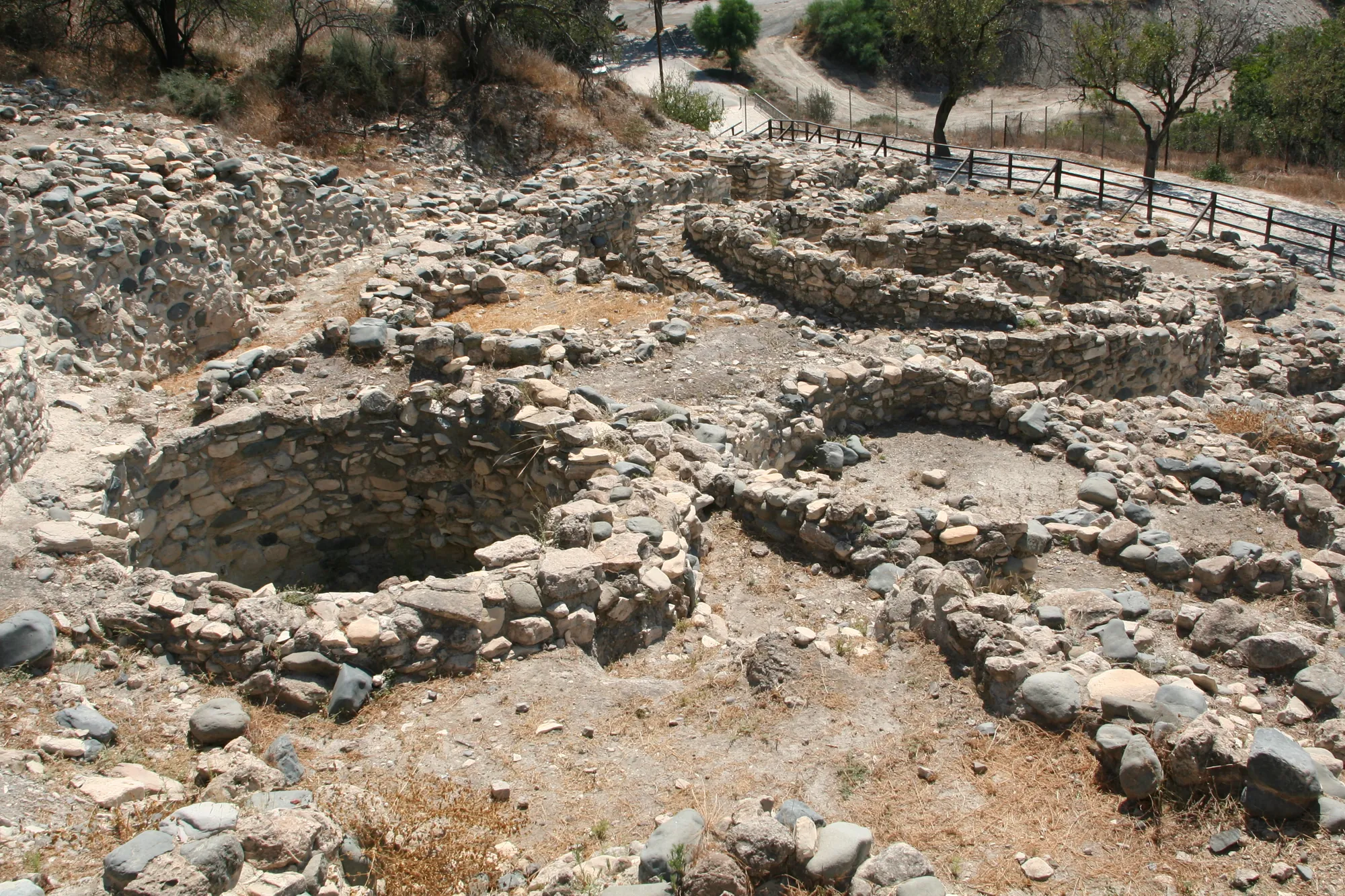
Khirokitia is a walled village of round stone and earth houses on a hill above the Maroni river, lived in from about 7000 BC to the later 6th millennium BC by farmers who made no pottery. It gave its name to the Khirokitia culture, the last stage of the Aceramic Neolithic in Cyprus, and has been a UNESCO World Heritage Site since 1998.
In the compendium
Stone in Ancient Cyprus
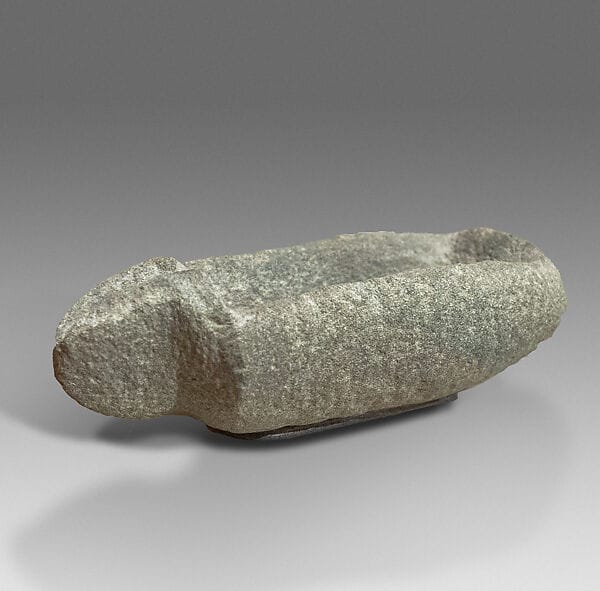
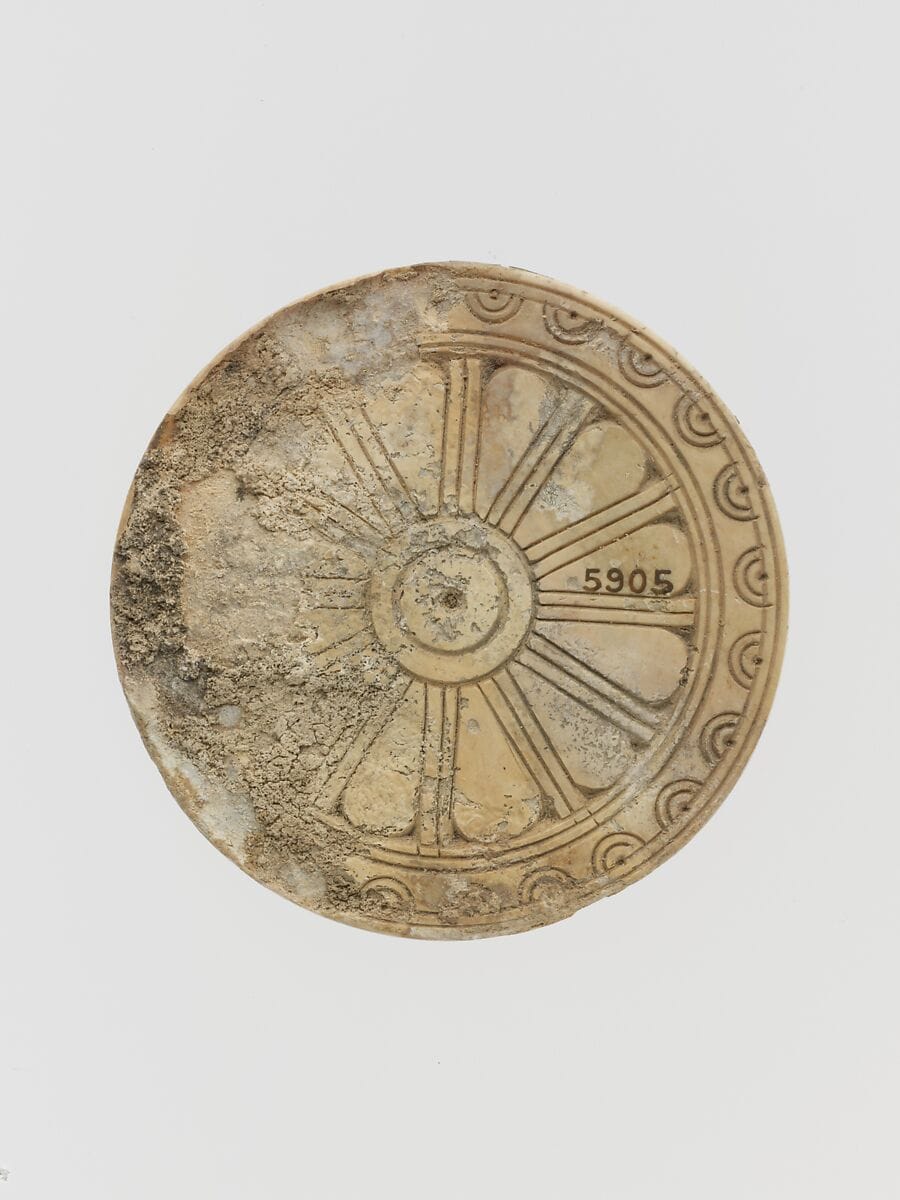
Cypriots worked local chert, igneous rocks, picrolite and limestone from the Neolithic onwards, and imported marble, alabaster and gemstones.
In the compendium
Ivory, Bone, Shell and Wood
Ivory, bone, shell and wood were the organic raw materials of ancient Cypriot craft; the first three often survive, while wood is known mostly from traces.
In the compendium
White Slip Ware
The hand-made Late Bronze Age tableware with a thick white slip and dark painted decoration, mostly hemispherical bowls, widely exported from Cyprus.
Map of Cyprus
Places discussed in the talk
- Has a page on this site
- Other places
- Ground above 200, 500, 1,000 m
Places
- 1Akrotiri-Aetokremnos
- 2Khirokitia
- 3Kalavasos-Tenta
- 4Palaepaphos
- 5Alassa
- 6Lapithos
- 7Kofinou (approx.)
- 8Alaminos (approx.)