
Keynote·Archaeological Research Unit - University of Cyprus·2024
Cypro-Minoan and Other Potmarks on Late Bronze Age Pottery
Babbling Pots
Chapters
About the lecture
In this plenary lecture for the COMPAS project workshop at the University of Cyprus, Nicolle Hirschfeld examines potmarks on Late Bronze Age pottery from Cyprus and the wider Eastern Mediterranean, looking back over nearly four decades of research that began with the oxhide ingots of the Uluburun shipwreck and discussions with Vronwy Hankey.
The first half of the talk traces how early scholarship treated single marks on vases as evidence of Cypro-Minoan writing. After the British Museum excavations of 1896 recovered inscribed clay balls alongside marked vessels, Stanley Casson compiled a 1937 catalogue of sixty-one signs across diverse media without separating local objects from imports. John Franklin Daniel established a stricter methodology in 1941, arguing that isolated potmarks should only be identified as script if they occurred on Cypriot pottery and had parallels in multi-sign inscriptions. When lengthier tablets came to light from 1953 onwards, Émilia Masson assembled the fundamental Cypro-Minoan signaries, though she still included single vase marks.
Hirschfeld explains why determining whether a mark belongs to the Cypro-Minoan script matters even though the script remains undeciphered. It affects the definition of the signary itself, shows how far knowledge of the writing system reached into the Cypriot rural hinterland, and tracks its presence abroad at Ugarit, Tiryns, Aphek, and Ashkelon.
Because many marks are simply non-script symbols, numbers, or workshop codes, the second half of the talk sets out physical criteria for investigating their function. The primary distinction is whether a mark was applied before or after firing. Hirschfeld reviews washy painted marks on Mycenaean pottery, which Claude Schaeffer took as pre-firing evidence for Cypriot manufacture, and calls for pigment analysis and microscopy to test how they overlap the lustrous decoration. For incised marks, she describes experiments cutting into fired sherds with Vassos Karageorghis, practice incisions left on a sherd in Stockholm by Einar Gjerstad, and a stirrup jar handle from Kalavasos Ayios Dhimitrios whose clean groove cuts into the pink fired core.
She concludes with further avenues for future work: contrasting visible incised handle marks with hidden painted base marks, isolating local systems at Kouklia and Kourion or on pithoi and jugs, studying closed contexts from shipwrecks and tombs, using 3D imaging to identify individual hands, and analysing vessels that carry multiple or competing marks.
From our collection
Pieces in the Drakopoulos collection of the kinds and periods this talk covers: Mycenaean pottery, Jug, Late Cypriot (Late Bronze Age).
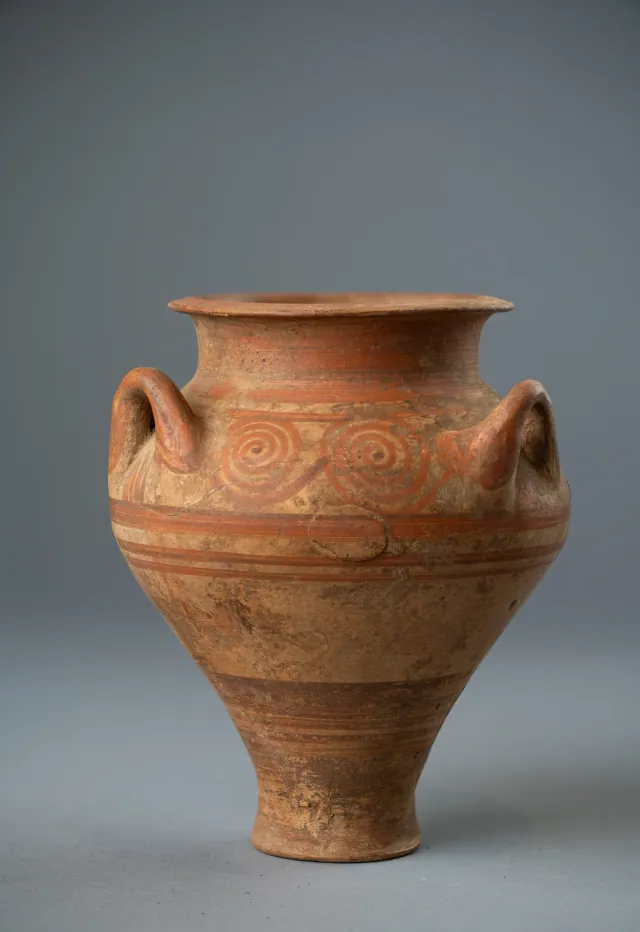
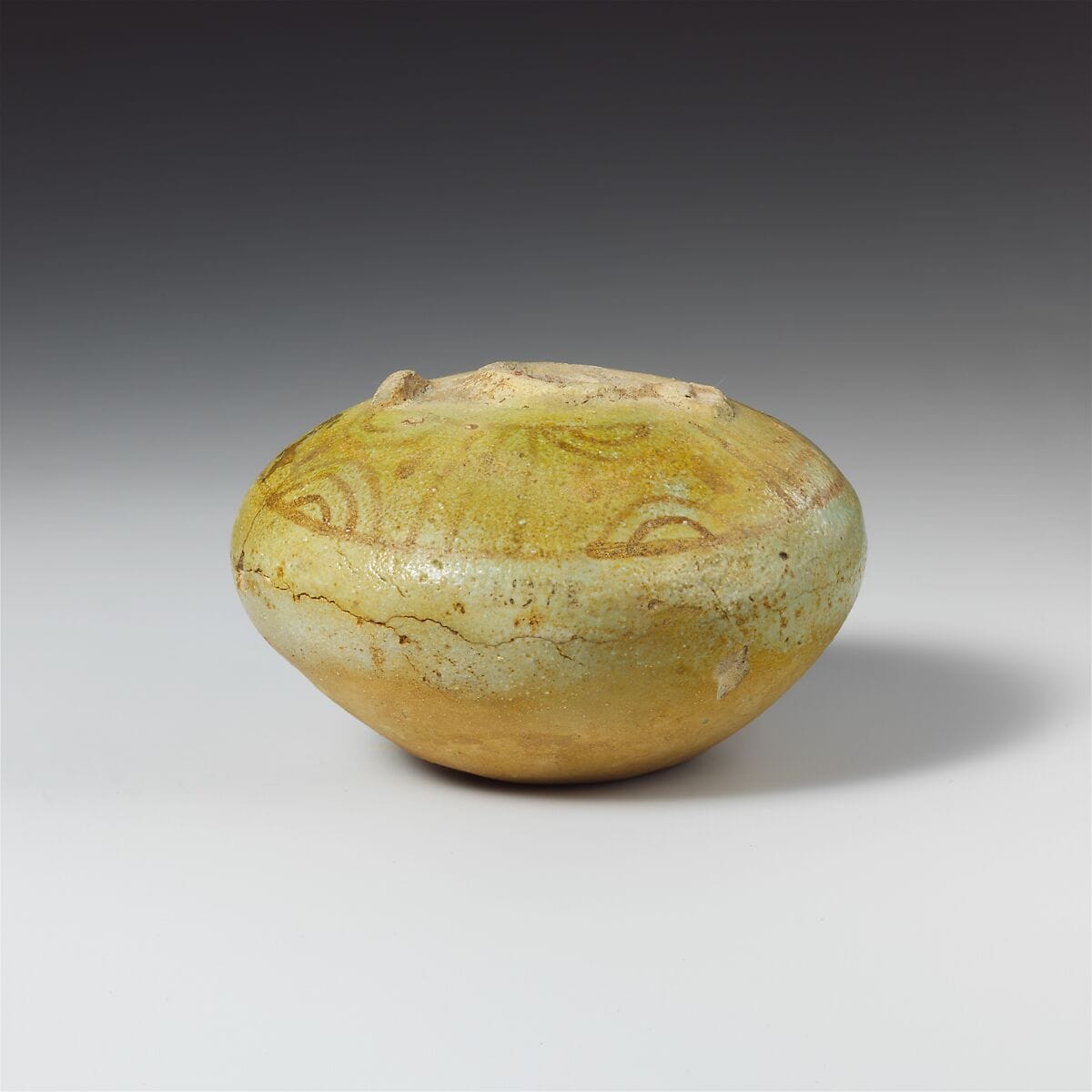
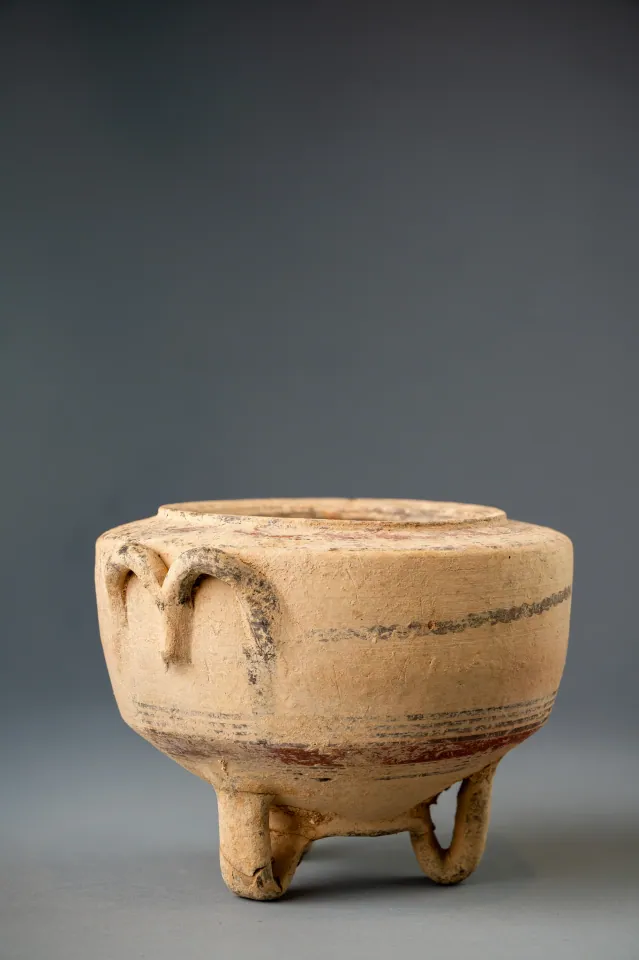
Cypriot Three-Handled Jar in the Mycenaean Style with Running Spirals
Mycenaean pottery
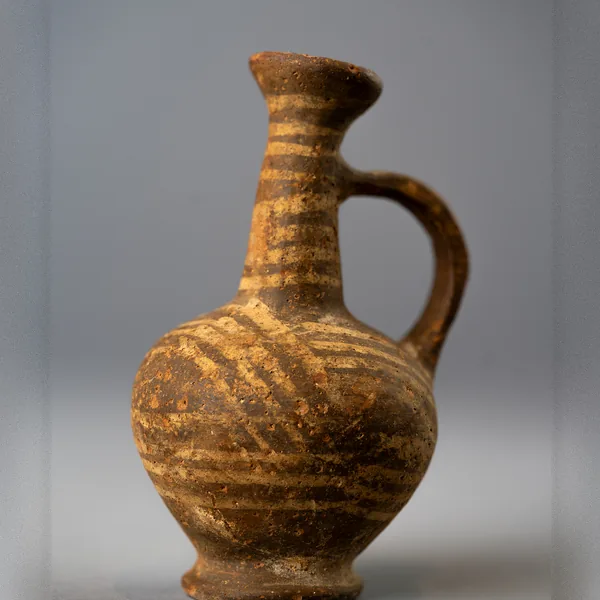
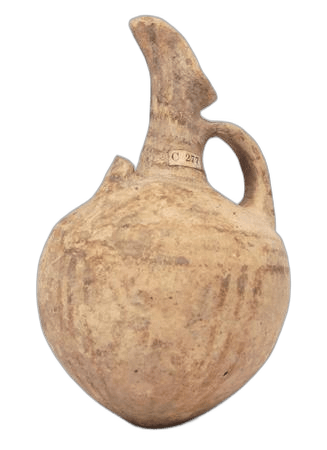
Base Ring II Bilbil Juglet with White-Painted Bands
Jug
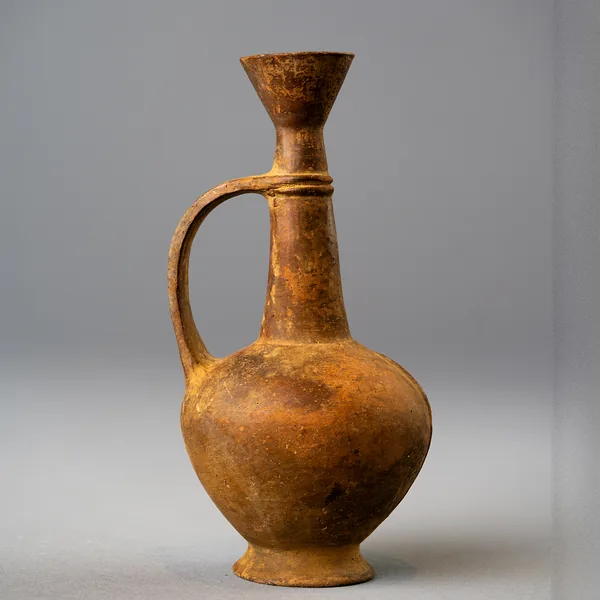
Base Ring Bilbil Juglet with Funnel Mouth and Neck Ridge
Jug
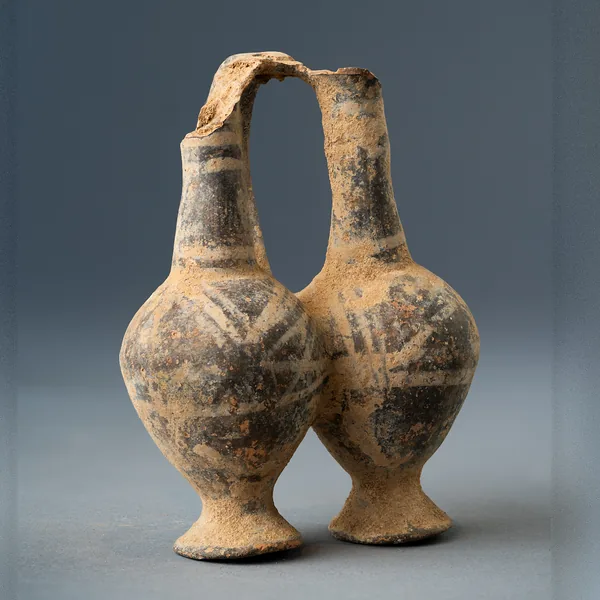
Base Ring II Double Juglet with White-Painted Decoration
Jug
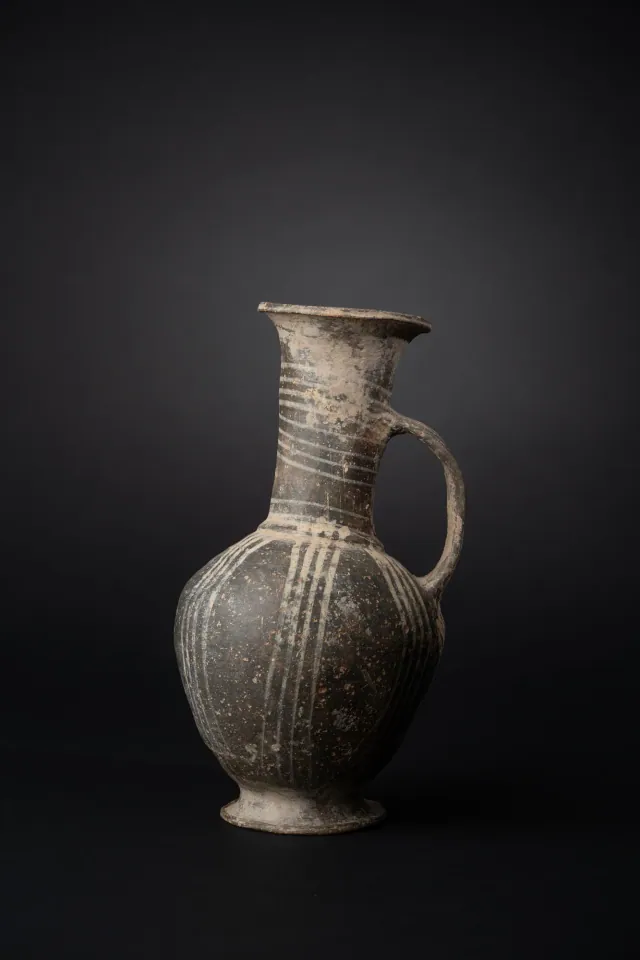
Base Ring II Jug with White-Painted Lattice Bands
Jug
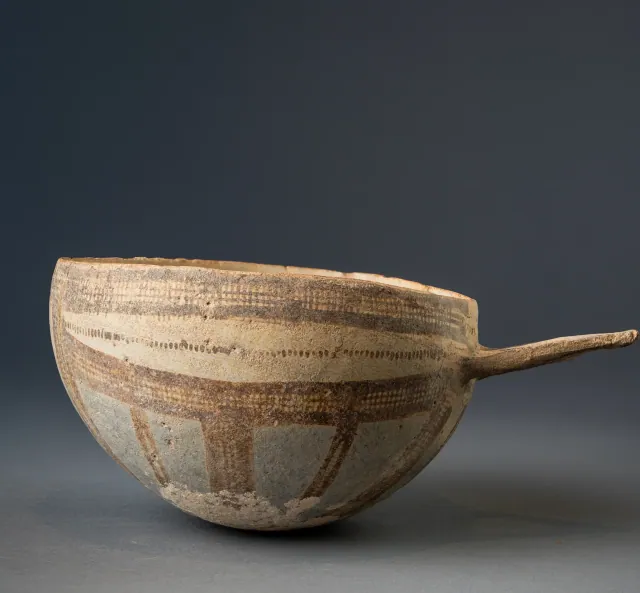
White Slip II Hemispherical Bowl with Wishbone Handle
Late Cypriot (Late Bronze Age)
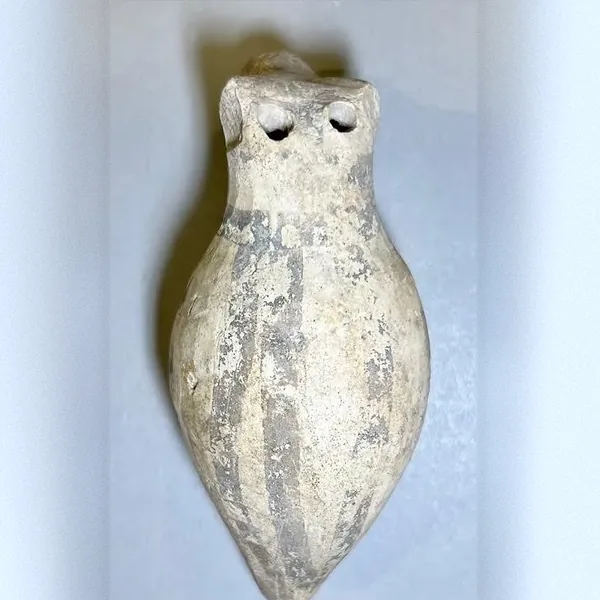
White Painted VI Owl-Headed Rattle
Late Cypriot (Late Bronze Age)
Found at the places discussed
Objects in our catalogue, in museum collections, recorded as found at these sites.
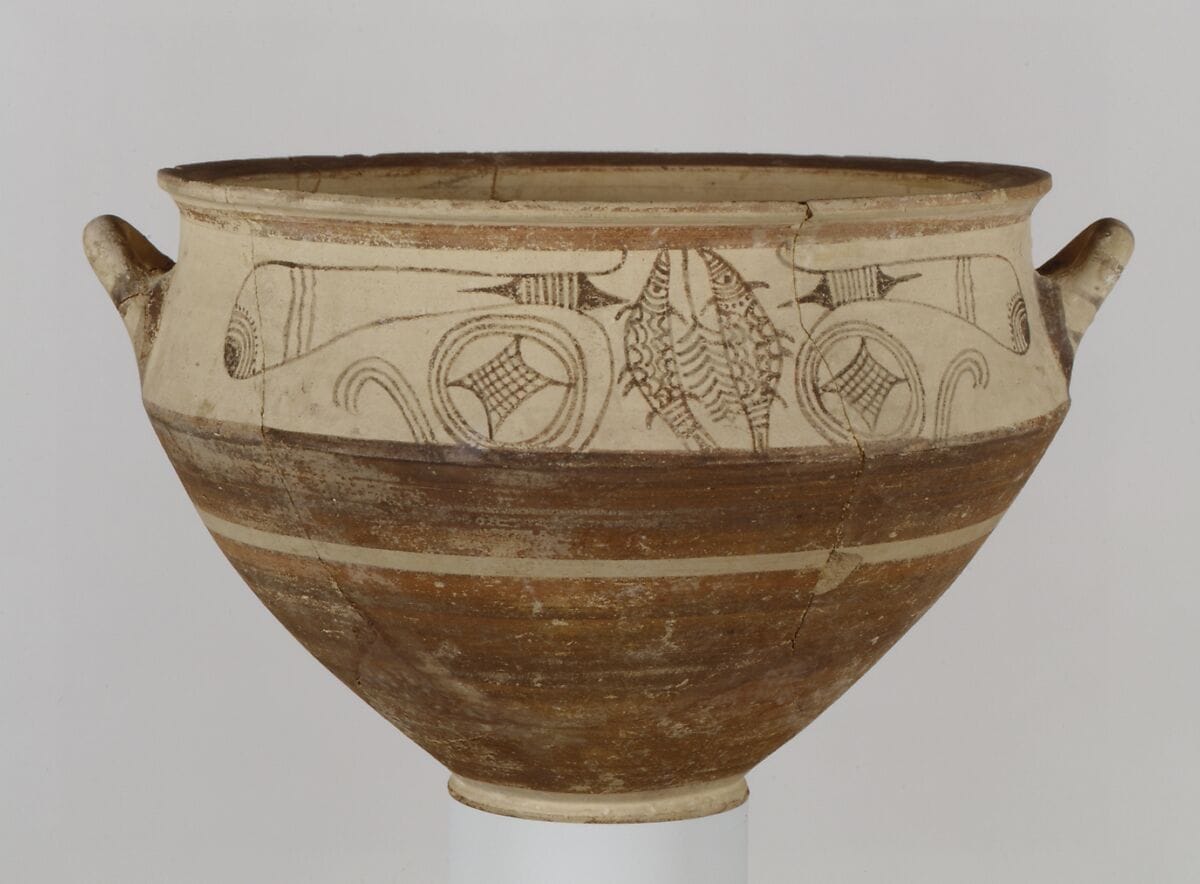

Background
Where to read more on this site before or after watching.
The site
Idalion
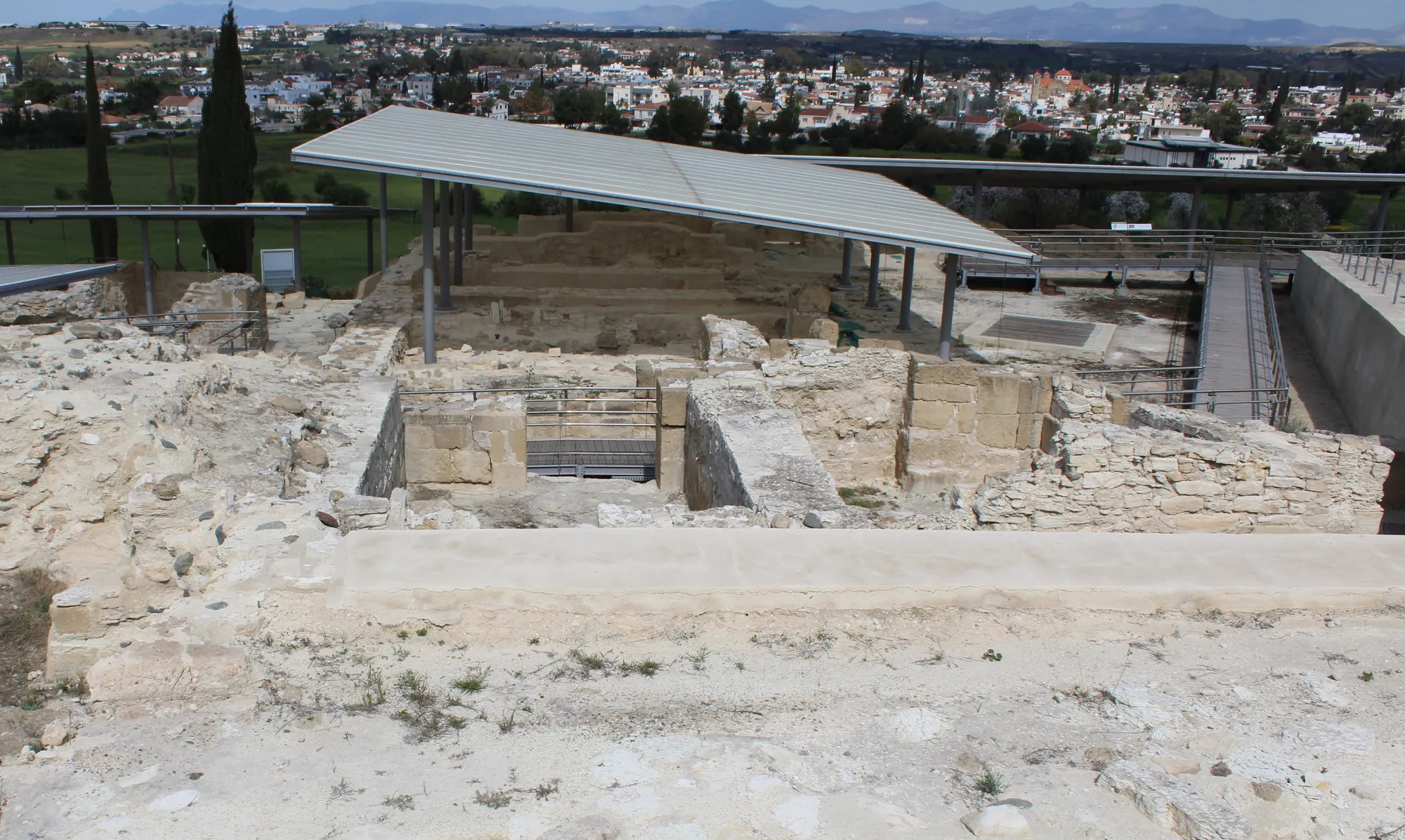
Idalion is an inland city-kingdom of Iron Age Cyprus at the modern village of Dali, built round two limestone acropoleis and a walled lower city on the Yialias river. Its bronze tablet, the longest known text in the Cypriot syllabary, records a siege of the city in the first half of the 5th century BC; soon afterwards Idalion passed to the Phoenician kings of Kition, whose administrative archive was found on the west terrace.
In the compendium
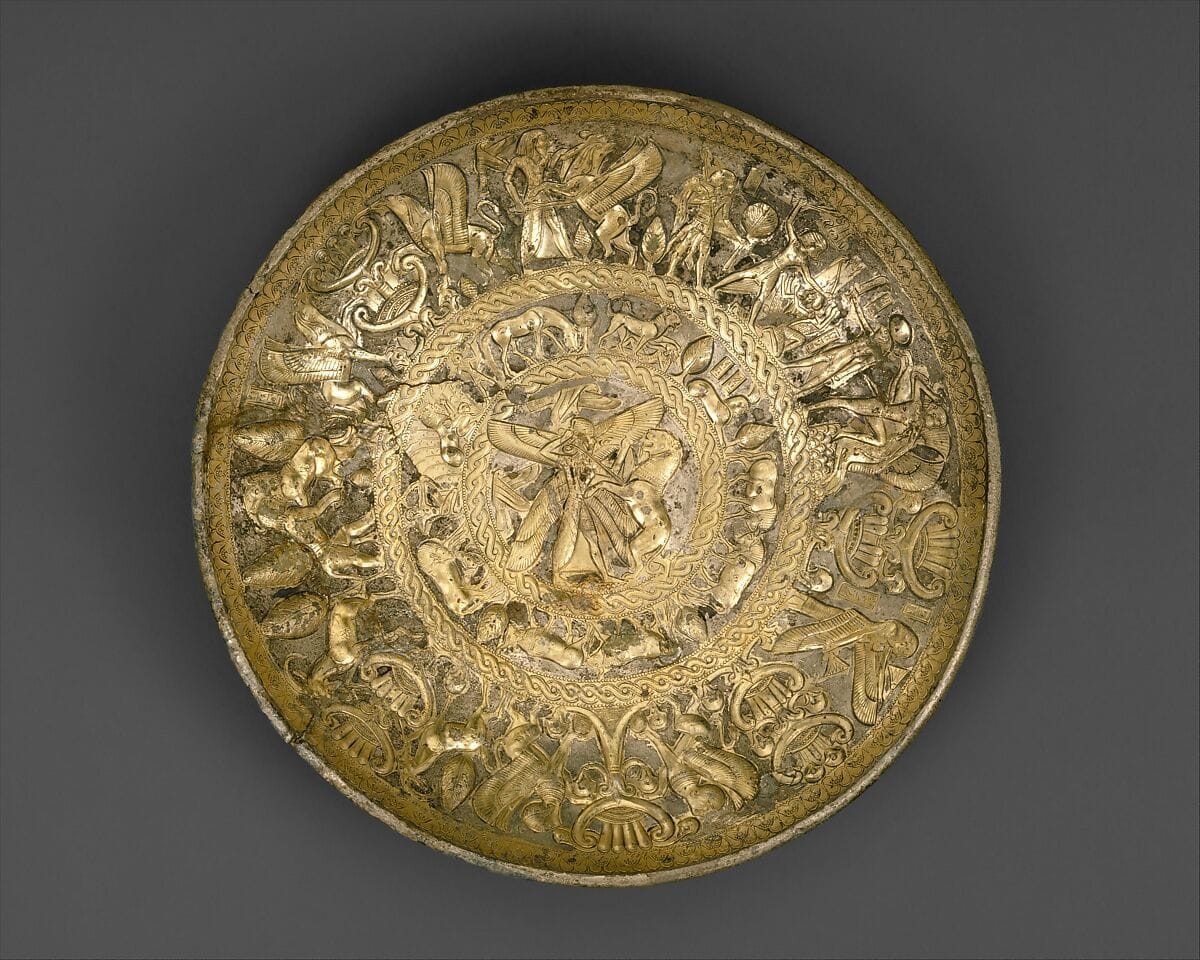
Writing and Literacy in Ancient Cyprus
The scripts of ancient Cyprus, from undeciphered Cypro-Minoan to the Cypriot Syllabary, Eteocypriot, Phoenician and the Greek alphabet, and who used them.

In the compendium
Mycenaean Imports and Local Imitations
Mycenaean pottery, mostly made in the north-east Peloponnese, was the largest body of imported fine ware in Late Bronze Age Cyprus, and Cypriot potters copied some of its shapes.
In the compendium
Jars and Pithoi
A symmetrical wide-necked vessel, the family of Cypriot storage and transport jars, pithoi and painted jars, including the amphora.
Map of Cyprus
Places discussed in the talk
- Has a page on this site
- Other places
- Ground above 200, 500, 1,000 m
Places
- 1Idalion
- 2Kourion
- 3Palaepaphos
- 4Enkomi
- 5Hala Sultan Tekke