
Brought Back from Cyprus: A Guide to Family Antiquities
Soldiers, officials, teachers and tourists bought Cypriot antiquities legally for decades. What was allowed when, which papers to find, and what it means now.

Alexis Drakopoulos
October 3, 2026·Guides · Collecting · Ceramics·15 min read


Share


Alexis Drakopoulos is a Greek Cypriot Machine Learning Engineer working in Financial Crimes. He is passionate about Archeology and making it accessible to everyone. About Me.
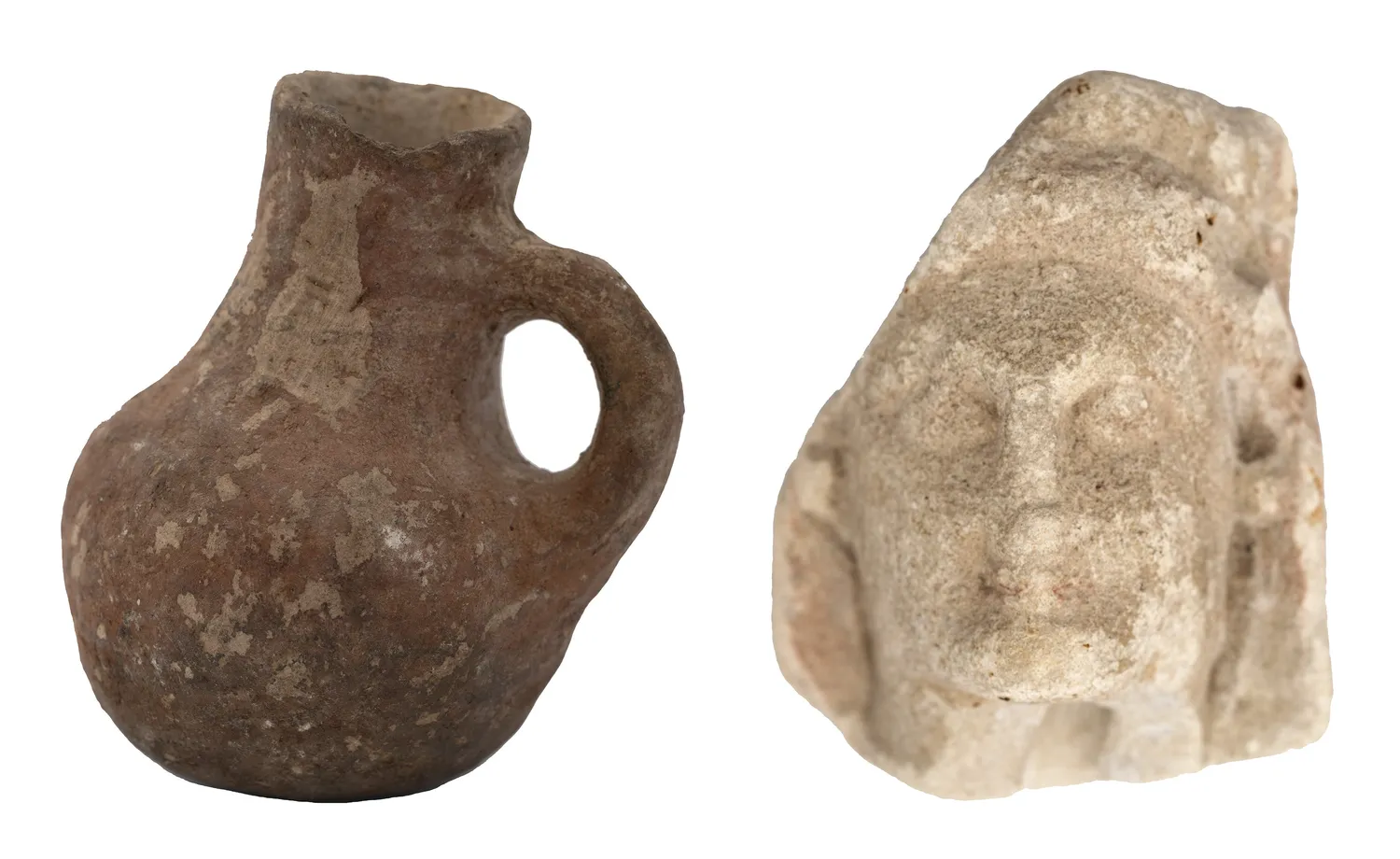
In 1941 Warrant Officer First Class Thomas Shaw Anderson of Brisbane was stationed on Cyprus with the Australian 2/7th Cavalry (Commando) Regiment, whose task was to persuade the German army that the island was held by far more troops than it was. There he bought two antiquities from the Cyprus Museum in Nicosia: a Bronze Age juglet of about 1900 to 1650 BCE and the fragment of an Iron Age figure of about 700 to 500 BCE. Both still carried the museum's saleroom labels eighty years later, when his son Peter gave them, on behalf of the family, to the RD Milns Antiquities Museum at the University of Queensland. Before accepting them the museum asked the Cypriot authorities about their status, and was told that both had been legally purchased in 1941, on the strength of those labels [1].
Many families have a version of this story: a grandfather posted to Cyprus in the war or the Emergency, parents who taught at a services school or served with the United Nations, a cruise that put in at Larnaca. What often survives is the pot. What often does not is the label, the receipt or the licence. This guide explains who brought antiquities home from Cyprus and how they bought them, what was legal at the time and what was not, which papers to look for, and what Cypriot law and the modern market make of your piece now.
Who brought antiquities home from Cyprus?
Five overlapping groups, between the British arrival in 1878 and the end of private export in 1996: colonial officials and their families, servicemen, United Nations peacekeepers, expatriate residents and tourists. No one has counted how many objects each group carried away.
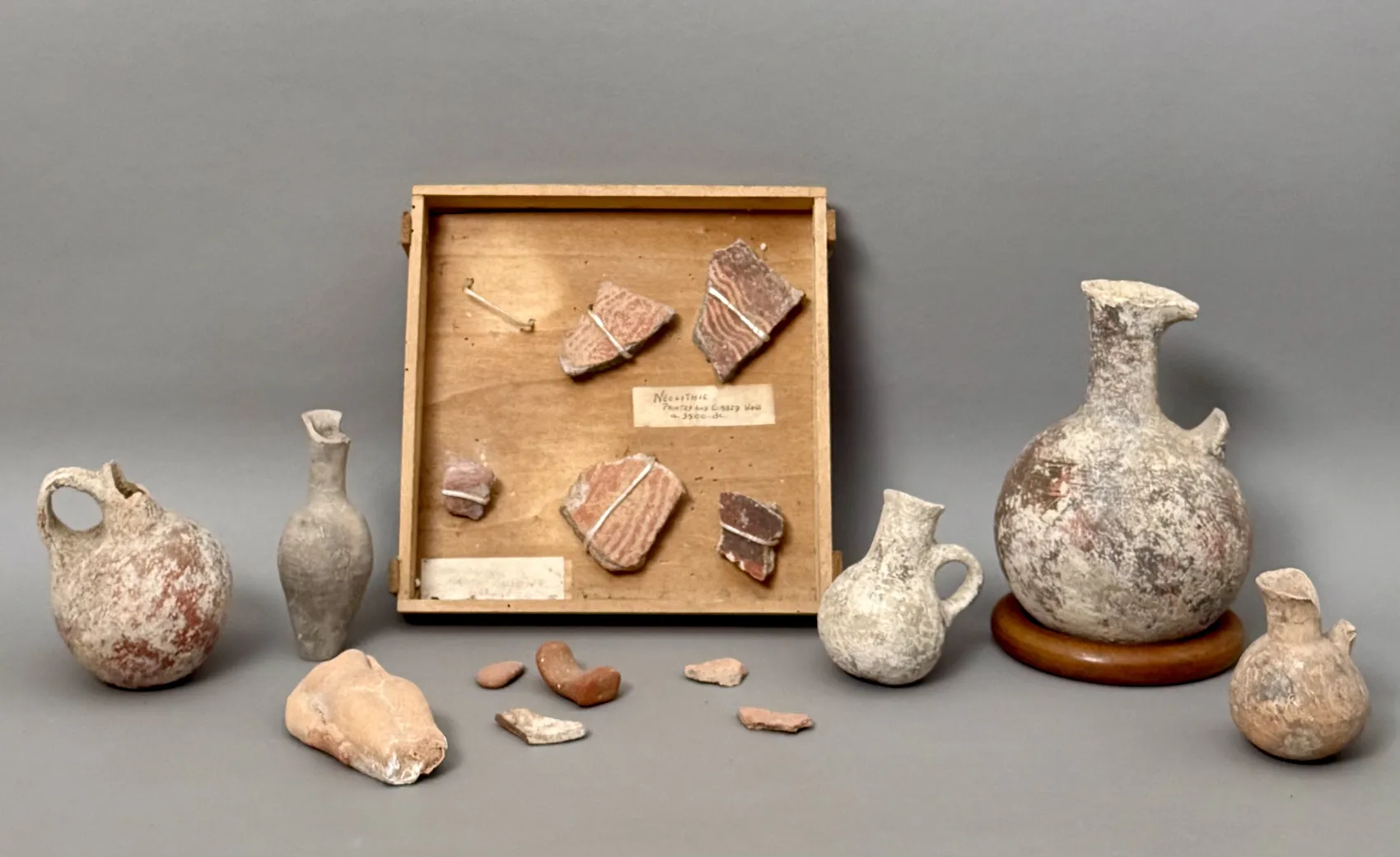
Colonial officials came first. Cecil Lee, an accountant in the Public Works Department from 1921 to 1935, brought home objects that the museum record describes as coming "from tombs in the vicinity of Nicosia and Famagusta"; his family gave them to the Wisbech and Fenland Museum in 1935, and the sister of William Mackay, a Limassol harbour official and later Collector of Customs, gave four more pots to the same museum [2]. An Englishwoman, Ethel Inman, bought small pieces in 1937 and 1939 and had the export permits framed with the antiquities chained to them; four are now in the Alexander Malios collection in Leipzig, alongside a group that belonged to Albert Howard Pedler, a chemist with the Cyprus Mines Corporation [3]. Judge G. C. Griffith-Williams, appointed to the Supreme Court of the colony in 1938, kept the kind of collection that filled a colonial sideboard: round Bronze Age jugs, juglets, terracotta fragments, and five combed Neolithic sherds clipped into a Droste chocolate box with a handwritten label (the collection is pictured at the top of this page and told in full in The Judge, the Escape, and a Chocolate Box).
Servicemen passed through in both world wars, as Anderson did. The Emergency of 1955 to 1959, the EOKA campaign against British rule, brought many more: by mid-1956 there were 17,000 British servicemen on the island, many of them National Servicemen [4]. After independence in 1960 Britain kept the Sovereign Base Areas at Akrotiri and Dhekelia, with their service families and schools. James Alfred Brew taught art at British services schools between 1960 and 1970, with postings in Cyprus; a lamp in his collection is scratched "Paphos 1965, J.A. Brew", and in 1972 he lent the collection to the Ashmolean Museum in Oxford, where two of its multi-headed Red Polished plank figures were published in 1983 and stayed on display until 2025 [5] (the story is in the Brew plank figures). Base families had the same licensed dealers and the same Museum saleroom open to them as anyone else. Inside the bases, archaeology is now handled by British Forces Cyprus together with the Republic's Department of Antiquities under a formal protocol [20].
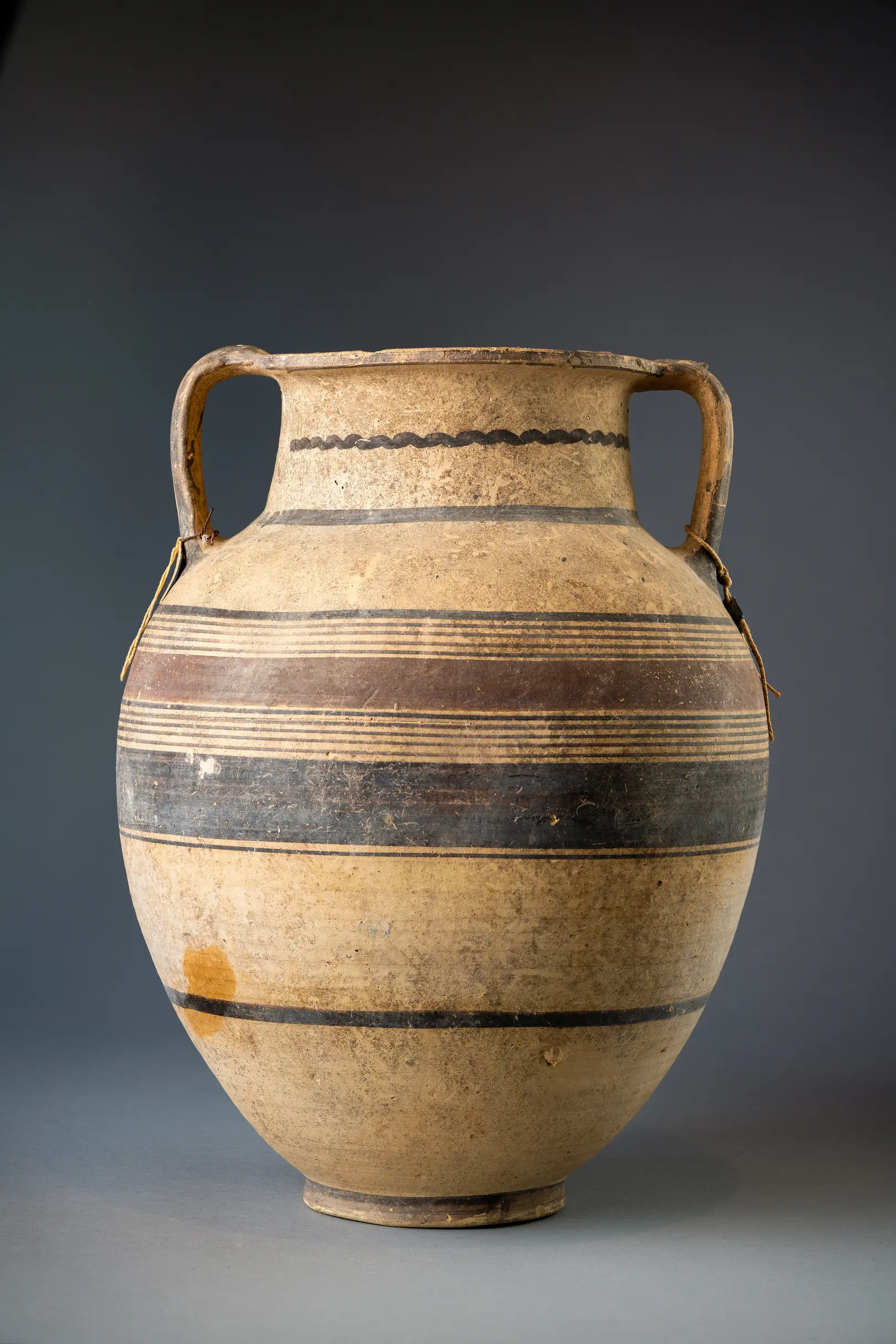
The United Nations Peacekeeping Force in Cyprus (UNFICYP) arrived in March 1964, under Security Council Resolution 186, to prevent further fighting between the Greek Cypriot and Turkish Cypriot communities [6]. Its contingents came from, among others, Austria, Canada, Denmark, Finland, Ireland, Sweden and the United Kingdom, with police from Australia and New Zealand. An Austrian colonel, Dr Josef Mayer-Riefenthaler, who ran the Austrian medical centre from 1973, assembled 113 objects now in Leipzig; seven still carry their export numbers [3]. A UN officer bought the Bichrome amphora shown here directly from the Cyprus Museum under Sales Register number S.R. 3477/65 and took it out under licence in 1969.
Residents and tourists made up the rest. Cruise ships began calling in 1927, and on one Sunday Olga Tufnell sold duplicates to some 300 American cruise passengers at the Cyprus Museum, taking £75 10s in an hour and a half [7]. The British botanist Oleg Polunin bought a Cypro-Geometric Bichrome bowl from the Nicosia dealer Petros Kolokasides in the 1950s or 60s; it came with a Cyprus Museum lead export tag on the handle and a typed card with a photograph [9]. Six vessels, a horse-and-rider figure and a loom weight acquired in Cyprus in 1968, later the P. B. Davies collection in London, were all listed on one government export licence dated 2 May 1968 [10]. United States diplomats bought too: William Rex Crawford, later ambassador, left in 1972 with licence 6403 for 42 objects [3].
Was it legal to buy antiquities in Cyprus in the 1940s, 50s and 60s?
Yes, through set channels, and the government encouraged visitors to use them. From the mid-1930s until 1996 a buyer could acquire an antiquity from the Cyprus Museum or from a dealer licensed by the Department of Antiquities, and take it abroad under a numbered export licence from the Director of Antiquities [14]. The full legal history is in the legal export of Cypriot antiquities.
The Museum's own saleroom opened under Rupert Gunnis in 1926, selling surplus "duplicates", mostly Iron Age pottery and Hellenistic glass, each with a dated ticket lettered in Greek, English and Turkish [7]. In 1983 the Director, Vassos Karageorghis, still described a Sales Register of objects "available at nominal prices", meant to encourage exports to universities and museums "for educational purposes, not as souvenirs" [11]; sales were abolished in 1991.
The Antiquities Law of 1935 created the Department of Antiquities and a small licensed trade. A. H. S. Megaw, Director from 1936 to 1960, licensed three dealers, Kolokasides of Nicosia among them, and George Palma in Famagusta filed monthly returns of his stock [12]. Megaw put notices in the hotels: "Visitors are urgently requested to purchase antiquities only from dealers displaying a license from the Department of Antiquities." When tourists complained about the trip from Famagusta to Nicosia for an export licence, he began checking the dealers' stock in advance so that approved pieces could be sold ready for export [8].
| Channel | Years | What the buyer usually received |
|---|---|---|
| Written permission from the High Commissioner (Antiquities Law of 1905) | 1905 to mid-1930s | A written export permit |
| Cyprus Museum saleroom and Sales Register | 1926 to 1991 | A dated saleroom ticket or label, a Sales Register number (for example S.R. 3477/65), then an export licence |
| Dealer licensed by the Department of Antiquities | Mid-1930s to 1996 | A receipt or typed card, often with a photograph, then an export licence |
| Export licence from the Director of Antiquities | Mid-1930s to 1996 | A typed, numbered, dated licence listing the objects, and a lead seal wired to the object |
Prices were low. An American bought a Bronze Age jug from a licensed dealer for eight Cyprus pounds on 28 September 1964 and received his export licence on 20 October [9]. The numbered licence book had reached 7070 by January 1978, which puts the licences at around seven thousand in four decades, many of them covering several objects [3].
The licensed trade sold Iron Age pottery, lamps and glass by the thousand and very few fine sculptures [7]. A Red Polished or Bichrome jug, a clay lamp or a small glass bottle fits the routine purchase of a serviceman or tourist. A fine limestone head or a bronze is less typical, and deserves more checking.
What was never routine?
Taking a piece out of Cyprus without a licence. Under the 1905 law the offence carried a fine of up to £100, up to twelve months in prison, or both [9], and the 1935 law kept export under the Director's licence. A pot bought openly in a Nicosia shop and packed in a kitbag without the licence still left the island unlawfully at the time.
Three other habits sat outside the system. Buying from villagers or diggers was one: under the 1935 law chance finds belonged to the Government and had to be reported. The Famagusta collector Hadjiprodromou bought between 1963 and 1974 "not from registered antiquities dealers but from the 'producers'", in Robert Merrillees's phrase, meaning the people who dug things up by accident or on purpose [12]. Picking sherds off an eroding site was common among residents and rarely policed, although such finds technically belonged to the Government too. And the registration of private collections between 1963 and December 1973, made "with the silent accord of the Department of Antiquities", applied to Cypriots and residents keeping collections on the island; it was never a route to export [13].
The honest position is that many family pieces probably left in luggage without a licence, and that for most of them it is now impossible to tell which route a given pot took. The Leipzig curators who traced the Malios collection found that lead seals had been "often removed largely for aesthetic reasons" and permits "often lost" [3]. A piece with no paper is common, and in itself no evidence of looting.
Does it matter whether it left before or after 1974?
Yes, a great deal. The Turkish invasion of July 1974 put over a third of the island, including the Famagusta and Kyrenia museums and Hadjiprodromou's collection of some 2,000 objects, outside the control of the Republic, and churches in the north were stripped of icons, mosaics and frescoes. A piece acquired in the north after 1974, by anyone, could never have been exported lawfully from the Republic. Ecclesiastical material (icons, fresco fragments, mosaic pieces) is the category Cyprus pursues hardest; the background is in looting in occupied northern Cyprus.
In the Republic itself the licence system ran on: licence 7070 of 16 January 1978 covered 62 objects [3]. Law 4(I)/1996 then banned dealing and ended export licences for private antiquities [15]. Nothing has left Cyprus legally for a private buyer since.
The date you will hear most often is 1970, the year of the UNESCO Convention. The Convention binds states and is not retroactive, yet museums and auction houses have made proof that an object was out of its country of origin before 1970 their working benchmark. For a family piece, the useful question is how early you can prove it was in your family's hands outside Cyprus.
What paperwork should I look for in the family papers?
Anything that ties the object to a date and a lawful channel, and anything that proves when your relative was on the island. The guide to Cypriot export licences, seals and labels explains how to read each mark; this is the list to search for.
- An export licence: typed, numbered and dated, signed for the Director of Antiquities, listing one object or dozens. A photocopy still counts. The Department keeps copies of older licences and has matched numbers half a century later, as it did for the 1964 jug when it appeared at Bonhams in 2014 [9].
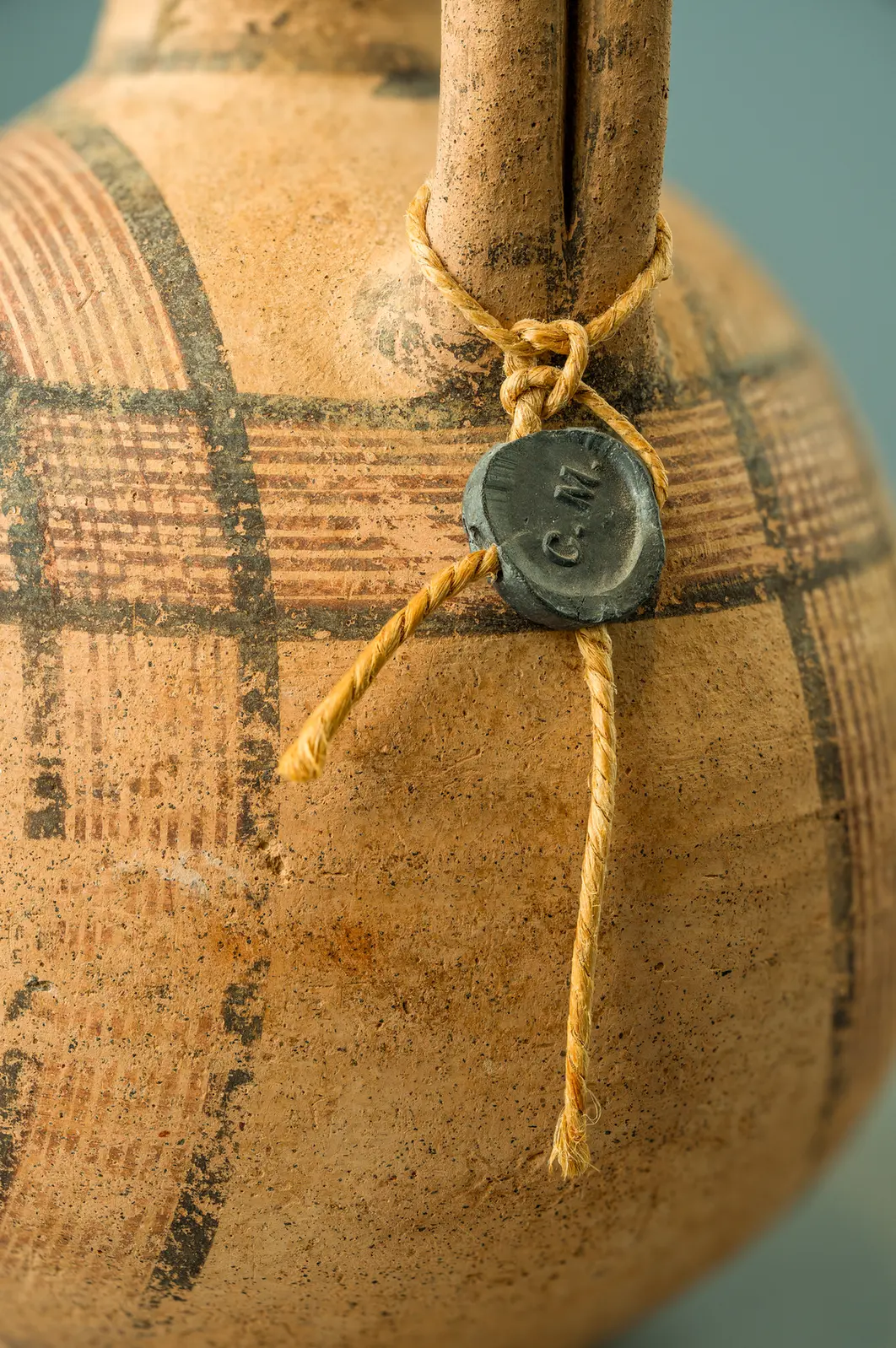
- A lead seal on wire round a handle or neck, sometimes stamped "C.M." for the Cyprus Museum, as on the jug shown here, or the mark the wire left.
- A saleroom ticket or label from the Cyprus Museum, or a Sales Register number written as "S.R." followed by a number and a year.
- A dealer's receipt, stock list or typed card
- Letters: a note from a Director of Antiquities, a letter home that mentions a purchase, a diary entry.
- Photographs of the objects in a 1950s or 60s home, or of your relative in Cyprus.
- Proof of residence: service records, passports with entry stamps, services school reports, employer letters, UN medal citations. In the UK, records of deceased service personnel are requested through gov.uk, and the Ministry of Defence is transferring them to The National Archives in stages [18].
- Removal inventories, insurance schedules and probate lists that mention "Cypriot pottery".
- A museum loan file or a publication that names your relative as owner.
None of these on its own is as strong as a licence, and together they can be stronger than one. Brew's collection shows how: the 1965 inscription and the 1972 loan file fix its formation in the 1960s, even though two sale catalogues in 2019 described it as "acquired 1970s to 1980s". Write down the earliest date you can prove, with the document that proves it, because dates in later descriptions drift.
Keep everything together while you look. Do not wash off ink numbers, cut off seals, peel off labels, split a group between heirs or throw away the box a piece came in: the judge's chocolate box is now part of the record of his sherds. If you would like help reading what you have found, send us photos of the object, its base and every label or document, and we will tell you what we can see, free of charge.
What does Cypriot law say about it today?
The current Antiquities Law (Cap. 31, as amended) defines an antiquity as any object made by human hand more than a hundred years ago and found or excavated in Cyprus, with 1940 as the cut-off for ecclesiastical or folk art of great significance [15]. Section 26 forbids anyone to deal in antiquities. Section 27 allows export only for exhibition, long-term loan, study of excavation material and gifts by the President of the Republic, and says plainly that no licence may be granted for the export of a private collection [15]. These rules govern what happens on Cyprus today. They do not undo exports made under the licences issued before 1996.
What that means for your piece depends on where it is and what you can show. In outline, as of 2026:
- With a licence, a seal or a saleroom label, the object left lawfully, and the Department can often confirm it against its archive. It can be kept, studied, given away or sold.
- With family evidence but no licence, you are in a very common position. Keeping the piece is generally unproblematic; selling it means assembling the file, because auction houses and museums will ask for it and make their own decision.
- If it probably left without a licence, keeping an inherited object that has been abroad for decades is not in general an offence in the UK or the US. The UK's Dealing in Cultural Objects (Offences) Act 2003 is not retrospective [19], and the US import restrictions on Cypriot material, in force since 2002, apply to imports made after they took effect. Such a piece is hard to sell, and Cyprus may ask for it back.
- If it came from the north after 1974, or is a church object, stop and take advice before doing anything else.
This is general information about the law, not legal advice. For a specific object, a cultural-property lawyer in your own country is the right person to ask.
The Department of Antiquities watches online sales, including small regional auctions in Britain, and asks for a piece to be withdrawn when nothing shows a lawful export. In recent cases a Cotswolds saleroom withdrew a juglet of about 750 BCE in 2025, and in 2026 Halls Fine Art and the owner of a Base Ring juglet agreed to its return after it appeared online; both were handed over at the Cyprus High Commission in London [17]. The reports say nothing of how those objects reached Britain. The lesson for a family is practical: research the piece before you consign it.
What can we do with it now?
Keep it, record it, sell it, give it to a museum or return it to Cyprus.
Keeping and recording costs nothing. Photograph the piece from every side, scan the papers, and write down what the family remembers with dates and names. If you are dealing with a whole estate, the guide for executors covers inventories and probate.
Identification comes next. Our visual key to Cypriot pottery will narrow down the ware, and the guide to replicas and fakes matters for this group in particular: Megaw's hotel notices warned that imitations circulated on the island [8].
If you are thinking of selling, read what a Cypriot antiquity is worth and then the guide for your country, the UK or the US. The P. B. Davies group, with its 1968 licence, sold at Bonhams in London in 2023 for £1,536 including premium [10].
How donation and voluntary return work in practice is set out in returning or donating Cypriot antiquities. Families have been giving such pieces away for nearly a century. Cecil Lee's went to Wisbech in 1935 [2]. In 2021 the family of Fraser Wilkins, the first United States Ambassador to Cyprus (1960 to 1964), returned 38 antiquities to the Embassy of Cyprus in Washington [16]. And the Andersons chose a teaching museum "as recognition of our father's service in WW2", so that a juglet bought in Nicosia in 1941 and the face of an Iron Age figurine could be "studied and made available to a much wider range of people" [1].
References
- 1.RD Milns Antiquities Museum, The University of Queensland (19 September 2025). Cypriot antiquities bring a Second World War story to UQ. https://antiquities-museum.uq.edu.au/article/2025/09/cypriot-antiquities-bring-second-world-war-story-uq
- 2.Wisbech & Fenland Museum (24 October 2024). Wisbech and Fenland Museum ancient Cypriot collection. https://www.wisbechmuseum.org.uk/news/post.php?s=2024-10-24-wisbech-and-fenland-museum-ancient-cypriot-collection
- 3.Gatzsche, A. (2023). From Cyprus to Leipzig: Provenance research. In E. Poyiadji-Richter (Ed.), Alexander Malios Collection, Vol. 1: Cypriot Antiquities (pp. 6-11). Alexander Malios Research Institute for Cypriot Heritage and Archaeology.
- 4.National Army Museum. Cyprus. https://www.nam.ac.uk/explore/cyprus
- 5.Frankel, D. (1983). Corpus of Cypriote Antiquities 7: Early and Middle Bronze Age Material in the Ashmolean Museum, Oxford (Studies in Mediterranean Archaeology XX:7). Paul Åströms Förlag.
- 6.United Nations Peacekeeping. UNFICYP: United Nations Peacekeeping Force in Cyprus. https://peacekeeping.un.org/en/mission/unficyp ; United Nations Security Council Resolution 186 (4 March 1964).
- 7.Stanley-Price, N. (2025). Illicit excavation and the sale of 'duplicate' antiquities: Rupert Gunnis and the Cyprus Museum, 1926-1932. Cahiers du Centre d'Études Chypriotes, 55, 269-301. https://doi.org/10.4000/151c2
- 8.Powell, J. (2013). Love's Obsession: The Lives and Archaeology of Jim and Eve Stewart (pp. 46-47). Wakefield Press.
- 9.Alphas, E. (2017). From a Bronze Age tomb in Cyprus to the estate of a gentleman in Sussex: Measures taken and problems faced in the investigations on the illicit trade of antiquities. In D. Pilides & M. Mina (Eds.), Four Decades of Hiatus in Archaeological Research in Cyprus: Towards Restoring the Balance (pp. 30-43). Holzhausen.
- 10.Bonhams, Antiquities, London, 6 July 2023, lot 48 (P. B. Davies collection; Government of Cyprus export licence dated 2 May 1968). https://www.bonhams.com/auction/28251/lot/48/
- 11.Interview with Dr. Vassos Karageorghis, Director of the Department of Antiquities of Cyprus. (1983). Journal of Field Archaeology, 10, p. 17.
- 12.Merrillees, R. S. (2014). George Basil Palma, chemist and collector of Cypriote antiquities in Famagusta, Cyprus, in the 20th century A.D. Cahiers du Centre d'Études Chypriotes, 44.
- 13.Karageorghis, V. (1974). The illicit sale of Cypriot antiquities [Letter]. Antiquity, 48.
- 14.Fehlmann, M. Looting and Losing the Archaeological Heritage of Cyprus. Bloomsbury Academic. https://doi.org/10.5040/9780755608331
- 15.Ο περί Αρχαιοτήτων Νόμος (The Antiquities Law), Cap. 31, Republic of Cyprus, consolidated text as amended (including Laws 48/1964, 4(I)/1996 and 200(I)/2014), ss. 2, 26 and 27. CyLaw. http://www.cylaw.org/nomoi/enop/non-ind/0_31/full.html (accessed October 2026).
- 16.Cyprus Mail (24 November 2021). Dozens of Cyprus' ancient artefacts returned. https://cyprus-mail.com/2021/11/24/dozens-of-cyprus-ancient-artefacts-returned/
- 17.Cyprus Mail (25 November 2025). Cypriot antiquity repatriated from Britain. https://cyprus-mail.com/2025/11/25/cypriot-antiquity-repatriated-from-britain ; Cyprus Mail (1 July 2026). Ancient Cypriot artefact repatriated from the UK. https://cyprus-mail.com/2026/07/01/ancient-cypriot-artefact-repatriated-from-the-uk
- 18.UK Government. Request records of deceased service personnel (guidance, updated 7 January 2026). https://www.gov.uk/guidance/request-records-of-deceased-service-personnel
- 19.Dealing in Cultural Objects (Offences) Act 2003 (c. 27). https://www.legislation.gov.uk/ukpga/2003/27
- 20.GeoConnexion (7 March 2024). Lost tombs and quarries rediscovered on British military base in Cyprus [University of Leicester survey of the Eastern Sovereign Base Area]. https://geoconnexion.com/in-depth/lost-tombs-and-quarries-rediscovered-on-british-military-base-in-cyprus