
Lecture·Archaeological Research Unit - University of Cyprus·2023
Late Bronze Age megasites in the Carpathian Basin and their relation to the Eastern Mediterranean
Rüdiger Krause
A guest lecture in the University of Cyprus series on a subject outside Cyprus.
Chapters
About the lecture
Rüdiger Krause of Goethe University Frankfurt examines the Late Bronze Age fortified megasites of the eastern Carpathian Basin and the wider exchange networks connecting Northern and Central Europe with the Aegean and the Eastern Mediterranean during the second millennium BC.
The first half of the talk surveys prestige goods that moved along this north-south route, peaking in the 14th century BC. Krause discusses Eastern Mediterranean glass beads, Egyptian-type folding chairs and oxhide ingot pictograms in the Nordic Bronze Age, and an Aegean-type spearhead copied locally in the Únětice culture of eastern Germany. Turning to Baltic amber, he traces its movement south to the shaft graves of Mycenae, the Uluburun shipwreck, Qatna, and the tomb of Tutankhamun. He then reviews the 14th-century BC fortified site of Bernstorf in southern Germany, where folded sheets of pure gold refined by cementation and an amber seal inscribed in Linear B were studied in a project with Vassos Karageorghis.
The second half presents fieldwork in the Mureș river region of the Romanian Banat, in the foreland of the ore- and salt-rich Apuseni Mountains, where Middle Bronze Age tell settlements gave way around 1500 BC to vast fortified enclosures. At Cornești-Iarcuri, concentric earth-and-timber ramparts totalling 33 kilometres enclosed 1,700 hectares. At Sântana, geomagnetic survey, LiDAR and excavations have revealed burnt ramparts, five-metre-deep V-shaped ditches, and over a tonne of clay sling projectiles. On an artificial mound inside Sântana's inner ring, Krause's team excavated monumental post-built halls up to 60 metres long, one with a geometrically decorated plaster floor dated to the 14th century BC, alongside white-plastered wall debris, Eastern Mediterranean blue glass beads, and archaeobotanical evidence for the introduction of millet.
From our collection
Pieces in the Drakopoulos collection of the kinds and periods this talk covers: Middle Cypriot (Middle Bronze Age), Late Cypriot (Late Bronze Age).
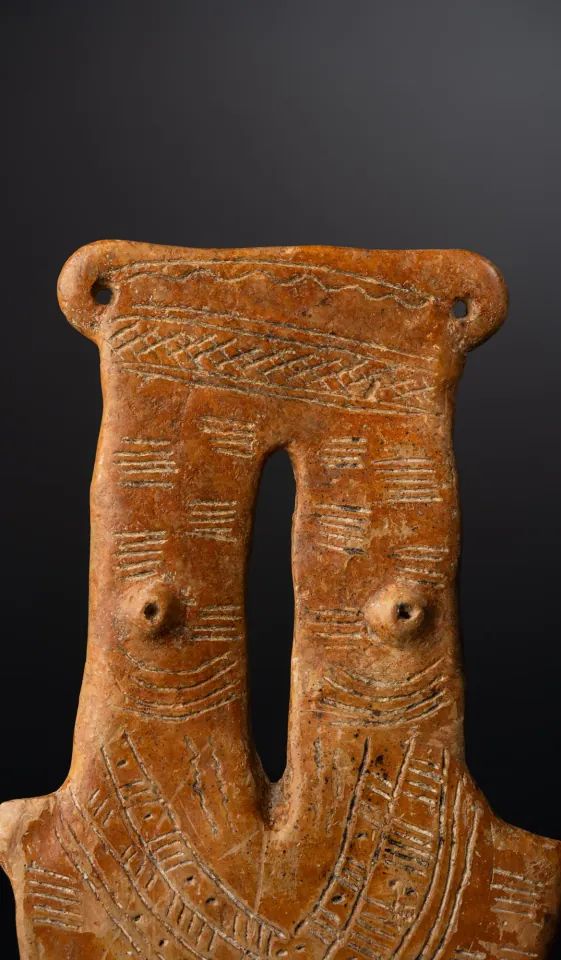
Red Polished Two-Necked Plank Figure
Middle Cypriot (Middle Bronze Age)
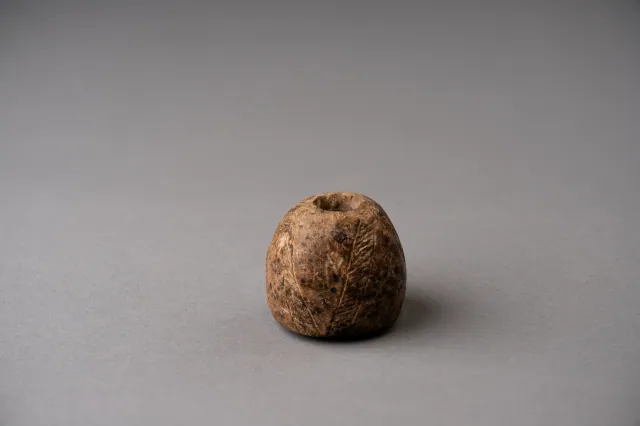
Spindle Whorl with Incised Herringbone Bands
Middle Cypriot (Middle Bronze Age)
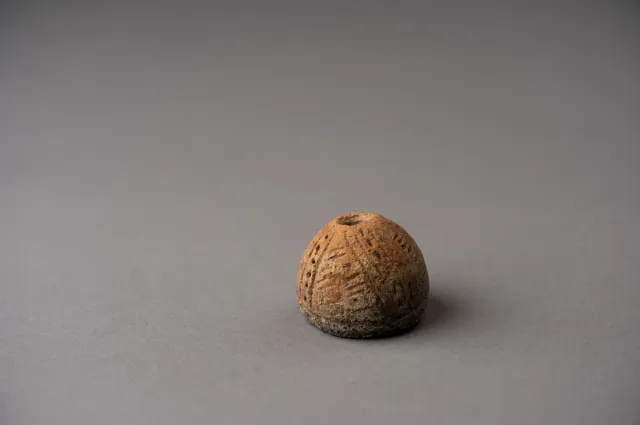
Red Polished Spindle Whorl with Incised Lattice and Dotted Bands
Middle Cypriot (Middle Bronze Age)
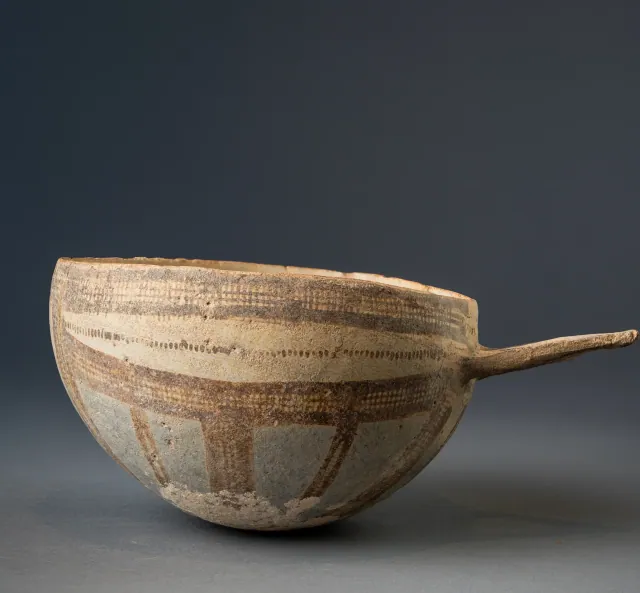
White Slip II Hemispherical Bowl with Wishbone Handle
Late Cypriot (Late Bronze Age)
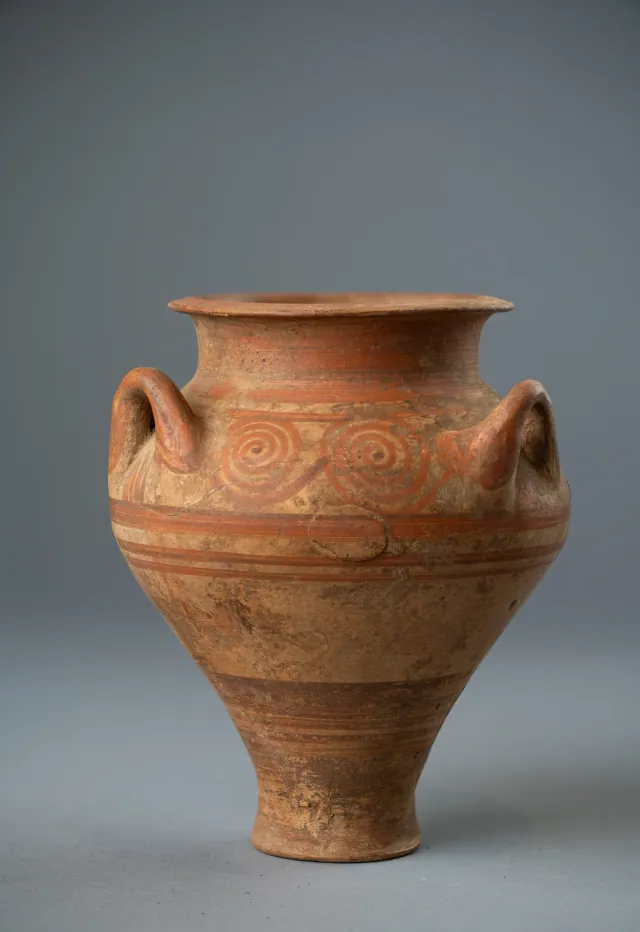
Cypriot Three-Handled Jar in the Mycenaean Style with Running Spirals
Late Cypriot (Late Bronze Age)
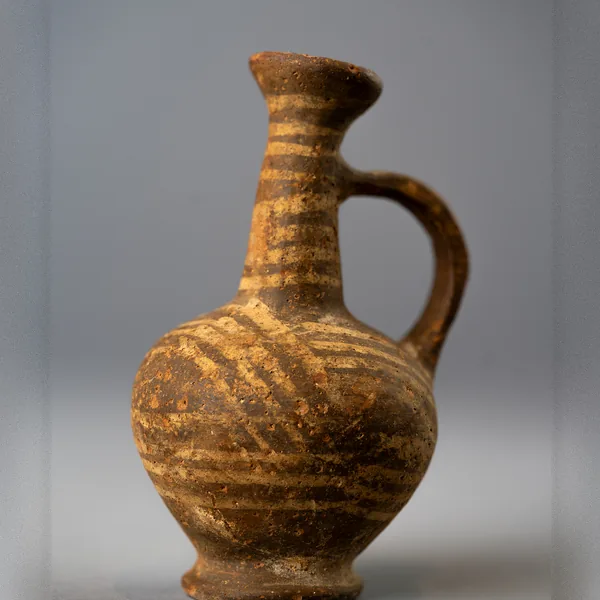
Base Ring II Bilbil Juglet with White-Painted Bands
Late Cypriot (Late Bronze Age)
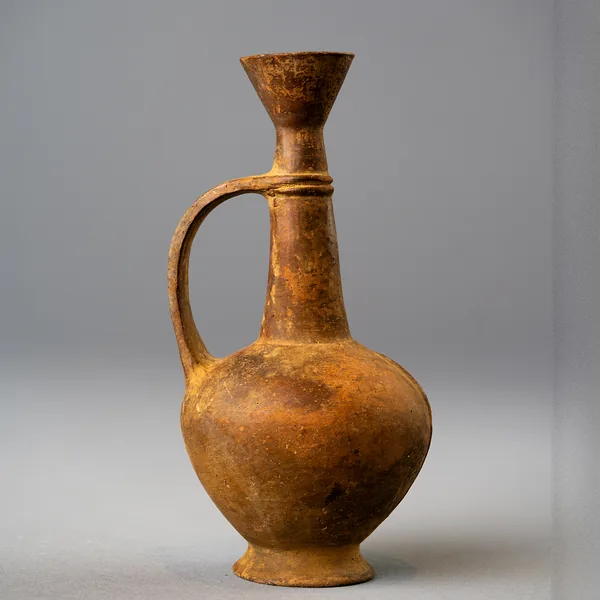
Base Ring Bilbil Juglet with Funnel Mouth and Neck Ridge
Late Cypriot (Late Bronze Age)
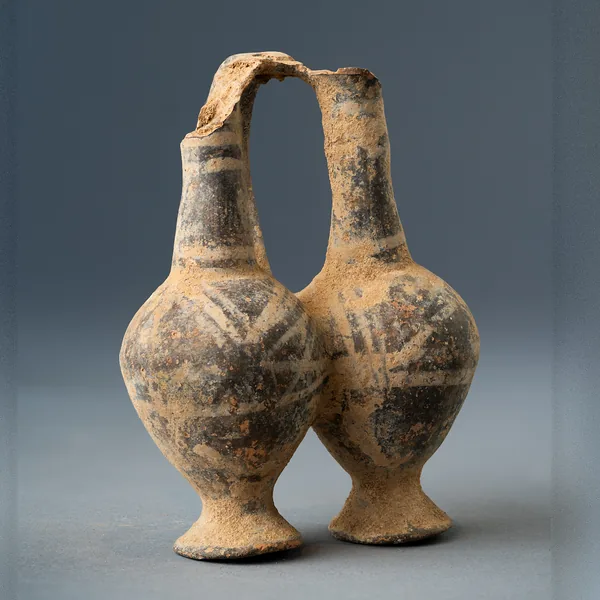
Base Ring II Double Juglet with White-Painted Decoration
Late Cypriot (Late Bronze Age)
Background
Where to read more on this site before or after watching.
In the compendium
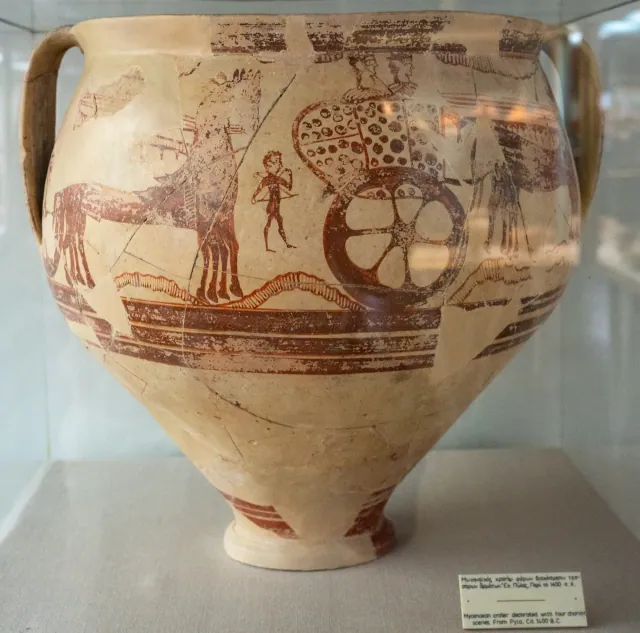
The Mycenaeans and Cyprus
The palatial Late Bronze Age societies of mainland Greece, whose pottery flooded Cypriot coastal towns in the 14th and 13th centuries BCE.
In the compendium
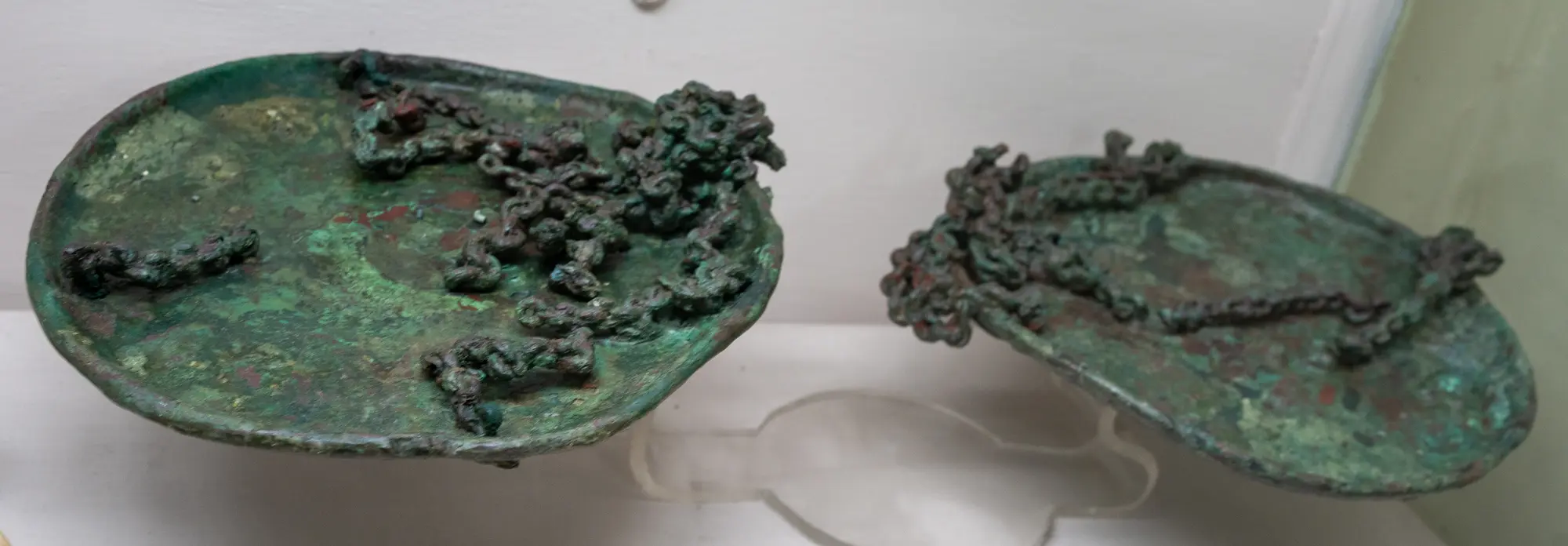
Weights and Ingots
Copper ingots, miniature votive ingots, balance weights and scale pans in Cyprus, from the Late Bronze Age into the Cypro-Geometric and Cypro-Archaic periods.
In the compendium
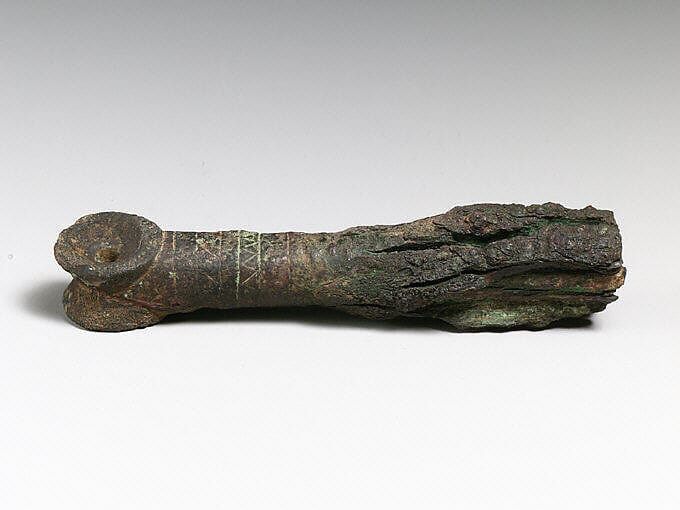
Gold, Silver, Tin, Arsenic and Iron in Ancient Cyprus
The metals other than copper used by Cypriot smiths from the Philia facies to the Hellenistic period, including arsenic, tin, gold, electrum, silver, lead and iron.
The period
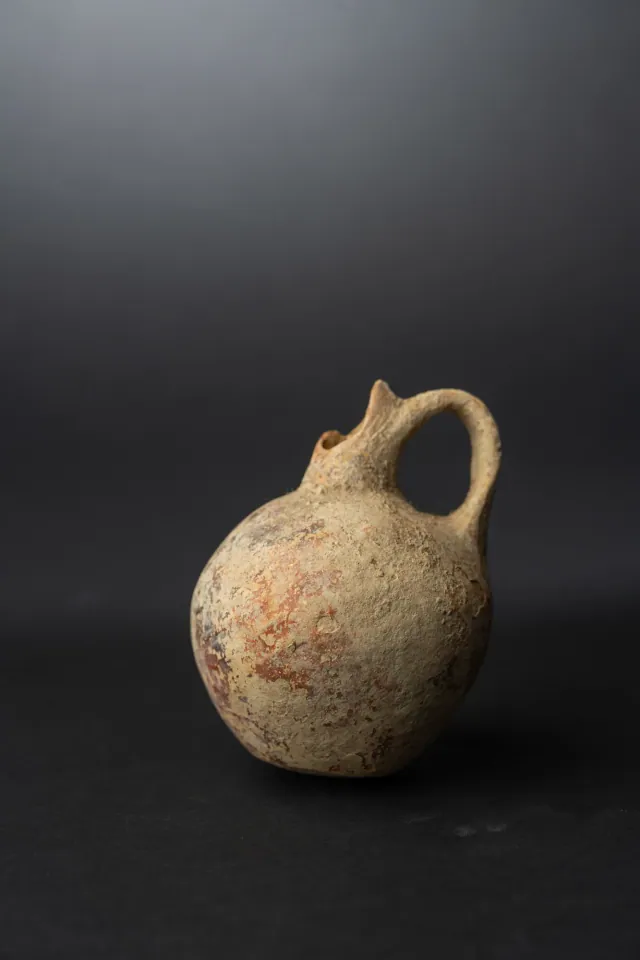
Middle Bronze Age
The Middle Cypriot period, c. 1950–1650 BCE, of multi-roomed village houses, White Painted pottery, growing copper production and the first overseas trade.