
Lecture·Archaeological Research Unit - University of Cyprus·2023
Cypriot Antiquities in the Alexander Malios Collection
Chapters
About the lecture
This book presentation introduces the first volume cataloguing 320 Cypriot antiquities from the Alexander Malios Collection in Leipzig, edited by Elena Poyiadji-Richter and dedicated to the memory of Vassos Karageorghis. After introductions by Athanasios Vionis and Poyiadji-Richter, collector Alexander Malios describes his childhood in Limassol near Amathus, the start of his collecting in Germany in 2016, and the founding of the Alexander Malios Research Institute for Cypriot Heritage and Archaeology (AMRICHA). He notes the institute's cooperation with the Department of Antiquities to identify objects looted after the Turkish invasion of 1974.
Alexander Gatzsche, keeper of the collection, outlines the institute's curation of roughly 1,200 Cypriot artefacts and its provenance research. Many pieces derive from nineteenth- and twentieth-century dispersals, including Metropolitan Museum of Art duplicates from Luigi Palma di Cesnola, the album of Alessandro Palma di Cesnola via the Pitt-Rivers collection, the Desmond Morris collection, and the dissolved museum of Takey Crist in Jacksonville, North Carolina, as well as smaller holdings bearing old Cypriot export permits and lead seals. Gatzsche highlights the 2018 identification in the market of an antiquity looted in 1974 from the Christakis Hadjiprodromou collection, reported to Cypriot authorities for repatriation. He also summarizes AMRICHA's support for a handbook of Cypriot ceramics directed by Sabine Rogge, excavations at Tamassos-Frangissa directed by Matthias Recke and Philipp Kobusch, and conservation and archaeometric research with Berlin's University of Applied Sciences.
Keynote speaker Gabriele Koiner reviews the history of Cypriot collections in Leipzig and surveys the catalogue entries by period, from Neolithic stone objects and Chalcolithic picrolite cruciform pendants to Bronze Age Red Polished, White Painted, Base Ring, and White Slip wares, alongside an oxhide ingot whose lead-isotope signature points to the Soloi region. Iron Age holdings include pictorial and floral-style pottery, terracotta warriors, horse-and-rider figurines, chariot groups, female musicians, and a bronze bird fragment with a Cypro-Syllabic inscription. Classical, Hellenistic, and Roman material encompasses limestone votive heads and statues from the Mesaoria, temple boys, coins of Kition, Salamis, and Palaepaphos, gold jewellery, stamped lamps by Faustus and Romanesis, and glass vessels. Poyiadji-Richter closes by thanking the fourteen contributing authors and presenting a copy to Clio Karageorghis.
From our collection
Pieces in the Drakopoulos collection of the kinds and periods this talk covers: Base Ring ware, Bichrome ware (Iron Age), Black-on-Red ware.
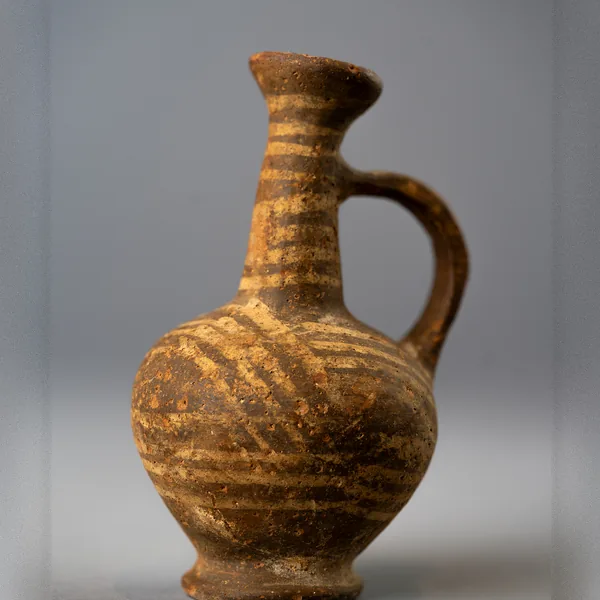
Base Ring II Bilbil Juglet with White-Painted Bands
Base Ring ware
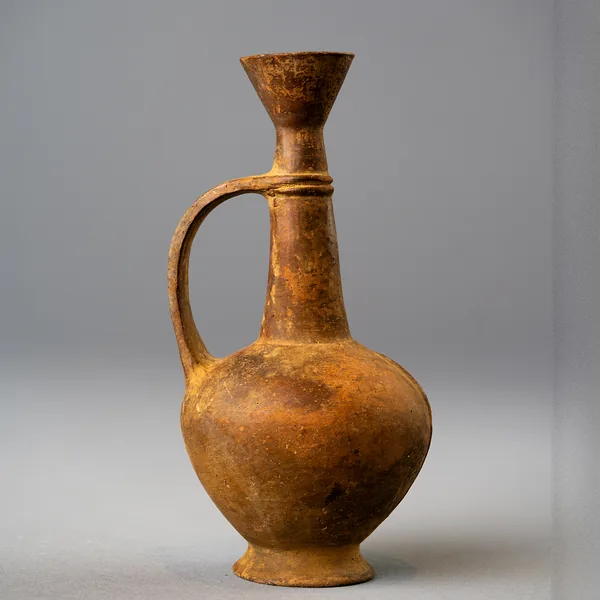
Base Ring Bilbil Juglet with Funnel Mouth and Neck Ridge
Base Ring ware
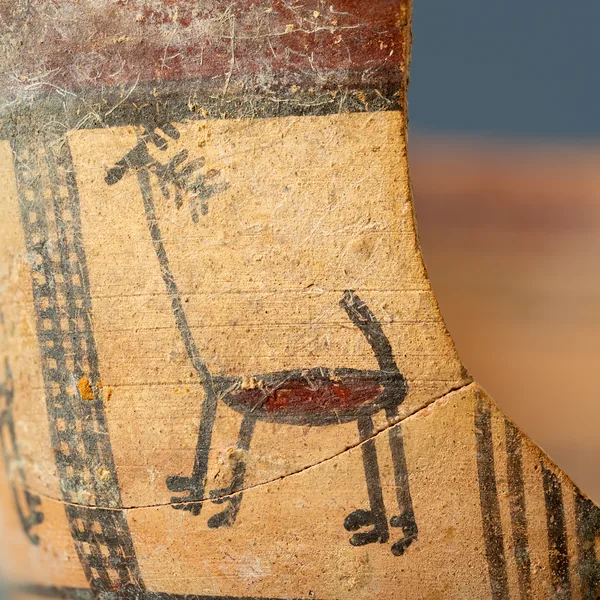
Bichrome Skyphos with Stags in Metopes
Bichrome ware (Iron Age)
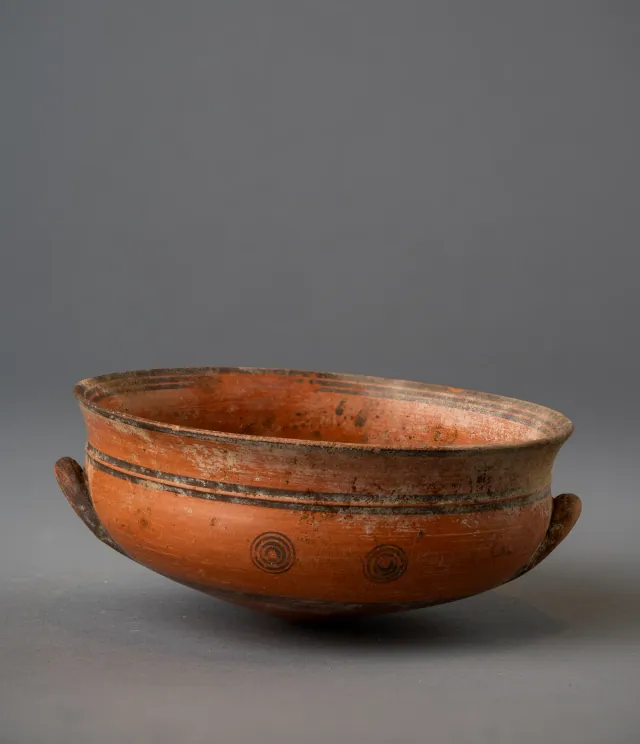
Black-on-Red Two-Handled Bowl with Raised Flaring Rim
Black-on-Red ware
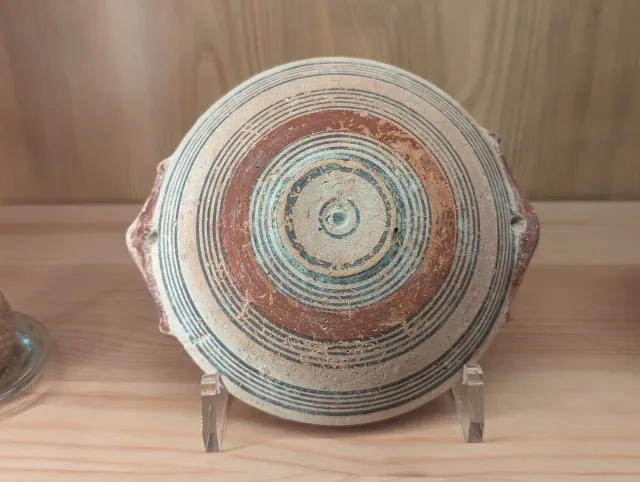
Bichrome IV Bowl with Red-Painted Pierced Lug Handles
Bichrome ware (Iron Age)
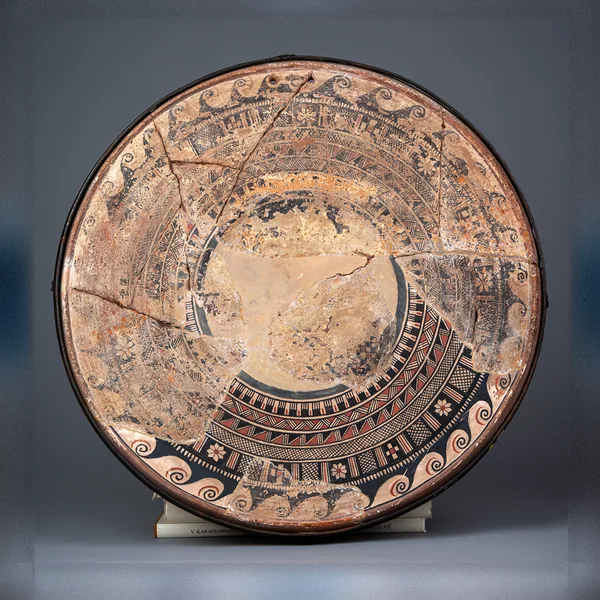
Large Bichrome Plate from Salamis with a Wave Band and Rosette Metopes
Bichrome ware (Iron Age)
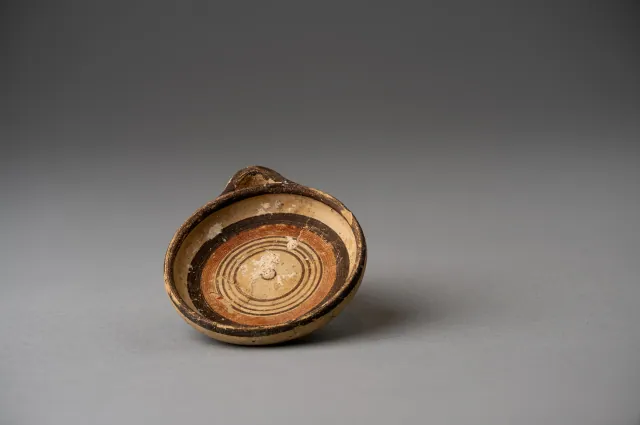
Miniature Bichrome Plate with Concentric Circles
Bichrome ware (Iron Age)
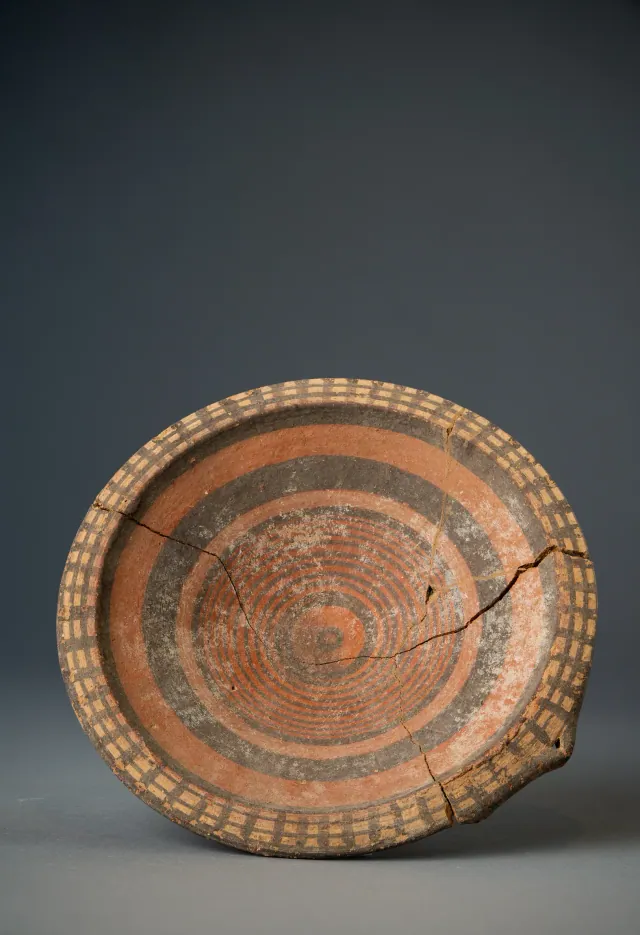
Black-on-Red Plate with Barred Rim and Concentric Circles
Black-on-Red ware
Found at the places discussed
Objects in our catalogue, in museum collections, recorded as found at these sites.


Background
Where to read more on this site before or after watching.
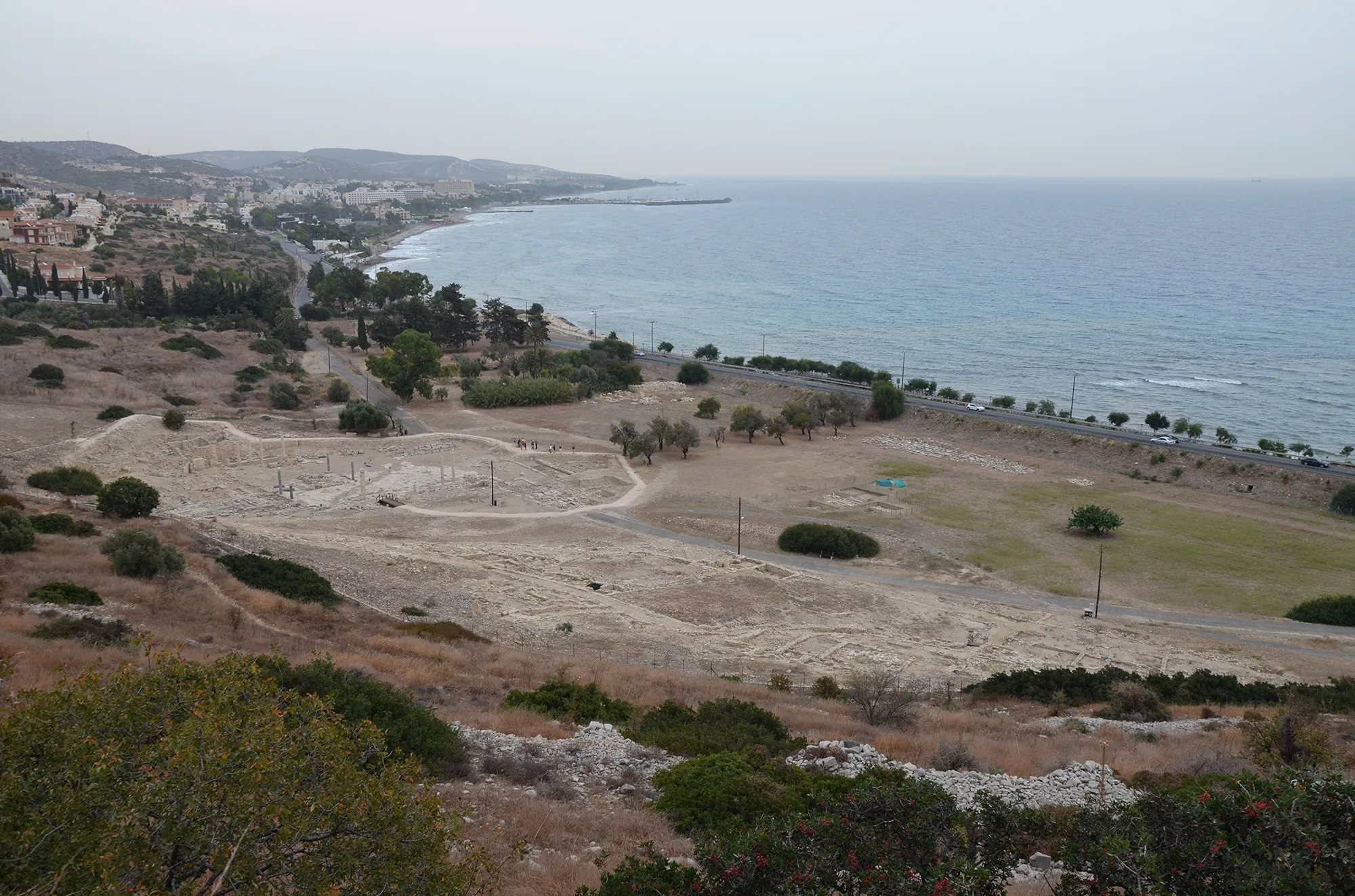
The site
Amathus
Amathus was the capital of one of the Iron Age kingdoms of Cyprus, on a coastal hill about 10 km east of Limassol. It was founded on an empty site in the 11th century BC and lived in until the end of the 7th century AD. Its acropolis carried a sanctuary of Aphrodite and the kings' palace; its people kept the island's old non-Greek language, Eteocypriot, at least until the time of Alexander.
In the compendium
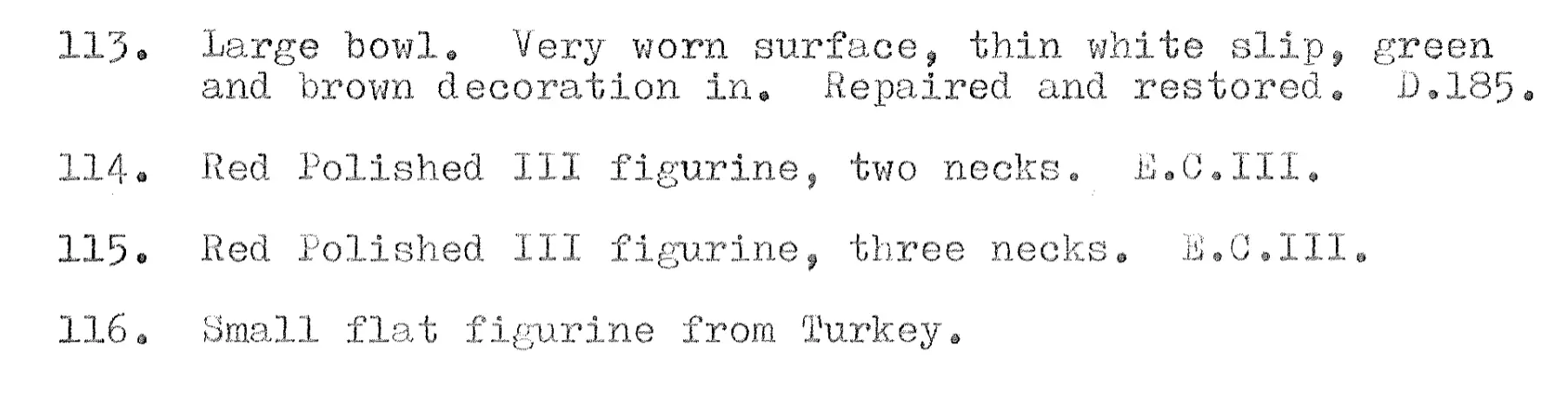
Documenting a Lawful History: How to Show a Cypriot Antiquity Left the Island Lawfully
How to document that a Cypriot antiquity left the island lawfully: which evidence counts, where to find it, what to do when none survives, and how laundered histories are built.
In the compendium
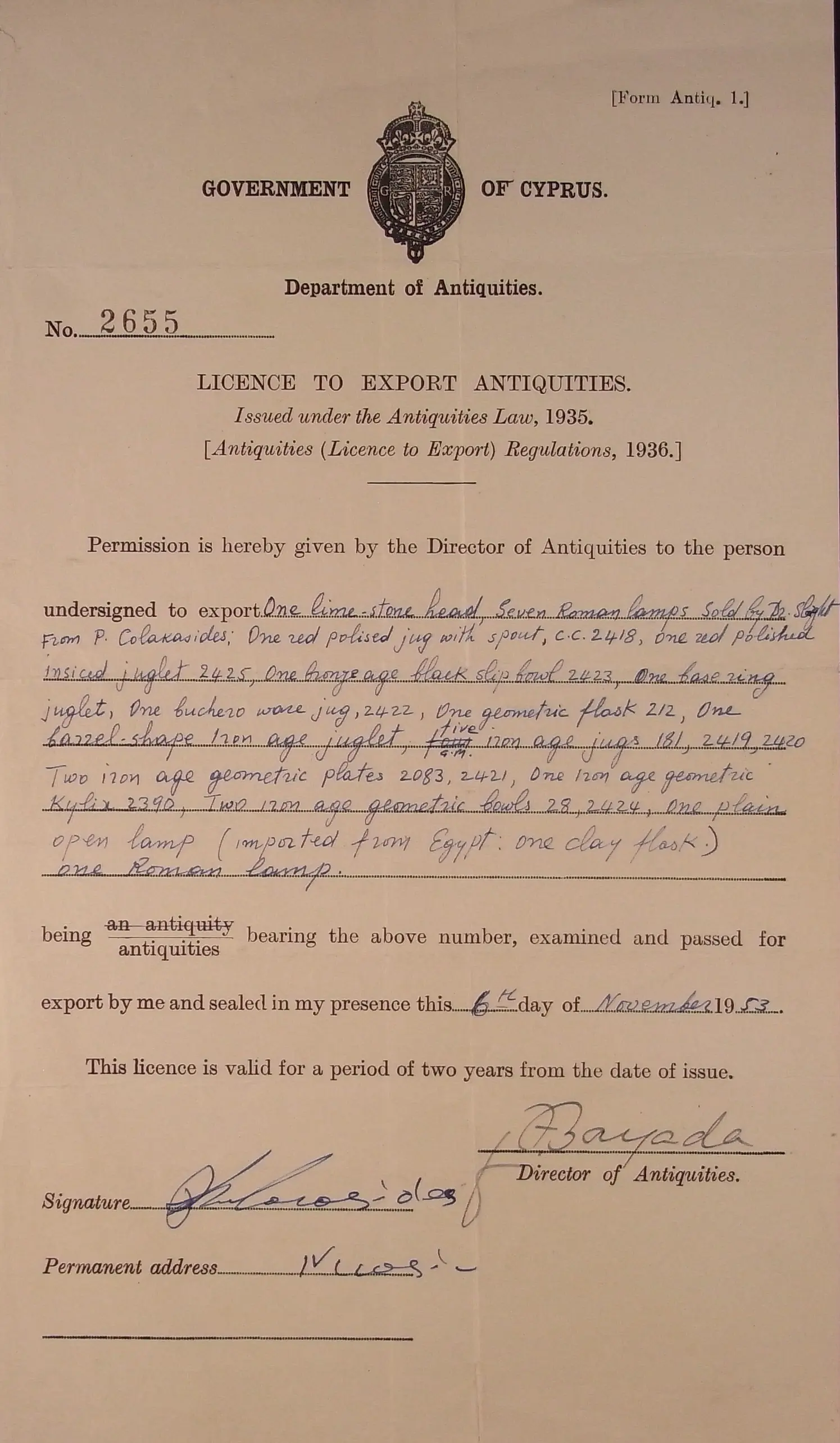
Lawful and Illicit in the Record: What Each History Leaves on Paper
The papers left by the lawful export of Cypriot antiquities and by their looting, what each kind of document proves, and where each falls short.
In the compendium
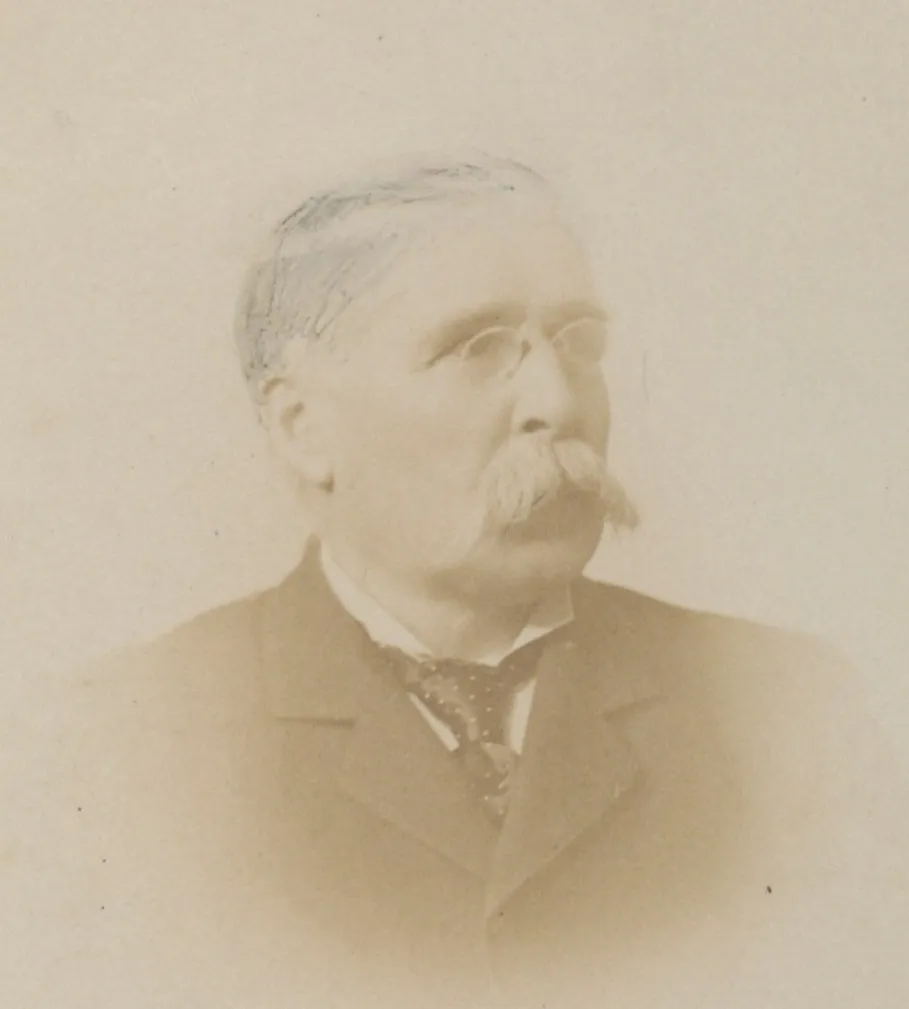
Luigi Palma di Cesnola: The Largest Export of Cypriot Antiquities
The American consul whose roughly 35,000 objects left Cyprus under Ottoman firmans for the Metropolitan Museum, and what his digging and sales mean for the trade.
Map of Cyprus
Places discussed in the talk
- Has a page on this site
- Other places
- Ground above 200, 500, 1,000 m