
Lecture·Archaeological Research Unit - University of Cyprus·2022
A cult statue rendered on a Mycenaean krater from Cyprus
Robert B. Koehl
Chapters
About the lecture
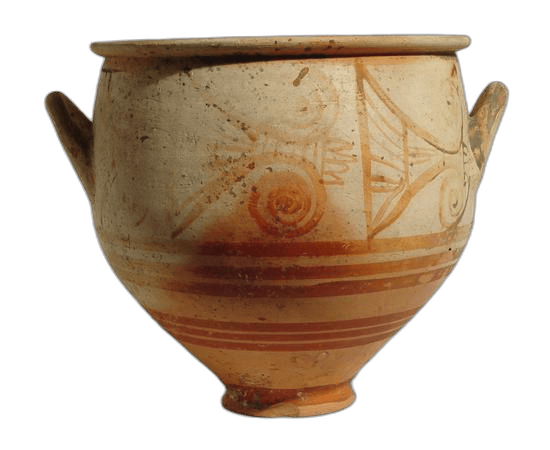
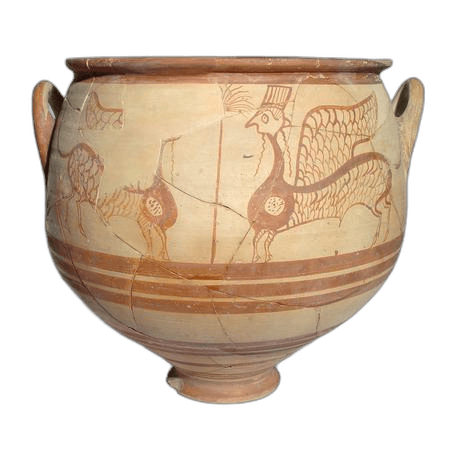
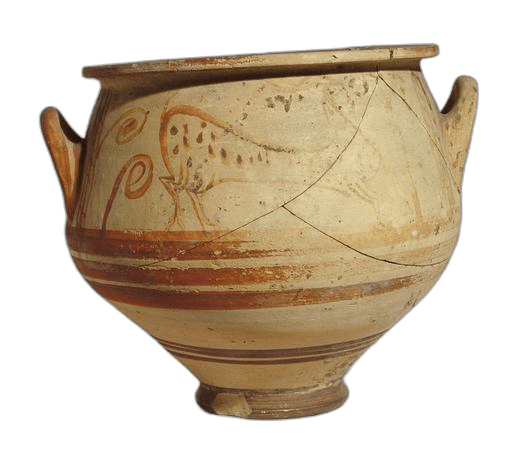
Robert B. Koehl examines a Late Bronze Age Mycenaean pictorial style krater in the Metropolitan Museum of Art and argues that an unusual female figure painted behind one of its two chariot groups represents a cult statue. Found by Luigi Palma di Cesnola in a tomb at Ayia Paraskevi near Nicosia, the vessel belongs to the Late Helladic IIIB1 phase of the first half of the 13th century BC. Besides its two chariot scenes, the krater has symmetrical clusters of palm trees and flowers under both handles.
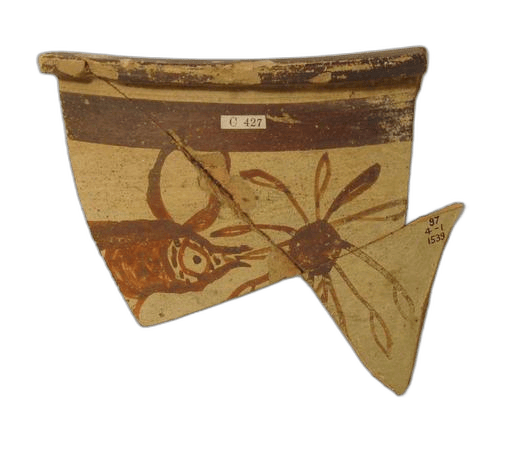
Koehl reviews how earlier scholars read the figure. Sarah Immerwahr, following Furumark's skepticism toward narrative readings of chariot vases, treated her as an elaborate filling motif created by adding a human head and psi-figurine arms to a voluted flower or octopus pattern. Louise Steel considered and rejected a mourning figure, while Emily Vermeule and Vassos Karageorghis analysed the floral clusters and Karageorghis later compared a related figure on a sherd from Ugarit with downturned arms and spiral breasts. Against these views, Koehl argues that both figures depict stationary cult images: their bodies are frontal and immobile while the chariots move, the Ayia Paraskevi figure has open splayed hands and a distinct forelock and back lock, and the Ugarit figure's profile and downturned arms recall Mycenaean phi figurines and a pictorial vase from Kalavasos.
To show that cult statues existed in the Aegean Bronze Age, the lecture surveys Minoan and Mycenaean candidates: a Middle Minoan II Kamares bowl from Phaistos, the terracotta feet from Archanes Anemospilia, the chryselephantine Palaikastro Kouros, bronze locks and a stone wig with Amorite parallels from Knossos, stone sphinxes from Crete, Late Minoan goddesses with upraised arms, wheel-made terracotta figures from Phylakopi, Mycenae, Tiryns and Midea, the painted plaster heads from Mycenae, and the Linear B term te-o-po-ri-ja ('carrying the gods').
Returning to Cyprus, Koehl contends that Cypriot viewers would have understood the scene. Cult statues were familiar on the island through the bronze Horned God and Ingot God from Enkomi, and Aegean ritual elements such as horns of consecration and planted or courtyard sanctuaries appear at Kition and Myrtou-Pigadhes. Read together, the Ayia Paraskevi and Ugarit vases show three episodes: arrival at an outdoor sanctuary, dismounting to venerate the statue, and departure under the goddess's protection.
From our collection
Pieces in the Drakopoulos collection of the kinds and periods this talk covers: Mycenaean pottery, Late Cypriot (Late Bronze Age).
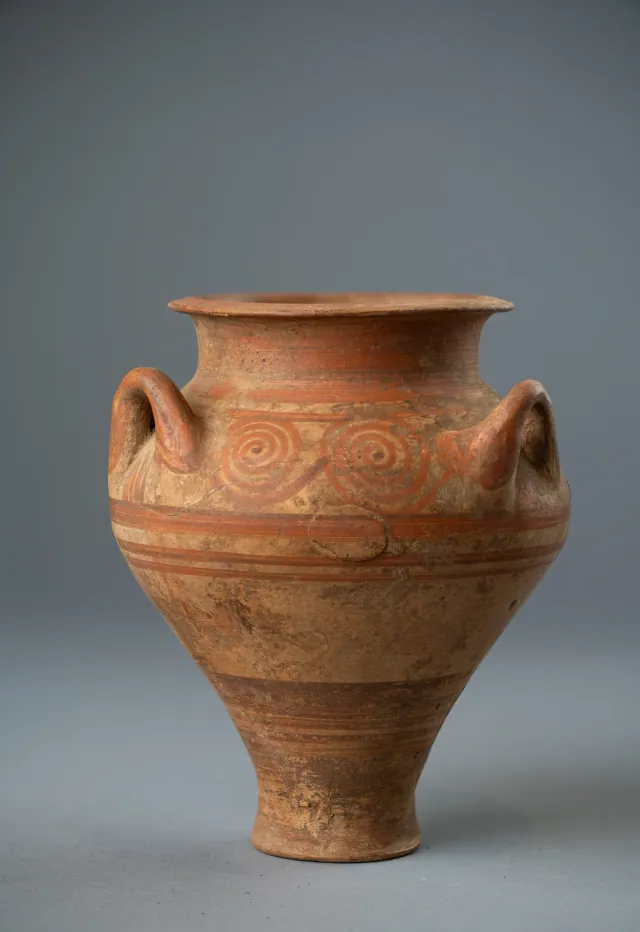
Cypriot Three-Handled Jar in the Mycenaean Style with Running Spirals
Mycenaean pottery
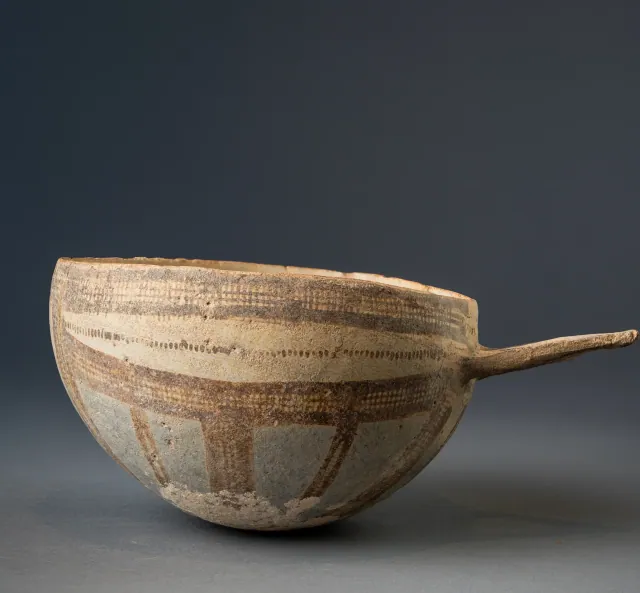
White Slip II Hemispherical Bowl with Wishbone Handle
Late Cypriot (Late Bronze Age)
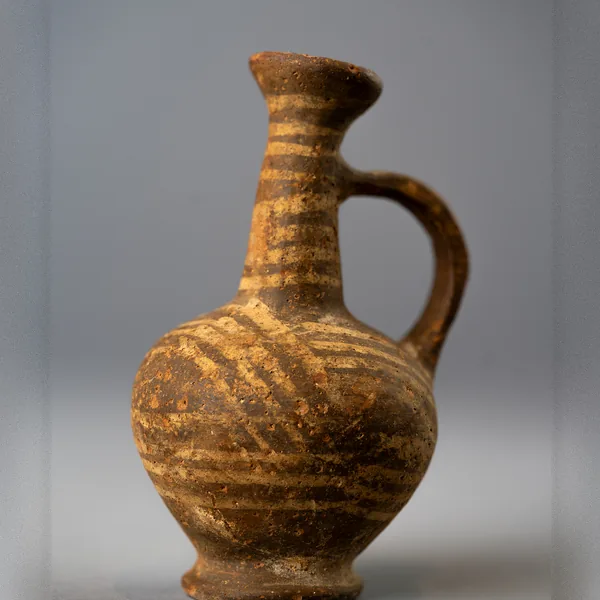
Base Ring II Bilbil Juglet with White-Painted Bands
Late Cypriot (Late Bronze Age)
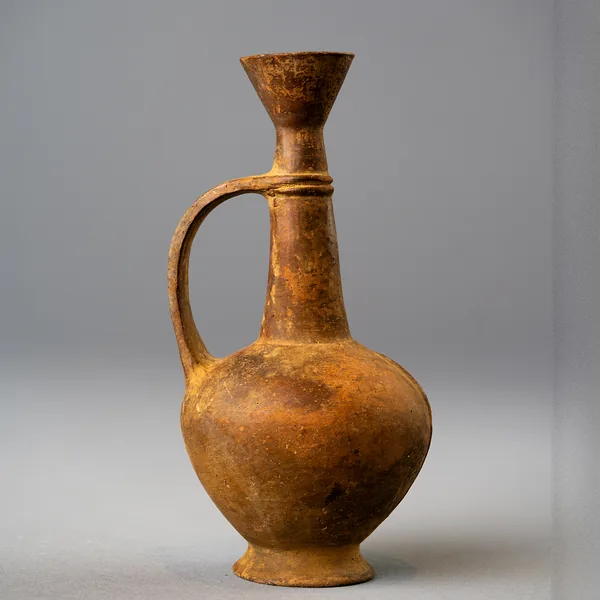
Base Ring Bilbil Juglet with Funnel Mouth and Neck Ridge
Late Cypriot (Late Bronze Age)
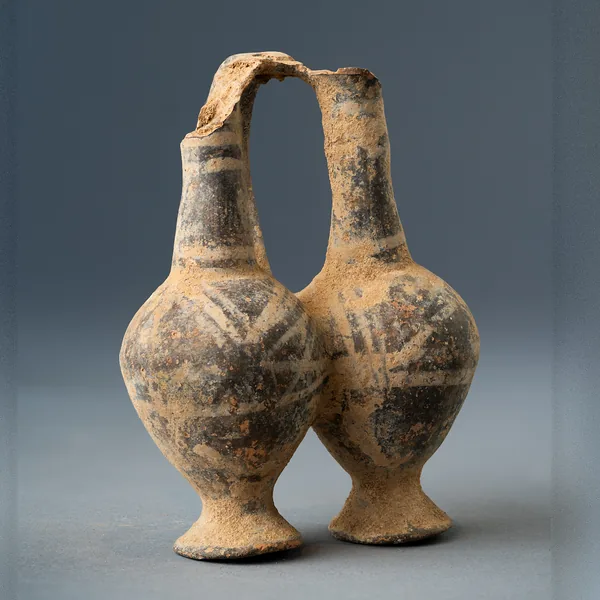
Base Ring II Double Juglet with White-Painted Decoration
Late Cypriot (Late Bronze Age)
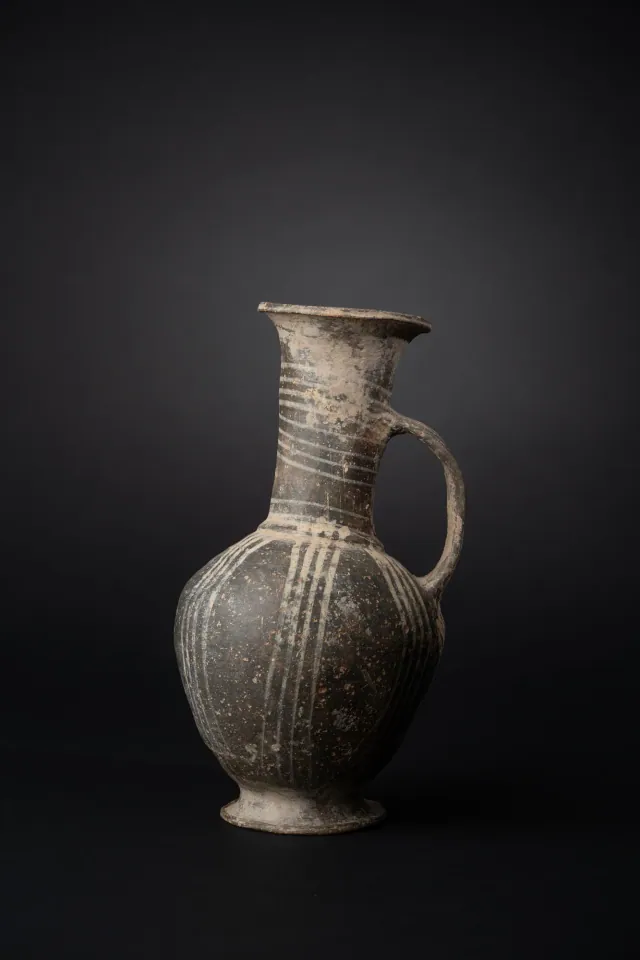
Base Ring II Jug with White-Painted Lattice Bands
Late Cypriot (Late Bronze Age)
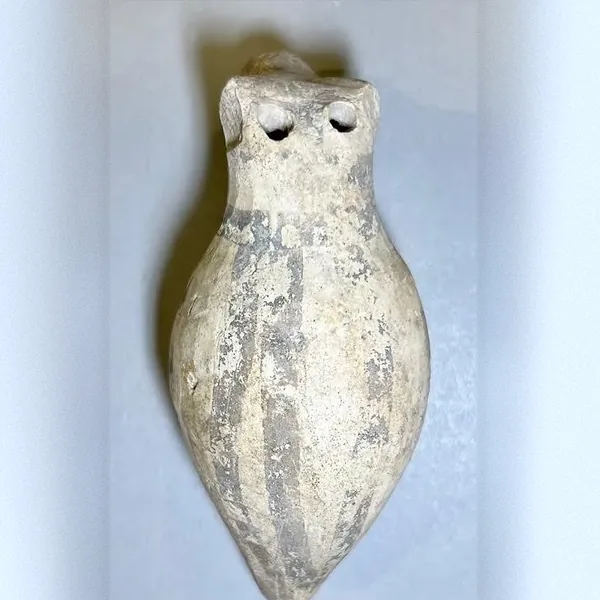
White Painted VI Owl-Headed Rattle
Late Cypriot (Late Bronze Age)
Found at the places discussed
Objects in our catalogue, in museum collections, recorded as found at these sites.
Background
Where to read more on this site before or after watching.
The site
Enkomi
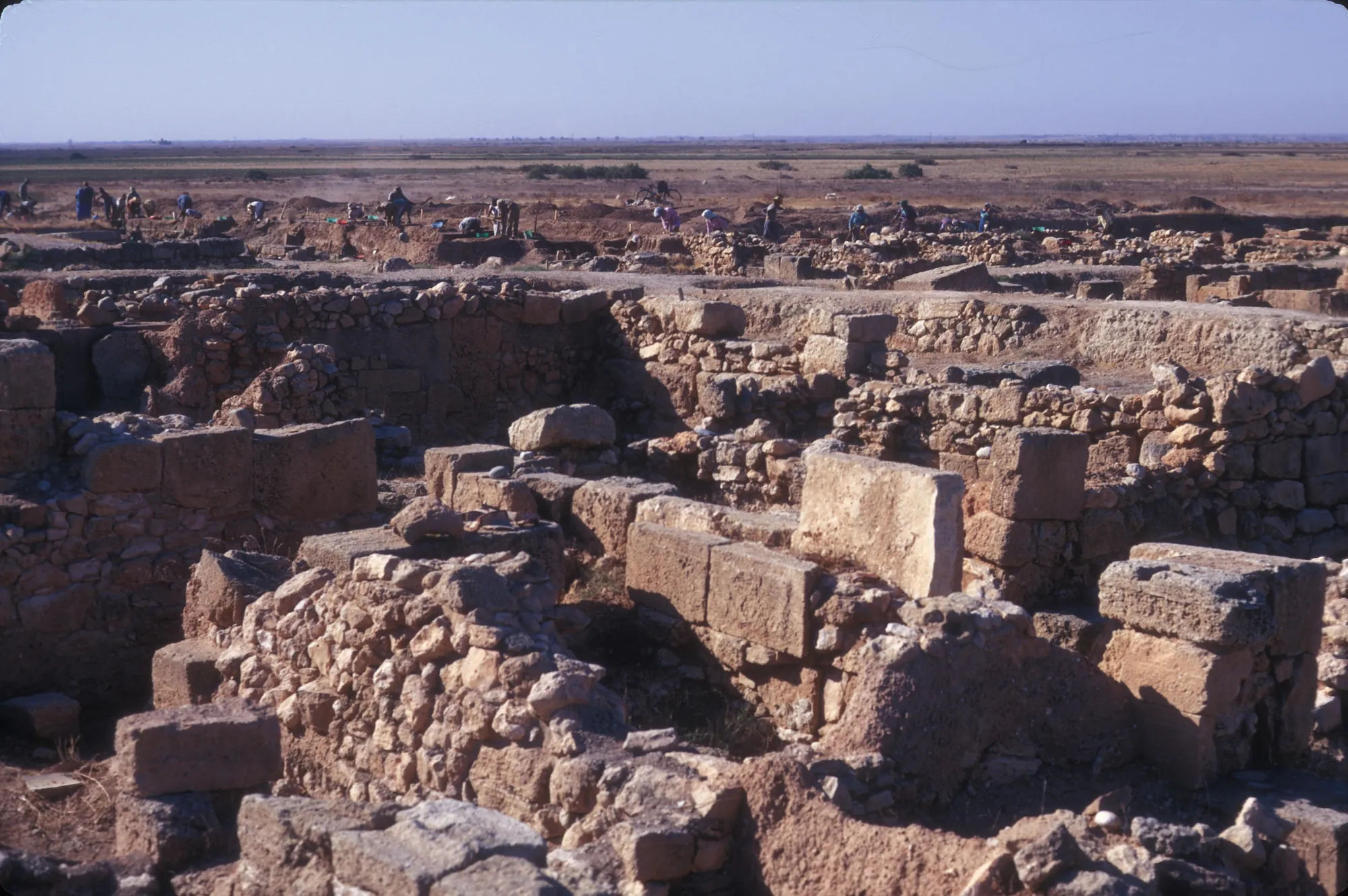
Enkomi is a walled Late Bronze Age town near the mouth of the Pedieos river on the bay of Famagusta, lived in from about 1650 BC until it was gradually abandoned for nearby Salamis. It was a port for Cypriot copper, and its excavations produced metal workshops, sanctuaries with bronze cult statues, rich tombs and the largest group of Cypro-Minoan inscriptions on the island.
In the compendium
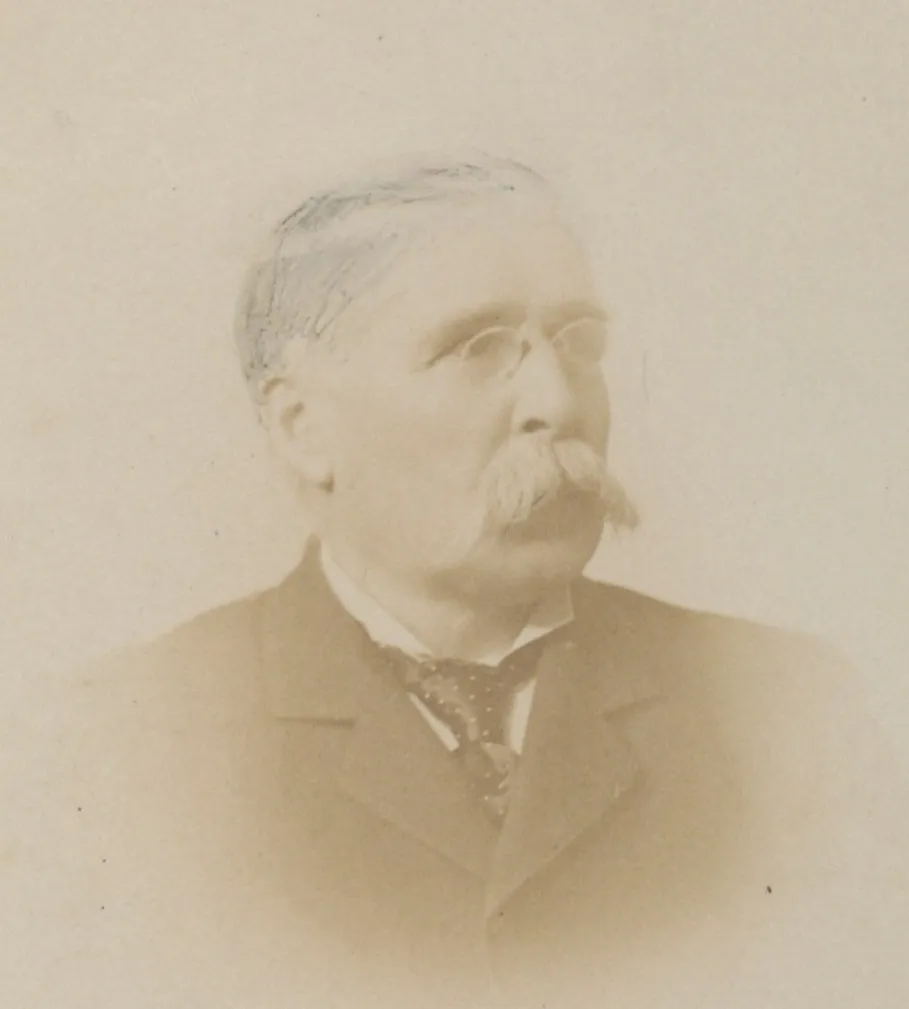
Luigi Palma di Cesnola: The Largest Export of Cypriot Antiquities
The American consul whose roughly 35,000 objects left Cyprus under Ottoman firmans for the Metropolitan Museum, and what his digging and sales mean for the trade.
In the compendium
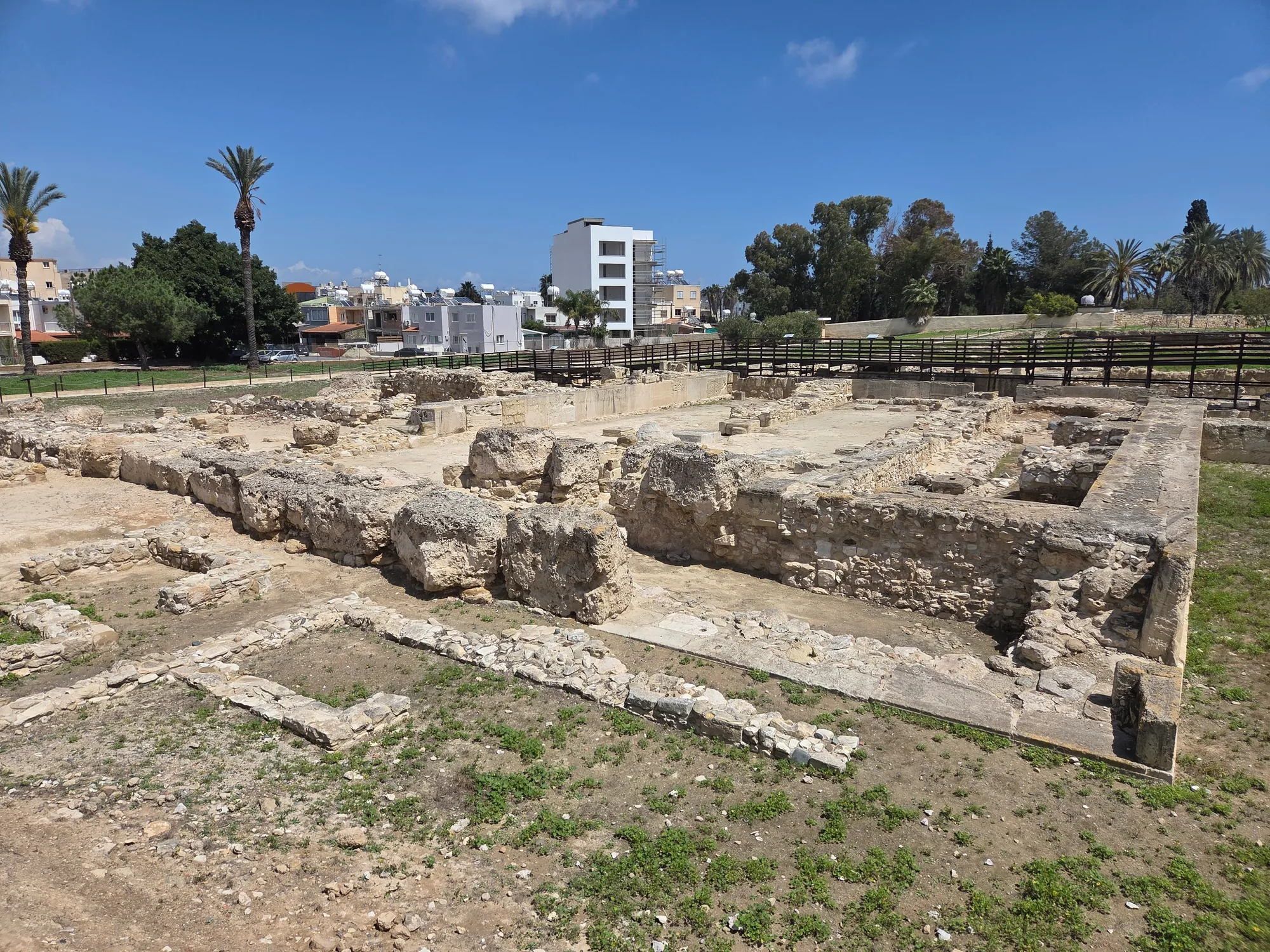
Bronze Age Sanctuaries and Temples
Cypriot cult buildings of the Bronze Age, from the clay sanctuary model of Vounous to the walled courts, altars and inner rooms of the Late Cypriot temples.
In the compendium
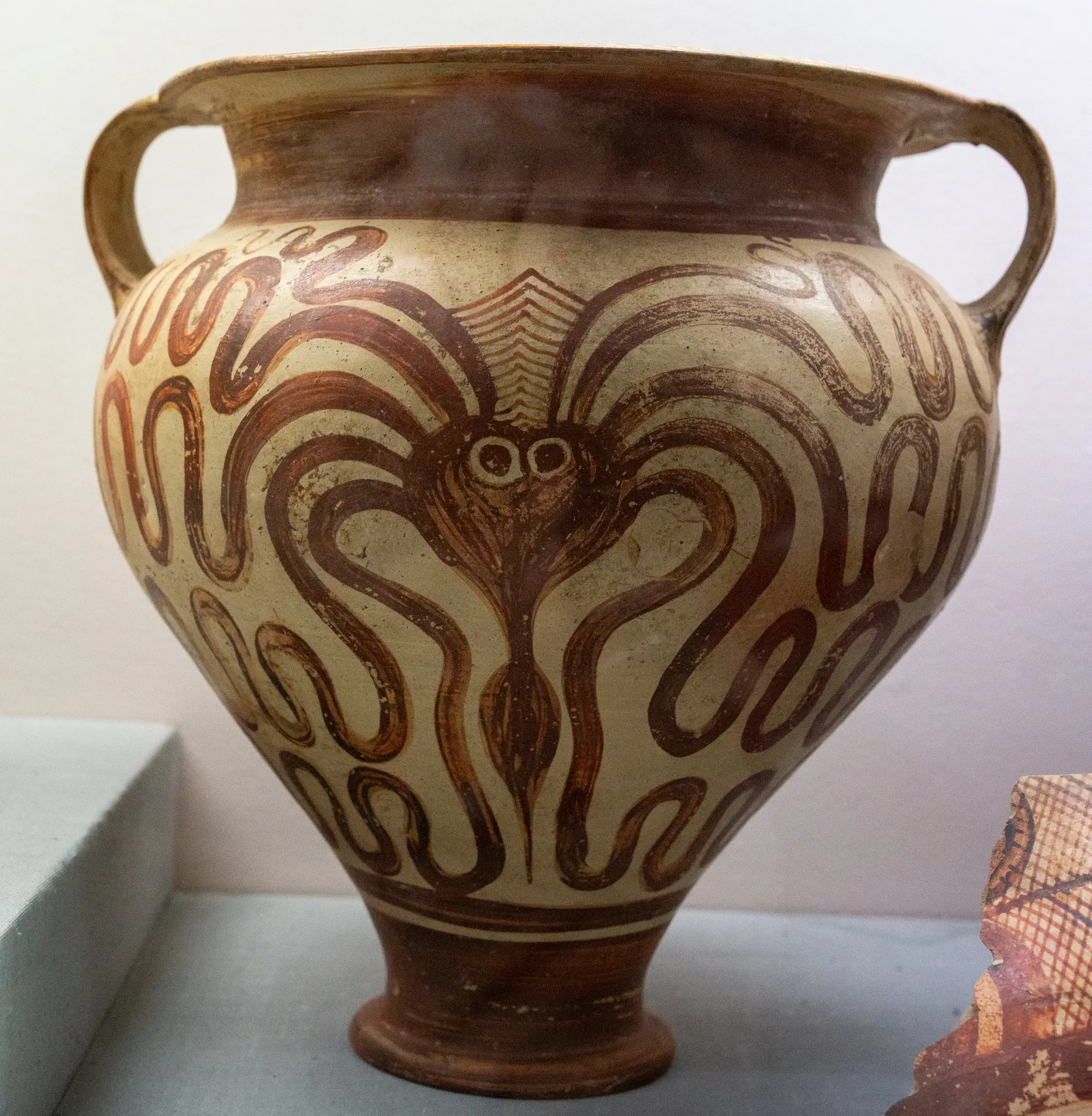
The Minoans
The palatial Bronze Age civilization of Crete, which took Cypriot copper and passed writing to Cyprus in the early Late Bronze Age.
Map of Cyprus
Places discussed in the talk
- Has a page on this site
- Other places
- Ground above 200, 500, 1,000 m