
Conference paper·Archaeological Research Unit - University of Cyprus·2017·In Greek
Study Day on Book 23 of the Iliad: Dramatic Form, Cypriot Burial Customs, and the Ghost of Patroclus
Ημερίδα αφιερωμένη στην 23η ραψωδία της Ιλιάδας
Vassos Karageorghis, Michalis Pieris and Menelaos Christopoulos
Chapters
About the video
This first session of a study day on Book 23 of the Iliad at the University of Cyprus, given in Greek, combines philological papers, staged readings of lines 1 to 286 in the modern Greek translation of Dimitris Maronitis, and archaeological commentary.
Following a welcome from the director of the Archaeological Research Unit, Vassos Karageorghis introduces the aims of the colloquium. He explains that Book 23 was chosen because its first half describes burial customs and objects that correspond directly to archaeological discoveries of the Cypro-Geometric and Cypro-Archaic periods, particularly at Salamis and Palaepaphos. Dean Chris Schabel adds a brief greeting on the reception of the Trojan cycle in medieval Western Europe.
Chaired by Anna Panagiotou, the first paper is by Michalis Pieris on Book 23 as drama. Drawing on Plato, Aristotle, and Pseudo-Plutarch, Pieris examines how Homeric speeches and monologues anticipate classical tragedy, and how Book 23 acts as a structural counterpart to the Catalogue of Ships in Book 2. He reads passages from the dispute between Ajax, son of Oileus, and Idomeneus, and from the appearance of Patroclus to Achilles, to show that removing the narrator's framing lines leaves a theatrical script.
Actors from the University of Cyprus Theatre Workshop then recite lines 1 to 286, with Karageorghis intervening to comment on the material culture. He compares the tripods and cauldrons used to heat bathwater or awarded as prizes with bronze examples from the Aegean and Palaepaphos. On the funeral pyre of Patroclus, he shows an amphora from Tomb 3 of the Royal Tombs of Salamis inscribed with the Greek word for oil in the Cypriot syllabary, horse sacrifices in the dromoi of Salamis Tombs 79 and 2, and evidence for human sacrifice at Lefkandi, Eleutherna, Larnaca, Marion, and Salamis. He concludes with the construction of burial tumuli, showing the cenotaph of Nicocreon at Salamis and cremated bones wrapped in linen inside bronze cauldrons at Palaepaphos and Salamis.
Menelaos Christopoulos then presents a paper on the ghost of the unburied Patroclus. He analyses the twenty-three-line dream speech across past, present, and future, traces the motif of Achilles's early death through Thetis, the horse Xanthus, Hector, and Patroclus, and compares Patroclus with the unburied Elpenor in Book 11 of the Odyssey.
In the discussion that follows, Karageorghis answers a question on why surviving cauldrons are bronze whereas tripods were made in both bronze and iron, and Christopoulos and Pieris discuss why captive Trojan women mourn Patroclus and how Homeric epithets work.
From our collection
Pieces in the Drakopoulos collection of the kinds and periods this talk covers: Cypro-Geometric, Cypro-Archaic.
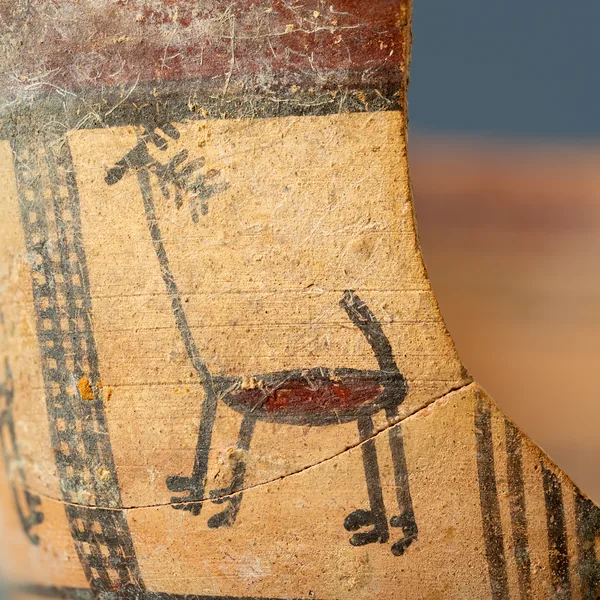
Bichrome Skyphos with Stags in Metopes
Cypro-Archaic
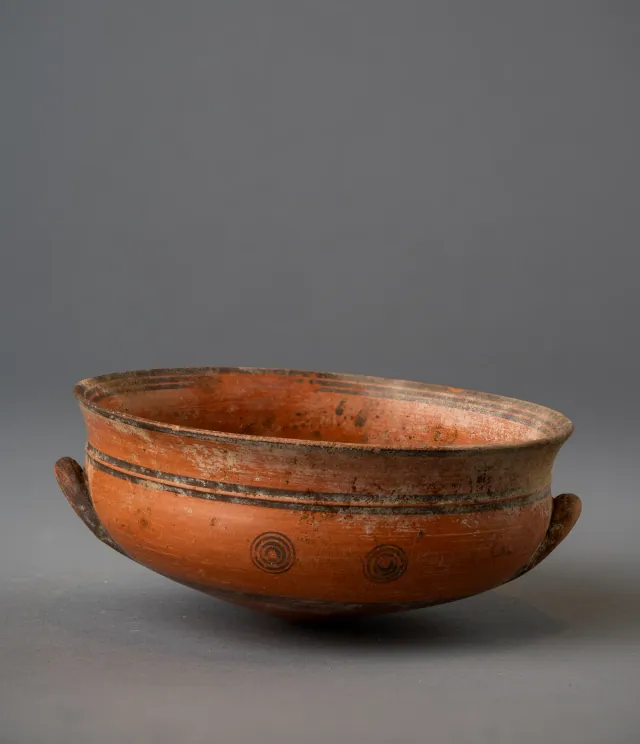
Black-on-Red Two-Handled Bowl with Raised Flaring Rim
Cypro-Archaic
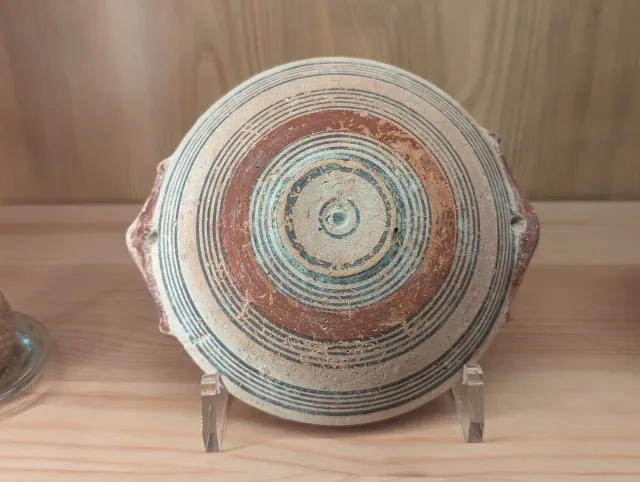
Bichrome IV Bowl with Red-Painted Pierced Lug Handles
Cypro-Archaic
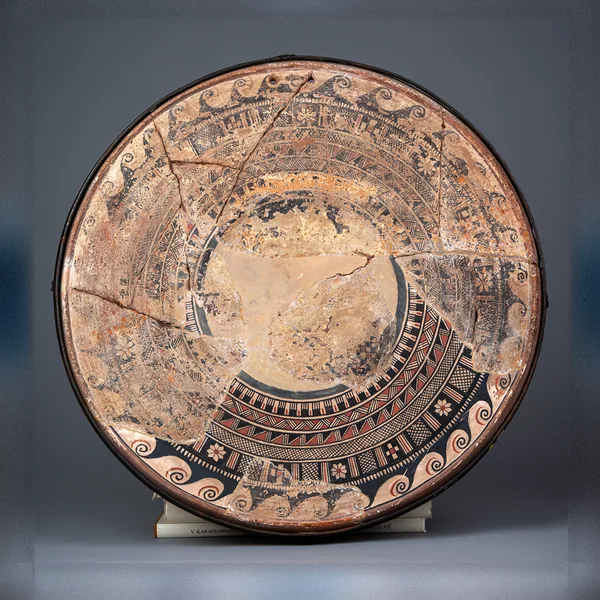
Large Bichrome Plate from Salamis with a Wave Band and Rosette Metopes
Cypro-Archaic
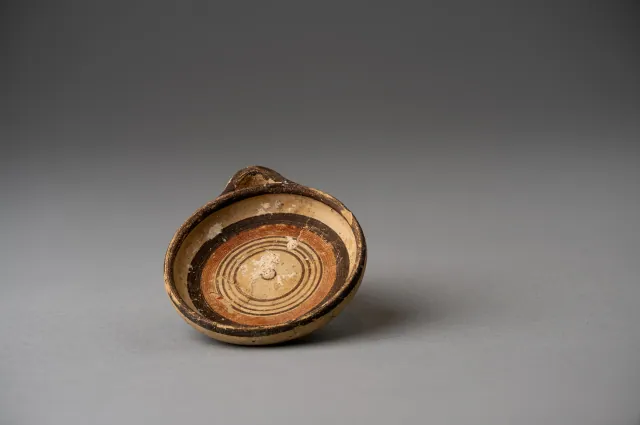
Miniature Bichrome Plate with Concentric Circles
Cypro-Archaic
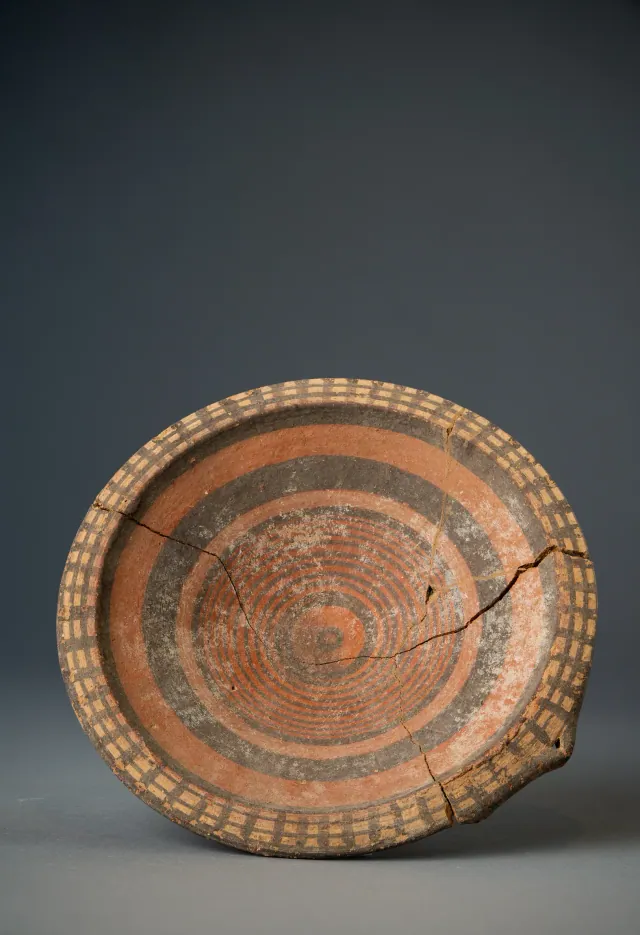
Black-on-Red Plate with Barred Rim and Concentric Circles
Cypro-Archaic
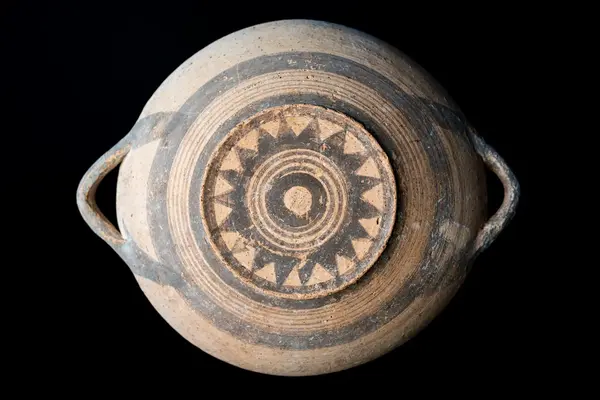
White Painted Plate with a Sawtooth Star on the Underside
Cypro-Geometric
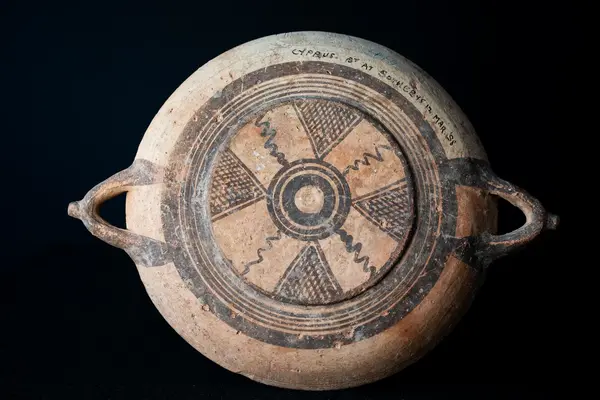
White Painted Plate with Latticed Triangles and Wavy Lines on the Underside
Cypro-Geometric
Found at the places discussed
Objects in our catalogue, in museum collections, recorded as found at these sites.

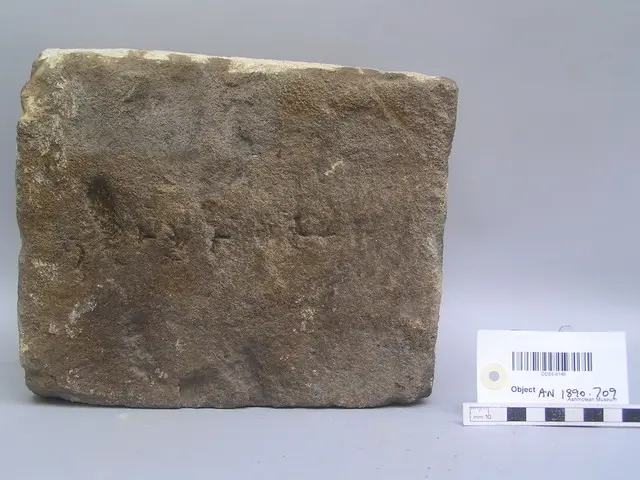


Background
Where to read more on this site before or after watching.
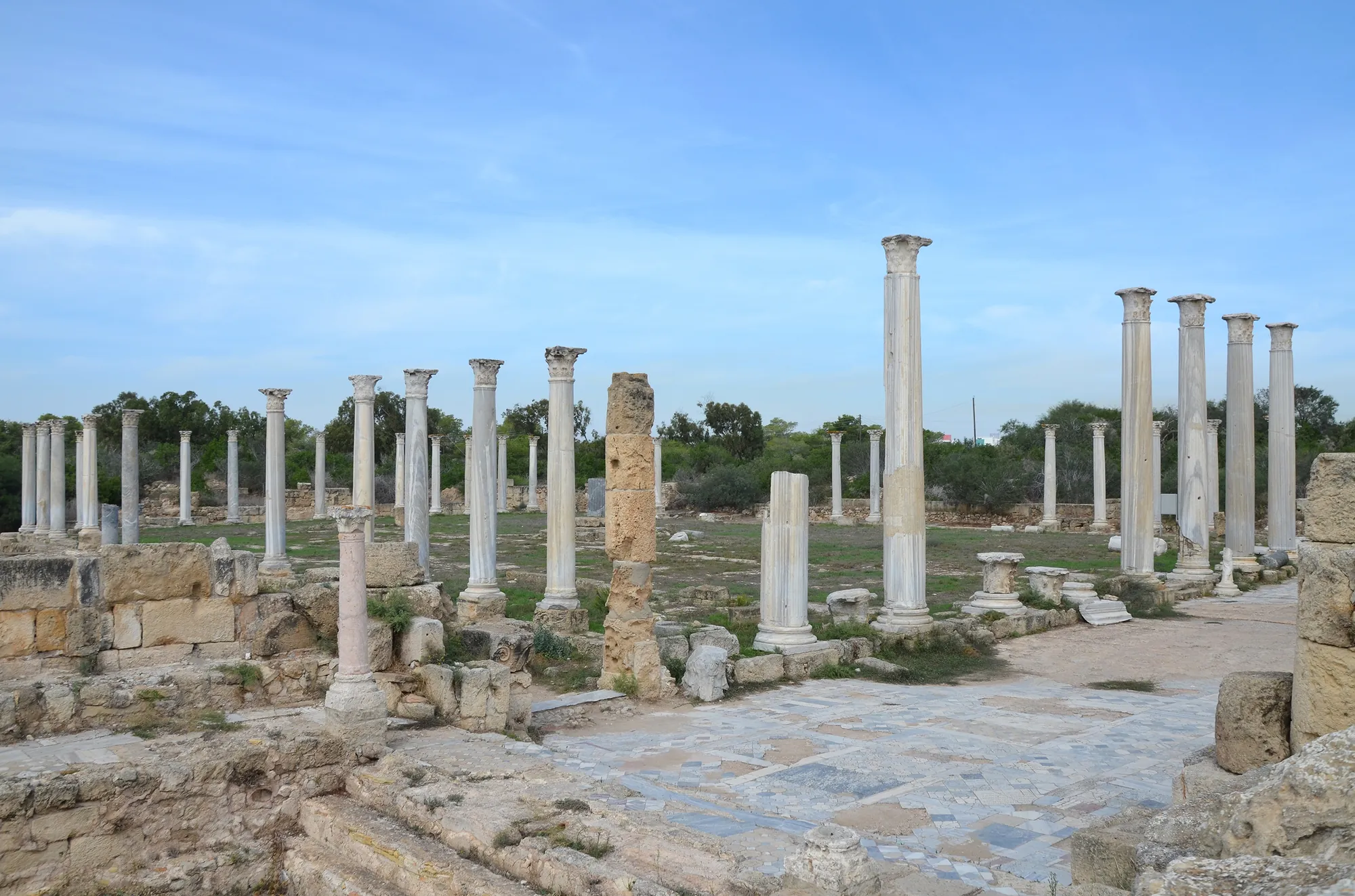
The site
Salamis
A city on the east coast of Cyprus at the mouth of the Pedieos river, founded in the 11th century BC and one of the leading city-kingdoms of the island until 311/310 BC. It is known for the Royal Tombs with their sacrificed horses and chariots, for its Roman gymnasium, baths and theatre, and as Constantia, seat of the bishops of Cyprus from the 4th century AD. The site lies in the north of the island; the Cypriot and French excavations stopped in 1974.
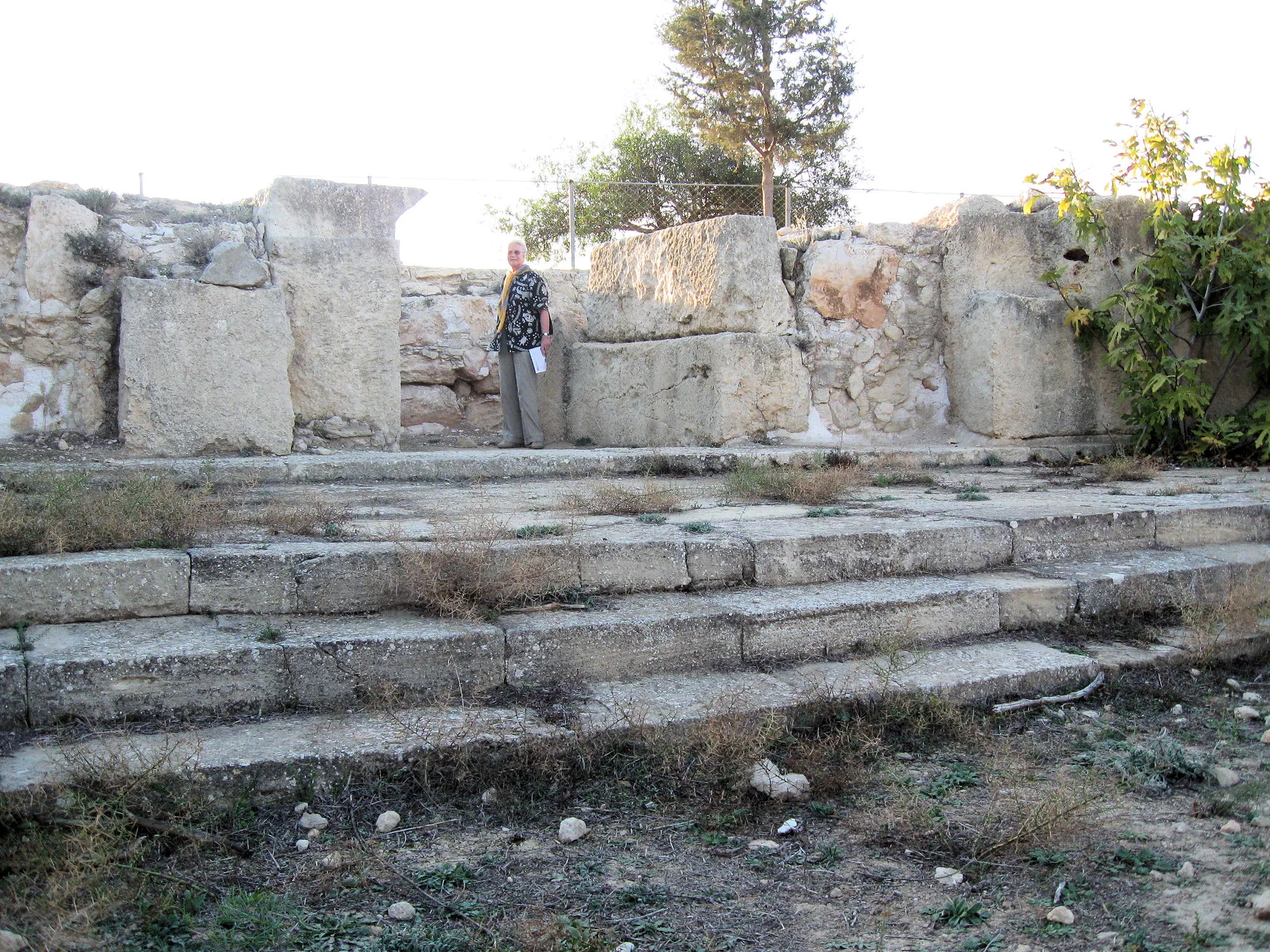
In the compendium
Royal and Built Tombs
Tombs built of cut stone in Cyprus, from the ashlar tombs under Late Bronze Age houses at Enkomi to the royal tombs of Salamis and Tamassos and the rock-cut courts of Nea Paphos.
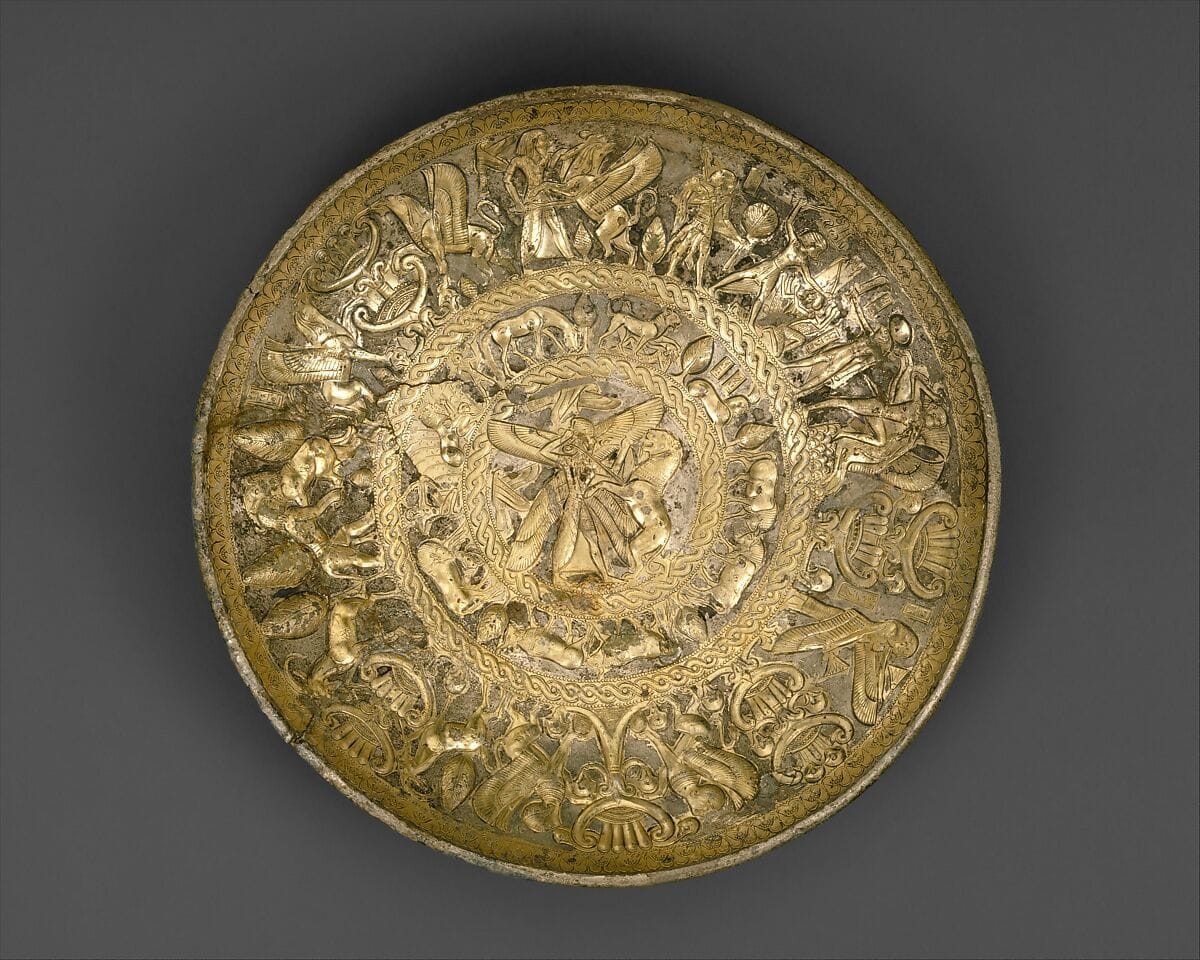
In the compendium
Writing and Literacy in Ancient Cyprus
The scripts of ancient Cyprus, from undeciphered Cypro-Minoan to the Cypriot Syllabary, Eteocypriot, Phoenician and the Greek alphabet, and who used them.
In the compendium
Metal Vessels
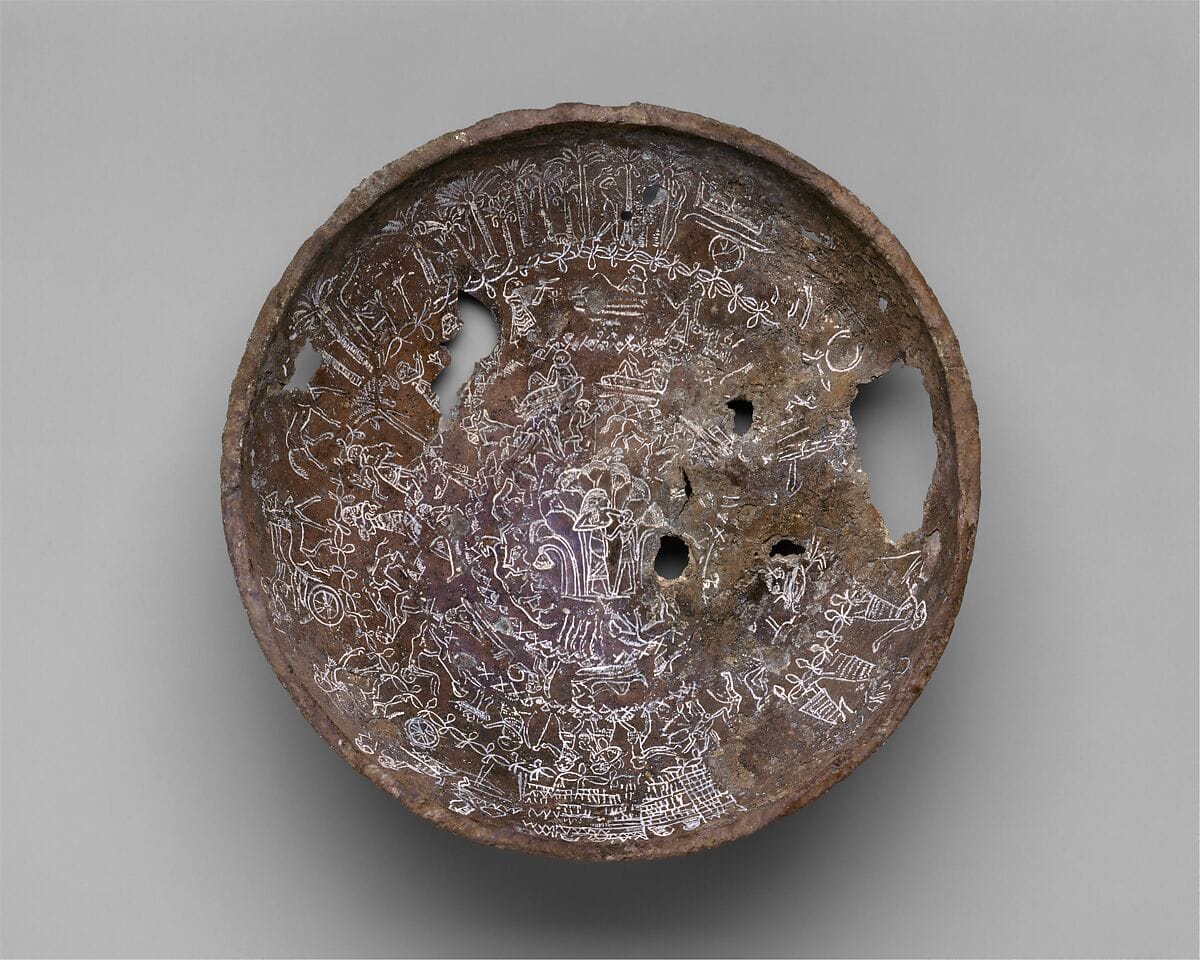
Bowls, cauldrons, jugs, cups, strainers and the bronze stands that carried them, made in Cyprus from the Late Bronze Age to the Cypro-Archaic period.
Map of Cyprus
Places discussed in the talk
- Has a page on this site
- Other places
- Ground above 200, 500, 1,000 m
Places
- 1Salamis
- 2Palaepaphos
- 3Marion