
Research·News
Wine jars from Gaul and fish-sauce jars from Sicily reached ancient Cyprus, five free papers report
A wreck off Protaras, the Paphos agora and 3rd-century Kition tableware, in RCRF Acta papers of 2010–2024 now free to download from Archaeopress.



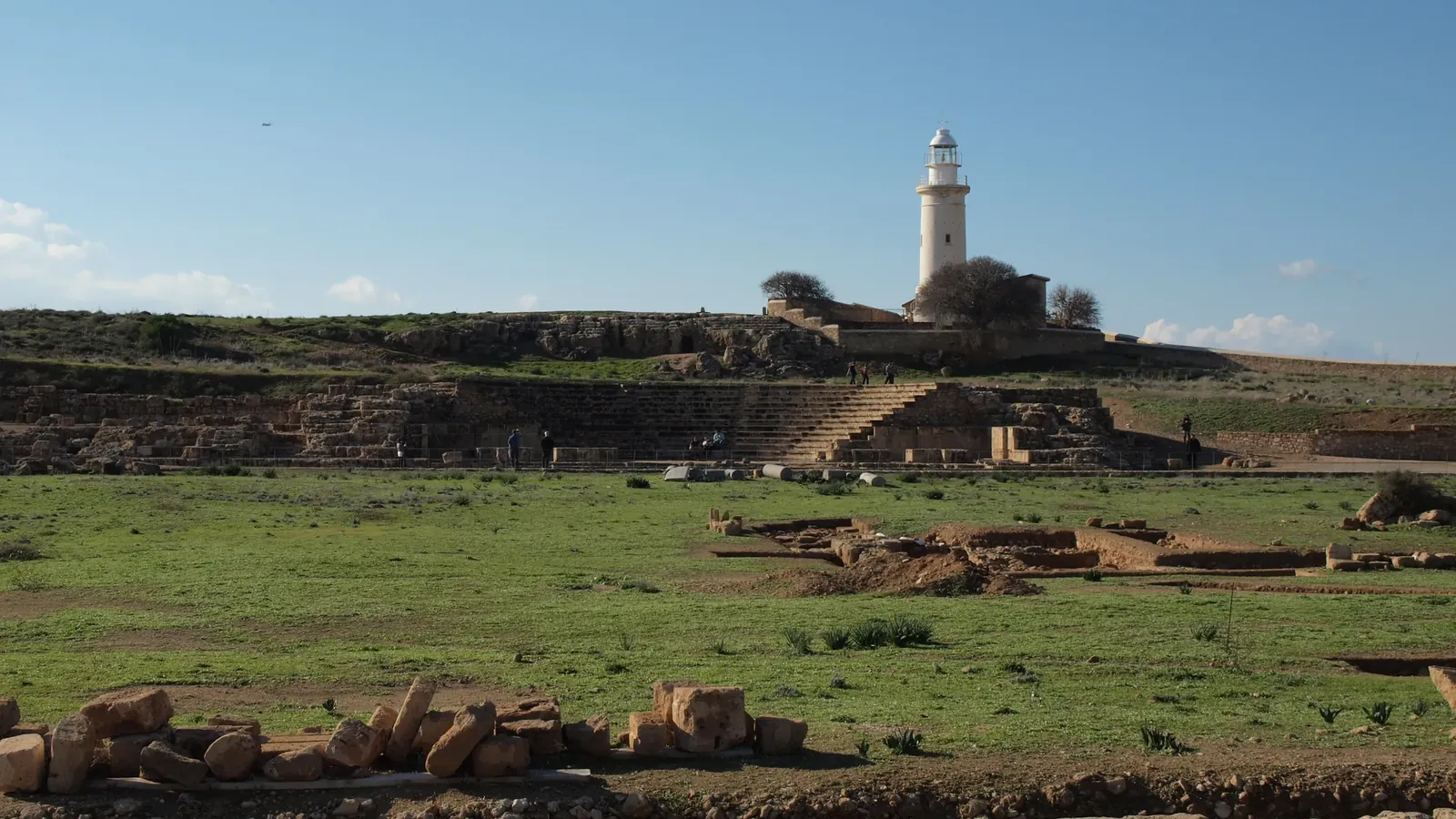
Five studies of Roman-period pottery from Cyprus, printed between 2010 and 2024 in the Acta of the Rei Cretariae Romanae Fautores (RCRF), the proceedings of its Roman pottery congresses, can all be downloaded free from the series' online archive at Archaeopress. Together they follow the island's sea trade and potters from the Ptolemaic period to Late Antiquity: a small cargo ship wrecked off Protaras, fish-sauce jars from Sicily and North Africa at Nea Paphos, a cistern under the Paphos agora, cooking pots from a tomb in the Troodos foothills, and tableware made at Kition after the old red-gloss wares stopped coming.
A small cargo ship at Fig Tree Bay
Justin Leidwanger published the wreck in 2010. The Eastern Cyprus Maritime Survey, backed by the Institute of Nautical Archaeology among others, found it in 2007 and returned in August and September 2008, when perhaps half of it was mapped. It lies only 4–9 m down, off the low headland at the south end of Fig Tree Bay, north of Cape Greco. The broken cargo is spread in two main patches over 50 by 30 m, much of it caught against the reef. He dates it probably to the end of the 1st or the early 2nd century CE and calls the results preliminary.
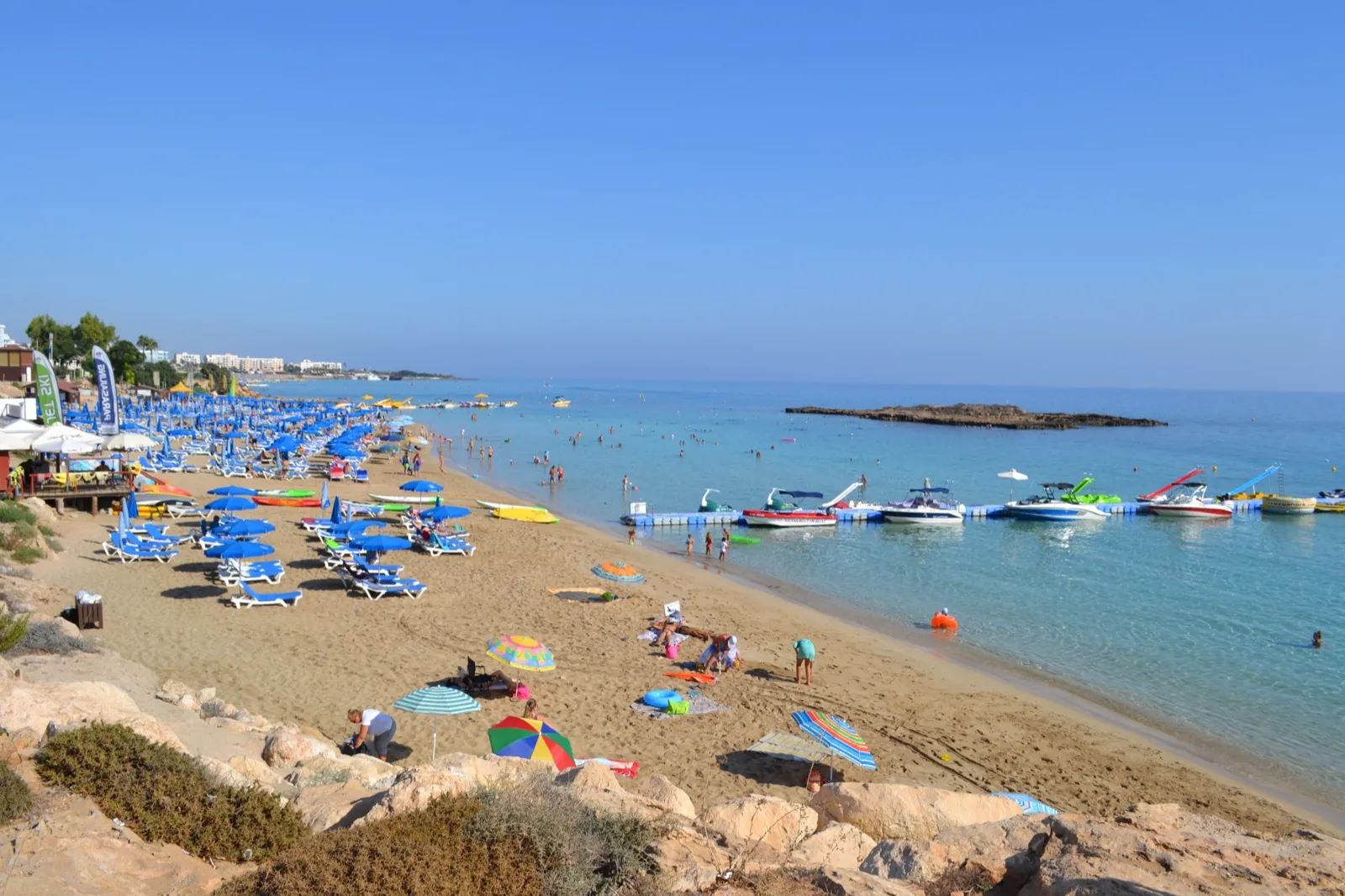
Counts of rims, bases and handles in the mapped half gave at least 51 amphoras, transport jars, all broken; he expects at least twice that number in the area known so far. Thirty-three were "Pseudo-Cos en cloche" jars, a late offshoot of the Koan bifid-handled amphora that earlier studies tie to workshops in Cilicia, on the south coast of Turkey. Fourteen had the Gauloise 4 shape, and pitch linings on several bases point to wine. Most of these appear to be genuine jars from southern Gaul, but one neck and rim in a rough, quite different clay looks like an eastern copy, possibly Cilician. The last four belong to a rare type he knows only from Cyprus, Israel and Sinai, and the wreck shows it was already in use by the late 1st or early 2nd century CE.
He reads the ship as a coaster on short hops along the shore, carrying mostly regional goods with a few long-distance imports probably loaded at a north-east Mediterranean port. Genuine Gaulish jars travelling beside eastern imitations, he writes, raise the question of why potters copied that container, and whether the copies held a Gaulish-style wine.
Fish sauce from Sicily and Africa at the Paphos agora
The newest paper, from 2024, is by Jerzy M. Oleksiak of the University of Warsaw's Interdisciplinary Doctoral School. Of 21,071 amphora fragments from the agora of Nea Paphos in the seasons of 2018–2021, part of the MA-P project of Warsaw and Kraków, he studied all 221 made in North Africa and Sicily. He sorted their clays under a hand lens and microscope into 13 groups, each dated by its layers.
Just over half, 54.7%, are Hellenistic. The commonest among them are Tubular Amphorae, fish-sauce jars thought to be Sicilian although no kiln for them has been found; Oleksiak counts the agora group among the largest sets of diagnostic pieces of the type ever recovered. No type in the group is older than the end of the 3rd century BCE. Oleksiak ties the flow to Roman owners who took over the garum (fish-sauce) works of Sicily and Africa after the Punic Wars.
Under Rome the African and Sicilian forms shrink to three types, while the full amphora record at Paphos shows imports from Italy, Iberia, Egypt, the Levant and Cilicia. From the 3rd to the 7th century CE large African jars dominate, followed in the Byzantine layers by the spatheion form.
An Early Roman cistern under the agora
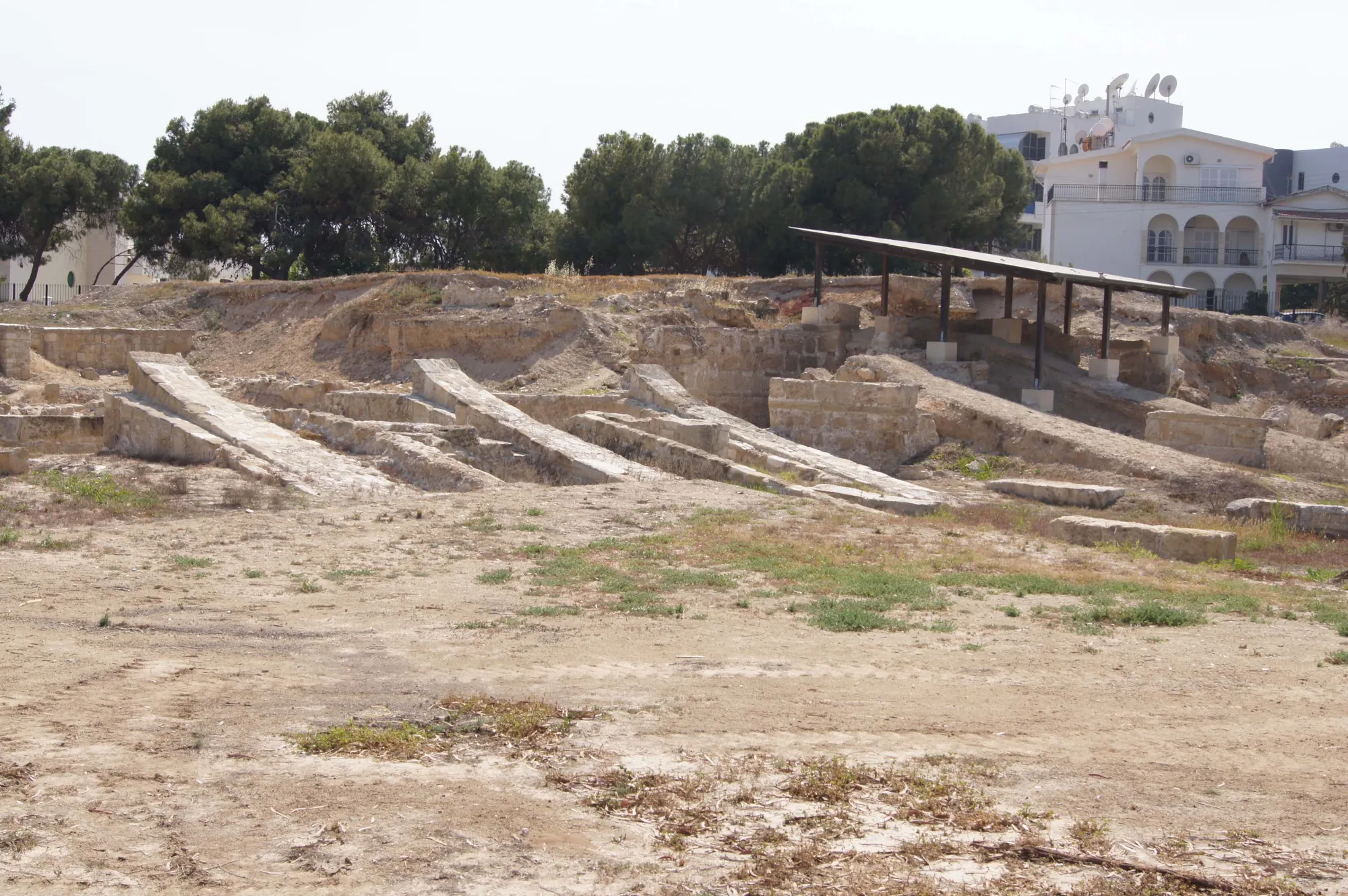
Małgorzata Kajzer's 2018 paper comes from the same square. The Paphos Agora Project of the Jagiellonian University, directed by Evdoxia Papuci-Władyka, found Structure 12 in its first season, 2011, and emptied it in 2012: a shaft cut about 4.5 m into bedrock, shaped like a well but with no trace of water, which Kajzer interprets as a cistern. Its fill of stones and wasters looks like clearance after an earthquake or levelling for rebuilding; its lowest layers held a small but varied set of fine wares dating from Augustus to the mid-2nd century CE.
Eastern Sigillata D, also called Cypriot Sigillata, is the commonest ware, with fragments of 11 vessels. Its source is still argued over: evidence published in 2012 for production in Pamphylia, in southern Turkey, made the later ware long called Cypriot Red Slip look Anatolian, while lead-isotope results of 2015 again point to Cyprus for the earlier one. With it were nine pieces of Eastern Sigillata A, probably Levantine, an Eastern Sigillata B plate from western Asia Minor, an Italian sigillata cup with a rosette on the rim, the foot of a lead-glazed skyphos probably from Tarsus, and seven lamps, four local and three probably Levantine.
Cooking pots from a tomb at Evrykhou
Kristina Winther-Jacobsen's 2014 paper turns from trade to the potter's routine. Few Roman kilns are known in Cyprus, so she works from Evrykhou Tomb 5, an unlooted rock-cut chamber tomb in the pillow-lava country of the Troodos foothills, in the hinterland of Soli. It held about 150 vessels placed there from the Early Hellenistic period into the 2nd or early 3rd century CE. Its early cooking pots are thick-walled, probably coil-built, and made in the same local fabric as the bowls and dishes. By the Early Roman period they are thin-walled and wheel-thrown, in a densely tempered, often quartz-rich fabric used for nothing else, and close in shape to pots made outside the island.
She reads the change as a shift in habitus, the potters' trained routine, towards specialised production. Cooking pots went on being placed in burials into the 2nd century CE, and she finds nothing to show that anyone treated the change as a mark of identity.
Kition tableware after the red-gloss trade
At Kition, red-gloss tableware (sigillata) becomes scarce from the later 2nd century CE, and the next widely traded wares, African Red Slip and Late Roman C and D, spread only from the later 4th century. Sandrine Marquie and Valérie Thirion-Merle, of the ArAr laboratory in Lyon, fill part of that gap in their 2018 paper, from the Department of Antiquities' Areas I and II under Karageorghis and the harbour fill at Bamboula dug by the French mission under Yon. These layers run without a break from the Flavian period to at least the mid-3rd century CE.
In the late 2nd and 3rd century the only tableware at Kition is a slipped ware copying two favourite Cypriot Sigillata shapes, the plate P11 and the carinated bowl P40. X-ray fluorescence analysis of 48 pieces in Lyon sets the two apart clearly: about 6.5% lime in the Sigillata, about 11.5% in the copies. Most of the Kition Sigillata matches pieces from the House of Theseus at Nea Paphos, so both almost certainly came from the same workshops, which remain unlocated. The copies form a loose cluster, which suggests several production places; their only chemical match is a Hellenistic fine-ware group from Amathus, Paphos and Kition whose source is also unknown.
The authors' most likely explanation follows M. Picon: once markets shrank, red-gloss mass production no longer paid, and Kition's potters made tableware for the local market. A few have also been recognised at Amathus, in a study still under way.
Original sources
- Leidwanger, Amphoras from an early imperial shipwreck at Fig Tree Bay, Cyprus (RCRF Acta 41, 2010)
Paper
- Oleksiak, Catching the Big Fish: fish-sauce containers in Nea Paphos (RCRF Acta 48, 2024)
Paper·
- Kajzer, Early Roman fine wares from a cistern in the Agora of Nea Paphos (RCRF Acta 45, 2018)
Paper
- Marquie and Thirion-Merle, La production de vaisselle de table au IIIe s. de notre ère à Kition (RCRF Acta 45, 2018)
Paper
- Winther-Jacobsen, Craft specialization in Hellenistic-Roman Cyprus: identity or habitus? (RCRF Acta 43, 2014)
Paper
On ancientcyprus.com
- Sites
- Kition, Nea Paphos
- Excavations
- Nea Paphos: the Paphos Agora Project (Jagiellonian University), Nea Paphos: MA-P, Maloutena and Agora in the Paphos Urban Plan (Warsaw and Kraków), Kition: the Department of Antiquities Excavations at Kathari and Chrysopolitissa, Kition-Bamboula: the French Mission
- People
- Justin Leidwanger, Sandrine Marquié, Małgorzata Kajzer, Kristina Winther Jacobsen, Ewdoksia Papuci-Władyka, Vassos Karageorghis, Marguerite Yon
- Periods
- Hellenistic, Roman
More in Research
- At least 40 roof tiles lay in rows under fallen stone on the Amathus acropolis, report shows
- Wreck off Cape Apostolos Andreas is the Città di Alessandria, lost in 1972, diver concludes
- Giovanni Mariti watched ancient Kition being dismantled for 1760s Larnaca, a 2013 study recounts
- Cyprus's endemic mouse and the house mouse differ in jaw and molar shape, 3D study finds
- Villagers' tip about a medieval cistern explained disturbed layers at Palloures, co-director writes