
Lecture·Archaeological Research Unit - University of Cyprus·2019
Metallic Status Symbols from Cypriot Early Iron Age Elite Burials (LCIIIB/CG)
Metallic Status Symbols from Cypriot Early Iron Age Elite Burials (LCIIIB/CG) - Helmets, Shepherd΄s Crooks, Mace Heads and Tridents as Indicators for Social Rank and Elite Self-Conception within Cypriot Society of the Late 2nd and Early 1st Millennium B.C.
Chapters
About the lecture
Christian Vonhoff of the University of Bochum examines four rare categories of bronze and iron objects from Late Cypriot IIIB and Cypro-Geometric burials: helmets, shepherd's crooks, mace heads and tridents. Rather than everyday weapons or tools, he argues that their rarity, materials and deposition in wealthy graves mark them as insignia of social rank and authority during the emergence of new elites at the transition from the Late Bronze Age to the Iron Age.
Vonhoff begins with the three known Early Iron Age crested helmets from Cyprus: a complete conical bronze helmet with repoussé bosses from Palaepaphos-Skales Tomb 188, and two pairs of bronze cheek pieces from Kourion-Kaloriziki Tomb 40 (reconstructed as helmet parts by Hartmut Matthäus and Gisela Schumacher-Matthäus rather than Hector Catling's shield) and Palaepaphos-Plakes Tomb 144. He compares the conical form to Hittite, North Syrian and Neo-Assyrian reliefs, while tracing the embossed rosette motifs on the Kaloriziki cheek pieces and the composite helmet type to Central European Urnfield traditions and the Submycenaean helmet from Tiryns.
The second category is the socketed bronze shepherd's crook from Cypro-Geometric II Tomb 409 at Lapithos, placed alongside seven Late Bronze Age Cypriot examples from Enkomi, Sinda, Hala Sultan Tekke and museum collections. Dismissing practical pastoral use, Vonhoff connects the crook to the Homeric formula "shepherd of the host" and to New Kingdom Egyptian royal and divine iconography of the crook and flail.
He next classifies Cypriot Early Iron Age mace heads into three types: tubular bronze mace heads with central ribbed swellings and projections from Amathus, Ayios Tychonas, Palaepaphos-Skales and Tamassos; a miniature bronze rosette mace head from Amathus Tomb 547; and a spherical iron mace head from Palaepaphos-Skales Tomb 74. Lacking Late Bronze Age Cypriot predecessors, these are interpreted through North Syrian and Iranian parallels and Assyrian palace reliefs as imported ceremonial sceptres. The fourth category is a large iron trident from Palaepaphos-Plakes Tomb 142, which Vonhoff compares to earlier Cypriot bronze tridents from Lapithos, Pera and Hala Sultan Tekke Tomb 23 and to Levantine iron examples from Tell el-Hammah and Lachish.
In a substantial discussion afterwards, Vassos Karageorghis and other participants debate Bronze Age depictions of maces, the southern coastal distribution of these tombs, the Kourion sceptre and the role of sceptres as emblems of specific authority rather than royal regalia, and the relation of these rare objects to bronze and iron obeloi and firedogs.
From our collection
Pieces in the Drakopoulos collection of the kinds and periods this talk covers: Cypro-Geometric, Cypro-Archaic.
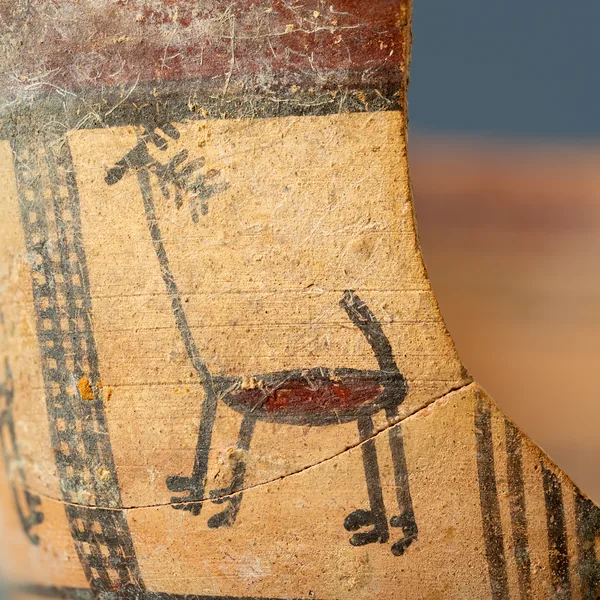
Bichrome Skyphos with Stags in Metopes
Cypro-Archaic
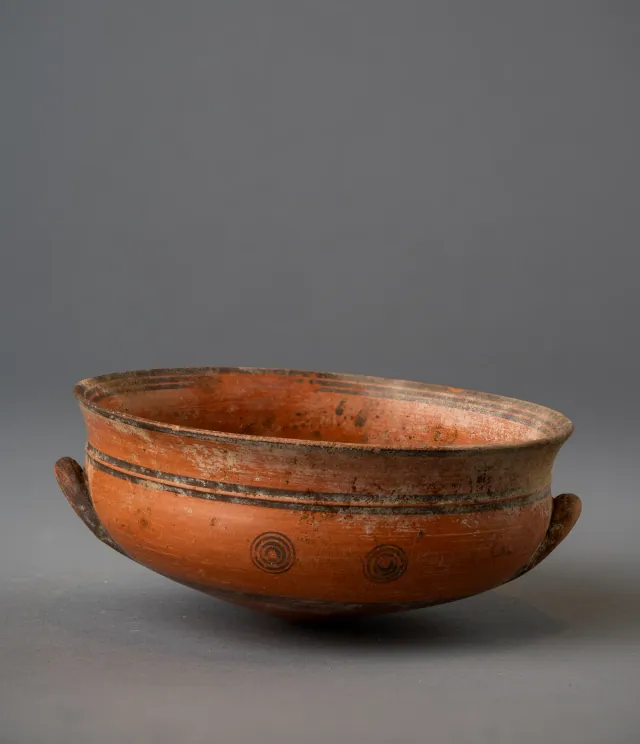
Black-on-Red Two-Handled Bowl with Raised Flaring Rim
Cypro-Archaic
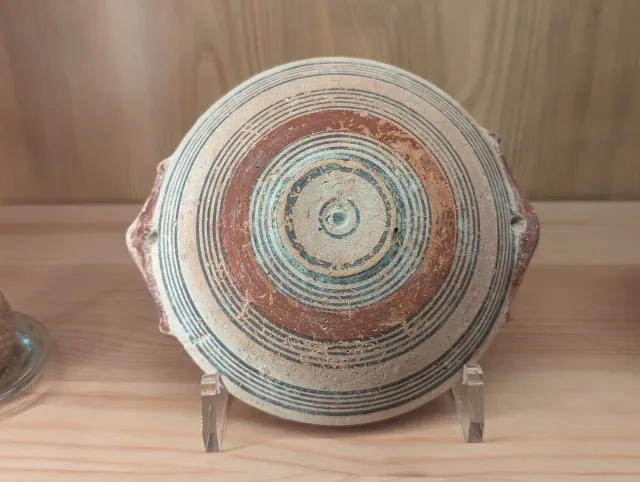
Bichrome IV Bowl with Red-Painted Pierced Lug Handles
Cypro-Archaic
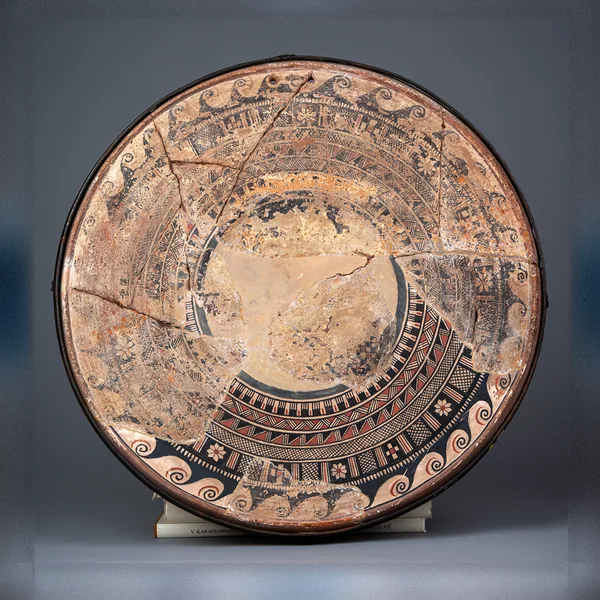
Large Bichrome Plate from Salamis with a Wave Band and Rosette Metopes
Cypro-Archaic
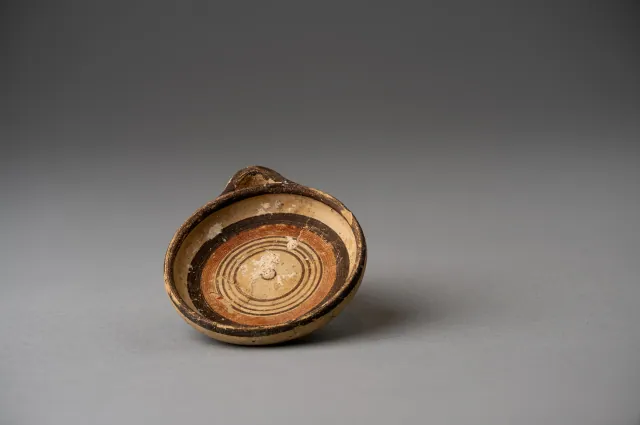
Miniature Bichrome Plate with Concentric Circles
Cypro-Archaic
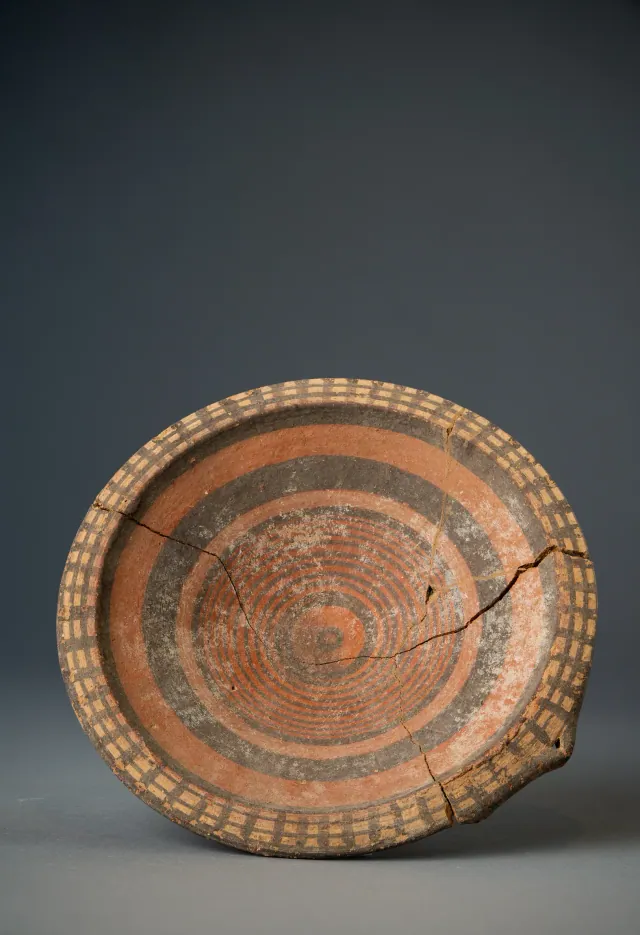
Black-on-Red Plate with Barred Rim and Concentric Circles
Cypro-Archaic
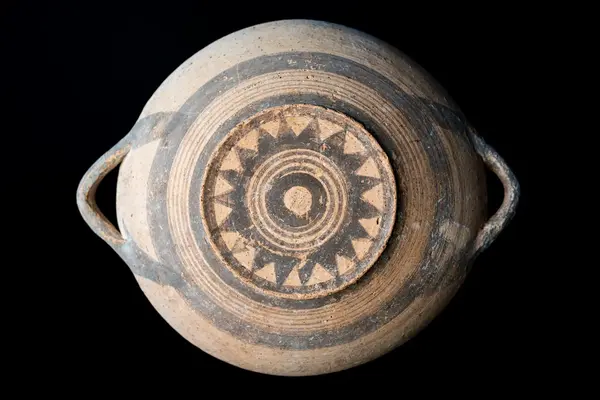
White Painted Plate with a Sawtooth Star on the Underside
Cypro-Geometric
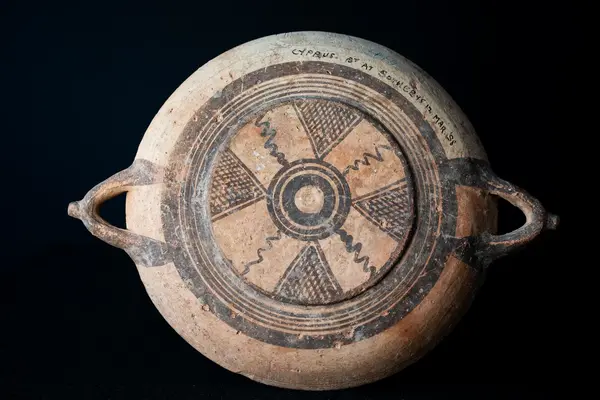
White Painted Plate with Latticed Triangles and Wavy Lines on the Underside
Cypro-Geometric
Found at the places discussed
Objects in our catalogue, in museum collections, recorded as found at these sites.

Background
Where to read more on this site before or after watching.
The site
Palaepaphos (Kouklia)
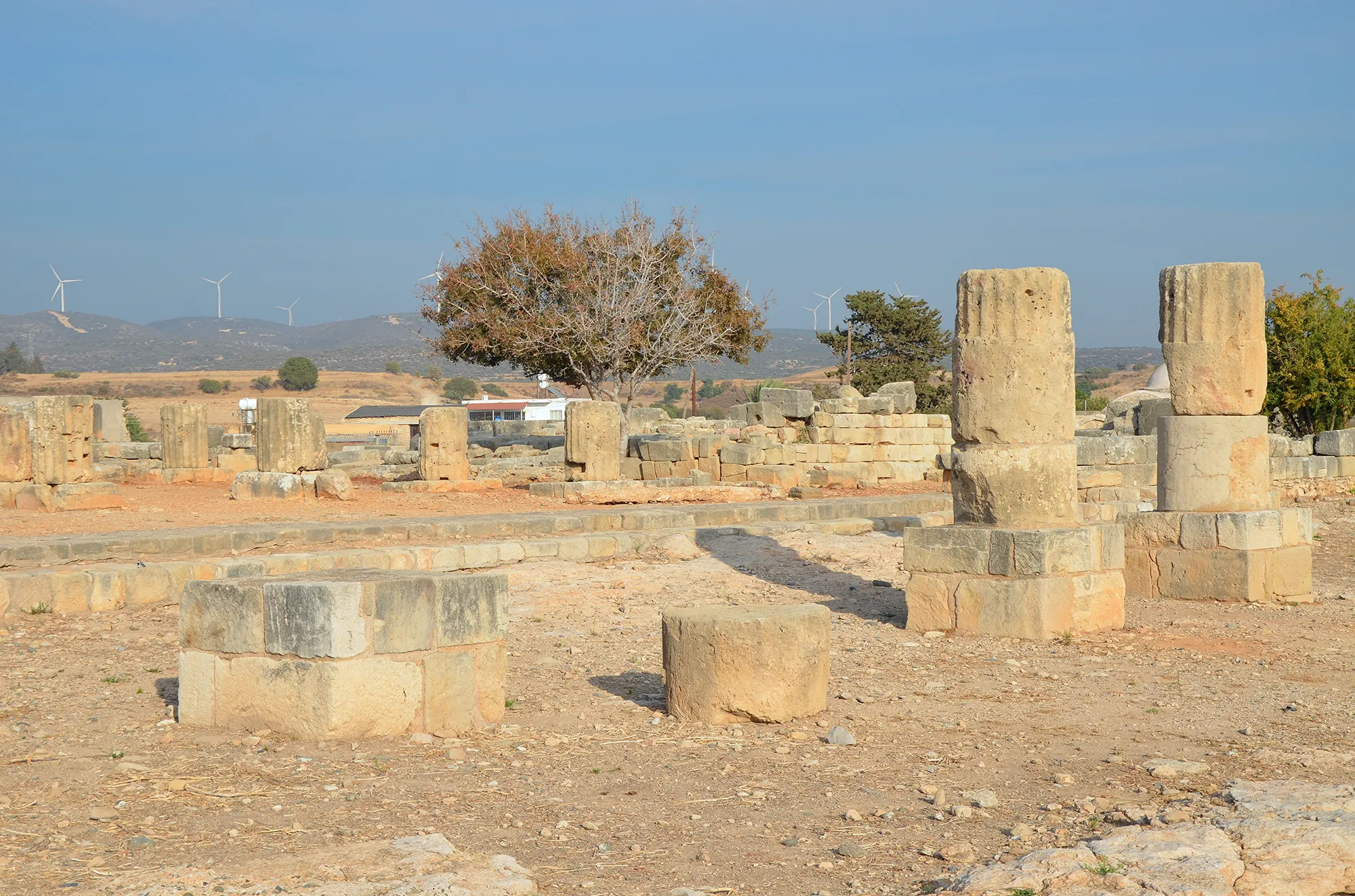
Palaepaphos, Old Paphos, lies under and around the village of Kouklia in western Cyprus. Founded in the Middle Bronze Age, it was the only large town of the south-west until the early Hellenistic period, the seat of the kings of Paphos and the site of the sanctuary of the Paphian goddess, Aphrodite, worshipped here from about 1200 BC to the end of the 4th century AD.
In the compendium
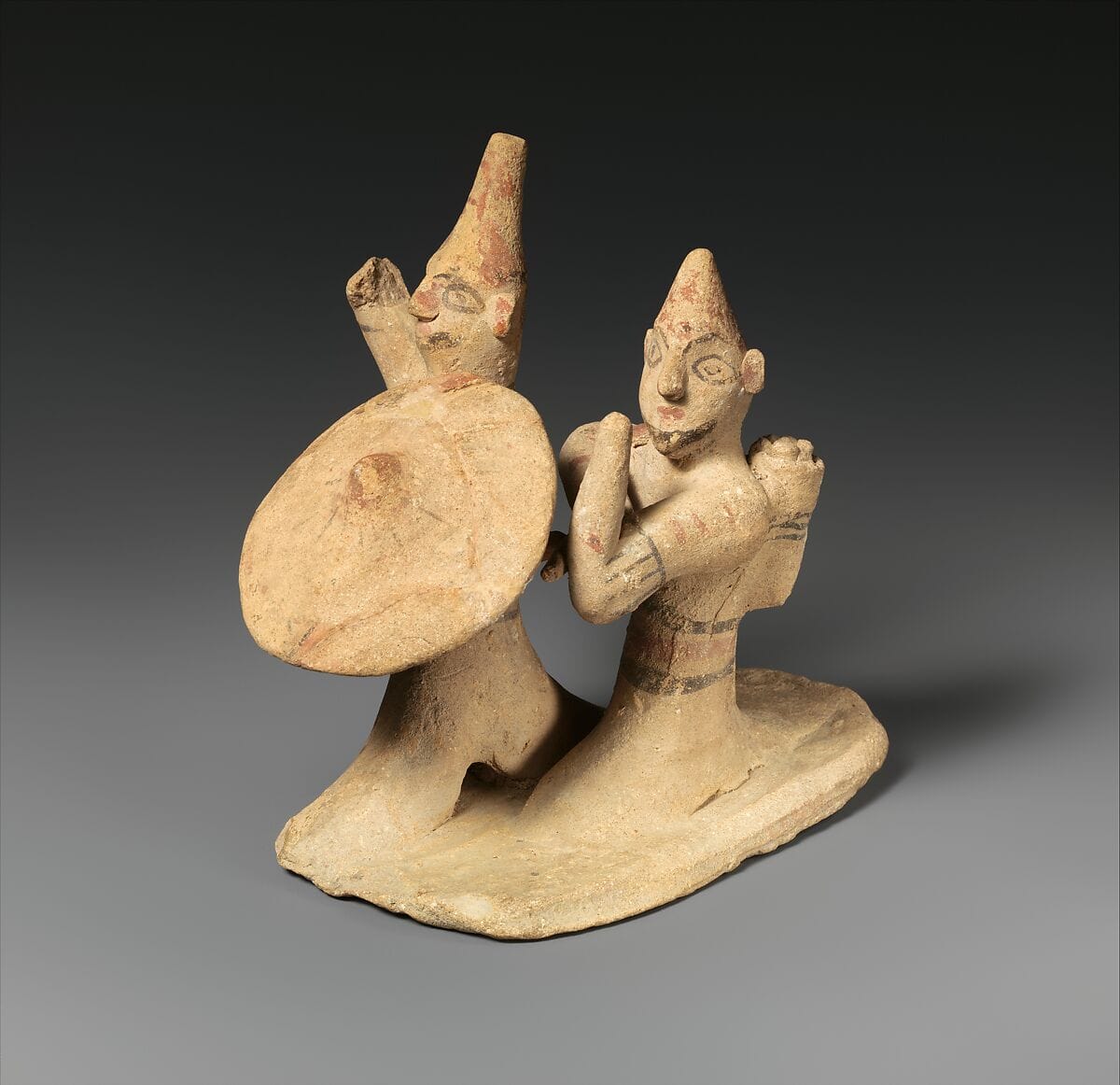
Arms and Armour of Iron Age Cyprus
The iron and bronze weapons, armour and chariots of Cyprus from the first iron daggers of c. 1100–1050 BCE to the end of the city-kingdoms around 310 BCE.
In the compendium
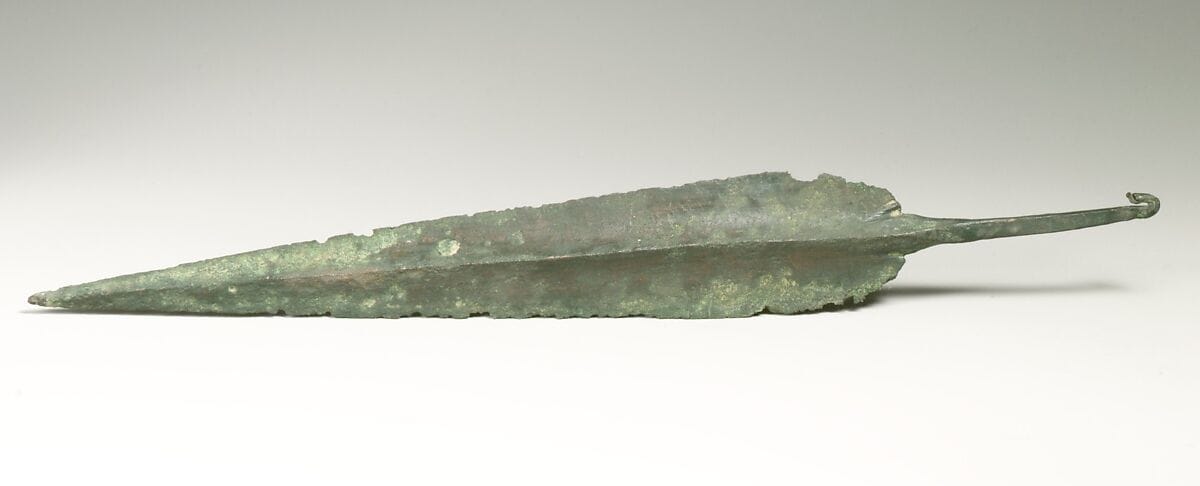
Weapons of Bronze Age Cyprus
The copper and bronze weapons of Bronze Age Cyprus, from Philia hook-tang spearheads and riveted daggers to the Naue II swords and greaves of Enkomi.
In the compendium
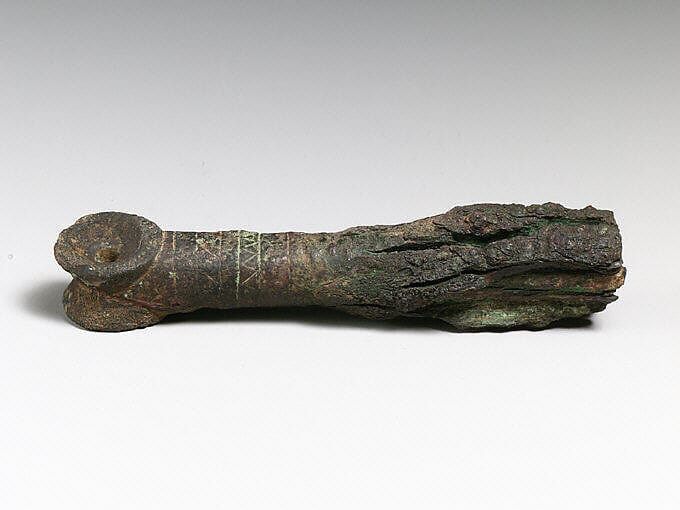
Gold, Silver, Tin, Arsenic and Iron in Ancient Cyprus
The metals other than copper used by Cypriot smiths from the Philia facies to the Hellenistic period, including arsenic, tin, gold, electrum, silver, lead and iron.
Map of Cyprus
Places discussed in the talk
- Has a page on this site
- Other places
- Ground above 200, 500, 1,000 m