
Lecture·Archaeological Research Unit - University of Cyprus·2018
Max Ohnefalsch-Richter's research on the built tombs of Idalion
Chapters
About the lecture
Stephan G. Schmid of the Humboldt University of Berlin presents findings from the unpublished manuscript and archives of Max Ohnefalsch-Richter, focusing on monumental built chamber tombs at Idalion. Funded by Emperor Wilhelm II in 1893, Ohnefalsch-Richter was forced in 1908 to surrender his unfinished manuscript, Tamassos and Idalion, along with maps and photographs, to the Berlin Antiquarium. By integrating his hand-coloured 1888 map from The Owl with modern satellite imagery, Schmid's team has verified the high topographical precision of his records around Dali and Ayios Sozomenos.
Before turning to the built tombs, Schmid illustrates how the archive allows the reconstruction of dispersed tomb contexts from the 1894–1895 excavations in the East Necropolis, prior to their tripartite partage division. He traces objects from Tomb 33 to the Neues Museum in Berlin, the Pushkin Museum in Moscow, and the storerooms of the Cyprus Museum and the museum at Idalion.
Although published scholarship generally records only one or two built tombs at Idalion, Ohnefalsch-Richter's manuscript documents twelve further examples, mostly dismantled by nineteenth-century villagers for building stone and reported to him by former diggers such as his foreman Avraami Charalambou. Walking through the map's numbered points, Schmid details a destroyed pointed-roof tomb at Point 14 near the vaulted tomb later published by Vassos Karageorghis, four pointed-roof tombs and four non-pointed-roof tombs on two mounds at Point 21, and another pointed-roof tomb at Point 22.
Only the tomb at Point 19 was seen by Ohnefalsch-Richter himself, in October 1887. A missing plate from his planned publication, found by Schmid in the archives of Olivier Masson at the University of Cyprus, reveals a gabled built tomb with a sloping dromos, a central corridor, and two chambers opening on each side. At Point 9, near the chapel of Agios Georgios, workmen reported a tomb entrance flanked by two red-painted colossal relief figures with horns. Ohnefalsch-Richter purchased a 43.5 cm head fragment of one figure, which shows a horned Bes and was donated via Valentin Weisbach to the Grassi Museum in Leipzig, where it was lost in the Second World War; a surviving photograph in Berlin confirms its form.
Adding these twelve tombs to the corpus makes Idalion the largest concentration of built tombs on Cyprus. Against Ohnefalsch-Richter's Hellenistic dating for Point 19, Schmid cautiously places the group in the Cypro-Archaic period based on roofing typology, compares the Bes entrance to the Amathus colossus and sarcophagus as well as Anatolian monuments, and argues that Cypriot built tombs should be understood primarily as local monuments rather than direct Phoenician imports. In the discussion afterwards, Schmid addresses future archival publication plans, the date of the Bes sculpture, and two recently surfaced paintings by Ohnefalsch-Richter, including an unidentified Cypriot chapel scene in the CVAR (Severis Museum).
From our collection
Pieces in the Drakopoulos collection of the kinds and periods this talk covers: Cypro-Geometric, Cypro-Archaic, Hellenistic.
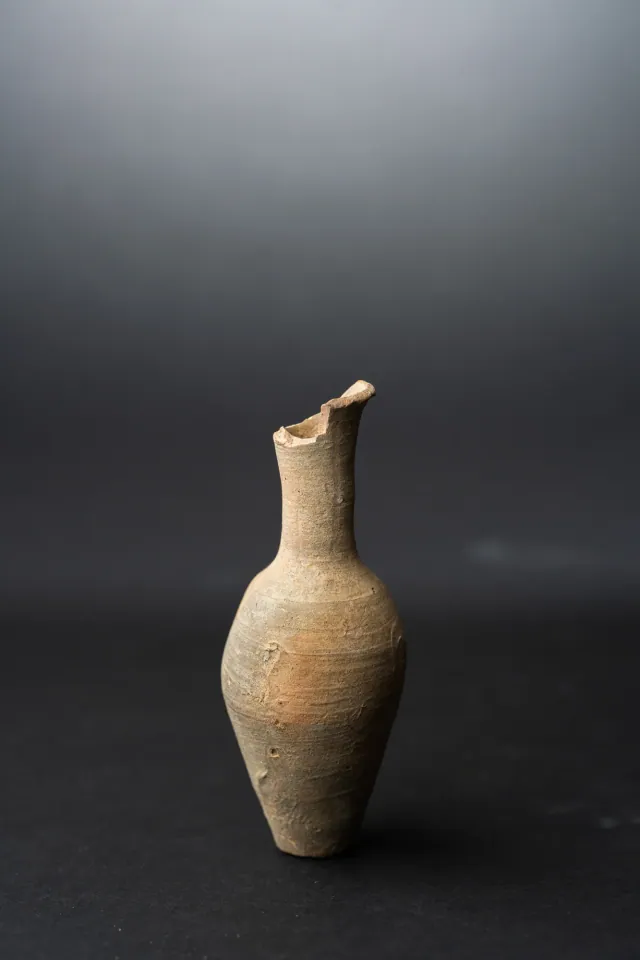
Fusiform Unguentarium
Hellenistic
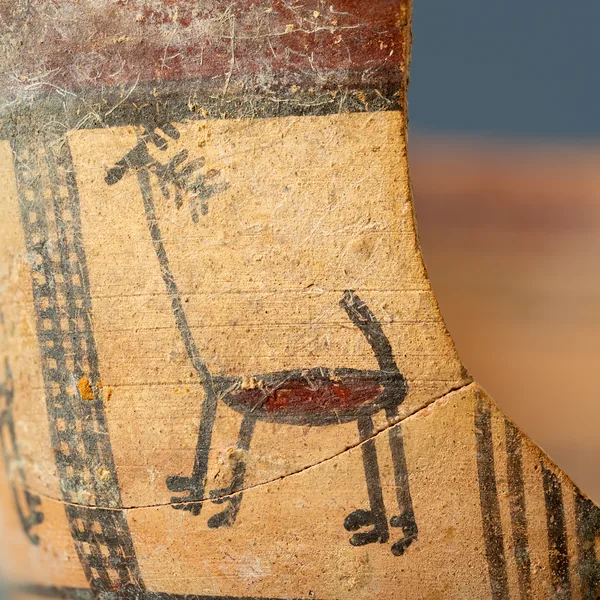
Bichrome Skyphos with Stags in Metopes
Cypro-Archaic
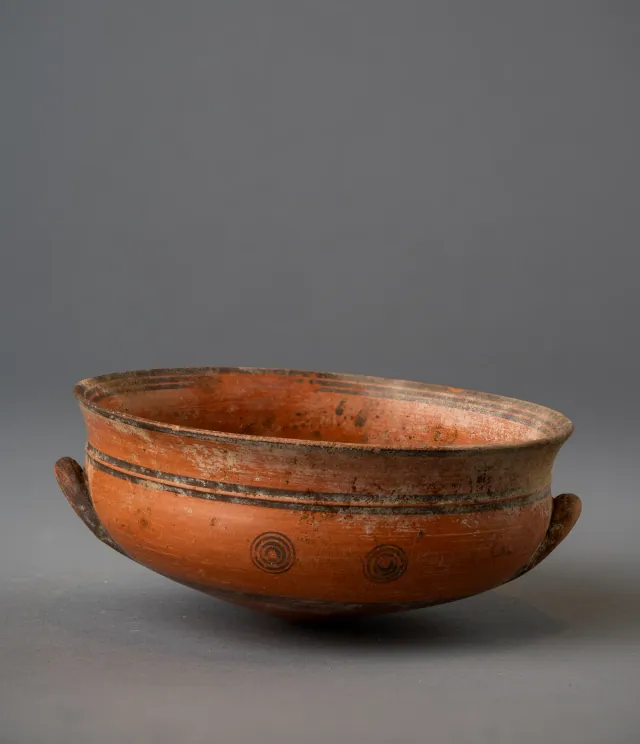
Black-on-Red Two-Handled Bowl with Raised Flaring Rim
Cypro-Archaic
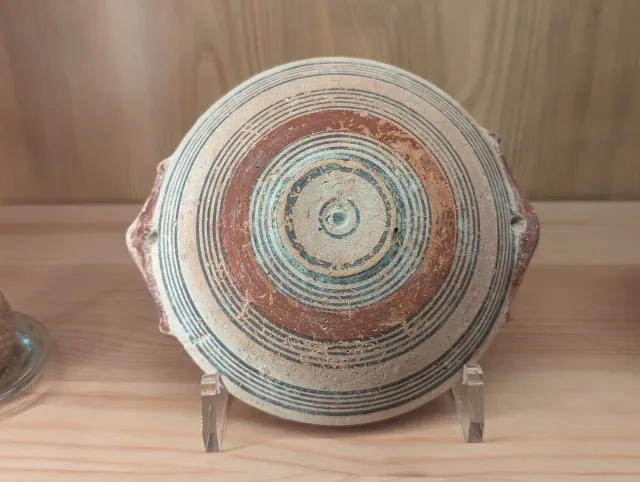
Bichrome IV Bowl with Red-Painted Pierced Lug Handles
Cypro-Archaic
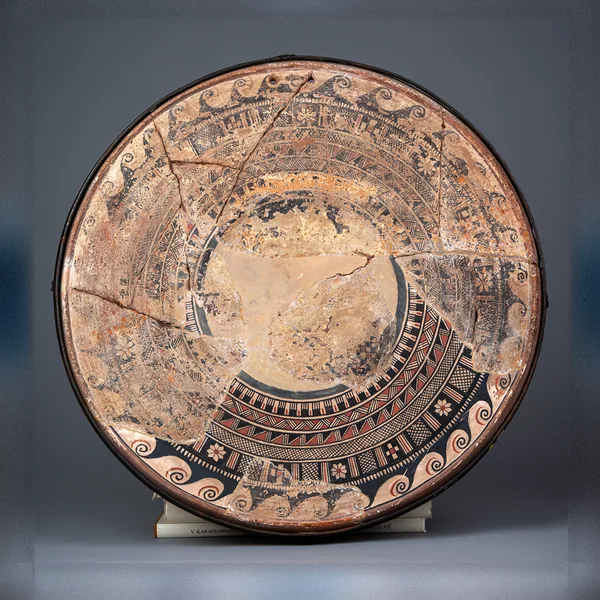
Large Bichrome Plate from Salamis with a Wave Band and Rosette Metopes
Cypro-Archaic
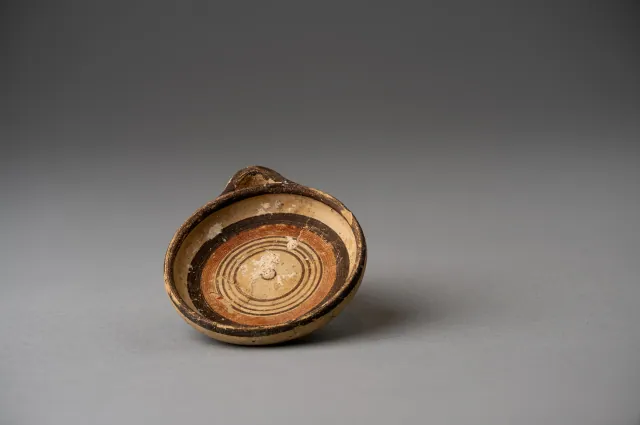
Miniature Bichrome Plate with Concentric Circles
Cypro-Archaic
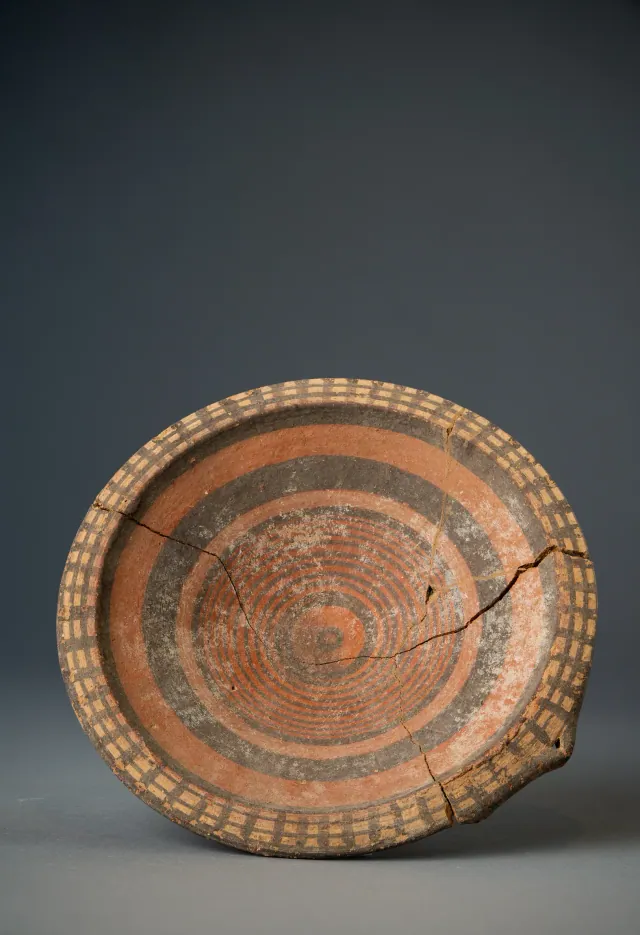
Black-on-Red Plate with Barred Rim and Concentric Circles
Cypro-Archaic
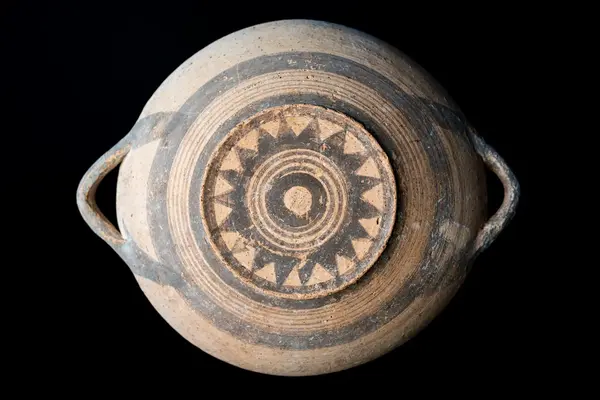
White Painted Plate with a Sawtooth Star on the Underside
Cypro-Geometric
Found at the places discussed
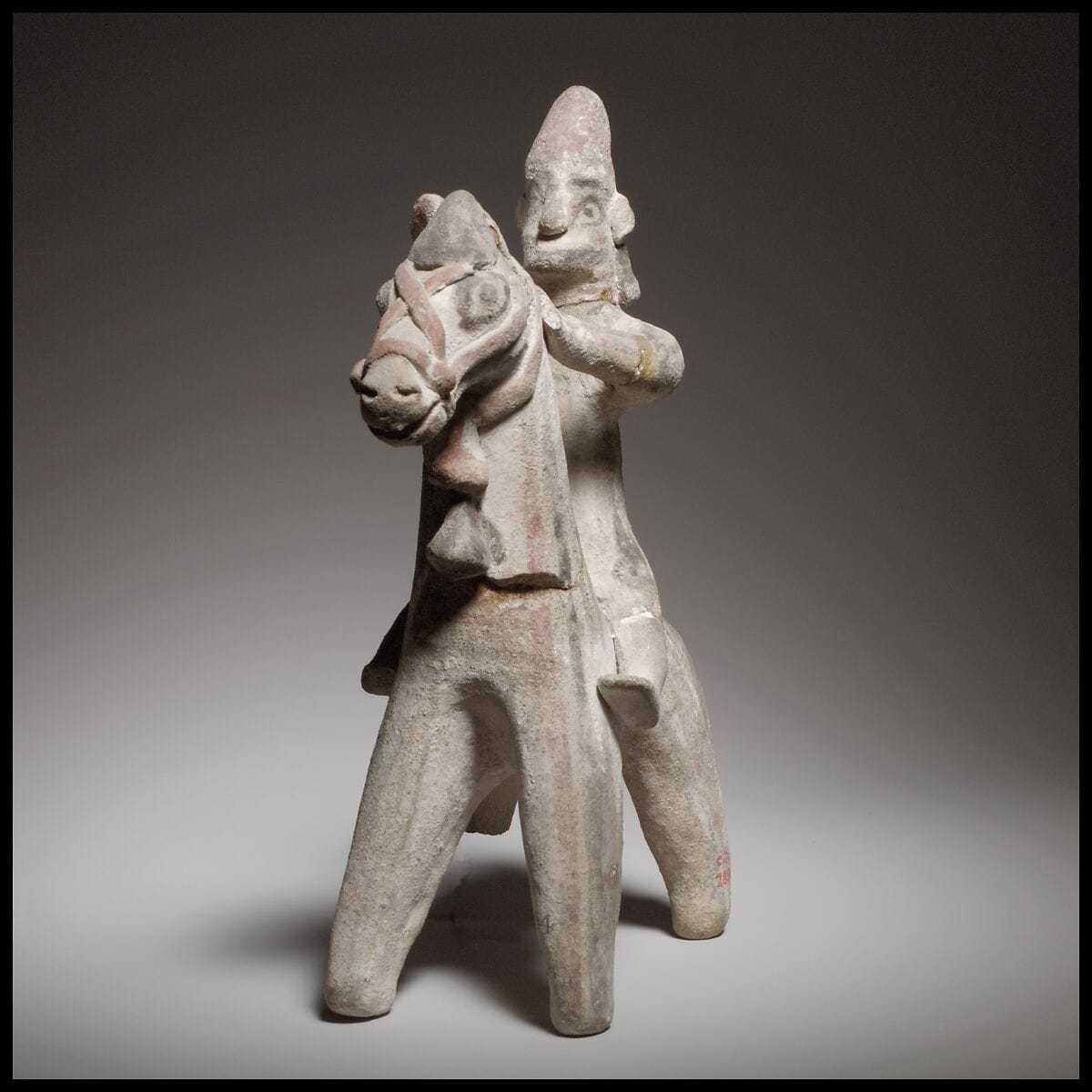
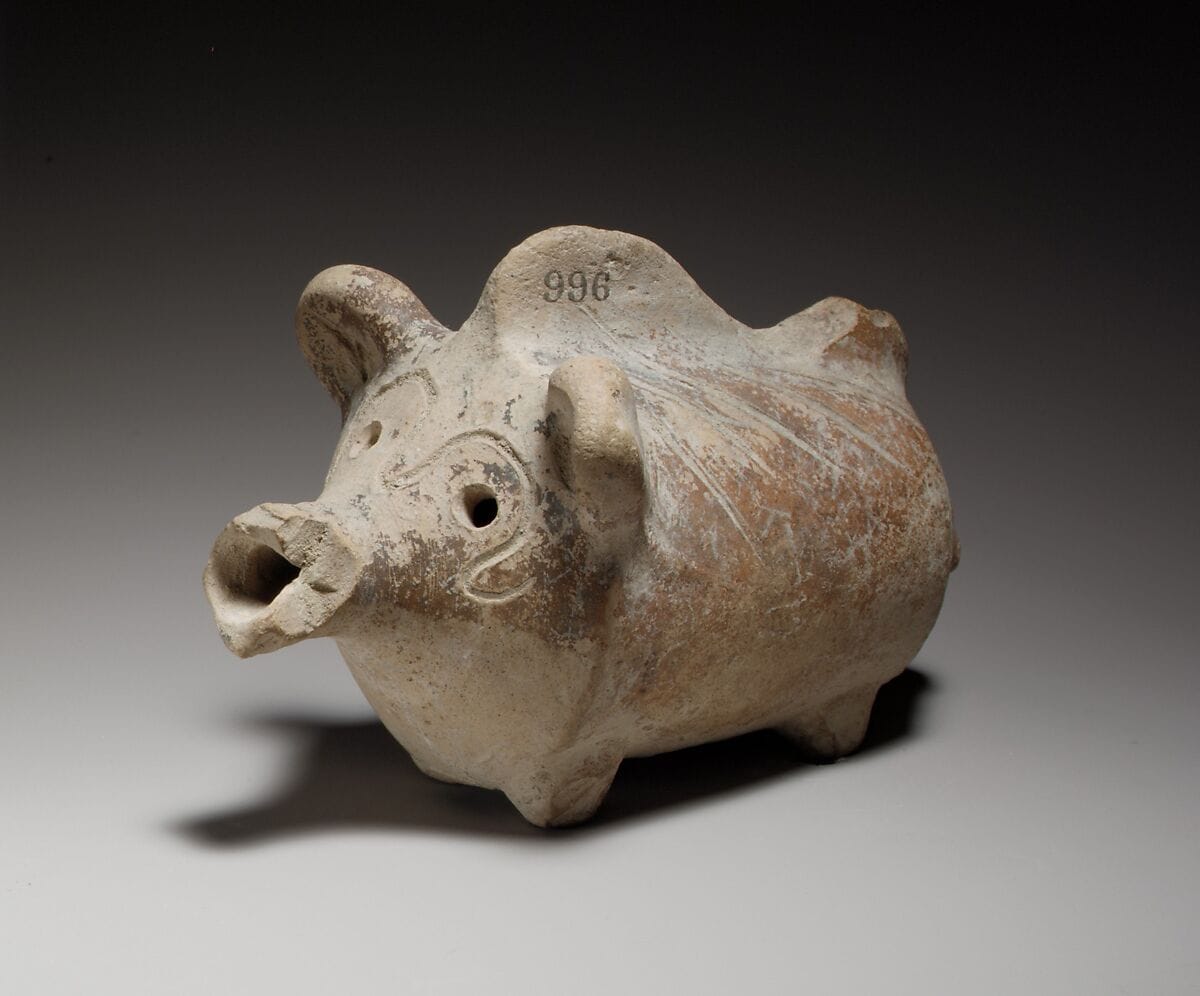
Objects in our catalogue, in museum collections, recorded as found at these sites.


Background
Where to read more on this site before or after watching.
The site
Idalion
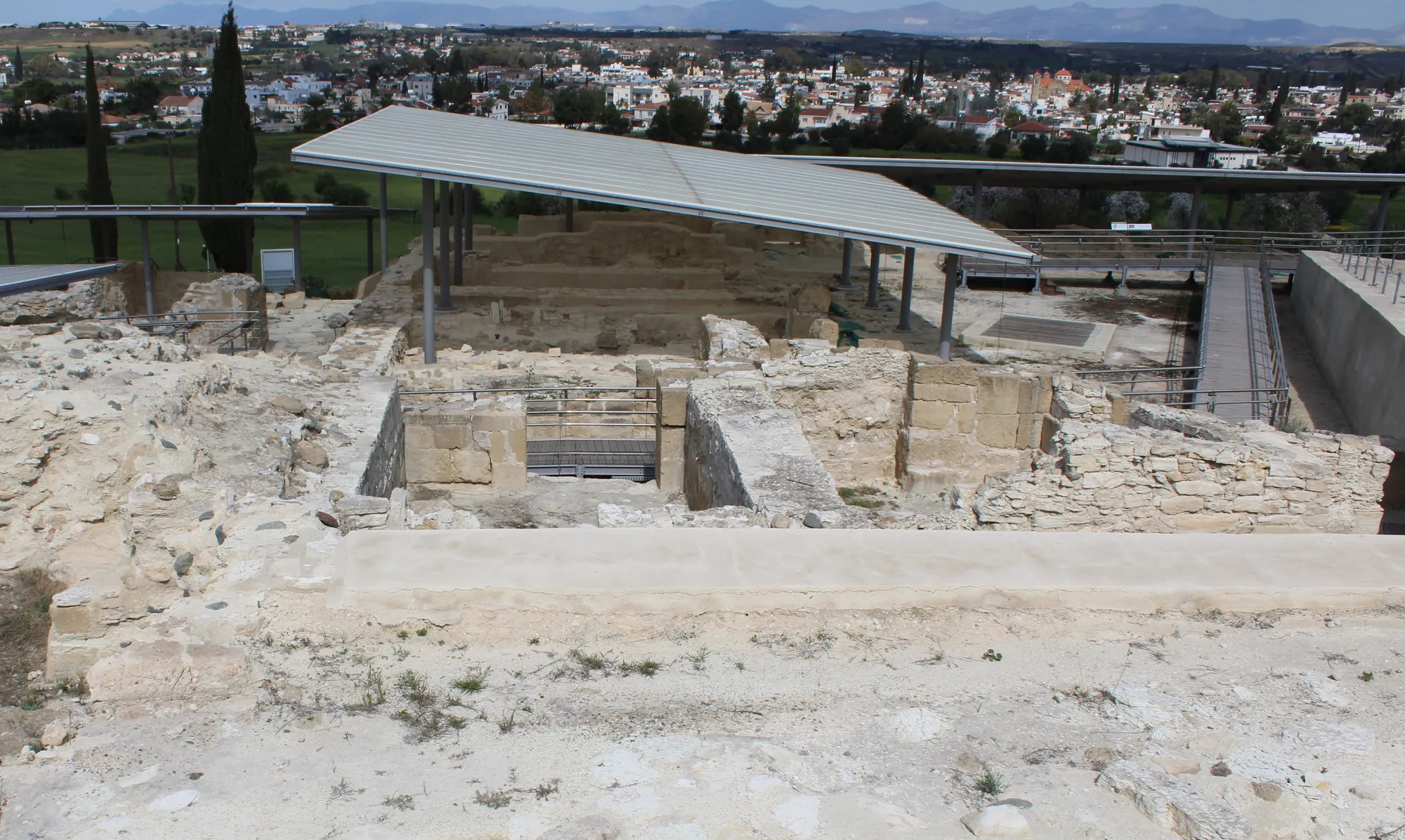
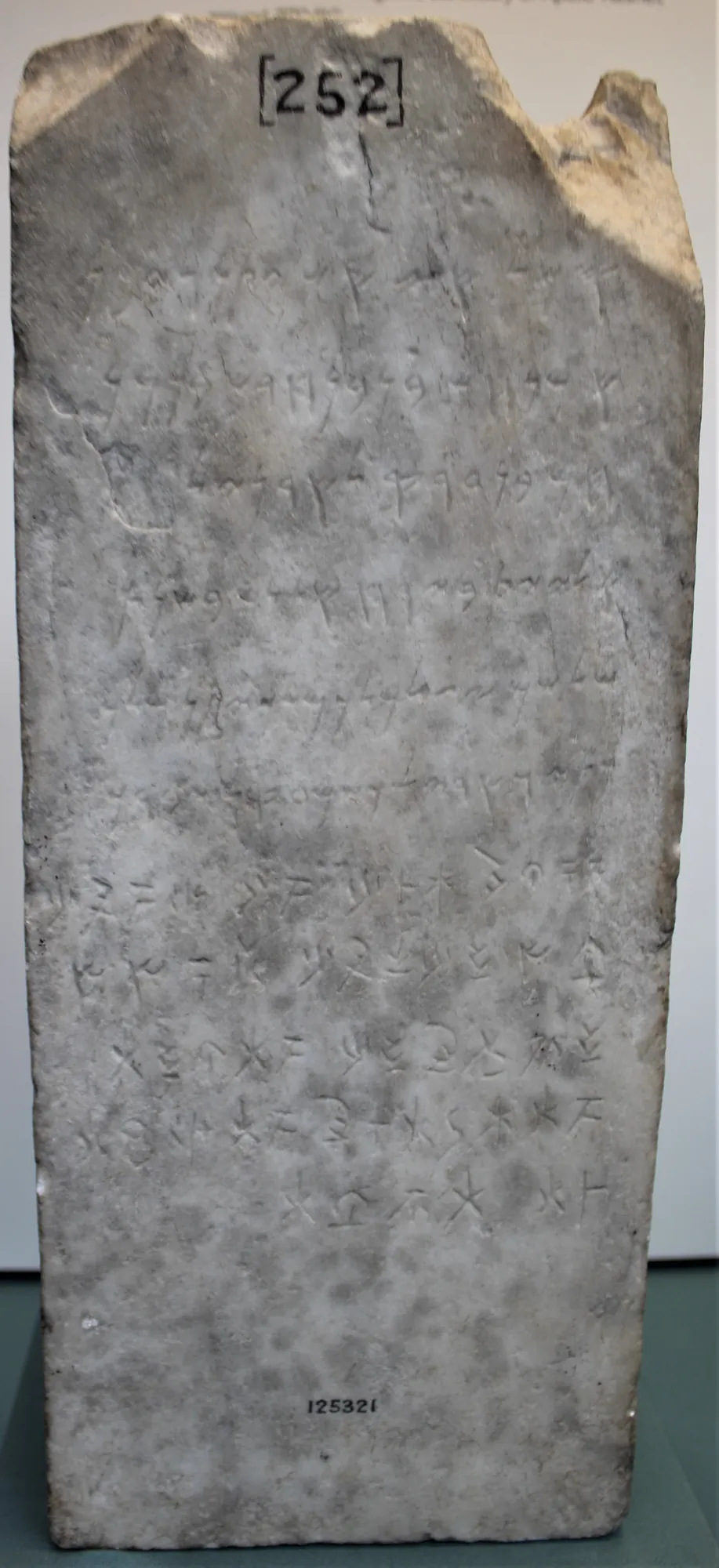
Idalion is an inland city-kingdom of Iron Age Cyprus at the modern village of Dali, built round two limestone acropoleis and a walled lower city on the Yialias river. Its bronze tablet, the longest known text in the Cypriot syllabary, records a siege of the city in the first half of the 5th century BC; soon afterwards Idalion passed to the Phoenician kings of Kition, whose administrative archive was found on the west terrace.
In the compendium
Max Ohnefalsch-Richter: Excavator, Dealer and the Divided Finds of British Cyprus
The German excavator whose finds left British Cyprus lawfully through the division of finds of 1880 to 1895, the patrons he dug for, the sales of 1887 and 1896, and the record he left.
In the compendium
Firmans and Partage: The Lawful Export of Antiquities from Ottoman Cyprus, 1860s to 1905
The firmans, landowners' rights and the division of finds in thirds under which consuls, excavators and museums lawfully exported Cypriot antiquities from the 1860s until the law of 1905.
In the compendium
Royal and Built Tombs
Tombs built of cut stone in Cyprus, from the ashlar tombs under Late Bronze Age houses at Enkomi to the royal tombs of Salamis and Tamassos and the rock-cut courts of Nea Paphos.
Map of Cyprus
Places discussed in the talk
- Ground above 200, 500, 1,000 m
Places