Athens-based French archaeological school that built no Cypriot collection but began the Amathus excavation in 1975, administered the Shillourokambos dig and launched the Études Chypriotes series.
About
The French School at Athens works, strictly, only in Greece, and its Cypriot record is therefore a matter of exceptions. Vassos Karageorghis opened his survey of the School's work on the island by saying so, and by crediting a former director's foresight for bringing it to Cyprus1. The School, founded in Athens in 18463, never built a Cypriot collection of its own. What it left on the island is an excavation at Amathus begun in 1975, a monograph series and a share in the Neolithic digs of the south coast; earlier it sent two short missions, one of which brought objects to Paris.
Missions to Larnaca and the Louvre, 1878 to 1899
In 1878 two members, Mondry Beaudouin and Edmond Pottier, were sent to Cyprus on an official mission4. Antoine Hermary, the School's historian of its Cypriot work, records that their voyage round the island acquired no antiquities. They wrote a detailed report in 1879, surveyed the stadium at Kourion, looked at the sanctuary of Aphrodite at Palaepaphos and the "tombs of the kings" at Nea Paphos, and placed the sanctuary of Aphrodite at Amathus on the acropolis23. A further excavation proposed in 1886 by the Vicomte de Castillon de Saint-Victor produced no result4.
The mission of 1896, under the director Théophile Homolle, is the one whose acquisitions reached the Louvre23. Charles Fossey is also linked to the 1896 sending13, and Paul Perdrizet went out to Cyprus as a member of the School. He published Greek inscriptions from the trip promptly, in volume 20 of the Bulletin de correspondance hellénique5. His letters to Pottier describe the island's collectors and dealers, and Annie Caubet notes that they dwell on the sculptures of the French consul Auguste Boysset at Larnaca, later given to Paris2. On 27 November 1896 Homolle thanked Boysset for helping to find and buy antiquities and to export the cases destined for French museums12.
The School gave Cypriot vases to the Musée du Louvre. Its records list as gifts of the School, from Perdrizet's mission, the vases A. M. 632 and A. M. 63319, and in 1899 further Cypriot vases, among them an oinochoe from Aradippou (A. M. 682)14. Hermary sees the first half of the twentieth century as a time of little School interest in Cypriot archaeology, and gives as one trace Henri Seyrig's short passage through the island in 1924, which gave rise to an epigraphic article23.
The Chronique and Études Chypriotes, 1958 to 1961
Under the director Georges Daux, Karageorghis suggested that the Bulletin de correspondance hellénique carry an annual report on excavations and discoveries in Cyprus. The "Chronique des fouilles et découvertes archéologiques à Chypre" ran every year from 1958 to 1988 and continues in shorter form1. Hermary dates its creation to 1959, following the links made from 1958 between Daux and the young Karageorghis; it was written for thirty years by Karageorghis and then by his successors at the head of the Department of Antiquities23. In 1961 the School launched the Études Chypriotes series, whose first volume was Olivier Masson's Les inscriptions chypriotes syllabiques1. Masson's "Kypriaka" series in the Bulletin began in 196423.
Winning Amathus, 1969 to 1975
Karageorghis dated the School's coming to Amathus to 1974, when Enkomi and Salamis, where French missions had worked, were lost to the occupied zone after the Turkish invasion and he proposed Amathus to the director Pierre Amandry1. Ludovic Thély's account from the School's and the Foreign Ministry's archives shows that the matter was older, and that Enkomi and Salamis were State-funded French missions rather than School ones21. In October 1969 Amandry, newly director, received a letter from Karageorghis, then Director of the Department of Antiquities, pressing for the cession of excavation rights at Amathus. Amandry at first declined21.
Karageorghis pressed for several years. Amandry then wrote that the School renounced the excavation, because the ministry's finance services had withdrawn a promised rise in its 1973 operating credits and cut its subsidy by 5 per cent. Karageorghis appealed to the French ambassador, Albert Vanthier, who warned the Foreign Ministry that a refusal would cost France prestige, and the foreign minister Schumann wrote to the education minister in July 197321. Amandry then accepted only a short surface and topographic campaign "without excavation", with no commitment for the future, and tried to place the work under the French institute at Beirut, whose director Ernest Will declined for budget reasons. In October 1973 Pierre Aupert, in his third year as a member, reconnoitred the site with an architect and fixed the bases later used for the 1975 grid21.
The invasion of 1974 cancelled the work planned for that autumn. In December the Foreign Ministry told the Cypriot authorities that an excavation would take place at Amathus under the School, with 65,000 francs from the Quai d'Orsay. Amandry, who had given up the project, lost control of the negotiation21. He obtained approval and funds from the Foreign Ministry's excavation commission, with Ph. Guillemin and J. Pouilloux decisive1. The costs were divided: the School supplied the scientific staff and paid for publication, the ministry paid for the digging, and it gave 65,000 francs again for the second campaign in 197621. The first campaign ran from 24 March to 26 April 1975, with five archaeologists under Aupert (Boussac, Marchetti, Thalmann, Vandenabeele and Yon) and four sectors opened by the Wheeler method21.
Amathus, 1975 to 1996
Aupert directed on the ground and Antoine Hermary joined him later; administrative direction stayed with the School's director, Amandry, then Olivier Picard, then Roland Étienne1. Amathus suited the School partly because it had not been built over in modern times and the Department owned much of the urban site, while tourist development along the coast threatened the cemeteries1. The work of 1975 to 1979 was reported by Aupert and Hermary in the Report of the Department of Antiquities, Cyprus for 198015, and in 1985 they published a survey of the French excavations of 1975 to 198422.
On the acropolis the mission worked at the sanctuary of Aphrodite. A partial restoration of the temple began in the 1980s with the support of Evagoras Lanitis and the School's architect M. Schmid, and by 1996 Karageorghis regretted that it had stalled1. A head of a youth found near the temple of Aphrodite is in the Limassol District Museum (AM 690)20. By 1987 Thierry Petit was excavating the "palace" on the acropolis11, and by 1996 two missions with separate directors worked there, an arrangement Karageorghis criticised, as his own opinion, as a dispersal of effort1.
The Department asked the School to share in publishing the cemeteries excavated in rescue operations. La nécropole d'Amathonte appeared in six volumes between 1989 and 1992, in the Études Chypriotes series, with the costs shared with the A. G. Leventis Foundation1. Karageorghis refers to the stores of the Limassol District Museum for cemetery material1. Amathonte 3, L'Orfèvrerie was published in Athens in 198717.
Jean-Yves Empereur led an underwater survey and excavation of the ancient harbour from about 1982 to 1986, the first thorough study of an ancient harbour in Cyprus. Karageorghis credits the cooperation with the School with averting a modern marina over the ruins1,7.
The Neolithic sites and later programmes
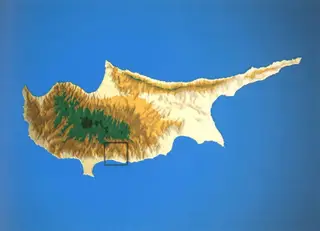
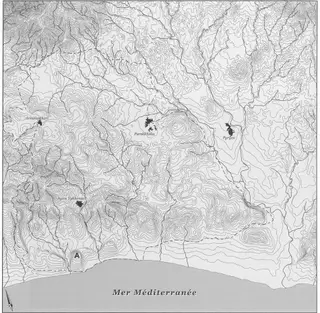
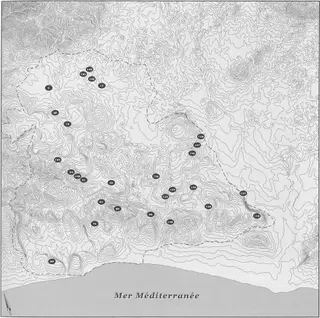
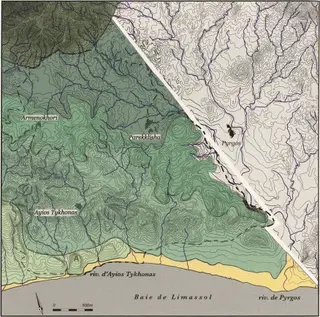
From 1992 the aceramic Neolithic settlement of Parekklisha-Shillourokambos was excavated by Jean Guilaine under the School's administrative responsibility1,10. Hermary adds that Shillourokambos and, later, Ayios Tychonas-Klimonas were not directly dependent on the School, though closely associated with the Amathus mission, whose survey of the town's territory had found the Neolithic sites23. Since 2000 the research programme at Potamia-Agios Sozomenos, a landscape study centred on a royal manor of about 1370, has stood under the School's aegis, and in 2011, under an agreement with the Department of Antiquities, a programme began to study the topography of the Amathus cemeteries and to publish about 150 tombs the Department had excavated23.
The Cypriot collection
Not a collecting institution; its Cypriot work is fieldwork (Amathus from 1975, Shillourokambos under its administrative responsibility) and the Études Chypriotes monograph series (1996)
Beaudoin and Pottier's exploratory voyage round the island acquired no antiquities; they wrote a detailed report in 1879, surveyed the stadium at Kourion, examined the Aphrodite sanctuary at Palaepaphos and the 'tombs of the kings' at Nea Paphos, and placed the sanctuary of Aphrodite at Amathus on the acropolis. They saw the Cesnola excavations and the British order of August 1878 suspending private excavation, and repeated Cesnola's account of the 'treasure of Curium' as then accepted.
Paul Perdrizet sent to Cyprus as a mission under director Homolle; brought back Greek inscriptions, published promptly (BCH 20); his letters to Pottier describe the island's collectors and dealers
Perdrizet's activity and the acquisitions he made on the island reached the Louvre; Hermary refers to two studies by Masson on them. After two articles on his finds Perdrizet turned to Delphi.
Henri Seyrig's short passage through Cyprus, which gave rise to an epigraphic article; Hermary sees the first half of the 20th century as a time of little School interest in Cypriot archaeology.
Named in the papers of the French mission at Enkomi (Fonds Claude Schaeffer, Collège de France), 1952: «[Lettre de Megaw à Schaeffer à propos de la réplique de la coupe aux taureaux et de la reprise des fouilles à Enkomi]».
At Karageorghis's suggestion to director G. Daux, the BCH began an annual 'Chronique des fouilles et découvertes archéologiques à Chypre'; it ran every year from 1958 to 1988 and continues in shorter form
Hermary dates the creation of the annual 'Chronique des fouilles et découvertes archéologiques à Chypre' in the BCH to 1959, following the links made from 1958 between Daux and the young Karageorghis; it was written for thirty years by Karageorghis and then by his successors as head of the Department. Olivier Masson's 'Kypriaka' series in the BCH began in 1964.
Études Chypriotes series launched under Daux; vol. I is O. Masson, Les inscriptions chypriotes syllabiques (1961); the series later includes all volumes of La nécropole d'Amathonte
Named in the papers of the French mission at Enkomi (Fonds Claude Schaeffer, Collège de France), 1961–1967: 3 items, among them «[19e campagne de fouilles à Enkomi, carnet de Schaeffer et Lagarce]».
Named in the papers of the French mission at Enkomi (Fonds Claude Schaeffer, Collège de France), 1961–1966: 3 items, among them «[Carnet Enkomi 1966 Courtois et Carnet mission Îles Egéennes 1966 Courtois]».
In October Karageorghis, Director of the Department of Antiquities, wrote to Pierre Amandry, newly Director of the School, and began pressing for the cession of excavation rights at Amathus; Amandry at first declined and tried to place the work under the Beirut institute. The first large team received Amathus in April 1975.
Named in the papers of the French mission at Enkomi (Fonds Claude Schaeffer, Collège de France), 1969: «[Lettre de Schaeffer à Karageorghis à propos de l'accélération des fouilles à Enkomi]».
Karageorghis pressed for Amathus over several years; after a lapse of eight months Amandry wrote that the School renounced the excavation, because the ministry's finance services had withdrawn a promised rise in the School's 1973 operating credits and cut its subsidy by 5 per cent. Karageorghis appealed to the French ambassador in Cyprus, Albert Vanthier, who warned the Foreign Ministry that a refusal would cost France prestige and that the Cypriot authorities were under pressure from other countries; the foreign minister Schumann wrote to the education minister in July 1973.
Amandry accepted only a short surface and topographic campaign 'without excavation' and with no commitment for the future; some School members feared that a site abroad would drain the School's budget. He also tried to put the work under the Beirut institute (letter to Ernest Will, January 1973), which declined for budget reasons. In October 1973 Pierre Aupert, in his third year as a member, made a reconnaissance with an architect, surveying the middle wall of the acropolis and fixing bases later used for the 1975 grid.
After the Turkish invasion made Enkomi and Salamis inaccessible to French missions, Karageorghis proposed to director P. Amandry that the School excavate Amathus; Amandry obtained political approval and Foreign Ministry excavation-commission funding (Ph. Guillemin and J. Pouilloux decisive)
Autumn work planned at Amathus could not be carried out after the Turkish invasion; the invasion also cost Cyprus about fifteen sites in the occupied zone and led to the sacking of excavation houses and stores. In December 1974 the French Foreign Ministry told the Cypriot authorities that an excavation would take place at Amathus under the School; the credit came from the Quai d'Orsay (65,000 francs, against the 50,000 Amandry had heard of) and not from the Education Ministry. Amandry, who had given up the project, lost control of the negotiation; Philippe Guillemin advised associating Marguerite Yon, and Amandry's uncle Polys Modinos helped. The two permanent French missions of Enkomi and Salamis lay in the occupied zone.
Amathus excavation under P. Aupert (then a member of the School), later joined by A. Hermary; administrative direction stayed with the School's director (Amandry, then O. Picard, then R. Étienne)
First campaign at Amathus, 24 March to 26 April 1975, five archaeologists under Pierre Aupert (Boussac, Marchetti, Thalmann, Vandenabeele and Yon), four sectors opened by the Wheeler method; lodging was in rented premises near the site after the American house at Kourion proved unavailable. Funding from 1975 was shared between the School and the French Foreign Ministry; Aupert was then the School's secretary general.
Division of costs set by Amandry with Guillemin: the School supplied the scientific staff and paid for publication but did not fund the digging directly; the ministry gave 65,000 francs again for the second campaign in 1976.
The Expedition of the French School of Archaeology at Athens carried out its first season of excavations at Amathous in 1975 under the direction of Mr Pierre Aupert, investigating four sectors in the upper town.
Named in the papers of the French mission at Enkomi (Fonds Claude Schaeffer, Collège de France), 1976: «[Correspondance entre Schaeffer et Karageorghis à propos d'une publication en l'honneur de feu M. Dikaios]».
Second mission at Amathus: underwater survey and excavation of the ancient harbour under J.-Y. Empereur; completed years before 1996; Karageorghis credits his cooperation with the School with averting a modern marina over the ruins
Partial restoration of the Aphrodite temple at Amathus begun with the support of Evagoras Lanitis and the School's architect M. Schmid; Karageorghis regrets it had not progressed in recent years
T. Petit excavating the Amathus 'palace' (acropolis); by 1996 two missions with separate directors worked on the acropole, criticised by Karageorghis as a dispersal of effort
Six volumes of La nécropole d'Amathonte published; the Department of Antiquities asked the School to share publication of the rescue-excavated cemeteries, costs shared with the A. G. Leventis Foundation
Hermary notes that Shillourokambos (and later Ayios Tychonas-Klimonas, directed by Guilaine, Vigne and Briois) were not directly dependent on the School but stayed closely associated with the Amathus mission, which had found the Neolithic sites in its survey of the town's territory; the 2001 Nicosia colloquy on the Neolithic of Cyprus was published as a BCH Supplement. Hermary also names Amathus guide of 1996 (ed. Aupert, with the A. G. Leventis Foundation) and three further Études chypriotes monographs after 1996.
Research programme Potamia-Agios Sozomenos, placed under the School's aegis: a 10 sq km landscape study led by Nolwenn Lécuyer (Aix-Marseille) with the LA3M laboratory, and for three years the University of Cyprus, focused on the royal manor of about 1370; nine years of fieldwork, final publication in preparation in 2012.
Under an agreement with the Department of Antiquities, a programme began to study the topography of Amathus's cemeteries and to publish about 150 tombs excavated by the Department (responsible: Yiannis Violaris).
Shown or named in the CyBC programme «Σαλαμίνα» (undated): Salamis. A Byzantine basilica was excavated by the French School of Archaeology at Athens at the southern end of the Salamis forest.
Martin Schmidstaff (from c. 1980) · architect of the French School's mission at Amathus (Karageorghis: 'l'architecte de l'Ecole'); also architect at Mallia, Crete, since 1970 (his own account) · worked for itKarageorghis 19961970–1998
Pierre Aupertfield-director (from 1975) · member of the School; effective director of the Amathus excavation · dug for it · worked for itKarageorghis 19961973–2001
Jean-Yves Empereurfield-director (1982–1986) · director of the second EFA mission at Amathus (underwater, ancient harbour) · dug for it · worked for itKarageorghis 19961982–1986
Thierry Petitexcavator (from 1987) · excavator of the Amathus 'palace' · dug for itHerscher 19951987–1997
Jean Guilainefield-director (1992–c. 1996) · excavation director under the School's administrative responsibility · dug for it · worked withKarageorghis 19961992–1996
30.Vassos Karageorghis (1986). “Chronique des fouilles et découvertes archéologiques à Chypre en 1985”. Bulletin de correspondance hellénique 110, 823-880. Online
31.Vassos Karageorghis (1989). “Chronique des fouilles et découvertes archéologiques à Chypre en 1988”. Bulletin de correspondance hellénique 113, 789-853. Online
32.Athanassios Papageorghiou (1990). “Chronique des fouilles et découvertes archéologiques à Chypre en 1989”. Bulletin de correspondance hellénique 114, 941-985. Online
33.Dimos Christou (1996). “Chronique des fouilles et découvertes archéologiques à Chypre en 1995”. Bulletin de correspondance hellénique 120, 1051-1100. Online
34.Dimos Christou (1997). “Chronique des fouilles et découvertes archéologiques à Chypre en 1996”. Bulletin de correspondance hellénique 121, 891-933. Online
35.Sophoklis Hadjisavvas (1998). “Chronique des fouilles et découvertes archéologiques à Chypre en 1997”. Bulletin de correspondance hellénique 122, 663-703. Online
36.Claude F.-A. Schaeffer (1933-1972). Fonds Claude Schaeffer (34 CDF): papers on Cyprus and the excavations at Enkomi, 1933–1972. Paris, Collège de France, Archives.
37.Sabine Fourrier (2022). “Classical Kition”. recorded lecture, 57th Public Lecture Series, Archaeological Research Unit - University of Cyprus, published on YouTube 2022-04-05. Online
38.Anna Urszula Kordas and Szymon Popławski (2024). “Architectural decoration of the Stoas of the Agora of Amathus”. recorded lecture, 62nd Public Lecture Series, Archaeological Research Unit - University of Cyprus, published on YouTube 2024-11-19. Online
39.Jean-Yves Empereur, Simon James, Lucy Blue, John Leonard, James D. Muhly and Łukasz Miszk (2017). “Under the Mediterranean: Harbours at Amathus, Dreamer's Bay and Paphos, and the Carob and Copper Trades”. recorded conference paper, Under the Mediterranean: The Honor Frost Foundation Conference on Mediterranean Maritime Archaeology, Archaeological Research Unit - University of Cyprus, published on YouTube 2017-10-22. Online
40.Judith Gatt (2026). “Conquering the Sea: A Story of Ambition, Boulders, and Ashlar Blocks from Amathous, Cyprus”. recorded lecture, The Archaeological Society Malta and Department of Classics & Archaeology, University of Malta Public Lectures 2025-2026, The Archaeological Society Malta, published on YouTube 2026-01-31. Online
47.Pierre Aupert (1977). “Rapport sur les travaux de la mission de l'École française à Amathonte en 1976”. Bulletin de correspondance hellénique 101, 781-815. Online
48.Pierre Aupert (1979). “Les activités sur le terrain. Le port d'Amathonte”. Bulletin de correspondance hellénique 103, 725-733. Online
49.Antoine Hermary, Jean-Michel Saulnier, Anne Queyrel (1985). “Rapport sur les travaux de l'école française à Amathonte de Chypre en 1984”. Bulletin de correspondance hellénique 109, 969-989.
50.Antoine Hermary, Martin Schmid, Annie Pralong, Jean-Michel Saulnier, May Touma, Frini Hadjichristophi, Pierre Aupert, Pierre Leriche, C. Petit, C. Dieulafait, E. Guillet, Pierre-Yves Péchoux, Françoise Alabe, Thierry Petit (1989). “Rapport sur les travaux de la mission de l'École française à Amathonte en 1988”. Bulletin de correspondance hellénique 113, 855-910. Online
51.Pierre Aupert, Antoine Hermary, Pierre Leriche, Annie Pralong, Martin Schmid (1995). “Rapport sur les travaux de la mission de l'École française d'Amathonte en 1994”. Bulletin de correspondance hellénique 119, 703-712. Online
52.Sabine Fourrier (2003). “C. Programme d'analyses physico-chimiques de la céramique amathousienne archaïque”. Bulletin de correspondance hellénique 127, 543-544. Online