
Excavator · Scholar · Cataloguer · Donor
Edgar J. Peltenburg
1942–2016 · Canada, United Kingdom
Archaeologist who dug the Neolithic settlement of Ayios Epiktitos-Vrysi from 1969 and, from 1976, excavated Lemba, Kissonerga, Mylouthkia and Souskiou in the Paphos district for some forty years.
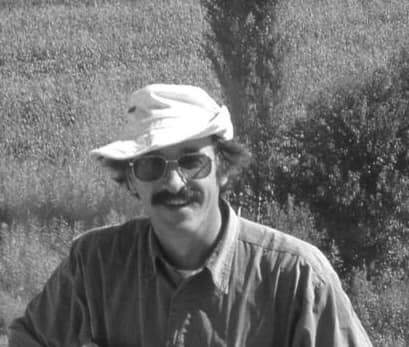
Key factsBorn 28 May 1942, Montreal; died 14 August 2016
- Born
- 28 May 1942, Montreal
- Died
- 14 August 2016
- Nationality
- Canada, United Kingdom
- Roles
- Excavator, Scholar, Cataloguer, Donor
- Institutions
- McGill Universityassistant lecturer, 1963–1964
- University of BirminghamBA 1963, PhD 1968; Research Fellow, 1963–1969
- University of GlasgowLecturer in Archaeology and Resident Staff Tutor for Argyll and Bute (Oban), 1969–1978
- University of EdinburghLecturer; personal chair 1994; Emeritus Professor from 2007, 1975–2016
- Lemba Archaeological Projectfounder and director, 1976–2016
- Places
- Ayios Epiktitos-Vrysi, Kataliontas-Kourvellos, Lemba-Lakkous, Kissonerga-Mosphilia, Kissonerga-Mylouthkia, Souskiou-Laona, Souskiou-Vathyrkakas, Jerablus Tahtani (Syria)
- Also known as
- Eddie Peltenburg; E. J. Peltenburg
- Elsewhere
Biography
5 chapters · 1,500 words · about 6 minutes
Edgar Peltenburg was the archaeologist who, from 1976, spent the best part of forty years excavating in the Paphos district at Lemba, Kissonerga, Mylouthkia and Souskiou, after the Turkish invasion of 1974 had cut short his first project, at Ayios Epiktitos-Vrysi on the north coast of Cyprus, an area under Turkish occupation ever since1.
He was born in Montreal on 28 May 19421. His obituarists tell his parents' story differently: Graham Philip calls them Dutch refugees from the Second World War, while Annie Caubet says they were Dutch forestry operators in Stalin's Russia who were forced to emigrate to Canada1,2. He took a BA in Ancient History and Archaeology at Birmingham University in 1963 and a PhD there in 1968, on Middle Eastern faience and vitreous materials, a subject he published on right through his career1. He learned his fieldwork under Kathleen Kenyon at Jerusalem and Charles Burney in western Iran2. Philip writes that he then turned to the Neolithic of Cyprus, and Paul Croft records that in 1967 the young Peltenburg assisted Trevor Watkins at Philia-Drakos1,34. His first permanent post was at the University of Glasgow, as Lecturer in Archaeology and Resident Staff Tutor for Argyll and Bute, and from Oban he excavated the Iron Age sites of Balloch Hillfort and Kildonan Galleried Dun1,2.
Contents 5 chapters · 1,500 words · about 6 minutes
Chapter I1 minute
Ayios Epiktitos-Vrysi
Vrysi lies on the north coast, 11 km east of Kyrenia, and a survey in 1969 found sherds there with painted designs thought to be earlier than Sotira35. From 1 to 20 September 1969 a University of Birmingham team led by P. S. Gelling and Dr E. G. Peltenburg uncovered buildings there in trial excavations36. In his own account, the programme then grew beyond a limited rescue season to analyse the evolution of a Cypriot Neolithic settlement35. By 1972 the mission was the University of Glasgow's, headed by Peltenburg, and the 1973 season, five weeks of digging and a week of field survey in Kyrenia district, ended on 10 August37,38.
His 1975 report describes eighteen structures, many rebuilt two or three times, with winding passages and open yards, set in such deep artificial hollows that the settlement "may be considered as partly subterranean"35. He argued that the links between Vrysi and other excavated sites called for a reassessment of the island's prehistory in the fifth and fourth millennia, which seemed to be marked by cultural continuity, regionalism and isolation35. Gordon Thomas credits the excavations with "exceptionally well-preserved and unique domestic architecture" and with showing regionally divergent cultures across the island in the pottery Neolithic2.
Writing in 1982, in words that Müge Hüseyin Şevketoğlu quotes in her 1998 survey of the Neolithic and Chalcolithic sites of Kyrenia district, he recalled that the intended 1974 season at Vrysi "began inauspiciously with the greeting 'We have a revolution'!"39. Neither that season nor the study season planned for 1975 took place39. Şevketoğlu adds that the project was then discontinued and that he did not study the survey or excavation material in detail39.
Chapter II2 minutes
Lemba and Kissonerga
Thomas Kiely writes that the policy of Vassos Karageorghis of finding new sites for foreign excavators displaced by "the tragic events of 1974" led to a concentration of at least formally British projects around Lemba and Kissonerga4. In 1976 the Glasgow mission that had dug at Ayios Epiktitos began a new excavation at Lemba under his direction6. That year he founded the Lemba Archaeological Project, which Thomas says revealed the previously little-known Chalcolithic period of Cypriot prehistory2. Philip writes that he often worked in the district with his partner and fellow archaeologist Diane Bolger1.
In the trial excavations of 1976 the team was, in his words, "fortunate enough to discover a unique figurine"40. It lay beneath a storage jar that had fallen against a plastered wall, and he first dated the level by its associated objects to the middle of the third millennium BC40. He proposed that the building "may therefore best be interpreted as a sacred place", and the pendants from ordinary houses and graves as commonly produced replicas of such cult figures40. The date was later revised: the Getty catalogue of 1990, Cyprus Before the Bronze Age, lists the 36 cm limestone figure as Middle Chalcolithic and shows her in situ against the back wall of Building 1 at Lemba-Lakkous, "circa 3000 B.C."41. Caubet says the idol was at once nicknamed Mabel and that she is now, with the Kissonerga building model and the large painted figure from Mosphilia, one of the stars of the Nicosia museum2.
In August to October 1987 an Edinburgh team under Peltenburg dug a fourth season at Kissonerga-Mosphilia42. One deposit held a stack of four Red-on-White bowls, nine terracotta and ten stone figurines, a terracotta stool, a triton shell and stone tools, 56 recorded objects in all, and the report reads one vessel as a model of an unconventional building, anticipating by a millennium the "sanctuary" model of Vounous42. In 1988 the model and its figurines were given a special display in the first gallery of the Cyprus Museum43. The next year members of the mission built an experimental circular house of Chalcolithic type at Lemba44.
Philip remembers the early Lemba seasons as run on a shoestring, fuelled by bread and beans "in a red gloop that grew ever-thinner" as the funds wore out1. Kiely calls the results of the work in the Lemba-Kissonerga area "nothing short of revolutionary" for the understanding of the island's prehistory4. Jennifer Webb credited him with the "almost single-handed construction of a social archaeology for the Cypriot Chalcolithic"34.
Chapter III1 minute
The Mylouthkia wells
From 1989 the project kept a watching brief at the coastal site of Kissonerga-Mylouthkia, investigating features exposed by quarrying and development45. They proved to be Aceramic Neolithic: five water wells, three of them excavated, a semi-subterranean curvilinear structure and three pits45. The 4.50 m of fill cleared by 1995 in the second well held the scattered bones of an estimated five people and goat remains apparently put in as whole skeletons46.
In 2001 Peltenburg and his co-authors wrote that the well fills gave "startling new evidence" for human occupation of the island in the 10th and 9th millennia BP, and that immigrant groups with links to the later Khirokitian had colonised Cyprus long before that classic phase47. In a second paper that year they held that one of the two Cypro-EPPNB sites had the earliest water well then known anywhere in the world, though it was impossible to say which, and that Mylouthkia alone "arguably" gave the earliest evidence for water divining45. Thomas credits him and his team with identifying the early Aceramic Neolithic Cypro-PPNB, "thereby solving the mystery of the first Neolithic occupation of the island"2.
Chapter IV1 minute
Souskiou
The Lemba Archaeological Research Centre and the Department of Antiquities dug the Chalcolithic cemetery of Souskiou-Vathyrkakas together in 1991 and 1994–97, and Kiely writes that this work began a broader programme at the nearby settlement of Laona4. In 2012 Peltenburg wrote that the custom of placing the dead in separate cemeteries is first attested at Souskiou48. Because the Laona cemetery had been extensively looted, the team expected to spend one or two seasons recording empty tombs, but many partly looted tombs still held intact burial deposits28. What had been regarded as a short-term rescue operation became a research excavation of 11 field seasons (2001–2011) and four seasons of post-excavation work (2012–2015)28. The team recorded some 137 tombs, and he wrote that the picrolite wasters found throughout the settlement meant that most households made figurines48.
In the final report, Figurine Makers of Prehistoric Cyprus (2019), Diane Bolger and Lindy Crewe call Souskiou the site in Cyprus closest to his heart28. Despite his illness, they write, he completed all but the concluding chapter of the volume in the final months of his life28.
Chapter V1 minute
Edinburgh
The sources disagree on when he moved from Glasgow to Edinburgh, 1978 or 1975: Philip and Thomas's tribute on the University of Edinburgh website give 1978, while the version of the same tribute printed with Caubet's introduction gives 19751,2,49. He was given a personal chair in 1994 and retired in 20071. Philip writes that, working with Watkins through the 1980s and 1990s, he built the department into "a major international player in Near Eastern archaeology"1. Kiely says he made Edinburgh one of the few places in the United Kingdom where the archaeology of Cyprus could be studied in any depth4. Among his doctoral students were Louise Maguire and Lindy Crewe4,34. In 1988 Edinburgh hosted a conference on early Cyprus to accompany an exhibition at the National Museum of Scotland curated by Elisabeth Goring4.
In 1992 his interest in the rise of early states took him to Jerablus Tahtani, on the Syrian-Turkish border, which Thomas says was founded with the late fourth-millennium Uruk expansion and became, in the later third millennium BC, the fortified seat of a small kingdom or state2. He was a Fellow of the Royal Society of Edinburgh and of the Societies of Antiquaries of London and of Scotland, and a Corresponding Member of the Austrian Academy of Sciences2. As Emeritus Professor he stayed involved in research and teaching at Edinburgh until he died on 14 August 2016, aged 74, after a short illness1,2. The Cyprus American Archaeological Research Institute awards an annual postdoctoral fellowship in Cypriot prehistory in his honour50.
Life and work
71 events, 1968–2025
1968
1968–1979
Presented Cypriot material to the Ashmolean 1972–1979; Hunterian credits a donation from Vrysi Neolithic village (Ayios Epiktitos) 1968–70 to "Dr E J. Piltenburg".
1969
- Began excavation at Neolithic Ayios Epiktitos-Vrysi, co-directed with P. S. Gelling for Birmingham and Glasgow; from 1972 directed alone for Glasgow.
Kyrenia districtK. Nicolaou (1976). Archaeology in Cyprus, 1969-76. Archaeological Reports 22; V. Karageorghis (1970). Chronique des fouilles et découvertes archéologiques à Chypre en 1969. Bulletin de correspondance hellénique 94
1969–1973
Directed the University of Glasgow excavation of Neolithic Ayios Epiktitos-Vrysi, 1969–73 (5th season 1973).- Gave a paper on chronological classification of Late Bronze Age Cypriot faience vessels (14 April 1969).
- A University of Birmingham team under Gelling and Peltenburg excavated a trial trench for three weeks at Vrysi near Agios Epiktitos, finding well-preserved houses of a Neolithic settlement on a headland, with plaster-covered walls, hearths and reed-impression floors.
- A University of Birmingham team led by P.S. Gelling and E.G. Peltenburg carried out trial excavations at Ayios Epiktitos, Vrysi, uncovering well-preserved houses of a Neolithic village, with earlier buildings found beneath some of them.
- British mission of the University of Birmingham, led by Dr Peltemburg, excavated at Agios Epiktetos near Kyrenia in 1969.
- British expedition of the University of Birmingham, directed by Dr. Peltenburg, worked at Ay. Epiktitos, Kyrenia in 1969.
1969–1972
Co-directed with P. S. Gelling the Birmingham–Glasgow excavation of Neolithic Vrysi (Ayios Epiktitos) from 1969; sole director for Glasgow from 1972.Nicolaou, 'Archaeology in Cyprus, 1969–76', AR 22 (1975–76), pp. 36
1971
- 'Dr. Peltenburg' headed the British Neolithic excavation at Ayios Epiktitos (1971).
Robertson (ed.) 1975, The Archaeology of Cyprus: Recent Developments, p. 11
- Second excavation season at Vrysin near Agios Epiktetos, Kyrenia, directed by Professors Gelling and Peltenburg under the auspices of the Universities of Glasgow and Birmingham, lasting five weeks.
- The second excavation season at Vryssi, Ayios Epiktitos, Kyrenia, by the Universities of Glasgow and Birmingham under joint directors P.S. Gelling and E.J. Peltenburg was completed, confirming a Neolithic village of 4000 B.C.
1972
- Edinburgh University excavation at Aceramic Neolithic Kataliontas-Kourvellos (Kiely's account).
- The British Archaeological Mission of the University of Glasgow, directed by Dr E.J. Peltenburg, completed excavations at the Neolithic settlement of Vrysi near Agios Epiktetos, uncovering houses with floors, large storage pithoi, a hearth and charred seeds, with more houses to be excavated next year.
- A British mission from the University of Glasgow, headed by Dr. E. J. Peltenburg, completed the third season of excavations at the Neolithic site of Vrysi near Ayios Epiktitos, reporting stacked house walls up to 4 metres high and a midden-filled hollow.
- Named in the «Archaeology in Cyprus» survey (JHS / Archaeological Reports): Directed excavations at Neolithic settlement of Vrysi, from 1972 on behalf of University of Glasgow: «an expedition from the Universities of Birmingham and Glasgow under Dr E. G. Peltenburg and Mr P. S. Gelling started excavations»
1973
- The Glasgow University Archaeological Mission under Dr E. J. Peltenburg completed the fourth consecutive excavation season at Vrysi, near Agios Epiktetos in the Kyrenia District.
- Directed the Glasgow University excavations at Vrysi, Kyrenia District, this season (24 September 1973). Excavators uncovered five new neolithic houses at Vrysi, dating the settlement's successive cultural phases from the late 5th or early 4th millennium BC, with an earlier phase indicated by pottery beneath the house foundations.
- Dr E.J. Peltenburg directed the fourth season of work at the neolithic settlement of Vrysi, completed on 10 August 1973 after five weeks of excavation and a week of field survey in the Kyrenia District.
- Directed the fourth season of research at Vrysi neolithic settlement (24 September 1973). Excavators at Vrysi uncovered five new single-roomed houses, a trial-trench sub-square house, and an earlier settlement beneath the stone houses with a defensive ditch and circular-motif pottery.
1974
- Vrysi work was cut short by the Turkish invasion of 1974; he moved to the Paphos district.
CyprusGraham Philip (2016). Edgar Peltenburg (1942-2016). Levant 48, 217-219, p. 3; Annie Caubet, Gordon D. Thomas (2016). In memoriam, Edgar J. Peltenburg. Cahiers du Centre d'Études Chypriotes 46, 9-14
1974–1989
Edinburgh University; dug Ayios Epiktetos Vrysi until 1974, then directed the Lemba Archaeological Project (Lemba, Kissonerga) from 1976; edited Early Society in Cyprus (1989).- Gave 66 objects (among them 'Red on White ware body fragment', inv. AN1974.187) to the Ashmolean Museum in 1974.
Ashmolean Museum collection online, inv. AN1974.187; AN1974.188; AN1974.189
1976
- Opened the Glasgow excavation at Lemba-Lakkous, Paphos district; the Lemba Archaeological Project followed. The Lemba Lady was found that year.
LembaV. Karageorghis (1977). Chronique des fouilles et découvertes archéologiques à Chypre en 1976. Bulletin de correspondance hellénique 101; Desmond Morris (1985). The Art of Ancient Cyprus, with a check-list of the author's collection. Oxford, Phaidon Press in association with Jonathan Cape, Fig. 110 and bibliography
1976–1985
Ran ten years of research at Lemba (Chalcolithic); published Lemba Archaeological Project I, Excavations at Lemba Lakkous 1976–1983 (1985).Hermary 1986, Chronique d'archéologie chypriote (1984-1985), CCEC 5
1976–1983
Directed the Lemba Archaeological Project excavations at Lemba-Lakkous from 1976 to 1983; gave access to Cypriot skeletal samples.1976–1977
Submitted Lemba and Kissonerga Mylouthkia charcoal samples from Paphos district sites, collected 1976-1977 and 1977.- Of the University of Glasgow; resumed excavations at the Chalcolithic settlement of Lemba in 1976.
Nicolaou, 'Archaeological News from Cyprus, 1976', AJA 82 (1978) 521–535
1977
1977–1980
Directed the Lemba Archaeological Project (Glasgow, then Glasgow+Edinburgh 1979, Edinburgh from 1980) at Lemba-Lakkous and Kissonerga-Mosphilia, 1977-87.- Resumed excavations 1977–78 at the prehistoric sites around Lemba.
Nicolaou, 'Archaeological News from Cyprus, 1977-1978', AJA 84 (1980) 63–73
1979
1979–1983
Wrote a specialist appendix to Karageorghis, Palaepaphos-Skales (1983), the report on the 1979-81 rescue excavation of the Iron Age cemetery.Karageorghis 1983, Palaepaphos-Skales: An Iron Age Cemetery in Cyprus, title page
1980
1980–1985
Named in the «Archaeology in Cyprus» survey (JHS / Archaeological Reports): Directed the Lemba Archaeological Project excavations at Lemba Lakkous and Kissonerga Mosphilia: «The Lemba Archaeological Project, directed by Dr E. J. Peltenburg, continued (see AR 1980-81, 51-2) its excavations»; Directed the Lemba Archaeological Project excavations at Lemba Lakkous and Kissonerga Mosphilia; published Lemba Vol. I in 1985: «The Lemba Archaeological Project, directed by Dr E. J. Peltenburg, continued its excavations at the Chalcolithic site of Lemba Lakkous.»
1981
- Published A Catalogue of Cypriot Antiquities in Birmingham Museum and Art Gallery (84 pp.), received by Bibliotheca Orientalis in 1981.
1984
- Directed the University of Edinburgh's Lemba Archaeological Project (Lemba-Lakkous, Kissonerga-Mylouthkia, Kissonerga-Mosphilia); allowed his photographs and plans to be published in the 1984 Paphos handbook.
Maier & Karageorghis 1984, Paphos: History and Archaeology, preface p. 7; p. 21
1985
- Lemba Archaeological Project I: Excavations at Lemba Lakkous 1976-1983 (SIMA 70:1).
- Thanked in Morris's acknowledgements for help with research on his Cypriot collection (1985).
- Named in the BCH Chronique des fouilles à Chypre: Directed the Edinburgh University mission at Kissonerga-Mosphilia in 1985.; Director of the team that carried out the second season of excavation at Kissonerga-Mosphilia (July-August 1985),
1987
- Directed the Edinburgh University team that completed excavations at Chalcolithic Kissonerga Mosphilia (ceremonial deposit 1987, Pithos House) and Kissonerga Mylouthkia; Lemba Archaeological Project.
Steel 1997–98, Archaeology in Cyprus 1987–1997, AR 44, p. 144; Steel 1997–98, p. 145
1988
- Hosted a major conference on early Cyprus at Edinburgh, accompanying a National Museum of Scotland exhibition curated by Elisabeth Goring; the volume Early Society in Cyprus (1989) followed.
EdinburghT. Kiely (2017). Britain and the archaeology of Cyprus II: 1914 to the present day. Cahiers du Centre d'Études Chypriotes 47, 253-310; Annie Caubet, Gordon D. Thomas (2016). In memoriam, Edgar J. Peltenburg. Cahiers du Centre d'Études Chypriotes 46, 9-14
1991
- Published The Burrell Collection: Western Asiatic Antiquities, including the Cypriot collection (Kiely).
1992
- Began work at Jerablus Tahtani on the Euphrates, Syria.
1994
- Appointed to a personal chair (Professor of Archaeology) at Edinburgh.
EdinburghGraham Philip (2016). Edgar Peltenburg (1942-2016). Levant 48, 217-219, p. 2; Annie Caubet, Gordon D. Thomas (2016). In memoriam, Edgar J. Peltenburg. Cahiers du Centre d'Études Chypriotes 46, 9-14
1996
- Reports on Kissonerga-Mylouthkia 1996 study season in Cyprus and contextual analysis of finds.
1999
- Co-supervised Müge Şevketoğlu's 1999 Edinburgh dissertation on Kyrenia-district prehistoric surveys.
2007
- Retired; remained Emeritus Professor and Honorary Fellow.
EdinburghGraham Philip (2016). Edgar Peltenburg (1942-2016). Levant 48, 217-219, p. 2; Annie Caubet, Gordon D. Thomas (2016). In memoriam, Edgar J. Peltenburg. Cahiers du Centre d'Études Chypriotes 46, 9-14
2010
- directed 'Σουσκιού - Λαόνα' (2010) on the Department of Antiquities' excavations list (no. 56); heads a foreign archaeological mission in Cyprus (Κισσόνεργα- Μυλούθκια & Σουσκιού-Λαόνα; Νεολιθική- Χαλκολιθική περίοδος) on the Department of
2011
2011–2019
Said in the recorded talk «A Conference in Honour of A. Bernard Knapp: Souskiou-Laona, Iron Age Communities, the Troodos and Survey Theory» (Archaeological Research Unit - University of Cyprus, 2019-06-07): Asserted in 2011 that people foraging picrolite became aware of Troodos copper sources.
2013
2013–2018
Said in the recorded talk «The Excavations at the Site of Chlorakas-Palloures: New Light on the Late Chalcolithic of Cyprus» (Archaeological Research Unit - University of Cyprus, 2018-05-14): Suggested in 2013 that the Phlouri site might be an interesting object for investigation; had prepared groundwork for the project. Said in the recorded talk «The Excavations at the Site of Chlorakas-Palloures: New Light on the Late Chalcolithic of Cyprus» (Archaeological Research Unit - University of Cyprus, 2018-05-14): Interpreted a similar double-dipped mortar in the Pitos building at Mosphilia as related to olive crushing.
2016
14 August
Died of bone marrow cancer; last words 'Good times'.2016–2020
Said in the recorded talk «Historiography and Archaeological Theory in Cypriot Prehistory» (CAARI Cyprus, 2020-11-17): Research changed the ways archaeologists think about Cypriot prehistory; died prematurely in 2016.
After 2016
2017
- Said in the recorded talk «Συνέχειες-ασυνέχειες της Κυπριακής Προϊστορίας και η μελέτη της πολιτισμικής αλλαγής» (Archaeological Research Unit - University of Cyprus, 2017-03-06): Concluded that communities consumed their agricultural supplies soon after acquiring them, given absence of mass storage. Said in the recorded talk «Συνέχειες-ασυνέχειες της Κυπριακής Προϊστορίας και η μελέτη της πολιτισμικής αλλαγής» (Archaeological Research Unit - University of Cyprus, 2017-03-06): Excavator of Kissonerga-Mosphilia who considered a defined power group controlled the Red Building and ritual area.
- Said in the recorded talk «Hidden in the shadow of the stamps. Discovering the variety and the economic importance of Hellenistic transport amphorae in Nea Paphos» (Archaeological Research Unit - University of Cyprus, 2017-05-08): Excavated Souskiou Laona, from which Hellenistic transport amphorae were studied.
2018
- Said in the recorded talk «The Dawn of Bronze Age in Cyprus: Reorientations and Tales of Sociogenesis» (Archaeological Research Unit - University of Cyprus, 2018-03-05): Late Professor, supervised the speaker's PhD; associated with resistance to assimilation and complexity theories.
2021
- Said in the recorded talk «Biographies of Chalcolithic roundhouses and social structure in Cyprus» (Archaeological Research Unit - University of Cyprus, 2021-10-05): Directed the Lemba Archaeological Project whose documentation enabled the reanalysis of the Pithos building sequence.
- Said in the recorded talk «It Takes Two to Tango: The Philia-Drakos Chalcolithic Settlement at the Dawn of the Bronze Age» (CAARI Cyprus, 2021-12-03): Dismissed the Philia material at Site B as intrusive, not associated with the Late Chalcolithic occupation.
2022
- Said in the recorded talk «1st Graduate Forum for Mediterranean Archaeology: Merchants and mercantile elites in Late Bronze Age Cyprus» (Archaeological Research Unit - University of Cyprus, 2022-12-09): Described as one of the best known archaeologists in Cypriot prehistory, recently lost; his fieldwork and publications are referenced; suggested Late Bronze Age Cyprus was a devolved polity.
- Said in the recorded talk «Weaving new patterns: Textile production and social implications in Cyprus between the end of the Chalcolithic and the transition to the Late Bronze Age» (CAARI Cyprus, 2022-12-12): Hypothesized that the large stone beads could have functioned as whorls.
2023
- Said in the recorded talk «Beyond Cyprus: Investigating Cypriot Connectivity in the Mediterranean from the Late Bronze Age to the End of the Classical Period» (Archaeological Research Unit - University of Cyprus, 2023-03-28): Supervised Lindy Crewe at the University of Edinburgh.
2025
- Said in the recorded talk «Building Bronze Age Cyprus: an integrative approach to monumental architecture and ashlar masonry» (CAARI Cyprus, 2025-04-09): Pointed out the similarities between Levantine forts and Nidovikla.
- Said in the recorded talk «Changes in ground stone technology related to early copper use in Cyprus (3500–1900 BC)» (CAARI Cyprus, 2025-03-18): Argued for indigenous early copper experimentation at Kissonerga-Mosphilia based on copper scraps and potential crucibles.
- Said in the recorded talk «From the Chalcolithic to the Bronze Age at Kissonerga» (Archaeological Research Unit - University of Cyprus, 2025-11-11): Supervised Lindy Crew's PhD and led the team that surveyed Chalcolithic remains at Kissonerga-Mosphilia.
Undated
n.d.
- Edinburgh University archaeologist who excavated at Lemba and Kissonerga, continuing the Scottish tradition in Cyprus.
Hunt 1989, review of Goring 1988, Classical Review (doi 10.1017/S0009840X00270637)
- Held the minimalist, devolved-power reading of Late Cypriot political structure against Knapp's maximalism.
- Led team of archaeologists from University of Birmingham at Ayios Epiktitos.
Anon., "Recent Excavations", Cyprus Today vol. 7, no. 4 (October–December 1969), pp. 24–26, p. 26.
- Directed Glasgow University excavation at Vrisi, Ayios Epiktitos.
- Said in the recorded talk «The Changing Nature of Occupation at Bronze Age Kissonerga-Skalia» (Archaeological Research Unit - University of Cyprus, 2020-10-23): Excavated the Chalcolithic site of Mosphilia and the Souskiou-Laona necropolis; the speaker took over as field director of his Souskiou-Laona excavations in 2001.
- Said in the recorded talk «Tracing the evolution of culinary traditions in prehistoric Cyprus: integrating archaeobotanical and archaeological evidence» (CAARI Cyprus, 2024-11-06): Proposed beer production at Lemba-Lakkous period three in 1998.
- Said in the recorded talk «Identities and materialities in prehistoric Cyprus: evidence of foreign cultural interaction before the Bronze Age» (Archaeological Research Unit - University of Cyprus, 2017-11-27): Excavated and published Lemba, Kissonerga and Souskiou with Diane Bolger; directed the Souskiou excavations 2001-2012.
- Excavated Chalcolithic copper-bearing sites at Erimi Pamboula, Lemba Lakkous and Kissonerga on Cyprus.
- Wrote the history of archaeology in Cyprus for the encyclopedia reviewed.
- Studied painted small bottles with glaze-like surface from Al Mina: «This type was studied in detail by Peltenburg.»
«The Greeks in the East», British Museum Research Publication 157 (2005), p. 70
Fieldwork and study
8 excavation projects · 62 records at 18 places · 30 records of study
Excavations
8 projects- 1965–1970Philia-Drakos: the Edinburgh excavationsDirected by Trevor WatkinsTeam · Excavation
- 1969–1973Ayios Epiktitos-Vrysi: the Birmingham and Glasgow expeditionWith P. S. GellingDirector · Excavation
- 1976–1992Kissonerga-Mosphilia: the Lemba Archaeological Project excavationsDirector · Excavation
- 1976–1981Kissonerga-Mylouthkia: the Glasgow and Edinburgh pit excavationsDirector · Excavation
- 1976–1983Lemba-Lakkous: the Lemba Archaeological ProjectDirector · Excavation
- 1989–1990Kissonerga-Mylouthkia: the Edinburgh rescue excavation before hotel construction (1989–1990)Director · Rescue excavation
- 1992–2011Souskiou-Laona: the Edinburgh excavations of the settlement and cemeteryWith Lindy Crewe and Sorina SpanouDirector · Excavation
- 1994–1996Kissonerga-Mylouthkia: the Edinburgh excavation of the Aceramic Neolithic wellsWith Paul Croft and Gordon Thomas (director of the Lemba Archaeological Project, 1994)Director · Excavation
In the field
62 recordsWhere they worked in the field
- Ground above 200, 500, 1,000 m
Sites
- 1Philia-Drakos A (approx.)
- 2Ayios Epiktitos-Vrysi (approx.)
- 3Lemba-Lakkous
- 4Palaepaphos (Kouklia)
- 5Kissonerga
- 6Souskiou-Laona (approx.)
- 7Kissonerga-Mylouthkia (approx.)
Philia-Drakos A
1967
Excavated · 1967Eddie Peltenburg assisted at the Philia-Drakos excavation.
Excavated withPeltenburg worked with Trevor Watkins on the Neolithic site of Philia-Drakos.
Excavated with T. F. WatkinsCaubet & Thomas 2016, p. 12
Worked withEdgar Peltenburg worked with Trevor Watkins at Philia Drakos on the Neolithic of Cyprus.
Worked with T. F. WatkinsPhilip 2016, p. 217
Ayios Epiktitos-Vrysi
1969–1974
Dug for · 1969E. J. Peltenburg co-directed the University of Birmingham mission's preliminary excavations at Ayios Epiktitos-Vrysi.
Dug for Université de Birminghamsite de Ayios Epiktitos-VrysiKarageorghis 1970, p. 243Karageorghis et al. 1999, p. xii
Recorded · 1969–1973Eddie Peltenburg's field projects began with excavations at Ayios Epiktitos-Vrysi.
Excavated · 1969–1973Edgar Peltenburg excavated Ayios Epiktitos-Vrysi in a project lasting four seasons.
Ayios Epiktitos-Vrysi settlementPapaconstantinou 1997, p. 61Papaconstantinou 2006, p. 61
Excavated · 1969–1973Peltenburg excavated the Late Neolithic settlement of Ayios Epiktitos Vrysi in 1969–1973.
Directed excavations · 1971E. J. Peltenburg dirigea les fouilles à Ayios Epiktitos Vrysi avec P. S. Gelling.
site d’Ayios Epiktitos VrysiKarageorghis 1972, p. 1039
Directed excavations · 1972E. J. Peltenburg directed the excavation at Ayios Epiktitos-« Vrysi ».
Show 4 moreShow fewer
Directed excavations · 1972–1973Peltenburg directed excavation of Sites I and V on the western headland at Vrysi over five weeks in 1972 and six in 1973.
Sites I and V, Western AreaPeltenburg 1975, p. 20
Directed excavations · 1973E. Peltenburg directed the excavation campaign at Vrysi.
établissement néolithique de VrysiKarageorghis 1974, p. 855
Recorded · 1974The Turkish invasion of 1974 curtailed Edgar Peltenburg’s first project at Ayios Epiktitos Vrysi.
ExcavatedE. J. Peltenburg excavated the settlement at Ayios Epiktitos-Vrysi.
Vrysi
1969
Directed · 1969E. G. Peltenburg directed the expedition's excavations at Vrysi.
Directed expedition from the Universities of Birmingham and GlasgowNeolithic settlement of VrysiNicolaou 1976, p. 36
Lemba-Lakkous
1970–1983
Directed · 1970–1980Edgar Peltenburg directed the Lemba Project excavations at Lemba-Lakkous.
Directed Lemba Project59 gravesBolger 2002, p. 68Bolger & Serwint 2002, p. 68Flourentzos 2010, p. 64Museum 1990, p. 3
Directed · 1976–1977E. Peltenburg directed the University of Glasgow mission's excavation at Lemba.
Directed Université de GlasgowKarageorghis 1977, p. 740Karageorghis 1978, p. 879Karageorghis 1979, p. 693Nicolaou 1973, p. 426
Directed excavations · 1976–1983Eddie Peltenburg directed the long-term excavations at Lemba-Lakkous between 1976 and 1983.
Found · 1976Peltenburg discovered the Lemba Lady in 1976.
Lemba Lady (Fig. 110)Morris 1985, p. 119
Excavated · 1976E. J. Peltenburg excavated at Lemba-Lakkous and Kissonerga-Mosphilia from 1976 onward.
Excavated · 1976–1982Peltenburg excavated at Lemba Lakkous between 1976 and 1982.
Show 8 moreShow fewer
Found · 1977–1978Peltenburg recovered wood-charcoal samples during excavation at Lemba-Lakkous.
Directed · 1979E. J. Peltenburg directed the British mission’s work at Lemba.
Directed Universités de Glasgow et EdimbourgKarageorghis 1980, p. 761
Excavated · 1982The project’s sixth season included excavation and survey in western Cyprus, with the major effort at Lemba.
ExcavatedE. Peltenburg excavated Areas I and II at Lemba-Lakkous.
houses at Areas I and IIKarageorghis 1982, p. 33
Directed excavationsDr. Edgar Peltenburg directed British excavations at Lemba.
Chalcolithic materialKarageorghis 1991, p. 2
ExcavatedDr. E.J. Peltenburg resumed excavations at prehistoric sites around Lemba.
Directed excavationsE. J. Peltenburg headed continuing annual excavations at the Chalcolithic site of Lemba-Lakkous.
circular buildings and tombsNicolaou 1981, p. 51
FoundPeltenburg found copper tools at the Chalcolithic site of Lemba-Lakkous.
Aghios Epiktitos
1972–1973
Dug for · 1972–1973Dr. E.J. Peltenburg headed the expedition that excavated at Vrysi.
Dug for University of GlasgowNeolithic settlement of VrysiKarageorghis et al. 1999, p. xiiNicolaou 1975, p. 128Nicolaou 1976, p. 36Şevketoğlu 1998, p. 32
Lakkous à Lemba
1976–1980
Dug for · 1976–1980E. J. Peltenburg directed the University of Edinburgh mission excavating Lakkous at Lemba.
Dug for Université d’ÉdimbourgKarageorghis 1981, p. 967Karageorghis et al. 1999, p. xiiSteel 1997-1998, p. 145
Palaepaphos (Kouklia)
1976
Founded · 1976Peltenburg established the Lemba Archaeological Project in the Paphos District.
Founded Lemba Archaeological ProjectCaubet & Thomas 2016, p. 12
Excavated withEdgar Peltenburg undertook excavations in the Paphos district, often working with Diane Bolger.
Excavated with Diane BolgerExcavations at Lemba, Kissonerga, Mylouthkia and SouskiouPhilip 2016, p. 217
ExcavatedPeltenburg's excavations focused on sites in the Paphos District.
sites of Lemba, Kissonerga, Mylouthkia and SouskiouCaubet & Thomas 2016, p. 12
ExcavatedEdgar Peltenburg undertook excavations at Lemba, Kissonerga, Mylouthkia and Souskiou in the Paphos district.
Western Cyprus
1976
Found · 1976E. J. Peltenburg and his excavation team discovered a unique figurine in Western Cyprus.
Kissonerga
1982–1990
Excavated · 1982The project commenced excavations near the centre of Kissonerga Mosphilia during its sixth season.
Directed excavations · 1983E. J. Peltenburg directed the team's seventh campaign at Kissonerga-Mosphilia and Lemba-Lakkous.
Directed excavations · 1987E. J. Peltenburg directed the University of Edinburgh team’s study and small-scale excavation at Kissonerga Mosphilia.
Directed · 1989–1990Edgar Peltenburg directed the Edinburgh University mission's excavation at Mosphilia in 1989.
Directed Université d'EdimbourgKarageorghis 1986, p. 823Karageorghis 1989, p. 789Papageorghiou 1990, p. 958Papageorghiou 1991, p. 807
Excavated withE. Peltenburg and L. Crewe excavated at Kissonerga Mosphilia together.
Excavated with Lindy CreweDikomitou 2012, p. 94
Directed excavationsE.J. Peltenburg directed the English mission excavating at Kissonerga.
un établissement dont l'existence s'étend sans rupture importante, fait unique à Chypre, de la fin du néolithique au début du Bronze AncienHermary 1984, p. 51
Show 4 moreShow fewer
FoundDr. Edgar Peltenburg found the sanctuary(?) model in a Middle Chalcolithic pit at Kissonerga-Mosphilia.
No. KM 1446Karageorghis 1991, p. 40
ExcavatedPeltenburg's excavations at Kissonerga-Mosphilia yielded five Chalcolithic copper based objects.
ExcavatedPeltenburg stated that the authors had excavated a corner of the building containing the deposit.
a corner of the building in which the deposit was foundPeltenburg 1988, p. 293
ExcavatedPeltenburg excavated the five copper-based objects from Kissonerga-Mosphilia.
Chalcolithic copper-based objects from Kissonerga-MosphiliaGale 1991, p. 44
Souskiou-Laona
1982–2009
Directed · 1982–2009Edgar Peltenburg directed the Lemba Archaeological Research Centre and University of Edinburgh investigations at Souskiou-Laona.
Directed University of EdinburghAntiquities 2013, p. 75Karageorghis 1983, p. 919Karageorghis 1988, p. 793
Excavated · 1992Edgar Peltenburg put down trial trenches on the eroded slopes to assess whether in situ remains existed.
Directed excavations · 2003–2004E. Peltenburg directed the Middle Chalcolithic cemetery excavations at Souskiou, which continued in 2003 and 2004.
137 tombs or rock-cuts explored to dateFlourentzos 2004, p. 1695
Excavated withDiane Bolger and Edgar Peltenburg were involved in the excavations at Souskiou Laona.
Excavated with Diane BolgerPeltenburg et al. 2019
Excavated withLindy Crewe and Edgar Peltenburg were involved in the excavations at Souskiou Laona.
Excavated with Lindy CrewePeltenburg et al. 2019
Directed excavationsEdgar Peltenburg provided the overall direction for the cemetery project.
Souskiou Laona cemeteryPeltenburg et al. 2019
Kissonera-Mosphilia
1986
Directed excavations · 1986E. J. Peltenburg directed the mission excavating at Kissonera-Mosphilia.
Kissonerga-Mylouthkia
1990
Excavated · 1990Edgar Peltenburg led the eighth excavation season at Kissonerga-Mylouthkia.
FoundPeltenburg found a figurine at Kissonerga Mylouthkia.
Figurine (Fig. 120)Morris 1985, p. 121
FoundPeltenburg discovered a figurine at Kissonerga Mylouthkia.
Figurine (Fig. 159)Morris 1985, p. 128
ExcavatedEdgar Peltenburg completed excavations of the Early Chalcolithic settlement at Kissonerga Mylouthkia.
the EChal settlementSteel 1997-1998, p. 145
Cyprus and the Middle East
Directed excavationsEdgar Peltenburg directed excavations at prehistoric sites in Cyprus and the Middle East.
Mylouthkia
DirectedPeltenburg directed the British Mission when it discovered a terracotta fragment at Mylouthkia.
Directed British Mission from the Universities of Glasgow and Edinburghfragment of anthropomorphic terracottaNo. 160Reade 1981, p. 55
north of Ayios Epiktitos village
DirectedE. G. Peltenburg co-directed the British Expedition from the University of Birmingham during its first season of excavations at Vrysi.
Directed British Expedition from the University of BirminghamNeolithic settlement of VrysiNicolaou 1970, p. 396
Vathyrkakas
Worked withEdgar Peltenburg's Edinburgh team worked with the Department of Antiquities on the Vathyrkakas cemetery excavation, which Dimos Christou represented.
Worked with Service des AntiquitésChristou 1992, p. 811
Vrysi, Site VI
Helped byHajiantonis gave permission for a 37 m² area, Site VI, to be opened at Vrysi.
Helped by HajiantonisPeltenburg 1975, p. 20
Fieldwork
DirectedE. Peltenburg directed the Lemba Archaeological Project, which is based at the University of Edinburgh.
Recording and study
30 records- Catalogued1
1982Peltenburg catalogued Cypriot antiquities in Birmingham Museum and Art Gallery.
- Published3
1982E.J. Peltenburg published the final report on Ayios Epiktitos-Vrysi.
excavation data from Ayios Epiktitos-VrysiSwiny 1985, p. 41
Peltenburg collaborated in publishing faience and vitreous material discovered in Cyprus, including material from Kition.
E. J. Peltenburg published a report of the work at Vrysi in text and fiche formats.
results of work at Vrysial. 1982, p. 5
- Studied15
1980Peltenburg re-examined pottery from Ambelikou-Agios Georghios.
2006Peltenburg developed a four-category picrolite classification system based on colour and purity.
SouskiouWinkelmann 2020, p. 285
Edgar Peltenburg used stratigraphy and pottery changes to distinguish three stages in the ceramic industry.
Ayios Epiktitos Vrysi ceramic sequenceAyios Epiktitos VrysiClarke 1992, p. 6
Peltenburg re-analysed pottery from Troulli.
Peltenburg studied whole vessels at Mosphilia and compared ware types with the site's stratigraphy.
whole vessels and ware typesClarke 2007, p. 24
Peltenburg noted special pottery and storage containers in structures at Kissonerga-Mosphilia.
Pickles and Peltenburg analysed metal objects from four eastern Mediterranean locations and argued against a general shortage of tin in the region.
Metal objects from four locations in the eastern MediterraneanMeyer & Knapp 2021, p. 446
Peltenburg discovered a figurine in the Birmingham Museum and identified it as intermediate between two figure types.
Figurine (Fig. 121)Morris 1985, p. 121
Show 7 moreShow fewer
Peltenburg discussed the association of figurines and other objects with the building model.
figurine types and other objects associated with the building modelKissonerga-MosphiliaPeltenburg 1988, p. 292
Eddie Peltenburg's analysis of the fragments was incomplete at the time of his death.
roughout and pre-form fragments 1899, 1612, 2239 and 2505No. 1899, 1612, 2239, 2505Peltenburg et al. 2019
Edgar Peltenburg primarily undertook the study of beads from Souskiou Laona.
E. J. Peltenburg recognized Red and Black Stroke Burnished sherds and other Late Chalcolithic wares in the Vasilikos Valley material.
Vasilikos Valley survey ceramicsTodd 1991, p. 12
Described in detail a ritual deposit at Kissonerga-Mosphilia, as reported in the review.
Peltenburg examined the Vrysi flint and judged fine flint rare and the coarser cherts ubiquitous.
flint assemblage from VrysiAyios Epiktitos VrysiPeltenburg 1978, p. 59
Peltenburg examined the unpublished Troulli material, which supported his view that Troulli and Vrysi had mixed economies.
- Employed by6
1975–2007Peltenburg was appointed Lecturer in Archaeology at the University of Edinburgh.
Employed by University of EdinburghCaubet & Thomas 2016, p. 12Museum 1990, p. 1Hunt 1990, p. 9
1978–2007Edgar Peltenburg held a lectureship and later a personal chair at Edinburgh until his retirement.
Employed by EdinburghPhilip 2016, p. 217
Edgar Peltenburg held the post of Director of the Lemba Archaeological Research Centre.
Employed by Lemba Archaeological Research CentrePaphos District of CyprusPeltenburg & Wasse 2004, p. viii
Peltenburg began his teaching career as an assistant lecturer at McGill University in Montreal.
Employed by McGill UniversityCaubet & Thomas 2016, p. 11Philip 2016, p. 217
Peltenburg worked as a Research Fellow at the University of Birmingham.
Employed by University of BirminghamCaubet & Thomas 2016, p. 12Philip 2016, p. 217
Edgar Peltenburg worked at the University of Glasgow as Lecturer in Archaeology and Resident Staff Tutor.
Employed by University of GlasgowObanCaubet & Thomas 2016, p. 12Philip 2016, p. 217
- Surveyed4
1973Peltenburg carried out surface collection at Mezarlik and surveyed sites around Kyrenia district.
surface artefacts from sites in Kyrenia districtMezarlik and other Kyrenia district sitesŞevketoğlu 1998, p. 83
1973Peltenburg included Xylomandra in his 1973 Kyrenia survey and collected surface finds.
Ayios Epiktitos-XylomandraŞevketoğlu 1998, p. 85
1973Peltenburg surveyed the site and collected prehistoric sherds and stone artefacts.
Karaman-Kusluca (Karmi-Phunji)Şevketoğlu 1998, p. 131
1999Edgar Peltenburg and his team re-surveyed the site and recovered LChal and MChal sherdage.
Souskiou LaonaPeltenburg et al. 2019
- Other work1
1976–1983Edgar Peltenburg directed the research project at Lempa-Lakkous.
Trade and objects
1 record · 2 objects
Through their hands
1 record- n.d.Gift
GiftE. J. Peltenburg donated a stone axe and pestle to the Allard Pierson Museum.
Gave to Allard Pierson MuseumNo. 10077-10078AmsterdamLubsen-Admiraal & Crouwel 1989, p. 147
Objects
2 objectsAxe (Neolithic)
From Kissonerga-MosphiliaAshmolean Museum, Oxford AN1979.621979
Red-on-White bowl fragment
From Kissonerga-MylouthkiaAshmolean Museum, Oxford AN1978.391978
Red-on-White bowl fragment, AN1978.39. Ashmolean Museum, Oxford
Connections
49 people
Sales, gifts & bequests
- Gave to Vassos KarageorghisLemba excavation material Vassos Karageorghis, The Coroplastic Art of Ancient Cyprus. I. Chalcolithic - Late Cypriote I (1991), p. ix1991
Family
- Married to Diane Bolgerpartner and fellow archaeologist; Lemba Archaeological Project Graham Philip, 2016, Edgar Peltenburg (1942-2016), p. 3; Annie Caubet; Gordon D. Thomas
Fieldwork & employment
- Had digging done by Alison K. SouthprobablyAyios Epiktitos-Vrysi Ian A. Todd, 1982, Vasilikos Valley Project: Fourth Preliminary Report, 1979-1980, author note1969–1974
- Excavated with P. S. GellingAyios Epiktitos-Vrysi; Philia-Drakos Karageorghis, Chronique des fouilles ... à Chypre en 1969, BCH 94 (1970); Karageorghis, Chronique des fouilles ... à Chypre en 1971, BCH 96 (1972); V. Karageorghis, 1970, Chronique des fouilles et découvertes archéologiques à Chypre en 1969; V. Karageorghis, 1972, Chronique des fouilles et découvertes archéologiques à Chypre en 1971; K. Nicolaou, 1976, Archaeology in Cyprus, 1969-761969–1971
- Excavated with A. LeggeAyios Epiktitos-Vrysi Karageorghis, Chronique des fouilles ... à Chypre en 1972, BCH 97 (1973); V. Karageorghis, 1973, Chronique des fouilles et découvertes archéologiques à Chypre en 19721972
- Excavated with J. AtkinsonAyios Epiktitos-Vrysi Karageorghis, Chronique des fouilles ... à Chypre en 1972, BCH 97 (1973); V. Karageorghis, 1973, Chronique des fouilles et découvertes archéologiques à Chypre en 19721972
- Excavated with Diane BolgerDiane Bolger and Edgar Peltenburg were involved in the excavations at Souskiou Laona. Peltenburg et al. 2019
- Excavated with Lindy CreweE. Peltenburg and L. Crewe excavated at Kissonerga Mosphilia together. Dikomitou 2012, p. 94
- Excavated with T. F. WatkinsPeltenburg worked with Trevor Watkins on the Neolithic site of Philia-Drakos. Caubet & Thomas 2016, p. 12
Disputes & the law
- Rival of A. Bernard KnappSecondary products revolution and social complexity debate on prehistoric Cyprus Social Complexity: Incipience, Emergence, and Development on Prehistoric Cyprus (1993), p. 891991–1992
Scholarship
- Corresponded with Desmond MorrisDesmond Morris, 1985, The Art of Ancient Cyprus, bibliography1974
- Wrote with Vassos KarageorghisCyprus Before the Bronze Age; Cyprus BC: 7000 Years of History; Palaepaphos-Skales: An Iron Age Cemetery in Cyprus H.-G. Buchholz and Vassos Karageorghis, 1973, Prehistoric Greece and Cyprus: An Archaeological Handbook, Phaidon, London; Tatton-Brown et al., Cyprus BC: 7000 Years of History, 1979; Karageorghis et al., Palaepaphos-Skales: An Iron Age Cemetery in Cyprus, 19831976–1990
- Wrote with Stuart SwinyCyprus BC: 7000 Years of History Tatton-Brown et al., Cyprus BC: 7000 Years of History, 19791979
- Wrote with Veronica Tatton-BrownCyprus BC: 7000 Years of History Tatton-Brown et al., Cyprus BC: 7000 Years of History, 19791979
- Wrote with A. LeggeVrysi: A Subterranean Settlement in Cyprus: Excavations at Prehistoric Ayios Epiktitos Vrysi 1969-73 Peltenburg et al., Vrysi: A Subterranean Settlement in Cyprus: Excavations at Prehistoric Ayios Epiktitos Vrysi 1969-73, 19821982
- Wrote with D. F. CutlerVrysi monograph E. J. Peltenburg et al., 1982, Vrysi: A Subterranean Settlement in Cyprus: Excavations at Prehistoric Ayios Epiktitos Vrysi 1969-731982
- Wrote with J. S. RidoutVrysi (1982) and Lemba Archaeological Project volumes (1985, 1998, 2003); Peltenburg coordinated the 2006 Souskiou volume Mûe Hüseyin Şevketoğlu, 1998, Archaeological Field Survey of the Neolithic and Chalcolithic Settlement Sites in Kyrenia District, North Cyprus: Systematic Surface Collection and the Interpretation of Artefact Scatters, p. 309; C. Winkelmann1982–2006
- Wrote with M. KylloVrysi: A Subterranean Settlement in Cyprus: Excavations at Prehistoric Ayios Epiktitos Vrysi 1969-73 Peltenburg et al., Vrysi: A Subterranean Settlement in Cyprus: Excavations at Prehistoric Ayios Epiktitos Vrysi 1969-73, 19821982
- Teacher of Louise MaguireLouise Maguire completed her doctoral thesis under Eddie Peltenburg’s supervision. Bolger & Maguire 2010, p. 20Kiely 2017, p. 2801987–1991
- Teacher of Graham PhilipEdgar Peltenburg’s teaching and field projects opened new possibilities in East Mediterranean archaeology to Graham Philip and other students. Philip 2016, p. 2171988
- Published material of Vassos KarageorghisMaa faience Vassos Karageorghis and M. Demas, 1988, Excavations at Maa-Palaeokastro 1979–1986, Nicosia: Department of Antiquities, Cyprus (appendix on faience by E. Peltenburg, pp. 314–315)1988
- Wrote with Pavlos FlourentzosCyprus Before the Bronze Age: Art of the Chalcolithic Period Karageorghis et al., Cyprus Before the Bronze Age: Art of the Chalcolithic Period, 19901990
- Wrote with Gordon ThomasLemba Archaeological Project reports on Kissonerga C. Winkelmann, 2020, The Neolithic and Chalcolithic Figurines of Cyprus1991–1998
- Wrote with John WalshChalcolithic Cyprus Walsh et al., Chalcolithic Cyprus, 19911991
Show 15 moreShow fewer
- Teacher of Müge Hüseyin ŞevketoğluMüge Şevketoğlu completed her dissertation under Eddie Peltenburg's supervision. Summerer 2023, p. 471995–1999
- Material published by Bill FinlaysonLemba Archaeological Project II.1A/B (Peltenburg et al.) Christine Winkelmann, 2020, The Neolithic and Chalcolithic Figurines of Cyprus1998
- Wrote with Carole McCartneyLemba Archaeological Project volumes (1998); Western Cyprus survey chapter (2004); contributor to Peltenburg-edited volume (2013) E. J. Peltenburg and others (incl. C. McCartney), 1998, Lemba Archaeological Project II.1A: Excavations at Kissonerga-Mosphilia 1979-1992, record; Michael Given, 2025, Over the Landscape and Far Away (title from file stem)(Bolger, McCartney and Peltenburg 2004); Edgar Peltenburg (ed.), 2013, Title page reads 'Cyprus' (contributors include Keswani, McCartney, Webb), p. 41998–2013
- Wrote with S. SpanouVrysi pottery (1999), cruciform figurines (2002), Souskiou-Laona report (2005) Christine Winkelmann, 2020, The Neolithic and Chalcolithic Figurines of Cyprus1999–2005
- Wrote with Adam JacksonMylouthkia and Souskiou-Vathyrkakas publications Christine Winkelmann, 2020, The Neolithic and Chalcolithic Figurines of Cyprus (Marru)-Zaphon2000–2006
- Wrote with Mary Anne MurrayMylouthkia publications D. B. Counts et al. (eds.), 2011, Crossroads and Boundaries: The Archaeology of Past and Present in the Malloura Valley2000–2003
- Wrote with Paul CroftAgro-pastoralist colonization of Cyprus in the 10th millennium BP: Initial assessments Peltenburg et al., Agro-pastoralist colonization of Cyprus in the 10th millennium BP: Initial assessments, 20002000
- Wrote with Sue ColledgeAgro-pastoralist colonization of Cyprus in the 10th millennium BP: Initial assessments Peltenburg et al., Agro-pastoralist colonization of Cyprus in the 10th millennium BP: Initial assessments, 20002000
- Wrote with Alexander WasseNeolithic Revolution (co-editors); Neolithic Revolution E. Peltenburg, A. Wasse (eds), 2004, Neolithic Revolution: New Perspectives on Southwest Asia in Light of Recent Discoveries on Cyprus; Edgar Peltenburg and Alexander Wasse (eds.), 2004, Neolithic Revolution: New Perspectives on Southwest Asia in Light of Recent Discoveries on Cyprus, Oxford: Oxbow Books, p. 982004
- Wrote with Kirsi O. LorentzSouskiou-Laona report, RDAC 2005 L. Crewe; K. Lorentz; E. Peltenberg; S. Spanou, 2005, Treatments of the Dead: Preliminary Report of Investigations at Souskiou-Laona Chalcolithic Cemetery, 2001-2004, pp. 41-672005
- Teacher of Charalambos ParaskevaUniversity of Edinburgh PhD; Souskiou-Laona excavations T. Kiely, 2017, Britain and the archaeology of Cyprus - II. 1914 to the present day, p. 30; E. Peltenburg, D. Bolger, L. Crewe et al. (eds), 2019, Figurine Makers of Prehistoric Cyprus: Settlement and Cemeteries at Souskiou, p. 542006–2016
- Wrote with Charalambos Paraskeva'Radio-carbon' chapter, ARCANE II Cyprus (Peltenburg, Frankel and Paraskeva 2013, pp. 313-338) T. Kiely, 2017, Britain and the archaeology of Cyprus - II. 1914 to the present day, bibliography; B.S. Düring, V. Klinkenberg, C. Paraskeva, V. Kassianidou, E. Souter, P. Croft, A. Charalambous, 2018, Metal artefacts in Chalcolithic Cyprus: new data from western Cyprus, p. 142012–2013
- Wrote with Diane BolgerFigurine Makers of Prehistoric Cyprus: Settlement and Cemeteries at Souskiou Peltenburg et al., Figurine Makers of Prehistoric Cyprus: Settlement and Cemeteries at Souskiou, 20192019
- Wrote with Lindy CreweFigurine Makers of Prehistoric Cyprus: Settlement and Cemeteries at Souskiou Peltenburg et al., Figurine Makers of Prehistoric Cyprus: Settlement and Cemeteries at Souskiou, 20192019
- Material published by A. LeggeLegge studied and published the faunal remains from Peltenburg's Vrysi excavations. Croft 2017, p. 255
Colleagues & contacts
- Worked with T. F. WatkinsEdgar Peltenburg worked with Trevor Watkins at Philia Drakos on the Neolithic of Cyprus. Philip 2016, p. 2171965–2007
- Worked with Ian A. ToddAyios Epiktitos Vrysi excavation Seventy-Fifth General Meeting of the Archaeological Institute of America (1974), p. 1801969–1973
- Connected with MellaartEarly Bronze Age chronology debate D. Morris, 1985, The Art of Ancient Cyprus, with a check-list of the author's collection1974–1981
- Worked with A. BettsLemba Archaeological Project; Lemba Archaeological Project, chipped stone Karageorghis, Chronique des fouilles ... à Chypre en 1979, BCH 104 (1980); V. Karageorghis, 1980, Chronique des fouilles et découvertes archéologiques à Chypre en 1979; Sevketoglu, 19981976–1987
- Worked with Sue ColledgeLemba Archaeological Project, archaeobotanical appendices; Lemba Archaeological Project V. Karageorghis, 1980, Chronique des fouilles et decouvertes archeologiques a Chypre en 1979; L. Lucas, Crops, Culture, and Contact in Prehistoric Cyprus, p. 156; (Cyprus plant-economy article; doc 10.1007_s10963-020-09140-6, 'Against the Grain: Long-Term Patterns in ...'), p. 28; Karageorghis, Chronique des fouilles ... à Chypre en 1979, BCH 104 (1980)1978–1985
- Worked with A. SheenLemba Archaeological Project Karageorghis, Chronique des fouilles ... à Chypre en 1979, BCH 104 (1980); V. Karageorghis, 1980, Chronique des fouilles et découvertes archéologiques à Chypre en 19791979
- Worked with Carolyn ElliottprobablyKtima Lowlands investigations 1979-1982; ground stone of Lemba-Lakkous and Kissonerga Toumazou, Kardulias and Counts (eds), 2011, Crossroads and Boundaries: The Archaeology of Past and Present in the Malloura Valley; 1998, Archaeological field survey of the Neolithic and Chalcolithic periods in Cyprus (thesis; title truncated in folder name)1979–1991
- Worked with J. D. StewartLemba Archaeological Project Karageorghis, Chronique des fouilles ... à Chypre en 1979, BCH 104 (1980); V. Karageorghis, 1980, Chronique des fouilles et découvertes archéologiques à Chypre en 1979; C. Winkelmann, 2020, The Neolithic and Chalcolithic Figurines of Cyprus1979–1985
- Worked with Douglas BairdLemba Archaeological Project surveys and Kissonerga-Mosphilia 1986 report D. J. Symons, 1986, Archaeology in Cyprus, 1981-85; 1998and bibliography1982–1987
- Worked with M. KylloprobablyVrysi excavations 1969-73 and monograph (Peltenburg et al.) E. J. Peltenburg et al., 1982, Vrysi: A Subterranean Settlement in Cyprus: Excavations at Prehistoric Ayios Epiktitos Vrysi 1969-1973, p. 71982
- Connected with Desmond MorrisMorris 1985, The Art of Ancient Cyprus1985
- Worked with Diane BolgerLemba Archaeological Project; Souskiou-Laona; co-editor of 2010 festschrift and 2019 report; Kissonerga-Mylouthkia; Kissonerga-Mosphilia Edgar Peltenburg; Diane Bolger; Lindy Crewe (eds), 2019, Figurine Makers of Prehistoric Cyprus: Settlement and Cemeteries at Souskiou, p. 7 (Preface); J. A. Barlow; D. L. Bolger; B. Kling (eds), 1991, Cypriot Ceramics: Reading the Prehistoric Record, p. 43; Kay Prag, LEVANT Volume XXX 1998 (1998), p. 212; Athanassios Papageorghiou, «Chronique des fouilles et découvertes archéologiques à Chypre en 1990», Bulletin de correspondance hellénique 115 (1991), pp. 789-833, pp. 807-8091985–2016
- Connected with David Sorenreview of Soren's work on Kourion; Excavations at Kourion, Cyprus. The Sanctuary of Apollo Hylates A. T. Reyes, Archaic Cyprus: A Study of the Textual and Archaeological Evidence (1994), p. 30; David Soren (ed.): Excavations at Kourion, Cyprus. The Sanctuary of Apollo Hylates at Kourion, Cyprus. Pp. xi + 340; 197 figs. Tucson: University of Arizona Pre (1988), p. 4461988
- Worked with Elizabeth Sarah GoringElizabeth Goring and Eddie Peltenburg worked together on the analysis and publication of objects from Souskiou Vathyrkakas. Peltenburg et al. 20191988
Show 13 moreShow fewer
- Worked with Demos ChristouVathyrkakas Dimos Christou, «Chronique des fouilles et découvertes archéologiques à Chypre en 1991», Bulletin de correspondance hellénique 116 (1992), pp. 793-831, p. 8111991
- Connected with Elizabeth Sarah GoringA ceremonial area at Kissonerga The Goddess Diffracted (2002), p. 6081991
- Worked with Sharen Taylor PapadopoulosKissonerga-Mylouthkia Kay Prag, LEVANT Volume XXX 1998 (1998), p. 2121996
- Worked with Bernard Gratuzecontributor to the Lemba Archaeological Project volumes (Kissonerga-Mosphilia; Kissonerga-Mylouthkia) Edgar Peltenburg (ed.), 2003, The Colonisation and Settlement of Cyprus: Investigations at Kissonerga-Mylouthkia, 1976-1996, title page; B. Gratuze, 2003, pp. 30-341998–2003
- Worked with Lindy CreweSouskiou-Laona excavation and 2019 report Anna Reeve, 2021, Ancient Cyprus in Leeds: objects, networks and museums from 1870 to 1947, bibliography (Crewe et al. 2005); Edgar Peltenburg; Diane Bolger; Lindy Crewe (eds), 2019, Figurine Makers of Prehistoric Cyprus: Settlement and Cemeteries at Souskiou, p. 72001–2016
- Worked with Priscilla Schuster Keswanicontributor (chapter 5, Burial Practices in 3rd Millennium Cyprus) to the volume edited by Peltenburg Edgar Peltenburg (ed.), 2013, Title page reads 'Cyprus' (contributions by Bolger, Frankel, Kassianidou, Keswani, McCartney, Papaconstantinou, Paraskeva and Webb); chapter 5: Burial Practices in 3rd Millennium Cyprus: A Chronological Overview (by Keswani, p. 161 ff.), pp. 42013
- Connected with Andreas CharalambousProfessor Peltenburg invited Andreas Charalambous to contribute to the study and publication of the assemblages. Kassianidou & Charalambous 2019, p. 283Peltenburg et al. 2019
- Worked with C. XenophontosEdgar Peltenburg and C. Xenophontos surveyed picrolite sources together. Karageorghis & True 1991, p. 109Peltenburg 1991, p. 109
- Worked with Gordon ThomasLemba Experimental Village within the Lemba Archaeological Project Gordon D. Thomas, The Prehistoric Buildings of Chalcolithic Cyprus: the Lemba Experimental Village; Annie Caubet; Gordon D. Thomas, 2016, In memoriam, Edgar J. Peltenburg
- Helped by HajiantonisHajiantonis gave permission for a 37 m² area, Site VI, to be opened at Vrysi. Peltenburg 1975, p. 20
- Worked with Paul CroftCroft began an ongoing involvement with Peltenburg's projects after taking on the Lemba Lakkous faunal material. Croft 2017, p. 255
- Worked with Stuart CampbellStuart Campbell worked on projects with Eddie Peltenburg in Cyprus and Syria. Bolger & Maguire 2010, p. 18
- Connected with Vassiliki KassianidouProfessor Peltenburg invited Vasiliki Kassianidou to contribute to the study and publication of the assemblages. Kassianidou & Charalambous 2019, p. 283Peltenburg et al. 2019
Mentions
Where else on Ancient Cyprus this person appears
Mentioned in
243 mentionsDocuments · 119
- Edgar Peltenburg (1942-2016)
Employed, partnership, excavated · 1974 · p. 217
The Turkish invasion of 1974 curtailed Edgar Peltenburg’s first project at Ayios Epiktitos Vrysi.
Philip 2016
- In memoriam, Edgar J. Peltenburg
Employed, founded, excavated · 1975 · pp. 10, 11, 12, 14
Peltenburg was appointed Lecturer in Archaeology at the University of Edinburgh.
Caubet & Thomas 2016
Also in Hunt 1990
- Cypriot Ceramics: Reading the Prehistoric Record
1991
studies Late Chalcolithic monochrome pottery
Barlow et al. 1991
- The Development of Pre-State Communities in the Ancient Near East: Studies in Honour of Edgar Peltenburg
1967 · p. 16
Eddie Peltenburg assisted at the Philia-Drakos excavation.
Bolger & Maguire 2010
- Archaeology in Cyprus, 1969-76
Directed, excavated · 1969 · p. 36
E. G. Peltenburg directed the expedition's excavations at Vrysi.
Nicolaou 1976
- Chronique des fouilles et découvertes archéologiques à Chypre en 1969
Excavated · 1969 · p. 243
E. J. Peltenburg co-directed the University of Birmingham mission's preliminary excavations at Ayios Epiktitos-Vrysi.
Karageorghis 1970
Also in Karageorghis et al. 1999
Lectures and videos · 19
- Alassa 17 years later: A retrospective
2017
Hadjisavvas 2017
- Continuities and Discontinuities in Cypriot Prehistory and the Study of Cultural Change
2017
Voskos 2017
- Identities and Materialities in Prehistoric Cyprus: Evidence of Foreign Cultural Interaction before the Bronze Age
2017
Bolger 2017
- The Dawn of Bronze Age in Cyprus: Reorientations and Tales of Sociogenesis
2018
Paraskeva 2018
- The Excavations at the Site of Chlorakas-Palloures: New Light on the Late Chalcolithic of Cyprus
2018
Düring 2018
- A Conference in Honour of A. Bernard Knapp: Bronze Age Connections at Lapithos and the Miners' Sanctuary at Mathiatis-Mavrovouni
2019
Webb & Hadjisavvas 2019
On Ancient Cyprus · 37
Institutions · 9
- McGill University
Staff (1963–1964) · 1963
Edgar Peltenburg was assistant lecturer at McGill, 1963-64 (per the obituaries; his Birmingham BA is dated 1963).
Philip 2016, p. 2; Caubet & Thomas 2016
- University of Birmingham
Field director (1969–1971) · 1963
Excavations at the Neolithic settlement of Ayios Epiktitos-Vrysi, first season 1969 (Birmingham, with Glasgow in the AR account), directed by E. J. Peltenburg…
Karageorghis 1970; Karageorghis 1972; Kiely 2017
- Birmingham Museum and Art Gallery
Specialist (from 1981) · 1965
The museum's archaeology department was among the sponsors (with university and research-board funders, the Liverpool Museum and the Ashmolean) of the…
Morris 1985; Kiely 2017; Catling 2020
- The Hunterian
Donor (1968–1970), object from them · 1968
Edgar Peltenburg gave a vessel (reg. 6789).
Museum n.d.; Karageorghis 1970; Nicolaou 1976
- University of Glasgow
1969
Excavation began at the Neolithic settlement of Ayios Epiktitos-Vrysi by an expedition of the Universities of Birmingham and Glasgow under E. J. Peltenburg…
Nicolaou 1976; Herscher 1995, p. 195; Nicolaou 1978
- Lemba Archaeological Project
Director (1976–2016) · 1970
Excavated the Chalcolithic settlement of Lemba-Lakkous (Paphos district); published as Lemba Archaeological Project Vol. I (Gothenburg, 1985). Area I work was…
Caubet & Thomas 2016; Karageorghis 1977; Symons 1986-1987
News · 8
- 2026 dig at Kissonerga-Skalia adds to the case for Bronze Age beer, Akamas municipality says
2026
- CAARI offers US scholars two US$5,500 fellowships for a month of research in Cyprus
2026
- CAARI’s Peltenburg fellowship pays US$16,500 for nine months on Cypriot prehistory
2026
- Ian Todd, who led the Vasilikos Valley Project at Kalavasos for 23 seasons, has died
2026
- Lemba Archaeological Project marks 50 years with tributes to its founder, Edgar Peltenburg
2026
- Ten Cyprus papers at ASOR in Chicago, from Bronze Age deer feasting to claims of Cypriot Neandertals
2026
- Excavations · 8listed under Excavations
- People · 43listed under Connections
Sources
255 works and documents
- 1.Graham Philip (2016). “Edgar Peltenburg (1942-2016)”. Levant 48, 217-219. Online
- 2.Annie Caubet, Gordon D. Thomas (2016). “In memoriam, Edgar J. Peltenburg”. Cahiers du Centre d'Études Chypriotes 46, 9-14.
- 3.Edgar Peltenburg (Wikidata Q27460023; GND 1047960583). Online
- 4.T. Kiely (2017). “Britain and the archaeology of Cyprus II: 1914 to the present day”. Cahiers du Centre d'Études Chypriotes 47, 253-310. Online
- 5.V. Karageorghis (1970). “Chronique des fouilles et découvertes archéologiques à Chypre en 1969”. Bulletin de correspondance hellénique 94.
- 6.V. Karageorghis (1977). “Chronique des fouilles et découvertes archéologiques à Chypre en 1976”. Bulletin de correspondance hellénique 101.
- 7.K. Nicolaou (1976). “Archaeology in Cyprus, 1969-76”. Archaeological Reports 22.
- 8.D. J. Symons (1986-1987). “Archaeology in Cyprus, 1981-85”. Archaeological Reports 33, 62-77.
- 9.Louise Steel (1997-1998). “Archaeology in Cyprus 1987-1997”. Archaeological Reports 44, 137-149.
- 10.Desmond Morris (1985). The Art of Ancient Cyprus, with a check-list of the author's collection. Oxford, Phaidon Press in association with Jonathan Cape.
- 11.“Axe, AN1979.62”. Ashmolean Museum, Oxford. Online
- 12.“Red-on-White bowl fragment, AN1978.39”. Ashmolean Museum, Oxford. Online
- 13.“Ashmolean Museum online collection, further records credited to Peltenburg (AN1979.72.2 etc.)”. Ashmolean Museum, Oxford.
- 14.“Hunterian Museum online collection, reg. 6789”. Hunterian Museum, Glasgow.
- 15.Gordon D. Thomas (2005). The Prehistoric Buildings of Chalcolithic Cyprus: the Lemba Experimental Village. Oxford, John and Erica Hedges.
- 16.E. Peltenburg (ed.), D. Bolger (ed.), L. Crewe (ed.) (2019). Figurine Makers of Prehistoric Cyprus: Settlement and Cemeteries at Souskiou. Oxford, Oxbow Books.
- 17.E. J. Peltenburg (1975). “Ayios Epiktitos Vrysi, Cyprus: preliminary results of the 1969-1973 excavations of a neolithic coastal settlement”. Proceedings of the Prehistoric Society 41, 17-45.
- 18.E. J. Peltenburg, V. Karageorghis (1976). “Some Cypriote vases in Glasgow”. Report of the Department of Antiquities, Cyprus, 84-91.
- 19.E. Peltenburg (1981). Cypriot Antiquities in Birmingham Museum and Art Gallery. Birmingham.
- 20.E. Peltenburg et al. (1985). Excavations at Lemba Lakkous, 1976-1983. Göteborg, Paul Åströms Förlag.
- 21.E. J. Peltenburg (ed.) (1989). Early Society in Cyprus. Edinburgh University Press.
- 22.E. Peltenburg (1991). The Burrell Collection: Western Asiatic Antiquities. Edinburgh.
- 23.E. Peltenburg et al. (1998). Excavations at Kissonerga-Mosphilia, 1979-1992. Jonsered.
- 24.Edgar Peltenburg (ed.) (2003). The Colonisation and Settlement of Cyprus: Investigations at Kissonerga-Mylouthkia, 1976-1996. Sävedalen, Paul Åströms Förlag.
- 25.E. Peltenburg (ed.) (2007). The Chalcolithic Cemetery of Souskiou-Vathyrkakas, Cyprus: Investigations from four missions from 1950 to 1997. Nicosia.
- 26.E. Peltenburg (ed.) (2012). ARCANE II, Cyprus. Turnhout.
- 27. (1981). “Bibliotheca Orientalis 38 (1981), list of books received and reviews”. Bibliotheca Orientalis 38. Nederlands Instituut voor het Nabije Oosten.
- 28.Edgar Peltenburg; Diane Bolger; Lindy Crewe (eds) (2019). Figurine Makers of Prehistoric Cyprus: Settlement and Cemeteries at Souskiou. Oxbow Books.
- 29.J. P. Getty Museum; V. Karageorghis; E. Peltenburg; P. Flourentzos (1990). Cyprus Before the Bronze Age: Art of the Chalcolithic Period. pp. 1, 40.
- 30.E. J. Peltenburg (reviewer) (1988). “Review of D. Soren (ed.), The Sanctuary of Apollo Hylates at Kourion”. Classical Review 38, p. 446.
- 31.Z. Parras (2004). The Biological Affinities of the Eastern Mediterranean in the Chalcolithic and Bronze Age. pp. V, 5.
- 32.E. Peltenburg (1998). history of archaeology in Cyprus (encyclopedia article).
- 33.E. Peltenburg (1982). Recent Developments in the Later Prehistory of Cyprus.
- 34.D. Bolger (ed.), L. C. Maguire (ed.) (2010). The Development of Pre-State Communities in the Ancient Near East: Studies in Honour of Edgar Peltenburg. Oxford, Oxbow Books.
- 35.E. J. Peltenburg (1975). “Ayios Epiktitos Vrysi, Cyprus: preliminary results of the 1969-1973 excavations of a neolithic coastal settlement”. Proceedings of the Prehistoric Society 41, 17-45. Online
- 36.Public Information Office, Cyprus (1969). Excavations results (Press release no. 1, 8 October 1969).
- 37.Public Information Office, Cyprus (1972). Excavations at the Neolithic site of Ayios Epiktitos 'Vrysi', 1972 (Press release no. 2, 10 October 1972).
- 38.Public Information Office, Cyprus (1973). Excavations at Vrysi locality completed (Press release no. 1, 24 September 1973).
- 39.Müge Hüseyin Şevketoğlu (1998). “Archaeological Field Survey of the Neolithic and Chalcolithic Settlement Sites in Kyrenia District, North Cyprus: Systematic Surface Collection and the Interpretation of Artefact Scatters”. PhD thesis, University of Edinburgh.
- 40.E. J. Peltenburg (1977). “Chalcolithic figurine from Lemba, Cyprus”. Antiquity 51, 140-143. Online
- 41.Vassos Karageorghis; Edgar Peltenburg; Pavlos Flourentzos (1990). Cyprus Before the Bronze Age: Art of the Chalcolithic Period. J. Paul Getty Museum.
- 42.V. Karageorghis (1988). “Chronique des fouilles et découvertes archéologiques à Chypre en 1987”. Bulletin de correspondance hellénique 112.
- 43.Vassos Karageorghis (1989). “Chronique des fouilles et découvertes archéologiques à Chypre en 1988”. Bulletin de correspondance hellénique 113.2.
- 44.Vassos Karageorghis (1990). “Chronique des fouilles et découvertes archéologiques à Chypre en 1989”. Bulletin de correspondance hellénique 114.2.
- 45.Edgar Peltenburg; Sue Colledge; Paul Croft; Adam Jackson; Carole McCartney; Mary Anne Murray (2001). “Neolithic Dispersals from the Levantine Corridor: a Mediterranean Perspective”. Levant 33. Online
- 46.Dimos Christou (1996). “Chronique des fouilles et découvertes archéologiques à Chypre en 1995”. Bulletin de correspondance hellénique 120.2.
- 47.Edgar Peltenburg; Paul Croft; Adam Jackson; Carole McCartney; Mary Anne Murray (2001). “Well-established colonists: Mylouthkia 1 and the Cypro-Pre-Pottery Neolithic B”. S. Swiny (ed.), The Earliest Prehistory of Cyprus: From Colonization to Exploitation.
- 48.Edgar Peltenburg (2012). “Case study – Chalcolithic period: Souskiou”. D. Pilides and N. Papadimitriou (eds), Ancient Cyprus: Cultures in Dialogue. Department of Antiquities, Cyprus.
- 49.Gordon D. Thomas (2016). “Obituary: Professor Emeritus Edgar Peltenburg”. University of Edinburgh, School of History, Classics and Archaeology, news.
- 50.Cyprus American Archaeological Research Institute (2026). Fellowships. Online
- 51.Stella M. Lubsen-Admiraal, Joost Crouwel (1989). Cyprus & Aphrodite. 's-Gravenhage, SDU uitgeverij.
- 52.V. Karageorghis, E. Vassilika, P. Wilson (1999). The Art of Ancient Cyprus in the Fitzwilliam Museum, Cambridge. Nicosia, A. G. Leventis Foundation.
- 53.D. Bolger (2002). “Gender and mortuary ritual in Chalcolithic Cyprus”. Engendering Aphrodite: Women and Society in Ancient Cyprus, 67-86.
- 54.D. Bolger (ed.), N. Serwint (ed.) (2002). Engendering Aphrodite: Women and Society in Ancient Cyprus. Boston, American Schools of Oriental Research.
- 55.Pavlos Flourentzos (2010). Annual Report of the Department of Antiquities for the year 2008. Nicosia, Printing Office of the Republic of Cyprus.
- 56.J. Paul Getty Museum (1990). Cyprus before the Bronze Age: Art of the Chalcolithic Period. Malibu, J. Paul Getty Museum.
- 57.Ellen Herscher (1995). “Archaeology in Cyprus”. American Journal of Archaeology 99, 257-294.
- 58.Ellen Herscher (1998). “Archaeology in Cyprus”. American Journal of Archaeology 102, 309-354. Online
- 59.V. Karageorghis (ed.), M. True (ed.) (1991). “Chalcolithic Cyprus”. Bulletin of the American Schools of Oriental Research. Malibu, American Schools of Oriental Research, with the J. Paul Getty Museum.
- 60.F. G. Maier, V. Karageorghis (1984). Paphos: History and Archaeology. 383 pp.. Nicosia, A. G. Leventis Foundation.
- 61.Demetrios Michaelides (ed.) (2014). Medicine and Healing in the Ancient Mediterranean World. Oxford, Oxbow Books.
- 62.E.J. Peltenburg (1988). “A Cypriot model for prehistoric ritual”.
- 63.S. Swiny (1985). “Recent developments in Cypriot prehistoric archaeology”. American Journal of Archaeology 89, 39-51.
- 64.G. D. Thomas (1999). “The role of research and education in site management at the Lemba Experimental Village, Cyprus”. Conservation and Management of Archaeological Sites 3, 109-123.
- 65.Kyriakos Nicolaou (1975). “Archaeological News from Cyprus, 1973”. American Journal of Archaeology 79, 125-134. Online
- 66.D. Hunt (ed.) (1990). Footprints in Cyprus: an illustrated history. London, Trigraph.
- 67.V. Karageorghis (1978). “Chronique des fouilles et découvertes archéologiques à Chypre en 1977”. Bulletin de correspondance hellénique 102.
- 68.V. Karageorghis (1979). “Chronique des fouilles et découvertes archéologiques à Chypre en 1978”. Bulletin de correspondance hellénique 103.
- 69.Kyriakos Nicolaou (1973). “Archaeological News from Cyprus, 1972”. American Journal of Archaeology 77, 425-433.
- 70.V. Karageorghis (1981). “Chronique des fouilles et découvertes archéologiques à Chypre en 1980”. Bulletin de correspondance hellénique 105, 967-1024.
- 71.V. Karageorghis (1980). “Chronique des fouilles et découvertes archéologiques à Chypre en 1979”. Bulletin de correspondance hellénique 104.
- 72.Department of Antiquities, Cyprus (2013). Annual Report of the Department of Antiquities for the year 2009. Nicosia, Department of Antiquities.
- 73.V. Karageorghis (1983). “Chronique des fouilles et découvertes archéologiques à Chypre en 1982”. Bulletin de correspondance hellénique 107.
- 74.Vassos Karageorghis (1986). “Chronique des fouilles et découvertes archéologiques à Chypre en 1985”. Bulletin de correspondance hellénique 110, 823-880. Online
- 75.Vassos Karageorghis (1989). “Chronique des fouilles et découvertes archéologiques à Chypre en 1988”. Bulletin de correspondance hellénique 113, 789-853. Online
- 76.Athanassios Papageorghiou (1990). “Chronique des fouilles et découvertes archéologiques à Chypre en 1989”. Bulletin de correspondance hellénique 114, 941-985. Online
- 77.Athanassios Papageorghiou (1991). “Chronique des fouilles et découvertes archéologiques à Chypre en 1990”. Bulletin de correspondance hellénique 115, 789-833. Online
- 78.Dimos Christou (1992). “Chronique des fouilles et découvertes archéologiques à Chypre en 1991”. Bulletin de correspondance hellénique 116, 793-831. Online
- 79.Sophoklis Hadjisavvas (2000). “Chronique des fouilles et découvertes archéologiques à Chypre en 1999”. Bulletin de correspondance hellénique 124, 665-699. Online
- 80.Pavlos Flourentzos (2006). “Chronique des fouilles et découvertes archéologiques à Chypre en 2005”. Bulletin de correspondance hellénique 130, 873-919. Online
- 81.Lâtife Summerer (2023). “In Fear of Blacklisting. How the Division Shaped Archaeology in Cyprus”. New Approaches toward Recording, Preserving and Studying Cultural Heritage in Divided Cyprus. Kyrenia, ARUCAD Press.
- 82.M. Dikomitou (2012). “Ceramic production, distribution, and social interaction. An analytical approach to the study of Early and Middle Bronze Age pottery from Cyprus”. University College London.
- 83.E. Peltenburg (1991). “Local exchange in prehistoric Cyprus: An initial assessment of picrolite”. Bulletin of the American Schools of Oriental Research 282/283, 107-126.
- 84.V. Kassianidou, A. Charalambous (2019). “Chemical analyses of copper objects and faience beads using portable X-ray fluorescence”. Figurine Makers of Prehistoric Cyprus: Settlement and Cemeteries at Souskiou, 279-286.
- 85.Kyriakos Nicolaou (1970). “Archaeological News from Cyprus, 1969”. American Journal of Archaeology 74, 391-400.
- 86.E. Peltenburg (ed.), A. Wasse (ed.) (2004). Neolithic Revolution: New Perspectives on Southwest Asia in Light of Recent Discoveries on Cyprus. Oxford, Oxbow Books.
- 87.J. Reade (ed.) (1981). Chalcolithic Cyprus and western Asia. London, British Museum.
- 88.P. Croft (2017). “Revisiting the animal remains from Neolithic Kalavasos-Tenta, Cyprus”. Economic Zooarchaeology: Studies in Hunting, Herding and Early Agriculture, 255-262. Oxford, Oxbow Books.
- 89.E. Goring (1991). “Pottery figurines: The development of a coroplastic art in Chalcolithic Cyprus”. Bulletin of the American Schools of Oriental Research 282/283, 153-161. Online
- 90.D. Papaconstantinou (1997). “Identifying Domestic Space in Neolithic Eastern Mediterranean: Method and Theory in Spatial Studies”. PhD thesis, University of Edinburgh.
- 91.D. Papaconstantinou (2006). Identifying Domestic Space in the Neolithic Eastern Mediterranean. Oxford, Archaeopress.
- 92.V. Karageorghis (1972). “Chronique des fouilles et découvertes archéologiques à Chypre en 1971”. Bulletin de correspondance hellénique 96.
- 93.V. Karageorghis (1973). “Chronique des fouilles et découvertes archéologiques à Chypre en 1972”. Bulletin de correspondance hellénique 97.
- 94.V. Karageorghis (1974). “Chronique des fouilles et découvertes archéologiques à Chypre en 1973”. Bulletin de correspondance hellénique 98.
- 95.B. S. Düring, V. Klinkenberg, C. Paraskeva, P. Croft et al. (2019). “Excavations at Chlorakas-Palloures, New Light on Chalcolithic Cyprus”. Reports of the Department of Antiquities of Cyprus, New Series 1, 467-490.
- 96.E. J. Peltenburg (1977). “Chalcolithic figurine from Lemba, Cyprus”. Antiquity 51, 140-143. Online
- 97.Stuart Swiny (1989). “Prehistoric Cyprus: A Current Perspective”. The Biblical Archaeologist 52, 178-189.
- 98.Maria Hadjigavriel, Maria Dikomitou Eliadou (2025). “Tracing traditions: An analytical study of Late Chalcolithic ceramics from Cyprus”. Journal of Archaeological Science: Reports.
- 99.E. J. Peltenburg (1984). “Lemba Archaeological Project, Cyprus, 1982, Preliminary Report”. Levant 16, 55-65.
- 100.V. Karageorghis (1984). “Chronique des fouilles et découvertes archéologiques à Chypre en 1983”. Bulletin de correspondance hellénique 108.
- 101.V. Karageorghis (1987). “Chronique des fouilles et découvertes archéologiques à Chypre en 1986”. Bulletin de correspondance hellénique 111.
- 102.E. J. Peltenburg (1989). “Lemba Archaeological Project, Cyprus, 1987”. Levant 21, 195-197.
- 103.Pavlos Flourentzos (2004). “Chronique des fouilles et découvertes archéologiques à Chypre en 2003 et 2004”. Bulletin de correspondance hellénique 128, 1635-1708. Online
- 104.Christine Winkelmann (2020). The Neolithic and Chalcolithic Figurines of Cyprus. Münster, Zaphon.
- 105.Joanne Clarke (1992). “The Ceramic Neolithic Period in Northern Cyprus”. Cahiers du Centre d'Études Chypriotes 17.
- 106.Joanne Clarke (2007). On the Margins of Southwest Asia: Cyprus during the 6th to 4th Millennia BC. Oxford, Oxbow Books.
- 107.Antoine Hermary (1984). “Chronique d'archéologie chypriote”. Cahiers du Centre d'Études Chypriotes 1.
- 108.V. Karageorghis (1982). Cyprus: From the Stone Age to the Romans. London, Thames and Hudson.
- 109.V. Karageorghis (1991). The Coroplastic Art of Ancient Cyprus I: Chalcolithic–Late Cypriote I. Nicosia, A. G. Leventis Foundation.
- 110.P. S. Keswani (1994). “The social context of animal husbandry in early agricultural societies: Ethnographic insights and an archaeological example from Cyprus”. Journal of Anthropological Archaeology 13, 255-277.
- 111.N. Meyer, A. B. Knapp (2021). “Resilient social actors in the transition from the Late Bronze to the Early Iron Age on Cyprus”. Journal of World Prehistory 34, 433-487.
- 112.Kyriakos Nicolaou (1980). “Archaeological News from Cyprus, 1977-1978”. American Journal of Archaeology 84, 63-73.
- 113.K. Nicolaou (1981). “Archaeology in Cyprus, 1976-80”. Archaeological Reports 27.
- 114.E. J. Peltenburg et al. (1982). Vrysi: A Subterranean Settlement in Cyprus: Excavations at Prehistoric Ayios Epiktitos Vrysi 1969-1973.
- 115.I. A. Todd (1991). “The Vasilikos Valley and the Chalcolithic Period in Cyprus”. Bulletin of the American Schools of Oriental Research 282/283, 3-16. Online
- 116.Henri de Contenson (1992). “Review of Peltenburg, Edgar (ed.), Early Society in Cyprus (Edinburgh: Edinburgh University Press, 1989)”. Syria 69, 241-244. Institut Francais du Proche-Orient. Online
- 117.N. Gale (1991). “Metals and Metallurgy in the Chalcolithic Period”. Bulletin of the American Schools of Oriental Research 282-283, 37-62.
- 118.Lawrence E. Stager (ed.), Anita M. Walker (ed.) (1989). American Expedition to Idalion, Cyprus, 1973-1980. Chicago, Oriental Institute of the University of Chicago.
- 119.E. J. Peltenburg (1978). “The Sotira Culture: Regional Diversity and Cultural Unity in Late Neolithic Cyprus”. Levant 10, 55-74. Online
- 120.K. Nicolaou, 'Archaeology in Cyprus 1976–80', AR 27 (1980–81); D. J. Symons, 'Archaeology in Cyprus, 1981–85', AR 33 (1986–87), p. 62, D. J. Symons, 'Archaeology in Cyprus, 1981–85', AR 33 (1986–87), p. 70; E. Herscher, 'Archaeology in Cyprus', AJA 99 (1995), p. 257, E. Herscher, 'Archaeology in Cyprus', AJA 99 (1995), p. 260, E. Herscher, 'Archaeology in Cyprus', AJA 99 (1995).
- 121.Karageorghis, Chronique des fouilles ... à Chypre (BCH 102-112, 1978-1988): 1977:; 1978:; 1979:; 1980:; 1982:; 1983:; 1984:; 1986:; 1987:.
- 122.Hermary 1986, Chronique d'archéologie chypriote (1984-1985), CCEC 5.
- 123.Morris 1985, The Art of Ancient Cyprus.
- 124.Hunt 1989, review of Goring 1988, Classical Review (doi 10.1017/S0009840X00270637).
- 125.Nicolaou AJN 1969, 1972, 1973.
- 126.Summerer 2023, "In Fear of Blacklisting. How the Division Shaped Archaeology in Cyprus", in Summerer, Kiessel & Kaba (eds), New Approaches toward Recording, Preserving and Studying Cultural Heritage in Divided Cyprus (Kyrenia 2023).
- 127.Karageorghis 1983, Palaepaphos-Skales: An Iron Age Cemetery in Cyprus, title page.
- 128.Ashmolean Museum collection online.
- 129.Robertson (ed.) 1975, The Archaeology of Cyprus: Recent Developments.
- 130.Maier & Karageorghis 1984, Paphos: History and Archaeology.
- 131.Press and Information Office, Republic of Cyprus, press release of 14 April 1969, «Η εναρκτήριος Συνεδρία και αι εργασίαι της πρώτης ημέρας του Πρώτου Διεθνούς Κυπρολογικού Συνεδρίου».
- 132.Press and Information Office, Republic of Cyprus, press release of 8 October 1969, «Τα αποτελέσματα ανασκαφών παρα τον Άγιον Επίκτητον».
- 133.Press and Information Office, Republic of Cyprus, press release No. 1 of 8 October 1969, «Excavations results».
- 134.Press and Information Office, Republic of Cyprus, press release of 7 May 1970, «Ξέναι Αρχιολογικαί αποστολαί διανεργήσασαι ανασκαφάς εν Κύπρω κατά το 1969».
- 135.Press and Information Office, Republic of Cyprus, press release No. 1 of 7 May 1969, «Foreign archaeological expeditions which carried out excavations in Cyprus in 1969».
- 136.Press and Information Office, Republic of Cyprus, press release of 4 October 1971, «Νεολιθικόν χωριόν Ευρήθη εις Άγιον Επίκτητον Κυρηνείας».
- 137.Press and Information Office, Republic of Cyprus, press release No. 1 of 4 October 1971, «Neolithic village Found at Ayios Epiktitos-Kyrenia».
- 138.Press and Information Office, Republic of Cyprus, press release No. 2 of 10 October 1972, «Ανασκαφαί εις Νεολιθικών Συνοικισμών παρά τον Άγιον Επίκτητων 'Βρύσι'».
- 139.Press and Information Office, Republic of Cyprus, press release No. 2 of 10 October 1972, «Excavations at the Neolithic site of Ayios Epiktitos 'Vrysi' 1972».
- 140.Press and Information Office, Republic of Cyprus, press release of 24 September 1973, «Συνεπληρώθησαν αι ανασκαφαί εις την τοποθεσίαν Βρύσιν».
- 141.Press and Information Office, Republic of Cyprus, press release No. 1 of 24 September 1973, «Excavation at Vrysi locality completed».
- 142.A. B. Knapp, 1990, Production, Location, and Integration in Bronze Age Cyprus, Current Anthropology 31(2).
- 143.document:dept-antiquities-2018-excavations-list, loc no. 56 (Department of Antiquities, Cyprus, «Ανασκαφές που διενεργήθηκαν στην Κύπρο από το Τμήμα Αρχαιοτήτων και από ξένες αρχαιολογικές αποστολές» (Excavations carried out in Cyprus by the Department of Antiquities and by foreign archaeological missions), open dataset, first issued 8 February 2018, modified 16 January 2024, CC BY 4.0, row no. 56, (and 1 more: document:dept-antiquities-2018-foreign-missions-list, loc no. 8 (Department of Antiquities, Cyprus, «Ξένες Αρχαιολογικές αποστολές στην Κύπρο» (Foreign Archaeological Missions in Cyprus), open dataset, first issued 8 February 2018, modified 16 January 2024, CC BY 4.0, row no. 8. Online
- 144.Vassos Karageorghis, «Chronique des fouilles et découvertes archéologiques à Chypre en 1985», Bulletin de correspondance hellénique 110 (1986), pp. 823-880, pp. 823, 840, 841, 844, 845; Vassos Karageorghis, «Chronique des fouilles et découvertes archéologiques à Chypre en 1988», Bulletin de correspondance hellénique 113 (1989), pp. 789-853, pp. 789, 820, 821; Athanassios Papageorghiou, «Chronique des fouilles et découvertes archéologiques à Chypre en 1989», Bulletin de correspondance hellénique 114 (1990), pp. 941-985, pp. 941, 958; Athanassios Papageorghiou, «Chronique des fouilles et découvertes archéologiques à Chypre en 1990», Bulletin de correspondance hellénique 115 (1991), pp. 789-833, pp. 807-809; Dimos Christou, «Chronique des fouilles et découvertes archéologiques à Chypre en 1991», Bulletin de correspondance hellénique 116 (1992), pp. 793-831, p. 811; Dimos Christou, «Chronique des fouilles et découvertes archéologiques à Chypre en 1992», Bulletin de correspondance hellénique 117 (1993), pp. 719-755, pp. 730, 731, 732, 733, 744; Dimos Christou, «Chronique des fouilles et découvertes archéologiques à Chypre en 1995», Bulletin de correspondance hellénique 120 (1996), pp. 1051-1100, pp. 1082-1083; Sophoklis Hadjisavvas, «Chronique des fouilles et découvertes archéologiques à Chypre en 1999», Bulletin de correspondance hellénique 124 (2000), pp. 665-699, p. 684; Sophoklis Hadjisavvas, «Chronique des fouilles et découvertes archéologiques à Chypre en 2002», Bulletin de correspondance hellénique 127 (2003), pp. 649-682, pp. 675-677; Pavlos Flourentzos, «Chronique des fouilles et découvertes archéologiques à Chypre en 2003 et 2004», Bulletin de correspondance hellénique 128 (2004), pp. 1635-1708, pp. 1695-1698; Pavlos Flourentzos, «Chronique des fouilles et découvertes archéologiques à Chypre en 2005», Bulletin de correspondance hellénique 130 (2006), pp. 873-919 (trans. Sabine Fourrier).
- 145.Anon., "Recent Excavations", Cyprus Today vol. 7, no. 4 (October–December 1969).
- 146.M. LOULLOUPIS; A. PAPAGEORGHIOU, "Excavations in Cyprus, 1973", Cyprus Today vol. 11, no. 5-6 (September–December 1973).
- 147.Lindy Crewe, «The Changing Nature of Occupation at Bronze Age Kissonerga-Skalia», recorded lecture, Archaeological Research Unit - University of Cyprus, published on YouTube 2020-10-23, at 0:01:58. Online
- 148.Lindy Crewe, Catherine Kearns, Georgia Andreou and Michael Given, «A Conference in Honour of A. Bernard Knapp: Souskiou-Laona, Iron Age Communities, the Troodos and Survey Theory», recorded conference paper, A Conference in Honour of A. Bernard Knapp, Archaeological Research Unit - University of Cyprus, published on YouTube 2019-06-07, at 0:02:08. Online
- 149.Victor Klinkenberg, «Biographies of Chalcolithic roundhouses and social structure in Cyprus», recorded lecture, 56th Public Lecture Series, Archaeological Research Unit - University of Cyprus, published on YouTube 2021-10-05, at 1:00:09. Online
- 150.Ioannis Voskos, «Συνέχειες-ασυνέχειες της Κυπριακής Προϊστορίας και η μελέτη της πολιτισμικής αλλαγής», recorded lecture, Archaeological Research Unit - University of Cyprus, published on YouTube 2017-03-06, at 0:22:07. Online
- 151.A. Bernard Knapp, «1st Graduate Forum for Mediterranean Archaeology: Merchants and mercantile elites in Late Bronze Age Cyprus», recorded keynote lecture, 1st Graduate Forum for Mediterranean Archaeology, Archaeological Research Unit - University of Cyprus, published on YouTube 2022-12-09, at 0:10:07. Online
- 152.Caroline Barnes and Graham Braun, «Building Bronze Age Cyprus: an integrative approach to monumental architecture and ashlar masonry», recorded lecture, CAARI Lecture Series, CAARI Cyprus, published on YouTube 2025-04-09, at 0:03:59. Online
- 153.Bernard Knapp, «Historiography and Archaeological Theory in Cypriot Prehistory», recorded conference paper, Empire and Excavation: Critical Perspectives on Archaeology in British-Period Cyprus, 1878-1960, CAARI Cyprus, published on YouTube 2020-11-17, at 0:14:00. Online
- 154.Bleda S. Düring, «The Excavations at the Site of Chlorakas-Palloures: New Light on the Late Chalcolithic of Cyprus», recorded lecture, Archaeological Research Unit - University of Cyprus, published on YouTube 2018-05-14, at 0:06:17. Online
- 155.Giulia Muti, «Weaving new patterns: Textile production and social implications in Cyprus between the end of the Chalcolithic and the transition to the Late Bronze Age», recorded lecture, CAARI Lecture Series, CAARI Cyprus, published on YouTube 2022-12-12, at 0:10:06. Online
- 156.Charalambos Paraskeva, «The Dawn of Bronze Age in Cyprus: Reorientations and Tales of Sociogenesis», recorded lecture, ARU Public Lecture Series, Archaeological Research Unit - University of Cyprus, published on YouTube 2018-03-05, at 0:49:53. Online
- 157.Agata Dobosz, «Hidden in the shadow of the stamps. Discovering the variety and the economic importance of Hellenistic transport amphorae in Nea Paphos», recorded lecture, Archaeological Research Unit - University of Cyprus, published on YouTube 2017-05-08, at 0:00:00. Online
- 158.Leilani Lucas, «Tracing the evolution of culinary traditions in prehistoric Cyprus: integrating archaeobotanical and archaeological evidence», recorded lecture, CAARI Lecture Series, CAARI Cyprus, published on YouTube 2024-11-06, at 0:42:01. Online
- 159.Charalambos Paraskeva, «It Takes Two to Tango: The Philia-Drakos Chalcolithic Settlement at the Dawn of the Bronze Age», recorded lecture, CAARI Online Lecture Series 2021, CAARI Cyprus, published on YouTube 2021-12-03, at 0:34:06. Online
- 160.Ellon Souter, «Changes in ground stone technology related to early copper use in Cyprus (3500–1900 BC)», recorded lecture, CAARI Lecture Series, CAARI Cyprus, published on YouTube 2025-03-18, at 0:06:01. Online
- 161.Lindy Crewe, «From the Chalcolithic to the Bronze Age at Kissonerga», recorded lecture, 64th Public Lecture Series (Winter Semester 2026), Archaeological Research Unit - University of Cyprus, published on YouTube 2025-11-11, at 0:11:59. Online
- 162.Diane Bolger, «Identities and materialities in prehistoric Cyprus: evidence of foreign cultural interaction before the Bronze Age», recorded lecture, Archaeological Research Unit - University of Cyprus, published on YouTube 2017-11-27, at 0:21:07. Online
- 163.Lindy Crewe, Erin Walcek Averett and Giorgos Bourogiannis, «Beyond Cyprus: Investigating Cypriot Connectivity in the Mediterranean from the Late Bronze Age to the End of the Classical Period», recorded lecture, 59th Public Lecture Series, Archaeological Research Unit - University of Cyprus, published on YouTube 2023-03-28, at 0:03:59. Online
- 164.Eric M. Meyers; William G. Dever; Carol L. Meyers; James D. Muhly; Dennis Pardee; James A. Sauer (1997). The Oxford Encyclopedia of Archaeology in the Near East. p. 91..
- 165.Zissis Parras (2004). The Biological Affinities of the Eastern Mediterranean in the Chalcolithic and Bronze Age: A Regional Dental Non-metric Approach. In BAR International Series 1305 1305. Oxford, BAR Publishing. p. 5..
- 166.Kay Prag (1998). LEVANT Volume XXX 1998. Vol. XXX. The British School of Archaeology in Jerusalem. p. 212..
- 167.Richard Burleigh; Keith Matthews; Janet Ambers (1982). British Museum Natural Radiocarbon Measurements XIV. In Radiocarbon. pp. 229-261. p. 238.. Online
- 168.Norman Yoffee (1998). Encyclopedias "R" Us. In American Journal of Archaeology 102. pp. 607-610. Archaeological Institute of America. p. 609.. Online
- 169.Steel 1997–98, Archaeology in Cyprus 1987–1997, AR 44.
- 170.Nicolaou, 'Archaeological News from Cyprus, 1976', AJA 82 (1978) 521–535.
- 171.Nicolaou, 'Archaeological News from Cyprus, 1977-1978', AJA 84 (1980) 63–73.
- 172.«The Greeks in the East», British Museum Research Publication 157 (2005).
- 173.K. Nicolaou, «Archaeology in Cyprus, 1969-76», Archaeological Reports 22 (1975-1976).
- 174.D. J. Symons, «Archaeology in Cyprus, 1981-85», Archaeological Reports 33 (1986-1987).
- 175.Ashmolean Museum, Oxford.
- 176.Nicolaou, 'Archaeology in Cyprus, 1969–76', AR 22 (1975–76).
- 177.E. Peltenburg, A. Wasse (eds), 2004, Neolithic Revolution: New Perspectives on Southwest Asia in Light of Recent Discoveries on Cyprus.
- 178.Edgar Peltenburg and Alexander Wasse (eds.), 2004, Neolithic Revolution: New Perspectives on Southwest Asia in Light of Recent Discoveries on Cyprus, Oxford: Oxbow Books.
- 179.Karageorghis, Chronique des fouilles ... à Chypre en 1972, BCH 97 (1973).
- 180.V. Karageorghis, 1973, Chronique des fouilles et découvertes archéologiques à Chypre en 1972.
- 181.Edgar Peltenburg (ed.), 2003, The Colonisation and Settlement of Cyprus: Investigations at Kissonerga-Mylouthkia, 1976-1996, title page; B. Gratuze, 2003.
- 182.Karageorghis, Chronique des fouilles ... à Chypre en 1979, BCH 104 (1980).
- 183.V. Karageorghis, 1980, Chronique des fouilles et découvertes archéologiques à Chypre en 1979; Sevketoglu, 1998.
- 184.Christine Winkelmann, 2020, The Neolithic and Chalcolithic Figurines of Cyprus.
- 185.E. Peltenburg et al., 2019, Figurine Makers of Prehistoric Cyprus: Settlement and Cemeteries at Souskiou.
- 186.Edgar Peltenburg; Diane Bolger; Lindy Crewe (eds), 2019, Figurine Makers of Prehistoric Cyprus: Settlement and Cemeteries at Souskiou, p. 7 (Preface); J. A. Barlow; D. L. Bolger; B. Kling (eds), 1991, Cypriot Ceramics: Reading the Prehistoric Record.
- 187.Kay Prag, LEVANT Volume XXX 1998 (1998).
- 188.Athanassios Papageorghiou, «Chronique des fouilles et découvertes archéologiques à Chypre en 1990», Bulletin de correspondance hellénique 115 (1991).
- 189.E. J. Peltenburg and others (incl. C. McCartney), 1998, Lemba Archaeological Project II.1A: Excavations at Kissonerga-Mosphilia 1979-1992, record; Michael Given, 2025, Over the Landscape and Far Away (title from file stem)(Bolger, McCartney and Peltenburg 2004); Edgar Peltenburg (ed.), 2013, Title page reads 'Cyprus' (contributors include Keswani, McCartney, Webb).
- 190.Toumazou, Kardulias and Counts (eds), 2011, Crossroads and Boundaries: The Archaeology of Past and Present in the Malloura Valley; 1998, Archaeological field survey of the Neolithic and Chalcolithic periods in Cyprus (thesis; title truncated in folder name).
- 191.Dimos Christou, «Chronique des fouilles et découvertes archéologiques à Chypre en 1991», Bulletin de correspondance hellénique 116 (1992).
- 192.Anna Reeve, 2021, Ancient Cyprus in Leeds: objects, networks and museums from 1870 to 1947, bibliography (Crewe et al. 2005); Edgar Peltenburg; Diane Bolger; Lindy Crewe (eds), 2019, Figurine Makers of Prehistoric Cyprus: Settlement and Cemeteries at Souskiou.
- 193.V. Karageorghis, 1990, The A. G. Leventis Foundation and the Cultural Heritage of Cyprus, p. 17; (Steel?), 1998, Archaeology in Cyprus 1987-1997, p. 145; E. J. Peltenburg et al. (incl. P. Croft), 1985, Lemba Archaeological Project 1. Excavations at Lemba-Lakkous 1976-1983, bibliographic record; M. Toumazou et al. (eds.), 2011, Crossroads and Boundaries: The Archaeology of Past and Present in the Malloura Valley.
- 194.P. Croft, 2017, Revisiting the animal remains from Neolithic Kalavasos-Tenta, Cyprus.
- 195.E. J. Peltenburg et al., 1982, Vrysi: A Subterranean Settlement in Cyprus: Excavations at Prehistoric Ayios Epiktitos Vrysi 1969-73.
- 196.D. J. Symons, 1986, Archaeology in Cyprus, 1981-85; 1998and bibliography.
- 197.Karageorghis, Chronique des fouilles ... à Chypre en 1969, BCH 94 (1970).
- 198.Karageorghis, Chronique des fouilles ... à Chypre en 1971, BCH 96 (1972).
- 199.V. Karageorghis, 1970, Chronique des fouilles et découvertes archéologiques à Chypre en 1969; V. Karageorghis, 1972, Chronique des fouilles et découvertes archéologiques à Chypre en 1971; K. Nicolaou, 1976, Archaeology in Cyprus, 1969-76.
- 200.T. Kiely, 2017, Britain and the Archaeology of Cyprus II.
- 201.(F.) Vandenabeele and (R.) Laffineur <i>Ed.</i>Cypriote terracottas. Brussels (Free University) and Liège (University), 1991, Pp. 262, 71 plates. Fr.b. 2200. (1993).
- 202.The Goddess Diffracted (2002).
- 203.Thomas Kiely, 2017, Britain and the archaeology of Cyprus II: 1914 to the present day.
- 204.E. J. Peltenburg, 1975, Ayios Epiktitos Vrysi, Cyprus: preliminary results of the 1969-1973 excavations of a neolithic coastal settlement.
- 205.Mûe Hüseyin Şevketoğlu, 1998, Archaeological Field Survey of the Neolithic and Chalcolithic Settlement Sites in Kyrenia District, North Cyprus: Systematic Surface Collection and the Interpretation of Artefact Scatters.
- 206.Christine Winkelmann, 2020, The Neolithic and Chalcolithic Figurines of Cyprus (Marru)-Zaphon.
- 207.Walsh et al., Chalcolithic Cyprus, 1991.
- 208.Vassos Karageorghis, The Coroplastic Art of Ancient Cyprus. I. Chalcolithic - Late Cypriote I (1991).
- 209.H.-G. Buchholz and Vassos Karageorghis, 1973, Prehistoric Greece and Cyprus: An Archaeological Handbook.
- 210.Tatton-Brown et al., Cyprus BC: 7000 Years of History, 1979.
- 211.Karageorghis et al., Palaepaphos-Skales: An Iron Age Cemetery in Cyprus, 1983.
- 212.L. Crewe; K. Lorentz; E. Peltenberg; S. Spanou, 2005, Treatments of the Dead: Preliminary Report of Investigations at Souskiou-Laona Chalcolithic Cemetery, 2001-2004.
- 213.E. J. Peltenburg et al., 1982, Vrysi: A Subterranean Settlement in Cyprus: Excavations at Prehistoric Ayios Epiktitos Vrysi 1969-1973.
- 214.D. Bolger et al., 2010, The Development of Pre-State Communities in the Ancient Near East: Studies in Honour of Edgar Peltenburg, p. 20; T. Kiely, 2017, Britain and the archaeology of Cyprus II: 1914 to the present day.
- 215.T. Kiely, 2017, Britain and the Archaeology of Cyprus II (The Modern Era).
- 216.D. B. Counts et al. (eds.), 2011, Crossroads and Boundaries: The Archaeology of Past and Present in the Malloura Valley.
- 217.D. Morris, 1985, The Art of Ancient Cyprus, with a check-list of the author's collection.
- 218.T. Kiely, 2017, Britain and the archaeology of Cyprus - II. 1914 to the present day, p. 30; E. Peltenburg, D. Bolger, L. Crewe et al. (eds), 2019, Figurine Makers of Prehistoric Cyprus: Settlement and Cemeteries at Souskiou.
- 219.T. Kiely, 2017, Britain and the archaeology of Cyprus - II. 1914 to the present day, bibliography; B.S. Düring, V. Klinkenberg, C. Paraskeva, V. Kassianidou, E. Souter, P. Croft, A. Charalambous, 2018, Metal artefacts in Chalcolithic Cyprus: new data from western Cyprus.
- 220.Annie Caubet et al., 2016, In memoriam, Edgar J. Peltenburg.
- 221.M. Dikomitou, 2012, Ceramic production, distribution, and social interaction. An analytical approach to the study of Early and Middle Bronze Age pottery from Cyprus.
- 222.V. Karageorghis et al., 1991, Chalcolithic Cyprus, p. 109; E. Peltenburg, 1991, Local exchange in prehistoric Cyprus: An initial assessment of picrolite.
- 223.V. Kassianidou et al., 2019, Chemical analyses of copper objects and faience beads using portable X-ray fluorescence, p. 283; E. Peltenburg et al., 2019, Figurine Makers of Prehistoric Cyprus: Settlement and Cemeteries at Souskiou.
- 224.Graham Philip, 2016, Edgar Peltenburg (1942-2016).
- 225.K. Nicolaou, 1976, Archaeology in Cyprus, 1969-76; V. Karageorghis, 1970, Chronique des fouilles et decouvertes archeologiques a Chypre en 1969; Thomas Kiely, 2017, Britain and the Archaeology of Cyprus II.
- 226.Thomas Kiely, 2017, Britain and the Archaeology of Cyprus II.
- 227.Gordon D. Thomas, The Prehistoric Buildings of Chalcolithic Cyprus: the Lemba Experimental Village; Annie Caubet; Gordon D. Thomas, 2016, In memoriam, Edgar J. Peltenburg.
- 228.Desmond Morris, 1985, The Art of Ancient Cyprus, bibliography; Thomas Kiely, 2017, Britain and the Archaeology of Cyprus II.
- 229.Desmond Morris, 1985, The Art of Ancient Cyprus, bibliography.
- 230.Social Complexity: Incipience, Emergence, and Development on Prehistoric Cyprus (1993).
- 231.A. T. Reyes, Archaic Cyprus: A Study of the Textual and Archaeological Evidence (1994).
- 232.Hélène Cassimatis, Les terres cuites chypriotes (1989).
- 233.David Soren (ed.): Excavations at Kourion, Cyprus. The Sanctuary of Apollo Hylates at Kourion, Cyprus. Pp. xi + 340; 197 figs. Tucson: University of Arizona Pre (1988).
- 234.The 88th General Meeting of the Archaeological Institute of America (1987).
- 235.Seventy-Fifth General Meeting of the Archaeological Institute of America (1974).
- 236.<i>Cypriote Terracottas. Proceedings of the First International Conference of Cypriote Studies, Brussels-Liège-Amsterdam, 29 May-1 June, 1989</i>. By Frieda Van (1993).
- 237.Vassos Karageorghis and M. Demas, 1988, Excavations at Maa-Palaeokastro 1979–1986, Nicosia: Department of Antiquities, Cyprus (appendix on faience by E. Peltenburg, pp. 314–315).
- 238.Peltenburg et al., Vrysi: A Subterranean Settlement in Cyprus: Excavations at Prehistoric Ayios Epiktitos Vrysi 1969-73, 1982.
- 239.Karageorghis et al., Cyprus Before the Bronze Age: Art of the Chalcolithic Period, 1990.
- 240.Peltenburg et al., Agro-pastoralist colonization of Cyprus in the 10th millennium BP: Initial assessments, 2000.
- 241.Peltenburg and Wasse, Neolithic Revolution: New Perspectives on Southwest Asia in Light of Recent Discoveries on Cyprus, 2004.
- 242.Peltenburg et al., Figurine Makers of Prehistoric Cyprus: Settlement and Cemeteries at Souskiou, 2019.
- 243.Edgar Peltenburg (ed.), 2013, Title page reads 'Cyprus' (contributions by Bolger, Frankel, Kassianidou, Keswani, McCartney, Papaconstantinou, Paraskeva and Webb); chapter 5: Burial Practices in 3rd Millennium Cyprus: A Chronological Overview (by Keswani, p. 161 ff.).
- 244.Şevketoğlu 1998, Archaeological Field Survey of the Neolithic and Chalcolithic Settlement Sites in Kyrenia District, North Cyprus (PhD thesis, Edinburgh).
- 245.Lâtife Summerer, 2023, In Fear of Blacklisting. How the Division Shaped Archaeology in Cyprus.
- 246.Müge Hüseyin Şevketoğlu, 1998, Archaeological Field Survey of the Neolithic and Chalcolithic Settlement Sites in Kyrenia District, North Cyprus: Systematic Surface Collection and the Interpretation of Artefact Scatters; L. Summerer, 2023, In Fear of Blacklisting. How the Division Shaped Archaeology in Cyprus; T. Kiely, 2017, Britain and the Archaeology of Cyprus II.
- 247.V. Karageorghis, 1980, Chronique des fouilles et découvertes archéologiques à Chypre en 1979.
- 248.Ian A. Todd, 1982, Vasilikos Valley Project: Fourth Preliminary Report, 1979-1980, author note.
- 249.V. Karageorghis, 1980, Chronique des fouilles et découvertes archéologiques à Chypre en 1979; C. Winkelmann, 2020, The Neolithic and Chalcolithic Figurines of Cyprus.
- 250.D. Bolger et al., 2010, The Development of Pre-State Communities in the Ancient Near East: Studies in Honour of Edgar Peltenburg.
- 251.V. Karageorghis, 1980, Chronique des fouilles et decouvertes archeologiques a Chypre en 1979; L. Lucas, Crops, Culture, and Contact in Prehistoric Cyprus, p. 156; (Cyprus plant-economy article; doc 10.1007_s10963-020-09140-6, 'Against the Grain: Long-Term Patterns in ...').
- 252.C. Winkelmann, 2020, The Neolithic and Chalcolithic Figurines of Cyprus.
- 253.Archaeological Institute of America, 1974, Seventy-Fifth General Meeting of the Archaeological Institute of America.
- 254.J. Reade, 1981, Chalcolithic Cyprus and western Asia.
- 255.M. Şevketoğlu, 1998, Archaeological Field Survey of the Neolithic and Chalcolithic Settlement Sites in Kyrenia District, North Cyprus; T. Kiely, 2017, Britain and the archaeology of Cyprus - II: 1914 to the present day.
Corrections and additions
Did you know this person?
We would like to hear from relatives, colleagues and anyone who knows more about this person's life and work.
We would like to hear about
- Dates and places of birth and death
- Other spellings or names they used
- Photographs, letters or papers
- Their work, collections or excavations
- A mistake in what we say
If this page is about you, write to us and we will correct it or take it down. Tell us if you would like to be thanked by name on the page.