
Conference paper·Archaeological Research Unit - University of Cyprus·2020·In Greek
To Ergon 2019: Pleistocene Cyprus, Salaminian Pottery, Modern Aphrodite and Ayios Sozomenos
Το Αρχαιολογικό Έργο του Πανεπιστημίου Κύπρου, 2019
Theodora Moutsiou, Anna Georgiadou, Giorgos Papantoniou and Ourania Perdiki
Chapters
About the video
This Greek-language session of the annual review of archaeological work at the University of Cyprus features four papers by postdoctoral researchers, chaired by Maria Iacovou.
Theodora Moutsiou presents the PLACE project, coordinated with Vasiliki Kassianidou, which investigates possible Pleistocene human presence on Cyprus before 12,000 BP. Noting that Palaeolithic hominins reached Crete and Australia by sea, Moutsiou outlines predictive geospatial modelling based on topography, fresh water and chert sources, alongside survey of river terraces and rock shelters and re-examination of pre-Neolithic lithic assemblages collected in the 1970s at Zygi, Ayia Anna, Kalo Chorio and Choletria. She also reports on synchrotron XRF trace-element analysis of picrolite from the Troodos mountains. Questions address sea-level change, bathymetric data, the inaccessible coast in the occupied north and rock shelters at Akrotiri.
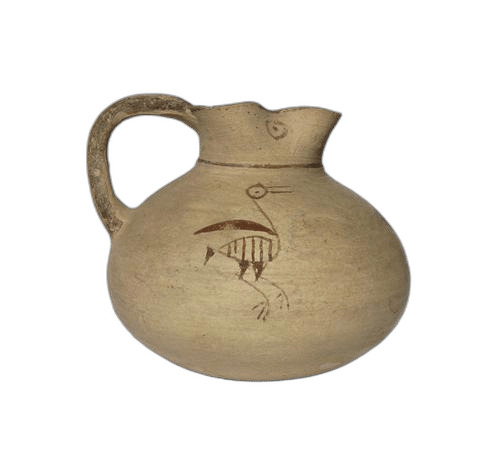
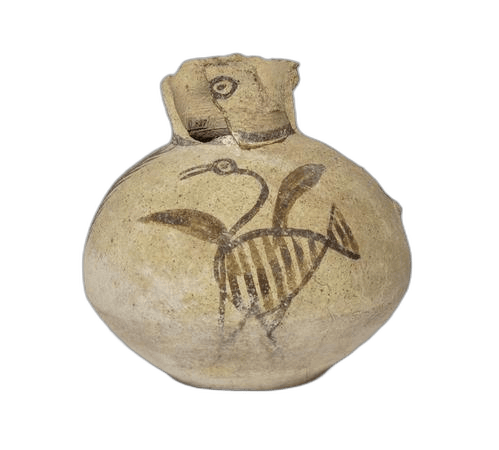
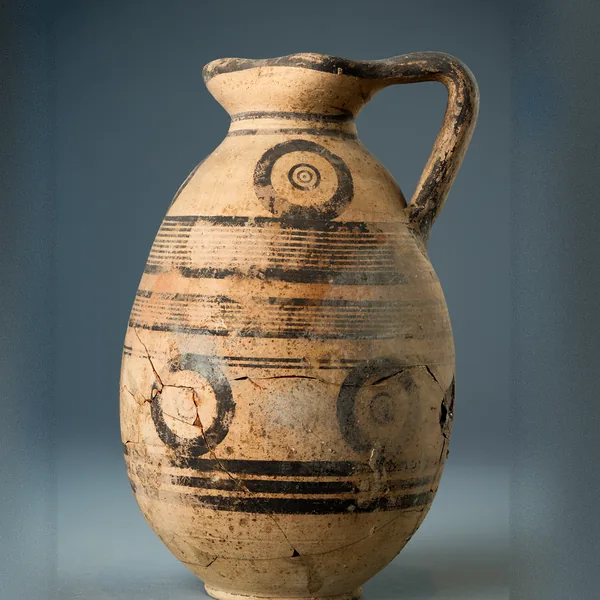
Anna Georgiadou introduces the MUSECoM project, directed by George Papasavvas with Maria Dikomitou-Eliadou and Despo Pilides, examining Iron Age tomb groups excavated before 1974 around Salamis, Soloi, Lapithos and Chytroi and held in the Cyprus Museum. Focusing on eastern Mesaoria and the Karpas peninsula, Georgiadou maps 32 burial sites from the Cypro-Geometric to the Cypro-Classical period and defines the ceramic output of the Salaminian workshops. She illustrates its pale or reddish clays, thick white slip and preference for Bichrome ware alongside White Painted ware across diagnostic shapes: barrel jugs, belly-handled amphorae with lozenge and floral lotus friezes, trefoil-lipped oinochoai with eye ornaments, high-footed skyphoi and shallow bowls bearing the Maltese cross. Discussion follows on continuity at the cemetery of Alaas-Gastria.
Giorgos Papantoniou, presenting joint work with Christine Morris, traces the ancient cult and modern social biography of the Cypriot Aphrodite. From Iron Age representations of the goddess with uplifted arms and inscriptions naming the Paphian kings as priests of the local goddess, the deity is first called Aphrodite in an inscription from Amathus around 310 BC. Papantoniou contrasts this complex ancient deity with modern commercial and state iconography centred on the Roman statue of Aphrodite from Soloi and on Petra tou Romiou, examining tourism campaigns, British colonial coins of 1955, Republic of Cyprus banknotes and stamps, and the shift toward prehistoric symbols such as the Chalcolithic cruciform figurine on the two-euro coin.
Ourania Perdiki, working on a Byzantine and medieval pilgrimage project directed by Athanasios Vionis, examines the rock-cut hermitage of Ayios Sozomenos near the abandoned village northeast of Nicosia. Cut into a hillside with the saint's tomb, a holy well and a sanctuary, the cave preserves wall paintings from the late 10th or early 11th century and a main cycle from the first half of the 14th century. Perdiki analyses ten surviving scenes of the saint's life, divided between healing miracles and five episodes involving the Bishop of Kition and an enigmatic figure in a blue kamision and granatza, connecting the 14th-century cult to Lusignan royal patronage near the royal fief of Potamia.
From our collection
Pieces in the Drakopoulos collection of the kinds and periods this talk covers: Bichrome ware (Iron Age), White Painted ware (Iron Age), Iron Age painting styles.
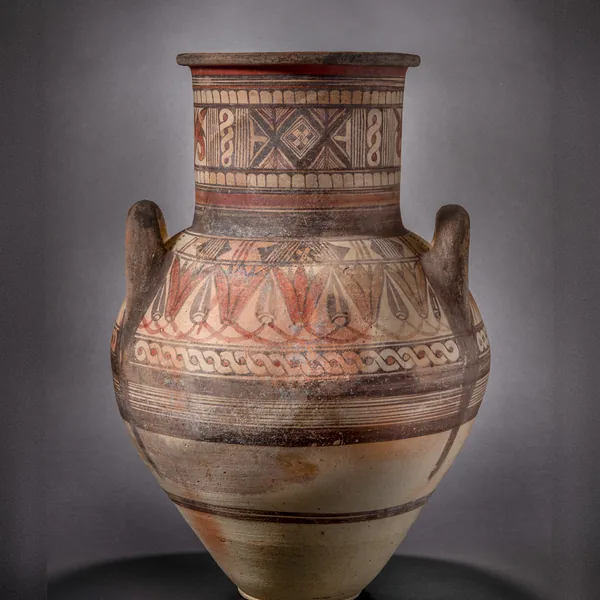
Bichrome IV Amphora with a Lotus-and-Bud Shoulder Frieze
Bichrome ware (Iron Age)
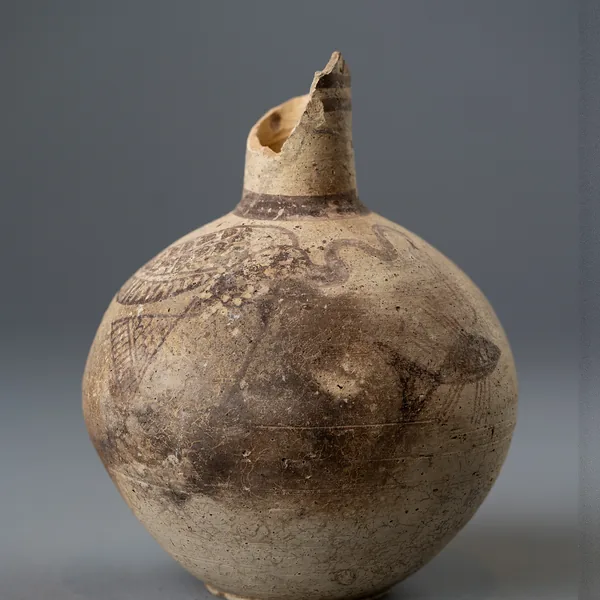
Bichrome IV Jug with a Waterfowl Catching a Fish
Iron Age painting styles
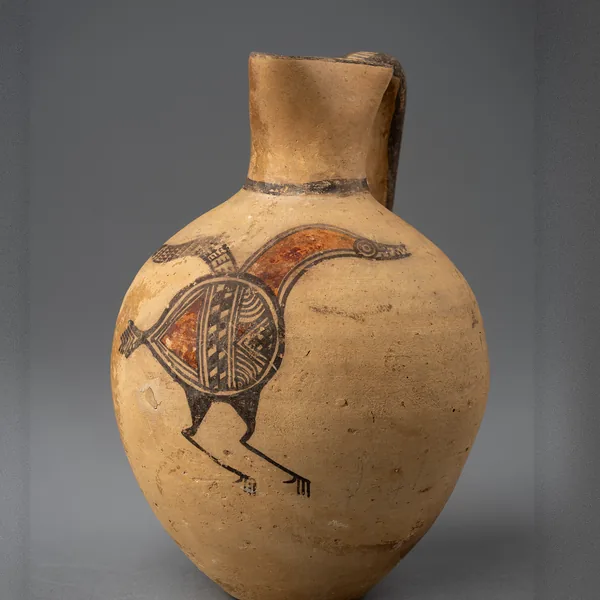
Bichrome IV Trefoil Jug with a Striding Bird
Iron Age painting styles
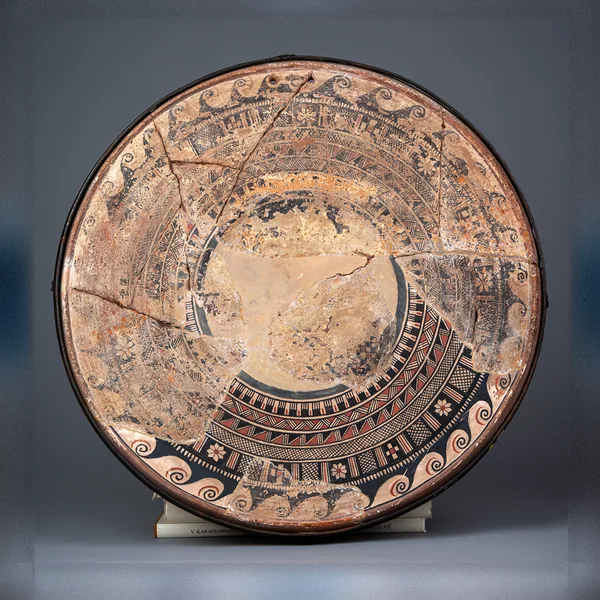
Large Bichrome Plate from Salamis with a Wave Band and Rosette Metopes
Bichrome ware (Iron Age)
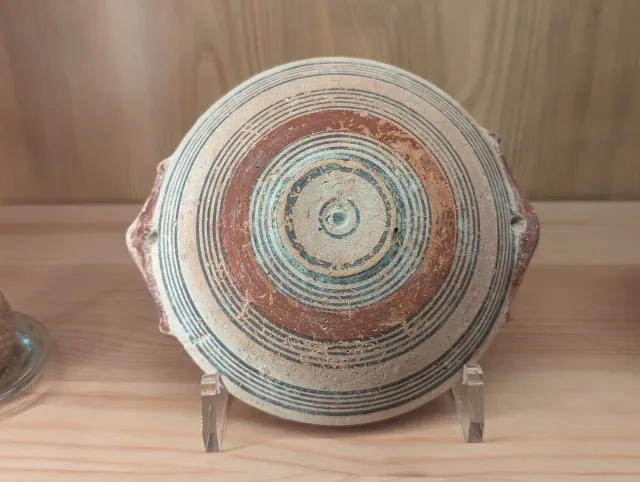
Bichrome IV Bowl with Red-Painted Pierced Lug Handles
Bichrome ware (Iron Age)
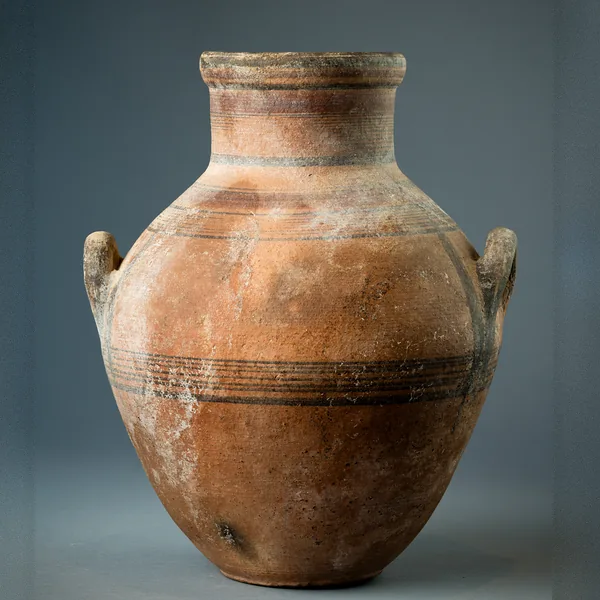
Bichrome IV Amphora with Shoulder Handles and Banded Decoration
Bichrome ware (Iron Age)
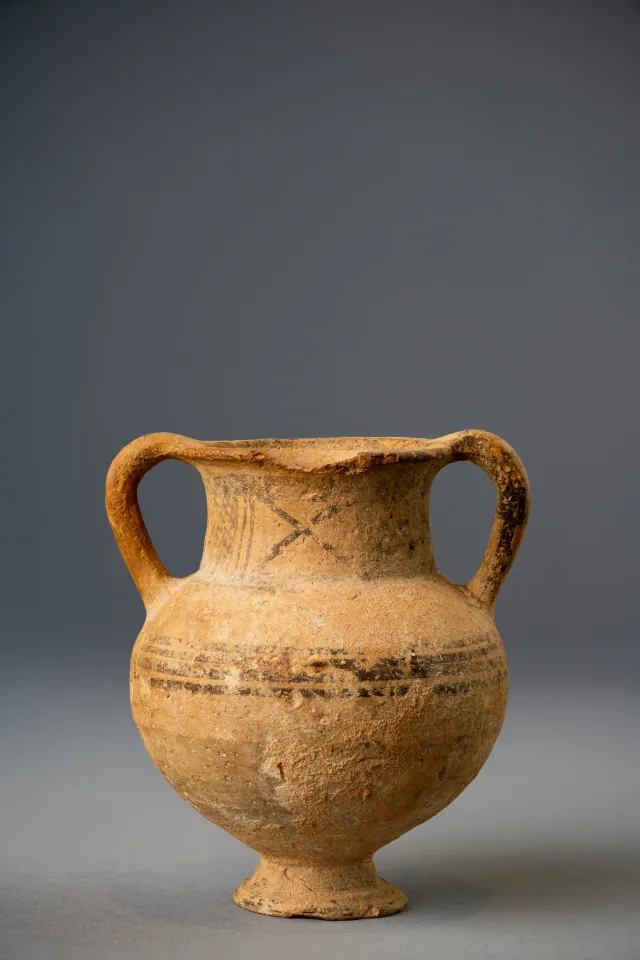
White Painted Amphoriskos on a Conical Foot
White Painted ware (Iron Age)
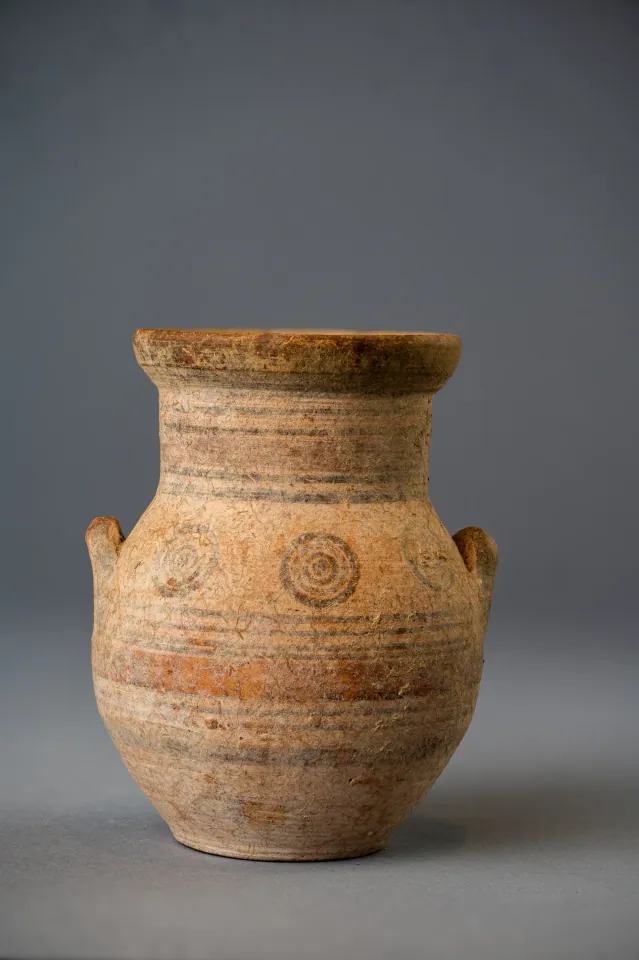
Bichrome IV Amphoriskos with Concentric Circles
Bichrome ware (Iron Age)
Found at the places discussed
Objects in our catalogue, in museum collections, recorded as found at these sites.


Background
Where to read more on this site before or after watching.
The site
Salamis
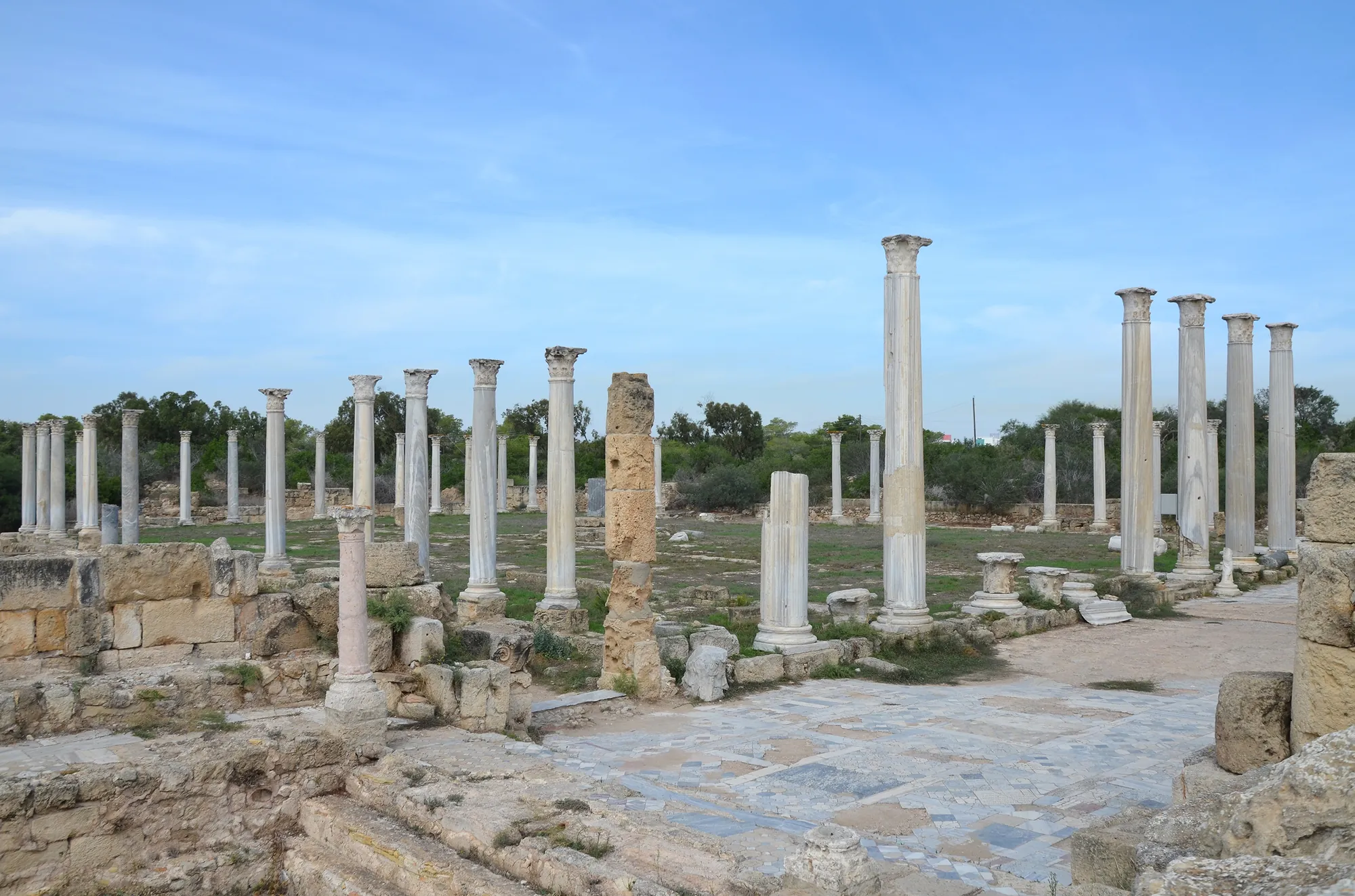
A city on the east coast of Cyprus at the mouth of the Pedieos river, founded in the 11th century BC and one of the leading city-kingdoms of the island until 311/310 BC. It is known for the Royal Tombs with their sacrificed horses and chariots, for its Roman gymnasium, baths and theatre, and as Constantia, seat of the bishops of Cyprus from the 4th century AD. The site lies in the north of the island; the Cypriot and French excavations stopped in 1974.
In the compendium
Stone in Ancient Cyprus
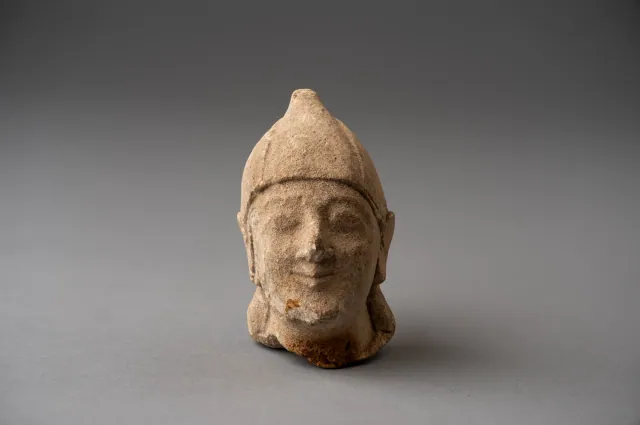
Cypriots worked local chert, igneous rocks, picrolite and limestone from the Neolithic onwards, and imported marble, alabaster and gemstones.
In the compendium
Bichrome Ware
Bichrome is Cypriot pottery painted in black and red on a light surface, first a Late Bronze Age export ware and later a long-lived Iron Age class.
In the compendium
Iron Age White Painted Ware
Iron Age White Painted is the wheel-made Cypriot pottery painted in matt black or brown on a pale ground, numbered White Painted I to VII from c. 1050 to 310 BCE.
Map of Cyprus
Places discussed in the talk
- Has a page on this site
- Other places
- Ground above 200, 500, 1,000 m
Places
- 1Ayia Anna (approx.)
- 2Kalo Chorio (approx.)
- 3Choletria (approx.)
- 4Salamis
- 5Enkomi
- 6Alaas
- 7Gastria (approx.)
- 8Patriki (approx.)
- 9Galinoporni (approx.)
- 10Ayios Philon
- 11Lysi (approx.)
- 12Lapathos (approx.)
- 13Peristerona (approx.)
- 14Soloi
- 15Lapithos
- 16Chytroi
- 17Amathus
- 18Nea Paphos
- 19Palaepaphos
- 20Ayios Sozomenos
- 21Potamia (approx.)