
Conference paper·Archaeological Research Unit - University of Cyprus·2017·In Greek
2nd Annual ARU Study Day: Cypriot Bronzes, Copper at Kition, the Vouni Hoard, and Maritime Outreach
Δεύτερη Ετήσια Ημερίδα Ερευνητικής Μονάδας Αρχαιολογίας: «Το Αρχαιολογικό ΄Εργο του Πανεπιστημίου Κύπρου»
George Papasavvas, Vasiliki Kassianidou, Andreas Charalambous and Stella Demesticha
Chapters
About the video
This second morning session of the second annual study day of the Archaeological Research Unit at the University of Cyprus, given in Greek, presents four papers on Cypriot archaeometallurgy, numismatics, and maritime public archaeology.
George Papasavvas opens with a study of Cypriot metal vessels in Early Iron Age Aegean burials, focusing on a Late Bronze Age Cypriot four-sided bronze stand from Tomb 201 of the North Cemetery at Knossos. Reconstructing its openwork relief panels of sphinxes, lions, and birds, he notes that only 924 grams of its estimated three-kilogram weight were placed in the early eleventh-century BC tomb. Because some fragments were melted on the funeral pyre while others show no fire damage, Papasavvas argues that the stand was deliberately broken beforehand through heating and hammering, and that the remaining pieces were kept for other burials, a practice he compares to a pair of wheels from a Cypriot stand in Tomb 39 at Lefkandi.
Vasiliki Kassianidou examines copper metallurgy in the kingdom of Kition during the Iron Age. Reviewing slag and crucibles from the sanctuaries at Bamboula and Kathari, including chemical analyses by Dimitris Ioannidis that detected tin inside crucibles from Floor 3 (800 to 725 BC), she concludes that urban sanctuary workshops cast bronze objects rather than smelting ore. Turning to the mines at Troulli and radiocarbon-dated Iron Age slag heaps at Skouriotissa, Kambia, Agrokipia, and Kokkinoyia, Kassianidou argues against the view that Cypriot copper production ceased after the twelfth century BC. She suggests instead that the ninth-century collapse of Levantine production at Feynan and Timna drew the Phoenicians to Cyprus, and that fifth-century BC warfare, especially the demand for bronze warship rams and weapons, drove Kition to annex inland Idalion and Tamassos for their mines.
Andreas Charalambous presents portable X-ray fluorescence analyses of 115 silver coins from the Vouni hoard, excavated at the palace of Vouni in 1928 and dating to the late fifth and early fourth centuries BC. Conducted under the SilCoinCy project with Evangeline Markou and Kassianidou, the study examines issues from Marion (kings Stasioikos I and Timocharis), Kition (Ozibaal and Baalmilk II), Lapithos (including Demonikos II), Paphos (Mineos), and Amathus. All coins show high silver purity produced by cupellation, with Kition's issues being the purest, while higher lead in Marion and Paphos coins reflects incomplete cupellation rather than debasement. In the questions, Charalambous contrasts these results with gold issues of Evagoras of Salamis that show deliberate debasement.
Stella Demesticha concludes by reviewing the Maritime Archaeological Research Laboratory's training and public outreach since 2007. She describes early field schools at Akrotiri and Cape Kiti, student training at the Mazotos shipwreck, Nautical Archaeology Society courses at Xylophagou and Mazotos, virtual reality applications and educational games under the European project i-MareCulture, and a 2017 mobile exhibition bus tour organized with the Maritime Archaeology Trust and Anna Demetriou.
From our collection
Pieces in the Drakopoulos collection of the kinds and periods this talk covers: Cypro-Geometric, Cypro-Archaic.
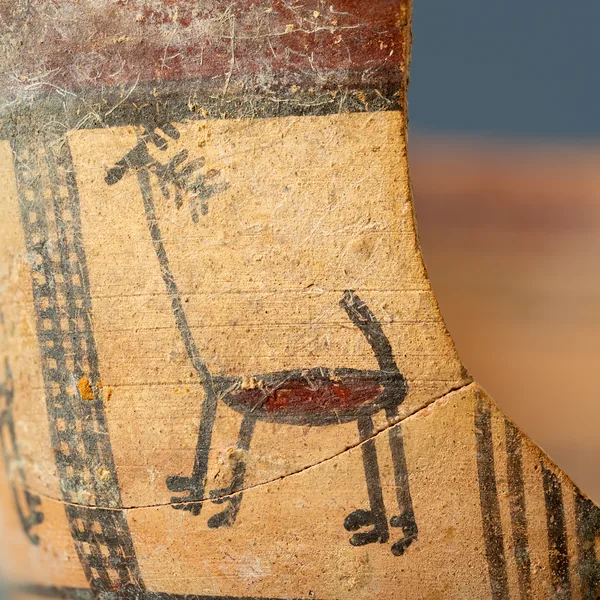
Bichrome Skyphos with Stags in Metopes
Cypro-Archaic
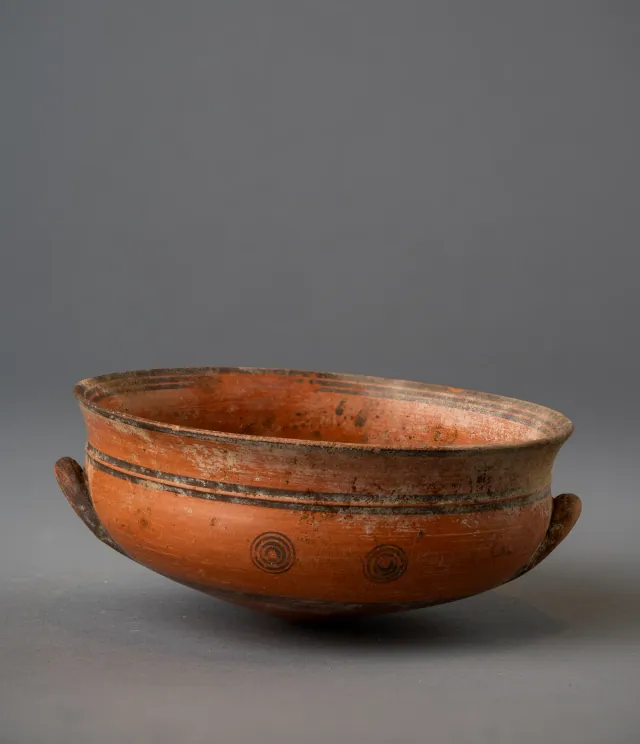
Black-on-Red Two-Handled Bowl with Raised Flaring Rim
Cypro-Archaic
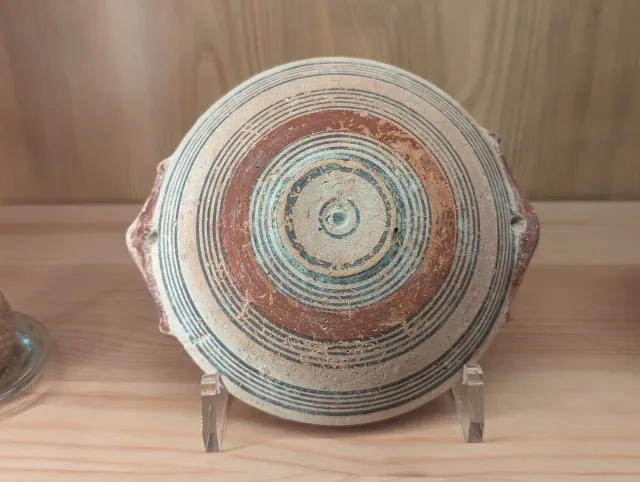
Bichrome IV Bowl with Red-Painted Pierced Lug Handles
Cypro-Archaic
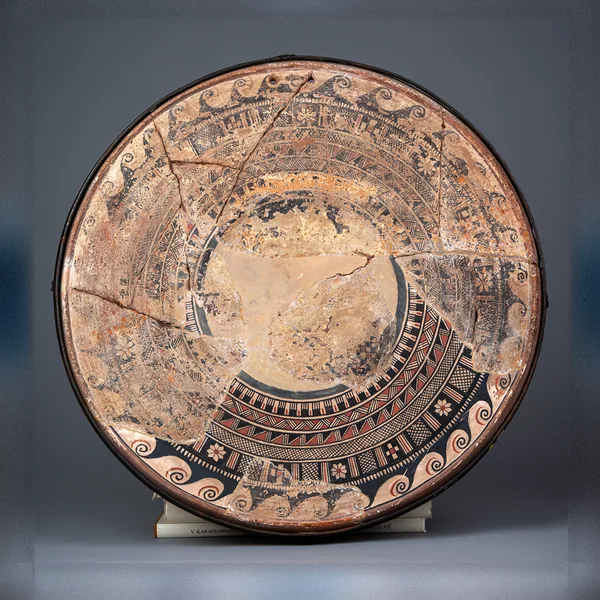
Large Bichrome Plate from Salamis with a Wave Band and Rosette Metopes
Cypro-Archaic
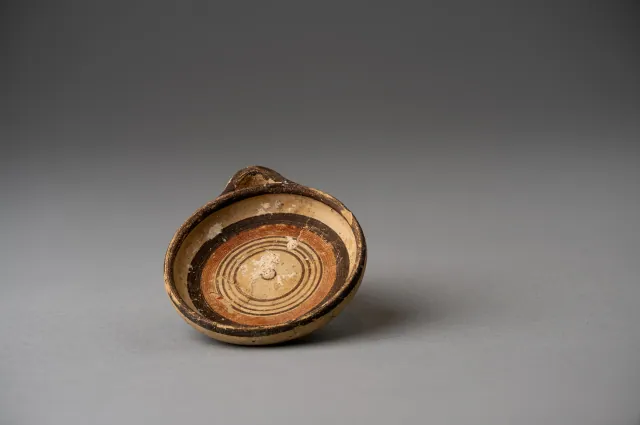
Miniature Bichrome Plate with Concentric Circles
Cypro-Archaic
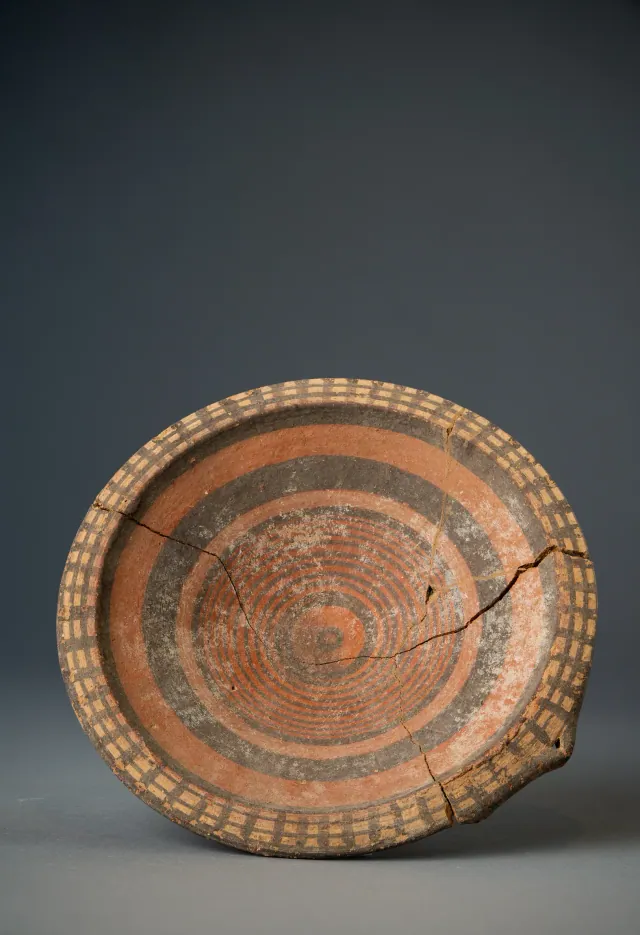
Black-on-Red Plate with Barred Rim and Concentric Circles
Cypro-Archaic
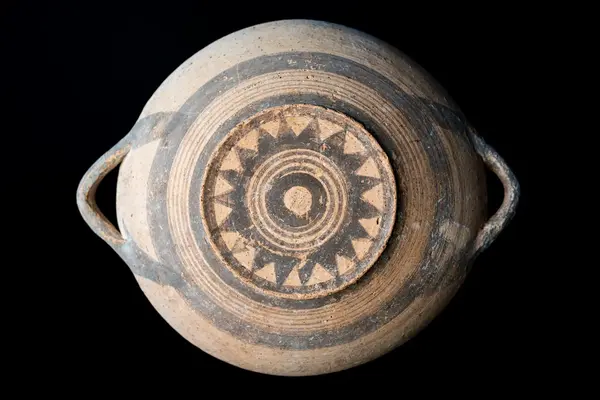
White Painted Plate with a Sawtooth Star on the Underside
Cypro-Geometric
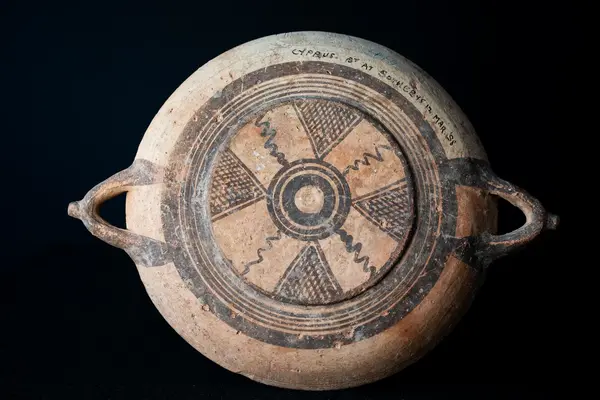
White Painted Plate with Latticed Triangles and Wavy Lines on the Underside
Cypro-Geometric
Found at the places discussed
Objects in our catalogue, in museum collections, recorded as found at these sites.


Background
Where to read more on this site before or after watching.
The site
Kition
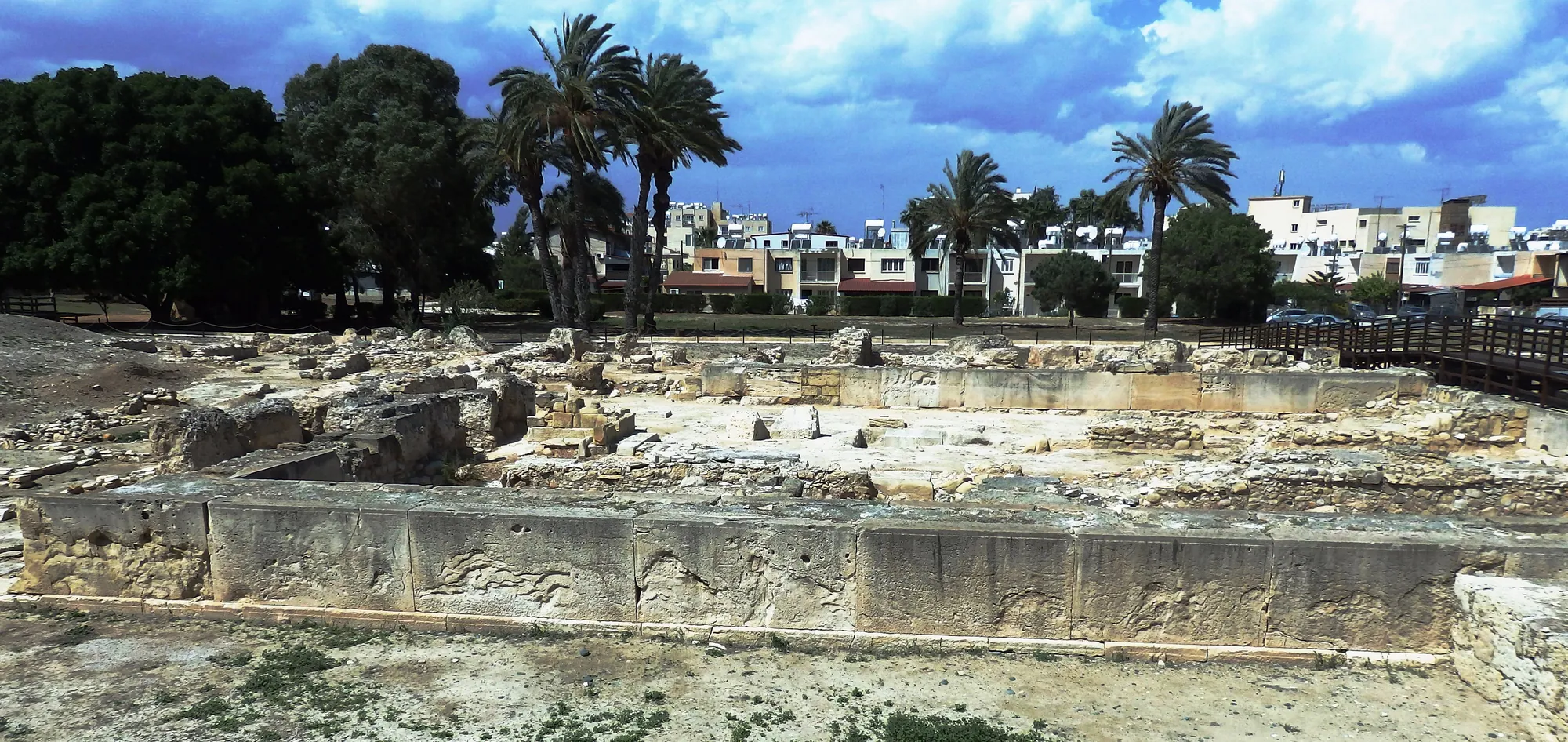
Kition lies under modern Larnaca on the south-east coast. It was founded as a harbour town in the 13th century BC, with temples and copper workshops in its sacred quarter at Kathari. After a long gap the Phoenicians rebuilt the main temple for Astarte, and from the 5th century BC the city was the seat of a Phoenician dynasty with a war harbour of ship sheds at Bamboula. Its last king was put to death by Ptolemy I in 312 BC, but the city lived on into the Roman period and beyond.
In the compendium
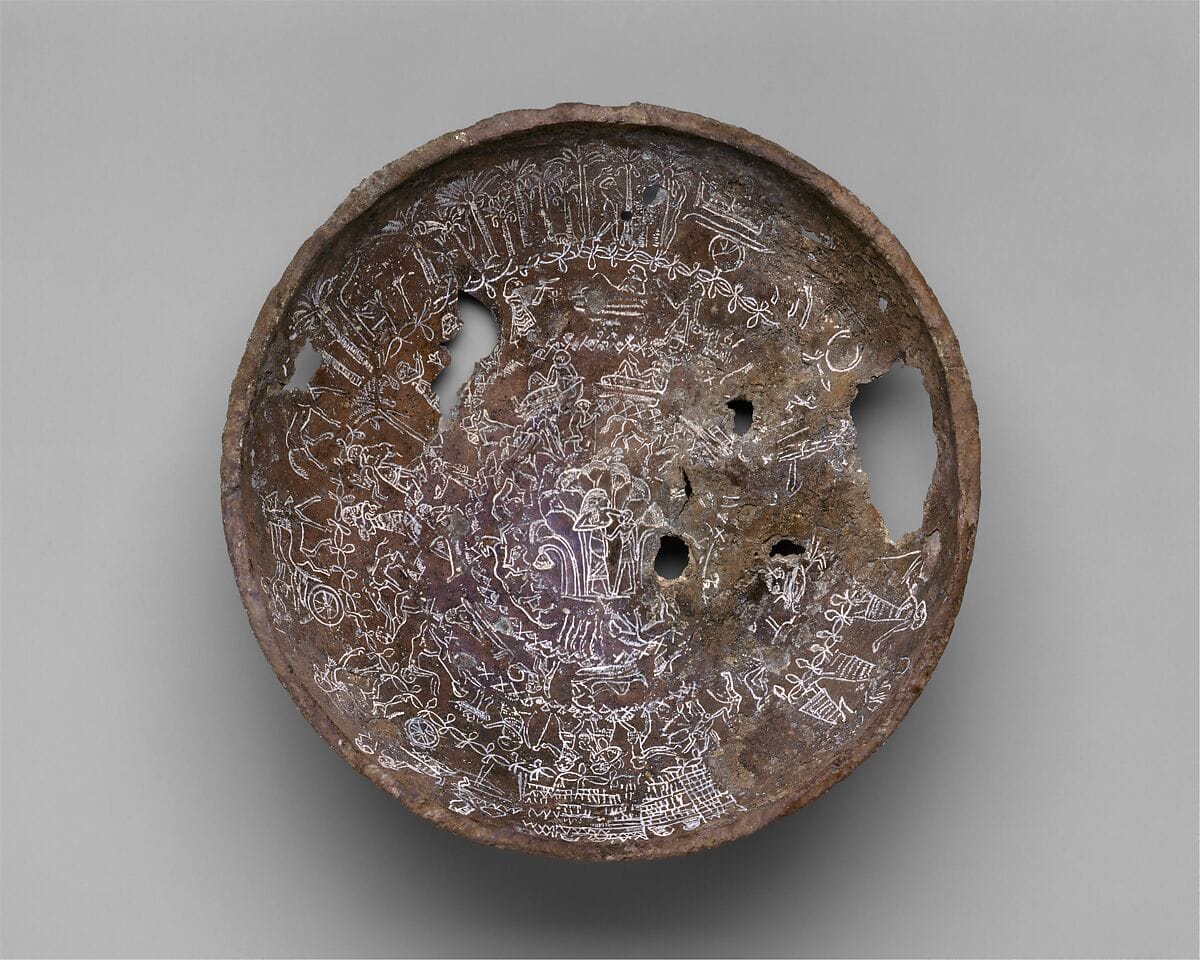
Metal Vessels
Bowls, cauldrons, jugs, cups, strainers and the bronze stands that carried them, made in Cyprus from the Late Bronze Age to the Cypro-Archaic period.
In the compendium
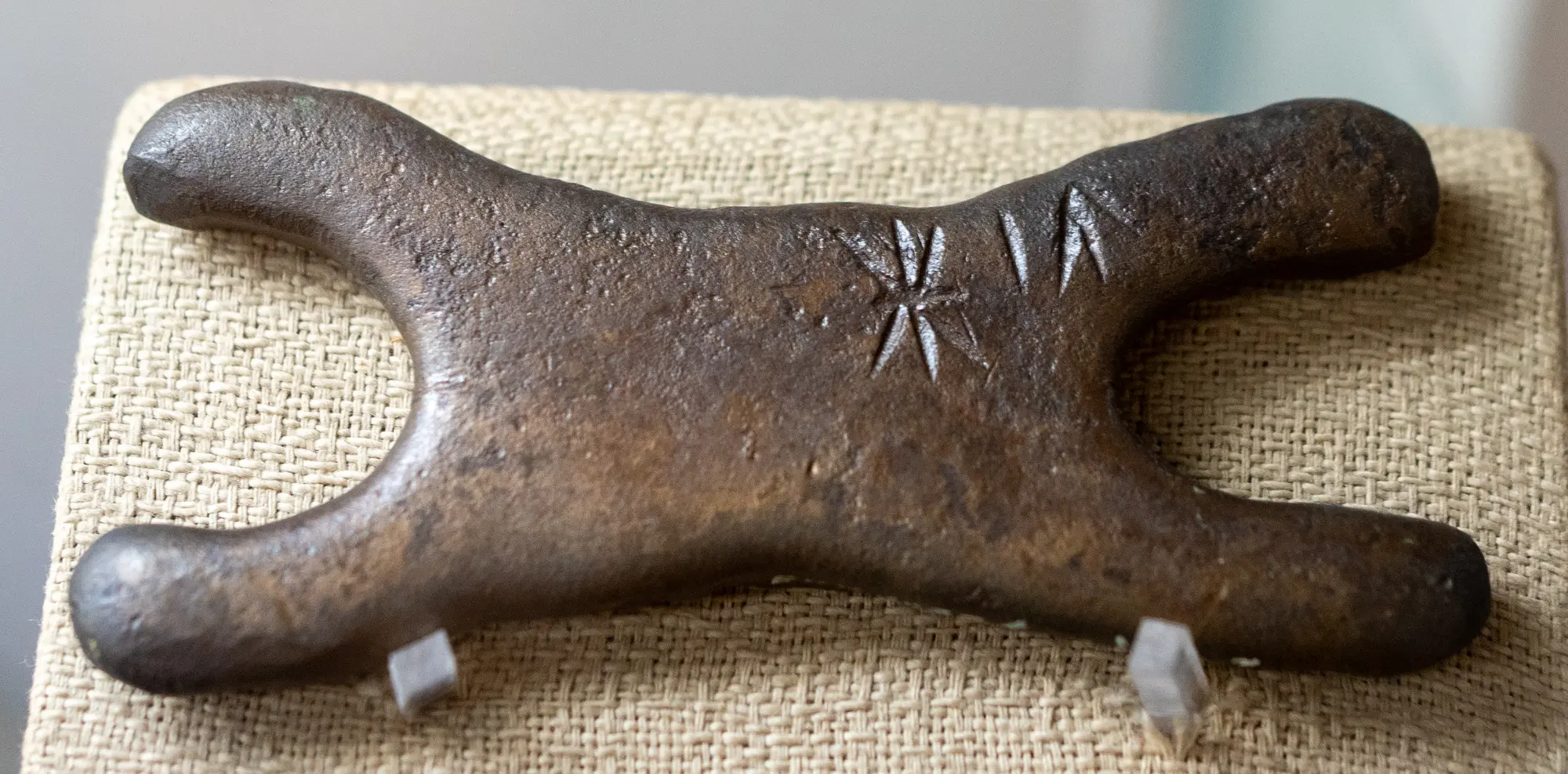
Copper Metallurgy in Ancient Cyprus
The mining, smelting and casting of the Troodos sulphide ores, from hammered Chalcolithic native copper to Late Bronze Age oxhide ingots and Archaic slag heaps.
In the compendium
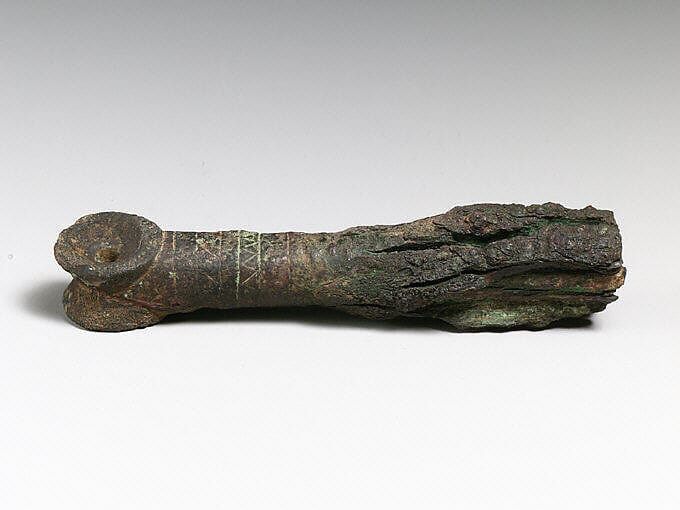
Gold, Silver, Tin, Arsenic and Iron in Ancient Cyprus
The metals other than copper used by Cypriot smiths from the Philia facies to the Hellenistic period, including arsenic, tin, gold, electrum, silver, lead and iron.
Map of Cyprus
Places discussed in the talk
- Has a page on this site
- Other places
- Ground above 200, 500, 1,000 m