
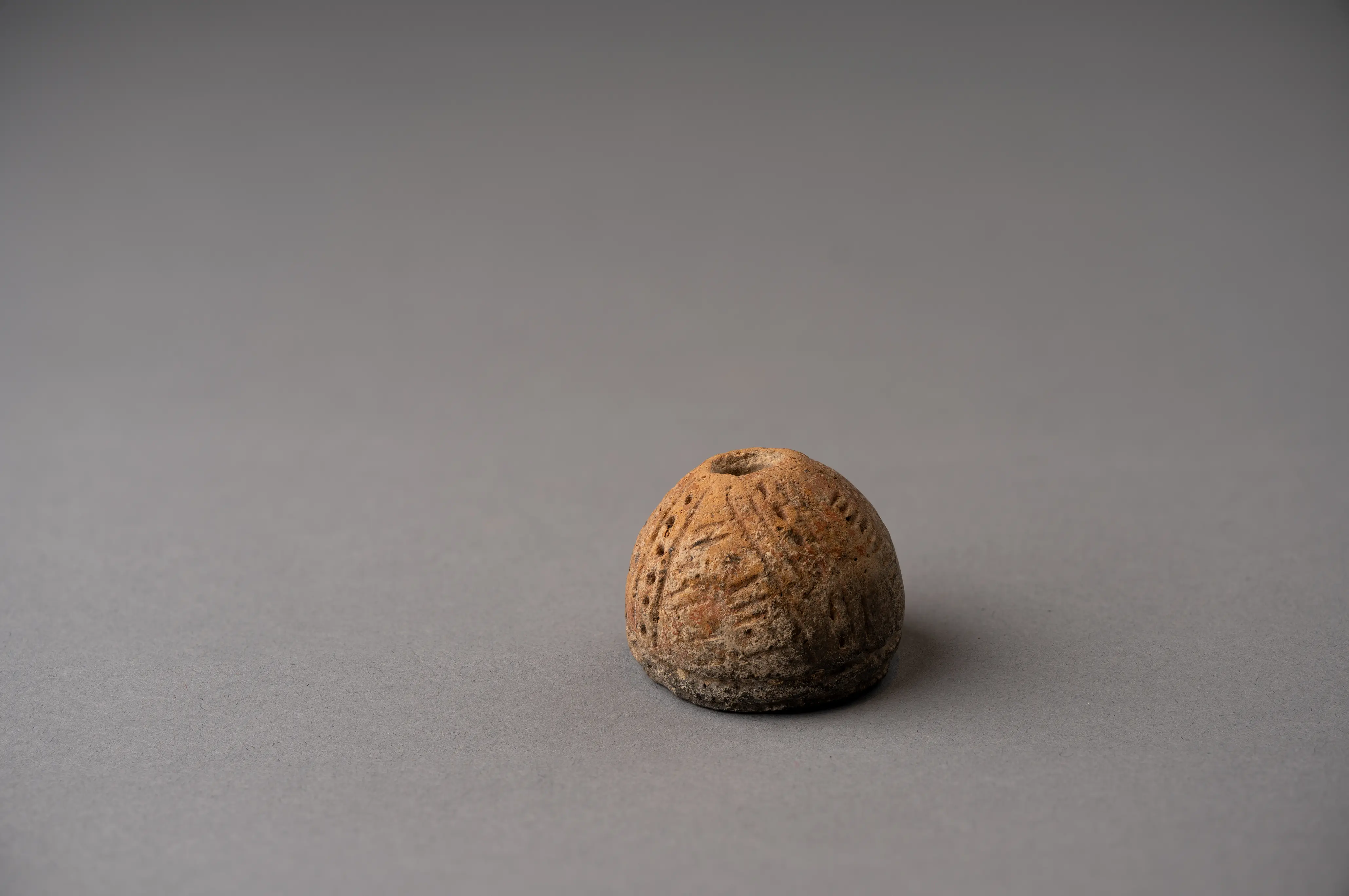
Middle Bronze Age I
Red Polished Spindle Whorl with Incised Lattice and Dotted Bands
Dome-shaped Red Polished spindle whorl incised with crossing diagonal lines, ladder-stroke fills and vertical dotted bands, c. 2000–1725 BCE.
Date
2000 - 1725 BC
Accession No.
TOL-BA-002
Collection
Alexis Drakopoulos
Provenance
- 1965–1969, The Goodman Collection
- 2025–present, Alexis Drakopoulos, London
Early Cypriot III to Middle Cypriot II, c. 2000–1725 BCE · Probably Red Polished ware · Handmade
A dome-shaped spindle whorl with a flat broad base and a small perforation at the apex. The whole dome is covered in incised work. Pairs and triplets of parallel oblique lines cross one another to form X-shaped panels, and the spaces between framing lines are filled with rows of short transverse strokes, like the rungs of a ladder. In at least two places a vertical row of punctures runs from the perforation to the base. The slip and polish are largely gone, leaving a pale orange-buff surface with patches of redder colour. Grey calcareous crust clings to the lower body and base edge, and a darker band just above the base may mark an encircling groove.
Commentary
This is a conical-hemispherical clay whorl of the kind made in Cyprus from the Early Cypriot III to the Middle Cypriot II period, when decorated whorls in Red Polished and Black Polished fabrics were common in tombs and settlements [1][3]. The worn orange surface with traces of red suggests Red Polished ware that has lost its slip in burial.
The decoration is textbook for the class. At Sotira-Kaminoudhia the preferred pattern "consists of two or more parallel diagonal lines which often frame a series of incisions or punctures", with a "definite emphasis on linear diagonal motifs" [2], and that is exactly the scheme here, with stroke-filled strips between crossing diagonals. The vertical dotted bands have a close counterpart in a Red Polished whorl in the Cesnola Collection at the Metropolitan Museum of Art (74.51.936), which has four vertical dotted bands, is similarly worn with its lime infill largely lost, and is dated to Early Cypriot III to Middle Cypriot II [1]. Karageorghis places that whorl's style in "southwestern and central Cyprus, anywhere from Marki to Sotira-Kaminoudhia" [1], and the Sotira report notes that framed punctures had a long life on the south coast [2]. Crossing groups of oblique lines also occur in the north, however, on two Black Slip whorls from Lapithos Tomb 316 in the Medelhavsmuseet, Stockholm (L. 316:065a and L. 316:065b), dated to Middle Cypriot II. A second Metropolitan whorl (74.51.912) shows the same rows of short strokes [1]. The decoration therefore sits most comfortably in central and southern Cyprus, but it does not fix a find-spot, and none is recorded.
Whorl shape alone is a weak chronological guide [3][5], so the date rests on the combination of shape, fabric and decoration, all of which point to the centuries around 2000–1725 BCE. On a low-whorl spindle the broad base faced upward and normally carried its own ornament [1]; the base of this piece has not been photographed. Its weight, which would indicate the kind of thread it spun, is not recorded. The standard typology of Cypriot whorls is Crewe's [4].
References
- 1.Karageorghis, V. (2016) The Cesnola Collection of Cypriot Art: Terracottas. New York: The Metropolitan Museum of Art, pp. 30, 33 (Cat. 26, 40) and p. 254 (Commentary 2, Early–Late Cypriot Spindle-whorls).
- 2.Swiny, S., Rapp, G. and Herscher, E. (eds) (2003) Sotira Kaminoudhia: An Early Bronze Age Site in Cyprus (CAARI Monograph 4). Boston: American Schools of Oriental Research, p. 438.
- 3.Webb, J.M. (2002) New evidence for the origins of textile production in Bronze Age Cyprus. Antiquity 76, pp. 364–371.
- 4.Crewe, L. (1998) Spindle Whorls: A Study of Form, Function and Decoration in Prehistoric Bronze Age Cyprus (SIMA-PB 149). Jonsered: Paul Åströms Förlag.
- 5.Frankel, D. and Webb, J.M. (2006) Marki Alonia: An Early and Middle Bronze Age Settlement in Cyprus. Excavations 1995–2000 (SIMA 123:2). Sävedalen: Paul Åströms Förlag, pp. 159–175.
More from the Catalogue
Browse related objects
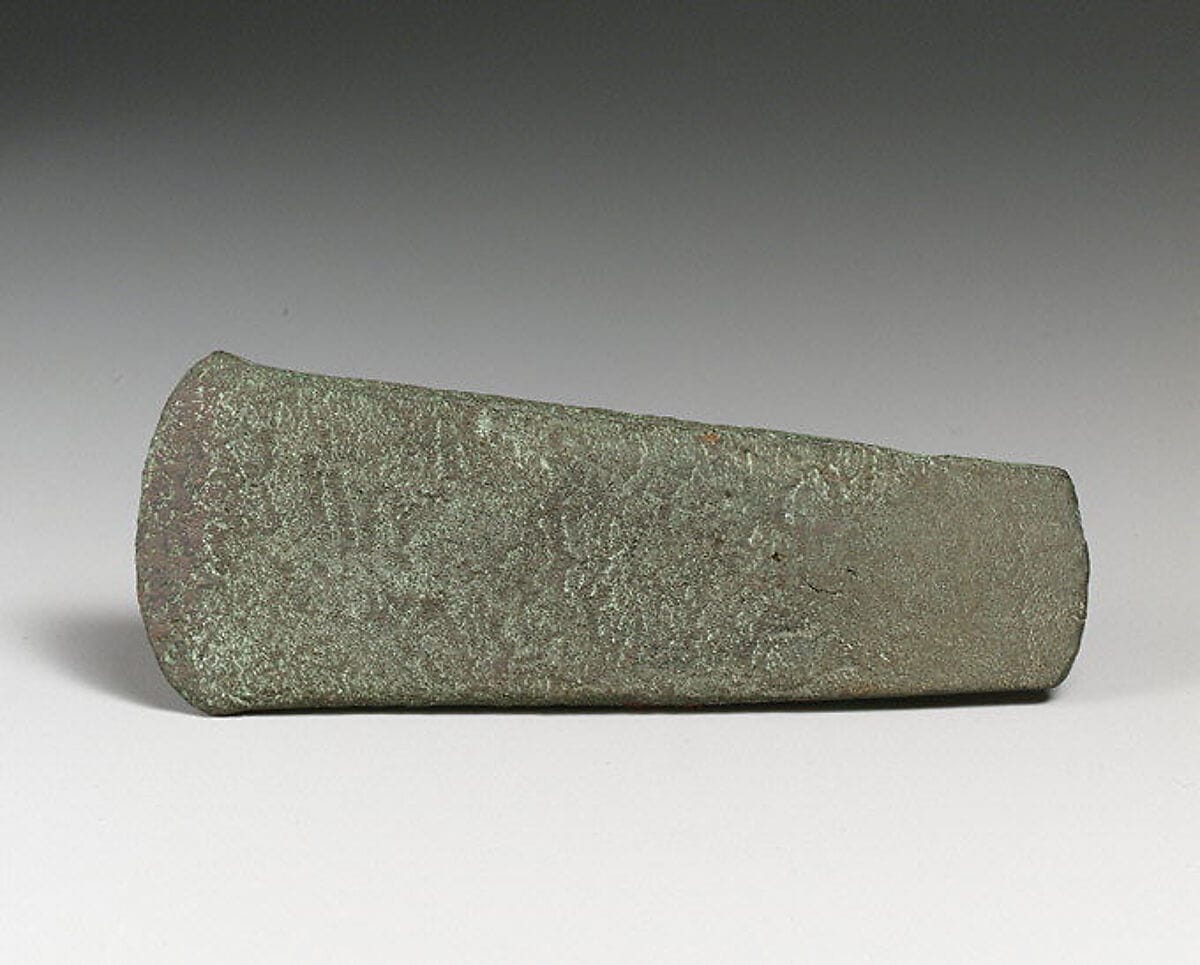
Axehead
Early Bronze Age I
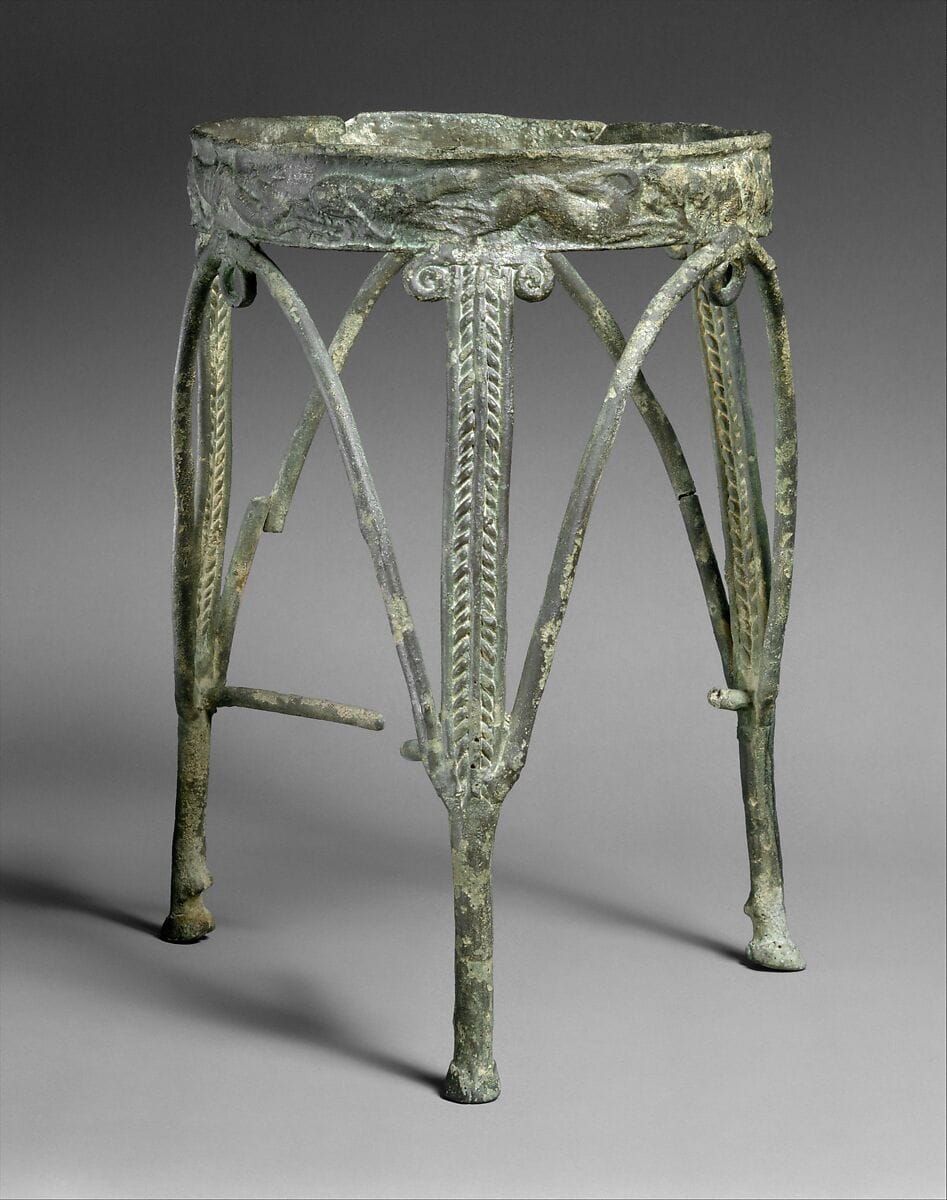
Bronze rod tripod
Late Bronze Age III
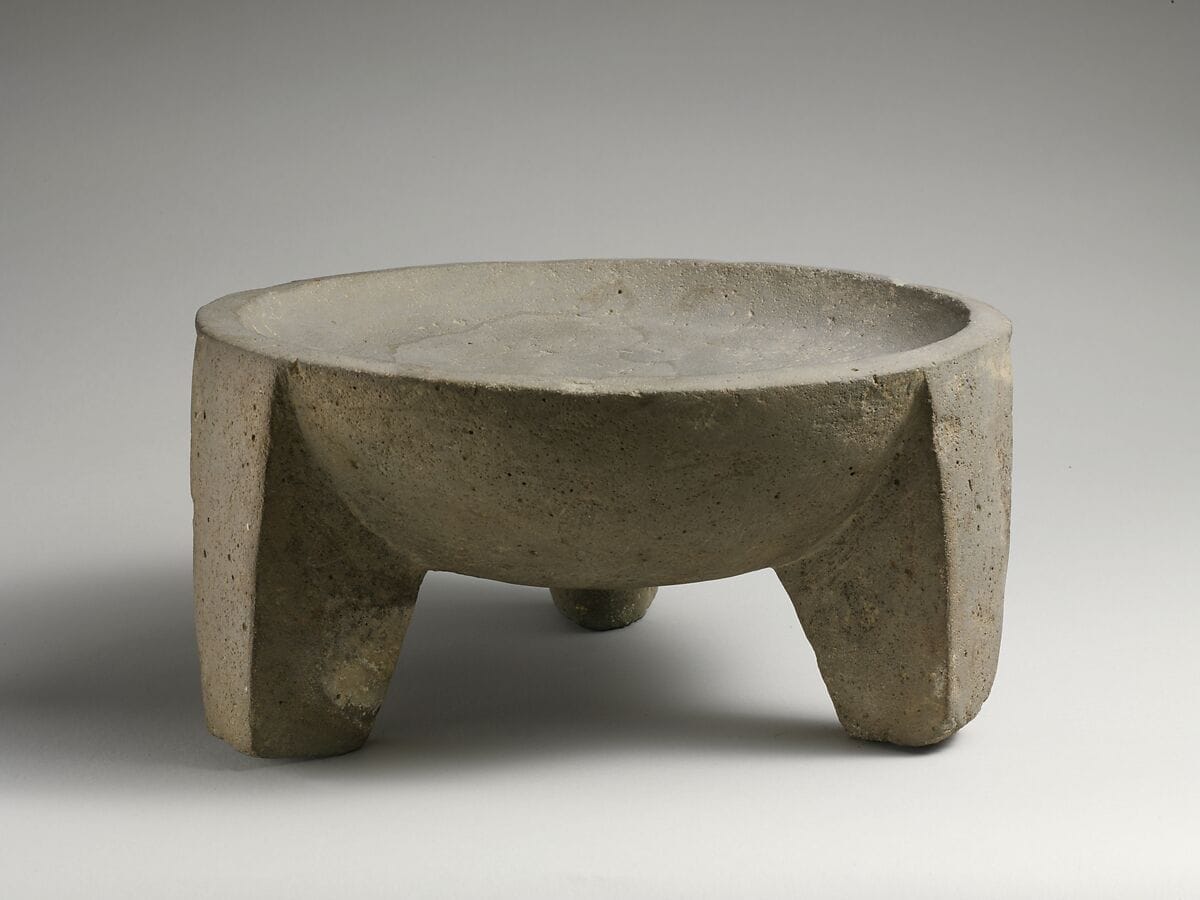
Basalt tripod vessel or mortar
Bronze Age
Chlorite spindle whorl
Late Bronze Age III
Spoon probe
Bronze Age
Limestone saucer lamp
Classical
Terracotta conical-hemispherical spindle-whorl with flat base
Middle Bronze Age I
Needle
Bronze Age
Toilet box
Bronze Age
Bronze saucer-shaped lamp
Archaic II
Hinge
Bronze Age
Torch-holder
Classical
Terracotta saucer-shaped lamp
Classical
Bone spindle whorl
Late Bronze Age II
Limestone altar
Classical
Awl
Bronze Age
Shepherd's crook
Bronze Age
Copper alloy razor
Middle Bronze Age II