
The First Photographs of Cyprus
Louis de Clercq made the first photographs of Cyprus in 1859, then left them out of his books; they surfaced at a Paris auction in 2003. The Cypriot collection he is better remembered for came without the one thing his camera was built to record: a place.

Alexis Drakopoulos
June 5, 2026·History · Collecting · Archeology·10 min read


Share


Alexis Drakopoulos is a Greek Cypriot Machine Learning Engineer working in Financial Crimes. He is passionate about Archeology and making it accessible to everyone. About Me.
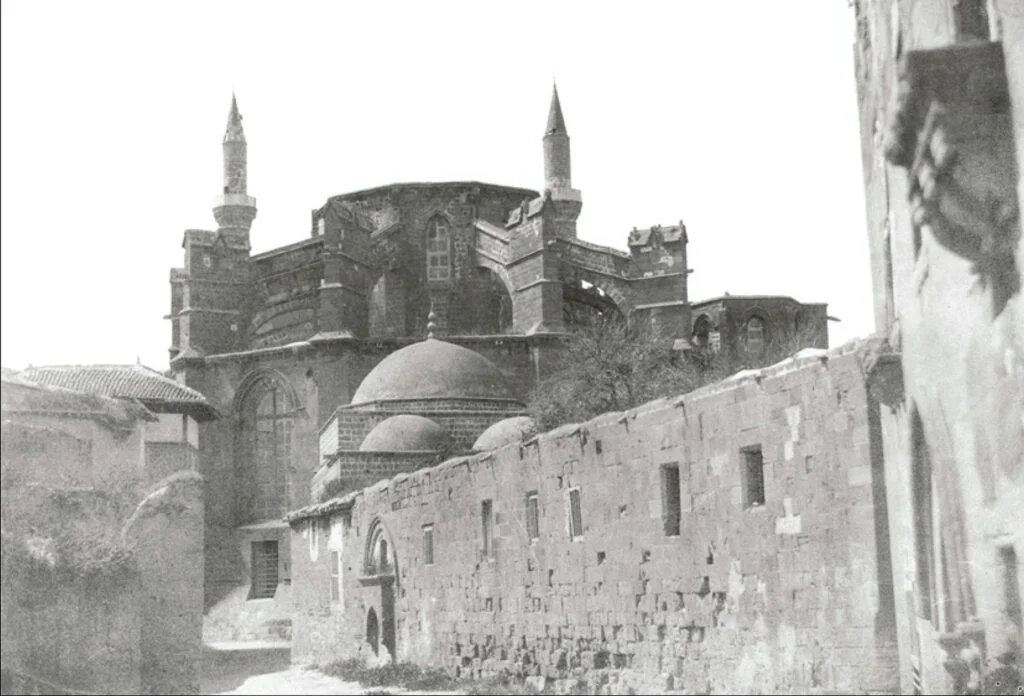
In August 1859 Louis de Clercq came ashore on Cyprus with a camera and made the first photographs of the island that anyone is known to have taken: about a dozen waxed-paper negatives, at Famagusta, Nicosia and Kiti [1]. He was twenty-two, the hired camera operator on a French mission to the Crusader castles of Syria, and he worked in a medium then prized for its honesty. A photograph was held to be exact in a way a drawing could not be, and its purpose was documentary: to fix a site or a monument so that a scholar in Paris could write his text and an engraver could cut his plate from it [1].
He never published the Cyprus pictures. Home in France, he printed two hundred and twenty-two of his Eastern views at his own expense, in fifty copies, as a set of six albums called Voyage en Orient; the Cyprus negatives were left out of it. They surfaced again only by chance, at a Paris auction in 2003, a hundred and forty-four years after he made them [1].
By the time they reappeared, de Clercq was remembered, where he was remembered at all, for the other half of his life. Across forty years he built one of the largest private antiquities collections in France, Babylonian, Assyrian, Phoenician and Greek, with a department of its own for Cyprus. He never dug a trench. He bought, mostly through one man in Beirut, and the objects reached him stripped of the very thing his camera had been built to record. For most of his Cypriot collection no one could say where the pieces had come from, and where a record did claim to say, it could be quietly rewritten by the scholar who catalogued it.
Coal money and a camera
He could buy on this scale because of coal. The de Clercqs owned mines in the Nord; his mother, Henriette, founded the Compagnie des mines de Dourges in 1852, and Louis sat on its board through the boom that made the Pas-de-Calais the leading coalfield in France. He kept a château at Oignies and rooms in Paris, sat in the Chamber as a conservative deputy for the mining country, and was eventually turned out of his seat by Émile Basly, the colliers' union leader: the coal magnate beaten in his own district by the man who organised the men underground. Even his birth is contested. Art history gives 1836 at Oignies; the French civil registers give 1837 at Paris. It is a fitting margin of doubt for a man whose objects would carry far less.
The mission he joined in 1859 belonged to Emmanuel-Guillaume Rey, a historian sent by the Ministry of Public Instruction to study the military architecture of the Crusades. De Clercq photographed the castles; in January 1860 he left Rey at Jerusalem and went on alone through Egypt and Spain. The albums he made from the trip, albumen prints worked up from waxed-paper calotype negatives, ran to six and held those two hundred and twenty-two images. One of them, given over to the Crusader castles of Syria, was the first photographic record of those buildings ever made, and the first album anywhere devoted to Crusader architecture alone [3]. In his own century this was the pastime of an amateur with means. The modern rediscovery of the albums, of which only about a dozen sets survive, has made him into something he was not taken for in his lifetime: a pioneer of photography in the Near East.
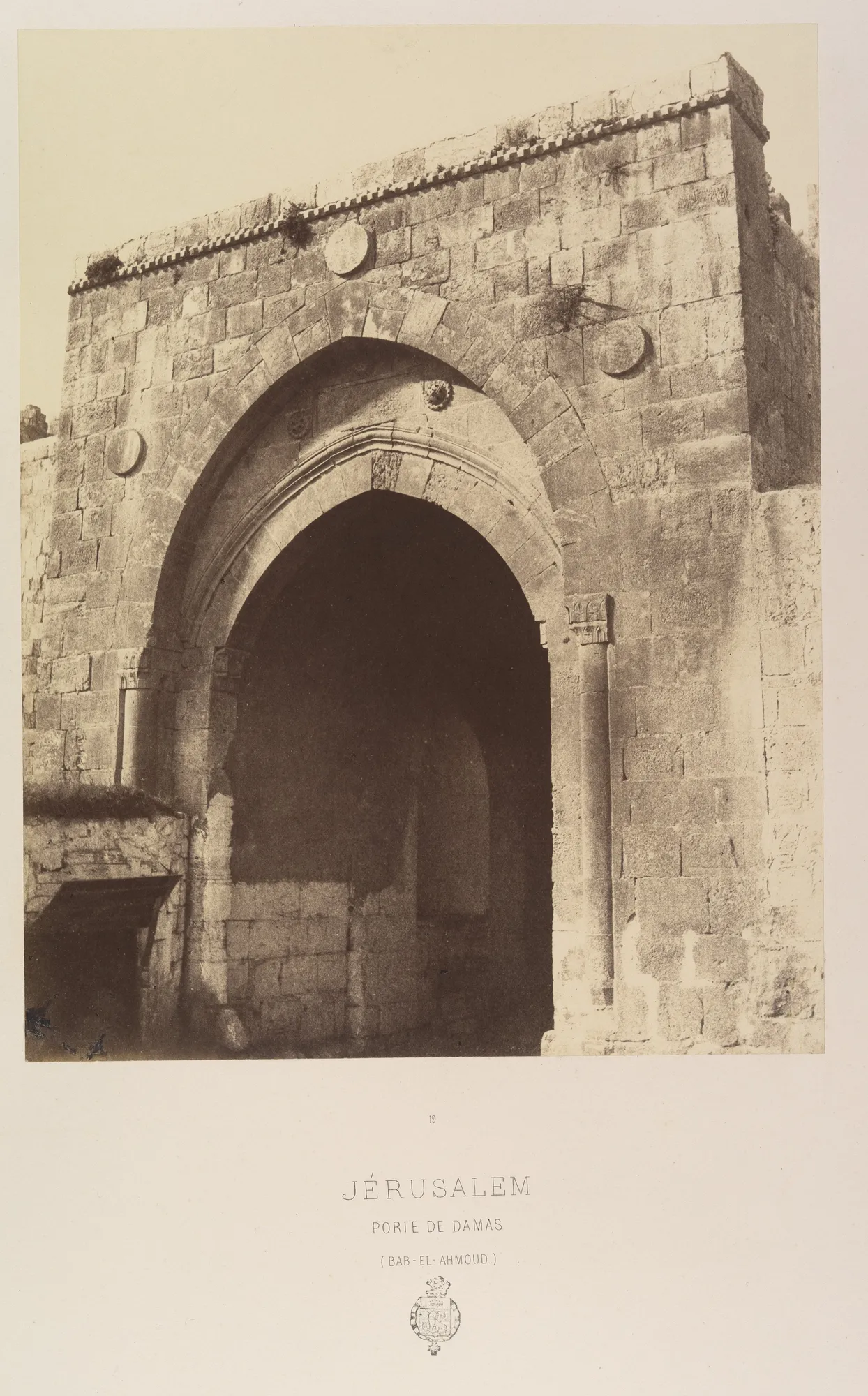
He returned to the Levant in 1862 and 1863, and on that second trip he toured Cyprus more closely and photographed its monuments, on the advice of the diplomat and scholar Melchior de Vogüé [4]. De Vogüé counts here twice. He had pointed de Clercq east in the first place, and in 1862 he ran the French mission that dug at Dali and Athienou and shipped the nucleus of the Louvre's own Cypriot collection home from Larnaca [2]. De Clercq's interest in the island, the camera and the cabinet alike, ran exactly in step with the men who were then opening Cyprus to French collecting.
The man in Beirut
The engine of the collection was a standing arrangement with a single supplier. Aimé Péretié, in full Napoléon Antoine Aimé Péretié (1808–1882), was chancellor and first dragoman of the French consulate at Beirut, and he fed antiquities, Cypriot, Phoenician and Mesopotamian, to a circle of French collectors. De Clercq met him in 1859, on de Vogüé's advice, and called him his "zealous collaborator." Until his death Péretié was de Clercq's "appointed purveyor," and supplied close to two-thirds of the entire collection [4].
De Clercq later told the story more tidily than it deserved. In one of his catalogue volumes he wrote that from 1859 Péretié had simply been his agent in Beirut, digging on his instructions and at his expense. He was not. Péretié drew his funds from several quarters and supplied many buyers at once, among them the duc de Luynes, de Vogüé, the future minister William Waddington and even Ernest Renan, and he had been selling lots at public auction in Paris since the 1850s [5]. De Clercq was his most important client for Cypriot and Levantine material, which is a different thing from being his only one. (The supplier's own name has fared no better than his objects: the literature variously calls him Antoine, and Georges Perrot once wrote Achille; the antiquarian was Aimé, and Alfred was his son, the later consul [5].)
When a Cypriot object in the collection can be traced at all, the trail turns out to be a relay of dealers rather than a findspot. For two inscribed vases, André de Ridder recorded the whole itinerary: dug by Luigi Palma di Cesnola on Cyprus from 1866, passed into Péretié's collection at Beirut, where they were seen in November 1868, and sold on to de Clercq in 1872 [5]. Three owners and three dates, and at the head of the line a man, Cesnola, whose ten thousand Cypriot objects went to New York with barely a recorded findspot among them [13]. The documented cases are the exception, and the network they reveal did not deal in places.
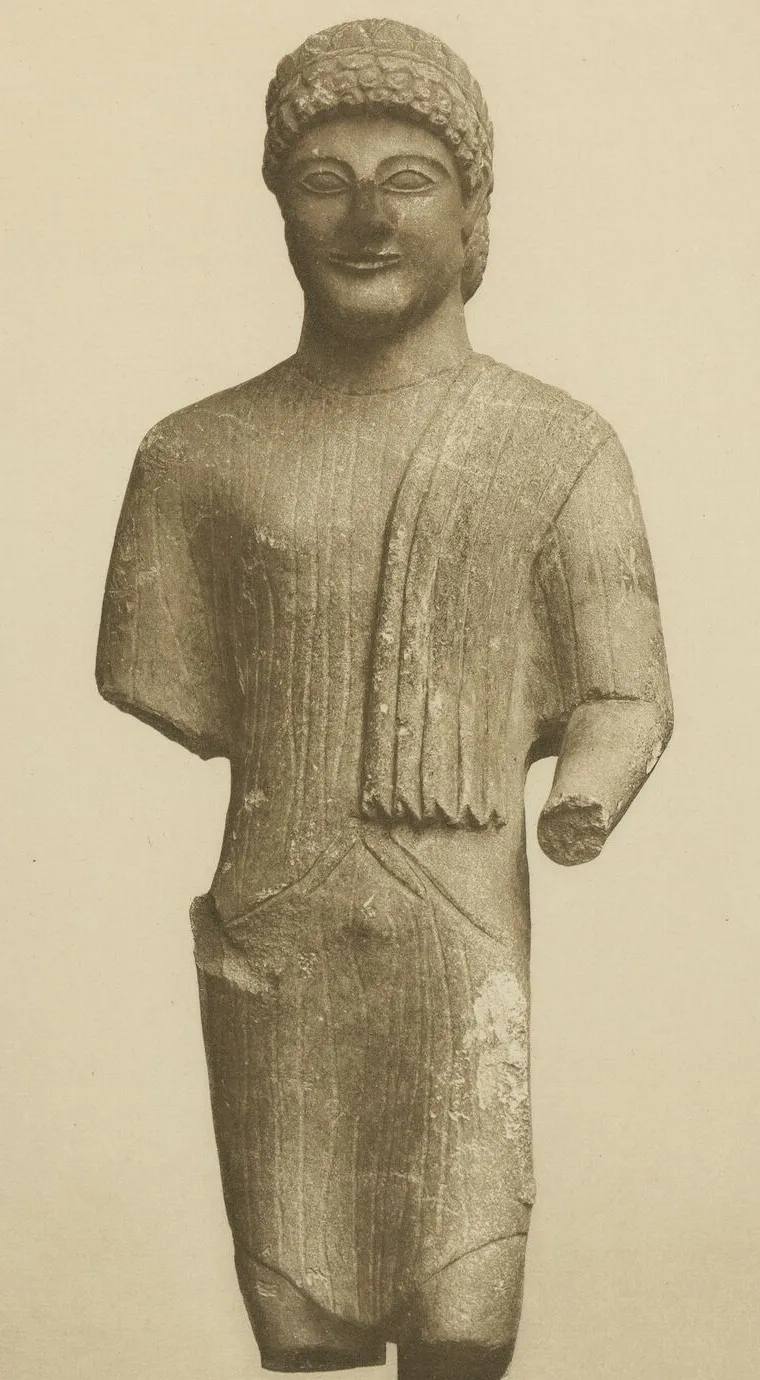
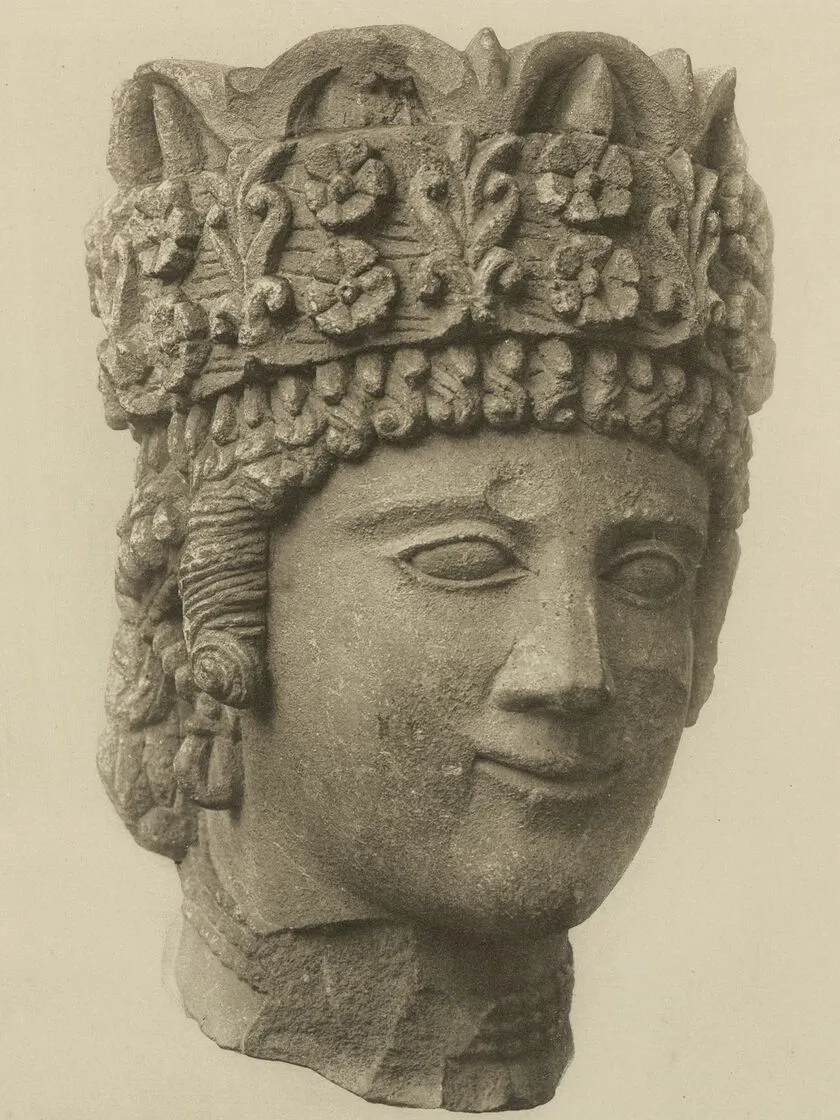
The collection itself was vast and reached across the whole ancient East. Its fame rested on around four hundred Mesopotamian cylinder seals, by one contemporary reckoning second in size only to the British Museum's [11]. The Cypriot material, limestone sculpture, terracotta figurines, bronzes, painted pottery, gold and engraved gems, was a substantial province of this larger empire, large enough to be published on its own. In 1908 de Ridder brought it out as the fifth volume of the Collection de Clercq catalogue, Les antiquités chypriotes, with full photographic plates [6]. The objects were described, measured and lit with care. What the volume could rarely give them was ground to stand on.
Reputed to come from Idalion
Take the limestone head of a woman now in the Musée d'Archéologie nationale at Saint-Germain-en-Laye, her hair gathered in a kékryphale, a fine net, in the manner of the fifth or fourth century BC. The catalogue and the museum both report her as coming from Idalion. The attribution, in the words of the curator who studied her, rests on no secure data [7]. A marble head of a young man in the same collection was likewise said to come from Idalion; it appears in de Ridder's 1908 plates, and its present whereabouts are unknown [4]. "Reputed to come from Idalion" is about as firm as the Cypriot provenances get, and Idalion, the great sanctuary site near modern Dali, was the name everyone reached for when an object needed a home.
The clearest view of how these provenances were made and unmade comes from an object de Clercq never owned. A bronze leg in the Louvre belongs to a colossal statue found in 1836 near the Pediaeos river, north of Tamassos in central Cyprus. When Ludwig Ross reached the site in 1845 he recorded a figure larger than life, naked but for a belt slung across the hips like a cartridge pouch; the head and arms had been cast separately and broke off when the statue was dragged from the ground by an ox-team, and the body was then cut into pieces and sold [4]. The head travelled to England and entered the Duke of Devonshire's collection at Chatsworth, where it became known as the Chatsworth Apollo; the British Museum bought it in 1958. In 2006 a team working with the British Museum, comparing the casting cores of the two bronzes, concluded that the Louvre leg and the Chatsworth head are almost certainly the same statue, made around 460 to 450 BC [4]. One figure, split between two of the great museums, its halves rejoined only by metallurgy after more than a century.
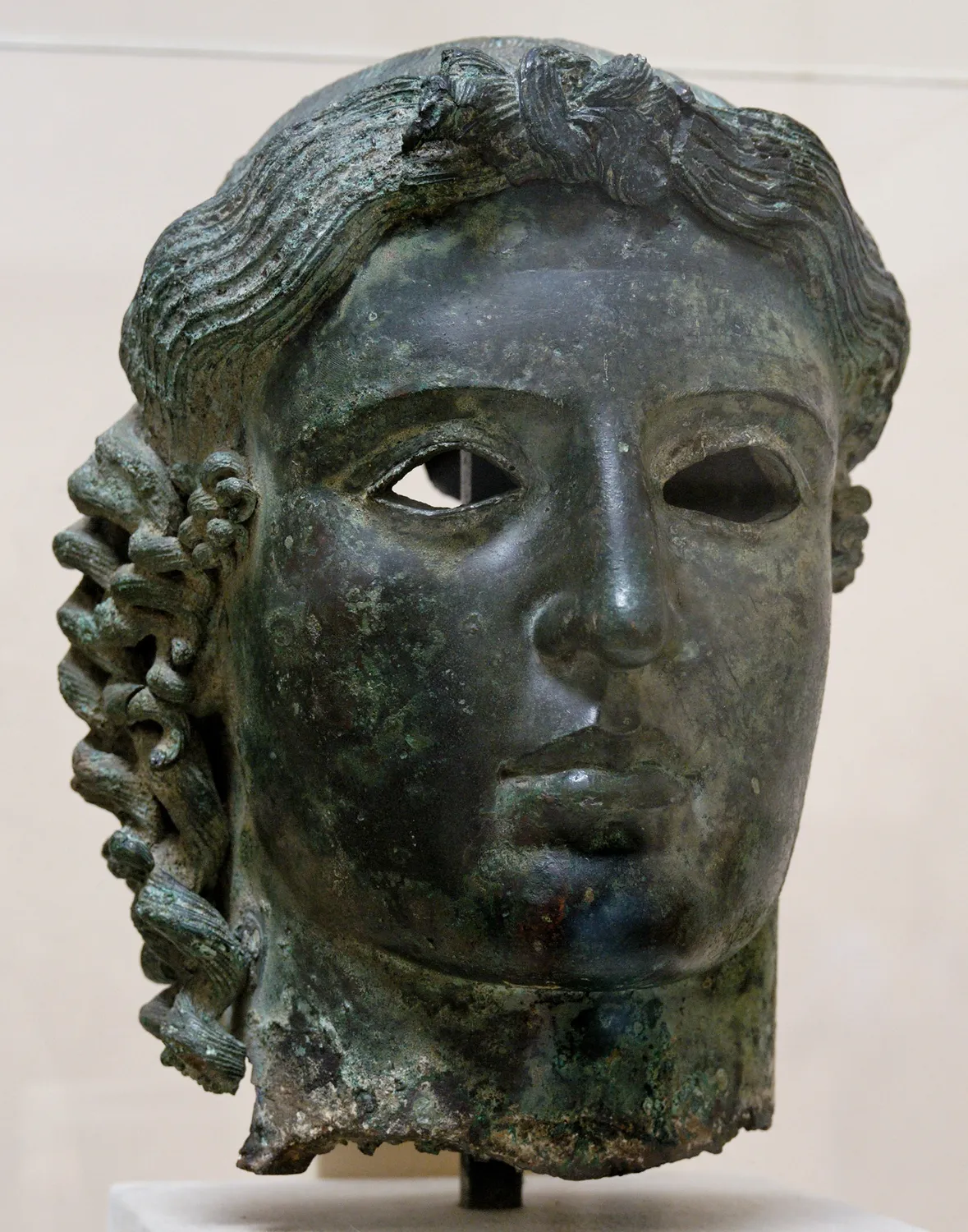
The leg had gone largely unstudied because its provenance contradicted itself. The Louvre's acquisition papers of 1884 logged it as a bequest from Péretié, brought from Sidon on the Syrian coast. De Ridder's catalogue gave something else: a gift from a Monsieur Mattei, from Cyprus. He was right that it was Cypriot. He never explained why he had set the museum's own documents aside, and in his telling Péretié, the dealer, dropped out of the object's history altogether [4]. The Matteis were a Greco-Italian family of Larnaca, consular agents and landowners; one of them, Giacomo, the "consul" of Prussia, was said in the 1830s to hold a third of the arable land on the island [4]. These were the hands through which Cypriot bronzes moved, and de Ridder, our most detailed witness to de Clercq's Cypriot collection, was a man who would rewrite a provenance when it suited him. Read his de Clercq plates in that light.
Given, declined, dispersed
De Clercq died in 1901 with no direct heirs, and the collection passed sideways into the Boisgelin family. In 1967 the comte and comtesse Henri de Boisgelin gave the bulk of it to the French state, as de Clercq had wished, divided by category. The seals, the engraved gems, the cameos and the coins went to the Cabinet des Médailles at the Bibliothèque nationale [9]. The figural antiquities, the Cypriot limestone and terracotta and bronze and pottery among them, went to the Louvre, which was invited to take the most important pieces, more than six hundred of them [9]. Annie Caubet published the Cypriot share the following year [8].
What the state declined went back onto the market. The pieces left unselected in 1967 were dispersed by the Paris dealer Nicolas Koutoulakis, and they have been surfacing ever since. The woman with the kékryphale, reputed to come from Idalion, came up for sale and was bought by the museum at Saint-Germain-en-Laye in November 2011 [7]. A Cypriot limestone head of a youth went through Bonhams in London in October 2013, its provenance reading "Louis de Clercq Collection" and then "Galerie Koutoulakis, Paris" [10]. Other de Clercq Cypriot pieces are now at Leipzig [12]. Objects that had lost their findspot once lost their owner too, and went round the market a second time, carrying a collector's name where a place should have been.
The two hundred and twenty-two published photographs fixed Krak des Chevaliers, the Holy Sepulchre, the pyramids and the Alhambra each to a place and a date. The dozen Cyprus negatives did the same for Famagusta, Nicosia and Kiti, and then dropped out of sight for a hundred and forty-four years. They came back at the 2003 sale; where the negatives are now, and whether all of them have ever been published, the literature still does not say [1].
References
- 1.Bonato, L. (2012). Chypre, Cyprus, Zypern, Cipro, Cypern, Κύπρος… Les voyageurs européens à Chypre au XIXe siècle. Cahiers du Centre d'Études Chypriotes, 42; de Clercq and the 1859 Cyprus photographs at p. 18.
- 2.Cannavó, A. (2012). Chypre dans les études historiques des XIXe et XXe siècles. Découverte de l'antique, construction du passé. Cahiers du Centre d'Études Chypriotes, 42, esp. pp. 5–9.
- 3.Folda, J. (ed.) (1982). Crusader Art in the Twelfth Century. British Archaeological Reports, International Series 152. Oxford: BAR; Folda's bibliography on de Clercq's photographic campaign at pp. 9, 12, citing L. de Clercq, 'Inventaire d'une collection de photographies exécutées dans le cours d'un voyage en Orient (1859–1860),' Archives de l'Orient Latin I (Paris, 1881), 365–371.
- 4.Bouquillon, A., Descamps, S., Hermary, A., & Mille, B. (2006). Une nouvelle étude de l'Apollon Chatsworth. Revue archéologique, 2006/2 (n° 42), 227–261.
- 5.Cassimatis, H. (2001). 'Melchior de Vogüé et alii and Cyprus: Monsieur Péretié,' in V. Tatton-Brown (ed.), Cyprus in the 19th Century AD: Fact, Fancy and Fiction. Papers of the 22nd British Museum Classical Colloquium, December 1998. Oxford: Oxbow Books, pp. 238–243.
- 6.de Ridder, A. (1908). Collection de Clercq. Catalogue méthodique et raisonné des antiquités, V: Les antiquités chypriotes. Paris: Ernest Leroux.
- 7.Boucher, A. (2012). La collection chypriote du musée d'Archéologie nationale (MAN) de Saint-Germain-en-Laye. Cahiers du Centre d'Études Chypriotes, 42, pp. 14–16.
- 8.Caubet, A. (1968). La donation L. de Clercq–H. de Boisgelin: Antiquités chypriotes. La Revue du Louvre, 1968, 32–36.
- 9.Le Rider, G., & Seyrig, H. (1967). Objets de la collection Louis de Clercq donnés en 1967 au Cabinet des Médailles de la Bibliothèque nationale par le comte et la comtesse Henri de Boisgelin. Revue numismatique (6e série), 9, 7–53.
- 10.Bonhams, London. Antiquities, 23 October 2013, lot 203 (Cypriot limestone votive head; provenance 'Louis de Clercq Collection' then 'Galerie Koutoulakis, Paris').
- 11.Frothingham, A. L., Jr. (1886). Review of J. Menant, Recherches sur la glyptique orientale (Parts I–II), The American Journal of Archaeology and of the History of the Fine Arts, 2(2), 187–195 ('four hundred cylinders; the largest in existence except that of the British Museum'); and Review of Collection de Clercq. Catalogue méthodique et raisonné. Antiquités assyriennes (de Clercq and Menant), ibid., 2(4), 455–457 (414 pieces).
- 12.Gatzsche, A. (2023). 'From Cyprus to Leipzig: Provenance Research,' in E. Poyiadji-Richter (ed.), Alexander Malios Collection, Vol. 1: Cypriot Antiquities. Leipzig: AMRICHA, p. 5 (the de Clercq Cypriot pieces SAM A 779, 780, 1149–1152).
- 13.Marangou, A. G. (2000). Life and Deeds: The Consul Luigi Palma di Cesnola 1832–1904. Nicosia: Cultural Centre of the Popular Bank Group, pp. 57–58.