
Selling Cypriot Antiquities in the US: What the Law Allows
The 2002 US-Cyprus agreement controls what enters America. What it means for a piece already here, when stolen-property law applies and how sales are checked.

Alexis Drakopoulos
October 3, 2026·Guides · Collecting · Ceramics·15 min read


Share


Alexis Drakopoulos is a Greek Cypriot Machine Learning Engineer working in Financial Crimes. He is passionate about Archeology and making it accessible to everyone. About Me.
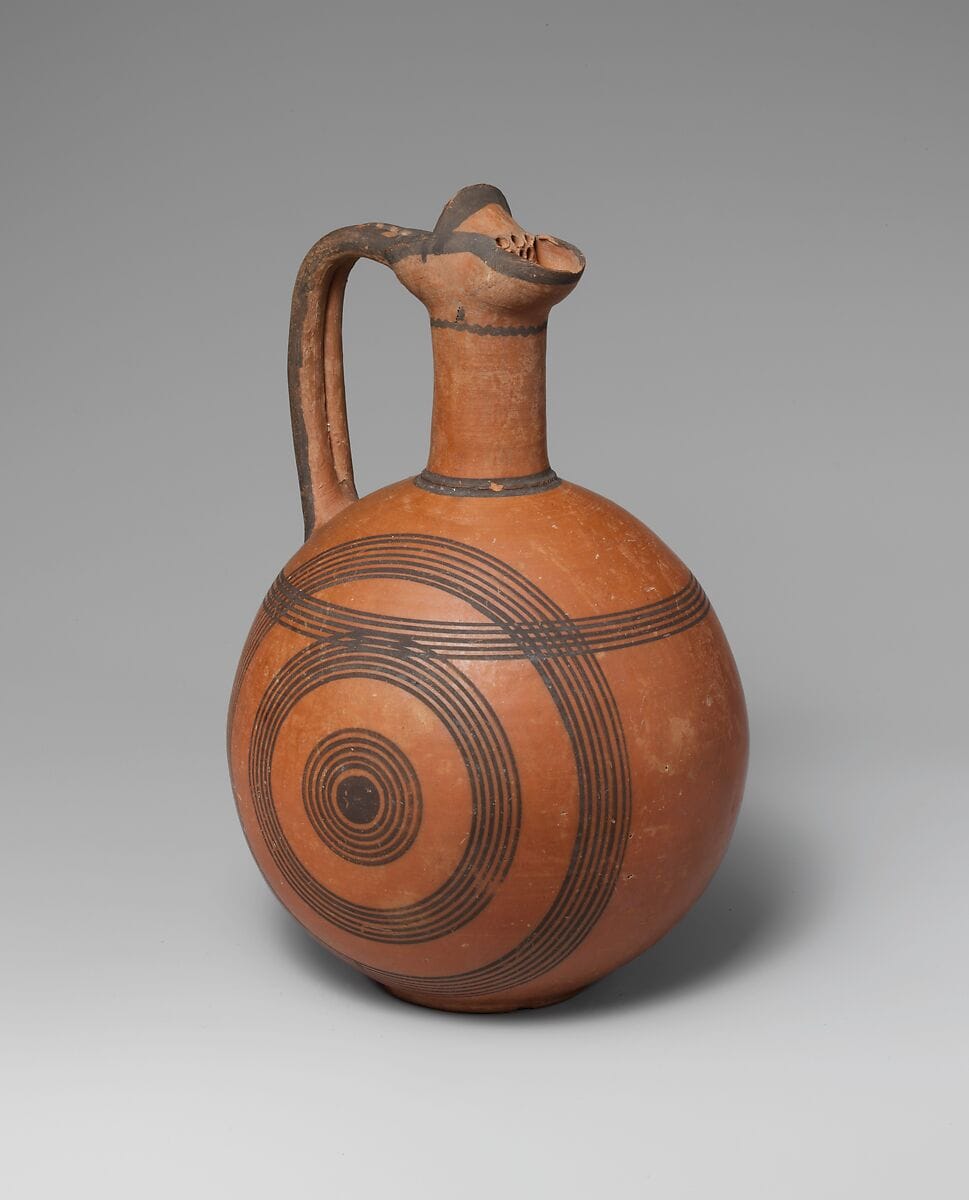
On 23 February 2026, eighteen Cypriot antiquities were handed to the Embassy of the Republic of Cyprus in Washington. Two were Early Bronze Age vessels of about 2500 to 1900 BCE, eleven were Middle Bronze Age, four were Cypro-Archaic, and the eighteenth was a fourth-century BCE limestone head from a male statue. All had been listed in an American online auction. Archaeologists of the Cyprus Department of Antiquities spotted them during what the Department calls routine monitoring of online trafficking, the lots were withdrawn after it consulted the auction house, Sloans & Kenyon, and the people who held them handed them over voluntarily. No charges were reported [18].
That case shows the two halves of US law on Cypriot antiquities working at once. A federal agreement between the United States and Cyprus controls what may enter the country; a separate body of stolen-property law, federal and state, decides whether an object already here can be lawfully held and sold. This guide explains both for an American owner, and then how auction houses, appraisers and museums will treat your piece.
Is it legal to sell Cypriot antiquities in the United States?
Yes. A Cypriot antiquity that is lawfully in the United States can be owned, inherited, given away and sold without any federal licence, permit or registration. The US-Cyprus agreement restricts imports; nothing in it makes possession or a domestic sale unlawful [1; 2].
Two things can still stop a sale. The first is stolen-property law: an object dug up in Cyprus without a licence and smuggled out can count as stolen under federal and New York law, whenever it arrived. The second is title: if an object was stolen, a buyer in good faith does not become its owner, and Cyprus or the Church of Cyprus can sue for it. Neither touches the ordinary inherited piece that left Cyprus under the old export licences, through the Cyprus Museum's own saleroom, or in the nineteenth-century collections, which is how most Cypriot material abroad left the island (the history is told in Licence No. 7070; what owning such a piece means, in our guide for owners).
This page is general information, not legal advice. US law, the list of restricted objects and the agreement itself can change, and an owner facing a claim or a seizure needs a lawyer who practises cultural-property law.
What is the US-Cyprus cultural property agreement?
It is a bilateral agreement under the Convention on Cultural Property Implementation Act of 1983, the US statute that implements the 1970 UNESCO Convention, and it lets US Customs and Border Protection (CBP) stop designated categories of Cypriot archaeological and ethnological material at the border unless the importer can document a lawful export [1; 2]. The two governments first entered into it on 16 July 2002, and each agreement runs for up to five years [2; 3].
Emergency restrictions on Byzantine church material came first, in April 1999 [4]. The 2002 agreement covered archaeology from about the eighth millennium BCE to AD 330, and the renewals widened it: coins of Cypriot types in 2007, post-Byzantine church objects of about 1500 to 1850 in 2012, and in 2022 archaeology down to AD 1770 plus new ethnological classes such as manuscripts and traditional dress, up to 1878, the year British administration began [2; 5; 6].
The current agreement came into force on 14 July 2022. As of October 2026 its restrictions run to 13 July 2027, and the State Department's Cultural Property Advisory Committee is meeting from 27 to 29 October 2026 to review a proposed extension [2; 7]. The agreement and the official Designated List are on the State Department's page of current agreements [8]; the compendium entry on collecting Cypriot antiquities today sets the US rules beside Cypriot, British and EU law.
The Designated List reads like a key to Cypriot pottery. It names Red Polished, White Painted, Base Ring, White Slip, Bichrome and Black-on-Red wares, terracotta figurines, limestone sculpture "small scale to life-size", gold jewellery, glass and coins [2]. Nearly every Cypriot antiquity in an American home is on it. What matters is when each class was added:
| Kind of Cypriot object | Restricted at the US border since |
|---|---|
| Byzantine church objects (icons, frescoes, mosaics, liturgical objects, 4th to 15th century) | April 1999 (emergency action) |
| Archaeology from the Neolithic to the Roman period (to AD 330): pottery of every Bronze and Iron Age ware, terracottas, limestone sculpture, bronzes, glass, gold | Mid-July 2002 |
| Coins of Cypriot types | Mid-July 2007 |
| Post-Byzantine church objects (about 1500 to 1850) | Mid-July 2012 |
| Byzantine, medieval, Venetian and Ottoman archaeology to AD 1770 (for example medieval sgraffito ware); architectural pieces, manuscripts, traditional dress and textiles to 1878 | Mid-July 2022 |
Read the dates as roughly when the rule began for that kind of object, as listed by CBP. For a specific import, the exact date is a question for a lawyer or a customs broker.
Does the agreement affect a piece already in America?
No. An object that was in the United States before its category was restricted is outside the agreement. A Red Polished jug that has sat in an American family since 1965 can be sold, given or inherited as freely as a piece of furniture.
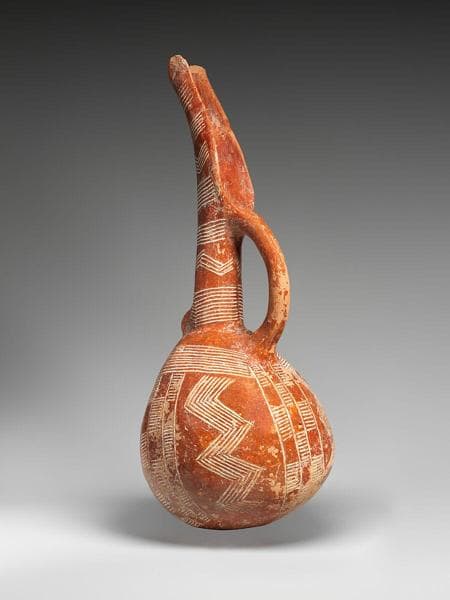
Some American provenances go back to the 1870s, when the Metropolitan Museum bought the collection of Luigi Palma di Cesnola, later its first director. Its sales of Cesnola "duplicates" between 1916 and 1928, the last at the Anderson Galleries in New York, put many Cypriot pots into American families, often still bearing painted Met or Cesnola numbers; our guide to export licences, labels and numbers explains how to read them.
Cyprus has objected to American sales of long-held material, and the objections have not stopped them. When the Toledo Museum of Art sent nearly seventy antiquities, most acquired in the early to mid 1900s, to Christie's New York in October 2016, Cyprus's ambassador asked the museum to postpone; the sale went ahead and brought about $1.2 million [20]. When the Cyprus Museum in Jacksonville, North Carolina, founded by Dr Takey Crist in 1988, closed in 2018, the Cypriot government invoked the UNESCO Convention and the bilateral agreement to try to stop the sale of its collection, and the collection was sold. The agreement governs what crosses the border, and those collections had crossed it decades before.
The statute also exempts some long-held material, such as an object in the United States for twenty consecutive years and bought for value without reason to suspect an illegal import [10]. That defends against customs forfeiture, and does nothing about a claim that the object was stolen.
What paperwork do I need to bring a Cypriot antiquity into the US?
To import a restricted Cypriot object you need either a certificate from the Government of Cyprus that it was lawfully exported, or satisfactory evidence that it left Cyprus on or before the date its category was restricted [9]. A narrower third route covers objects that left Cyprus at least ten years before entry and were acquired by the importer within the year before it. The rule follows the object wherever it is shipped from: a Cypriot jug sent from London, Geneva or Munich is still Cypriot material [1].
The first route is closed for anything on the market, because since the 1996 amendment of its Antiquities Law Cyprus has licensed the export of antiquities only for temporary exhibition or scientific study [19]. In practice an importer relies on the second: a sworn declaration from the importer and a statement from the consignor about when the object left Cyprus, backed by documents [9]. For pottery, that means showing it left the island before mid-July 2002.
A Bichrome jug bought at a European auction in 2026 and shipped to New York needs paper that dates its departure from Cyprus: an old Department of Antiquities export licence, a Cyprus Museum saleroom receipt or lead tag, a dealer's invoice, a dated catalogue or photograph. The same applies to an American family moving a collection home from Cyprus or Britain, so gather the file before the crate is packed; our guide to pieces brought home from Cyprus shows what those documents look like.
Material imported in breach of the rules is subject to seizure and forfeiture [10], and CBP does look. In April 2022 its cultural property team flagged a shipment of antiquities from Cyprus for Homeland Security Investigations in Newark, which, with the Penn Museum and the Cyprus Department of Antiquities, identified an Iron Age jug of about 800 to 600 BCE believed to have been illegally excavated and smuggled out. It was returned at the Cyprus Embassy on 20 April 2023 [16].
Sending a piece out of the US raises the buyer's country's rules instead. The United States has no general export licence for antiquities, but since June 2025 Regulation (EU) 2019/880 has required an import licence for most archaeological objects entering the EU; British rules are in our guide to selling Cypriot antiquities in the UK.
Can a Cypriot antiquity already in the US be seized?
Yes, if it is stolen property, and for antiquities that phrase reaches further than most owners expect. Cypriot law has declared undiscovered antiquities the property of the state since the Ottoman regulation of 24 March 1874, and again in the Antiquities Laws of 1905 and 1935 (see the compendium entry on legal export) [19]. Under United States v. McClain (Fifth Circuit, 1977 and 1979), an object removed from a country after a clear law of that kind is "stolen" under the National Stolen Property Act, even though the state never physically held it [11; 12]. The Second Circuit, which covers New York, followed McClain in United States v. Schultz (2003), upholding the conviction of a New York dealer in Egyptian antiquities [13].
So a pot dug from a tomb without a licence and smuggled out of Cyprus, including anything taken from the occupied north after 1974, can be stolen property in American law whatever its import date. A criminal charge under the Act requires that the defendant knew the object was stolen and that it was worth $5,000 or more [11]. Forfeiture is a civil action against the object itself, and the object can be taken without its holder ever being charged.
New York is where this happens most often. The Manhattan District Attorney's Antiquities Trafficking Unit, set up in 2017, has recovered thousands of antiquities under New York's law on possession of stolen property [15]. On 24 March 2025 it returned twelve objects to Cyprus. Two were described: a plank figurine of the second millennium BCE and a third-millennium BCE flask "distinct for its red and black coloring, which occurred during firing". Both had been smuggled out of Cyprus and had passed to a New York dealer who consulted the convicted London trafficker Robin Symes [15].

Those are the objects a careful buyer questions hardest: Bronze Age tomb material of the kind most associated with the cemeteries looted in the north after 1974. The plank figure shown here, by contrast, has been in New York since the Metropolitan Museum bought the Cesnola Collection in the 1870s.
Not every return is a seizure. In April 2023 more than eighty Cypriot antiquities (clay and glass vessels, limestone sculptures, coins and a fragment of church wall painting, dating from about 2000 BCE to the eighteenth century AD) were handed over at the Cyprus Embassy in Washington. Some had been seized by US authorities; others came from owners who chose to return them after learning where they came from [17]. Our guide to returning or donating Cypriot antiquities explains how a voluntary return works.
What happened in the Kanakaria mosaics case?
A dealer paid over a million dollars for stolen Cypriot mosaics and lost them, because in American law a thief cannot pass good title to anyone. It remains the leading US case on Cypriot cultural property. In July 1988 Peg Goldberg, an art dealer from Indianapolis, paid about $1.08 million at Geneva airport for four fragments of the sixth-century apse mosaic of the Panagia Kanakaria at Lythrankomi in the Karpas peninsula, prised off the church wall in the occupied north after 1974.
The Church of Cyprus and the Republic sued her and her gallery in Indiana. In 1989 the federal district court applied Indiana law rather than the Swiss law that would have favoured the buyer, held that the Church owned the mosaics and had sued in time, and refused Goldberg's good-faith defence, given a rushed deal with unknown sellers, an airport handover and an enormous mark-up. The Seventh Circuit affirmed in 1990 [14]. The fragments went back to Cyprus in 1991 and are now in the Byzantine Museum in Nicosia.
Church material (icons, frescoes, mosaics, liturgical silver) is the highest-risk Cypriot class in the United States. The Republic and the Church both pursue it, and it has been restricted at the border since 1999. An icon or fresco fragment without a history from before 1974 should go to a lawyer before it goes to a saleroom.
How do US auction houses check Cypriot lots?
They ask for the object's history and check it against stolen-art registers, and many will decline a Cypriot lot that has no paper at all. A consignment contract will usually ask you to warrant that you own the object and that it was lawfully imported. Expect requests for any export licence, receipt, old catalogue, label, insurance schedule, letter or dated photograph, and a search of the Art Loss Register, the commercial register most houses use. The major houses follow the 1970 date-line discussed in Navigating the Grey; for Cypriot material, 1974 is the date that carries most weight.
There is also a check you do not control: Cyprus itself reads American sale catalogues. Besides the Sloans & Kenyon case, in late March 2026 a Cypro-Archaic jug of 600 to 480 BCE was withdrawn from an online sale at Kleinfelter's Auction after the Department of Antiquities consulted the house, and returned through the Embassy in Washington; the Department thanked the auction house and "the possessor for the voluntary return" [18]. So far a query from Cyprus has meant withdrawal and a request for return, though nothing guarantees it will always end that way.
A lot with a dated export licence or a Met number from the 1928 sales answers the question before it is asked; a lot described as "property of a gentleman" invites it. What a documented piece sells for is covered in what is my Cypriot antiquity worth?.
How do I get a Cypriot antiquity appraised in the US?
Use an appraiser who works to the Uniform Standards of Professional Appraisal Practice (USPAP) and knows antiquities, and say what the valuation is for [23]. Fair market value, used for estate tax, charitable gifts and dividing an estate, is roughly what a willing buyer would pay a willing seller. Replacement value, used for insurance, is usually higher, and an auction will rarely match it.
An appraiser prices the object and stops there: a valuation of a White Painted juglet says nothing about how it left Cyprus, and a buyer or museum will still want the history. For tax, gains on antiquities are treated as gains on collectibles, and inherited objects normally take their value at the date of death as their starting basis, one reason an estate appraisal matters; ask a tax adviser about your own position. Executors will find more in our guide to antiquities in an estate.
Can I donate a Cypriot antiquity to an American museum for a tax deduction?
You can, but an American art museum will usually accept it only with documentation showing it was outside Cyprus before 17 November 1970, or lawfully exported after that date. That is the rule the Association of Art Museum Directors adopted in 2008; since 2013 its members must publish any exception, with all known provenance, on the AAMD Object Registry [22]. Because Cyprus licensed exports until 1996, a Department of Antiquities export licence from the 1970s or 1980s satisfies the second limb.
For the deduction, a gift valued at more than $5,000 needs a qualified appraisal, dated no earlier than 60 days before the gift, and Section B of IRS Form 8283 signed by the museum; for art valued at $20,000 or more the full appraisal is attached to the return, and if the museum disposes of the object within three years it reports that on Form 8282 [21]. The guide to returning or donating Cypriot antiquities, linked above, covers gifts in full.
What should a US owner do first?
- Do nothing irreversible. Do not clean, repair, split up a group or list anything online yet.
- Confirm that it is Cypriot and ancient. Send us photos, and compare it with our guides to identifying Cypriot pottery and to replicas and fakes.
- Gather and date the paper trail: export licence numbers, lead seals, saleroom tickets, labels of licensed dealers such as Kolokasides, Met or Cesnola numbers, catalogues, invoices, insurance schedules, wills, letters and dated photographs. The two questions are when it left Cyprus and when it reached the United States.
- Compare the US arrival date with the table above. If it arrived before mid-July 2002 (pottery and sculpture) or April 1999 (church objects), the agreement does not apply to it.
- Take legal advice before offering anything from the occupied north, or any church object without a history before 1974.
- Get the right kind of valuation: fair market value for an estate or a gift, replacement value for insurance.
- Choose the route: a sale through a house that asks for provenance and runs checks (our step-by-step guide to selling an inherited Cypriot collection walks through it), a gift to a museum, or a return to Cyprus.
- Disclose everything to the buyer or auction house in writing, gaps included.
- If a house withdraws a lot or Cyprus makes contact, keep the object where it is and speak to a cultural-property lawyer before anything else.
References
- 1.Convention on Cultural Property Implementation Act, Pub. L. 97-446, 96 Stat. 2350 (1983), 19 U.S.C. §§ 2601-2613.
- 2.U.S. Customs and Border Protection. (2022). Extension and Amendment of Import Restrictions on Archaeological and Ethnological Material From Cyprus (CBP Dec. 22-15). Federal Register, 87(136), 42636-42642, 18 July 2022. https://www.federalregister.gov/documents/2022/07/18/2022-15398
- 3.U.S. Customs Service. (2002). Import Restrictions Imposed on Pre-Classical and Classical Archaeological Material Originating in Cyprus (T.D. 02-37). Federal Register, 67, 47447, 19 July 2002.
- 4.U.S. Customs Service. (1999). Import Restrictions Imposed on Byzantine Ecclesiastical and Ritual Ethnological Material from Cyprus. Federal Register, 64, 17529, 12 April 1999.
- 5.U.S. Customs and Border Protection. (2007). Extension of Import Restrictions Imposed on Archaeological Material Originating in Cyprus (CBP Dec. 07-52). Federal Register, 72, 38470, 13 July 2007.
- 6.U.S. Customs and Border Protection. (2012). Extension of Import Restrictions on Archaeological Objects and Ecclesiastical and Ritual Ethnological Materials From Cyprus (CBP Dec. 12-13). Federal Register, 77, 41266, 13 July 2012; correction, 77 FR 45479, 1 August 2012.
- 7.U.S. Department of State. (2026). Meeting of the Cultural Property Advisory Committee; Proposals To Extend Bilateral Cultural Property Agreements With Cyprus, Guatemala, and Peru (Public Notice 13131). Federal Register, 91, 60692, 24 September 2026.
- 8.U.S. Department of State. Current Agreements and Import Restrictions. https://www.state.gov/current-agreements-and-import-restrictions/
- 9.19 C.F.R. § 12.104c, Importations permitted. Legal Information Institute, Cornell Law School.
- 10.19 U.S.C. § 2609 (Seizure and forfeiture) and § 2611 (Exemptions). Legal Information Institute, Cornell Law School.
- 11.National Stolen Property Act, 18 U.S.C. §§ 2314-2315.
- 12.United States v. McClain, 545 F.2d 988 (5th Cir. 1977); United States v. McClain, 593 F.2d 658 (5th Cir. 1979).
- 13.United States v. Schultz, 333 F.3d 393 (2d Cir. 2003).
- 14.Autocephalous Greek-Orthodox Church of Cyprus v. Goldberg & Feldman Fine Arts, Inc., 717 F. Supp. 1374 (S.D. Ind. 1989), aff'd 917 F.2d 278 (7th Cir. 1990).
- 15.New York County District Attorney's Office. (2025, March 24). D.A. Bragg Announces Return Of Antiquities To Spain And Cyprus. https://manhattanda.org/d-a-bragg-announces-return-of-antiquities-to-spain-and-cyprus/
- 16.U.S. Immigration and Customs Enforcement. (2023, April 24). HSI Newark investigation leads to return of ancient pottery to the Republic of Cyprus. https://www.ice.gov/news/releases/hsi-newark-investigation-leads-return-ancient-pottery-during-republic-cyprus
- 17.Department of Antiquities, Cyprus. (2023). Announcement on the repatriation of over 80 antiquities from the United States (26 April 2023). Press and Information Office, Republic of Cyprus; reported Cyprus Mail, 25 April 2023.
- 18.Department of Antiquities, Cyprus. (2026). Repatriation of 18 antiquities from the United States (handover 23 February 2026), reported Greek News USA, 11 March 2026; repatriation of a Cypro-Archaic jug from the United States, reported Cyprus News Agency, 31 March 2026.
- 19.Republic of Cyprus. Antiquities Law, Cap. 31 (1935, as amended, including Law 4(I) of 1996). Earlier: Ottoman Règlement on antiquities of 24 March 1874; Antiquities Law 1905.
- 20.Associated Press. (2016, October). Museum sale brings $1.2M despite protests from Cyprus, Egypt (Toledo Museum of Art, Christie's New York).
- 21.Internal Revenue Service. (2025). Instructions for Form 8283 (Rev. December 2025): Noncash Charitable Contributions. https://www.irs.gov/instructions/i8283
- 22.Association of Art Museum Directors. (2013). Guidelines on the Acquisition of Archaeological Material and Ancient Art (revised 2013). https://aamd.org
- 23.The Appraisal Foundation. Uniform Standards of Professional Appraisal Practice (2024 edition).