
Lecture·Archaeological Research Unit - University of Cyprus·2017
Max Ohnefalsch-Richter and the beginning of scientific archaeological research in Cyprus: new evidence
O Max Ohnefalsch-Richter και η αρχή της επιστημονικής αρχαιολογικής έρευνας στην Κύπρο – νέα στοιχεία
Chapters
About the lecture
Marking the centenary of the death of Max Ohnefalsch-Richter (1850–1917), Stephan G. Schmid of the Humboldt University in Berlin presents new archival research into his biography and his fieldwork in Cyprus. Although announced under a Greek title, the lecture is given in English.
The first half traces Ohnefalsch-Richter's life outside his excavations through his surviving letters to scholars and his petitions to Emperor Wilhelm II. Schmid begins in 1914 with letters to the Berlin ancient historian Eduard Meyer, begging for money to prevent the auction of his furniture and to treat his wife Magda (born Martha Helene), while complaining that academics such as Adolf Furtwängler had used his material without securing him a post. Orphaned at age two in Sohland am Rotstein in Saxony, he was raised by his uncle, the agricultural scientist Julius Kühn, and trained in agriculture, painting and photography in Italy before reaching Cyprus in 1878 with the help of Julius Naue and Julie Salis-Schwabe. Schmid follows his failed enterprises after leaving Cyprus in 1895: a bankrupt 1897 Transvaal exhibition in Berlin, a commercial agency in Constantinople, a Merino sheep consortium, and his return to Cyprus in 1910 to prospect for ancient copper mines and excavate at Rantidi. That visit ended with his conviction under the 1905 Antiquities Law for attempting to smuggle antiquities in a box declared as sweets, and the refusal of further excavation permits. Schmid also traces the fate of Magda, who died in Wiesbaden in 1922 while trying to gather his scattered papers, and of their Cyprus-born son Hermann Max, interned on the Isle of Man during the First World War.
The second half assesses the unpublished manuscript and maps for his planned book on Tamassos and Idalion, given to the Berlin Antiquarium in 1908 after Wilhelm II funded the 1894–1895 Idalion campaign. Georeferencing his maps against satellite imagery and fieldwork around Idalion, Ayios Sozomenos and Alambra, Schmid shows that his plans and object lists can relocate rock-cut tombs, an olive press on the western acropolis, and a sanctuary on the eastern acropolis, and reunite sculptures in Berlin and the Cyprus Museum with their findspots. Combining the Berlin catalogue with over a hundred pages of numbered photographs in Salomon Reinach's archive at Saint-Germain-en-Laye and letters in Aix-en-Provence, Schmid reconstructs a sanctuary assemblage near the Yialias river and argues that Ohnefalsch-Richter's tomb-group recording and criticism of Luigi Palma di Cesnola place him at the transition from tomb digging to scientific archaeology. In the discussion afterwards, audience members debate whether his commercial digging was scientific and discuss Magda's authorship of the 1913 ethnography of Cyprus.
Background
Where to read more on this site before or after watching.
The site
Idalion
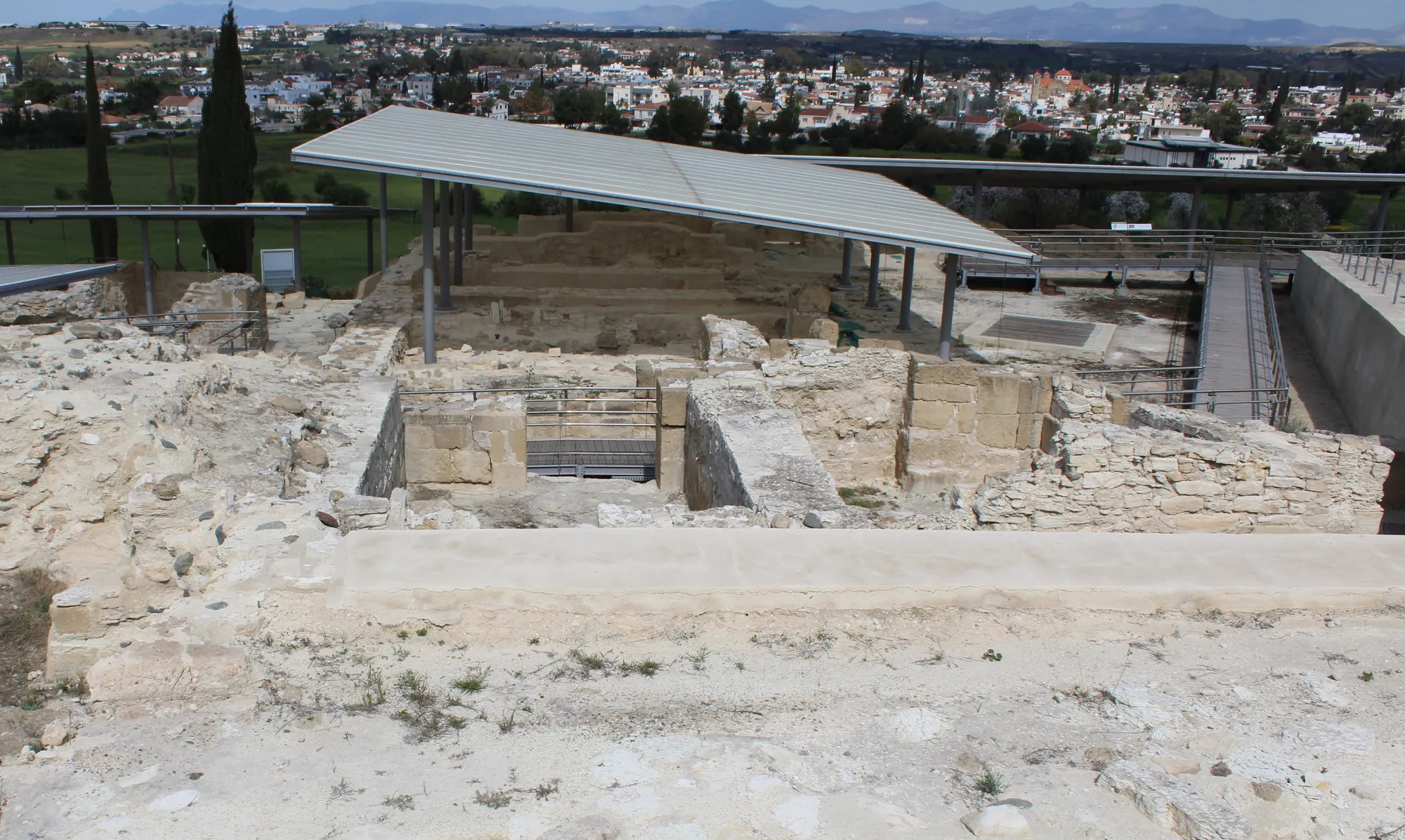
Idalion is an inland city-kingdom of Iron Age Cyprus at the modern village of Dali, built round two limestone acropoleis and a walled lower city on the Yialias river. Its bronze tablet, the longest known text in the Cypriot syllabary, records a siege of the city in the first half of the 5th century BC; soon afterwards Idalion passed to the Phoenician kings of Kition, whose administrative archive was found on the west terrace.
In the compendium
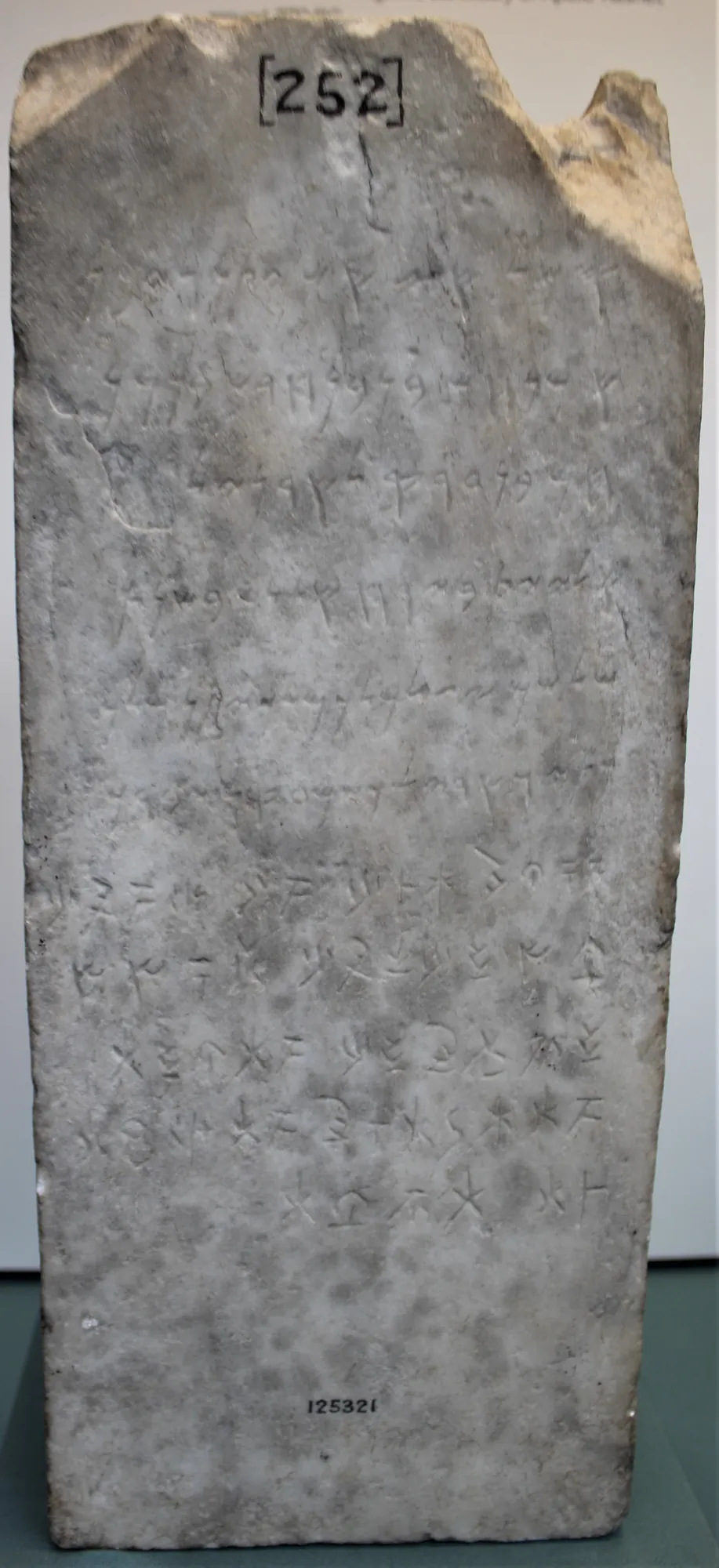
Max Ohnefalsch-Richter: Excavator, Dealer and the Divided Finds of British Cyprus
The German excavator whose finds left British Cyprus lawfully through the division of finds of 1880 to 1895, the patrons he dug for, the sales of 1887 and 1896, and the record he left.
In the compendium
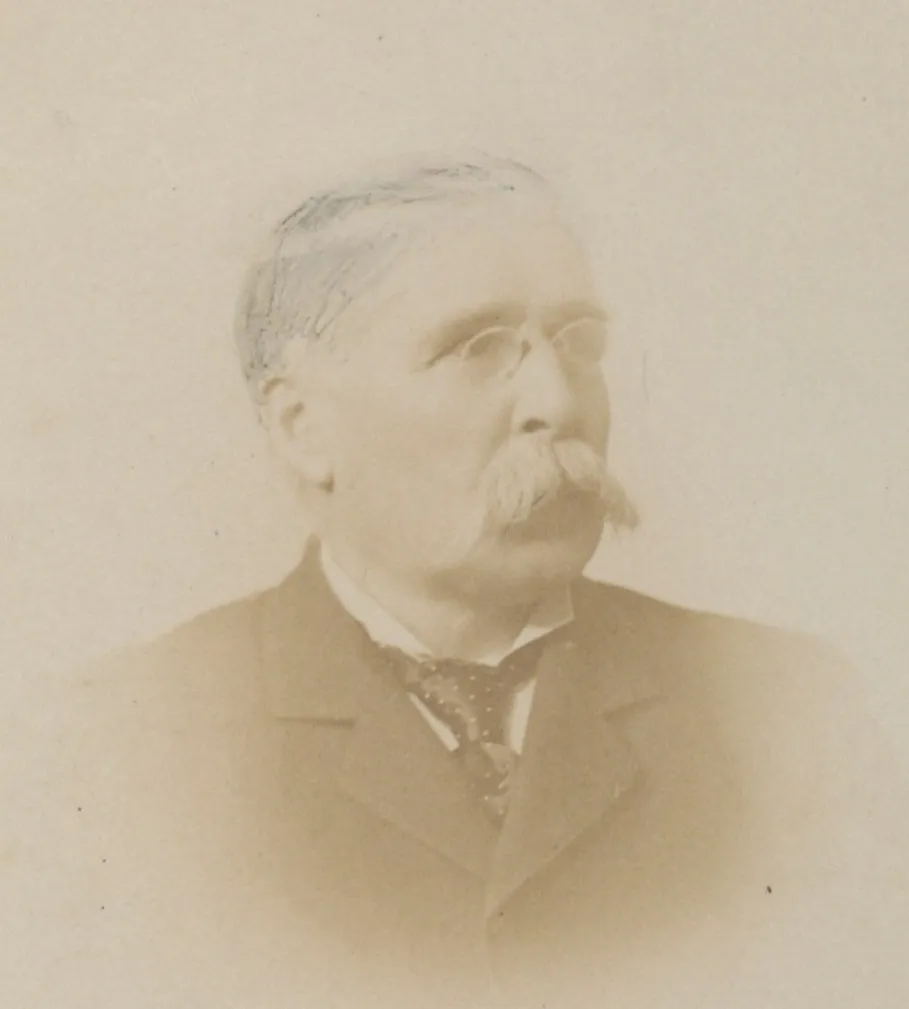
Luigi Palma di Cesnola: The Largest Export of Cypriot Antiquities
The American consul whose roughly 35,000 objects left Cyprus under Ottoman firmans for the Metropolitan Museum, and what his digging and sales mean for the trade.
In the compendium
The Antiquities Laws of 1905 and 1935
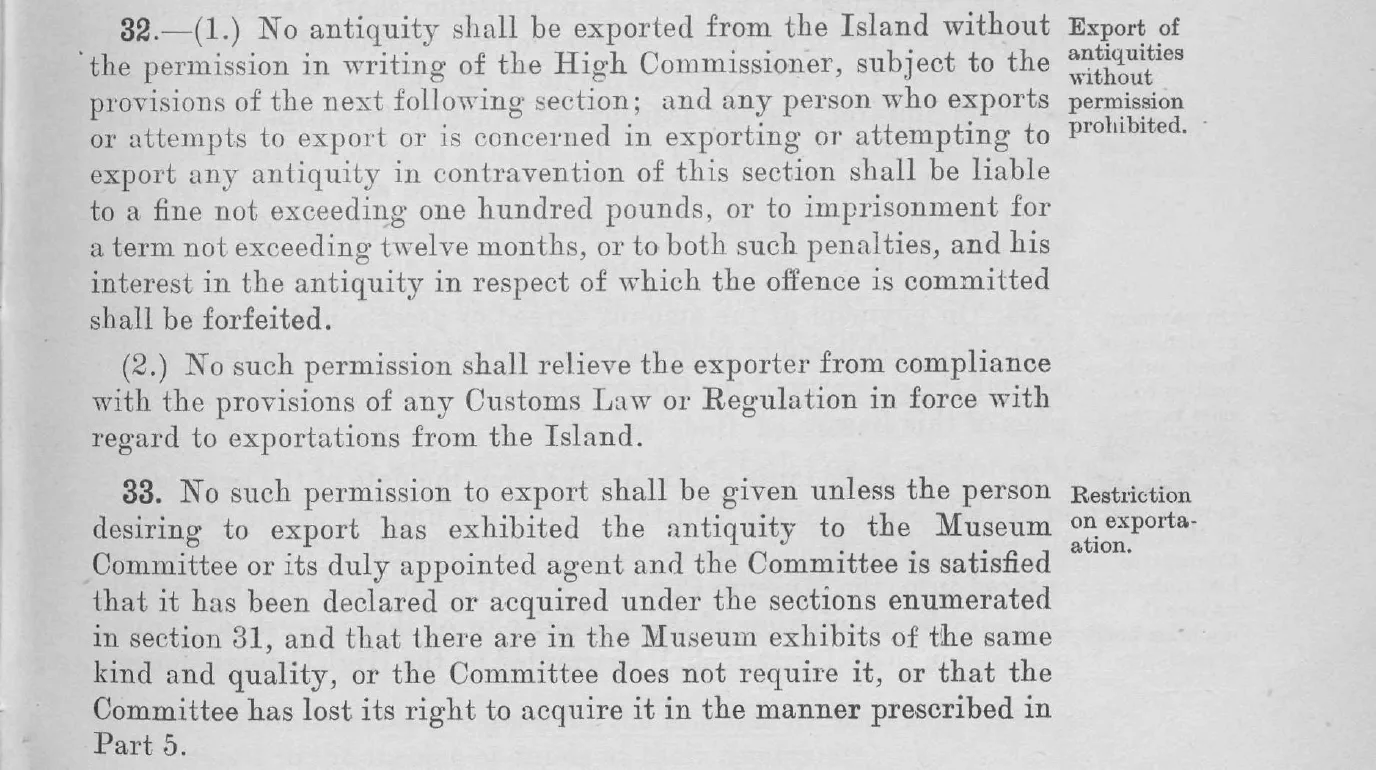
What the Antiquities Laws of 1905 and 1935 said about ownership, finds, excavation, dealing, collections and export, and how they were amended up to 1996.
Map of Cyprus
Places discussed in the talk
- Has a page on this site
- Other places
- Ground above 200, 500, 1,000 m
Places
- 1Idalion
- 2Tamassos
- 3Rantidi (approx.)
- 4Alambra (approx.)
- 5Ayios Sozomenos
- 6Polis