
Conference paper·CAARI Cyprus·2021
The Excavations in Larnaca's Salt Lake (1864–1868): Diplomacy and the Antiquities Trade before Colonial Rule
Chapters
About the video
Pauline Maillard examines the excavations carried out on the eastern shores of the Salt Lake at Larnaca, known as the Saline, between 1864 and 1868, just before British colonial rule. Drawing on her doctoral research, she asks whether a contextual study is still possible for archaeological material dug in the 1860s by teams of foreign diplomats.
The site yielded large numbers of finely made terracotta figurines of the Cypro-Archaic and Cypro-Classical periods, along with at least four Greek inscriptions and one in Phoenician. Maillard traces the sequence of diggers through diplomatic and family archives. In 1864 Charles de Maricourt, brother of the French consul Louis de Maricourt, chanced upon the site; as the research of Lucie Bonato in the family correspondence shows, Sunday afternoon surface collecting soon turned into unrecorded digging. After Louis de Maricourt died in the cholera epidemic of August 1865, his successor Tiburce Colonna-Ceccaldi reported the sanctuary and its assemblage to the Académie des Inscriptions et Belles-Lettres in 1868 and to the Revue Archéologique in 1869, where his brother Georges Colonna-Ceccaldi published the first map of the finds in 1870.
In July 1865 the British vice-consul Dominic Ellis Colnaghi joined the French work. The finds were divided: the de Maricourt share remained largely with the family apart from a few pieces given to the Louvre, while Colnaghi donated his entire share of at least 230 figurines to the British Museum in 1866, accompanied by sketches and letters to Charles Newton. Between 1866 and 1868 the American consul Luigi Palma di Cesnola dug the northeastern hill above the lake, destroying much of what remained, inventing a non-existent temple, and also opening tombs, probably belonging to the Roman necropolis of Kition. His trenches are located only on a map by the French consul Auguste Dozon published fifteen years later in the Corpus Inscriptionum Semiticarum. Max Ohnefalsch-Richter and Robert Hamilton Lang later recorded that Cesnola's workmen had ransacked the place and that looting continued through the 1870s.
Maillard concludes that reconstructing the Saline corpus requires tracking objects through museum registers and auction catalogues, understanding the diplomatic manoeuvring behind the exports, and setting aside all pieces attributed to the Salt Lake by Cesnola so as to preserve the credibility of the assemblage.
From our collection
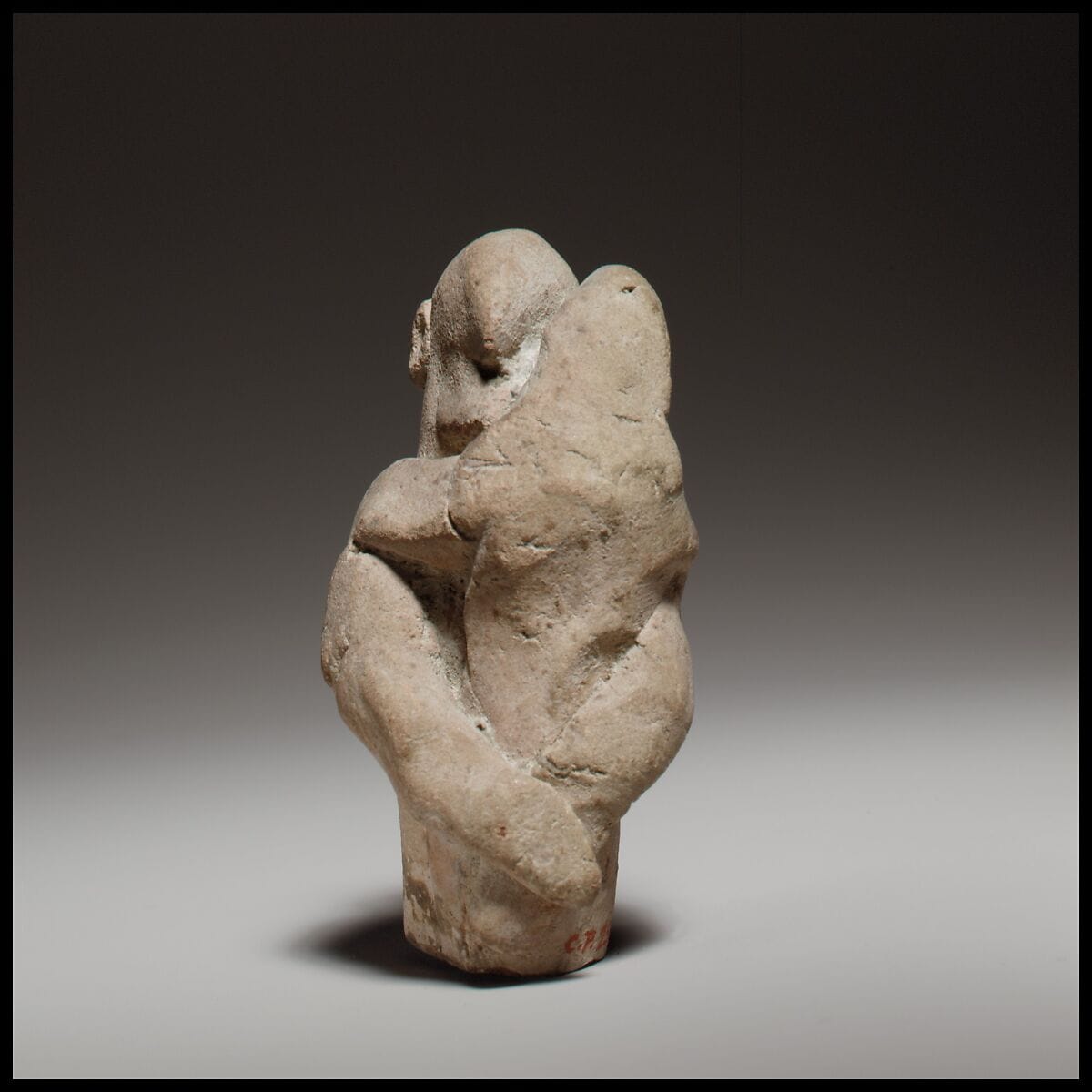
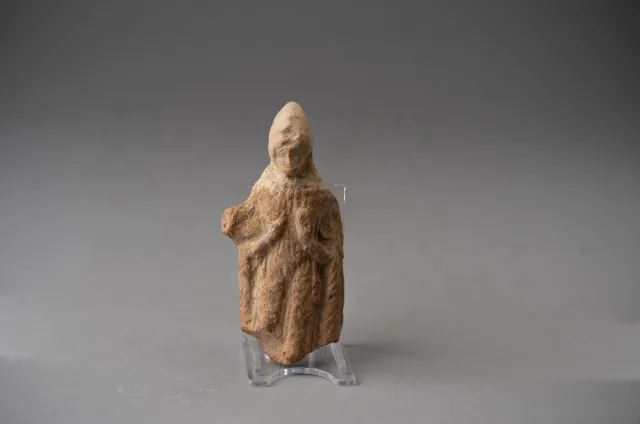
Pieces in the Drakopoulos collection of the kinds and periods this talk covers: Terracotta figurine.
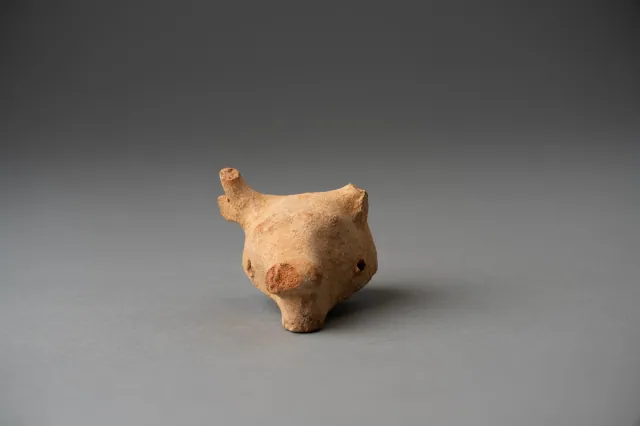
Head of a Terracotta Bull Figurine
Terracotta figurine
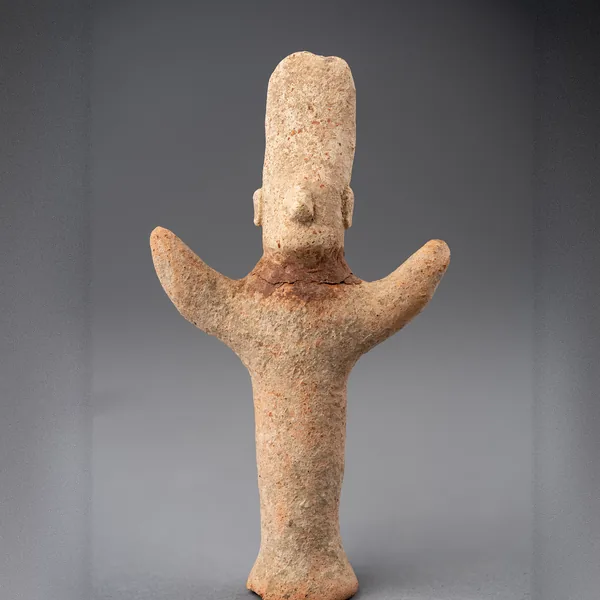
Terracotta Figure with Upraised Arms and Tall Cylindrical Headdress
Terracotta figurine
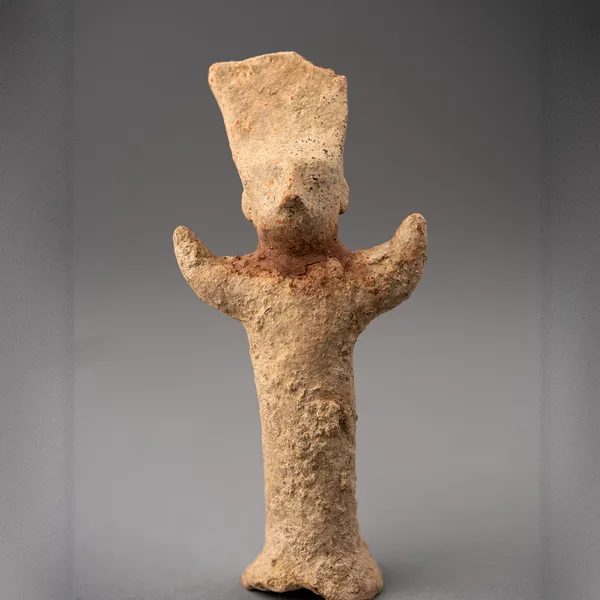
Terracotta Figure with Upraised Arms and Flaring Headdress
Terracotta figurine
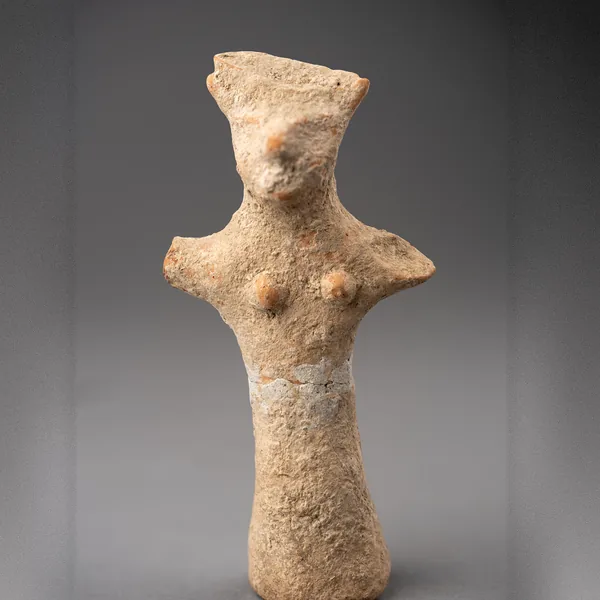
Terracotta Female Figure with Outstretched Arms
Terracotta figurine
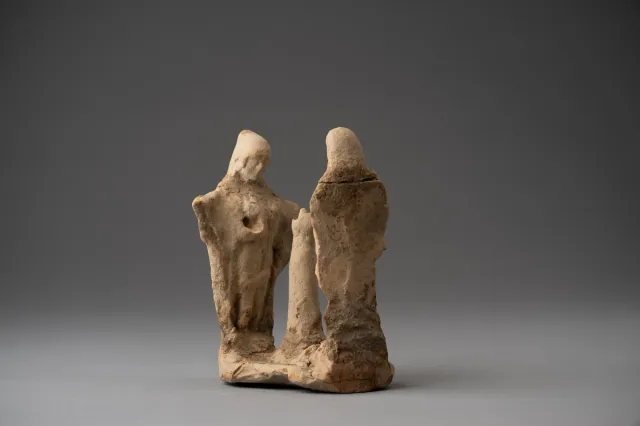
Two Veiled Figures from a Terracotta Ring-Dance Group, with the Stump of the Central Tree
Terracotta figurine
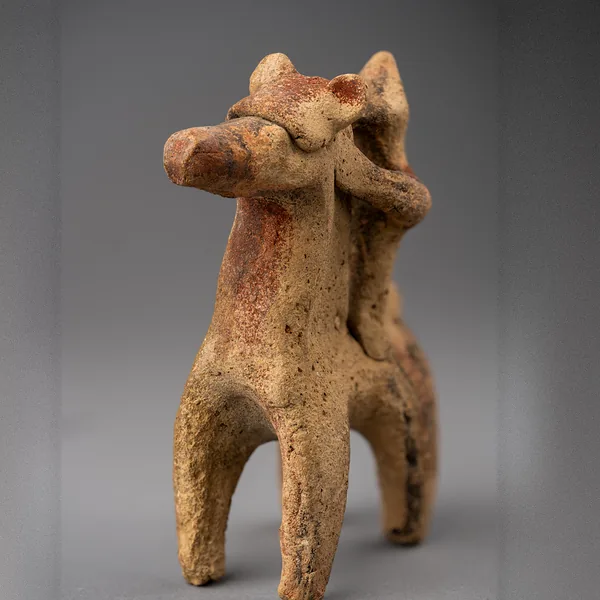
Horse and Rider Figurine with a Painted Star on the Neck
Terracotta figurine
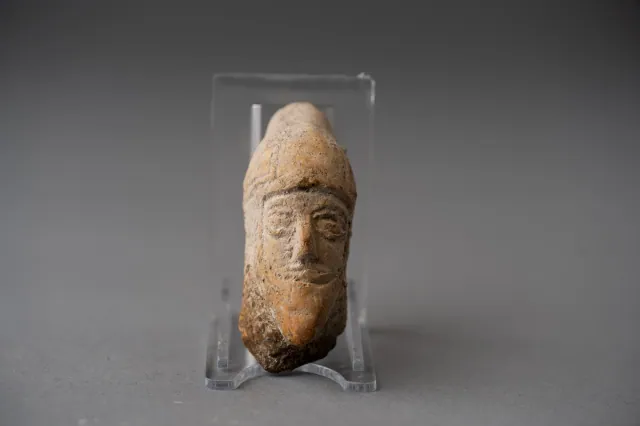
Terracotta Head of a Bearded Votary in a Pointed Cap
Terracotta figurine
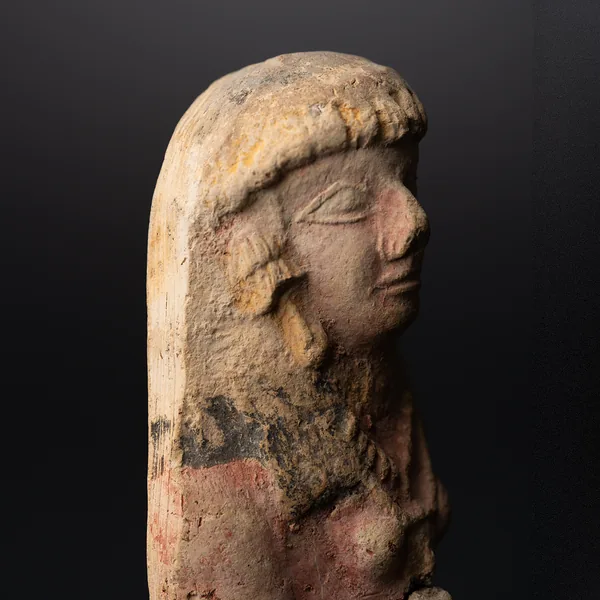
Upper Part of a Mould-Made Female Figure with an Egyptianizing Wig
Terracotta figurine
Found at the places discussed
Objects in our catalogue, in museum collections, recorded as found at these sites.



Background
Where to read more on this site before or after watching.
The site
Kition
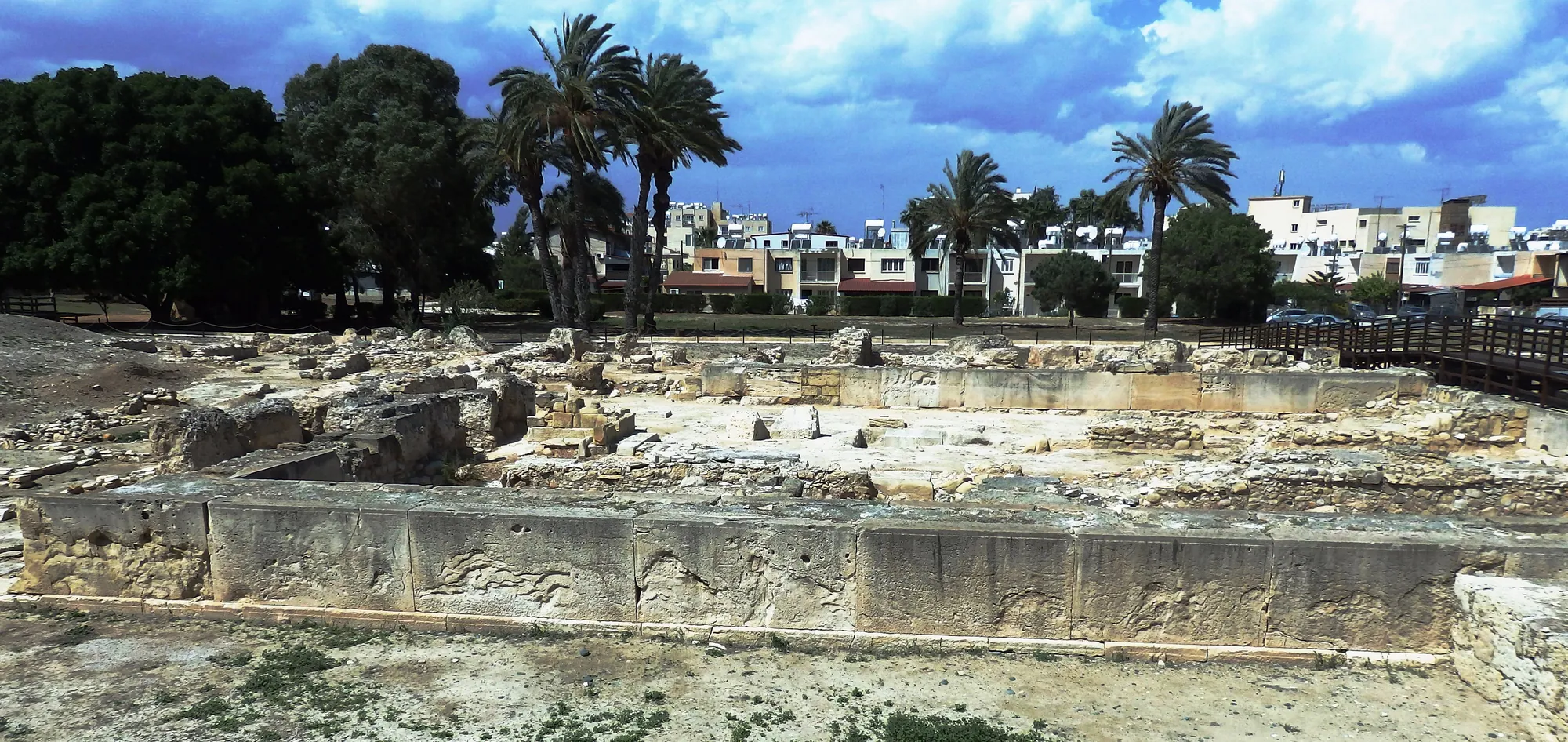
Kition lies under modern Larnaca on the south-east coast. It was founded as a harbour town in the 13th century BC, with temples and copper workshops in its sacred quarter at Kathari. After a long gap the Phoenicians rebuilt the main temple for Astarte, and from the 5th century BC the city was the seat of a Phoenician dynasty with a war harbour of ship sheds at Bamboula. Its last king was put to death by Ptolemy I in 312 BC, but the city lived on into the Roman period and beyond.
In the compendium
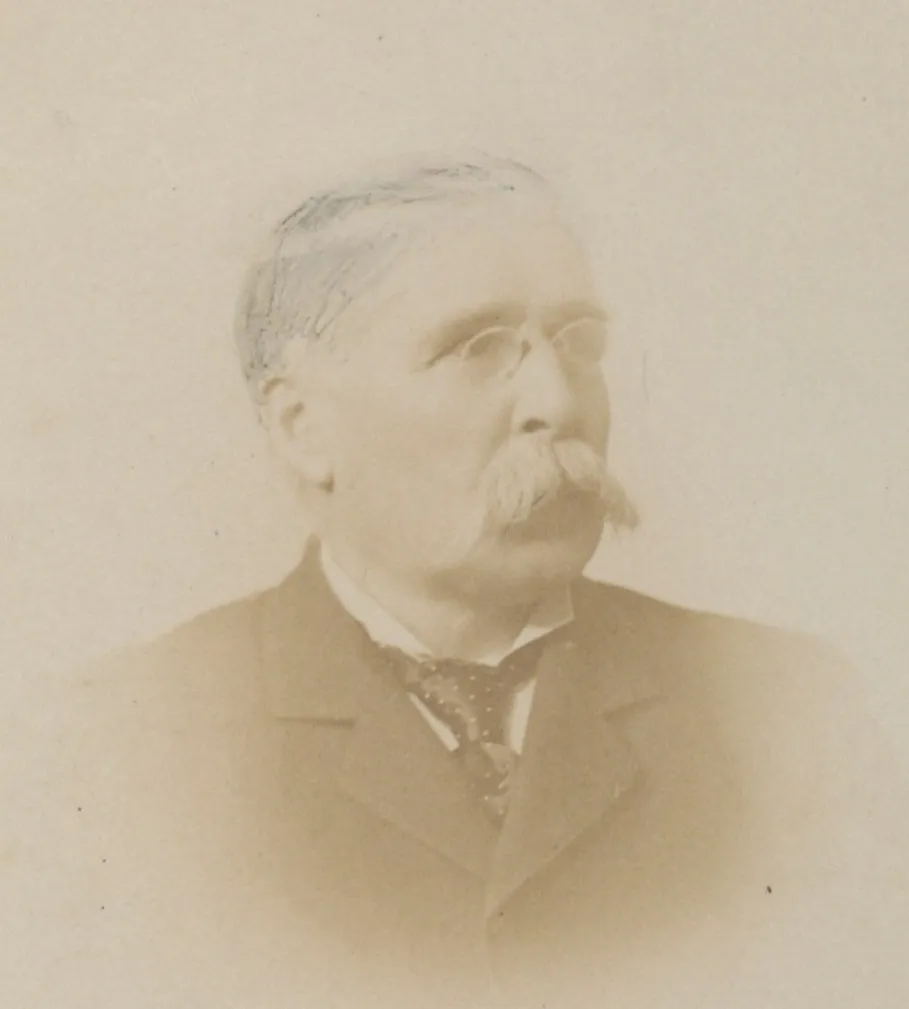
Luigi Palma di Cesnola: The Largest Export of Cypriot Antiquities
The American consul whose roughly 35,000 objects left Cyprus under Ottoman firmans for the Metropolitan Museum, and what his digging and sales mean for the trade.
In the compendium
Max Ohnefalsch-Richter: Excavator, Dealer and the Divided Finds of British Cyprus
The German excavator whose finds left British Cyprus lawfully through the division of finds of 1880 to 1895, the patrons he dug for, the sales of 1887 and 1896, and the record he left.
In the compendium
Terracotta Figurines
Small clay figures made in Cyprus by hand, on the wheel or in moulds, from Chalcolithic birthing figures to the Cypro-Archaic sanctuary votives.