
Book · 1935
The Swedish Cyprus Expedition: Finds and Results of the Excavations in Cyprus 1927-1931, Vol. II (text)
E. Gjerstad, J. Lindros, E. Sjöqvist and A. Westholm
Stockholm: The Swedish Cyprus Expedition
An excavation report on the necropolises of Amathus, Stylli and Marion, the Idalion acropolis and necropolis, and the sanctuary at Ajia Irini, with finds lists and appendices.
Gjerstad and colleagues report the Swedish Cyprus Expedition's excavations at the necropolises of Amathus, Stylli and Marion, at the western acropolis and necropolis of Idalion, and at the sanctuary of Ajia Irini. The volume goes site by site: tomb-by-tomb descriptions for the necropolises, architectural and stratigraphic studies for Idalion and Ajia Irini, numbered finds lists, and discussions of classification, find conditions and chronology. Plans, sections, tomb dimensions and numbered finds carry the evidence, and the authors compare pottery types and stratigraphic relationships to separate successive burials and assign tombs to periods.
Amathus
At Amathus the necropolis is set in its surroundings and in the history of earlier excavation there, including Cesnola's, before the text records tomb architecture, stratigraphy, burial groups, finds and plans (pp. 1–141). Tomb 2 is described with its architecture, burial deposits and iron armour made of rectangular splints. Tomb 23 has four burial strata and a ceramic sequence, and Tomb 26 is a tumulus with a cremation burial. A blue faience seal with the prenomen of Amenophis III and a coin read as Antoninus Pius come from Tomb 18.
Stylli
Seventeen tombs from the autumn 1930 work at Stylli are presented with plans, measurements, stratigraphic observations and finds (pp. 142–180). The summary relates the forms of the tombs to the local geology and terrain. Rupert Gunnis had excavated at Stylli earlier.
Marion
Marion opens with soundings at the settlement and then turns to two necropolises (pp. 181–459). The eastern necropolis comprises Sikarka-Kokkina, Potamos tou Myrmikof and Evrethades, and Kaparka lies in the west. Earlier work there had been done by Munro and Tubbs for the Cyprus Exploration Fund, by M. Markides in the western necropolis, and by Ohnefalsch-Richter. Each tomb is described for its construction, burial deposits and numbered finds, and Tombs 23, 43, 53, 62, 67, 68, 72, 77, 81, 89, 93 and 95 have headings of their own. A closing summary treats the chronology of the tombs and the changes in their forms.
Idalion
Dali is the modern successor to ancient Idalion, whose two acropoleis are Ambelleri in the west and Mouti tou Arvili in the east. The account of the western acropolis (pp. 460–628) moves from topography through architecture, stratification, the numbered finds list, classification of finds and the conditions in which they lay, to relative and absolute chronology. The architecture covers walls, gates, rooms, altars, bothroi and the subterranean passage, and the numbered list of finds gives dimensions and square-and-level contexts. Three necropolis tombs follow.
Gjerstad and colleagues interpret the western acropolis as a fortified stronghold and cult place in Late Cypriote III. They read the finds of the Period 1 cult-room as votive offerings, though they state that the cult object itself was not found. They also place a sanctuary of Resheph-Apollo in the valley between the two acropoleis.
Ajia Irini
At Ajia Irini the discovery of the sanctuary comes first (pp. 642–824). Papa Prokopios is named as its reported discoverer, and a terracotta statue from the site went to the Cyprus Museum. The report then covers architecture, stratification, finds and the successive building phases. Later phases form an open temenos, and the authors describe flood deposits and a period of abandonment before a later shrine. The numbered finds list covers terracotta figures, animal statuettes, chariots, scarabs, stone objects and pottery, often with dimensions and find contexts, and the classification of finds sets out Styles I A, II A and III A for the terracotta sculpture.
Appendices follow (pp. 825–859). Newberry deciphered the scarabs for Appendix I and Pieper those for Appendix II, and further sections give a typology of scarabs, types of black-glazed and red-figured wares, and inscriptions.
Dating
The tomb studies date tombs and successive burial groups with the expedition's Cypriot period scheme and numbered pottery types, arguing from the combinations of types within each context. The labels run through Cypro-Geometric, Cypro-Archaic, Cypro-Classic and Hellenistic. On the western acropolis at Idalion the authors divide habitation into six periods, with Period 3 subdivided into 3 A and 3 B (pp. 504–505). Ajia Irini has seven habitation periods.
Limits of the evidence
Gjerstad and colleagues state that the sequence derived from Idalion applies directly only to local cultural development there and has to be compared with evidence from other Cypriot sites (p. 614). In the Ajia Irini chronology they add that a scarab gives a terminus post quem, not a secure date.
What it records
- Twenty-five tombs were excavated at Amathus on both sides of the road.p. 4
- The Swedish Cyprus Expedition excavated at Amathus in April and May 1930.p. 4
- Amathus Tomb 2 is dated by the authors, for its construction and first use, to the transition between Cypro-Geometric III and Cypro-Archaic I.p. 16
- The three latest burials in Amathus Tomb 6 are assigned by the authors to Cypro-Geometric II.p. 29
- The later burial strata of Amathus Tomb 23 are dated by the authors, from their pottery, to later stages of Cypro-Archaic I.p. 130
- In Amathus Tomb 26 the stone pithos held an alabastron covered by a red-painted gypsum lid.p. 136
- The first use of the Stylli necropolis is dated by the authors to Cypro-Geometric III–Cypro-Archaic IA, with later reuse of tombs.p. 180
- At Marion the expedition excavated 98 tombs in 1929, 50 in the eastern necropolis and 48 at Kaparka in the west.p. 184
- The Marion excavations ran from March to the end of July 1929.p. 184
- Marion's exact position and extent remained uncertain, the authors state, and evidence suggested its Late Archaic and Classical city lay beneath Hellenistic Arsinoë.p. 184
- Marion Tomb 43 is assigned two burial periods by the authors, the later represented by a single torpedo-pithos.p. 301
- Marion Tomb 53 is dated by the authors to about the middle of Cypro-Classic I for its earlier burial period and to the beginning of Cypro-Classic II for its later one.p. 327
- Marion Tomb 77 yielded a square stele inscribed in the Cypriote syllabary, found in roof-collapse debris.p. 408
- No Marion tomb is assigned to Cypro-Geometric III, which the authors note as a gap in the tomb sequence.p. 455
- Idalion's western acropolis was occupied from Late Cypriote III and later held the temenos of Anat-Athena in the Cypro-Geometric and Cypro-Archaic periods.p. 462
- The subterranean passage beneath the Idalion ramparts is about 21 metres long, 0.90–1.00 metres wide and about 1.85 metres high.p. 489
- The Period 1 cult-room deposit at Idalion included five terracotta bulls and three jugs among other finds.p. 593
- Idalion Periods 1–3 are assigned to Late Cypriote III by the authors, who name them Late Cypriote III A, B and C.p. 624
- The boundary between Idalion Periods 6 A and B is placed by the authors at about 500 B.C.p. 626
- The stratigraphic analysis of Ajia Irini identifies seven habitation periods.p. 664
- The Period 1 cult-house at Ajia Irini is reconstructed by the authors as a house-chapel within separate buildings around an open court.p. 670
- The end of Ajia Irini Period 6 is assigned by the authors to 510–500 B.C., by comparison of its pottery with material from Idalion.p. 818
- A single scarab should not by itself date a settlement stratum or a tomb, the authors caution.p. 818
- The Late Cypriote III cult at Ajia Irini is interpreted by the authors as an agrarian cult protecting crops and cattle, and is compared with Idalion.p. 821
Where to read
- Amathus Tomb 2 architecture, burial deposits and iron armourpp. 6–16
- Amathus Tomb 23's four burial strata and ceramic sequencepp. 125–131
- Amathus Tomb 26 tumulus, cremation burial and alabastronpp. 136–138
- Stylli tombs and the relation between geology and tomb formpp. 142–180
- Marion's location, town soundings and extent of excavationpp. 181–189
- Marion Tomb 43 burial periods and weaponspp. 299–302
- Marion tomb chronology and changing tomb formspp. 455–458
- Idalion wall construction, gates and subterranean passagepp. 463–490
- Idalion stratigraphic sections and six habitation periodspp. 493–505
- Idalion pottery classes, forms and decorationpp. 571–574
- Ajia Irini pottery and terracotta sculpture classificationspp. 774–791
- Scarabs, imported vessel types and inscriptions in the appendicespp. 846–859
Objects published here
17- Iron splint armour made from rectangular splints, Amathus, Tomb 2, 57, Pl. CL (p. 13)
- Bichrome IV jug with vertical concentric circles, Amathus, Tomb 7, 43 (p. 34)
- Blue faience seal bearing the prenomen of Amenophis III, Amathus, Tomb 18, No. 17 (p. 106)
- Large alabastron covered by a red-painted gypsum lid, Amathus, Tomb 26, inside stone pithos No. 2, No. 4, Fig. 45 (p. 136)
- Bichrome IV bowl with white flower ornaments on a black ground, Stylli, Tomb 11, No. 6 (p. 165)
- Eight small gold myrtle leaves used as a wreath or diadem, Marion, Tomb 9, Niche 2, No. 12 (p. 208)
- Bronze mirror with Gorgon's head, Floor, Tomb 58, no. 22, Figs. 142–144 (p. 348)
- Gold necklace with vase-shaped pendant, Floor, Tomb 60, no. 1, Figs. 152–154 (p. 361)
- Pithos with painted inscription, Marion, Tomb 81, Chamber B, Tomb 81, Chamber B, no. 2 (p. 418)
- Amethyst scarab, Idalion, Square C 3, C 3. 121 8, 1, Appendix II (p. 532)
- Bronze coin identified as Euagoras II, Idalion, Square G 4, G 4. 114.0, 5 (p. 532)
- Iron armour splints from a deposit, Idalion, deposit, 236, Pl. CLXXII, 1–3; Fig. 244 (p. 538)
- Bronze weight inscribed in the Cypriote syllabary, K 5, 113.3, 733 (p. 552)
- Bichrome IV amphoriskos with metope decoration of concentric lozenges, Deposit, Squares G—H: 6—7, 1532 (p. 570)
- Bichrome IV jug with base-ring and concentric circles on the shoulder, M 9. 94.0, 1974 (p. 747)
- Plain White V rhyton with ram protome, S 7. 101.1. (On the wall), 2654 (p. 770)
- Scarab with cartouche of Men-kheper-re, flanked by feathers of Maat, L 10. 92.1 (At altar), 2030 (p. 749)
People, places and institutions
People
- General Luigi Palma di Cesnolaearlier excavator at Amathus and Idalion
- Ohnefalsch-Richterexcavated at several of the reported sites
- Rupert Gunnisexcavated at Stylli
- Munroexcavated Marion for the Cyprus Exploration Fund
- Tubbsexcavated Marion for the Cyprus Exploration Fund
- M. Markidesexcavated Marion's western necropolis
- Antoninus Piusname read on an Amathus Tomb 18 coin
- Amenophis IIIname on seals found at Amathus and Idalion
- Papa Prokopiosreported discoverer of the Ajia Irini site
- Anat-Athenagoddess of the Idalion western acropolis temenos
- Resheph-Apollodeity of the sanctuary between the Idalion acropoleis
- Percy E. Newberrydeciphered scarabs and wrote Appendix I
- Dr. Pieperdeciphered scarabs and wrote Appendix II
Institutions
- The Swedish Cyprus Expeditionexcavated the sites and published the volume
- Cyprus Museumreceived a terracotta statue from Ajia Irini
Places
- Amathusnecropolis excavated and reported
- Styllinecropolis with 17 tombs excavated in 1930
- Marionsettlement and two necropolises excavated
- Idalionwestern acropolis and necropolis excavated
- Ajia Irinisanctuary excavated and analysed
- Sikarka-Kokkinapart of the eastern Marion necropolis
- Potamos tou Myrmikofpart of the eastern Marion necropolis
- Evrethadespart of the eastern Marion necropolis
- Kaparkawestern Marion necropolis
- ArsinoëHellenistic city over earlier remains
- Polis tis Chrysochoumodern village near Marion
- Soliancient kingdom west of Marion
- Dalimodern successor to ancient Idalion
- Ambelleriwestern acropolis of Idalion
- Mouti tou Arvilieastern acropolis of Idalion
Also named: Nicosia, Limassol, Ampelli tou Englezou, Louvre, Cabinet des Médailles, Sir Ronald Storrs, Aphrodite, Maj Sandman.
Extent Plans I–XXIX; bibliography pp. 860–861
Defines Late Cypriote III A, Late Cypriote III B, Late Cypriote III C, Period 1, Period 3 A and B, Period 6 A and B, Style I A, Style II A, Style III A, dromos
Late Bronze AgeCypro-GeometricCypro-ArchaicCypro-ClassicalHellenisticRomanPotteryBurialArchitectureReligion and CultFigurines
Cited on Ancient Cyprus
10 pages · 13 objects- Bichrome and the Free-Field StyleArticle
- Decoration and MotifsArticle
- How to Date and Identify a Cypriot PotArticle
- What Pots Were ForArticle
- Bichrome Red WareCompendium
- Triangles and LozengesCompendium
- Wavy LinesCompendium
- Zig-ZagsCompendium
- AmathusSite
- IdalionSite
Objects
Bichrome IV Bowl with Red-Painted Pierced Lug HandlesBichrome IV Jug with Vertical Circle SystemsBichrome IV Jug with Wreathed Circle SystemsBichrome Jug with Wide Neck, Shoulder Circles and Red StrokesBichrome V Jug with Painted Eyes and Leaf StrokesBlack-on-Red Deep Bowl with Concentric Circles below the RimGlobular Jug with a Vertical Circle System, Bichrome IV or White Painted IVLarge Bichrome IV Jug with Vertical Circle SystemsLarge White Painted Plate with Knobbed Handles and a Four-Armed Cross on the UndersideMiniature Bichrome Plate with Concentric CirclesTwo Fragments of a White Painted Deep Bowl with Panel DecorationWhite Painted Juglet with Funnel Mouth and Side CirclesWhite Painted Plate with Latticed Triangles and Wavy Lines on the Underside
Excavations it is cited for
4 projects- 1867–1869Idalion, Goshi and Pyla: Robert Hamilton Lang's excavations (sanctuary of Apollo)Directed by Robert Hamilton LangClearance and early digging
- 1874–1876Amathus: Cesnola's tomb clearanceDirected by Luigi Palma di CesnolaClearance and early digging
- 1929Marion: the Swedish Cyprus ExpeditionDirected by Erik SjöqvistExcavation
- 1930Stylli: the Swedish Cyprus Expedition, 1930Directed by Erik SjöqvistExcavation
In the Archive
467 items465 photographs (283 of objects, 182 in the field) and 2 drawings. A selection is shown here.
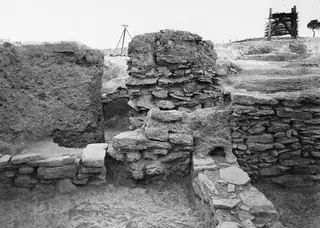 C00860Wall complex at J, K 8 from the north, Idalion
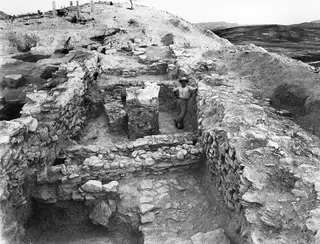 C00865Walls in L 8 at Idalion
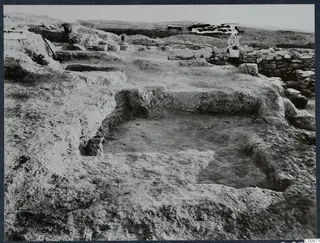 C00871Cult pits in I, J 4-5 at Idalion
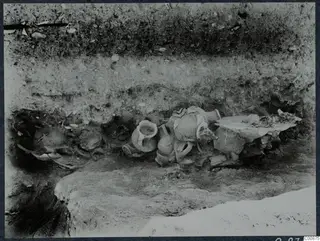 C00875Finds in G 6-7 at Idalion
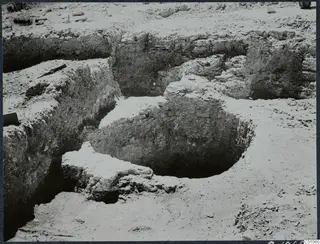 C01068The well at Idalion
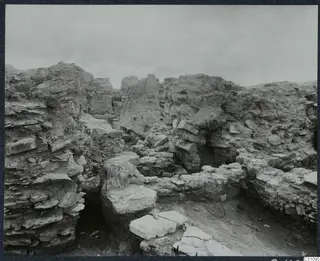 C01090Overall view of grid square K 4 at Idalion, looking south
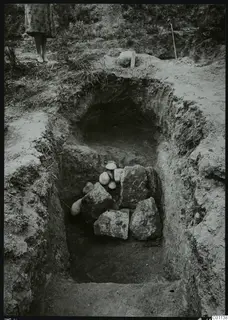 C01138Tomb 4 at Marion, dromos
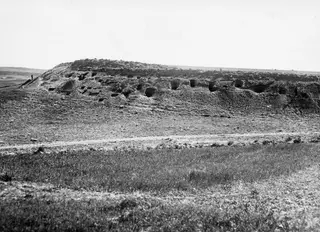 C01148First burial ground at Sikarka-Kokkina, Marion T77-98
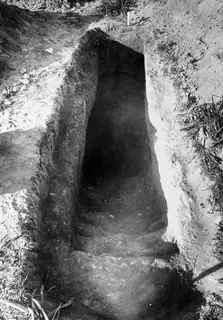 C01187Tomb 22 at Marion, dromos
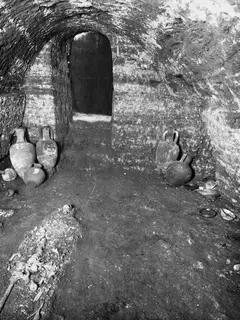 C01195Tomb 22 at Marion, interior
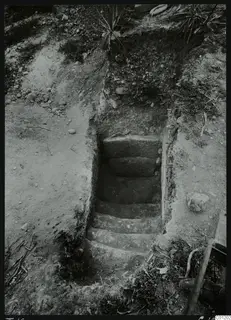 C01202Tomb 16 at Marion, dromos
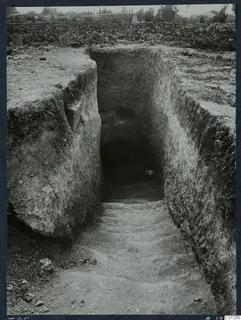 C01206Tomb 25 at Marion, dromos
Photographs: Swedish Cyprus Expedition, Medelhavsmuseet, Stockholm (CC0)
Who did what
22 recordsBuying, selling and giving 1
- 1929 · p. 642
Papa ProkopiosGave toCyprus Museum
Papa Prokopios brought the upper part of a terracotta statue as a present to the Cyprus Museum.
Nicosia
Excavation 16
- p. 1
Luigi Palma di CesnolaExcavated
General Luigi Palma di Cesnola made extensive excavations in the Amathus necropolis.
the necropolis
- p. 1
Cesnola's excavations resulted in the finding of the remarkable sarcophagus.
Amathus
- 1876 · p. 137
Luigi Palma di CesnolaExcavated
General Luigi P. di Cesnola excavated a tomb at Amathus.
- 1930 · p. 142
Gustaf VI Adolf of SwedenRecorded
II. R. II. the Crown Prince of Sweden was present and actively assisted during the excavation work at Stylli.
- p. 183
Alfred WestholmExcavated
A. Westholm participated in soundings in the western and eastern settlements at Marion.
- p. 183
Einar Nilson GjerstadExcavated
E. Gjerstad participated in soundings in the western and eastern settlements at Marion.
- p. 183
Erik SjöqvistExcavated
E. Sjöqvist participated in soundings in the western and eastern settlements at Marion.
- p. 183
John LindrosExcavated
J. Lindros participated in soundings in the western and eastern settlements at Marion.
- 1889–1891 · p. 184
H. Arnold TubbsDug forCyprus Exploration Fund
H. A. Tubbs carried out the Salamis expedition funded by the Cyprus Exploration Fund.
archaeological expedition and excavations at Salamis
- 1889–1891 · p. 184
John Arthur Ruskin MunroDug forCyprus Exploration Fund
J. A. R. Munro carried out the Salamis expedition funded by the Cyprus Exploration Fund.
archaeological expedition and excavations at Salamis
- p. 184
Menelaos MarkidesExcavated
M. Markides excavated a number of tombs in the western necropolis.
- p. 184
Rupert Forbes GunnisExcavated
Rupert Gunnis excavated a few tombs in the western necropolis.
- 1889–1890 · p. 260, 266
John Arthur Ruskin MunroExcavated withH. Arnold Tubbs
J. A. R. Munro and H. A. Tubbs carried out the Salamis archaeological expedition together.
archaeological expedition and excavations at Salamis
- p. 462
Robert Hamilton LangExcavated
Lang excavated the sanctuary of Resheph-Apollo.
valley between the acropoleis at Idalion
- 1929 · p. 642
Papa ProkopiosFound
Papa Prokopios discovered the upper part of a terracotta statue and an intact temple-site with numerous terracotta sculptures in his own field.
the upper part of a terracotta statue; intact temple-site with numerous terracotta sculptureshis own field in the village
Show 1 moreShow fewer
- 1929 · p. 824
Papa ProkopiosFound
Papa Prokopios discovered terracotta sculptures beneath the field where he grew corn at Ajia Irini.
Recording and study 4
- p. 2
John LindrosDrew
John Lindros drew the two tombs opened by Cesnola that remained accessible in 1930.
the tombs opened by CesnolaAmathus
- p. 811
Einar Nilson GjerstadStudied
E. Gjerstad assigned sculptures of Style VII to Period 6 using typological criteria.
Ajia Irini
- p. 818, 845
Max PieperStudied
Max Pieper discussed and interpreted scarabs found at Ajia Irini.
scarabs from Ajia Irini
- p. 850
Maj SandmanStudied
Maj Sandman classified and discussed the scarabs and scaraboids from the expedition’s material.
Ajia Irini
Posts and family 1
- 1912–1931 · p. 184
Mentioned in
170 mentionsTomb records · 143
- Amathus-Northern Necropolis, SCE Tomb 4
Catalogue of the tomb · 1935 · pp. 17–22
- Amathus-Western Necropolis, SCE Tomb 1
Catalogue of the tomb · 1935 · pp. +–6
- Amathus-Western Necropolis, SCE Tomb 10
Catalogue of the tomb · 1935 · pp. 6–69
- Amathus-Western Necropolis, SCE Tomb 11
Catalogue of the tomb · 1935 · pp. 68–77
- Amathus-Western Necropolis, SCE Tomb 12
Catalogue of the tomb · 1935 · pp. 77–79
- Amathus-Western Necropolis, SCE Tomb 13
Catalogue of the tomb · 1935 · pp. 79–84
- On Ancient Cyprus · 10listed under Cited on Ancient Cyprus
- Excavations · 4listed under Excavations it is cited for
- Archivelisted under In the Archive
- Objects · 13listed under Cited on Ancient Cyprus
Corrections and additions
Know this document?
Help us cite it fully and point readers to a copy.
We would like to hear about
- The full citation, or a correction to ours
- Where a copy can be read or downloaded
- Missing parts, volumes or plates
- Related documents
Tell us if you would like to be thanked by name on the page.