
Excavator · Collector · Consul / diplomat · Donor
Robert Hamilton Lang
1836–1913 · United Kingdom
Ottoman Bank manager and British consul at Larnaca who excavated the shrine of Apollo and Reshef at Idalion and sold its sculpture to the British Museum in 1872-73.
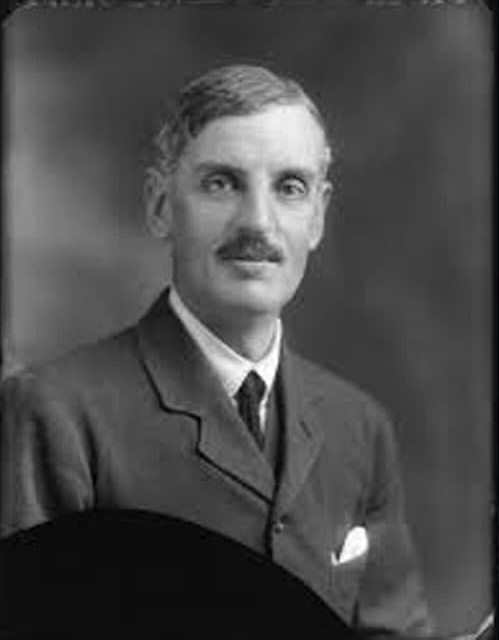
Key factsBorn 1836, Glassford, Lanarkshire; died 1913, Hampstead, London
- Born
- 1836, Glassford, Lanarkshire
- Died
- 1913, Hampstead, London
- Nationality
- United Kingdom
- Roles
- Excavator, Collector, Consul / diplomat, Donor, Scholar, Numismatist
- Institutions
- Colonial and Indian Exhibition, London, 1886organised the Cyprus Court; lent antiquities, 1886–1886
- Society of Biblical Archaeologyproposed for membership 7 November 1871, from 1871
- Imperial Ottoman Bank, Larnacaagent, later manager, 1863–1872
- Places
- Idalion (Dali), sanctuary of Reshef-Apollo, Pyla, Alambra, Larnaca, Glassford, Lanarkshire, Dedham, Essex
- Also known as
- R. H. Lang; R. Hamilton Lang; Hamilton Lang; Sir Robert Hamilton Lang, KCMG
- Elsewhere
Biography
5 chapters · 2,900 words · about 12 minutes
Robert Hamilton Lang managed the Imperial Ottoman Bank's agency in Cyprus from 1863 to 1872 and was British consul for the island in 1871-72; at a shrine of Apollo and Reshef at Idalion he found, on 30 July 1869, a bilingual inscription in Phoenician and Cypriot Syllabic21,135. With R. Stuart Poole of the British Museum he published what Thomas Kiely says "can justifiably be described as the first Cypriot archaeological site report"21. He also wrote papers on Cypriot coinage and one on the Cypriot Syllabic script, and in 1874 proposed a classification of ancient Cypriot pottery based on his finds around Dali21.
Lang was born in Scotland in 1836, the son of the Rev. Gavin Lang, minister of Glassford in Lanarkshire, and Anna Roberton Marshall135. He went to Hamilton Academy but left school at 14 to work as a clerk in Glasgow, and in 1856 he answered an advertisement for a position in the Beirut branch of a company run by William Riddell21. He went to live in Cyprus in 1861, by his own description "a youth of twenty-five years", who had mastered French and spoke good colloquial Arabic5.
Soon after he arrived he was asked to act as British Vice-Consul until the appointed holder of the post, Horace White, arrived21. On 11 September 1861 he wrote to the British Museum about a Greek inscription in honour of the Emperor Tiberius that he had been shown at Lapithos and had partly copied21. Kiely writes that he established the first branch of the bank in Cyprus and ran a farm of 1000 acres, and that his unmarried sister Anna kept house for him21. He formally took over the consular duties of Thomas Sandwith on 15 April 1868, and a Foreign Office notice of 9 September 1871 appointed him Her Majesty's Consul for the Island of Cyprus, to reside at Larnaca17,21. The post was unpaid, and he held it until he left the island in 1872, when Riddell, his former employer, succeeded him21.
Contents 5 chapters · 2,900 words · about 12 minutes
Chapter I1 minute
The tombs of Dali
By his own account Lang came to Cyprus with "absolutely no antiquarian knowledge" and was inclined to think the study of old stones and coins a waste of time5. He was "thrown, however, much into intercourse" with Demetrius Pierides, "a very learned local antiquarian", and by degrees began to take an interest in his pastime; in 1878 he called Pierides his "coadjutor" and his "instructor" in all that concerned antiquities3,5. In 1865 he went with the Vice-Consul Dominic Ellis Colnaghi to an ancient site near Pyla, where, Colnaghi told his family, "we have stumbled over a new city, with a temple", and Colnaghi wrote to Charles Newton that "the merit is not mine but Mr Lang's"21.
In Lang's book of 1878 the tomb digging began at Laksha Nicoli, a hill north of Dali with a well on its summit, where some peasants of Dali were passing in 1868 after a torrential rain; the villagers, who had lost most of their crops to locusts, went in great numbers to the "pottery-diggings"3,21. Lang at once sent a man to superintend the digging and to obtain the finds at first hand, and nearly all the new finds came to Lang or to Mr. Ceccaldi3,5. "Our houses became like earthenware shops," he wrote, with the pieces found counted by tens of thousands and the tombs opened by thousands3.
The diggers were led chiefly by two men: Hasen, a Turk of Dali who became attached to the American consulate, and old Hadgi Georghi, finder of the bronze "Tablet of Dali", who was "chiefly my man" and "had wonderful luck"3,5. Lang paid his own gang two piastres a day each, about fourpence, promised gratuities according to the importance of their finds, and put Hadgi Georghi in charge5. Kiely concludes that Lang "was clearly operating in the Dhali area, and with commercial intent"21. In a letter to Newton in the summer of 1868 he said he had given two Phoenician heads "with some extremely interesting objects" to Péretié21.
Chapter II2 minutes
The temple at Dali
The year in which the temple at Dali was found is disputed, 1868 or 1869: the earlier date comes from Lang's own report, the later from Kiely21. In the narrative he wrote with Poole, Lang dated to the spring of 1868 the moment when his Dali men "came upon (as it were) a mine of statues", several of colossal size, which convinced him that the place was the site of an ancient temple138. His reminiscences of 1905 also give the spring of 1868 for the day Hadgi Georghi brought news that workmen had found a colossal statue, its long beard intact, in a field of his son Sotiri near Dali, but his book of 1878 puts the urgent summons to Dali "one day in 1869"3,5. Kiely writes that the sources "make it abundantly clear" that the site was discovered in the spring of 1869, and that the main excavation ended in the summer or early autumn of that year after a break for the harvest21.
Lang recalled that he took on more workmen and dug for "fully two months" under a broiling sun, the happiest, "albeit hottest", months of his life, and that "not less than a thousand pieces" of stone statues and statuettes came out5. He resumed in the spring of 1869, by this account, at full wages, with the ostensible aim of clearing the ground5. The second season yielded few statues but several inscriptions, five of them in Phoenician, and two hoards of very ancient coins, found under the pavements of two rooms on the east side of the temple that he supposed were priests' apartments5. He found the bilingual on 30 July 1869 and announced it at once to Newton5. He told Newton of the two coin hoards as well, asking him for the utmost secrecy21.
Newton urged him in 1869 to go on excavating and keep the collection together "instead of parting with it piece-meal", promising to try to provide for it in his estimates, and wrote that it would be "far more valuable if kept together with clear notes of the provenance of the several objects"21. Kiely counts the sanctuary of Apollo-Reshef as the first shrine in Cyprus "to be explored and recorded under controlled circumstances and published reliably"21. Lang's report speaks of 1000 pieces; the inventory Poole made in 1869 listed 372 items21.
At the British Museum's request, Lang wrote, he let no one copy the bilingual; Paul Schröder, who came from Constantinople hoping to do so, could inspect the collection and list its inscriptions but not copy them5,21. Count de Vogüé, then French Ambassador to the Sublime Porte, wished to buy the inscription, but Lang, by his own account, refused him "even a glance at it"5. The only squeeze of the bilingual that he gave went to Dr Birch of the British Museum, who entrusted its study to George Smith5. Lang read a paper on the script to the Society of Biblical Archaeology on 7 November 1871, and Smith followed him at the same meeting5,21. The narrative of the temple, with Poole's observations, was read to the Royal Society of Literature on 15 November 1871, the date printed at its head, though Lang later remembered 7 November5,138.
Chapter III4 minutes
Pyla, the gold staters and the firman
Shortly after Dali, Lang wrote, his men found another temple at Pyla, carefully uncovered "but with much inferior results"3. The year is disputed, 1868 or 1870: the Vienna museum's catalogue dates his find of a votive statue there to 1868, while Kiely places the work in the spring of 1870, citing Schröder's diary for 18 March 1870, which says Lang had found many statues at Pyla "a few weeks ago"9,21.
A larger-than-life votive statue from Pyla went to Austria, and the accounts of how it left Cyprus differ3,5,9. In 1905 Lang recalled that in June 1871 the Austrian frigate Habsburg, carrying the flag of Admiral Millosich, anchored off Larnaca for a few days; the admiral asked to buy the statue, and Lang "would have given it to him willingly", but the admiral insisted on paying5. His book of 1878 speaks of an Austrian captain who offered to remove the statue if Lang would sell it, for "a nominal price of a few pounds"3. The admiral reported to Vienna on 24 July 1871 that the figure had been meant for England, but that after "difficulties" with the owner, "a Mr. Lang", he could buy it for 120 florins, and that Lang had asked him not to disclose the price, at least in the Orient, because he would be embarrassed if others heard how cheaply he had sold it9. The admiral's obituary, quoted in the Vienna catalogue, puts the shipment in 1870, "notwithstanding the Turkish government's strictest rules against the export of such antiquities"9. Vienna bought the statue from the admiral on 12 January 1872, and its catalogue lists it as no. 76, a votive statue of a priest9.
Most of the Pyla finds, which his surviving letters to the British Museum never mention, were sold or given piecemeal to Cesnola, the Louvre, the Kunsthistorisches Museum in Vienna and probably other institutions21. On leaving Cyprus he gave Cesnola, as he put it to Birch, "over 1500 fragments and pieces which I could do nothing with but which he doctored and made count", in exchange, Kiely writes, for a dozen smaller pieces21.
In 1870 five young men digging for terracottas in the sands above the salt lake at Larnaca found a hoard of gold staters of Philip of Macedonia and Alexander the Great, and Lang secured nearly all of it3,5. He disposed of 500 of the common staters at Constantinople and parted with fifteen fine ones to the Duke of Sutherland3. A comparison made with Poole's help found 99 types that the British Museum lacked, and Lang sold them to the Museum at its own valuation3,5. Kiely records £550 spent by the Museum on silver coins from the two Dali hoards, mainly large denominations from the first, in two batches21.
Newton hoped in 1869 that Lang could work without applying to the Porte for a firman, adding that "probably your local influence does instead of a firman"21. When the governor told him during the Dali digging that he ought to stop him for want of a firman, Lang, by his own account, answered "jokingly that he needed a firman to stop me, which he had not"3. Whether he ever held a permit is disputed3,9. Lang wrote in 1878 that of all the consuls at Larnaca the British consul alone could not obtain a firman from Constantinople, being told that the Porte meant to form a museum, and in 1905 that pressing requests to the British Ambassador had brought him no permit to dig, "and far less" to export3,5. Admiral Millosich wrote that both Lang and Cesnola "have been granted extensive permission for their excavations", but that Lang's had expired and had not been extended despite the English envoy's efforts9.
The shipment off the island, Lang wrote in 1878, "was somehow managed. Cela se fait, mais ne se dit pas" (it is done, but not spoken of)3. In 1905 he told how his dragoman, with an English steamer in the roadstead, had small heads of statuary piled on the quay as if for shipment5. He added that he could count on his fingers the people who knew how "Abudachni" (the father with the beard), as Hadgi Georghi called the colossus of Dali, had left Cyprus to become the central figure of the British Museum's Cyprian room5. In a letter to the Pall Mall Gazette of 12 December 1872 he wrote that he had worked under "want of authority", in constant fear of interference and confiscation, and had at last had "to charge my conscience with the crime of contraband" so that the objects should reach the national museum21. Maurice Pope called his career a "compendium of archaeological vice"; Kiely, for whom Pope is the only major detractor, finds that the judgement "lacks balance or any deeper understanding of 19th-century archaeological practices"21.
Shortly before he left Cyprus, in June 1872 by his 1905 account and in May by his book of 1878, he had a last dig at the temple of Dali, which Kiely describes, in Lang's own words, as made "in pretence of clearing away stone" after he had failed to get a firman, and found a colossal head of archaic type, which he gave to the British Museum3,5,21.
Chapter IV2 minutes
Where the finds went
Lang wrote that he desired two things for the Dali finds: that they should not be separated, and that they should find a home in the national museum5. The formal process began on 13 November 1869, when reports on his collection by Samuel Birch, Newton and William Vaux went to the Trustees with Lang's own valuation of £160021. Newton called it "the most complete and the most important collection of Graeco-Phoenician antiquities which has ever been found", and told the Trustees that Karl Friederichs, sent by the Prussian government, had made Lang repeated offers, rejected only because Lang had given Newton first refusal21. The Trustees sent Poole to Cyprus; Kiely has him on the island from 2 to 22 December 18695,21. Poole valued the collection at some £1625 5s, more than Lang's own figure21.
After deferring the decision several times, the Trustees declined on 12 March 1870 to buy at the price asked; Lang offered to reduce it, but they would not make a lower offer21. All the same, in the course of 1871 he sent the most important parts of the collection to London, where Newton and Birch could study them in person5,21. Newton and Birch proposed £800 in the Estimates for 1872-73, and on 11 January 1873 the Trustees approved a further £200 for the residue of the collection21.
The first group, registered as GR 1872,8-16, comprised 99 pieces; the second, GR 1873,3-20.1 to 347, held the remaining limestone and terracotta statuary and figurines from the shrine21. The British Museum records the upper part of a colossal limestone statue of a bearded man, a worshipper or possibly a priest, at least 2 m tall when complete, as bought from Lang140. It also records that most of the Idalion limestone sculpture it acquired from him was bought in 1872 and 1873140. Lang wrote in 1905 that he had kept the Dali finds together "at some pecuniary sacrifice"5.
The sources disagree on whether the Louvre's pieces were gifts or purchases11,139. Annie Caubet wrote in 1993 that the Louvre owes to Lang the gift of several sculptures, offered in 1872, some of them representing the local Artemis (MNB 358, MNB 757); the Louvre's own records list MNB 316 and MNB 358 as purchases from him on 7 March and 4 July 1872, and MNB 757 as a gift of 4 June 187411,139. Glasgow received material early: he lent it to the City Industrial Museum, later the Kelvingrove Museum, in 1870 and gave it in 190321. Items he excavated at "Idalium" reached the Royal Albert Memorial Museum in Exeter in 1882 through his Ottoman Bank associate Edward Gilbertson21.
Chapter V2 minutes
Banking, honours and late gifts
Lang wrote that on leaving Cyprus in 1872 "my archaeological work was done", and that his labours since had been in "the prosaic fields of administration and finance"5. After managing the bank's agency in Egypt from 1872 to 1875 he was Director-General of the Régie des Tabacs in Romania until 1879, a body Kiely calls near-bankrupt21,135. In 1876 he married Margaret, daughter of Walter MacLellan135. His book Cyprus: its History, Present Resources, and Future Prospects appeared in 1878 under the name "R. Hamilton Lang, late H.M. Consul for the Island of Cyprus", and a French translation was published in Paris the following year3,21,135.
Kiely has him based in Constantinople from 1879 to 1883 and writes that he became General Director of the Caisse de la Dette publique ottomane21. As Executive Commissioner for Cyprus at the Colonial and Indian Exhibition of 1886 he and the assistant commissioners carried out in London the island's display, organised by a committee at Nicosia under Sir R. Biddulph, and that year he was made an Additional Companion of the Order of St Michael and St George136,137. From 1887 to 1897 he was British member of the Council of Direction of the Egyptian Daira Sanieh135. Kiely writes that in that period in Egypt he returned the Khedival Crown Estates to economic viability, for which he was made a Knight Commander of the Order of St Michael and St George, a knighthood Who Was Who dates to 189721,135. He was Director-General of the Imperial Ottoman Bank at Constantinople from 1897 to 1902, then sat on its London Committee, and retired to Dedham in Essex21,135.
In Blackwood's Magazine for August 1902 he wrote that in Cyprus "honest administration has supplanted a corrupt régime"124. In his reminiscences of 1905 he called the old stones and coins of Cyprus the happiest pastimes of his life, and wrote that "in their pursuit there was nothing sordid"5.
Many of the Cypriot things he had kept went to the British Museum between 1902 and 191321. Among them, in 1903, were inscribed alabaster vessels that Cesnola claimed came from Golgoi and Kythroi21. A much larger number followed in 1912-13: the Department of Coins and Medals received the bulk of the second Dali hoard, and the gift included 15 items of Late Bronze Age gold jewellery from the tomb between Ayios Sozomenos and Laksha21. In a letter about his recent gift, written a few weeks before his death, he spoke of "our great National Collection, to which I owe such a great debt of gratitude"21. He died in Hampstead on 2 March 191321,135. At his funeral, according to The Times, the presiding clergyman, Dr Archibald Flemming, praised his "personal charm, unselfishness and warm humanity"21.
Life and work
167 events, 1861–2014
1861
December 1861 – April 1862
First of four spells in which Lang, as manager of the Imperial Ottoman Bank agency at Larnaca, was asked by the Foreign Office to act as vice-consul between one vice-consul's appointment and his arrival; in his own account the spells ran December 1861 to April 1862.LarnacaRobert Hamilton Lang (1879). Chypre, son passe, son present et son avenir. A. Quantin, Paris
1861–1862
Bought a gold coin from a peasant for 5 pounds (he had asked 10) and, as General C. K. Fox had asked to be sent interesting coins, posted it to him; Fox replied with thanks and a cheque for 70 pounds. It proved a coin of Pnytagoras of Salamis. This was his first acquisition and decided him to collect.1861–1872
British vice-consul 1861–71, consul 1871/2; dug at Dhali and Alambra; found the Pyla votive statue 1868 and sold it to Millosicz (1871), the rest to the BM (1872); a LC askos in Berlin came from him.
1862
1862–1876
Named among the explorers who between 1862 and 1876 revealed Cypriot art to western archaeology.
1863
- Became manager of the Imperial Ottoman Bank agency at Larnaca (Marangou's text dates the agency to '1836', evidently a misprint for the 1860s).
LarnacaT. Kiely (2010). Charles Newton and the archaeology of Cyprus. Cahiers du Centre d'Études Chypriotes 40, 231-251, p. 240; A. G. Marangou (ed.) (2000). The Consul Luigi Palma di Cesnola 1832-1904: Life and Deeds, p. 44
- Manager of the Imperial Ottoman Bank in Cyprus 1863–72, four times British Consul, prominent antiquarian; first of the bank employees who engaged in private archaeological excavations.
1864
- By his own account his interest in antiquities began with terracotta statuettes picked up by the French consul Maricourt's family near the Salt Lake; Demetrios Pierides then became his 'coadjutor' and 'instructor' in antiquities.
LarnacaA. G. Marangou (ed.) (2000). The Consul Luigi Palma di Cesnola 1832-1904: Life and Deeds, p. 46; R. H. Lang (1878). Cyprus: Its History, Its Present Resources and Future Prospects. London, Macmillan
25 May 1864 – 28 November 1864
Second spell of acting vice-consul, 25 May to 28 November 1864 (his own dates).LarnacaRobert Hamilton Lang (1879). Chypre, son passe, son present et son avenir. A. Quantin, Paris
1865
14 October 1865 – 23 April 1866
Third spell of acting vice-consul, 14 October 1865 to 23 April 1866.LarnacaRobert Hamilton Lang (1879). Chypre, son passe, son present et son avenir. A. Quantin, Paris
1865–1873
Ottoman Bank manager, Larnaca; acting British Vice-Consul 1865–66, 1868–69; bought Dali tomb finds from 1868; sought a firman; sent vases to Lepsius; Pyla amphora fragment now Louvre MNB322; Alexandria 1872–75; 1873 pottery classification.- Made excavations at Idalion, in sanctuaries and tombs, before 1865 and before the page's account of Cesnola
John L. Myres, Handbook of the Cesnola Collection of Antiquities from Cyprus (1914), p. xiv
1866
- Author of the chapters on excavations in Cyprus summarized here, whose notes on the 1866-76 excavations are discussed.
Georges Colonna Ceccaldi, Monuments antiques de Chypre, de Syrie et d'Égypte (1882), p. 286
1867
- Excavated at Dali (Idalion) with Georges Colonna-Ceccaldi; the statues they found were published by Ceccaldi in the Revue archéologique in 1869. The Art Amateur reviewer says one of them was 'the property of its discoverers, Messrs. Lang and Ceccaldi', and charges that Cesnola reproduced it in 1878 as his own find (Fasuli, 1874-75). Walters (1905) also dates Lang's first Dali excavations to 1867.
Dali (Idalion)The Art Amateur (review of Colonna-Ceccaldi, Monuments antiques de Chypre) (1883). New Publications: Ceccaldi and Cesnola. The Art Amateur 8 (1), 52-53, pp. 52-53; H. B. Walters (after S. Birch) (1905). History of Ancient Pottery: Greek, Etruscan, and Roman. History of Ancient Pottery
1868
- Lang's account: on a Sunday morning in spring 1868 Hadgi Georghi came to say workmen had found a colossal statue with a long beard in a field belonging to his son Sotiri near Dali; Lang found it to be the upper part of a bearded statue.
Dali (Idalion)R. H. Lang (1905). Reminiscences: Archaeological Researches in Cyprus. Blackwood's Magazine 177, 622-639, p. 626
- Spring 1868 (Sunday morning): the old Cypriote Hadgi Georghi, whom Lang had placed over a gang of excavators paid two piastres a day, brought news that workmen in a field belonging to his son Sotiri near Dali had found the upper part, to the waist, of a colossal bearded statue about 9 ft high when whole. Lang later wrote that Hadgi Georghi had found the 'Tablet of Dali' some years earlier.
Dali (Idalion)R. Hamilton Lang (1905). Blackwood's Magazine, May 1905 (vol. 177, no. 1075). Blackwood's Magazine 177, 623-625, pp. 623
- Excavations near Pyla recovered six inscriptions (four Greek, two Cypriot) and sculptures from the ruins of a sanctuary of Apollo Mageirios and Artemis; two headless limestone male statues in sacrificant dress (the taller 1.67 m) are among the 'documents found by Lang'.
Pyla(1936). L'Apollon Mageirios de Chypre. Revue archéologique, 6e série, vol. 8 8, 1-?, pp. 1-2
15 April 1868 – 6 January 1869
Fourth spell of acting vice-consul, 15 April 1868 to 6 January 1869 (printed '1809' for 1869).LarnacaRobert Hamilton Lang (1879). Chypre, son passe, son present et son avenir. A. Quantin, Paris
1868–1869
Owned a small silver simpulum (ladle) with a Cypriot syllabic inscription, which de Vogue published with a facsimile; de Vogue states that the object belongs to M. Lang, director of the Ottoman Bank at Larnaca, who allowed the facsimile to be taken.LarnacaM. de Vogüé (1868). Mélanges d'archéologie orientale. Paris, pl. IV; (1868). Journal asiatique (note on the Cypriot inscribed silver simpulum). Journal asiatique
- Partially explored the 'Temple of Apollo Amyklos' at Idalion in 1868; its location was afterwards lost.
- British consul whose pieces were among the BM's first Cypriot purchases 1868–69; his Pyla statuettes passed via Cesnola to Ringling.
1868–1869
British consul, Ottoman Bank director; told Cesnola of his collections, joint expeditions with him (1868), share in Cesnola's early 'museum'; BM agent sought to buy his collection (1869); worked with Pierides on Alexander staters.- Cleared (déblayé) the temple at Pyla, from which the inscriptions come, in 1868.
Georges Colonna Ceccaldi, Monuments antiques de Chypre, de Syrie et d'Égypte (1882), p. 198
- Carried out the 1868 excavations at the sanctuary of Resheph-Apollo at Idalion, and his collection was offered to the British Museum.
Medelhavsmuseet, Medelhavsmuseet: Focus on the Mediterranean 2 (2005), p. 90
- Found a hoard of early Athenian tetradrachms at Dali in 1868
Sir J. T. Hutchinson and Claude Delaval Cobham, A Handbook of Cyprus (1907), p. 55
- Partially explored the temple of Apollo Amyklos at Idalion in 1868.
- Found terracottas of primitive type in 1868 on a temple-site at Dali (Idalium).
- Excavated at Dali in 1868; the results of his excavations, including about fifty terracottas, are in another department.
- Chief among mid-nineteenth-century foreign officials amassing Cypriot collections; excavated a temple at Idalion in 1868.
- British banker and consul who excavated a temple at Dali (Idalion) in 1868; a leading 19th-century entrepreneur in Cypriot antiquities.
- British consul who collected the inscriptions mentioning Apollo Mageirios found among the ruins of a sanctuary in Cyprus, 1868.
1868–1872
Scot who had excavations made at Goshi, Idalion and the Pyla sanctuary c. 1868; entrusted their study to Georges Colonna-Ceccaldi and gave the Louvre several sculptures (incl. local Artemis, MNB 358, MNB 757) in 1872.1868–1878
The Quarterly Review (1878) reported: According to Mr. Lang, late Consul at Larnaca, tobacco cultivation has almost entirely ceased: «The cultivation of tobacco has, according to the testimony of Mr. Lang, late Consul at Larnaca, almost entirely ceased»; The Quarterly Review (1878) reported: Made extensive excavations at Dali (Idalium) and discovered a temple with rows of votive statues: «In 1868 Mr. Lang, the English Consul in Cyprus, made extensive excavations at Dali, the ancient Idalium»«Ancient Cyprus», The Quarterly Review 146 no. 292 (October 1878), pp. 413-442, pp. 428
1869
- Colonna Ceccaldi, describing the Dali hills for the Revue archeologique, wrote that a statue broken at the waist, its head perfectly intact, found on the Ambelliri hills, belonged with most of the objects found there to the director of the Ottoman Bank at Larnaca (printed 'M. Lauq', for Lang).
Dali (Idalion)Tiburce Colonna Ceccaldi (1869). Decouvertes archeologiques de Chypre. Revue archeologique 20, 211, p. 211; Tiburce Colonna Ceccaldi (1869). Statues trouvees a Chypre. Revue archeologique 20, 655, p. 655
- Two coin hoards from the Dali temple complex (first a coagulated mass, probably once in a bag; second in two pots; different rooms, east side, under floor paving). Lang believed they were buried at different times. Price lists the hoards by British Museum inventory number; the first includes 1870-11-2, the second 1871-7-1 and 1902-1-3 (parts).
Dali (Idalion)M. Jessop Price (1969). Greek coin hoards in the British Museum: I. The Dali hoards of 1869. Numismatic Chronicle; Revue numismatique (3rd series, vol. 1) (1883). Article on the coinage of Cyprus. Revue numismatique 3rd ser. 1
3 May
At the Berlin Archaeological Society's session of 3 May, Curtius laid before the society letters about the inscriptions in the possession of 'Herr Lang', agent of the Ottoman Bank at Larnaca, among them a sizeable bilingual Phoenician-Cypriote one.November
Reginald Stuart Poole of the British Museum came to Cyprus to examine Lang's collection in Larnaca; Masson notes Poole visiting the collection in December.LarnacaAnna Holly Reeve (2021). Ancient Cyprus in Leeds: Objects, Networks and Museums from 1870 to 1947. PhD thesis, University of Leeds; O. Masson (1990). Correspondances chypriotes: lettres des frères Colonna-Ceccaldi et de L. Palma di Cesnola à W. Froehner. Cahiers du Centre d'Études Chypriotes 14, 29-44, n. 63
- Discovered the colossal statue of a priest at the temple of Ambelliri in 1869.
Georges Colonna Ceccaldi, Monuments antiques de Chypre, de Syrie et d'Égypte (1882), p. 109
- Found several Phoenician and Cypriot inscriptions in the temple at the foot of the Ambelliri hills in March 1869
Georges Colonna Ceccaldi, Monuments antiques de Chypre, de Syrie et d'Égypte (1882), p. 197
- Carried out excavations at Idalion in 1869, where diggers brought him a bilingual inscription.
- Discovered the Idalium hoard of silver coins in the Apollo temple in 1869.
Edward Lipiński (2004). Itineraria Phoenicia. Leuven, Peeters. p. 93.
- British Vice Consul at Larnaca; arbitrator in the Murat v Gajetti case; named in L P di Cesnola's despatch No. 49 of 9 August 1869 from the U.S. consulate in Cyprus, «To R H Lang Esqre H B Ms Vice Consul Larnaca.»
1869–1879
Revue des deux mondes (1879) reported: British merchant and banker in Larnaca; bought and excavated antiquities as a pastime; wrote a book after the annexation of Cyprus; reports discovery of two temples: «prédilections secrètes de M. Lang. Les fouilles et l'achat des antiquités n'ont jamais été pour lui qu'un passe-temps agréable. Cet amusement ne risquait»; Revue des deux mondes (1879) reported: Excavated temple at Dali in 1869 and bought antiquities from peasants: «M. Lang avait été l'un des premiers à suivre j^ l'exemple de M. de Maricourt»; Revue des deux mondes (1879) reported: Excavated the temple of Reshep/Apollo in Cyprus, found bilingual and other inscriptions, and statues at Pyla; objects went mainly to the British Museum: «aussi d'origine syrienne. Autre conséquence : le temple découvert par M. Lang était consacré à un dieu que les Phéniciens invoquaient sous le nom de»1869–1870
Encouraged the excavations in Cyprus and supervised them in 1869 and 1870: «M. Lang, encourage ces fouilles et les surveille en 1869 et 1870.»R. Dussaud, Les civilisations préhelléniques dans le bassin de la mer Égée (1914), p. 918
1870
- Lent a large and important group of Cypriot antiquities to Glasgow (Kelvingrove); formalised as a gift in 1903.
- Lang's letter to Ceccaldi (Revue archéologique) corrected Cesnola's Golgoi account: two temples, the circular one found 6-7 March 1870, the quadrangular one about fifteen days later; Cesnola had mixed the objects of both 'to create the temple of Golgoi'. Lang said he saw the statues at Cesnola's house a few days after discovery. In the Evening Post of 13 March 1882 he confirmed that Cesnola excavated at the supposed site of Golgoi but held there were two temples.
Golgoi (Athienou)The Art Amateur (review of Colonna-Ceccaldi, Monuments antiques de Chypre) (1883). New Publications: Ceccaldi and Cesnola. The Art Amateur 8 (1), 52-53, pp. 52-53; Courrier de l'art (1884). Chronicle on Cesnola and Golgoi, 21 November 1884. Courrier de l'art, 571, p. 571; Zeitschrift für die gebildete Welt (ed. R. Fleischer) (1883). Volume 1. Zeitschrift für die gebildete Welt 1
May
A paper by Lang 'On Coins discovered by him during recent excavations in the Island of Cyprus' was read by Vaux to the Numismatic Society (reported by the Athenaeum of 28 May 1870): more than thirty varieties of the earliest silver coinage of the island, with some of the Phoenician coast, from two treasures found at the temple near Dali. The printed paper is dated 'Larnaca, Cyprus, April 1870' and appeared in the Numismatic Chronicle, new series 11 (1871).Larnaca(1870). Numismatic Society meeting. The Athenaeum, 28 May 1870, no. 2222; R. H. Lang (1871). On coins discovered during recent excavations in the island of Cyprus. Numismatic Chronicle N.S. 11, 1-18, p. 1; (1870). Proceedings of the Numismatic Society (paper by R. H. Lang). Numismatic Chronicle
May
With G. Colonna-Ceccaldi he visited the Athienou (Golgoi) site, and both insisted they saw two temples: an older one to the west where the older statues were found, and a later one to the east, dug about fifteen days after the first.c. 1870
With General Cesnola, negotiated with the French government for the sale of their Cypriot antiquity collections; the declaration of the Franco-German war interrupted the talks, and Lang thought that otherwise France would have acquired everything Cyprus had left of value.CyprusRobert Hamilton Lang (1879). Chypre, son passe, son present et son avenir. A. Quantin, Paris
1870–1872
British consul 1870–1872 (as given here); built an extensive collection, since dispersed (British Museum, Glasgow Museum and Art Gallery, Louvre); also excavated himself.Goring 1983, Late Cypriot Goldwork vol. 1 (PhD thesis, Bedford College), p. 31
- English Acting V. Consul and Director of the Ottoman Bank; proposed Vice Consul; named in L. P. di Cesnola's despatch No. 58 of 25 October 1870 from the U.S. consulate in Cyprus, «I would appoint the English Acting V. Consul Mr R Hamilton Lang Director of the Ottoman Bank»
1871
- Lang's 1871 Numismatic Chronicle article on a treasure of gold staters near Larnaca (p. 229) says he cleaned the coins; the Society's Proceedings state that nearly the whole hoard of staters of Philip II, Alexander and Philip III had come into his possession. A stater of Alexander with a star and a monogram, which he thought minted at Salamis, was exhibited by him.
LarnacaR. H. Lang (1871). Treasure-trove in Cyprus of gold staters. Numismatic Chronicle N.S. 11, 229-, p. 229; (1872). Proceedings of the Numismatic Society (Lang's stater and hoard). Numismatic Chronicle; (1871). Societies' meetings: Society of Biblical Archaeology; Numismatic Society. The Antiquary
- Published 'On coins discovered during recent excavations in the island of Cyprus' (Numismatic Chronicle, N.S. 11); in it he reported a hoard of gold staters of Philip II, Alexander III and Philip III found near Larnaca (p. 230, per Evans).
John Evans (1903). Coins and Cyprus acquisitions, Numismatic Chronicle (4th series, vol. 3). Numismatic Chronicle 4th ser. 3, 320, p. 320; Barclay V. Head (1887). Historia numorum. Historia numorum
June
Sold the colossal Pyla statue to Admiral Georg von Millosicz, whose sailors carried it off at night past a customs watchman.LarnacaA. Bernhard-Walcher, G. Dembski, K. Gschwantler, V. Karageorghis (1999). Die Sammlung zyprischer Antiken im Kunsthistorischen Museum / The Collection of Cypriote Antiquities in the Kunsthistorisches Museum. Vienna, Kunsthistorisches Museum, p. 40; R. H. Lang (1878). Cyprus: Its History, Its Present Resources and Future Prospects. London, Macmillan, p. 339
9 September
Appointed Her Majesty's Consul for the Island of Cyprus, to reside at Larnaca (Foreign Office notice of 9 September, printed in the London Gazette of 26 September 1871).Larnaca(1871). The London Gazette, issue 23779, 26 September 1871. The London Gazette, 4065, p. 4065
9 September
When Sandwith was moved to Crete and the Foreign Office was about to appoint career vice-consuls, no vice-consul was named for Cyprus and Lang was offered the post with the title of consul; he was appointed on 9 September 1871. He says he never sought a consular career and that newspapers were wrong to say he had been consul for nine years.LarnacaRobert Hamilton Lang (1879). Chypre, son passe, son present et son avenir. A. Quantin, Paris
19 October
As H.B.M. Consul for Cyprus, exhibited at the Numismatic Society a gold stater of Alexander the Great (star and monogram on the reverse, which he thought struck at Salamis), one of a large hoard of gold staters of Philip II, Alexander and Philip III found near Larnaca, nearly all of which had come into his possession.7 November
Proposed for membership of the Society of Biblical Archaeology at the first meeting of its session, 7 November 1871, where he also read 'On the Discovery of some Cypriote Inscriptions': crediting the Duc de Luynes with proving a Cypriote alphabet, listing the inscriptions he had found, and dwelling on the Phoenician-Cypriote bilingual; George Smith read his decipherment paper at the same meeting.London(1871). Societies' meetings: Society of Biblical Archaeology; Numismatic Society. The Antiquary; (1871). Societies and academies: Society of Biblical Archaeology, 7 November. Nature 5
7 November
Read to the Society of Biblical Archaeology his paper on the discovery of some Cypriote inscriptions (Transactions I, 1872, pp. 116-128 as cited by the Jahresbericht). In the same session George Smith, reading on the Cypriote inscriptions, said Lang had found at Dali a bilingual Phoenician and Cypriote block, that Lang 'has now offered his collection to the British Museum' where it was provisionally deposited, and that Lang found the Cypriote word for 'king' in the inscription and on coins.LondonJahresbericht über die Fortschritte der klassischen Altertumswissenschaft (section on Cypriot script, vol. 11-12). Jahresbericht über die Fortschritte der klassischen Altertumswissenschaft, p. 127, p. 127; George Smith (1872). On the Reading of the Cypriote Inscriptions. Transactions of the Society of Biblical Archaeology, pp. 131-132, 154-155, pp. 131-132
16 November
His 'Narrative of Excavations in a Temple at Dali (Idalium) in Cyprus', with observations by R. S. Poole, was read at the Royal Society of Literature (printed later; Wikipedia gives Transactions, 2nd ser. 11, 1878).16 November
His paper on the treasure of gold staters of Philip II, Alexander the Great and Philip Arrhidaeus found at Larnaca was communicated to the Numismatic Society (printed Num. Chron. n.s. 11, p. 229).- Owned 3 objects ('statuette', 'figure'; reg. 1871,0708.6 and others), now in the British Museum.
British Museum collection online, reg. 1871,0708.6; 2009,5010.28; 2009,5010.9
1871–1878
The Builder (1878) reported: Her Majesty's Consul at Larnaca, collector of antiquities; read a paper before the Society of Biblical Archeology in 1871 on a bi-lingual Phoenician-Cypriote inscription he had found: «there was an English collector of antiquities, her Majesty's Consul at Larnaca, by name Mr. R. Hamilton Lang»
1872
- British Museum report for the year ended 31 March 1873 lists the sculpture Lang had excavated, mostly at Dali, in limestone, terracotta, silver and bronze: the upper part of a bearded figure of heroic size, two standing draped Aphrodites with a dove, two statues of seated boys, two heads in Assyrian-style caps or helmets, and bearded heads in turbans.
London(1873). Berichte: Aus dem Britischen Museum. Archaeologische Zeitung 31, 112, p. 112
- Building News of the second half of 1872 (quoting the Athenaeum) reports that a statue from Cyprus had been placed in the British Museum hall near the Assyrian bulls, and that the case for such antiquities was filled with objects from the 'Laing' [Lang] collection, about a score of heads of statues, mostly under life size, differing in execution and style.
- His sister was Mrs Maynard, wife of the Rev. Mr Maynard of Dorking, who collected antiquities in Cyprus while her brother was excavating; her collection, with glass, lamps, statuette heads and bronze deities, was shown to the British Archaeological Association; the passage says most of Lang's results are in the British Museum.
- As British consul at Larnaca (signed R. W. Lang in print), wrote to G. Colonna Ceccaldi correcting the Revue archéologique's account of Cesnola's Athienou excavations: the first temple was found by the villagers on 6-7 March 1870; he visited Cesnola's museum a few days later and chose photographs of pieces he recognised as coming from it; a fortnight later he was called by the landowner to the second temple site, where he saw the workmen throwing earth behind them; after his return to Larnaca Cesnola came and supervised the work and made the plan. He regretted that Cesnola had mixed the finds of the two temples to make a single 'Temple of Golgos'. He thought the first temple the older and placed Cesnola's colossus no later than the sixth century BCE, a little older than the colossus he had found at Dali.
- Published 'On the Discovery of some Cypriote Inscriptions' in the Transactions of the Society of Biblical Archaeology, vol. 1, with plates.
- The British Museum registered as bought from Lang a silver libation spoon with a swan or duck head terminal and a syllabic dedication to the goddess Golgia (ICS 219), bought by Lang at Dali (BM 1872,0816.99).
March
In March 1872 the directors of the Imperial Ottoman Bank named him director of their agency in Egypt, which he accepted.LarnacaRobert Hamilton Lang (1879). Chypre, son passe, son present et son avenir. A. Quantin, Paris
May
Letter from Lang as British consul at Larnaca to Georges Colonna Ceccaldi, translated and printed in the Revue archeologique (new series 23, pp. 335-337), on Ceccaldi's December 1871 article about Cesnola's recent Athienou (Golgoi) excavations: Lang says the Cesnola colossus can be placed in the sixth century BC at the latest, reasons about whether the two temples coexisted, compares a find he made at Dali, and calls the collection of the highest interest. Lang is thus commenting on Cesnola's dig, not describing a dig of his own at Golgoi.LarnacaR. H. Lang (1872). Lettre sur le temple de Golgos (trans. in Nouvelles et correspondance). Revue archeologique N.S. 23, 335-337, pp. 335-337; (1872). Literature list: Lang on Cypriot excavations (Rev. arch. 23, 335). Archaeologische Zeitung 29
December
A case in the British Museum hall was filled with about a score of Cypriot statue heads from the 'Laing' collection (the printed text; very probably Lang's); the Saturday Review of 7 December reported that Cesnola and Lang were each preparing a full account of their discoveries and that a selection from Lang's Dali finds had recently been bought by the museum.LondonThe Athenaeum (1872). Note on Cypriot statue heads placed in the British Museum, 21 December 1872. The Athenaeum, no. 2356; The Saturday Review (1872). Review of Cypriot discoveries, 7 December 1872. The Saturday Review, 34 (893)
1872–1873
The British Museum's Return includes thirty-five early silver coins of Cyprus from a temple at Dali (Lang, Numismatic Chronicle 11) and forty-four gold staters selected from the Larnaka find, 'acquired by the exertions of Mr. Lang, Her Majesty's Consul at Larnaka'.LondonBritish Museum. Return of the British Museum (Greek and Roman antiquities)
1872–1873
The British Museum's report for the year to 31 March 1873 lists first among its oriental acquisitions the statuary in limestone, terracotta, silver and bronze excavated by R. Hamilton Lang in Cyprus, mostly at Dali, including the upper part of a bearded figure of heroic size.- Owned 8 objects (among them 'unguent-bottle; unguentarium', reg. 1872,0726.10), now in the British Museum.
British Museum collection online, reg. 1872,0726.10; 1872,0726.11; 1872,0726.12
- Excavated 2 objects ('figure', 'relief; gravestone; stela'; reg. 1872,0816.58 and others); now in the British Museum.
British Museum collection online, reg. 1872,0816.58; 1917,0701.323
- Apollo's note on the British Museum's Cypriot antiquities gallery records that stone statues and terracotta and bronze statuettes were purchased in 1872 from Robert (later Sir Robert) Hamilton Lang, from his excavations in the sanctuary of Apollo at Idalion: «stone statues, and terracotta and bronze statuettes, purchased in 1872 from Robert (later Sir Robert) Hamilton Lang, from his excavations in the sanctuary of Apollo at Idalion»
- Named first in a KHM credit line ("Lang, Sir Robert H.; Millosicz, Georg von, Wien; 1872 Kauf") for a Pyla piece.
Kunsthistorisches Museum, Vienna, reg. Antikensammlung, I 341
1873
- Lang's collection of Cypriot coins and sculpture is credited in a guide to the British Museum as having supplied the Museum's Cypriote collection chiefly through his labours; some objects were bought from Cesnola and others given by Mr Christie.
LondonArticle on Cypriote antiquities in the British Museum. The Builder
- Owned 3 objects ('pithos', 'jar; amphora'; reg. 1873,0320.204 and others), now in the British Museum.
British Museum collection online, reg. 1873,0320.204; 1917,0701.1; 1917,0701.2
- Was the source of 5 objects (among them 'figure', reg. 1873,0320.325) that the British Museum acquired (the record does not say how).
British Museum collection online, reg. 1873,0320.325; 1873,0320.344; 1873,0320.345
- Excavated an object ('mortar; cosmetic-palette', reg. 1873,0320.196); now in the British Museum.
British Museum collection online, 'mortar; cosmetic-palette', reg. 1873,0320.196
- Excavated at Dali, where the plate C 738 was found, and the objects were acquired in 1873.
- Excavated at Dali; finds from his excavations at Dali were acquired by the museum in 1873.
- Conducted excavations at Dali from which Amphora 755 came, acquired in 1873
- Excavated at Dali; the vase C 784 came from his excavations there and was acquired in 1873.
- Excavations at Dali yielded the flask in form of duck (C 808), acquired 1873, from R. H. Lang's excavations.
- Excavated at Dali; the double vase C 810 came from his excavations there, acquired 1873.
- Excavated at Dali; the kylix C 842 came from his excavations there, acquired 1873.
- Excavated at Dali; the jug C 883 came from his excavations there, acquired in 1873.
1875
- A German traveller in Cyprus wrote that the English consul Lang and the American Cesnola had excavated on a large scale and each owned a valuable collection of statuettes, jewellery and glass and clay vessels, although they had already given their more important finds to European museums.
LarnacaJ. Seiff (1875). Reisen in der asiatischen Türkei. Leipzig, pp. 86-87
- Isaac H. Hall (1875) reported: Lang discovered at Dali a marble tablet with a bilingual Phoenician and Cypriote inscription: «the discovery by Mr. Lang at Dali of a marble tablet with a bi-lingual inscription»
- Isaac H. Hall (1875) reported: H.B.M. Consul at Larnaka; made further discoveries of Cypriote inscriptions: «notably by R. H. Lang, H. B. M. Consul at Larnaka, and Gen. Luigi Palma di Cesnola.»
1876
- Isaac H. Hall (1876) reported: Published a detailed account of coins with Cypriote legends found by him at Dali and of the chief temple of ancient Idalium: «Mr. Lang, above-mentioned, had lately published a detailed account of certain coins with Cypriote legends, found by him at Dali»
- Isaac H. Hall (1876) reported: Late British consul at Cyprus by whom the British Museum Cypriote antiquities were mainly obtained: «They were mainly obtained by R. H. Lang, late Her Britannic Majesty's consul at Cyprus.»
1878
- 'Cyprus: its history, its present resources and future prospects' (London, 1878, 370 pages, 2 illustrations, 4 maps, price 14 shillings) is reviewed by Bunbury in the Academy and in Nature 18, p. 693; the Revue de philologie calls it a book with interesting archaeological information.
LondonWissenschaftlicher Jahresbericht ueber die morgenlaendischen Studien (Cyprus entry). DMG; Bibliographical notice of Lang's Cyprus. Revue de philologie, de litterature et d'histoire anciennes
- In Cyprus: its history, present resources and future prospects he states that in the treasure he found at Dali there were very ancient coins with Phoenician inscriptions attributed to Citium and that he had Ptolemaic coins of Dali in his collection; he says he had the good fortune to transfer some of the contents of the Idalium temple to the British Museum, and a footnote refers to the narrative of his excavations and observations by R. S. Poole in the Transactions of the Royal Society of Literature, vol. 11, part 1.
- Cyprus: its history, its present resources and future prospects (London); chapter XV, Archaeology, pp. 327-340. Perrot's review in the Revue des deux mondes (1879) observes that the book gives the statues, coins and two temples he found only 'quelques mots à peine', and describes him as a merchant and banker: sent about 1860 as representative of a Beirut firm, then director of the Ottoman Bank counter at Larnaca, repeatedly in charge of the English consulate, receiving the vice-consul's title in 1871 and leaving the next year for the Alexandria branch, then Bucharest.
Mark Lidzbarski (1898). Handbuch der nordsemitischen Epigraphik. Handbuch der nordsemitischen Epigraphik; G. Perrot (as printed in the Revue des deux mondes) (1879). L'île de Cypre, son rôle dans l'histoire (I: fouilles et découvertes). Revue des deux mondes
- Named with Cesnola as chief among the officials amassing antiquities collections before 1878.
- Named in the BCH Chronique des fouilles à Chypre: British consul to the Ottoman authorities in Cyprus; excavated parts of the Idalion temple in the 1860s and published a plan in 1878.; Excavated the altar on the Acropole orientale in the 18
- C. T. Newton (1878) reported: Mr. Lang discovered a Phoenician temple at Dali during General Cesnola's operations there: «Mr. Lang discovered there a Phoenician temple containing the bilingual inscription»
- The National Repository (1878) reported: Mr. Lang, the British Consul, entered warmly into the subject of Cypriote archaeology and did not agree with a hasty conclusion: «Happily neither Cesnola nor Mr. Lang, the British Consul, who eutered warmly into the subject of Cy priote Archeology, agreed in this hasty conclusion»
«Cesnola's Cypriote Antiquities», The National Repository 3 (June 1878), pp. 481-496, p. 486
1879
- French translation by V. Daver, 'Chypre, son passe, son present et son avenir' (Paris, Quantin, 1879), with an author's preface giving his consular dates.
ParisRobert Hamilton Lang (1879). Chypre, son passe, son present et son avenir. A. Quantin, Paris
- The London Quarterly Review (1879) reported: Lang was late H.M. Consul for the Island of Cyprus: «By R. Hammon Lane, late H.M. Consul for the Island of Cyprus.»
«Cyprus», The London Quarterly Review 51 no. 102 (January 1879), pp. 372-404, p. 372
- The London Quarterly Review (1879) reported: Placed a collection of remains, chiefly from Dali, in the British Museum: «the valuable collection of remains, chiefly from Dali, placed by Mr. H. Lang in the British Museum»; The London Quarterly Review (1879) reported: Consul Lang at Dali (Idalium) is credited with artistic diggings and thorough clearances: «if his diggings are not so artistic and his clearances not so thorough as those of Consul Lang at Dali (Idalium)»
«Cyprus», The London Quarterly Review 51 no. 102 (January 1879), pp. 372-404, pp. 377
- In Cesnola's account (1879): Made discoveries of objects while British consul in Cyprus: «Gegenftände, welche von R. H. Lang, dem Britifchen Conful in Cypern, entdeckt wurden»
- In Cesnola's account (1879): Was Cesnola's most serious competitor in excavating, as director or manager of a branch of the Ottoman Bank in Larnaka: «der ernftlichfte Mitbewerber, den ich hatte, war Mr. Lang, der Di- rector oder Gefchäftsführer einer Filiale der ottomani- {chen Bank in Larnaka»
1880
c. 1880
A writer in Archaeologia remarks that Lang, whose long residence in Cyprus led him to study the subject, was first to establish, in an unpublished work on the island's ancient history, that its primitive inhabitants were Aryan and not Semitic.Remark on Lang's unpublished history of Cyprus. Archaeologia 45
- C. T. Newton (1880) reported: Found treasure intact underneath a temple in Cyprus; the find was a collection of silver coins: «More recently Mr. Lang and General Cesnola were both so fortunate as to find treasure intact underneath temples in Cyprus.»; C. T. Newton (1880) reported: Discovered a Phoenician temple at Dali with an inscription, coins and remains now in the British Museum: «It was during General Cesnola's operations at Dali that Mr. Lang discovered there a Phoenician temple»
1882
13 March
Letter in the New York Evening Post confirming Cesnola's excavations at Golgoi but holding there were two temples (reported by a German journal in 1883).- Heuzey (1882) reported: Found limestone images of a Greco-Cypriot Artemis at Pyla: «dont les images de pierre cal- caire ont été trouvées à Pyla par M. Lang»; Heuzey (1882) reported: Excavated at Livadhia near Larnaca; figurine from his excavations: «elle provient des fouilles de M. Lang à Livadhia, prés de Larnaca.»
1885
- Reported (1885): The temple at Dali was discovered by Mr. Lang: «From Dali, on the site of the temple discovered by Mr. Lang.»
Potteries of the Cesnola Collection in the South Aisle of the Great Hall (New York, 1885), p. 41
- G. Perrot and C. Chipiez (1885) reported: Discovered a temple at Dali but neglected to record its plan: «M. Lang découvrit à Dali un temple dont il a négligé de relever le plan»
G. Perrot; C. Chipiez, Histoire de l'art dans l'antiquité. Tome III: Phénicie-Cypre (1885), p. 271
1886
- Organised the Cyprus Court at the Colonial and Indian Exhibition in London and lent antiquities; also made KCMG in 1886 (Wikipedia).
LondonAnna Holly Reeve (2021). Ancient Cyprus in Leeds: Objects, Networks and Museums from 1870 to 1947. PhD thesis, University of Leeds; Anja Ulbrich, Thomas Kiely (2012). Britain and the Archaeology of Cyprus. I. The long 19th century. Cahiers du Centre d'Études Chypriotes 42, 305-356; Robert Hamilton Lang (English Wikipedia). Wikipedia
- Member of the committee that built the Cyprus tableau at the Colonial and Indian Exhibition, London, 1886.
1888
- Had a principal Carpass site near Koma tou Gialou tried by excavation (heard by Hogarth 1888).
- credited in an 1888 article on the Cypriot script with finding the inscribed bronze at Idalion
1890
- 'Cyprus after twelve years of British rule', Macmillan's Magazine, November.
Orientalische Bibliographie (1890). Vol. 4, entry Lang, R. Hamilton. Orientalische Bibliographie 4
1891
8 October
Replying to Joseph Pollard about the Kanawat altar then in the Fitzwilliam Museum, Lang gave his opinion (from memory, without books) on its date, mentioning a very ancient basalt monument he had found in Cyprus; Pollard introduced him as late H.M. Consul for Cyprus who discovered the Idalium statues now in the British Museum.December
Consulted about the basalt altar of Baal from Qunawat (Fitzwilliam Museum); he said that from its material it could be as old as the Moabite stone, like a basalt monument he had found in Cyprus, but on the workmanship would not carry it back so far.The Independent (1891). Note on the Qunawat altar (31 December 1891). The Independent 43 (2248)
1902
October
Retired from the Imperial Ottoman Bank, received by the Sultan, and settled in Dedham, Essex (Wikipedia, tertiary).ConstantinopleRobert Hamilton Lang (English Wikipedia). Wikipedia
1903
- Presented to the British Museum a collection of antiquities found in Cyprus during his excavations (listed in the 1903 acquisitions), with a terracotta statuette of a grotesque actor carrying a wine-skin. Evans (1903) and the Numismatic Chronicle (1904) record purchases of Philip III staters and other Cypriot coins from him, among them two staters 'from the great Cyprus hoard' and one with prow and X, 'almost certainly from Cyprus'.
LondonJahrbuch des Kaiserlich Deutschen Archäologischen Instituts, Archäologischer Anzeiger (1904). Erwerbungen des British Museum im Jahre 1903. Jahrbuch / Archäologischer Anzeiger 19, 214, p. 214; John Evans (1903). Coins and Cyprus acquisitions, Numismatic Chronicle (4th series, vol. 3). Numismatic Chronicle 4th ser. 3, 320, p. 320; Numismatic Chronicle (4th series, vol. 4) (1904). Some coins attributed to Babylon. Numismatic Chronicle 4th ser. 4, 27-28, pp. 27-28
- Excavated an object ('figure', reg. 1903,1117.1); now in the British Museum.
British Museum collection online, 'figure', reg. 1903,1117.1
1905
- Published 'Reminiscences - Archaeological Researches in Cyprus' in Blackwood's Edinburgh Magazine 177, recounting the Dali and Pyla digs and the Millosicz statue.
EdinburghA. Bernhard-Walcher, G. Dembski, K. Gschwantler, V. Karageorghis (1999). Die Sammlung zyprischer Antiken im Kunsthistorischen Museum / The Collection of Cypriote Antiquities in the Kunsthistorisches Museum. Vienna, Kunsthistorisches Museum, p. 40; Robert Hamilton Lang (English Wikipedia). Wikipedia
- Blackwood's Magazine, May 1905: Lang's own account of the Dali find, his paid gang and Hadgi Georghi; also the Pyla colossal statue taken off at night to the Admiral's frigate, and two female heads from Pyla sent about 1870 to a German dealer (story continues beyond the passage read). He says some Pyla heads of the best Greek period are in the British Museum's Cyprian room.
1912
- Presented to the British Museum, as listed in the Return for 1912: silver coins of various mints including Kition, Idalion, Paphos and Salamis, chiefly from the Dali hoard, and 20 Ptolemaic silver coins struck in Cyprus (Department of Coins and Medals); and a bronze figure of a man, a bronze ring, an agate scaraboid and a glazed faience jar, a Cypriot imitation, all from Cyprus (Egyptian and Assyrian Antiquities). The donor is 'Sir R. H. Hamilton Lang, K.C.M.G.'.
- Gave 19 objects (among them 'coin', reg. 1912,1013.33) to the British Museum.
British Museum collection online, reg. 1912,1013.33; 1912,1013.34; 1873,0320.324
1913
- The British Museum Return for 1913 lists, as presented by 'the late Sir Robert Hamilton Lang': fifteen gold objects from a Mycenaean-period tomb near Laksha (a stamped diadem, a fluted finger-ring, ear-rings), twelve ear-rings from other Cypriot sites, a lead weight inscribed with Cypriote characters, and, in the Egyptian department, scarabs and plaques.
1913–1914
Hill's note on British Museum acquisitions records the gift by the late Sir Robert Hamilton Lang of 394 small Cypriote coins, the remainder of a hoard in two small jars he found at Dali in 1869; study of it corrected the date of the small ram's-head obols of Salamis, which are not of Euelthon's time.LondonG. F. Hill (1914). Greek coins acquired by the British Museum. Numismatic Chronicle, 4th series 14, 97-109; (1915). Archaeological news: coins acquired by the British Museum. American Journal of Archaeology 19, 194, p. 194
After 1913
1917
- Gave an object ('statue', reg. 1917,0701.143) to the British Museum.
British Museum collection online, 'statue', reg. 1917,0701.143
- Owned an object ('statue', reg. 1917,0701.147), now in the British Museum.
British Museum collection online, 'statue', reg. 1917,0701.147
1930
- Remembered at Dali c. 1930 as 'Musselam', who dug a temple area between Idalion's two acropolises and left statues around the site untouched because villagers took them for demons.
1935
- Gave the British Museum, after its Cyprus catalogue was published, two staters from the Dali hoard: one from the same die stage as Larnaca hoard coins with plume and pellets (from a late state of the obverse die), and one still showing the final state of the obverse die but from a new, clean reverse die.
1978
- Excavated 2 objects ('bowl'; reg. 1978,0717.2 and others); now in the British Museum.
British Museum collection online, reg. 1978,0717.2; 1978,0717.3
2014
- Hardy 2014 says that, introduced to antiquarianism by Pierides, he 'extracted thousands of antiquities through unlicensed excavations' and 'spurred the interest' of Cesnola.
Undated
n.d.
- The Berlin Antiquarium acquired Cypriot antiquities, chiefly terracottas and pottery, 'von H. Lang in Larnaka' (inventory group TC 6684); the manner and date of acquisition are not stated.
- Ottoman Bank manager at Larnaca and Sandwith's consular successor; excavated sanctuaries and tombs at Idalion; BM bought his Idalion statues 1872 and his coins (incl. two Idalion hoards) 1871–1902; advised Cesnola.
- Owed his Reshef-Apollo sanctuary at Dali (with a bilingual stone) and the coin hoard found in it to the Dali digger Abraami Charalambos.
Masson & Hermary 1988, CCEC 10, App. II, p. 11; n. 41; fig. 1 legend
- Manager of the Imperial Ottoman Bank branch at Larnaca, later British Consul; Cesnola's chief rival digger; found a temple at Dali with the Phoenician-Cypriot bilingual and began its reading.
- Lanarkshire-born, Glasgow-educated Manager of the Ottoman Bank in Cyprus, often acting consul; dug a great deal and left a large collection to the Glasgow Art Gallery and Museum.
Hunt 1989, review of Goring 1988, Classical Review (doi 10.1017/S0009840X00270637)
- Excavated the Apollo (Resef) sanctuary at Idalion (found by Abraami Charlambou), published in Trans. Roy. Soc. Literature; got finds from the Apollo Magirios grove near Pyla; published a plan of Kition.
- Resident on Cyprus, wrote a corrective letter from Larnaca on the Golgos excavations after following the discovery from its first day.
Georges Colonna Ceccaldi, Monuments antiques de Chypre, de Syrie et d'Égypte (1882), p. 51
- Unofficial excavator who 'excavated' the sanctuary of Apollo at Dali in the 1870s while employed by the Ottoman bank.
- Excavated a temple at Dali and wrote the narrative of the excavations there.
- Discovered a temple at Dali (Idalion) and watched the labourers working at the site.
- Named in 2 records of the CVAR (Costas and Rita Severis Foundation, Nicosia) collections (1 as named, 1 as creator), of England, London, 1888–1905.
- Former British consul at Larnaca who contributed a decipherment attempt for Cypriot inscriptions.
- Excavated the stone pedestal bearing the bilingual Phoenician-Cypriot inscription, now in the British Museum.
- Excavated the sanctuary at Dali, cutting a terrain of 130 feet square.
A. E. J. Holwerda, Die alten Kyprier in Kunst und Cultus: Studien (1885), p. 2
- Excavated at Dali (Idalion), finding statues, altars and inscriptions, and identified the Aphrodite sanctuary there.
A. E. J. Holwerda, Die alten Kyprier in Kunst und Cultus: Studien (1885), p. 3
- Discovered limestone groups of priestesses dancing round a cypress at Pyla, as reported by Colonna Ceccaldi.
- Dug up the group of women dancing round a holy tree in a grove where the goddess is uncertain.
- Unearthed a large charred tree-trunk in his Rešef-Apollo sanctuary, now in the British Museum.
- Excavated a sanctuary at Idalion (No. 30) as described on this page.
- Director of Imperial Ottoman Bank at Larnaca and British Consul; excavated at Dhali, found bilingual inscription; sold his collection to Glasgow.
- Said in the recorded talk «Historiography and Archaeological Theory in Cypriot Prehistory» (CAARI Cyprus, 2020-11-17): Uncovered a cache of limestone statuary at Dali in 1869 and recorded the find spots on a plan.
- Individual who employed more systematic excavation methods at Cypriot sanctuaries.
- Part of initial excavations of the 1860s and 1870s in Cyprus where limestone statues were collected.
- Excavated a temple at Idalion (Dali) dedicated to Apollo Amyklos in the nineteenth century; his temple location was later relocated by the American expedition.
- Owned an object ('male statuette', inv. A526), now in the Royal Albert Memorial Museum, Exeter.
- Named as the first explorer, in 1868, of the temple of Apollo Amyklos at Idalion, relocated by Gaber in 1992.
Steel 1997–98, Archaeology in Cyprus 1987–1997, AR 44, p. 137
- Excavated the Idalion sanctuary, which yielded many hundreds of statues of private persons: «durch Cesnola) und Idalion (durch Lang) ergaben so gut wie gar keine Götterfiguren, dagegen viele Hunderte»
- Ransacked Idalion site and excavated the sanctuary of Apollo fifty years before this work: «The site of Idalion was ransacked by Consuls Lang and Di Cesnola and at a later time by Eichter»
- Robert Hamilton Lang, former director of the Ottoman bank at Larnaca, ceded several precious pieces to the collection: «M. Lang, ancien directeur de la banque ottomane à Larnaca, qui nous a cédé plusieurs morceaux précieux»; Collected a terracotta figurine of a bearded man holding a bird at Aoschi, village between Dali and Larnaca: «Ceb objet a été recueilli par M. Lang, à Æoschi, village situé à moitié route entre Dali et Larnaca.»; Provided a small chariot group found at Haghia Barbara: «Ce petit groupe) trouvé à Haghia Barbara provient de M. Lang.»; Found the figurine in a tomb at Castroulla; the Louvre holds the whole contents of that tomb: «Carpas : elle a été trouvée par M. Lang dans un tombeau dont le musée du Louvre possède tout le contenu»; Excavations at Livadia near Dali, source of a terracotta figurine described in the catalogue: «elle provient des fouilles de M. Lang à Livadia, près de»
- The Transactions of the Royal Society of Literature reported: xcavated the temple at Dali; procured inscriptions and treasures of coins found there: «The inscriptions procured by Mr. Lang up to the writing of this paper would seem to be the following»; The Transactions of the Royal Society of Literature reported: hought to have dug up the terra-cotta objects in what he considered the earliest part of the Idalion temple; added a stele from the north-east of the island to the collection: «dug up in what is thought by Mr. Lang to be the earliest part of the temple»; The Transactions of the Royal Society of Literature reported: ad a collection of antiquities from Cyprus, including finds from Idalion; did preliminary work on the bilingual tablet of Idalion: «the island, be- sides the few in Mr. Lang's collection, do not add many material facts»
- Excavated the temple at Idalion on Cyprus: «die beiden dort aufgefundenen Heiligtümer bei Golgoi (durch Cesnola) und Idalion (durch Lang)»
- Named in the «Archaeology in Cyprus» survey (JHS / Archaeological Reports): First explored the temple of Apollo Amyklos at Idalion in 1868: «The temple of Apollo Amyklos, first explored by R.H. Land in 1868, was relocated in 1992.»
- Excavated the sanctuary of Apollo at Idalion (between the two acropoleis) and published it in Trans. Roy. Soc. Literature.
Myres & Ohnefalsch-Richter 1899, Catalogue of the Cyprus Museum, Chronicle pp. 3–4–20); Index I
Fieldwork and study
2 excavation projects · 69 records at 18 places · 10 records of study
Excavations
2 projects- 1867–1869Idalion, Goshi and Pyla: Robert Hamilton Lang's excavations (sanctuary of Apollo)Director · Clearance and early digging
- 1868Pyla-Stavros: Robert Hamilton Lang's excavationsDirector · Clearance and early digging
In the field
69 recordsWhere they worked in the field
- Ground above 200, 500, 1,000 m
Idalion
1860–1878
Excavated · 1860Sir Robert Hamilton Lang excavated the Idalion sanctuary, which yielded limestone and terracotta male representations.
Excavated · 1860R. H. Lang excavated sectors of the Idalion temple in the 1860s.
sectors of the Idalion temple of a male deityChristou 1993, p. 742
Excavated · 1867Lang conducted the first systematic excavation of a Cypriot sanctuary at Idalion.
Excavated · 1867Hamilton Lang excavated a larger part of a sanctuary at Dali.
Dug for · 1868–1869R. Hamilton Lang excavated a sanctuary at Idalion for the British Museum.
Dug for British MuseumFourrier 2007, p. 41Hermary 1997, p. 98
Excavated with · 1868T.B. Sandwith and R.H. Lang excavated around Dali in Cyprus.
Excavated with Thomas Backhouse SandwithReeve 2021, p. 285
Show 37 moreShow fewer
Excavated · 1868Sir Robert Hamilton Lang excavated the sanctuary of Apollo at Dali.
sculptures from the sanctuary of ApolloBeer 1994, p. 51Reeve 2021, p. 63
Excavated · 1868Lang excavated the ancient site of Idalion and at Pyla.
Excavated · 1868–1869Sir R.H. Lang excavated at Idalion in 1868/1869.
Destrooper-Georgiades 2002, p. 354Fourrier 2004, p. 192Herscher 1995, p. 276Senff 2016, p. 239
Directed excavations · 1868–1869R. Hamilton Lang commissioned local workers to hunt for antiquities on the East Acropolis.
Directed excavations · 1868–1869R. Hamilton Lang directed excavations in 1868 and 1869.
statues, the bilingual inscription, two coin hoards, and 142 sculpturesGaber & Morden 1992, p. 22
Found · 1868After being told of the discovery, Lang found the upper part of a colossal statue at the site near Dali.
the upper part to the waist of a colossal statueMarangou 2000, p. 47
Directed excavations · 1868Lang increased his workmen and directed excavations that continued for two months.
Excavated · 1868Lang excavated a sanctuary at Dhali in 1868.
sanctuary of Resheph Mikal, identified in Greek as Apollo AmyklosStager et al. 1974, p. XXVII
Recorded · 1868Lang employed Dali men to search for antiquities, and they found a group of statues that led him to uncover the site.
With Dali menantiquities and statuesTatton-Brown 2001, p. 95Ulbrich 2011, p. 192
Recorded · 1868Robert Hamilton Lang came to Idalion and explored the so-called Temple of Apollo.
Excavated · 1868Robert Hamilton Lang decided to uncover the entire site of an ancient temple for the first time.
the site of an ancient temple
Found · 1868H. Lang discovered the Rešef-Mikal-Apollo temenos at Idalion in 1868.
Rešef-Mikal-Apollo-Amyklos temenosOhnefalsch-Richter 1893
Excavated · 1869Robert Hamilton Lang took part in digging at Idalion again at the beginning of summer 1869.
so-called Temple of ApolloBiers & Soren 1981, p. 148Tatton-Brown 2002, p. 243
Excavated · 1869Lang excavated the sanctuary of Apollo-Reshef at Dali.
Found · 1869Robert Hamilton Lang discovered a group of votives at an open-air sanctuary in Dali.
Excavated · 1878R.H. Lang excavated about half of the sculptures at the sanctuary of Apollo in Idalion.
sculptures from the sanctuary of ApolloConnelly 1988, p. 15
Connected withNewton advised Lang on excavating and recording the Dali sanctuary.
Connected with Charles Newtonthe sanctuary of Apollo-Reshef at DaliKiely 2010, p. 240
Had digging done byLang placed Hadgi Georgi Styllis among the people in charge of his excavating teams.
Had digging done by Hadji Georgi StyllisMarangou 2000, p. 46Solomon 2021, p. 113
ExcavatedLang's excavations at Idalion produced three fibulae.
No. B.M. 1927, 1-13, 18, 19 and 20Birmingham 1963, p. 101
FoundLang found the bilingual inscription at Idalion.
la fameuse inscription bilingueNo. ICS² 220 / CIS I 89Cannavò 2012, p. 428
ExcavatedLang continued to interest himself in excavations and discovered a temple and a bilingual inscription.
temple and bilingual inscriptionCesnola 1878, p. 83
ExcavatedLang excavated at the northern end of the Idalion valley and unearthed a temenos.
a temenos and several small buildingsConnelly 1988, p. 61
ExcavatedLang’s excavations at Idalion produced Classical sculptures discussed in the article.
ExcavatedLang excavated the sanctuary of Apollo at Idalion.
ExcavatedLang discovered an important collection of sculptures at Idalion.
ExcavatedR. H. Lang excavated the temple of Apollo at Idalion in 1868-69.
temple d'ApollonKarageorghis 1988, p. 831
ExcavatedLang organised excavations in Dali and Alambra, where many tombs were opened and their contents removed.
tombs and statuesMarangou 2000, p. 47
ExcavatedLang continued excavating at the area of the temple of Dali for a second period despite lacking a permit.
antiquitiesMarangou 2000, p. 48
ExcavatedLang conducted excavations at Dali despite lacking a firman.
ExcavatedSir Robert Hamilton Lang excavated a temenos at Idalion and Pyla and recorded and analysed sanctuary sites.
FoundLang found statues in Idalion that Senff later positioned in models.
ExcavatedRobert Hamilton Lang excavated at the shrine of Apollo-Reshef at Dali and followed Newton’s advice in exploring the site.
ExcavatedprobablyLang may have dug unsuccessfully elsewhere at Idalion before finding the sanctuary, according to Cesnola’s account.
other excavationsStager et al. 1974, p. XXVII
ExcavatedLang supervised digging for antiquities at Dhali, as recounted in later reminiscences.
ExcavatedLang excavated a grove of Rešef-Apollo at Idalion.
ExcavatedH. Lang excavated a boy's statuette in the sanctuary of Reŝef-Mikal-Apollo-Amyklos at Idalion.
FoundH. Lang found incense-holding worshipper figures at Idalion.
worshipper images holding incense boxesOhnefalsch-Richter 1893, p. 328
Goshi
1868
Directed excavations · 1868Robert Hamilton Lang ordered excavations at Goshi, Idalion and Pyla around 1868.
excavations at Goshi, Idalion and the remains of a sanctuary at PylaCaubet 1993, p. 31
Pyla
1868
Excavated · 1868R.H. Lang excavated a sanctuary of Apollo at Pyla.
Biers & Soren 1981, p. 147Fourrier 2007, p. 60Hermary & Caubet 2012, p. 461Yon 2011, p. 42
Found · 1868Lang discovered the votive statue in a sanctuary at Pyla.
Votive statue from the sanctuary at PylaNo. cat. no. 76Hermary & Mertens 2014, p. 19Bernhard-Walcher et al. 1999, p. 40
ExcavatedRobert Hamilton Lang excavated the sanctuary of Apollo Magirios at Pyla.
FoundRobert Hamilton Lang discovered sculptures at Pyla that showed a cult of Artemis.
Sculptures showing a cult of ArtemisCaubet et al. 1992, p. 9
FoundMr. R. H. Lang discovered a headless male figure at Pyla.
No. 915Cesnola 1885
FoundpossiblyThe temple ruins at Pyla were said to have been discovered by R. Hamilton Lang.
ruins of a templeKarageorghis et al. 2000
sanctuaire d'Apollon à Idalion
1868
Excavated · 1868Lang excavated the sanctuary of Apollo at Idalion in the summer of 1868.
sculptures et autres objets du sanctuaire d'ApollonHermary 1990, p. 11
Sanctuary of Apollo at Idalium
1868
Found · 1868Lang found three saucer lamps at the Sanctuary of Apollo at Idalium.
No. Q478, Q480, Q481Lightfoot 2021, p. 47
sanctuary of Apollo in Idalion
1868
Excavated · 1868R. H. Lang excavated thirteen statuettes at the sanctuary of Apollo in Idalion.
Alambra
ExcavatedR.H. Lang opened tombs at Alambra later in the nineteenth century.
Apollo Amyklos temple
FoundLang found a limestone figure isolated among other sculptures in the Apollo Amyklos temple.
Athienou-Malloura
ExcavatedpossiblyGunnis's account claimed Lang worked at Malloura, which the authors considered likely untrue.
the Malloura siteToumazou et al. 2011, p. 63
base of the East Acropolis near the modern road to Lymbia
ExcavatedLang had excavated the Reshef-Apollo temple, near the later excavation of Building 6.
Cipro
Excavated withLang and Cesnola took part in a joint expedition.
Excavated with Luigi Palma di CesnolaPaolo 2010, p. 78
Cyprus
Helped byDemetrios Pierides supported Lang during the first excavations in Cyprus.
Helped by Demetrios PieridesEarly excavations in CyprusKarageorghis et al. 1985, p. 20Bernhard-Walcher et al. 1999, p. 44
Excavated withCesnola and Lang undertook joint expeditions with workers from Larnaca and surrounding villages.
Excavated with Luigi Palma di CesnolaMarangou 2000, p. 164
Directed excavationsLang organized gangs of excavators and paid them two piastres each daily.
two piastres each dailyMarangou 2000, p. 46
East Acropolis and the surrounding areas
ExcavatedLang's excavations produced material from the East Acropolis and the surrounding areas.
archaeological remainsHadjicosti 1997, p. 54
Larnaca
Rival ofLang was Cesnola's most serious competitor in collecting and excavating Cypriot antiquities.
sanctuary of Apollo at Idalion
ExcavatedSir Robert Hamilton Lang excavated stone sculptures in the sanctuary of Apollo at Idalion.
sanctuary of Resef-Apollo
FoundH. Lang found a capital in the sanctuary of Resef-Apollo.
architectural capital designOhnefalsch-Richter 1893, p. 459
valley between the acropoleis at Idalion
ExcavatedLang excavated the sanctuary of Resheph-Apollo.
Fieldwork
1869
Found · 1869R.H. Lang discovered the bilingual inscription of Idalion.
la bilingue d'IdalionNo. ICS 220Masson 1991, p. 54
Connected withAbraami Charalambos was the excavator to whom Hamilton Lang owed the Reshef-Apollon sanctuary and its coin find.
Connected with Abraami CharalambosReshef-Apollon sanctuary and the coin find made thereMasson & Hermary 1988, p. 11
FoundLang was identified as the discoverer of the bust.
Bust C 154No. C 154Hermary 2005, p. 100
Recording and study
10 records- Published8
1872Lang published the inscriptions as found at a place called Drimou, between Soli and Ktima.
inscriptions from DhrymouNo. ICS 84–86 and 88Masson 1997, p. 16
1874Lang's article on the classification of Cypriote pottery was printed in Berlin.
classification of pottery from CyprusMerrillees 2001, p. 229
1878Lang published a plan of the temenos and described his excavation in a report.
a plan of the temenos and excavation resultsIdalionConnelly 1988, p. 61
1878R. H. Lang published a plan of the Idalion temple in 1878.
plan of the temple at IdalionChristou 1993, p. 742
1976Lang initially presented the inscription on the Athenian Agora kylix.
inscription on a Black-Glazed kylixNo. P17463Bourogiannis 2024, p. 61
Lang published a report on the excavations at the sanctuary of Apollo at Idalion.
sculptures du sanctuaire d'Apollon à IdalionHermary 1990, p. 11
Lang’s record of the Dali excavation was read on his behalf and later published.
record of the excavation of the temenos of Apollo-Reshef at DaliKiely 2010, p. 235
Lang published an excavation report on the Idalion temenos.
excavation finds and observations from IdalionTatton-Brown 2001, p. 95
- Found1
1869R. Hamilton Lang discovered the Phoenician-Cypriot bilingual inscription of Idalion.
- Employed by1
Lang was Manager of the Ottoman Bank in Cyprus.
Employed by Ottoman BankHunt 1989, p. 112
Trade and objects
41 records · 10 objects
Through their hands
41 recordsCame from
- 1864–1868Purchase
PurchaseRobert Hamilton Lang bought the silver spoon from a peasant of Dali.
With un paysan de Dalicuillère en argentNo. inv. 72.8-16.99Karageorghis 1997, p. 109
- 1865–1875Rivalry
RivalryR.H. Lang and Palma Luigi di Cesnola competed fiercely in the trade in antiquities.
Rival of Luigi Palma di CesnolaCyprusCesnola 1878, p. 82Panteli 1995, p. 26
- 1865–1875Rivalry
RivalryT.B. Sandwith and R.H. Lang competed fiercely in the trade in antiquities.
Rival of Thomas Backhouse SandwithCyprusPanteli 1995, p. 26
- 1865–1875Rivalry
RivalryR.H. Lang and G. Collona-Ceccaldi competed fiercely in the trade in antiquities.
Rival of Georges Colonna CeccaldiCyprusPanteli 1995, p. 26
- 1868Acquisition
AcquisitionObjects from the discoveries came to Lang.
new and varied objectsDaliMerrillees 2001, p. 226
- 1870Transfer
TransferLang sent his antiquities to the British Museum by 1870.
Passed objects to British Museumantiquities from his excavationsLondonCesnola 1884, p. 13Karageorghis et al. 2000, p. 9Marangou 2000, p. 48Masson 1997, p. 18
- 1870Consignment
ConsignmentLang sent two female stone heads to the Paris dealer Hoffman.
Consigned to Henri Hoffmanntwo female stone heads found in PylaMarangou 2000, p. 48
- 1870Loan
LoanLang lent a large group of material to his home city of Glasgow.
a large and important group of materialUlbrich & Kiely 2012, p. 321
- 1872–1873Sale
SaleOne of Lang’s heads was sold at auction to the British Museum for 50 pounds.
Sold to British Museumone female stone head from Pyla50 poundsLondonCassimatis 2001, p. 217Cook 1979, p. 4Karageorghis et al. 1999, p. ixKiely 2010, p. 240
- 1872Gift
GiftRobert Hamilton Lang offered several sculptures to the Louvre, including representations of local Artemis goddesses.
Gave to Louvreseveral sculptures, including local Artemis figuresNo. MNB 358, MNB 757Caubet 1993, p. 31Solomon 2021, p. 127
- 1872Gift
GiftLang gave sculptures from a sanctuary at Pyla to Georges Colonna-Ceccaldi in 1872.
Gave to Georges Colonna Ceccaldisculptures représentant une Artémis localeNo. MNB 757Caubet 2012, p. 155
- 1872Transfer
TransferRobert Hamilton Lang brought the terracotta rider from Kastroullia in 1872.
No. MNB 370Caubet et al. 1992, p. 95
Show 29 moreShow fewer
- 1874Gift
GiftThe head formed part of a gift made by Robert Hamilton Lang in 1874.
Louvre female head MNB 757No. MNB 757Cassimatis 1991, p. 13
- 1903Gift
GiftLang presented one fibula to the British Museum in 1903.
- 1903Gift
GiftLang’s loan was formalised as a gift in 1903.
the group of material previously lentGlasgowUlbrich & Kiely 2012, p. 321
- n.d.Transfer
TransferHamilton Lang sent the statue of Sargon to the Berlin Museum.
Passed objects to Berlin Museumstatue of Sargon, King of AssyriaBaker 1879, p. 34Cyprus (Blue Guides), p. 65
- n.d.Sale
SaleprobablyColucci probably bought pieces directly from Robert Hamilton Lang.
Sold to Riccardo Coluccisome piecesPaolo 2012, p. 382
- n.d.Gift received
Gift receivedCesnola gave Lang three inscribed alabaster vases from Golgoi-Ayios Photos.
Received from Luigi Palma di CesnolaThree alabaster vases bearing syllabic inscriptions, including a dedication to ApolloHermary & Mertens 2014, p. 384
- n.d.Transfer
TransferLang left a large collection to the Glasgow Art Gallery and Museum.
Passed objects to Glasgow Art Gallery and MuseumHunt 1989, p. 112
- n.d.Transfer
TransferLang selected Cypriote vases at Lepsius's request and sent them to him in Berlin.
Passed objects to Karl Richard Lepsiusa small number of Cypriote vasesMerrillees 2001, p. 227
- n.d.Loan
LoanRobert Hamilton Lang lent a substantial group of antiquities to Glasgow Art Gallery and Museum before donating them.
Lent to Glasgow Art Gallery and Museuma substantial group of Cypriot antiquitiesReeve 2021, p. 68Solomon 2021, p. 127
- n.d.Gift
GiftRobert Hamilton Lang donated a substantial group of antiquities to Glasgow Art Gallery and Museum after lending them.
Gave to Glasgow Art Gallery and Museuma substantial group of Cypriot antiquitiesReeve 2021, p. 68Solomon 2021, p. 127
- n.d.Sale
SaleLang sold the statue to Millosich for 120 florins, according to Millosich’s letter.
Sold to Georg Freiherr von MillosiczStatue later identified as the limestone votive statue from Pyla (cat. no. 76)No. cat. no. 76120 florinsLarnacaBernhard-Walcher et al. 1999, p. 40
- n.d.Sale
SaleA large number of the Pyla figures were acquired from their discoverer, H. Lang, by Cesnola.
Sold to Alessandro Cesnolafigures from Pyla, seven of which are in his AtlasOhnefalsch-Richter 1893, p. 257
- n.d.Note
NoteFriederichs engaged in negotiations with Lang to acquire Cypriot antiquities for Berlin.
Connected with Karl (Carl) FriederichsSchmid & Huguenot 2020, p. 65
- n.d.Collection
CollectionThe wall appliqué was listed as coming from the collection of Hamilton Lang.
Bichrome wall appliquéNo. 1903.185dBuchholz 1999, p. 634
- n.d.Export
ExportSir Robert Hamilton Lang shipped antiquities he found in Cyprus to Glasgow.
- n.d.Transfer
TransferSeiff reported that Lang had handed over his more important finds to various European museums.
With vari musei europeii ritrovamenti più importantiPaolo 2010, p. 78
- n.d.Acquisition
AcquisitionLang acquired a gold coin of the Evagorean dynasty for 4 pounds and 10 shillings.
4 pounds and 10s.Marangou 2000, p. 46
- n.d.Sale
SaleLang's finer head was sold at auction to a Frenchman, who was reportedly buying it as a sculptor's model.
With a Frenchmanthe finer female stone head from PylaLondonMarangou 2000, p. 48
- n.d.Sale
SaleLang arranged a nominal-price sale of the statue to an Austrian frigate's captain, who undertook to remove it.
With an Austrian frigate's captaincolossal statue from the temple at Pylaa few poundsPylaMarangou 2000, p. 48
- n.d.Purchase
PurchaseLang bought the principal inscriptions, possibly at Ktima, some time before publishing them in 1872.
the principal inscriptions from DhrymouNo. ICS 84-86 and 88Masson 1997, p. 16
- n.d.Purchase
PurchaseLang described bargaining a peasant down from £10 to £5 for a gold coin.
With a peasant£10 to £5Reeve 2021, p. 72
- n.d.Sale
SaleLang subsequently sold the gold coin for a profit of £65.
a profit of £65Reeve 2021, p. 72
- n.d.Gift
GiftLang said he gave the peasants 2,000l. or 3,000l. for antiquities during his residence on the island.
With the peasants2,000l. or 3,000l.Reeve 2021, p. 72
- n.d.Collection
CollectionThe limestone votive head had once belonged to Lang.
Limestone head of a Cypriot male votiveNo. C 3Reyes 1994
- n.d.Purchase
PurchaseLang continued buying antiquities found by local people and other amateur archaeologists.
With locals and other amateur archaeologistsCypriot antiquities found by locals and amateur archaeologistsCyprusTatton-Brown 2001, p. 103
- n.d.Record
RecordLang arranged for an employee to acquire objects from the discovery and send them for inspection.
Objects from the Dali discoveriesDaliTatton-Brown 2001, p. 226
- n.d.Offer
OfferLang was prepared to accept £800 to ensure his collection went to a British museum.
With a British museum£800 instead of £1600Ulbrich & Kiely 2012, p. 319
- n.d.Transfer
TransferLang sold or donated antiquities to museums in France and Germany.
With museums in France and GermanyUlbrich & Kiely 2012, p. 319
- n.d.Sale
SaleThe author states Lang's primary pursuit was excavating objects to sell to fledgling world museums.
With fledgling world museumsCypriot antiquities excavated for saleKearns 2013, p. 122
Objects
10 objectsSmall silver simpulum (ladle) with a Cypriot syllabic inscription of minute characters
From Dali (Idalion) per the Berlin report1868–1869
M. de Vogüé (1868). Mélanges d'archéologie orientale. Paris, pl. IV; (1872). Monatsbericht der Koeniglich Preussischen Akademie der Wissenschaften zu Berlin, session of 6 May 1872. 336, p. 336
Phoenician-Cypriot bilingual inscription on marble from the Idalion sanctuary, sent to the British Museum, later basis of Smith's decipherment
From IdalionBritish Museum1869–1872
(1872). Monatsbericht der Koeniglich Preussischen Akademie der Wissenschaften zu Berlin, session of 6 May 1872. 336, p. 336; Maurice Pope. The Story of Decipherment
Hoard of gold staters of Philip II, Alexander and Philip III found near Larnaca, nearly all acquired by Lang; forty-four selected for the British Museum
From near LarnacaBritish Museum1871–1872
(1872). Proceedings of the Numismatic Society (Lang's stater and hoard). Numismatic Chronicle; British Museum. Return of the British Museum (Greek and Roman antiquities)
Gold stater of Philip III (Aridaeus), Athena/Nike, from the great gold hoard found near Larnaca
From near LarnacaBritish Museumby 1903
Two staters of Philip with AY and M symbols, and a third with prow and X, obtained from Lang
From Cyprus (great Cyprus hoard)British Museumby 1904
Silver libation spoon with swan or duck head tip, syllabic dedication to Golgia (ICS 219)
From DaliBritish Museum 1872,0816.991872
Statues of Artemis, Hecate and female votaries in late Greek style, Cesnola Collection nos. 1240-1250, said to come from the temple Lang excavated at Pyla; inscription 1854 from the same locality
From PylaMetropolitan Museum of Art Cesnola Collection 1240-1250; inscription 1854
Bronze figure of a man, bronze ring, agate scaraboid, glazed faience jar (Cypriot imitation)
From CyprusBritish Museum1912
Fifteen gold objects from a Mycenaean-period tomb near Laksha (diadem, finger-ring, ear-rings) and twelve gold ear-rings from other Cypriot sites
From Laksha (Laxia) and other Cypriot sitesBritish Museum1913
Lead weight inscribed with Cypriote characters
From CyprusBritish Museum1913
Connections
61 people
Sales, gifts & bequests
- Sold to General Fox (numismatist)unique gold Evagorid coin, GBP 80; gold coin of Pnytagoras; gold Evagorid coin R. H. Lang, 1878, Cyprus: its History, its Present Resources, and Future Prospects, p. 331; Blackwood's Magazine 1905-05: Vol 177 Iss 1075 (1905); Marangou 2000, Life and Deeds: The Consul Luigi Palma di Cesnola, p. 70 (Lang quoted)1860–1862
- Gave to General Fox (numismatist)gold coin of Pnytagoras, king of Salamis; gold coin of Pnytagoras, King of Salamis Blackwood's Edinburgh magazine (1817); Blackwood's magazine1861
- Sold to Riccardo ColucciprobablyprobablyColucci probably bought pieces directly from Robert Hamilton Lang. Paolo 2012, p. 3821868–1872
- Bought from Sotiri (of Dali)field of the Dali temple site, £30 Lang 1905, 'Reminiscences — Archaeological Researches in Cyprus', Blackwood's Magazine 177, p. 623, p. 624, p. 626, p. 627, p. 628, p. 629, p. 6301868–1869
- Sold to Eugène Piotpart of c. 5000 francs of Cypriot pieces; material worth about 5,000 francs for the Louvre Merrillees 2001, 'T. B. Sandwith and the beginnings of Cypriote archaeology', in Tatton-Brown (ed.), Cyprus in the 19th Century AD, p. 227; T. Kiely, 2020, Robert Hamilton Lang and the Archaeology of Cyprus, pp. 483-5231869
- Gave to Samuel BirchDali bilingual (squeeze/inscription); Idalion Phoenician-syllabic bilingual Anna G. Marangou, 2000, Life and Deeds: The Consul Luigi Palma di Cesnola 1832-1904, p. 49; [A. Marangou], Life and Deeds: The Consul Luigi Palma di Cesnola 1832–1904 (2000), p. 491869–1871
- Sold to Duke of Sutherlandfifteen gold staters (Larnaca hoard); fifteen gold staters of Philip and Alexander (Larnaca salt-lake hoard) R. H. Lang, 1878, Cyprus: its History, its Present Resources, and Future Prospects, p. 337; Lang 1878, Cyprus: its History, its Present Resources, and Future Prospects, p. 3371870–1872
- Represented by Henri Hoffmanntwo Pyla heads Anna G. Marangou, 2000, Life and Deeds: The Consul Luigi Palma di Cesnola 1832-1904, pp. 210; Marangou 2000, Life and Deeds: The Consul Luigi Palma di Cesnola, pp. 2101870
- Consigned to Henri HoffmannLang sent two female stone heads to the Paris dealer Hoffman. Marangou 2000, p. 481870
- Sold to Napoleon IIIcollection of Cyprian antiquities Ollier, Edmund, 1827-1886, Cassell's illustrated history of the Russo-Turkish war / (1877)1870
- Gave to Barclay Vincent Headtreasure of gold staters found at Lamaca The Antiquary (1871)1871
- Sold to Georg Freiherr von MillosiczLang sold the statue to Millosich for 120 florins, according to Millosich’s letter. Bernhard-Walcher et al. 1999, p. 401871–1872
- Agent for George Smithcollection of antiquities sent to the British Museum The builder (1842)1871
- Agent for Luigi Palma di CesnolaLang 1878, Cyprus, preface pp. v-vi (IA leaf 12), leaf 61, 73; Nature 18 (1878) review; Marangou 2000, Life and Deeds: The Consul Luigi Palma di Cesnola, pp. 68-741871
Show 15 moreShow fewer
- Sold to Sir John Evansgold stater of Philip III with coins of Cyprus; Philip III gold stater (Abidaeus) and coins of Cyprus John Evans, 1903, Coins and Cyprus acquisitions, Numismatic Chronicle (4th series, vol. 3), p. 320; Sir John Evans, The Numismatic Chronicle (vol.iii) (1903)1871–1903
- Gave to Captain FothergillCypriot sculpture given to Liverpool; Cypriot sculpture given to Liverpool 1872 Anja Ulbrich, Thomas Kiely, 2012, Britain and the Archaeology of Cyprus. I. The long 19th century, p. 18; Ulbrich & Kiely 20121872
- Sold to Charles NewtonIdalion Apollo-Reshef sanctuary finds; Dali Apollo-Reshef sanctuary collection, GBP 800 Kiely 2010, 'Charles Newton and the archaeology of Cyprus', CCEC 40, p. 237–240; A. Ulbrich and T. Kiely, 2012, Britain and the Archaeology of Cyprus. I. The long 19th century; T. Kiely, 2010, Charles Newton and the archaeology of Cyprus, p. 2371872–1873
- Gave to George Smithinscription bilingue phénicien et cyprien; collection of antiquities sent to the British Museum Journal officiel de la République française (1877-06-06), p. 21; The builder (1842); The Builder 1878-01-19: Vol 36 Iss 1824 (1878)1872
- Gave to Georges Colonna CeccaldiLang gave sculptures from a sanctuary at Pyla to Georges Colonna-Ceccaldi in 1872. Caubet 2012, p. 1551872
- Sold to Karl Richard LepsiusCypriot vases sent to Berlin Merrillees 2001, 'T. B. Sandwith and the beginnings of Cypriote archaeology', in Tatton-Brown (ed.), Cyprus in the 19th Century AD, p. 2271872
- Gave to Karl Richard Lepsiusletter and pottery specimens of Laksha Nicoli and Alambra Blackwood's magazine1872
- Gave to Luigi Palma di Cesnolaover 1500 fragments before leaving Cyprus T. Kiely, 2020, Robert Hamilton Lang and the Archaeology of Cyprus, pp. 483-5231872
- Gave to Paul SchroederIdalion inscriptions Société asiatique (Paris, France), Journal asiatique (1822)1872
- Gave to George Hill394 small Cypriote coins from the Dali hoard Bates, William N., Archaeological Discussions (1915)1914
- Sold to Alessandro CesnolaA large number of the Pyla figures were acquired from their discoverer, H. Lang, by Cesnola. Ohnefalsch-Richter 1893, p. 257
- Gave to Augustus Wollaston Frankspart of Franks's Cypriot collection 'seems to have been obtained' from Lang A. Ulbrich and T. Kiely, 2012, Britain and the Archaeology of Cyprus. I. The long 19th century
- Lent to George Smithinscription bilingue phénicien et cyprien Journal officiel de la République française (1877-06-06), p. 21
- Passed objects to Karl Richard LepsiusLang selected Cypriote vases at Lepsius's request and sent them to him in Berlin. Merrillees 2001, p. 227
- Received from Luigi Palma di CesnolaCesnola gave Lang three inscribed alabaster vases from Golgoi-Ayios Photos. Hermary & Mertens 2014, p. 384
Family
- Sibling of Mrs. Maynardprobablysister; she collected antiquities in Cyprus during his excavations G. R. Wright, Description of the Maynard collection from Cyprus1872
Fieldwork & employment
- Employed by William Riddellcompany in Lebanon T. Kiely, 2020, Robert Hamilton Lang and the Archaeology of Cyprus, p. 4821856–1861
- Excavated with Luigi Palma di CesnolaLang and Cesnola took part in a joint expedition. Paolo 2010, p. 781860–1880
- Employed Hadji Georgi Styllisleader of Lang's digging gangs at Dali; 'chiefly my man, and had wonderful luck'; Dali temple and cemeteries; Dali R. H. Lang, 1878, Cyprus: Its History, Its Present Resources and Future Prospects, p. 333; Anna G. Marangou, 2000, Life and Deeds: The Consul Luigi Palma di Cesnola 1832-1904; Lang 1905, 'Reminiscences — Archaeological Researches in Cyprus', Blackwood's Magazine 177, p. 623, p. 626, p. 628; Marangou 2000, Life and Deeds: The Consul Luigi Palma di Cesnola, pp. 70-711866–1869
- Employed Hasan (Hasen) of DaliMarangou says Lang put the diggers under Hasan and Hadgi Georgi; Dali Anna G. Marangou, 2000, Life and Deeds: The Consul Luigi Palma di Cesnola 1832-1904; Robert Hamilton Lang, 1878, Cyprus: its History, its Present Resources and Future Prospects, p. 333; [A. Marangou], Life and Deeds: The Consul Luigi Palma di Cesnola 1832–1904 (2000), p. 46 | R. H. Lang, Cyprus: Its History, Its Present Resources and Future Prospects (1878), ch. XV Archaeology, p. 333 (leaf 35; Marangou 2000, Life and Deeds: The Consul Luigi Palma di Cesnola, p. 701866–1869
- Excavated with Thomas Backhouse SandwithT.B. Sandwith and R.H. Lang excavated around Dali in Cyprus. Reeve 2021, p. 2851868–1870
- Had digging done by Abraami CharalambosReshef-Apollo sanctuary and coin hoard, Dali Masson & Hermary 1988, CCEC 10, App. II, p. 11
- Guided by Demetrios PieridesDimitri Piérides was a guide and friend of Robert Hamilton Lang. Bonato 2000, p. 100
- Had digging done by Hadji Georgi StyllisLang placed Hadgi Georgi Styllis among the people in charge of his excavating teams. Marangou 2000, p. 46Solomon 2021, p. 113
- Employed Hadji Iorghiexcavation work Revue des deux mondes (1831)
Disputes & the law
- Rival of Luigi Palma di CesnolaR.H. Lang and Palma Luigi di Cesnola competed fiercely in the trade in antiquities. Cesnola 1878, p. 82Panteli 1995, p. 261860–1884
- Rival of Georges Colonna CeccaldiR.H. Lang and G. Collona-Ceccaldi competed fiercely in the trade in antiquities. Panteli 1995, p. 261865–1875
- Rival of Thomas Backhouse SandwithT.B. Sandwith and R.H. Lang competed fiercely in the trade in antiquities. Panteli 1995, p. 261865–1875
- Rival of Melchior de VogüéDali bilingual Lang 1905, 'Reminiscences — Archaeological Researches in Cyprus', Blackwood's Magazine 177, p. 623, p. 624, p. 626, p. 627, p. 628, p. 629, p. 6301869
- Rival of George SmithCypriote inscriptions decipherment The Antiquarian (1871)1871
- Rival of Charles NewtonThe Independent 1878-08-22: Vol 30 Iss 1551 (1878); The New York Times December 1899 (1878)1878
- Refused a permit by Pisanipossiblyexcavation firman, Cyprus R. Hamilton Lang, 1878, Cyprus: its History, its Present Resources, and Future Prospects, p. 338
Scholarship
- Material published by Reginald Stuart PooleInventory of Mr Lang's Collection; Lang coins; Idalion temple collection; Lang collection report Tatton-Brown 2001, 'Excavations in ancient Cyprus: original manuscripts and correspondence in the British Museum', in Tatton-Brown (ed.), Cyprus in the 19th Century AD, p. 174; Royal Society of Literature (Great Britain), Transactions of the Royal Society of Literature of the United Kingdom (1829); Reeve 2021, Ancient Cyprus in Leeds (PhD, Leeds), p. 631829–1872
- Corresponded with Charles Newtonreports on Cypriot finds; advice on excavating and recording Dali; sale negotiations; Apollo-Reshef sanctuary excavation, Dali T. Kiely, 2010, Charles Newton and the archaeology of Cyprus, p. 240; M. Reeve; Reeve 2021, Ancient Cyprus in Leeds (PhD, Leeds), p. 631861–1873
- Student of Demetrios Pieridesantiquities, numismatics, philology Anna G. Marangou, 2000, Life and Deeds: The Consul Luigi Palma di Cesnola 1832-1904, p. 46; M. Reeve, pp. 483-523; Masson 1990, 'Correspondances chypriotes', Cahiers du Centre d'Études Chypriotes 14.2; Thomas Kiely, 2020, Robert Hamilton Lang and the Archaeology of Cyprus, Cahiers du Centre d'Études Chypriotes 50, pp. 483-5231861–1872
- Corresponded with Georges Colonna Ceccaldiletter on Athienau excavations; letter from Larnaka; letter on Cesnola excavations Revue archéologique (1872), p. 1039; Revue archéologique (1872); unknown, PAULYS REAL-ENCYCLOPADIE (1910)1864–1882
- Material published by Georges Colonna CeccaldiLang's Idalion, Goshi and Pyla sculptures entrusted to him for study (Caubet); Idalion and Pyla sculptures A. Caubet, 1993, Les antiquités chypriotes au Musée du Louvre; R. H. Lang, 1878, Cyprus: its History, its Present Resources, and Future Prospects1868–1879
- Material published by Melchior de VogüéVogüé published the silver simpulum with a Cypriot inscription from Dali that Lang owned (no. 10, from a drawing and notice sent by Ceccaldi to Waddington); silver simpulum inscription M. de Vogüé, 1868, Mélanges d'archéologie orientale, pp. 101-103; Königliche Preussische Akademie der Wissenschaften, Monatsberichte der Königlichen Preussische Akademie des Wissenschaften zu Berlin (1856)1868
- Corresponded with Dominique Albert Edouard Tiburce Colonna-Ceccaldidescribed Lang's holdings (1869); received his letter on Golgos (1872) Tiburce Colonna Ceccaldi, 1869, Decouvertes archeologiques de Chypre, p. 211; R. H. Lang, 1872, Lettre sur le temple de Golgos (trans. in Nouvelles et correspondance), pp. 335-3371869–1872
- Wrote with Reginald Stuart PooleNarrative of excavations in a temple at Dali; Narrative of Excavations in a Temple at Dali (Lang's narrative with Poole's observations); Dali shrine site report Kiely 2010, 'Charles Newton and the archaeology of Cyprus', CCEC 40, p. 235; R. H. Lang, 1878, Narrative of Excavations in a Temple at Dali (Idalium) in Cyprus, with observations by R. S. Poole, p. 30; M. Reeve1869–1878
- Collection catalogued by Reginald Stuart PooleLang coin collection; Dali sculpture V. Tatton-Brown, 2001, Excavations in ancient Cyprus: original manuscripts and correspondence in the British Museum, in V. Tatton-Brown (ed.), Cyprus in the 19th Century AD: Fact, Fancy and Fiction, pp. 169-178; Ulbrich 2001, 'An Archaeology of Cult? Cypriot sanctuaries in 19th century archaeology', in Tatton-Brown (ed.), Cyprus in the 19th Century AD, p. 96 n. 281869–1878
- Corresponded with Samuel BirchManuscriptsSamuel Birch regularly exchanged letters with Robert Hamilton Lang. Kiely et al. 2025, p. 2871869–1876
- Corresponded with Luigi Palma di CesnolaAthienou temples; Golgos temple excavation letter; Golgos temple collection R. W. Lang, 1872, Letter to G. Colonna Ceccaldi on the Athienou temples (in Nouvelles archéologiques), pp. 335-337; Aux Bureaux, Revue Archeologique Nouvelle Serie Tome.23 (1872)1870–1872
- Corresponded with Karl Richard LepsiusCypriot pottery selected for the Berlin Museum R. H. Lang, 1878, Cyprus: its History, its Present Resources, and Future Prospects, pp. 339-3401872
- Material published by Augustus Wollaston FranksCypriot copper/bronze analyses Merrillees 2001, 'T. B. Sandwith and the beginnings of Cypriote archaeology', in Tatton-Brown (ed.), Cyprus in the 19th Century AD, pp. 224–225–247)1876
- Collection catalogued by George HillSir R. Hamilton Lang's collections of Cypriote coins The Classical Review 1905-12: Vol 19 Iss 173 (1905)1904
Show 7 moreShow fewer
- Collection catalogued by Annie CaubetCollection Lang, Antiquités de Pyla Hélène Cassimatis, Portrait ou réminiscence ? La tête féminine Louvre MNB 757 (1991), p. 211976
- Material published by Pamela Gaberrelocated the temenos Lang dug in 1868 ('Lang's Temple') and reported on his Apollo/Reshef sanctuary; Idalion sculpture; 'Lang's Temple' Pamela Gaber, 2008, The History of History: Excavations at Idalion and the Changing History of a City-Kingdom; E. Herscher, 1995, Archaeology in Cyprus; P. Gaber, 2008, The History of History: Excavations at Idalion and the Changing History of a City-Kingdom, Near Eastern Archaeology 71.1–2, pp. 52–631986–2008
- Material published by Anna Cannavòinscriptions from Lang's excavations and acquisitions at Idalion and Drymou A. Cannavo and S. G. Schmid, 2020, From Paul Schroder's archives on Cyprus, IV. The inscriptions from the Lang and Cesnola collections2020
- Published material of Annie CaubetCollection Lang, Antiquités de Pyla Hélène Cassimatis, Portrait ou réminiscence ? La tête féminine Louvre MNB 757 (1991), p. 21
- Material published by Donald M. Baileycommunicated the BM manuscript 'Inventory of Mr. Lang's Collection' (1879) to Masson; not a catalogue by Bailey O. Masson, 1990, Correspondances chypriotes, n. 63
- Material published by Samuel BirchDali bilingual; Lang's inscriptions Kiely 2010, 'Charles Newton and the archaeology of Cyprus', CCEC 40, p. 233; Reeve 2021, Ancient Cyprus in Leeds (PhD, Leeds), p. 62
- Material published by Veronica Tatton-BrownVeronica Tatton-Brown published material from Lang’s excavations at Idalion. Tatton-Brown 2002, p. 249
Colleagues & contacts
- Worked with Thomas Backhouse Sandwithcompared notes on sites and finds around Dali M. Reeve, 2021, Ancient Cyprus in Leeds1829–1893
- Connected with Georges Colonna CeccaldiGeorges Colonna-Ceccaldi undertook to classify sculptures discovered by Hamilton Lang at Idalion and Pyla. Caubet 1993, p. 301840–1879
- Connected with Luigi Palma di CesnolaPyla statuettes (now Ringling Museum); statue illustrated in lectures; statue No. 3 falsely attributed to di Cesnola Masson 1996, "La dispersion des antiquités chypriotes: les deux collections Cesnola", CCEC 25; The Art Amateur 1883-01: Vol 8 Iss 1 (1883); New Publications (1883)1844–1878
- Connected with Honoré Théodoric d'Albert, duc de LuynesCypriote alphabet Nature : a Weekly Illustrated Journal of Science. Volume 5, 1871 November 16, [No. 107] (1871); The builder (1842)1852–1871
- Worked with Luigi Palma di Cesnolajoint negotiation with the French government to sell their collections, ended by the war; Cypriot temple and town sites; collections of Cypriot antiquities Merrillees 2001, 'T. B. Sandwith and the beginnings of Cypriote archaeology', in Tatton-Brown (ed.), Cyprus in the 19th Century AD, p. 227; Robert Hamilton Lang, 1879, Chypre, son passe, son present et son avenir, preface; Hutchinson, Joseph Turner, Sir, 1850-1924; Cobham, Claude Delaval, 1842-1915, A Handbook of Cyprus (1907)1860–1880
- Worked with Demetrios PieridesLang described Pierides as his coadjutor in matters connected with antiquities. Solomon 2021, p. 1151861–1879
- Preceded Horace WhiteLang acted as Vice-Consul until White arrived T. Kiely, 2010, Charles Newton and the archaeology of Cyprus, p. 2401861
- Succeeded Horace Whitepossiblyacting for the consul at Larnaca; Kiely lists White as vice-consul 1861-64 T. Kiely, 2020, Robert Hamilton Lang and the Archaeology of Cyprus, pp. 483-5231861
- Connected with Charles NewtonNewton advised Lang on excavating and recording the Dali sanctuary. Kiely 2010, p. 2401863–1880
- Connected with Thomas Backhouse SandwithEncyclopedia Britannica - Volume 7 (1911)1865–1869
- Met Dominique Albert Edouard Tiburce Colonna-CeccaldiLarnaca consular society; 'excellent relations'. In Feb 1870 he reports a Berlin curator offering Lang 4,000 francs for a statue A. Ulbrich and T. Kiely, 2012, Britain and the Archaeology of Cyprus. I. The long 19th century; Olivier Masson, 1990, Correspondances chypriotes: lettres des freres Colonna-Ceccaldi et de L. Palma di Cesnola a W. Froehner, p. 341866
- Worked with Georges Colonna CeccaldiCypriot discoveries and notes; Cypriot antiquities found at Larnaka, Dali, Lympia, Alambra; site visit May 1870 Journal officiel de la République française (1872-02-21), p. 59; Akademie der Wissenschaften der DDR . Zentralinstitut für Alte Geschichte und Archäologie, Philologus (1846); Joan Breton Connelly, Votive Sculpture of Hellenistic Cyprus (1988), p. 761867–1879
- Connected with Dominique Albert Edouard Tiburce Colonna-Ceccaldistatue fragment from Dali Revue Archeologique July-December 1869: Vol 20 (1869)1868–1869
- Worked with Reginald Stuart PooleLang wrote the first Cypriot archaeological site report in conjunction with Stuart Poole. Ulbrich & Kiely 2012, p. 3181868–1878
Show 51 moreShow fewer
- Succeeded Thomas Backhouse SandwithBritish consulate at Larnaca Anna G. Marangou, 2000, Life and Deeds: The Consul Luigi Palma di Cesnola 1832-1904, p. 45; 1871, p. 4065; Myres 1914, Handbook of the Cesnola Collection (Metropolitan Museum; read via Internet Archive cesnolacollectio00metriala), pp. xiii–xiv, xxi; Tatton-Brown 1987, Ancient Cyprus (British Museum), Preface1868–1871
- Connected with William Sandys Wright Vauxpaper on coins discovered during recent excavations in Cyprus; paper on coins read to the Numismatic Society; paper on Cyprus coins read to the society The Athenaeum 1870-05-28: Iss 2222 (1870); Scientific opinion (1868); Scientific Opinion Volume III (1870)1868–1870
- Worked with George SmithCypro-syllabic inscriptions from Dali; bilingual inscription from Dali; bilingual Phoenician-Cypriote inscription Ulbrich 2001, 'An Archaeology of Cult? Cypriot sanctuaries in 19th century archaeology', in Tatton-Brown (ed.), Cyprus in the 19th Century AD, p. 96 n. 26; George Smith, 1872, On the Reading of the Cypriote Inscriptions, pp. 131-132; General Louis Palma di Cesnola, Cyprus: Its Ancient Cities, Tombs, and Temples. A Narrative of Researches and Excavations During Ten Years' Residence in That Island. (1878), p. 151869–1876
- Connected with George Smithbilingual Cypriote-Phoenician inscription; Idalion sphinx coins; Cypriote-Phoenician bilingual tablet Vaux, W.S.W. (William Sandys Wright), 1818-1885, Ancient history from the monuments: Greek cities & islands of Asia Minor (1877); Olivier Masson, Le nom d'Idalion sur des monnaies de la ville (1996), p. 38; ISAAC. TAYLOR, The Alphabet: An Account of the Origin and Development of Letters (1883)1869–1872
- Worked with Hadji Georgi StyllisIdalium temple; Temple of Aphrodite at Idalium; Idalium temple discovery British Museum Dept . of Greek and Roman Antiquities, Edward Tyas Cook, A popular handbook to the Greek and Roman antiquities in the British museum (1903); Edward T. Cook, A Popular Handbook to the Greek and Roman Antiquities in the British Museum (1903); Cook, Edward Tyas, Sir, 1857-1919; British Museum. Department of Greek and Roman Antiquities, A popular handbook to the Greek and Roman antiquities in the British museum (1903)1869
- Connected with Johannes Brandisbilingual Cypriote-Phoenician inscription; bilingual Phoenician-Cypriot inscription Vaux, W.S.W. (William Sandys Wright), 1818-1885, Ancient history from the monuments: Greek cities & islands of Asia Minor (1877); Sallet, Alfred Von, Numismatik Zeitschrift vol.1 (1874)1869–1873
- Met Karl (Carl) FriederichsLang's collection at Larnaca; statue offer; Lang collection O. Masson, 1990, Correspondances chypriotes, n. 24; Lang 1905, 'Reminiscences — Archaeological Researches in Cyprus', Blackwood's Magazine 177, p. 6301869
- Connected with Karl (Carl) FriederichsFriederichs engaged in negotiations with Lang to acquire Cypriot antiquities for Berlin. Schmid & Huguenot 2020, p. 651869
- Connected with Melchior de VogüéIdalion Phoenician-syllabic bilingual Lang 1878, Cyprus, preface pp. v-vi (IA leaf 12), leaf 61, 73; Nature 18 (1878) review; Marangou 2000, Life and Deeds: The Consul Luigi Palma di Cesnola, pp. 68-741869
- Met Melchior de VogüéDali bilingual Lang 1905, 'Reminiscences — Archaeological Researches in Cyprus', Blackwood's Magazine 177, p. 629, p. 630; Masson 1990, 'Correspondances chypriotes', Cahiers du Centre d'Études Chypriotes 14.2; Marangou 2000, Life and Deeds: The Consul Luigi Palma di Cesnola, pp. 731869
- Connected with Paul SchroederDali bilingual Lang 1905, 'Reminiscences — Archaeological Researches in Cyprus', Blackwood's Magazine 177, p. 623, p. 624, p. 626, p. 627, p. 628, p. 629, p. 6301869
- Met Paul SchroederDali bilingual Anna G. Marangou, 2000, Life and Deeds: The Consul Luigi Palma di Cesnola 1832-1904, p. 49; R. H. Lang, 1905, Reminiscences: Archaeological Researches in Cyprus, pp. 629-630; Lang 1905, 'Reminiscences — Archaeological Researches in Cyprus', Blackwood's Magazine 177, p. 629, p. 630; [A. Marangou], Life and Deeds: The Consul Luigi Palma di Cesnola 1832–1904 (2000), p. 491869
- Met Reginald Stuart PooleMasson 1990, 'Correspondances chypriotes', Cahiers du Centre d'Études Chypriotes 14.21869–1870
- Connected with Rev. Professor Rawlinsonindependently reached the view that primitive Cypriots were Aryan T. B. Sandwith, 1880, On the different styles of Pottery found in Ancient Tombs in the Island of Cyprus (read 4 May 1871)1869
- Worked with Dominique Albert Edouard Tiburce Colonna-Ceccaldivisit to Athienou Joan Breton Connelly, 1988, Votive Sculpture of Hellenistic Cyprus, p. 1001870
- Connected with Louis Dumesnil de MaricourtDali site Revue des deux mondes : recueil de la politique, de l'administration et des moeurs (1879-01), p. 17451870
Also: Napoleon III, Reginald Stuart Poole, Barclay Vincent Head, General Fox (numismatist), Georg Freiherr von Millosicz, George Smith, John Winter Jones, Charles Clermont-Ganneau, Léon Heuzey, Georges Colonna Ceccaldi, Charles F. Watkins, Georges Perrot, Samuel Birch, George Gordon Hake, William Flinders Petrie, George Hill, Margaret Morden, Pamela Gaber, Abraami Charalambos, Andreas Vondiziano, Charles Newton, Demetrios Pierides, Demetrios Z. Pierides, Edward Gilbertson, Emmanuel Deutsch, Ernst Curtius, Johannes Brandis, Karl Richard Lepsius, Luigi Palma di Cesnola, Mrs. Maynard, Napoléon Antoine Aimé Péretié, Pisani, Rev. Maynard of Dorking, Thomas Backhouse Sandwith, Veronica Tatton-Brown.
Mentions
Where else on Ancient Cyprus this person appears
Mentioned in
182 mentionsDocuments · 87
- Chronique des fouilles et découvertes archéologiques à Chypre en 1992
1860 · p. 742
R. H. Lang excavated sectors of the Idalion temple in the 1860s.
Christou 1993
- Manifestations of royalty in Cypriot sculpture
1860 · p. 31
Sir Robert Hamilton Lang excavated the Idalion sanctuary, which yielded limestone and terracotta male representations.
Satraki 2008
- Les noms de la Grande Déesse dans les inscriptions syllabiques chypriotes
Purchase · 1864 · p. 109
Robert Hamilton Lang bought the silver spoon from a peasant of Dali.
Karageorghis 1997
- Cyprus: Its Ancient Cities, Tombs, and Temples
Rivalry · 1865 · pp. 82, 83
R.H. Lang and Palma Luigi di Cesnola competed fiercely in the trade in antiquities.
Cesnola 1878
Also in Panteli 1995
- Cyprus before History: From the Earliest Settlers to the End of the Bronze Age
1867 · p. 7
Lang conducted the first systematic excavation of a Cypriot sanctuary at Idalion.
Steel 2004
Also in Tatton-Brown 2001
- Unpublished Sculptures from Ancient Idalion: The Earliest Provenanced Find-Assemblage in the Ashmolean Cypriot Collection
1867 · pp. 191, 192
Hamilton Lang excavated a larger part of a sanctuary at Dali.
Ulbrich 2011
Lectures and videos · 4
- Historiography and Archaeological Theory in Cypriot Prehistory
2020
Knapp 2020
- Official German excavations in Cyprus, 1870–1914
2020
Schmid 2020
- The Excavations in Larnaca's Salt Lake (1864–1868): Diplomacy and the Antiquities Trade before Colonial Rule
2021
Maillard 2021
- Law and (dis)order? Managing the archaeological heritage of Cyprus in early British times, 1878–1914
2024
Kiely 2024
On Ancient Cyprus · 14
- Alambra
- Cypriot Pottery Replicas and Fakes: Is My Piece Real?
- From Colonial Bargains to Contested Heritage: Tracing the Price and Provenance of Cypriot Antiquities (1883-Present)
- Houses for the Gods
- How many Cypriot artifacts exist outside of Cyprus?
- Licence No. 7070: How Cypriot Antiquities Left the Island Legally
Institutions · 13
- British Museum
Seller (1872–1873) · 1857
After the discovery of the Dali shrine, Stuart Poole inspected Lang's collection for the museum; Newton asked Lang to record the structure and findspots…
Ulbrich & Kiely 2012; Apollo, no. 313 (March 1988), no. 313, p. 212
- British Consulate, Larnaca
Consul (1861–1872) · 1861
Robert Hamilton Lang begins acting as Vice-Consul on a number of occasions from September 1861.
Kiely 2020, p. 482; The London Gazette 1871, p. 4065
- Imperial Ottoman Bank
1863
R. H. Lang established the first Cyprus branch of the bank at Larnaca and managed it until 1872 (Kiely: director 1863-1872). The sources differ on the start…
Kiely 2010; Kiely 2020, pp. 482-483; Marangou 2000, p. 68
- Musée du Louvre
Gave, sold, object from them · 1868
Robert Hamilton Lang gave sculptures from his Idalion and Pyla work, including local Artemis figures (MNB 358, MNB 757), after good relations with Georges…
Caubet 1993, p. 31; Solomon 2021, p. 127; Caubet 1993
- Kelvingrove Art Gallery and Museum
Donor (1870–1903) · 1870
R. H. Lang lent a large and important group of Cypriot material to his home city, the year the city's civic collections were brought together at Kelvingrove…
Ulbrich & Kiely 2012; Reeve 2021, p. 68
- Kunsthistorisches Museum Wien
1871
Rear Admiral Millosich, cruising on the frigate Habsburg in June 1871, bought from R. H. Lang at Larnaca the colossal limestone votive statue from Pyla (found…
Bernhard-Walcher et al. 1999, p. 44-47
News · 2
Objects · 1
- Excavations · 2listed under Excavations
- People · 59listed under Connections
Sources
479 works and documents
- 1.R. H. Lang (1871). “On coins discovered during recent excavations in the island of Cyprus”. Numismatic Chronicle N.S. 11, 1-18.
- 2.R. H. Lang, R. S. Poole (1878). “Narrative of Excavations in a Temple at Dali (Idalium) in Cyprus, with observations by R. S. Poole”. Transactions of the Royal Society of Literature, 2nd ser. 11, 30-71.
- 3.R. H. Lang (1878). Cyprus: Its History, Its Present Resources and Future Prospects. London, Macmillan.
- 4.R. H. Lang (1886). Colonial and Indian Exhibition 1886. Handbook to Cyprus, with a catalogue of the exhibits.
- 5.R. H. Lang (1905). “Reminiscences: Archaeological Researches in Cyprus”. Blackwood's Magazine 177, 622-639.
- 6.A. G. Marangou (ed.) (2000). The Consul Luigi Palma di Cesnola 1832-1904: Life and Deeds.
- 7.T. Kiely (2010). “Charles Newton and the archaeology of Cyprus”. Cahiers du Centre d'Études Chypriotes 40, 231-251. Online
- 8.Anja Ulbrich, Thomas Kiely (2012). “Britain and the Archaeology of Cyprus. I. The long 19th century”. Cahiers du Centre d'Études Chypriotes 42, 305-356. Online
- 9.A. Bernhard-Walcher, G. Dembski, K. Gschwantler, V. Karageorghis (1999). Die Sammlung zyprischer Antiken im Kunsthistorischen Museum / The Collection of Cypriote Antiquities in the Kunsthistorisches Museum. Vienna, Kunsthistorisches Museum.
- 10.Pamela Gaber (2008). “The History of History: Excavations at Idalion and the Changing History of a City-Kingdom”. Near Eastern Archaeology 71. Online
- 11.Annie Caubet (1993). “Les antiquités chypriotes au Musée du Louvre”. Kinyras : l'archéologie française à Chypre. Lyon. Online
- 12.Anna Holly Reeve (2021). “Ancient Cyprus in Leeds: Objects, Networks and Museums from 1870 to 1947”. PhD thesis, University of Leeds.
- 13.O. Masson (1990). “Correspondances chypriotes: lettres des frères Colonna-Ceccaldi et de L. Palma di Cesnola à W. Froehner”. Cahiers du Centre d'Études Chypriotes 14, 29-44. Online
- 14.Nicholas Stanley-Price (2018). “Illicit excavation: the trial of Alessandro Palma di Cesnola in Cyprus in 1878”. The Antiquaries Journal 98, 297-317.
- 15.Samuel Andrew Hardy (2014). “Using Open-Source Data to Identify Participation in the Illicit Antiquities Trade: A Case Study on the Cypriot Civil War”. European Journal on Criminal Policy and Research 20. Online
- 16.D. G. Hogarth (1889). Devia Cypria. London.
- 17. (1871). “The London Gazette, issue 23779, 26 September 1871”. The London Gazette, 4065. Online
- 18.“Robert Hamilton Lang (English Wikipedia)”. Wikipedia. Online
- 19.“Robert Hamilton Lang (Wikidata Q7345213; GND 1177196522)”. Wikidata. Online
- 20.“WikiTree profile Lang-8631”. WikiTree. Online
- 21.T. Kiely (2020). “Robert Hamilton Lang and the Archaeology of Cyprus”. Cahiers du Centre d'Études Chypriotes 50, 483-523. Online
- 22.T. Kiely (2020). “Robert Hamilton Lang and the Archaeology of Cyprus”. Cahiers du Centre d'Études Chypriotes 50, 483-523. Online
- 23.British Museum (1911). Return of the British Museum (annual return, 1911 acquisitions).
- 24.Numismatic Society (1903). “The Numismatic Chronicle (1903 volume)”. Numismatic Chronicle (Wroth, Greek coins acquired by the British Museum in 1902).
- 25.Numismatic Society (1872). The Numismatic Chronicle (1872 volume), proceedings of the Numismatic Society.
- 26.R. Hamilton Lang (1905). “Blackwood's Magazine, May 1905 (vol. 177, no. 1075)”. Blackwood's Magazine 177, 623-625.
- 27.A. Caubet (1993). Lang collection of Pyla antiquities, Musée du Louvre (MNB 312-324, 354-391, 753-763).
- 28.Society of Biblical Archaeology (1878). Proceedings of the Society of Biblical Archaeology.
- 29.Robert Hamilton Lang (1879). Chypre, son passe, son present et son avenir. A. Quantin, Paris.
- 30.Tiburce Colonna Ceccaldi (1869). “Decouvertes archeologiques de Chypre”. Revue archeologique 20, 211.
- 31.Tiburce Colonna Ceccaldi (1869). “Statues trouvees a Chypre”. Revue archeologique 20, 655.
- 32.M. de Vogüé (1868). Mélanges d'archéologie orientale. Paris.
- 33. (1868). “Journal asiatique (note on the Cypriot inscribed silver simpulum)”. Journal asiatique.
- 34. (1870). “Numismatic Society meeting”. The Athenaeum, 28 May 1870, no. 2222.
- 35. (1870). “Proceedings of the Numismatic Society (paper by R. H. Lang)”. Numismatic Chronicle.
- 36. (1871). “Societies' meetings: Society of Biblical Archaeology; Numismatic Society”. The Antiquary.
- 37. (1871). “Societies and academies: Society of Biblical Archaeology, 7 November”. Nature 5.
- 38.R. H. Lang (1871). “Treasure-trove in Cyprus of gold staters”. Numismatic Chronicle N.S. 11, 229-.
- 39. (1872). “Proceedings of the Numismatic Society (Lang's stater and hoard)”. Numismatic Chronicle.
- 40.R. H. Lang (1872). “Lettre sur le temple de Golgos (trans. in Nouvelles et correspondance)”. Revue archeologique N.S. 23, 335-337.
- 41. (1872). “Literature list: Lang on Cypriot excavations (Rev. arch. 23, 335)”. Archaeologische Zeitung 29.
- 42. (1873). “Berichte: Aus dem Britischen Museum”. Archaeologische Zeitung 31, 112.
- 43.British Museum. Return of the British Museum (Greek and Roman antiquities).
- 44. (1872). “Notes (Cyprus statues in the British Museum hall)”. The Building News and Engineering Journal 23.
- 45.G. R. Wright. “Description of the Maynard collection from Cyprus”. Journal of the British Archaeological Association 35.
- 46.“Article on Cypriote antiquities in the British Museum”. The Builder.
- 47.“Wissenschaftlicher Jahresbericht ueber die morgenlaendischen Studien (Cyprus entry)”. DMG.
- 48.“Bibliographical notice of Lang's Cyprus”. Revue de philologie, de litterature et d'histoire anciennes.
- 49.“Remark on Lang's unpublished history of Cyprus”. Archaeologia 45.
- 50.G. F. Hill (1914). “Greek coins acquired by the British Museum”. Numismatic Chronicle, 4th series 14, 97-109.
- 51. (1915). “Archaeological news: coins acquired by the British Museum”. American Journal of Archaeology 19, 194.
- 52.Maurice Pope. The Story of Decipherment.
- 53.Moritz Schmidt (1876). Sammlung kyprischer Inschriften in epichorischer Schrift.
- 54. (1872). Monatsbericht der Koeniglich Preussischen Akademie der Wissenschaften zu Berlin, session of 6 May 1872. 336.
- 55.R. W. Lang (1872). “Letter to G. Colonna Ceccaldi on the Athienou temples (in Nouvelles archéologiques)”. Revue archéologique, n.s. 23 23, pp. 335-337.
- 56.Numismatic Society (1872). “Proceedings of the Numismatic Society, session 1871-72 (meetings of 19 Oct and 16 Nov 1871)”. The Numismatic Chronicle and Journal of the Numismatic Society, n.s. 12 12, pp. 1-3.
- 57.George Smith (1872). “On the Reading of the Cypriote Inscriptions”. Transactions of the Society of Biblical Archaeology, pp. 131-132, 154-155.
- 58.“Jahresbericht über die Fortschritte der klassischen Altertumswissenschaft (section on Cypriot script, vol. 11-12)”. Jahresbericht über die Fortschritte der klassischen Altertumswissenschaft, p. 127.
- 59.W. S. W. Vaux (1877). Ancient history from the monuments: Greek cities and islands of Asia Minor. pp. 167-168.
- 60.Joseph Pollard (1891). “Letter from R. Hamilton Lang, with reference to the Altar from Kanawat”. Proceedings of the Society of Biblical Archaeology, 14 14, p. 32.
- 61.Königlich Preussische Akademie der Wissenschaften (1873). “Monatsberichte (Phoenician inscriptions from Dali, note dated 6 May 1872 at p. 339; Brandis on the Cypriot script, pp. 643-671)”. Monatsberichte der Königlichen Preuss. Akademie der Wissenschaften zu Berlin, p. 339; pp. 643-671.
- 62.Alfred von Sallet (ed.) (1874). “Zeitschrift für Numismatik (literature note on Brandis's Versuch zur Entzifferung der kyprischen Schrift)”. Zeitschrift für Numismatik.
- 63.J. Seiff (1875). Reisen in der asiatischen Türkei. Leipzig.
- 64.Archäologische Zeitung, 31 (1873). “Berichte aus dem britischen Museum (acquisitions to 31 March 1873) and bibliography”. Archäologische Zeitung.
- 65.The Saturday Review (1872). “Review of Cypriot discoveries, 7 December 1872”. The Saturday Review, 34 (893).
- 66.The Athenaeum (1872). “Note on Cypriot statue heads placed in the British Museum, 21 December 1872”. The Athenaeum, no. 2356.
- 67.The Builder (1878). “Article on the deciphering of Cypriote inscriptions, 19 January 1878”. The Builder, 36 (1824).
- 68.Isaac H. Hall (1876). “Cypriote Antiquities and Inscriptions”. Proceedings of the Convocation of the University of the State of New York, 12 12, pp. 102-103.
- 69.Revue archéologique (1875). “Nouvelles inscriptions grecques de Chypre (Pyla)”. Revue archéologique, n.s. 29 29, p. 91.
- 70.Revue archéologique (1877). “Sur le déchiffrement des inscriptions cypriotes”. Revue archéologique, p. 317.
- 71.Gazette des beaux-arts (1876). “Article naming Lang's 1872 gift of the bilingual monument to the British Museum”. Gazette des beaux-arts, p. 1153.
- 72.François Lenormant (1876). Les antiquités de la Troade et l'histoire primitive des contrées grecques. p. 101.
- 73.Journal des savants (1877). “Article on the decipherment of the Cypriot script”. Journal des savants.
- 74.Journal officiel de la République française (1877). “Report on Bréal's lecture on the Cypriot inscriptions, 6 June 1877”. Journal officiel, p. 21.
- 75.Le Temps (1877). “Report on Bréal's lecture on the Cypriot inscriptions, 11 June 1877”. Le Temps, p. 11.
- 76.Le Temps (1875). “Review of Seiff, Reisen in der asiatischen Türkei, 20 September 1875”. Le Temps, p. 12.
- 77.Dictionnaire des noms propres (Supplément A-F) (1876). “Entry Chypre”. Dictionnaire des noms propres, p. 40.
- 78.Bibliotheca philologica classica (1879). “Entry for the French translation of Lang, Cyprus (Chypre, son passé, son présent et son avenir, Paris, Quantin, 265 pp.)”. Bibliotheca philologica classica.
- 79. (1878). “Gazette Archéologique 1878”. Gazette Archéologique 1878.
- 80.Harper's Bazar (1878). “Review of Cesnola, 28 September 1878”. Harper's Bazar, 11 (39), p. 630.
- 81.The Geographical Magazine (1878). “Report of a discussion on Cyprus, October 1878”. The Geographical Magazine, 5.
- 82.Frederick Henry Fisher (1878). Cyprus, our new colony, and what we know about it.
- 83.Rose-Belford's Canadian Monthly and National Review (1878). “Review of Lang, Cyprus”. Rose-Belford's Canadian Monthly.
- 84.Illustrated London News (1878). “Cyprus: quotation from Consul Lang on farming and capital, 73”. Illustrated London News, 73.
- 85.Isaac H. Hall (1875). “Report of a paper on the Cypriote inscriptions”. Proceedings of the Convocation of the University of the State of New York, 11 11.
- 86.The Art Amateur (review of Colonna-Ceccaldi, Monuments antiques de Chypre) (1883). “New Publications: Ceccaldi and Cesnola”. The Art Amateur 8 (1), 52-53.
- 87.Courrier de l'art (1884). “Chronicle on Cesnola and Golgoi, 21 November 1884”. Courrier de l'art, 571.
- 88.G. Perrot (as printed in the Revue des deux mondes) (1879). “L'île de Cypre, son rôle dans l'histoire (I: fouilles et découvertes)”. Revue des deux mondes.
- 89.Revue des deux mondes (1879-05-15). “L'île de Cypre, son rôle dans l'histoire: l'art et la religion à Cypre”. Revue des deux mondes 33, 387.
- 90.Encyclopaedia Britannica, 9th ed. (1892). “Article Cyprus (footnote on Cyrenaica page, vol. 6 reprint)”. Encyclopaedia Britannica.
- 91.M. Jessop Price (1969). “Greek coin hoards in the British Museum: I. The Dali hoards of 1869”. Numismatic Chronicle.
- 92.William Smith and J. M. Fuller (eds) (1893). “A Dictionary of the Bible, article Cyprus / Chittim”. Dictionary of the Bible.
- 93.British Museum (1888). “Guide to the Exhibition Galleries of the British Museum, Bloomsbury”. British Museum Guide.
- 94.British Museum (1880). “A Guide to the Exhibition Galleries of the British Museum”. British Museum Guide.
- 95.British Museum (1894). “A Guide to the Exhibition Galleries of the British Museum (Bloomsbury)”. British Museum Guide.
- 96.British Museum (1896). “A Guide to the Exhibition Galleries of the British Museum (Bloomsbury)”. British Museum Guide.
- 97.H. B. Walters (after S. Birch) (1905). “History of Ancient Pottery: Greek, Etruscan, and Roman”. History of Ancient Pottery.
- 98.H. Rider Haggard (1901). A Winter Pilgrimage: Being an Account of Travels through Palestine, Italy and the Island of Cyprus. London, Longmans, Green.
- 99.John Evans (1903). “Coins and Cyprus acquisitions, Numismatic Chronicle (4th series, vol. 3)”. Numismatic Chronicle 4th ser. 3, 320.
- 100.Numismatic Chronicle (4th series, vol. 4) (1904). “Some coins attributed to Babylon”. Numismatic Chronicle 4th ser. 4, 27-28.
- 101.Classical Review (1905). “Review of G. F. Hill, Catalogue of the Greek Coins of Cyprus”. Classical Review 19 (173).
- 102.Jahrbuch des Kaiserlich Deutschen Archäologischen Instituts, Archäologischer Anzeiger (1904). “Erwerbungen des British Museum im Jahre 1903”. Jahrbuch / Archäologischer Anzeiger 19, 214.
- 103.Isaac Taylor (1883). “The Alphabet: An Account of the Origin and Development of Letters”. The Alphabet, 112-113.
- 104.The National Review (1883). “Article on early Greek sculpture (May 1883)”. The National Review 1 (3), 465.
- 105.Mark Lidzbarski (1898). “Handbuch der nordsemitischen Epigraphik”. Handbuch der nordsemitischen Epigraphik.
- 106.Barclay V. Head (1887). “Historia numorum”. Historia numorum.
- 107.Daniel M. Tredwell (1886). “A Sketch of the Life of Apollonius of Tyana”. A Sketch of the Life of Apollonius of Tyana, 81.
- 108.Orientalische Bibliographie (1890). “Vol. 4, entry Lang, R. Hamilton”. Orientalische Bibliographie 4.
- 109.Revue numismatique (3rd series, vol. 1) (1883). “Article on the coinage of Cyprus”. Revue numismatique 3rd ser. 1.
- 110.Zeitschrift für die gebildete Welt (ed. R. Fleischer) (1883). “Volume 1”. Zeitschrift für die gebildete Welt 1.
- 111.The Independent (1891). “Note on the Qunawat altar (31 December 1891)”. The Independent 43 (2248).
- 112.Alexander Enmann (1886). “Kypros und der Ursprung des Aphroditekultus”. Kypros und der Ursprung des Aphroditekultus, 38.
- 113.Percy Gardner (as catalogued) (1892). “New Chapters in Greek History”. New Chapters in Greek History, 172-173.
- 114. (1869). “Archäologische Zeitung, Neue Folge 2 (27th year), Berlin Archäologische Gesellschaft, session of 3 May”. Archäologische Zeitung 27. Reimer.
- 115.J. B. Connelly (1988). Votive Sculpture of Hellenistic Cyprus. New York, New York University Press.
- 116.“From Paul Schroder's archives on Cyprus”. 41.
- 117.British Museum (1913). Return to an Order of the House of Commons (British Museum accounts and acquisitions) for the years 1910-1914, as bound in one volume; the 1912 and 1913 returns. HMSO.
- 118. (1936). “L'Apollon Mageirios de Chypre”. Revue archéologique, 6e série, vol. 8 8, 1-?.
- 119.J. Allan (1935). “Notes on the Larnaca Hoard”. Numismatic Chronicle, 5th series, vol. 15 15, 182-183.
- 120.R. Dussaud (1907). “L'île de Chypre”. Revue de l'École d'anthropologie 17, 159-160.
- 121.John L. Myres (1914). Handbook of the Cesnola Collection of Antiquities from Cyprus. xiii-xiv, 191-192. Metropolitan Museum of Art.
- 122.George Jeffery (1915). “Rock-cutting and tomb-architecture in Cyprus during the Graeco-Roman occupation”. Archaeologia 66, 159-178.
- 123. (1878). “Ancient Cyprus”. Quarterly Review 146, 431-432.
- 124.J. T. Hutchinson, C. D. Cobham (1907). A Handbook of Cyprus. London, Edward Stanford.
- 125.G. L. Gomme (ed.) (1907). Index of archaeological papers, 1665-1890. Congress of Archaeological Societies.
- 126.E. A. Wallis Budge (1920). By Nile and Tigris. p. 38 (footnote).
- 127.Joseph Pollard (1891). “Letter from R. Hamilton Lang with reference to Altar from Kanawat”. Proceedings of the Society of Biblical Archaeology 14 14, 32 (contents list); session of 3 Nov 1891.
- 128. (1911). Encyclopaedia Britannica, 11th ed., vol. 7, article Cyprus.
- 129.C. T. Hagberg Wright; C. J. Purnell (1909). Subject-index of the London Library.
- 130.C. T. Hagberg Wright; C. J. Purnell (1920). Catalogue of the London Library, Supplement 1913-1920.
- 131.Vilhelm Thomsen. “De kypriske Indskrifter”. Samlede Afhandlinger, vol. 2 2, 463-464.
- 132. (1873). “The Academy, 1 July 1873”. The Academy 4.
- 133. (2012). Scramble for the Past: A Story of Archaeology in the Ottoman Empire, 1753-1914.
- 134.M. L. Santamas (abstract) (1975). “Numismatic Literature”. American Numismatic Society 93-94, no. 121.
- 135. (1920). Who Was Who 1897-1916 (vol. 1).
- 136.Government of Cyprus (1886). “The Cyprus Gazette, no. 217 (4 December 1886)”. The Cyprus Gazette 1886, 891.
- 137.Frank Cundall (ed.) (1886). Reminiscences of the Colonial and Indian Exhibition.
- 138.R. H. Lang; R. S. Poole (1878). “Narrative of Excavations in a Temple at Dali (Idalium) in Cyprus, with observations on the various antiquities found therein, by R. S. Poole”. Transactions of the Royal Society of Literature, 2nd series 11, 30-. John Murray, London.
- 139.Musée du Louvre. “Collections du Louvre, online records (Département des Antiquités orientales), objects with previous owner 'Sir Lang, Robert Hamilton'”. collections.louvre.fr. Online
- 140.British Museum. “British Museum Collection Online, objects naming Sir Robert Hamilton Lang (BIOG59133)”. britishmuseum.org/collection. Online
- 141.L. P. di Cesnola (1878). Cyprus: Its Ancient Cities, Tombs, and Temples.
- 142.Panteli (1995). Historical Dictionary of Cyprus.
- 143.Alexander Palma di Cesnola (1884). Salaminia (Cyprus): The History, Treasures, and Antiquities of Salamis in the Island of Cyprus. London, Whiting and Company.
- 144.V. Karageorghis, J. R. Mertens, M. E. Rose (2000). Ancient Art from Cyprus: The Cesnola Collection in The Metropolitan Museum of Art. New York, Metropolitan Museum of Art.
- 145.O. Masson (1997). “À propos des inscriptions syllabiques de Dhrymou (Paphos) et du site antique correspondant”. Cahiers du Centre d'Études Chypriotes 27. Online
- 146.Veronica Tatton-Brown (ed.) (2001). Cyprus in the 19th Century AD: Fact, Fancy and Fiction. Oxford, Oxbow.
- 147.Hélène Cassimatis (2001). “Melchior de Vogüé et alii and Cyprus: Monsieur Péretié”. Cyprus in the 19th Century AD: Fact, Fancy and Fiction, 216-221. Oxford, Oxbow Books.
- 148.B. F. Cook (ed.) (1979). Cypriote Art in the British Museum. London, British Museum.
- 149.V. Karageorghis, E. Vassilika, P. Wilson (1999). The Art of Ancient Cyprus in the Fitzwilliam Museum, Cambridge. Nicosia, A. G. Leventis Foundation.
- 150.Esther Solomon (ed.) (2021). Contested Antiquity: Archaeological Heritage and Social Conflict in Modern Greece and Cyprus. Bloomington, Indiana University Press.
- 151.Annie Caubet (2012). “Les collections d'antiquités chypriotes au musée du Louvre”. Cahiers du Centre d'Études Chypriotes 42, 11-14.
- 152.J. Birmingham (1963). “The Development of the Fibula in Cyprus and the Levant”. Palestine Exploration Quarterly 95, 80-112.
- 153.Alicia Marie Dissinger (2017). “Cypro-Archaic Bird Iconography: Types, Uses, and Meanings”. University of Virginia.
- 154.Samuel W. Baker (1879). Cyprus as I Saw It in 1879. London, Macmillan.
- 155.Cyprus (Blue Guides).
- 156.S. Di Paolo (2012). “From Italy to Cyprus and back again. Completed research and ongoing projects”. Cahiers du Centre d'Études Chypriotes 42, 377-398.
- 157.A. Hermary, J. R. Mertens (2014). The Cesnola Collection of Cypriot Art: Stone Sculpture. New York, Metropolitan Museum of Art.
- 158.David Hunt (1989). “Mischievous Digging (review of E. Goring, A Mischievous Pastime: Digging in Cyprus in the Nineteenth Century, Edinburgh 1988)”. The Classical Review. Online
- 159.R. S. Merrillees (2001). “T. B. Sandwith and the beginnings of Cypriote archaeology”. Cyprus in the 19th Century AD: Fact, Fancy and Fiction, 222-239. Oxford, Oxbow.
- 160.Max Ohnefalsch-Richter (1893). Kypros, the Bible and Homer. London, Asher & Co..
- 161.Stephan G. Schmid, Caroline Huguenot (2020). “Max Ohnefalsch-Richter's (1850-1917) Contribution to the Study of Cypriot Built Chamber Tombs - the Case of Idalion”. Classical Cyprus. Proceedings of the Conference, University of Graz, 21-23 September 2017, 65-93. Vienna.
- 162.S. Fourrier (2007). La coroplastie chypriote archaïque. Identités culturelles et politiques à l'époque des royaumes. Lyon.
- 163.Antoine Hermary (1997). “Nouveaux documents sur le sanctuaire d'Aphrodite à Idalion (Ohnefalsch-Richter 1885)”. Cahiers du Centre d'Études Chypriotes 27.
- 164.Lucie Bonato (2000). “Chypre dans les archives de Melchior de Vogüé, III-IV : la correspondance de Dimitri Piérides”. Cahiers du Centre d'Études Chypriotes 30, 99-118.
- 165.Silvana Di Paolo (2010). “"...dall'esempio dei suoi colleghi di Francia, Inghilterra e d'America..." ovvero il collezionismo di emulazione: la raccolta Colucci nel quadro dell'archeologia cipriota della seconda metà del XIX secolo”. Researches in Cypriote History and Archaeology, 75-83. Florence, Florence University Press.
- 166.V. Karageorghis, F. Rizopoulou-Egoumenidou, D. Papanikola-Bakirtzis, C. Elliott (1985). Ancient Cypriote Art in the Pierides Foundation Museum. Larnaca, Pierides Foundation.
- 167.T. Kiely (ed.), A. Reeve (ed.), L. Crewe (ed.) (2025). Empire & Excavation: Critical perspectives on archaeology in British-period Cyprus, 1878-1960. Leiden, Sidestone Press.
- 168.T. Kiely, M. Perna (2010). “Four Unpublished Inscriptions in Cypriot Syllabic Script in the British Museum”. Kadmos 49, 93-168.
- 169.Olivier Masson, Antoine Hermary (1988). “Les fouilles d'Ohnefalsch-Richter à Idalion en 1894”. Cahiers du Centre d'Études Chypriotes 10, 3-14.
- 170.Veronica Tatton-Brown (2002). “The kingdom of Idalion. Lang's excavations in the British Museum”. Cahiers du Centre d'Études Chypriotes 32.
- 171.A. Satraki (2008). “Manifestations of royalty in Cypriot sculpture”. POCA 2005: Postgraduate Cypriot Archaeology: Proceedings of the Fifth Annual Meeting of Young Researchers on Cypriot Archaeology, 27-35. Archaeopress.
- 172.Dimos Christou (1993). “Chronique des fouilles et découvertes archéologiques à Chypre en 1992”. Bulletin de correspondance hellénique 117, 719-755. Online
- 173.Jacqueline V. Karageorghis (1997). “Les noms de la Grande Déesse dans les inscriptions syllabiques chypriotes”. Cahiers du Centre d'Études Chypriotes 27.
- 174.L. Steel (2004). Cyprus before History: From the Earliest Settlers to the End of the Bronze Age. London, Duckworth.
- 175.Anja Ulbrich (2011). “Unpublished Sculptures from Ancient Idalion: The Earliest Provenanced Find-Assemblage in the Ashmolean Cypriot Collection”. Cahiers du Centre d'Études Chypriotes 41, 183-210. Online
- 176.C. Beer (1994). Temple-boys: A Study of Cypriote Votive Sculpture, Part 1. Catalogue. Jonsered, Paul Åströms Förlag.
- 177.Jane C. Biers (ed.), David Soren (ed.) (1981). Studies in Cypriote Archaeology. Los Angeles, Institute of Archaeology, University of California, Los Angeles.
- 178.Antoine Hermary, Annie Caubet (2012). “Les antiquités chypriotes et les Musées. Expositions 2012”. Cahiers du Centre d'Études Chypriotes 42, 459-474.
- 179.Marguerite Yon (2011). “Conférence inaugurale : Larnaca et Kition aux XVIIIe et XIXe siècles”. Cahiers du Centre d'Études Chypriotes 41, 21-52. Online
- 180.Derek Counts (2001). “Prolegomena to the Study of Cypriote Sculpture”. Cahiers du Centre d'Études Chypriotes 31, 129-181.
- 181.Anne Destrooper-Georgiades (2002). “Les royaumes de Kition et d'Idalion aux Ve et IVe siècles à la lumière des témoignages numismatiques”. Cahiers du Centre d'Études Chypriotes 32.
- 182.Sabine Fourrier (2004). “La coroplastie d'Idalion à l'époque archaïque. Ateliers et diffusion”. Cahiers du Centre d'Études Chypriotes 34.
- 183.Ellen Herscher (1995). “Archaeology in Cyprus”. American Journal of Archaeology 99, 257-294.
- 184.Reinhard Senff (2016). “The Early Stone Sculpture of Cyprus in the Archaic Age. Questions of Meaning and External Relations”. Cahiers du Centre d'Études Chypriotes 46, 235-252. Online
- 185.P. Gaber, M. Morden (1992). “University of Arizona Expedition to Idalion, Cyprus 1992”. Cahiers du Centre d'Études Chypriotes 18, 21-30. Online
- 186.Antoine Hermary (1990). “Histoire des études sur la sculpture chypriote”. Cahiers du Centre d'Études Chypriotes 14.
- 187.Christopher S. Lightfoot (2021). The Cesnola Collection of Cypriot Art: Terracotta Oil Lamps. New York, Metropolitan Museum of Art.
- 188.Andrés T. Reyes (1994). Archaic Cyprus: A Study of the Textual and Archaeological Evidence. Oxford, Clarendon Press.
- 189.L. E. Stager (ed.), A. Walker (ed.), G. E. Wright (ed.) (1974). American Expedition to Idalion, Cyprus: First Preliminary Report, Seasons of 1971 and 1972. Cambridge, Mass., American Schools of Oriental Research.
- 190.O. Masson (1991). “En marge du déchiffrement du syllabaire chypriote, II: W. Deecke et le premier corpus épigraphique (1883)”. Cahiers du Centre d'Études Chypriotes 16, 33-36.
- 191.Olivier Masson (1991). “En marge du déchiffrement du syllabaire chypriote, I : points de vue des érudits français”. Cahiers du Centre d'Études Chypriotes 15.
- 192.A. Caubet, A. Hermary, V. Karageorghis (1992). Art antique de Chypre au Musée du Louvre: du Chalcolithique à l'époque romaine. Éditions Kapon; Réunion des Musées Nationaux; Fondation A. G. Leventis.
- 193.Hélène Cassimatis (1991). “Portrait ou réminiscence ? La tête féminine Louvre MNB 757”. Cahiers du Centre d'Études Chypriotes 15.
- 194.Giorgos Bourogiannis (2024). “Contextualising Cypriot writing overseas: Cypro-Minoan and Cypriot Syllabic”. Islands and Communities: Perspectives on Insularity, Connectivity and Belonging.
- 195.Hans-Günter Buchholz (1999). Ugarit, Zypern und Ägäis: Kulturbeziehungen im zweiten Jahrtausend v.Chr..
- 196.Anna Cannavò (2012). “I. Chypre dans les études historiques des XIXe et XXe siècles. Découverte de l'antique, construction du passé”. Cahiers du Centre d'Études Chypriotes 42, 423-457. Online
- 197.Luigi Palma di Cesnola (1885). A Descriptive Atlas of the Cesnola Collection of Cypriote Antiquities in the Metropolitan Museum of Art, New York, Vol. 1. Boston, James R. Osgood and Company.
- 198.Alex Christofi (2024). Cypria: A Journey to the Heart of the Mediterranean. Bloomsbury Continuum.
- 199.S. Fourrier (2013). “Constructing the Peripheries. Extra-Urban Sanctuaries and Peer-Polity Interaction in Iron Age Cyprus”. Bulletin of the American Schools of Oriental Research 370, 103-122.
- 200.E. Gjerstad, J. Lindros, E. Sjöqvist, A. Westholm (1935). The Swedish Cyprus Expedition: Finds and Results of the Excavations in Cyprus 1927-1931, Vol. II (text). Stockholm, The Swedish Cyprus Expedition.
- 201.R. Gunnis (1936). Historic Cyprus: A Guide to its Towns and Villages, Monasteries and Castles. London, Methuen.
- 202.M. Hadjicosti (1997). “The Kingdom of Idalion in the Light of New Evidence”. Bulletin of the American Schools of Oriental Research 308, 49-63.
- 203.A. Hermary (2005). “Les derniers temps du royaume d'Idalion et son annexion par Kition”. Cahiers du Centre d'Études Chypriotes 35.
- 204.V. Karageorghis (1988). “Chronique des fouilles et découvertes archéologiques à Chypre en 1987”. Bulletin de correspondance hellénique 112.
- 205.Eilis M. Monahan (2010). “Dwelling with the Dead: Mortuary Landscapes and the Production of Community During the Prehistoric Bronze Age on Cyprus”. MA thesis, Cornell University.
- 206.G. Papantoniou (2012). Religion and Social Transformations in Cyprus: From the Cypriot Basileis to the Hellenistic Strategos. Leiden and Boston, Brill. Online
- 207.M. K. Toumazou (ed.), P. N. Kardulias (ed.), D. B. Counts (ed.) (2011). Crossroads and Boundaries: The Archaeology of Past and Present in the Malloura Valley, Cyprus.
- 208.Lawrence E. Stager (ed.), Anita M. Walker (ed.) (1989). American Expedition to Idalion, Cyprus, 1973-1980. Chicago, Oriental Institute of the University of Chicago.
- 209.Catherine Kearns (2013). “'On a clear day the Taurus Mountains hang like a cloud': On environmental thought in Cypriot archaeology”. J.R.B. Stewart: An Archaeological Legacy, 121-132. Uppsala, Åström Förlag.
- 210.E. Herscher, 'Archaeology in Cyprus', AJA 99 (1995).
- 211.Erwerbungsbuch "Spezialinventar Cypern", Band 29, Staatliche Museen zu Berlin, Antikensammlung, doi:10.11588/diglit.69291–36; Erwerbungsbuch "Cypern II", Band 31, Staatliche Museen zu Berlin, Antikensammlung, doi:10.11588/diglit.69293–34.
- 212.Goring 1983, Late Cypriot Goldwork vol. 1 (PhD thesis, Bedford College).
- 213.Masson 1996, "La dispersion des antiquités chypriotes: les deux collections Cesnola", CCEC 25; Masson 1996, "La dispersion des antiquités chypriotes: les deux collections Cesnola", CCEC 25.
- 214.Myres 1914, Handbook of the Cesnola Collection (Metropolitan Museum; read via Internet Archive cesnolacollectio00metriala), pp. xiii–xiv, xxi; Tatton-Brown 1987, Ancient Cyprus (British Museum).
- 215.Kiely & Merrillees 2012, CCEC 42.
- 216.Masson & Hermary 1988, CCEC 10, App. II.
- 217.Cesnola 1878, Cyprus: Its Ancient Cities, Tombs, and Temples (2nd ed.).
- 218.Hunt 1989, review of Goring 1988, Classical Review (doi 10.1017/S0009840X00270637).
- 219.Merrillees 2001, 'T. B. Sandwith and the beginnings of Cypriote archaeology', in Tatton-Brown (ed.), Cyprus in the 19th Century AD, pp. 224–233–255) | Ulbrich 2001, 'An Archaeology of Cult? Cypriot sanctuaries in 19th century archaeology', in Tatton-Brown (ed.), Cyprus in the 19th Century AD, pp. 94–97–119).
- 220.Hogarth, Devia Cypria (1889).
- 221.Given 2025, 'Over the landscape, in the landscape?', in Kiely, Reeve & Crewe (eds), Empire & Excavation, p. 38; Schmid 2025, 'Was there an official German interest in the archaeology of Cyprus between 1878 and 1914?', in Kiely, Reeve & Crewe (eds), Empire & Excavation.
- 222.Marangou 2000, Life and Deeds: The Consul Luigi Palma di Cesnola.
- 223.British Museum collection online.
- 224.British Museum collection online, 'figure'.
- 225.British Museum collection online, 'statue'.
- 226.British Museum collection online, 'mortar; cosmetic-palette'.
- 227.OEANE 1997, s.v. 'History of the Field: Archaeology in Cyprus' (E. Peltenburg)| Stylianou-Lambert & Bounia 2016, The Political Museum.
- 228.Hardy 2014, 'Using Open-Source Data to Identify Participation in the Illicit Antiquities Trade: A Case Study on the Cypriot Civil War', Eur. J. Crim. Policy Res. (open access).
- 229.Ohnefalsch-Richter 1893, Kypros, the Bible and Homer (Eng. ed., vol. I text; IA kyprosbiblehomer01ohneuoft), pp. 15–17, 96, 319, 341–39, 118, 341, 363); Myres & Ohnefalsch-Richter 1899, A Catalogue of the Cyprus Museum, Chronicle pp. 3–4–20).
- 230.Gjerstad 1980, Ages and Days in Cyprus.
- 231.Georges Colonna Ceccaldi, Monuments antiques de Chypre, de Syrie et d'Égypte (1882).
- 232.Medelhavsmuseet, Medelhavsmuseet: Focus on the Mediterranean 2 (2005).
- 233.Sir J. T. Hutchinson and Claude Delaval Cobham, A Handbook of Cyprus (1907).
- 234.Medelhavsmuseet, Medelhavsmuseet Bulletin 29 (1994).
- 235.Max Ohnefalsch-Richter, Kypros, the Bible and Homer: Oriental Civilization, Art and Religion in Ancient Times. Vol. I: Text (1893).
- 236.Max Ohnefalsch-Richter, Kypros, the Bible and Homer: Oriental Civilization, Art and Religion in Ancient Times. Vol. II: Plates (1893).
- 237.Georges Perrot and Charles Chipiez, History of Art in Phœnicia and its Dependencies, Vol. I (1885).
- 238.H. B. Walters, Catalogue of the Terracottas in the Department of Greek and Roman Antiquities, British Museum (1903).
- 239.H. B. Walters, Catalogue of the Greek and Etruscan Vases in the British Museum, Vol. I, Part II: Cypriote, Italian, and Etruscan Pottery (1912).
- 240.Centre of Visual Arts and Research (CVAR), Costas and Rita Severis Foundation, Nicosia, online catalogue: PNT-00020, “Mount Macheras; Tower at Pyla; Lang's villa at Pyla; Famagusta view of the ramparts; landing place at Larnaca”, 1888, ARF_00453, “Blackwood's Edinburgh Magazine”, 1905--05. Online
- 241.Alessandro Palma di Cesnola, Salamina (Cipro): storia, tesori e antichità di Salamina nell'isola di Cipro (1887).
- 242.A. E. J. Holwerda, Die alten Kyprier in Kunst und Cultus: Studien (1885).
- 243.John L. Myres, Handbook of the Cesnola Collection of Antiquities from Cyprus (1914).
- 244.Athanasios A. Sakellarios, Τὰ Κυπριακά, ἤτοι γεωγραφία, ἱστορία καὶ γλῶσσα τῆς νήσου Κύπρου ἀπὸ τῶν ἀρχαιοτάτων χρόνων μέχρι σήμερον. Τόμος πρῶτος: Γεωγραφία, ἱστορία, δημόσιος καὶ ἰδιωτικὸς βίος (1890).
- 245.Apollo 127, no. 313 (March 1988).
- 246.Dimos Christou, «Chronique des fouilles et découvertes archéologiques à Chypre en 1992», Bulletin de correspondance hellénique 117 (1993), pp. 719-755, p. 742; Dimos Christou, «Chronique des fouilles et découvertes archéologiques à Chypre en 1994», Bulletin de correspondance hellénique 119 (1995).
- 247.Maro Theodossiadou, "The goose with the golden eggs", Cyprus Today vol. 26, no. 3 (July–September 1988).
- 248.Bernard Knapp, «Historiography and Archaeological Theory in Cypriot Prehistory», recorded conference paper, Empire and Excavation: Critical Perspectives on Archaeology in British-Period Cyprus, 1878-1960, CAARI Cyprus, published on YouTube 2020-11-17, at 0:03:57. Online
- 249.«ΌΛΙΓΑ ΠΕΡΙ ΤΟΥ ΚΥΠΡΙΑΚΟΥ ΑΛΦΑΒΗΤΟΥ ΚΑΙ ΓΡΑΦΗΣ.», «Αρχαιολογικά (Ολίγα περί του Κυπριακού αλφαβήτου και γραφής)», 1888-06-23, PDF p. 1; Neapolis University Paphos Library, Hephaestus repository (Cypriot newspapers), CC0. Online
- 250.Eric M. Meyers; William G. Dever; Carol L. Meyers; James D. Muhly; Dennis Pardee; James A. Sauer (1997). The Oxford Encyclopedia of Archaeology in the Near East. p. 137..
- 251.Edward Lipiński (2004). Itineraria Phoenicia. Leuven.
- 252.Anon. (2005). <i>Cyprus in the 19th Century AD: Fact, Fancy and Fiction: Papers of the 22nd British Museum Classical Colloquium, December 1998</i>. Veronica Tatton-Brown, ed.. p. 110.. Online
- 253.Eric M. Meyers; William G. Dever; Carol L. Meyers; James D. Muhly; Dennis Pardee; James A. Sauer (1997). The Oxford Encyclopedia of Archaeology in the Near East. New York Oxford, Oxford University Press. p. 136..
- 254.Joannis Mylonopoulos (2010). Divine Images and Human Imaginations in Ancient Greece and Rome. BRILL. p. 99..
- 255.William G. Dever (1995). Preliminary Excavation Reports: Sardis, Idalion, and Tell el-Handaquq North. In The Annual of the American Schools of Oriental Research. pp. 1-113+115-154. The American Schools of Oriental Research. p. 1995.. Online
- 256.David M. Robinson; Elizabeth Pierce Blegen (1937). Archaeological News and Discussions. In American Journal of Archaeology. pp. 118-145. Archaeological Institute of America. p. 124.. Online
- 257.Royal Albert Memorial Museum & Art Gallery collection record, 'male statuette', A526 (via the Museum Data Service (museumdata.uk), CC0).
- 258.Enclosure to L P di Cesnola's despatch No. 49 of 9 August 1869: Enclosure: copy of letter submitting Murat v. Cajetti case to arbitration (L P di Cesnola, Larnaca 1st December 1868.); Despatches from U.S. Consuls in Cyprus, 1835–1878 (NARA microfilm publication T-463), roll 2, vol. 3, frame 235; U.S. National Archives and Records Administration, Record Group 59 (General Records of the Department of State), NAID 212234893. Online
- 259.L. P. di Cesnola to Hon. Hamilton Fish, Secretary of State, despatch No. 58, Larnaca October 25. 1870.; Despatches from U.S. Consuls in Cyprus, 1835–1878 (NARA microfilm publication T-463), roll 2, vol. 3, frames 270–271; U.S. National Archives and Records Administration, Record Group 59 (General Records of the Department of State), NAID 212234893. Online
- 260.Seipel (ed.) 1999, Die Sammlung zyprischer Antiken im KHM, pp. 40, 43; Hermary 2014, review of Karageorghis/Poyiadji-Richter/Rogge (eds.), Cypriote Antiquities in Berlin in the Focus of New Research, CCEC 44.
- 261.Caubet 1993, Les antiquités chypriotes au Musée du Louvre (Archéologie française à Chypre, TMO 22); Merrillees 2017, Cypriote antiquities in Late Ottoman Istanbul and Smyrna II, CCEC 47.
- 262.Steel 1997–98, Archaeology in Cyprus 1987–1997, AR 44.
- 263.Isaac H. Hall, «The Cypriote Inscriptions», Proceedings of the University Convocation of the State of New York (1875).
- 264.Isaac H. Hall, «Cypriote Antiquities and Inscriptions», Proceedings of the University Convocation of the State of New York (1876).
- 265.Potteries of the Cesnola Collection in the South Aisle of the Great Hall (New York, 1885).
- 266.C. T. Newton, «Cyprus: its Ancient Cities, Tombs, and Temples ... By General di Cesnola (First Notice)», The Academy 13 no. 298 (19 January 1878).
- 267.«Cesnola's Cypriote Antiquities», The National Repository 3 (June 1878).
- 268.«Ancient Cyprus», The Quarterly Review 146 no. 292 (October 1878).
- 269.«Cyprus», The London Quarterly Review 51 no. 102 (January 1879).
- 270.«The Society of Biblical Archaeology: «The Cypriote Inscription»», The Builder 36 no. 1824 (19 January 1878).
- 271.A. Furtwängler, Kleine Schriften I, ed. J. Sieveking and L. Curtius (1912).
- 272.G. Jeffery, A Description of the Historic Monuments of Cyprus. Studies in the archaeology and architecture of the island, with illustrations from measured drawings and photographs (1918).
- 273.Revue des deux mondes 3e période, 31 (1879).
- 274.L. P. di Cesnola, Cypern, seine alten Städte, Gräber und Tempel. Bericht über zehnjährige Forschungen und Ausgrabungen auf der Insel (1879).
- 275.G. Perrot; C. Chipiez, Histoire de l'art dans l'antiquité. Tome III: Phénicie-Cypre (1885).
- 276.R. Dussaud, Les civilisations préhelléniques dans le bassin de la mer Égée (1914).
- 277.L. Heuzey, Catalogue des figurines antiques de terre cuite. Figurines orientales et figurines des îles asiatiques, Musée National du Louvre (1923).
- 278.L. Heuzey, Catalogue des Figurines antiques de terre cuite du Musée du Louvre Tome premier (1882).
- 279.Royal Society of Literature (Great Britain), Transactions of the Royal Society of Literature of the United Kingdom (1829).
- 280.Sieveking, Johannes, Kleine Schriften (1912).
- 281.C. T. Newton, Essays on Art and Archaeology (1880).
- 282.Louise Steel, «Archaeology in Cyprus 1987-1997», Archaeological Reports 44 (1997-1998).
- 283.Kunsthistorisches Museum, Vienna.
- 284.Myres & Ohnefalsch-Richter 1899, Catalogue of the Cyprus Museum, Chronicle pp. 3–4–20); Index I.
- 285.A. Cannavo and S. G. Schmid, 2020, From Paul Schroder's archives on Cyprus, IV. The inscriptions from the Lang and Cesnola collections.
- 286.O. Masson, 1990, Correspondances chypriotes, n. 63.
- 287.1871, The Antiquary, n.p..
- 288.The Antiquary (1871).
- 289.The Antiquarian (1871).
- 290.Tatton-Brown 2001, 'Excavations in ancient Cyprus: original manuscripts and correspondence in the British Museum', in Tatton-Brown (ed.), Cyprus in the 19th Century AD.
- 291.Kiely 2010, 'Charles Newton and the archaeology of Cyprus', CCEC 40.
- 292.T. Kiely et al., 2025, Empire & Excavation: Critical perspectives on archaeology in British-period Cyprus, 1878-1960.
- 293.Veronica Tatton-Brown, 2001, Cyprus in the 19th Century AD: Fact, Fancy and Fiction.
- 294.Anna G. Marangou, 2000, Life and Deeds: The Consul Luigi Palma di Cesnola 1832-1904.
- 295.Thomas Kiely; Anna Reeve; Lindy Crewe, Empire & Excavation: Critical perspectives on archaeology in British-period Cyprus, 1878–1960 (2025).
- 296.Reeve 2021, Ancient Cyprus in Leeds (PhD, Leeds).
- 297.[A. Marangou], Life and Deeds: The Consul Luigi Palma di Cesnola 1832–1904 (2000).
- 298.Anja Ulbrich, Thomas Kiely, 2012, Britain and the Archaeology of Cyprus. I. The long 19th century.
- 299.Ulbrich & Kiely 2012.
- 300.Hélène Cassimatis, Portrait ou réminiscence ? La tête féminine Louvre MNB 757 (1991).
- 301.Max Ohnefalsch-Richter, 1893, Kypros, the Bible and Homer.
- 302.Olivier Masson et al., 1988, Les fouilles d'Ohnefalsch-Richter à Idalion en 1894.
- 303.O. Masson, A. Hermary, 1988, Les fouilles d'Ohnefalsch-Richter a Idalion en 1894, p. 10 (App. II); Hans-Günter Buchholz, 1991, Tamassos-Phrangissa (1885).
- 304.Buchholz 1991, CCEC 16.
- 305.Aux Bureaux, Revue Archeologique Nouvelle Serie Tome.26 (1873).
- 306.Annie Caubet, 1993, Les antiquités chypriotes au Musée du Louvre.
- 307.Annie Caubet, 2012, Les collections d'antiquités chypriotes au musée du Louvre.
- 308.A. Caubet, 1993, Les antiquités chypriotes au Musée du Louvre; R. H. Lang, 1878, Cyprus: its History, its Present Resources, and Future Prospects.
- 309.The Art Amateur 1883-01: Vol 8 Iss 1 (1883).
- 310.Revue archéologique (1872).
- 311.Journal officiel de la République française (1872-02-21).
- 312.Schneidewin, Friedrich Wilhelm, 1810-1856, ed; Leutsch, Ernst von, 1808-1887, ed; Crusius, Otto, 1857-1918, ed, Philologus (1846).
- 313.unknown, PAULYS REAL-ENCYCLOPADIE (1910).
- 314.Revue archéologique (1844).
- 315.Akademie der Wissenschaften der DDR . Zentralinstitut für Alte Geschichte und Archäologie, Philologus (1846).
- 316.Joan Breton Connelly, Votive Sculpture of Hellenistic Cyprus (1988).
- 317.Aux Bureaux, Revue Archeologique Nouvelle Serie Tome.23 (1872).
- 318.A. Ulbrich and T. Kiely, 2012, Britain and the Archaeology of Cyprus. I. The long 19th century; Olivier Masson, 1990, Correspondances chypriotes: lettres des freres Colonna-Ceccaldi et de L. Palma di Cesnola a W. Froehner.
- 319.Revue Archeologique July-December 1869: Vol 20 (1869).
- 320.Samuel Andrew Hardy, 2014, Using Open-Source Data to Identify Participation in the Illicit Antiquities Trade: A Case Study on the Cypriot Civil War.
- 321.R. H. Lang, 1878, Cyprus: its History, its Present Resources, and Future Prospects.
- 322.Lang 1878, Cyprus: its History, its Present Resources, and Future Prospects.
- 323.T. Kiely, 2020, Robert Hamilton Lang and the Archaeology of Cyprus.
- 324.The Athenaeum 1874-03-07: Iss 2419 (1874).
- 325.A. Ulbrich and T. Kiely, 2012, Britain and the Archaeology of Cyprus. I. The long 19th century.
- 326.Merrillees 2001, 'T. B. Sandwith and the beginnings of Cypriote archaeology', in Tatton-Brown (ed.), Cyprus in the 19th Century AD, pp. 224–225–247).
- 327.O. Masson, 1990, Correspondances chypriotes, n. 24.
- 328.Stephan G. Schmid et al., 2020, Max Ohnefalsch-Richter's (1850-1917) Contribution to the Study of Cypriot Built Chamber Tombs - the Case of Idalion.
- 329.Lang 1905, 'Reminiscences — Archaeological Researches in Cyprus', Blackwood's Magazine 177.
- 330.Masson 1990, 'Correspondances chypriotes', Cahiers du Centre d'Études Chypriotes 14.2; nn. 15, 24 | [A. Marangou], Life and Deeds: The Consul Luigi Palma di Cesnola 1832–1904 (2000).
- 331.Pamela Gaber, 2008, The History of History: Excavations at Idalion and the Changing History of a City-Kingdom; E. Herscher, 1995, Archaeology in Cyprus.
- 332.Anne Destrooper-Georgiades, Les royaumes de Kition et d'Idalion aux Ve et IVe siècles à la lumière des témoignages numismatiques (2002).
- 333.P. Gaber, 2008, The History of History: Excavations at Idalion and the Changing History of a City-Kingdom, Near Eastern Archaeology 71.1–2.
- 334.Blackwood's Magazine 1905-05: Vol 177 Iss 1075 (1905).
- 335.Blackwood's Edinburgh magazine (1817).
- 336.Blackwood's magazine.
- 337.Marangou 2000, Life and Deeds: The Consul Luigi Palma di Cesnola, p. 70 (Lang quoted).
- 338.The Consul Luigi Palma di Cesnola 1832-1904: Life and Deeds, ed. A. G. Marangou, 2000.
- 339.W. Seipel (ed.), 1999, Die Sammlung zyprischer Antiken im Kunsthistorischen Museum / The Collection of Cypriote Antiquities in the Kunsthistorisches Museum.
- 340.Zainab Bahrani, Scramble for the Past: A Story of Archaeology in the Ottoman Empire, 1753-1914 (2012).
- 341.Seipel (ed.) 1999, Die Sammlung zyprischer Antiken im KHM.
- 342.A. Bernhard-Walcher, G. Dembski, K. Gschwantler and V. Karageorghis, 1999, Die Sammlung zyprischer Antiken im Kunsthistorischen Museum / The Collection of Cypriote Antiquities in the Kunsthistorisches Museum, Vienna.
- 343.A. G. Marangou, 2000, The Consul Luigi Palma di Cesnola 1832-1904: Life and Deeds, p. 46; Esther Solomon, 2021, Contested Antiquity: Archaeological Heritage and Social Conflict in Modern Greece and Cyprus.
- 344.R. H. Lang, 1878, Cyprus: Its History, Its Present Resources and Future Prospects, p. 333; Anna G. Marangou, 2000, Life and Deeds: The Consul Luigi Palma di Cesnola 1832-1904.
- 345.British Museum Dept . of Greek and Roman Antiquities, Edward Tyas Cook, A popular handbook to the Greek and Roman antiquities in the British museum (1903).
- 346.Edward T. Cook, A Popular Handbook to the Greek and Roman Antiquities in the British Museum (1903).
- 347.Cook, Edward Tyas, Sir, 1857-1919; British Museum. Department of Greek and Roman Antiquities, A popular handbook to the Greek and Roman antiquities in the British museum (1903).
- 348.M. Given, 2025, Over the landscape, in the landscape?.
- 349.Given 2025, 'Over the landscape, in the landscape?', in Kiely, Reeve & Crewe (eds), Empire & Excavation.
- 350.The Antiquary 1883-05: Vol 7 (1883).
- 351.Edward Walford, John Charles Cox, George Latimer Apperson, The Antiquary (1880).
- 352.Anna G. Marangou, 2000, Life and Deeds: The Consul Luigi Palma di Cesnola 1832-1904; Robert Hamilton Lang, 1878, Cyprus: its History, its Present Resources and Future Prospects.
- 353.[A. Marangou], Life and Deeds: The Consul Luigi Palma di Cesnola 1832–1904 (2000), p. 46 | R. H. Lang, Cyprus: Its History, Its Present Resources and Future Prospects (1878), ch. XV Archaeology, p. 333 (leaf 35.
- 354.Société nationale des antiquaires de France, 1873, Bulletin de la Société nationale des antiquaires de France.
- 355.Bulletin de la Société nationale des antiquaires de France (1873).
- 356.Archaeological Institute of America, American journal of archaeology.
- 357.Bates, William N., Archaeological Discussions (1915).
- 358.The Classical Review 1905-12: Vol 19 Iss 173 (1905).
- 359.Revue des deux mondes (1831).
- 360.A. Ulbrich, 2001, An Archaeology of Cult? Cypriot sanctuaries in 19th century archaeology.
- 361.Vaux, W.S.W. (William Sandys Wright), 1818-1885, Ancient history from the monuments: Greek cities & islands of Asia Minor (1877).
- 362.Sallet, Alfred Von, Numismatik Zeitschrift vol.1 (1874).
- 363.Tatton-Brown (ed.) volume; chapter on BM original manuscripts and correspondence, 2001, Excavations in ancient Cyprus: original manuscripts and correspondence in the British Museum.
- 364.Masson 1996, "La dispersion des antiquités chypriotes: les deux collections Cesnola", CCEC 25.
- 365.Merrillees 2001, 'T. B. Sandwith and the beginnings of Cypriote archaeology', in Tatton-Brown (ed.), Cyprus in the 19th Century AD.
- 366.Ulbrich 2001, 'An Archaeology of Cult? Cypriot sanctuaries in 19th century archaeology', in Tatton-Brown (ed.), Cyprus in the 19th Century AD, p. 95–118).
- 367.Ulbrich 2001, 'An Archaeology of Cult? Cypriot sanctuaries in 19th century archaeology', in Tatton-Brown (ed.), Cyprus in the 19th Century AD.
- 368.L. P. di Cesnola, 1878, Cyprus: Its Ancient Cities, Tombs, and Temples.
- 369.Panteli, 1995, Historical Dictionary of Cyprus.
- 370.A. G. Marangou, 2000, The Consul Luigi Palma di Cesnola 1832-1904: Life and Deeds.
- 371.R. S. Merrillees, 2001, T. B. Sandwith and the beginnings of Cypriote archaeology.
- 372.A. Bernhard-Walcher et al., 1999, Die Sammlung zyprischer Antiken im Kunsthistorischen Museum / The Collection of Cypriote Antiquities in the Kunsthistorisches Museum.
- 373.Silvana Di Paolo, 2010, "...dall'esempio dei suoi colleghi di Francia, Inghilterra e d'America..." ovvero il collezionismo di emulazione: la raccolta Colucci nel quadro dell'archeologia cipriota della seconda metà del XIX secolo.
- 374.T. Kiely et al., 2010, Four Unpublished Inscriptions in Cypriot Syllabic Script in the British Museum.
- 375.Esther Solomon, 2021, Contested Antiquity: Archaeological Heritage and Social Conflict in Modern Greece and Cyprus.
- 376.Anja Ulbrich et al., 2012, Britain and the Archaeology of Cyprus. I. The long 19th century.
- 377.W. Seipel (ed.), 1999, Die Sammlung zyprischer Antiken im Kunsthistorischen Museum / The Collection of Cypriote Antiquities in the Kunsthistorisches Museum, p. 40; R. H. Lang, 1878, Cyprus: its history, its present resources, and future prospects.
- 378.T. Kiely, 2010, Charles Newton and the archaeology of Cyprus.
- 379.R. H. Lang, 1878, Narrative of Excavations in a Temple at Dali (Idalium) in Cyprus, with observations by R. S. Poole.
- 380.M. Reeve, 2021, Ancient Cyprus in Leeds.
- 381.A. Caubet, 1993, Les antiquites chypriotes au Musee du Louvre; A. Ulbrich and T. Kiely, 2012, Britain and the Archaeology of Cyprus. I. The long 19th century.
- 382.G. R. Wright, Description of the Maynard collection from Cyprus.
- 383.R. H. Lang, 1905, Reminiscences - Archaeological Researches in Cyprus.
- 384.Robert Hamilton Lang, 1879, Chypre, son passe, son present et son avenir.
- 385.Tiburce Colonna Ceccaldi, 1869, Decouvertes archeologiques de Chypre, p. 211; R. H. Lang, 1872, Lettre sur le temple de Golgos (trans. in Nouvelles et correspondance).
- 386.George Smith, 1872, On the Reading of the Cypriote Inscriptions.
- 387.R. W. Lang, 1872, Letter to G. Colonna Ceccaldi on the Athienou temples (in Nouvelles archéologiques).
- 388.The Art Amateur (review of Colonna-Ceccaldi, Monuments antiques de Chypre), 1883, New Publications: Ceccaldi and Cesnola.
- 389.John Evans, 1903, Coins and Cyprus acquisitions, Numismatic Chronicle (4th series, vol. 3).
- 390.R. Hamilton Lang, 1905, Blackwood's Magazine, May 1905 (vol. 177, no. 1075).
- 391.Joan Breton Connelly, 1988, Votive Sculpture of Hellenistic Cyprus.
- 392.New Publications (1883).
- 393.Vaux , W. S. W.; Evans, John; Head, Barclay V., The Numismatic Chronicle and Journal of the Numismatic Society (1872).
- 394.Catalogue of the London library, St. James's square, London. Supplement, 1913-1950.
- 395.Stephen, Sir Leslie, 1832-1904; Lee, Sidney, Sir, 1859-1926; Blake, Robert, 1916-2003, The Dictionary of national biography (1921).
- 396.Journal Asiatique ou recueil de memoires (sixieme serie tome.XI) (1868).
- 397.Journal officiel de la République française (1877-06-06).
- 398.Hutchinson, Joseph Turner, Sir, 1850-1924; Cobham, Claude Delaval, 1842-1915, A Handbook of Cyprus (1907).
- 399.The Athenaeum 1870-05-28: Iss 2222 (1870).
- 400.General Louis Palma di Cesnola, Cyprus: Its Ancient Cities, Tombs, and Temples. A Narrative of Researches and Excavations During Ten Years' Residence in That Island. (1878).
- 401.Anna Holly Reeve, Ancient Cyprus in Leeds: Objects, Networks and Museums from 1870 to 1947 (2021).
- 402.Olivier Masson, Le nom d'Idalion sur des monnaies de la ville (1996).
- 403.Society of Biblical Archæology (London , England), Walter L . Nash, Transactions of the Society of Biblical Archæology (1872).
- 404.Nature : a Weekly Illustrated Journal of Science. Volume 5, 1871 November 16, [No. 107] (1871).
- 405.The builder (1842).
- 406.The Builder 1878-01-19: Vol 36 Iss 1824 (1878).
- 407.Antoine Hermary, Avant-propos. L'oeuvre Chypriote de Veronica Tatton-Brown (2005).
- 408.ISAAC. TAYLOR, The Alphabet: An Account of the Origin and Development of Letters (1883).
- 409.Scientific opinion (1868).
- 410.Journal of the British Archaeological Association (1845).
- 411.Sir John Evans, The Numismatic Chronicle (vol.iii) (1903).
- 412.Revue archéologique (1869).
- 413.Scientific Opinion Volume III (1870).
- 414.Hermary 2014, review of Karageorghis/Poyiadji-Richter/Rogge (eds.), Cypriote Antiquities in Berlin in the Focus of New Research, CCEC 44.
- 415.Kunsthistorisches Museum, Vienna online collection.
- 416.Masson 1990, 'Correspondances chypriotes', Cahiers du Centre d'Études Chypriotes 14.2.
- 417.Lang 1878, Cyprus, preface pp. v-vi (IA leaf 12), leaf 61, 73; Nature 18 (1878) review; Marangou 2000, Life and Deeds: The Consul Luigi Palma di Cesnola.
- 418.Thomas Kiely, 2020, Robert Hamilton Lang and the Archaeology of Cyprus, Cahiers du Centre d'Études Chypriotes 50.
- 419.Thomas Kiely, 2010, Charles Newton and the archaeology of Cyprus, Cahiers du Centre d'Études Chypriotes 40.
- 420.Vaux , W. S. W.; Evans, John; Head, Barclay V., The Numismatic Chronicle and Journal of the Numismatic Society (1871).
- 421.Revue des deux mondes : recueil de la politique, de l'administration et des moeurs (1879-01).
- 422.H. Cassimatis, 2001, Melchior de Vogüé et alii and Cyprus: Monsieur Péretié, p. 239; R. Hamilton Lang, 1878, Cyprus: Its History, Its Present Resources and Future Prospects.
- 423.Edmund Ollier, 1877, Cassell's Illustrated History of the Russo-Turkish War.
- 424.Ollier, Edmund, 1827-1886, Cassell's illustrated history of the Russo-Turkish war / (1877).
- 425.T. Kiely, 2010, Charles Newton and the archaeology of Cyprus, p. 241; A. Ulbrich and T. Kiely, 2012, Britain and the Archaeology of Cyprus. I. The long 19th century; R. Hamilton Lang, 1905, Reminiscences: Archaeological Researches in Cyprus.
- 426.A. Ulbrich and T. Kiely, 2012, Britain and the Archaeology of Cyprus. I. The long 19th century; T. Kiely, 2010, Charles Newton and the archaeology of Cyprus.
- 427.Lee, Sidney, Sir, 1859-1926; Nicholls, C. S. (Christine Stephanie); Stephen, Leslie, Sir, 1832-1904, The dictionary of national biography : founded in 1882 by George Smith (1901).
- 428.The Independent 1878-08-22: Vol 30 Iss 1551 (1878).
- 429.The New York Times December 1899 (1878).
- 430.A. Hermary et al., 2014, The Cesnola Collection of Cypriot Art: Stone Sculpture.
- 431.Anna G. Marangou, 2000, The Consul Luigi Palma di Cesnola 1832-1904: Life and Deeds(p. 161); Anna G. Marangou, 2000, The Consul Luigi Palma di Cesnola 1832-1904: Life and Deeds(p. 188).
- 432.Anna G. Marangou, 2000, The Consul Luigi Palma di Cesnola 1832-1904: Life and Deeds(p. 367); Anna G. Marangou, 2000, The Consul Luigi Palma di Cesnola 1832-1904: Life and Deeds(p. 185).
- 433.G. Colonna Ceccaldi (printing a letter of R. H. Lang), 1872.
- 434.1884, Courrier de l'art : chronique hebdomadaire des ateliers, des musées, des expositions, des ventes publiques (21 Nov 1884), p. 571; 1883, The Art Amateur, vol. 8, no. 1 (January 1883), review of Ceccaldi.
- 435.L'Univers (1880-04-26).
- 436.Edinburgh Review; or, Critical Journal (1804).
- 437.Adolf Holm, The History of Greece from Its Commencement to the Close of the Independence ... (1906).
- 438.Kellogg, D. O. (Day Otis), 1796-1874; Baynes, T. Spencer (Thomas Spencer), 1823-1887; Smith, W. Robertson (William Robertson), 1846-1894, The Encyclopaedia Britannica; ... A dictionary of arts, sciences and general literature (1902).
- 439.Seiff, Julius, Reisen in der asiatischen Türkei (1875).
- 440.Lang 1878, Cyprus: its History, its Present Resources, and Future Prospects, pp. 36-37, 213, 332-338; G. L. Feuardent, 'The Cesnola-Baillard Sarcophagus', Art Amateur 4 (May 1881).
- 441.Aux Bureaux, Revue Archeologique Nouvelle Serie Tome.36 (1878).
- 442.The academy. A weekly review of literature, science, and art (1889).
- 443.Lucie Bonato, 2000, Chypre dans les archives de Melchior de Vogüé, III-IV : la correspondance de Dimitri Piérides.
- 444.V. Karageorghis et al., 1985, Ancient Cypriote Art in the Pierides Foundation Museum.
- 445.Anna G. Marangou, 2000, Life and Deeds: The Consul Luigi Palma di Cesnola 1832-1904, p. 35, p. 46; R. H. Lang, 1878, Cyprus: its History, its Present Resources, and Future Prospects.
- 446.Sir R. Hamilton Lang, 1905, Reminiscences: Archaeological Researches in Cyprus, pp. 622, 627; G. Perrot, 1879, L'ile de Cypre.
- 447.Moriz Schmidt, 1876, Sammlung kyprischer Inschriften in epichorischer Schrift, plate VII 4; 1879, L'île de Cypre, son rôle dans l'histoire; fouilles et découvertes; le général de Cesnola et le Musée métropolitain de New-York, (passage on Sandwith).
- 448.Stylianou-Lambert & Bounia 2016, The Political Museum.
- 449.Hardy 2014.
- 450.Bonato 2000, CCEC 30 (Vogüé III–IV)(n. 3–4).
- 451.Karageorghis et al., Ancient Cypriote Art in the Pierides Foundation Museum (1985).
- 452.V. Tatton-Brown (ed.), 2001, Cyprus in the 19th Century AD: Fact, Fancy and Fiction.
- 453.R. Hamilton Lang, 1878, Cyprus: its History, its Present Resources, and Future Prospects.
- 454.R. H. Lang; R. S. Poole, 1878, Narrative of excavations in a temple at Dali (Idalium) in Cyprus.
- 455.V. Tatton-Brown, 2001, Excavations in ancient Cyprus: original manuscripts and correspondence in the British Museum, in V. Tatton-Brown (ed.), Cyprus in the 19th Century AD: Fact, Fancy and Fiction.
- 456.William Gifford , George Walter Prothero, John Gibson Lockhart, John Murray , Whitwell Elwin, John Taylor Coleridge , Rowland Edmund Prothero Ernle, William Macpherson, William Smith, Quarterly review (1935).
- 457.Gerhard, Eduard, 1795-1867, [from old catalog] ed; Curtius, Ernst, 1814-1896, [from old catalog] ed; Fränkel, Max, 1846-1903, [from old catalog] ed, Archäologische Zeitung (1875).
- 458.various, The Christian 1895 (1895).
- 459.Ulbrich & Kiely 2012; bibliography Lang & Poole 1878.
- 460.T. B. Sandwith, 1880, On the different styles of Pottery found in Ancient Tombs in the Island of Cyprus (read 4 May 1871).
- 461.S. Di Paolo, 2012, From Italy to Cyprus and back again. Completed research and ongoing projects.
- 462.Merrillees 2001, 'T. B. Sandwith and the beginnings of Cypriote archaeology', in Tatton-Brown (ed.), Cyprus in the 19th Century AD, pp. 227, 229–230–252).
- 463.Anna Holly Reeve, 2021, Ancient Cyprus in Leeds: Objects, Networks and Museums from 1870 to 1947.
- 464.R. S. Merrillees, 2001, T. B. Sandwith and the beginnings of Cypriote archaeology, pp. 227, 229-230; A. H. Reeve, 2021, Ancient Cyprus in Leeds: Objects, Networks and Museums from 1870 to 1947.
- 465.Projekt Runeberg, Fynden i Troas och Homeros' Troja (1878).
- 466.Encyclopedia Britannica - Volume 7 (1911).
- 467.Myres 1914, Handbook of the Cesnola Collection (Metropolitan Museum; read via Internet Archive cesnolacollectio00metriala).
- 468.Anna G. Marangou, 2000, Life and Deeds: The Consul Luigi Palma di Cesnola 1832-1904, p. 49; R. H. Lang, 1905, Reminiscences: Archaeological Researches in Cyprus.
- 469.Société asiatique (Paris, France), Journal asiatique (1822).
- 470.O. Masson, 1992; Anna G. Marangou, 2000, Life and Deeds: The Consul Luigi Palma di Cesnola 1832-1904.
- 471.University of the State of New York, Proceedings of the ... Convocation (1875).
- 472.Taylor, Isaac, 1829-1901, The alphabet : an account of the origin and development of letters (1883).
- 473.Werner encyclopaedia. A standard work of reference in art, literature, science, history, geography, commerce, biography, discovery and invention ... (Vol. 6, CL (1909).
- 474.Taylor, Isaac, The Alphabet Vol.2 (1883).
- 475.R. H. Lang, 1905, Reminiscences: Archaeological Researches in Cyprus.
- 476.Veronica Tatton-Brown, 2002, The kingdom of Idalion. Lang's excavations in the British Museum.
- 477.M. de Vogüé, 1868, Mélanges d'archéologie orientale.
- 478.Königliche Preussische Akademie der Wissenschaften, Monatsberichte der Königlichen Preussische Akademie des Wissenschaften zu Berlin (1856).
- 479.A. S. Lewis, 1887, Through Cyprus, leaf 115.
Corrections and additions
Did you know this person?
We would like to hear from relatives, colleagues and anyone who knows more about this person's life and work.
We would like to hear about
- Dates and places of birth and death
- Other spellings or names they used
- Photographs, letters or papers
- Their work, collections or excavations
- A mistake in what we say
If this page is about you, write to us and we will correct it or take it down. Tell us if you would like to be thanked by name on the page.