
Conference paper·CAARI Cyprus·2020
Law and Archaeology in British-Period Cyprus: The Case of Lapithos
Chapters
About the video
In this paper for the CAARI and British Museum conference on archaeology in British-period Cyprus, Stella Diakou examines the antiquities legislation in force on the island between 1878 and 1964 and how those laws shaped the division and dispersal of excavated material abroad, using the 1931–1932 Pennsylvania Cyprus Expedition to Lapithos as a case study.
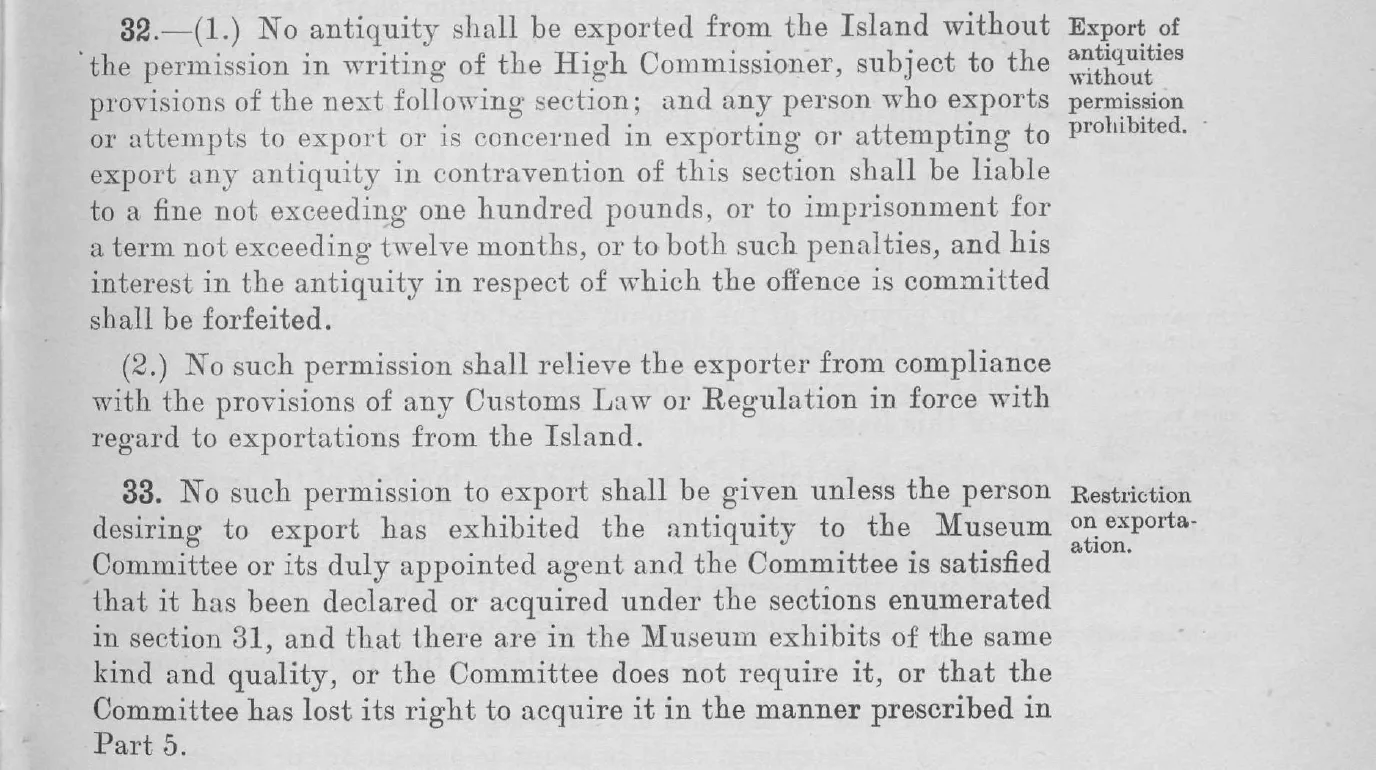
Diakou begins with the legal framework inherited from the Ottoman Empire: the Ottoman Land Code of 1869, in effect until 1946, which distinguished private mülk land from state-owned arazi miriye land, and the Ottoman Antiquities Law of 1874, provoked by the activities of Luigi Palma di Cesnola. Although the Ottoman Empire banned the export of antiquities in 1884, the British administration declined to apply that amendment to Cyprus and kept the 1874 law until passing the Antiquities Law of 1905. The 1905 law vested antiquities in the government, set up a Museum Committee to govern the Cyprus Museum (founded in 1882), retained a tripartite division for accidental finds, and gave the committee control over excavation permits and the allocation of duplicate or unwanted finds.
She then traces the 1927 amendment, passed on the arrival of the Swedish Cyprus Expedition to guarantee excavators a fixed share; out of 18,000 objects, the Swedes exported 12,000 in 771 boxes from Famagusta after the Swedish Crown Prince supervised the division. The Antiquities Law of 1935 created the Department of Antiquities, replaced the finder's share with monetary rewards, gave the Cyprus Museum and the British Museum priority over accidental finds, and aimed to grant excavators half of the remaining finds. Only the 1964 amendment after independence vested all excavated antiquities in the Cyprus Museum.
The second half of the paper draws on correspondence in the Penn Museum archives to reconstruct the Pennsylvania Cyprus Expedition at Lapithos, funded by Horace Jayne and directed by Bert Hodge Hill with Dorothy Hannah Cox, Lucy Talcott and Virginia Grace. In autumn 1931 the team excavated 38 Bronze Age tombs at Vrysi tou Barba, 20 Cypro-Geometric tombs at Ayia Anastasia, and 26 Geometric tombs on the Kastros plateau. Under the 1905 law, the Cyprus Museum kept Tomb 474, a bronze strainer, one complete Bronze Age tomb group, and selected pieces from nine other tombs, awarding the rest to Penn. Financial crisis halted the expedition in April 1932: 30 cases of pottery were shipped from Larnaca to Philadelphia in May 1932, while the remaining finds stayed in Nicosia, moved to Episkopi when Hill began digging at Kourion in 1935, went to the Cincinnati Art Museum in 1939, and returned to Philadelphia in 1966 to be catalogued in 1969.
From our collection
Pieces in the Drakopoulos collection of the kinds and periods this talk covers: Cypro-Geometric.
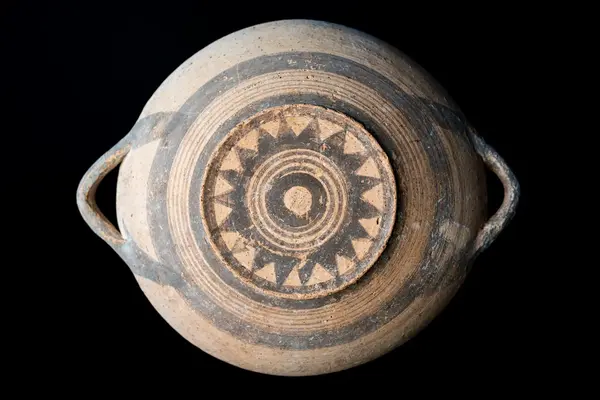
White Painted Plate with a Sawtooth Star on the Underside
Cypro-Geometric
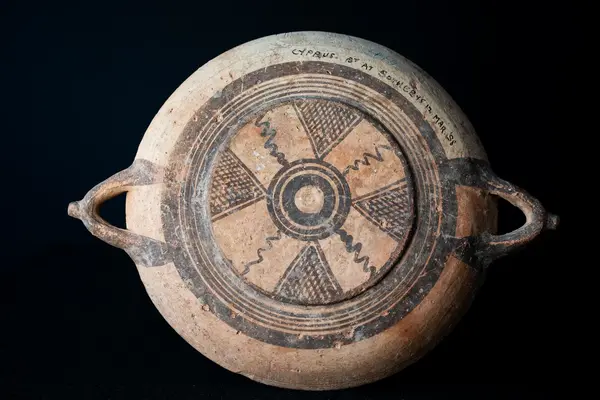
White Painted Plate with Latticed Triangles and Wavy Lines on the Underside
Cypro-Geometric
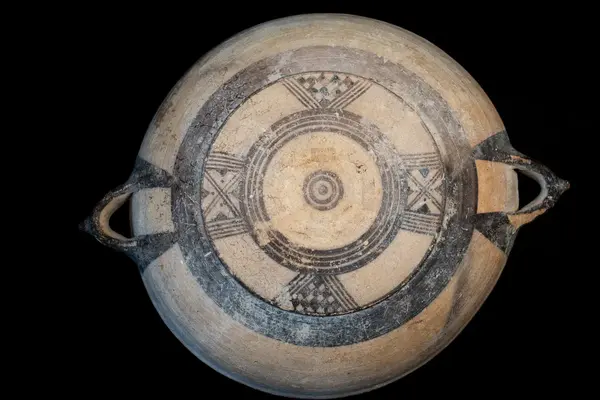
Large White Painted Plate with Knobbed Handles and a Four-Armed Cross on the Underside
Cypro-Geometric
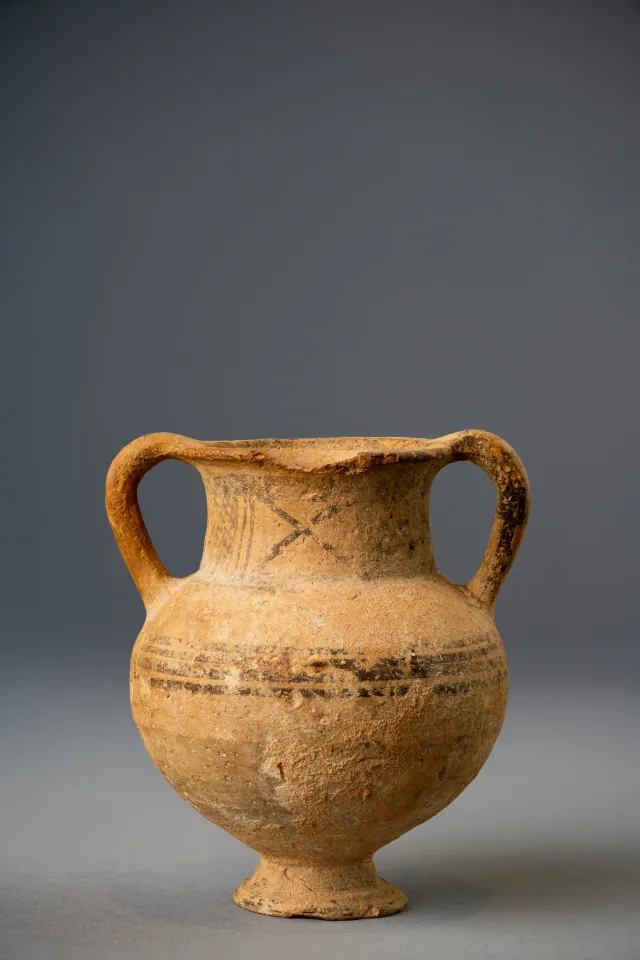
White Painted Amphoriskos on a Conical Foot
Cypro-Geometric
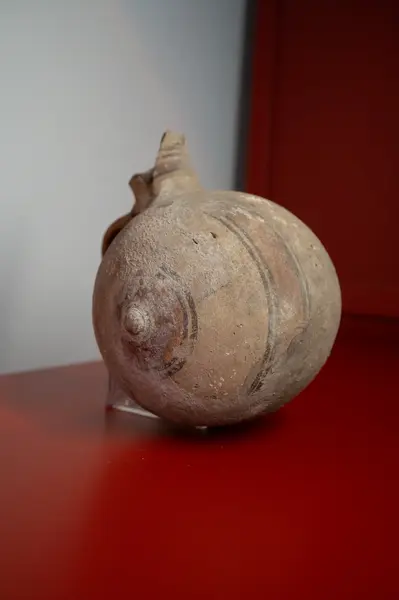
Bichrome Barrel Jug with Circled End-Knobs
Cypro-Geometric
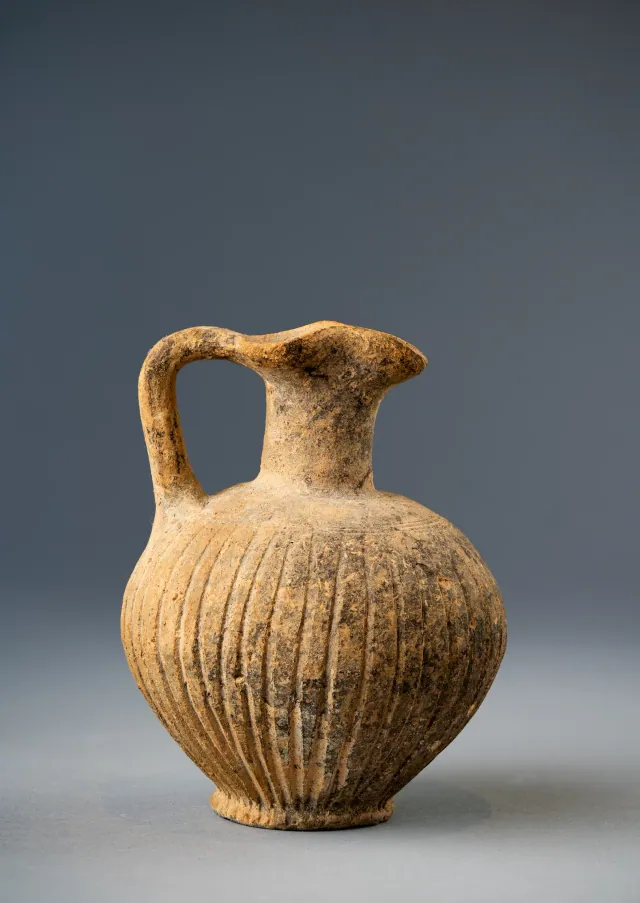
Black Slip Bucchero Jug with Trefoil Mouth and Fluted Body
Cypro-Geometric
Found at the places discussed
Objects in our catalogue, in museum collections, recorded as found at these sites.


Background
Where to read more on this site before or after watching.
The site
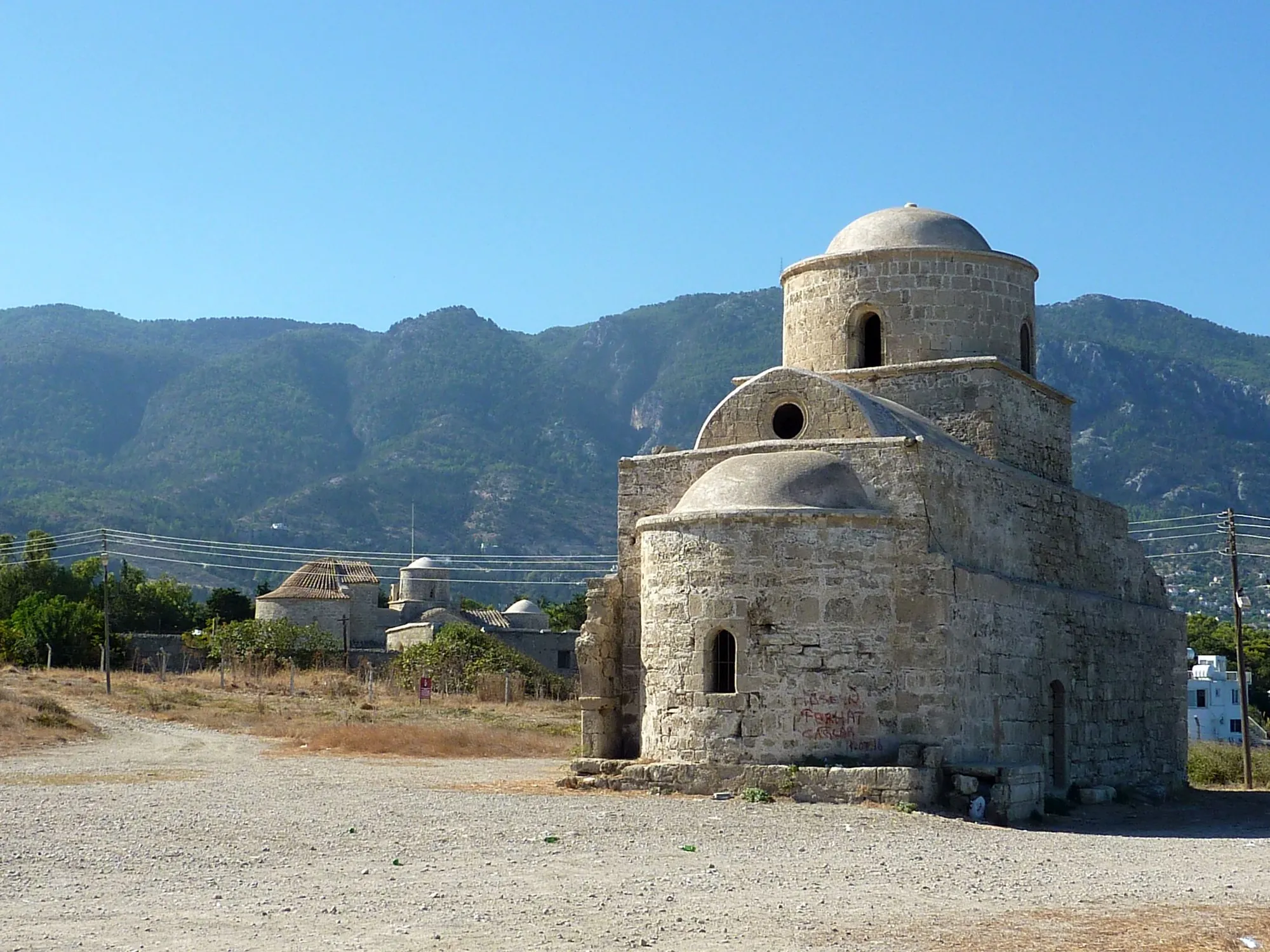
Lapithos
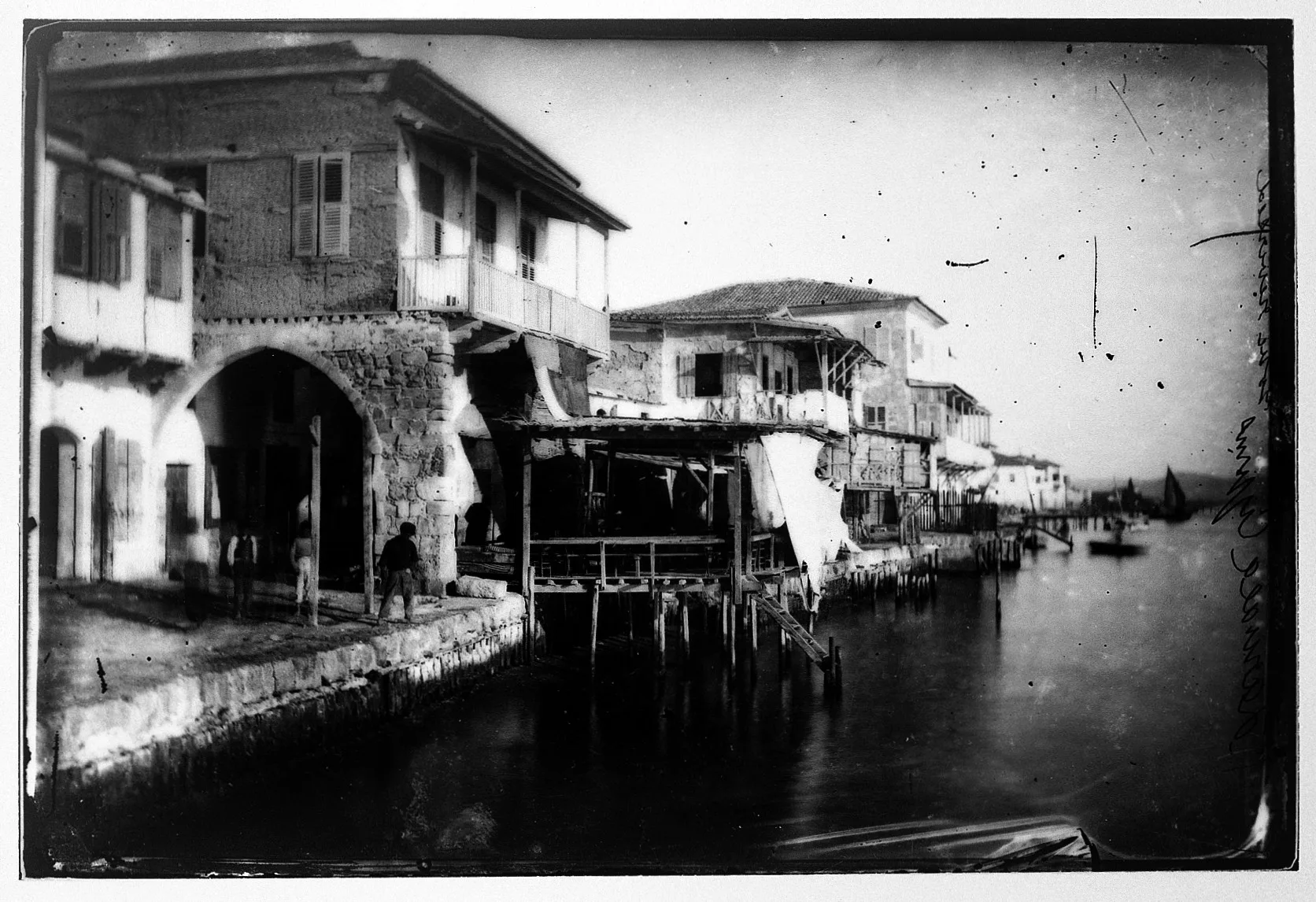
A group of cemeteries and settlement sites around the village of Lapithos on the north coast, below the Kyrenia range. Its Early and Middle Bronze Age cemetery at Vrysi tou Barba has produced about five times as much metal as Vounous, its Cypro-Geometric tombs gave the pottery sequence for that period, and ancient Lapethos was a city-kingdom until 312 BC.
In the compendium
Firmans and Partage: The Lawful Export of Antiquities from Ottoman Cyprus, 1860s to 1905
The firmans, landowners' rights and the division of finds in thirds under which consuls, excavators and museums lawfully exported Cypriot antiquities from the 1860s until the law of 1905.
In the compendium
The Antiquities Laws of 1905 and 1935
What the Antiquities Laws of 1905 and 1935 said about ownership, finds, excavation, dealing, collections and export, and how they were amended up to 1996.
In the compendium
Northern Types with Lawful Histories: Vounous, Lapithos, Enkomi and Salamis Material Abroad
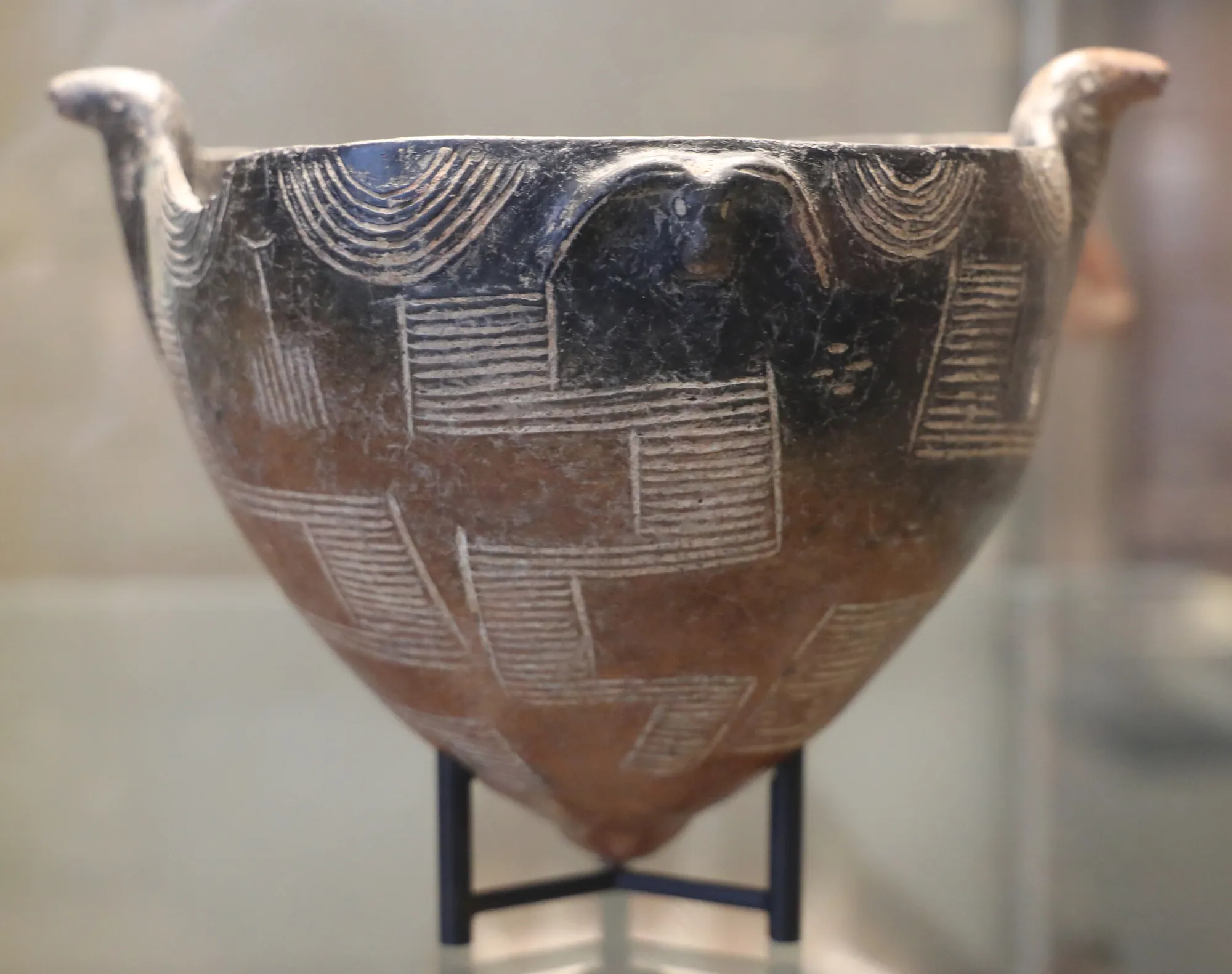
Why an object of a northern type, such as a Vounous or Lapithos pot, is not evidence of looting after 1974, which lawful channels took such objects abroad, and what record distinguishes them.