
Conference paper·Archaeological Research Unit - University of Cyprus·2019
A Conference in Honour of A. Bernard Knapp: Souskiou-Laona, Iron Age Communities, the Troodos and Survey Theory
Lindy Crewe, Catherine Kearns, Georgia Andreou and Michael Given
Chapters
About the video
This session from the second day of the conference in honour of A. Bernard Knapp at the University of Cyprus is chaired by Sturt Manning and brings together four papers on mortuary archaeology, Iron Age communities and survey on the island.
Lindy Crewe presents the excavation of the Middle Chalcolithic extramural cemetery at Souskiou-Laona, ahead of the monograph with contributions by Edgar Peltenburg, Diane Bolger and other specialists. Although heavily looted, the limestone outcrop yielded 151 rock-cut features, chiefly shaft tombs, small shafts and scoop pits. Intact deposits followed strict rules: the last burial lay flexed on its right side with the head to the south-east, while earlier interments were stacked in bone piles of up to eight individuals at the northern end. Tomb 168 held four rearranged individuals with body parts swapped between clusters and large chipped-stone flakes, alongside an adjacent pit without human remains that may have acted as a proxy tomb. Finds included cruciform figurines and pendants of picrolite (showing heavier use-wear at Laona than at nearby Vathyrkakas), an anthropomorphic birthing vessel, dentalium shell, copper spirals and tin-bearing faience beads.
Catherine Kearns examines the limits of protohistory and how macro-historical narratives of the transition from the Late Bronze Age to the Cypro-Geometric and Cypro-Archaic periods rely on singular objects such as the Opheltas obelos from Palaepaphos-Skales or the stele of Sargon II from Kition. Calling for high-resolution radiocarbon dating across the Hallstatt plateau, she uses legacy and 2016 to 2017 survey and geophysical work around Amathus and the Vasilikos and Maroni valleys, including Kalavasos-Vouni Phasouli and Maroni-Vournes, to examine how rural communities interacted with urban centres. Ceramic analysis by Anna Georgiadou shows local or Amathus-oriented utilitarian wares and very few imports.
Georgia Andreou reconsiders the Troodos mountains through postcolonial geography, arguing that British colonial mapping, forest regulations and hill-station leisure, together with classical texts and the search for Roman slag heaps, shaped modern archaeological definitions of the massif. She contrasts these top-down boundaries and the work of Demetrios Christodoulou with the ethnographic and environmental approaches of the Sydney Cyprus Survey Project and the Troodos Archaeological and Environmental Survey Project.
Michael Given critiques the Cartesian, top-down perspective of Mediterranean intensive survey, settlement hierarchies and GIS, tracing their roots to colonial surveying and the early modern scientific paradigm of dominating nature. Drawing on Jay Noller's geomorphological work on Late Roman land levelling near Skouriotissa, resilience theory and Erin Gibson's community project at Nikitari in the Asinou valley, he argues for replacing traditional survey with an integrated study of socio-ecological systems and entangled human and ecological communities.
From our collection
Pieces in the Drakopoulos collection of the kinds and periods this talk covers: Stone, Cypro-Archaic.
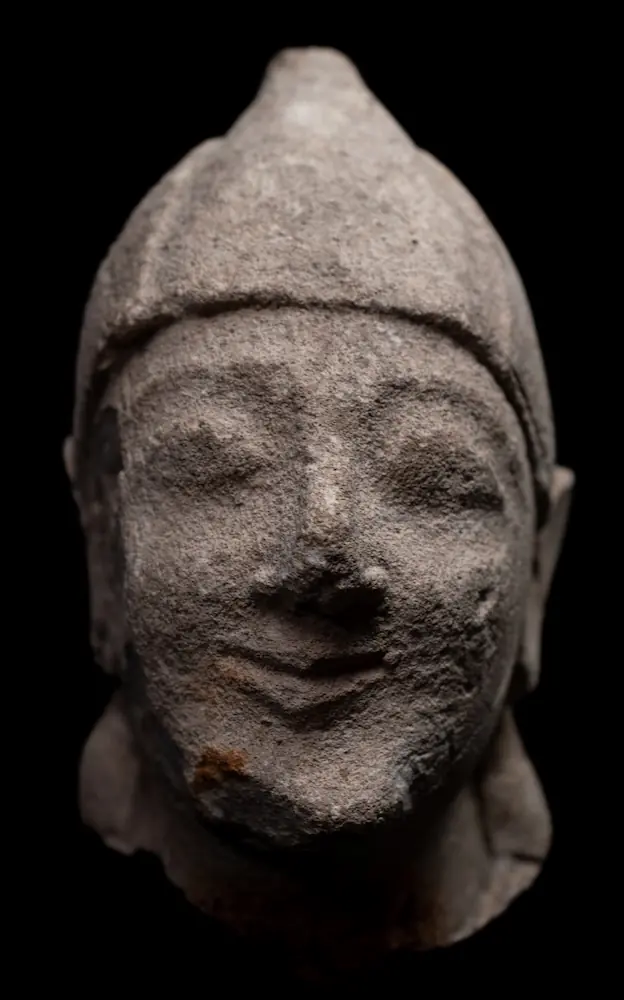
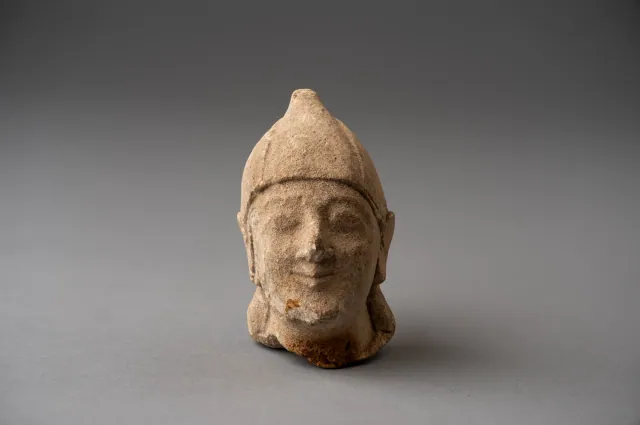
Limestone Head of a Beardless Votary in a Conical Helmet
Stone
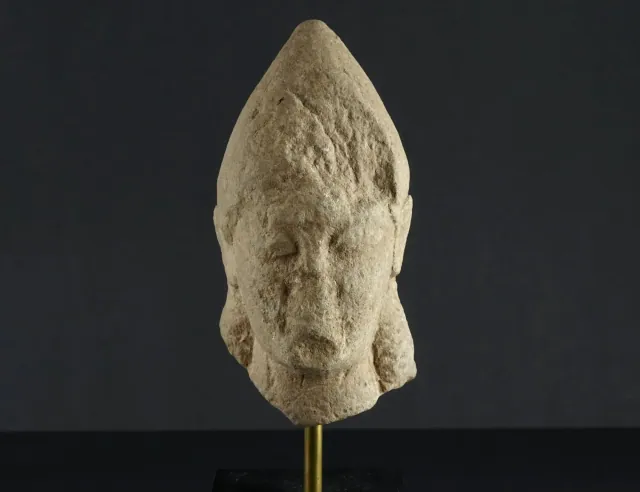
Weathered Limestone Head of a Votary in a Tall Pointed Cap
Stone
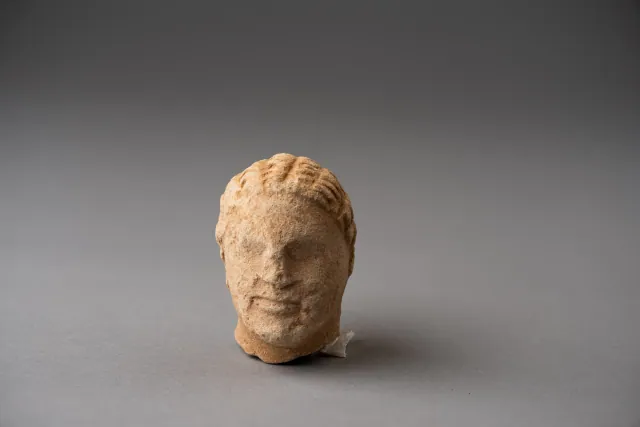
Limestone Head of a Boy, probably from a Temple Boy Statuette
Stone
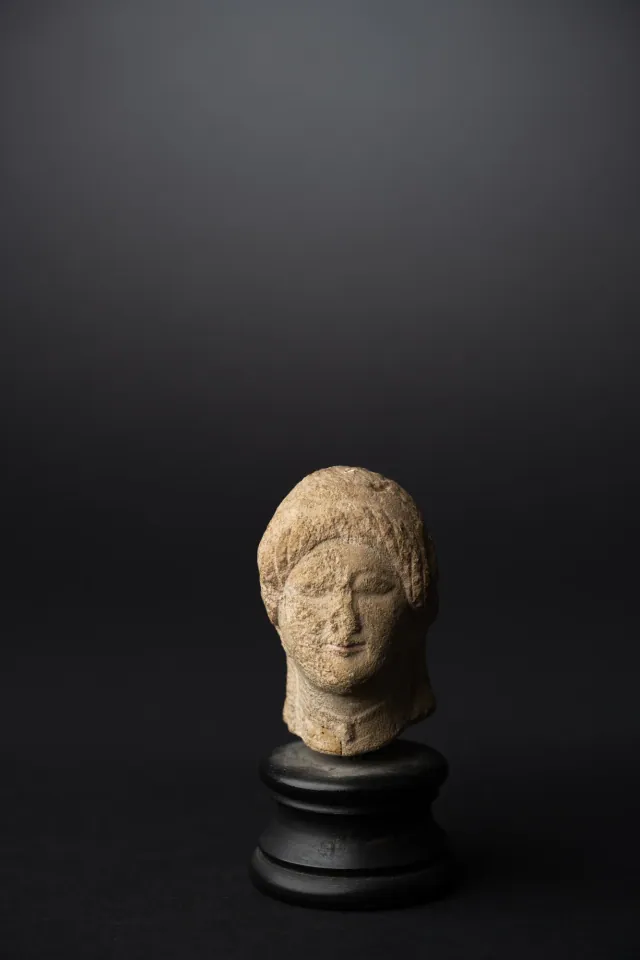
Limestone Head of a Votary with a Wreath
Stone
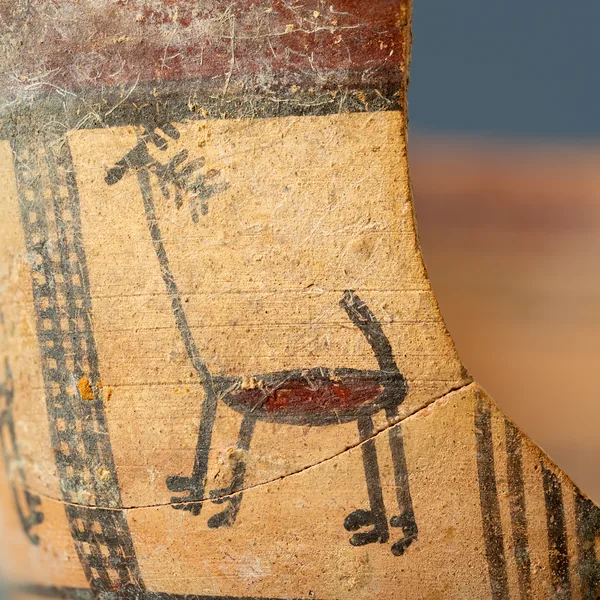
Bichrome Skyphos with Stags in Metopes
Cypro-Archaic
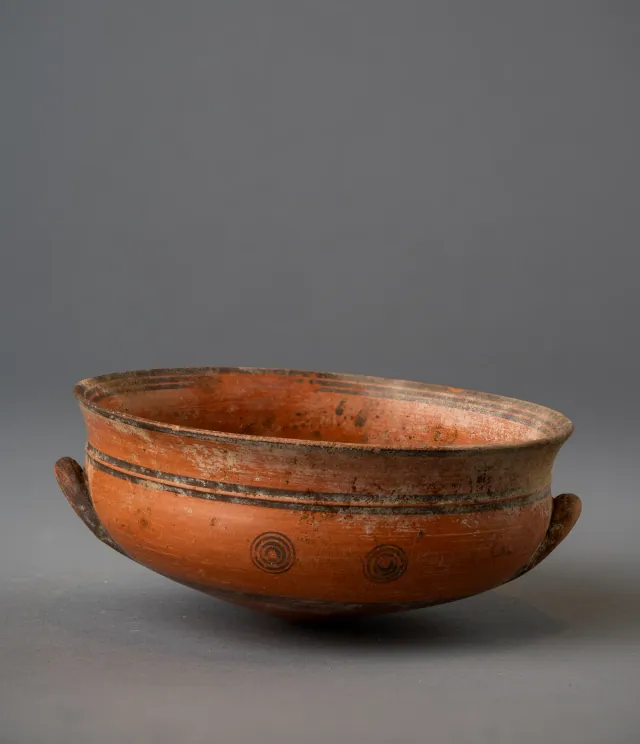
Black-on-Red Two-Handled Bowl with Raised Flaring Rim
Cypro-Archaic
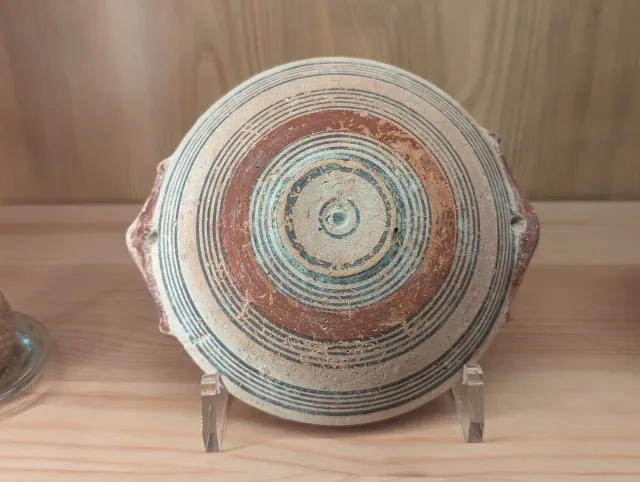
Bichrome IV Bowl with Red-Painted Pierced Lug Handles
Cypro-Archaic
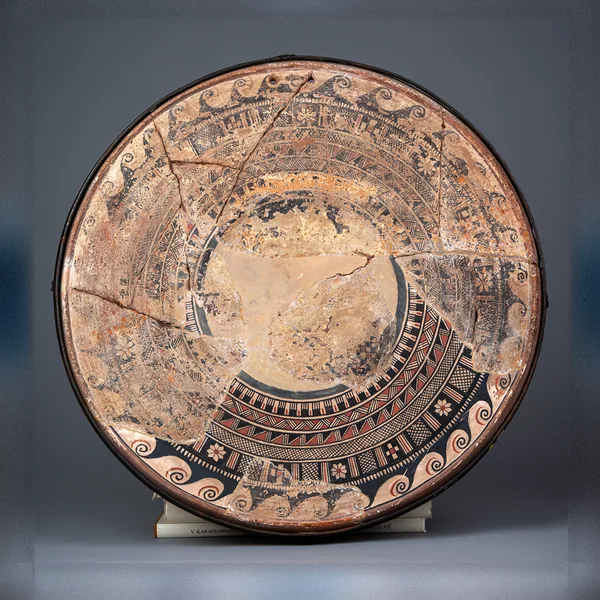
Large Bichrome Plate from Salamis with a Wave Band and Rosette Metopes
Cypro-Archaic
Found at the places discussed
Objects in our catalogue, in museum collections, recorded as found at these sites.

Marble fragmentary inscribed block
Kition · Metropolitan Museum of Art

Marble cippus with Phoenician inscription
Kition · Metropolitan Museum of Art

Marble cippus fragment with Phoenician inscription
Kition · Metropolitan Museum of Art
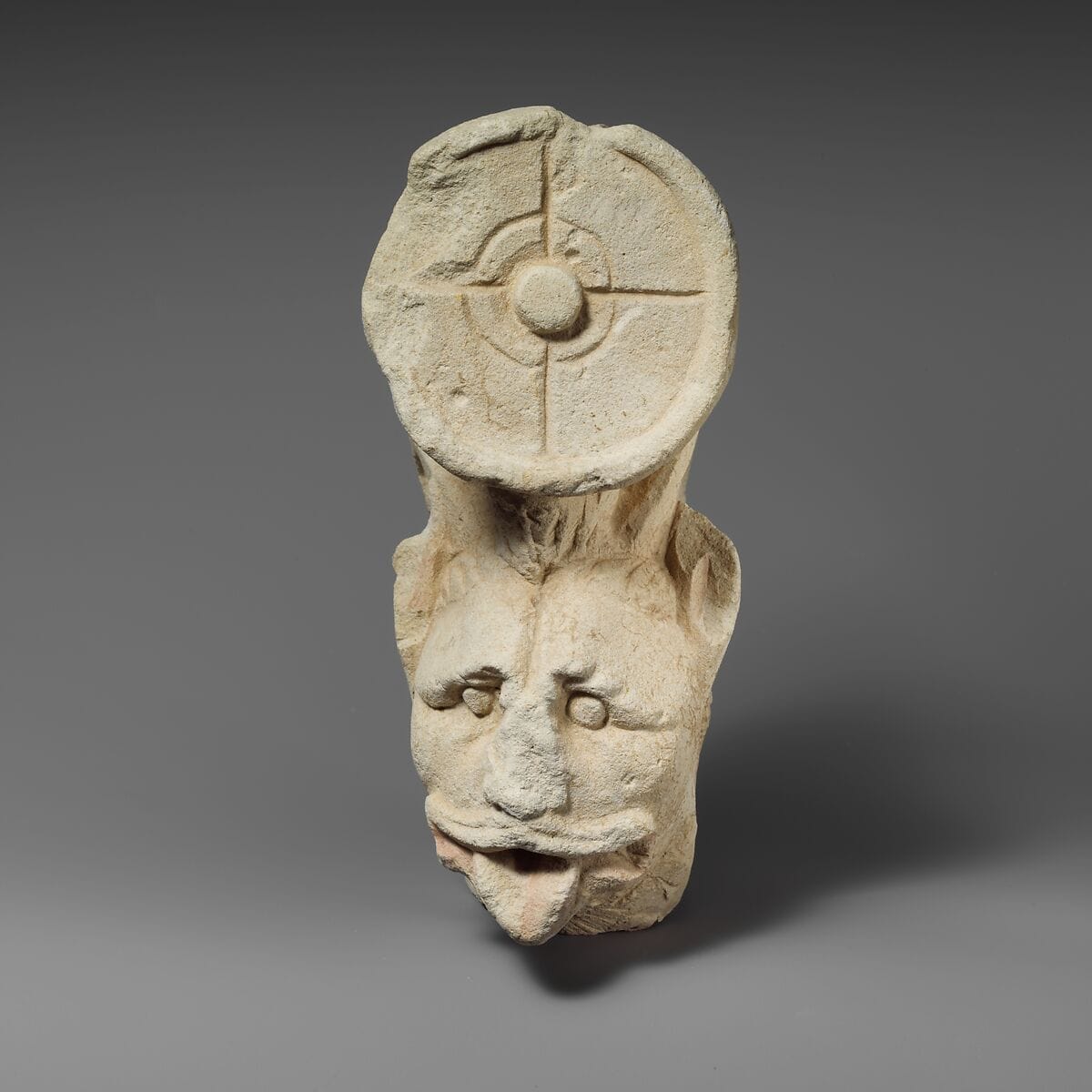
Fragment of a limestone throne (?) with the head of a horned lion
Amathus · Metropolitan Museum of Art
Background
Where to read more on this site before or after watching.
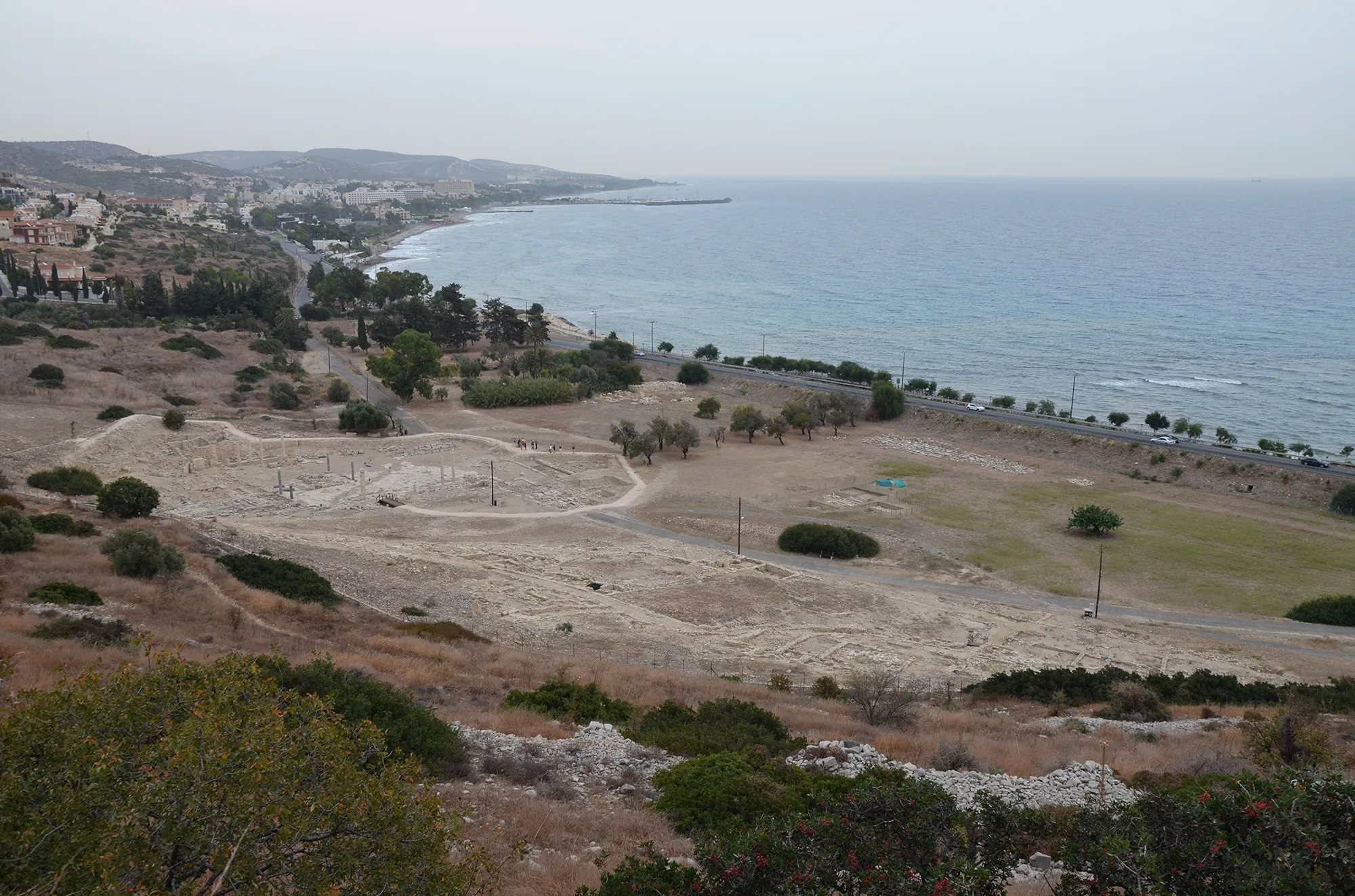
The site
Amathus
Amathus was the capital of one of the Iron Age kingdoms of Cyprus, on a coastal hill about 10 km east of Limassol. It was founded on an empty site in the 11th century BC and lived in until the end of the 7th century AD. Its acropolis carried a sanctuary of Aphrodite and the kings' palace; its people kept the island's old non-Greek language, Eteocypriot, at least until the time of Alexander.
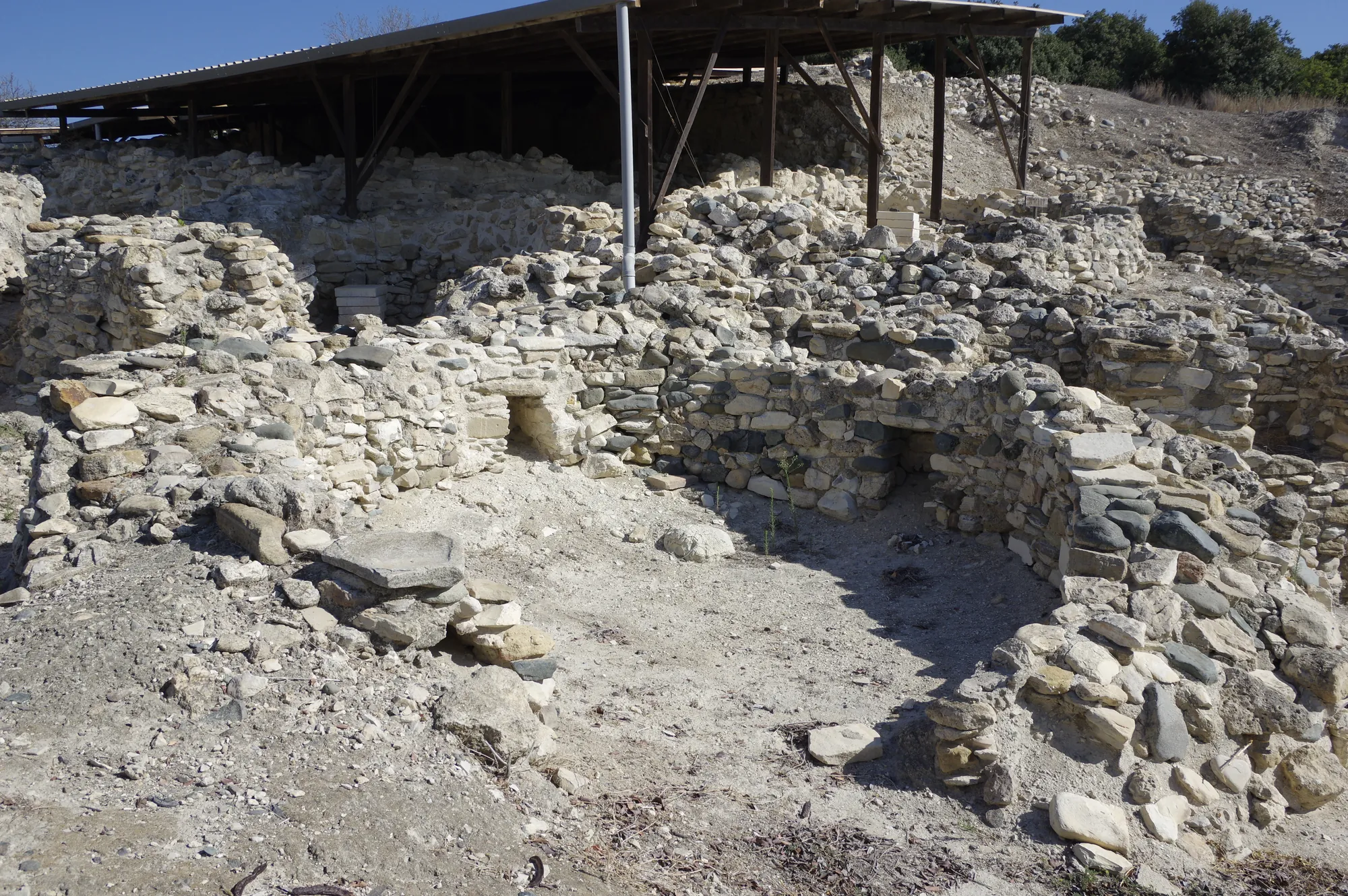
In the compendium
Neolithic and Chalcolithic Burial in Cyprus
Burial on Cyprus from the first farming villages to the eve of the Bronze Age, mostly contracted bodies in pits beneath or beside houses.
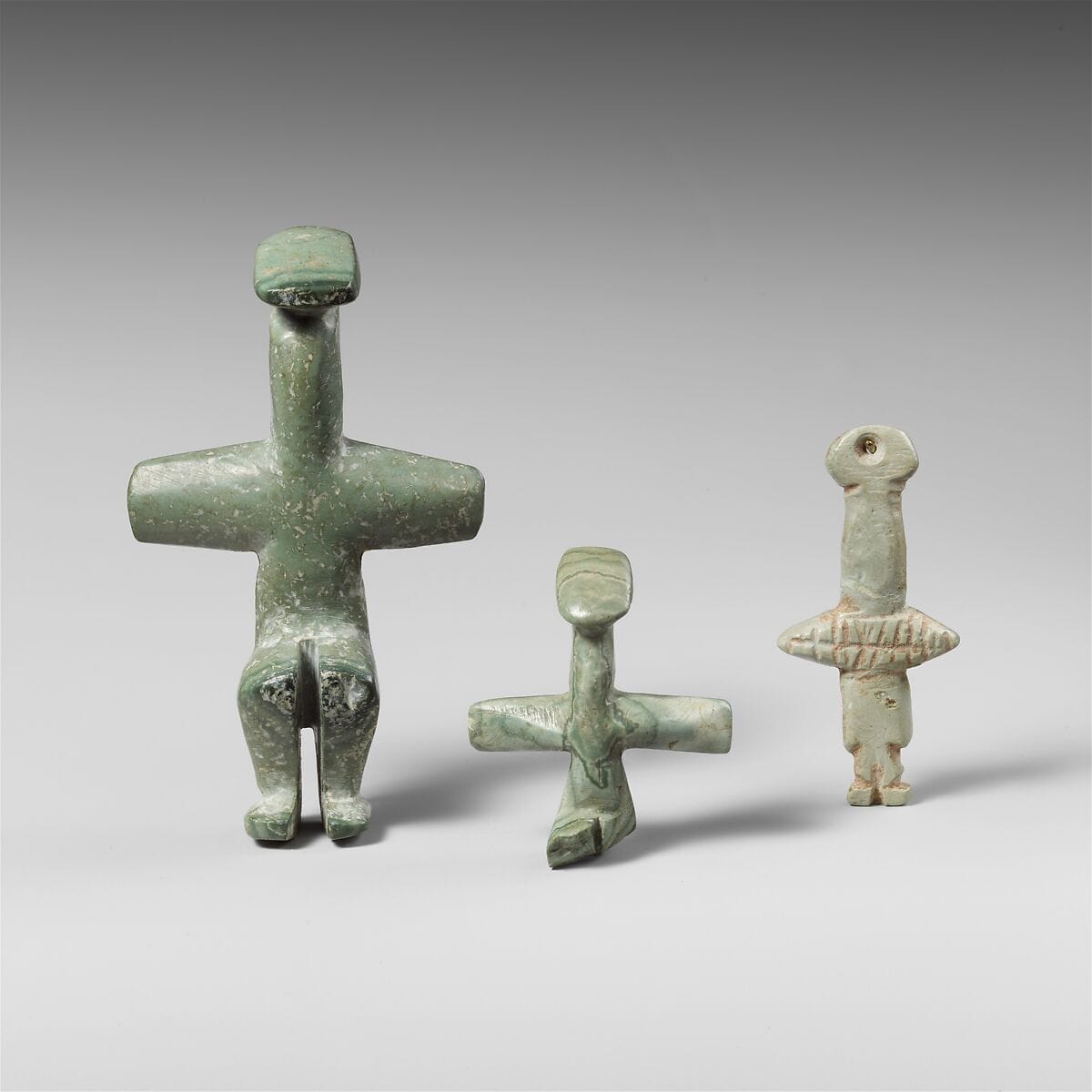
In the compendium
Cruciform Figurines
Small stylised human figures with outstretched arms and bent legs, carved mostly in picrolite in Chalcolithic Cyprus and often worn as pendants.
In the compendium
Stone in Ancient Cyprus
Cypriots worked local chert, igneous rocks, picrolite and limestone from the Neolithic onwards, and imported marble, alabaster and gemstones.
Map of Cyprus
Places discussed in the talk
- Has a page on this site
- Other places
- Ground above 200, 500, 1,000 m
Places
- 1Souskiou (approx.)
- 2Amathus
- 3Maroni
- 4Palaepaphos
- 5Kition
- 6Skouriotissa (approx.)