
Lecture·CAARI Cyprus·2021
It Takes Two to Tango: The Philia-Drakos Chalcolithic Settlement at the Dawn of the Bronze Age
Chapters
About the lecture
Charalambos (Harry) Paraskeva, speaking as the CAARI Edgar J. Peltenburg Fellow in Cypriot Prehistory, re-examines legacy material from Philia-Drakos Sites B and C and Philia-Vasiliko in the Ovgos valley of the Morphou plain to reassess the transition from the Chalcolithic to the Early Bronze Age. After briefly outlining his fellowship work building an open-access database and geodatabase for the Western Cyprus Survey, directed by the late Edgar Peltenburg, he turns to the long-standing Philia question.
Paraskeva reviews the stark contrasts usually drawn between Late Chalcolithic and Philia material culture in architecture, settlement location, pottery, metallurgy, burial and economy, and traces the debate from Porphyrios Dikaios and James Stewart to recent models. He argues that top-down narratives of rapid colonisation overstate the brevity of the overlap, assume copper was the primary pull factor despite a lack of early Philia sites near mines, and treat indigenous communities in the densely settled Morphou plain and north coast as passive, while classifying sites as Philia on the basis of a few Red Polished Philia sherds alone. To replace linear models of replacement, he proposes a framework drawing on Ivan Illich's concept of conviviality, postcolonial hybridisation and entanglement, and sociological models of human decision-making.
He then examines the topography and research history of Philia in the area occupied by Turkey since 1974. Combining Dikaios's 1941 and 1943 trenches at Philia-Drakos Sites A and B, Hector Catling's 1953 survey of Philia-Vasiliko (CS 163), and Trevor Watkins's 1964 survey of Site C (CS 1442), and re-georeferencing Catling's coordinates on the Cyprus grid, Paraskeva shows that Philia-Vasiliko is not a separate Philia settlement but overlaps spatially with Drakos Sites B and C.
A reanalysis of the sherd trays in the Cyprus Museum and Cyprus Survey divides the pottery into Fabrics A to H. Site C yields mainly Middle Chalcolithic wares, while Site B is dominated by Late Chalcolithic Fabric E, indicating an uphill-to-downhill settlement drift comparable to Kissonerga-Mosphilia and Souskiou-Laona. A small number of imported Red Polished Philia (Fabric F) and Black Slip and Combed sherds occur in both deep and upper layers at Site B, showing that this indigenous Late Chalcolithic settlement coexisted and traded with neighbouring Philia communities over a prolonged period while maintaining its own ceramic tradition.
In the discussion that follows, Paraskeva addresses questions on the relationship with the Philia tombs at Philia-Lakkos tou Kasinou and the settlement at Kyra-Alonia, fabric parallels in western Cyprus and at Kokkinoyia and Pamboules, and Tarsus and the Cilician plain as a likely origin for the incoming groups.
From our collection
Pieces in the Drakopoulos collection of the kinds and periods this talk covers: Neolithic and Chalcolithic wares, Red Polished ware.
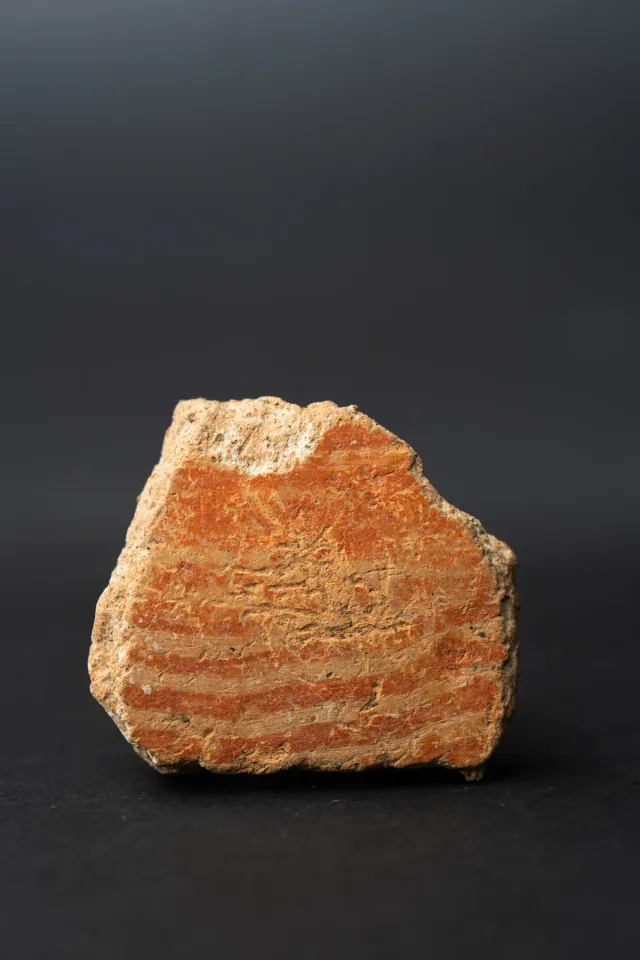
Combed Ware Bowl Fragment with Parallel Bands
Neolithic and Chalcolithic wares
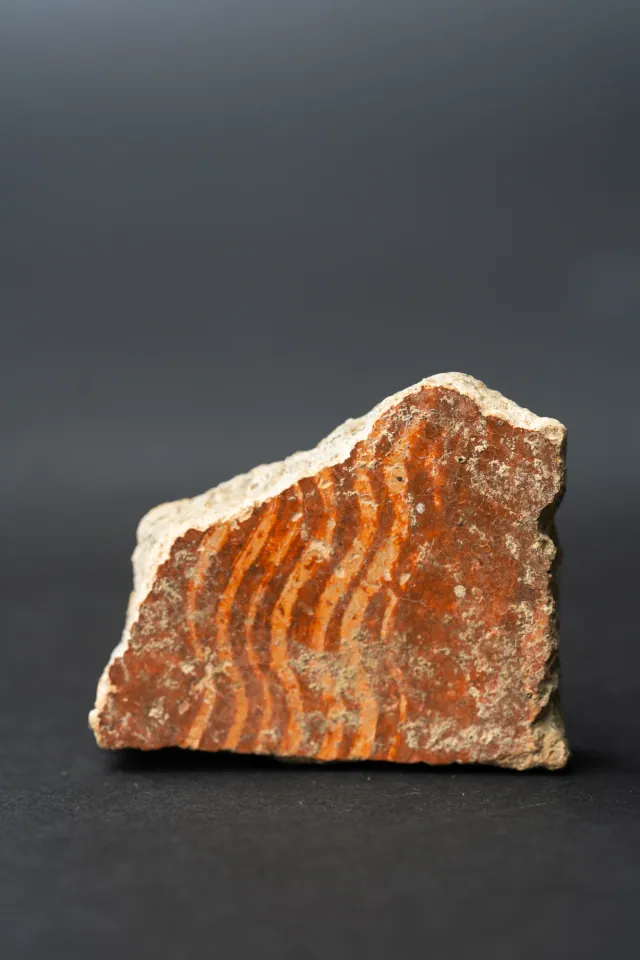
Combed Ware Bowl Fragment with Multiple Wavy Bands
Neolithic and Chalcolithic wares
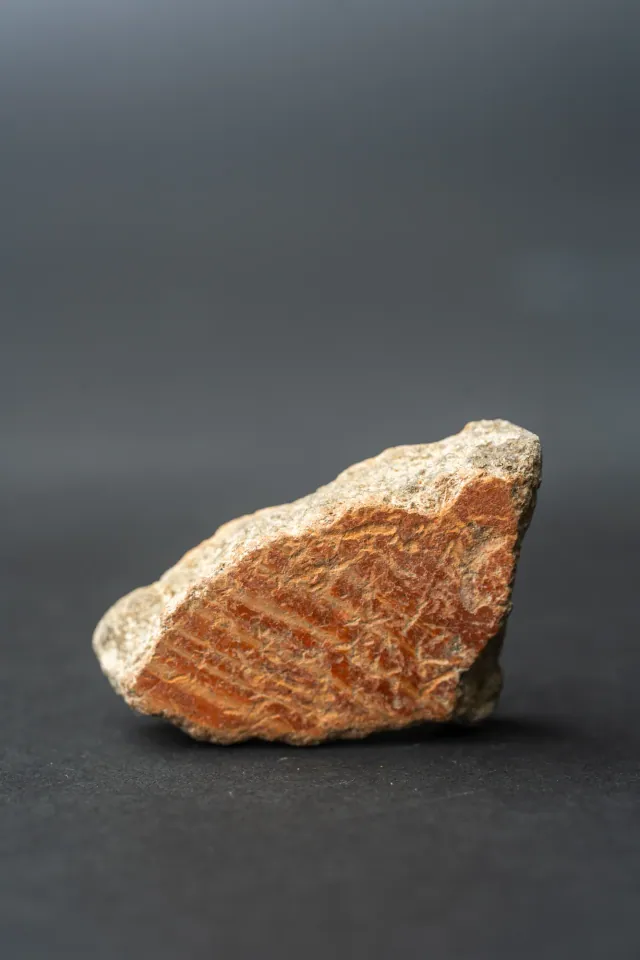
Combed Ware Bowl Fragment with Oblique Bands
Neolithic and Chalcolithic wares
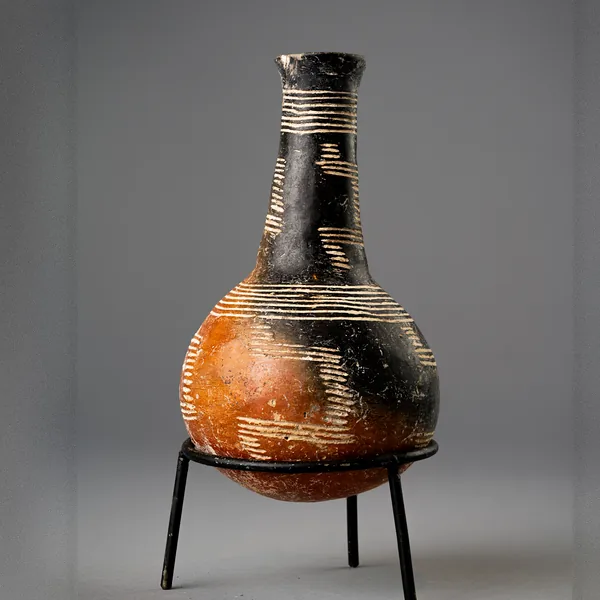
Red Polished Black-Topped Bottle with Stepped Incised Bands
Red Polished ware
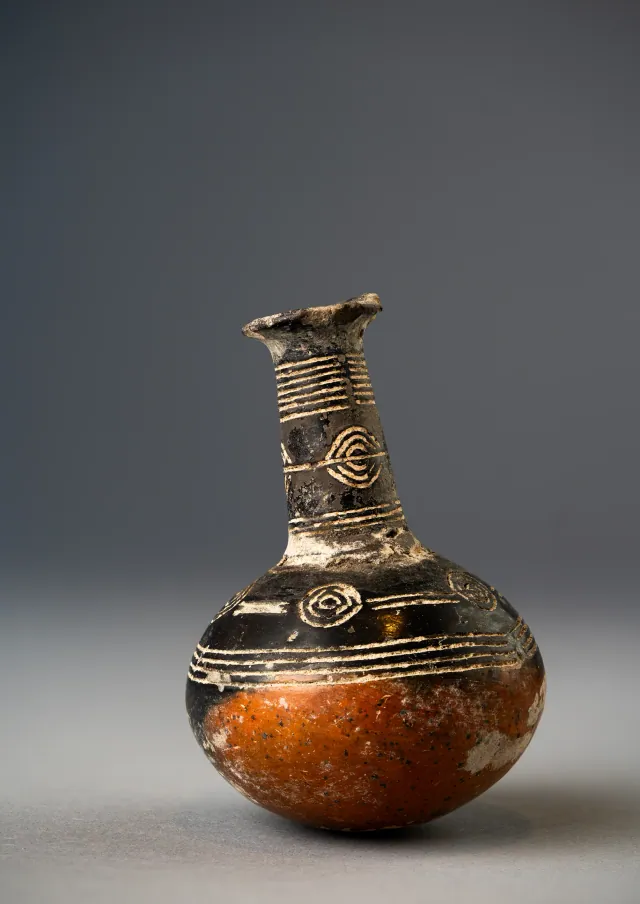
Red Polished Black-Topped Bottle with Incised Concentric Circles
Red Polished ware
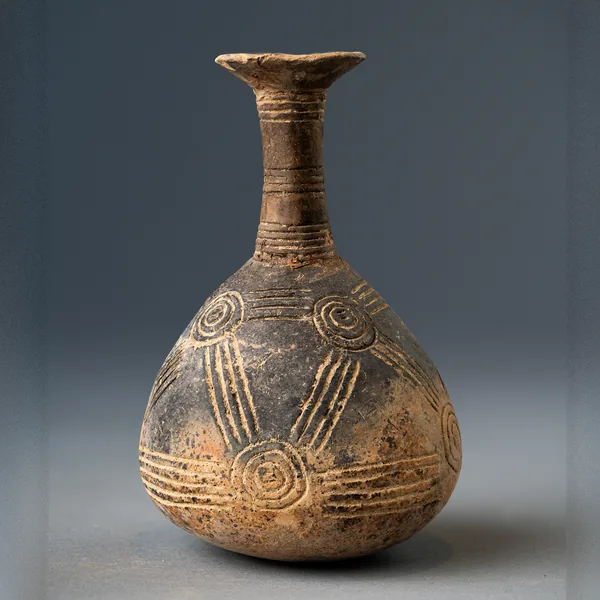
Red Polished Bottle with Linked Concentric Circles
Red Polished ware
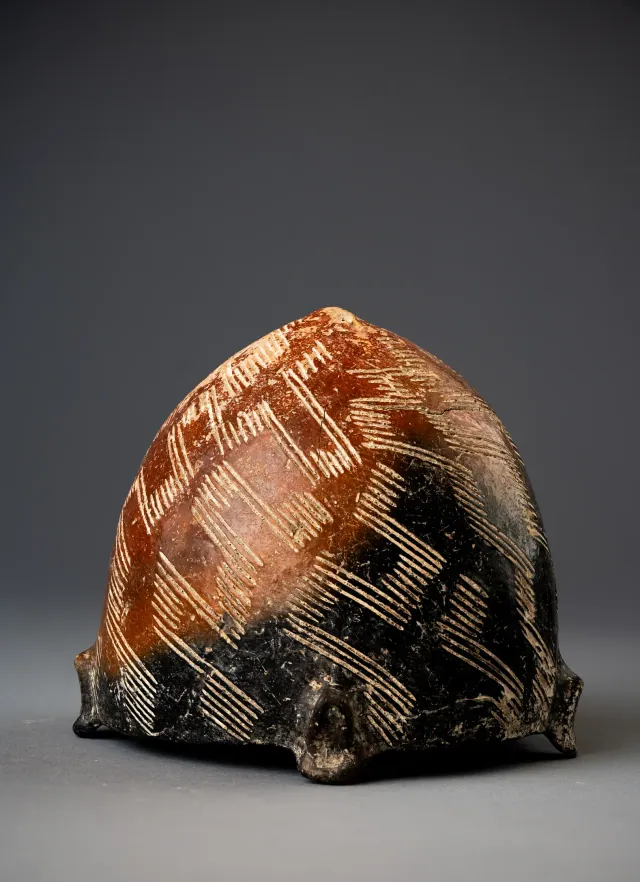
Black-topped Red Polished Tulip Bowl with Incised Hatched Lattice
Red Polished ware
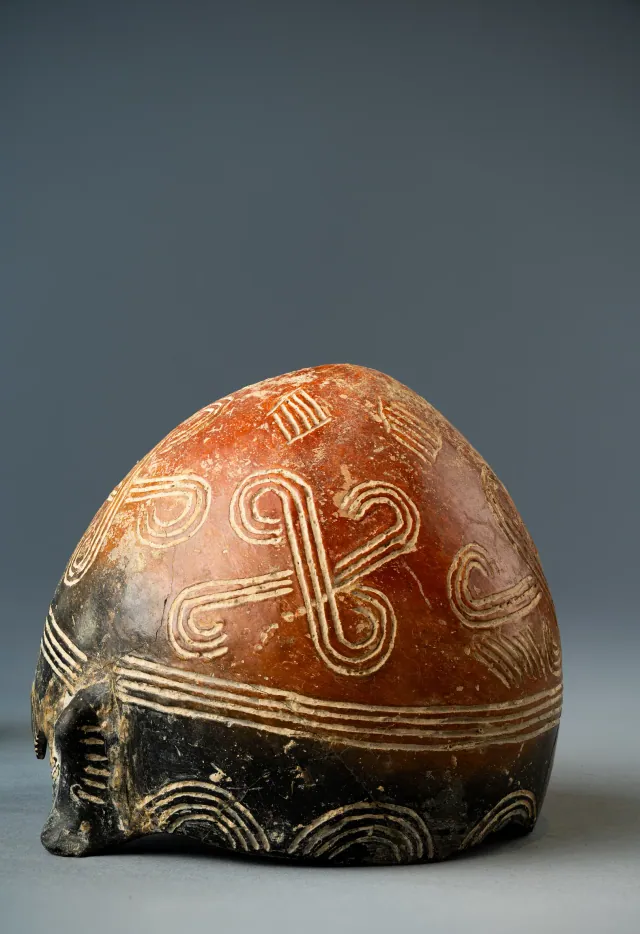
Black-topped Red Polished Tulip Bowl with Incised Spiral-armed Cross, Circles and Arcades
Red Polished ware
Found at the places discussed
Objects in our catalogue, in museum collections, recorded as found at these sites.
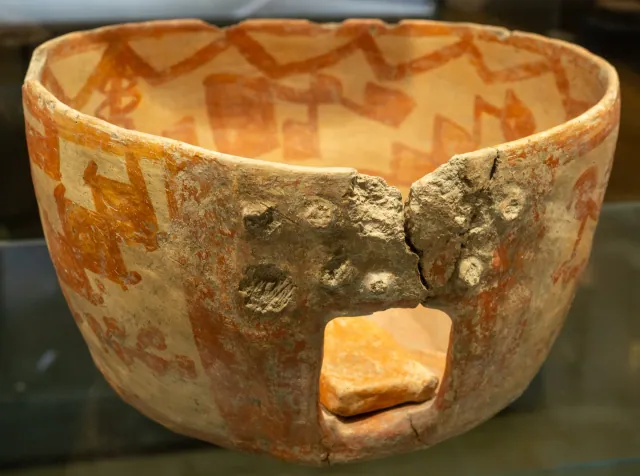
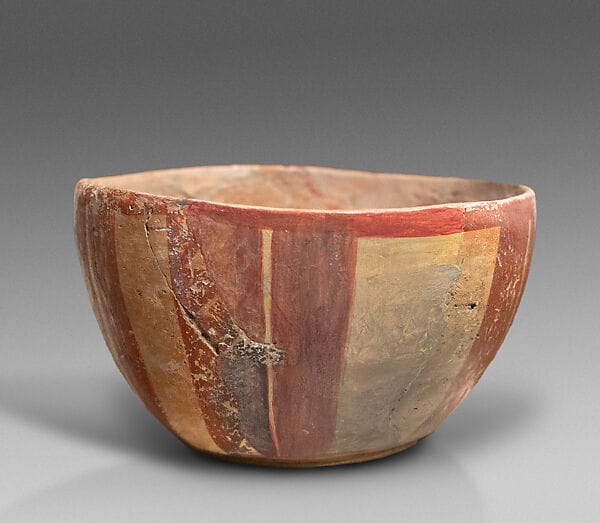
Background
Where to read more on this site before or after watching.
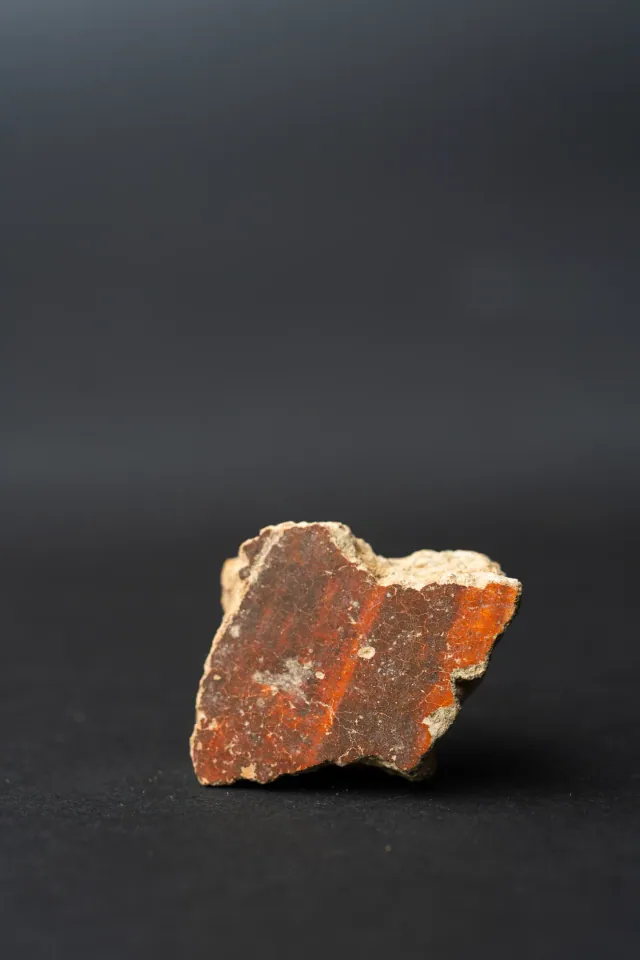
In the compendium
Neolithic and Chalcolithic Wares
The monochrome and painted wares of Ceramic Neolithic and Chalcolithic Cyprus, c. 5200 to 2400 BCE, before Red Polished pottery of the Bronze Age.

In the compendium
Red-on-White Ware
Red-on-White is the hand-built painted pottery of Chalcolithic Cyprus, with red geometric patterns on a pale marl or slipped ground.
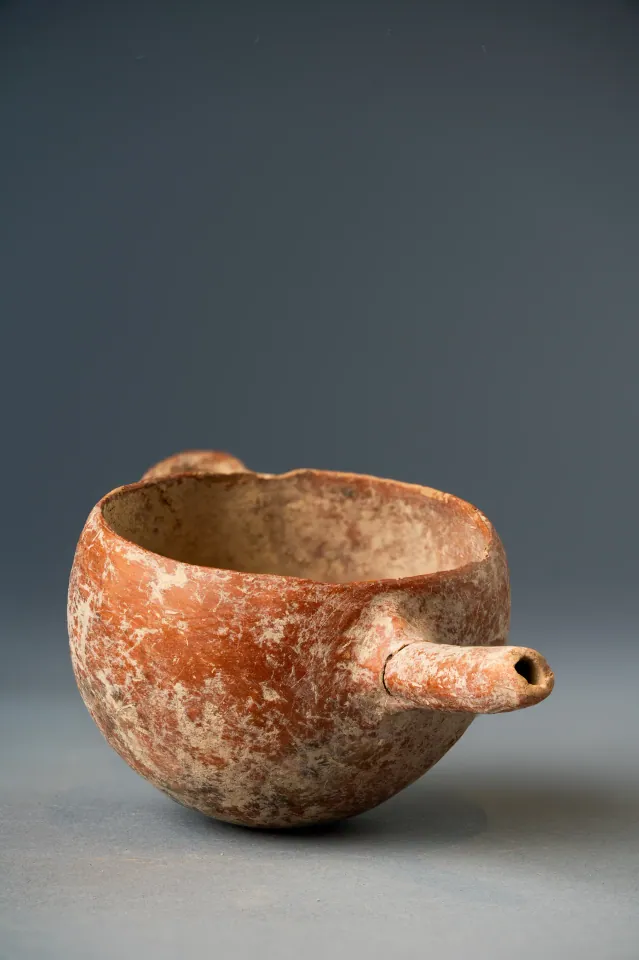
In the compendium
Red Polished Philia Ware
The hand-made, red-slipped and polished pottery of the Philia facies, strikingly uniform across Cyprus at the opening of the Bronze Age.
The period
Neolithic
The period c. 9000–3900 BCE in which farmers from the mainland settled Cyprus, built villages of circular houses, and later adopted pottery.
Map of Cyprus
Places discussed in the talk
- Ground above 200, 500, 1,000 m
Places
- 1Philia-Vasiliko (approx.)
- 2Marki-Alonia
- 3Kissonerga-Mosphilia
- 4Souskiou-Laona (approx.)
- 5Kyra-Alonia (approx.)