
Book · 1934
The Swedish Cyprus Expedition: Finds and Results of the Excavations in Cyprus 1927-1931, Vol. I (text)
E. Gjerstad, J. Lindros, E. Sjöqvist and A. Westholm
Stockholm: The Swedish Cyprus Expedition
An excavation report on settlements, a fortress and cemeteries dug by the Swedish Cyprus Expedition between 1927 and 1931, with plans, burial records and lists of finds for each site.
Gjerstad and colleagues publish here the excavations of the Swedish Cyprus Expedition, a programme meant to document Cypriot culture from the Stone Age to the Roman period. The sites range from settlements and a fortress to cemeteries of tumuli and rock-cut tombs, and each receives its architecture, stratigraphy, burials and finds. An appendix by Dr. Wilh. Riedel, in German, discusses an inscribed cylinder seal from Ajios Jakovos.
The accounts follow one order: Petra tou Limniti and the Neolithic settlements at Lapithos, then the Lapithos tombs and further cemeteries, the settlement at Kythrea, the Melia necropolis and the Dhima cult places at Ajios Jakovos, the Nitovikla fortress and its necropolis, and Paleoskoutella, Kountoura Trachonia, Trachonas and Enkomi. Excavation data are presented separately, as far as practicable, from the typological, chronological and historical deductions that the introduction reserves for a later volume.
Settlement accounts rest on architecture, stratification and classified finds, cemetery accounts on tomb form and dimensions, burial customs, skeletons and grave goods. Lists of finds give descriptions and, where recorded, measurements, weights, find contexts and levels, across pottery, metalwork, stone, ivory, faience, glass, beads and human and animal remains. The illustrations are field plans, architectural plans and sections, tomb plans and photographs, with group and type plates published in separate volumes.
The fieldwork
The expedition was organised as a mobile programme under Gjerstad's direction. Lindros served as draughtsman and photographer, and Sjöqvist and Westholm did archaeological, drawing and photographic work at different sites. The programme took in Stone Age settlements at Petra tou Limniti, Lapithos and Kythrea, a Middle and Late Bronze Age fortress at Nitovikla, and tombs running from the Early Bronze Age to the beginning of the Hellenistic period. The introduction places this work within a wider programme that also included temple-sites at Kition, Idalion, Ajia Irini, Soli and Mersinaki, the palace at Vouni, the theatre at Soli, and tombs at Amathus, Marion and Stylli (pp. XII–XV).
For settlements and temple-sites a contoured field plan came first. The area was divided into squares usually 1, 1.5 or 2 m on a side, and earth was removed by natural strata where possible, otherwise in arbitrary layers 0.10 or 0.20 m deep. Positions and levels of finds went onto plans, sections were drawn and observations entered in daily diaries; tombs were excavated by the same methods where they applied (pp. XV–XVI).
At the end of the excavations the finds went to a central deposit in Nicosia, where they were registered, cleaned, restored, classified and described. That work ran alongside the fieldwork, so that excavators could return to the remains and supplement the written and drawn records from what they had seen on site (pp. XVI–XVII).
The Swedish Cyprus Committee was formed to support Gjerstad's fieldwork. The acknowledgements name those who worked on the material afterwards: Joan du Plat Taylor revised manuscripts and supplied notes, Kathleen M. Kenyon revised proofs, Margareta Sjöqvist managed registration and office work, Percy Newberry identified and drew the scarabs and Max Pieper deciphered and described them, Carl M. Fürst examined the anthropological material, and Tooulis Svidos worked as practical assistant and conservator.
Petra tou Limniti, Lapithos and Kythrea
At Petra tou Limniti the settlement was dug in squares and its occupation divided into four periods, Petra I to IV, with stone, flint and other finds registered, among them a dolerite fiddle-shaped idol and a basalt axe-head. Gjerstad bases the Pre-Neolithic attribution on the absence of pottery, the use of stone vessels and the character of the stone and flint implements (pp. 1–12).
At Lapithos the eastern and western Neolithic settlements are described separately, each with its hut remains and stratigraphic sequence (pp. 13–33).
The Lapithos tombs follow, beginning with Vrysi tou Barba and continuing through the cemeteries at Kylistra and Ajia Anastasia, Kastros, excavated in 1927–28, and Plakes. Tomb accounts give chamber arrangements, repeated burials, grave goods and pottery-based dating. Tomb 322 is described with its architecture, burials, weapons and cult objects, including fragments of a large plank-shaped idol from Chamber D. Other registered finds include a bronze sword from Tomb 301, a necklace of fifty paste beads from Tomb 306, a gold plaque with a female head from Tomb 403 at Kastros and a gold diadem mounted on a bronze leaf from Tomb 425 (pp. 34–276).
Kythrea is treated through its topography, architecture, stratification and finds. The huts are grouped by stratigraphic level, the flint tools and pottery are classified, and the pottery technique is compared with that of the western Lapithos settlement. Streams had washed away part of the settlement. Besides a relative sequence, an absolute chronology is given. A seated green steatite idol from Layer IV C and a Red Polished jug from Hut IV B are among the registered finds (pp. 277–299).
Ajios Jakovos
Ajios Jakovos brings together two sets of remains, the Melia necropolis and the Bronze Age and Iron Age cult places at Dhima. At Melia the tombs are taken in turn, with Tomb 8 and Tomb 14 given sections of their own. Gjerstad and colleagues propose three burial periods for Tomb 8, which held a Levanto-Helladic stirrup-vase, while Tomb 6 yielded a two-necked White Painted II jug (pp. 302–354).
At Dhima a Bronze Age sanctuary and an Iron Age sanctuary are described in turn. The Bronze Age building produced a gold ring with the cartouche of Thotmes III and a Red Lustrous Wheel-made incense burner shaped as an arm. The Iron Age sanctuary is treated as a house-chapel with successive building stages (pp. 355–370).
Riedel's appendix reads the inscription on a cylinder from the Bronze Age sanctuary, illustrated in Figs. 216 and 217 (pp. 576–577).
Nitovikla
The Middle and Late Bronze Age fortress of Nitovikla stands near the villages of Korovia and Gallinoporni. Its architecture is described wall by wall, and a separate analysis classifies the walls and examines their construction and the relations between building elements, from which Gjerstad proposes the fortress's building phases (pp. 371–406).
The fortress necropolis, with its two tombs, is described separately; Tomb 1 held a White Painted IV globular jug among its pottery (pp. 407–415).
Paleoskoutella, Kountoura Trachonia and Trachonas
Paleoskoutella, also near Korovia and Gallinoporni, is a necropolis of tumuli and rock-cut tombs, described through Tumulus 1 and the large central Tumulus 7. Beneath Tumulus 1 Gjerstad reads features and animal bones as the remains of a cult place for the dead (pp. 416–438).
Kountoura Trachonia, a necropolis of tombs and tumuli, is dated in part from coins (pp. 439–460).
The built tomb at Trachonas is placed in the middle of Cypro-Archaic I and compared with a built tomb at Tamassos (pp. 461–466).
Enkomi
The Enkomi necropolis is covered in accounts of Tombs 1 to 22 through their architecture, stratigraphy, burial groups and finds (pp. 467–574). Tomb 3 held a Levanto-Helladic amphora with a chariot scene. Tomb 18, which the report identifies as the richest tomb found by the expedition, is discussed for its imported objects and its multiple burial contexts, among them a gold finger-ring engraved with a lion and a long double-edged bronze sword.
Dating
The introduction sets out a scheme of Pre-Neolithic and Neolithic; Early, Middle and Late Cypriote I–III; and Cypro-Geometric, Cypro-Archaic, Cypro-Classic, Cypro-Hellenistic and Cypro-Roman I–III. Finds are assigned to periods from levels, strata, associations and typological comparisons, and the reasons for the general classification and chronology are held over to the final text volume (pp. XVI–XVII).
The site accounts add local sequences of their own: Petra I–IV at Petra tou Limniti, a lower and a higher group of huts at Kythrea, Cypro-Geometric I–III for the Lapithos tombs, and Late Cypriote II A, B and C at Enkomi.
Limits of the evidence
The introduction allows that data and interpretation cannot be fully separated. Some facts need interpretation to be understood, and finds in an excavation report are already classified and assigned to periods; the full reasons depend on study of the whole material (pp. XVI–XVII).
In the site accounts, conclusions are qualified where deposits were disturbed, reused, collapsed or affected by water, and where excavation was incomplete, as in Tomb 2 at Ajios Jakovos. Proposed associations and chronological readings are kept apart from observation where the context does not allow certainty.
What it records
- The Swedish Cyprus Expedition began excavating at the end of September 1927, worked until February 1931 and left Cyprus in March 1931.p. XII
- The Swedish state granted 35,000 Swedish crowns towards excavation expenses and a further 50,000 crowns for the scientific preparation of the material for publication.p. XIII
- Petra tou Limniti was excavated in 1.50 m squares, and the expedition identified four occupation periods there.p. 2
- Gjerstad assigns the Petra tou Limniti culture to the Pre-Neolithic period and says its date can only be placed before the Neolithic.p. 12
- The western Lapithos settlement held the remains of four huts, one above another, in successive culture strata.p. 19
- The expedition excavated 23 tombs at Vrysi tou Barba between the end of September and the end of November 1927.p. 34
- Lapithos Tomb 313 held 26 skeletons; the bodies in the niches lay on their sides, facing the centre of the chamber.p. 89
- Lapithos Tomb 322 is considered by the authors to consist of an earlier southern part and a later northern part.p. 142
- An inscription cut into the rock of the west wall of the dromos of Lapithos Tomb 322 reads A. A. 1913.p. 143
- The pottery of Lapithos Tomb 407 dates to the early part of Cypro-Geometric I, and its homogeneity leads the authors to infer little time between the burials.p. 201
- A stone block in the dromos of Lapithos Tomb 422 is interpreted by the authors as a sacrificial table for human sacrifices, whose remains are the skeletons found there.p. 244
- The Lapithos necropolis tombs are assigned to Cypro-Geometric I, II and III, with the burial groups divided further chronologically.p. 264
- The Kythrea settlement once covered about 10,000 square metres, though streams had washed away much of it.p. 277
- The investigated Kythrea huts fall, in the authors' grouping, into a lower group, Huts IV and V, and a higher group, Huts I, II and III.p. 284
- Fourteen new tombs were opened at Melia in seven weeks, alongside the excavation of the cult place at Dhima.p. 302
- Only a quarter of the chamber of Ajios Jakovos Tomb 2 was excavated, and the part dug was in a very poor state of preservation.p. 307
- Sixty-two burials were traced in one tomb of the Melia necropolis at Ajios Jakovos, and most of the skulls were well enough preserved for anthropological study.p. 330
- The floor of the Bronze Age sanctuary at Dhima has a maximum diameter of 10.10 m.p. 356
- The Bronze Age sanctuary at Dhima is dated by the authors to the 14th century BC from the wares found on and immediately above its floor.p. 361
- Abandonment of the Nitovikla fortress is placed by the authors before Late Cypriote II, with the end of Period III B within Late Cypriote I.p. 407
- Seven tumuli were investigated at Paleoskoutella, among them the large central one.p. 416
- Gjerstad proposes that the contents of the smaller Paleoskoutella tombs were brought to a common resting place beneath the central tumulus.p. 438
- The Enkomi excavations described here took place in June and July 1930.p. 468
- Bone fragments indicate that at least fifteen people had been buried in Enkomi Tomb 3.p. 477
- Tombs of different periods in the excavated area at Enkomi are intermingled, with no systematic distribution by period.p. 575
- Late Cypriote II is subdivided by the authors into A, B and C, according to whether tombs belong to the beginning, middle or end of the period.p. 575
- Riedel reads the Ajios Jakovos cylinder inscription as Mi-la-ta-ja (wa), a reading he calls reasonably secure.p. 577
Where to read
- Expedition programme, excavation method and period schemepp. XII–XVIII
- Petra tou Limniti: settlement, finds and datingpp. 1–12
- Lapithos Neolithic settlements and the Vrysi tou Barba tombspp. 13–97
- Lapithos Tomb 322: architecture, burials, weapons and cult objectspp. 140–157
- Lapithos Cypro-Geometric tomb sequence and summary of the necropolispp. 264–265
- Kythrea: huts, stratigraphy and potterypp. 277–299
- Melia tombs and burial groups at Ajios Jakovospp. 302–354
- Dhima Bronze Age and Iron Age sanctuariespp. 356–370
- Nitovikla fortress: architecture, building phases and datingpp. 371–407
- Paleoskoutella tumuli, the cult place for the dead and Tumulus 7pp. 416–438
- Kountoura Trachonia tombs and the dating from coinspp. 439–460
- Enkomi tombs, assemblages and the subdivisions of Late Cypriote IIpp. 467–575
Objects published here
18- Dolerite fiddle-shaped idol, Petra tou Limniti, C 1, 27 (p. 7)
- Basalt axe-head, Petra tou Limniti, C 4; below earth floor, 51 (p. 8)
- Bronze sword from Lapithos Tomb 301, Chamber C, Lapithos, Tomb 301, Chamber C; floor, 3, Pl. XIV, 2 (p. 37)
- Necklace of fifty paste beads from Lapithos Tomb 306, Lapithos, Tomb 306, Chamber A; floor, 24, Pl. XVIII, 3 (p. 61)
- Fragments of a large plank-shaped idol from Lapithos Tomb 322, Chamber D, Lapithos, Tomb 322, Chamber D, 2 (p. 150)
- Gold plaque with a female head from Kastros Tomb 403, Kastros, Tomb 403, 1 (p. 187)
- Gold diadem mounted on a bronze leaf from Lapithos Tomb 425, Lapithos, Tomb 425, second burial layer, 7 (p. 250)
- Seated green steatite idol from Kythrea, Kythrea, Layer IV C, Square E 15, 412 (p. 294)
- Red Polished jug from Kythrea Hut IV B, Kythrea, Hut IV B, 390, Figs. 116, 117 (p. 293)
- Two-necked White Painted II jug from Ajios Jakovos Tomb 6, Ajios Jakovos, Tomb 6, floor, 1 (p. 317)
- Levanto-Helladic stirrup-vase from Ajios Jakovos Tomb 8, Ajios Jakovos, Tomb 8, 1 (p. 331)
- Gold ring with the cartouche of Thotmes III from the Dhima Bronze Age sanctuary, Dhima Bronze Age Sanctuary, 2 (p. 357)
- Red Lustrous Wheel-made incense burner shaped as an arm from the Dhima Bronze Age sanctuary, Dhima Bronze Age Sanctuary, 54 (p. 358)
- White Painted IV globular jug from Nitovikla Tomb 1, Nitovikla Tomb 1, 9 (p. 408)
- Levanto-Helladic amphora with a chariot scene from Enkomi Tomb 3, Enkomi, Tomb 3, 163 (p. 481)
- Gold finger-ring engraved with a lion from Enkomi Tomb 18, Enkomi, Tomb 18, Chamber, 62 (p. 553)
- Long double-edged bronze sword from Enkomi Tomb 18, Enkomi, Tomb 18, Chamber, 70 (p. 553)
- Inscribed cylinder from the Ajios Jakovos Bronze Age sanctuary, read by Riedel, Ajios Jakovos, Bronze Age Sanctuary, Fig. 216; Fig. 217 (p. 576)
People, places and institutions
People
- Sir Ronald StorrsGovernor of Cyprus
- Rupert GunnisInspector of Antiquities
- M. MarkidesCyprus Museum keeper, excavator of Arsos
- L. Z. PieridesSwedish Consul in Larnaca
- Joan du Plat Taylorrevised manuscripts and supplied notes
- Kathleen M. Kenyonrevised proofs
- Margareta Sjöqvistmanaged registration and office work
- Percy Newberryidentified and drew scarabs
- Max Pieperdeciphered and described scarabs
- Wilh. Riedelread the Ajios Jakovos cylinder inscription
- Carl M. Fürstexamined the anthropological material
- Tooulis Svidospractical assistant and conservator
Institutions
- Swedish Cyprus Expeditionexcavated the sites published in this volume
- Swedish Cyprus Committeeformed to support Gjerstad's fieldwork
- Swedish Stategranted funds for excavation and publication
- Cyprus Museumnamed among the supporting institutions
Places
- LapithosNeolithic settlements and necropoleis
- Kythreasettlement of huts in two stratigraphic groups
- Ajios JakovosMelia necropolis, Dhima cult places and inscribed cylinder
- DhimaBronze Age and Iron Age sanctuaries
- Nitoviklafortress and its two-tomb necropolis
- Paleoskoutellanecropolis of tumuli and rock-cut tombs
- Enkominecropolis of Tombs 1 to 22
- Petra tou LimnitiPre-Neolithic settlement dug in squares
- Vrysi tou BarbaLapithos cemetery with 23 excavated tombs
- KylistraLapithos cemetery
- Ajia Anastasiacemetery locality near Lapithos
- KastrosLapithos cemetery excavated in 1927–28
- PlakesLapithos cemetery
- Melianecropolis near Ajios Jakovos
- Kountoura Trachonianecropolis of tombs and tumuli
- Trachonasburial ground with a built tomb
- Vounipalace and temple-site in the wider programme
- Idaliontemple-site and tombs in the wider programme
- Solitemple-site and theatre in the wider programme
- Nicosiasite of the central deposit for finds
Also named: University of Lund, University of Uppsala, Statens Historiska Museum, Malmö Ljustryksanstalt, H. Gelin, G. Olson, Bror Millberg, Jorkos Anastasiou, Lazaros Nikolaou, Christos Grigoriou, Jorkis Andrea, Simeon Stavrou, Kakoullis Georgiou, Chrysostomos Paraskeva, Kition, Ajia Irini, Mersinaki, Amathus, Marion, Stylli, Arsos, Frenaros, Kerynia Mountains, Kremnos tou Kamilou, Kremnos tis Anastasias, Mandres, Kerynia, Vathis Potamos, Potamos tis Arkomandra, Korovia, Gallinoporni, Tamassos, Palestine, Carpass.
Extent pp. XII–XX, 1–578; Plan I, Map of Cyprus; plans, sections and figures in the text; lists of plates and plans
Defines Petra I, Petra II, Petra III, Petra IV, Late Cypriote II A, Late Cypriote II B, Late Cypriote II C, Red Polished Ware, Plain White Ware, Painted Ware, chavara
Cyprus Before HumansNeolithicChalcolithicEarly Bronze AgeMiddle Bronze AgeLate Bronze AgeCypro-GeometricCypro-ArchaicCypro-ClassicalHellenisticRomanSettlementsBurialArchitecturePotteryChronology and Dating
Cited on Ancient Cyprus
12 pages · 7 objects- Iron Age Wheel-made White Painted PlatesArticle
- Painted Again in the Middle CypriotArticle
- The Cypro-Geometric RepertoireArticle
- Walls and WarArticle
- CirclesCompendium
- Cypro-Geometric CyprusCompendium
- Dishes and PlatesCompendium
- Iron Age White Painted WareCompendium
- Stone Plank FiguresCompendium
- The Maltese Cross on Cypriot PotteryCompendium
- EnkomiSite
- LapithosSite
Objects
Dipper with High Loop HandleLarge White Painted Plate with Knobbed Handles and a Four-Armed Cross on the UndersideMiniature Bichrome Plate with Concentric CirclesWhite Painted Double Bowl with Tall Loop HandleWhite Painted III-IV Amphora with Lozenge Chains and Hatched TrianglesWhite Painted III-IV Bowl with Rising Handle and Hatched TrianglesWhite Painted Plate with Latticed Triangles and Wavy Lines on the Underside
Excavations it is cited for
6 projects- 1896Enkomi: the British Museum excavations of 1896Directed by Alexander Stuart Murray, Percy Christian and Arthur Hamilton SmithExcavation
- 1913–1917Lapithos: Myres and Markides for the Cyprus MuseumDirected by John Linton Myres, Menelaos Markides and L. H. Dudley BuxtonExcavation
- 1917Arsos: Markides's excavation of the sanctuary of Aphrodite GolgiaDirected by Menelaos MarkidesExcavation
- 1927Enkomi: Rupert Gunnis's experimental search for the Cyprus MuseumDirected by Rupert Forbes GunnisSounding
- 1928–1929Vouni: the Swedish Cyprus Expedition (1928–1929)Directed by Alfred WestholmExcavation
- 1929Ayios Iakovos: the Swedish Cyprus Expedition, 1929Directed by Erik Sjöqvist, Alfred Westholm and Einar Nilson GjerstadExcavation
In the Archive
430 items430 photographs: 331 of objects, 99 in the field. A selection is shown here.
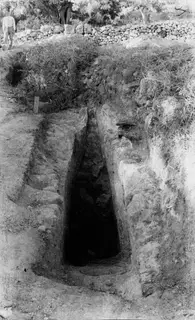 C00103Tomb 406, dromos at Lapithos
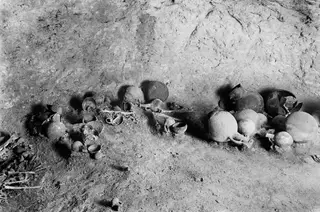 C00174Tomb 311 A at Lapithos, grave goods
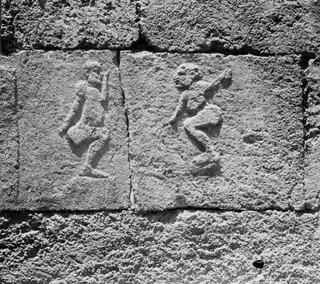 C00784Tomb 1, relief at Trachonas
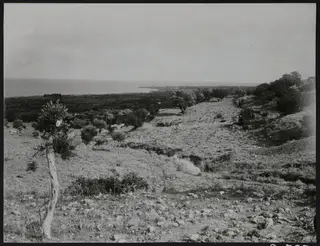 C00797Landscape at Plakes, Lapithos
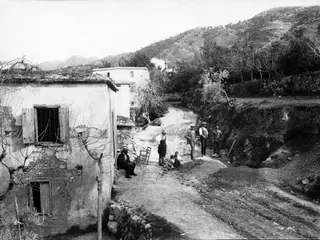 C00958Excavation site at Lapithos, Kylistra
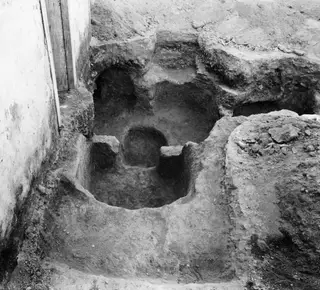 C00959Tomb 501 at Lapithos
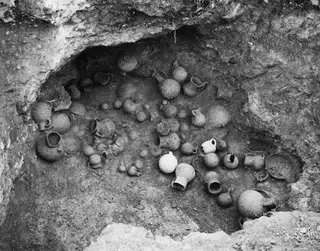 C00962Tomb 702 at Lapithos, interior with finds in situ
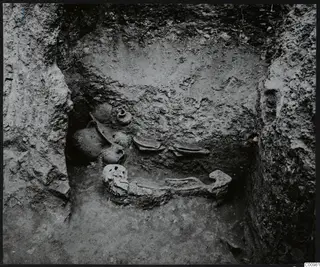 C00981Tomb 602 at Lapithos, interior with finds in situ
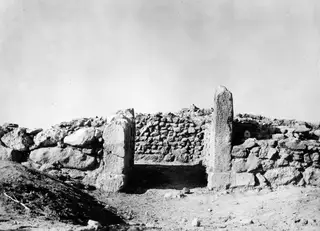 C01372Entrance at Nitovikla
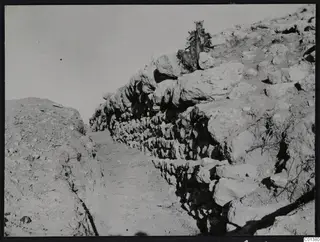 C01380North enclosure wall at Nitovikla, seen from the west
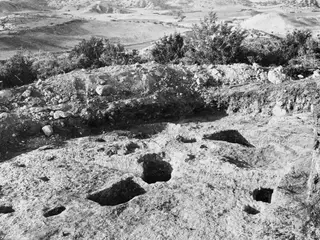 C01404Cult place beneath Tomb 1 at Palaeoskoutella, seen from the east
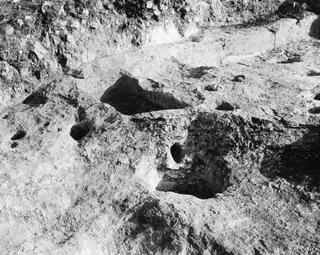 C01407Cult place under Tomb 1 from the north, Palaeoskoutella
Photographs: Swedish Cyprus Expedition, Medelhavsmuseet, Stockholm (CC0)
Who did what
37 recordsBuying, selling and giving 1
- p. 302
Einar Nilson GjerstadAcquired
Gjerstad collected Black Slip, White Painted and Red-on-Black potsherds at Melia.
Potsherds of Black Slip, White Painted and Red-on-Black Wares
Excavation 20
- 1913 · p. 33
John Linton MyresExcavated
Professor Myres excavated at the necropolis of Vrysi tou Barba.
- 1917 · p. 33
Menelaos MarkidesExcavated
M. Markides carried out excavations at the necropolis in 1917 while Keeper of the Cyprus Museum.
Vrysi tou Barba
- 1914–1917 · p. 162
Menelaos MarkidesExcavated
Mr. Markides excavated tombs on the plateau and in the ravine at Lapithos.
some tombsLapithos, Ajia Anastasia
- p. 290
Joan du Plat TaylorFound
Miss du Plat Taylor found a drop-shaped pendant of blue stone south of the excavation.
south of excavation
- p. 294
Joan du Plat TaylorFound
Miss du Plat Taylor found a flat, fish-tailed amulet with Neolithic pottery sherds south of the settlement.
Flat, fish-tailed amulet; Neolithic sherds of potteryc. 300 m. south of the settlement
- 1929 · p. 356
Alfred WestholmDirected excavations
Mr. A. Westholm led the excavation of the Iron Age Sanctuary at Ajios Jakovos.
- 1896 · p. 467
Alexander Stuart MurrayDug forCyprus Exploration Fund
Murray investigated the Enkomi necropolis on behalf of the Cyprus Exploration Fund.
- 1927 · p. 467
Rupert Forbes GunnisExcavated
R. Gunnis conducted a small experimental search at Enkomi.
Enkomi necropolis
- 1914 · p. xv
Menelaos MarkidesExcavated
M. Markides excavated the temple-site at Arsos.
- 1920–1932
Einar Nilson GjerstadDirectedThe Swedish Cyprus Expedition
Einar Gjerstad led the Swedish Cyprus Expedition when it excavated at Enkomi in June and July 1930.
over two hundred tombs
- 1927–1931
Alfred WestholmDug forSwedish Cyprus Expedition
Alfred Westholm excavated two temple-boy statuettes at Mersinaki for the Swedish Cyprus Expedition in 1930.
Limestone temple-boy statuettesNo. Me. 742; Me. 894
- 1927–1931
Erik SjöqvistDug forSwedish Cyprus Expedition
E. Sjöqvist took part in the Swedish Cyprus Expedition's exploration of Enkomi and discovery of additional tombs.
une vingtaine de tombes supplémentaires
- 1927–1931
John LindrosDug forSwedish Cyprus Expedition
John Lindros was the architect on the Swedish Cyprus Expedition's fieldwork in Cyprus.
archaeological sitesChypre
- p. XX
Christos GrigoriouDug forSwedish Cyprus Expedition
Christos Grigoriou worked as a trained workman at the Expedition's excavations.
Excavations in CyprusCyprus
- p. XX
George AnastasiouDug forSwedish Cyprus Expedition
Jorkos Anastasiou served as a foreman for the Expedition's excavations in Cyprus.
Show 5 moreShow fewer
- p. XX
Jorkis AndreaDug forSwedish Cyprus Expedition
Jorkis Andrea worked as a trained workman at the Expedition's excavations.
Excavations in CyprusCyprus
- p. XX
Lazaros NikolaouDug forSwedish Cyprus Expedition
Lazaros Nikolaou served as a foreman for the Expedition's excavations in Cyprus.
- p. XX
Loizos VasiloiDug forSwedish Cyprus Expedition
Loizos served as a foreman for the Expedition's excavations in Cyprus.
- p. XX
Michalis NikolaouDug forSwedish Cyprus Expedition
Michalis Nikolaou served as a foreman for the Expedition's excavations in Cyprus.
- p. XX
Simeon StavrouDug forSwedish Cyprus Expedition
Simeon Stavrou worked as a trained workman at the Expedition's excavations.
Excavations in CyprusCyprus
Recording and study 12
- p. 33
Einar Nilson GjerstadPublished
E. Gjerstad gave a summary of Mr. Markides's diary and notes on burial customs observed during the 1913 excavation.
a summary of Mr. Markides's diary and notes about burial customs observed during the 1913 excavationVrysi tou Barba
- p. 148
- p. 374
Joan du Plat TaylorStudied
Miss Joan du Plat Taylor made notes and observations on Walls 19-33 at Nitovikla.
- p. XIX
Carl M. FürstWorked withThe Swedish Cyprus Expedition
Carl M. Fürst examined the Expedition’s anthropological material.
Anthropological material of the Expedition
- p. XIX
Dr. W. RiedelWorked withThe Swedish Cyprus Expedition
Riedel read the cuneiform inscription of a cylinder seal.
- p. XX
G. OlsonWorked withThe Swedish Cyprus Expedition
G. Olson did conservation work on metal objects.
- p. XX
H. GelinWorked withThe Swedish Cyprus Expedition
H. Gelin did conservation work on metal objects.
- p. XIX
Margareta SjöqvistWorked withThe Swedish Cyprus Expedition
Margareta Sjöqvist handled registration, assisted with typing manuscripts, and did the Expedition's office work.
- p. XIX
Max PieperWorked withThe Swedish Cyprus Expedition
Max Pieper deciphered and described scarabs found at the excavations.
- p. XIX
Percy E. NewberryWorked withThe Swedish Cyprus Expedition
Percy Newberry deciphered and described scarabs found at the excavations and drew many of them.
- p. XIX
Tooulis SvidosEmployed byThe Swedish Cyprus Expedition
Tooulis Svidos served the Expedition and proved skilled at mending pottery and sculptures.
- p. XIX
WillimottWorked withThe Swedish Cyprus Expedition
Willimott analyzed metal objects for the Expedition.
Cyprus
Posts and family 4
- 1912–1931 · p. 33
- p. 374
Joan du Plat TaylorEmployed byCyprus Museum
Miss Joan du Plat Taylor was then Ass. Curator of the Cyprus Museum.
- p. XX
Chrysostomos ParaskevaEmployed bySwedish Cyprus Expedition
Chrysostomos Paraskeva was engaged as an attendant of the Expedition's collections in Cyprus.
Expedition collections in Cyprus
- p. XX
Kakoulis GeorghiouEmployed bySwedish Cyprus Expedition
Kakoullis Georgiou was engaged as an attendant of the Expedition's collections in Cyprus.
Expedition collections in Cyprus
People it is cited for
76 people- Martin Persson Nilsson8 citations
- Percy E. Newberry8 citations
- Johannes Hellner7 citations
- Sigurd Curman7 citations
- Kakoulis Georghiou6 citations
- Michalis Nikolaou6 citations
- Emil Hultmark5 citations
- Lazaros Nikolaou5 citations
- S. Dehlgren5 citations
- Willimott5 citations
- Alexius Kleist4 citations
- Axel Ax:son Johnson4 citations
- Bertil Almgren4 citations
- Bror Millberg4 citations
- C. Fr. Bennet4 citations
- Carl M. Fürst4 citations
- Dr. W. Riedel4 citations
- Elsa Sandberg4 citations
- Erik Åqvist4 citations
- Ernst Kjellberg4 citations
- Ernst Åqvist4 citations
- F. A. Stenqvist4 citations
- G. Olson4 citations
- George Anastasiou4 citations
- H. Gelin4 citations
- Lisa Rügheimer4 citations
- Margareta Sjöqvist4 citations
- Miss Nordenfeldt4 citations
- N. Carlsten4 citations
- Nils Zensén4 citations
46 more
- Professor Wallengren4 citations
- Rosa Lindros4 citations
- Tooulis Svidos4 citations
- Torsten Åqvist4 citations
- V. Lindegren4 citations
- Bessie de Champs3 citations
- C. Alb. Collett3 citations
- Carl Frisk3 citations
- Christos Grigoriou3 citations
- Chrysostomos Paraskeva3 citations
- Fr. Heiss3 citations
- H. Backlund3 citations
- H. Faith-Ell3 citations
- H. Unell3 citations
- Henri Seyrig3 citations
- Inez Sjöqvist3 citations
- John Kroon3 citations
- Jorkis Andrea3 citations
- Karin Hermann3 citations
- Kathleen M. Kenyon3 citations
- L. E. Larsson3 citations
- Loizos Philippou3 citations
- Max Pieper3 citations
- Menelaos Markides3 citations
- N. Rettig3 citations
- O. Wallenberg3 citations
- Palmgren3 citations
- Simeon Stavrou3 citations
- Svea Adling3 citations
- Aug. Nachmanson2 citations
- Björnson-Langen2 citations
- Fr. Jansson2 citations
- Gustaf VI Adolf of Sweden2 citations
- Harry Ax:son Johnson2 citations
- J. Sachs2 citations
- Lucy Talcott2 citations
- Luke Zenon Pierides2 citations
- Prince Eugen2 citations
- Reginald Nicholson2 citations
- Joseph Claudio Gaffiero
- K. Heinecke
- Livia Gjerstad
- Ronald Storrs
- Rupert Forbes Gunnis
- Theophilus Mogabgab
- Edward Stubbs
Institutions it is cited for
6 institutions- Swedish Cyprus Expedition16 citations
- Swedish Cyprus Committee12 citations
- Lund University8 citations
- Malmö Ljustryksanstalt3 citations
- Statens historiska museum3 citations
- Uppsala University
Mentioned in
141 mentionsTomb records · 116
- Ayios Iakovos-Melia, SCE Tomb 1
Catalogue of the tomb · 1934 · p. 306
- Ayios Iakovos-Melia, SCE Tomb 10
Catalogue of the tomb · 1934 · pp. 337–340
- Ayios Iakovos-Melia, SCE Tomb 11
Description of the tomb, secondary account · 1934 · pp. 340–341, 340
It was of the usual type with three steps at the narrow back end, and a oblong, sloping area in front of the stomion.
- Ayios Iakovos-Melia, SCE Tomb 12
Catalogue of the tomb · 1934 · pp. 341–345
- Ayios Iakovos-Melia, SCE Tomb 13
Catalogue of the tomb · 1934 · pp. 345–349
- Ayios Iakovos-Melia, SCE Tomb 14
Catalogue of the tomb · 1934 · pp. 349–354
- On Ancient Cyprus · 12listed under Cited on Ancient Cyprus
- Excavations · 6listed under Excavations it is cited for
- Archivelisted under In the Archive
- Objects · 7listed under Cited on Ancient Cyprus
Corrections and additions
Know this document?
Help us cite it fully and point readers to a copy.
We would like to hear about
- The full citation, or a correction to ours
- Where a copy can be read or downloaded
- Missing parts, volumes or plates
- Related documents
Tell us if you would like to be thanked by name on the page.