
Lecture·CAARI Cyprus·2024
Law and (dis)order? Managing the archaeological heritage of Cyprus in early British times, 1878–1914
Chapters
About the lecture
Thomas Kiely, curator for ancient Cyprus at the British Museum, examines the legal and administrative management of archaeological heritage in Cyprus between the start of the British protectorate in 1878 and the passing of the 1905 Antiquities Law. Drawing on records in the Cyprus State Archives, the National Archives in London and the British Museum, he sets the island's early colonial legislation alongside the social and economic realities of village digging.
The talk begins with European expectations in 1878, when figures such as Charles Newton and Georges Perrot assumed Cyprus would become an unrestricted archaeological field for Britain. Kiely contrasts this with late Ottoman efforts to control exports through the 1869 and 1874 regulations and the Imperial Ottoman Museum, illustrated by an 1873 dispute over a statue of Bes from Amathus. He then outlines five phases of British policy: Garnet Wolseley's 1878 moratorium on private digging and the prosecution of Alessandro Palma di Cesnola; the revival of the Ottoman partage system in the early 1880s, which led to commercial excavations at sites such as Marion and abuses by colonial officials including Falkland Warren; Henry Bulwer's 1887 resolution restricting permits to public museums and scientific bodies; local Cypriot pressure in the 1890s to stop exports and fund the Cyprus Museum, founded in 1882; and the ten-year struggle under Walter Sendall that produced the 1905 law.
Alongside high-level exchanges between Nicosia and Colonial Office officials such as Edward Fairfield, Kiely traces local petitions in the archives. These include an 1880 request in Greek and Ottoman Turkish from forty-two impoverished inhabitants of Larnaca asking to dig for their livelihood, and the lenient treatment of subsistence diggers by district commissioners during the economic hardships of the late 1880s. The final section follows Grigoris Antoniou, who worked with Max Ohnefalsch-Richter and David Hogarth at Salamis, received a rare permit in his own right to excavate a tomb near Enkomi, and both sold finds from Klavdia-Tremithos to the British Museum and directed its subsequent excavations there. In the discussion afterwards, Diana Markides comments on Sendall's collaboration with the Cyprus legislature in 1895 and the obstruction of his export ban in London.
Background
Where to read more on this site before or after watching.
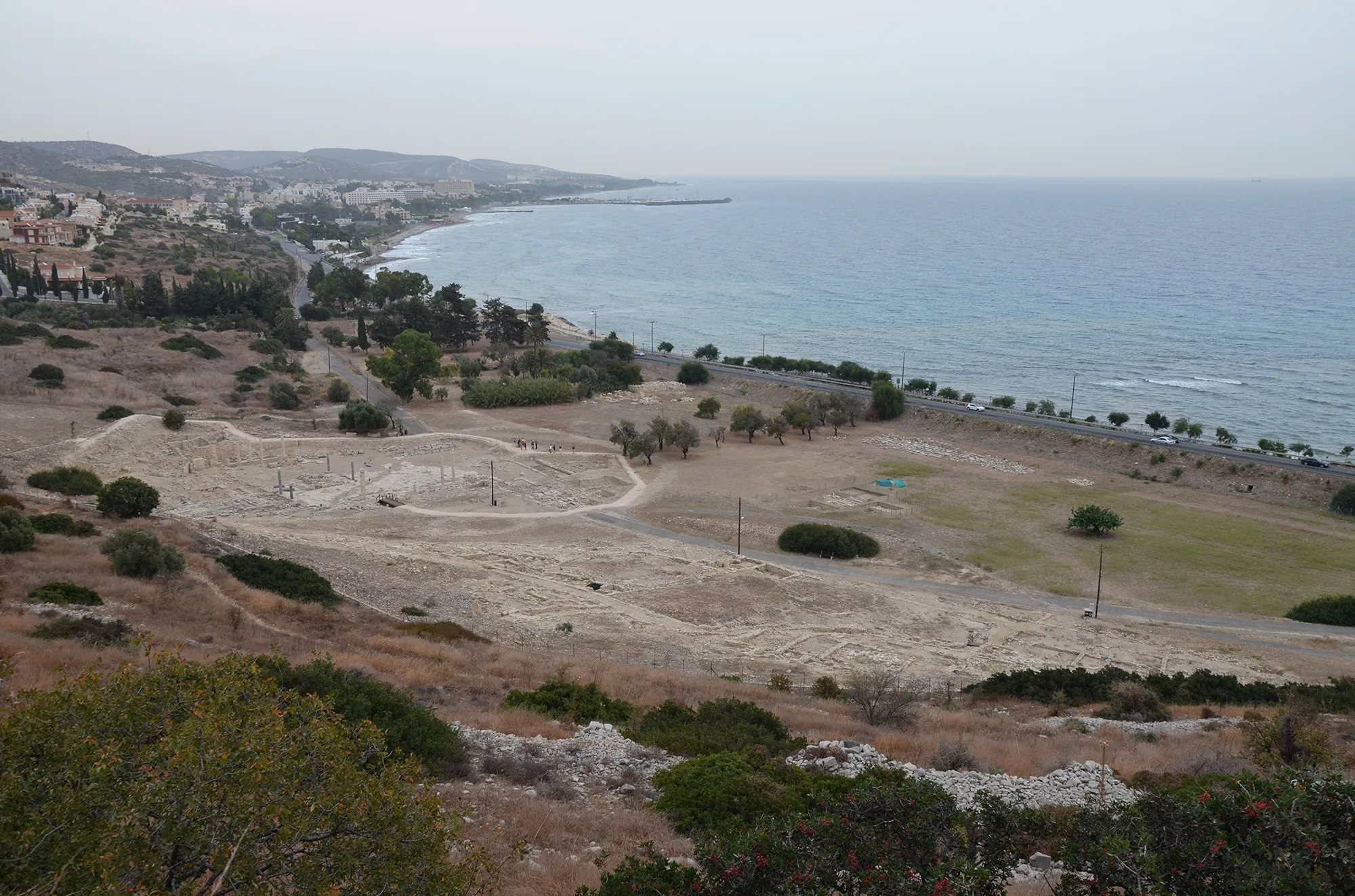
The site
Amathus
Amathus was the capital of one of the Iron Age kingdoms of Cyprus, on a coastal hill about 10 km east of Limassol. It was founded on an empty site in the 11th century BC and lived in until the end of the 7th century AD. Its acropolis carried a sanctuary of Aphrodite and the kings' palace; its people kept the island's old non-Greek language, Eteocypriot, at least until the time of Alexander.
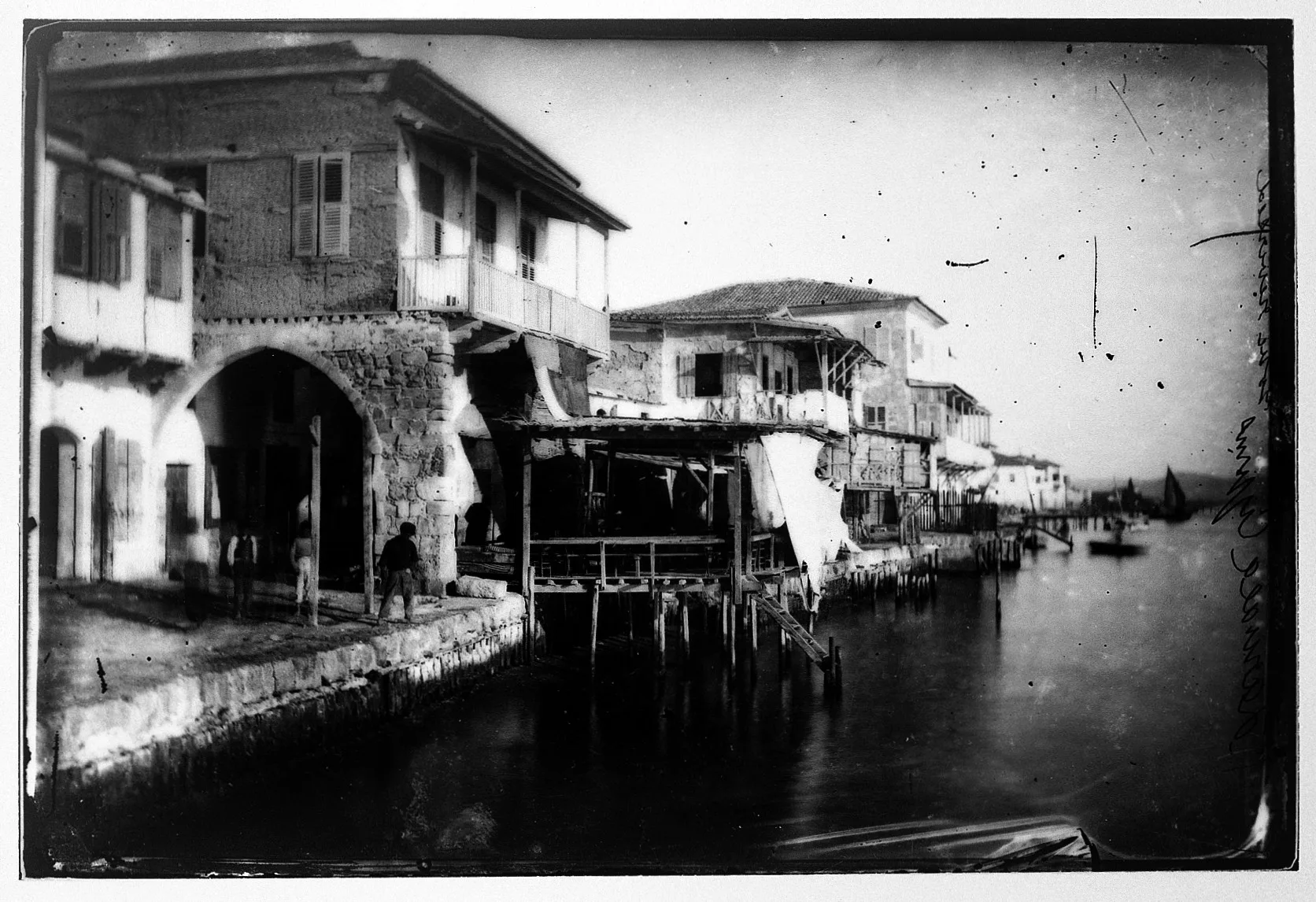
In the compendium
Firmans and Partage: The Lawful Export of Antiquities from Ottoman Cyprus, 1860s to 1905
The firmans, landowners' rights and the division of finds in thirds under which consuls, excavators and museums lawfully exported Cypriot antiquities from the 1860s until the law of 1905.
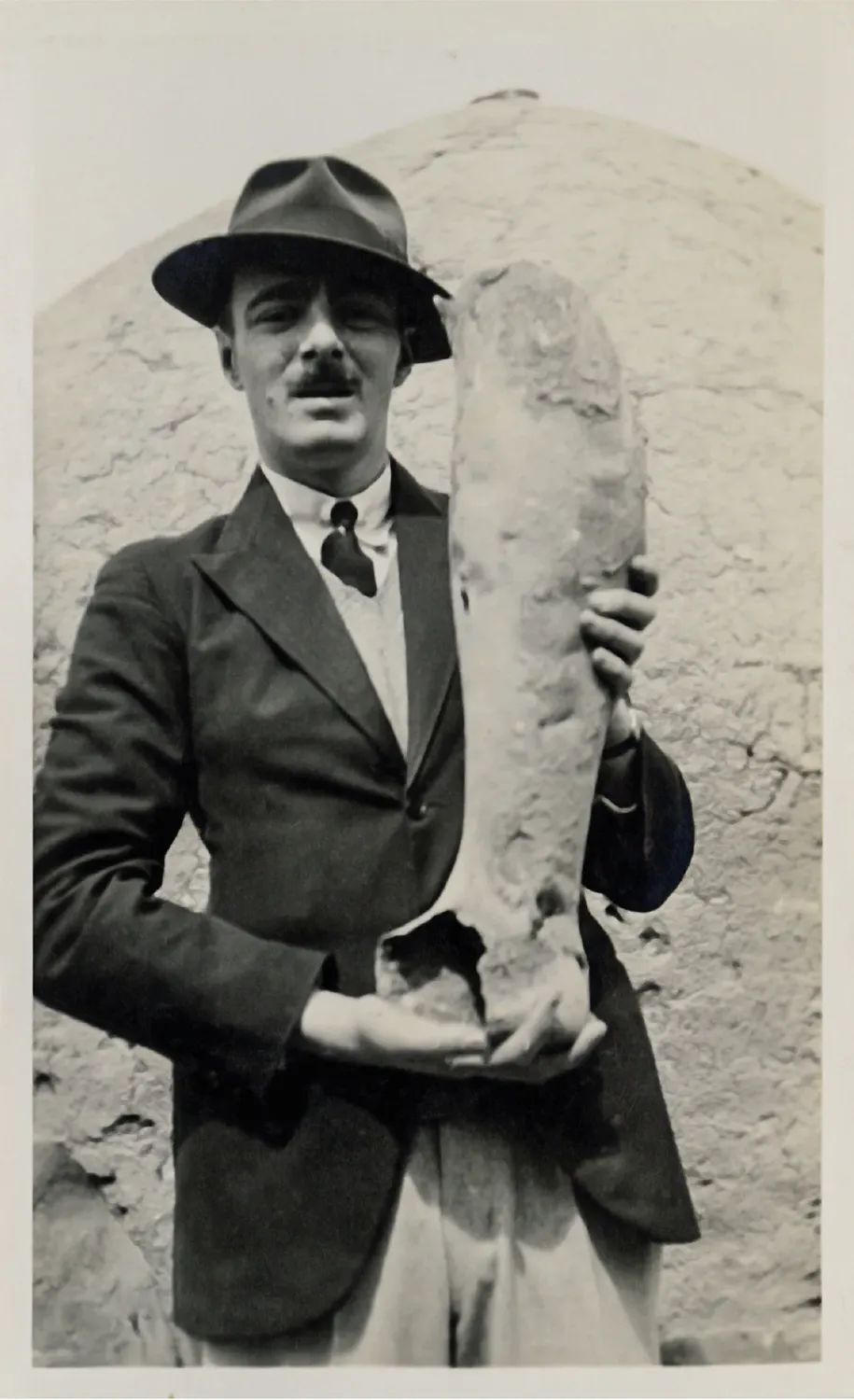
In the compendium
Illicit Digging under British Rule, 1878 to 1960
How unlicensed tomb-digging continued in Cypriot villages under British rule, how the Museum, the police and the Department of Antiquities answered it, and whether the lawful trade encouraged it.
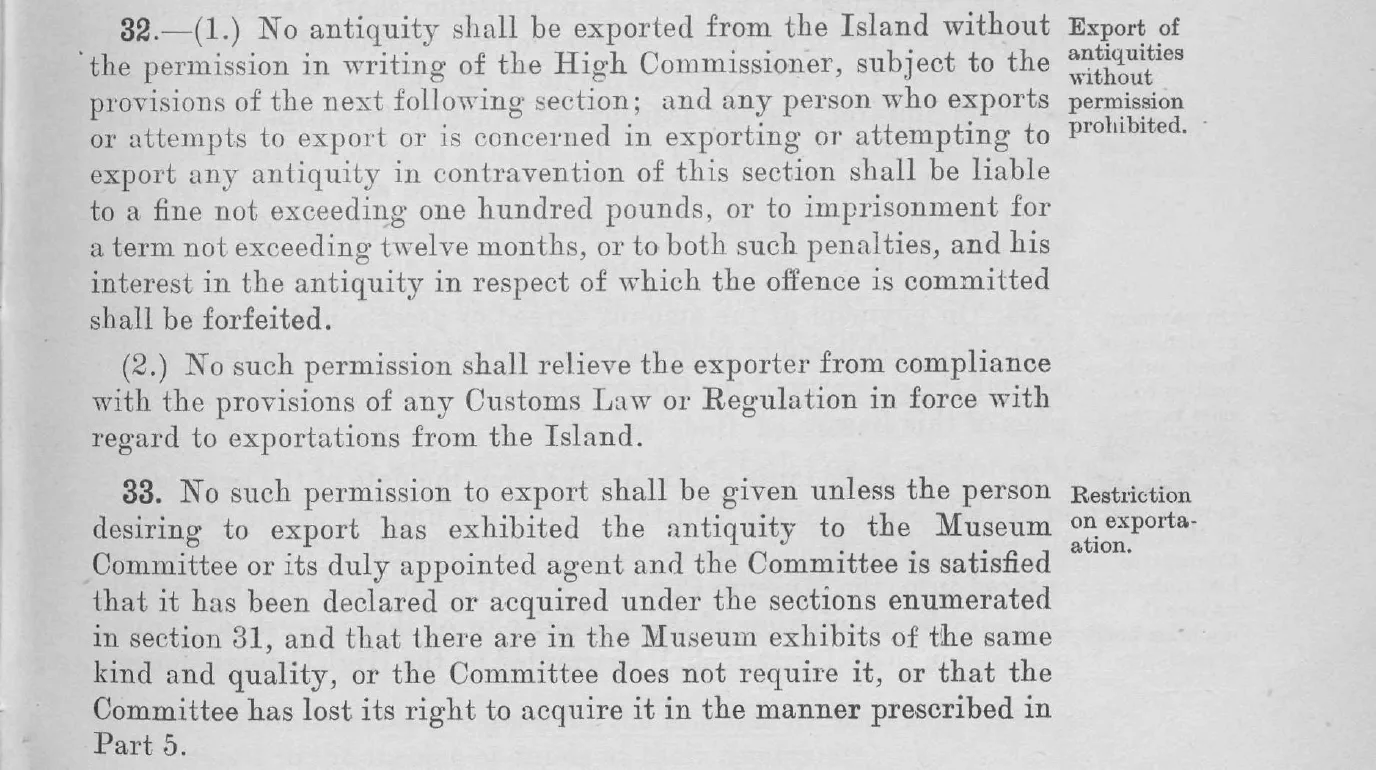
In the compendium
The Antiquities Laws of 1905 and 1935
What the Antiquities Laws of 1905 and 1935 said about ownership, finds, excavation, dealing, collections and export, and how they were amended up to 1996.
Map of Cyprus
Places discussed in the talk
- Has a page on this site
- Other places
- Ground above 200, 500, 1,000 m