
Early Bronze Age II
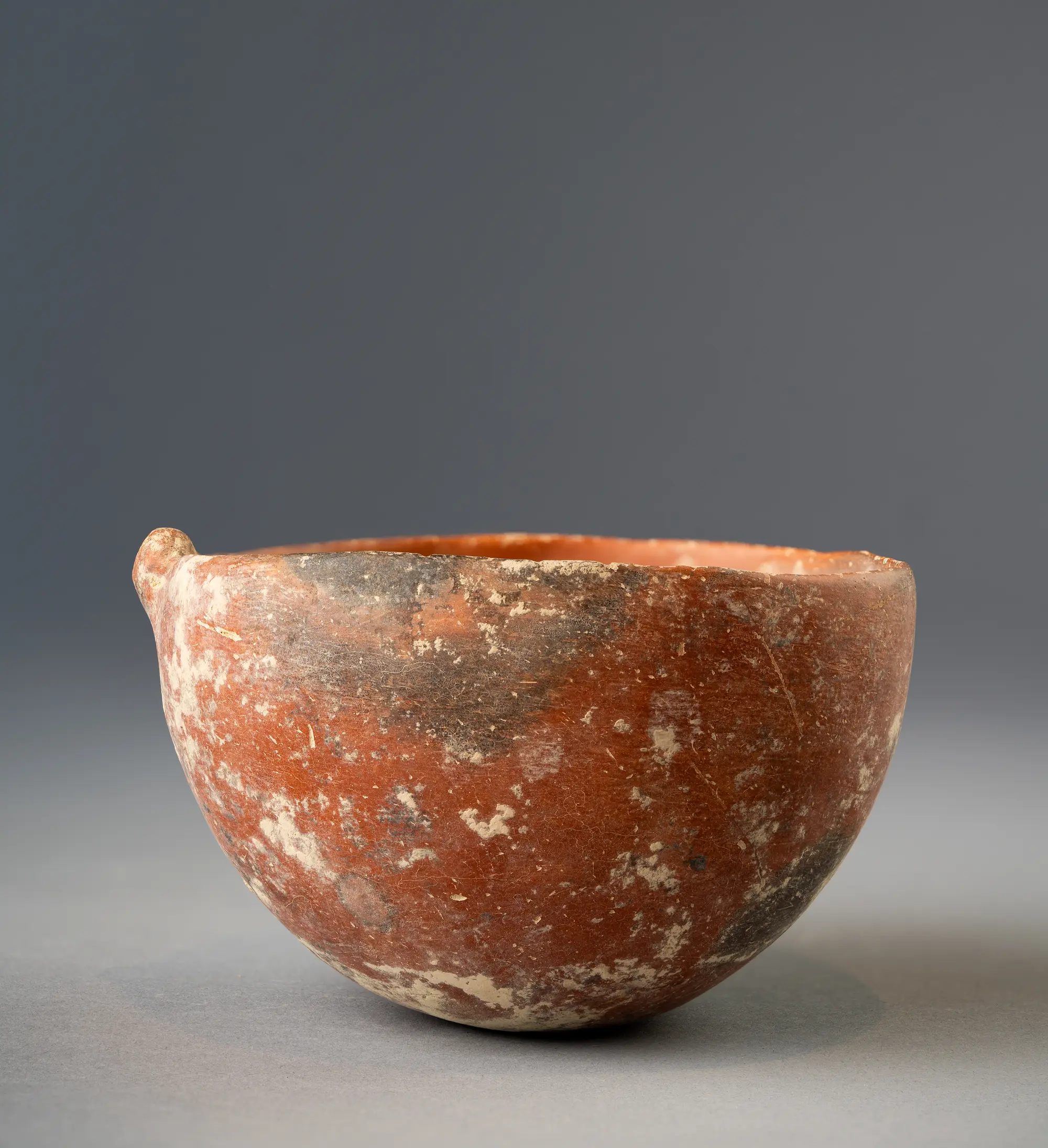
Mottled Red Polished Knob-Lug Bowl
Deep hand-made Red Polished hemispherical bowl with an upturned knob lug and grey-black fire mottling across the polished red slip. Early Cypriot II–Middle Cypriot I.
Date
2200 - 1900 BC
Accession No.
BWL-BA-012
Collection
Alexis Drakopoulos
Provenance
- 1965–1969, The Goodman Collection
- 2025–present, Alexis Drakopoulos, London
Early Cypriot II–Middle Cypriot I, c. 2200–1900 BCE · Red Polished ware · Hand-made
A deep, full hemispherical bowl on a rounded base, larger and more generously proportioned than most in the series. The rim is plain and slightly uneven, and at the left a stubby knob lug rises above it, angled upward and outward. The interior shows a smooth orange-red.
The exterior slip is a deep brick red with a good polish, crossed by a broad grey-black cloud that hangs below the rim at the centre and a second darker patch near the base on the right. Irregular white patches of calcareous deposit are scattered over the body, heaviest toward the base, and fine thread-like marks run across the surface, probably left by roots in the burial soil.
Commentary
This is a plain Red Polished knob-lug bowl, Stewart's Class XIII F2 [1], of the kind that filled the chamber tombs of the Early Cypriot north coast; Kehrberg counted it in every tomb in her sample, sometimes by the dozen [2]. Its Roman-numeral sub-ware is a matter of convention. Stewart classed the knob-lug bowl as Red Polished II, while Merrillees pointed out that many are technically closer to Red Polished III [3]. It is simplest to call it Red Polished ware and let the type label carry the classification. A date of Early Cypriot II–Middle Cypriot I follows the span of the type [6]; a plain bowl without context cannot be fixed more closely.
The surface is a clear example of mottling. Unlike black-topped bowls, where the potter reduced the rim on purpose, the dark clouds here fall where they will: one across the upper wall and another low on the opposite side. They mark contact with fuel or neighbouring pots in an open firing. Museum catalogues use "mottled" as a descriptive sub-label for exactly this effect, as on a single-lug bowl from Nicosia-Ayia Paraskevi in the British Museum [4]. An Ashmolean bowl from the same cemetery gives a comparable deep hemispherical profile [5].
The lug is a stubby knob; many lugs of this class are pierced for a cord, and no string-hole is visible on this one from the side shown. The upward tilt of the lug, standing proud of the rim, is a common variation within the class and may have given a thumb-hold when the bowl was lifted. Most complete bowls of this kind come from tombs, and the find-place of this one is not recorded.
References
- 1.Stewart, J.R. (1962) The Early Cypriote Bronze Age. In The Swedish Cyprus Expedition IV.1A. Lund: Swedish Cyprus Expedition, Index of Types, Class XIII F.
- 2.Kehrberg, I. (1982) Early and Middle Cypriote Chronology Again. Levant 14, pp. 59–72.
- 3.Merrillees, R.S. (1991) Contribution in Barlow, J.A., Bolger, D.L. and Kling, B. (eds) Cypriot Ceramics: Reading the Prehistoric Record. Philadelphia: University Museum, p. 263.
- 4.British Museum, London, inv. 1888,0927.9. Red Polished (mottled) hemispherical bowl with one pierced lug, Nicosia-Ayia Paraskevi.
- 5.Ashmolean Museum, Oxford, inv. AN1896-1908.C.8. Red Polished hemispherical bowl, Nicosia-Ayia Paraskevi.
- 6.Åström, P. (1966) Excavations at Kalopsidha and Ayios Iakovos in Cyprus. Studies in Mediterranean Archaeology 2. Lund: Paul Åström, pp. 158–169.
More from the Catalogue
Browse related objects
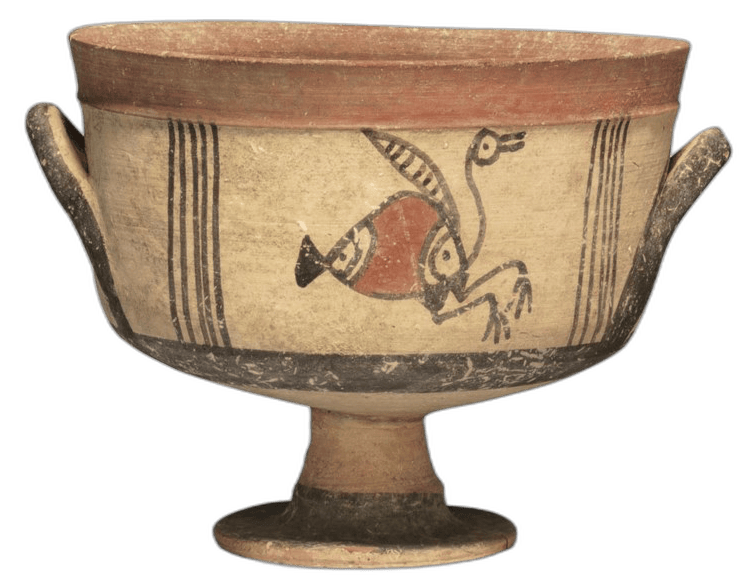
Bichrome Kylix with Bird Free Field Art
Geometric III
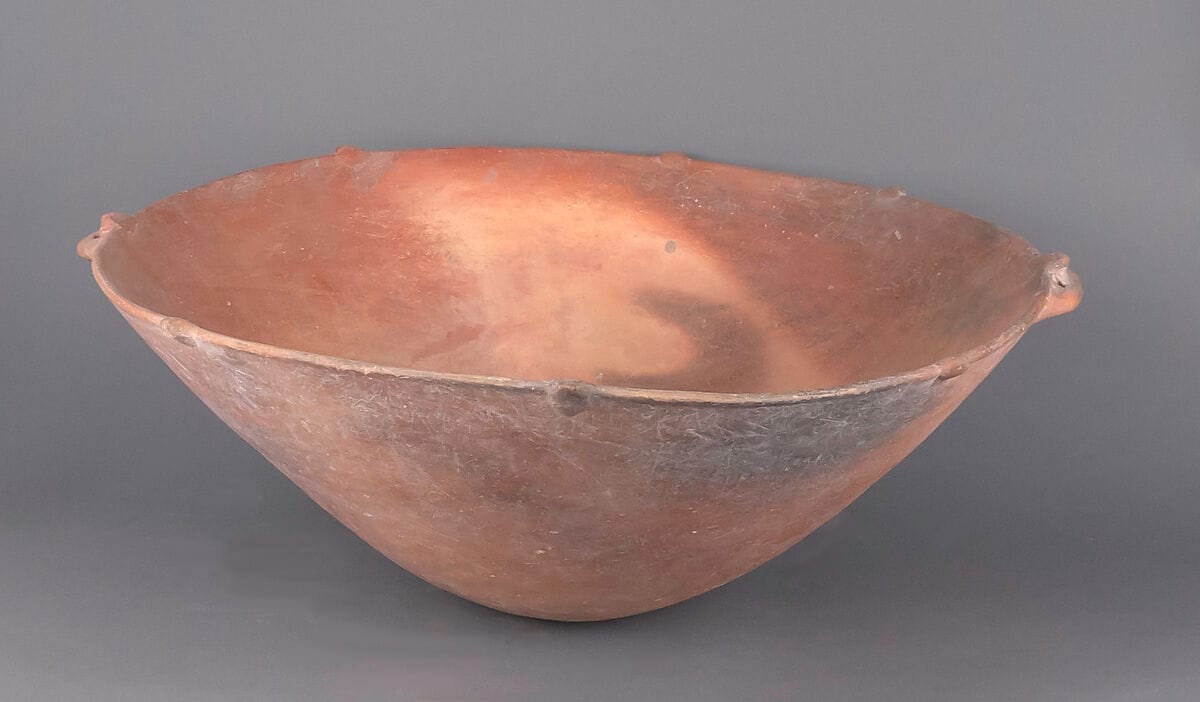
Milk bowl
Bronze Age
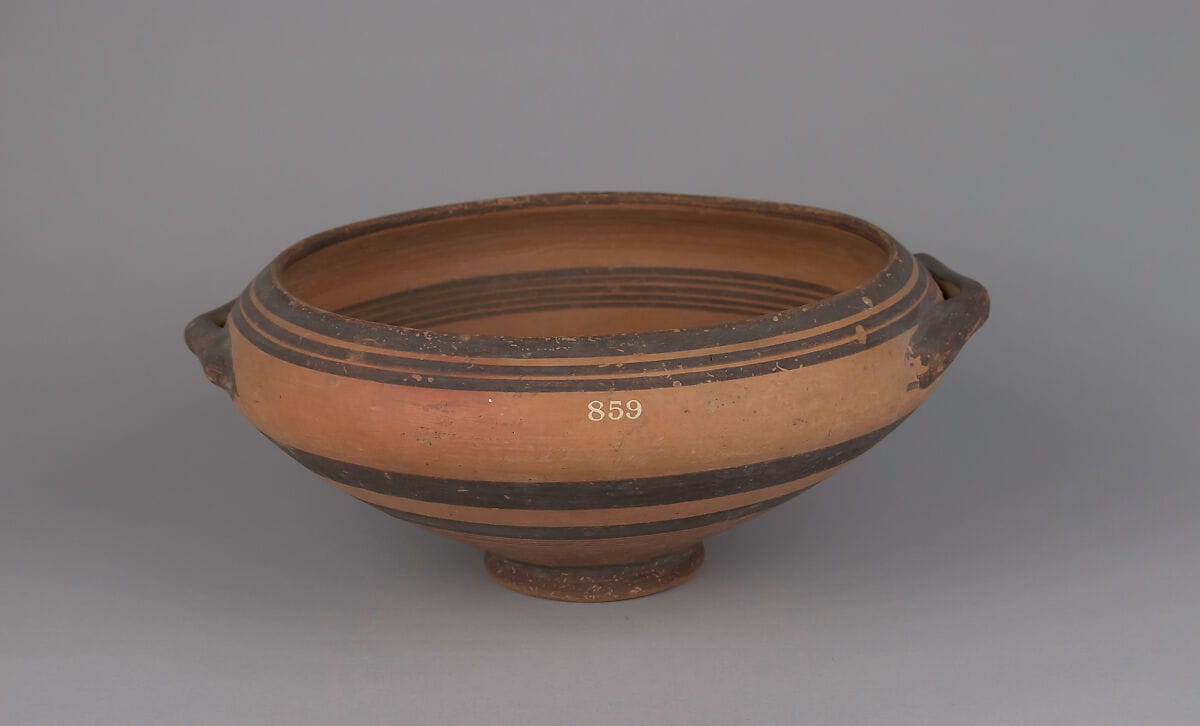
Bowl
Geometric III
Krater
Archaic I
Handle of a bowl
Bronze Age
Bowl
Geometric I
Bowl
Bronze Age
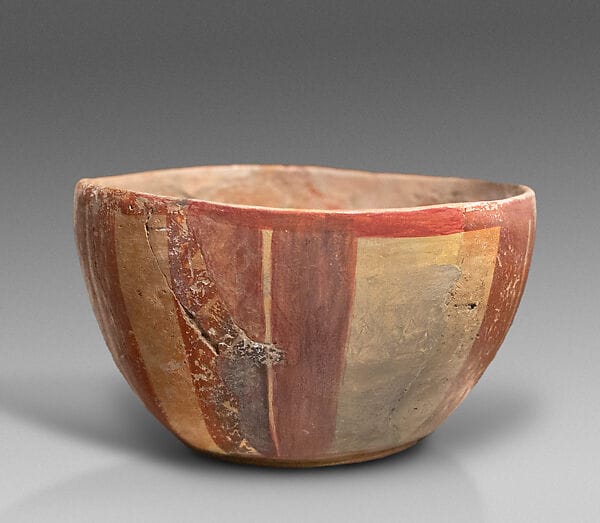
Terracotta bowl
Chalcolithic
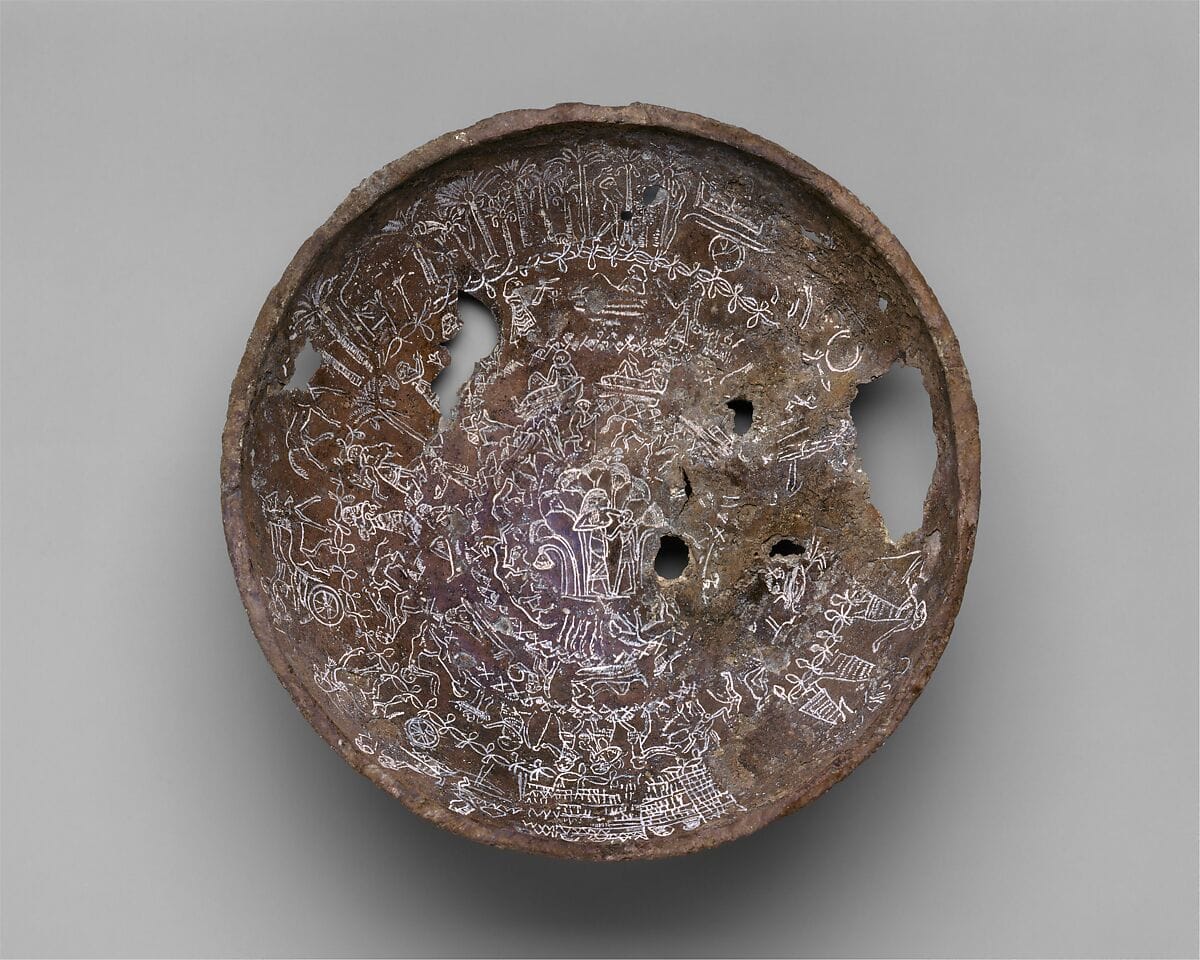
Silver bowl
Archaic I
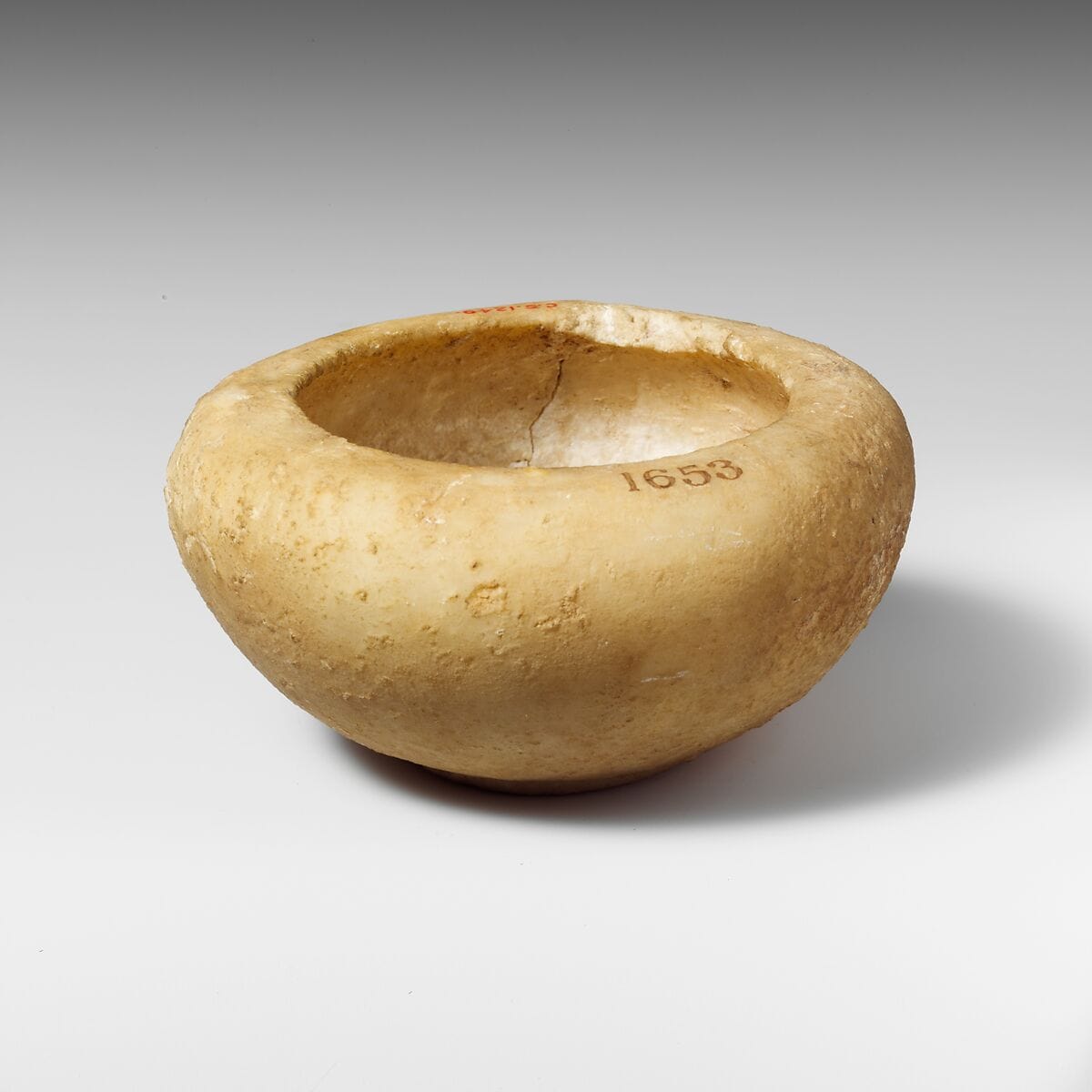
Alabaster bowl
Classical
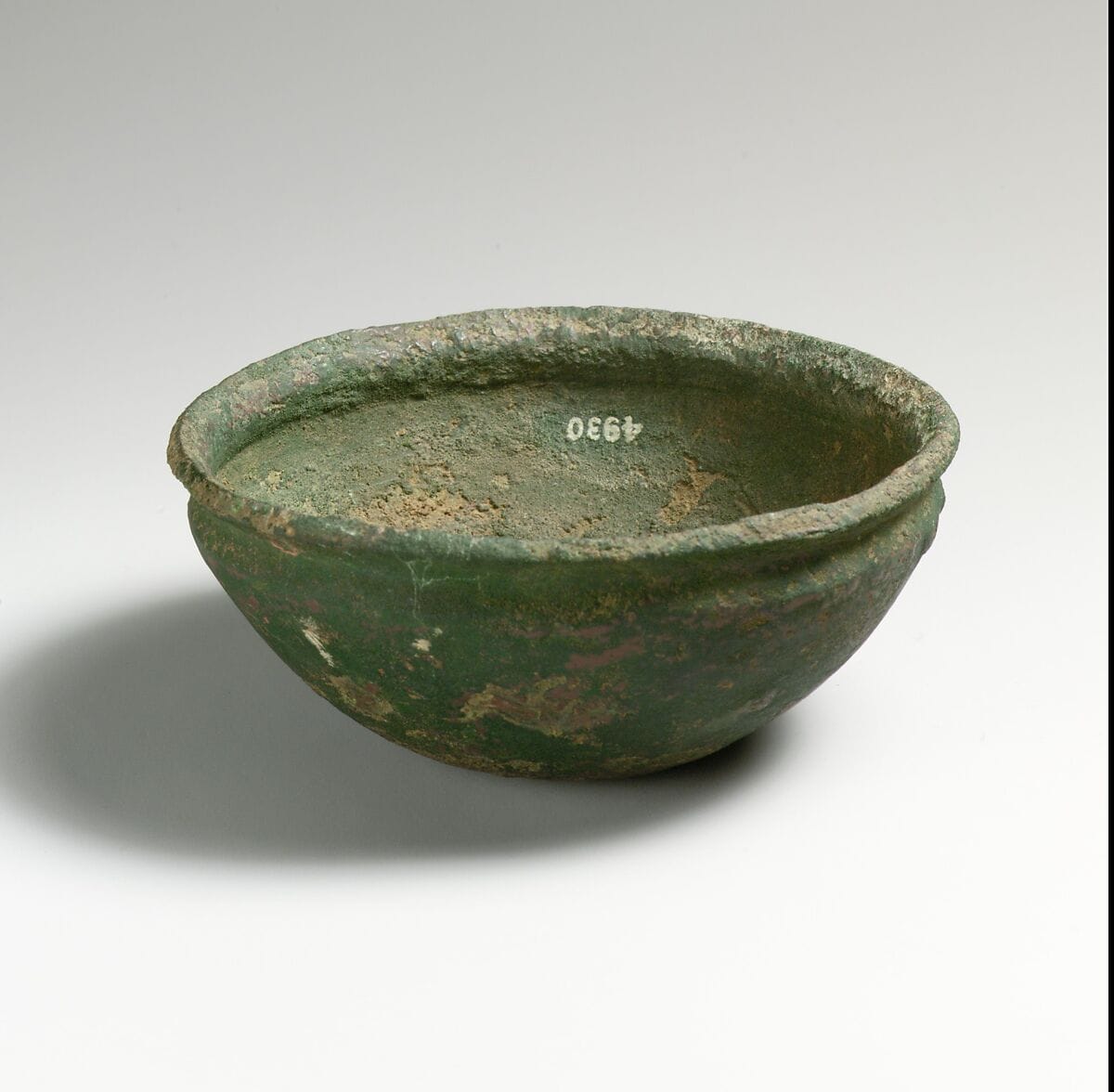
Bronze phiale (libation bowl)
Archaic II
Bowl fragment, inscribed
Archaic II
Bowl
Bronze Age
Bowl
Archaic I
Bowl
Late Bronze Age II
Bowl
Geometric III
Terracotta footed bowl
Archaic I
Marble bowl fragment with Phoenician inscription
Classical