
Lecture·Archaeological Research Unit - University of Cyprus·2024
Through the Looking-Glass: Investigating Egyptian and Levantine Imitations of Bronze Age Cypriot Ceramics
Chapters
About the lecture
Sarah Vilain of the CNRS examines the imitation, adaptation and material transposition of Middle and Late Bronze Age Cypriot pottery in Egypt and the Levant. Beginning in the mid-18th century BC, Cypriot ceramic exports reached the Nile Delta and the Levantine coast in growing numbers, prompting local craftworkers to reproduce their shapes and decorative schemes.
The first part of the lecture traces the earliest copies, focusing on Middle Cypriot White Painted Pendent Line Style and Cross Line Style jugs from eastern Cyprus. At Tell el-Dab'a in the eastern Delta, a burnt palace storeroom of the late 14th to early 15th Dynasty yielded nine wheel-made juglets in local Nile clay that copy Cypriot White Painted jugs at a reduced scale. Vilain connects their manufacture to a brief drop in genuine imports during a period of political instability before the Hyksos takeover. Elsewhere in Egypt, potters produced miniature votive copies for burials, such as a six-centimetre juglet from Tarkhan, or applied Pendent Line decoration to local piriform Tell el-Yahudiyeh shapes. In the Levant, by contrast, imports were plentiful and Middle Bronze Age copies were rare and full-sized, as illustrated by a clumsy Cross Line Style copy from Tell Tweini.
Moving into the Late Bronze Age, Vilain surveys Levantine copies of White Slip and Monochrome bowls at Ugarit, along with wheel-made and handmade imitations of White Shaved dipper juglets at Sidon and Tell Kazel, where both imported and local juglets held bronze sheet figurines in a temple treasury. She then turns to what she terms entangled vessels inspired by Base Ring ware: jugs in northern Lebanon that pair Base Ring I shapes with traditional Levantine Painted Ware collar motifs, and southern Levantine wheel-made jugs around Lachish that render Base Ring II linear patterns in red paint over a white slip, painted line by line without the Cypriot multiple brush.
The final section returns to New Kingdom Egypt, where Base Ring I juglets were copied in Nile clay with Egyptian motifs such as lotus flowers, and transposed into high-status materials for elite burials. Examples include dark blue cobalt glass bilbils and more than fifty stone vessels in travertine and serpentine. Because many stone jugs and tankards copy handle attachments suited to metalwork rather than clay, Vilain argues that lost Cypriot bronze tableware circulated alongside pottery as models, and notes similar stone vessels found back on Cyprus at Hala Sultan Tekke.
In the discussion, Artemis Georgiou, Ourania Kouka and members of the audience ask about White Painted terminology, opium and aromatic oil residue analyses inside Base Ring juglets, petrographic evidence for Levantine production centres, and how Cypriot pushed-through handles distinguish genuine imports from local wheel-made copies.
From our collection
Pieces in the Drakopoulos collection of the kinds and periods this talk covers: White Painted ware (Bronze Age), White Slip ware, Base Ring ware.
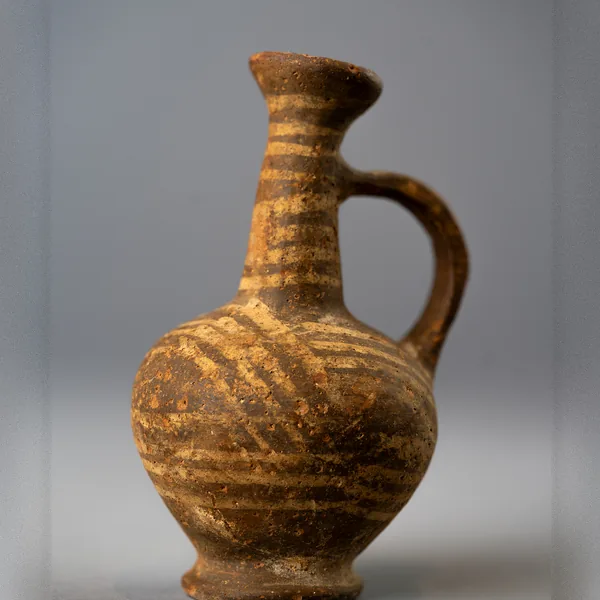
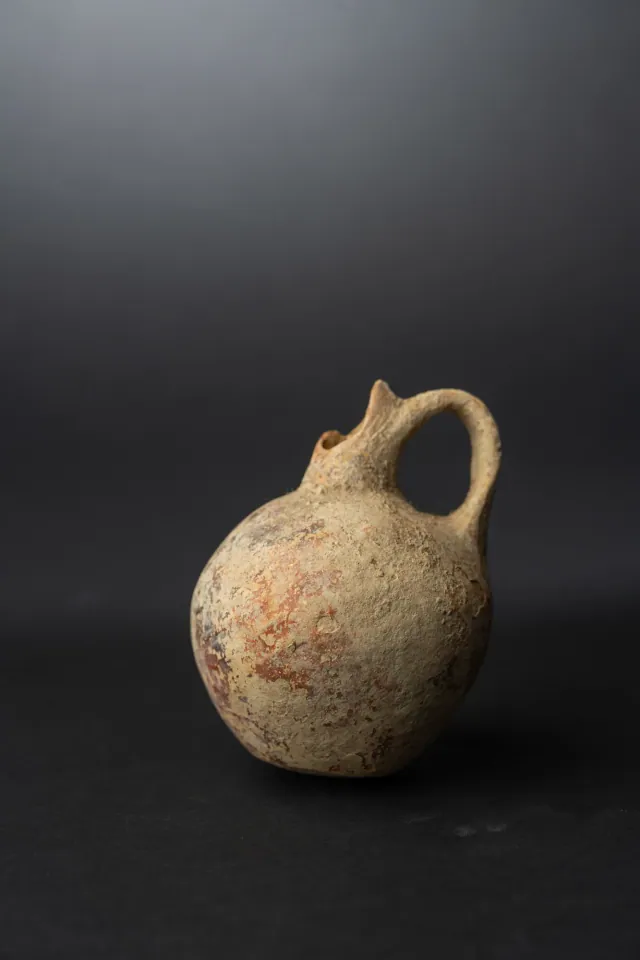
Base Ring II Bilbil Juglet with White-Painted Bands
Base Ring ware
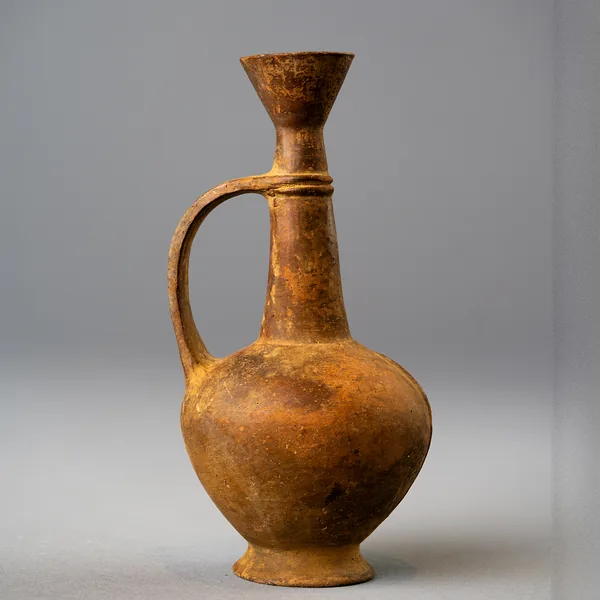
Base Ring Bilbil Juglet with Funnel Mouth and Neck Ridge
Base Ring ware
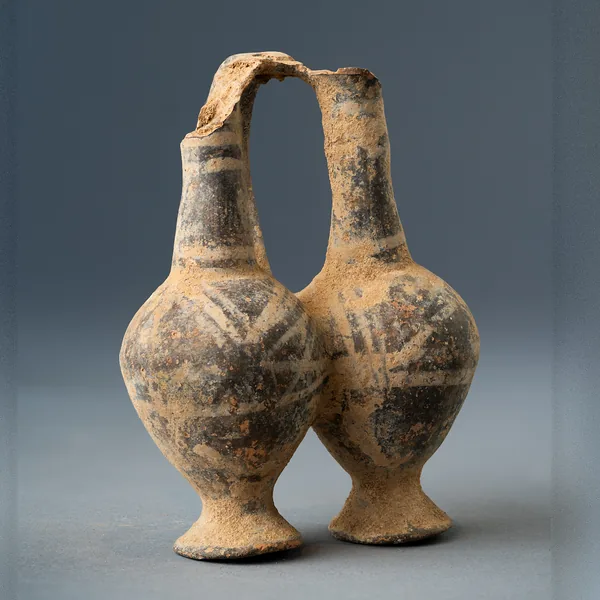
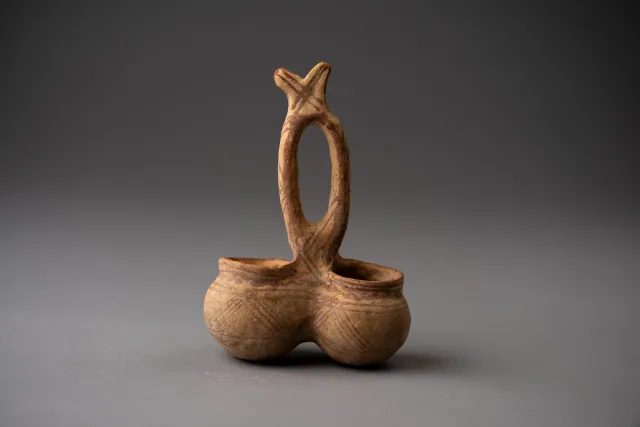
Base Ring II Double Juglet with White-Painted Decoration
Base Ring ware
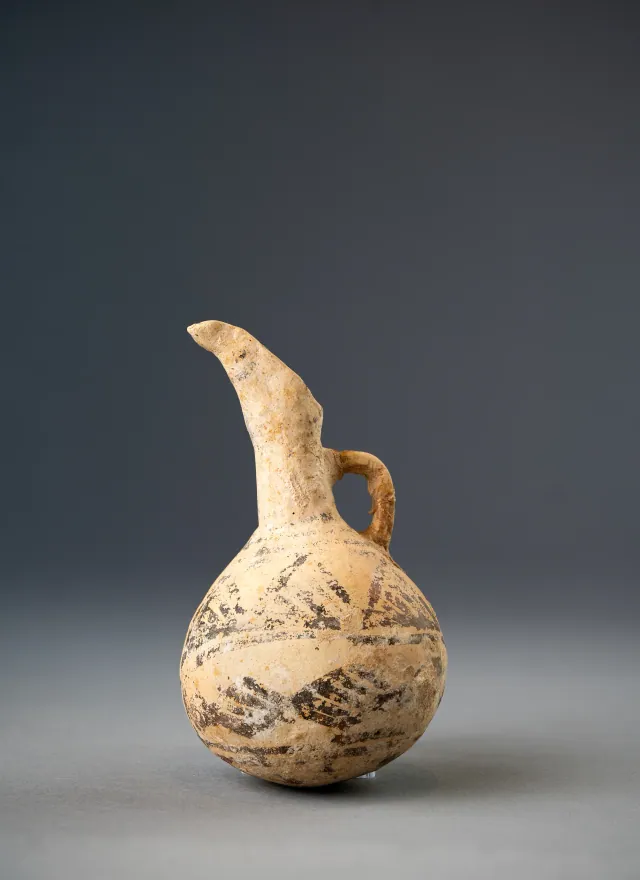
White Painted III-IV Juglet with Cut-away Neck
White Painted ware (Bronze Age)
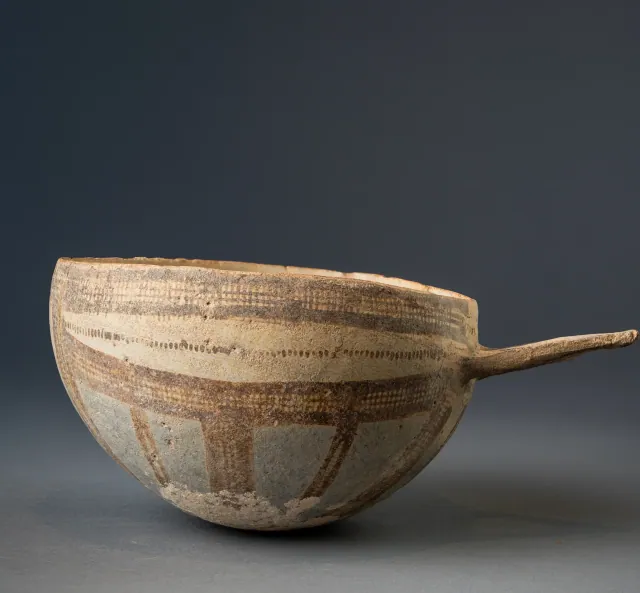
White Slip II Hemispherical Bowl with Wishbone Handle
White Slip ware
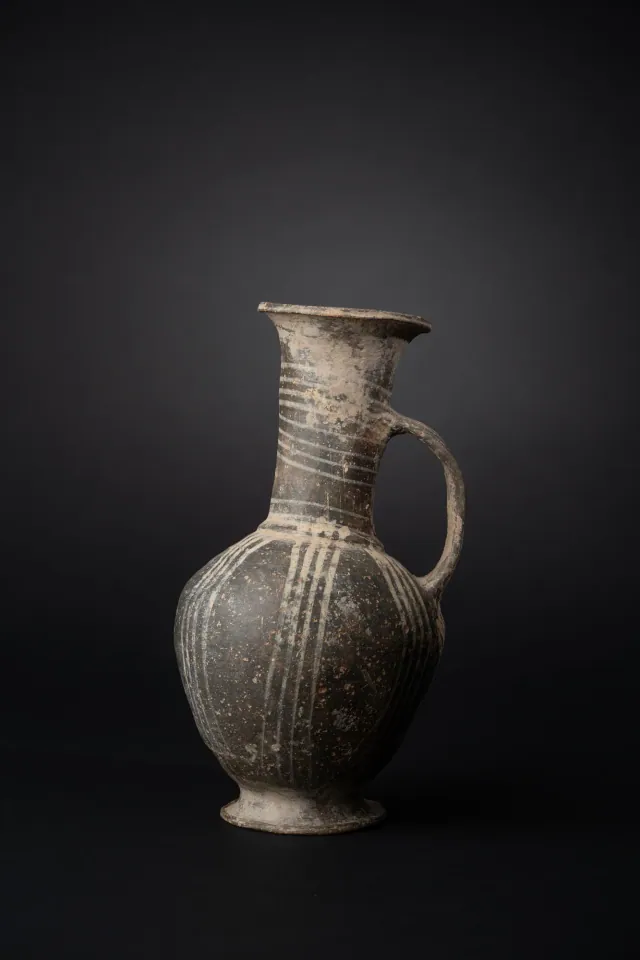
Base Ring II Jug with White-Painted Lattice Bands
Base Ring ware
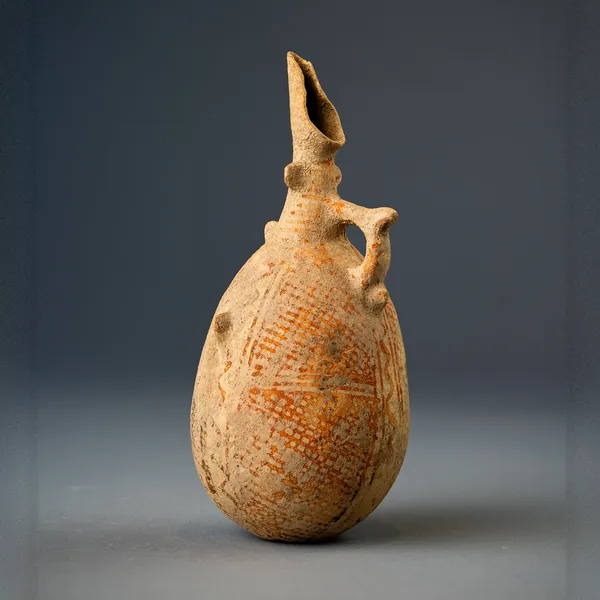
White Painted II Jug with Cut-away Neck and Lattice Panels
White Painted ware (Bronze Age)
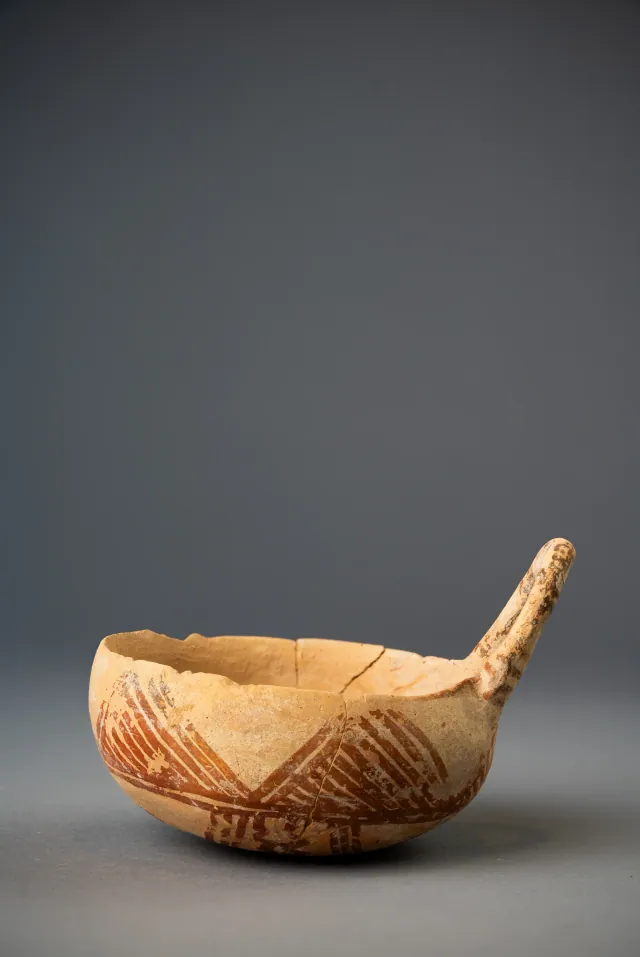
White Painted III-IV Bowl with Rising Handle and Hatched Triangles
White Painted ware (Bronze Age)
Found at the places discussed
Objects in our catalogue, in museum collections, recorded as found at these sites.
).webp)
).webp)
).webp)
).webp)
Background
Where to read more on this site before or after watching.
In the compendium
White Painted Ware
The hand-made, pale-slipped Bronze Age pottery of Cyprus painted with dark matt geometric motifs, flourishing in the Middle Bronze Age as WP I to VI.
In the compendium
White Painted Styles
The decorative styles into which scholars divide handmade Bronze Age White Painted pottery, from WP I String-hole to the WP VI Soft Triglyphic Style.
In the compendium
White Slip Ware
The hand-made Late Bronze Age tableware with a thick white slip and dark painted decoration, mostly hemispherical bowls, widely exported from Cyprus.
The period
Middle Bronze Age
The Middle Cypriot period, c. 1950–1650 BCE, of multi-roomed village houses, White Painted pottery, growing copper production and the first overseas trade.
Map of Cyprus
Places discussed in the talk
- Ground above 200, 500, 1,000 m
Places
- 1Kalopsidha (approx.)
- 2Hala Sultan Tekke