
Contents
Cypriot pottery has been sorted by ware first and shape second since the first catalogues of the Cyprus Museum and the Cesnola Collection, and a ware is defined mostly by its surface treatment: White Painted is an unslipped surface with black paint, Bichrome is red and black paint on an unslipped surface, Black-on-Red is a red slip carrying black motifs [1, pp. 238–239]. Decoration technique runs across that system rather than inside it. The same method turns up on different wares and in different materials: lime-filled incision on both Red Polished and Black Polished jugs, the mould on figurines and on relief vessels, punching and hammering on gold diadems and silver bowls. This entry follows the techniques that the catalogue uses as filters, roughly in the order a vessel or ornament would meet them: paint, added clay, marks pressed or cut into the surface, the comb, the mould, the chisel, and the goldsmith's tools. It ends with the large class of objects whose records say the surface is plain.
For the wares themselves see Bichrome, Red Polished and Combed Ware; for the metals see metals beyond copper and the jewellery section.
| Technique | Main materials | Main date range in Cyprus | Typical objects |
|---|---|---|---|
| Combing | Slipped clay | Late Neolithic | Jugs, spouted bowls |
| Incision, impression and puncturing | Polished clay | Late Chalcolithic to Middle Bronze Age | Red and Black Polished jugs, models |
| Modelled figures and attachments | Clay | Early Cypriot I onwards | Vounous jugs and bowls, composite vases |
| Painting in two colours | Unslipped or slipped clay | Late Middle Cypriot to Cypro-Classical | Jugs, tankards, amphorae, plates |
| Moulding | Clay | From c. mid-7th century BCE | Terracotta figurines and heads |
| Carving | Limestone, ivory, hardstone | Late Bronze Age to Classical | Sarcophagi, altars, gems, gaming boxes |
| Repoussé, chasing, granulation, filigree, inlay | Gold, silver, bronze | Late Bronze Age to Classical | Diadems, bowls, earrings, rings |
Painting in two colours
Bichrome decoration means red and black paint applied together, classically on the pale, unslipped surface of a White Painted type of fabric [1, p. 238]. It appears in three separate episodes in Cyprus, and they should not be run together.
The first belongs to the end of the Middle Bronze Age. Handmade Bichrome is dated to the later Middle Cypriot period and the start of Late Cypriot IA1, and wheelmade Bichrome to LC IA1, alongside the White Painted VI family [4, p. 6]. At Milia and Ayia Irini the commonest form is a jug or tankard with a globular body, a high cylindrical neck, a ring base and a strap handle from rim to shoulder, and these vessels travelled to the Syro-Palestinian coast, where Cypriot tankards were found at Megiddo [4, p. 6]. The chapter that publishes them warns that neither the wheel nor the presence of Bichrome can be used as a chronological marker on its own, because wheelmade pottery has a long life on the island [4, p. 6]. A related but separate tradition, the Palestinian or Philistine Bichrome of the southern Levant, is listed in the older handbooks under its own name [2, p. 152]; see Philistine Bichrome.
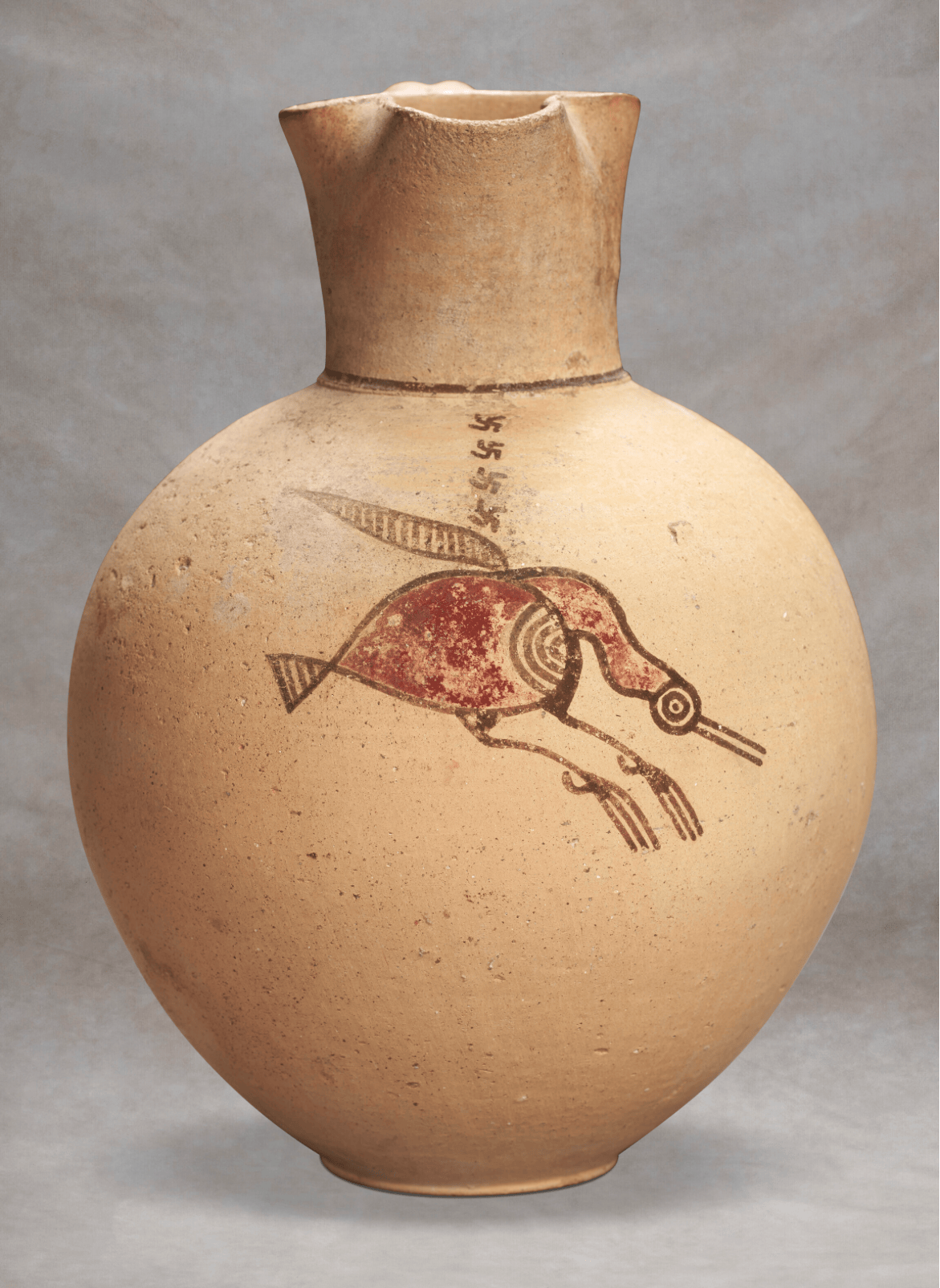
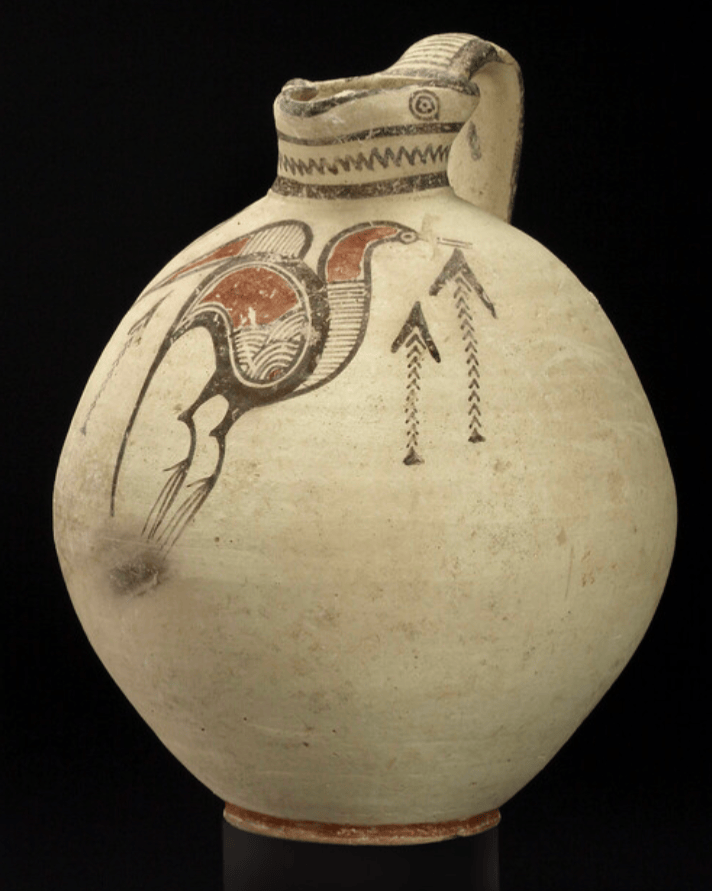
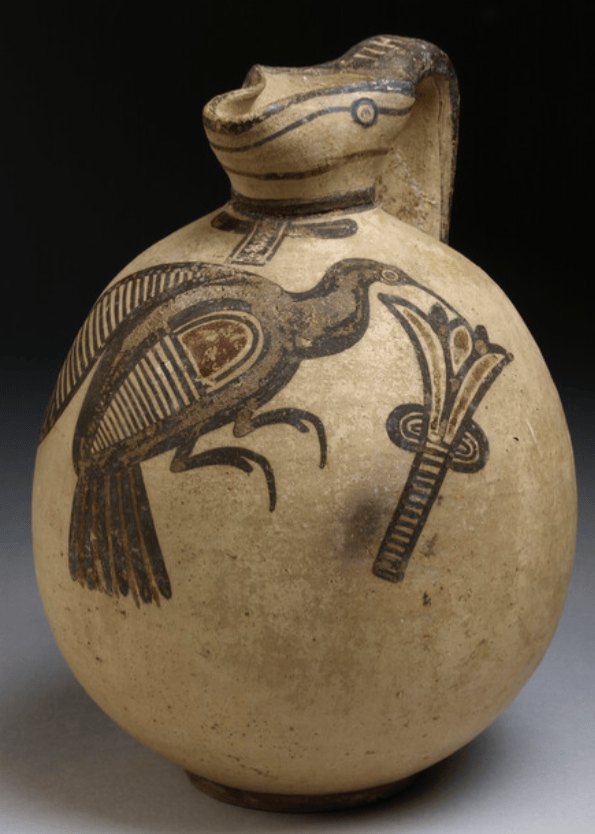
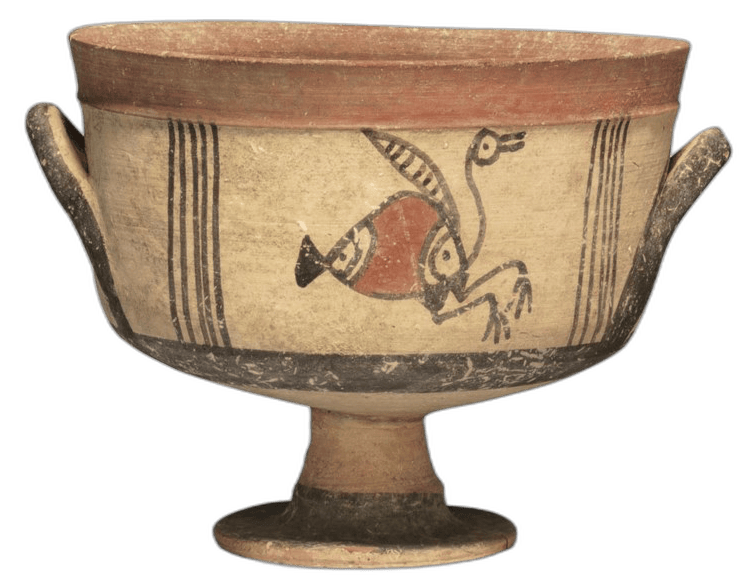
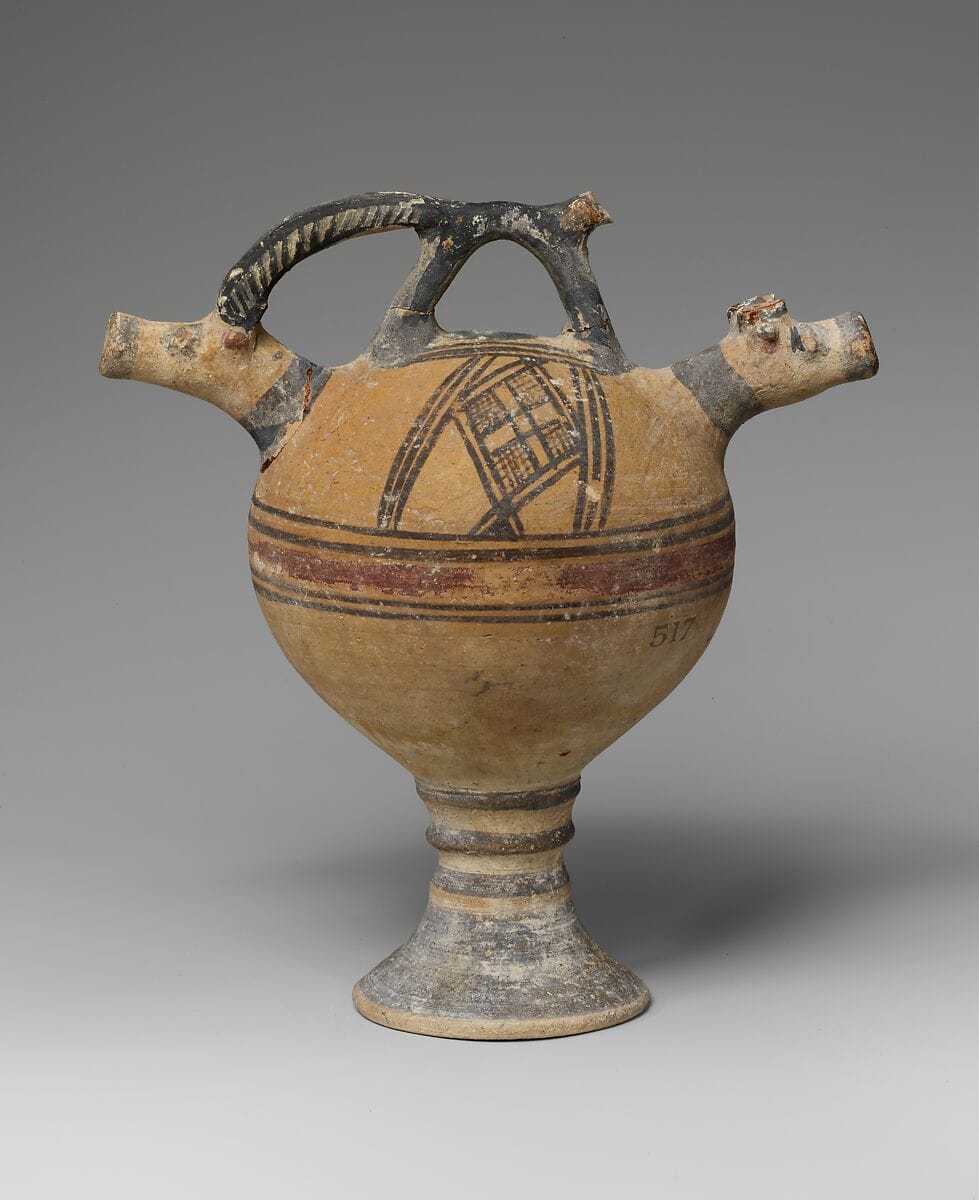
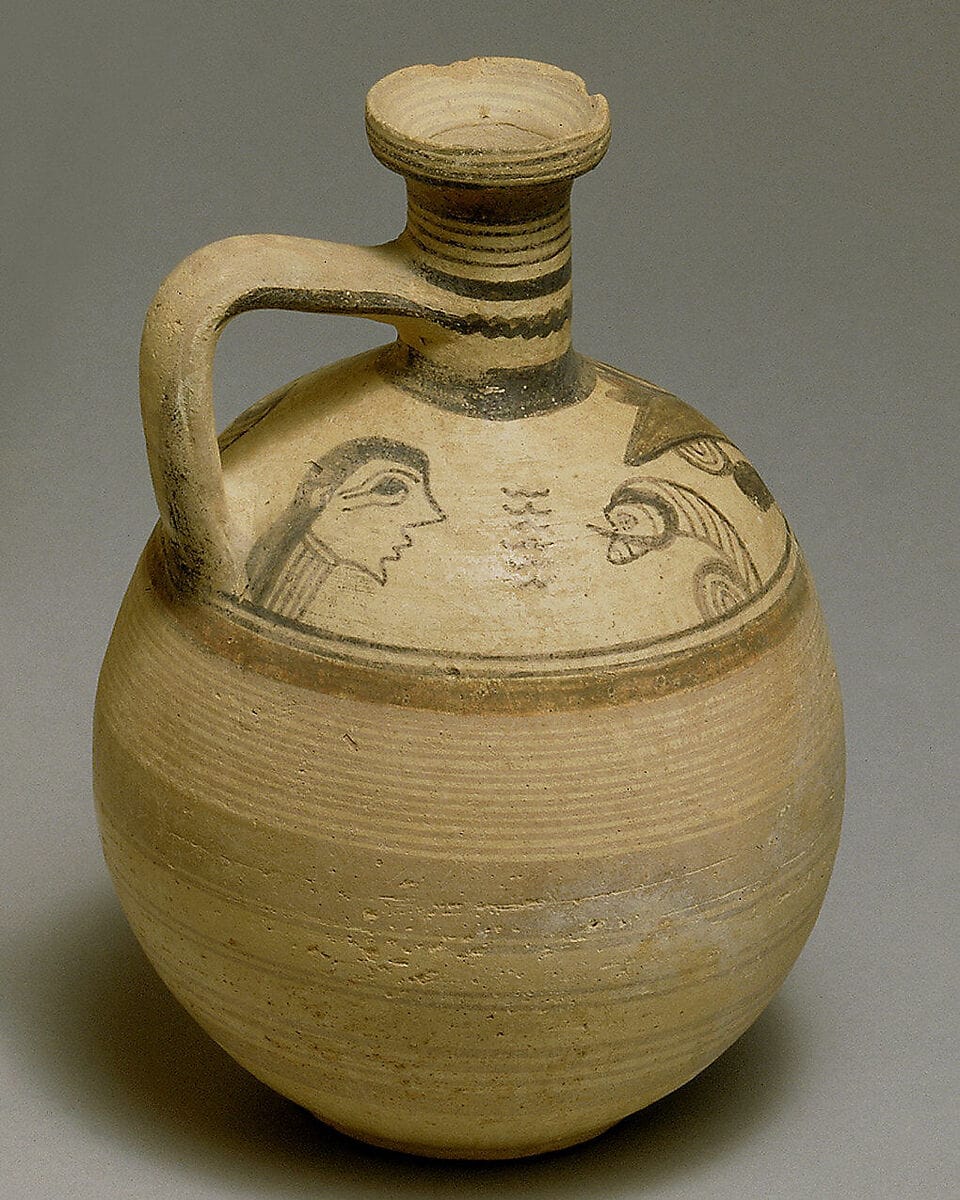
The second and much larger episode is the Iron Age. In the Cypro-Geometric and Cypro-Archaic periods Bichrome becomes one of the standard ways of painting a vessel, and Karageorghis groups Bichrome with Red Slip and Black Slip as the wares that appear in quantity after the Phoenician settlement at the end of the 9th century BCE [5, p. 102]. A Bichrome III–IV jug in the Cesnola Collection, 13.7 cm high, is typical of the small Phoenician-type jugs [5, p. 102]. The free-field style of Cypro-Archaic I–II, centred on eastern Cyprus, was painted in either White Painted or Bichrome technique: a single figure (a human, a quadruped, a bird with a fish, a stylised flower) floats on the curve of the vessel with no geometric frame around it, most often on a trefoil-rim jug [5, p. 108].
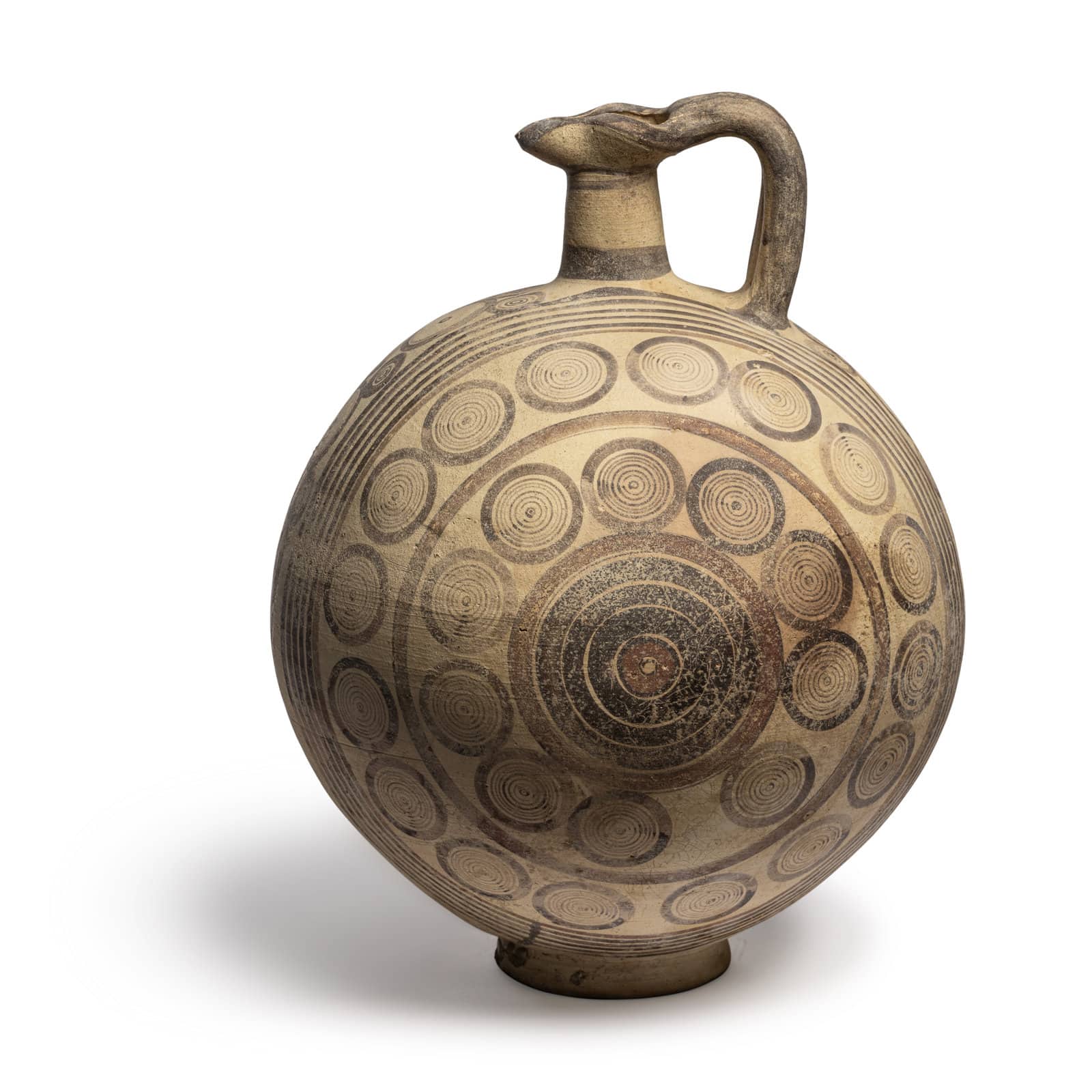
The Drakopoulos collection holds a run of Iron Age Bichrome: a Bichrome jug, a Bichrome IV amphora with a lotus-and-bud shoulder frieze (see lotus flowers), a skyphos with stags in metopes and a face-neck jar of the Kourion type.
.](https://cdn.ancientcyprus.com/alexis-drakopoulos/artefacts/oinochoefront.webp)
The third is Bichrome Red, which reverses the ground: a red-slipped Black-on-Red surface with white lines and dots added beside the black. Gjerstad's Bichrome Red I (IV) starts in the late 7th century (Cypro-Archaic IB), peaks at the end of the 6th and beginning of the 5th century, and declines around 400 BCE; in the Cypro-Classical period it is the commonest decorated type [3, p. 314]. See Bichrome Red and Black-on-Red.
Two colours have to be checked on the object. A Cesnola krater long described as bichrome turned out, when Metropolitan Museum conservators examined it, to have modern black paint over an original decoration in red only [5, p. 68].
The catalogue's painted in two colours filter collects every object recorded with this decoration.
Modelled figures and attachments
Modelling means shaping clay figures or heads by hand and fixing them to a vessel before firing. In Cyprus the technique belongs above all to Early Bronze Age Red Polished pottery, and the cemetery at Bellapais-Vounous is the type-site.
The Vounous pieces range from a single animal on a rim to full scenes. A stemmed bowl from Vounous Tomb 160A carries three animal figurines and three small bowls on its rim; James Stewart dated it to Early Cypriot IB, which makes it the earliest coroplastic work of the Early Cypriot period [6, p. 163]. A ploughing scene with two ploughmen and two teams of oxen on a five-legged table, 41 cm long, and a circular open sanctuary with figures in bull masks holding snakes, 37 cm across, from Tomb 22, were both published by Porphyrios Dikaios in 1940 and are in the Cyprus Museum [2, p. 171]. Vounous Tomb 48 produced a composite vessel 46 cm high made of four bowls and a board-shaped female figure holding a child [2, p. 171].
The bull is the commonest animal on Early and Middle Cypriot vases. James R. Stewart read the Early Cypriot animals (stag, bull, wild boar, perhaps mouflon) as zoomorphic deities, but Karageorghis points out that a bull on a vase may be decoration and nothing more [6, p. 163]. He also notes that fixing figurines to a vessel rim was already known in the Levant in the Chalcolithic, and suggests that the potters who made these vessels were specialists, potter-coroplasts [6, p. 163].
.](https://cdn.ancientcyprus.com/collections/drakopoulos/early-bronze-age/JUG-BA-024_c1.webp)
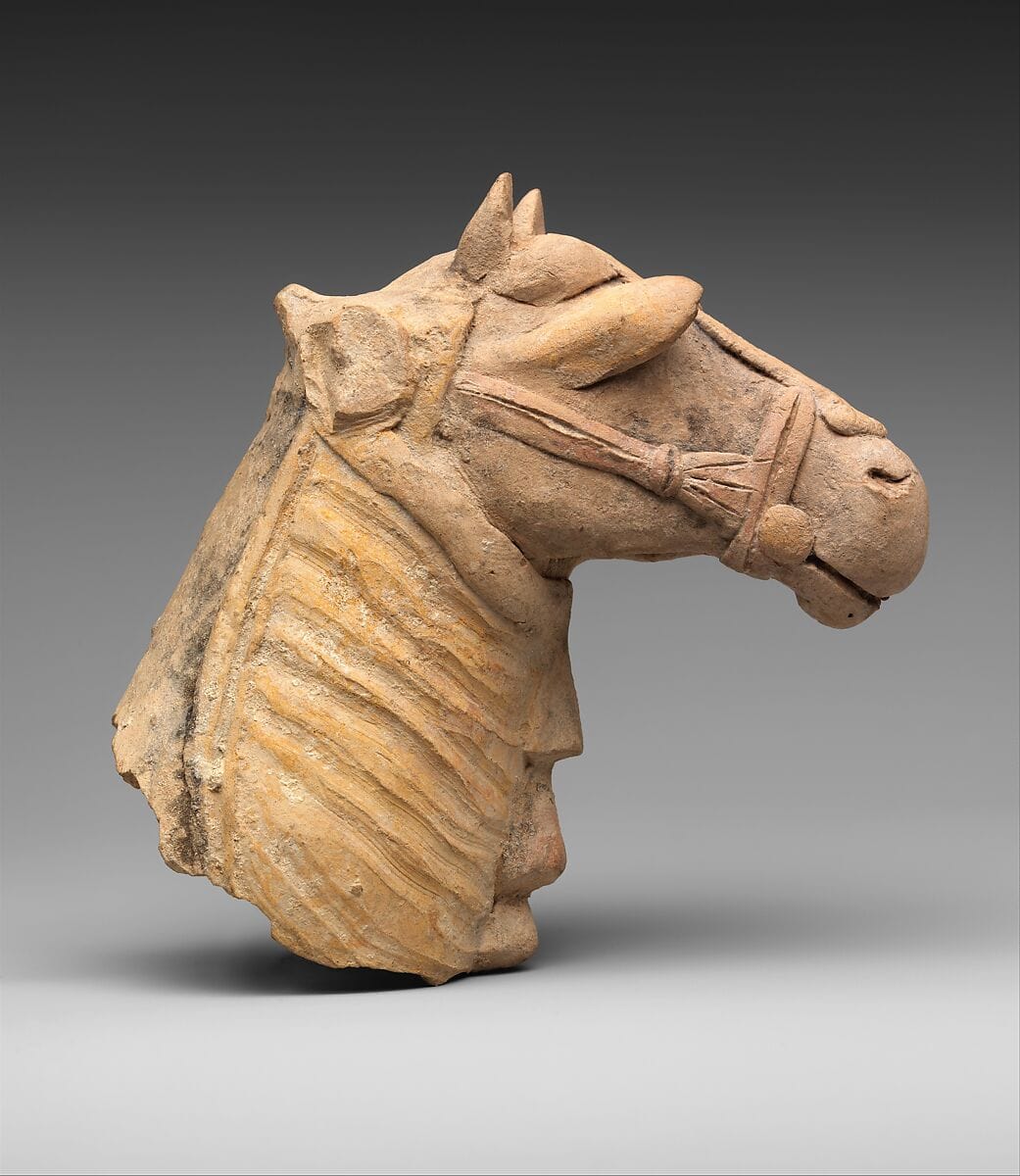
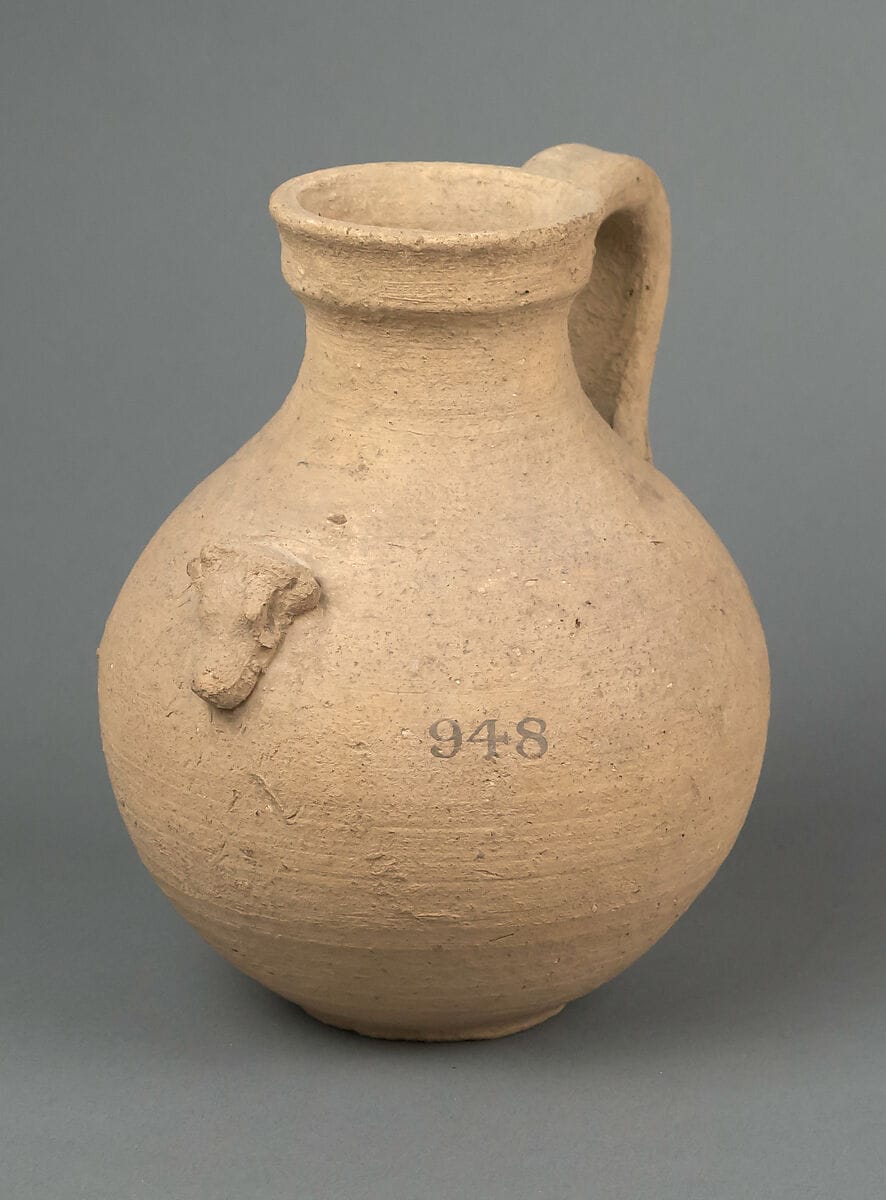
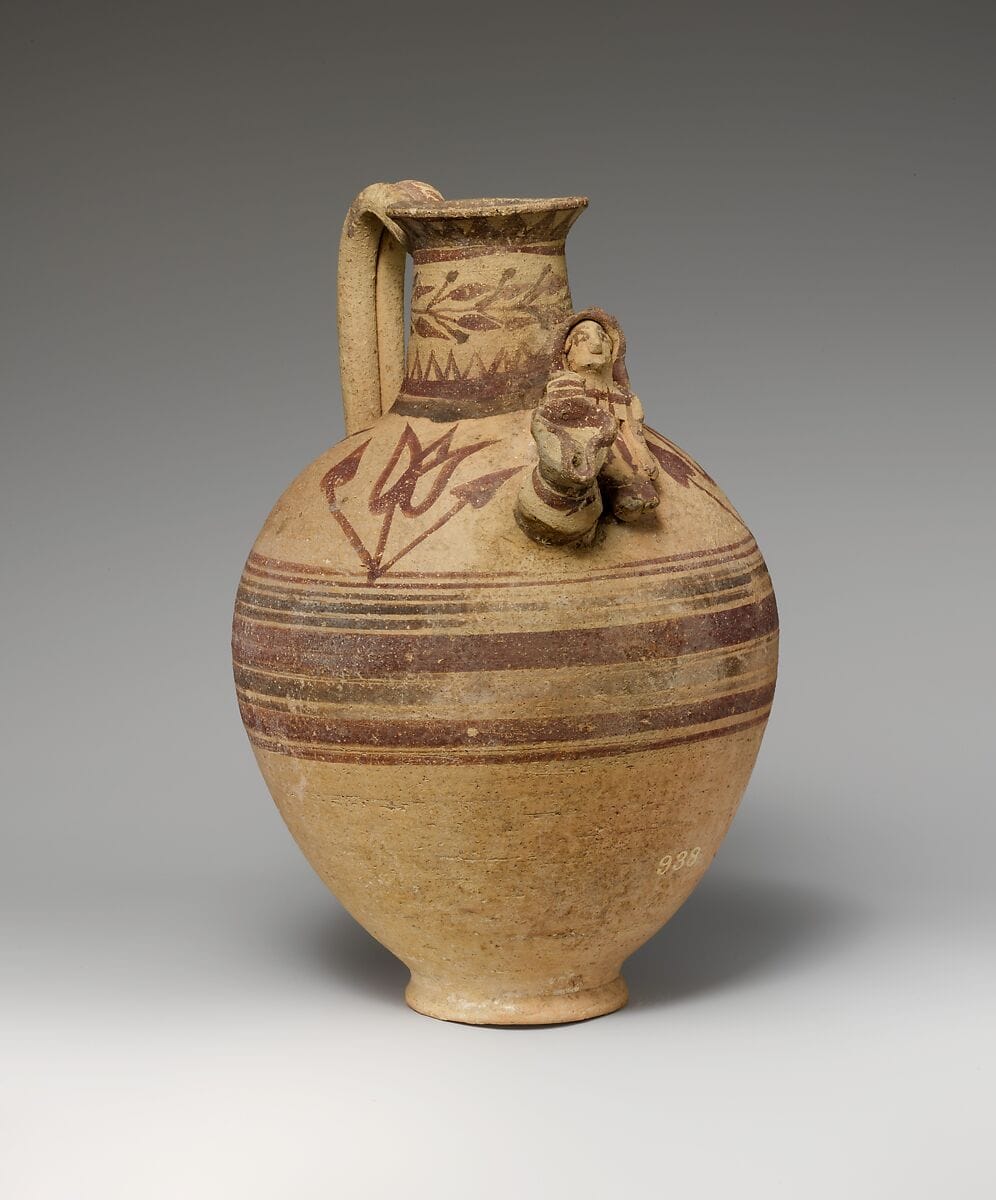
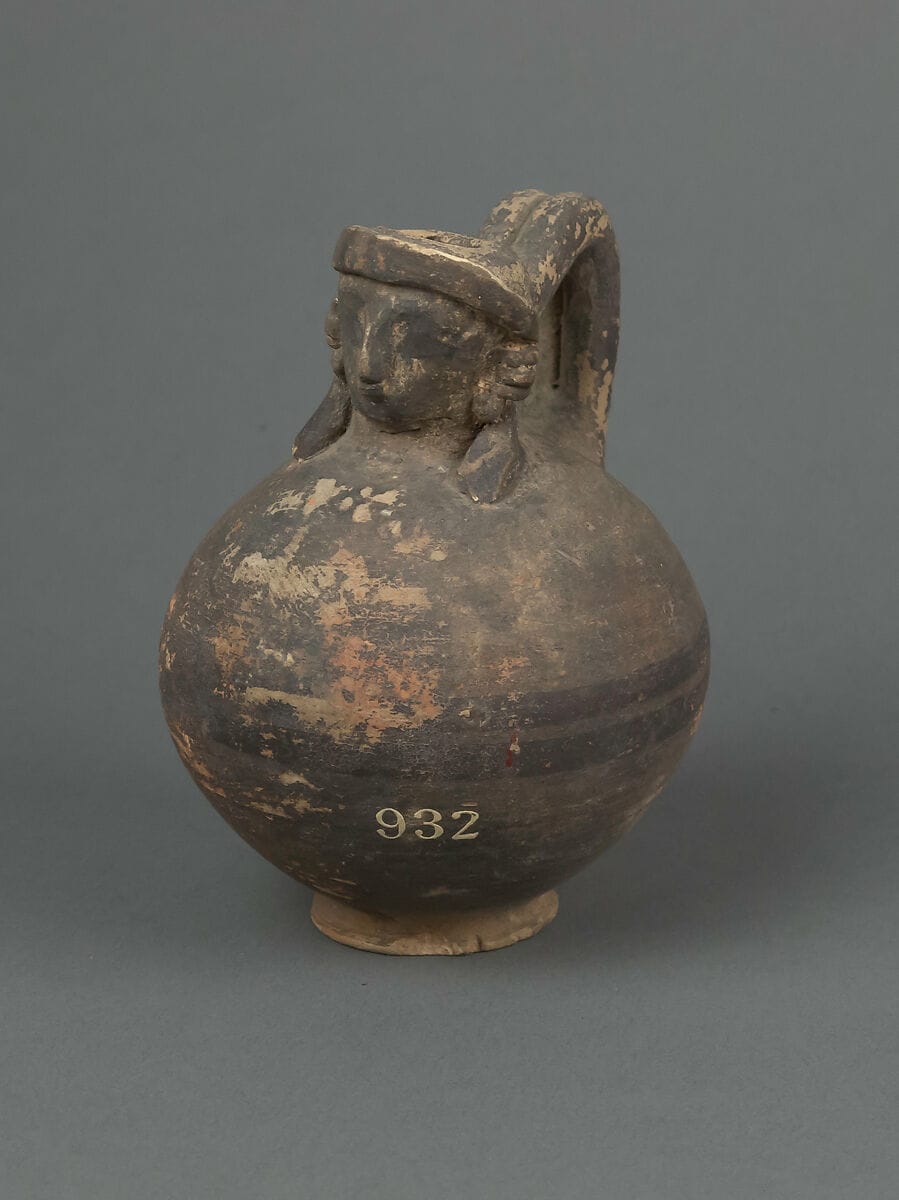
The Drakopoulos double-necked jug with two modelled birds combines modelling with white-filled incised panels; it is discussed in the Vounous double-necked bird jug. In the Iron Age the technique continues in a different form, as heads of animals and women set on the necks and shoulders of jugs, such as the Cesnola jug with a horse's head and jug with a female head in New York.
Related pages: Red Polished zoomorphic vessels, tulip bowls and cult vessels, Vounous and Early Bronze Age burial. The catalogue lists all modelled figures and attachments.
Impressed and punctured decoration
Three operations are grouped here. Incision cuts a line into the leather-hard clay; impression presses a tool (a stamp, a fingertip, a point) into it; puncturing makes small holes or dots with a point. The catalogue's filter is broad, and many objects in it are in fact incised.
Incision as decoration is practically unknown in Cyprus before the Late Chalcolithic [7, p. 56]. In Philia Red Polished it was done while the clay was still moist, leaving neither chipped nor raised edges, and the lines were filled with powdered lime. Diane Bolger calls this lime filling the only decorative element of Philia Red Polished with no local antecedent, and points to Anatolia for its source [7, p. 56]. Incision is rare at Philia sites (she counts four jugs) and much more elaborate at Vounous [7, p. 56]. A Vounous model brush or comb from Tomb 9 combines lime-filled incision with punctured lozenges [6, pp. 54, 61]. The full story of white-filled incision is told under Red Polished.
The Drakopoulos Red Polished one-handled jar has raised double rings, hatched bands and impressed dots, a combination its record assigns to the Deneia style. Stamped and impressed designs also occur on chlorite spindle whorls; see spindle whorls and textile tools.
Catalogue: impressed and punctured.
Combing
Combing is the oldest decoration technique in this entry. A tool with several teeth was dragged through a still-wet slip or paint, leaving groups of parallel lines, often wavy. Karageorghis describes Combed Ware as the pottery of the newcomers of the Late Neolithic (Neolithic II), present on every site of the period, with Kalavasos and Sotira as the key excavations; the dark brown, semi-glossy slip was combed while still wet into multiple wavy bands, and large jugs and spouted bowls are the usual shapes [8, p. 110].
At Sotira a jug from House 27, 37 cm high and now in the Penn Museum, has vertical bands of combed ornament, and a 39 cm jug from House 13 combines red-on-white paint with comb-stroke bands [2, p. 152]. A hemispherical open-spouted bowl published under Khirokitia, 32.5 cm across, has wavy comb bands inside and out [2, p. 152]. Chemical work on pottery from Kantou-Kouphovounos and Sotira-Teppes identifies four Late Neolithic classes at both sites (Combed, Painted, Monochrome and Coarse), with Combed the most prominent; combed and painted decoration on one vase is less frequent, and "Bilingual" vessels are painted inside and combed outside [9, p. 2].
.](https://cdn.ancientcyprus.com/collections/drakopoulos/neolithic/BWL-NE-002_c1.webp)
The Drakopoulos collection has three Combed Ware sherds, ex Judge G. C. Griffith-Williams: one with multiple wavy bands, the classic pattern, one with parallel bands and one with oblique bands. They are the whole of the catalogue's combed group. Combing is not impression: the comb drags through the surface rather than stamping it. See Combed Ware, Red-on-White, the Neolithic and Kalavasos-Tenta.
Moulding
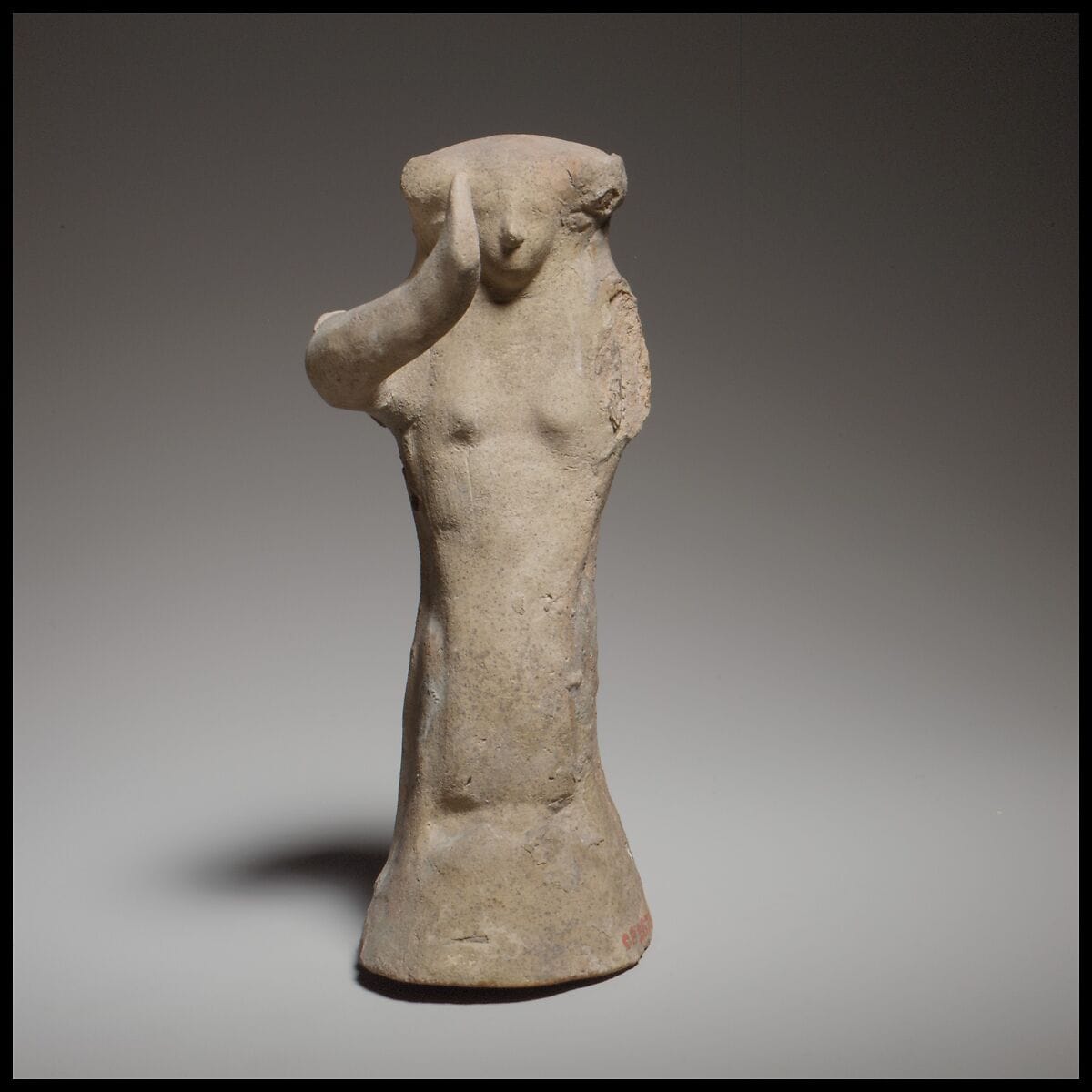
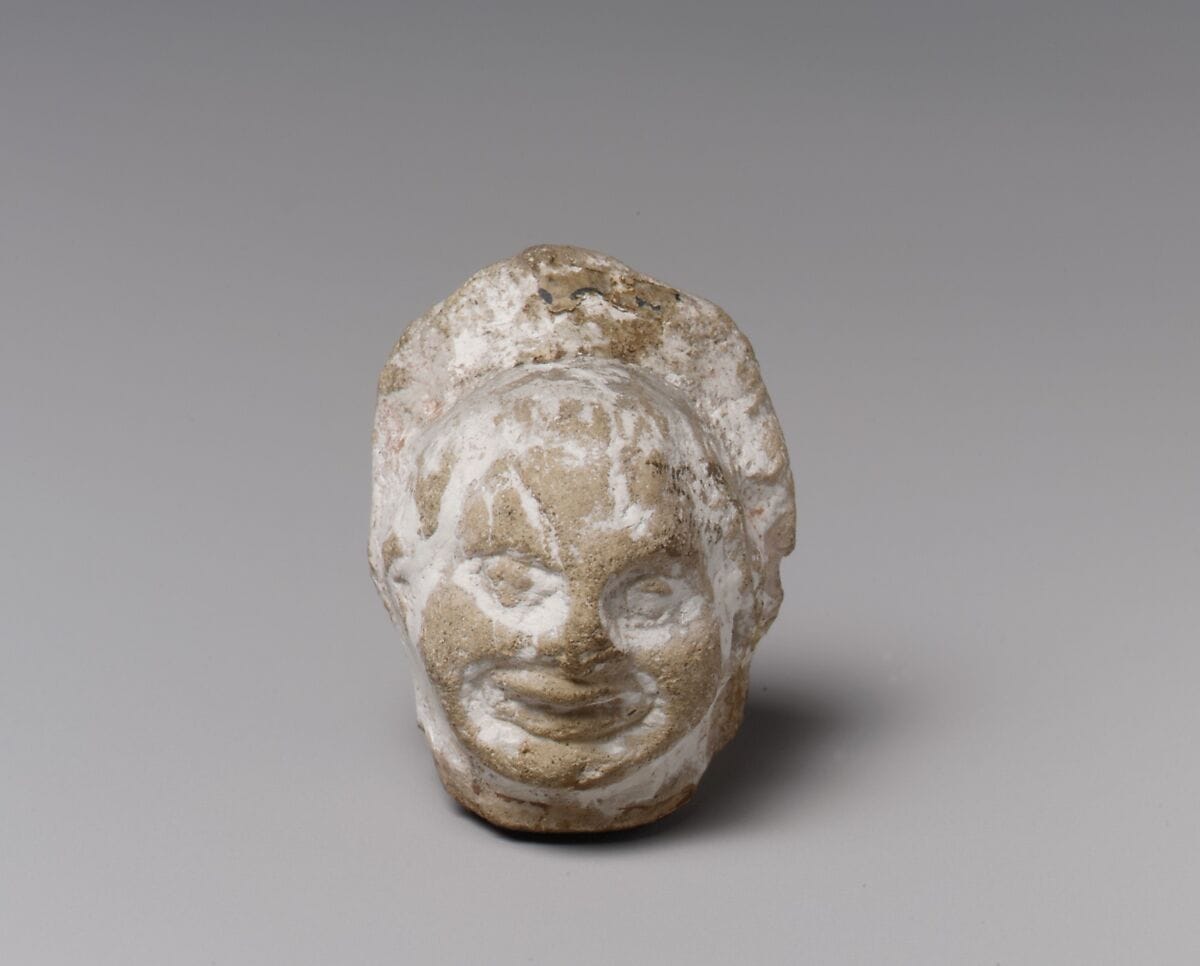
Terracotta figurines in Cyprus were made on the wheel, by hand, in a mould, or by a mixture of these [10, p. 28]. The mould is thought to have been introduced from Syria in the 8th century BCE, but the earliest mould-made terracottas on Cyprus come from contexts of about 650 BCE at the sanctuary of Ayia Irini, excavated by Gjerstad; Cypriot moulded figurines appear on Samos at about the same date, and A. T. Reyes suggests that East Greek demand prompted Cypriot coroplasts to take up the mould in the mid-7th century [10, p. 28].
A mould gave a face or front; the back was often left flat or plain. A standing female figure from the Arsos sanctuary, 33.5 cm high, late Cypro-Archaic I, is mould-made with painted details, has a plain back meant to be seen from the front, and a vent-hole for firing; an identical figure was found in a tomb on Rhodes [11, p. 182].
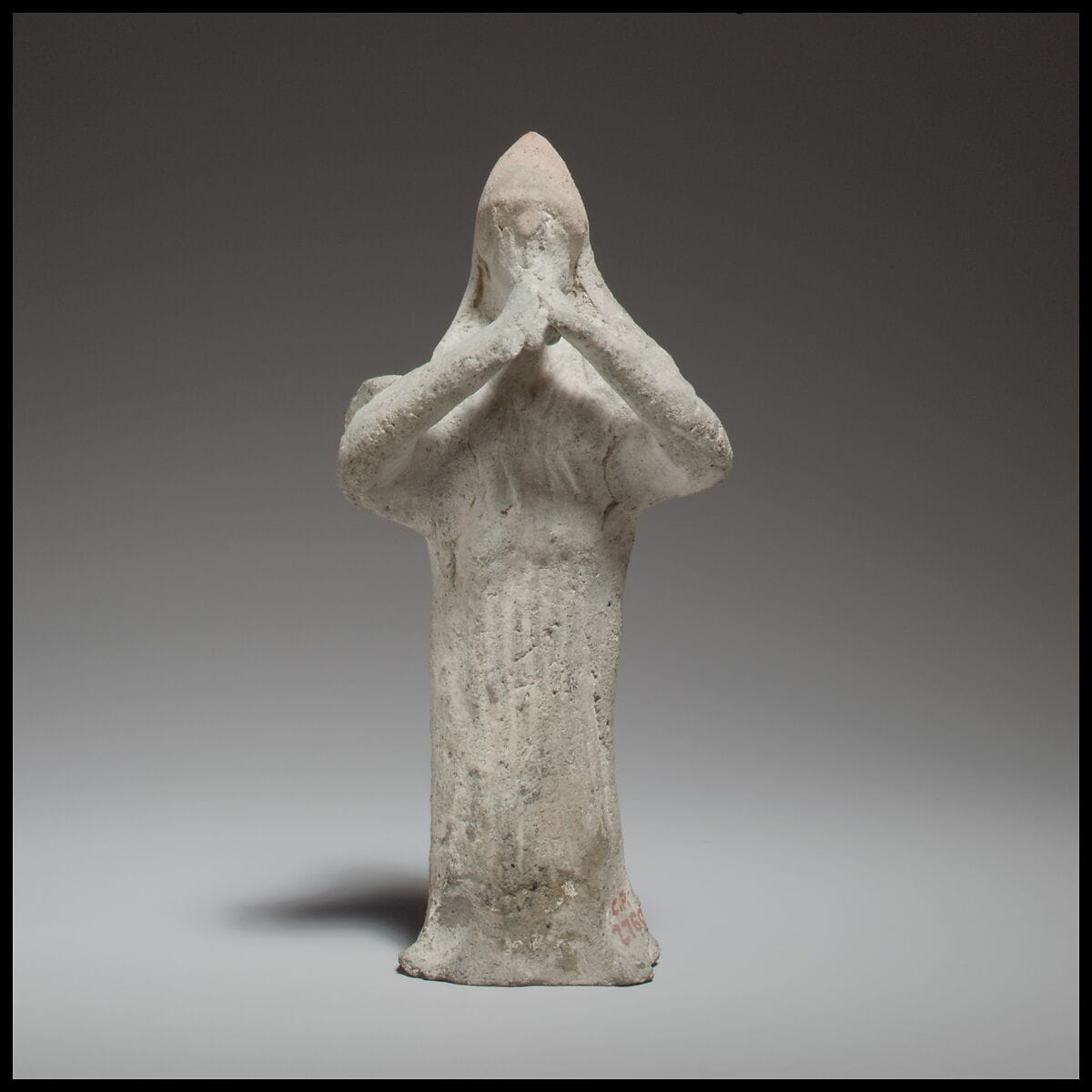
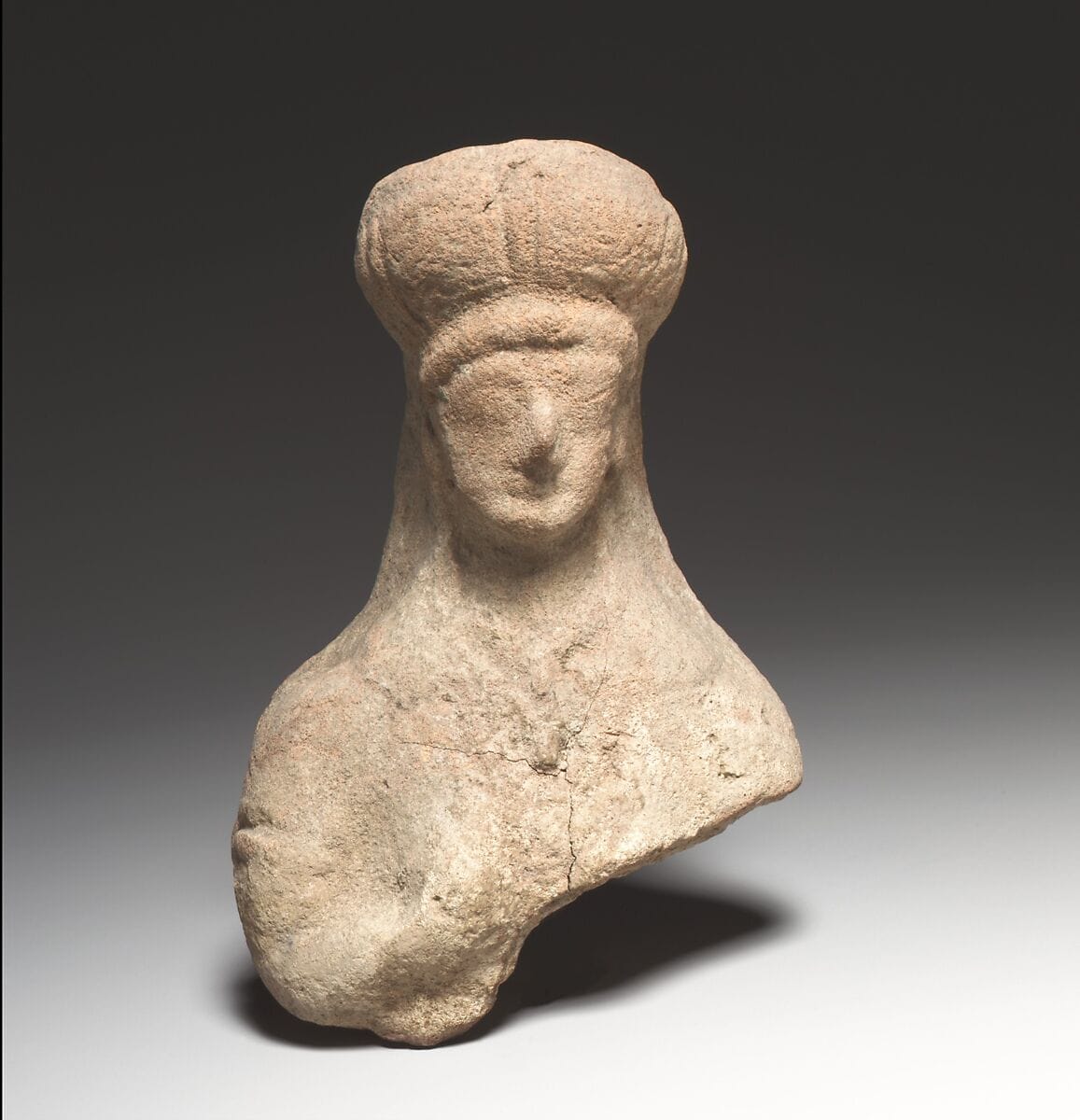
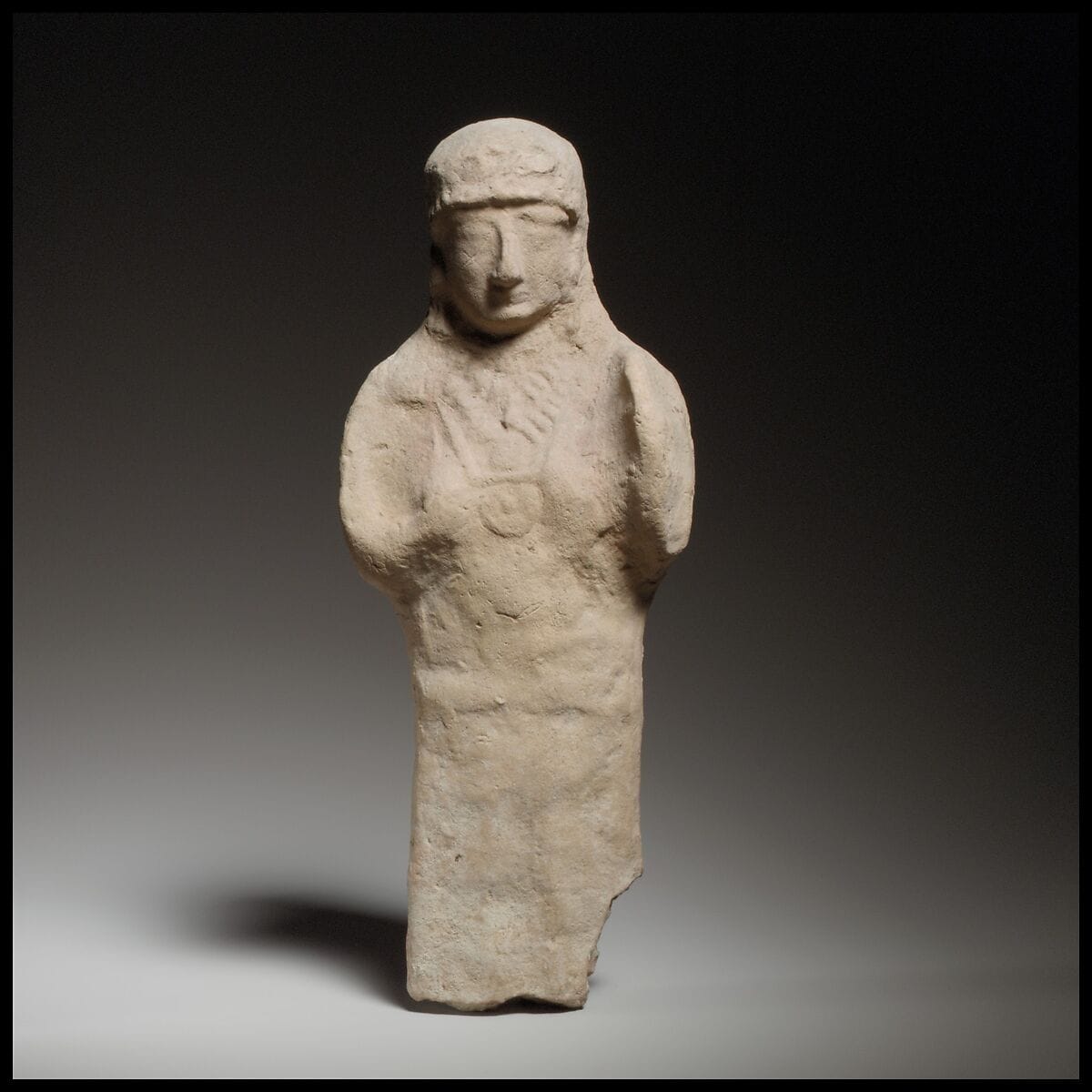
The Drakopoulos collection has several mould-made Archaic terracottas: a veiled woman holding a flower, a female figure with an Egyptianizing wig with traces of red and black paint, a head of a woman with a diadem, a bearded votary in a pointed cap with a mould-pressed face, and a hollow female votary of the Achna type. A horseman of Kourion type shows the common hybrid method: a moulded face on a handmade body.
See how Cypriot figurines are classified, horse-and-rider figurines, the Cypro-Archaic period and the catalogue's moulded objects.
Carving
Carving removes material with a chisel, knife or drill. In Cyprus the main carved materials are limestone, ivory and hardstone. Karageorghis writes that Cypriot artists were fond of carving in relief, and the Cesnola relief sarcophagi from Amathus and Golgoi mix Greek and Eastern tendencies [5, p. 219]. The Amathus sarcophagus in New York, 228.8 cm long, has exceptionally high relief and polychrome painting, and its monumentality is not matched by anything else found on the island; it may have held a king of the city [5, p. 216]. The Cesnola Collection also holds a plainer limestone sarcophagus and a limestone altar.
Gem engraving used a drill and a cutting wheel. Greek hardstone scarabs appear around 580 BCE, and Veronica Tatton-Brown suggests that Greek engravers learned the technique from Phoenicians, probably in Cyprus [12, p. 46].
Carved limestone sculpture, its paint and its types are covered in Archaic limestone sculpture, limestone polychromy and temple boys; earlier carved stone figures are in Neolithic and picrolite figurines. Catalogue: carved.
Repoussé and chasing
Repoussé is hammering a design into sheet metal from the back, so that it stands up on the front; chasing is working the front with punches to sharpen the detail. Both are cold-working techniques and are often used with engraving.
The silver Cypro-Phoenician bowl from Amathus in the British Museum, 18.7 cm across, from a tomb opened for Cesnola in 1875, has elaborate repoussé and engraved decoration: two Egyptianizing bands of winged sphinxes and deities and an outer register showing a siege [11, p. 182]. Bowls of this class are found from Urartu and Assyria to Greece and Etruria, and this one may have been made on Cyprus, perhaps at Amathus itself [11, p. 182]. Gold plaques embossed with rosettes are known from the 11th century BCE, and Cyprus passed the embossed gold plaque to Rhodes in the 7th century [12, p. 46]. At Polis, 5th-century spiral earrings with female heads were made in two halves from the same die, with the hair chased in afterwards [13, p. 35].
The Cesnola Collection's gold diadem and silver-gilt bowl are catalogue examples. See Phoenicians and the catalogue's repoussé and chased group.
Granulation and filigree
Granulation fixes tiny gold spheres to a surface; filigree uses fine twisted or beaded wire. The two are often combined and their popularity shifts over time. Archaic jewellery (c. 750–475 BCE) is often enriched with fine granulation; in the Classical period filigree becomes more popular than granulation, and in the Hellenistic and Roman periods both become rare as coloured stones and glass take over [12, pp. 46, 48].
A late 5th-century gold pomegranate pendant from Polis-Kaparka Tomb 41, now in the Cyprus Museum, carries clusters of 28 granules arranged in triangles, with filigree wire hiding the joins [13, p. 35]. The Cesnola gold pendant with granulated ornament and earring with filigree are catalogue examples. Late Bronze Age filigree is treated in jewellery. Catalogue: granulation and filigree.
Inlay
Inlay sets a different material (stone, glass, enamel) into a metal setting. In the 12th century BCE true cloisonné enamelling appears in Cyprus: thin strips are soldered to a background to make cells, which are filled with enamel. It was used on gold ring bezels of a form already familiar from rings with circular bezels inlaid with coloured glass, so the technique was new but the shape was not, and Tatton-Brown suggests an immigrant or travelling craftsman, perhaps from Egypt [12, p. 46]. In the Classical period enamel bordered by filigree was used as inlay [12, p. 46]; the Polis spiral earrings have dark blue enamel in filigree flowers, recalling Achaemenid jewellery [13, p. 35].
The catalogue's only inlaid object is a 6th-century BCE gold ring with three box settings on the bezel and cloisons on the sides, 2.2 cm, set with sard and glass paste (Metropolitan Museum record) [14]. For the materials see glass and faience. Catalogue: inlaid.
Undecorated surfaces
"Undecorated" in the catalogue means that the record says the surface is plain; objects whose records simply say nothing are not included. Plain does not mean unfinished. Early Bronze Age Red Polished vessels were slipped and burnished, and the burnish and the fire-clouding were their surface; at Mosphilia incised Red Polished is limited to a single example, and pattern burnishing and the black tops produced by differential firing on Chalcolithic bowls were themselves surface effects [7, p. 56]. Smith lists Plain White among the Late Bronze Age ware classes [1, p. 238]; see Plain White ware.
Most of the Drakopoulos plain pieces are Red Polished: a large jug with horned handle and pierced lug, fire-clouded on one side, a beak-spouted jug with a side-spout and an ear-lug jar. Their handles, lugs and spouts are shape, not decoration. The collection's Base Ring bilbil juglet and a Classical fusiform unguentarium are also recorded as plain. On firing effects see pottery kilns and firing; the catalogue's undecorated group lists them all.
Objects on this page
- Bichrome JugGeometric · 1050–600 BC
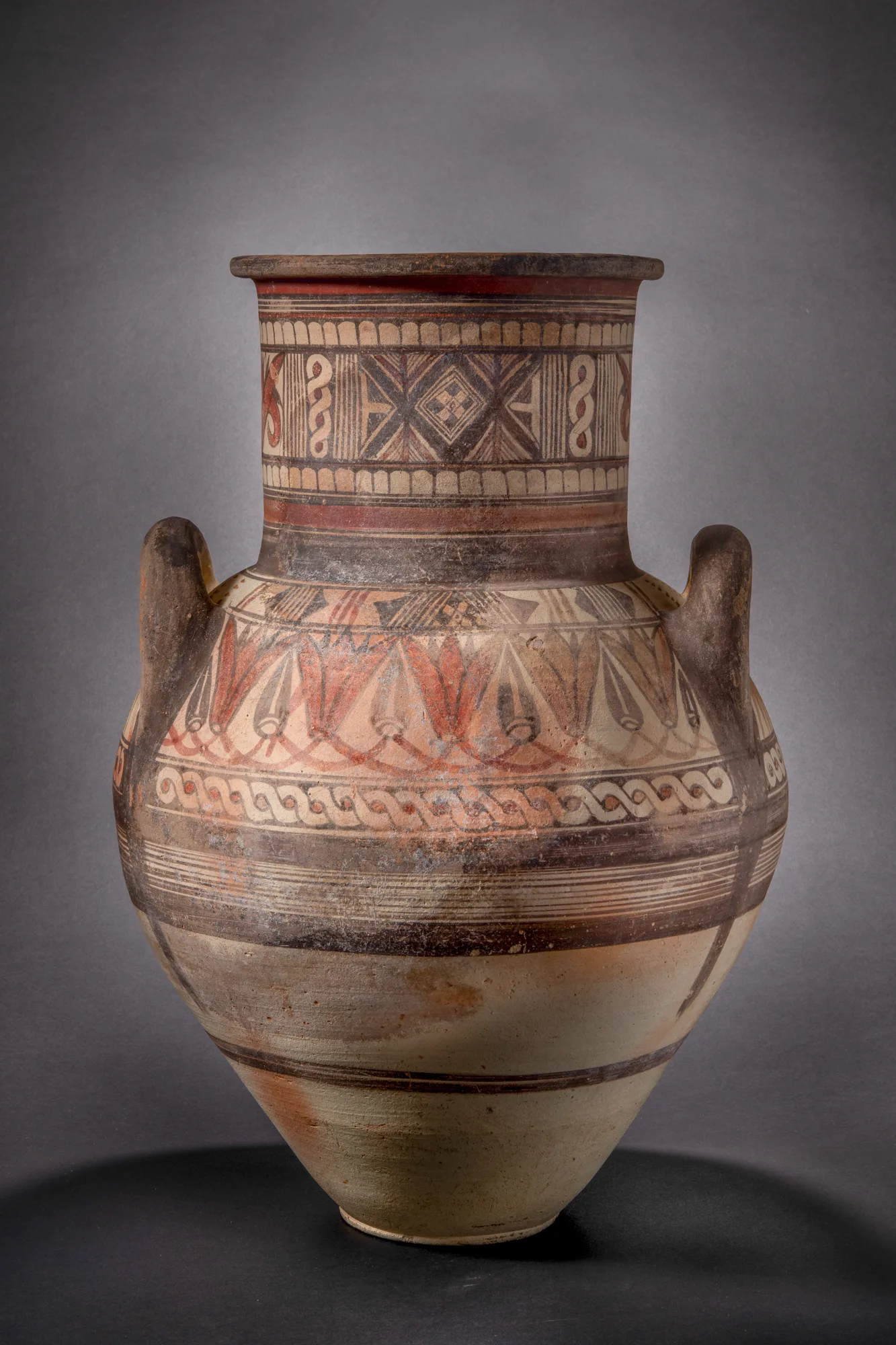 Bichrome IV Amphora with a Lotus-and-Bud Shoulder FriezeArchaic I · 750–600 BC
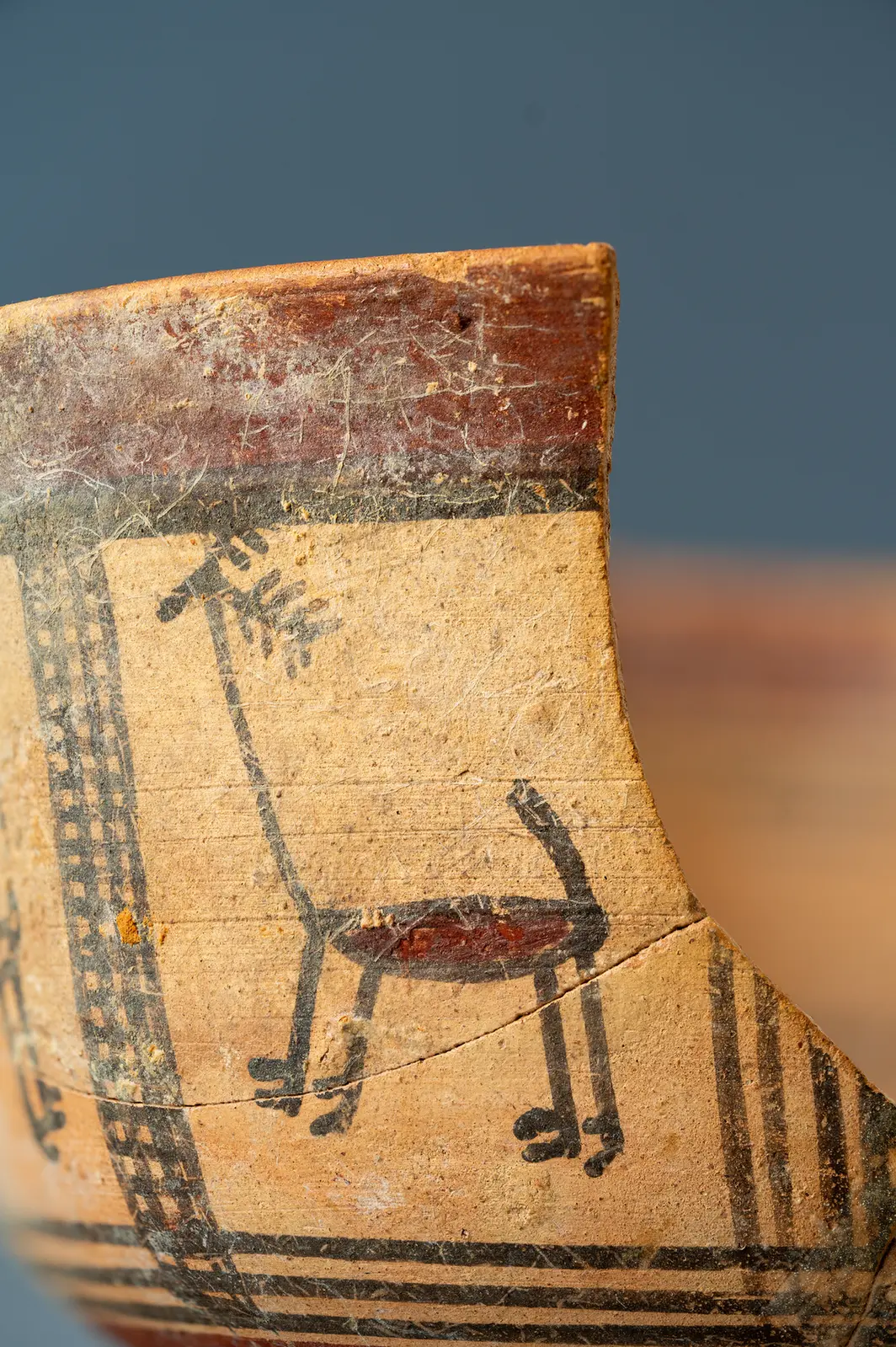 Bichrome Skyphos with Stags in MetopesArchaic I · 750–600 BC
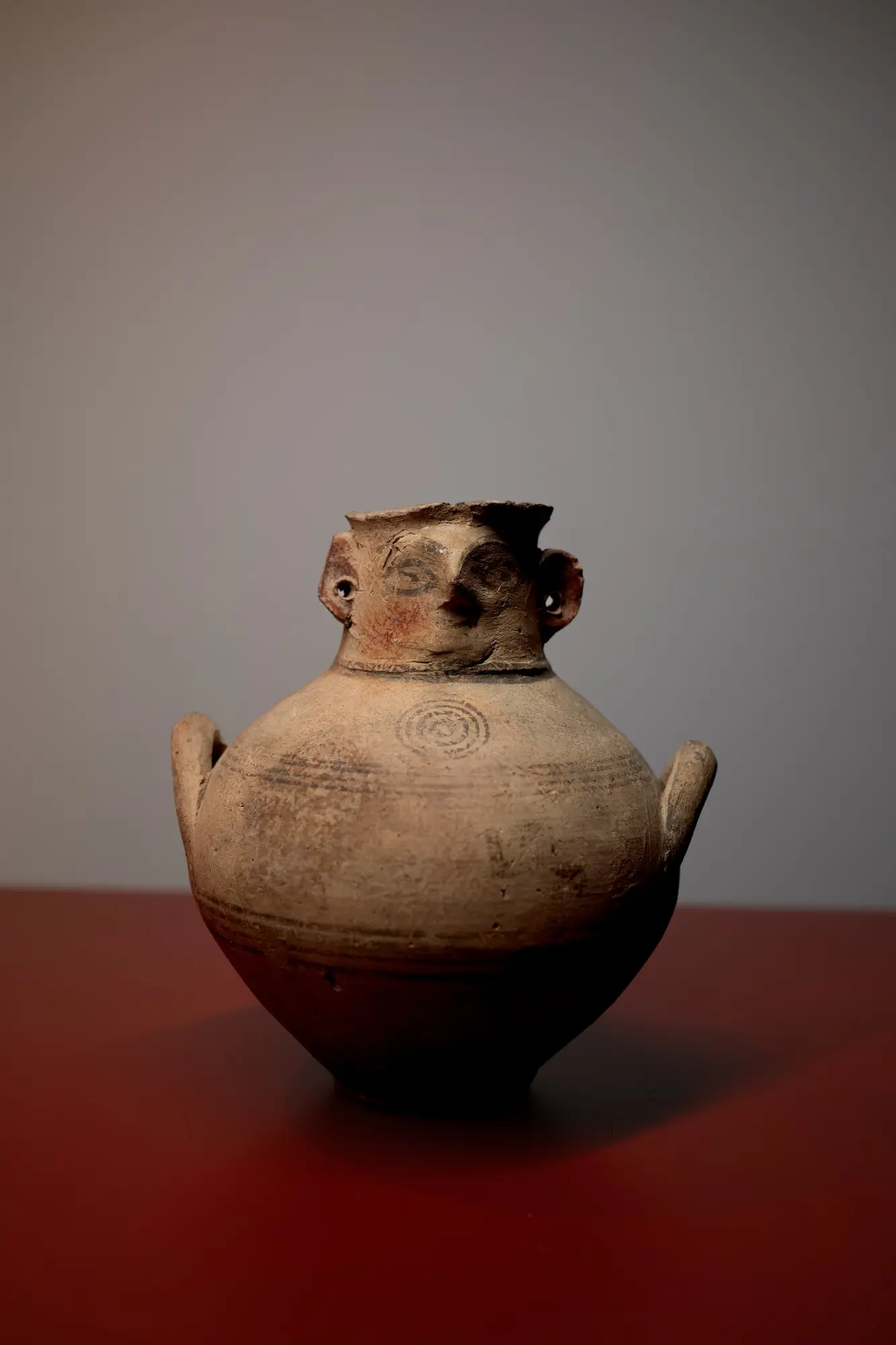 Bichrome IV Face-Neck Jar of the Kourion TypeArchaic I · 750–600 BC
- Red Polished Double-Necked Jug with Two Modelled BirdsEarly Bronze Age II · 2300–2000 BC
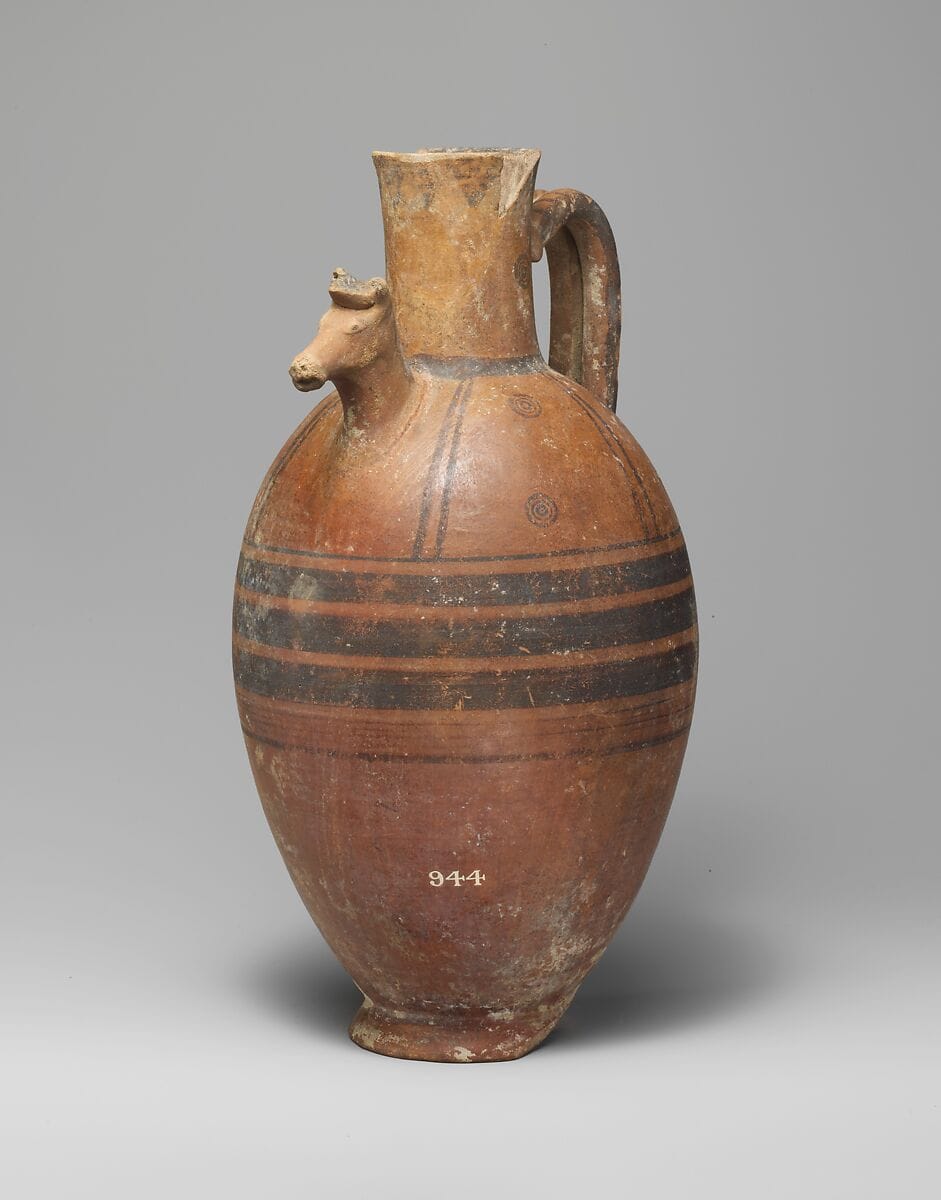 Terracotta jug with horse's head in reliefClassical · 480–350 BC
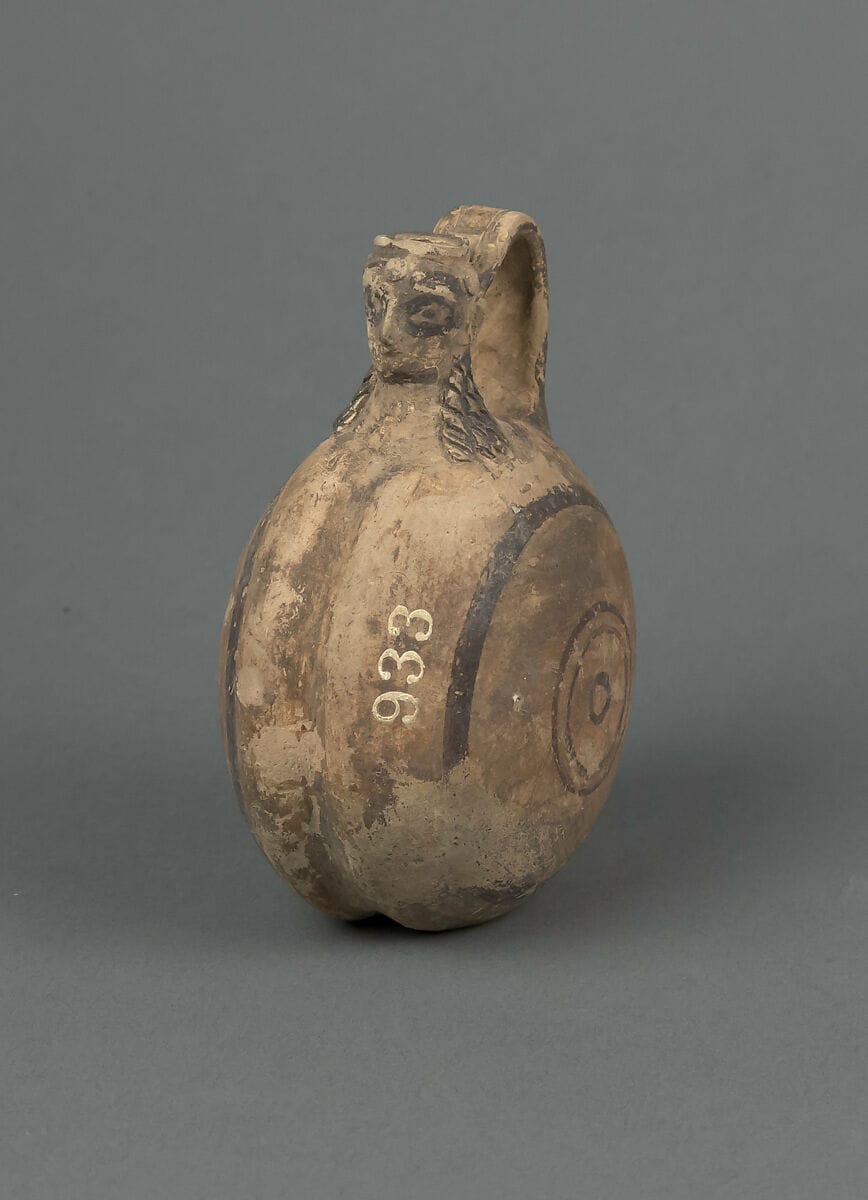 Jug with female headArchaic I · 750–600 BC
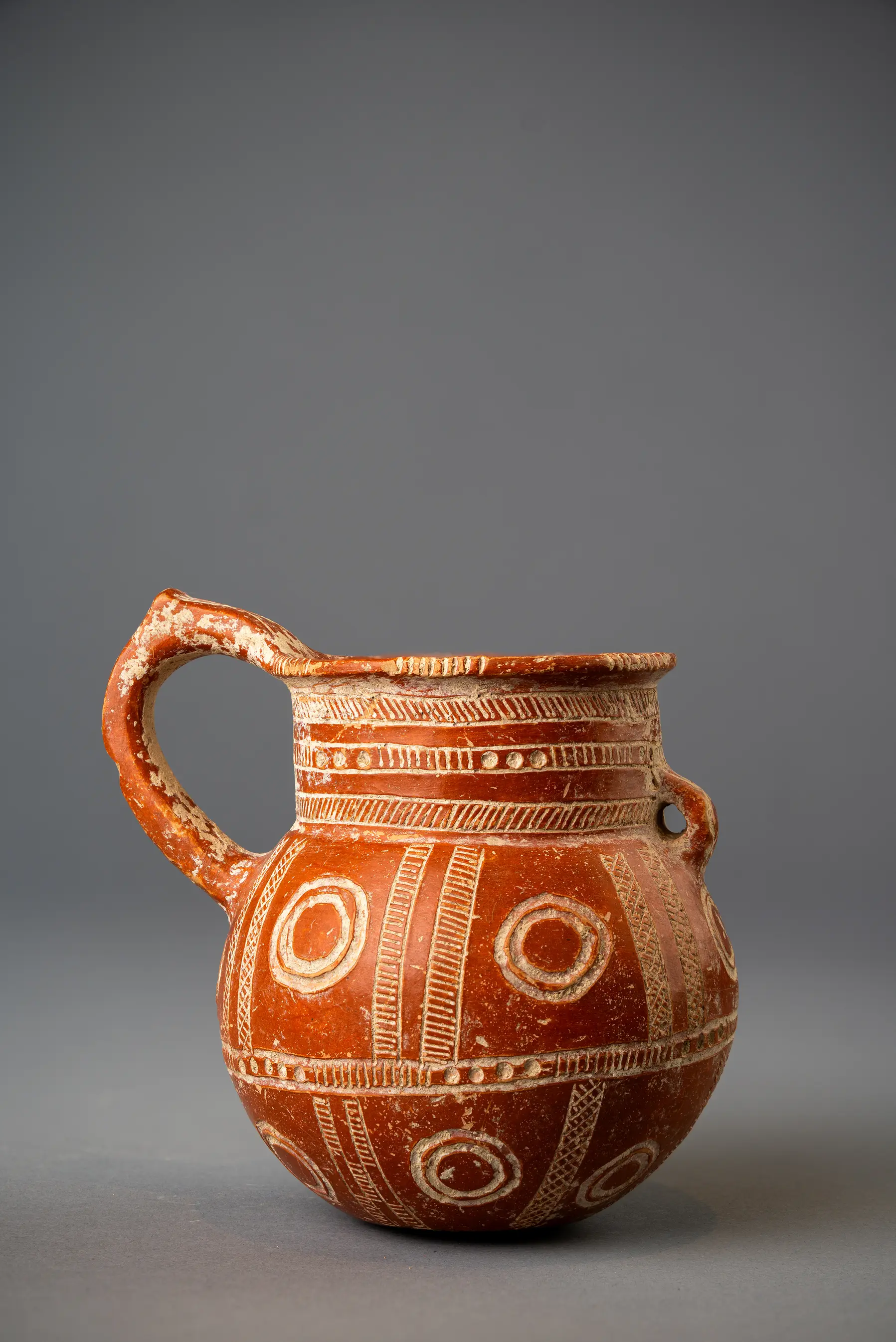 Red Polished One-Handled Jar with Concentric Circles, Deneia StyleEarly Bronze Age III · 2100–1800 BC
- Combed Ware Bowl Fragment with Multiple Wavy BandsNeolithic · 4500–3900 BC
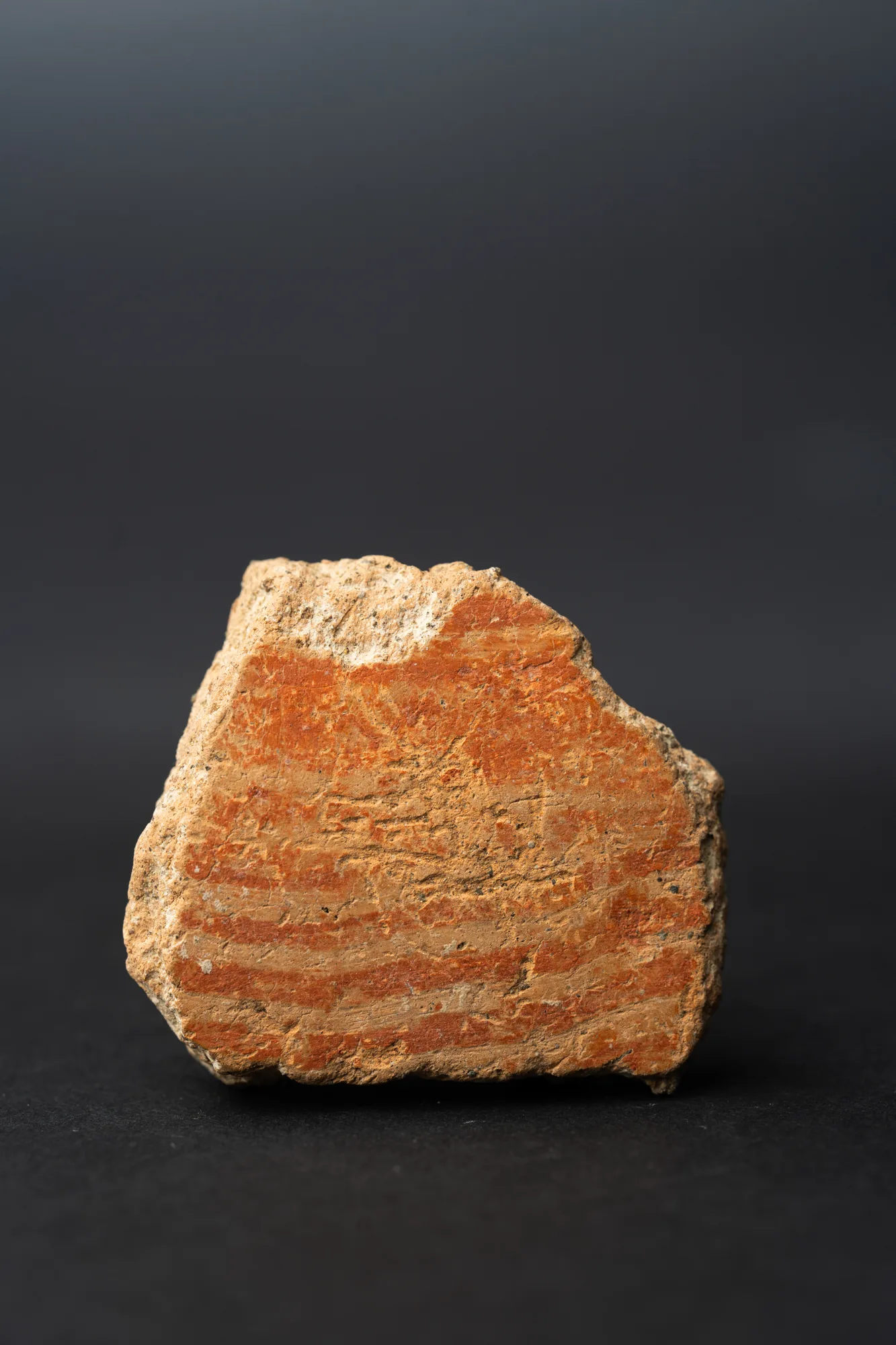 Combed Ware Bowl Fragment with Parallel BandsNeolithic · 4500–3900 BC
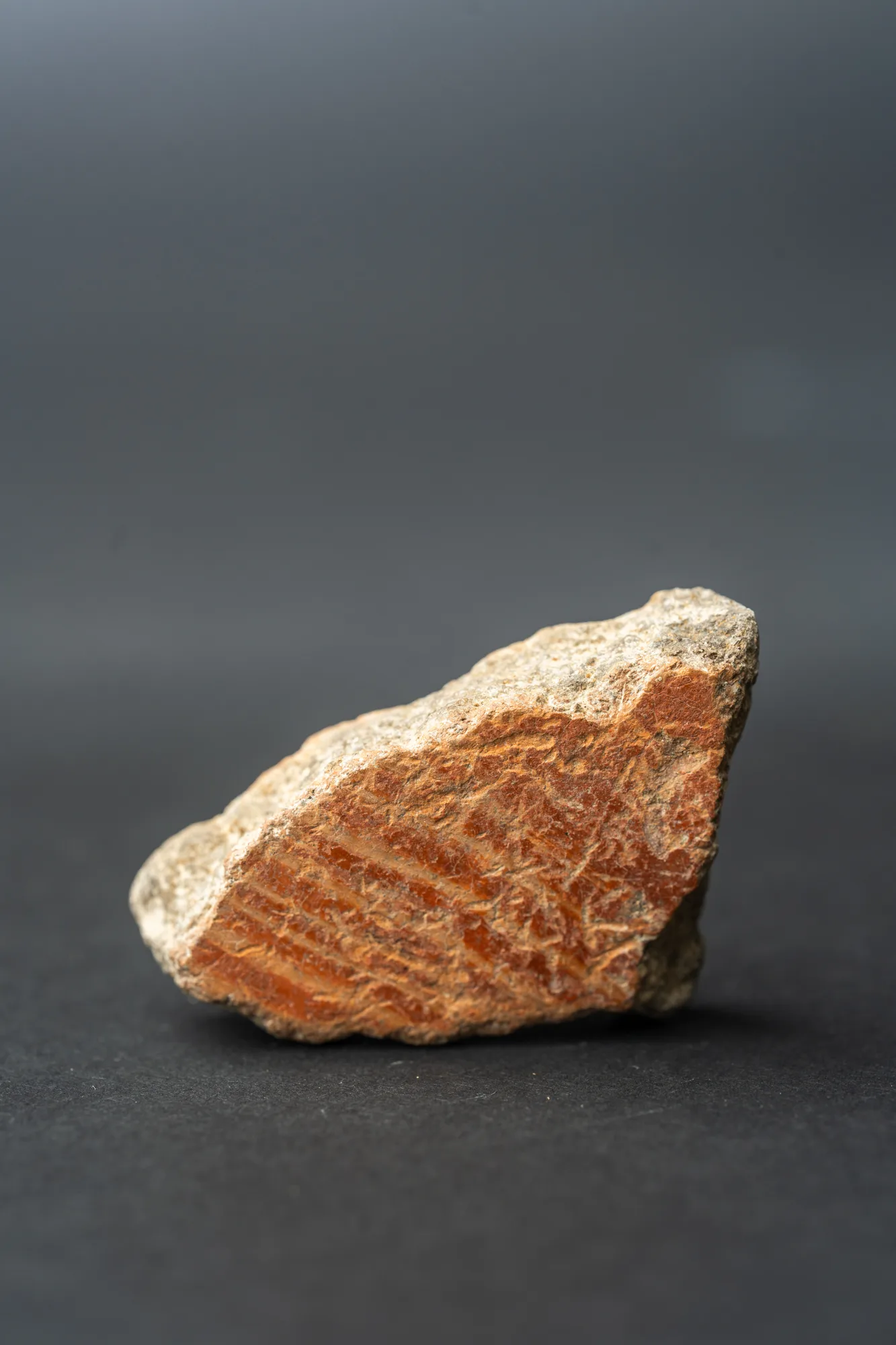 Combed Ware Bowl Fragment with Oblique BandsNeolithic · 4500–3900 BC
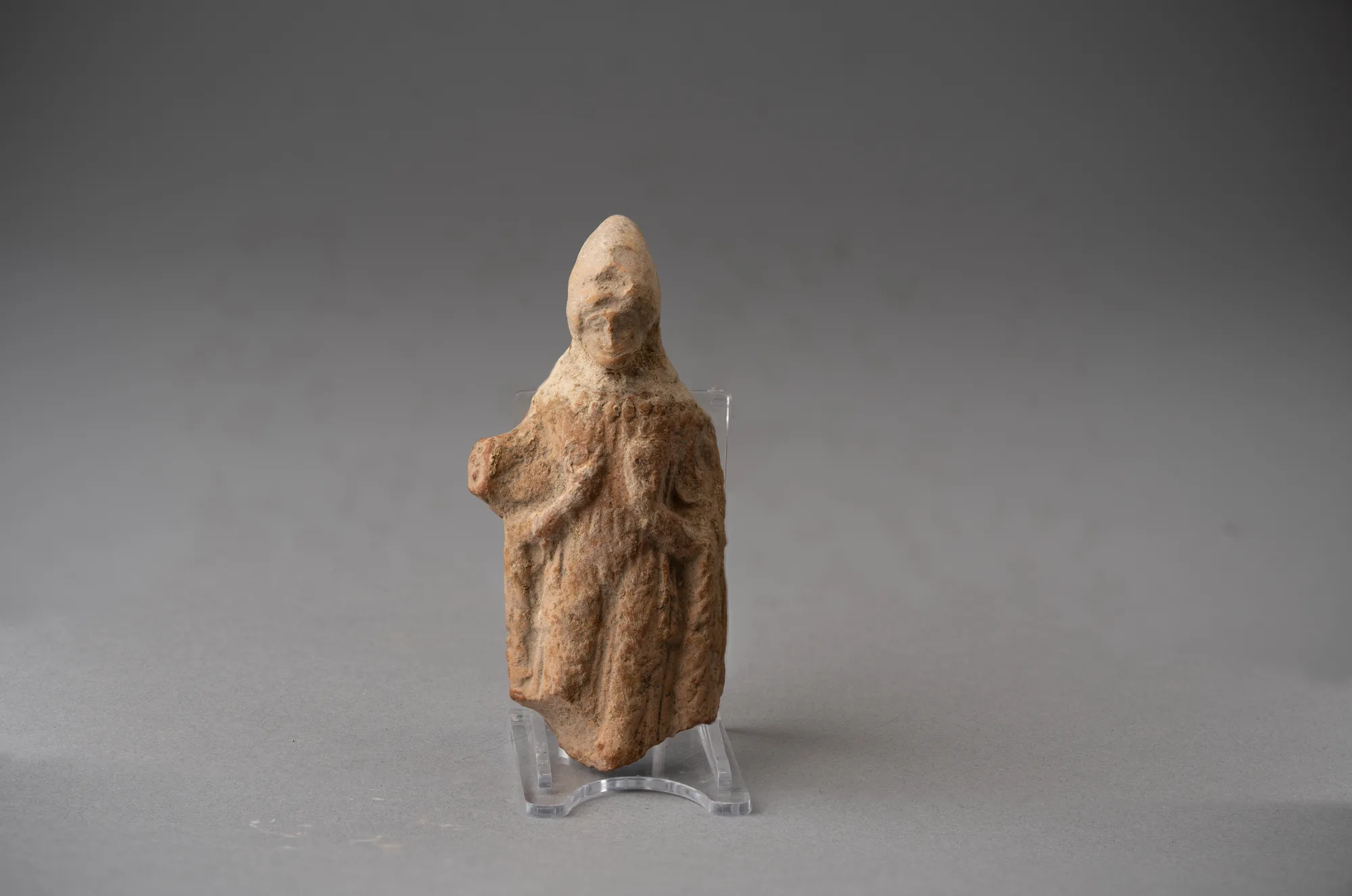 Mould-Made Figure of a Veiled Woman Holding a FlowerArchaic II · 550–450 BC
and 17 more objects mentioned on this page
In the catalogue
References
- 1.Smith, J. S. (2009). Art and society in Cyprus from the Bronze Age into the Iron Age. Cambridge University Press.
- 2.Buchholz, H.-G., & Karageorghis, V. (1973). Prehistoric Greece and Cyprus: An archaeological handbook. Phaidon.
- 3.Schreiber, N. (2003). The Cypro-Phoenician pottery of the Iron Age. Brill.
- 4.Gitin, S. (Ed.). The ancient pottery of Israel and its neighbors from the Middle Bronze Age through the Late Bronze Age (Vol. 3), chapter 4.2, Late Bronze Age Cypriot imports. Israel Exploration Society.
- 5.Karageorghis, V. (2000). Ancient art from Cyprus: The Cesnola Collection in the Metropolitan Museum of Art. The Metropolitan Museum of Art.
- 6.Karageorghis, V. The coroplastic art of ancient Cyprus (Vol. 1).
- 7.Bolger, D. Mosphilia and the Chalcolithic pottery sequence. In Cypriot ceramics: Reading the prehistoric record (University Museum Monograph). University of Pennsylvania Museum, 1991.
- 8.Karageorghis, V. The ancient civilization of Cyprus. Cowles.
- 9.Mantzourani, E., & Liritzis, I. Chemical analysis of pottery samples from Late Neolithic Kantou-Kouphovounos and Sotira-Tepes.
- 10.Reyes, A. T. (1994). Archaic Cyprus: A study of the textual and archaeological evidence. Clarendon Press.
- 11.Pilides, D., & Papadimitriou, N. (Eds.). (2012). Ancient Cyprus: Cultures in dialogue. Department of Antiquities, Cyprus.
- 12.Tatton-Brown, V. (Ed.). (1997). *Ancient Cyprus* (2nd ed.). British Museum Press.
- 13.City of Gold: The archaeology of Polis Chrysochous, Cyprus (exhibition catalogue).
- 14.Metropolitan Museum of Art. Gold ring with three box settings on the bezel and cloisons on the sides, 74.51.4072. https://www.metmuseum.org/art/collection/search/243484