
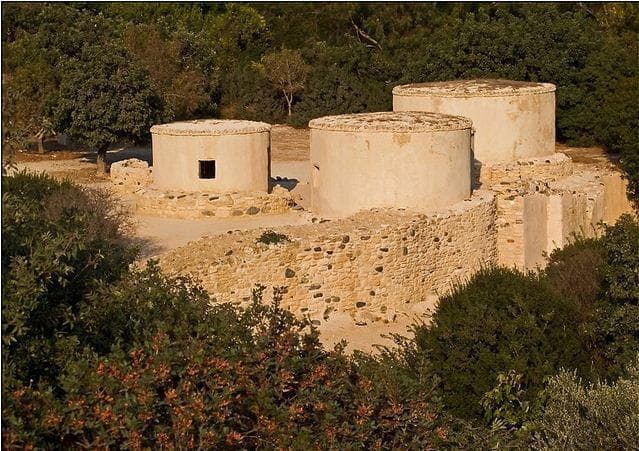
Before the picrolite cruciform figure there was a long, thin and mostly stony tradition of human images on Cyprus. The Neolithic villagers of Khirokitia, Kalavasos-Tenta and Sotira made small figures from the same river cobbles they used for tools and bowls, notched a pebble into a head and a body, ground a flat andesite head with a pointed chin, and in one case modelled a face in unbaked clay. They almost never gave these figures a sex, rarely gave them a face, and threw them away when they were finished with them. This entry covers the Aceramic and Ceramic Neolithic figurines, the beginning of picrolite as a material, and the threshold at which the Chalcolithic tradition begins; the cruciform figurines themselves, the limestone "ladies" and the clay birth-figures are covered under cruciform figurines and are only summarised here. The period background is in the Neolithic and Chalcolithic chronology entries.
The corpus and its frameworks
The field was reorganised by Christine Winkelmann's 2020 monograph, a morphological catalogue of every Neolithic and Chalcolithic figurine then known from the island, numbered in an N-series for the Neolithic and a C-series for the Chalcolithic [1]. The Neolithic catalogue runs to 89 objects, of which 59 are accepted as anthropomorphic figurines and 30 are possible ones. The distribution over time is lopsided: about 11 figures for the Initial and Early Aceramic Neolithic (the Cypro-PPNA and PPNB, c. 9000 to 7000 BC), 40 or 41 for the Late Aceramic Neolithic (the Khirokitia culture, c. 7000 to 5200 BC), and barely six for the Ceramic Neolithic (the Sotira culture, c. 5200 to 4000 BC) [1, p. 91]. Khirokitia alone accounts for 27 pieces, by far the largest single assemblage. Winkelmann rejects the fine-grained typologies of earlier writers and recognises only two homogeneous groups within a heterogeneous mass: pebble figurines and large plank-like statuettes. Everything else is simply "anthropomorphic".
The older scheme is Dikaios's, set out in the Khirokitia final report, which divided the figures into fiddle-shaped, squatting, flat and transitional types [2]. Vagnetti's 1991 survey of stone sculpture, written for the Getty conference on Chalcolithic Cyprus, is the bridge between the two and the source of the standard claims about continuity into the Chalcolithic [3]. The Chalcolithic C-series is organised by material rather than form: stone figurines, pottery figurines, picrolite figurines (cruciform and non-cruciform) and figurative pendants, and it is the framework used in the cruciform entry.
| Phase | Approximate dates BC | Figurines (Winkelmann) | Materials and character |
|---|---|---|---|
| Cypro-PPNA | c. 9000–8500 | 3, all from Ayia Varvara-Asprokremnos | Stone; schematic; deliberately deposited |
| Cypro-PPNB | c. 8500–7000 | c. 8 | Stone, one plaster head; includes the only unambiguous female |
| Late Aceramic (Khirokitia culture) | c. 7000–5200 | 40–41; 27 from Khirokitia | Andesite, diabase, limestone; pebble figurines, plank-like heads, one unbaked clay head |
| Ceramic Neolithic (Sotira culture) | c. 5200–4000 | c. 6 | Limestone; the Sotira figure; pillar figures at Vrysi |
| Early Chalcolithic | c. 4000/3900–3400 | Mylouthkia variety cruciforms begin | Picrolite; clay figurines begin |
| Middle Chalcolithic | c. 3400–2800 | Cruciform floruit; 119 picrolite cruciforms in total | Picrolite, limestone, Red-on-White clay |
The absolute dates follow the radiocarbon framework in Knapp's synthesis rather than the older schemes, which placed the Khirokitia culture in the sixth millennium; the Aceramic Neolithic now runs from the early ninth millennium and Khirokitia itself is a late, not an early, expression of it [11].
Materials and manufacture
Neolithic figures are made of the hard igneous rocks of the Troodos, andesite and diabase, with some limestone and, very rarely, picrolite, the same water-worn river cobbles from which the villagers ground their axes, querns and stone bowls. This matters for interpretation. The figures were produced by the same non-specialist carvers as the tool industry, with the same reduction techniques of pecking, grinding and polishing, and no workshop set apart for images has ever been identified; one possible figurine came from an axe workshop [1, pp. 113–115]. Stone figure-bowls from Khirokitia, which fuse a human figure with a shallow basin, show carvers moving between vessel and image without any sense of a boundary.
Clay, by contrast, was known and avoided. Only four Neolithic clay figures exist, all from before the introduction of pottery: a baked-clay torso from Ayia Varvara-Asprokremnos, the unbaked clay head from Khirokitia, and two pieces from Kholetria-Ortos, plus one figurine in bone [1, pp. 93–94]. Modelled terracotta figurines are therefore effectively absent as a class, the reverse of the mainland Levant and Anatolia, where clay figurines are the norm. The true Cypriot coroplastic tradition begins only in the Chalcolithic with the Red-on-White figures and birth-figures [8].
The rocks imposed a manner. Because andesite and diabase are hard and the tools were stone, the figures are reduced rather than modelled: a body block, a neck, a head, stumpy arms, legs separated by a groove, with facial features, where they exist at all, confined to relief eyebrows continuous with the nose. Winkelmann stresses that the assemblage does not evolve from simple to sophisticated. Some of the most naturalistic pieces are among the earliest, and schematic and detailed forms coexist throughout [1, p. 117].
The Aceramic Neolithic figures
The oldest human images on the island are three schematic stone pieces from the Cypro-PPNA site of Ayia Varvara-Asprokremnos. The best of them (Winkelmann's N 1) is two roughly shaped bulges, a tilted-back head and a body, divided by a deep notch, with traces of white slip and red colour on the back. It was set in the burnt sediment sealing an abandoned semi-subterranean structure, which hints at a closure rite, and this deliberate deposition distinguishes the earliest figures from the later Khirokitia material, which was thrown away [1]. From the Cypro-PPNB come a plaster head from Parekklisha-Shillourokambos and the figurine from Kritou Marottou-Ais Yiorkis (N 11), a figure with heavy hips and a deep pubic triangle that is the single unambiguously female image of the entire Cypriot Neolithic [1, pp. 96–98].
The Khirokitia culture supplies the bulk. Winkelmann's first coherent group is the pebble figurine: a water-worn oblong cobble of andesite, diabase, dolerite or limestone, given lateral V-notches or a circumferential groove to separate head from body, with no facial features. About 21 are secure, most from Khirokitia, others from Petra tou Limniti, Kissonerga-Mylouthkia, Kholetria-Ortos and Vrysi. They are not self-supporting and were meant to be handled. Identification is not always secure; some could be unworked stones or tool blanks, and the Mylouthkia pieces may be weights [1, pp. 92–95]. The heterogeneous middle group, about 29 pieces which Winkelmann calls "basically all unique", are more deliberately shaped, with a differentiated neck, stumpy arms and separated legs. The signature piece is the "cubic" figurine Kh 967 from Khirokitia, andesite or diabase, 19 cm high and complete, with a flat cubical body, a cylindrical neck, a round head with recessed eyes and mouth, incised chevrons on the back and traces of red pigment across the top of the head. Dikaios thought it possibly unfinished, even intended to become a bowl; its reduction of head and body to two geometric masses is what gives it its monumental look [2].
The second coherent group is the plank-like statuette. Only heads and necks survive, flat in profile, ground and polished, with a rounded top, relief eyebrows running into the nose, a pointed chin, drilled holes at the sides that Dikaios read as for earrings, and incised patterns on the back read as hair or headdress. Three of five break directly under the chin, which implies complete bodies now lost, and the inferred original size of some, perhaps approaching a metre, makes these the pieces most plausibly set up for display rather than handled, though no pedestal has ever been found and none is self-supporting [1, pp. 99–105, 109]. Kh 1 carries vertical grooves under the chin read as a beard, a rare male-coded face. Kh 1093 preserves a perforated ear. Kh 1404, an unstratified surface find with strongly projecting brows, almost circular boss eyes and a pronounced chin, is the piece Vagnetti singled out as "one of the few traces of development from Neolithic to Chalcolithic", comparing its face to that of the Yialia cruciform [3]. Winkelmann accepts the comparison only cautiously, noting that the resemblance lies in the selection of features (brows, eyes, nose) rather than in their actual rendering, and that a single pair of objects is too slender a basis for descent [1, p. 103].
The Khirokitia clay head
The most naturalistic Neolithic image on the island is the unbaked clay head Kh 1063 from Tholos XLVII at Khirokitia, 10.5 cm preserved, now in the Cyprus Museum. It is "the only specimen of its kind on the island": an oblong face with a high forehead, rounded cheeks and a prominent chin; bean-shaped convex eyes each divided by a horizontal incision so that the eyes appear closed; nose and lips in low relief with a short groove for the mouth; a wide neck broadening downward and carrying a relief band that Dikaios read as a possible necklace; incised ornament at the forehead and temples and a herringbone pattern on the flattened back of the head, taken as hair; and applied wavy relief bands, one on each side, read as curls or, less plausibly, as snakes [1, p. 99; 2]. A socket in the underside shows that it was a composite figure, the head made to sit on a body of some other material, wood or cloth or unbaked clay, that has not survived.
The head was found on Floor II of the tholos with no associated features or artefacts [4, p. 89]. Dikaios wondered whether the wavy bands might be serpents and whether the piece prefigured a snake goddess of the kind known later in Crete; he could not determine the figure's sex. That reading is back-projection and should be presented as such. The closed eyes have encouraged a funerary association, and the head is often linked to a cult of the dead on the strength of its expressive realism and of the sub-floor burials that characterise the site, but the association rests on the character of the object rather than on its context [4]. It remains, with the Sotira figure, one of the two Neolithic images that a museum visitor is likely to remember.
The Ceramic Neolithic
After the Khirokitia culture the figurative record contracts to a handful of objects. The famous one is the limestone figure from Sotira-Teppes (Sotira 106), about 16 cm high, found on Floor III of House 5 in an enclosed compartment together with pottery [5]. It is an extreme abstraction: a simple curved head on a long neck, a body divided by a deep groove into two legs, no arms and no face. Dikaios read it as a deliberate combination of male and female genitalia, and the reading has had a long afterlife. The contributors to Engendering Aphrodite treat the Sotira figures as an early statement of an "ideology of sexual duality" that runs on into the Chalcolithic and the Bronze Age plank figures, combining an erect phallus with enlarged female thighs [6]. A related limestone figure from Sotira-Arkolies, ploughed up in 1981 and of uncertain date, is read as a seated female from one side and a phallus and scrotum from the other. Peltenburg drew attention to the enclosed corners in which such figures were kept, the compartment in House 5 at Sotira and an enclosure in House 1 at Ayios Epiktitos-Vrysi that held three self-supporting pillar figures about 60 cm high, one phallic, with traces of having been wrapped in organic material, and argued from them for domestic cult places in the Ceramic Neolithic [1, pp. 113–115]. The evidence is real but thin, and the buildings are otherwise ordinary.
Winkelmann's verdict on the whole dual-sex tradition is that it rests on very few specimens. Of the entire Neolithic repertoire only one figure is unambiguously sexed, and across the Neolithic and Chalcolithic together only about fifteen are securely female. The "phallic heads" are too varied to be assumed to encode one idea, and the Sotira piece has been read as plain-schematic, phallic, female and dual without any consensus; the identifications, she argues, rest on present-day perception [1, pp. 107–108]. The conservative conclusion is that the great majority of Neolithic figures are not sexually characterised at all. Both readings should be reported, because both are live.
Context, use and meaning
The strongest evidence about Neolithic figurines is where they were found. With one possible exception, a Mylouthkia piece that may be a grave good, they do not come from burials [1, p. 114]. They come from houses and, above all, from habitation refuse: floors, fills and dumps, and at Khirokitia even reused in wall construction. Alain Le Brun, the site's second excavator, drew the conclusion that has governed interpretation since. Objects treated with such neglect must have had a limited use-life; they served a primary purpose within the dwelling, lost their significance once it was fulfilled, and were discarded as worthless [1, pp. 25, 112]. No Late Aceramic figurine shows deliberate breakage or ritual deposition. This is the reverse of the Chalcolithic cruciform, which was worn in life and sometimes buried with its owner, and it is a direct argument against any notion of a Neolithic pantheon.
Meaning, on this basis, is deliberately minimal in the current literature. The blanket "Mother Goddess" reading, rooted in Jacqueline Karageorghis's search for an ancestress of Aphrodite, is rejected: the great majority of human representations are not sexually characterised, and the contexts do not support a cult image [1, p. 433]. Even Jacqueline Karageorghis conceded that no Neolithic figurine can be shown to represent a deity, and suggested ancestor worship instead, reserving any Great Goddess for the third millennium. The least-bad reading, following Le Brun, is that the figurines were ritual items of diverse meaning used at household level, plausibly in life-crisis rites, with an ancestral dimension suggested by the entanglement of figurines, hearths and sub-floor burials in the same houses; beyond that, as Winkelmann puts it, "all further assumptions remain purely speculative" [1, p. 116]. Jones presses the ancestral reading furthest, proposing that figurines were "portable dead", copies embodying the essence of the deceased and deposited to mediate their passage to another realm [4, p. 132]; it is a hypothesis, and should be cited as one. The one secure pattern of difference is size: the large plank-like statuettes were most probably stationary display pieces, perhaps for ceremonies, while the pebble and small anthropomorphic figures were handled, though no wear analysis has been done to confirm it [1, p. 405].
Picrolite before the cruciform
Picrolite is a soft blue-green serpentinite from the Troodos, correctly identified by the geologist Manglis in Dikaios's Khirokitia report after decades of being mislabelled steatite, and it is the signature ornamental stone of prehistoric Cyprus. Its practical sources are the secondary deposits of the Kouris and Karyotis rivers, which carry the pebbles down from the mountains; geochemical work points to the Kouris as the major and perhaps sole source, and blue picrolite occurs only there [7, p. 6]. Its use is deep and continuous. Beads at Akrotiri-Aetokremnos suggest exploitation by the first visitors to the island in the tenth millennium. In the Aceramic Neolithic carvers "developed a highly distinctive repertoire of pendants, 'dress pins', beads, rings, and small vessels", and a cache of unworked picrolite pebbles in a painted building at Khirokitia shows raw material carried from the rivers and worked on the settlement [7, pp. 7, 10]. Discard follows the figurine pattern: at Khirokitia 84 per cent of recorded picrolites come from extramural contexts, and they were not normally kept as grave offerings; Le Brun suggested they served restricted purposes such as life-crisis rites and were then discarded [7, p. 7]. In the Late Neolithic the material is rarer and the shapes simpler, pebbles only slightly altered into beads and elongated pendants [7, p. 8]. Its presence in the earliest levels of Ayios Epiktitos-Vrysi on the north coast, far from any source across the Kyrenia range, is Peltenburg's argument for an island-wide exchange network and for continuity of occupation through the Neolithic [7, p. 8]. See also the jewellery entry.
As a figurine medium, however, picrolite is almost irrelevant before the Chalcolithic. Winkelmann records one Neolithic picrolite figure each from Shillourokambos and Kantou, and the Shillourokambos piece is far too schematic to be sexed or to count as a cruciform precursor [1, p. 108]. The Neolithic figures that point forward do so by style rather than material: a few show slightly elongated necks and tilted-back heads that may prefigure the cruciform posture, though the link "is not possible yet to confirm" [1, p. 105].
The Chalcolithic threshold
The cruciform figurine proper, the schematic picrolite figure with outstretched arms, elongated neck, tilted-back head and drawn-up knees, is a Chalcolithic development. It emerges through Peltenburg's Early Chalcolithic Mylouthkia variety, with short arms that do not yet form a true cross and less flexed legs, into the classic Middle Chalcolithic varieties (Kythrea, Salamiou, Kissonerga in Winkelmann's scheme), 119 specimens in all, mostly 5 to 6 cm high, worn as pendants in life and only secondarily buried [1]. The cruciform entry treats the varieties, the Yialia figure that wears a miniature of itself, the use-wear and the interpretive debates. Two points belong here because they concern the transition.
The first is that the Chalcolithic is the first age of clay. The Red-on-White figurines and the standardised birth-figures, a woman seated on a stool with pendulous breasts and painted features, are the beginning of a Cypriot coroplastic tradition, and Goring's 1991 study is the foundation for reading them as handling-charms or teaching aids connected with childbirth [8]. The sealed pit in the ceremonial area at Kissonerga-Mosphilia, in which a clay building model was packed with ten stone and nine pottery figurines and other objects, is the principal Chalcolithic evidence for a communal rite built around such imagery. Düring's warning is that this ceramic birth imagery, with breasts, vulva and spread legs, is morphologically distinct from the picrolite cruciform, which stands with legs pressed together and usually shows no sex at all, so that the birthing reading of the cruciform has hardened into a "factoid" [10, pp. 151–152]. He also makes the point that figures wearing images of themselves are unlikely to be goddesses [10, p. 155].
The second is Souskiou. The cemetery and settlement complex above the Dhiarizos valley in the Paphos district, four cemeteries and a settlement at Laona, is the great mortuary concentration of cruciforms and pendants, with a probable carving workshop and an unfinished piece. Its deep rock-cut tombs with multiple inhumations, disarticulated and articulated burials, dentalium necklaces strung with picrolite pendants (one looted tomb at Laona held 13 pendants and 1,361 dentalia), and objects deposited outside the tomb shafts are unlike anything else on the island, where Chalcolithic burial is normally a single intramural pit grave with few goods [9, pp. 469–472, 510]. Souskiou shifts the focus from the individual to the communal, and it is also the reason so many cruciforms have no provenance: the site was looted long before the excavations of Peltenburg's team, and picrolite figures reached the market and the museums by that route. The Metropolitan Museum's picrolite figure, bought in 1951 from the dealer Nicolas Koutoulakis, is a typical case of a fine piece without a find-spot. See Lemba-Lakkous, Kissonerga and Erimi for the excavated settlements, and An Enduring Form for the article on the class.
Summary
The Neolithic figurines of Cyprus are few, stony, sexless and domestic: pebble figures and unique anthropomorphs from the houses of the Khirokitia culture, a handful of large plank-like heads, one clay face with closed eyes, and a single limestone figure from Sotira that has carried more interpretive weight than its context can bear. They were made by ordinary carvers with ordinary stone, used in the house, and discarded. Picrolite was worked from the beginning, but as ornament rather than image. The cruciform figurine, the clay birth-figure and the Souskiou tombs are Chalcolithic innovations, and the few stylistic threads that connect them to the Neolithic, a tilted head here and an elongated neck there, are too thin to carry a story of descent. Winkelmann's corpus, Dikaios's Khirokitia report and the 1991 Getty volume are where to start.
References
- 1.Winkelmann, C. (2020). *The Neolithic and Chalcolithic Figurines of Cyprus* (Marru: Studien zur Vorderasiatischen Archäologie). Zaphon.
- 2.Dikaios, P. (1953). *Khirokitia: Final Report on the Excavation of a Neolithic Settlement in Cyprus on Behalf of the Department of Antiquities, 1936–1946*. Oxford University Press.
- 3.Vagnetti, L. (1991). Stone sculpture in Chalcolithic Cyprus. *Bulletin of the American Schools of Oriental Research, 282/283*, 139–151.
- 4.Jones, P. L. (2008). *Moving Heaven and Earth: Landscape, Death and Memory in the Aceramic Neolithic of Cyprus* (BAR International Series). Archaeopress.
- 5.Dikaios, P. (1961). *Sotira*. University Museum, University of Pennsylvania.
- 6.Bolger, D., & Serwint, N. (Eds.). (2002). *Engendering Aphrodite: Women and Society in Ancient Cyprus*. American Schools of Oriental Research.
- 7.Peltenburg, E. (1991). Local exchange in prehistoric Cyprus: An initial assessment of picrolite. *Bulletin of the American Schools of Oriental Research, 282/283*, 107–126.
- 8.Goring, E. (1991). Pottery figurines: The development of a coroplastic art in Chalcolithic Cyprus. *Bulletin of the American Schools of Oriental Research, 282/283*, 153–161.
- 9.Peltenburg, E., Bolger, D., & Crewe, L. (Eds.). (2019). *Figurine Makers of Prehistoric Cyprus: Settlement and Cemeteries at Souskiou*. Oxbow Books.
- 10.Düring, B. S. (2023). Reconsidering cruciform figurines of Chalcolithic Cyprus. In B. S. Düring & P. M. M. G. Akkermans (Eds.), *Style and Society in the Prehistory of West Asia* (pp. 149–156). Sidestone Press.
- 11.Knapp, A. B. (2013). *The Archaeology of Cyprus: From Earliest Prehistory through the Bronze Age*. Cambridge University Press.