
Hellenistic
Fusiform Unguentarium
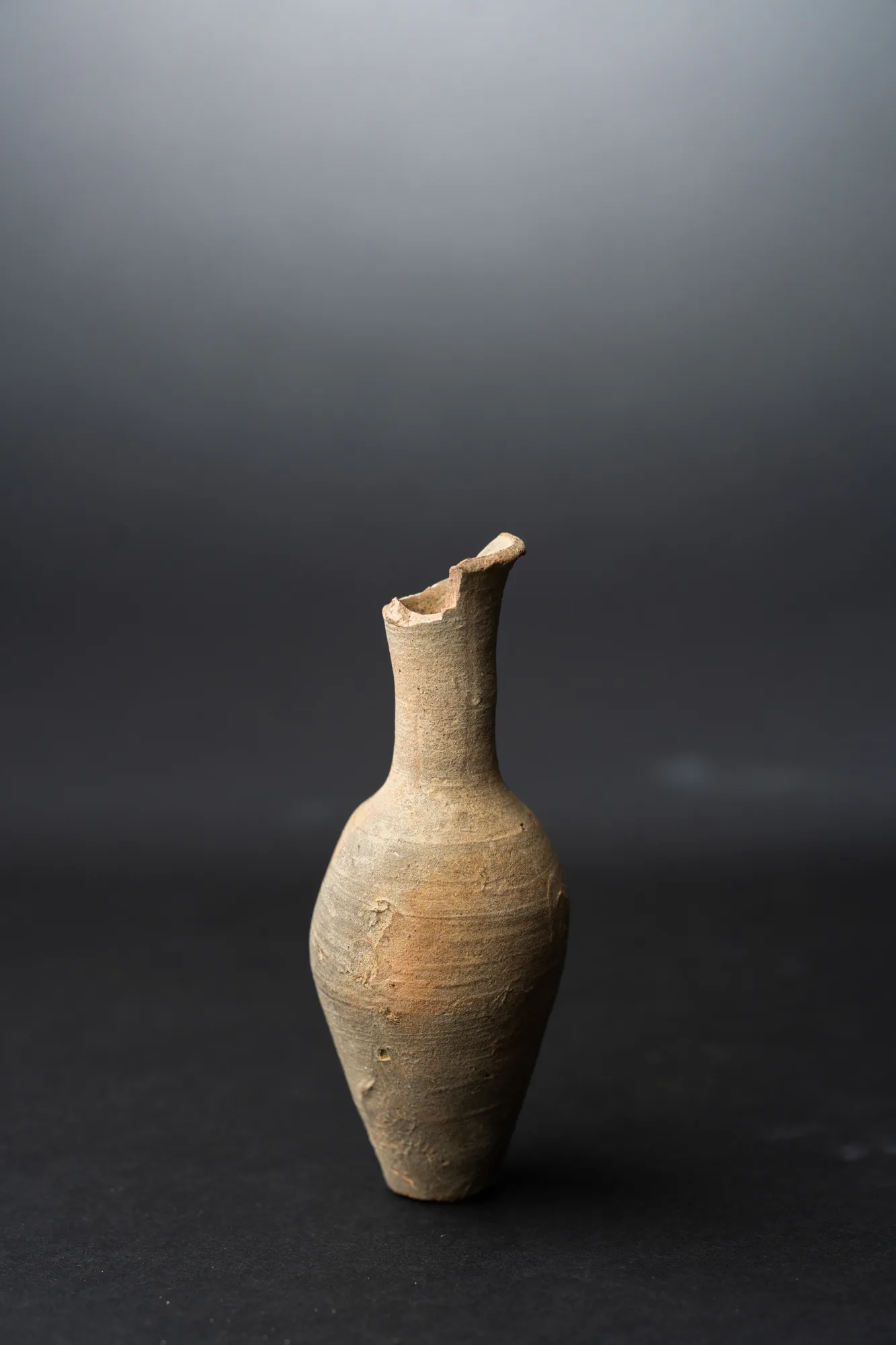
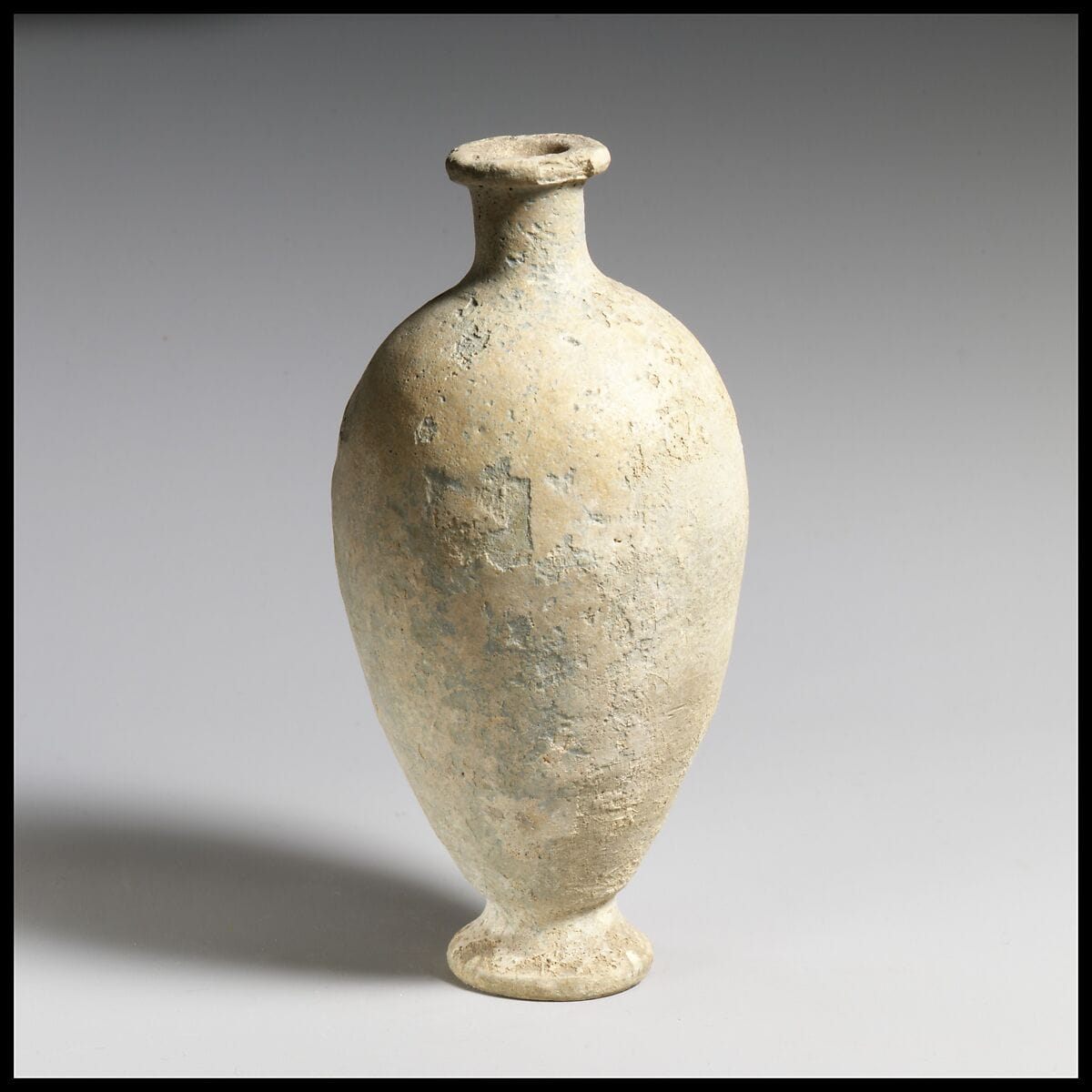
Small plain wheel-made fusiform unguentarium of early Hellenistic type, with a spindle-shaped body and a broken neck; a scented-oil bottle of the kind placed in tombs.
Date
325 - 150 BC
Accession No.
BTL-CL-001
Collection
Alexis Drakopoulos
Early Hellenistic, c. late 4th–2nd century BCE · Plain fired clay · Wheel-made
A small handleless bottle with a spindle-shaped body. The narrow neck rises from a sloping shoulder; its upper end is broken away in a jagged edge and the rim is lost. The body is widest just above the middle and tapers in a long cone to a tiny flat base with no separate foot. Throwing ridges run unsmoothed round the whole body and up the neck, the marks of a potter working fast on the wheel. There is no slip or paint. The clay surface is greyish buff, warming to orange-buff where the outer skin has worn, and it is spotted with small round pits and patches of encrustation.
Commentary
This is a fusiform unguentarium, the small ceramic oil bottle that replaced the lekythos as the standard grave offering across the Hellenistic Mediterranean [1]. Anderson-Stojanović divides ceramic unguentaria into two basic shapes: fusiform, with a spindle-shaped body, and bulbous, with a rounded body on a flat base [1]. The early fusiform bottle, with a rounded body and little or no foot, does not appear in the eastern Mediterranean before the late 4th century BCE; later fusiform unguentaria grow more slender and stand on tall solid stems [1]. This bottle has the fuller body and minimal base of the early form, which favours a date between the late 4th and the 2nd century BCE.
Unguentaria of this family were made in huge numbers throughout the Greek east, in Greece, Asia Minor, the Levant, Egypt and Cyprus, and most are between about 8 and 20 cm tall [1]. They are often roughly finished, as this one is [1]. Their contents were scented oils used in the preparation and honouring of the dead; the older idea that they collected mourners' tears has no support [1].
In Cyprus the type is well represented in Hellenistic chamber tombs. At Marion, the Swedish Cyprus Expedition recovered a plain unguentarium of very similar rounded fusiform profile, 12.7 cm high, in Tomb 9, dated to Cypro-Hellenistic I (c. 325–150 BCE) [2]. A slimmer example with a stem foot from Marion Tomb 58 shows the direction the type later took [3]. The same rounded form occurs as far away as Egypt, as in a small unguentarium in Toronto dated to the early to middle 3rd century BCE [4].
Because the type was so widely made, a Cypriot origin for this bottle cannot be shown from its shape. Only a find-spot or an analysis of the fabric could settle where it was made. The name "spindle bottle" sometimes attached to such pieces should not be confused with the Late Bronze Age Red Lustrous Wheel-made spindle bottle, a much taller, burnished red vessel with a handle, a thousand years earlier.
References
- 1.Anderson-Stojanović, V. R. (1987) The Chronology and Function of Ceramic Unguentaria. American Journal of Archaeology 91.1, pp. 105–122.
- 2.Medelhavsmuseet, Stockholm, M.009:001: unguentarium, Plain White I (Hellenistic), Marion Tomb 9, side chamber VI, Swedish Cyprus Expedition. Collection record.
- 3.Medelhavsmuseet, Stockholm, M.058:034: unguentarium, Marion Tomb 58, Swedish Cyprus Expedition. Collection record.
- 4.Royal Ontario Museum, Toronto, 910.175.303: fusiform unguentarium from Egypt, early to middle 3rd century BCE. Collection record.
More from the Catalogue
Browse related objects
Alabaster alabastron (perfume vase)
Archaic II
Terracotta bottle
Middle Bronze Age II
Alabaster alabastron (perfume vase)
Archaic II
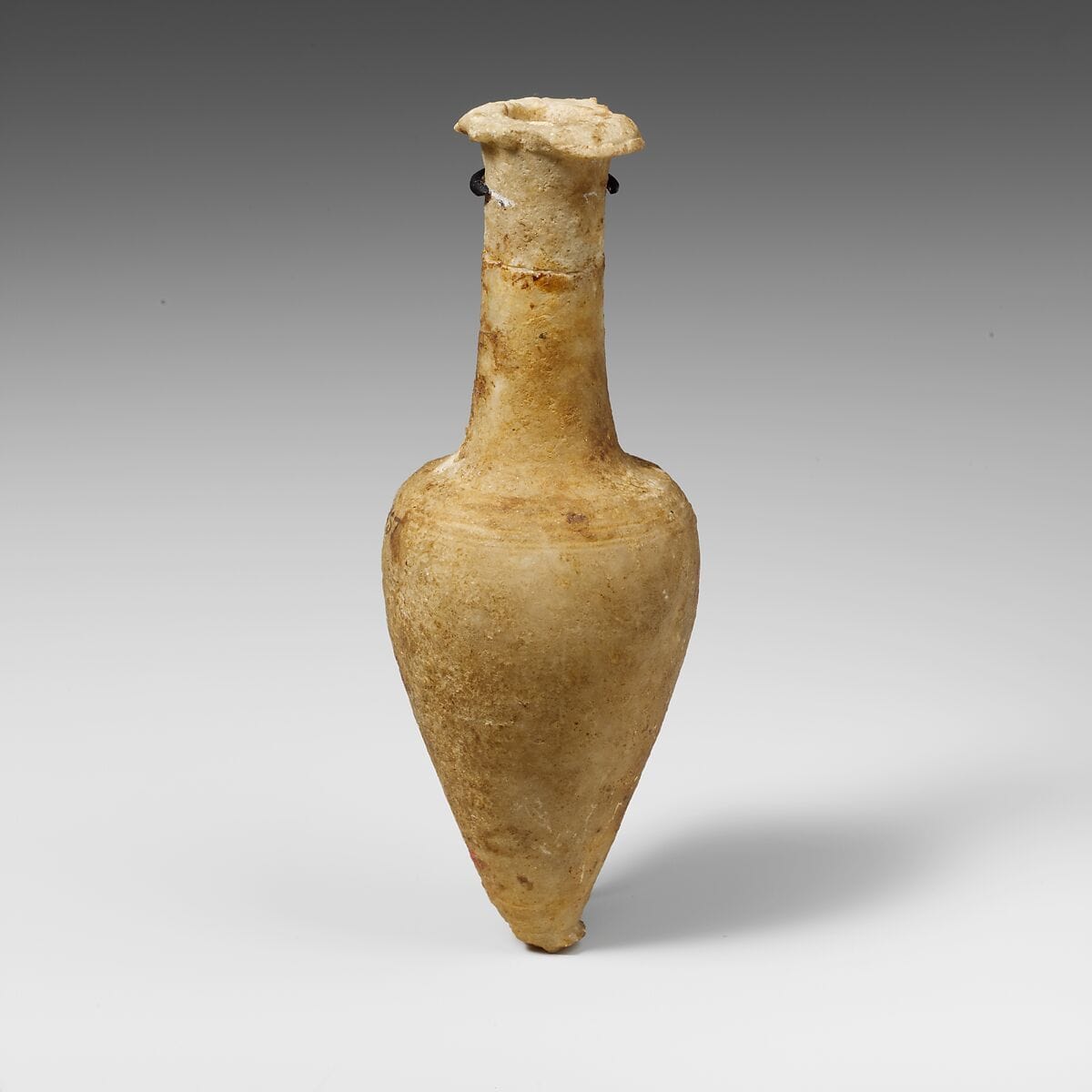
Alabaster unguentarium
Hellenistic
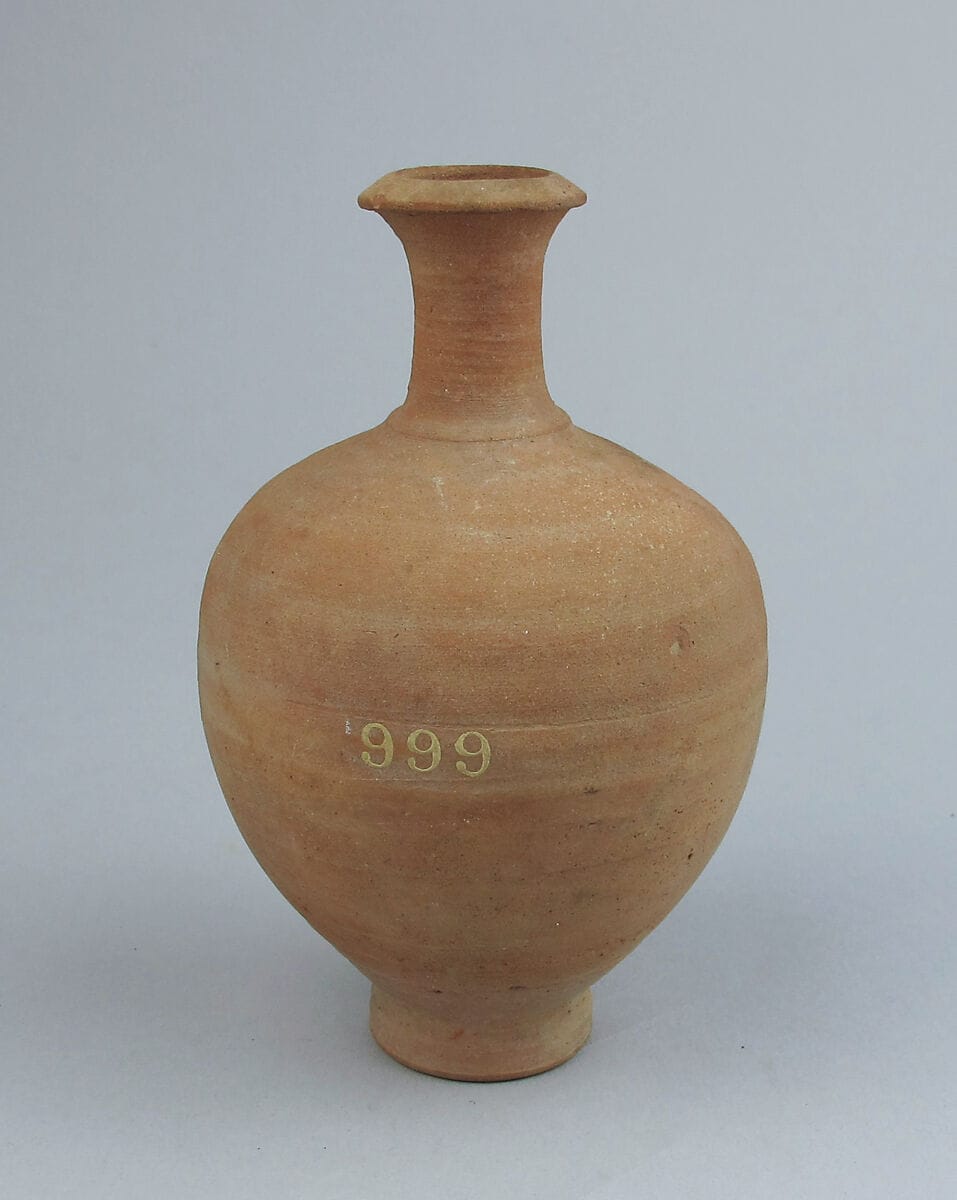
Bottle
Classical
Rock crystal bottle
Classical
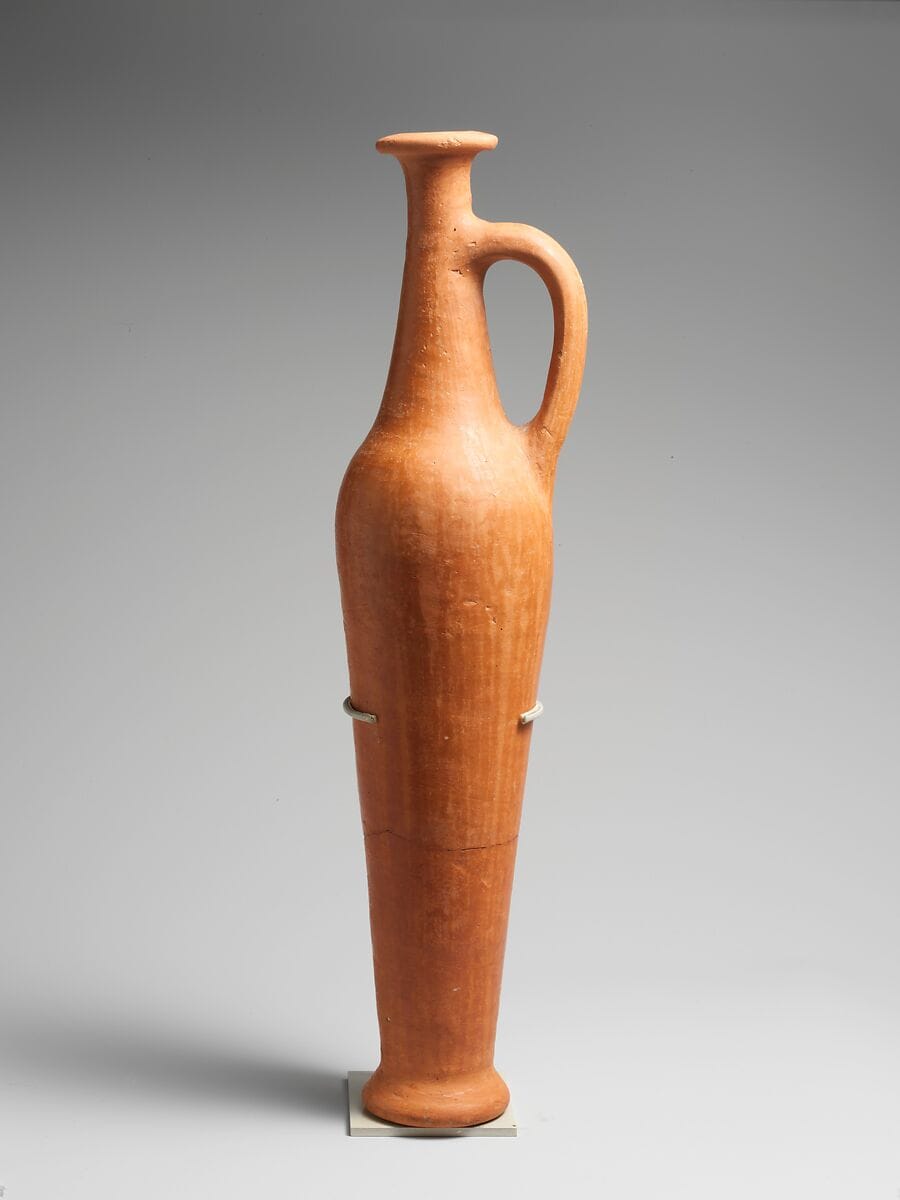
Terracotta spindle bottle
Late Bronze Age II
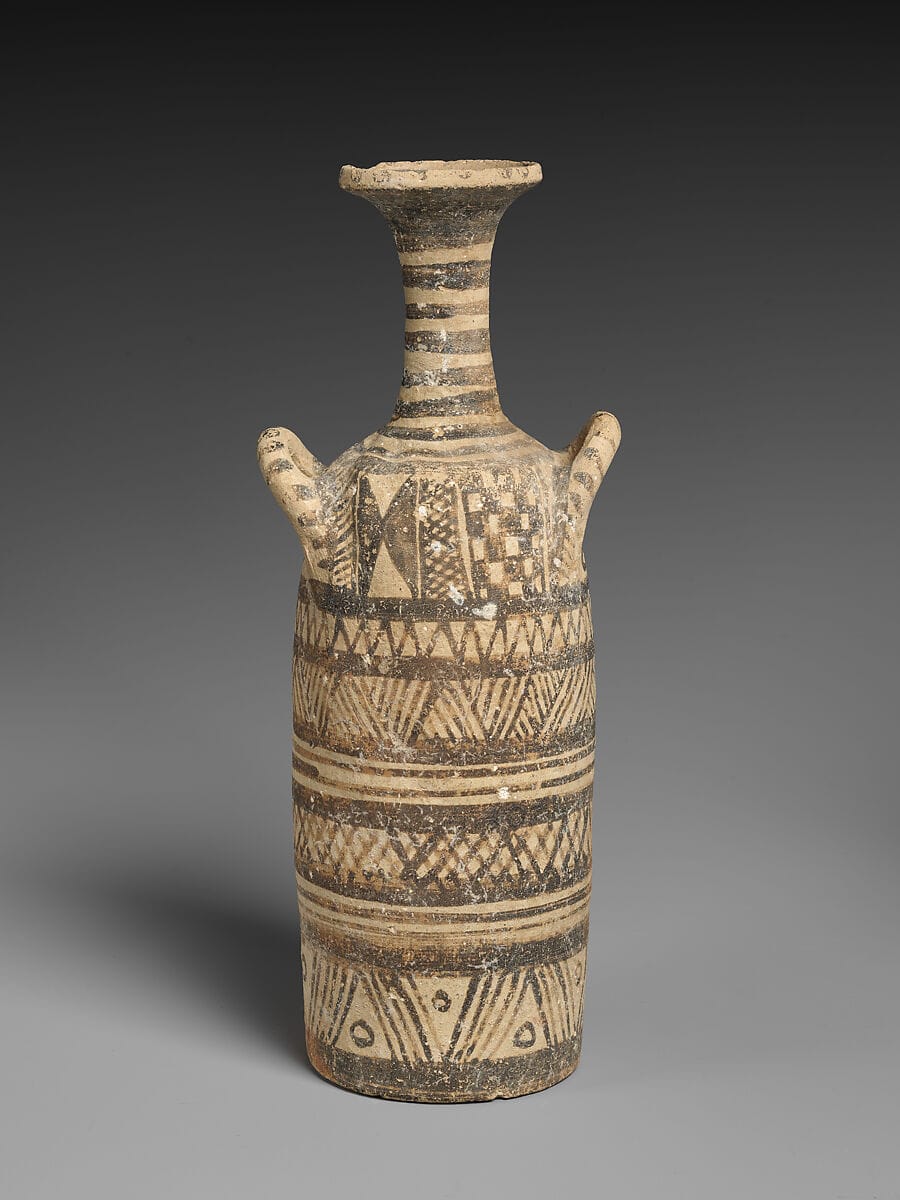
Terracotta bottle
Late Bronze Age III
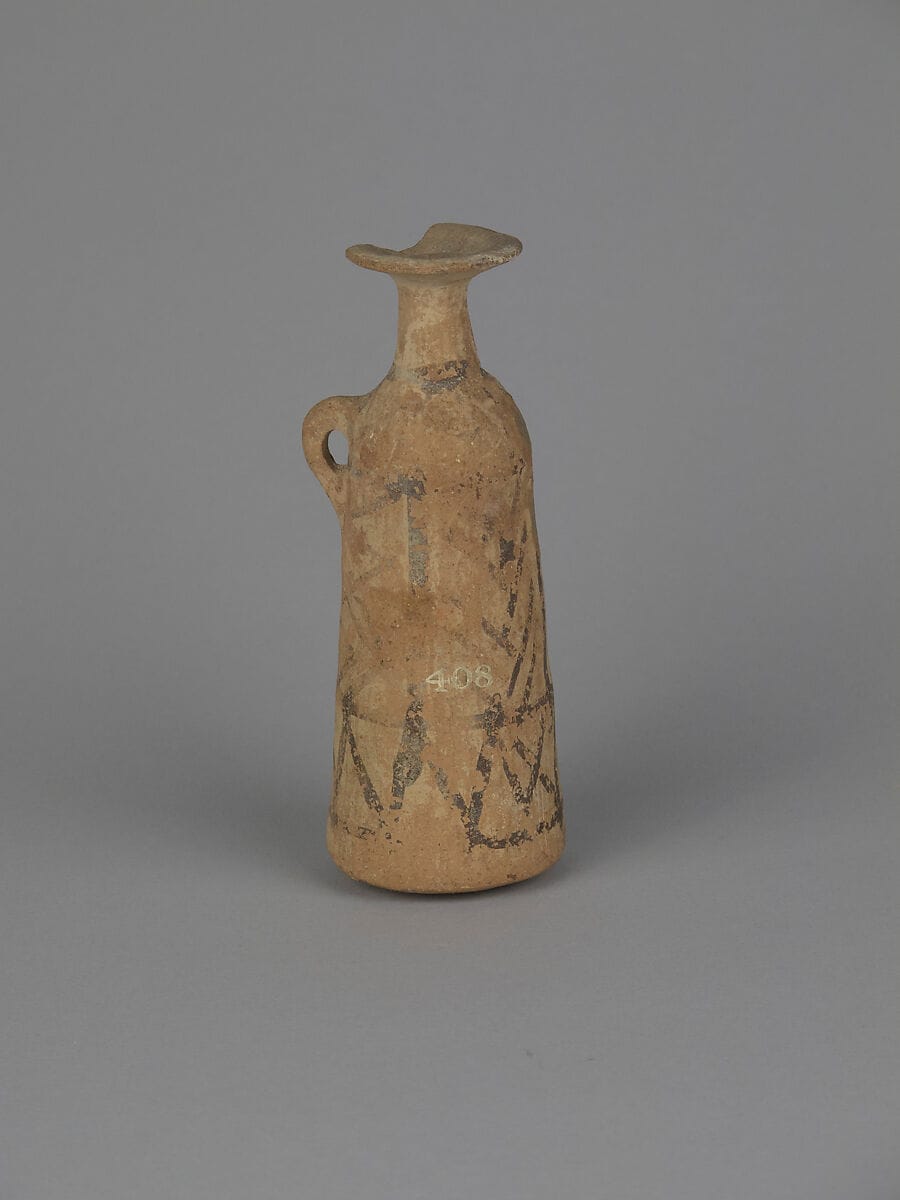
Bottle
Late Bronze Age III
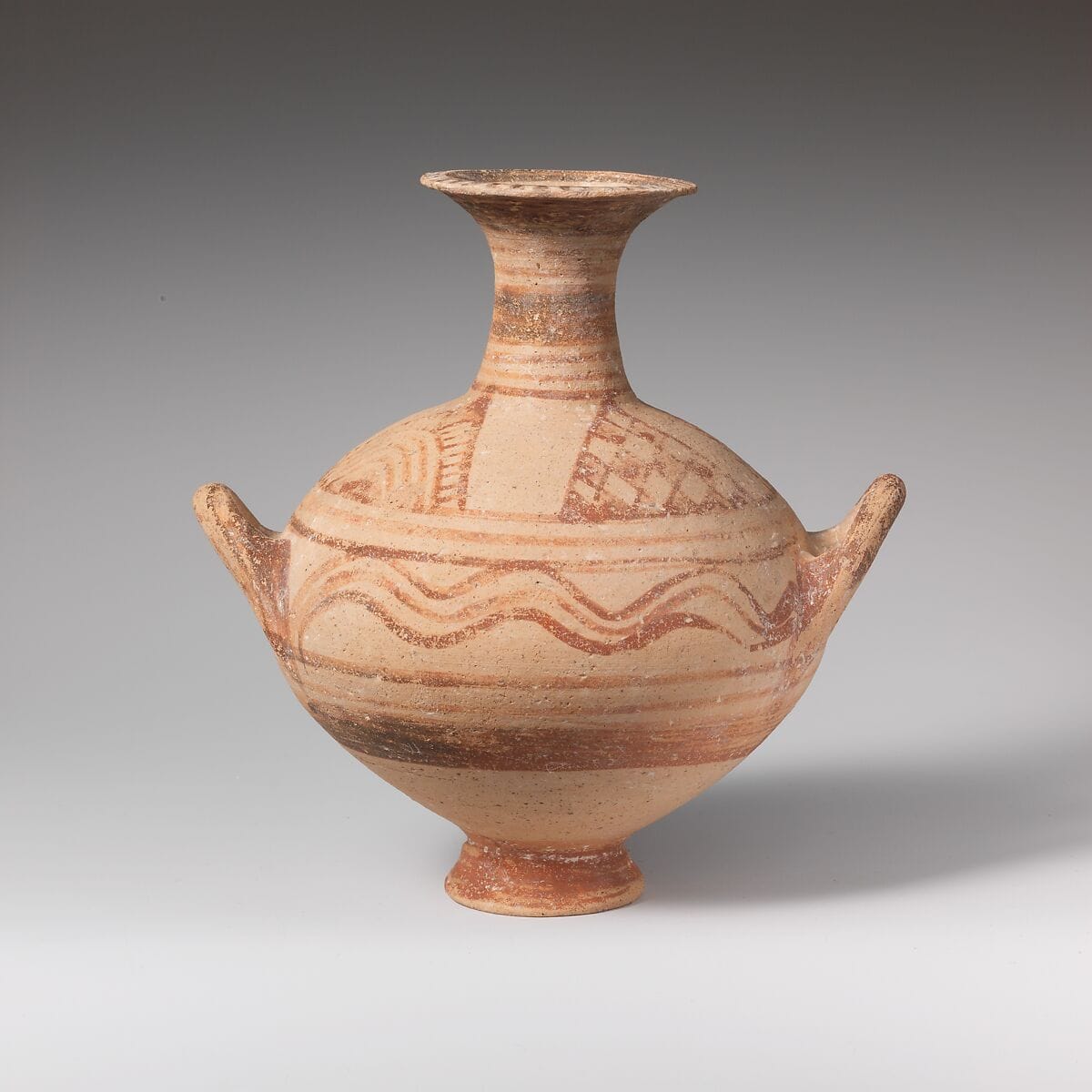
Terracotta globular bottle with two handles
Late Bronze Age III
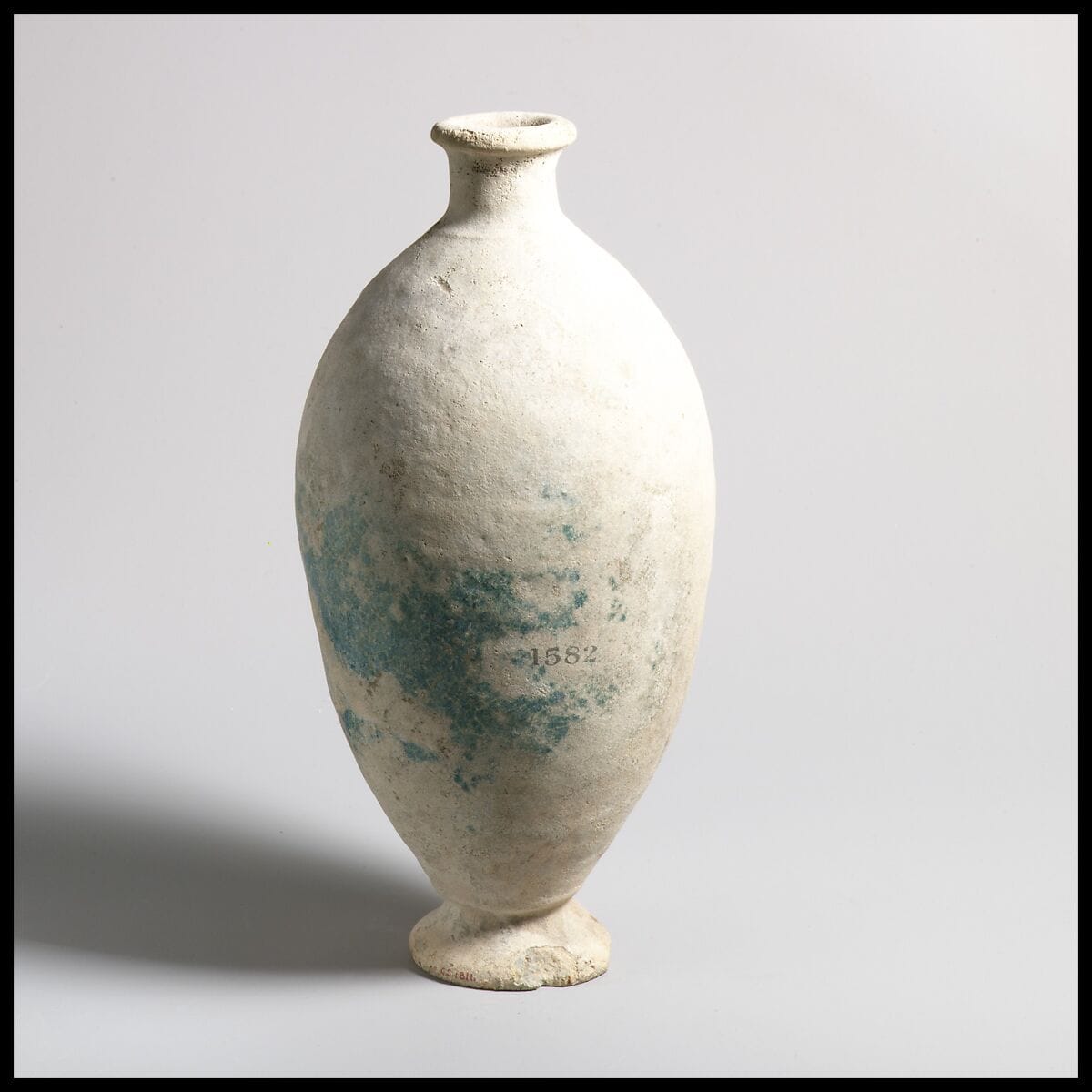
Bottle
Late Bronze Age II
Bottle
Late Bronze Age II
Black Polished Bottle
Early Bronze Age II
Red Polished Bottle
Early Bronze Age II
Black Polished Miniature Bottle
Middle Bronze Age I
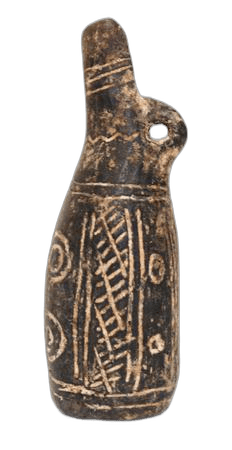
Black Polished Miniature Bottle
Middle Bronze Age I
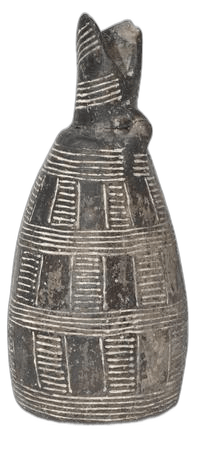
Black Polished Miniature Bottle
Middle Bronze Age I
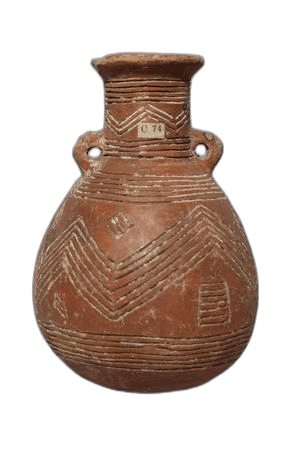
Red Polished Miniature Bottle
Middle Bronze Age II