
Archaic II
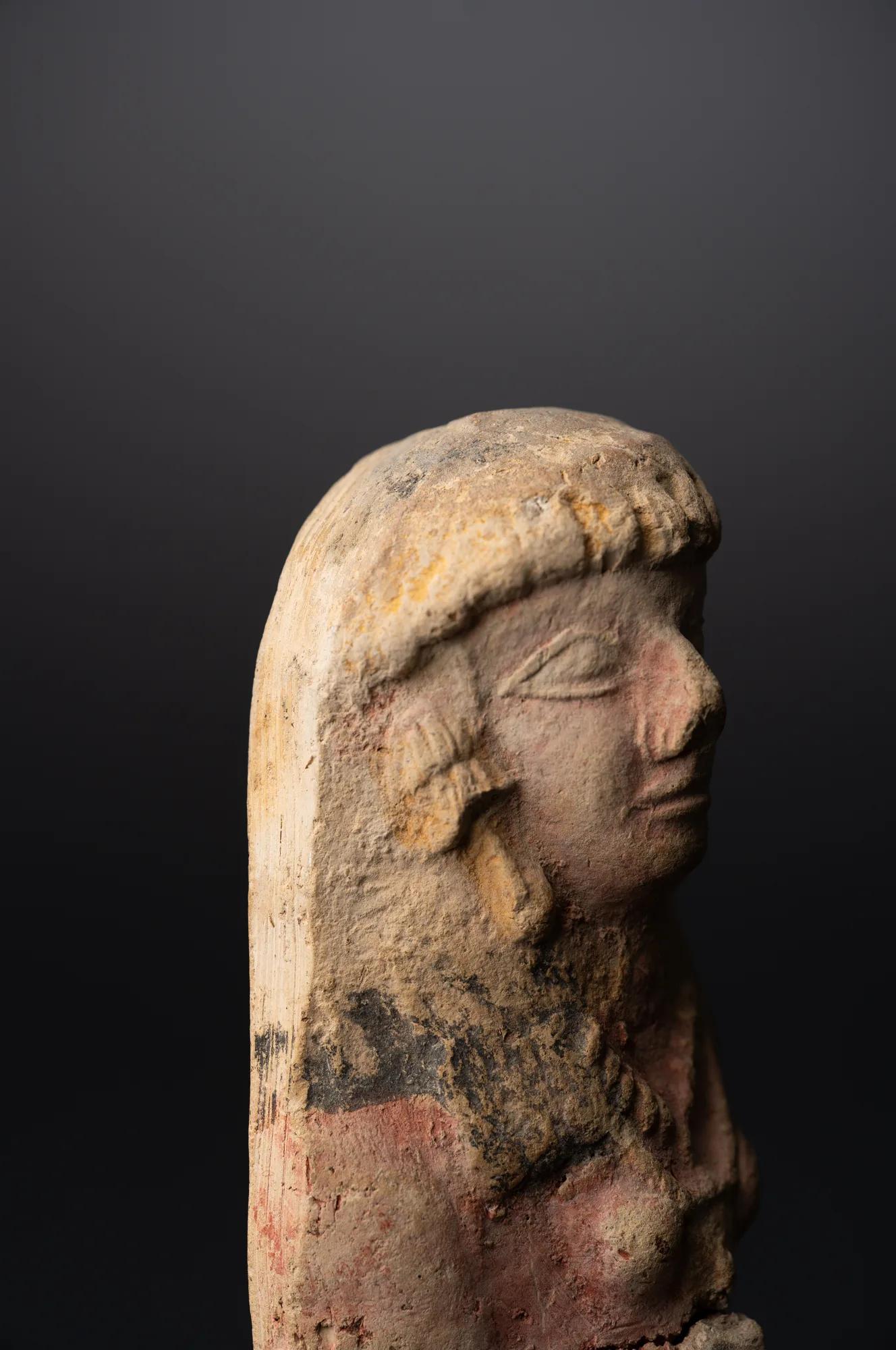
Upper Part of a Mould-Made Female Figure with an Egyptianizing Wig
Head and upper torso of a Cypro-Archaic mould-made female figure wearing a heavy Egyptian-style wig, with traces of red and black paint.
Date
625 - 525 BC
Accession No.
STA-AR-015
Collection
Alexis Drakopoulos
Cypro-Archaic, late 7th to 6th century BCE, c. 625–525 BCE · Terracotta (to be confirmed) · Mould-made · Fragment
Head and upper torso of a standing female figure, preserved to about the chest and seen here in three-quarter view. She wears a heavy wig of Egyptian form: a thick rounded fringe, notched into short locks, sits low over the brow, and the mass of hair falls straight behind the ear to the shoulder. The ear is left uncovered and carries a curled ornament or earring. The face is small and delicate, with a long almond eye rendered in relief under a lightly arched lid, a straight nose, and a short full mouth. The surface is pale and chalky, with patches of yellow ochre on the wig, a band of black paint at the shoulder and a fugitive pinkish red over the body. One side is cut off in a sharp, flat vertical edge, and a rounded projection at the lower break may be a hand or breast.
Commentary
The heavy Egyptian wig, the relief-cut features and the flat, plaque-like side place this fragment among the mould-made female figures and plaques that Cypriot coroplasts produced under Egyptianizing influence in the later Cypro-Archaic period. The mould reached Cyprus from the Levant; its earliest secure Cypriot context is at Ayia Irini around 650 BCE, and it was in general use through the 6th century [3]. Figures of this kind were pressed into a single open mould, which gave them a detailed front and a flat or roughly smoothed back.
The closest group is the series of solid mould-made plaques of bejewelled female worshippers from Salamis and its sphere, who wear an Egyptian wig or headdress, a necklace with a central pendant, and carry a tambourine or a rectangular tablet against the chest [1]. Their dress and hairstyles match Cypriot limestone figures of about 610–560 BCE, and exported examples occur at East Greek and Phoenician sites from about 640–600 BCE, possibly running to 550 BCE; one was dedicated in the sanctuary of Aphrodite at Naukratis (British Museum 1911,0710.106) [1]. Two fragments in the Medelhavsmuseet, Stockholm, are visually very close to this piece in the treatment of the wig, the pale surface and the hand brought to the chest: MM Acc 0850, catalogued as Cypro-Archaic II, and KyS 005, a head and upper body found by the Swedish Cyprus Expedition in the sanctuary at Kythrea. The wider Cypriot corpus of moulded female figurines is classified in Jacqueline Karageorghis's volume of the Coroplastic Art series [2], and the regional attribution of such workshops to the eastern kingdoms is discussed by Fourrier [4].
A date in the late 7th or 6th century BCE follows from these parallels. The painted scheme, with red on the body and black at the shoulder, matches the red and black paint traces recorded on other Cypriot mould-made female figurines of the period, such as Louvre MNB 131. Figures of this class were dedicated in sanctuaries as images of worshippers; nothing in the fragment identifies her as a goddess.
Two points remain open. The pale, powdery surface and the clean flat side are unusual enough that the material needs to be confirmed as fired clay by inspection of a break; soft chalky limestone was also used for Egyptianizing figures in this period. The object held at the chest, if there is one, is lost at the break, so it cannot be said whether she carried a tambourine or a tablet like the Salamis plaques.
References
- 1.Kiely, T. (2015) 'Cypriot figures in terracotta', in Villing, A. et al., Naukratis: Greeks in Egypt. London: British Museum online research catalogue, pp. 21–23.
- 2.Karageorghis, J. (1999) The Coroplastic Art of Ancient Cyprus V(B): The Cypro-Archaic Period, Small Female Figurines. Figurines moulées. Nicosia: A.G. Leventis Foundation.
- 3.Reyes, A.T. (1994) Archaic Cyprus: A Study of the Textual and Archaeological Evidence. Oxford: Clarendon Press, p. 28.
- 4.Fourrier, S. (2007) La coroplastie chypriote archaïque: identités culturelles et politiques à l'époque des royaumes. Lyon: Maison de l'Orient et de la Méditerranée.
More from the Catalogue
Browse related objects
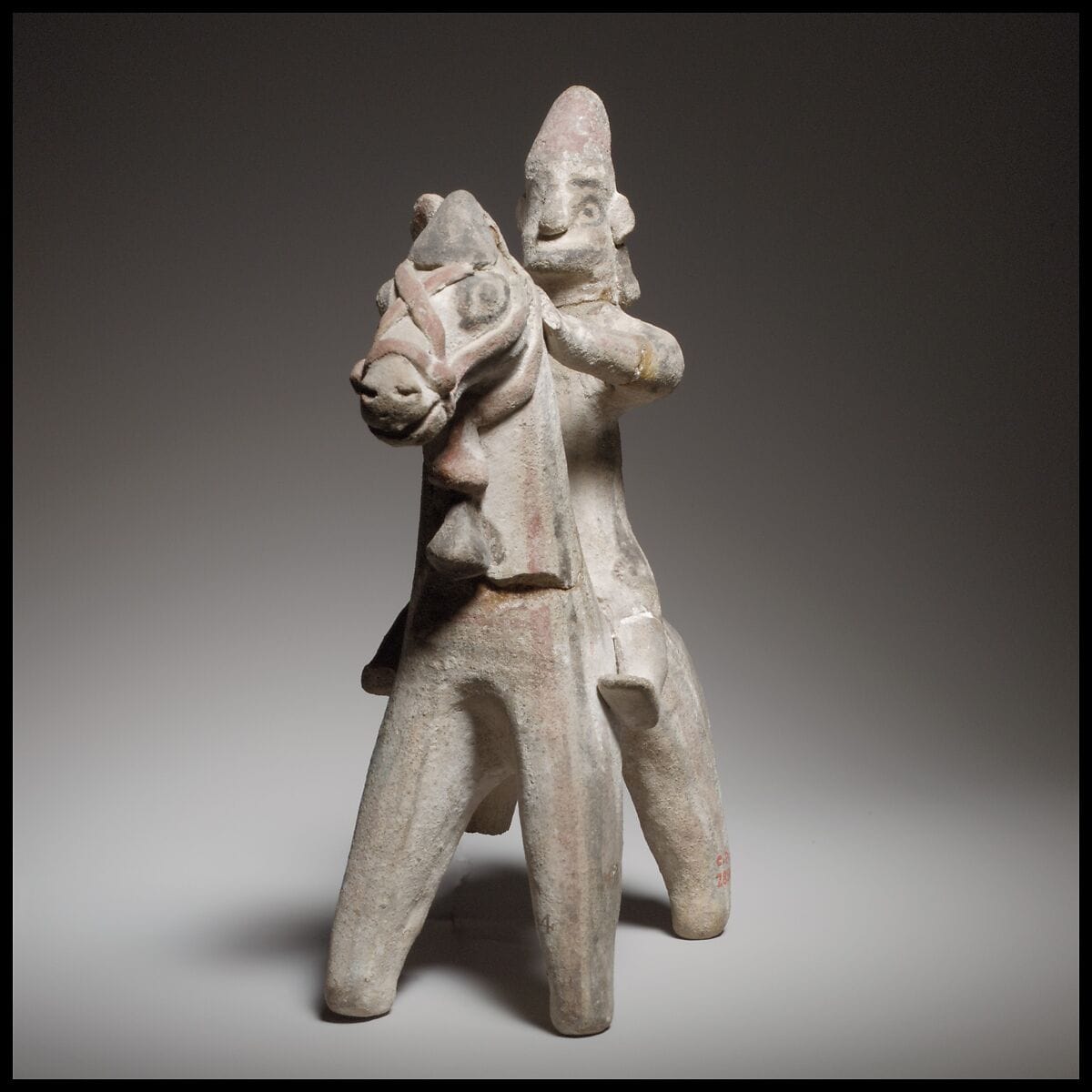
Horse and rider figurine
Archaic II
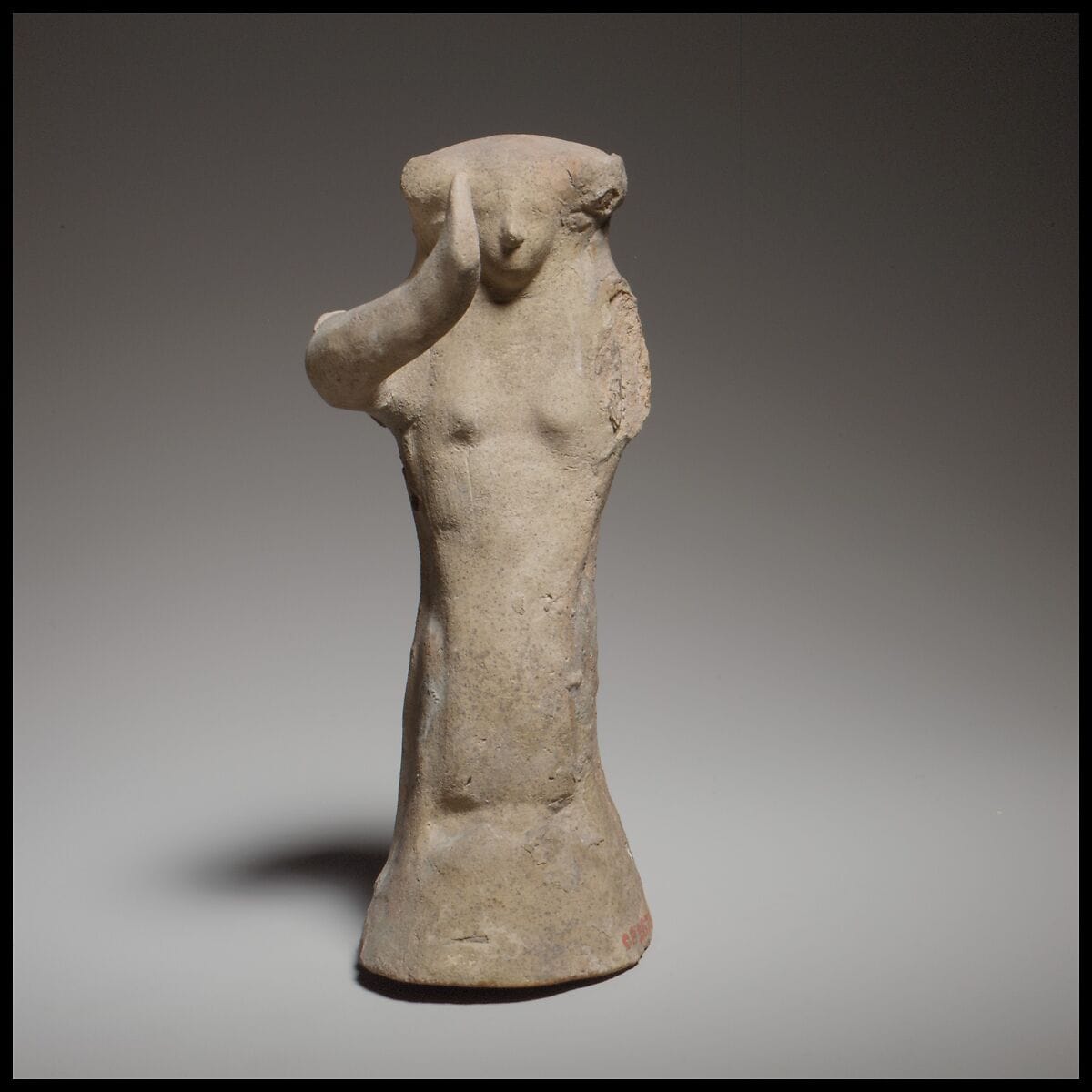
Seated female figurine of the dea gravida type
Archaic II
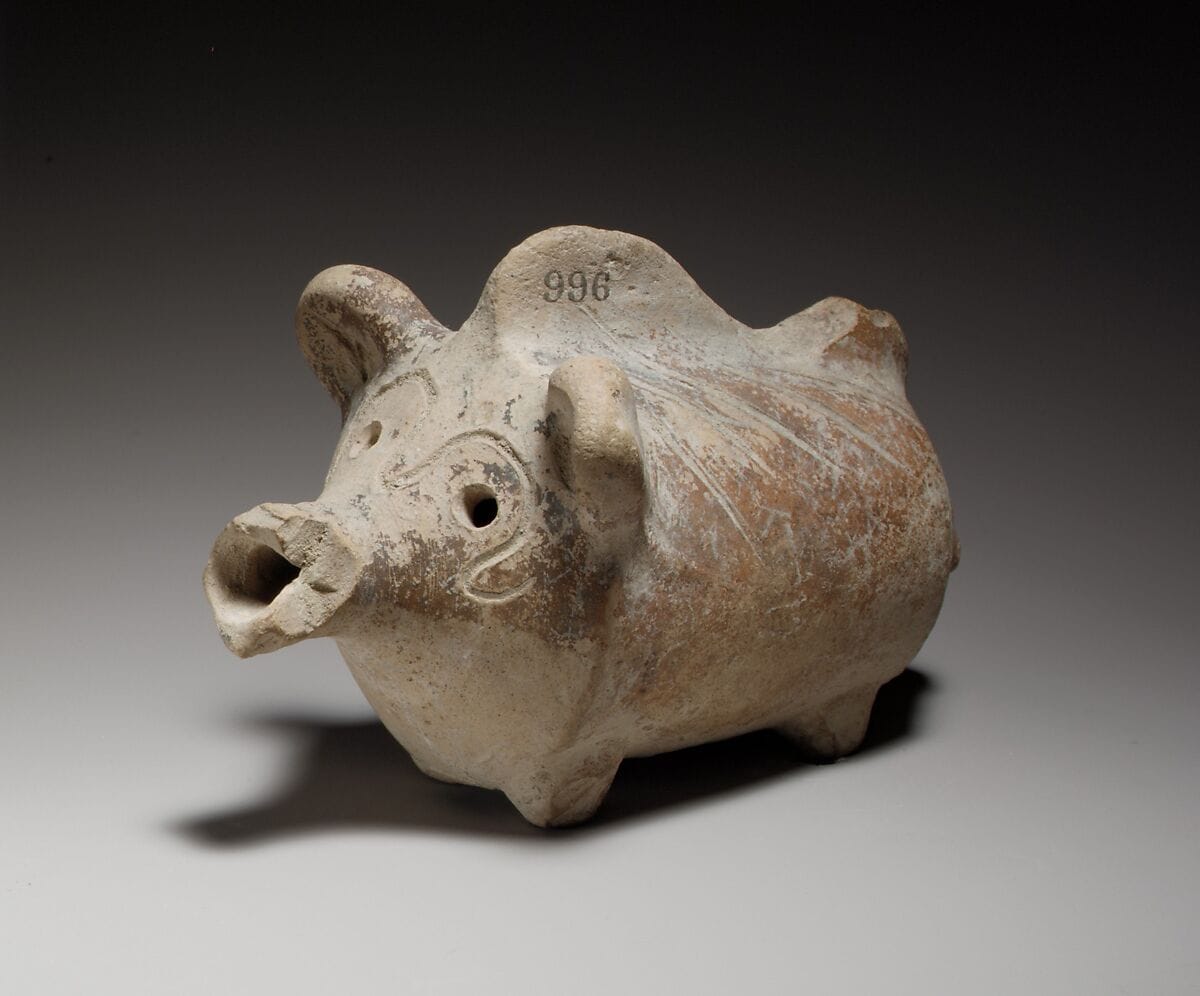
Terracotta rattle in the form of a pig
Hellenistic
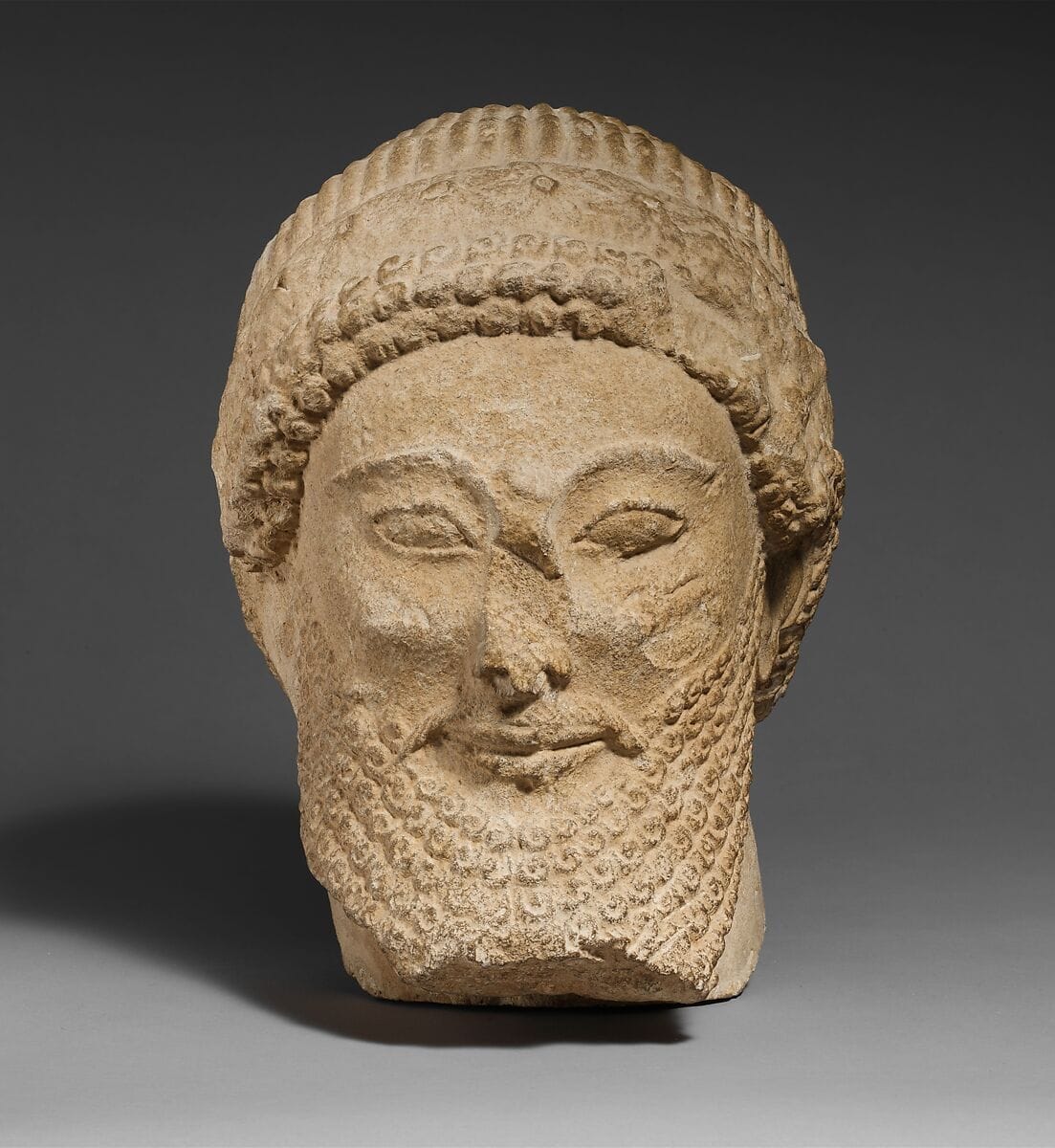
Limestone head of a bearded male with a wreath of flowers
Archaic II
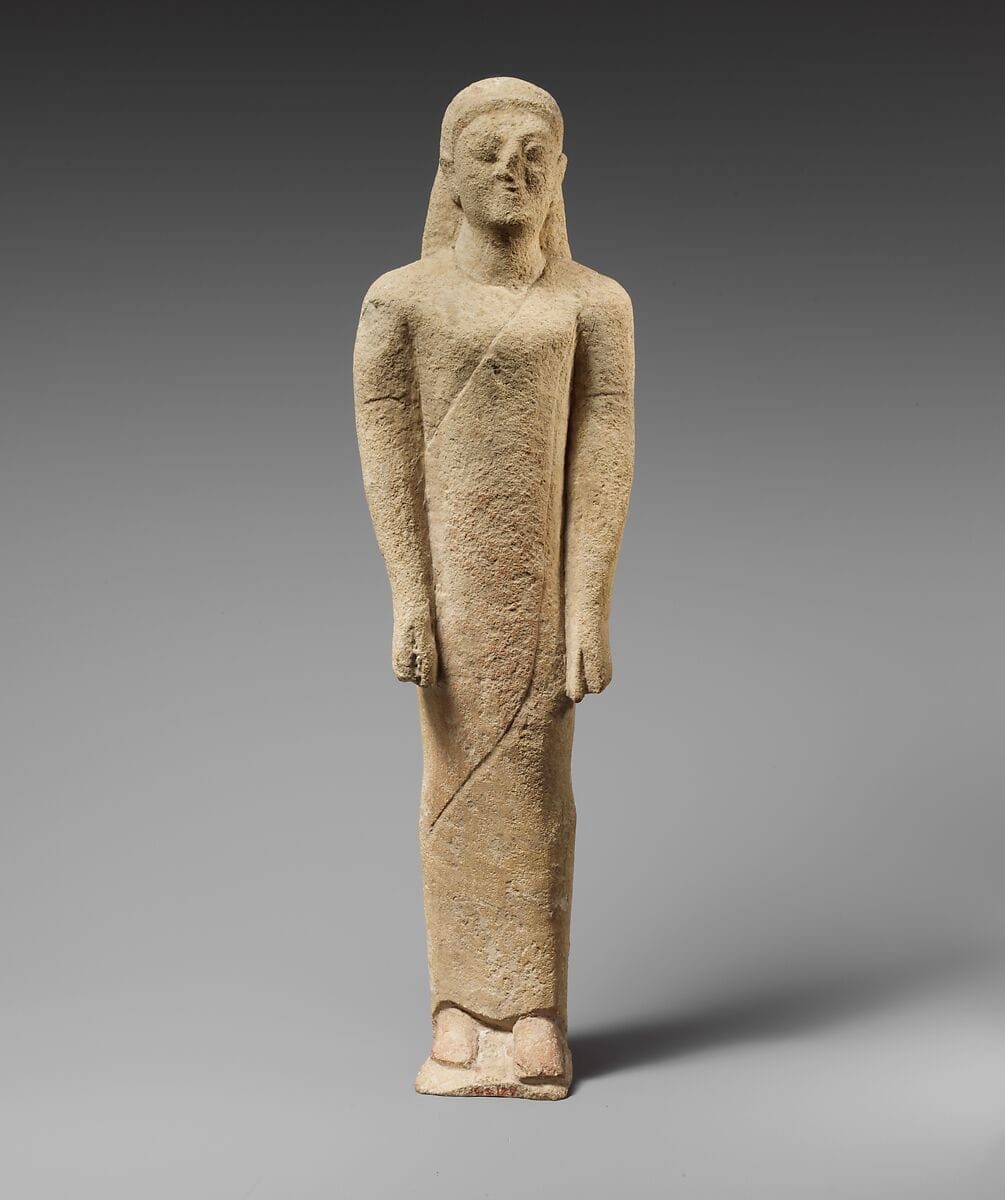
Limestone statuette of a beardless male votary in Greek dress
Archaic II
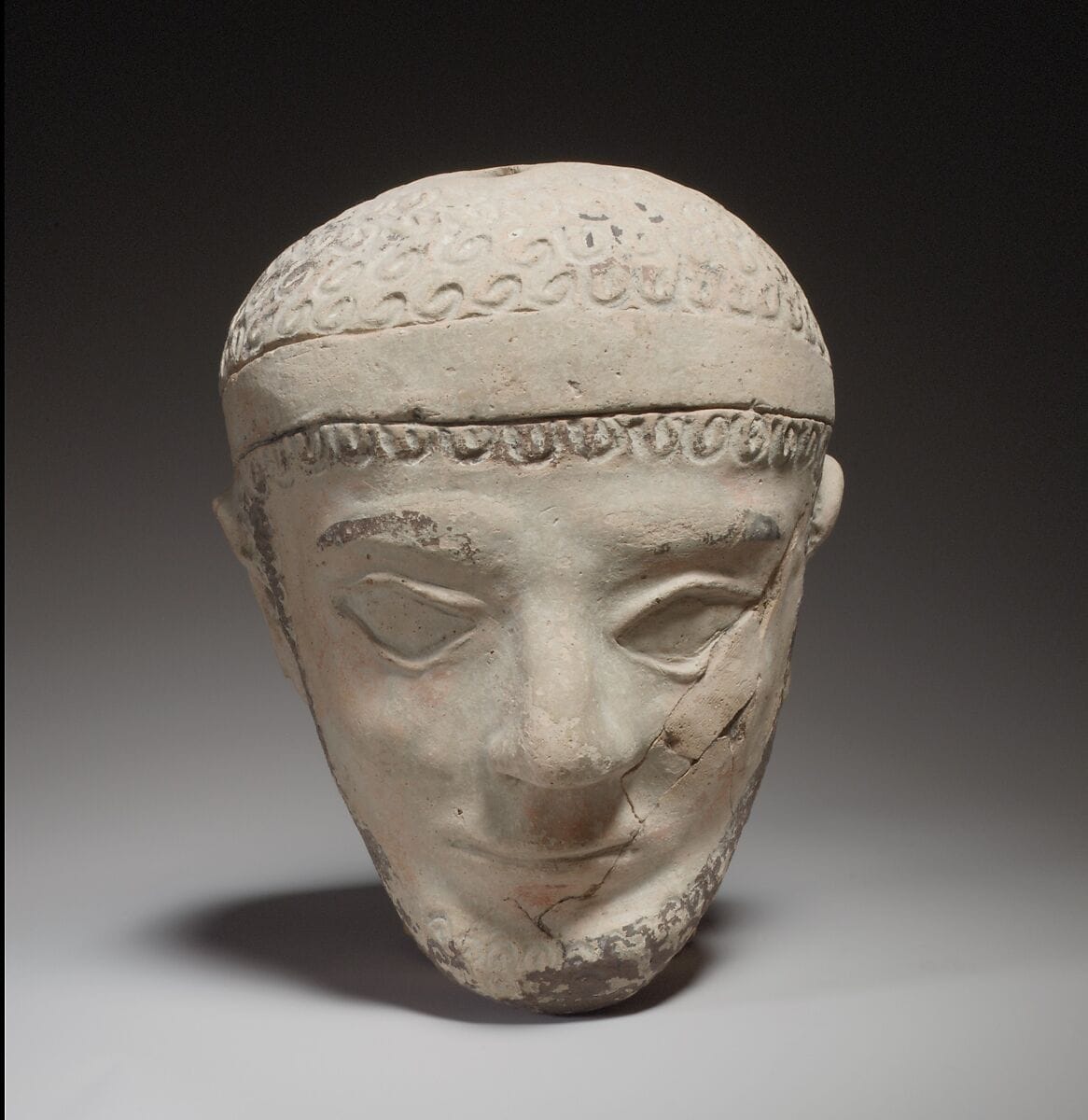
Terracotta head of a man
Archaic II
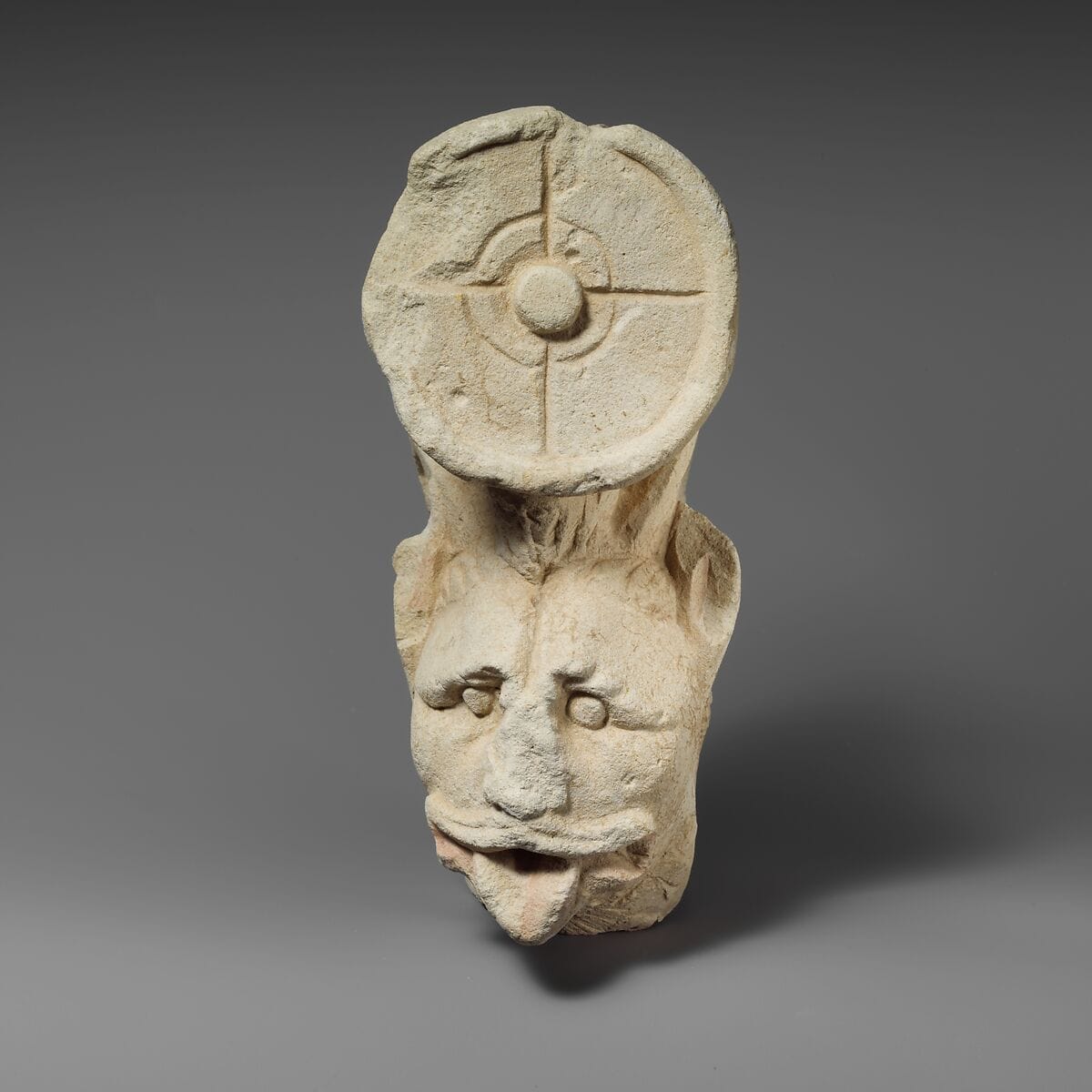
Fragment of a limestone throne (?) with the head of a horned lion
Roman
Head of a comic figurine
Hellenistic
Limestone statuette of a female votary of the kore type
Archaic II
Limestone head of Apollo
Hellenistic
Standing female flute player
Classical
Standing female figurine
Archaic II
Horse's head with harness
Archaic II
Limestone statuette of a mourning siren
Hellenistic
Standing female figurine
Archaic II
Terracotta statuette of Silenos (?) drinking
Hellenistic
Limestone head of beardless male votary with wreath of leaves
Hellenistic
Limestone statuette of a beardless male votary with a wreath of leaves
Classical